Camera Japan Announces Complete Programme for 2021

Camera Japan returns for its 16th edition in Rotterdam 23rd to 26th September and in Amsterdam 30th September to 3rd October bringing with it another fantastic selection of the best in recent and not so recent Japanese cinema.

Feature Films

  • Copyright © 2020 Kowatanda Films
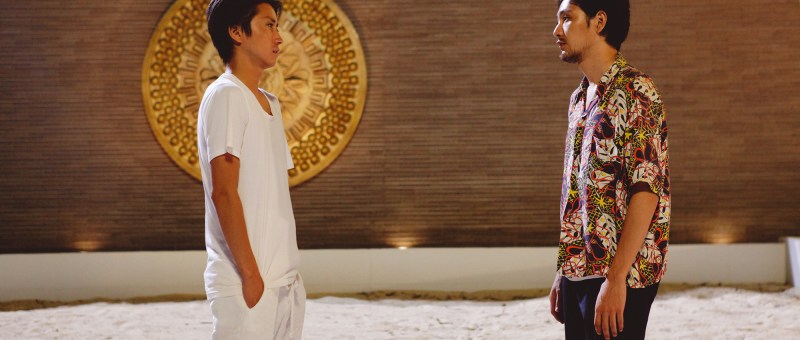
  • 461 Days of Bento: A Promise Between Father and Son – a recently divorced single dad pledges to make a bento for his son every day for the next three years if he promises not to skip school in this heartwarming drama.
  • Ainu Mosir – a grieving young man is confronted by the contradictions of his life as a member of an indigenous community in Takeshi Fukunaga’s poetic coming-of-age drama. Review.
  • Along the Sea – a migrant worker from Vietnam is faced with her lack of possibility after discovering she is pregnant while living undocumented in Akio Fujimoto’s unflinching social drama. Review.
  • Angry Rice Wives – a protest among fishwives against the sharp rise in the price of rice sparks nationwide unrest.
  • Between Us – two young women begin to find the courage to expresses themselves through the power of music in this taiko drum coming-of-age drama.
  • Beyond the Infinite Two Minutes – a diffident cafe owner faces an existential dilemma when trapped in a time loop with himself from two minutes previously in Junta Yamaguchi’s meticulously plotted farce. Review.
  • Closet – a young man begins to understand loneliness and intimacy after taking a job as a sleep companion.
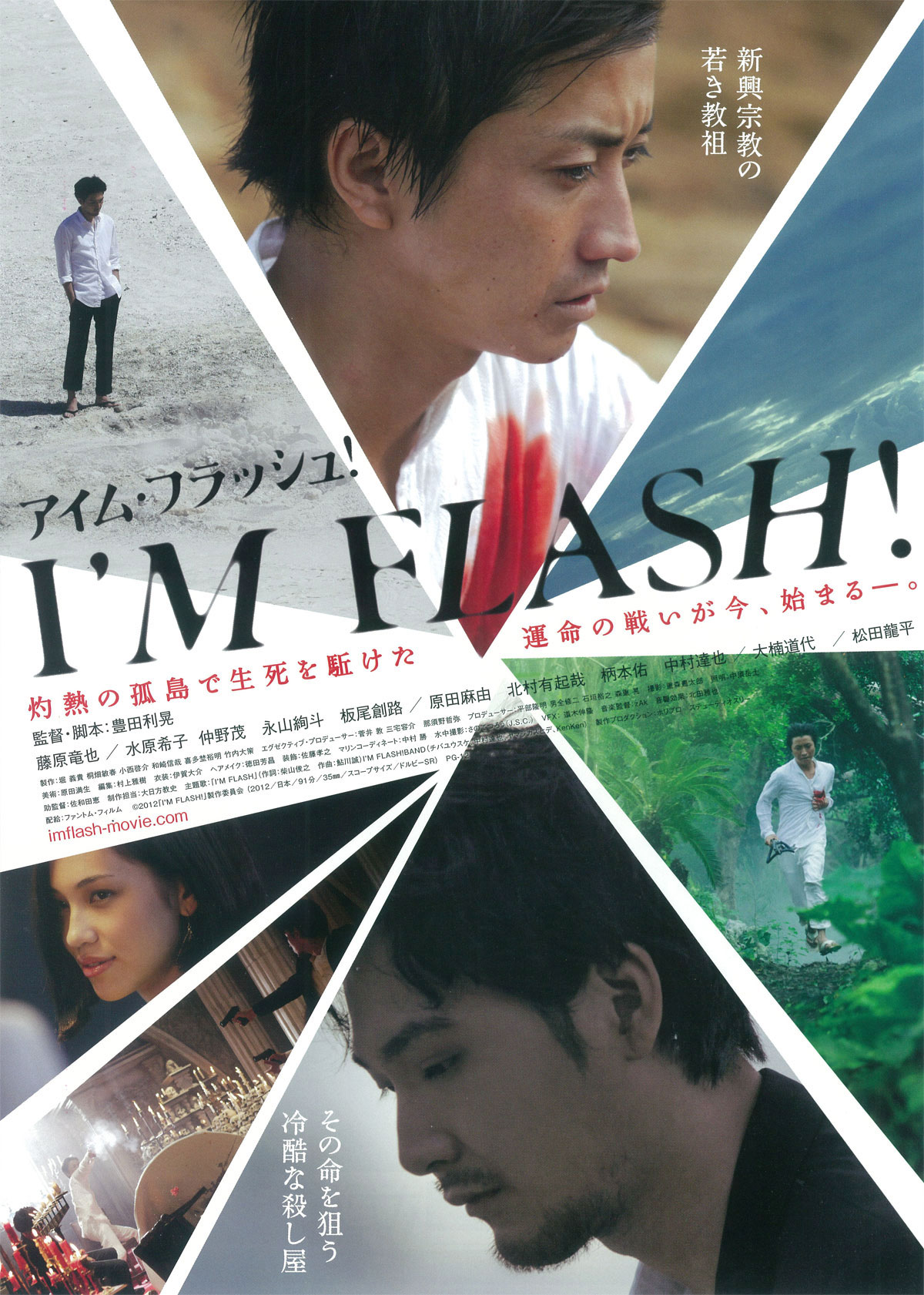
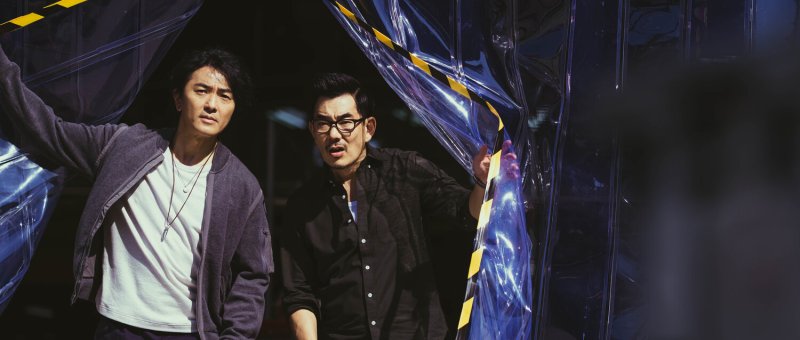
  • The Fable: The Killer Who Doesn’t Kill – Junichi Okada returns as the hitman with a no kill mission in Kan Eguchi’s action comedy sequel which sees him come into conflict with a duplicitous philanthropist. Review.
  • Georama Boy, Panorama Girl – lovelorn teens experience parallel moments of romantic disillusionment in Natsuki Seta’s charmingly retro teen comedy. Review.
  • The Goldfish: Dreaming of the Sea – An anxious young woman begins to overcome her sense of trauma while bonding with a similarly lonely little girl in Sara Ogawa’s lyrical coming-of-age drama. Review.
  • I Never Shot Anyone – an elderly writer’s decision to pose as a hitman as research for a novel gets dangerously out of hand when his wife suspects him of having an affair.
  • It’s a Summer Film! – a jidaigeki-obsessed high schooler sets out to make her own summer samurai movie in Soshi Matsumoto’s charming sci-fi-inflected teen rom-com. Review.
  • Kontora – a directionless high school girl finds a path towards the future through deciphering a message from the past in Anshul Chauhan’s ethereal coming-of-age drama. Review.
  • Last of the Wolves – sequel to Kazuya Shiraishi’s Blood of Wolves set in 1991 in which a rogue cop attempts to keep the peace between yakuza gangs.
  • Love, Life and Goldfish – musical manga adaptation in which a salaryman is demoted to a rural town after insulting his boss.
  • LUGINSKY – experimental drama in which a man who hallucinates has trouble finding a job and spends his nights drinking and philosophising about life.
  • My Name is Yours – Momoko Fukuda adapts her own novel in which a collection of Osaka teens experience the pain of youth.
  • Ora, Ora be Goin’ Alone – an old lady living alone reflects on her life with the help of three strange sprites in Shuichi Okita’s moving dramedy.
  • The Real Thing – a bored salaryman begins to chase the real thing after saving a distressed woman from an oncoming train in Koji Fukada’s beautifully elliptical drama. Review.
  • Red Post on Escher Street – The extras reclaim the frame in Sion Sono’s anarchic advocation for the jishu life. Review.
  • Remain in Twilight – a group of high school friends is forced to confront unresolved grief while rehearsing for a wedding in Daigo Matsui’s moving metaphysical drama. Review.
  • Sasaki in My Mind – a struggling actor finds himself thinking back on memories of a larger than life high school friend in Takuya Uchiyama’s melancholy youth drama. Review.
  • Shiver – dialogue free music movie from Toshiaki Toyoda filmed entirely on Sado island.
  • The Town of Headcounts – a disaffected young man gets a fresh start in a utopian community but quickly becomes disillusioned in Shinji Araki’s slick dystopian thriller. Review.
  • Under the Open Sky – a pure-hearted man of violence struggles to find his place in society after spending most of his life behind bars in Miwa Nishikawa’s impassioned character study. Review.
  • Wife of a Spy – an upperclass housewife finds herself pulled into a deadly game of espionage in Kiyoshi Kurosawa’s dark exploration of the consequences of love. Review.

Animation

  • The Deer King – animated feature in which a former soldier and a young girl attempt to escape a deadly plague.
  • Junk Head– new theatrical edit of the sci-fi horror stop motion animation.
  • Pompo the Cinephile – anime adaptation of the movie-themed manga.

Documentaries

  • Bound – documentary focussing on female practitioners of traditional “shibari” bondage.
  • Double Layered Town / Making a Song to Replace Our Positions – Four young travellers relate the stories of the 2011 earthquake and tsunami in verbatim stage performances running concurrently with a fictional narrative set in 2031.
  • Jun Kasai Crazy Monkey – documentary focussing on Japanese pro-wrestler “Crazy Monkey”.
  • Okinawa Santos – documentary focussing on Okinawan migrants to Brazil and the their forced relocation during World War II.
  • Ushiku – Filmed mainly with hidden camera, Thomas Ash’s harrowing documentary exposes a series of human rights abuses at the Ushiku immigration detention centre. Review.

Special Screenings

Camera Japan 2021 takes place in Rotterdam 23rd – 26th September and Amsterdam 30th September – 3rd October. Full information on all the films as well as ticketing links can be found on the official website and you can also keep up to date with all the latest news via Camera Japan’s official Facebook pageTwitter account, and Instagram channel.

Robinson’s Garden (ロビンソンの庭, Masashi Yamamoto, 1987)

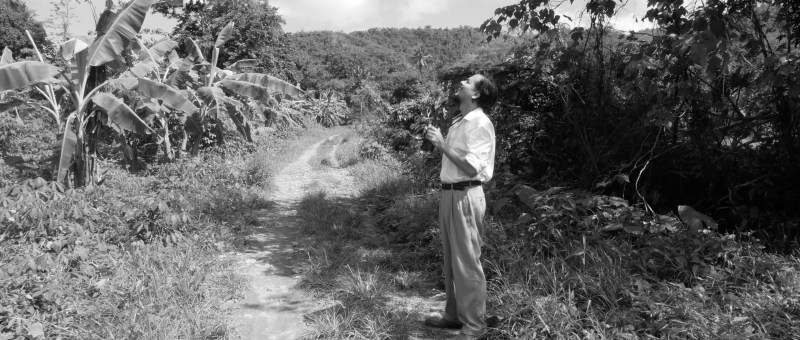
By 1987 Japanese society was at the height of Bubble-era consumerism. Everything was bright and exciting, money flowed freely, and everyone worked all the time. Meanwhile, there was also a flourishing of avant-garde subcultures among young people who actively rejected the salaryman straitjacket and sought for more individualistic freedoms in their lives. Masashi Yamamoto had begun his career with explorations of counter-culture life such as his 1982 debut Carnival of Night but shifts into a more metaphysical gear with his trippy 1987 tale of nature’s revenge and the costs of life in a solo commune, Robinson’s Garden (ロビンソンの庭, Robinson no Niwa). 

Two years later, Junichi Suzuki would also draw inspiration from the tale of Robinson Crusoe in the Bubble-era farce Robinson on the Beach which is in many ways an inversion of Robinson’s Garden in which a low-level salaryman’s life is upended when he wins a brand new house in the suburbs but becomes the subject of class-based resentment from his bosses while expected to play act the “model family” as part of the developer’s ideal homes marketing campaign. Kumi (Kumiko Ohta) by contrast is a floating bohemian living at the beginning of the film in a multi-cultural commune and supporting herself by selling drugs of which she is also a user. Drunk and stumbling around in the darkness, she accidentally comes across an abandoned industrial complex and is bewitched by the garden growing inside its walls as nature begins to reclaim its own. Selling most of her possessions in a yard sale, she leaves the commune and begins squatting in the factory attempting to return to the land by growing her own produce and living entirely alone. 

The bohemian, internationalist Tokyo that Kumi inhabits stands in direct contrast to that often seen in contemporary mainstream cinema, her eventual decision to leave this globalised communal society for ultra isolationism an intense irony. Then again, there is something of a negative judgement towards the aimless way she lives her life which extends to the wider world around her. Meeting up in a cafe with a friend recently released from prison, an extremely drunk man continues to have significant difficulty understanding where he is and what’s going on eventually picking up a table but unsure what to do with it. She and her friends are often described, and sometimes describe themselves, as “wacko” in their attempts to live outside of accepted social norms and it’s when Kumi invites her friends into her new private utopia that it first begins to betray her as a prayer circle and a pointless argument somehow provoke a mass brawl while Kumi remains on her sun lounger feeling the first pangs of an illness which will continue to plague her throughout the rest of the film. 

This may in part be down to a strange painting placed on her wall by an intruder, but nature also begins to take against her best efforts as the seasons change and her large crop of cabbages, for some reason all she appears to plant, is destroyed by heavy rainfall which later leads to flooding. Best friend Maki (Cheebo) ventures into a basement and finds tree roots growing through it, listening intently to rumbling behind a wall she attributes to the presence of the subway but is later implied to echo the scrabbling of a ghostly otter looking for its family. A casual boyfriend who stays the night appears to have an episode of mental instability while exploring as if the environment has driven him mad while Kumi becomes progressively sicker with debilitating stomach pains and fever. 

Yet the only lesson that we see her learn is that we are not the masters of our environment. With her help, nature gradually reclaims this previously industrial space filling halls with flowers and covering the walls with greenery. Even her pink moped lies rusty and half-buried while she furiously digs a hole with seemingly no way of climbing out unassisted. Meanwhile, a mean little girl that for some reason always hung around the factory, even at one point eating KFC in the rain, flies a model aeroplane around a sacred tree and trashes a toy birdcage as if playing in the ruins of a post-industrial world. Called to something older and earthier, Kumi retreats fully from the highly corporatised, consumerist society of the Bubble era but the jury seems to be out on whether her experiment in isolationism is success or failure. Yamamoto’s famous distain for logical narrative progression lends an absurdist air to Kumi’s continuing desire to return to the garden but captures the mystifying allure of nature in all its ethereal, if perhaps sinister, glory. 


Robinson’s Garden streams in the US until Sept. 2 as part of this year’s Japan Cuts.

Restoration trailer (no subtitles)

Why You Can’t Be Prime Minister (なぜ君は総理大臣になれないのか, Arata Oshima, 2020)

When Shinzo Abe stepped down in September 2020 citing a recurrence of the chronic illness which had caused him to resign from the same position in 2007 he did so as Japan’s longest serving prime minster having held the post since 2012. The centre-right Liberal Democratic Party has rarely been out of power since its foundation in 1955 though the opposition Democratic Party of Japan did achieve a minor breakthrough in the 2009 election only to lose out again in 2012, its reputation tarnished by a perception that it had not done enough during the 2011 earthquake and tsunami crisis. 

This is the background which informs Arata Oshima’s probing documentary Why You Can’t Be Prime Minster (なぜ君は総理大臣になれないのか, Naze Kimi wa Soridaijin ni Narenai no ka) which follows idealistic politician Junya Ogawa over 17 years from his beginnings as a 32-year-old former bureaucrat standing on a platform of integrity in politics, to a no less idealistic yet perhaps weary middle-aged man now sitting as an “independent” representative. Oshima perhaps partly answers the central question in a lengthy series of opening titles attempting to explain Japan’s rather complicated electoral system which operates both first past the post and proportional representation components. Although mitigated by the additional proportional representation list seats, just as in the UK Japan’s political system remains biased towards the centre-right by virtue of the fact that the leftwing vote is split between a number of different parties. As Oshima also points out, Ogawa’s rival for a first past the post seat is a dynastic candidate whose family is prominent in the local area. 

The other problem, if you want to call it that, is Ogawa’s essential personality and (near) unshakeable idealism. He stands on a platform of integrity in politics in which politicians should be accountable to the people they serve believing that the government has become overly complacent and forgotten about the lives of everyday citizens, the Abe regime famously focussing on their key concerns such as constitutional reform and the military. As such he watches as his more ruthless colleagues surge ahead of him, local rival Tamaki always managing to secure a first past the post seat by playing the political game while he scrapes through on the reserve list. Yet later he makes a fatal mistake, allowing himself to be persuaded to join Yuriko Koike’s Party of Hope after the proposed merger with the DP during the 2017 election. Current governor of Tokyo, Koike is a prominent figure on the conservative scene and member of the ultra-nationalist Nippon Kaigi. It’s not surprising that many of Ogawa’s supporters felt disappointed and betrayed on his decision to follow his mentor Maehara, on the right of the DP, and join the new party which could not credibly claim to reflect the values he’d hitherto espoused while even those accepting his logic that he was simply lending his voice to a unified anti-Abe coalition were put off by Koike’s duplicity in immediately walking back on earlier promises by announcing she would not accept all DP members into the Party of Hope.

“Your face is pretty but your heart is black” is just one of the many comments he receives from disappointed voters while out canvassing, another actively distancing herself from him before angrily remarking that he should have joined the CDP, a rival leftwing party set up by a former DP member Edano which promised to accept anyone who wanted to join. Yet the problem might not be so much the party as Ogawa’s inner conflict, wrestling with himself that he should have stood as an independent even if acknowledging he would have had a much harder time campaigning with no party backing him. His decision obviously conflicts with his pledge of integrity, a broken promise it will prove extremely hard to overcome while his secondary battle is and always will be legacy of the DP’s failure in government leaving many to assume only the LDP is qualified to govern. Following the party’s electoral defeat he does indeed sit as an independent but obviously acknowledges that he has far less influence even than he had as a less powerful list seat representative. 

Ogawa himself attributes his inability to become prime minster by an arbitrary date he’d thrown out after the 2009 opposition win engendered a false sense of hope for long lasting political change to his lack of personal ambition unwilling to do whatever it takes to climb the ladder, preferring to pursue his political goals ahead of his own position. He describes himself as an “otaku of making Japan a better place” and brands himself a centrist while advocating for socialist policies such as a welfare state modelled on that seen in Scandinavia. His parents who along with his wife and children are very much involved in his campaigning wonder if he’s too “pure” for politics, that his inability to compromise is the reason he can’t gain a foothold in the political establishment yet he refuses to give up, later telling Oshima in an otherwise unnecessary Covid-themed coda that if he didn’t think he could be PM he’d stand down right away. Politics needs men like Ogawa, Oshima seems to say, but the electorate isn’t so sure.


Why You Can’t Be Prime Minister streams in the US until Sept. 2 as part of this year’s Japan Cuts.

Original trailer (English subtitles)

Queer East Film Festival Reveals Full 2021 Programme

Queer East returns for 2021 exclusively in cinemas from 15th to 26th September with another handpicked selection of recent and classic East Asian LGBTQ+ movies. Opening with Hajime Tsuda’s Daughters, the festival will feature a 10-film focus on Japanese queer cinema from the 1980s to the present day, as well as a special focus on Taiwan closing with moving family drama Dear Tenant.

Wednesday 15 September

Genesis Cinema

Opening Film: Daughters (UK Premiere) | Dir Hajime Tsuda | Japan | 2020 | 104 min

Two young women find themselves reassessing their ideas of womanhood and maternity in the wake of an unexpected pregnancy in Hajime Tsuda’s refreshingly positive new family drama. Review.

Thursday 16 September

Curzon Soho: Lan Yu (20th Anniversary) | Dir Stanley Kwan | Hong Kong, China | 2001 | 86 min

Recent restoration of Stanley Kwan’s Mainland drama in which a businessman, Han-dong, falls in love with college student Lan Yu against the backdrop of the Tiananmen Square protests.

Saturday 18 September

Curzon Hoxton: My Dear Friend (UK Premiere) | Dir Yang Ping-Dao | China | 2018 | 106 min

A young woman travels from the city to look for her missing boyfriend in his rural hometown but finds only his grandparents and agrees to help a family friend who’s lost all memories of his childhood regain his identity.

Genesis Cinema: Number 1 (UK Premiere) | Dir Ong Kuo-Sin | Singapore | 2020 | 98 min

Musical comedy in which a married father is made redundant from his regular office job and ends up running a drag bar. Persuaded to take to the stage himself, he proves a natural but is desperate to conceal his new line of work from his family.

Sunday 19 September

Curzon Soho: Days | Dir Tsai Ming-Liang | Taiwan, France | 2020 | 127 min

Tsai Ming-liang meditates on time and loneliness as an older man in pain and a young migrant worker find temporary relief in momentary connection. Review.

Catford Mews: Merry Christmas, Mr. Lawrence | Dir Nagisa Oshima | Japan, UK | 1983 | 123 min

Landmark second world war drama from Nagisa Oshima in which a British prisoner of war (David Bowie) becomes locked in a psychological battle with the authoritarian Japanese officer in charge of the camp (Ryuichi Sakamoto).

Monday 20 September

Curzon Hoxton: Close-Knit | Dir Naoko Ogigami | Japan | 2017 | 127 min

Warmhearted quirky drama from Naoko Ogigami in which a little girl neglected by her mother moves in with her uncle and his transgender girlfriend. Review.

Tuesday 21 September

Genesis Cinema: Hush! (35mm, 20th Anniversary) | Dir Ryosuke Hashiguchi | Japan | 2001 | 135 min

Landmark queer drama from Ryosuke Hashiguchi in which a gay couple with differing views on settling down find themselves agreeing to help a chaotic young woman conceive a child. Review.

The Lexi Cinema: Secrets of 1979 (UK Premiere) | Dir Zero Chou | Taiwan | 2021 | 86 min

Set during Taiwan’s martial law period, Zero Chou’s latest sees two women fall in love while working on a banana plantation only for their relationship to be threatened by their resistance to the military regime.

Wednesday 22 September

Bertha DocHouse: Queer Japan | Dir Graham Kolbeins | US, Japan | 2019 | 100 min

Graham Kolbeins’ documentary exploring LGBTQ+ life in contemporary Japan including contributions from mangaka Gengoroh Tagame (My Brother’s Husband), drag queen Vivienne Sato, and Aya Kamikawa who recounts her path to becoming the first transgender elected official in Japan.

The Prince Charles Cinema: Madame X (10th Anniversary)| Dir Lucky Kuswandi | Indonesia | 2011 | 100 min

When a homophobic and oppressive political party threaten the nation, hairdresser Adam must embrace his destiny by learning traditional dance to become legendary trans superhero Madam X!

Thursday 23 September

The Horse Hospital: Shinjuku Boys | Dir Kim Longinotto, Jano Williams | UK, Japan | 1995 | 54 min

1995 documentary short focussing on the lives of three transmen working as hosts in an “Onabe” host bar.

The Lexi Cinema: Ghost in the Shell | Dir Mamoru Oshii | Japan | 1995 | 82 min

1995 landmark anime adapted from the manga by Masamune Shirow in which cybernetic enhancements have become the norm but have also left humanity vulnerable to brain hacking.

24th September

Horse Hospital: The End of the Track | Dir Mou Tun-Fei | Taiwan | 1970 | 90 min

A teenage boy finds himself knocked off course after his best friend suddenly dies in Mou Tun-Fei’s subversive social drama. Review.

Genesis Cinema: Gohatto (35mm) | Dir Nagisa Oshima | Japan | 1999 | 100 min

A beautiful boy proves a disruptive presence within the all male environment of the Shinsengumi in the final film from Nagisa Oshima starring Takeshi Kitano, Tadanobu Asano, and Ryuhei Matsuda.

Genesis Cinema: Miss Andy (UK Premiere) | Dir Teddy Chin | Taiwan, Malaysia | 2020 | 108 min

A collection of marginalised people form a fragile family but find their bonds tested by desperation and despair in Teddy Chin’s melancholy drama. Review.

Sunday 26 September

Curzon Hoxton: Moonlit Winter (UK Premiere) | Dir Lim Daehyung | South Korea | 2019 | 106 min

Two middle-aged women embark on a path towards becoming more themselves after a letter never intended to be sent brokers a reconciliation in Lim Dae-hyung’s beautifully subtle drama. Review.

Genesis Cinema

Closing Film: Dear Tenant (UK Premiere) | Dir Cheng Yu-Chieh | Taiwan | 2020 | 112 min

A grief-stricken man lovingly takes care of his late partner’s family but finds himself continually othered in Cheng Yu-chieh’s melancholy familial drama. Review.

Queer East runs 15th to 26th September at venues across Central London with plans to tour to other cities throughout the UK later in the year. Full details for all the films as well as ticketing links can be found on the official website, while you can also keep up with all the latest news by following Queer East on FacebookTwitterInstagram, and YouTube.

Mari and Mari (彼女来来, Tatsuya Yamanishi, 2021)

How well do you really know your significant other, and is it possible that even you can be lulled into a false sense of security by the performative qualities of your relationship? The befuddled hero of Tatsuya Yamanishi’s Mari and Mari (彼女来来, Kanojo Rairai) is forced to reckon with the superficialities of his romantic life when he arrives home one day to discover that his girlfriend is nowhere to be found and in her place is another woman with the same name who seems intent on occupying the space she has just vacated. 

Casting agent Norio (Kou Maehara) is in a longterm, actually rather nauseating in its sweetness, romantic relationship with girlfriend Mari (Nao). Despite being a well established, not yet married but might as well be cohabiting couple, they have their own little song they like to sing about how great their lives are with each other while taking romantic walking dates along the river where they look lovingly into each other’s eyes. “You’ve been together for ages, but you act like it’s a first date” one of Norio’s colleagues unironically remarks, seemingly a little envious. After moaning about a workplace setback, Norio suggests taking a trip while Mari points out that he’s always too busy for holidays but seems pleased just with the thought. 

For all these reasons, Norio is especially confused when he arrives home after a tough day and finds Mari gone, understandably mistaking the figure of a woman sleeping on their sofa for his girlfriend only to realise his error when she gets up and turns around, the low evening light finally hitting her face. The woman, who is apparently also named “Mari” (Hana Amano) claims to have no memory of her life before waking up on the sofa, and declaring herself homeless announces that she’s moving in. Extremely confused, Norio embarks on a quest to try and out what’s happened to Mari but discovers few leads. Even her sister seems relatively unconcerned, certain that she’s just blowing off steam bringing up a childhood incident in which she “ran away” to stay with a friend whose family ran a sweetshop because she had a sweet tooth and they weren’t allowed sweets at home. 

This relatively innocent story perhaps highlights the possibility of cracks in Norio’s “perfect” relationship, that “Mari 1” might have been feeling the lack of something and has gone off to find it. Though we’re told that Norio and Mari had been happily coupled for some years, a surprise visit from Norio’s parents reveals they’d never met his longterm girlfriend which does indeed seem odd if the relationship is as serious and loved up as it seemed to be. The plot thickens further when he visits the bookstore where Mari was working and is told she quit her job a few days previously having said nothing to him. You have to wonder if Mari 2 is actually real or a merely a manifestation of his inability to accept the fact that his relationship has failed and his girlfriend has moved on. 

Could Norio be guilty of treating his romantic life like one of his auditions, simply slotting in a woman who looks the part to play the role of “girlfriend”? Maybe Mari 1 was so wrapped up in her relationship that she didn’t have any friends, but Norio doesn’t contact any outside of her sister and appears not to know very much about her interior life. He also appears oblivious to a sweet intern at the office, his work life beginning to suffer while he remains preoccupied with Mari 1’s disappearance, who seems to have a crush on him until becoming unexpectedly jealous on spotting her in a clinch with another coworker in the darkened break room. Missing Mari 1 he repeatedly rebuffs Mari 2, attempting to throw her out of his apartment and rejecting each of her attempts to get close to him but eventually warms to her presence and finally allows her to take Mari 1’s place as his live-in girlfriend. 

Are Mari 1 and Mari 2 interchangeable to him? His brief comment that Mari 1 looked like another person under different light hints at a slight fluidity in the nature of her identity, as does the repeated motif of the sunlight climbing towards her face in their darkened bedroom. Then again, could the memory of Mari 1 merely be the intrusive ghost of failed love that disrupts his subsequent relationships, suggesting that his relationship with Mari 2 is doomed to failure because of his obsession with the one who literally got away. Or are Mari 1 & Mari 2 actually the same and a reflection of the way people can sometimes change or you learn something new about them and they seem like a completely different person? Perhaps “Mari” is just a signifier for romantic partner, otherwise devoid of an individual identity. What seems clear at least is that Norio does not “see” the woman in his life because he only sees “Mari”, as the slightly melancholy, intensely lonely look on the face of the woman next to him at the film’s conclusion may seem to suggest. 


Mari and Mari streams in the US until Sept. 2 as part of this year’s Japan Cuts.

International trailer (English subtitles)

The Goldfish: Dreaming of the Sea (海辺の金魚, Sara Ogawa, 2021)

A young woman begins to come to terms with a painful maternal legacy while bonding with a neglected little girl in Sara Ogawa’s gentle coming-of-age drama, The Goldfish: Dreaming of the Sea (海辺の金魚, Umibe no Kingyo). As the title suggests, the heroine struggles with ambivalent feelings towards her future partly in the unresolved relationship with her mother but also in an unwillingness to move on without the firm anchoring of family, anxious about leaving the safety of her current life behind for the uncertainties of adulthood. 

About to turn 18, Hana (Miyu Ozawa) has been living in a children’s home for the past 10 years while her mother, Kyoko (Kinuo Yamada), has been in prison convicted of mass poisoning at a summer festival though she continues to protest her innocence. Part of Hana’s anxiety about the future stems from the fact that in order to apply for a scholarship to university she would need her mother’s signature, but she is reluctant to get back in contact with her and is even considering not going despite having studied hard with just that goal in mind. Perhaps surprisingly, Hana has kept her original surname and though seemingly living in a different area is largely shunned by her classmates, either because they know of her mother’s conviction or simply because she lives in a children’s home. 

Meanwhile, Hana finds herself bonding with a withdrawn little girl, Harumi (Runa Hanada), brought into the home for unclear reasons while remaining largely silent and keeping herself separate from the other children. Perhaps recognising something of herself in her, Hana takes the young girl under her wing and attempts help her adjust to life in care but is alarmed to notice scars on the back of her neck which may suggest she has been the victim of physical abuse. Of course, Hana has no way of knowing her family circumstances or if her mother was the one was harming her but is confused by Harumi’s obvious longing to return to a place in which she has been subjected to violence. As the sympathetic man running the home, Taka (Tateto Serizawa), reminds her, however, Harumi’s mother is the only one she’s ever known so of course like all children she wants to return to a familiar environment and continues to long for maternal love even if that love is also abusive. 

In her desire to protect Harumi Hana avoids reflecting on the similarities with her own life or relationship with her mother. Though many things remain unclear about her early years, Hana perhaps resents Kyoko for burdening her with a criminal legacy and essentially abandoning her into the foster system though it has to be said the children’s home is a warm and welcoming place where the children are each loved and well cared for. Nevertheless she fixates on her mother’s parting words to “be a good girl”, in a way like Harumi thinking that her separation from her mother is somehow her fault for being “bad” and if only she were good enough her mother would come back. Looking after Harumi she finds herself saying the same thing, fearful that she’s turning into her mother and that her maternity is necessarily corrupted beyond repair.  

Like the goldfish in her fishbowl, she longs for freedom and independence but is also afraid of it. Through the gentle bond they begin to build the two young women save each other and themselves, Hana giving herself permission to fail, to not always be “good” and to live her life in the way she wants unburdened by the stigma of her mother’s crime while Harumi discovers a kind of maternal love that is positive and supportive without the threat of violence. Nevertheless, the release she chooses despite its metaphorical qualities is also potentially destructive in that goldfish are freshwater creatures unlikely to survive in the highly salinated environment of the ocean. Even so in letting go of her trauma she begins to move forward into a more certain adult world, determined to take Harumi with her in providing the care and protection her mother was unable to give her. A gentle coming-of-tale, Ogawa’s subtle, empathetic direction lends a touch of melancholy but also a lyrical, hopeful sensibility as the young women discover in each other the means to overcome their trauma. 


The Goldfish: Dreaming of the Sea streams in the US until Sept. 2 as part of this year’s Japan Cuts.

Original trailer (English subtitles)

Caution, Hazardous Wife: The Movie (奥様は、取り扱い注意, Toya Sato, 2021) [Fantasia 2021]

Perhaps in some ways out of step with the times, the 2017 Nippon TV drama Caution, Hazardous Wife (奥様は、取り扱い注意, Okusama wa, Toriatsukai Chui), like the earlier Secret Agent Erika, saw top assassin Nami (Haruka Ayase) fake her own death in order to live a “normal” life as an “ordinary housewife” married to “boring salaryman” Yuki (Hidetoshi Nishijima). Nami could not however resist using her skills for good and bravely took on a local yakuza gang who’d been running a suburban prostitution ring through employing handsome gigolos to seduce emotionally neglected housewives and thereafter blackmailing them into sex work. The series ended on a cliffhanger in which, spoiler alert, Nami was confronted by her husband who turned out to be a Public Security Bureau officer originally tasked with monitoring her before genuinely falling in love.

This brief background recap is useful but not strictly necessary in approaching the series’ big screen incarnation, Caution, Hazardous Wife: The Movie, which ironically assumes the audience knows Nami’s secret backstory but also obfuscates it in picking up 18 months after the cliffhanger to find her now living as “Kumi” in a tranquil seaside town having apparently lost her memory. The town will not remain tranquil for long, however, as a mayoral race is about to bring tensions to the fore in the polarising issue of a prospective methane hydrate plant the authorities insist is necessary to revive the area’s moribund economy while others worry about industrial pollution and its effects on the local sea life. Unsurprisingly, the events will turn out to have a connection to Nami’s past while she struggles to regain her lost memories and preserve the peaceful, ordinary life with her husband which is all she’s ever really wanted. 

Though some might find it somewhat conservative that what Nami wants is to become a conventional housewife, what she’s looking for is the stability of the “normal” life she’s never known. As such, she may not actually want to regain her memories, preferring to go on living as Kumi who has perfected the housewife skills which so eluded Nami including becoming a top cook, for as long as possible. Yuki, meanwhile, now living as high school teacher Yuji, feels something similar having been ordered to “deal with” his wife if she remembers who she is but refuses to become a PSB asset. 

Upping production values from the TV drama, Sato keeps Nami in the dark for as long as possible though her sense of social responsibility remains just as strong as she bravely intervenes when coming across a gang of teens taunting a boy with homophobic slurs for having a pink coin curse, later becoming concerned on witnessing the leader of the opposition to the plant being attacked by thugs in an attempt to intimidate him out of his decision to stand as a rival candidate to the incumbent mayor. Nevertheless, he allows space for plenty of dramatic action scenes including flashbacks to Nami’s career as an international assassin while the final set piece also throws in some bickering marital comedy before turning unexpectedly dark.  

Regaining her memories, Nami’s inner conflict is in her complicated relationship with Yuki wondering if he ever really loved the “real” her or if he perhaps preferred Kumi the docile Stepford wife, which is ironically the cover identity she’d longed to construct. Conflicted and suspecting his wife may have remembered who she really is, Yuki tells her to forget about the past but also that his feelings won’t change and she should be free to be herself but as Nami later realises the past won’t let her go and the peaceful life she’d dreamed of might be harder to preserve than she’d previously thought even as she commits herself to embracing the life she has now because her relationship with Yuki is the most important thing to her despite her lingering doubt. 

Touching on a few hot button issues from industrial pollution and environmental concerns to economic decline and rural depopulation, Sato nevertheless returns to the outlandish absurdity of the TV drama as Nami finds herself facing off against Russian gangsters while exposing a plot by shady conglomerates to exploit a small-town desire for better access to jobs and infrastructure, along with judicial corruption and electoral interference. Nevertheless, the hometown spirit eventually wins out even if Nami finds herself on the run once again though having gained a little more emotional clarity. 


Caution, Hazardous Wife: The Movie streamed as part of this year’s Fantasia International Film Festival. The original TV series is also available to stream with English subtitles (along with those in several other languages) in many territories via Viki.

International trailer (English subtitles)

The Great Yokai War: Guardians (妖怪大戦争 ガーディアンズ, Takashi Miike, 2021)

An anxious little boy struggling with his growing responsibility finds himself charged with saving the world in Takashi Miike’s return to the realms of folklore, Great Yokai War: Guardians (妖怪大戦争 ガーディアンズ, Yokai Daisenso Guardians). Not quite a sequel to the 2005 supernatural drama, Guardians once stars a child hero trying to come to terms with his place in the world, but this time takes on another dimension as the pint-sized hero determines to embrace his “humanity” through the very qualities the yokai fear are largely absent among those who “kill and cheat their own kind”. 

Young Kei (Kokoro Terada) has recently lost his father and as the oldest child has gained an additional responsibility especially towards his younger brother, Dai (Rei Inomata). The other children meanwhile think of him as a scaredy-cat, a small gang of them exploring a disused shrine from which they each pick a fortune from a small box, Kei’s being an ominous red sheet otherwise blank. While Kei had hesitated to enter, Dai did as he was told and waited outside but longed to be included, excited rather than frightened by the creepy old buildings. Later that night, Kei is woken up by a scary yokai leaning over him in bed, covering up one eye so he can see him. Running away in fright the boy finds himself in another world, surrounded by dozens more scary yokai who tell him he’s the descendent of a legendary Edo-era yokai hunter and it’s time for him to accept his destiny by helping the yokai avoid disaster. It just so happens that a bunch of sea creatures trapped underneath a fault line have banded together in a huge ball of resentment that is currently barreling towards Tokyo. The yokai are particularly worried that the monster which they’ve named “Yokaiju” (see what they did there?) will break the seal over the city and release a nameless evil. 

The yokai first tried asking for help among themselves at the “Yammit” or Yokai Summit recently held in Beijing at which supernatural monsters from across the world including vampires, mermaids, and even Bigfoot meet, but were roundly rebuffed. Japanese yokai rarely carry weapons, and they’ve already tried asking Yokaiju nicely not to destroy Tokyo, so they need some help. The yokai that that Kei encounters are mostly of the harmless kind like the guy who just stands around holding tofu or the one who creepily washes azuki beans at inappropriate moments, what they want Kei to do is help them wake up General Bujin, the god war, though others fear the cure may be worse than the disease. Some yokai are even of the opinion that letting Yokaiju run riot is no big deal because humans are generally awful anyway and so deserve little sympathy. 

Little Kei, however, is a counter to their argument. They constantly ask him if he really has the courage to carry his mission through, even at one point taking his brother Dai instead, while Kei struggles with himself understandably afraid of his new destiny. Back in the “real” world, he is of course entirely anxious about his responsibilities as a “big brother” now that his father’s no longer around and especially as his mother is a nurse meaning she often has to work late helping other people. He is however determined to keep his promise to look after Dai, mustering all his courage to push through the scary world of monsters to save him from being sacrificed to General Bujin. He also acts with kindness and generosity of spirit, even on being betrayed by a yokai expressing only sympathy that he’s glad the lonely monster turned out to have more friends than he thought, while also making a point of stopping to save even the bad demons who were trying to kill him after they’re trapped by rockfall because “you can’t just leave a suffering person”. 

Kei’s solution is, ultimately, love not war. Faced with the giant resentment monster he chooses to soothe its pain, teaching the yokai a thing or two about themselves as they rediscover their ancient capacity for compassion and forgiveness. It’s the brothers’ love for each other which eventually saves the world, leading even the most cynical of yokai to hope that the spirit of kindness in this generation might be enough to bring about a human revolution. A good old-fashioned family adventure, Guardians’ charmingly grotesque production design and childlike view of the twilight world of spirits and demons carries genuine magic while its wholesome messages of kindness, acceptance, and personal responsibility can’t help but warm the hardest of hearts. 


The Great Yokai War: Guardians screens on Aug. 28 and Sept. 1 as part of this year’s Japan Cuts.

Original trailer (no subtitles)

Wife of a Spy (スパイの妻, Kiyoshi Kurosawa, 2020)

“If the times have changed you, couldn’t you have changed the times?” the spy’s wife not unreasonably asks of a man she knew to be good and kind yet has done terrible things, perhaps, as has she, out of a misplaced love. Travelling from death is eternal loneliness to love is our salvation, Kiyoshi Kurosawa’s Wife of a Spy (スパイの妻, Spy no Tsuma), co-scripted by Ryusuke Hamaguchi and Tadashi Nohara, picks up a thread from Before We Vanish TV companion Yocho (Foreboding) to suggest that love can in fact be as destructive as hate in its all encompassing single-mindedness as an ordinary housewife uninterested in politics is caught between her progressive, compassionate and aristocratic husband and a childhood friend with an unrequited crush who has since become an ardent militarist. 

Set in Kobe in 1940, the film opens with a portly British textile merchant, Drummond, dragged from a silk inspection centre by the military police on the suspicion of being a foreign spy. This is appears not to be the case, but as in much of the narrative little is as it seems. The British merchant is a friend and associate of Yusaku Fukuhara (Issey Takahashi), the chairman of a family-owned textile company whose main objection to the idea that Drummond is a spy seems to be that a man of such copious proportions hardly fits his mental image of the word. Yusaku is nevertheless questioned by the local squad leader, Taiji (Masahiro Higashide), who happens to be a childhood friend of his wife Satoko (Yu Aoi), and later risks implication by paying Drummond’s bail. Satoko approves of this decision even if it may be politically unwise, confessing that she thought it “heartless” that Yusaku was messing about making a silent movie in which she starred as a femme fatale spy eventually killed by her lover/rival while his friend was in custody. “You’re always looking so far ahead of me, I feel like a fool” she reflects though as we’ll see she’ll soon be taking him on at his own game, the couple dancing around each other in a deadly waltz of love and betrayal. 

When Yusaku declares that he’s planning to visit Manchuria, partly for adventure and partly on behalf of a doctor friend, Satoko’s main concern is his impending absence though his return brings her little peace. After a woman he and his nephew Fumio (Ryota Bando) had apparently befriended and then brought home is found dead, Satoko makes a dark discovery driven at once by jealousy in Taiji’s vague hints that Yusaku may have been romantically involved with the dead woman, and resentment in realising he is keeping something from her. That something turns out to be his intention to expose the atrocities he witnessed in Manchuria committed by doctors connected to the Kwantung Army. 

Yusaku’s motives for this are rather naive, believing that it will bring the Americans into the war and hasten a Japanese defeat bringing an end to the militarist folly. Nevertheless, the discovery forces the couple into an ideological confrontation, Yusaku insisting that he is a “cosmopolitan” whose allegiance lies in “universal justice” rather to than any nation. To him happiness founded on injustice is an impossibility, while Satoko declares herself able to unsee the inconvenient truth in order to preserve the status quo reasonably pointing out that Yusaku’s “justice” will necessarily result in the deaths of thousands of innocent people. It’s at this point, however, that the tables turn, Satoko setting in motion a series of machinations which at first appear naive and counterproductive but are in fact infinitely ruthless. 

“I’m not afraid of capture or death, I’m only afraid of being separated from you” Satoko insists, willing to burn the world to save her love if also later moved on “seeing” for herself the reality of Japanese abuses in Manchuria. Taking on the role she had played in their silent movie, Satoko becomes the spy revelling in her ruthlessness yet this spy game revolves around the ability to correctly read the emotional lives of others. Having been “warned” by the austere Taiji that she and her husband were too Westernised for the times with their expensive foreign whiskey and international fashions, Satoko puts on kimono in order to curry favour with him hoping to leverage his unrequited love for her. Yusaku meanwhile perhaps banks on something similar, each of them ironically manipulating the apparently conflicted militarist in the conviction that his love is pure and he will therefore continue to protect Satoko, and by extension her husband, as a means of protecting himself. 

Early on, Taiji had confessed to Yusaku that he disliked arresting people which may have been a thinly veiled threat, but also bears out Satoko’s conviction that he is at heart a gentle person though we’ve not long seen him rip out one man’s fingernails in order to present them to another as a warning. Unrequited love has perhaps thrown him into the arms of militarist austerity, hardening his heart while his ardour is sublimated into a misplaced love of country that allows him to justify such heinous acts of inhumanity.  “Hard choices must be made to achieve greet deeds” Satoko herself had said in order to excuse her own act of injustice in sacrificing another man on Yusaku’s behalf, only to later face the same fate in an ironic turn of events either vengeful betrayal or protective act of love depending on how you read the emotional intentions behind them. 

Just as in the silent movie, incongruously scored with a poignant Japanese cover of Jerome Kern & Oscar Hammerstein II’s Make Believe, everyone is playing a role, engaging in an act of deception if only self-directed, yet their act perhaps exposes the truth they were attempting to hide, the spy’s wife becoming the spy but beaten at her own game unable to see the entirety of the board. Commissioned as an 8K feature for a Japanese TV channel, the incongruity of the hyperreal digital photography deepens the sense of the uncanny in the unexpected naturalism of the period setting, a world of constant anxiety with soldiers on the streets and the feeling of being forever watched in the oppressive atmosphere of authoritarian militarism, while standing in strong contrast with the unreality presented by the films within the film both that made by the couple and the brief yet ironic inclusion of Sadao Yamanaka’s Priest of Darkness, another tale of infinite duplicities, given that the director had himself become a casualty of war on the Manchurian front two years previously. Ironically titled, Wife of a Spy situates itself in a state of permanent paranoia in which nothing and no-one is as it seems and love may in its own way be the most destructive force of all while containing within itself the only possible source of salvation no matter its veracity.  


Wife of a Spy  screens on Aug. 27 as part of this year’s Japan Cuts.

International trailer (English subtitles)

Karisome no Koi (“fleeting love”) – Chiyoko Kobayashi (1936)

Midnight (미드나이트, Kwon Oh-seung, 2021) [Fantasia 2021]

Turns out, if you want to get away with murder in South Korea all you need to do is remain polite, put on a regular business suit, and carry a fancy briefcase. Three women find themselves pursued by the walking embodiment of destructive patriarchy in Kwon Oh-seung’s extraordinarily tense serial killer thriller Midnight (미드나이트) in which a creepy night stalker exploits male privilege and societal prejudice while relentlessly pursuing his prey through the darkened streets of Seoul. 

Our heroine, Kyung-mi (Jin Ki-joo), is a deaf woman working as a customer service representative for the “Care for You” call centre catering to callers who require sign language assistance. The company, however, is not especially caring and makes little effort to include Kyung-mi in office life, leaving her feeling left out and excluded. She attempts to bring this up with her boss when some of the other women complain about being forced to attend an after hours drinking party to entertain clients, but is greeted only with grudging acceptance. At the dinner, meanwhile, the boorish male guests make lewd comments about her appearance assuming she can’t hear them, though she can of course lipread and returns in kind by insulting them in sign language. To get over her sense of discomfort she dreams of travelling to Jeju island for a relaxing beach holiday with her mother (Gil Hae-yeon) who is also deaf. 

Across town, meanwhile, 20-something So-jung (Kim Hye-yoon) is arguing with her security guard brother Jung-tak (Park Hoon) about her outfit for an upcoming blind date. Jung-talk sets a 9pm curfew he later increases to 10 which seems at best over protective, though as it turns out he’s right to worry as not long after 10pm when So-jung is almost home she’s nabbed by vicious serial killer Do-sik (Wi Ha-joon), stabbed, and left in an alley where she manages to attract the attention of a passing Kyung-mi by throwing her white stilettos into the road. In her effort to help, Kyung-mi unwittingly becomes a target for the crazed axe murderer who continues to pursue her despite having ascertained that she cannot identify him. 

Do-sik manages to get away with his crimes by adopting the non-threatening persona of a mild-mannered office worker, swapping his medical mask, baseball cap and hoodie for a regulation issue grey suit and carrying a leather briefcase which turns out to be full of knives and other murdery equipment though of course no one is going to look inside. Ironically he tells Kyung-mi that he’s looking for his sister, trying to earn her trust by convincing her to show him where she last saw So-jung, a ruse which both echoes Jung-tak’s parallel search and his later claim that Kyung-mi is his younger sister apparently in a state of mental distress. He even goes with Kyung-mi and her mother to the police station where gets into a fight with Jung-tak who’s figured out he has his sister only for the police to mistakenly taser the angry man in a shell suit, sending the nice man in a suit on his way with a series of friendly bows and apologies. 

Kyung-mi and her mother meanwhile are rendered doubly vulnerable because of their deafness, unable to hear danger approaching while equally unable to communicate with impatient police officers and passersby even if they are able to silently communicate with each other in ways others can’t understand. Kyung-mi repeatedly hits a panic button on a lamppost that activates the streetlight and contacts local police, but there are no cameras, she can’t hear them and they have no idea why she isn’t speaking. Making a break for it, she ends up in downtown Seoul but to the bystanders who surround her she’s a crazy lady with a knife rather than a young woman pursued by a predatory man. Unable to explain the situation, she is even handed back to Dong-sik who claimed to be her brother by a trio of smug soldiers who find her hiding behind some bins and assume they’re helping by returning a mentally disturbed woman to her responsible adult. 

Yet big brothers make poor protectors. Jung-tak had been so concerned about his sister’s outfit, worryingly overprotective in obsessing over unreturned messages, but in the end it didn’t matter Dong-sik picked her for convenience’s sake. Even the first woman we see Dong-sik snatch was left to walk home in the dark by unchivalrous male colleagues who stole her taxi, chatting to her boyfriend about fried chicken but ultimately paying the price for (wisely) refusing to get into Dong-sik’s van. Dong-sik is only able to get away with his crimes by assuming his male privilege, playing the part of the respectable executive and caring big brother while the police, the ultimate authority figures, defer to him refusing to take Kyung-mi’s claims seriously in an echo of the baseline misogyny displayed by her clients at work. 

The only way to make them listen, she discovers, is in a public act of self harm that ironically exposes Dong-sik for what he really is. Taking place in near real time, Kwon’s extraordinarily tense cat and mouse game finds Kyung-mi desperately trying to escape the midnight city pursued by patriarchal violence and finding little support in an ableist society as she desperately tries not only to save herself but the other women similarly trapped in a labyrinth of seemingly inescapable threat. 


Midnight streamed as part of this year’s Fantasia International Film Festival.

International trailer (English subtitles)