B/B (Kosuke Nakahama, 2020)

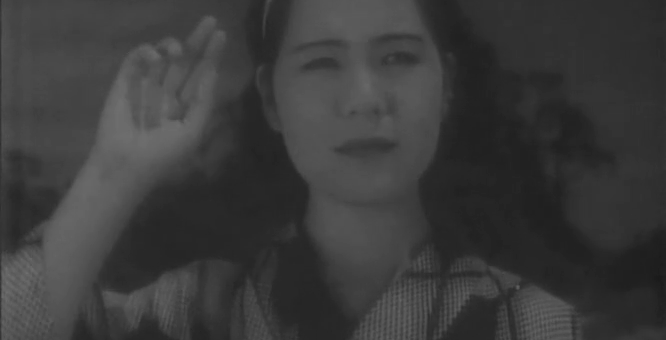
“It’s been a while since I asked, who are you?” comes the incongruous question at the beginning of Kosuke Nakahama’s stylish, hugely accomplished graduation movie B/B. What begins as an unconventional, reverse investigation of a bizarre crime committed in a bizarre world, eventually descends into a philosophical interrogation of the modern society and most particularly its continued indifference. “All the oppressors and all the oppressed, those who didn’t notice the pain. We’re all complicit. You think you’re the exception?” asks the witness of her questioners, partly perhaps in justification but also pointing the finger back at a society which prefers to avoid asking uncomfortable questions. 

Set in an alternate 2020 in which the Olympics has been suspended not because of a global pandemic but because of a bribery and corruption scandal, and a terrorist gas attack by a shady cult has recently been foiled, the central mystery revolves around the murder of a convenience store manager dubbed by some the “Icarus” killing. Sana (Karen), a high school girl, has been called in as a person of interest because of her connection with the victim’s son Shiro (Koshin Nakazawa) who has become withdrawn and is unable to offer testimony of his own. The problem is that it’s not exactly “Sana” that they want to talk to as the young woman apparently suffers from Dissociative Identity Disorder, once known as multiple personality. A cynical policeman and sympathetic psychiatrist have been tasked with trying to sort out her unreliable narrative to discover her connection with the crime. 

In a handy piece of symbolism, Sana apparently hosts 12 distinct personalities, a perfect inner jury, while the body of the murdered man was apparently dismembered into 12 parts. As the psychiatrist later advances, the personalities are a symptom of Sana’s mental fracturing in response to trauma and were not born altogether but arrived individually following the increasingly traumatic events of her life presumably beginning with her mother’s death. It’s this sense of parental abandonment that allows her to bond with Shiro who, like her, avoids school by hanging out in local parks in his case because of a further sense of rejection in realising that his teachers are aware of the abuse he suffers at home, Sana immediately noticing the scars protruding from the collar and sleeves of his T-shirt, but have chosen to do nothing to protect him. 

The goal is not to unlock the mystery of Sana, to cure her or to address the various traumas which lie at the root of her psychological fracturing but to investigate the Icarus murder. She is not, however, a credible witness. An infinitely unreliable narrator, her personalities switch at random each giving their own contradictory testimonies in their characteristic fashion. Nakahama mimics Sana’s mania through frantic cutting and abrupt edits, close ups on hands, feet or random objects rather than faces or landscapes. The earliest scenes with Sana and her posse of imaginary friends, only six of whom she is apparently able to manifest at one time, hanging out in the park are shot with a beautiful summer glow coloured with its own kind of nostalgia as she slowly befriends Shiro bonding in shared trauma and a mutual sense of safety. 

While the interrogation scenes trapped in the relative claustrophobia of the doctor’s office may have a sense of the clinical, the judicial manifests most clear in Sana’s mind. The “Council of Sages” in which all her personalities are present takes place in a minimalist space of black and white, shot like a Renaissance painting with echoes of the The Last Supper, as they crowd around and wonder what’s to be done about the Shiro problem, the manic pace slowing somewhat as Sana’s thoughts apparently clear. Yet as she later says to the disbelieving policeman pointing out the absurdity of prosecuting crimes committed as opposed to preventing those yet to occur, “This is hell, we are all trapped in hell”, advancing that she does not believe someone from hell belongs in heaven and would rather reign below than live in pitiable servitude above. Anchored by a phenomenally strong performance by Karen, sophisticated fast paced dialogue including more than a few surprisingly retro pop culture references, and featuring stylish on screen text Nakahama’s striking debut ultimately takes aim at societal indifference and perhaps points the finger at the viewer to pay more attention in a world of constant suffering. 


B/B screened as part of the 2021 Osaka Asian Film Festival.

Original trailer (no subtitles)

Green Jail (綠色牢籠, Huang Yin-Yu, 2021)

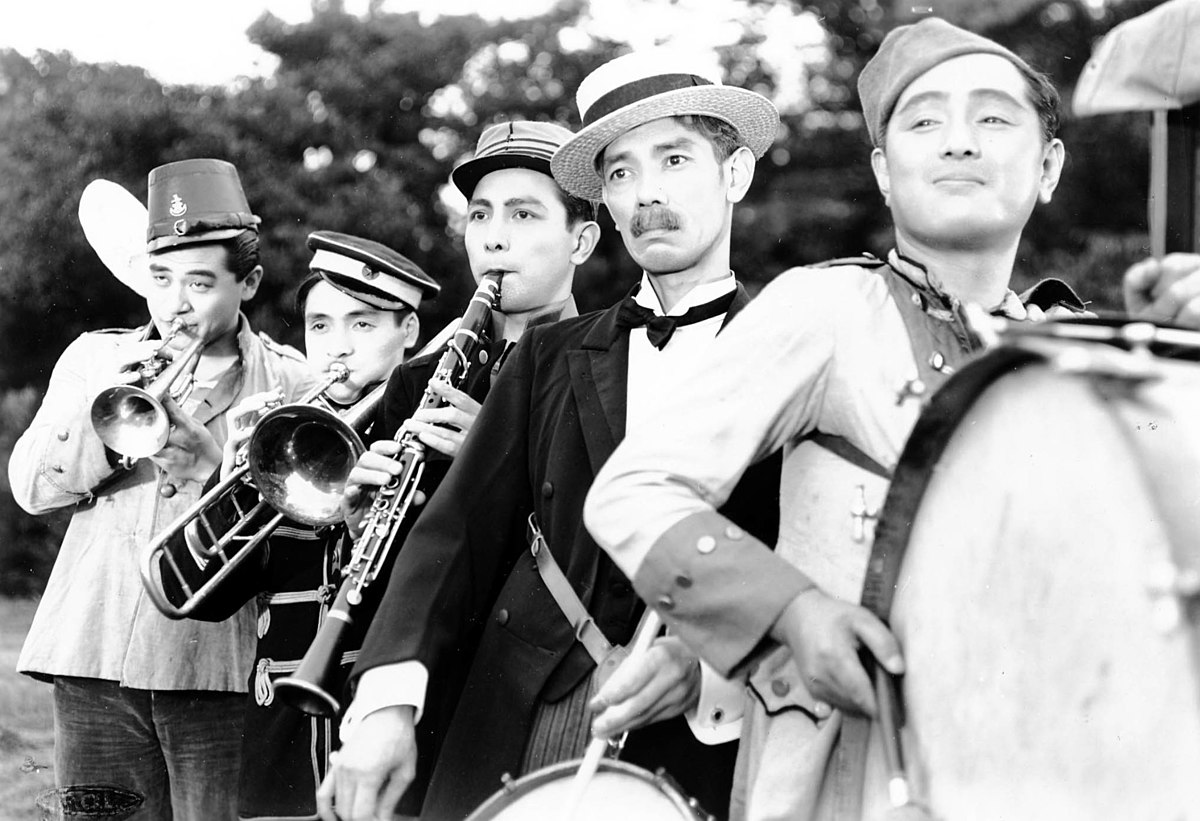
The legacy of Japanese imperialism continues to haunt a small Okinawan island once home to a sprawling network of coal mines but now mostly to ghosts of its troubled past at least according to Huang Yin-Yu’s beautifully lensed, elegiac documentary Green Jail (綠色牢籠, Lǜsè Láolóng). So named for its thick forests of mangrove trees, the island’s Iriomote Coal Mine ceased production in 1960 but from the late 19th century to the fall of the Japanese Empire at the end of the war, lured workers from not only from the Japanese mainland but from Korea, China, and Taiwan with false promises of tropical climes and plentiful fruits failing to disclose the harsh and exploitative working conditions they would later prove unable to escape. 

Possibly the last witness to these times, grandma Yoshiko Hashima (her name naturalised from the original Yang) travelled to the island with her adopted father, Yang Tien-fu who worked for the mines and was responsible for recruiting other workers, at the age of 10 leaving briefly after the war but soon returning. The last of the Taiwanese settlers, she recalls little regarding the running of the mines save witnessing frequent beatings by Japanese soldiers but does recall the discrimination she faced as a foreign worker from the local community who by far made up the smallest percentage of those employed at the mines finding herself with few friends as locals often even declined to eat their food or accept their hospitality. 

Yet in a strange way history perhaps repeats itself. Now elderly and alone, her children all having left the island returning only infrequently, she rents out her spare room for extra money to an American traveller, who, like her, came to Japan as a teenager. Though Luis tells us that he hadn’t intended to stay long on the island but likes being able to help Yoshiko who is elderly and alone, she tells us that she regrets her decision to rent to him which she claims she made in the belief he had a wife. She describes him as “‘messy”, claims he has lice, and that his slovenliness has attracted an influx of ants while the pet dog that he keeps on a leash outside disturbs her with its constant whining. Later we see him again having returned to Kansai revealing that he felt that people disliked him and found it difficult to fit in, but that his time in Okinawa has perhaps brought him clarity in the further direction of his life. 

Luis was at least able to leave the island at a time of his own choosing, but as the ghostly voice of Yoshiko’s late father reminds us those who worked in the mines were not so lucky. He tells us that he once slept on a pile of bones and the remains of workers who attempted to flee but ended up starving to death in the jungle were a frequent sight in local caves. Exploited and manipulated, workers were often hopped up on morphine, for which they had to pay, in order to up their productivity but also to make them dependent on their employment to avoid withdrawal aware that they would be unable to obtain a such substances in their home country. They also found themselves borrowing on their wages, especially if they contracted malaria and were unable to work, leaving them essentially indentured and therefore unable to leave without satisfying their debts. Yoshiko tells us that few wanted to come to “Dead Man’s Island” yet Tien-fu declares himself uncertain why some miners remained unhappy with the arrangement eventually needing to organise a specialised police force to enforce discipline complaining that workers who were in debt and therefore earning almost nothing often shirked and only worked when the police were around. 

Travelling around the otherwise idyllic landscape with its verdant green forests and peaceful rivers, Huang finds occasional ghosts of the departed miners hovering on the horizon dressed only in their white fundoshi underwear, slipping into brief scenes of reconstruction set amid the now ruined structures of the industrial mining complex. The last survivor, Yoshiko hangs on alone yet perhaps not quite reflecting on the implications of her father’s role in the development of the mines or particularly of their legacy. Her own life has evidently been hard, adopted as an infant and then married to her “brother” only to see her children desert her left behind alone in the Green Jail a guardian of a dark history few wish to remember. Juxtaposing the island’s traumatic past with the beauty of its verdant scenery Huang’s elegantly composed documentary poses some serious questions about the imperial legacy but always mindful of its wandering ghosts. 


Green Jail screened as part of the 2021 Osaka Asian Film Festival.

Original trailer (Japanese subtitles only)

The festival will also be screening Huang Yin-Yu’s accompanying short film Green Grass, Pale Fire: an elliptical, ethereal dramatisation of three men’s attempt to escape the mines only to find themselves trapped by the beautiful yet maddening landscape.

Images: (c) Moolin Films, Ltd./ Moolin Production, Co., Ltd.

Along the Sea (海辺の彼女たち, Akio Fujimoto, 2020)

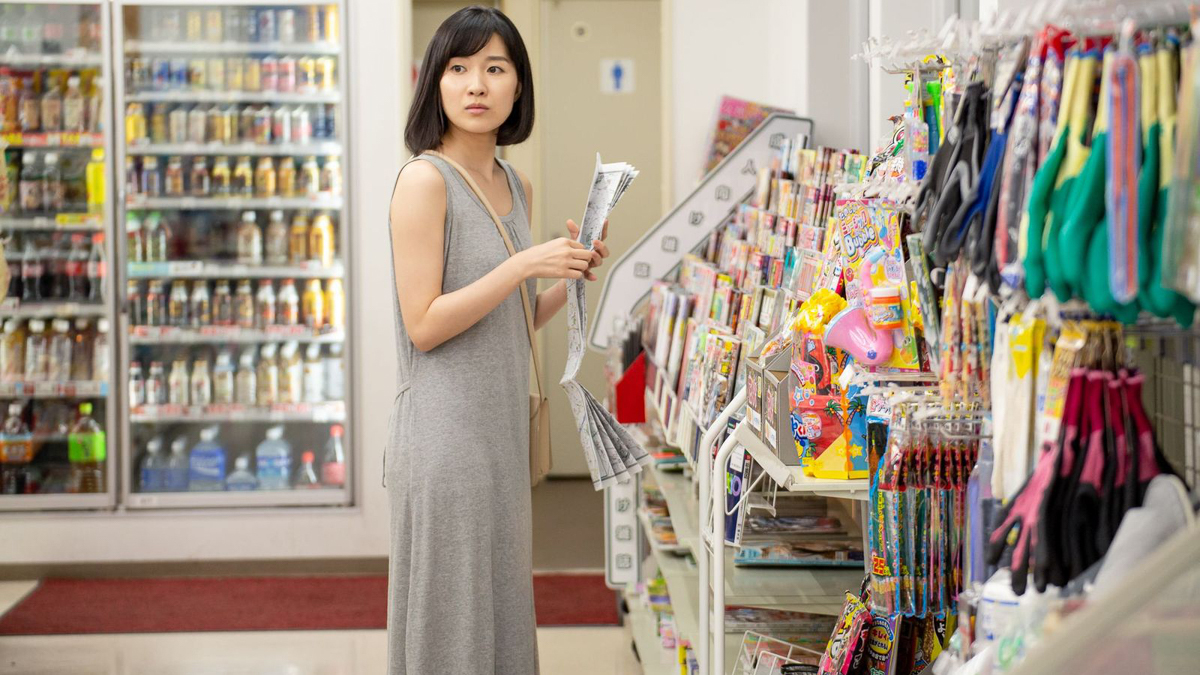
Japan has famously tough immigration law and surprisingly robust labour protections though enforcing them often proves difficult. The plight of undocumented migrant workers can however be stark as Akio Fujimoto’s Along the Sea (海辺の彼女たち, Umibe no Kanojotachi) makes plain. The three women at the film’s centre, originally from Vietnam, came to Japan legally as part of the government-backed Technical Intern Training Program set up in the early ‘90s supposedly to provide temporary training opportunities for workers from developing economies. Perhaps inevitably, the scheme has often come in for criticism that it amounts to little more than legalised people trafficking allowing employers to maintain exploitative working practices while hiring cheap foreign labour and placing the so-called interns into positions which offer no real technical training. 

This is very much the experience of Phuong (Hoang Phuong), Nhu (Quynh Nhu), and An (Huynh Tuyet Anh), three women in their early 20s who decide to leave their placement because of untenable exploitative conditions requiring them to work 15-hour days with little provision for meals or rest and no payment of overtime. Little different from traffickers, the employers have also held onto the women’s documentation in an attempt to prevent them leaving. The result of this, however, is that they will be living in Japan essentially illegally and without any kind of paperwork at all making it extremely difficult to return to Vietnam. 

Fujimoto opens with the women’s nighttime escape, a perilous journey carrying heavy bags through the night until reaching a train station and then on to buses and ferries to the frozen north of Japan where they are met by a man in a van who takes them to their new place of employment, a fish packing warehouse in Aomori. Though the work is physically strenuous, the payment is much higher than they were previously receiving and paid on time, and the conditions are much more like a regular job with more reasonable hours including weekends off. They are not watched and have a much greater degree of freedom but are obviously nervous of discovery and prevented from participating in certain activities owing to having no ID. This becomes a particular problem for one of the women, Phuong, who has begun feeling ill but is unable to get medical treatment without some kind of documentation to show hospital staff. 

What Phuong hasn’t shared with the other two women is that she suspects she may be pregnant by her hometown boyfriend. During their escape there had existed between them a fierce solidarity and now in a sense they have only each other to rely on, otherwise entirely alone in a foreign land. Phuong’s pregnancy revelation however drives a wedge between the women with Nhu in particular quickly losing sympathy and heavily pressurising her towards an abortion less out of concern and practicality than fear that she may give them all away. The later conclusion can only be that one or both of the women has betrayed Phuong by telling the broker about her pregnancy further piling on the pressure and almost certainly destroying the only support network the women had through an irreparable breach of trust. 

Turned away by the hospital Phuong resolves to buy fake documentation only to be exploited once again by a fixer who suddenly demands more money forcing her to trek through the frozen countryside after losing her train fare home. Like the broker, who is actually nice, polite, and considerate (to a point) in his treatment of the women, the fixer is also Vietnamese a reminder that the women are in a sense being exploited by their fellow countrymen. One of the broker’s chief concerns is obviously that he’s taking 10% of the women’s pay on top of his original commission on finding the work and therefore he loses out if Phuong is unable to work during her pregnancy while childcare is also incompatible with her current lifestyle. Compounding the problem is the fact that each of the women is working to provide not for themselves but for their families meaning that Phuong is in no way free to simply decide to go home and raise her child. Cheerfully discussing what they’d like to do if they had more money, Nhu and An want to pay off their parents’ debts and provide for their siblings’ education. Phuong’s predicament affects more than just the lives of the three women and it seems they are not above forcing her hand in order to protect the better life they’re suffering to provide for their families.

A melancholy character study, Fujimoto’s unflinching drama follows Phuong with documentary precision towards an almost inevitable conclusion as she finds herself hemmed in by the demands of others entirely unable to act on her own desires while denied basic rights and freedoms by virtue of her lack of documentation. Shining a light on the all too hidden lives of migrant workers, Along the Sea paints a bleak picture of the contemporary society in which even solidarity can be broken by the cruel desperation of those who have nothing else on which to depend.


Along the Sea screened as part of the 2021 Osaka Asian Film Festival.

Original trailer (English subtitles)

Keep Rolling (好好拍電影, Man Lim-Chung, 2020)

In recent years a festival darling, Ann Hui picked up the Golden Lion lifetime achievement award at the 77th Venice Film Festival yet there have been plenty of ups and downs in her 40-year career as Man Lim-Chung’s candid documentary Keep Rolling (好好拍電影) makes plain. Making his feature directorial debut, Man has been a frequent Hui collaborator as production designer and art director since July Rhapsody in 2002 and follows Hui from the production of 2017’s Our Time Will Come right up to her Golden Lion acceptance speech featuring both behind the scenes footage of Hui directing and direct to camera interviews from herself and other Sinophone directors including Stanley Kwan, Tian Zhuangzhuang, Jia Zhangke, Fruit Chan, Tsui Hark, and Hou Hsiao-Hsien. 

What quickly becomes clear is Hui’s ready willingness to face herself. She makes no secret of her on-set frustrations, Man cutting to footage of her irritated with an assistant director while another director recalls an incident from earlier in her career in which she lost her temper with her creative team only to turn up the next morning with tea and pineapple buns by way of an apology. By contrast, she is also described as unusually flexible in her working practices, willing to listen to the opinions of others and change her mind if convinced rather than stubbornly insisting on perfection or getting the image first in her head. Though she is often direct and forthright, making it plain to a PR that she won’t go on stage just to say a few meaningless words while reminding another that she’s not as young as she was and the schedule of in-person appearances is becoming unmanageable, she is also cheerful and energetic always laughing and joking unconcerned with her image and willing to expose an unvarnished vision of herself such as her agonising over a dress to wear to an awards ceremony only to turn up in her regular clothes because she didn’t have time to change after spending all day deliberating with the jury, much to the annoyance of old friend Sylvia Chang who had dressed up for the occasion. 

This is perhaps why she’s been able to weather the storm, philosophically laughing off the low points of her career in which she struggled to make ends meet as having accorded her additional life experience and added to her understanding of the lives of others. “You should treat each film as if it’s your last”, Stanley Kwan remembers her advising him, not for any morbid reason that tomorrow you may be gone but because you may never get the opportunity again should funding dry up which is a definite possibility in ever pragmatic Hong Kong. After recovering from a slump with Summer Snow, she found herself in another after the consecutive box office failures of The Stunt Woman and Eighteen Springs, funding Ordinary Heroes with investments from friends but seeing that too flop leaving her with no offers at all.

Yet as Jia Zhangke points out, an artist cannot care too much about box office and Hui herself comments on her determination to take on stories that matter to her and more recently to contemporary Hong Kong though she also admits that the growing importance of the Mainland market may be disrupting that of the local industry. Her protagonists are loners and outsiders often standing at a crossroads of history, a position pregnant with symbolism reflecting according to some the spirit of Hong Kong always anxious in search of settlement and security. Yet, they also perhaps reflect a sense of herself as a perpetual exile, born in Northern China to a Chinese father and a mother she discovered only at 16 to have been Japanese, thereby gaining new understanding which helped repair their sometimes fractious relationship as dramatised in 1990’s Song of the Exile. Now in her 70s and still working, Hui also cares for her now elderly mother reluctant to pursue the idea of placing her in residential care unwilling to admit the idea of “abandoning” someone while perhaps also reflecting on her experiences filming A Simple Life, inspired by the life of her friend and producer Roger Lee. A vibrant yet uncompromising look at the life and career of a legendary artist who helped to kick start the Hong Kong New Wave and went on to conquer European festivals, Man’s elegantly put together doc ends with the words “Long live cinema” a fitting tribute to woman who has dedicated her life to its continuing evolution.


Keep Rolling opened the 2021 Osaka Asian Film Festival. Viewers in the US will also have the opportunity to stream the film March 17 – 21 as part of Asian Pop-Up Cinema Season 12.

Original trailer (English / Traditional Chinese subtitles)

Voice of Silence (소리도 없이, Hong Eui-jeong, 2020)

“Once you join a family, you have to pitch in, right?” the aphorism-loving protagonist of Hong Eui-jeong’s disturbingly warmhearted crime caper Voice of Silence (소리도 없이, Sorido Eopsi) explains to a little girl who has recently come into his “care” as she dutifully begins massaging the earth towards a half-buried body. Partly an exploration of the family bond and its propensity to arise even in the most duplicitous of circumstances, Hong’s ironically cheerful drama is also a mild condemnation of the modern society and its capacity to push good people to do bad things in its infinite oppressions. 

Egg farmer Chang-bok (Yoo Jae-myung), for example, is a man of faith who places great stock in protestant virtues of hard work and humility. Yet he sees no irony in the sign reading “Today’s honest sweat is tomorrow’s happiness” on the wall of a disused barn where he carries out his second job preparing torture victims for gangsters and then disposing of the bodies even going so far as to say a little prayer for them, bible in hand, as he places them into shallow graves in the forest. He and his mute partner Tae-in (Yoo Ah-in) dutifully wait outside as the violence takes place, rejecting entirely their sense of complicity with the corruption of the gangster world viewing themselves only as providing a service and taking pride in providing it well.

Nevertheless, when their “manager” pays them an unexpected visit and gives them an unusual assignment of “looking after” a person for a few days they can hardly refuse even as Chang-bok reminds him it’s not in their job description. Contrary to expectation, however, the “person” turns out not to be sequestered gangster but an 11-year-old girl, Cho-hee (Moon Seung-ah), whose father is haggling over a ransom payment. When the manager is consumed by the same system he previously operated, it leaves them with a problem. They can’t simply let the girl go because the kidnappers want their cut, but the father won’t pay up and so the only other option is handing her over to child traffickers. Chang-bok and more particularly Tae-in would rather that didn’t happen, but on the other hand they aren’t really doing too much to actively prevent it. 

Just as Chang-bok and and Tae-in are “egg farmers”, the child traffickers run their business out of a moribund chicken farm. The rural economy is apparently not faring so well in the modern society. Yet Hong’s countryside vistas are presented as an idyllic paradise with bluer than blue, cloudless skies and fields of verdant green. Then again those who live off the land are perhaps most aware of its compromises and of the price of survival. Chang-bok is fond of spouting vaguely religious aphorisms such as “whatever you do, do your best and be humble. Always be thankful for what you have”, later blaming his predicament on his recent laxity in attending church, but evidently sees no contradiction between his creed and way of life. He doesn’t want to hand Cho-hee over the child traffickers, but he won’t resist it either merely seeing it as an inevitable consequence of events already in play in which he is but a passive participant. 

Tae-in, meanwhile, though literally voiceless is beginning to reject his passivity. Apparently raised by Chang-bok from infancy, he is currently a guardian to a mysterious “sister”, Moon-joo (Lee Ga-eun) around 15 years younger than he is though no mention is made of their parents or what might have happened to them. Charged with taking care of Cho-hee he finds himself developing a paternal fondness for her while she quite unexpectedly slides neatly into his home, bringing a strangely maternal if perhaps in its own way problematic order in tidying the place up and giving Tae-il a more concrete sense of familial rootedness. When the pair picked her up, they wondered if Cho-hee’s father was haggling over the ransom amount because the kidnappers took his daughter when they meant to take his son. Chang-bok is morally outraged, believing sons and daughters should be treated the same and shocked a father would’t immediately do everything he could to protect his little girl. But Cho-hee knows only too well that they value her brother more and in fact doubts her father will help her. She carries these old fashioned patriarchal values into Tae-in’s village home, brushing Moon-joo’s rather feral hair, teaching her to fold clothes away neatly, instructing her to speak more politely to her brother and not to start eating until he has taken his first bite. 

Despite themselves, the four become an accidental family cheerfully enjoying ice lollies on a hot summer’s day trying to figure out a polaroid camera which has been bought for a slightly less happy purpose. There is perhaps an idea that Cho-hee might simply not return to her wealthy, urban family in which she feels unwanted and inferior but stay here in the more “innocent” countryside where the people are “honest”, value their daughters the same as their sons (even the child traffickers apparently charge the same discriminating only by age and blood type), and bury their bodies together. Chang-bok and Tae-in aren’t bad people, just members of a corrupt society who’ve internalised a sense of powerlessness that encourages them to be “humble” and complicit doing what they can to survive. Each marginalised by disability, Chang-bok walking with a pronounced limp and Tae-in rendered impotent by his inability to speak, they do not want to turn to “crime” but are trapped at the bottom of the social hierarchy and dependent on the illicit economy. Is Cho-hee any worse off with them than with the father who wouldn’t pay to get her back? The jury is most definitely out. 


Voice of Silence streamed as part of the Glasgow Film Festival.

Original trailer (English subtitles)

Our Midnight (아워 미드나잇, Lim Jung-eun, 2020)

Should you continue following your dreams or accept defeat and “grow up” into a conventional adulthood with a steady job, marriage, and comfortable home? The hero of Lim Jung-eun’s Our Midnight (아워 미드나잇) is reluctant to give up on his acting dreams while his friends look down on him in bemusement, all secretly miserable in the regular corporate careers they’ve opted for partly for practical reasons but also because of intense social pressure. Meanwhile, across town a young woman finds herself dealing with the other side of the same problem struggling under the weight of patriarchal norms in which it becomes impossible to separate the personal and the professional. Approaching the same bridge from opposite directions, the pair of youngsters begin to find a sense of peace in shared anxiety emerging from the heavy gloom of a midnight city into a brighter light of day. 

Now in his 30s, Jihoon (Lee Seung-hun) is still an “aspiring” actor trapped in exploitative part-time work in which he has to actively fight to be paid the money he is rightfully owed. He finds himself hanging out in the old rehearsal room from his student days as if nothing had changed in the decade since he graduated. Meanwhile, his nine-year relationship with Areum (Han Hae-in) which began when they were both student actors is about to come to an abrupt end. She’s already “grown up” with a regular job earning real money and is sick of Jihoon’s fecklessness. Areum wants to get married and settle down, but not with Jihoon. Approaching another uni friend now apparently a civil servant (Lim Young-woo), Jihoon is offered a strange new job which ironically reflects the pressures of the world in which he lives. In order to combat Seoul’s notoriously high suicide rate, an experimental programme is being set up in which a squad of samaritans will patrol the local bridges overnight looking for people who seem to be in distress and may be thinking of taking their own lives. 

As one of the other employees points out, if you’re in a dark place perhaps the last thing you want is some guy turning up with a series of platitudes about how you’ll feel better in the morning but all Jihoon has to do is wander round at night so he might as well give it a try. His new role, however, may also feed into his hero complex while allowing him the opportunity to rehearse for real life in the streets. It’s on one nighttime voyage that he first encounters Eunyoung (Park Seo-eun) as she collapses on the bridge after mournfully peering out over the edge. As he later discovers, Eunyoung is a lower grade office worker who is facing workplace discrimination and career insecurity after experiencing domestic violence in her relationship with a co-worker. After reporting the matter to the police, she finds her own job in jeopardy, the older male bosses concluding she is the one at fault for causing embarrassment by dragging this taboo matter into the light while her abuser presumably gets a free pass to continue his career without further penalty. 

In any case, it seems that Jihoon’s friends aren’t faring much better in the world of work, one lamenting that Jihoon has it made because he’s living the way he chooses while another exclaims that his life is about to end because he’s getting married. In a coffee shop, he overhears a cynical businessman on the phone to his boss about scapegoating a middle-aged woman for a workplace mistake presumably to avoid keeping her on the books. Still in his hero mode, Jihoon eventually decides to say something and let the woman know she’s being manipulated, but his intervention is of little use. Like Eunyoung, the woman realises her lack of agency in the corporate hierarchy and accepts that she’s losing her job whatever happens so she might as well take the blame with the money. After all, she’s unlikely to find another position very easily in Korea’s famously difficult employment market. 

All in all, it isn’t difficult to understand why so many people are pushed towards ending their own lives, crushed by the various pressures of Hell Joseon. Yet through their midnight walk through the strangely empty streets the pair begin to generate a kind of solidarity, literally role playing their way out of mutual despair as they each stand up to those who try to keep them down be it an abusive partner and internalised shame or dismissive friends and family who disapprove of those who refuse to follow the accepted path to conventional success. A black and white odyssey through a depressed city, Our Midnight throws up its strangely colourful title card in a vibrant yellow and purple at the half hour mark, allowing its wandering heroes finally to board the train out of despair through mutual acceptance crossing the bridge together into a brighter, less oppressive existence. 


Our Midnight streamed as part of the Glasgow Film Festival.

Asian Pop-Up Cinema Returns for Season 12!

Asian Pop-Up Cinema returns for a bumper 12th season operating both online throughout the US via Eventive March 15 to April 30 and in person at Lincoln Yards Drive-in from April 15 to May 1 with a small season of films submitted for the Oscars streaming via Asia specialist streaming app Smart Cinema USA. The Season 12 Bright Star Award will be going to Japanese actress Kasumi Arimura who stars in Sho Tsukikawa’s And Life Goes On while the first episode of her TV show collaboration with director Hirokazu Kore-eda, A Day-Off of Kasumi Arimura (Episode 1: After My Homecoming), will also be getting a rare international outing.

Online via Eventive (streaming across the US unless otherwise noted):

March 15 – 19 Opening Night: The Town of Headcounts (Shinji Araki, 2020) – Japan  

A nameless protagonist on the run from loansharks is saved by a man in orange who whisks him away to “The Town” where others seeking refuge from a hostile society take shelter but his new idyll is shattered by the arrival of a young woman looking for her missing sister.

March 17 – 21:

And Life Goes On (Sho Tsukikawa, 2019) – Japan

Originally aired as a six-episode WOWWOW TV drama, Sho Tsukikawa’s And Life Goes On stars Kasumi Arimura as a young woman whose dreams of becoming an actress are derailed by the 2011 earthquake and tsunami. Joining the relief effort she finds herself falling in love with a fellow volunteer student from Tokyo.

Chola (Sanal Kumar Sasidharan, 2019) – India, Hidden Gem Encore, Free Admission

Teenage lovers meet at dawn for a secret trip into town but a sinister third party spells doom from the outset in this  Malayalam-language psychological drama.

Coalesce (Jessé Miceli, 2020) – France/Cambodia

Three men try their luck in Phnom Penh: Songsa sells jeans for his father, Thy joins a biker gang and works in a gay bar, and father-to-be Phaerum hopes to become a car salesman, but all discover a different side of the contemporary city.

I, The Sunshine (Sengedorj Janchivdorj, 2019) – Mongolia

Mongolian drama in which a little boy narrates the stories of his mother, father, and himself spanning from life on the Steppe where a kid and his friends go on adventure to find a better TV signal, to the city where a contortionist’s life is changed by her mother’s injury, and finally to the contemporary society where the boy manages to escape being bullied after his computer mouse transforms into a girl capable of granting his every wish.

Keep Rolling (Doc) (Man Lim-chung, 2020) – Hong Kong

Candid documentary exploring the life and career of legendary director Ann Hui.

The Silent Forest (Ko Chen-nien, 2020) – Taiwan, (streaming in Illinois only)

A deaf teenager faces a dilemma when he transfers to a special school and witnesses a young woman being bullied this multiple award-winning drama from Taiwan.

March 24 – 28:

A Day-Off of Kasumi Arimura (Episode One: After My Homecoming) (Hirokazu Kore-eda, 2020) – Japan

Kasumi Arimura stars as a fictional version of herself enjoying a rare day off visiting her mum in the first episode of the late night drama directed by Hirokazu Kore-eda. Review.

Changfeng Town (Wang Jing, 2019) – China

Nostalgic quirky drama set in small-town China following a small group of children over the course of a summer.

Chen Uen (Doc) (Wang Wan-jo, 2020) – Taiwan

Documentary exploring the life and career of legendary Taiwanese comics artist Chen Uen who sadly passed away at his desk at the young age of 58.

Come and See (Doc) (Nottapon Boonprakob, 2019) – Thailand

Documentary exploring controversial Thai Buddhist sect Dhammakaya and its leader Dhammachaiyo who claims to have met Buddha but has also been accused of money laundering and embezzlement.

Elisa’s Day (Alan Fung, 2020) – Hong Kong

A policeman is forced to face a mistake he made 20 years previously while investigating a crime of passion.

Search Out (Kwak Jung, 2020) – South Korea, Free Admission  

Three youngsters turn internet detectives after stumbling on a malicious Instagram profile which appears to manipulate the vulnerable towards suicide in Kwak Jung’s cyber thriller.

March 27 – 31:

Journey to the West (Doc) (Jill Coulon, 2015) – France/China

Taking its name from the classic story of the monk Tang Sanzang and his sidekick the Monkey King Jill Coulon’s documentary follows a series of Chinese tourists on a 10-day European bus tour .

No. 76 Horror Bookstore (David Chung, Pon Hung Tze-Peng, 2019) – Taiwan, Hidden Gem Encore, Free Admission

Four-part horror anthology from Taiwan featuring adaptations of spooky online stories in which a woman moves into a haunted apartment, a person tries to survive in a world in which food has been declared illegal, teenagers play hide and seek in an abandoned house, and a taxi driver who took his own life attempts to return to the mortal realm to reconcile with his daughter.

Wisdom Tooth (Liang Ming, 2019) – China

A young woman’s pain and confusion with the world around her is manifested as a dull ache in her jaw in Liang Ming’s icy coming-of-age drama. Review.

The Shell Collector (Yoshifumi Tsubota, 2016) – Japan, Hidden Gem Encore, Free Admission

Lily Franky stars as an introverted professor whose life changes after he saves a painter who washes up onshore by administering venom from a poisonous shell bringing further travellers to his door in search of various cures.

Two Blue Stripes (Ginatri S. Noer, 2019) – Indonesia

Indonesian family drama in which a teenage couple’s unplanned pregnancy provokes a confrontation with a series of cultural norms and social issues.

Watch List (Ben Rekhi, 2019) – USA/Philippines

A married couple join a voluntary rehabilitation programme in the midst of Duterte’s war on drugs only for the husband to be found dead in the street some time later beside a sign reading “I’m a pusher; don’t be like me” leaving the wife with no choice other than to become a police informant in order to provide for her children.

April 26 – 30:

14 Days 12 Nights (Jean-Philippe Duval, 2020) – Canada/Vietnam

A French-Canadian woman travels to the birthplace of her adopted daughter in Vietnam and ends up travelling the country with her birth mother.

April 1 – 15:

Oscar Contenders from Asia: streaming via Smart Cinema USA (further details to be revealed in late March)

True Mothers (Naomi Kawase, 2020) – Japan

Heartbreaking drama from Naomi Kawase in which a young couple adopt a baby only for the birth mother to resurface some years later.

Better Days (Derek Tsang, 2019) – Hong Kong

Derek Tsang’s Soul Mate followup stars Zhou Dongyu as a bullied young woman bonding with a bad boy played by boyband superstar Jackson Yee. Review.

The Man Standing Next (Woo Min-ho, 2020) – South Korea

Woo Min-ho re-examines the assassination of President Park Chung-hee through the lens of 70s conspiracy thriller. Review.

Roh (Soul) (Emir Ezwan, 2019) – Malaysia  

A single-mother and her two children find themselves beset by darkness after taking in a little girl who wandered out of the jungle in Emir Ezwan’s atmospheric folk horror. Review.

Lincoln Yards Drive-in:

Lincoln Yards Drive-in is located at 1684 N. Throop Street. Films will be shown at sunset on mostly Thurs/Fri/Sat/Sun nights. Each film will be shown once only. Total capacity: 40 vehicles per screening Only. 

Thursday, April 15: CENTERPIECE One Second Champion (Chiu Sin Hang, 2020) – Hong Kong  

A single father takes to the boxing ring after developing the ability to see one second into the future.

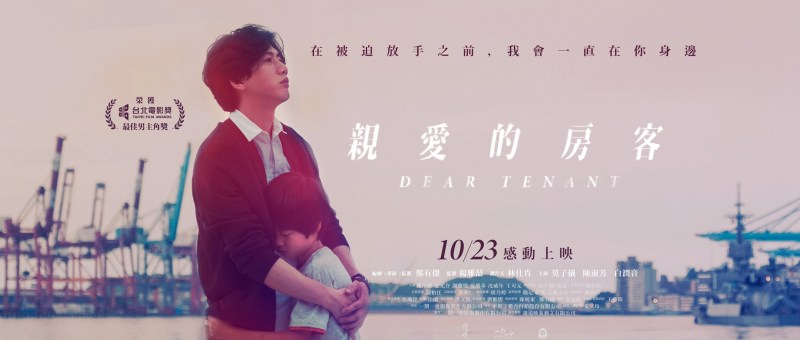
Friday, April 16: Dear Tenant (Cheng Yu-chieh, 2020) – Taiwan  

A gay single father raising his late partner’s son faces a custody battle when his mother-in-law dies and the boy’s uncle returns from abroad after discovering that he intends to adopt him and take over the family property.

Saturday, April 17: I Still Remember (Lik Ho, 2021) – Hong Kong  

A dejected real estate agent, a young woman hoping to lose weight to run with her idol, and a retired PE teacher trying to keep a promise to his late wife find direction in running in Lik Ho’s sporting drama.

Sunday, April 18: One Summer Story (Shuichi Okita, 2020) – Japan

A high school girl embarks on a summer adventure of self discovery tracking down her estranged birth father in Shuichi Okita’s heartwarming coming-of-age drama. Review.

Thursday, April 22: Black Light (Bae Jong-dae, 2020) – South Korea, Free Admission, Advance RSVP is required

Two women working at the same factory are brought together by the discovery their husbands were involved in a fatal car crash, one passing away and the other remaining in a coma leaving his wife to raise their teenage daughter alone.

Friday, April 23: Moving On (Dan-bi Yoon, 2019) – South Korea, Free Admission, Advance RSVP is required  

A young girl learns a few harsh lessons about the adult world during a summer at grandpa’s in Yoon Dan-bi’s sensitive coming-of-age drama. Review.

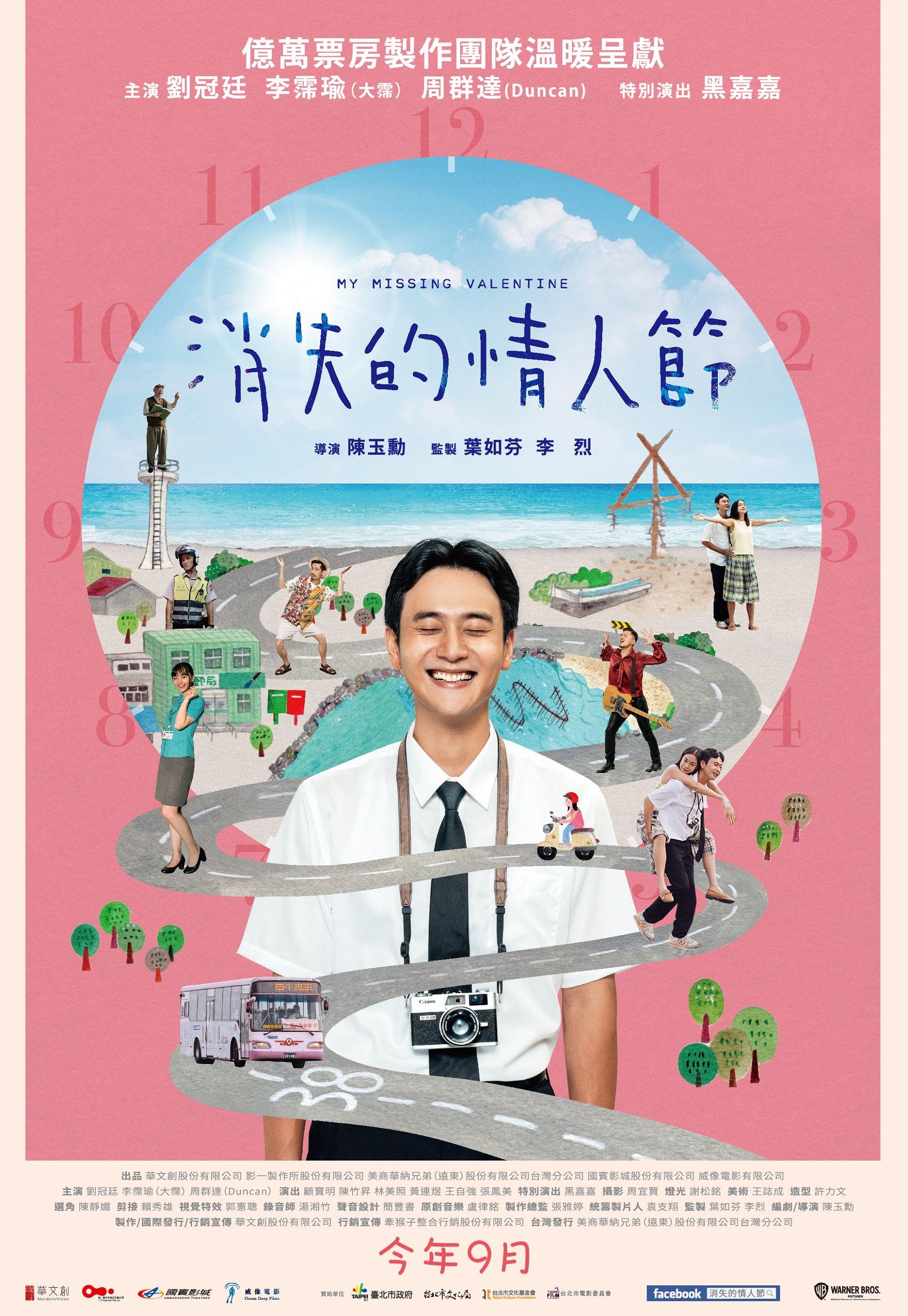
Saturday, April 24: My Missing Valentine (Chen Yu-hsun, 2020) – Taiwan

A woman always in a hurry meets a dashing man on the way home from work and they agree to meet up for a special Valentine’s Day date but when she wakes up the next morning she discovers that Valentine’s Day has already passed…

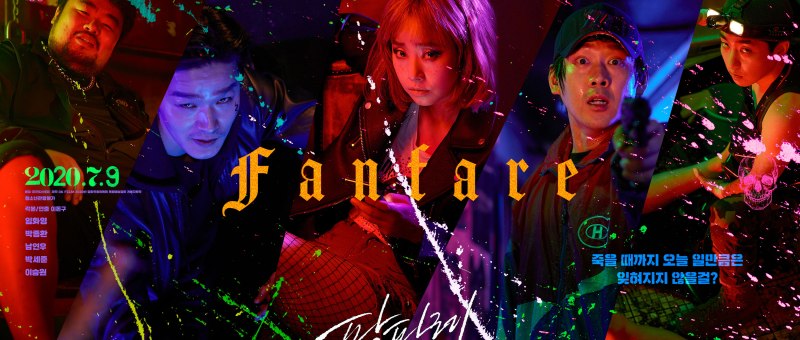
Sunday, April 25: Fanfare (Lee Don-ku, 2019) – South Korea, Free Admission, Advance RSVP is required

A young woman is abducted by armed robbers after they raid the coffee bar she was hanging out in on Halloween killing the barista in the process

Saturday, May 1 CLOSING NIGHT Ready O/R Knot (Anselm Chan, 2020) – Hong Kong

Romantic comedy in which a couple together for five years have conflicting views on marriage and go to great lengths to defend their respective positions!

Asian Pop-Up Cinema Season 12 runs online March 15 – April 30, via Smart Cinema USA April 1 to 15, and at Lincoln Yards Drive-in April 15 to May 1. Full details for all the films as well as ticketing links can be found on the official website and you can also keep up with all the latest news by following Asian Pop-up Cinema on  FacebookTwitterInstagram, and Vimeo.

Back to the Wharf (风平浪静, Li Xiaofeng, 2020)

“How dare you want to live when your existence is pointless” a father admonishes his blameless son, deflecting his own willing complicity in the persistent decline of the modern China. Repeatedly abandoned and betrayed firstly by his society, then by his friend, and finally by his father, the hero of Li Xiaofeng’s moody neo-noir Back to the Wharf (风平浪静, Fēngpínglàngjìng) first chooses self-exile only to eventually return and wonder if his crime has been forgotten allowing him to live again before discovering that nothing really changes, there is no escape from the whims of the rich and powerful in an increasingly feudal society. 

Quiet and studious, Song Hao (at 17: Zhou Zhengjie / at 32: Zhang Yu) first wakes up to life’s unfairness in 1992 when he’s called into school on a holiday by his headmaster who breaks the news that he’s losing his guaranteed university place supposedly because his grades are good enough to get there on his own and others need it more. “I like to prioritise the collective over the individual” he explains, reminding him that an extra person from the school going to a top uni can only be a good thing though it’s obviously a blow to Hao not to mention his ambitious father Jianfei (Wang Yanhui) who immediately rings up to complain and discovers that the place is going not to a needy student but Hao’s best friend Li Tang (Lee Hong-chi), son of the local mayor. Angry and confused, father and son set off on circular journeys to confront their respective counterparts, but there’s a storm raging and Hao accidentally wanders into the wrong house after noticing the door flapping in the wind. After walking past a baby sleeping upstairs he runs into an old man who mistakes him for someone else and soon lashes out, shoving fruit into his mouth and trying to suffocate him at which point Hao picks up a knife and stabs his attacker in the belly. Taking flight in terror Hao believes he has just killed a man and orphaned a little girl, never knowing that his father arrived a few minutes later and finished the old man off to stop him talking or that Li Tang was watching the whole thing from a window in the opposite building. 

Returning 15 years later for his mother’s funeral, it’s Li Tang who is most pleased to see Hao when he runs into him by chance at the ruins of the scene of his crime now a future development site for the young real estate tycoon, that is if the now young woman (Den Enxi) the orphaned baby has become whom Hao had been following out of guilt-ridden curiosity would agree to vacate her family property. While Hao has been languishing as a lonely construction worker, Tang has prospered off the back of the 90s economic boom largely thanks to an entrenched network of local corruption that runs from his father the mayor through Hao’s father Jianfei who was handed a fat promotion presumably to placate him over the uni places scandal. Tang has, in a sense, stolen his future leaving him quite literally displaced wandering in the ruined landscape of a haunted past while his father, he discovers, had divorced his mother and remarried in order to have another son. “Your upbringing was a failure” he cooly explains, he needed another male heir to salvage the family reputation and restore his name. Jianfei has, however, done pretty well out of the arrangement now a wealthy man with a separate apartment Hao is not welcome to visit but planning to send his wife and child abroad and retire to Australia. 

Intending to leave as soon as possible, Hao nevertheless starts to wonder if it hasn’t blown over and he might in a sense be allowed to seek happiness, bamboozled into a romance with an old school friend (Song Jia) apparently carrying a torch for him all this time. The past, however, will not let him go. The corruption runs deeper than he even suspected as does Li Tang’s insecure greed and duplicity, attempting to force friendship through blackmail. An embodiment of post-70s fuerdai Li Tang is an amoral capitalist willing to do anything it takes in pursuit of wealth, but at heart a coward ashamed that he owes everything to his father’s machinations and perhaps projecting all of his resentment onto his old friend Hao whose future he so casually stole.   

Yet the message seems clear, men like Hao will always be at the mercy of men like Tang. Perhaps this is the bargain his father has made, but it’s one that Hao can no longer tolerate once Tang forces him to destroy the roots of his redemption. The only sane response to the madness of the modern China, he seems to say, is to go mad in one way or another. Even so, this being a Mainland movie, the nihilistic fatalism of the inevitable conclusion is somewhat undermined by the brief coda in which a policeman reassures a young woman that the crime has been investigated and the wrongdoers punished while the now familiar title card explains to us who went to prison and for how long for their many and various moral transgressions. Hao’s existence is rendered “pointless” because he is unable to live by the rules of a corrupt society, yet his self-destructive act of rebellion does perhaps bring about change if only in the names involved. Beautifully shot with brief flashes of expressionism amid the rain drenched streets of a decaying city to the melancholy strains of a noirish jazz score, Li’s fatalistic takedown of the inequalities of the post-90s society is an exercise in style but one which lets few off the hook as its nihilistic conclusion stabs right at the heart of patriarchal corruption. 


Back to the Wharf streamed as part of the Glasgow Film Festival.

Original trailer (simplified Chinese subtitles only)

The Swordsman (검객, Choi Jae-hoon, 2020)

“Is this all there is to being a soldier?” a jaded young man asks of an apparently reluctant mentor as he, also reluctantly it seems, prepares to betray his king merely because the balance of power has shifted. Drawing heavily from wuxia and chanbara, Choi Jae-hoon’s The Swordsman (검객, Geomgaek) once again takes on the futility of violence as the two men who might each lay claim to the title attempt to escape the complicated world of Joseon politics but find themselves unable to escape the legacy of the blade while facing an internal debate as to how to protect that which is most precious to them.

Loosely “inspired by true events” as the opening title card insists, the action opens in 1623 with King Gwanghae (Jang Hyun-sung) fleeing the palace in the wake of insurrection. Like pretty much every other ruler, he’s been accused of murdering his siblings to usurp the throne and has lost the the support of the army, including his personal swordsman Min Seung-ho (Jung Man-sik), after instructing his generals to surrender to the enemy. Valiantly protected by lone defender Tae-yul (Jang Hyuk), Gwanghae makes the ultimate sacrifice for his people and agrees to go quietly pausing only to secretly entrust his infant daughter to the last man standing. 

Flashforward 15 years or so and Tae-yul is now a mountain recluse raising his teenage daughter Tae-ok (Kim Hyun-soo) alone in hiding from nefarious forces. The problem is that his eyesight is now failing and a trip to the physician to acquire medicine proves fruitless when it turns out such rare substances are available only to those with connections. Tae-ok wants to take up an offer from a local lord to become his foster daughter in order to get her father the medicine, but he is understandably reluctant. Meanwhile, a new threat has arrived in town in the form of thuggish Qing slave traders apparently intent on further disrupting the already unbalanced Joseon political situation which is divided in support of the Ming. 

The political context in itself is only subtly conveyed, though this is a rare period drama in which the focus is only tangentially on courtly intrigue in the suggestions that constant machinations by ambitious lords have undermined the notions of soldierly honour and loyalty that ordinarily support the feudal system. The conflicted Min, a man of the sword, retires from the court because he isn’t certain he acted correctly in his actions towards Gwanghae and fears he was merely manipulated as he later is by bloodthirsty slave trader Gurantai (Joe Taslim). Gurantai and his henchmen seem to be on the look out solely for a worthy opponent to satiate their boredom, threatening an entire kingdom in the process. Tae-yul, by contrast, has renounced the way of the sword altogether and attempted to isolate himself from worldly violence in order to better protect his daughter only to find himself dragged down from the mountain by her love for him in insisting he find the means to fix his eyes. 

When Tae-ok is kidnapped by Gurantai who has figured out who she is (in one sense or another), Tae-yul enters full on Taken mode determined to save both the girl herself and reclaim this relic of an earlier, purer world to which she is perhaps the heir pausing only to free a few slaves on his way. Operating on a much lower budget than your average period drama, Choi shoots mainly in a shaky handheld maintaining an indieish aesthetic in keeping with the rough and ready quality of the narrative which seems to draw equally from Hollywood westerns, Hong Kong wuxia, and Japanese samurai movies in its relentless drive towards the final showdown. Making a few points about he changing nature of the times and the futility of violence, the minions of a venal lord are eventually cutdown by rows of Qing armed with rifles while they flounder helplessly with only their blades, swordsmanship itself now an obsolete art though apparently one still valuable to bored, insecure leaders such as Gurantai. Nevertheless, the expertly choreographed action scenes have a mounting intensity from Tae-yul’s early refusal to unsheathe his distinctive double-edged blade to the merciless killing of a female bystander at the film’s conclusion. Ending with an ironic return to the world, apparently now changed, The Swordsman kicks back against feudal hypocrisies while its blinded hero uses the only weapons available to him in order to protect what he considers to be worth protecting. 


The Swordsman streamed as part of the Glasgow Film Festival.

US trailer (English subtitles)

Dreams on Fire (ドリームズ・オン・ファイア, Philippe McKie, 2021)

“A dancer must always be careful” the heroine of Philippe McKie’s Tokyo odyssey Dreams on Fire (ドリームズ・オン・ファイア) is warned, though her passage may prove smoother than that of many small town girls coming to the big city in search of fame and fortune. Nevertheless, her progress will take her through the unseemly underbelly of the entertainment industry rife with exploitation and duplicity to the relatively comforting world of fringe subcultures where mutual support is a way of life and failure merely another kind of opportunity. 

As a young girl, Yume (dancer and model Bambi Naka in her first leading role), whose name literally means “dream”, is captivated by an avant-garde dance performance and determines to become a dancer herself though her authoritarian father (legendary butoh dancer Akaji Maro) does not approve of her artistic ambitions and attempts to forbid her from leaving for Tokyo but she defies him and leaves anyway. Once there, however, she finds herself struggling to survive living in tiny cubical rooms and able to support herself only by working on the fringes of the sex trade in a cosplay hostess bar dressed as a schoolgirl. She pursues her dancing dream by visiting underground hip hop clubs but receives the first of many setbacks when she’s voted out of a dance off in the first round in favour of a talented child in an improbably snazzy outfit. 

Nevertheless, as the first of her teachers, who happened to see and admire her performance, tells her the humiliation of losing only smarts so much because you care which is the kind of pain you can easily repurpose for motivation. This is a motif which will be repeated in Yume’s life which proves nowhere near as dark or depressing as one might assume though it’s true she continues to experience setbacks and disappointments while occasionally doubting her vocation as a dancer in the face of seemingly constant failure but always rescued by another hopeful who saw and liked her performance even if the judges might have preferred someone else. 

Yet as she finds out, dance talent isn’t all it takes in the contemporary arts scene. An audition she might otherwise have booked is lost at the last moment when she confesses she’s not got many followers on social media, the interviewer patiently explaining that she might be a better dancer than anyone in their current troupe but their business is built on “image” and dependent on their online reach so someone with no profile is of not much use to them though they’d love to see her again once she’s successfully built her “brand”. Conversely, a client at another job working the floor show at an S&M-themed bar gets her a job coaching an aspiring underground idol who apparently can’t dance for toffee, but once she gets there Yume quickly realises the young woman’s lack of aptitude is a result of her exploitative treatment at the hands of the idol industry. Apparently not allowed to change her outfit even if it smells she’s been instructed not to eat to keep her weight down which of course leaves her lightheaded and low in energy, an unhelpful combination for learning complicated dance routines. On the way out, Yume hears the other members of the band bullying her though there’s nothing she can do to help. 

Meanwhile, she finds it increasingly difficult to weigh up the degrees of exploitation she’s willing to accept from her increasingly manipulative boss at the hostess bar (Masahiro Takashima). Her first friend, Sakura (AV actress Okuda Saki), had taught her the ropes cautioning her never to let anyone touch her in ways that make her uncomfortable but herself quits abruptly in embarrassment after a customer brings up her past as an AV star thereafter disappearing without trace. Sakura had explained in an ironic paradox that she wasn’t in hostessing for the money but was essentially lonely, introducing Yume to the first of her experiences of the more unusual aspects of the Tokyo subculture scene in a metal bar where she fondles a lizard over drinks but is herself perhaps slightly lost in an internalised and unwarranted shame because of her past in the porn industry. This seems to be a fate Yume is keen to avoid, eventually telling her exploitative manager where to go rather than consent to his control after narrowly escaping a dangerous encounter with “important” yakuza clients. 

Going by “Asuka” at the club and eventually assuming the dancer name of “Karasu” (crow), Yume searches for an identity while continuing to pursue her dream but perhaps unrealistically meets only good and supportive people outside of the exploitative Kabukicho bar world discovering in her various subcultures from fetish clubs to the dance studio only dreamers like herself eager to see others succeed. Capturing the neon night life of the contemporary city, McKie’s camera perhaps leans too far towards the ethnographic in its slight exoticisation of the underground Tokyo scene even if admittedly seen through the eyes of country girl Yume but also allows her to find within it freedom and self-actualisation while her talent takes her in new, sometimes unexpected directions, as she continues to pursue her dream in an atmosphere of positivity and mutual support.


Dreams on Fire streams from 6th March as part of the Glasgow Film Festival.