Vampire Clay (血を吸う粘土, Soichi Umezawa, 2017)

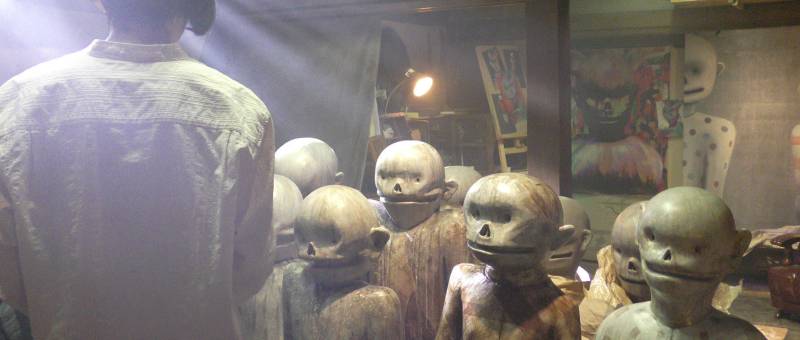
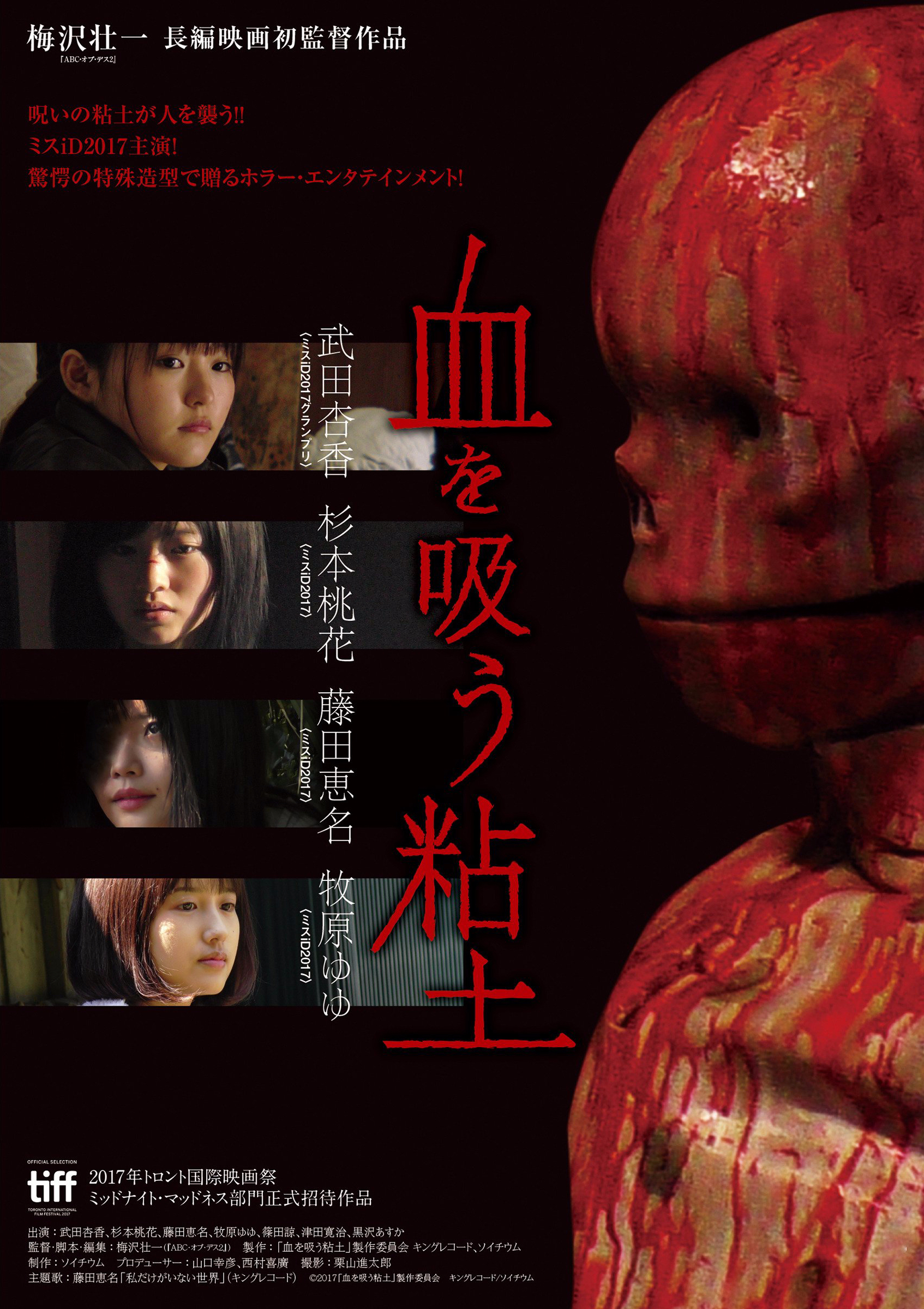
The artist consumed by their art is a potent motif, creation and destruction two sides of the same coin, but there’s rarely been a painter attacked by the canvas quite as literally as the sculptors of Vampire Clay (血を吸う粘土, Chi wo Su Nendo) are depleted by their material. The first feature from practical effects specialist Soichi Umezawa is refreshingly unpretentious, unabashed schlock designed to showcase Umezawa’s obvious skill in stop motion and prosthetics but it does perhaps have a point to make in the legacy of embittered artistry and frustrated dreams of those whose art is never recognised. 

Middle-aged sculptress Aina (Asuka Kurosawa) flees the duplicitous Tokyo art scene after being betrayed in love by her no good husband who also runs a studio specialising in training students to gain admission into one of Japan’s many exclusive art schools. In fact, Umezawa somewhat strangely opens with a title card revealing the comparatively small percentage of pupils each school accepts in contrast to the large number of applications, neatly setting up the desperation and sense of inadequacy that plagues most of our heroes, Aina included. Retreating to the country she sets up shop in a small shed which is later ravaged by an earthquake, leading to her discovery of a buried tin filled with mysterious clay and other artistic accoutrements left behind, she assumes, by the previous occupant. The trouble starts when errant student Kaori (Kyoka Takeda), who had been studying at a workshop in Tokyo, returns earlier than expected much to the chagrin of rival Reina (Ena Fujita) and discovers a new pupil has borrowed her clay. Predictably, she decides to use some from the mysterious bag, reviving the evil with water and discovering that somehow this magic substance seems to have upped her game. 

Umezama continues to flag the urban rural divide, the students beginning turn against Aina believing that it’s her time in Tokyo which has given Kaori a leg up, something that further wounds Aina in her sense of professional pride as she channels her rage and frustration into moulding her pupils into top candidates as a means of besting her ex. The sculptors knead their frustrated desires into the clay, it feeds on their misery and disappointment. This particular clay, however, is more cursed than most in that it is apparently infected by some kind of toxic disease which plagued the previous owner, symptomatic of the degree to which his art, or more pointedly the refusal of others to recognise it, destroys him. 

Aside from that there are a host of interpersonal problems between the students and their teacher. As the only male sculptor points out, they are both classmates and enemies as they are forced to compete against each other for the prize of recognition in the form of admission to an art school. Meanwhile, he is also the subject of a love triangle, refusing a homemade bento from an admirer in favour of one from another, this essential act of emotional betrayal later providing an in route for the murderous clay. 

Nevertheless, Umezawa is not so interested in the implications of the interpersonal drama as its potential for bloody action. The clay works its way into the bones of the sculptor, consuming and possessing them in a series of pleasingly retro, Cronenbergian practical effects. “I don’t want to lose my individuality to convention” Reina had snapped back in insisting that this small rural school suits her fine despite having just been given a dressing down for the “conventionality” of her final assignment. The clay, perhaps, attempts to rob them of their individuality, turning them into a mindless plastic mass fuelled only by negative emotions, thirsty for blood and hellbent on destruction. Somewhat incomprehensibly, a failed sculptor turned restaurateur convinces the original owner of the clay that his creepy creations will sell like hot cakes to hospitality establishments in the city, allowing his final humanoid legacy to become a kind of Frankenstein’s child carrying all his rage and resentment into the future but attacking, it seems, other marginalised artists rather than the hated Tokyo arts scene which is the real target of his ire. Aina, having for the moment neutralised the clay, considers unleashing it against her ex, bringing the grudge full circle in its own, ironic, way but also consumed by resentment and jealousy. The “toxic waste” of artistic disappointment refuses to die, burrowing its way underground even as the responsible attempt to bury it, lying in wait for the next tortured artist willing to sell their soul for illusory success.


US release trailer (English subtitles)
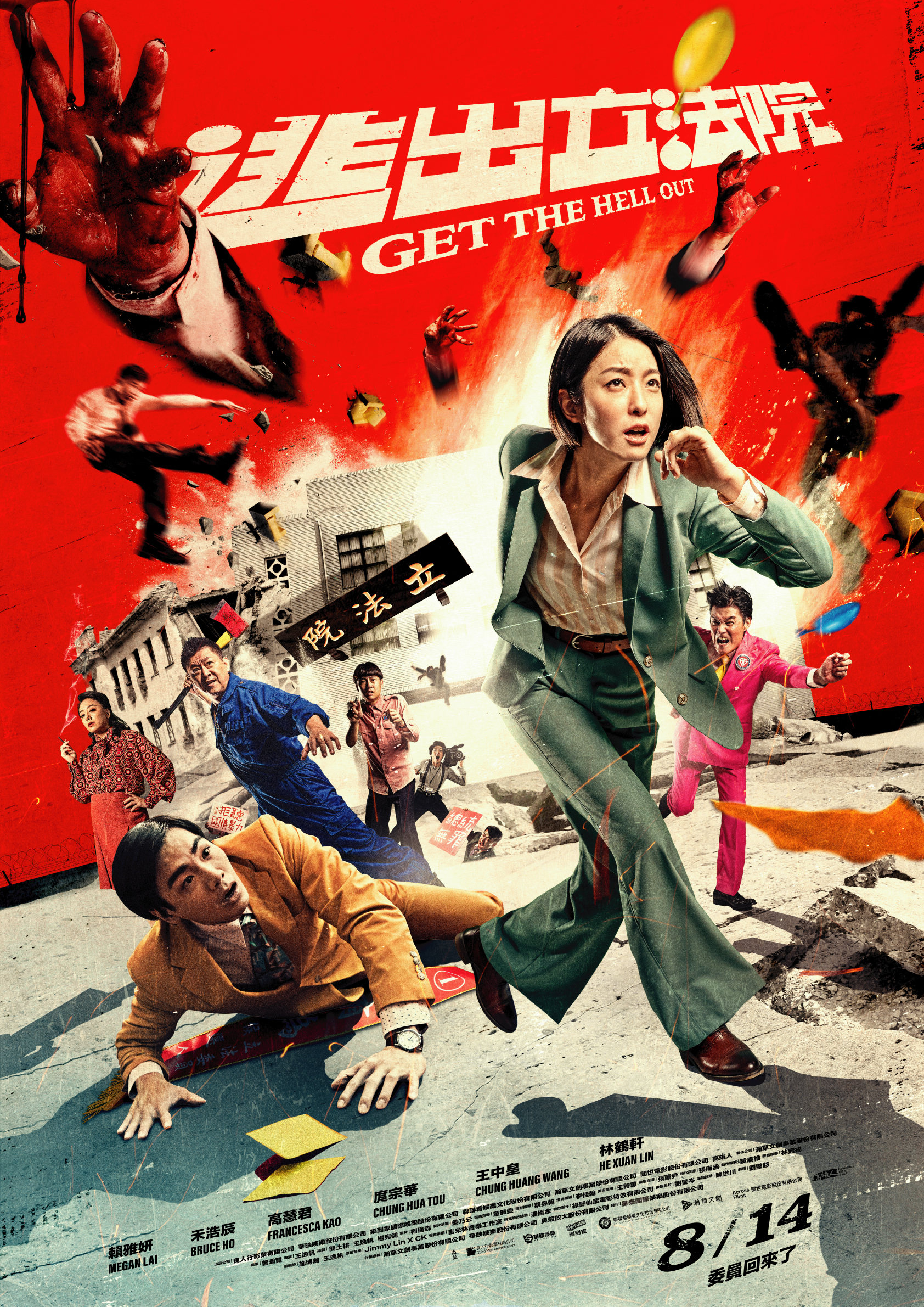
Get the Hell Out (逃出立法院, Wang I-Fan, 2020)

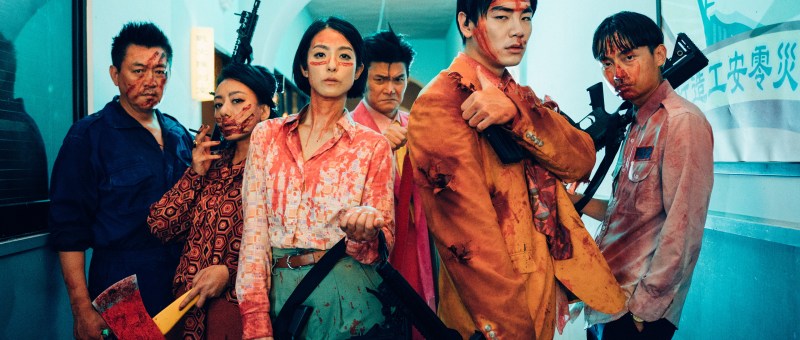
“A wrong movie makes you suffer for 90 minutes. A wrong government makes you suffer for four years” according to the title card at the beginning of Wang I-Fan’s madcap Taiwanese comedy, Get the Hell Out (逃出立法院, Táo Chū Lìfǎyuàn). A deliberately unsubtle political satire, Wang’s debut feature ultimately has its heart in the right place as its hapless hero comes to the conclusion that he just wants to protect his “home” and, ironically starts to believe he can really do that through the democratic process now that the legislative palace has literally been destroyed and rebuilt, freed of “idiot” zombies. 

Bumbling security guard with a nosebleed problem Wang You-Wei (Bruce Ho) has relatively little interest in politics. In fact, he’s only working in the building because his childhood crush Ying-Ying (Megan Lai) has recently become an MP standing on a single issue of getting the building of a foreign chemical plant she holds responsible for a plague of “idiot” rabies in her home town cancelled. Despite the prevalance of actual physical fights in the parliament, Ying-Ying is forced to stand down after her rival colludes with friendly press to provoke her into a violent outburst which results in a barrage of misogynistic criticisms that she obviously has trouble controlling her emotions and is unfit for office. Trying to protect her in the fray, You-Wei becomes an accidental hero in the media for valiantly defending press freedom. What ensues is a battle of influence as both sides try to manipulate the political capital of You-Wei’s unexpected celebrity, Ying-Ying hoping to convince him to take over her seat and oppose the chemical plant, and her rival Kuo-Chung (Wang Chung-huang) hoping he’ll join his cypto-fascist “Better Generation” faction to support it. 

Openly described as a gangster, the garishly dressed Kuo-Chung is a symbol of thuggish, vacuous populist politics, expert at playing the system to his advantage. The irony is that You-Wei starts to use his political brain but is operating under a misapprehension. His goal is impressing Ying-Ying and he incorrectly assumes getting more power by throwing his lot in with Kuo-Chung will help him do that, but all she cares about is getting the chemical plant cancelled to save her hometown with a secondary goal of eliminating the threat from the weird “plague” she assumes is caused by toxic waste and turns the infected into rabid “idiots”. Some might say the political class is already zombified, a bunch of numbskulls drunk on power, or that it’s the populace who are sleepwalking through their lives, but no one was really prepared for the prime minister getting turned into a zombie after a meeting with a foreign head of state to discuss the economics of the chemical plant. 

As Ying-Ying puts it, she spent so much time fighting to get in to parliament, and now she’s desperately trying to fight her way out. Wang’s “infection” allegory takes direct aim at a corrupt political class who might not care about the various risks of the chemical plant because they only affect a small group of relatively poor people living in a remote coastal village while the supposed economic and political benefits are important for the national good. But what Ying-Ying and You-Wei come to realise is that the entire nation is their “home” and so they must protect it by making it better and that starts by curing the “plague” of “politics”. Nevertheless, even if you get rid of Kuo-Chung another like him will rise, identically dressed, in his place because the battle for democratic freedom is never really won. 

Wang throws every post-modern device he can think of at the screen from Streetfighter graphics to onscreen karaoke lyrics and ironic product placement in the greatest tradition of low budget, nonsense Taiwanese comedies with the necessary consequence that the gags come thick and fast and are largely disposable while the spy movie pastiche complete with megalomaniacal, techno-genius villain never quite takes off. Nevertheless, there is gory zombie action aplenty filmed with cartoonish glee and not a little irony as Ying-Ying and You-Wei attempt to fight their way out of the corrupt parliament before it all gets blown to hell only to walk right back in there afterwards with a positive message of altruism and personal responsibility as they commit to rebuilding better with a revitalised idealism and belief in the power of democracy purged of the plague of idiocy.


Get the Hell Out streamed as part of Scene Taiwan 2020.

Original trailer (English subtitles)
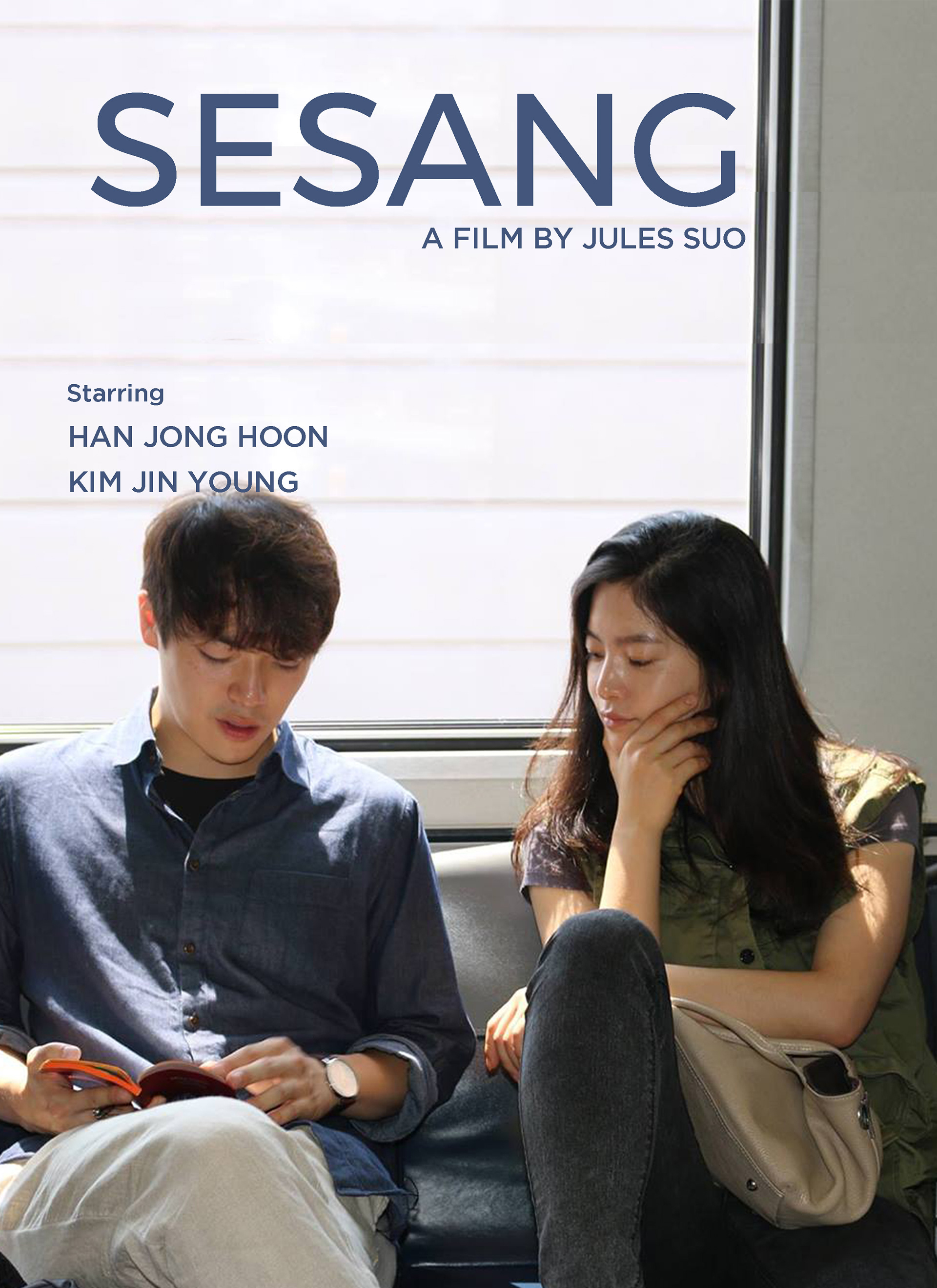
Sesang (세상, Jules Suo, 2019)

“Our life’s journey consists of both positive and negative. It teaches us to move forward and fulfil your dreams” according to Han-chul (Han Jong-hoon), a digital nomad waxing philosophical about the benefits of the unencumbered life. “Sesang” (세상) in one sense just means the world, but it can also mean “a life” or even a life’s journey, a passage through the world both a part of it and not. Han-chul, however, by the film’s conclusion is perhaps beginning to wonder if there are also costs involved in a life without connection, unanchored by his floating existence and imbued with a sense of existential loneliness as the world changes around him while he changes with it but perhaps not quite in step. 

The film opens in New York with aspiring actress Nari (Kim Jin-young) travelling to the airport to meet Han-chul, her long-distance boyfriend, at the airport. Han-chul has been working on a documentary in Japan about a divorcee who relocated there and is seemingly visiting Nari while waiting for another opportunity. Nari’s barbed comment that she isn’t sure they “share the same dreams” when Han-chul remarks on the similarity of her upcoming project about a long-distance couple to their real lives perhaps signals that she’s not entirely satisfied with their relationship, eventually sparking an argument that leads to a break-up when Han-chul reveals he’s been offered a job in Berlin annoyed with him for once again abruptly changing his plans, both in his abandonment of her and of his complete lack of consideration for the inconvenience he may cause her through breezing in and out of her life. 

Then again both Nari and Han-chul appear to be fairly self-contained. Each of them find themselves spending a lot of time home alone while living with roommates who are generally out. Nari’s New York life is spent largely within the Korean ex-pat community, often working on Korean productions, eating in Korean restaurants and going to noraebang with Korean friends. She is offended when her mother tries to send her money, resentful at the implication that she’s struggling but also finding herself at the mercy of a sometimes cruel industry that limits the kind of work available to her while normalising an abusive working environment. The one job we see her do which is presented in such a way as to mimic real life is also problematic in playing into several different unpleasant and racially charged stereotypes at once. Later she is invited to rejoin a production she apparently left because of the behaviour of a Korean producer who, she is assured, has since been fired. Her break-up with Han-chul is followed by a job offer back in Korea which sees her pursuing parallel careers, travelling back and forth working at “home” but living “abroad”. 

Staying on in New York, Han-chul too takes a room with someone who’s never in but takes the opportunity to rid himself of most of his possessions. In fact, even his hair becomes progressively shorter as time moves on to the point at which it doesn’t quite suit him, an old friend somewhat derisively commenting on his “edgy” new style. He tells a mutual friend, Eun-hye (Jina Nam), who is definitively settled in New York by virtue of owning a restaurant, that there are many things he may still want but attaining them cannot compare with the lightness of having nothing. Han-Chul’s philosophy may even extend to people as well as things. Perhaps he wanted Nari, or still wants her, but not enough to give up his life of freedom or indeed to deny her hers. He is happy to hear that she too is travelling the world, gaining new experiences and growing as a person, at this point at least convinced that life is about forward motion and the expansion of borders internal and external. 

Yet on his eventual return to Korea after experiencing a degree of disappointment, he seems lost rather than free, a man without a plan adrift without direction. His aloneness seems all the more obvious among the throng of travellers at the airport each heading somewhere or nowhere only they can know. He sees movies in empty theatres, lives in bare rooms, and wanders down empty streets. Often returning to transitory spaces such as airports and train stations, Suo’s preference for long takes with a degree of detachment hints at a cinema of loneliness asking us if this increasingly migratory existence has disrupted the natural rhythms of human relationships such as that of Nari and Han-chul who were, at least according to Eun-hye, once “so close” but now very far apart both physically and emotionally. Han-chul may be searching for the very thing that he has rejected in his floating life, but nevertheless remains on the move chasing his dreams if perhaps not quite sure what exactly they may be. 


Sesang streams in the US Oct. 23 to 31 as part of this year’s Korean American Film Festival New York.

Original trailer (English subtitles)
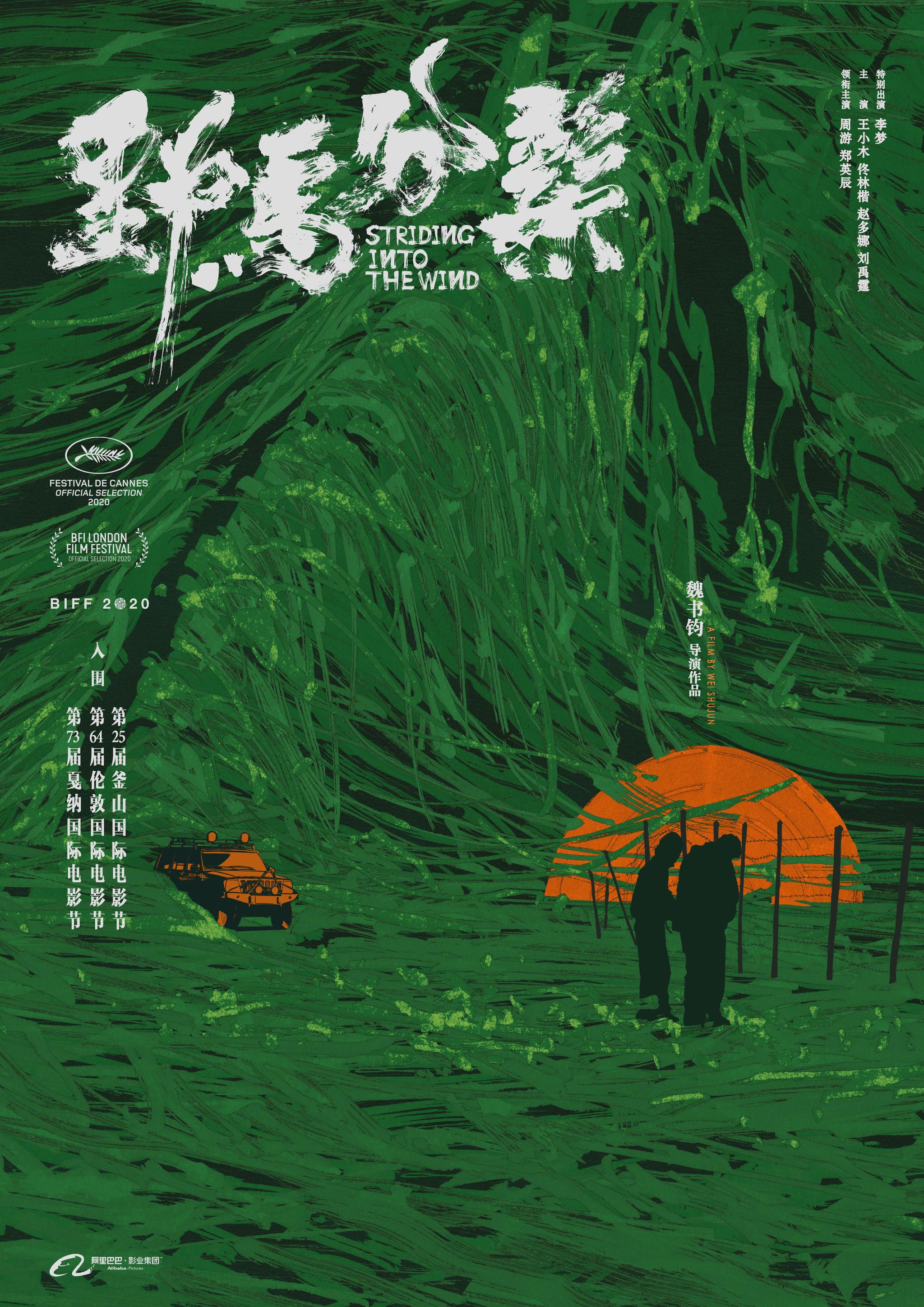
Striding into the Wind (野马分鬃, Wei Shujun, 2020)

“You’ll have a fabulous life too” dejected student Kun is advised, if only he’ll buy a secondhand ’97 Jeep Cherokee sitting forlornly on the lot of an irritated car salesman. If it’s so great why has no one else bought it, he not unfairly asks only for the salesman to reply that it’s because they’re morons who don’t know a good deal when they see one. The directorial debut from Wei Shujun whose graduation short On the Border won the Special Jury Distinction award at the 2018 Cannes Film Festival, Striding into the Wind (野马分鬃, Yěmǎ Fēn Zōng) is in many ways a tale of millennial malaise as the post-90s generation contemplate the relative elusiveness of the Chinese Dream in a society which seems to them much more authoritarian and restrictive than many would imagine.  

A 20-something film student, Kun (Zhou You) is not so much rebellious as founding his resistance in slacker passivity yet it’s his failure either to fully reject the rules of his society or accept his complicity that prevents him moving forward. As the film opens we watch him go rogue during a driving test, literally veering off course in his quest for independence as symbolised in his repeated failure to acquire a licence. So little does he care for the rules of his society that he goes looking for a car anyway, prepared to settle for the cheapest available which is what leads him to the Jeep Cherokee, wilfully mis-sold a vision of the Mongolian Dream by the overconfident salesman. Showing him videos of the wide open grasslands re-invisioned as a new frontier complete with wild horses running free over the horizon, the salesman of course neglects to mention that a vehicle of this age is not going to be particularly reliable, nor cheap to maintain especially if you can’t manage your own mechanics, and will soon be rendered unroadworthy under new emissions guidelines. Kun is being sold a pup. His quest for independence is primed to stall on the highway. It literally cannot take him where he wants to go. 

Meanwhile, he finds himself struggling under the weight of a young man’s ego squeezed on both sides by those who feel he’s not working hard enough at his studies and those who feel his quest to become an indie filmmaker is frivolous and irresponsible. Kun and his friend Tong (Tong Lin Kai) when they go to class at all more or less ignore their professor, at one point firing back at him that he teaches because he cannot do having never actually worked on professional film set. Kun’s attitude is to an extent vindicated in that he does actually seem to have more experience and be ahead of the man who is supposed to be teaching him, but on the other hand if he’d only bit his tongue and played by the rules he’d simply have passed the class and graduated rather than getting himself an instant fail for non-attendance with a side of pissing off the professor. Tong is mystified that, in essence, they’ve paid a lot of money and wasted four years to learn how to press a couple of buttons, but they’re also reminded by the not so subtle father of Kun’s girlfriend Zhi that these days you’re nothing without a PhD. Nervous and chastened, Kun lies that he might become a teacher like his mother as his parents intended, only for Zhi’s father to railroad him into applying for a steady civil service job right there and then, filling the form himself on his own laptop leaving Kun feeling even more emasculated at the hands of the older generation. 

For her part, Zhi is already getting bored with Kun’s irresponsibility. Forced to degrade herself with a part-time job as eye candy at various corporate events, she’s seemingly ready to head into a respectable middle class life while Kun is still dreaming of the grasslands and overly attached to his uncool car. She complains that he’s always saying he’s going somewhere but never actually goes, irritated when he rejects her offer to take him somewhere on her dime. Eventually she advises him to scrap the Jeep, a confrontation that threatens their relationship but Kun is still too attached to an illusionary dream of freedom to consider it. When he eventually gets to Inner Mongolia while working on a friend’s film shoot, he discovers that the “spirit of the grasslands” is largely absent. The banquet they’re invited to an awkward spectacle for tourists, the local culture repurposed and repackaged as a vision of an exoticised otherness that is the flip side of Kun’s equally inauthentic desire for a Chinese wild west. The grasslands appeal because their vast emptiness expresses infinite freedom, but paradoxically precisely because there is nothing there. 

Constantly frustrated by male authority figures from his father who is literally a cop to his resentful professor, quietly sneering girlfriend’s father, and the entire police force, not to mention his unseen mother apparently a well known professor synonymous with educational success, Kun finds himself constrained, longing to run free like the wild horses of the Mongolian plains but unable to shake off the yoke of social responsibility. Forced to give up the Jeep because of his own foolishness in misguidedly trying to evade authority, he becomes a passenger listening to the radio as a man he thought ridiculous and deluded is accorded unexpected success. Kun’s filmmaker friends emulate Wong Kar-wai, Hou Hsiao-Hsien, and Hong Sang-soo, looking beyond the Mainland for a sense of artistic cool but equally seeming to have few truly “independent” ideas of their own. The Chinese indie scene, Wei seems to say, flounders like Kun trapped by his own sense of inertia unable to free himself from an oppressive society, striding into the wind but ill-equipped to counter its resistance. 


Striding into the Wind streams in the UK 16th October, available to start between 6.30 – 7pm as part of this year’s BFI London Film Festival.

Clip (English subtitles)

Not Quite Dead Yet (一度死んでみた, Shinji Hamasaki, 2020)

©2020 Shochiku Co., Ltd. Fuji Television Network, Inc.

“What’s important is purpose, to live for something. Without it you’re as good as dead” according to the hero of madcap existentialist farce Not Quite Dead Yet (一度死んでみた, Ichido Shinde Mita). The feature debut from ad director Shinji Hamasaki pits a rebellious student against her overly literal, authoritarian dad as the pair begin to come to a kind mutual understanding only once he “dies” after being tricked into taking an experimental drug in order to unmask conspiracy within his own organisation. 

College student Nanase (Suzu Hirose) intensely resents her father (Shinichi Tsutsumi), the CEO of Nobata Pharmaceuticals which he has long been pressuring her to join. She’s currently the lead singer in death metal band Soulzz only according to a record scout at one of their shows their problem is that they’re all “zz” and no soul. Meanwhile, Nobata has assigned an underling, Matsuoka (Ryo Yoshizawa), to shadow her partly because Matsuoka too has very little presence and is in fact nicknamed “ghost” for his essential invisibility. The trouble starts with the escalation of a corporate feud as Nobata’s old buddy Tanabe (Kyusaku Shimada) starts manoeuvring to get his hands on the company’s research into an anti-ageing serum codenamed “Romeo”, planting a mole inside the organisation. As a consequence of his research another of the scientists nicknamed “Gramps” has stumbled on another drug which renders someone temporarily “dead” for a period of two days, naming it “Juliet”. Watabe (Yukiyoshi Ozawa), a consultant Nobata has brought in to streamline the business, convinces him to take the experimental drug in order to flush out the mole while secretly working with Tanabe to take over the company by forcing through a merger while Nobata is out of action. 

A typical socially awkward scientist, Nobata believes that life is about experiment and observation, a belief system which has thoroughly irritated his daughter who still lives at home but has divided the territory in half with clearly marked red tape. Nanase’s animosity towards her father apparently stems back to the death of her late mother Yuriko (Tae Kimura), angry with him that he never left his desk and didn’t make it to the hospital in time to see her before she passed away. “Life’s not a lab experiment” she sings, recalling her childhood during which her overly literal father took away life’s magic by patiently over explaining fairytales, scoffing that Prince Charming probably didn’t revive Sleeping Beauty with a kiss but a transfer of static electricity, while continuing to order her around in fatherly fashion now she’s all grown up. Perhaps still stuck in a petulant adolescence she started the band to vent her frustrations with the world in the form of a death metal “mass”, but she’s growing up. Her bandmates are getting jobs or getting married, she’s still stuck with no real clue about what it is she actually wants to do with her life except that she doesn’t want anything to do with Nobuta Pharmaceuticals.  

Once her father “dies”, however, she begins to gain a new appreciation for his life philosophy able to see but not hear his “ghost” while his body lies on a table in the office cafeteria. Nobata went into pharmaceuticals to help people, but has been led on a dark and vacuous path pursuing anti-ageing technology which is in itself a rejection of change and transience. Ending all her sentences with the word “death”, that’s not something Nanase can get behind. She believes in growing old gracefully, that they make drugs not to cheat death but to be able to spend longer with those they love. As her father had advised Matsuoka to do, she begins to find her purpose, rediscovers her soul, and figures out what it is she’s supposed to do with her life.

Matsuoka, however, seems to be permanently “invisible” despite the tentative romance that develops as he and Nanase attempt to subvert the conspiracy to stop them doing her dad in for good, brushing up against the venal Tanabe who seems set to muster all his corporate advantages against them partly because of an old grudge against Nobata. Of course, you have to wonder why the conspirators didn’t just poison him rather than having him go Juliet and then entering a race against time to cremate him before he wakes up, but as Nobata reminds us there are many things which science cannot explain. A cheerfully silly Christmas tale of rediscovering what it means to be “alive” in the presence of death, Not Quite Dead Yet is zany seasonal fun but with plenty of soul as its heroes learn to shake off cynical corporatism for a healthy respect of the values of transience.


Not Quite Dead Yet screened as part of Camera Japan 2020.

Original trailer (English subtitles)

Images: ©2020 Shochiku Co., Ltd. Fuji Television Network, Inc.

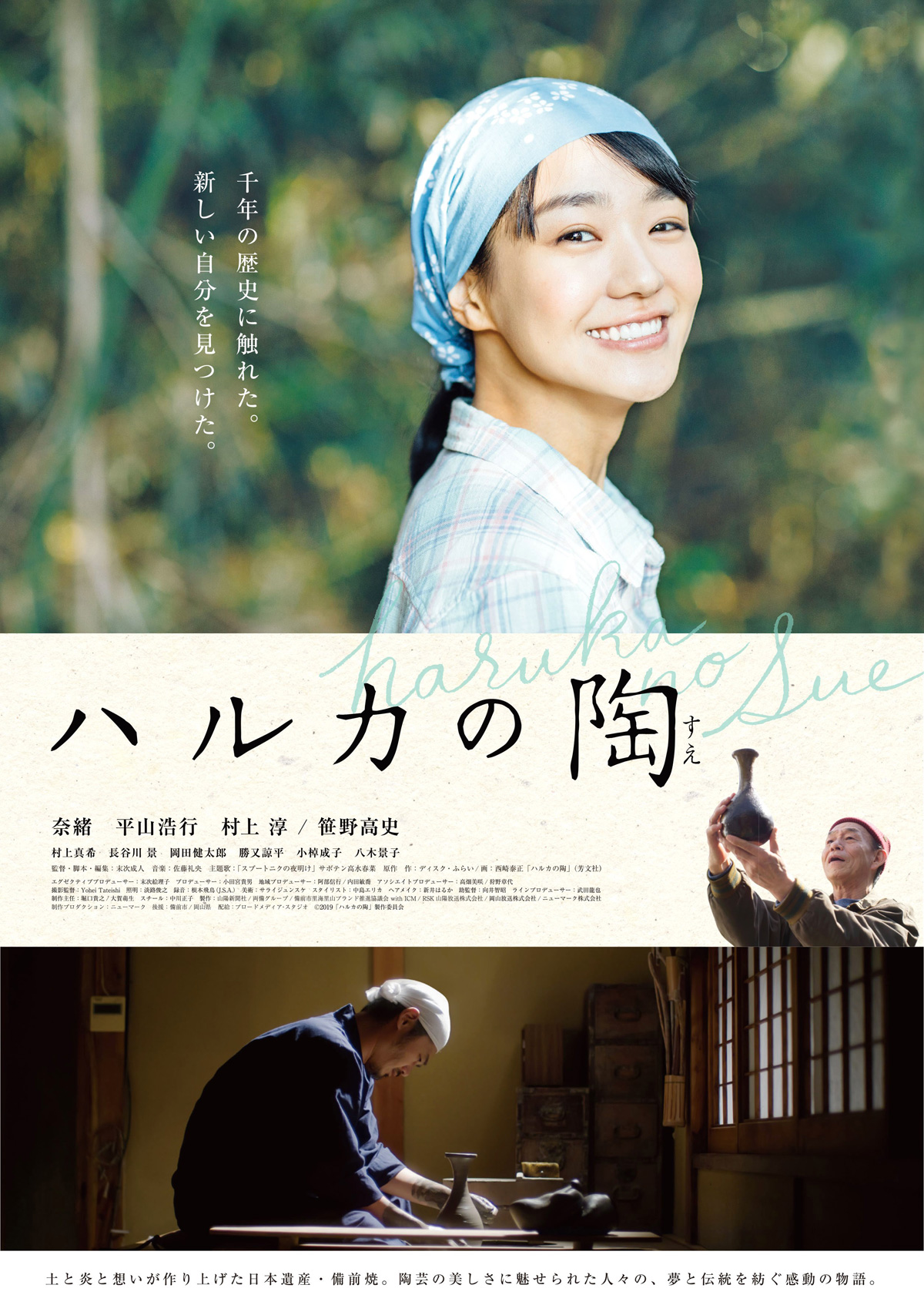
Haruka’s Pottery (ハルカの陶, Naruhito Suetsugu, 2019)

(c)2019 "Haruka's Pottery" Film Partners

“Growth comes only through connecting with others” according to a master craftsman in Naruhito Suetsugu’s manga adaptation Haruka’s Pottery (ハルカの陶, Haruka no Sue). Japanese cinema has a long history of showcasing traditional crafts but this may be the first dedicated to Bizen ware, artisanal pottery which allows one lost young woman to find purpose in her life after being deeply moved by an oversize platter displayed in a department store exhibition. What she discovers, however, is that pottery is not an isolationist art and lives only in practical application which is in its own way impossible without interpersonal connection. 

A 20-something office worker, Haruka (Nao) laments that nothing exciting is ever going to happen to her. She has no dream or particular passion and sees nothing in her future other than an ordinary job and conventional marriage. Dragged into a department store exhibition by her boss who reminds her that she never has plans so she can’t refuse, Haruka is captivated by a large Bizen ware platter and finds herself heading to the library to find out all about this ancient craft. It’s not long before she’s made the decision to quit her job and try to become a potter herself, determined to train with the artist who made the platter, but when she arrives in the Bizen ware capital of Imbe, Okayama, she finds him cold and unresponsive. Only after bonding with an old man, Toujin (Takashi Sasano), who turns out to be a “national treasure” of traditional pottery does she manage to persuade Osamu (Hiroyuki Hirayama), the aloof and grumpy potter, to allow her to stay. 

Talking to Toujin later Haruka reveals that one of the reasons she was so struck by the platter was because her family is small and she’d always dreamed of a big gathering where everyone could eat off the same large plate. Toujin fires the same logic back at Osamu, that subconsciously he made the plate because he’s lonely. It’s not something he would ever use, in fact it’s too big to have much of a practical use at all, it was basically just a kind of beacon to summon someone to him, to express the depths of his solitude. Osamu lost both his parents as a child, his mother to illness and his father (Jun Murakami) to overwork brought on by grief, and has kept himself to himself ever since. He may have become a master potter, but according to Toujin at least he is somewhat lacking as a human which means, in essence, that his art will never progress not to mention that he’ll go on being lonely and resentful all his life if he fails to seize this opportunity to pass on his Bizen ware skills to a willing pupil.

For her part, Haruka is determined to learn and only from Osamu, the man who made the plate. While others in the town which is largely populated by other Bizen ware potters are supportive if somewhat surprised that Osamu has taken on an apprentice, Haruka finds herself at odds with Toujin’s daughter Yoko (Maki Murakami) who, according to her husband, has not exactly had it easy as a female potter. Yoko resents Haruka as an arriviste, unconvinced she’s really serious and assuming she’s another refugee from the city fed up with urban life and looking for something simpler which is to say she’s probably underestimated the commitment required to become a Bizen ware craftsman. Haruka is fond of cheerfully stating that she’ll persevere, but that’s rarely enough for Osamu or for Yoko who’d prefer to see some concrete results. Yet as Toujin had said, it’s as well to connect with as many people as you can and learning something from each of them she begins to grow in confidence, becoming a full part of the Bizen ware community and earning the respect of the other potters. 

As an old lady puts it, Bizen ware is designed to be used. Its harsh corners become soft and round through contact, and the same is true for people too. Having pushed himself too far trying to connect with his late father through their shared art, Osamu too softens assuring Haruka that pottery is not an exact science and it’s OK to fail every now and then as long as you learn something when you do. “The potter must have a strong will and be as unbreakable as the pottery itself” in order to “melt people’s hearts on the spot” Toujin had somewhat paradoxically told her, but Haruka perhaps learns that there’s truth in what he says, falling in love not only with traditional craft but with the small community of craftsmen accepted as one of their own in her unbreakable love for Bizen ware. 


Haruka’s Pottery screened as part of Camera Japan 2020.

Original trailer (no subtitles)

Fancy (ファンシー, Masaoki Hirota, 2020)

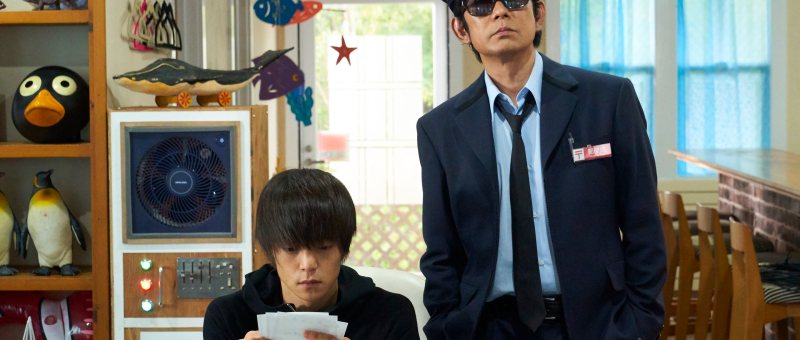
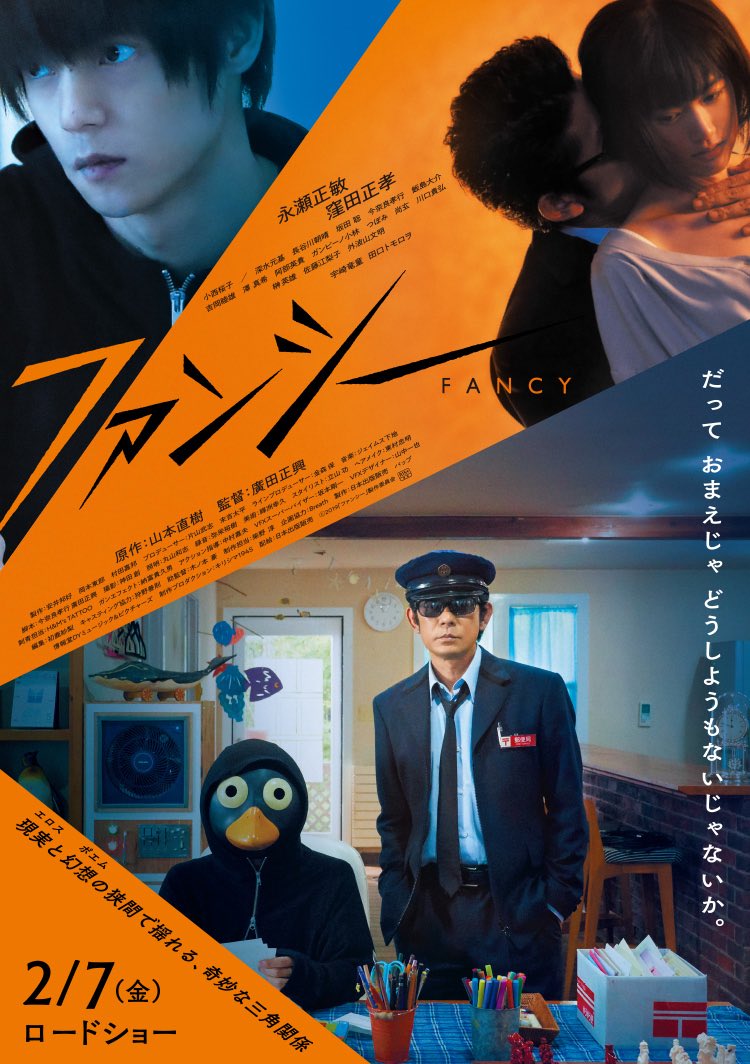
“Every minute of life is yours to make use of” according to the ultra cool hero of Masaoki Hirota’s Fancy (ファンシー), a laconic postman with a penchant for sunshades and a resigned attitude to transience. Adapted from the manga short story by Naoki Yamamoto, Fancy is indeed a transitory tale, a minor episode in the life of a poet who thinks he’s a penguin, his best friend the postman, and his penpal seeking her own kind of escape in an impromptu and probably unwise proposal of marriage. 

The postman, Takasu (Masatoshi Nagase), is also a tattooist, a former yakuza now reformed and living quietly in an old-fashioned hot springs town which seems to be stuck in the Showa era. As Takasu’s colleague Tanaka (Tomorowo Taguchi) puts it, it’s pretty “standard” now for everyone to have two jobs, his side hustle being a shooting gallery which is a front for the sex trade. Even the local Buddhist priest is intent on trying to sell everyone he meets a funerary monument, while Southern Cross Penguin (Masataka Kubota) is a best-selling poet particularly popular with high school girls in addition to being a flightless aquatic bird in human form. Penguin doesn’t expect us to believe him, but tells us that a penguin is just what he is and there’s no particular reason for it. So completely does he take his penguinhood that he opens the door in a full penguin mask, dresses only in black and white, mainly eats raw fish, and keeps his home ice cold with the aid of several industrial-size air conditioners. Penguin prides himself on answering the many fan letters he gets, explaining that they’re not so much “fans” as “comrades” who are also looking for the “shining country”. In any case, his fan mail is how he met the postman, his only friend, who is content to shiver in his home putting whisky in his tea to stave off the cold. 

Penguin’s life begins to change, however, when he gets a letter from “Moon Night Star” (Sakurako Konishi), a fan with whom he’d been corresponding. Moon Night Star pretty much insists on becoming his “wife”, failing to take Penguin’s hints that she might not be very happy “married” to an aquatic animal who can’t go outside. As we will later discover, Moon Night Star is in her own way rebelling against her fate, taking refuge in Penguin’s igloo and engaging in a delusion that she loves him in order to make it work. For his part, Penguin perhaps comes to like her too, but he can also see that she’s quite “depressed” stuck in the cold with him, pushing her towards the outside and into the arms of the postman. 

Takasu, meanwhile, finds himself on a series of borders as he begins to confront his past in the form of his absent father and the family he seems to have lost, sympathetically telling his pained former wife that her life is hers to do with as she wishes, perhaps in a sense cuttingly refusing her apology but also accepting her right to seize the present. Another man with two jobs, Takasu’s childhood friend is both yakuza gang boss and hotelier, confiding that the gangster stuff is too stressful and he wishes he could just focus on the hotel in the same way the Takasu has now become a postman. It’s his strange relationship with a yakuza drifter, however, that threatens to drag him back into gangsterdom as he learns that there’s been a schism in his former clan. With a turf war brewing, the loyalists have taken over his friend’s hotel, unreconstructed Showa-era yakuza on the streets of a pleasant hot springs resort. 

“We’re doomed anyway, do what you like” one of the goons intones, in one sense subverting Takasu’s mantra but in another perhaps embracing it. A memory of his father reminds him to “make very second count” while also catching him in an endless moment of gaze, unable to forget the back of the woman his father was tattooing at the time. Takasu looks and does eventually touch, but admits his jealousy obsessed with skin as canvas only latterly taking off his shades in a willingness to see and be seen. Penguin, meanwhile, who wanted to swim in a sea of words, finds himself floating free, braving but eventually succumbing to the heat before exclaiming that he’s going to close his eyes to allow a new story to start. The love of a poet is fleeting, Takasu reflects as each of the various protagonists shifts towards their “main” identity, edging back towards conventionality in abandoning the “fancifulness” of their sometimes strange existences. There will, however, be more strange adventures because even if it falls apart beneath your feet, life’s what you make it, be you a postman or a penguin. 


Fancy screened as part of Camera Japan 2020.

Original trailer (no subtitles)

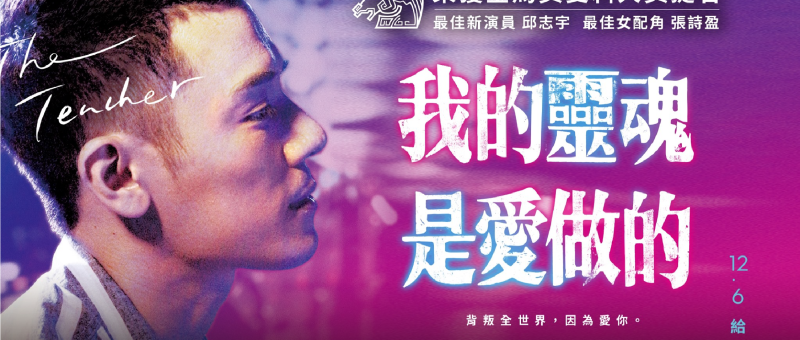
The Teacher (我的靈魂是愛做的, Chen Ming-Lang, 2019)

Taiwan became the first Asian nation to legalise same-sex marriage on 24th May, 2019. That does not however mean that the LGBTQ+ community is universally accepted or that entrenched conservative social attitudes simply evaporated over night. As Chen Ming-Lang’s The Teacher (我的靈魂是愛做的, Wǒ de Línghún Shì Ài Zuo de, AKA My Soul is Made of Love) makes plain, not even those within the community are entirely free of prejudice especially when comes to issues such as HIV and the complicated give and take of what it means to be “out” when personal concerns may conflict with those of an employer or industry. 

Those are perhaps questions that politically engaged civics teacher Kevin (Oscar Chiu) has largely resisted asking. On his off days, he campaigns for marriage equality and for gender equality in education as well as attending pride rallies, but is warned about including LGBTQ+ issues in his teaching programme for fear of offending parents. Director Lin (Lin Chin-Yu), the headmaster, makes offhand comments about Kevin’s perfectly respectable haircut while reminding him that while he works at the school he’s also its representative and he’d prefer it that he keep a low profile to avoid bringing its name into disrepute. Lin is careful to couch his complaints in neutral language, stressing that he personally is fine with Kevin’s sexuality, but is required to be mindful about the reactions of others, deflecting responsibility for at least failing to counter homophobic attitudes in and around the school. Nevertheless, Kevin tries to sidestep him by continuing to include the topics he’d like to talk about by framing them in less problematic terms, for example discussing the upcoming referendum on marriage equality by debating the vote itself, asking if it’s even ethical to give people the option to vote to deny a specific sector of their society the same rights that everyone else has that should be accorded to all without question. 

Kevin’s worldview is challenged, however, when he starts dating a slightly older man, Gao (Chang Chin-hao), whom he met in a gay bathhouse. Kevin tells him that he’s looking for a longterm relationship, wanting to settle down and eventually get married but is currently living with his hairdresser single mother. Moving in with him quite quickly after Gao went temporarily incommunicado following a minor illness, Kevin is later shocked to discover not only that Gao’s relationship with his ex-wife is not quite as over as he implied, but that he is also HIV+. Learning that Gao has HIV exposes Kevin’s rather shallow grasp of his sexual health. Not only does he not know where to go to get tested, but he conflates HIV and AIDS, convinced that he’s been given a death sentence after noticing that his gums are bleeding. 

While beginning to resent Gao for exposing him to the virus, Kevin is also confused by his admittedly complicated family situation. At some point in the past, Gao evidently opted for a heterosexual marriage to please his conservative family who still don’t seem to be aware that the relationship is over or that Gao is gay. At an awkward family gathering, Kevin is invited but introduced as Gao’s friend while his former wife, Wei, sits on the other side of him being quietly needled by her judgemental mother-in-law for failing to provide a grandchild. Gao apparently promised to father a child with Wei through IVF as a condition for dissolving the marriage which is why she’s still overly present in his life and in Kevin’s eyes laying claim to him. Yet Kevin’s major preoccupation isn’t so much with the results of everyone’s choices or how best to support his new partner and his extended family in this unusual situation but with his own reluctance to think of himself as a “home wrecker” the fact that the marriage ended two year’s previously seeming not to occur to him. 

It’s at school, however, where he faces the greatest challenges not only in the homophobic bullying from his immature students with whom he never seems to have much of a rapport, but from his colleagues when he becomes the subject of an internet rumour about a teacher with AIDS. Faced with a dilemma Kevin’s reluctance to confirm his sexuality while insisting that the rumour is false (despite suspecting it might not be) is more personal than political even as his female colleagues attempt to stand up for him by countering a belligerent, older male teacher who wants him sacked that no one should be expected to submit themselves to invasive medical procedures or be denied their right to privacy simply because of a malicious rumour. Lost and afraid, Kevin shuts down, giving in to passivity while succumbing to misplaced rage about his marginalised place in society as he’s denied access to a hospital where he believes Gao has been taken for treatment after an accident assuming they won’t tell him if he’s there because he’s not a legal relative. 

Chen closes with a brief coda explaining that same-sex marriage will be legalised later in the year, Kevin declaring that it will be on his syllabus as if confirming something has changed, yet it’s clear that attitudes may not have shifted as much as hoped while there is still a widespread lack of awareness about HIV issues combined with a social stigma compounded by homophobia. Nevertheless The Teacher presents a complex picture of LGBTQ+ lives at a moment of social transition in which the promise of a coming equality brings with it both anxiety and hope for those who’ve had to accommodate themselves to life on the margins of a now less hostile society. 


The Teacher is available to stream in the UK as part of the Iris Prize Film Festival in collaboration with Queer East.

Original trailer (no subtitles)

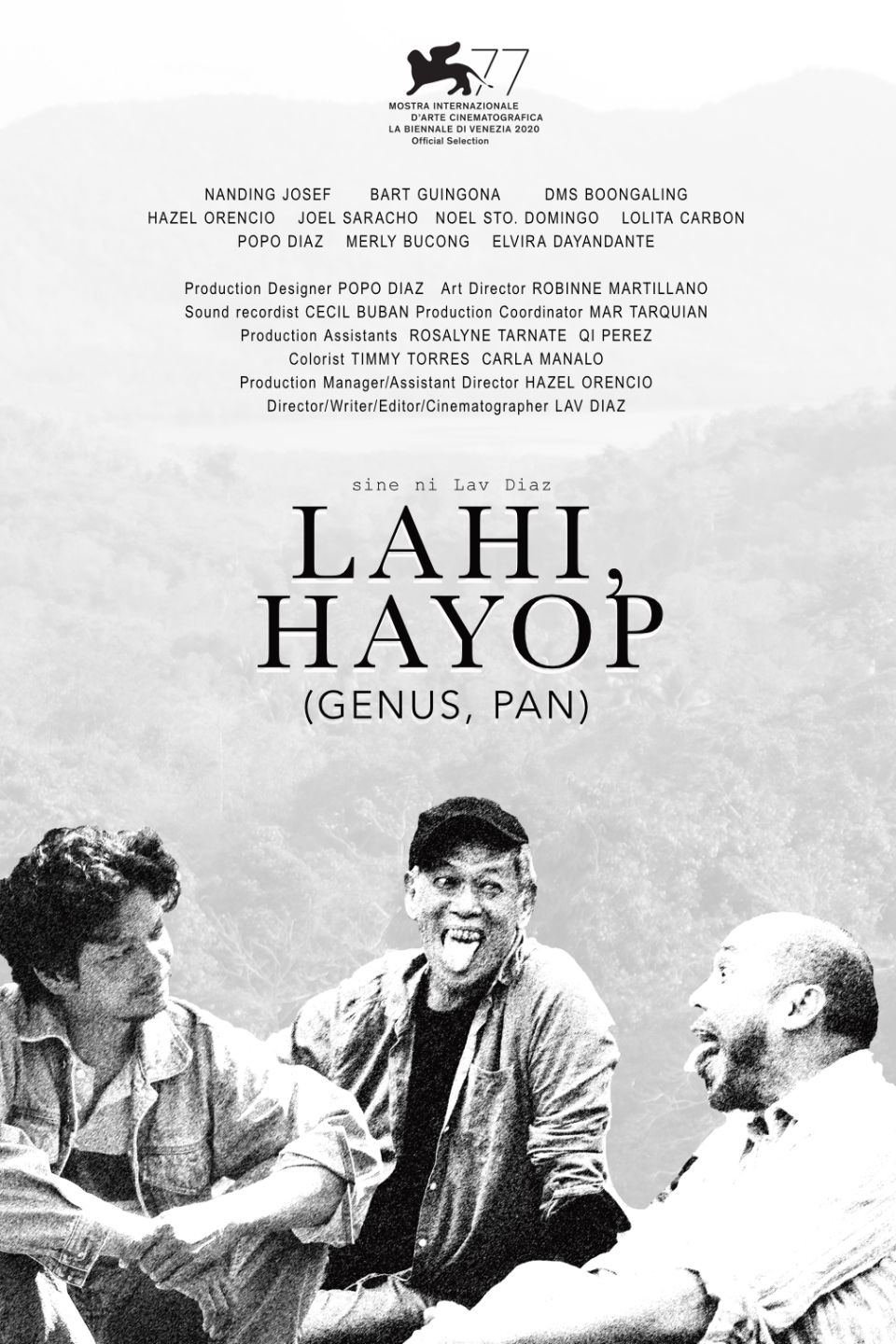
Genus Pan (Lahi, Hayop, Lav Diaz, 2020)

“Use your mind not your emotions” the hotheaded youngster of Lav Diaz’ Genus Pan (Lahi, Hayop) is repeatedly told, perhaps ironically by an earnest man of faith. Diaz’ shortest work in quite some time at a comparatively trim 156 minutes, Genus Pan is also among his most accessible in its seeming directness but carries with it hidden depths in its questioning of the “unevolved” human psyche, no better than an ape unable to overcome its baser instincts or cure the curse of human selfishness in which the only way to escape oppression is by becoming an oppressor. 

This is what Andres (Don Melvin Boongaling) fears has happened to his sometime friend, Baldo (Nanding Josef). As the film opens, the men are collecting their pay but as is customary the money is depleted before it even enters their hands with so many charges and deductions symptomatic of a world of normalised exploitation. Baldo found jobs at the goldmine for the young Andres and his old friend Paulo (Bart Guingona) but expects a cut of their pay as a brokerage fee, money Andres is loathe to give him both on principle and because he needs it to pay for medical treatment for his ailing sister. Baldo, however, is unsympathetic accusing the young man of ingratitude and disrespect. The three men are to travel back to their home village together on a boat Baldo has paid for, instructing the boatman to drop them at the far end of the island in order to avoid having to pay any more “fees” to the various authorities they may otherwise encounter in town, after which they will journey on foot through the forest. 

The forest itself is a primal place in which man is most aware he is also an animal. This fact is perhaps brought home to the men thanks to a broadcast received on Paulo’s radio in which a psychologist expounds on the idea that the human brain is largely underdeveloped, the marking of a developed mind a predisposition towards altruism. There is not so much difference, he argues, in the mind of an average human with that of an ape, “Genus Pan”, ruled by its basest instincts of selfishness and violence. Left alone in the forest and forced into mutual dependency, the differences between the three men each in their own way archetypes begin to strain their relationship. Paulo, a deeply religious man who spends most of his time reading the bible, is the peace maker but is also hiding a dark secret which perhaps informs his unexpectedly cynical advice to the earnest Andres who declares himself sick of his world of constant corruption, unwilling to be “a witness to this kind of dirt all my life”. Andres resents Baldo not only for the practical impact of his attempts to extort him, but that he has given in to the world’s venality and become another oppressor just like everyone else. Paulo advises him to use his head not his heart which would doubtless tell him that resistance is futile, but even in his nobility Andres cannot escape his rage at this infinitely feudal world in which a powerful few carry untold authority. He alone raises concerns about conditions at the goldmine where being buried alive is not an uncommon occurrence, not to mention the other mysterious deaths and disappearances, and longs for answers as to the murder of his brother he suspects for refusing to pay bribes to the local authorities, along with the spurious imprisonment of a local woman, the rape of a pair of sisters, and abuses against an indigenous mountain community.  

At the forest’s edge, Paulo reveals to him what it might have cost to escape his oppression as a member of a circus ruled by a cruel and sadistic tyrant, lamenting that in truth they were never able to escape Hugaw Island the ironic name of which apparently means “dirt”, given to it under the Japanese occupation in which it housed a comfort women station where women kidnapped from surrounding islands were forced into sexual slavery. The action shifting to another three men, the oppressors the Captain (Popo Diaz), Sergeant (Noel Sto. Domingo), and the least “developed” mind of all the calculating thug Inggo (Joel Saracho), further history of the island is revealed in its past as a smuggling hub unfairly defamed by foreign powers who spread rumours of its dangers to keep the curious away. Inggo longs to get his hands on the “jar of truth”, a burden later entrusted to Baldo’s daughter Mariposa (Hazel Orencio) who can move only very slowly yet is often carrying tremendous weight. 

Shooting in his familiar style, monochromatic static camera and long takes, Diaz’ shocking shift to handheld to dramatise false testimony as Inggo conspires against Andres to quell his rebellion hints at the irrational instability of “truth” and its potential for misuse at the hands of men like Inggo. A lone holdout against post-colonial feudal oppression, Andres’ refusal to capitulate cannot stand. As Paulo had warned him, he is a threat to the social order. The “smart” ones play along, and then like Baldo they join in while the Inggos of the world continue to prosper in their smug and heartless cruelty. “The island people are mute” a bereaved mother laments, “fear has taken over”. Ending on a note of intense anxiety, Genus Pan suggests that the civility we believe separates man from beast is at best paper thin while resistance is met only with futility when those in power are free to act with absolute impunity. 


Genus Pan streams in the UK 11th October, 5.30pm to 14th October, 5.30pm as part of this year’s BFI London Film Festival.

Original trailer (English subtitles)
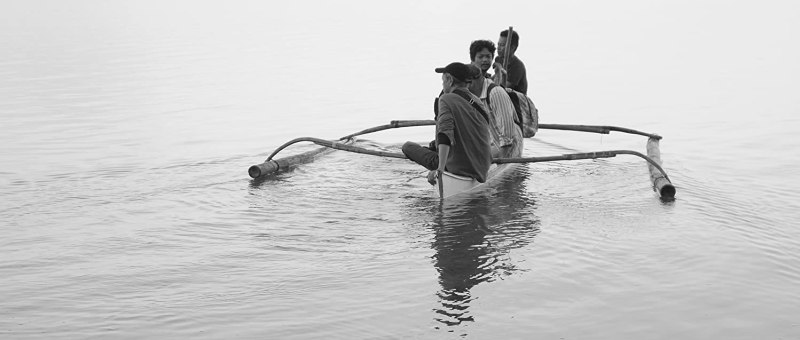
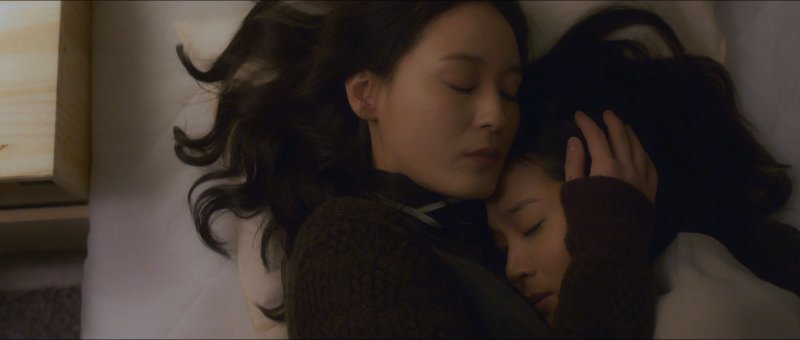
Between the Seasons (계절과 계절 사이, Kim Jun-sik, 2018)

“To live the way I am” replies the reserved heroine of Kim Jun-sik’s Between the Seasons (계절과 계절 사이, Kyejeolkwa Kyejeol Sai Kaebongyejeong) when questioned about her dream, not quite able to answer when asked if she isn’t living that way now. An anti-romance and gentle meditation on the costs of authenticity, Between the Seasons finds two women at different stages of life unknowingly fighting a similar battle, perhaps identifying something in each other but unable to voice themselves fully though in fear and insecurity rather than shame even if they each internalise something of that too as they struggle to push past the barriers that prevent them from fully becoming themselves. 

In her mid-30s, Hae-soo (Rie Young-zin) has just moved from Seoul to a small town to open a bare bones coffee shop. She spends her spare time alone, and we quickly get the impression that she’s making an attempt to move on from something, eventually visiting a mobile phone shop to buy a new handset and instructing the salesman to delete all of her previous contacts and photos. Despite her attempts to discourage her, however, Hae-soo ends up forming an awkward friendship with bubbly high schooler Ye-jin (Yoon Hye-ri) who came into the coffee shop with an unusual order and then became a regular customer. Further bonding on a rainy night after the movies where Ye-jin was stood up by her boyfriend, the young woman starts randomly helping out just because she can see Hae-soo is overstretched eventually becoming an official part-timer spending most of her spare time with Hae-soo much to the consternation of her overbearing, grades-obsessed mother. 

Ye-jin quite literally begins to bring spring into Hae-soo’s life decorating the cafe with pretty cherry blossoms and floral motifs, lending it a cosier, more domestic atmosphere than the rather frosty, utilitarian vibe of Hae-soo’s original non-design. Questioned by Hae-soo about her dream she says she’d like to make things by hand, a dream that is perhaps in direct contrast with her mother’s obvious ambition for her. There’s not much money in paper cherry blossoms after all. That’s two reasons she might prefer being in the cafe rather than at home or studying somewhere else, Hae-soo both mysterious older sister and quasi-maternal figure, only the relationship is further complicated by Ye-jin’s growing romantic attraction to the older woman, becoming jealous as Hae-soo begins a tentative relationship with the sweet and goofy guy from the phone shop (Kim Young-min). 

For her part, Hae-soo remains either wilfully oblivious or simply unwilling to acknowledge Ye-jin’s obvious crush, awkwardly failing her as a friend and as a quasi-parental figure in refusing to engage with her complicated feelings in fear of having to reveal her true self. Instead she pushes the younger woman away without explanation, rejects her, and leaves her with only more shame and awkwardness despite having insisted that that there is nothing wrong in being different and that only by embracing your difference can you improve your life. Ye-jin continues to struggle with her feelings, observing her homophobic friends making fun of the supposed lesbian only to find herself semi-stalking the young woman confessing that if the rumours are true she too is the same. Despite eventually approving of her, the other girl tells her to keep her distance at school, lest they each fall victim to guilt by association. Eventually she gets all dolled up and heads to a gay bar where she furiously makes out with the bartender, mostly one assumes because she reminds her of Hae-soo doubly confirming her feelings. 

Hae-soo, however, is still conflicted, afraid to reveal her true self to anyone. The realisation she eventually comes to, symbolically removing the scarf from around her neck, is that she wanted to shine by herself, finding the confidence in authenticity rather than reflecting the light cast by the approval of others. Ironically that’s something she tried to encourage Ye-jin to do too but accidentally crushed in her brutal rejection of her feelings, costing her perhaps more than she realised in the process. Ye-jin had coyly asked her if she wasn’t making a rash decision, that so far she’d only shown her spring in her cheerful coffeeshop interior design, perhaps she’d like to take in the summer, even see her in winter too, truly thinking long term but the two women remain caught between the seasons, trapped by a sense of internalised anxiety that prevents forward motion. A gentle meditation on connection, authenticity, and self-acceptance Between the Seasons offers no easy answers for its conflicted heroines but motions towards a season of openness in which all are free to be who they are.


Between the Seasons streams in the UK until Oct. 11 as part of the Iris Prize Film Festival in collaboration with Queer East.

Original trailer (Korean subtitles only)