If You Were Young: Rage (君が若者なら, Kinji Fukasaku, 1970)

51AM0Z0Z2cLFor 1970’s If You We’re Young: Rage (君が若者なら, Kimi ga Wakamono Nara), Fukasaku returns to his most prominent theme – disaffected youth and the lack of opportunities afforded to disadvantaged youngsters during the otherwise booming post-war era. Like the more realistic gangster epics that were to come, Fukasaku laments the generation who’ve been sold an unattainable dream – come to the city, work hard, make a decent life for yourself. Only what the young men find here is overwork, exploitation and a considerably decreased likelihood of being able to achieve all they’ve been promised.

Our story revolves around five young men who meet whilst working at a factory which later goes bust. The central pair, Kikuo and Asao have been friends since childhood. Both of their fathers were killed in mining accidents and the boys are part of the “golden egg” movement bringing in workers from the rural towns to increase prosperity in the capital. The other three are a fisherman’s son, Kiyoshi, a boxing enthusiast Ryuji and fifth wheel Ichiro. After a short spell in gaol, the guys hatch on the idea of clubbing together to buy a dumper truck and start a business of their own. However, by the time they’ve actually got the truck one of them’s in prison, one pulls out because of a shotgun marriage and the other is killed in a labour dispute. Asao and Kikuo get on with living the dream and are doing pretty well with the truck until their imprisoned friend decides to escape and ruins all of their lives in the process.

Almost proto-punk in tone, If You Were Young: Rage takes a long hard look at the put upon masses who rebuilt Japan but were left with little in return. These five guys left their small towns for the big city promised high wages, access to education and a path to a better life but largely what they found was cold rooms and overwork. There are frequent strike motions in the film as the construction and factory workers attempt to insist on better pay and conditions but are constantly defeated by the white collar bosses who can just bus in even more desperate young men who will agree to cross the picket line because they have no other choice. Our central five now have a dream and something to work towards, their truck isn’t just “a truck” – it’s a hundred trucks somewhere down the line and a symbol of the path to prosperity.

However, at the end of the film all of their dreams have been shattered. Some of this is not their fault, merely the vicissitudes of fate and changing times, some of it is down to poor choices but largely the odds were always stacked against them because the world is unfair. Kiyoshi lies all the time because he’s scared of pretty much everything, possibly because of an abusive (though perhaps not uncommon) upbringing. His selfishness and, ultimately, cowardice is about to mess things up for everyone else and there are somethings you just can’t come back from. Like many of Fukasaku’s heroes, what Asao dreams of is the friendship he found when the five guys were all together and working as a team. He wants to go back to that time of perpetual hope and friendship rather than live in this lonely prosperity.

Fukasaku veers between quirky new wave style optimism and the extreme pessimism of his general world view. The film is bright and colourful for the majority of its running time with memory and fantasy often relegated to black and white. He uses his usual freeze frames, often in times of violence, hand held cameras and dynamic framing to achieve his youthful, freewheeling atmosphere but as usual there’s a kind of desperation lurking in the background. As might be expected, the ending is all flames and ashes – youth lies ruined, dreams shattered, and the possibility of moving on seems woefully far off. Another characteristically caustic look at modern youth from Fukasaku, this more indie effort is one of his most searing and bears out his rather bleak prognosis for the future of his nation.


If You Were Young: Rage is available with English subtitles on R1 US DVD from Homevision and was previously released as part of the Fukasaku Trilogy (alongside Blackmail is My Life and Black Rose Mansion) by Tartan in the UK.
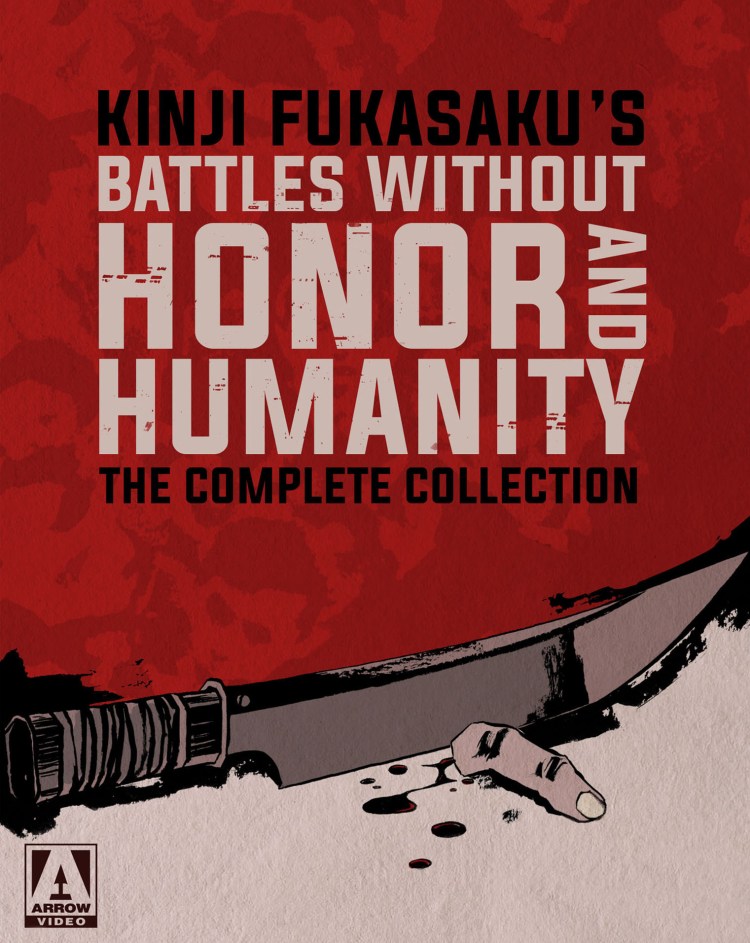


Kinji Fukasaku’s Battles Without Honour and Humanity: The Complete Collection

138515_frontGeneral run down of Arrow’s Battles Without Honour and Humanity box set first published by UK Anime Network.


When you’re thinking about the modern gangster action movie, you’d be hard pressed to come up with a more influential name than Kinji Fukasaku. Though perhaps best remembered for his extremely controversial adaptation of Koushun Takami’s Battle Royale, he first began to make a name for himself with a series of revolutionary yakuza movies released over a short period of time in the mid ‘70s. Up until this time there had been a popular strand of “ninkyo eiga” gangster pictures which took their queue from the now less well regarded samurai movies applying the classic chivalry tropes to the criminal underworld. However, the ninkyo eiga was also becoming stale and it was time for something new. Perhaps the world was ready a depiction of the yakuza life which was a little more honest.

Teaming up with screenwriter Kazuo Kasuhara, Fukasaku’s aim was to tell the story of post-war Japan from the viewpoint of youth. Based on the real life memoirs of a famous yakuza, Battles Without Honour and Humanity is a prime example of the “jitsuroku” approach and didn’t make any attempt to hide the ugly side of the underworld.

The first film in the series introduces us to Shozo Hirono just back from the war (in fact still in his army uniform) when he witnesses a group of American soldiers attempting to rape a woman in a crowded market area. Hirono comes to the woman’s rescue only to be pulled back by the police who tell him not to mess with the GIs. Later, one of his friends is assaulted by a yakuza and teaming up with a rival gang Hirono gets his revenge but also ends up being sent to prison for twelve years. Inside, he meets another mobster who tells him you can get out on bail for a price because the prisons are so over crowded. If he helps in his escape attempt, he’ll get his yakuza buddies to bail Hirono out. Hirono quickly finds himself embroiled in the yakuza underworld.

Though nominally the protagonist of the entire series, Hirono is pushed to the sidelines for the second installment, Hiroshima Death Match. This time the protagonist, Yamanaka, is a little younger – too young to have actually fought in the war he nevertheless had kamikaze dreams that the war’s end denied him fulfilling. It’s now 1950, and young guys like Yamanaka have come of age in the difficult post-war world. With no opportunities and a fuelled by a young man’s fury it’s no mystery that he ends up in a gang. Things would probably have been OK for him but he made the mistake of falling in love with the boss’ niece with tragic consequences.

Moving back into the centre again for part three, Proxy War, Hirono has formed his own gang in the nearby town of Kure. It’s 1960 and the cold war is mounting the world over. The yakuza it seems are not immune to the internecine power struggles themselves and embark on a series of complicated alliances, double crossings and betrayals. The action may have calmed down a little here but the intricate plot elements make it one of the most impressive entries in the series.

By the time we reach Police Tactics, times have moved on. With prosperity on the up and the 1964 Tokyo Olympic Games on the horizon the public have grown tired of yakuza antics and fearing for their international reputation, it’s finally decided that the police should go hard on organised crime. With the “cold war” environment of the last film still in the background, it’s a tough time to be a yakuza.

The Final Episode is something of a bonus epilogue, written by a different screenwriter (Koji Takeda who’d previously worked on ninkyo eiga) the film picks up with the yakuza as a political corporation, morphing into violent corporate entities rather than petty thugs. The original crew are the old guys now and some of them don’t want to change. The young guy, Matsumura, seems to have his head screwed on when it comes to initiating the new brand of gangster but he still has to contend with all the complicated infighting from each of the other instalments. Hirono is in prison for much of the film writing his memoirs and seems set to retire on release. However, it’s not long before he’s dragged back into the world of yakuza crime.

Fukasaku makes his yakuza look cool, yes, but he never ignores the destructive nature of their existence. Having returned from the war defeated, these men were angry, traumatised and left with few options. They turned to crime and to violence because that was all that was left to them. Many of the films end with funerals and countless young men are cut down in their prime but in the end it all counts for nothing. Nothing gets created out of this mess except widows and orphans. The constant shots of the ruined dome (now the Hiroshima Peace Memorial) constantly remind us that this is just one example of young lives sacrificed for old men’s vanity. If “jingi”, the concept of honour and humanity often referred to in yakuza movies, ever existed at all then it’s another casualty of war because there’s nothing of that moral universe left remaining in this cruel and empty world.

All of the films follow a documentary style approach with a voice over explaining the context and frequent on screen captions giving the characters’ names and affiliations (and at the appropriate moments their time of death). The action is fast, furious and messy with lurid paint-like red blood decorating the screen. Largely captured with handheld camera and unusually dynamic movement, the series’ key signature is realism.

This new box set from Arrow presents each of the films in a top notch HD transfer which is a vast improvement on the previously available versions. Notably, the set also includes the rarer “complete saga” edit of the film which presents the first four movies cut together with a short intermission in the middle. This is as well done as could be yet suffers a little because of the floating nature of Hirono’s involvement – i.e, the second film where he’s barely present feels a little out of place in the midst of the other three where he’s more of an active player. The plots are undoubtedly complicated but the set does also include a hardback book filled with illuminative essays and also a series of “family tree” style diagrams outlining the various gangs and their makeups.

A seminal entry in the world of Japanese gangster pics, the Battles Without Honour and Humanity (also known as the Yakuza Papers) series is an essential watch for any yakuza movie enthusiast. Without Fukasaku’s input there’d be no Takashi Miike, or Kitano gangster movies – simply put he changed the course of Japanese action films. Finally available in HD with English subtitles, this comprehensive set from Arrow is the perfect way to revisit each of these hugely influential movies.


The Kinji Fukasaku’s Battles Without Honour and Humanity: The Complete Collection blu-ray & DVD box set is out now from Arrow Video in the UK and USA. The set also comes with an impressive array of bonus features including an exclusive hardback book filled with essays by some of the top scholars of today! Full list of contents from Arrow’s Store

This obviously a very compressed run down so here are some links to more in depth reviews of each of the films:

and the trailer for the first film

The Yakuza Papers Vol. 4: Police Tactics (仁義なき戦い: 頂上作戦, Kinji Fukasaku, 1974)

b0176154_10205690It’s 1963 now and the chaos in the yakuza world is only increasing. However, with the Tokyo olympics only a year away and the economic conditions considerably improved the outlaw life is much less justifiable. The public are becoming increasingly intolerant of yakuza violence and the government is keen to clean up their image before the tourists arrive and so the police finally decide to do something about the organised crime problem. This is bad news for Hirono and his guys who are already still in the middle of their own yakuza style cold war.

Police Tactics (仁義なき戦い: 頂上作戦, Jingi Naki Tatakai: Chojo Sakusen), the fourth in the Yakuza Papers (or Battles Without Honour and Humanity) series, once again places Hirono at the centre of events for much of the film. The cold war from the end of the last film, Proxy War, is still going on with ambitious boss Takeda hosting additional foot soldiers from other areas of the country. However, all these extra guys are quite a drain on his resources and, simply put, it’s going to ruin him if this situation goes on much longer. Yamamori is currently holed up in a safe place and only steps outside to go to the bath house when he’s surrounded by a huge entourage of bodyguards. Added to the gang rivalry which is only growing now as factions split and new families are formed, not to mention all the guys from outside, is the now constant police pressure. Up to now, the police have been either a minor irritation or a soft ally but this time the guys might have finally met their match.

It’s almost twenty years since Hirono settled into the yakuza life. He’s not an old man, but he’s not a young one either. You can no longer explain or excuse any of his actions with the fire of youth – he’s one of the veterans now. However, young men are always young men and even while the older guys try to scheme and come up with a plan the youngsters are all for action. Hirono has always been the one noble gangster. Committed to yakuza ideals, he’s loyal to his bosses and dedicated to taking care of his guys. Hence, there’s no way he’s going to let one of his men take out Yamamori – firstly, after nursing a grudge for 18 years he wants to handle it himself but even if he didn’t he still wouldn’t be able go after Yamamori in anything other than an honourable way. However, now even Hirono says at one point “I don’t give a fucking shit about honour anymore”. At this point you know it’s all over, the one loyal retainer has finally given up.

With the police pressure mounting, the violence on the streets intensifies with even more feats of desperate backstreets warfare. Hirono himself is absent for a lot of the film while he gets picked up by the police on a flimsy pretext. More gangs are introduced, more guys die before you even begin to remember their names. There’s death everywhere yet still more yakuza keep turning up, offering to die for their bosses who will sell them out without a second thought if it buys them ten seconds more in power. The younger generation may not have the trauma of the war to burn through, but they’ve grown up in this world of street gangs and constant violence so it stands to reason that they come to idolise the tough guys and think joining a gang is their one way ticket out of the slums. As they will discover, there is always a heavy price to be paid for ambition and naivety.

The shooting style is pretty much the same as the first few films in the series. Documentary style voice over, hand held camera and freeze frame death shots are the order of the day. Once again we begin and end with the ruined dome reminding us of the price of violence. Police Tactics could almost be the end of the cycle. With the police finally deciding to act, by the end of the film all of the major players are off the streets in one way or another. In the end, all that death and violence amounted to to nothing. As the film reminds us, public order may have been restored (temporarily) but the systems and conditions which lead to violence are still very much in place.


Police Tactics is available on blu-ray in the UK as part of Arrow Video’s Battles Without Honour and Humanity: The Complete Collection box set.