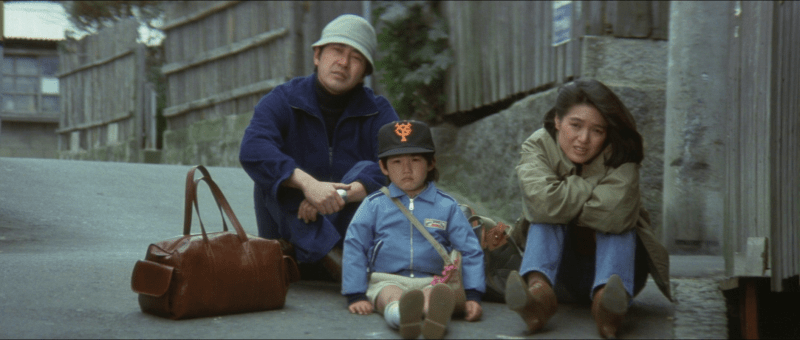
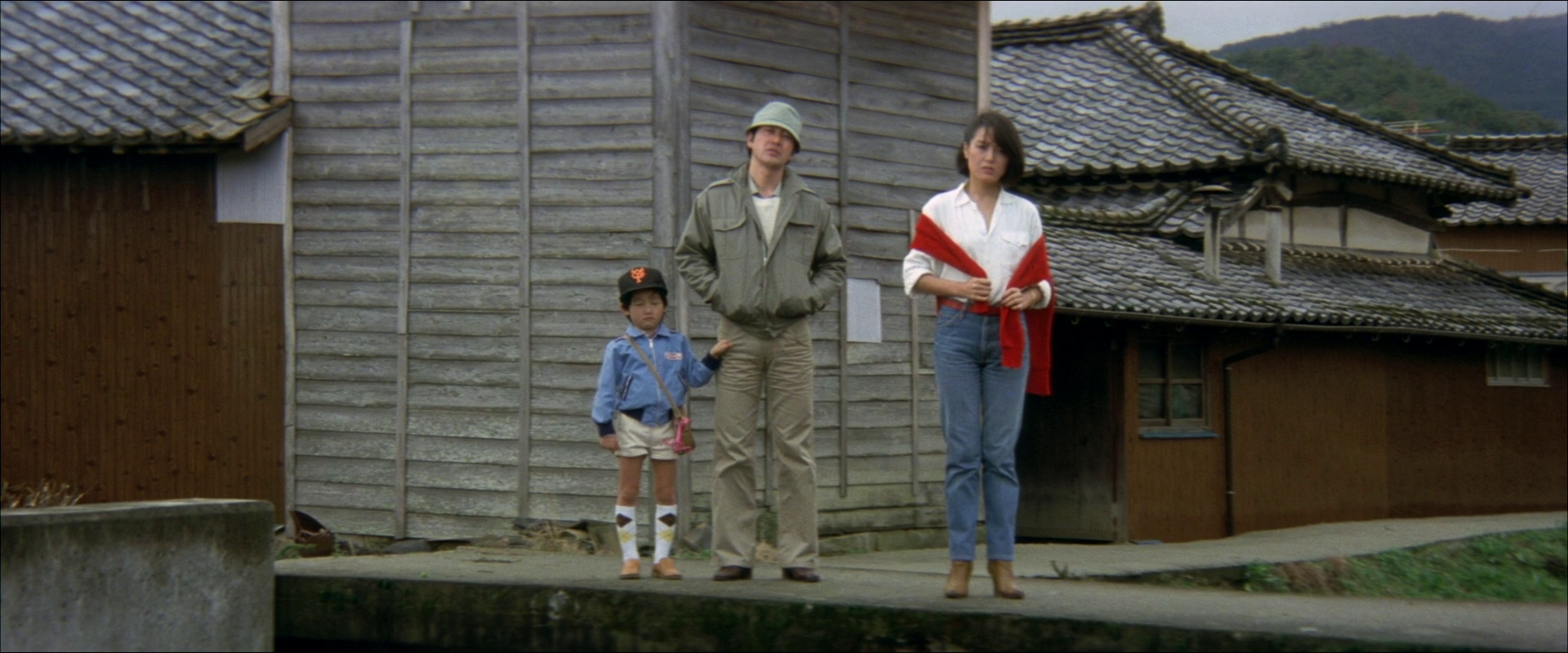
A young couple facing a relationship crisis due to differing views about a potential pregnancy find their connection further strained when a stranger arrives with a little boy who may be the man’s biological son in Yoichi Maeda’s lighthearted road trip dramedy, Heaven Sent (神様のくれた赤ん坊, Kamisama no Kureta Akanbo). A remake of the 1957 film Shukin Ryoko directed by Noboru Nakamura, the film explores both the changing social dynamics of the era of high prosperity and a lack of resolution with the post-war past as the heroine searches for the lost hometown of her early childhood along with the realities of her late mother’s life that had remained unknown to her.
In an arrangement that was still a little unusual in the late 1970s, Sayoko (Kaori Momoi) and Shinsaku (Tsunehiko Watase) are a cohabiting couple who are not legally married. Sayoko is an aspiring actress, while Shinsaku has a part-time job as part of a cheer squad for public events as he tries to kickstart a career as a manga artist. A mini crisis has presented itself in the fact that Sayoko thinks she may be pregnant and wants to have the baby while Shinsaku very much does not, largely it seems because he is immature and irresponsible so does not want to be burdened with the expense and labour of caring for a child. All of which adds to the irony when a woman arrives at their door with a small boy, Shinichi, explaining that his mother has abandoned him to go abroad with another man leaving instructions that he should be delivered to his father who might be any one of the five men she has listed on her goodbye note. Shinsaku is only one who lives in Tokyo, so the woman has decided to leave the boy with him and have done with it.
There is something quite sad about the fact that no one really wants this little boy while seemingly trying to avoid the reality that he ultimately end up going into care if no one accepts responsibility for him. All of these men admit they slept with his mother, Akemi, who was a bar hostess, and therefore theoretically could have fathered her child, but all reject any sense of obligation or that the fact of their sleeping with her could have any kind of consequences. All of them seem to have reasons why now would be a particularly bad time for an illegitimate child to surface from being in the middle of a political election campaign to the news being broken on the day of their wedding to another woman. The soon to be married man even makes a series of misogynistic excuses within earshot of Shinichi to the effect that “no one would take a woman like that seriously,” and that as Akemi slept with pretty much everyone there’s no way to know if the child his.
These misogynistic views are reflected in Sayoko’s simultaneous quest to rediscover her childhood hometown as she chases a memory she has of a shining pagoda, only to be told that her mother worked in a place called “Ono Castle” which turns out to have been a brothel. This is presumably how her mother saved the money to open the hair salon Sayoko grew up in and the reason that they moved away from that first hometown so that her mother could move on to a new life having escaped the stigma of being a former sex worker. Finding this out has quite a profound effect on Sayoko, not that she disapproves or is ashamed but comes to a new appreciation of her mother’s suffering that she knew nothing of before. While Shinsaku considers hiring a sex worker, the couple having temporarily broken up, Sayoko too is propositioned as a sex worker and ends up having a very strange experience with a young man desperate to lose his virginity.
For much of the journey as they take Shinichi to visit each of his prospective fathers, the couple are on parallel paths only later coming together again when Shinsaku gives in and says Sayoko should have the baby even though by that point she has discovered is not pregnant after all. Part of the reason she wanted the baby was that her career had not been going well and a part of her wanted to try the traditional route of finding fulfilment within the domestic space as a wife and mother, reflecting the way these attitudes are still current, though Shinsaku is not in a position to support a wife and child financially and shows no signs of being willing to take on the responsibility of being the sole bread winner. Sayoko does, however, suggest she would rather leave him and raise the baby alone if he objects so strongly. Her mother made it work, after all, and the Japanese economy is at least in a much better place even if women’s rights have not improved all that much.
Despite physically resembling the child and sharing some of the same mannerisms along with left-handedness (which he tries to correct), Shinsaku too rejects the idea of his paternity and is desperate to push the responsibility onto someone else while simultaneously extorting “child support” hush money from the potential fathers. Demonstrating once again how women are expected to deal with men’s irresponsibility, the last potential father has passed away and his widow has already adopted several children whom he may have fathered with other women. Yet as they travel together, the pair being to bond with Shinichi and go off the idea of parting with him, experiencing a moment of growing up themselves in envisioning a different kind of future and coming to a mutual decision about the idea of expanding their family.
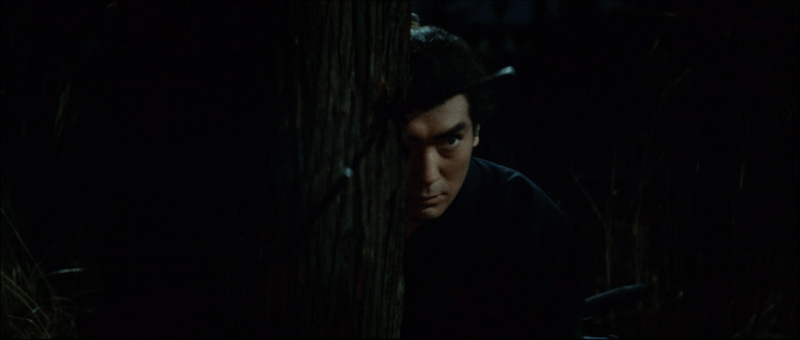
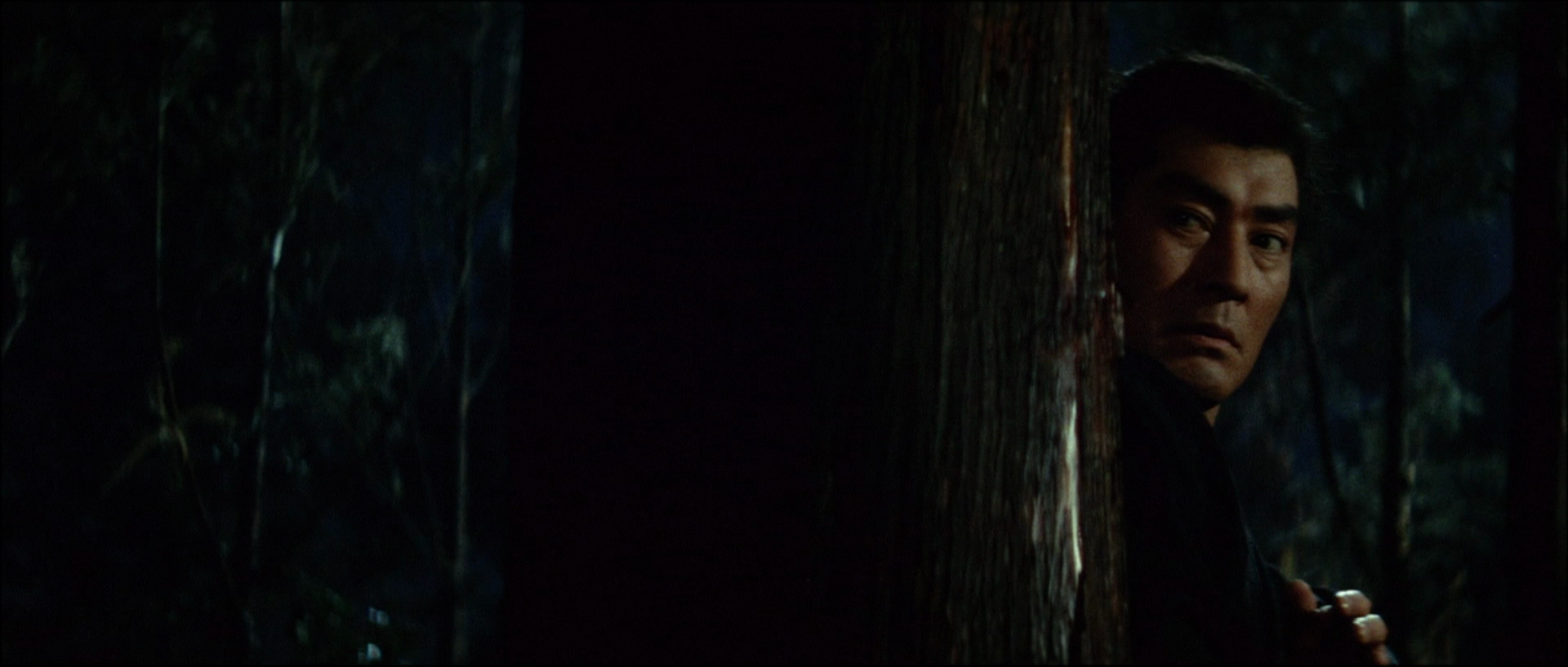




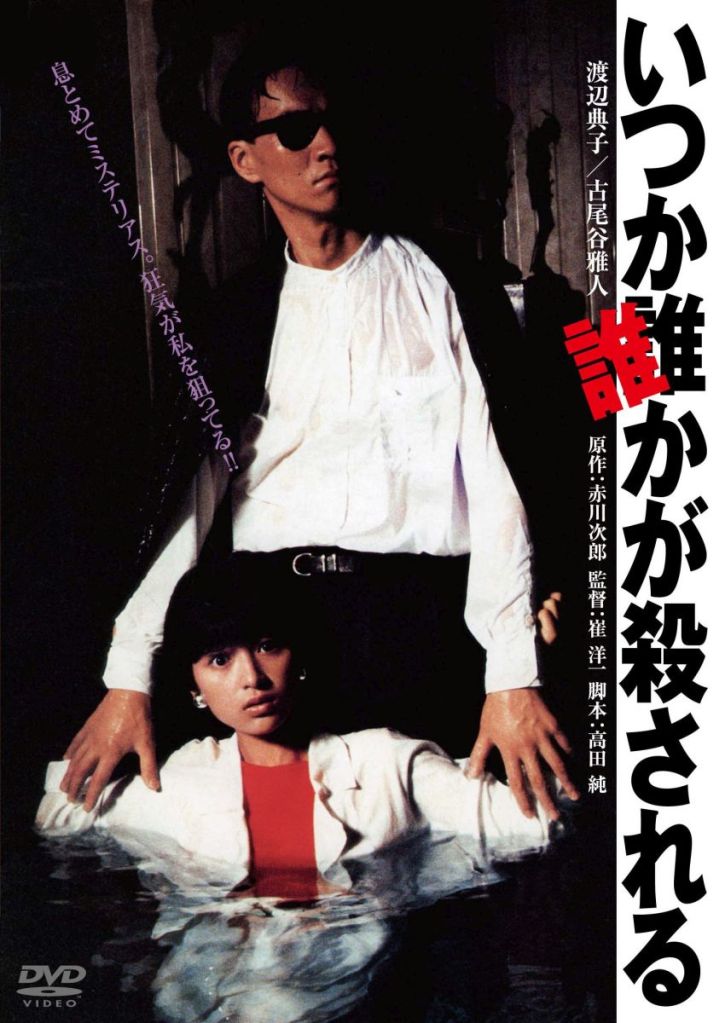 Haruki Kadokawa dominated much of mainstream 1980s cinema with his all encompassing media empire perpetuated by a constant cycle of movies, books, and songs all used to sell the other. 1984’s Someday, Someone Will be Killed (いつか誰かが殺される, Itsuka Dareka ga Korosareru) is another in this familiar pattern adapting the Kadokawa teen novel by Jiro Akagawa and starring lesser idol Noriko Watanabe in one of her rare leading performances in which she also sings the similarly titled theme song. The third film from Korean/Japanese director Yoichi Sai, Someday, Someone Will be Killed is an impressive mix of everything which makes the world Kadokawa idol movies so enticing as the heroine finds herself unexpectedly at the centre of an ongoing international conspiracy protected only by a selection of underground drop outs but faces her adversity with typical perkiness and determination safe in the knowledge that nothing really all that bad is going to happen.
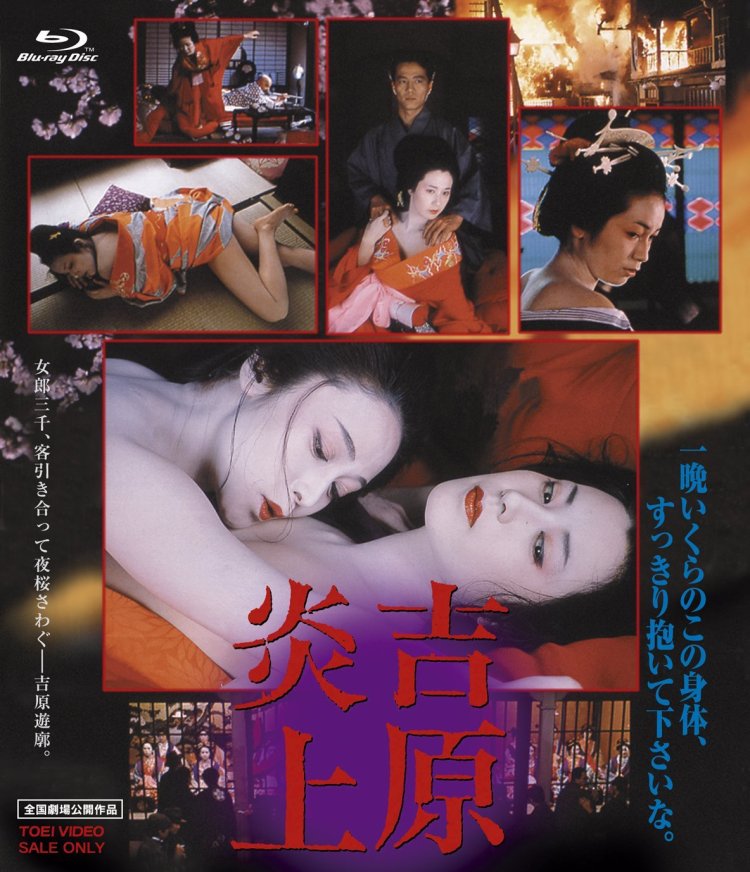 Hideo Gosha maybe best known for the “manly way” movies of his early career in which angry young men fought for honour and justice, but mostly just to to survive. Late into his career, Gosha decided to change tack for a while with a series of female orientated films either remaining within the familiar gangster genre as in Yakuza Wives, or shifting into world of the red light district as in Tokyo Bordello (吉原炎上, Yoshiwara Enjo). Presumably an attempt to get past the unfamiliarity of the Yoshiwara name, the film’s English title is perhaps a little more obviously salacious than the original Japanese which translates as Yoshiwara Conflagration and directly relates to the real life fire of 1911 in which 300 people were killed and much of the area razed to the ground. Gosha himself grew up not far from the location of the Yoshiwara as it existed in the mid-20th century where it was still a largely lower class area filled with cardsharps, yakuza, and, yes, prostitution (legal in Japan until 1958, outlawed in during the US occupation). The Yoshiwara of the late Meiji era was not so different as the women imprisoned there suffered at the hands of men, exploited by a cruelly misogynistic social system and often driven mad by internalised rage at their continued lack of agency.
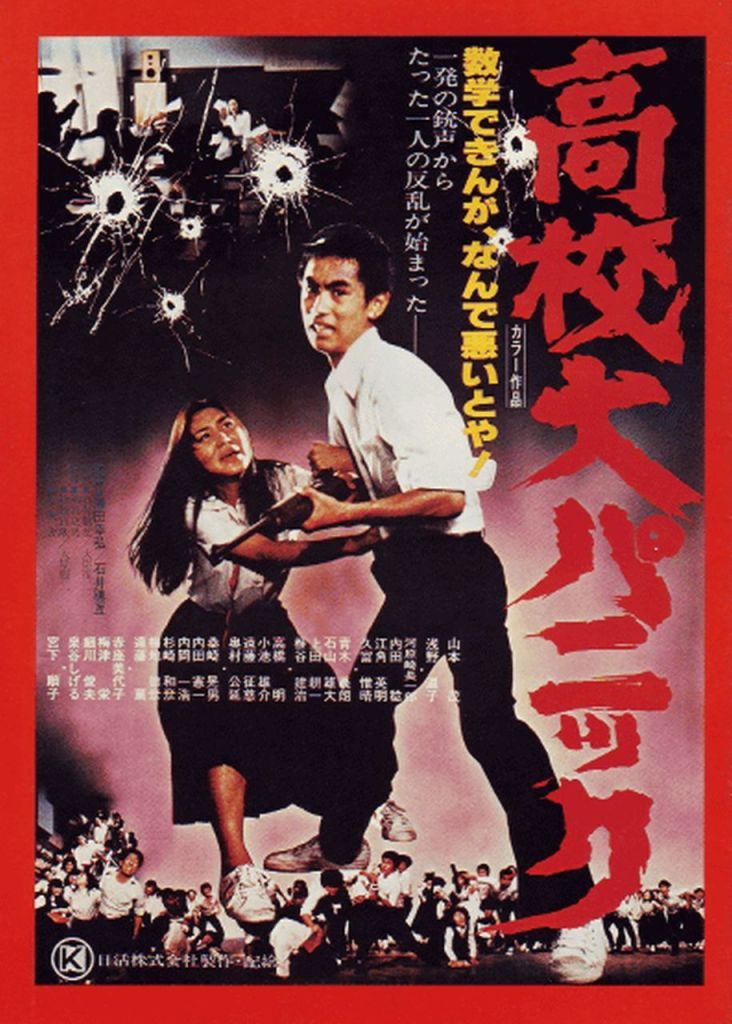 Sogo (now Gakyruu) Ishii was only 20 years old when Nikkatsu commissioned him to turn his smash hit 8mm short into a full scale studio picture. Perhaps that’s why they partnered him with one of their steadiest hands in Yukihiro Sawada as a co-director though the youthful punk attitude that would become Ishii’s signature is very much in evidence here despite the otherwise mainstream studio production. That said, Nikkatsu in this period was a far less sophisticated operation than it had been a decade before and, surprisingly, Panic High School (高校大パニック, Koukou Dai Panic) neatly avoids the kind of exploitative schlock that its title might suggest.
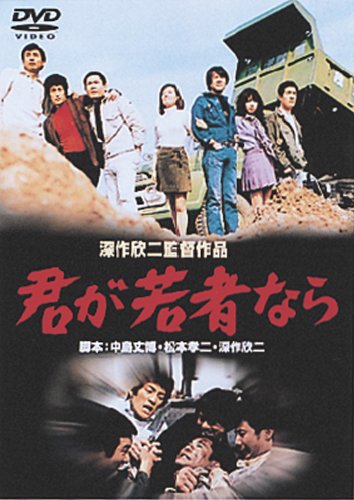 For 1970’s If You We’re Young: Rage (君が若者なら, Kimi ga Wakamono Nara), Fukasaku returns to his most prominent theme – disaffected youth and the lack of opportunities afforded to disadvantaged youngsters during the otherwise booming post-war era. Like the more realistic gangster epics that were to come, Fukasaku laments the generation who’ve been sold an unattainable dream – come to the city, work hard, make a decent life for yourself. Only what the young men find here is overwork, exploitation and a considerably decreased likelihood of being able to achieve all they’ve been promised.
