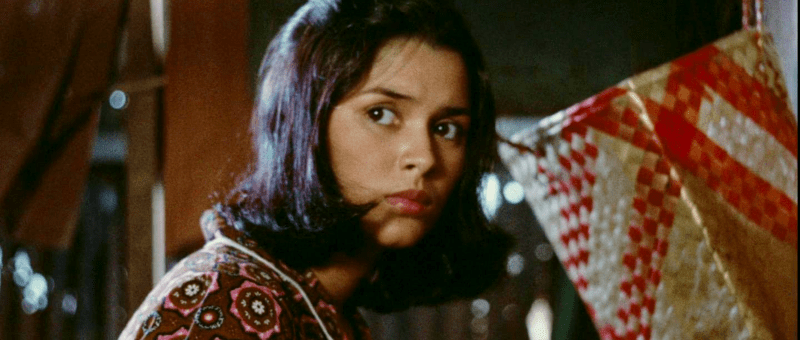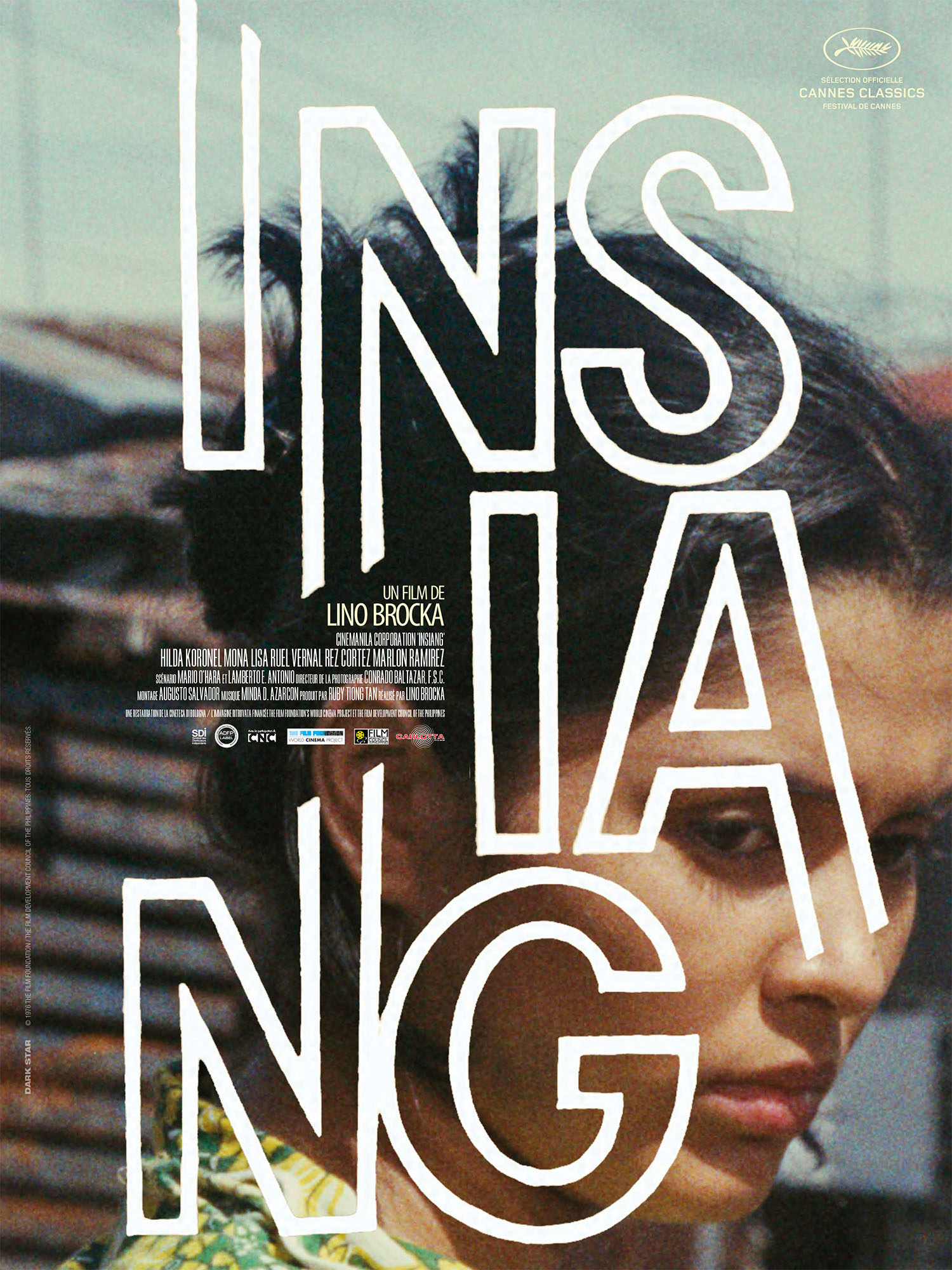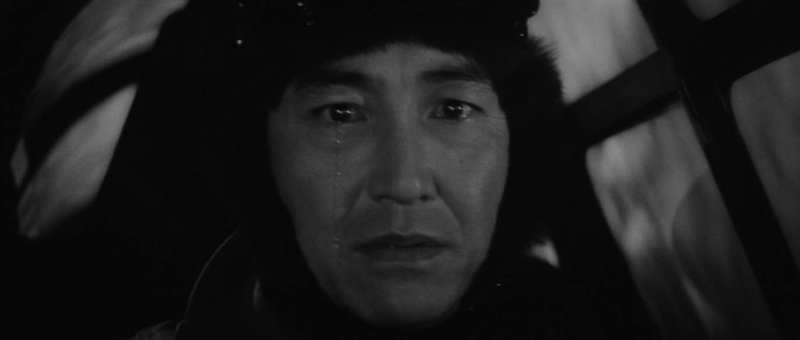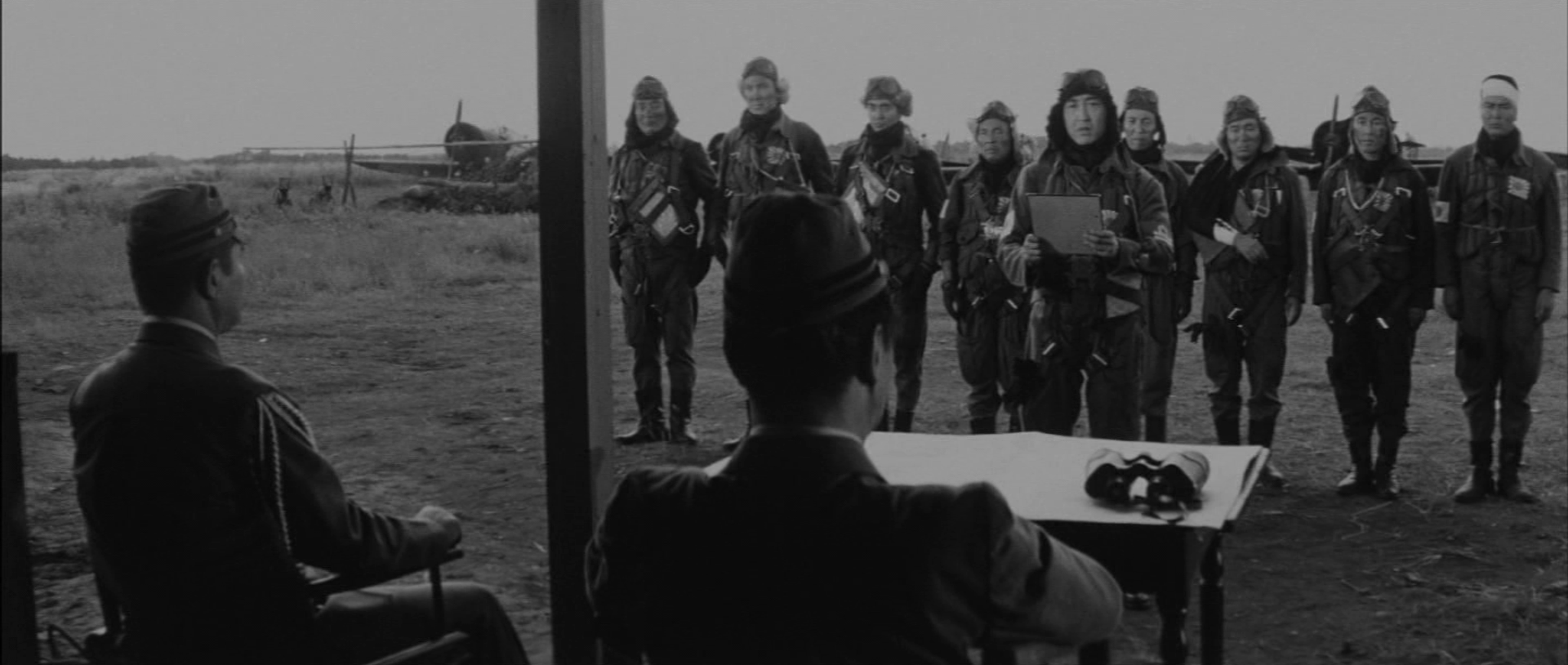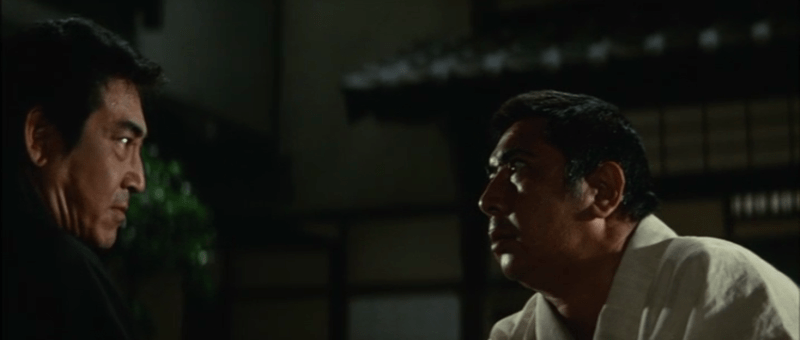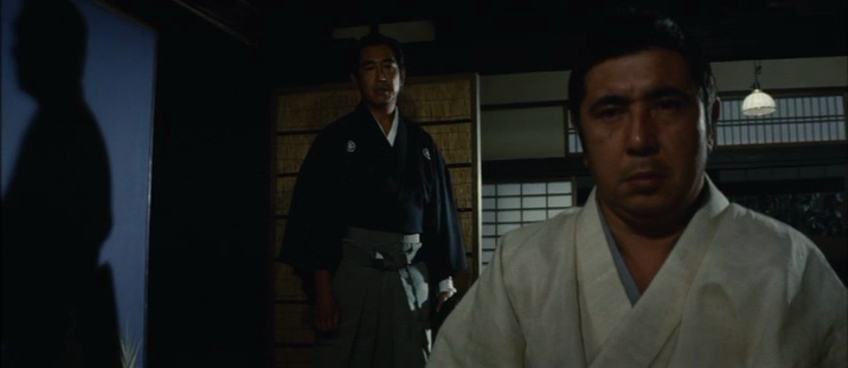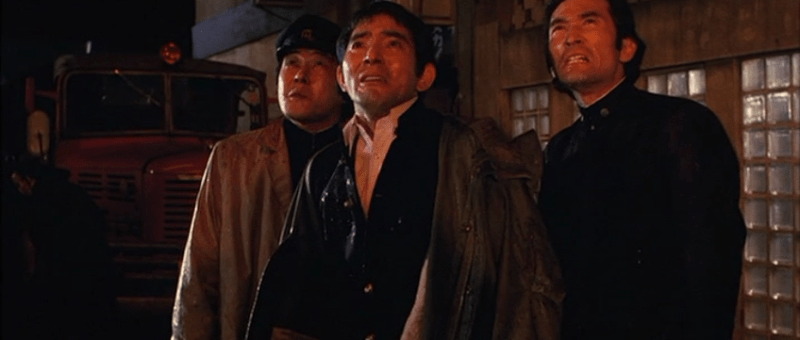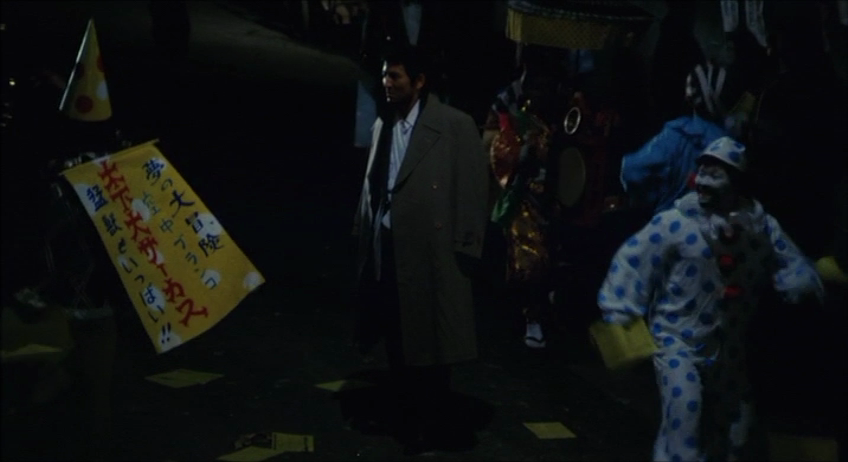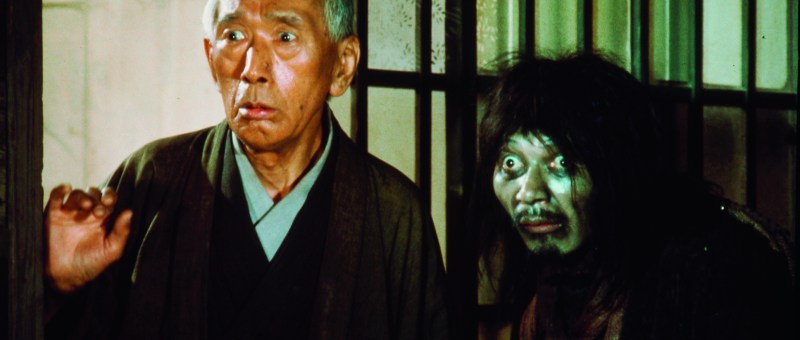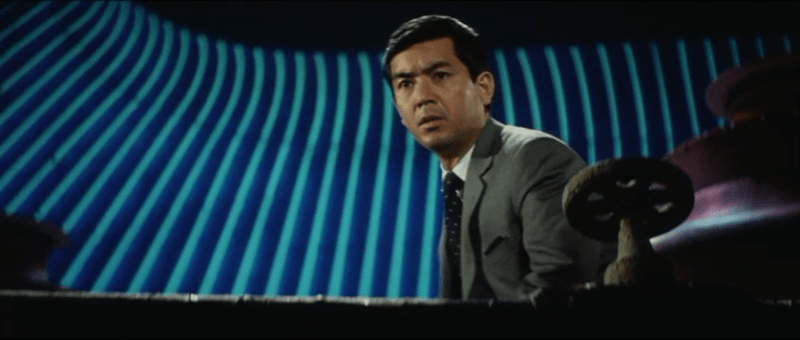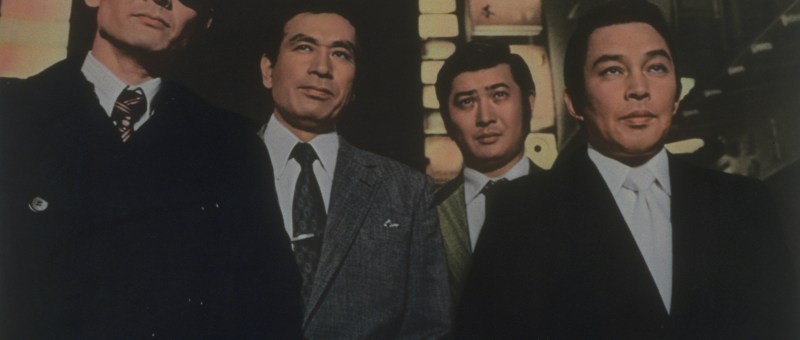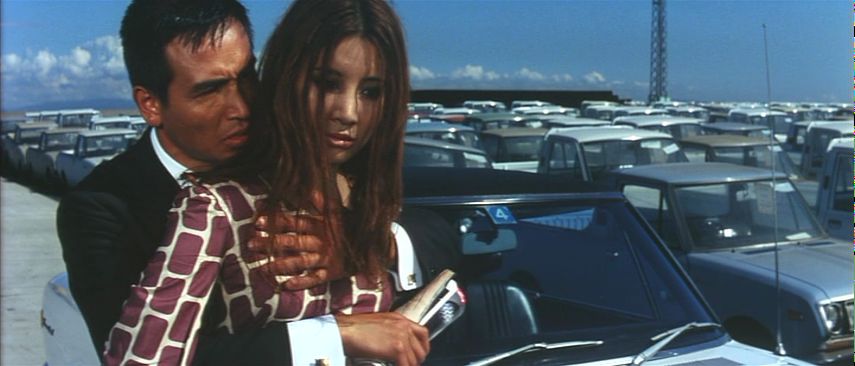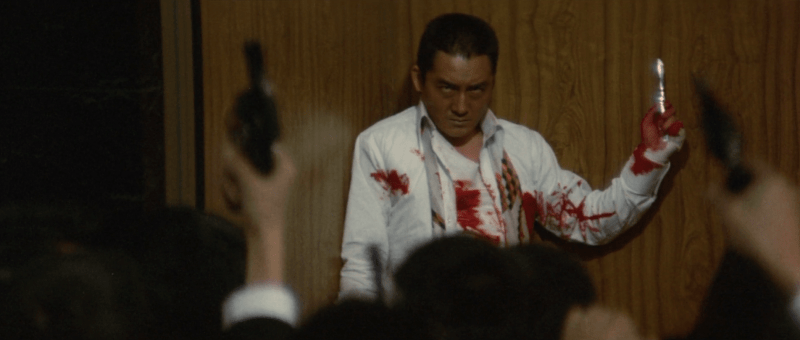
The Creature Called Man (豹は走った, Kiyoshi Nishimura, 1970)

By the late 1960s, Japan had more or less achieved its economic miracle yet there was still a degree of political tension manifesting itself in a second round of widespread protests towards the automatic renewal of the security treaty with the Americans in 1970. The third feature from Kiyoshi Nishimura, The Creature Called Man (豹は走った, Jaga wa Hashitta) anticipates the cinema of paranoia which was to take hold in the 1970s but as confused as its internal politics sometimes are, reflects the continuing sense of dissatisfaction in the wake of the student movement’s failure in its attempt to critique ongoing complicity with American foreign policy in Asia as well as Japan’s checkered geopolitical history. 

As such, Nishimura opens with hand-coloured stock footage of civil unrest in an Asian nation while the accompanying voiceover features protestors chanting “down with Jakar”, later revealed to be the ousted dictator of “Southnesia”, seemingly a stand-in for the recently assassinated Sukarno of Indonesia. As opposed to the rather pompous English title, the Japanese is simply “Jakar got away”, a phrase repeated during the opening titles and which appears as “Jaguar got away” on a typewriter sitting above the Japanese title in red which uses the character for leopard in place of Jakar’s name. In fact, animal codenames will later become something of an ironic motif with the hero referred to as a German shepherd while his rival brands himself a wolf and is referred to by his handlers as the black panther. 

This slightly tongue-in-cheek use of spy movie cliche is in keeping with the brand of humour often found in Toho’s ‘60s spy spoofs though this is largely a much more serious affair if one with an undercurrent of absurdity. The hero, Toda (Yuzo Kayama), is an Olympic sharpshooter working for the Tokyo police before he is abruptly asked to resign so that he can take part in a “special mission” which turns out to be as a backup bodyguard for Jakar who has been smuggled out of his home nation and intends to defect to America which has, it is implied, been backing his regime as a bulwark against communism in Asia while his rise to power was facilitated by Japanese soldiers who stayed in the country after the war. He’s supposed to be staying for a few days in a top hotel while the Americans figure out the paperwork for him to seek asylum at their embassy but the top brass are worried the revolutionaries might try to assassinate him on Japanese soil which would be very bad for diplomatic relations and potentially create political instability across the continent. 

As Toda later says, he’s just doing his job (even though he’s technically no longer a policeman), so he doesn’t give much thought to the wider political context of his actions only concentrating on preserving a man’s life no matter now steeped in blood that life might be. Meanwhile, a duplicitous corporation, Dainihonboeki (lit. Great Japan Trading) is attempting to cut some shady deals apparently having facilitated Jakar’s escape but now frustrated that the Revolutionary Government won’t honour their contracts for military equipment and so is offering to help assassinate him to prevent his forming an alternative government in exile and creating additional problems for the new regime. 

Kujo (Jiro Tamiya), the killer for hire, and the dutiful policeman Toda are exposed as two sides of the same coin, Toda later killing an innocent woman mistaking her for a member of the conspiracy against Jakar only to later learn she is in fact a war widow whose fiancé was an American GI killed in Vietnam. Her exaggerated death sequence filmed with expressionist flare in mimicking that of a soldier gunned down in battle. The two men face off against each other in what is essentially a battle of wits, Toda not taking aim at Kujo but anticipating his plan and foiling it before it takes effect. Leaning in to the Toho spoof, there is considerable absurdity in their machinations, waiters falling to the ground after the rope they were climbing to sneak in through a window is shot through, or sex workers brought in to shine a guiding light towards the target, but there’s a lot of blood and terror too not to mention some sleaze and a general sense of nastiness. Once the Jakar matter is concluded, the men still have a score to settle, facing off in a one-on-one duel in a disused aircraft hangar firing potshots at each other from behind various pieces of military equipment their life and death struggle shot in elegant slow motion until they each collapse into the swirling dust in a moment of nihilistic futility as another civil war quietly brews in Southnesia precipitated by their actions. 

Strikingly composed capturing the neon-lit nightscape of an increasingly prosperous Tokyo filled with the shining lights of new corporate entities and scored with noirish jazz and occasional flights into expressionism, Nishimura’s paranoid political thriller takes aim at a new world of geopolitical instability while making villains of amoral capitalists and indulging in a mild anti-Americanism but most of all is a tug of war between a hitman inconveniently regaining his humanity and a policeman temporarily abandoning his in questionable national service. 


Violent Streets (暴力街, Hideo Gosha, 1974)

“Nothing’s like it used to be anymore” sighs a woman who’s had to betray herself but has tried to make break for it only to discover there is no way back. Hideo Gosha’s Violent Streets (暴力街, Boryoku Gai) is like many films of its era about the changing nature of the yakuza in an age of corporatised gangsterdom. Now “legitimate businessmen” who claim to no longer deal in thuggery, their crimes are of a more organised kind though a turf war’s still a turf war even if you’re fighting from the boardroom rather than simply getting petty street punks to fight it for you in the streets. 

In a touch of irony, former yakuza Noboru Ando stars as a man who’s tried to leave the life behind but is pulled back into underworld intrigue when his former foot soldiers mount an ill-advised bid for revenge against the clan they feel betrayed them. After serving eight years in prison for participating in the last turf war, Egawa was given flamenco bar Madrid on the condition that he dissolve his family and attempt to go straight as a legitimate businessman. The Togiku gang has since gone legit and distanced itself from most of its old school yakuza like Egawa. But now a yakuza conglomerate from Osaka is moving in on their old turf and the Togiku want the Madrid back as a bulwark against incursion from the west which is why they’ve been sending the boys round to cause trouble in the bar. 

Egawa is the classic ex-gangster who wants to turn himself around but is largely unable to adapt to life in a changing society. He is technically in a relationship with a bar hostess who has a severe drinking problem in part exacerbated by his inability to get over his former girlfriend who left him and married the boss, Gohara, while he was in prison. His former foot soldiers attempt to convince him to get the gang back together and take revenge, resentful of having been used and discarded, but he tells them to let it go, that they’ve all got “honest jobs” and that they should try to live as best they can. Like him, the guys are ill-equipped to make new lives in the consumerist society and cannot move on from the post-war past. Hoping to engineer a turf war between the Osaka guys and Togiku, they kidnap a popular TV personality/pop singer (Minami Nakatsugawa) attached to a station which Togiku controls and frame a rival affiliated with the Osakans for taking her. 

This just goes to show the various ways in which newly corporatised yakuza have expanded their business portfolio, heavily participating in the entertainment industry moving beyond bars, clubs, and the sex trade into mainstream television and idol stars. Egawa’s old friend Yazaki (Akira Kobayashi) is his opposing number, just as caged but trapped within the confines of the new gangsterdom, reprimanded by his boss for raiding the rival studio’s offices and undoing the gang’s attempt to rebrand themselves as legitimate businessmen rather than violent street thugs. “I can’t stand being humiliated” he explains as Gohara points out he’s stepped right into their trap now giving the Osakans an excuse for retaliation. “The Togiku group is a defanged, domesticated dog” Yazaki barks, “I can’t pretend to be an obedient company employee forever and do nothing”. 

Neither man is able to progress into the new era of rising prosperity, both little more than caged animals thrashing around trying to break free but continually crashing into the bars. Just as Egawa’s old guys had tried to engineer a turf war hoping that the two gangs would take each other out and leave a vacuum they could fill, arch boss Shimamura (Tetsuro Tanba) flies above the city in a helicopter as the “worms fight among themselves” and observes the chaos below as he completes his silent conquest of the contemporary economy like some modern day Nobunaga of corporatised gangsterdom. 

Taking over the Togiku through a process of corporate infiltration and gradually ridding themselves of all the old school yakuza ill-suited to the shady salaryman life, the contrast between the world of cabaret bars and back street dives and Shimamura’s smart suits and helicopters couldn’t be more stark. A slightly sour note is struck by the use of a transgender assassin (Madame Joy) who performs a lesbian floorshow by day and kills by night while working with a bald sidekick who carries a parrot on his shoulder, her coldness bearing out the tendency of yakuza movies to associate queerness with sadistic savagery. Gosha rams his point home with the otherwise surreal scene of a pile of abandoned mannequins by a swamp that becomes a popular yakuza kill site homing in on the emptiness of their eyes and the uncanniness of dismembered bodies, mere empty shells just like the men who die in this literal wasteland. Egawa perhaps feels himself to be a man already dead long before being pushed towards his act of futile rebellion, somewhere between sitting duck and caged dog fighting for his life between the chicken coops of a moribund small-town Japan. Marching to a frenetic flamenco beat of rising passions and barely contained rage, Violent Streets leaves its former foot soldiers with nowhere to go but down while their duplicitous masters continue to prosper riding the consumerist wave into a new and prosperous future.


Violent Streets opens at New York’s Metrograph on Dec. 16 as part of Hideo Gosha x 3

Trailer (English subtitles)

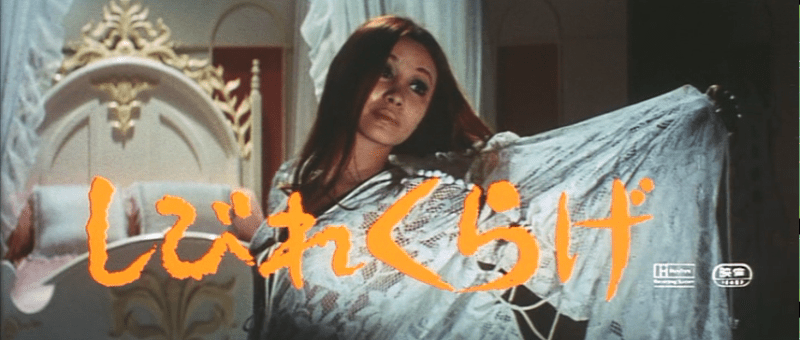
The Hot Little Girl (しびれくらげ, Yasuzo Masumura, 1970)

“Using women to make money is the same as a yakuza” a repentant gangster insists on confronting the real big bad of exploitative corporate power in Yasuzo Masumura’s ironic exploration of corruptions of a consumerist society. Ironically given the rather salacious title The Hot Little Girl (しびれくらげ, Shibure Kurage), the Japanese a more suggestive Numbing Jellyfish, Masumura’s spicy drama finds an exploited woman fighting back to reclaim her own image and agency by seizing the tools used against her in the company of a sensitive yakuza himself tiring of the amoral world of contemporary gangsterdom. 

Once an ordinary coffeeshop waitress, Midori (Mari Atsumi) is now a successful model thanks to the efforts of her salaryman boyfriend Hiroshi (Yusuke Kawazu). Completely in love with him, Midori is convinced they will one day be married while Hiroshi is obsessed with corporate success and ultimately intends to buy his own advancement with her body by acquiescing to an indecent proposal from an American department store owner to strike a massive trade deal none of his colleagues had been able to broker. Shocked and disgusted Midori refuses but is later won over by Hiroshi’s rather dubious arguments that she must sleep with the American for the good of Japan along with their personal happiness, insisting that nothing will change between them while her sacrifice will buy a more secure footing for their mutual future. 

After the deed is done she seeks additional reassurance, heading straight to Hiroshi’s apartment where they again make love he insisting she is “clean” as the day she was born. In this instance he sells her body directly, though as others point out he was already doing something similar in selling her image for his own gain. Yet he is not the only person to do so, Midori’s feckless father who ruined himself embezzling money to spend on a bar hostess and thereafter going to jail, goes out on the town claiming to be a movie star and showing off Midori’s magazine spread to a woman at a bar who turns out to be there with a petty yakuza. They decide to run a scam on him, demanding compensation for messing with a yakuza’s girl while setting the amount so high they know he’ll never pay intending to press the pretty daughter, should he have one, into sex work in a fairly common gangster manoeuvre. 

The flaw in their plan is that the feisty Midori is less than attached to her dad who continues to ruin her life with his fecklessness, a drunken fool who steals her money and gets himself into trouble. It’s clear that he sees Hiroshi as something of a meal ticket, while Midori sees a marriage to him as a path towards a more stable, conventional life. Nevertheless, she finds herself unable to abandon her father, bravely standing up to the yakuza who threaten her and eventually saved by sensitive gangster Kenji (Ryo Tamura) who instantly sympathises with her situation having grown up with an abusive father he once tried but failed to kill. The gang he’s with are old school yakuza not yet part of the newly corporatising breed, still running petty scams pressing women into sex work through blackmail or parental debt. 

Yet those two worlds are, the film suggests, beginning to merge. The corporation is founded on an image of female exploitation, Hiroshi pimping out his girlfriend while his bosses giggle about it jokingly referring to her as a secret weapon for the company. On being confronted with her father’s problematic past, Hiroshi makes Midori an ultimatum to sever ties with her dad or break up with him because associating with the yakuza will ruin his career despite the fact that he is really no different himself in his desire to exploit her. Kenji’s boss Yamano (Daigo Kusano) instructs him to make Midori his woman and then put her work, but he refuses while Midori eventually opts for an ironic revenge that will quite literally buy her freedom not only from the corporate world but from yakuza threat in allowing Kenji to free himself. Together they determine to “become ordinary people again”, attempting to shake off both parental failure and the corruptions of a rabidly consumerist society to resist the commodification of body and image in world in which everything has a price and nothing any value. 


The Blossom and the Sword (日本侠花伝, Tai Kato, 1973)

After joining the studio in the mid-1950s, Tai Kato quickly made a reputation for himself with Toei’s key brand of ninkyo eiga yakuza movies set in the chivalrous world of pre-war gangsterdom. By the early 70s, however, the genre was already played out and Kato began to work more frequently with other studios and in various genres but 1973’s The Blossom and the Sword (日本侠花伝, Nihon kyoka den), produced for Toho the studio which he had first joined at the beginning of his career in 1937, takes him back to his ninkyo roots if less directly in a politicised tale revolving around the 1918 rice riots

The film opens, however, a few years earlier with the heroine, Mine (Hiroko Maki), attempting to sell children’s educational picture books aboard a train (an activity strictly prohibited). As she explains, they are in the middle of a recession and times are hard for everyone though as we discover the reason for Mine’s journey is that she is in the process of eloping with the mild-mannered Minoru (Kunio Murai), the son of a wealthy family with literary dreams, who is prevented from marrying her because of the class difference between them. The couple are doing well enough evading detection, but are caught out when accidentally implicated in the murder of a treacherous politician by left-wing agitator/noble gangster Seijiro (Tetsuya Watari) who fatefully locks eyes with Mine while trying to escape forever binding their fates together. 

Epic in length the film was originally released in two parts with an interval in-between, this first half focussing on Mine’s doomed romance which is thwarted in part by the outdated social codes of the early Taisho society and the moral cowardice of her lover who finds himself unable to resist them. The pair are thrown in prison as possible co-conspirators and beaten by the police, Mine striking up a friendship with a woman, Tsuru (Junko Toda), imprisoned for distributing pamphlets as a labour activist who later helps her to get a waitressing job and teaches her rudimentary writing while Minoru lounges around in their home sort of writing a novel. Tsuru seems to be touched by their cross-class romance, “where love is concerned to hell with social status!” she insists berating Minoru for giving in so easily when the pair are finally tracked down by his austere mother. Her socialist activism may not directly rub off on Mine but does perhaps inform her later actions after discovering the depths of Minoru’s spinelessness, rescued after a failed bid at double suicide by a truly good man, Kinzo (Meicho Soganoya), who also happens to be a traditional yakuza heading a harbour gang in Kobe. 

After becoming his wife, Mine comes to witness the persistent unfairness and exploitation all around her as mediated by the outcry surrounding the fluctuation of rice prices in the late 1910s caused by attempts at profiteering and the necessity of supplying the military forces then participating in the war in Europe. Meanwhile, would be local dictator and amoral yakuza Kishimoto (Toru Abe) is intent on squeezing the Osada gang out of the harbour further pushing up rice prices while in cahoots with corrupt local authorities. Seijiro re-enters her life when dispatched to assassinate Kinzo on the orders of Kishimoto but stabbing him as carefully as possible to make sure he doesn’t die, thereafter switching sides to fight for the rights of the poor who he warns face even greater oppression should a man like Kishimoto be allowed to dominate the harbour. 

With Kinzo out of action, Mine assumes her natural destiny as a local leader doing her best to stand up to Kishimoto and the corrupt authorities but still faces difficulty getting her voice heard without a man standing next to her. On taking Kinzo’s place at a meeting of local bosses, she is dismissed as “just a woman” before a sympathetic naval officer decides to hand her a lucrative job shifting rice intended for sailors overseas because of her knowledge of current affairs undercutting Kishimoto’s attempts to game the system. It’s the trust the navy have in her that later saves her again when she is arrested and brutally tortured by corrupt policemen working with Kishimoto intent on tracking down Seijiro for the murder on the train all those years previously. Mine’s rise is also in a sense Seijiro’s redemption as he atones for the attack on Kinzo, rejects his association with Kishimoto to re-embrace his socialist beliefs, and fulfils the romantic destiny sparked when their eyes met on the train. 

Drawing a direct line between burgeoning militarism and gangsterdom along with the amoral exploitations of an increasingly capitalist society, Kato makes his intentions clear by dropping a ninkyo eiga hero into a world of infinite corruptions in which he eventually becomes a defender of the poor. Kato’s striking composition and use of colour along with expressionistic imagery lend the air of legend implied by the title as Mine fights her way through the oppressions of her era as a figurehead for justice in an increasingly unjust society.


Horror of the Wolf (狼の紋章, Masashi Matsumoto, 1973)

“All I wanted was to live a quiet life alone” a teenage werewolf laments unfairly forced into a human world which has no real place for him while he can find no accommodation with its innate cruelty. Adapted from the manga by Kazumasa Hirai & Hisashi Sakaguchi, Horror of the Wolf (狼の紋章, Okami no Monsho) is part high school delinquent movie and part psychedelic werewolf exploitation film in which the hero finds himself drawn into a weird supernatural battle with a crazed nationalist while falling for his beautiful high school teacher who perhaps uncomfortably reminds him of his late mother. 

Akira Inugami (Taro Shigaki) spent the early years of his life in Alaska playing with the local wolves until his anthropologist parents were murdered “due to suspicions of spy activity”. After spending some time raised by the wolves, Akira was then taken in by his fantastically wealthy aunt, the CEO of the top chain of Japanese restaurants in the US where he was schooled until returning to Japan. As the film opens, he’s attacked by a gang of thugs, refusing to fight back and later stabbed but cooly removing the knife from his stomach as if it were only an inconvenience to him. Witnessing this strange event, school teacher Miss Aoshika (Yoko Ichiji) promptly faints, only to receive a shock the next day when the man she thought she saw murdered the night before shows up as a mysterious transfer student at her elite academy. 

Hinting at an underlying theme of class conflict and institutional corruption, the school doesn’t really want to take Akira because he’s a troublemaker who’s always getting into fights, though this claim seems to conflict with his ongoing refusal to engage with physical violence, but is reluctant to dismiss him because his aunt is so very wealthy. The same goes for his rival, Haguro (Yusaku Matsuda), whose father is a yakuza boss. Haguro is the leader of the school’s delinquent thugs, a distinctly cool presence who wanders around brandishing a katana which he is frequently seen unsheathing with the Japanese flag in the background while his family crest appears to feature an eagle reminiscent of those seen in Nazi Germany.

Nationalism aside, the film has an ongoing preoccupation with animal imagery not only with Akira’s wolfishness but Aoshika whose name literally means “blue deer” often appearing in front of a wooden deer ornament while Akira’s apartment seems to be kitted out with AstroTurf or at least a vibrant green carpet with the appearance of grass as well as occasionally shifting into an idyllic dreamscape where he can frolic cheerfully in the wild. When Aoshika comes looking for him, he tells her that he’s simply wearing a wolf mask and refuses to take it off, urging her to leave him in peace because “women are so lacking in delicacy and so overbearing it drives me nuts”. 

Akira is not alone in his apparent misogyny, Aoshika is violently raped on three separate occasions the first being by her own students which the headmaster brushes off as a rather frequent occurrence giving rise to the question of why she continues to work at the school, where she is apparently the only female member of staff, if she continually faces such traumatic violence. Her final assault meanwhile comes at the hands of Haguro who seems to be performing some kind of bizarre ritual while preparing to face off against Akira who saved her from a previous attack by street punks while in his werewolf guise.  

Aside from his brooding intensity, there are few clues to Akira’s true identity other than his ability to heal in rapid time following injury and skilful athleticism in dodging attacks. Repeatedly referred to as a “lone wolf”, partly an insult based on his name (which literally means “dog god” and is used to describe those possessed by the spirit of a dog), Akira adopts a pacifist stance towards his aggressors refusing to fight back later telling Haguro that they’re simply not worth the bother yet his refusal to fight is mistaken for a philosophical position that eventually makes him a figurehead for a gang of leftist teens trying to halt the culture of violence in the school in what seems to be an ironic swipe at the student protests even if also setting up a challenge to Haguro’s crypto-fascist authoritarian thuggery. 

A curiously avant-garde affair, Masashi Matsumoto’s teen wolf drama features striking composition with frequent use of solarisation and an almost mythical opening sequence detailing the hero’s origin story amid the snows of Alaska, along with incongruous practical effects such as the furry wolf mask Akira often wears in his apartment in his half-transformed state. It is also somewhat lurid, unnecessarily revelling in the sexualised violence directed at the heroine with three lengthy rape scenes of varying intensity. Even so in its undeniable strangeness and eventual pathos for those who cannot survive in “a cruel world made by humans” Horror of the Wolf reserves its sympathy for the outsiders unwilling to submit to a world of human cruelty.


Asia is One (アジアはひとつ, NDU, 1973)

“They came to beat us into a splendid Japanese future, to conquer us” according to an interview in a small Taiwanese mountain village towards the end of the Nihon Documentarist Union’s Asia is One (アジアはひとつ, Asia wa Hitotsu). Having documented Okinawa on the brink of its reversion to Japanese sovereignty, the collective return to examine more widely its legacies of oppression and exploitation under Japanese imperialism venturing first to its smaller islands and then all the way out to Taiwan from which many migrant workers had come to work in harsh conditions in Okinawan mines during the colonial era. 

One man describes himself as having been tricked in coming to the Marusan mine in 1933 in the mistaken belief he could work there for six months and then return home. “I thought it would be better to die than live there” he goes on, originally too afraid to attempt escape having seen others rounded up and punished but later managing to get away by blowing up a boat. A Japanese man who worked at the Noda mine in Iriomote, meanwhile, reveals that they were refused days off and sick workers were often cast out. Many simply died because they could not afford to pay for medical attention. Workers were paid in company script which could be spent only on the compound, the mine owners fearing workers would abscond if they were paid in cash. By his reckoning, however, the Taiwanese workers had it better because they were working on a contract basis and could get a better rate of pay. A third man, Masuda, meanwhile describes long days and early mornings, being unable to eat if they didn’t have money for the canteen, and the watchmen locking their bedroom doors at night to prevent them escaping. The conditions were so bad that one man took his own life by blowing himself up with dynamite tied around his waist. 

Even so, the second man then living in a nursing home, does not blame the mine owner, Mr. Noda, describing him simply as a “capitalist” and remarking that he was often kind and generous giving workers money for medical treatment etc, blaming instead the foreman. “It’s the people working under the capitalists who are bad” he explains, bearing out the extent to which oppressed people will often oppress others like them in order to feel less oppressed but also letting the system off the hook in failing to acknowledge that if Mr Noda had really been good and kind he could have improved conditions in the mine while still remaining “a capitalist”. Hsieh King-Fu, known as Dr. Seh, whose father worked as a doctor at the mines recalls a mass outbreak of malaria among the Taiwanese migrant workers leading to a shortage of morphine. Having bought supplies from a local pharmacy himself a rumour later circulated he was injecting them deliberately to get them addicted so he could drag them away so endemic had the sense of betrayal and exploitation become. 

Meanwhile since the reversion the islands have been fostering deeper connections with Taiwan which is after all geographically closer than the Japanese mainland. An older man explains that he’s instilling Taiwanese agricultural techniques in the local population and has successfully been cultivating pineapples on the island for the last 40 years. Fishermen too remark on how much easier it is to trade with Taiwan rather than the mainland because it’s simply closer meaning they can also trade live fish with a longer shelf life. Meanwhile an official details a potential agreement between the Ryukyu government and Taiwan to recruit workers developing new ties independently from those of mainland Japan. 

Yet in travelling to Taiwan itself, the documentary collective encounter surprising reactions to the legacy of Japanese colonialism in a small village inhabited by the indigenous Atayal community who still play the Japanese national anthem every day at noon. Many of them can still speak fluent Japanese having been forced to learn it during the colonial era and have almost a fondness for Japanese rule. “We owe everything to Japan” one woman states, uncomfortably grateful for her “civilisation” and thankful that the Japanese educated them out of some of their more “barbaric” customs such as the admittedly oppressive practice of beheading. Like the Korean man who obtained three names during his travels through the Japanese empire, many of the villagers have names in their indigenous language, names in Mandarin, and names in Japanese. “I’m still terrified of imperialism and oppression” one man admits though adding “I guess imperialism is different now” in lamenting that the emperor has never visited him but observing that he looked “free” on his last tour to Taiwan before going on to talk about a seal he received from the emperor after executing prisoners, by beheading, as a conscript soldier during the war. Asia may indeed be one if ironically, united in the destructive legacy of Japanese imperialism, but perhaps also finding new ways to repair itself which take less account of concepts such as sovereignty, diplomatic recognition, or man-made borders. 


Asia is One streams worldwide (excl. Taiwan and Japan) until June 3 as part of Japan Society New York’s Visions of Okinawa: Cinematic Reflections.

Terror of Yakuza (沖縄やくざ戦争, AKA Okinawa Yakuza War, Sadao Nakajima, 1976)

An old-school yakuza finds himself cornered on every side while caught in the confusion of Okinawa’s reversion to Japan in Sadao Nakajima’s jitsuroku gangster movie Terror of the Yakuza (沖縄やくざ戦争, Okinawa Yakuza Senso, AKA Okinawa Yakuza War). Where similarly themed Okinawa-set gangster pictures such as Sympathy for the Underdog had largely presented the islands as an appealing place for mainland gangsters because the conditions of the occupation which had allowed them to prosper were still in place, Sadao reframes the debate in terms colonisation and conquest as the hero finds himself increasingly marginalised as an island boy contending with amoral city elitists. 

Nakazato (Hiroki Matsukata) has just been released from prison after serving seven years for the murders of two rival gang bosses that allowed his boss, Kunigami (Shinichi Chiba), to rule the roost in Koza. But now that Okinawa has reverted to Japan, everything has changed. Kunigami has formed a loose alliance with another regional gang to oppose the incursion of mainland yakuza but behind the scenes the higher-ups are intent on a mutually beneficial alliance with the Japanese perhaps seeing the writing on the wall and assuming that it’s better to work with the new regime that against it. For his part, Nakazato is more loyal to the clan than he is opposed to Japan but he’s also resentful towards to Kunigami for failing to live up to his side of the bargain now that he’s been released while fearing the influence of his new sidekick Ishikawa (Takeo Chii) whom he suspects of murdering one of his former associates while he was inside. 

As such, much of the drama unfolds as in any other yakuza picture with Nakazato, regarded by some of the other bosses as a loose cannon and potential liability, reluctant to move against Kunigami for reasons of loyalty even while Kunigami becomes increasing unhinged and dangerous, deliberately running over an Osakan foot soldier who was apparently just on holiday with no particular business in town. Kunigami’s recklessness in his hatred of the Japanese threatens to start a turf war the Okinawan gangs fear they couldn’t win, sending snivelling yakuza middleman Onaga (Mikio Narita) along with Nakazato to negotiate in Osaka only to be told the price of peace is Kunigami’s head. Inspired by the Fourth Okinawa War which was still going on at the time of the film’s completion (in fact, the release was blocked in Okinawa in fear that it would prove simply too incendiary), the conflict takes on political overtones as the mainland gangsters assume their conquest of Okinawa is a fait accompli while those like Onaga are only too quick to capitulate leaving Kunigami and Nakazato as two very different examples of resistance. 

Yet Nakazato finds himself doubly marginalised because he is from one of the smaller islands with most of his men also hailing from smaller rural communities (one uncomfortably wearing extensive makeup to ram the point home that he is from the southern reaches) with the result that they are often pushed around by the city gangsters who view them as idiot country bumpkins. On his trip to Osaka, Nakazato even describes himself as such in an attempt to curry favour apologising in advance should he make a mistake with proper gangster etiquette. Like a good platoon leader, Nakazato’s primary responsibilities are to his men which is one reason why he takes so strongly against Ishikawa, one of the new breed of entirely amoral yakuza who care nothing at all for the code and think nothing of knocking off his guys for no reason. Consequently he finds himself caught between the invading mainlanders, the unhinged chaos of Kunigami, the coldhearted greed of Ishikawa, and the spineless venality of turncoats like Onaga. 

It’s no wonder that he eventually loses his cool, going all out war and like Kunigami dressing in vests and combats in an internecine quest for vengeance precipitated in part by Kunigami’s attempt to discipline one of his men for encroaching on his territory by removing his manhood with a pair of pliers. “Someone will get to you someday too” Nakazato is reminded though having lost everything including his loyal wife who insisted on selling herself to a brothel to get the money to fund his war of revenge he may no longer care so long as he cleans house in Okinawa to the extent that he is really able to do so. “Okinawa is such a scary place” one of the Japanese guys admits, though showing no signs of backing off in this maddeningly chaotic world which turns stoic veterans and hotheaded farm boys alike into enraged killers fighting on a point of principle in a world which no longer has any. 


Terror of Yakuza screens at Japan Society New York May 20 at 7pm as part of Visions of Okinawa: Cinematic Reflections

Original trailer (no subtitles)

Images: Terror of Yakuza © 1976 Toei

Dear Summer Sister (夏の妹, Nagisa Oshima, 1972)

The complicated relationship between mainland Japan and the Okinawan islands is played out in the youthful identity crises of two adolescents struggling to understand the world their parents have left to them in an uncharacteristically breezy effort from Nagisa Oshima, Dear Summer Sister (Dear Summer Sister (夏の妹, Natsu no Imoto). Part Rohmerian travelogue, Oshima takes a tour around the island in the immediate aftermath of its reversion to Japan but rather than the busy tourist spots explores a legacy of colonialism and exploitation in the islands’ war memorials and red light districts. 

The irony is that Sunaoko (Hiromi Kurita) finds the person she’s looking for immediately after disembarking from the boat she’s taken from the mainland only she never realises it. Having received a letter from a boy, Tsuruo (Shoji Ishibashi), claiming that he may be her half-brother but isn’t entirely sure, Sunaoko has accepted his offer to come to Okinawa where he will show her his “brotherly affection”. Unbeknownst to her, however, he mistook the figure of her father’s much younger fiancée Momoko (Lily) for that of the teenage Sunaoko with the older woman half-heartedly trying to head off a potential crisis while understandably curious and seeking to know the truth behind her future husband’s hidden past. 

The figure of Tsuruo’s mother, Tsuru (Akiko Koyama), comes to stand in for that of Okinawa yet the central problem as we discover is that she was raped firstly by Sunaoko’s father Kikuchi (Hosei Komatsu) and subsequently by local Okinawan policeman Kuniyoshi (Kei Sato) who had previously passed her off as his younger sister. Even so the trio seem to interact with each other as if nothing had happened and they were simply old university friends reuniting after years of separation. Despite his present occupation in law enforcement, Kuniyoshi had been in prison at the time having been arrested as a student protestor and on his release raped Tsuru after she told him she had been raped by Kuniyoshi in an attempt to reclaim her body and send his sperm as a kind of advance division to prevent Kikuchi’s successfully colonising her womb with the consequence that Tsuru cannot of course be sure whose child Tsuruo is settling finally for “mine” in an answer which at least earns her Sunaoko’s respect. 

Obviously still somewhat naive and additionally provoked on discovering the attraction between Momoko and Tsuruo, Sunaoko had been unfairly judgmental in preemptively accusing Tsuru implying that she been immoral in maintaining relationships with two men at the same time. What occurs is a gradual sense of disillusionment in her father the judge when confronted, it has to be said with confusing frankness, with his own immorality in his misuse of Tsuru which is also of course a metaphor for Japan’s misuse of Okinawa, a thread picked up more directly by the old soldier Sakurada (Taiji Tonoyama) who has apparently come to Okinawa looking for a local willing to kill him in atonement for atrocities he half-heartedly claims not to have committed himself but feels responsible for simply as a Japanese person. Ironically enough he finds such a person in Rintoku (Rokko Toura), a teacher of traditional Okinawan folk music who is looking for “a Japanese who deserves my killing him”.

Nevertheless the relationship between the old men turns into one of playful animosity which does not seem to hint towards violence, a playful fight breaking out between the pair on a boat in the middle of the sea in the film’s concluding scenes in which Sunaoko offers an ironic commentary to the effect that the “killer” and his “victim” are still “singing and drinking” despite the earlier claim that there were only two kinds of people, Okinawans and Japanese, in counter to the claim that the only two kinds of people were men and women. Meanwhile, Kikuchi attempts to process the implications of his friendship and actions explaining that Kuniyoshi’s Okinawan roots were not an obstacle between them while admitting that he never thought about the position of Okinawa during their youth and wonders what he thought back then as to Okinawa’s future, whether it should revert to Japan or become independent. Kuniyoshi claims not to remember, while Tsuru explains how difficult it was to travel to the mainland under the occupation and implies that it’s better now that “we can go where we please”. 

The implication is, perhaps, that Tsuruo is his mother’s child but also a kind of orphan creating a new identity in a new Okinawa having symbolically rejected both of his potential fathers if seeking a brotherhood with his half-sister though even in this the waters are muddied with the undercurrents of incestuous desire which seem to run both ways. Even so Oshima hints at the secondary colonisation of America in conducting what doesn’t seem to be an entirely appropriate series of conversations with the young Sunaoko concerning the history of sex work on the island and the number of bars geared towards American servicemen returning from Vietnam with the suggestion that the islands remain economically dependent on the US despite the reversion while Sukurada makes similarly crass comments about his relationships with Okinawan sex workers during the war. They cast themselves as Urashima Taro travelling to the magical underwater palace of the Dragon King but wary of opening the box of truth they’ve been given lest their world crumble beneath their feet. Picturesque and strangely cheerful, Oshima’s Okinawan odyssey shot with breezy immediacy offers a characteristically thorny take on relations between the two island nations but reaches an unexpectedly hopeful conclusion in the young people’s rejection of their parents’ legacy and intention to move forward in mutual solidarity. 


Dear Summer Sister screens at Japan Society New York May 14 at 7pm as part of Visions of Okinawa: Cinematic Reflections

Images: © 1971 Oshima Productions

Tomodachi (ともだち, Yukihiro Sawada, 1974)

As the Japanese studio system began to implode in the late 1960s, Nikkatsu which had specialised in youth cinema, pivoted towards softcore pornography rebranding itself as Nikkatsu Roman Porno. At the same time, however, they also launched an unexpected sideline of family films with strong educational aims under the Nikkatsu Children’s Films banner. Selected by the Ministry of Education and recommended by various educational and parent and teacher associations, the second feature put out under the label, 1974’s Tomodachi (ともだち), is in its own way instructional with a strong anti-bullying theme but also has something to say about the literal pollution of the contemporary society. 

As such, the film revolves around the originally unsympathetic hero, Shinta (Hitoshi Abe), who openly bullies a girl in his class by kicking a football at her because she alone has been excused the after school duty of sweeping the school yard. Having transferred from rural Tohoko, Yoshiko (Noriko Suzuki) has developed serious asthma from living in the centre of industrial Kawasaki and has been instructed to avoid physical exertion or activities which might cause her to breath in additional dust and smoke. Shinta and his friends are however entirely insensitive, literally surrounding Yoshiko while they hound her with questions insisting she’s not really “ill” and merely shirking her duty. When the teacher tries to explain to them that Yoshiko has been excused because it would be bad for her heath to be sweeping dust, Shinta and his friends all immediately claim to be ill too, fake coughing and wheezing despite having just been playing football rather than doing their after school chores like the other kids. 

What doesn’t occur to Shinta is the loneliness, isolation, and embarrassment Yoshiko must feel on being singled out because of her illness. Rather poignantly, the school nurse and others describe how cheerful and friendly Yoshiko was when she first arrived only to reflect on how depressed and withdrawn she’s since become. This is partly as Shinta later learns because her classmates rejected her once she became ill. Asthma is obviously not a contagious disease, yet many of the other parents stopped their kids playing with her because of the stigma surrounding any kind of “illness” while simulataneously unwilling to bear the responsibility of needing to care for her if she should undergo an asthma attack while in their home or under their care fearing they would then suffer a reputational loss if they failed to treat her properly. 

For his part, Shinta is intensely resentful when the teacher sits him next to Yoshiko in the hope that his cheerfulness will help bring her out of her shell. Exclaiming that he hates sick people and thinks that Yoshiko is boring and creepy because she doesn’t really say anything, he begins to have second thoughts when the teacher implores him to help “as a man” suddenly discovering a sense of honour and justice that he doesn’t want to let down. His first action however is to continue kicking footballs at her, but strangely it works rather well providing a physical activity which is compatible with her asthma in not needing to move around while allowing her to feel part of the game. As he gets to know her more, Shinta comes to sympathise with his new friend and is angry with the other kids who reject her but discovers that his own parents are not much different refusing him permission to invite Yoshiko over on talking to other parents at the PTA in part because they run a bento store and are nervous of coming under suspicion if anyone notices a girl with a heavy cough coming and going and questions their hygiene practices. 

Shinta does, however, visit her small apartment which is unfortunately right behind a dusty construction site. As she explains, Yoshiko’s parents were part of a new agricultural drive which later failed and left them with massive debts which is why they had to leave the country to work in a factory in Kawasaki. As her parents often work late shifts for the extra money, she has to look after not only herself but her younger brother with only a pet squirrel for company. Constant references are made to other children having to change schools because their parents moved into a company dorm, while the poor quality of the air is repeatedly given as the cause of Yoshiko’s illness literally choked by the thoughtless post-war economic drive that continues to disrupt not only family lives but the local environment, Shinta also revealing that his parents used to farm seaweed but were forced to stop because of industrial pollution in local rivers. 

This destructive industry also creates unintended divisions among the children along class lines between those whose parents work manual jobs in the factories and those whose families are wealthier and involved in white collar work. The ring leader of the girls who reject Yoshiko, Ayako (Masayo Koga) is the daughter of a wealthy conservative family living in a large house with a mother (Yoshie Kitsuta) who wears kimono. When Ayako shuns her the other girls follow, Yoshiko inviting them to her birthday party only to discover them all together eating cake at Ayako’s house instead. She’d invited them partly out of worry that they were offended she hadn’t invited them to her small apartment, only then realising that they rejected her because of the stigma towards her illness leaving her feeling hopeless and dejected. As Shinta later points out, this kind of emotional pain negatively impacts her medical condition coming to despise the adult world describing his father as the worst in his class for his insistence that he should accept the way the world works rather than idealistically trying to help his new friend. 

The message of the film, however, is that it’s wrong to leave people out and that children in particular should always attempt to friendly with each other. Developing appendicitis, Shinta comes to a new appreciation of how difficult it can be being ill while his mother too starts to regret her decision finally inviting Yoshiko to come and visit them at their home after spotting her sadly walking around outside uncertain if it’s alright to come and visit Shinta on his sickbed. Shinta’s two best friends had also been not entirely supportive of his decision to bring Yoshiko into their group, referring to her as “goldfish poo” in her tendency to trail along behind them, though partly out of jealousy along with the natural awkwardness of a girl suddenly being introduced into a previously all male club but even they eventually come round and decide to reaffirm their friendship. Despite this rosy conclusion in which the other children are convinced to abandon their unfair prejudices and become friends with each other, the eventual conclusion seems rather cruel if returning to the minor theme of the destructive effects of increasing industrialisation even as Shinta’s father is also reminded of the importance of friendship in stating an intention to attend his own primary school reunion. A touching coming-of-age tale, Tomodachi puts its young hero through the emotional wringer but also allows him to discover a strong sense of justice and empathy towards those rejected by their society. 


Step on the Gas! (新宿アウトロー ぶっ飛ばせ, Toshiya Fujita, 1970)

A recently released former gangster and the bored son of a CEO look for new directions in early ‘70s Japan in Toshiya Fujita’s Step on the Gas! (新宿アウトロー ぶっ飛ばせ, Shinjuku Outlaw: Buttobase). Released between his two instalments in the Stray Cat Rock series, Fujita’s freewheeling underworld drama is high on irony and shot in a surprisingly warm colour palate replete with pastels seemingly eschewing the seriousness of Nikkatsu’s earlier youth dramas for sense of youthful ennui eventually granting its mismatched heroes if not the direction they seek then at least possibility in their forever floating existence. 

“Angel of Death” Yuji (Tetsuya Watari) waltzes out of prison to be met by no one, only for another man it later transpires he does not know to attempt to flag him down in his military jeep. Ignoring him, Yuji jumps in a taxi and asks to go to Shinjuku, presumably his old stomping ground, before changing his mind and travelling on to Yokohama instead. This would indeed be a fantastically expensive journey, Yuji ironically taking the cabbie for a ride only for the mysterious man to appear and pay his fare for him. Giving his name as Nao (Yoshio Harada), he eventually explains that he’s trying to recruit Yuji for a job hoping to make use of his fearsome reputation to help him recover some missing drugs and get a gang of bikers off his back. 

As we later discover, however, Nao is not some street punk but the son of a wealthy businessman if one obviously at odds with this conservative father. That might be why he seems so hopelessly out of his depth in his relationship with the delinquent bosozoku motorcycle gang led by Rikki (Masaya Oki) who is perhaps equally in over his head in his rather naive approach to criminal enterprise. Nao and his friend Shuhei were supposed to handle a shipment of marijuana for the gang, but the deal went south and the drugs went missing along with Shuhei so now Nao owes them big time. He wants to use Yuji’s “Angel of Death” skills to find out what happened to Shuhei and retrieve the drugs to settle things with Rikki. 

Inevitably, events have a connection to Yuji’s former Shinjuku life Nao employing a woman he used to know, Shoko (Meiko Kaji) who is also Shuhei’s sister, to run his bar, while the icy enforcer working for the big enemy, corporatised yakuza, also turns out to be someone he knew before in the aptly named and distinctly creepy “Scorpion” (Mikio Narita) a former policeman turned amoral gangster. “His power lies not in fearlessness or being a good shooter but in the fact he doesn’t care about anything” Yuji later explains, describing him as the kind of man willing to knock off anyone in his way without a second thought be it a woman or a partner. One might have thought the same of Yuji in his breezy insouciance, but he is at heart noble despite his fearsome nickname displaying compassion and empathy for those around him along with old-fashioned values like loyalty siding with Nao against the twin threats of Scorpion and the biker gang with whom he later proposes a mutually beneficial alliance. 

Skipping between strangely whimsical folk music and a melancholy jazz score, Fujita’s freewheeling crime drama hints at a kind of aimless ennui Yuji and Nao both in differing ways emerging from a obsolescent past into a new and confusing world, Yuji realising the kind of life he lived before is no longer viable while Nao rejects his wealthy upbringing for a life of unglamorous crime engaging in drug use which he at one point hints has left him impotent. Meanwhile, the fading grandeur of old school yakuza is very much apparent in the cowardliness of the gang’s corporatised boss who hires a man like Scorpion to protect him because he cannot defend himself, planning to make off with the stolen money in a helicopter he has waiting rather than honourably facing off against Nao and Yuji in their quest to retrieve what was stolen from them. Constant red and white imagery recalling the Japanese flag clues us in to the sense of futility in their violence, but even so Fujita closes on an ironic note cementing the friendship of the two men but leaving them free floating with no clue how to land floundering for direction above an increasingly confusing society.