The Housemaid (하녀, Im Sang-soo, 2010)

Kim Ki-young’s landmark 1960 film The Housemaid (하녀, Hanyeo) was a gothic tale positioning the source of its horror in the temptations of an increasingly consumerist society as a moderately wealthy man acquires the means to hire a domestic servant only to give in to sexual temptation which brings about his ruin. Kim’s moralising drama may cast a young woman as a salacious femme fatale, but it also ends with a perhaps surprising coda that reminds the male members of the audience that rules exist for them too and they can’t expect to escape unscathed should they break them. 

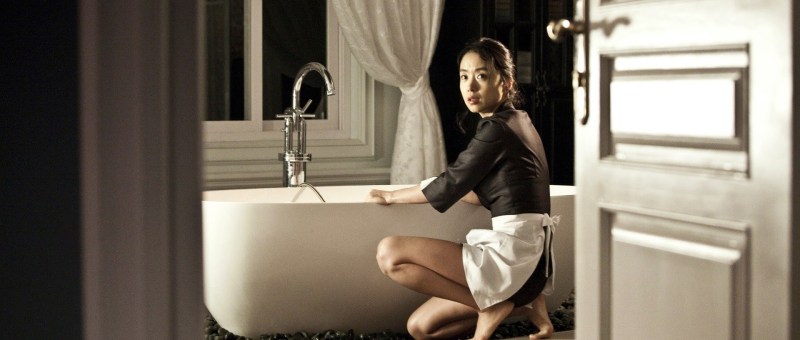
Im Sang-soo’s 2010 “remake”, perhaps more accurately described as a re-imagining, updates the tale for the modern day in which a class of super elites has become almost entirely detached from regular society and with it any sense of conventional morality. The heroine, Eun-yi (Jeon Do-yeon), is not a naive schoolgirl but a mature woman once divorced, while the head of the household, Hoon (Lee Jung-jae), is in fact absent for most of the picture which otherwise features only women engaged in accidental class warfare and desperate, internecine fights for survival. 

Im opens, however, with a tense and prophetic scene roving around the night market where Eun-yi is temporarily working alongside a friend while waiting for another opportunity. A young woman hovers over a rooftop railing, eventually falling to her death. Eun-yi is oddly fascinated, asking her friend to come with her to check out the scene on their way home. This odd reaction may fit with later characterisations of her as “childlike”, though otherwise in conflict with constant reminders that Eun-yi is a “good person” despite the potential for corruption offered by the Goh mansion. While Mrs Goh, Hae-ra (Seo Woo), is heavily pregnant with twins and unable to satisfy her husband sexually, he turns to the maid who is much older than she is but also more experienced, earthier, and freer in spirit. Eun-yi is a willing participant in their affair, but is surprised when Hoon leaves her a cheque the next morning as if he were paying her an overtime bonus or merely trying to justify his sexual transgression as a transaction sealed off from his family life. 

Nevertheless, the situation reaches a crisis point when veteran housekeeper Mrs Cho (Youn Yuh-jung ) discovers the affair and suspects that Eun-yi may be pregnant. While as Hae-ra’s mother Mi-hee (Park Ji-young) puts it, affairs are part of the package with a rich husband, a child is an existential threat yet for all her plotting Mi-hee may be overplaying her hand pushing Eun-yi from a second floor ladder in full view of her daughter and granddaughter hoping to engineer if not a death then at least a miscarriage. Victims of this same system of class and patriarchy, Hae-ra and her mother believe they must destroy another woman to ensure they hang on to their position which they only occupy in their relationship to Hoon. 

Mrs Cho, meanwhile, once felt something similar, in essence a turncoat believing that her only possibility lies in toadying for the super rich but now that her son has been made a prosecutor she’s beginning to tire of a life of constant degradation. “R.U.N.S.” is her favourite acronym for describing her existence, “Revolting, ugly, nauseating, and shameless”. Fearing for her safety, she advises Eun-yi not to linger too long in the house, but is finally forced to admit that she feels ashamed in her complicity with the shady machinations of her employers whom she describes as “scary people” willing to act with absolute impunity when it comes to protecting their wealth and position. “Why’d you just stand still and let her slap you like that?” she asks of Eun-yi confronted by the jealous wife, indigent on her behalf but also unable to deny that it’s an apt metaphor for the way she has lived her life trapped in the house of Goh. 

As for the house itself, its fierce modernity makes for a cold home along with its sense of spotless sterility in which everything, and everyone, must have a place. The only source of heat provided is by a raging fire in front of which Hae-ra and her mother plot their “revenge” behind the back of an otherwise emasculated Hoon who is later forced to confront the reality that he is largely without power in this matriarchal household. Im’s camera tilts at these destabilising moments, a degree of unease lurking in the house’s shadowy interiors. Eun-yi wanders around in her white nighty like a living ghost now defined by her complicated status straddling a class divide. Yet she really is a “good person” with a “pure heart”, her desire for revenge largely turning inward but also doomed to fail in that you cannot shame the shameless into recognising their own immorality. Eun-yi never considers digging in and taking over the house herself, while her opposing numbers operate under a misplaced terror of her potential to unseat them. Their ongoing oppression is both modus vivendi and ingrained defence mechanism. 

Yet they are all victims of the same systems of entrenched class privilege and patriarchy that set one person against another driven by fear and desperation. Only Mrs Cho finally has the courage to reject the system altogether by removing herself from it, no longer willing to be complicit with her own degradation. “That’s what these people are like,” Hoon sneers, almost offended but perhaps shaken by Mrs Cho’s quiet revolution in realising he holds no power over those who’ve decided to be free. 


International trailer (English subtitles)

Laughing Under the Clouds (曇天に笑う, Katsuyuki Motohiro, 2018)

A cheerful former samurai chooses laughter as the best weapon against existential anxiety in Katsuyuki Motohiro’s big budget adaptation of the manga by Karakara-Kemuri, Laughing Under the Clouds (曇天に笑う, Donten ni Warau). Set amid the chaos of the late Meiji social revolution in which the samurai are no more, Motohiro’s supernatural drama is in some ways uncomfortably reactionary even as it takes as its heroes the defenders of a burgeoning new democracy who, our hero aside, seem to have a tendency towards authoritarianism in their insistence on the kind of order only they can bring. 

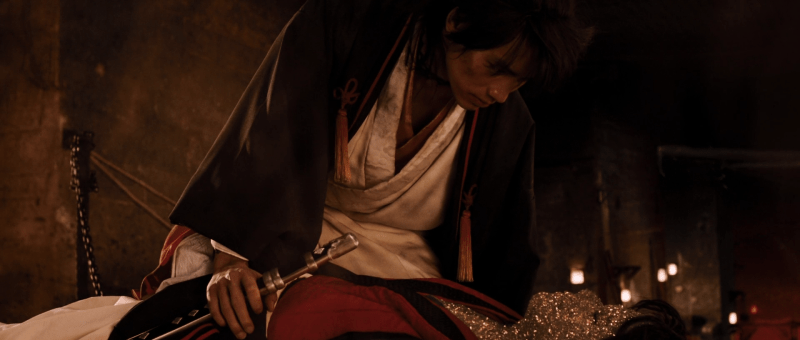
Indeed, prisoners brought to “prison island” are coldly informed that “hope, freedom and peace. These are things of the past” because “once you’re in here you’ll never get out”, “you have no rights in here”. Most of the prisoners are here it seems because of their opposition to the new regime including the mysterious Fuma Kotaro former leader of a ninja clan wiped out by imperial forces now held in solitary confinement. The man we first see dragged in is apparently a former samurai struggling to adjust to his loss of privilege and unable to find new ways of living in a world of superficial equality. 

Yet it’s not this destabilisation of the social order which presents the moment of chaos so much as a prophecy that Orochi, a vengeful snake spirit, is due to make his return to Earth and wreak even more havoc. As the legend goes, Orochi brought clouds and rain which provided humanity with a bountiful harvest yet humanity resented him for his ugliness and so Orochi took revenge for their ingratitude by creating chaos. Tenka (Sota Fukushi), a former member of the Nile imperial Wild Hound squad, sees his familial legacy as the duty to combat the vicious cycle of hate through the power of laughter. His decision to leave the Wild Hounds after his parents were murdered by ninjas in order to care for his orphaned brothers is another indication of his essential humanity as is his determination that he will protect not only his town but whoever it is that has been selected as a vessel for Orochi’s return. 

These humanitarian concerns stand in direct contrast with the unfeeling authoritarianism of the Wild Hounds or the innate cruelty of the existence of a place like prison island where those who threaten the new regime are exploited as slave labour. On the other hand, the anger of the disempowered ninja clans is perhaps understandable even if their opposition to the regime, intending to harness the power of Orochi to overthrow the government, is an attempt to hang on to their privilege as a path back to the way things used to be. As such it’s they rather than Orochi who become the central villain though one could also read Orochi as an expression of the intense anxiety of the age especially as it invades the body of a young man himself feeling resentful and confused while looking for a sense of direction in a rapidly changing society. 

Tenka’s opposition is rooted in cheerfulness, in learning to laugh even under the clouds and becoming stronger for it though his otherwise openhearted nature stands in direct contrast with his oft repeated catchphrase “I am the law” as he enforces order in his small provincial town willingly delivering criminals and fugitives to prison island but also making a point of befriending a former ninja, Shirasu (Ren Kiriyama), he rescued after the raid which killed his parents in acknowledging that Shirasu himself was not responsible for their deaths only the chaotic world in which they live. 

Boasting some impressive special effects as Tenka and the forces of order team up for some spiritual magic to send Orochi back where he came from, Laughing Under the Clouds ultimately sells a positive message casting Tenka’s revolution as an ideal world of love, laughter, and happiness while simultaneously ignoring the oppressive qualities of new social model such as its shady prisons, lack of tolerance for opposing political views, and failure to make good on the promises of a classless society. Nevertheless with its fantastical production design and inherent cheerfulness it does perhaps suggest that laughter may be the only real salve for internal darkness.  


Original trailer (no subtitles)

When I Get Home, My Wife Always Pretends to be Dead (家に帰ると妻が必ず死んだふりをしています。, Toshio Lee, 2018)

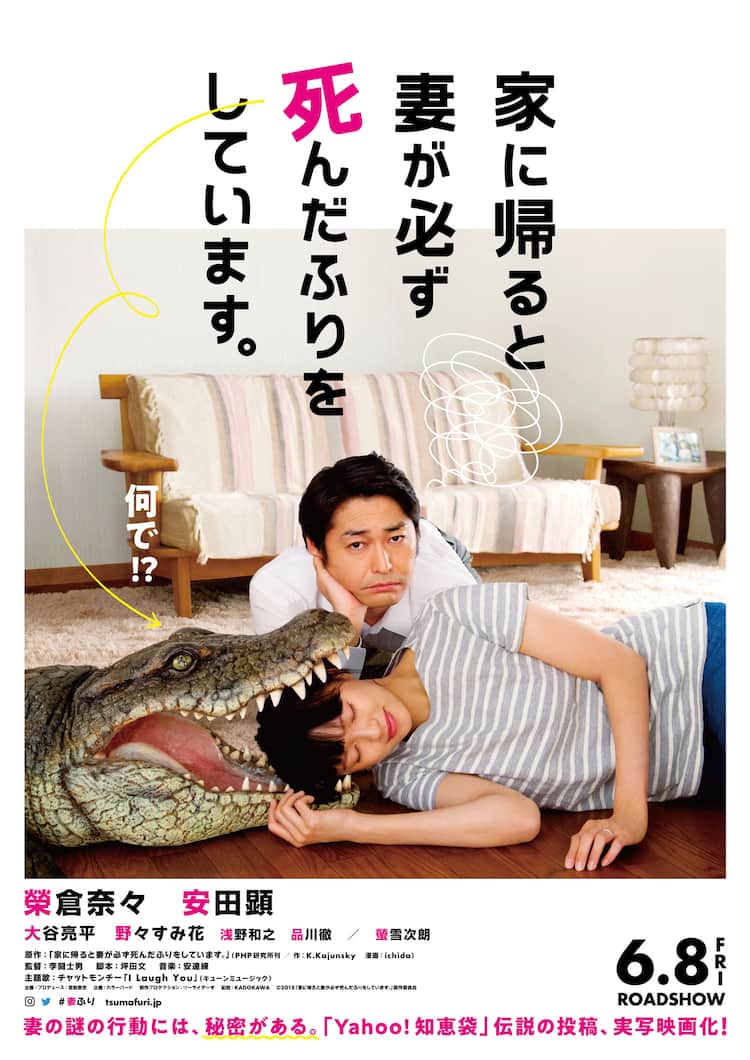
“If you give it some time it becomes just right,” according to the eccentric wife in Toshio Lee’s quirky contemplation of the modern marriage, When I Get Home, My Wife Always Pretends to be Dead (家に帰ると妻が必ず死んだふりをしています。Ie ni kaeru to tsuma ga kanarazu shinda furi wo shite imasu.). A more cheerful take on Harold and Maude, Lee’s not quite newlywed couple are heading out of their honeymoon phase and perhaps harbouring twin anxieties as they face the three year itch and start to wonder what marriage is all about and if they have what it takes to go the distance. 

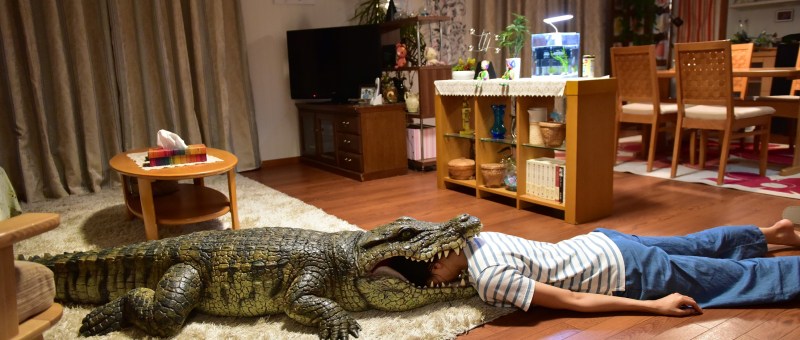
Regular salaryman Jun (Ken Yasuda) is particularly preoccupied with the “three year wall” because he was married once before and the relationship failed at the three year level which is, coincidentally, when many small businesses and restaurants fail. Perhaps unusually he has a friend at work, Sano (Ryohei Ohtani), with whom he discusses his marriage who ironically points out that Jun is essentially thinking of his marital status in the same way as a “contract renewal” as if worried he’s about to be let go. Around this time, however, he gets a nasty shock on returning home discovering his wife Chie (Nana Eikura) lying on the living room floor covered in blood. Distraught, he struggles to remember the number to call an ambulance only for Chie to suddenly burst out laughing. The same thing begins happening to him every time he goes home with the scenarios becoming increasingly elaborate such as being eaten by an alligator, for example, or being abducted by aliens. All things considered, Jun is quite a dull man, too embarrassed even to let his wife kiss him goodbye on the doorstep lest it scandalise the neighbours, so all of this fantasy is doing his head in but his rather blunt hinting that he’d prefer it Chie stop with the playing dead stuff only seems to hurt her feelings while she shows no signs of abandoning her strange hobby. 

Part of the problem is that Jun is also intensely self-involved and perhaps the product of a conformist, patriarchal society. He never reveals the reasons why his first marriage failed, only that his wife abruptly left him without much of an explanation. It never seems to occur to him that Chie may be fixating on death because she lost her mother young, possibly around the same age she is now, and is in a sense role playing demise to ease her anxiety probably grateful each time he returns home and “saves” her. For his part he insists he doesn’t “need excitement” and wants “a normal wife”, desperate to appear conventional and paranoid that Chie is going out of her mind. Rather than fully see her he keeps trying to “fix” the problem by encouraging her to take a part-time job and make new friends, worried she’s bored at home and lonely after moving away from her family home in Shizuoka.  

His friend Sano, seemingly happily married for five years, has a much more relaxed attitude to the mysteries of marriage but as the two wives begin to bond the cracks in their respective relationships are gradually revealed. Like Jun, Sano is also a conventional salaryman with traditional ideas about marriage which he somewhat rudely exposes in thinking he’s doing Jun a favour by “explaining” to Chie that her hobby is offensive to Jun because men work hard all day and want to sit down quietly without any bother when they come home. His quiet word provokes an outburst in his own wife Yumiko (Sumika Nono) who can no longer bear the irony, asking him why it is that she’s supposed to tiptoe around because he’s “tired” as if she does nothing at all day just waiting for him to come home. It’s as if they think their wives go back in the box until they ring the doorbell in the evening and wake them up again, as if the only value in their existence lies in supporting their husbands. Sano is mildly shocked on witnessing Yumiko suddenly brighten and embark on a mini lecture of crocodile facts after catching sight of Chie’s prop (bought on sale, making the most of her thrifty housewife skills), totally unaware she was into reptiles and equally stunned to learn she’s also a karate master. Five years, and it’s like they’re strangers. 

“Thinking won’t give you answers, when you don’t know, ask,” advises Jun’s boss, constantly carping about his ungrateful wife but later revealing that his deep love for her is what’s kept him going all these years. Miscommunication lies at the root of all their problems, Jun even failing to identify the most common if poetic of cliched idioms in his wife’s tendency to remark on the beauty of the moon seemingly at random. Clued in a little by Chie’s patient father, Jun begins to wake up himself, finally seeing his wife and understanding that she’s been trying to tell him something all this time only he was too self-involved to notice. “You can always find me if you look,” Chie was fond of saying, indirectly hinting that marital bliss is a matter of mutual recognition aided by empathy and a willingness to be foolish in the pursuit of happiness. 


When I Get Home, My Wife Always Pretends to be Dead is available to stream in the UK via Terracotta

Original trailer (English subtitles)

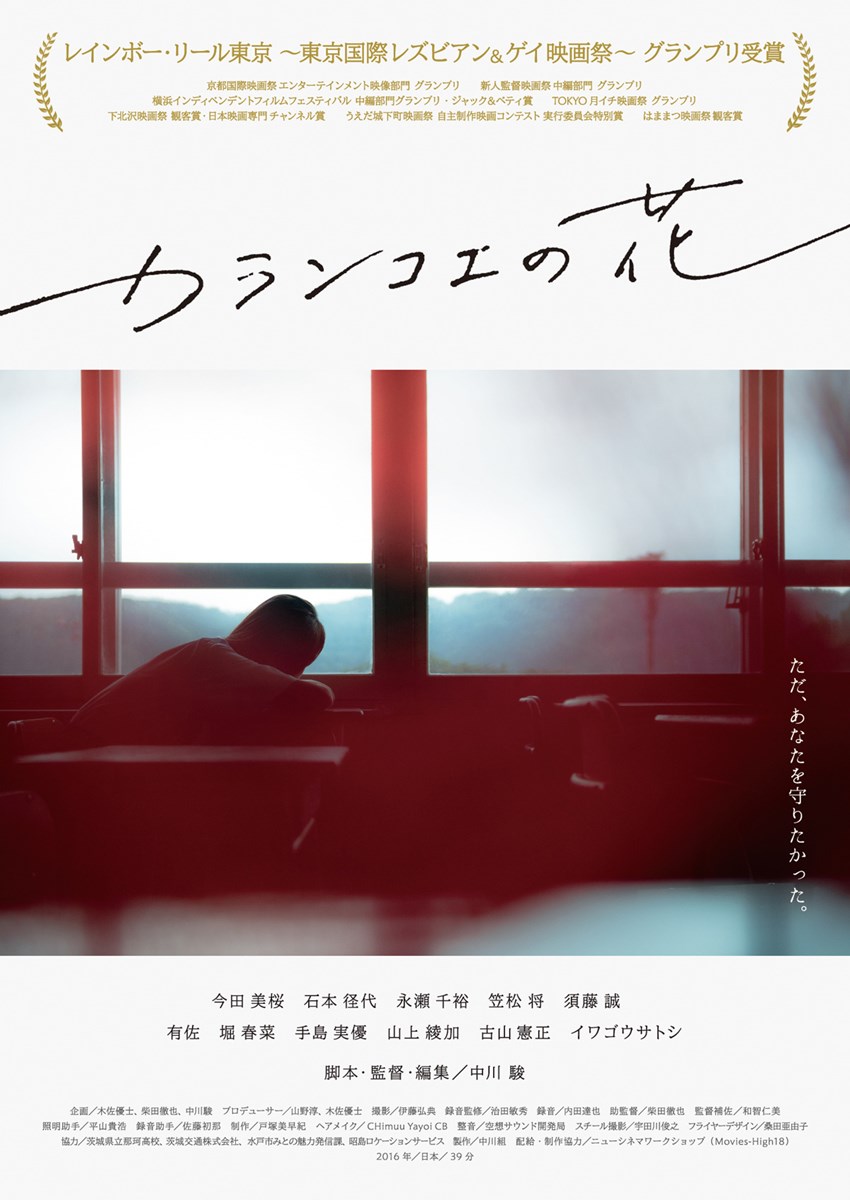
Kalanchoe (カランコエの花, Shun Nakagawa, 2017)

The truth is, most people genuinely mean well but they often make mistakes. They make them because they don’t think things through, fail to consider perspectives outside of their own, or act on assumptions that they later realise were incorrect (or tragically do not). Most people will come to understand where they went wrong and resolve to do better in future, but you don’t always get a second chance and a momentary lapse in judgement can do untold and sometimes irreparable harm.

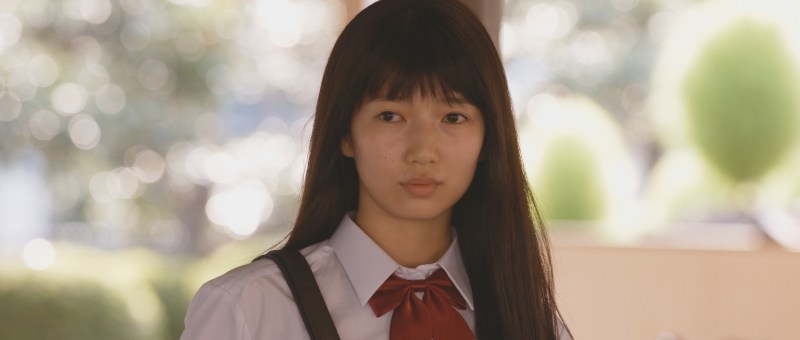
Perhaps that’s just a lesson you learn as a part of growing up, but it doesn’t make it any less painful or indeed shocking at least for the heroine of Shun Nakagawa’s 40-minute mid-length film Kalanchoe (カランコエの花, Kalanchoe no Hana). The film’s title refers to a bright red plant that in the language of flowers means “I will protect you.” But protection can be a double-edged sword, and Tsuki’s (Mio Imada) later attempt to do just that for her friend seriously backfires well meaning though it may have been. The same is true of an ill thought out decision by the school nurse to give a mini lecture on LGBTQ+ issues to Tsuki’s class when their English teacher’s off sick. Because it was only their class that received this talk, some of the students assume it must mean that one of them is gay and begin a kind of witch-hunt trying to figure out who it might be which is completely the opposite of the reaction the talk was supposed to provoke.

Of course, the nurse meant well but it probably should have occurred to her to make sure the class wasn’t singled out and support was available for any students who might be experiencing anxiety surrounding their sexuality or gender identity rather than doing something essentially superficial to make herself feel better. Though most of the students are indifferent to the talk, the class clown bears out the latent homophobia of the current society in badgering the nurse to find out if there are any gay people “or other creeps” in their class while vowing to root them out and making it a kind of game to catch one. The girls, meanwhile, engage in some aggressive heteronormativity talking about boys and pretty much making it impossible for any of them to declare themselves for whatever reason uninterested. 

As it turns out, one student overheard the conversation in the nurse’s office that provoked the talk and knows that one of the students is indeed gay, perhaps inappropriately telling Tsuki who it is in an effort to relieve the burden on herself of carrying this explosive information. When Sakura (Arisa), the student in question, begins to tell Tsuki that she’s gay, Tsuki firstly reacts well patiently waiting rather than admit she already knows though in the end Sakura cannot go through with it despite having said that Tsuki was the person she most wanted to understand. Sakura had admired Tsuki’s red scrunchie that she herself had worried was too bold, prompting her to turn over in her hands and consider it as if thinking over how she intends to react to this information and how she herself may or may not feel.

But on her second opportunity she missteps. Fearing Sakura has been outed, she loudly and clearly says it isn’t true even though she knows it is in a mistaken attempt at “protection” as if she were clearing her name which is also an expression of her own latent belief that it being true is in someway bad. In its way, it echoes the fateful moment in William Wyler’s The Children’s Hour in which Shirley MacLaine tells Audrey Hepburn there’s some truth in the rumour, but Audrey Hepburn tells her she’s lost her mind and though the outcome may not be quite as devastating it’s still a crushing blow with the brutal conclusion implying nothing more than Tsuki will have to live with her bad decision and the pain it caused for the rest of her life. Nakagawa skips between idyllic scenes of the girls on a bike, head gently resting on a shoulder, and scenes of regular high school life but ends on a note of quiet tragedy that feels somehow casually cruel.


Kalanchoe is available to stream via SAKKA from 20th September.

Ajin: Demi-Human (亜人, Katsuyuki Motohiro, 2017)

Katsuyuki Motohiro’s 2001social drama Transparent: Tribute to a Sad Genius had attempted to show the government acting with compassion having discovered humans with a potentially dangerous power, in that case the unfortunate ability to broadcast their every thought. Rather than locking them up in labs, the government had allowed the Transparents to live in the community under the caveat that they must never be told of their ability while continuing to monitor them secretly and in fact micromanaging their lives with less than ethical attention. 2017’s Ajin (亜人), adapted from the manga by Gamon Sakurai, is in many ways Transparent’s flip side in which the government has discovered the existence of a series of people known as Demi-Humans with super fast healing ability meaning that they cannot die from injury and has been conducting what is essentially vivisection on them justifying themselves that “the Ajin are the precious key to the evolution of mankind”. 

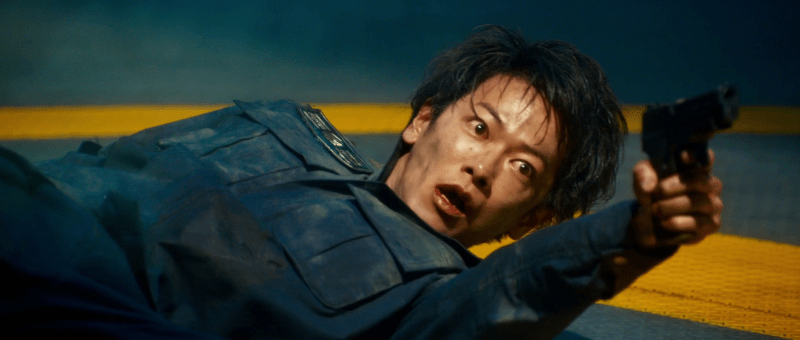
Nevertheless, they are mindful that the public would not accept it if they knew the government’s claims of “protecting” Ajins was a smokescreen to disguise the fact they’ve been experimenting on them, let alone selling the results to commercial companies for the production of chemical weapons among other things. Previously a regular medical student, Kei Nagano (Takeru Satoh) is the third Ajin to be unmasked in Japan after being hit by a bus only to heal rapidly and stumble away. After a brief period of torture, Kei is “rescued” by crazed terrorist revolutionary leader Sato (Go Ayano) and his underling Tanaka (Yu Shirota), escaped Ajins 1 and 2, but becomes their enemy after he refuses to turn against the scientists who had been torturing him pointing out that killing them would only make him feel worse and is therefore counterproductive. 

The implication is that 20 years of brutal torture at the hands of mad scientists has turned Sato into a crazed fascist hellbent on the extinction of the human race, seeking an “autonomous” space for Ajin along with full civil rights for Demi-Humans. Though we are told that only three Ajin have been unmasked so far in Japan, the implication is that there are many more living quietly some of whom Sato recruits after putting out a call for all disenfranchised Demi-Humans to join his revolution not for equality but domination. It’s this movement Kei can’t support, the classically “good” Ajin who disapproves of Sato’s actions and wants to leave peacefully alongside humanity. As such, there’s something a little uncomfortable in his inevitable decision to team up with the people who were just vivisecting him in order to stop Sato achieving his goal of guaranteed civil rights for people like him asking for nothing more than that his family be protected and he be left alone and given a new ID to live quietly in somewhere in Japan when all of this over. 

The unpalatable implication seems to be that minorities are only worthy of respect if they serve those in power, both Kei and another closeted Ajin benefiting directly and individually by siding with humanity though humanity may not honour the various promises it makes while they are partially complicit in the torture and exploitation of other Ajins. Sato’s basic request is only to given his full rights in the freedom from torture, but even this cannot be granted because of the threat he presents to humanity in that the inability to die means that he cannot be controlled through violence. Ironically enough Sato does seem to believe himself to be the next step in human evolution, after 20 years of brutal torture believing that humanity is a lesser being which those like him are intended to replace. 

Kei meanwhile encounters kind humans such as Mrs. Yamanaka (Kazuko Yoshiyuki) who kindly offers him a place to hideout because when you see someone is in trouble you just help them even if a baying mob later turn up at your door to ask why. There may be a minor allegory in the way the Ajins are treated, feared by and excluded from regular society, forced to keep their true natures secret in order to live a “quiet” life but than again Sato and his cohort of equally crazed young Demi-Humans who presumably have never been tortured are depicted as quasi-fascist radicals selling their own organs on the medical black market and eventually prepared to unleash a chemical weapon on Tokyo to make it unliveable for regular humans in order to claim their own space. Nevertheless, Motohiro’s drama is at its best during its high impact, well choreographed action sequences displaying some top quality visual effects as the Ajins produce their ghostly avatars or reassemble themselves after catastrophic injury even if the discomfort of the underlying messages cannot be entirely escaped. 


Original trailer (no subtitles)

Round Trip Heart (ロマンス, Yuki Tanada, 2015)

“Somewhere in Japan, there’s someone waiting for me” sing the heroes of Yuki Tanada’s Round Trip Heart (ロマンス, Romance), each a little lost and unwilling to go home looking for something but also afraid to find it. In any case, they can only begin by stepping off the rails and taking a detour through their shared sense of loneliness bonding as they look for new directions and an accommodation with a disappointing reality. 

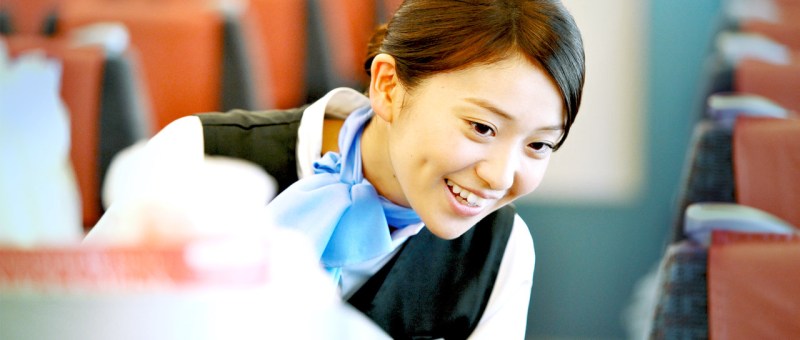
Ironically enough, Hachiko (Yuko Oshima) is a top operator of the refreshment cart aboard the Romance Car heading from Tokyo to the country by train. Hachiko claims to love trains because of their sense of certainty. After all they travel on rails, have a clear destination, and will definitely return after reaching the end of their journeys. She meanwhile feels a little lost and empty in her life of forced politeness with a feckless boyfriend who asks her for money before she heads off to work. An unexpected letter from her estranged mother, Yoriko (Megumi Nishimuta), and a strange encounter with a weird old man who tries to steal a packet of biscuits however force her change course, getting off the train and heading back into the past. 

Sakuraba (Koji Ookura), the biscuit pilferer, is a 45-year-old failed film producer on the run from the police and myriad loansharks. His sense of loneliness mirrors Hachiko’s own in that he is divorced with a 9-year-old daughter he hasn’t seen in two years and lifetime’s worth of regrets. Hachiko becomes for him a kind of surrogate daughter as he inappropriately reassembles the torn up letter and convinces Hachiko that it implies her mother may attempt to take her own life suggesting that they journey to the place it mentions, Hakone, where the family once spent a pleasant holiday. 

Familial breakdown is reason for their shared sense of displacement yet Hachiko has projected all of her resentment onto her mother who never got over her father’s decision to leave while Sakuraba fears that his daughter has grown to hate him and harbours a secret desire to restore his family but is too consumed with shame to approach them. By going to Hakone in search of her mother, Hachiko begins to reevaluate her childhood memories perhaps understanding a little more of her mother from the perspective of a grown woman rather than that of a small child who had sometimes felt left out by her parents’ closeness while they were together and rejected by her mother’s need for romantic validation once her father had left. In one particular scene we see Yoriko wearing dark glasses with what looks like a bruise over her eye while taking Hachiko to a restaurant where she orders steak only for her daughter presumably because she cannot afford two meals explaining that her boyfriend has broken up with her because of her lingering attachment to Hachiko’s father. 

The memory forces her back into a moment of resentment feeling as if her mother was only ever nice to her when men let her down, poignantly recalling her neediness in lamenting that everyone always leaves her while asking Hachiko to promise she never would. Sakuraba too complains that everybody leaves him though in his case in the wake of his repeated failures as a film producer and subsequent dealing with loansharks and other shady characters. Just as Yoriko had continued to dream of romantic fulfilment, Sakuraba continues to dream of success in film but crucially as a path back towards his family as perhaps finding a man might have been for Yoriko though she was never able to let go of the idealised image of her husband pining for the familial closeness of their Hakone trip. 

Even so the force that governs their lives is fatalistic passivity, Hachiko riding the rails to their certain destinations and back again, while Sakuraba makes every decision by tossing a coin, an action rendered meaningless by his inability to tell heads from tales. Only by rejecting their passivity in getting off the train and giving up the coin tricks can they begin to face themselves, deciding to set out and look for those who may be waiting for them rather than just sitting around waiting for something to happen. Then again perhaps if you sit in the same place long enough, what you’re looking for will eventually find you so long as you’re on the right track. 


Trailer (English subtitles)

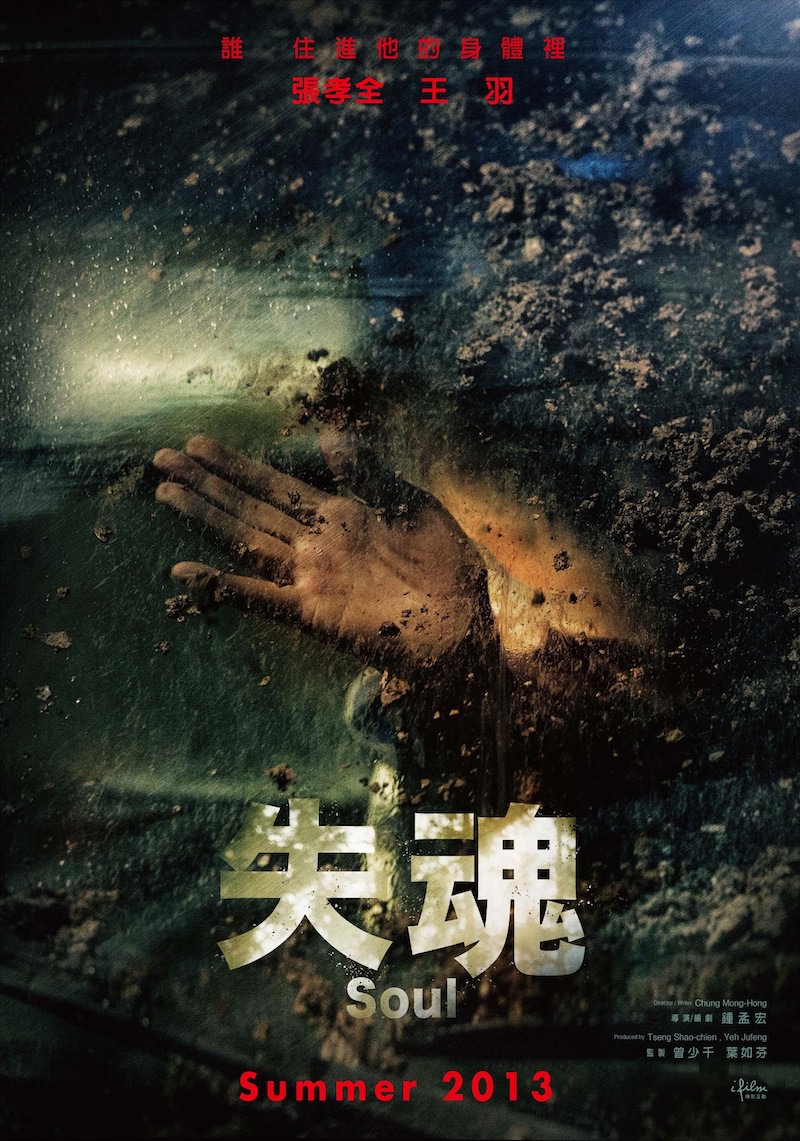
Soul (失魂, Chung Mong-Hong, 2013)

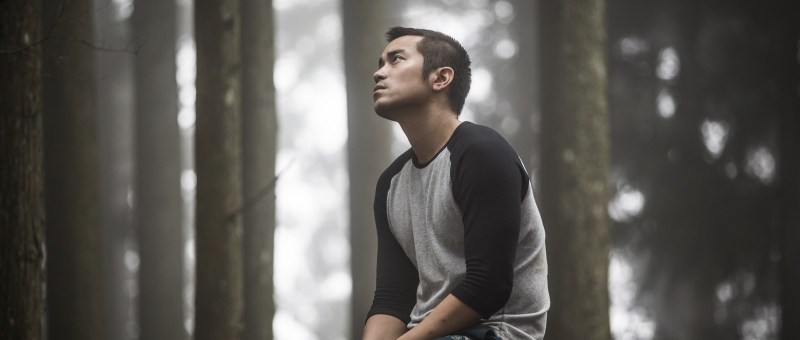
“Sometimes the things you see aren’t what they seem” the stoical father at the centre of Chung Mong-Hong’s supernatural psycho-drama Soul (失魂, Shī hún) later advises, for the moment creating a new, more convenient reality but also hinting at the mutability of memory and perception. Distinctly eerie and beautifully shot amidst the gothic atmosphere of the misty Taiwan mountain forests, Chung’s ethereal drama is at heart a tale of fathers and sons and the griefs and traumas which exist between them. 

When sushi chef Ah-Chuan (Joseph Chang) collapses at work, no one can figure out what’s wrong with him, finally suggesting perhaps it may be depression. His boss instructs three of his colleagues to take him back to his apparently estranged family to recuperate for reasons perhaps not altogether altruistic. In a near catatonic state, Ah-chuan is barely present offering no response to his name and staring vacantly in no particular direction. When he finally does begin talking, it’s to insist he’s no longer Ah-Chuan explaining that this body happened to be vacant and so he’s moved in while Ah-Chuan will apparently be off wandering for some time. Ah-Chuan, however, then abruptly stabs his sister Yun (Chen Shiang-chyi), who had travelled from Taipei to look after him, to death and is discovered covered in blood sitting calmly over her body offering only the justification that she was intending to harm him. 

Wang (Jimmy Wang), Ah-Chuan’s father barely reacts to finding his daughter’s corpse, merely rolling her under a bench and attempting to mop up the blood when a family friend, Wu (Chen Yu-hsun), who happens to be a policeman suddenly comes calling. Wang is either infinitely pragmatic instantly deciding there’s nothing he can do for his daughter so he’ll try his best to save his son, or else near sociopathic appearing to care nothing at all that Yun is dead. Nevertheless, realising that Ah-Chuan may be dangerous he takes him up to his remote cabin near the orchid garden and locks him inside while trying to figure out what or who this presence that has his son’s appearance might or might not be. As he later says, this brief time together is the most he’s spoken to his “son” if that’s who he is in years even if acknowledging that this Ah-Chuan is quite different from the old. Yet if it were not for the obvious fact that others see and interact with him we might wonder if Wang had simply conjured Ah-Chuan, projecting his own latent violence, guilt, and regret onto the figure of his son who is also in a way himself. 

Yet whatever Ah-Chuan now is he finds himself growing closer to the old man, feeling a filial responsibility towards him that he otherwise would not own. He contacts a “messenger” from “across the woods” to help his find Ah-Chuan’s wandering soul to tell him that his dad’s not doing so well, entering a space of dream and memory that reveals the trauma at the heart of their relationship that might in part help explain Wang’s apparent coldness. Just as the two Ah-Chuans begin to blur into each other, so perhaps to father and son, Wang prepared to go to great lengths to protect his only remaining child while, ironically, offering some harsh words to his son-in-law for not better protecting “the only daughter I have”. 

Chung hints at a kind fluidity of consciousness, each episode of “death” or “possession” accompanied by that of another creature, fish gasping and flapping around, a tired bug trying desperately to cling onto a leaf but failing, or a pair of snakes twisting themselves into a knot. Is Ah-Chuan merely experiencing a protracted dissociative episode under the delusion he is “possessed” while his essential selves “wander” the recesses of his consciousness or has someone else, a second soul, taken up residence in a body left vacant by a man who was in a way already “dead”. Wang in fact hints at this, telling the doctor that he had sometimes thought of Ah-Chuan as dead, or at least wondered if he might be seeing as they had long been estranged, suggesting that the Ah-Chuan of his heart and memory was already gone Wang believing himself to have killed something in him through his own violence when he was only a child. 

The two men mirror each other, growing closer yet also further apart as they make their way back towards the truth that might set them, metaphorically at least, free. Often viscerally violent not least in its jagged, abrupt cuts to black that feel almost like dropping out of consciousness or else waking fitfully with brief flickers of other realities, Chung’s eerie, ethereal drama ventures into the metaphysical but in its strangely surreal final scenes returns us to a more concrete “reality” in which the way home is found it seems only in dreams. 


Original trailer (Traditional Chinese / English subtitles)

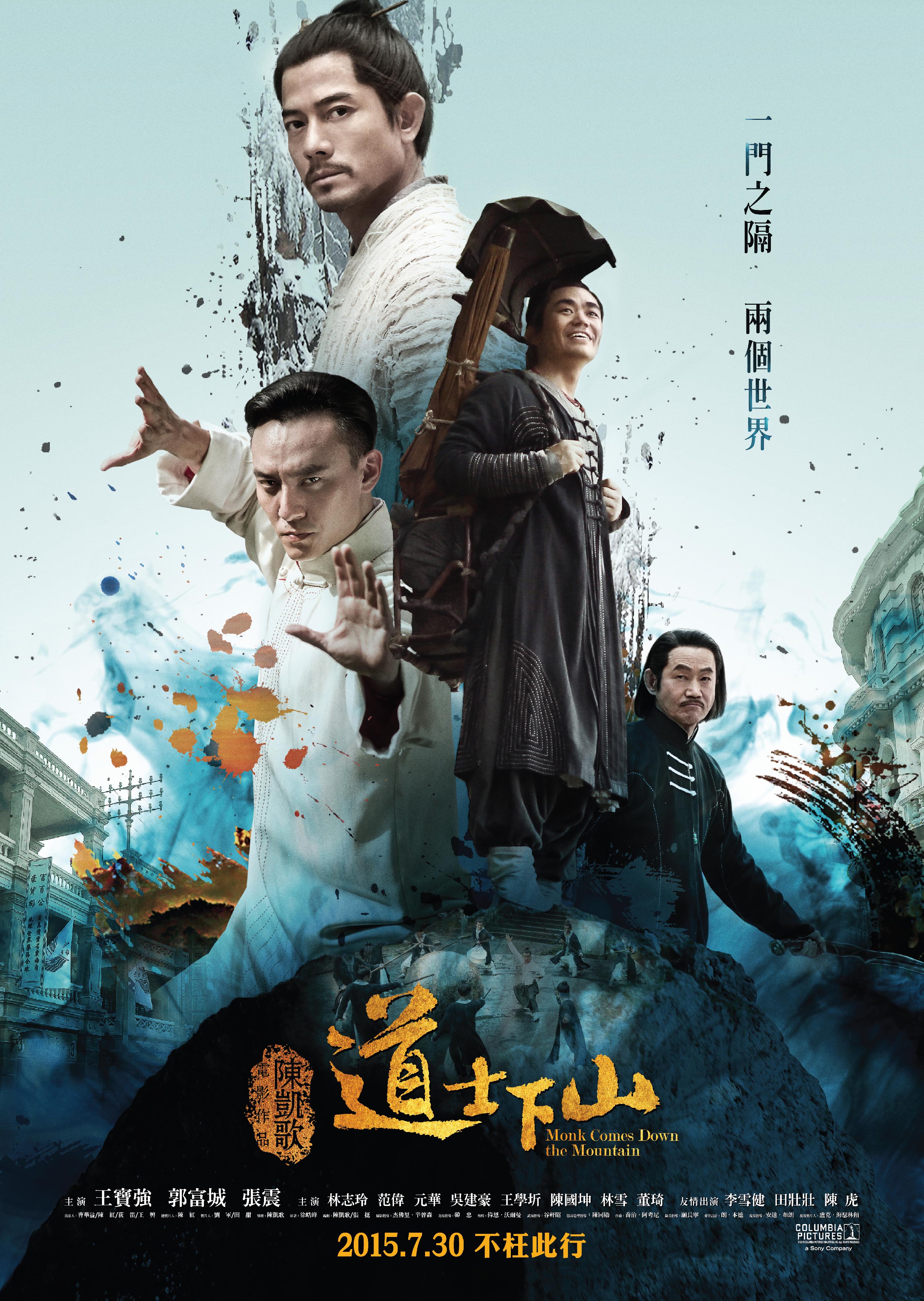
Monk Comes Down the Mountain (道士下山, Chen Kaige, 2015)

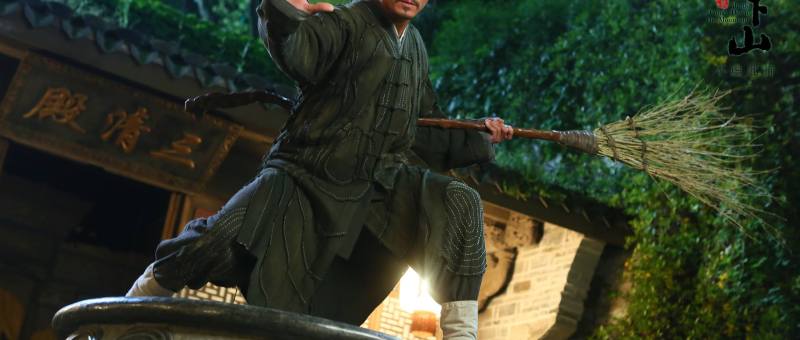
A wandering monk is forced to consider a series of dualities presented by his traditional upbringing and burgeoning modernity in Chen Kaige’s ‘30s wuxia Monk Comes Down the Mountain (道士下山, dàoshì xiàshān), inspired by the work of novelist Xu Haofeng. Essentially a picaresque, Chen sets orphan He Anxia (Wang Baoqiang) adrift in the secular world where he learns to see good and bad and perhaps the murky overlap between the two while simultaneously telling a rather subversive tale of frustrated same sex love and corrupt authorities. 

When the temple at which he was abandoned as a baby falls into financial difficulty, He Anxia enters a kung fu fighting competition he believes will put him first in line for food only in cryptic monk fashion the “prize” turns out to be exile as the winner is obviously the most capable of looking after themselves alone in the world. He Anxia is however something of an innocent and despite the monk’s warning to stay true to himself soon falls into difficultly yet ends up discovering a new father figure in monk turned pharmacist Tsui while trying to steal his fish. For all of Tsui’s goodness, however, there is discord in his house as his pretty young wife Yuzhen (Lin Chi-ling) prefers his dandyish brother, Daorong (Vanness Wu), who has abandoned the filial piety of the past to chase modern consumerist pleasures in selling the shop he inherited for a fancy ring. When the situation escalates, Anxia finds himself taking drastic action only to wonder if he did the right thing. 

Head of a local temple Rusong (Wang Xueqi) encourages him to think beyond dualities, wondering if he did the right thing for the wrong reasons or the wrong for right. This temple is famous for helping women have male children through praying to goddess of mercy Guan Yin, yet under Rusong’s predecessor they adopted a much less spiritual solution to the problem in simply providing a place where other men could father their sons. Rusong again asks him if the men who took part were sinners or saints while laying bare the paradoxes of the monastic life in the contemporary society. A petitioner goes so far as to ask Anxia if he might be her saviour, pointing out that if she cannot provide a male heir even though the problem may lie with her husband she may be cast out of her family, thereby disgraced not to mention financially ruined. Having lived all his life in the temple surrounded by men, gender inequality is not something Anxia had been very aware of. He tells her that though he had no family he was able to find one only to lose it, little understanding why she might not be able to do the same. 

On the other hand, he appears to show surprising perspicacity in the touching moments in which he must say goodbye to his second father figure, reclusive kung fu master Xiyu (Aaron Kwok), in realising the depth of his feelings for army buddy Boss Zha (Chang Chen) who then becomes his final master. Ironically, the obviously homoerotic relationship between Xiyu and Boss Zha was perhaps less controversial in 2015 than it might be in the present day but its inclusion is nevertheless surprising if also poignant as Xiyu tells Boss Zha that he should resume his stage career, marry and have children, while he will live a quiet and lonely life perfecting his kung fu though he will always keep him in his heart. Fiercely loyal to his mentors, Anxia accepts this relationship totally and appears to fully understand its import to Boss Zha to whom he subsequently transfers his allegiance as they band together to face off against big bad Peng. 

Playing into the good fathers and bad motif, Peng’s problem is his sense of paternal rejection in being passed over by his biological father in favour of Xiyu whose skills are stronger. After having ousted his rival, Peng fears the same thing will happen to his own son who is not only lacking in aptitude for martial arts but also appears to have a drug problem. To win they resort to cheating in picking up a pistol signalling both their own lack of jianghu honour and the nature of the changing times in which the very nature of kung fu has perhaps become obsolete. Meanwhile, Anxin and Zha are targeted by the police commissioner, Chao, who happens to be a former triad and also points his gun at them if less successfully while in cahoots with the amoral Peng and son.

Only through each of these subsequent encounters does Anxia begin to realise why he was cast down from mountain, understanding that he had to witness the good and bad of the secular world in order to understand his Buddhist teachings and finally find his place. With sumptuous production values perfectly recreating the 1930s setting, Chen’s quietly subversive 20th century wuxia takes aim at the ills of the contemporary society in its tales of corrupt authorities and amoral greed, but eventually finds solace in simple human goodness and genuine relationships as Anxin continues on his long strange journey to find his way home. 


International trailer (English subtitles)

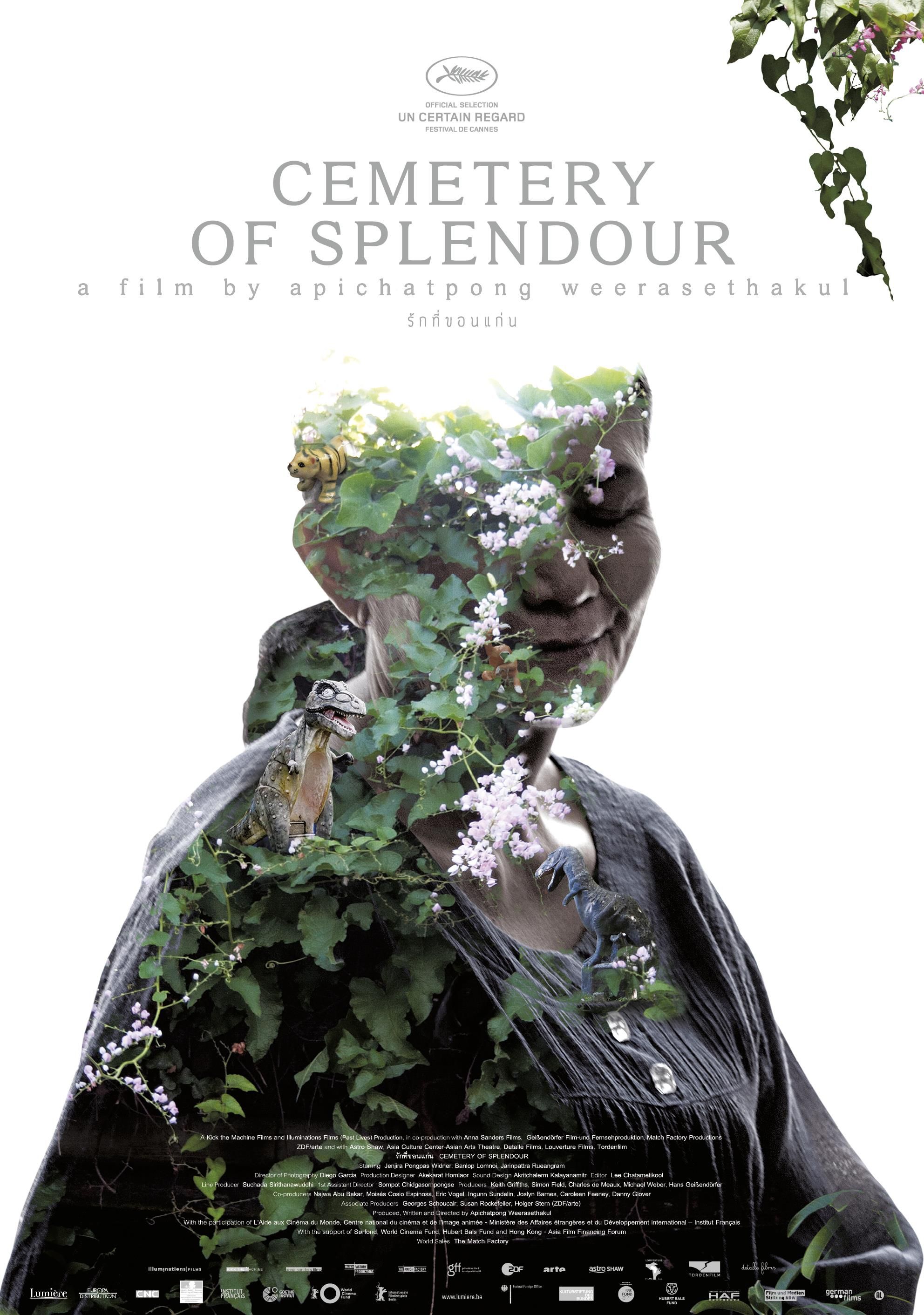
Cemetery of Splendour (รักที่ขอนแก่น, Apichatpong Weerasethakul, 2015)

There’s a question that raises its head in the title of Apichatpong Weerasethakul’s Cemetery of Splendour (รักที่ขอนแก่น), is this a splendiferous resting place or the graveyard of splendour itself? The melancholy atmosphere might imply the latter, but as it turns out the place that holds a series of sleeping soldiers is built atop an ancient palace in which, an old woman is told by two young goddesses, kings continue their petty conflicts thousands of years after leaving our world.

It’s an apt enough allegory for the destructive qualities of a legacy of warfare and conflict. The old woman, Jen (Jenjira Pongpas), later exposes a lengthy and painful series of scars running from hip to knee that explain why one of her legs is much shorter than the other and the reasons she walks with a cane are much greater than simple old age. The old kings quite literally sap the spirits of the young soldiers to the extent that it has provoked a kind of sleeping sickness among them in which they must fight ancient wars in their dreams while otherwise rendered powerless to resist or change the present society.

The old woman is given a tour of the other world by a younger woman, Keng (Jarinpattra Rueangram), who has allowed herself to be possessed by the spirit of Itt, a young solider for whom she has begun to care after learning that he had no family to visit. The sleeping Itt, through the body of Keng, guides her through the splendid castle of his dreams but she sees only the present reality, a forest filled with detritus and trite signs bearing greeting card-esque messages of inspiration. Perhaps it’s hard not to mourn this kind of splendour that seems so absent from the world Jen now inhabits which seems to be defined by empty consumerism and loneliness. The soldiers are being cared for in an old school house, a nurse explaining the hospitals had no room for them, which carries with it a sense of melancholy nostalgia not least for Jen who was once a pupil there occupying the spot where Itt (Banlop Lomnoi) now sleeps.

But then we can’t be sure isn’t Jen who dreaming and Itt wide awake. When we see her later her eyes are open and staring as the children play on mounds of earth dredged up by an ominous digger employed by some mysterious government project. Is she awake, now more aware of the sickness in her society, or fast asleep trapped within an unending nightmare? Perhaps it’s the same either way, but the border between this world and another, if it were ever there at all, has grown thin. After making an offering at a temple, Jen is greeted by two very beautiful yet mysterious women who talk in an odd, archaic fashion. They then explain that they wanted to thank her for her gifts, but unfortunately neither Itt nor any of the other soldiers will ever recover.

This news shatters Jen’s newfound sense of connection and hope for the future. Her loneliness is palpable, yet it seems that we can connect with each other only indirectly through dreams and messengers. On waking, Itt wants to contact his family but cannot find a charger for his phone nor remember their number. He wants to quit the army to sell Taiwanese moon cakes at gas stations and claims that his senses are heightened by his experiences, that he can smell the flowers in his dreams and even now pick out the distinct fragrances at an outdoor foodcourt yet he’s still caught between this world and another suddenly and without warning falling asleep and returned to the other world. 

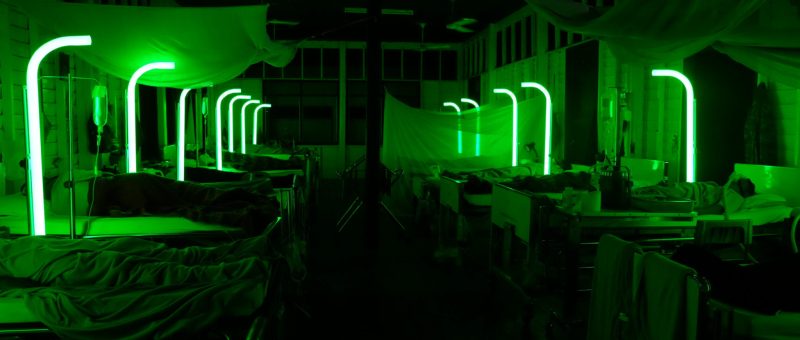
Someone describes the lamps of an experimental treatment first used by the Americans to help heal nightmares born of war trauma as like lanterns used for a funeral and in some ways these men are both dead and alive, like the kings of old and the goddesses. The lanterns begin to fade hypnotically from one colour to the next, ordinary scenes of shopping mall escalators dissolving into the hospital as if we too were falling asleep or perhaps waking up. What are the diggers reaching for, unearthing the long buried past or building for us our own cemetery of splendour in which we’ll sleep, comfortably, but in loneliness and melancholy with no rest from our rest? Perhaps this is why Jen’s eyes are fixed in a permanent state of vacant openness neither awake nor asleep but something painfully in-between.


Cemetery of Splendour screens at New York’s Metrograph Feb. 24 as part of Part of Fire Over Water: Films of Transcendence

Trailer (English subtitles

The Shadow Play (风中有朵雨做的云, Lou Ye, 2018)

The forever rebellious Lou Ye has had his share of troubles with the Chinese censors board. Suzhou River was banned on its release, while he received a five-year filmmaking sanction for screening his provocative Tiananmen Square drama Summer Palace in Cannes without clearing official permission first. Stuck in censorship limbo for two years, the aptly named The Shadow Play (风中有朵雨做的云, fēng zhōng yǒu yù zuò de yún), taking its title from characteristically well-placed retro pop song, sees Lou steeping into the increasingly popular genre of Sino-Noir once again critiquing the the corrosive corruption of the Modern China through the prism of crime. 

Many of Lou’s films pivot narrative around a single implosion from which everything radiates like cracks in a pane of shattered glass. The Shadow Play is no different only there are perhaps three distinct, interlinked points of fracture each connected in a complex web of corruption and frustrated desires. He opens therefore with a moment which occurs in the mid-point of the narrative, the accidental discovery of decomposing body by a young couple venturing into the wilds of nature for a little privacy. The action then moves to the “contemporary” present of 2012 in which a small village is engulfed by “rioting” as residents attempt to protest the demolition of their community by the Violet Gold Real Estate Company. CEO Tang (Zhang Songwen) turns up to do some ineffectual damage control, slipping into Cantonese as he reminds them he’s a local boy too and only wants to bring about “the transformation of our community” insisting that the “beautiful future” is possible only by tearing down the old. As he’s speaking, however, protestors manage to knock down the neon sign bearing his company’s name from the building behind him and later that night Tang himself is found dead, impaled its framework after apparently “falling” from the rooftop. 

Young and idealistic policeman Yang (Jing Boran) was assigned to the detail that night and thereafter to the investigation into Tang’s death, quickly growing suspicious over his ties to shady property tycoon Jiang (Qin Hao). As a brief montage sequence explains, Tang and Jiang who met at university in 1989 each prospered from the capitalist explosion of China’s ‘90s reforms but their complicated relationship is founded on resentment and dependency partly connected to their mutual love for campus sweetheart Lin Hui (Song Jia) who first dated Jiang but as he was apparently already attached later married Tang. Many suspect that Jiang has something to do with Tang’s death even as others point out that he needed him to preserve his access to government bureaucracy, but the investigation is further complicated by witness sightings of a third person thought to be Jiang’s Taiwanese former lover/business partner Ah-yun whose mysterious disappearance in 2006 Yang is convinced is connected to the traffic accident which left his veteran policeman father in a catatonic state. 

The Shadow Play is in some respects unusual in its strong yet often implicit hints of police corruption perhaps mitigating its mild attack on the mechanisms of state through Yang’s idealistic, though flawed, goodness. Seduced by the lonely Lin Hui, he finds his name blackened but refuses to give in even when forced on the run after being framed for murder. Like Lin Hui’s daughter Ruo (Ma Sichun) however he is also representative of the post-90s generation who have grown up in the world created by men like Jiang and Tang. He is obviously uncomfortable in being introduced as his father’s son but also carries with him a desire for justice that lies adjacent to revenge. Ruo, meanwhile, though now an adult, longs for the restoration of her family despising her father Tang while obviously close to Jiang who has been supporting her financially by funding her education, using his wealth to game the system. “She’ll be happier than we are,” Jiang insists, ironically echoing Tang’s insistence that the village must be destroyed so they can give their children better futures. 

Tang meanwhile is a representative of China’s resentful petty bureaucrats forced into a middle-man existence unwilling to admit that he owes everything to Jiang, the man he knows to be sleeping with his wife. His toxic sense of male inferiority sees him take out his frustrations those with the least power, subjecting Lin Hui to years of domestic abuse before eventually having her locked up in a psychiatric institution claiming that she self-harms and is mentally unbalanced. The facade of the elegant, prosperous middle class family is well and truly imploded while it becomes difficult to tell if Tang is just a sleaze, exposing his misogyny in bringing up Ah-yun’s bar girl past, or his ill-advised pass at her is an attempt to get back at Jiang for his relationship with his wife while undercutting his rival’s manhood by sleeping with his woman. There is widespread impropriety in this incestuous world of corporate politics, but there’s also personal pettiness, hurt, and heartbreak that eventually blossoms into an ugly violence. 

In characteristic non-linear fashion Lou zips between the three points of fracture from the trio’s meeting in a 1989 through the disappearance of Ah-yun and the death of Tang, the layers of corruption deepening as the two men make themselves rich taking advantage of the unregulated capitalism of the modern China while slowly destroying themselves in their mutual unhappiness. It’s no surprise that the film found itself on the wrong side of the censors with its brutal footage of anti-redevelopment riots, hints of political corruption, and the depiction of the destruction of a body though we get the now customary title cards appearing at the end reminding us that the guilty parties have been caught and punished outlining exactly how long for everyone went to jail even if Lou subtly undercuts the sense of the State in action the card is intended to portray. Elliptical and somehow hard, ending like Summer Palace on the innocent image of the trio dancing back in 1989, The Shadow Play is cutting indictment of a morally bankrupt society and the corrosive effects of corruption but perhaps implying that the younger generation will in one way or another have its revenge for the ravages of their parents’ greed. 


Original trailer (no subtitles)