Amiko (あみこ, Yoko Yamanaka, 2017) [Fantasia 2018]

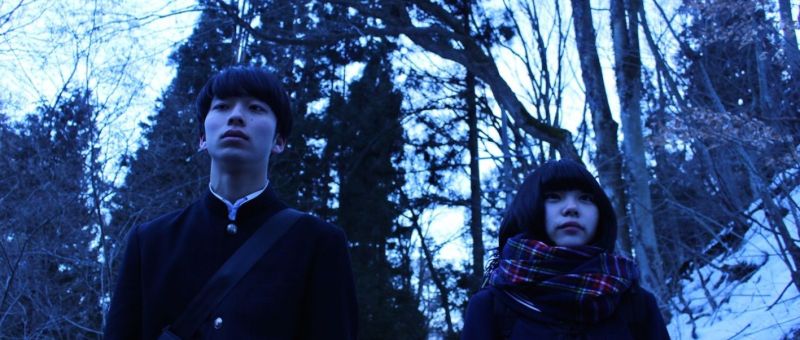
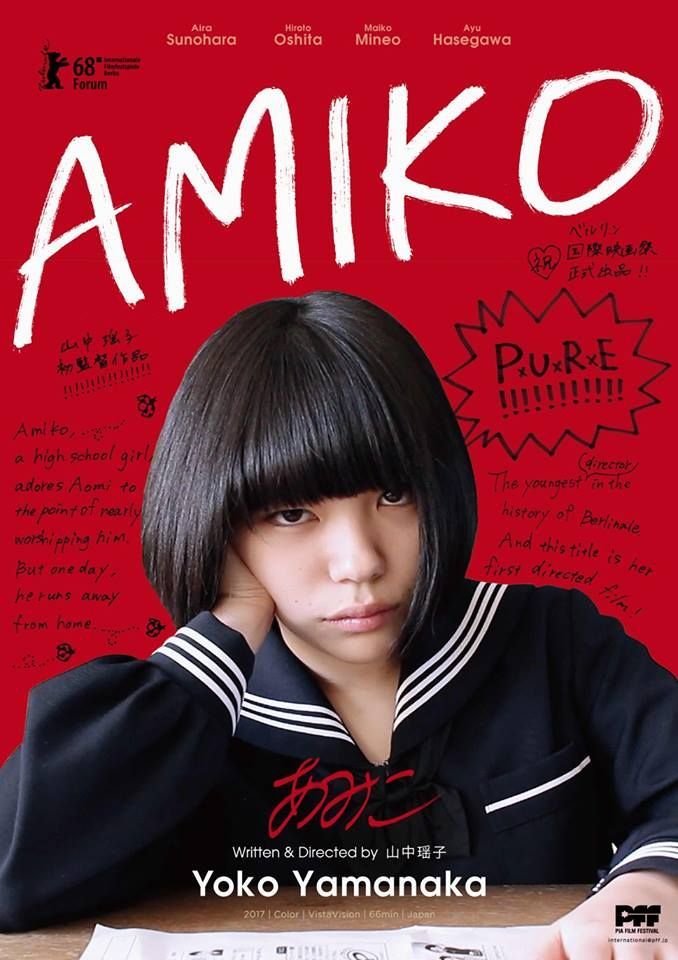
Amiko PosterSome meetings are pivotal, others merely seem so. To melancholy high school girl Amiko (Aira Sunohara), consumed by youthful ennui and a sense of the long dull years stretching out before her, Aomi (Hiroto Oshita) seemed like some kind of heaven sent emissary – a good looking guy who seems to share her existential despair, her taste in music, and her lack of motivation for the business of living. Yet the meeting comes to nothing. After a single night of walking and talking, baring their souls and confessing their anxieties, the pair never talk again. Amiko continues to pine for Aomi, turning him into some kind of absent god, though months have passed with no real contact save her semi-stalking of him online. Eventually, almost a year later, Amiko learns that her one true love has deserted her and run off to Tokyo with another girl. Stunned, she resolves to follow him in the hope of finding out why he chose to renounce all it was she thought they meant to each other to embrace the mediocrity he once claimed to hate.

Amiko is not completely alone, she has a best friend – Kanako (Maiko Mineo), though she confesses that deep down they don’t really understand each other. Aomi too seems to think that Kanako is closed off, not really trusting anyone and living a superficial life. Nevertheless, Kanako does at least provide Amiko with the opportunity to experience the regular high school girl world of gossiping about boys on the telephone and silently resenting other, more popular girls. Claiming that “ordinary poor souls” could never understand the innate connection between herself an Aomi, Amiko decides to keep her long night walk of the soul a secret from her best friend in order to secure its purity.

Amiko, based on their intimate conversation, is convinced that Aomi feels the same way she does, understands her intense sense of existential despair, and is just as bored and disconnected as she feels herself to be. Confessing that he doesn’t actually like sports, in fact he hates being outside, Aomi offers the excuse that it’s easier being told what to do than trying to figure things out on your own. Carried along by the fact he’s good at football and can’t quite find the energy to protest, Aomi drifts on a cloud of his own apathy – one of the cool set of handsome and aloof high school boys popular with those who like unattainable guys. Like Amiko he likes “deep” music, instantly recognising the Radiohead track on her phone, but eventually runs off with the kind of girl Amiko (not so) secretly despises – an airhead popular girl and the “embodiment of mass culture”.

Aomi’s betrayal isn’t just romantic heartbreak, but the severing of a spiritual connection which never really existed in the first place. Rather than deepen the engagement, Amiko opts to leave her night of connection as a mythic encounter, sanctified by its unique quality. Aomi therefore becomes a mythic figure, a composite of Amiko’s various projections of her ideal soulmate, mirroring her own sense of ideological purity. Her new god, however has feet of clay and after tracking him down in the city she’s forced to confront the distance between the image and the reality. Was their connection as real as she thought it was, or only superficial musing on a cool crisp night when there was nothing much else to do?

Deep into her teenage apathy, Amiko talks about those manic, one off days where you just might find yourself doing something crazy out of a sense of cosmic despair. Aomi puts this idea back on the table as a possible motive for his abrupt flight to the city, and Amiko’s random pursuit of him is perhaps its aftershock. Wandering around having mad adventures – joining in with a madman’s (Hisato Takahashi) condemnation of a world of lies and the non-existence of real love, testing the ability of Japanese people to dance spontaneously, and stalking Aomi’s girlfriend, Amiko begins to accept that she may have been mistaken in placing such cosmic importance on what may just have been an inconsequential night filled with accidental profundity. Preferring to maintain the “purity” of her ideal, Amiko remains trapped within her own sense of despair but with a new sense of clarity and a determination not to let the phoniness of the world destroy her essential self.


Amiko was screened as part of Fantasia International Film Festival 2018.

Original trailer (no subtitles)

The Vanished (사라진 밤, Lee Chang-hee, 2018) [Fantasia 2018]

The Vanished posterThe past refuses to die in The Vanished (사라진 밤, Sarajin Bam) – Lee Chang-hee’s remake of the 2012 Spanish thriller, The Body. Ghosts, of one sort or another, torment both of our male leads – a dogged policeman and increasingly unhinged husband, as they try to solve the mystery of a disappearing corpse whilst each battling a degree of latent resentment towards various forces of social oppression. A tale of conflicting bids for vengeance, The Vanished pits an emasculated trophy husband against a controlling career woman wife while the forces of order look on in disapproval but then all is not quite as it seems and perhaps this is not the story we first assumed it to be.

The horror-inflected tale begins in a morgue on a rainy night as a disinterested security guard becomes unexpectedly spooked by his surroundings. Discovering one of the trays open and a body missing, the guard panics and feels himself stalked by something undead before being clubbed on the back of the head and knocked out. Maverick cop with a traumatic past Woo Joong-sik (Kim Sang-Kyung) arrives on the scene and discovers the missing cadaver belonged to prominent businesswoman Yoon Seol-hee (Kim Hee-Ae). The cause of death is thought to have been a heart attack brought on by her workaholic lifestyle but Joong-sik isn’t so sure. He hauls in the “trophy husband” – improbably good-looking university professor and sometime employee of Seol-hee’s pharmaceuticals company, Jin-han (Kim Kang-Woo). Jin-han has come straight from the flat of his pregnant mistress and is understandably on edge as every move he makes only further incriminates him in the “death” of his wife.

Increasingly unhinged, Jin-han is certain that Seol-hee is not really dead and has embarked on an elaborate plan of revenge for his affair with a student, Hye-jin (Han Ji-An). Lee wastes no time in confirming that Jin-han had at least intended to do away with his wife. Jin-han was apparently no longer interested in her money and would have wanted a divorce but believed his wife to be a ruthless woman who would never willingly let him go. Using an experimental anaesthesia drug, he hoped to get rid of her undetected but now fears that she has somehow woken up and wants her revenge. What Jin-han wanted, he claims, was his freedom – Seol-hee, an older career woman, bought him with trinkets, belittles his work, and refuses him all agency. He was tired of playing the toy boy and wanted his life back and so he chose to reassert his manhood through murder.

Of course, all is not quite as it seems. Through Joon-sik’s investigations, Jin-han comes to believe that perhaps Seol-hee planned the whole thing – anticipating that he would try to use the drug against her and engineering a situation in which she would fake her own death just to get back at him. Whether a ghost or not, Seol-hee haunts him, threatens his happy future with the sweet and innocent Hye-jin who calls him professor and respects him as a learned man, and seems set to achieve her goal if only by driving Jin-han out of his mind with worry and confusion.

Meanwhile, Joon-sik is battling another series of oppressive presences in the form a grudge against “the wealthy” possibly relating to a mysterious traumatic incident from his past, and a boss who wants him to find the missing body as quickly as possible and then forget the whole thing given the fact that Seol-hee and Jin-han had been a “celebrity couple” which makes all of this quite embarrassing for everyone. The two men end up engaged in a cat and mouse game as Jin-han becomes convinced that he’s the real victim in all this and is at the centre of an elaborate conspiracy leaving his pregnant girlfriend alone and vulnerable, while Joon-sik continues to push him towards confessing that he took the body and hid it possibly in some kind of fugue state.

“The body” is perhaps a better title as the concept itself comes in for constant reappraisal and we gradually understand that not everyone is talking about the same thing, leaving aside the complete erasure of Seol-hee as a woman with a name who may have been murdered by a vengeful husband (as unpleasant as she is later shown to be) in favour of viewing her simply as a nameless corpse or grudge bearing ghost. Twists pile on twists and history rewrites itself, but the buried past will someday be unearthed and justice served, if with a side order of irony.


The Vanished was screened as part of Fantasia International Film Festival 2018.

Original trailer (Korean subtitles only)

Room Laundering (ルームロンダリング, Kenji Katagiri, 2018) [Fantasia 2018]

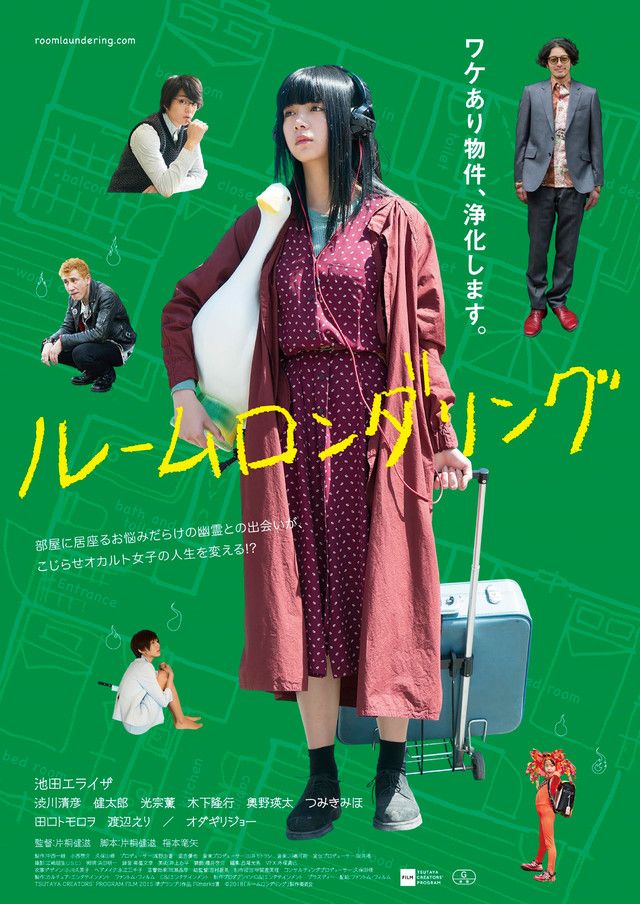
Room Laundering posterIn the olden days, when there had been a traumatic incident, holy people would be brought in to perform some kind of ritual to “purify” the air so life could go back to “normal”. These days people don’t believe in ghosts, or at least not in ghosts of that kind, but there is still a degree of discomfort involved in spending time in a place where something unpleasant has happened. Japanese rental laws state that a prospective renter/buyer should be informed if something untoward has occurred in the property, but the law only requires you to tell the next person in line. Therefore, if you can find a person willing to spend a few days in an apartment with a troubled past, they could be quite a useful asset to the unscrupulous estate agent.

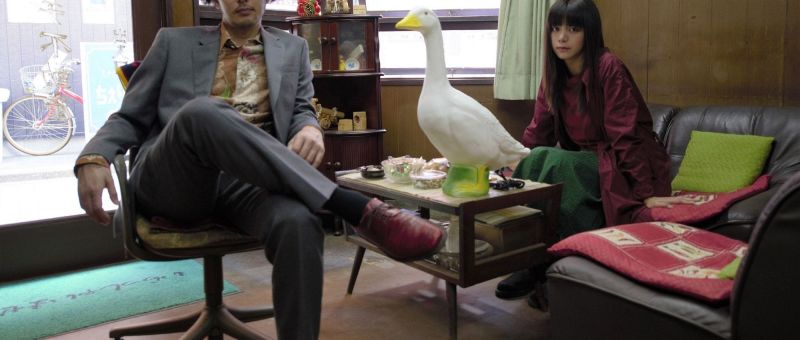
Miko Yakumo (Elaiza Ikeda) is just such a woman and has therefore found herself falling into a “room laundering” career thanks to her uncle Goro (Joe Odagiri), a roguish real-estate-broker-cum-underworld-fixer with a sideline in fake IDs for undocumented migrants. Miko’s father died when she was five, and her mother disappeared without warning a few years later leaving her with her grandmother who died when Miko was 18. She’s now 20 and is nominally in her uncle’s care but having dealt with so much loss and abandonment, she prefers to keep to herself, always closed off with a pair of headphones blocking her ears, speaking to no one. The apartment “job” therefore suits her well enough with its clear stipulation to avoid mixing with the neighbours, but there’s one big drawback. Miko has recently developed the ability to see ghosts which is sometimes a problem given the circumstances her new places of residence became vacant.

A tale of learning to deal with the past, Room Laundering (ルームロンダリング) takes its heroine on some long, strange journeys but despite its death laden themes and Miko’s emotional numbness it has its essential warmths even if they’re sometimes harder to see. Miko’s travels chart a course of modern loneliness as she encounters those who’ve found themselves passing away alone, in pain and in sadness – old ladies whose bodies weren’t found until they’d almost all rotted away, neglected children who starved to death after being abandoned, businessmen who killed themselves after getting into debt, a catalogue of human misery seemingly without end. Miko doesn’t find the ghosts scary because she thinks real people are scarier. They lie, and they leave, and they let you down. At least the ghosts will stick around even if you wish they wouldn’t.

Even so, interacting with the recently deceased begins to reawaken Miko’s sense of vitality. Drinking with (or more accurately on behalf of) an insecure punk rocker (Kiyohiko Shibukawa) who took his own life before sending off his demo tape proves an oddly fulfilling experience for the otherwise introverted young woman, while staying in the apartment of a murdered cosplayer (Kaoru Mitsumune) gives her a sense of purpose when she decides to help the unfortunate woman move on by unmasking the real killer. Meanwhile, she also breaks her non-fraternising rule to chat to the geeky boy next-door (Kentaro Ito) and starts to wonder if maybe not all the living are so bad after all.

In dealing with the legacy of abandonment while literally living a transient life, Miko is forced to confront the ghosts of her past and exorcise them in order to escape her self imposed limbo. Only by being on her own can she reach the realisation that she is not alone. Meanwhile, Uncle Goro’s originally shady looking services for migrants without the proper papers begin to look more altruistic than they first seemed. He, like Miko, is helping himself by helping others who are also trapped in a kind of limbo only a more prosaic earthbound one of rigid bureaucracies and xenophobic exploitation. Goro maybe a dodgy estate agent with a sideline in forcing grannies out of their homes to pave the way for “redevelopment” but at least he’s found a better system of room laundering than his colleague who generally just rents to foreigners and visa overstayers he can either evict or extort if things go wrong. It just goes to show a little bit of empathy goes a long way. After all, you’re a long time dead.


Room Laundering was screened as part of the Fantasia International Film Festival 2018.

Original trailer (no subtitles)

I Have a Date with Spring (나와 봄날의 약속, Baek Seung-bin, 2018) [Fantasia 2018]

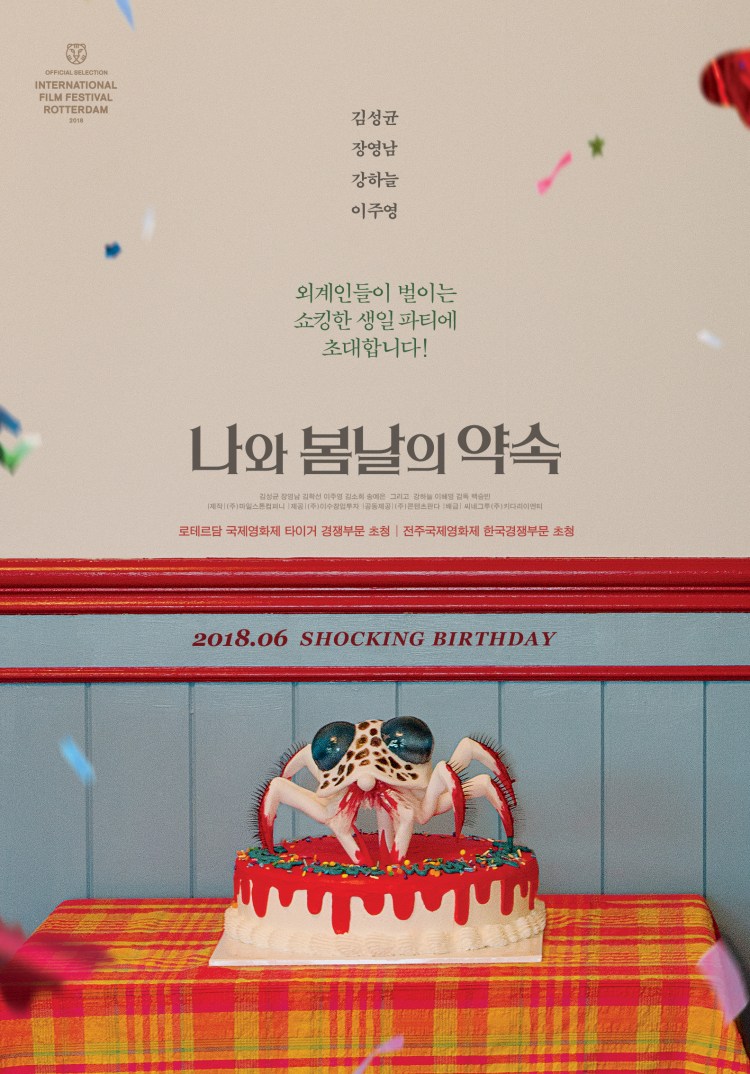
I have a date with springIf the world was going to end tomorrow, which of your many anxieties would you most like to ease before you go? I Have a Date with Spring ( 나와 봄날의 약속, Nawa Bomnalui Yaksok) is, as its name suggests, a hopeful tale despite its apocalyptic pretence as its lonely film director hero learns to accept the looming presence of death in order to move beyond his creative block. He may need aliens and the promise of knowledge from beyond our world to do it, but in contemplating the many ways in which modern life is unsatisfactory, he can perhaps begin to envisage a world in which it might not be so bad to live.

Depressed director Lee Gwi-dong (Kang Ha-Neul) hasn’t made a film in 10 years. The last decade has seen him struggling with the same script, an apocalyptic tale of the end of the world in which three unhappy individuals are visited by omniscient aliens to help them celebrate their birthdays which happen to fall on the day before the Earth will be destroyed. Sitting in a forest on his own birthday, reminding us that he came here to work and not to die, Gwi-dong is shocked to receive a visitation from four mysterious campers, one of whom claims to be a fan of his earlier work.

The picture Gwi-dong (and by extension Baek Seung-bin) paints of modern Korean society is one marked by extreme loneliness and existential isolation. The death obsessed director is currently sporting a large cast on his arm apparently a result of an act of self harm committed in frustration regarding his own sense of disconnection and personal failure. The three “heroes” of his tales within a tale are all also shy, lonely, and increasingly withdrawn, no longer interested in finding escape from their personal imprisonment. A dreamy high school girl longs for the destruction of the world while a middle-aged professor laments his missed opportunities for romance and a harried housewife feels both guilt and regret in remembering she was once the leader of a militant feminist movement back in college.

Each of them is, like Gwi-dong, “celebrating” a birthday but due to their specific personal circumstances they are each celebrating alone as those close to them are either absent or have entirely forgotten. The aliens, not revealing the imminent destruction of the planet, promise each of them something special in return for trust and time but the gifts they deliver are perhaps not altogether welcome despite their original appearance. The lonely high school girl bonds with the middle-aged alien over a shared sense of childish glee in monsters and adventure, relieved simply to hear the word “friend” but still unsure whether she should trust him and follow his instructions. Meanwhile the housewife, ignored at home by her noisy child and indifferent husband, is glad to be recognised once again and have the power of her youth literally returned to her in the form of a gun but remains unsure if she should use it. The professor, on the other hand, is corrupted by his original encounter but grateful for his “mother’s” gift and commits himself to living fully and finding love despite the potential risks.

As the mysterious older lady at the campsite tells Gwi-dong, we’re all doomed anyway so we might as well go nicely, beautifully – if we can. Through each of his various stories, Gwi-dong learns to see the presence of death, the end of all things, as not such a bad thing after all. It will come, bidden not, and so there seems little point in worrying about it now. Suddenly his creative world expands. No longer thinking only of death he conjures hundreds of other universes each filled with their own stories, certain that one day “spring will come”. Oddly optimistic for a film about the end of the world, I Have a Date with Spring makes the case for reaching out in a sometimes cold world even if it risks being devoured by strange space crabs or suddenly developing painful boils (tiny bubbles of love?) all over your body. You have to go sometime, so you might just as well sit back and see what happens. The Earth is a beautiful place, enjoy it while it lasts.


I Have a Date With Spring was screened as part of Fantasia International Film Festival 2018.

International trailer (English captions/subtitles)

Buffalo Boys (Mike Wiluan, 2018)

Buffalo Boys PortraitIndonesia is embracing the western in grand style. Following hot on the heals of Marlina the Murderer, Buffalo Boys picks up Hollywood’s most idiosyncratic genre and repurposes it to attack the thing that it ultimately stands for – colonialism, while also reasserting its perhaps more positive messages in the quests for honour, justice, and above all personal freedom. A tale of vengeance, Buffalo Boys makes unexpected revolutionaries of its two returnee heroes as they eventually come to realise that their personal quest must take second place to that of their nation as they attempt to liberate their people from the cruel oppression which has so directly affected the course of their own lives.

California, 1860. Brothers Jamar (Ario Bayu) and Suwo (Yoshi Sudarso) have been raised by their uncle Arana (Tio Pakusadewo), brought up in the precarious frontier environment since travelling to the New World as infants. After a shocking incident on a train leaves Arana injured, he realises it’s time to take the brothers back to their homeland to address the long buried past. Twenty years previously, Arana’s brother and the boys’ father, Hamza, was a Sultan who thought he could placate the Dutch colonisers by acquiescing to their demands, but was cruelly cut down by a vicious Captain, Van Trach, who executed him in cold blood. Arana fled with the children, leaving his wife behind and taking with him only the ancestral dagger to remind them of their legacy.

The boys have returned to avenge their father’s death by killing Van Trach (Reinout Bussemaker), but they find that things have only become worse in the twenty years they’ve been away. The Dutch are cruel masters who brand the native Indonesians like cattle, torturing those who won’t play along with their demands, and displaying the bodies of those deemed to have disobeyed their masters in the streets as examples to the others. The bodies which currently line the trees, belong to those who refused to clear their rice fields to grow opium poppies as the Dutch demanded, preferring to feed their families instead. Not content with beatings, torture, and executions Van Trach has now progressed to mass starvation which begs the question who he thinks will be tending to his poppies with half the population weakened through malnutrition.

As soon as the boys arrive they find themselves embroiled in a small conspiracy which leads them straight to Van Trach when they rescue the daughter of the local village head, Sri (Mikha Tambayong), from a lecherous collaborator. Thinking only of their individual revenge, the boys and their uncle plot and watch Van Trach but are increasingly touched by the plight of their people who struggle to survive under such a corrupt and oppressive regime. Poignantly reuniting with an old friend who has suffered years of brutal torture directly at the hands of Van Trach, the boys are reminded that their father was an honest and just man who would not want them to waste their lives in a pointless quest for vengeance, but to dedicate themselves to the wider cause of justice on behalf not just of themselves but of their people. 

Ironically enough, Jamar and Suwo are two returned “cowboys” who find themselves becoming legendary figureheads for a resistance movement on the behalf of the native local population against the cruel and oppressive colonial occupiers. Heavy stuff aside, Buffalo Boys is less an authentic exploration of the colonial era than a pulp fuelled Eastern western filled with exciting bar fights, adventure and romance. The boys are loosely paired off with the rescued Sri and her feisty sister Kiona (Pevita Pearce) who is the original “buffalo girl”, defying her father to ride buffalos and fire arrows at moving targets though sadly reverts to damsel in distress mode for most of the picture save for smashing a bad guy over the head with a bottle and then being allowed to do a little beheading of her own. Nevertheless, Buffalo Boys is a perfect encapsulation of the positive values of the “cinematic” western in its insistence on individual freedom from political oppression but makes sure to temper its central quest with humanistic virtues, making a case for forgiveness and altruism over coldhearted vengeance as the best way to move forward having made peace with the past.


Buffalo Boys was screened as part of the New York Asian Film Festival 2018.

Original trailer (English subtitles)

People’s Republic of Desire (欲望共和国, Wu Hao, 2018) [Fantasia 2018]

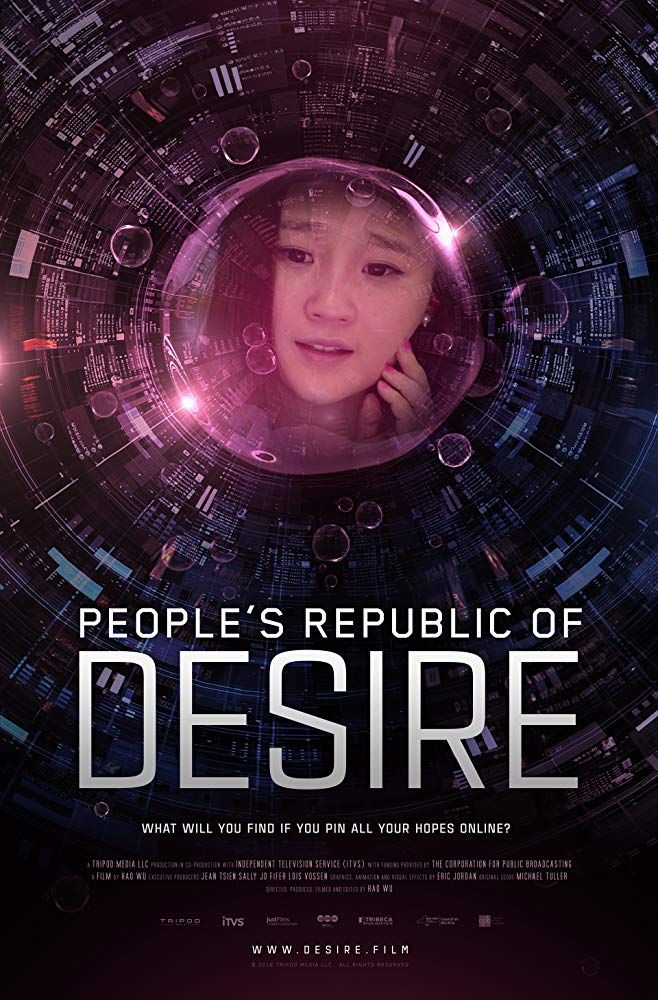
People's Republic of Desire PosterCan you outsource a dream? According to Wu Hao’s People’s Republic of Desire (欲望共和国, Yùwàng gòngguó), many in modern China have resigned themselves to doing just that. Feeling lonely, disconnected, hopeless, they turn to people just like them who’ve been luckier and have not yet decided to give up the fight. Video streaming service YY acts like the future’s version of pirate radio, lining up a selection “personalities” male and female offering pretty much anything from stand up comedy and political diatribes to off key singing and a window into someone else’s every day life from breakfast to dinner. Of course, it all comes at a price – one which YY gleefully takes a 60% cut of, but there are hidden costs too – to a society, to the deluded fans, and even to the aspiring stars themselves forced into various debasing acts in the knowledge that their time in the spotlight will soon come to an end.

Wu follows two very different YY stars – 21-year-old former nurse Shen Man, and Big Li – a former migrant worker whose rough voice and man’s man attitudes have endeared him to a host of other “diaosi” fans. “Diaosi”, once an unpleasant slur meaning “loser” and most often applied to those stuck in the lower orders of China’s rapidly increasing social equality gap, has been reclaimed by those who self identify with its sense of ironic hopelessness. As Shen Man explains, YY works as a kind of pyramid system in which millions of dreaming diaosi throw money they don’t really have at online stars in the hope of connection while Tuhao – the nouveau riche looking for new ways to splash the cash, act as patrons deciding the direction of the service.

What many diaosi forget to factor in is that in reality the entire service is run by agents and promoters who push their various stars to steal “votes” from their online fans. YY is not a public service platform, but a vast money making machine which sucks in cash from every conceivable angle. As cynical patron Songge points out, those seeking fame on YY cannot expect to make any money. In order to win the site’s popularity contest, they need to get an agent and their agent will need to spend a vast amount of money to promote them which the star will then need to make back.

Shen Man, on one level naive, is perfectly aware of the way the system works. She knows she needs to keep her fans happy or they’ll leave. Like Big Li she’s a poor girl made good, a figure her female fans can look up to as someone just like them that’s been able to escape the world of diaosi drudgery. Her male fans, by contrast, are probably looking for something different. Some of them like the idea of her ordinariness, that she comes from the same place they do and is therefore attainable while also being unattainable thanks to her quickly acquired wealth which allows her to live the life of a modern princess. There is however a cost. In order to hook more fans the youthful 21-year-old has already spent a lot of money on extensive plastic surgery (perhaps veering dangerously close to destroying her “natural charm” selling point), and is expected to play nice with her sometimes insulting clientele. One patron, chatting idly on the phone, tries to throw money at her in return for sex whilst simultaneously insisting that she’s not like the other YY girls who will do anything for money. Shen Man points out that she has money already and is not that sort of girl while her patron continues along the same line of argument insisting that all you need to do get a girl is flash the cash.

Big Li, by contrast, is much less cynical. He recognises that he’s become a kind of leader for his diaosi brothers and is eager not to let his fans down. Married to YY talent manager Dabao and with a young son to take care of, Big Li is originally grateful for his rock star life, but the pressure begins to get to him and he longs for the simple days of the village filled with the warmth of family and friends rather than the lonely false connection of YY’s race to fame mentality. Big Li genuinely cares, but this is his downfall. He wants the freedom that YY promises and refuses to play the game, but the game continues to play him.

Adoration quickly to hate. Shen Man finds herself out in the cold when she is publicly slut shamed, accused of taking money from fans in return for sexual favours, earning the nickname of “300 Man” as a woman who can be brought so cheaply she has no value at all. The constant double standard – that she must be beautiful and desirable, yet pure and chaste, has something to say about the nature of China’s conservative social values even in a modernising age. Once your reputation has gone it cannot be rebuilt and even the loyalist fans will find themselves moving on. Big Li might not have to put up with the same kind of pressures as Shen Man, but is personally hurt when fans call him “scammer” because of his constant failures to take home the big prize.

So what of the fans themselves? There are those who’ve made vast amounts money thanks to China’s rapidly modernising economy and don’t know what to do with it other than show off by giving it away. They too are trying to buy connection through becoming patrons, “owning” someone less fortunate and taking pleasure in dictating their lives. Meanwhile, on the opposite end of the scale, the diaosi have all but given up on their own dreams and so “enjoy” investing money to “support” the dreams of those just like them out of a sense of frustrated solidarity.

The picture Wu paints of modern China is one of a world spiralling out of control in which intense loneliness and alienation have corrupted the nature of social connection. Money rules all. Wealth is all that matters and in the crowded online world, if you want to be noticed you’ll have to pay. Interactions are bought and paid for with petty, entirely virtual trinkets, while in the offline world all there is is work and sleep and cheap fast food. Only the platform is the winner, as one unlucky hopeful puts it. The sad truth is that everyone knows it’s a losing game and has resigned themselves to conceding defeat in a society already leaving them behind.


People’s Republic of Desire was screened as part of Fantasia International Film Festival 2018.

Original trailer (English subtitles)

Being Natural (天然☆生活, Tadashi Nagayama, 2018) [Fantasia 2018]

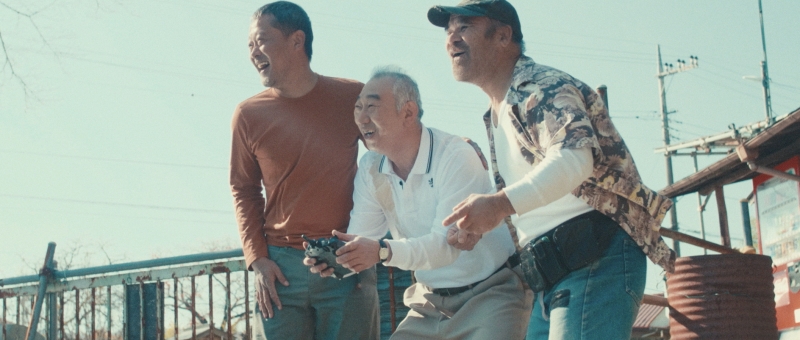
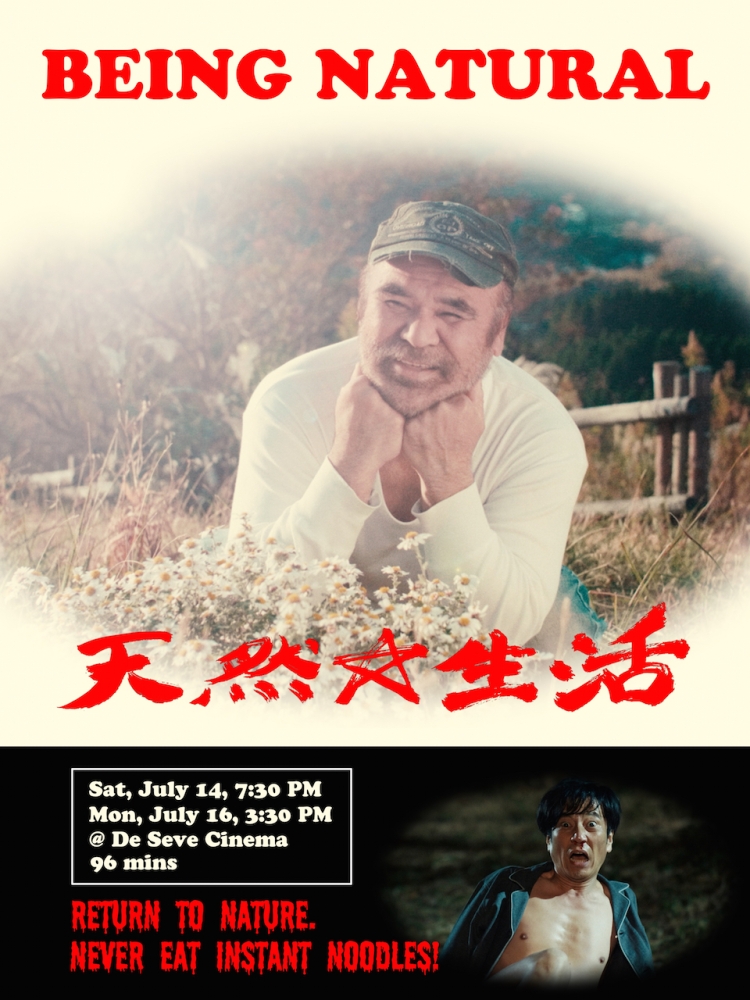
Being Natural posterModern life is stressful and perhaps does not offer the kinds of material rewards that previous generations took for granted. Moving back to the country to experience a simpler, more sincere kind of life has become a mini trope in contemporary Japanese cinema as the young men and women of Japan become disillusioned with a stagnating economy and, feeling trapped within a conformist society, decide to embark on a life of self sufficiency free of material burdens. What such stories have not yet asked is if the influx of outsiders from the city amounts to a colonisation of so far untouched land as the newcomers bring with them their newfangled desires and attitudes. Tadashi Nagayama’s gentle satire Being Natural (天然☆生活, Tennen Seikatsu) is partly an attack on rampart xenophobia and small scale colonialism but also a mild condemnation of corporatised hippiedom and its tendency to destroy the thing it claims to honour in remaking it to fit a city dweller’s ideal of idyllic country life.

Shy and awkward, Taka (Yota Kawase) is an unemployed middle-aged man who lives with his elderly uncle in the ancestral family home. Taka’s uncle suffers from dementia and, it seems, was always a “difficult” person even in his youth which is perhaps why the rest of the family have abandoned him with only the gentle Taka prepared to stay behind and look after the ageing patriarch. When his uncle dies, Taka’s world threatens to collapse but thankfully his embittered cousin Mitsuaki (Shoichiro Tanigawa) is talked round by his sister and decides to let Taka stay in the family home as a thank you for taking care of everything for so long. Not only that, Mitsuaki also gets Taka a job working at the local fishing pool alongside another old friend, Sho (Tadahiro Tsuru).

Reverting to childhood, the three men generate an easy camaraderie, looking after turtles, having barbecues, and making music together under the moonlight. The idyllic days are not to last, however. The harbingers of doom are a hippyish family from Tokyo who moved into the village with the intention of opening a coffee shop. The Kuriharas – Keigo (Kanji Tsuda), his wife Satomi (Natsuki Mieda), and daughter Itsumi (Kazua Akieda), are into the “natural” way of life and have moved from Tokyo for the benefit of their health. Rather than shop at the supermarket like everyone else, they’re keen to buy from Sho’s grocery store even when he explains to them that all his veg is old and shrivelled rather than freshly plucked from local fields. Still, the family are determined even if it means projecting their vision of “rural life” onto the evident reality.

The Kuriharas are literally intrusive – rudely opening the sliding doors of Taka’s house without permission and waking him up, offering the excuse that they were unable to find the “intercom” on this traditional Japanese house that they claim to admire so much. The original site having fallen through, they’ve set their sights on setting up shop in Taka’s home, exploiting the “traditional” architecture for their warm and welcoming cafe. This is all very well but it does of course mean displacing Taka from his natural habitat. As shy and mild mannered as he is, there’s only so much a man can take and Taka resents being evicted from his family home by a bunch of invading interlopers with commercial concerns.

While Satomi natters on about organic veg, Itsumi skips the English classes her controlling mother makes he go to and guzzles additive loaded instant ramen when she thinks no one’s looking. Wanting to preserve the “natural beauty of glorious Japan”, Keigo goes slightly nuts when he realises Taka’s pet turtles are a non-native breed, exploding with xenophobic fury over the dangerous presence of a disease laden predator whose presence threatens the safety of the true Japanese amphibian. Wondering exactly who or what is the “non native” threat, Taka launches a full scale resistance movement, papering the house in giant graffiti posters reminiscent of the student protest era reminding all that turtles, no matter where they’re from, have a right to life too and must be defended. Yet the corporately minded hippies will stop at nothing to get what they want – manipulating Mitsuaki with a new girlfriend and then turning the town against Taka by means of a heinous, life ruining rumour. 

Forced out and heading to the city, Taka is reminded that he is now the hostile foreign element – that the park is not his “home” but belongs to “everyone”. When his beloved bongos are ruptured, Taka’s rage turns radioactive and sends him off on a quest of vengeance only to recede as his better nature regains control and he commits himself to using his new found powers to improve the lives of those around him in small but important ways. A satirical take on the romanticisation of country life by self-interested city dwellers, Being Natural eventually takes a turn for the macabre that possibly undercuts rather than reinforces some of its central concerns but makes a case for according the proper respect to the natural world as well as the people who live within it rather than attempting to exploit it for oneself whilst wilfully ruining it for others.


Being Natural received its international premiere at Fantasia International Film Festival 2018.

Original trailer (English subtitles)

Men on the Dragon (逆流大叔, Sunny Chan, 2018)

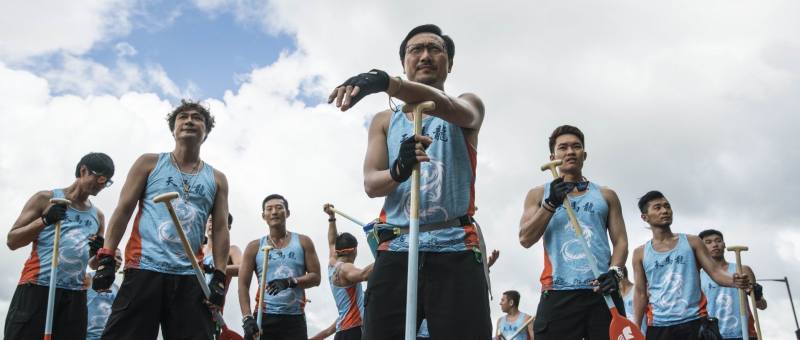
Men on the dragon posterLife is tough for the middle-aged man in contemporary Hong Kong, at least according to the directorial debut from screenwriter Sunny Chan, Men on the Dragon (逆流大叔). Economic woes, a precarious employment environment, familial strife, and elusive Andy Lau tickets all conspire to make our guys feel powerless in a society that seems primed to crush their spirits. Can dragon boating really help put their fire back in their bellies? Conventional wisdom would say no, but then there is something about physically demanding team sports that is particularly good at inflaming individual desires.

Pegasus Broadband is about to announce another round of mass layoffs which has each of our heroes worried. Participating in a mini protest strike puts them straight in the firing line (even if they were clever enough not to write their real names on the petition forms), but when they’re seemingly lucky enough to escape the axe for now at least they think they can breathe easy. An unexpected call from the boss instructing them to appear at a mysterious location with swimming trunks in hand even has them wondering if they’re being given some kind of bribe to play nice but as it turns out the reverse is true. Pegasus Broadband wants to improve its public image and has decided to do that by entering a team in the upcoming dragon boat races. The race, which they fully expect to win, will be streamed live online to demonstrate the company’s infrastructural superiority. Fearing they’ll be bumped up the redundancy list if they refuse, our guys resign themselves to becoming unlikely dragon boat champions but end up discovering unexpected sides of their potential which prove essential in solving their individual crises.

Suk-yi (Poon Chan Leung), bespectacled and mild-mannered, is the least athletic of the Pegasus Broadband employees but is half grateful for the dragon boating opportunity because it gets him out of the house where his wife and mother constantly bicker while his small daughters can’t stop fighting. Feeling pushed out and unwelcome in his house full of angry women, Suk-yi is desperately looking for some kind of escape or possibility of reasserting his authority which he begins to find while training for the dragon boat races and nursing a small crush on the pretty coach, Dorothy (Jennifer Yu). Meanwhile, Lung (Francis Ng) is unmarried but has found himself in an awkward non-relationship with the woman next-door for whom he cooks and cleans, even taking care of her moody teenage daughter. He dreams of making a real family but lacks both the courage and financial resources to make a move. The youngest of the gang, William (Tony Wu), has the opposite problem in that he’s given up his dream of being a top Ping Pong player to build a future with his girlfriend but begins to realise that he hasn’t given up on his athletic hopes while boss Tai (Kenny Wang) is secretly torn apart by the worry that his wife is having an affair with a sleazy real estate agent.

All four guys have found themselves swept along by the current of modern Hong Kong, coasting without aim or purpose but filled with middle-aged anxiety as they wonder where the river is taking them and if it’s already too late to change the destination. Suk-yi’s dilemma is perhaps the most cliched of the three as he contemplates swapping his disharmonious household for the unattainable charms of an idealised younger woman while Lung chases easy familial bliss, Tai tries to repair a relationship corrupted by modern social pressures, and William wonders if it’s worth giving up a part of yourself to make a relationship work knowing that kernel of resentment will only grow with time. Men on the Dragon is, in this sense, a very “male” story in which four put upon men feel themselves emasculated by oppressive social forces yet learn to rediscover their “manhood” through the intensely physical act of dragon boating.

They are however guided along by an austere young woman who bangs the drum to which they must all march. This is not Dorothy’s story and she gets short shrift among all the guys but there’s something interesting in the fact that she had to hire a “male foreigner” to pretend to be the “real” coach because no one would hire a female dragon boater despite her impressive list of qualifications and credentials. Gently rebuffing Suk-yi’s interest, she nevertheless guides him towards a confrontation he’d long been avoiding in reasserting himself in his own household, restoring his standing in his wife’s eyes and brokering piece with his feisty mother who can’t seem to get on with her Mainland daughter-in-law. It’s the rhythm of life that’s important, Dorothy reminds the guys – you don’t get anywhere unless you’re all pulling together. That might sound like we’re back where we started, being swept along in a mass current without control or direction but it’s individual will which drives the communal enterprise and there can be no progress without agency. Not all dreams work out, but you won’t know unless you try and at least if you crash and burn there are plenty of guys waiting to pull you out of the water.


Men on the Dragon made its world premiere at the New York Asian Film Festival 2018.

Original trailer (English subtitles)

After My Death (죄 많은 소녀, Kim Ui-seok, 2017)

After my death posterKorea has one of the highest suicide rates in the world as the pressure cooker society conspires to railroad those who find themselves in someway excluded from its rigourously conformist demands toward inescapable despair. With the phenomenon so common, has it become true that society itself has become inured to its effects, seeking not to ease suffering but to control damage? For the clutch of schoolgirls at the centre of Kim Ui-seok’s After My Death (죄 많은 소녀, Choe Manheun Sonyeo), suicide has taken on its own allure as an escape from the demands they feel themselves unable to meet but there are few looking to guide them away from the abyss rather than to negate their own responsibility for failing to do so.

A high school student, Kyung-min, is missing. Her backpack and shoes have been found near a local bridge and it is feared that she may have committed suicide though there is no note or additional evidence to suggest that she has taken her own life nor have they found a body. With speculation rife, all eyes are on another student, Young-hee (Jeon Yeo-Bin), apparently one of the last people to have seen Kyung-min alive. Though Young-hee and Kyung-min had been good friends in the past, they were no longer close and had apparently run into each other by chance along with another friend of Young-hee’s, Han-sol. Han-sol’s testimony differs from Young-hee’s in that she says Kyung-min seemed “gloomy” and that the evening had taken an intense turn after she suddenly declared her love for Young-hee only for Young-hee to tell her to prove her devotion by dying.

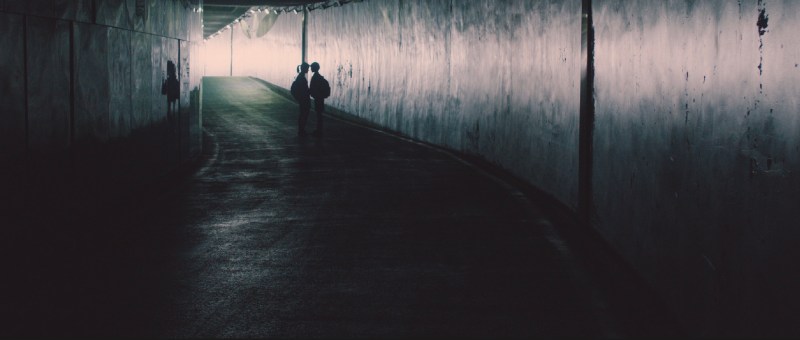
Things get worse for Young-hee when the police track Kyung-min’s movements via CCTV and find footage from a nearby tunnel which appears to show a gentle kiss between the two girls. Hounded, Young-hee finds herself a target of persistent harassment by her school mates who insist that she is in someway cursed and “infects” people with “bad thoughts” while Kyung-min’s mother (Seo Young-hwa) has also started semi-stalking her hoping to find out “the truth” about what happened to Kyung-min.

The other girls, testifying to Kyung-min’s character, reinforce the view that she was “gloomy”, a loner who didn’t fit in. She didn’t like K-pop, didn’t socialise much, and was into depressing things. When suspicions rise regarding her possible suicide, the school is quick to leap to conclusions – that like many in South Korea she had become over anxious about college applications, but as her grades were good and Kyung-min was a diligent student this explanation seems unlikely which works out well for the school. Kyung-min’s teacher quickly goes into damage limitation mode, confirming that she had been withdrawn, struggled to communicate with her classmates, and was probably very lonely though he lays most of the blame on melancholy ‘90s shoegaze which he assumes must have somehow tipped her over the edge. What all of this means is that it’s not his fault, and he feels he has justification for “failing” in his duties of pastoral care towards a student whom by his own admission he suspected of being in distress.

During Young-hee’s questioning, she repeatedly tells the police officer in charge that she too is suicidal and that she told Kyung-min about her own plan to jump off a bridge because she thought it might help. Young-hee is quite clearly depressed even before all of these very difficult events but finds no one willing to listen to her distress, only making herself a magnet for further hostility from just about everyone with even her teacher berating her for stealing Kyung-min’s thunder in insisting that she stole her idea of jumping off the bridge rather than trying to commit suicide through an overdose of sleeping pills which, Young-hee claims, was her intention before she discouraged her lest she end up still alive but brain damaged.

The lingering doubt is to which “me” is the owner of “death” in the title, or to whom the Korean title of “unrighteous girl” might apply. The motives for Kyung-min’s (presumed) death may be beside the point as a policeman investigating the case suggests – perhaps she didn’t want “understanding” so much as oblivion. What we’re left with is a rather poignant love triangle and the suggestion that Young-hee’s intense depression is a result of repressed same sex attraction which opens another series of questions about which acts are “unrighteous” – suicide or love, with the unfortunate implication that perhaps one cannot but lead to the other. In any case, the problem is that all these kids want to die and the adults no longer want to stop them, only to avoid any potential responsibility for what the children in their care may or may not try to do. Melancholy and drenched in despair, After My Death has nothing but sympathy for its lonely teens but finds no possible escape from the crushing vice of a blame fuelled conformist society.


After My Death was screened as part of the New York Asian Film Festival 2018.

Original trailer (English subtitles)

Interview with director Kim Ui-seok from the 2017 Busan International Film Festival (English subtitles)

The Bold, the Corrupt, and the Beautiful (血觀音, Yang Ya-che, 2017)

The Bold the corrupt and the beautiful posterAre you playing the game or is the game playing you? The Bold, the Corrupt, and the Beautiful (血觀音, Xuè Guānyīn) is, as its name suggests, somewhere between trashy soap opera and spaghetti western as its entirely amoral matriarch prepares to sacrifice everything in order to get ahead. The family becomes a metaphor for the state – corrupt, prejudicial, hypocritical, and often heartless in its ruthlessness but like a family a state perhaps reaps what it sows and the lessons Madame Tang has taught her daughters may come back to haunt her.

In the Taiwan of the 1980s – the dying days of the old regime but firmly within the pre-democratic past, Madame Tang (Kara Hui) is the widow of a general and, on the surface of things, an antiques dealer. Her real worth however lies in making herself the society face of genial corruption as the conveyor of the ancient treasures that often stand in for monetary bribes in the complex system of reciprocal politics. Designed to manoeuvre herself and her family into a position of power and perhaps safety, Madame Tang’s machinations amount to a mess of intrigue, manipulating the social interactions of her “friends” in order to convince them to destroy each other and clear a path for her ascendance. Part of her grand plan has involved extensive use of her daughter, Ning Ning (Wu Ke-xi) – now approaching middle-age and thoroughly sick of being her mother’s prize pony, while Chen-Chen (Vicky Chen), still a teenager, has usurped her place as the latest cute little thing to be trotted out and fussed over.

Everything starts to go wrong when a powerful neighbouring family, the Lins, is murdered in a suspicious looking home invasion leaving the daughter, Pien-Pien (Wen Chen-ling), who was the closest thing Chen-Chen had to a real human friend, in a coma. Pien-Pien had been carrying on with Marco (Wu Shuwei) the stable boy which obviously had not gone down well with her parents though she had backed out of a plan to elope with him. The police’s theory is that Marco had come back to the family home and taken his revenge, but there is an awful lot more going here than just a jealous proletarian boyfriend hitting back at the bourgeoisie.

Piling layer upon layer Yang’s script is dense and sometimes impenetrable to those not well versed in Taiwanese history and culture. Madame Tang seems to have something of an interesting hidden backstory, swapping easily between standard Taiwanese Mandarin, Cantonese, and Japanese which she, and Chen-Chen, use to get close to Mrs. Lin whose grasp of Taiwanese remains poor despite having lived on the island for many years and being heavily involved in politics. The house the family inhabits is also distinctly Japanese in layout, a colonial era home now inhabited by post-war migrants from other areas of China. The Lins look down on their stable boy not only because of the obvious class difference, or because of their daughter’s relative youth and tarnished reputation, but because he is from a persecuted minority of native peoples.

Marco does however become a kind of key. Chen-Chen, curious and privy to more knowledge than a child of her age ought to have thanks to her mother’s scheming, has developed a fondness for the strapping stable boy and mildly resents being made fun of by the oddly amused Pien-Pien. The rot sets in as Chen-Chen is sent to fetch Ning-Ning only to find her engaging in some kind of orgy in a forest, over which Chen-Chen lingers a little to long only to catch Ning-Ning’s eye and find herself suddenly caught out while her “sister” apparently finds extra spice in her discomfort. Ning-Ning, after years of emotional abuse at the hands of her mother, has begun to rebel by embarrassing her, losing herself in drink, drugs, and promiscuous sex with unsuitable men while Madame Tang still harps on about possible dynastic marriages if now to a distinctly third class tier of potential husbands.

Yang adds a post-modern dimension to the story by framing it as a cautionary tale recounted by a pair of traditional musicians in the manner of Gezi Opera which begins closer to the now before flashing back to show us how we got here. Even if the political metaphors do not hit home without some kind of primer in Taiwanese history, the familial allegory is obvious enough – corruption breeds corruption and the hollow family will eventually swallow its young. The closing coda, presented via intertitles, reminds us that the scariest prospect is not imminent punishment, but a loveless future. The Tangs’ tragedy is not that there was no love between them, but that in their cynicism and insecurity they destroy themselves through a selfish need for control and possession. Madame Tang’s lessons have indeed been learned too well, and in this she damns herself as well as her daughters, condemning all to a loveless future fuelled by greed and fear from which it is impossible to escape.


The Bold, the Corrupt, and the Beautiful was screened as part of the New York Asian Film Festival 2018.

Original trailer (traditional Chinese subtitles only)

Interview with director Yang Ya-che from the 2017 Busan Film Festival (English subtitles)