Blade of the Immortal (無限の住人, Takashi Miike, 2017)

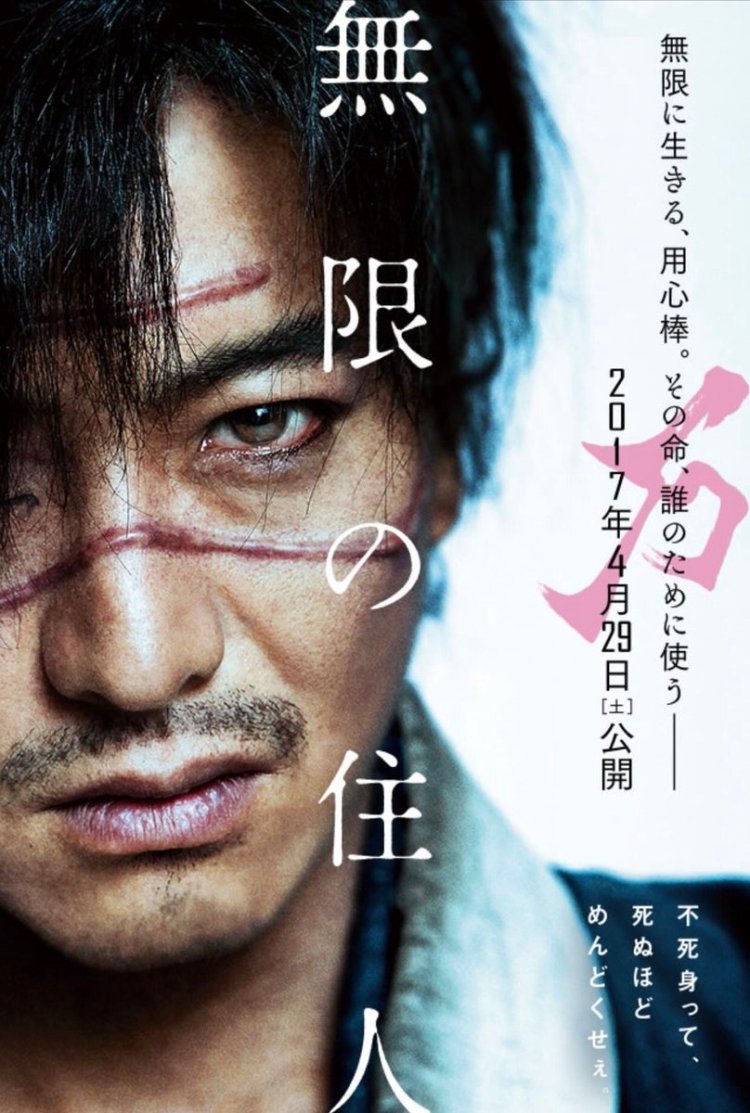
blade of the immortal posterGenerally speaking, revenge tends not to go very well in Japanese cinema. It has the tendency to backfire. When you’re immortal, however, perhaps revenge is risk worth taking – then again, it’s not your life your weighing. Takashi Miike is no stranger to the jidaigeki world, though in adapting Hiroaki Samura’s manga Blade of the Immortal (無限の住人, Mugen no Junin) he harks back to the angry, arty samurai films of the late 1960s from Gosha’s Sword of the Beast with which the manga features some minor narrative similarities, to Kobayashi’s melancholy consideration of corrupted honour, and the frantic intensity of Okamoto’s Sword of Doom.

The film opens in black and white as a disgraced samurai, Manji (Takuya Kimura), tries to protect his younger sister, Machi (Hana Sugisaki), who has gone mad through grief only to see her murdered by a bounty hunter. Manji enters a state of furious, mindless killing which leaves the bounty hunter’s vast crowd of henchmen lying dead and Manji mortally wounded. Consumed by guilt and having lost the sister who was his sole reason for living, Manji longs for death but a mysterious old woman who calls herself Yaobikuni (Yoko Yamamoto) has other ideas and curses Manji to a life of eternal suffering by means of sacred bloodworms which give him the power of infinite, near instant healing.

Fifty years later, the land is at peace under the Tokugawa Shogunate but peaceful times are dull for warriors. The Itto-ryu school of swordsmanship has a mission – to take over all of the nation’s martial arts facilities and restore power to the sword. They have no honour or ideology save that of kill or be killed and are content to use any and all weapons which come to hand. A young girl, Rin (Yoko Yamamoto), is a daughter of one of these schools and has her eyes set on becoming a top swordswoman herself but when the Itto-ryu show up at her door, Rin’s father’s training proves worthless as he’s cut down with one blow while the gang kidnap Rin’s mother. The Itto-ryu’s sole concession to morality is in letting Rin alone, seeing as it’s “vulgar” to toy with children.

Rin vows revenge on the Itto-ryu’s leader, Anotsu (Sota Fukushi), at which point she runs into Yaobikuni who recommends she track down Manji and hire him as a bodyguard. Fifty years of immortality have turned Manji into an isolated, embittered wastrel with rusty swordskills but Rin’s uncanny resemblance to Machi eventually begins to move his heart. Despite generating a master/pupil, big brother/little sister relationship, Manji fails to teach Rin very much of consequence that might assist her in her plan to avenge her family, leaving her a vulnerable young woman beset by enemies and random thugs, and eventually caught up in a government conspiracy. The irony of Manji’s life is that he’s just not very good at the art of protection and all of his attempts to do something good usually provoke an even bigger crisis, in this case leaving his new little sister open to exactly the same fate as the one he failed to save for much the same reasons. Apparently, Manji has learned little during his extended lifetime except how to brood and glare resentfully at the world.

It turns out being immortal is kind of a drag. Manji wants to die because he can’t cope with the burden of his guilt, but another similarly cursed man he meets has lived much longer and lost far more, becoming tired of the business of of living. Manji’s existence has lost all meaning, but as he puts it to another world weary warrior who shares his brotherly grief, he’s not the only hero of a sad story. Rin’s need for vengeance gives him a purpose again – not just in the literal revenge, but in being the protector (though one could argue this is less positive than it sounds and might explain why he fails to teach Rin anything very useful, even if it doesn’t explain why she also forgets all her father’s teachings).

Rin remains conflicted over her mission of revenge, confessing to a similarly conflicted assassin that she agrees killing is wrong but that right and wrong no longer matter when it comes to people you love. A dangerous and dubious assertion, but it does bear out the more positive message that love, or at least learning to live for others, can be a transformative force for good as Manji allows himself to resume his role as the big brother despite his past failings. Violent and visceral, if also humorous, Blade of the Immortal is, oddly enough, a story of love but also of cyclical paths of violence and revenge, and of the general muddiness of assigning the moral high ground to those engaged in a quest for retribution.


Blade of the Immortal was screened as part of the BFI London Film Festival 2017 and will be released in UK cinemas courtesy of Arrow Entertainment on 8th December.

International trailer (English subtitles/captions)

Pop Aye (Kirsten Tan, 2017)

pop aye posterLife’s crises can take many forms but when they involve elephants it’s usually with a little more distance than in Kristen Tan’s whimsical debut, Pop Aye. A metaphorical return to source, a man entering late middle age tries to reclaim his childhood innocence by walking backwards (with an elephant) but discovers that you really can’t go home again. Man and elephant set off on a classic buddy movie road trip, enjoying a selection of encounters with fellow travellers each with a few lessons to impart.

A man in late middle age, Thana’s (Thaneth Warakulnukroh) carefully crafted life seems to be imploding all at once. The first building he designed, Gardenia Square, was an elegantly appointed modern shopping centre which seemed to perfectly reflect the growing consumerism of the ‘80s. 30 years later his futuristic design is now dated, and Gardenia Square is set for demolition to make way for the next modernist masterpiece ironically titled “Eternity”. If that weren’t depressing enough, the son of Thana’s former partner has taken over the business but has none of his father’s loyalty and is determined to sideline the office’s silly old man through pointedly underhanded ways such as deliberately telling him the wrong time for meetings and depositing the physical 3D model he spent a night at the office finishing with all the other rubbish in a now disused room.

If his work life is failing, Thana’s home life isn’t doing much better. His shopaholic wife, Bo (Penpak Sirikul), has little time for him and when Thana discovers her hidden vibrator, he finally realises he is entirely obsolete in every area of his life. So when he catches sight of a beautiful elephant dressed in elegant attire ready for posing for photos with foreign tourists, Thana has an immediate reaction which takes him right back to his boyhood days spent in the company of family pet, Popeye (Bong). Tracking the elephant down again and singing the cartoon’s famous theme tune to verify his identity, Thana decides to buy him (much to his wife’s horror). Seeing as you can’t really keep a giant elephant in your back garden, Thana decides his destiny is to take Popeye back to his rural village where he believes his uncle will look after him.

Undoubtedly part metaphor, Popeye represents the innocence and natural beauty of pre-modern Thailand – the very qualities Thana feels himself to have betrayed when he chose to leave home in less than ideal circumstances to pursue a “better” life in the big city. Thana got what he wanted. He became successful, wealthy, in some sense fulfilled, but now just when he should be entering a more contented phase of his life it’s all crumbling away from him and his ambivalence about the sacrifice he made as a young man is beginning to resurface. He thinks he can put something right by “rescuing” Popeye and reclaiming these qualities in the process but, as usual, nothing’s quite that simple.

Thana’s flight is as much from the modern world as it is from himself. Feeling unloved, Thana also feels eclipsed by his times, held in contempt by the younger generation whose sleek suits and obvious insincerity are a poor match for his disheveled befuddlement. This is a world in which monks accept Visa and take photos of elephants (which must surely be ten a penny) on their tablets. The city takes you in as quickly as it’ll spit you out, Thana warns a young truck driver, but his rare moment of direct emotional honesty is shrugged off as the rantings of an old man.

Despite the coldness of city life, Thana mostly meets warmhearted people on his journey through the countryside, beginning with a roadside saint who describes himself as being “like a tree” in the way he stays rooted to the spot observing the people and cars going by. Dee, noticing Thana’s blistered feet offers him his flip-flops which he won’t need anymore because he’s going to see his brother in Heaven. After all, even trees have to die someday. Grateful to the man, Thana takes Dee under his wing and vows to help him achieve his final wishes, but his intervention may have unforeseen consequences.

Thana even generates a strange bond with the policemen who arrest him for cluttering up the scenery in his nice middle-class neighbourhood which eventually leads him to a rural bar where he seems to meet a kindred spirit in Jenny – a melancholy transgender woman with a longstanding resentment of the bar’s resident “hostess”. Despite hitting it off with Jenny who seems to understand his particular pain, Thana disappoints himself by ending up in a humiliating, unsolicited situation with the bar girl but finds the equally disappointed Jenny forgiving and still willing to help a fellow traveller in need even if, as seems to be the case in much of his life, Thana has allowed himself to be bamboozled into doing something he didn’t really want to do.

At the end of his long, strange journey, Thana finds his illusions shattered, his romantic dream of his childhood home exposed as a mix of memory, nostalgia and idealism. Thana ends up where he started, only with a little more clarity and a new trend towards acceptance rather than defiance. He may think of Popeye merely as the manifestation of the innocence he sacrificed in childhood, but Popeye is his own elephant with his own ideas about his future which might or might not include Thana. Ending on a slightly upbeat note in which Thana is perhaps not as unloved as he believed himself to be, Pop Aye is charming odyssey through middle-age malaise set against the beautiful Thai landscape and told with a whimsical, melancholy humour.


Screened at BFI London Film Festival 2017.

Original trailer (English subtitles)

Never Say Die (羞羞的铁拳, Song Yang & Zhang Chiyu, 2017)

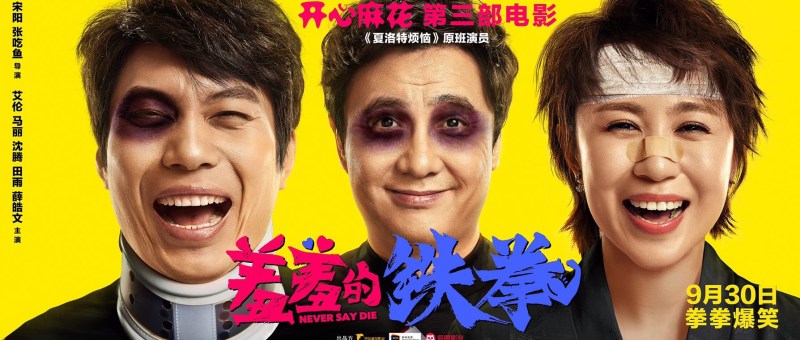
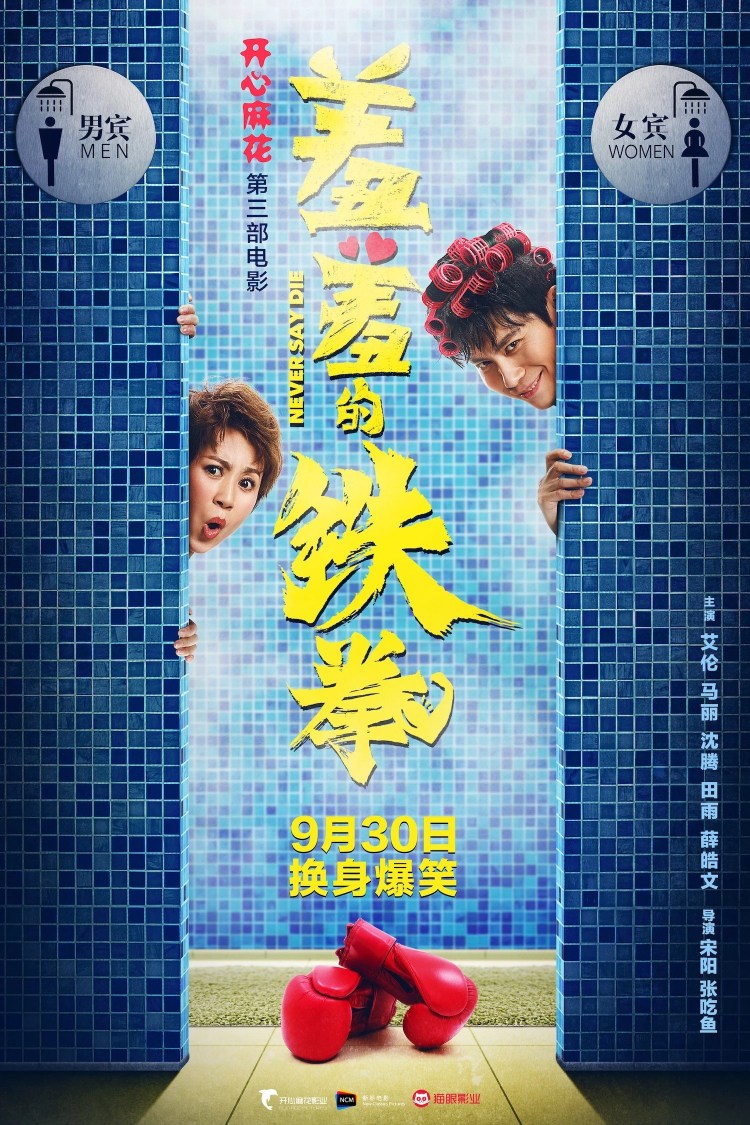
Never say die posterBody swapping drama seems to have come back in style of late, though they’ve rarely been as funny as the surprisingly laugh out loud Chinese comedy Never Say Die (羞羞的铁拳, Xiūxiū de Tiěquán). Based on a stage play by the Chinese theatre company Mahua whose last effort Goodbye Mr. Loser did something similar only with time travel, Never Say Die is a story of never giving up, always getting even, and learning to understand yourself through someone else’s eyes.

Edison (Ai Lun) was once an MMA champion, but a scandal three years previously has left him disgraced and reduced to taking dives for his shady boss, Dong (Tian Yu). Edison has a reputation for being good at taking dives because he can make them look so “realistic”, and believes his special talent ought to earn him a few more dollars. Seconds after dramatically hitting the mat, Edison gets a call reminding him he’s late for a weigh-in at a “real” fight. When he gets there he’s confronted by a bulldog reporter, Xiao (Ma Li), who questions him about his history of taking bribes. Reacting angrily, Edison soon realises Xiao’s boyfriend is none other than top MMA fighter and arch-rival Wu Liang (Haowen Xue).

Just to make things more complicated, Xiao is also the daughter of Edison’s manager, Dong, whom she hates and is determined to expose for his corrupt dealings. Edison chases after Xiao when he and Dong discover her recording a very compromising conversation but after ignoring a warning sign the pair end up on a rooftop during a thunderstorm. Edison bumps into Xiao, kissing her by mistake and pushing her into the pool in which they then both get struck by lightning. Waking up in hospital, each of them discovers they’ve come back a little different than they remembered.

This being China with its relatively stringent censorship laws, the body gags are kept to a minimum with Xiao suddenly dropping her reporter’s poise for “manly” roughness and Edison becoming subtly effeminate. Both are horrified by the sudden colonisation of their own bodies and resentful that in order to look after it properly someone they intensely dislike is going to have to be very aware of their most intimate features. This is especially true of Edison who reacts to his new found femininity in the predictable way by fondling his own breasts and then having a fantastic time in a ladies’ only bathhouse (an extended set piece ironically set to YMCA).

The gag is simple enough but actors Ai Lun and Ma Li commit so totally to their new roles that the increasingly absurd situations ring true right up until the trio end up learning Kung Fu from a possibly gay, resentful deputy chief monk (Teng Shen) at a mountain retreat. Veering off from the standard rom-com route, Never Say Die makes a brief sojourn in revenge genre after Xiao finds out some unpleasant facts about Wu Liang (through being Edison) and decides she needs to get her own back by humiliating him in the MMA ring. Edison may have been a champ, but despite his physical training, Xiao is still an elegant female reporter who’s not exactly used to being in the middle of a fight.

Never Say Die does not manage to escape the inherently sexist bias of the gender swap movie, but it does its best to mitigate it. It is problematic, in one sense, that Xiao needs to “man up” to get revenge on her dreadful boyfriend and then is sidelined when it comes time for Edison finish the job for her, but on the other hand she is the more capable and pragmatic of the pair who teaches Edison how to get himself together whilst playing a supporting rather than leading role. Perhaps betraying its comedy stage show routes, the script may appear episodic and meandering but it’s all brought together in grand fashion at the end with nary a gag wasted. The lesson is that eventually you have to get off your high horse and really look at yourself and others whilst resolutely refusing to back down to dishonest bullies if you really want to earn the right to be happy in yourself. Hilarious and emotionally satisfying in equal measure, Never Say Die is an unexpected comic delight which proves surprisingly subversive even in its superficial innocence.


Currently on limited release in UK cinemas courtesy of Chopflix.

Original trailer (Mandarin, no subtitles)

The Night is Short, Walk on Girl (夜は短し歩けよ乙女, Masaaki Yuasa, 2017)

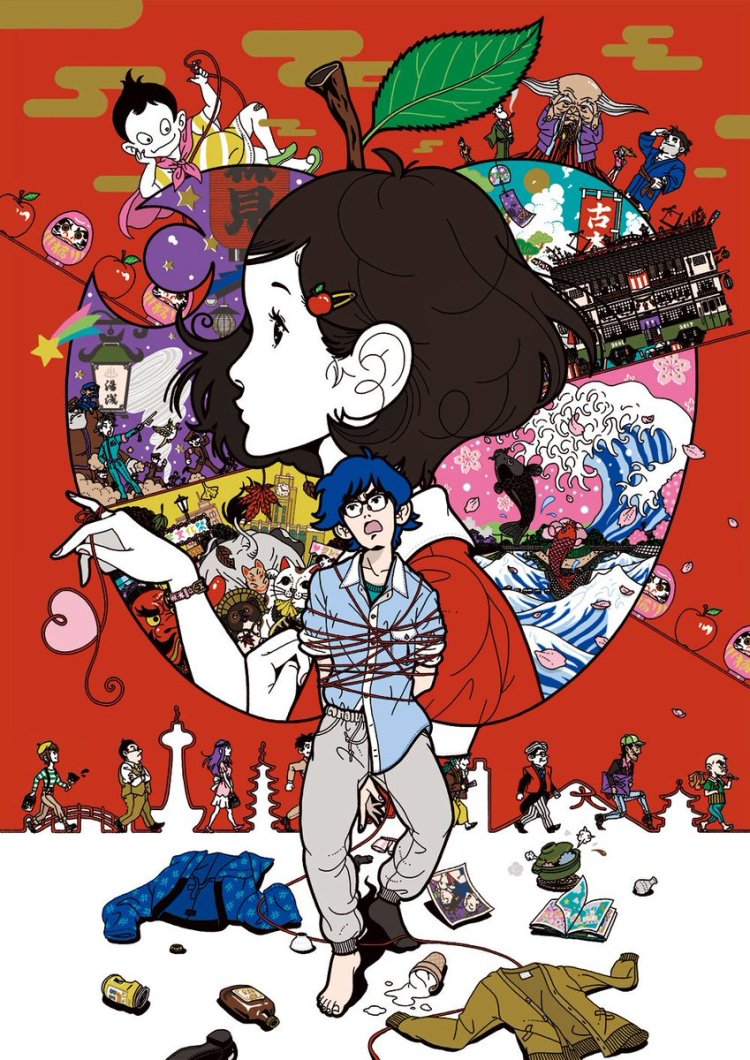
The Night is Short posterHave you ever had one of those incredibly long nights that seemed to pass in an instant? Masaaki Yuasa returns to the absurd world of Tomihiko Morimi with the charming one night odyssey, The Night is Short, Walk on Girl (夜は短し歩けよ乙女, Yoru wa Mijikashi Aruke yo Otome), which takes place in the same world as Yuasa’s TV anime adaptation of the author’s Tatami Galaxy. The Girl with Black Hair dreams her way through Kyoto, relentless as a steam train in her pursuit of new experiences, but perhaps the speed at which she travels leaves her horizons perpetually unclear.

Beginning where many stories end, The Night is Short, Walk on Girl, opens with a wedding. “Sempai” (Gen Hoshino) longs for the “Girl With Black Hair” (Kana Hanazawa). He doesn’t know her name or really very much about her at all other than she’s in the year below him and they belong to the same club, but this is a love for the ages fated to come true. To this end, Sempai has been engineering “coincidental” meetings with the Girl so that she knows he exists, in a “there’s that guy again!” sort of way, hoping to travel into her heart by means of osmosis. Until then he’ll just stare at her lovingly from three tables away at social events involving mutual friends…

The Girl, however, has her own plans. She’s determined to make her way into the world of adulthood this very night, travelling by the power of alcohol (for which she seems to have a seriously impressive tolerance). For the Girl, the night is filled with possibilities. She’s open to everything and everyone, ready to say yes to whatever strange adventure the gods have in store for her. Which is lucky, because this is going to be a very strange night indeed.

The Night is Short pivots around the idea of connection as its two poles – Sempai and The Girl, are perpetually kept apart, orbiting each other in an endless search for a home. The Girl drinks and claims she feels the interconnectedness of all things, at one with the world and everybody in it. The miserly, miserable local god she’s in the middle of a drinking contest with understands her reasoning but has lived too long to agree with it. After all, at some point you have to stop drinking and the world is cold and lonely. The old man tastes only life’s nothingness, for him life is fruitless and nearing its end but for the girl all the world is flowers and warmth, filled with promise and possibility.

If the old man is right and alcohol provides only a fleeting, essentially fake feeling of contentedness, then perhaps there are other routes to true connection – such as the universal circulation of books. Books carry ideas between people and take feelings with them yet there are those who try to staunch the flow – namely book collectors who try to stem the system by hoarding copies to push up the price. Sempai and the Girl each find themselves caught up in this act of anti-human profiteering as allies or enemies of the strange little creature who presides over the great book fair of life.

Even those, like the old man, who feel themselves to be excluded from human society prove themselves connected by one very special unifying factor – the passage of disease. The Girl is committed to spreading happiness wherever she goes, healing the sick and ministering to the lonely, but even those who feel they have nothing to give have still given away a part of themselves in the form of the common cold as it rips like wild fire through old Kyoto with the desperate force of a lifetime’s painful rejection. It’s kind of beautiful, in a way, as the old man’s life suddenly brightens in not feeling so alone anymore after casting himself as patient zero.

Yuasa’s drunken night in Kyoto is strange and surreal. Time runs inconsistently, revealing the uncomfortable truth that it speeds up as you grow older and night approaches dawn to the still young Girl, too full of life and possibility to think of looking at a clock. Sempai remains a cypher, his only clear personality trait being his certain love for the strange girl who’s always too busy chasing dreams to see him. His friends are also facing their own strange nights from the one who’s decided not to change his undies until he’s reunited with his one true love with whom he shared but one fateful encounter, and the other whose taste for female attire receives a slightly muddled reception, but they each find themselves caught up with three level pagoda trains, guerrilla theatre practitioners (or “school festival terrorists”) whose protest turns out to be romantic rather than political, not to mention the persistent threat of underwear thieves. Is this fate, or mere “coincidence”? In the end perhaps it doesn’t matter, but the night is short. Walk on Girl, just slow down a little, you have all the time you need.


The Night is Short, Walk on Girl is released in selected UK cinemas on Oct. 4 courtesy of Anime Ltd. Check the official website to see where it’s screening near you.

Original trailer (English subtitles)

August in Tokyo (愛の小さな歴史, Ryutaro Nakagawa, 2015)

august in Tokyo posterFollowing on from the dark series of coming of age tales in Plastic Love Story, Ryutaro Nakagawa continues to examine his central themes of unusual connections, lingering effects of past trauma, and the dark side of familial dysfunction in the cheerfully titled August in Tokyo (愛の小さな歴史, Ai no Chiisana Rekishi). Beginning with a framing sequence involving suicide and depression, Nakagawa spins back for a no happier look at two very different people facing much the same problems as they attempt to reconnect with family members, pursue doomed romances, and generally fail to move forward even though they each strive to put the past behind them. Yet there is hope here as the framing sequence proves in its insistence that loss is an inevitable part of life but that the end of one relationship does not mean no others should start.

A young girl, Natusmi (Asaka Nakamura), receives a phone call from the police telling her that her best friend has committed suicide. Left reeling, Natsumi also attempts to kill herself but is saved by a young man with whom she later develops a friendship after bonding over their shared loss in each having lost someone close to them who died by their own hands.

Their story gives way to that of another man and woman who don’t know each other but are living very similar lives in close geographical proximity. Natuski (Eriko Nakamura), having left a job at a book shop following a failed affair, has a part-time job delivering bento. Approached one day by a young man (Sosuke Ikematsu) who tells her that her estranged father (Ken Mitsuishi) is in a bad way, Natsuki decides the best form of revenge might be to move in and look after him. Meanwhile, Natsuo (Takashi Okito) is a petty gangster becoming disillusioned with his life of senseless unpleasantness. Reencountering his younger sister Asuka (Manami Takahashi), Natsuo decides to reassume his familial responsibilities by “saving” her from her dead end life as a drug addicted casual sex worker.

Abandonment and familial breakdown are the threads which bind the stories of Natsuki and Natso together. Living out their eerily similar lives, they each reflect on why it was they were born if their parent(s) did not want them enough to bother looking after them. Natsuki’s memories of her father who left when she was small are not positive. She has a scar on her chest from where he burnt her with a cigarette and still resents him for the drunken beatings he inflicted on her mother who later died when Natsuki was only ten years old. She wonders if her life might have been different if she’d had a normal childhood. A failed a attraction to a middle-class pianist only serves to ram home her sense of insecurity and inadequacy, leaving her to wonder if she can ever escape the cycle of suffering to which her father’s failures seem to have condemned her.

Natsuo and his sister have it harder, each wondering why it was they were born, preferring to think it was all just an unhappy accident of a biological urge rather than the expression of a love they themselves have never felt. At some point Natsuo made the decision to abandon his family, leaving Asuka to deal with it alone. Attempting to care for their abusive father with senile dementia, Asuka’s life was destroyed, leaving her no way to support herself until an ill advised romance led her into the path of drugs and the sex trade. Natsuo wants to put things “right”, but he may be running out of time.

Natsuki and Natsuo struggle, each trying to do the “right” thing but finding themselves conflicted. Natsuki can’t forgive her father for everything he’s put her through. The young man who convinced her to help him, perhaps disconnected himself, describes Natsuki’s father as “like a father” to him – a figure of nobility who stood up for others and was the only man who took him for drinks and spent time with him as a father might. Natsuki says says her only purpose in life is hating her father, yet in the end she can’t. Natsuo’s worries are equally self focussed in his guilt over having abandoned his sister and her subsequent fall into dangerous drug dependency but his late in the day attempts to “save” her and their patronising paternalism often frustrate his essential goal.

Running in parallel these two sad stories are tragedies waiting to happen but, even in their darkness, they hold the potential for salvation. As in the framing sequence, such unexpected connections may be born from sadness but there is happiness to be found if you can find the strength to carry on. Maintaining his familiar aesthetic of naturalism mixed with expressionist dance sequences, Nakagawa’s latest examination of human relationships and contemporary society is bleak but also hopeful, insisting that patch work hearts are the path to a brighter future.


Available in most territories via iTunes, Amazon, YouTube, and Google Play.

Trailer (English subtitles/captions)

Tale of a Raindrop (雨粒の小さな歴史, Ryutaro Nakagawa, 2012)

tale of a raindop poster 2Leaving university is a stressful time in anyone’s life, but for the heroine of Ryutaro Nakagawa’s debut feature, Tale of a Raindrop (雨粒の小さな歴史, Amatsubu no Chiisana Rekishi), troubles seem to have arrived all at once. A young woman about to step out onto the adult stage, Michiru (Noa Sakakibayashi) is faced with a series of problems familial and personal as she learns to come to terms with abandonment by her estranged father through the strange repetition of her own adolescent life.

22 year old Michiru is about to graduate university, but her life has just taken a for the surreal. Her best friend dies, she finds out she has a younger sister only to lose her too, and then a strange guy with a Chaplin fixation thinks now is the best time to nervously declare his love. Receiving a letter from a mysterious young woman named Sayuri (Mio Minami), Michiru discovers her long lost father had another daughter and abandoned her too. Sayuri wants to get to know her father and asks Michiru for advice, but Michiru knows even less than she does. Raised by her mother alone, Michiru hasn’t thought of her father in years and knows nothing about him. The letter says he liked the song Ma Vie En Rose, the films of Charlie Chaplin, and foreign cigarettes, but precious little else.

From this point on Michiru’s life splits into a series of concentric circles. Somehow afraid to answer Sayuri’s letter, Michiru nevertheless wants to find out more about her familial relations, reading the book Sayuri suggested in her letter which her mother later confirms was among her father’s favourites and details the marriage of a snowflake and a raindrop which produces a child but then dissolves. It seems Michiru’s father was a nervous sort of man, a mumbler, who found it difficult to voice his feelings and had a tendency to leave his lovers after they had his child. Strangely enough, Michiru’s own suitor, a nervous cinephile who frequents the cinema where she works, is also a mumbler who loves Chaplin and can’t seem to make himself plain where it comes to emotional truths but this strange romantic circularity only seems to confuse Michiru further.

Meanwhile, Michiru’s close childhood friendship suddenly ends when she receives a call from her mother to say that Harumi has been killed by a train. There was no note, but it’s difficult not assume her death was a suicide, perhaps brought on by longterm abuse at the hands of her mentally ill father to whom Harumi had become the sole carer. Not having detected the extent of the sadness in her melancholy friend who often remarked that she wished Michiru was her sister, Michiru’s guilt and loneliness intensify as she contemplates the sudden revelation that she has a younger sister she never knew about.

Rather than answer the letter, Michiru opts to track Sayuri down, discovering that until very recently she had been living with a no good, drug addict boyfriend (Sosuke Ikematsu) intent on pimping her out for extra money. Hoping to get her new sister out of a dead end life on the fringes of the sex trade, she takes her in and the pair become firm friends but Sayuri’s life has been harder than Michiru could ever have imagined. Michiru’s upbringing was stable and loving whereas Sayuri’s was troubled and loveless. Sayuri’s only wish was to find the sister she hoped would be mired in the same misery and is disappointed to discover that another woman sharing her no good father’s genes has turned out fairly normal.

Looking for answers, Michiru eventually gets in touch with a friend of her father’s who, somewhat tactlessly, describes him as “like a father to me”. Oddly enough this nonbiological son is able to illuminate the latter part of her father’s life which seems to have been a sad and lonely one though she does find some evidence that perhaps she was always in his thoughts after all. Split into three chapters in which Michiru hears “the music pouring out from the world” and “the music pouring out from her”, before learning to embrace the “music pouring out from myself”, Michiru’s journey is a slow dance into adulthood as she learns to put the traumas of the past to one side, accepting their part in her formation but refusing to let them interfere with her future happiness. Elliptical and drenched in symbolism, Nakagawa’s feature debut is a beautifully restrained look at blossoming womanhood in which the past is neither friend nor enemy but a constant companion whose existence must be recognised but never dwelt on.


Available in most territories via iTunes, Amazon, YouTube, and Google Play.

Original trailer (no subtitles)

The Monkey King (西游記之大鬧天宮, Cheang Pou-soi, 2014)

Monkey King (donnie yen) posterEverybody knows the story of The Monkey King. His “journey to the west” has been reimagined by everyone from Tsai Ming-liang to Akira Toriyama but, all power to them, no one has yet had the courage to stuff Donnie Yen into a monkey suit to fully recreate the legend. Cheang Pou-Soi’s The Monkey King (西游記之大鬧天宮) rectifies this problem but makes up for it by adding a lot more to the already overcrowded arena. Based on a few early chapters of the story, this first of three Monkey King films could best be classified as an origin story as it retells the events which eventually see Sun Wu-kong imprisoned underneath Five Finger Mountain for 500 years.

Basically, a long, long time ago there was a war between gods and demons after which a fragile truce was formed. The demons were defeated and exiled from Heaven which is repaired thanks to the sacrifice of Princess Nuwa (Zhang Zilin) who transforms herself into crystal tears, one of which births a strange divine creature who has a long and arduous journey ahead of him. Emerging from his crystal egg, The Monkey King (Donnie Yen) returns to lead his people before being discovered by a monk who seeks to train him and make sure he remains on the path of the light. Now renamed Sun Wu-kong, The Monkey King finds himself summoned to the heavenly court where he causes a bunch of trouble and becomes swept up in the Demon King’s ongoing plot for revenge.

A super high budget production, The Monkey King is a live action/animation hybrid even beyond that of any recent Chinese fantasy blockbuster. Utilising green screen for the majority of backgrounds, Cheang also adds in a menagerie of strange creatures including supernatural dragons before the final fight develops into a complete CGI fest as a giant cow and super powered monkey duke it out for the rights to define their world. Rendered in 3D the battles are a whirl of brightly coloured mythic action but it’s often a confection too sweet to be to be truly satisfying, backed up only by a very variable quality of animation.

The film’s true standout element is in the surprisingly nuanced performance of Yen who completely becomes The Monkey King right down to his animalistic gestures. This being a family film he’s much more of a recalcitrant fun lover than someone who likes to cause trouble, but nevertheless trouble is usually what you get if The Monkey King pays you a visit. He is, however, hampered by the slightly incongruous obviousness of his monkey suit given the more abstract designs afforded to other characters. Despite the inherent strangeness of his appearance, Yen is afforded the opportunity to do some quality acting alongside killer fight sequences even if he’s often let down by the lacklustre script and production design.

The origin story of The Monkey King is a necessarily long and complicated one but even so, Cheang seems to have decided that coherence is unnecessary when his audience knows the story so well already. Consequently, the potential romance between Son Wu-kong and the fox spirit Ru-xue is inadequately backed up given its importance to the central narrative whereas other characters appear for such little screen time that they almost seem like excuses to add yet another famous name to the poster. Meandering from one episode to another, the film makes little attempt to maintain engagement between its large scale set pieces, becoming over reliant on its parade of well known personages.

Despite the gravitas offered by Chow Yun-fat and the intense villainy of Aaron Kwok’s poisonous antagonist, The Monkey King remains a fairly silly exercise, a visual sugar rush which seems primed to put viewers off their tea whilst leaving them with a slight headache to boot. Playing best to small children and family audiences, The Monkey King’s only selling point is in the surprising (and almost unrecognisable) performance of Yen as its titular hero whose good hearted japes are sure to be appreciated by the young of heart everywhere. The Monkey King will return, but hopefully with a little more maturity as his quest nears its iconic destination, or at least with a little more finesse.


Original trailer (English subtitles)

Ghostroads – a Japanese Rock’n’Roll Ghost Story (ゴーストロード, Enrico Ciccu, 2017)

ghost roads posterWhat price would you pay for fame? A down on his luck rockabilly guitarist asks himself just this question when faced with the offer of fantastic success beyond all his wildest dreams at the small cost of sacrificing some friends to the musical gods. Rest assured, Ghostroads: A Japanese Rock’n’Roll Ghost Story (ゴーストロード) isn’t waxing metaphorical on the price of success or the pitfalls of the music business so much as it is riffing on B-movie rock and roll horror. Everything about Ghostroads is retro from the rockabilly scene setting to the shooting style and musical cues but it’s all done with such charm and good humour that it’s near impossible to resist the film’s old fashioned appeal.

The Screaming Telstars are, as the narrator tells us, a bit “crap” and their lead singer, Tony (Mr. Pan), is perhaps not as committed to the band as he once was. Fellow band members remain exasperated by Tony’s often hilariously late arrival at rehearsal sessions while the producer and tech guy cringe at his terrible, lazy playing. Nevertheless, Tony vows to pull it together in time for the gig and, to be fair, he usually does. This time, however, things take a turn for the worse when Tony’s absent minded guitar frenzy proves too much for his ancient amp. The venue they’re supposed to play the next day doesn’t have house amps so Tony will need to sort himself out with a new one or risk cancelling.

Tony also has no money so makes the decision to stop into a tiny old fashioned second hand musical equipment store in a back alley to look for a vintage amp to add to his collection. Despite the warnings of the shop assistant (Taka Shin-Okubo) who acts more like the wise monk in a kung fu film than a serious businessman, Tony is strangely drawn to one amp in particular. Seeing Tony won’t be dissuaded, the man behind the counter lets him have it for free on the condition that it’s his responsibility now and whatever happens with it, he can’t bring it back.

This is largely because the amp comes with a lodger or as he calls himself, an “amperition”. Peanut Butter (Darrell Harris) is a smooth American blues singer who has been imprisoned in his amp so long he’s quite desperate to impart some musical wisdom to a struggling rock star like Tony, but his advice comes at a price.

Tony’s playing improves under the tutelage of Peanut Butter, but Tony has another problem in the return of a longterm nemesis from his student days, Shinzo (Tatsuji Nobuhara) – lead singer of The Mad Reader, and the man who possibly stole Tony’s girl, Shinobu (Tomomi Hiraiwa). Thus Tony’s journey begins from useless loserdom to big time star, besting his rival and finally having a shot with the beautiful Shinobu, but all the while everyone is worrying about him. Peanut Butter is not a positive influence in Tony’s life, and the fact that he keeps talking to someone no one else can see is a definite cause for concern, but then again Peanut Butter says he can make Tony a star, if only he’ll ditch all his friends…

In short, Ghostroads is a vehicle for The Neatbeats – the kind of band movie they just don’t make anymore. Set firmly within the world of rockabilly subculture, the film also features a number of other underground bands including 50 Kaitenz and The Privates whose lead singer, Tatsuji Nobuhara, plays the part of Tony’s arch rival Shinzo. Peanut Butter assures Tony that all he needs is to find the one perfect song (something he can help him with, for a price), but every song featured is a hit with the soundtrack proving the film’s most essential asset.

Ghostroads commits absolutely to its retro aims, aping the classically kooky effects of the down and dirty silly rock horror movies of ages past. The effects are spot on with Peanut Butter permanently surrounded by a blueish haze which seems to intensify whenever he’s doing something not quite right. Peanut Butter also has a strange little hologram device featuring a tiny burlesque dancer (played by The Tassels’ Miwa Rock) which is never explained but adds to the increasingly surreal atmosphere. Surreal and quirky it most definitely is but Ghostroads has real love both for its subculture setting and for the long forgotten classics it’s trying to resurrect. Good, clean, unpretentious fun, Ghostroads is proof enough that the rock and roll spirit is alive and well and living in Japan.


Screened at Raindance 2017.

Original trailer (English subtitles)


Noise (Yusaku Matsumoto, 2017)

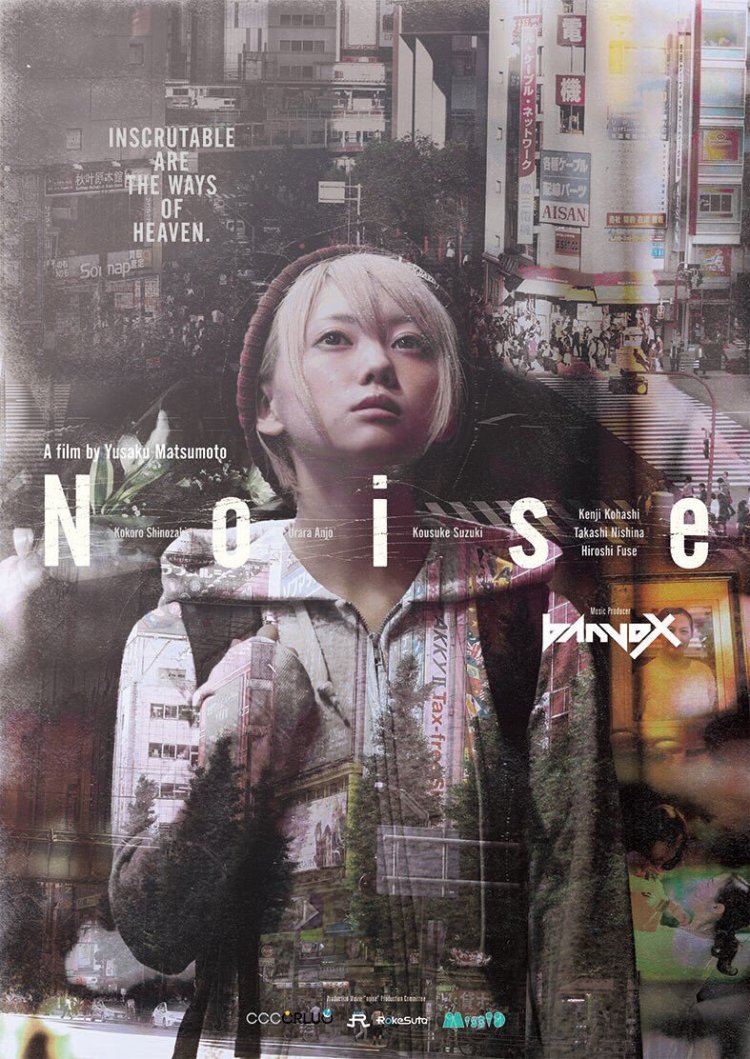
noise posterWhat makes someone take off on a homicidal rampage? First time director Yusaku Matsumoto attempts to find out by examining the down and dirty backstreets of Akihabara eight years after a mass killing shook the nation. Dealing with trauma, the death of the family, the precarious position of vulnerable young women pulled into an industry they don’t quite understand, economic insecurity, underground idols, and general nihilistic hopelessness Matsumoto has certainly conjured enough noise to drive even the most level of heads to distraction but once again, it is the city itself which eats its young in the indifferent frenzy of modern life.

Eight years ago, Misa’s mother was one of several people murdered by a lone assailant who drove a truck into a busy pedestrian intersection in Akihabara before getting out and stabbing random passersby. Misa is now making a go of it as an “underground idol” – young girls who sing and dance in clubs in Akihabara but don’t have recording contracts or big studios behind them. When not performing on stage she makes ends meet by working in the “massage parlour’ attached to the studio where she provides sexualised services but not actual sex to met who pay a flat rate on the door and then pick their particular activities off the menu inside.

Meanwhile, delivery driver Ken lives a lonely and miserable existence with his hedonistic mother who rolls in drunk early in the morning and constantly badgers her son for money. Ken would like to better himself and escape his dreadful living conditions, but his mother disagrees and disapproves of him spending his money on online courses rather than giving it all to her. Ken’s mother is also in trouble with the same loanshark gangsters which (secretly) run Misa’s club.

The third plot strand follows high school girl Rie and her lonely father who looks after grandpa at home and tries to reconnect with his daughter but can’t seem to get through to her. Rie chases a delinquent boyfriend she fantasises about trapping through pregnancy before getting herself mixed up with gangsters and embroiled in the same world as Misa but with no one looking out for her.

The strongest theme which runs through the film is that of familial breakdown. All of the protagonists come from one parent families in which the remaining parent has largely failed in their responsibilities. Though this seemingly deliberate approach is unfortunate in playing into the stigma surrounding atypical families, it is certainly true that none of the young people has any access to support from the older generation. Misa’s father had long been abusive even before her mother died, gambling the family money away betting on the horses and spending his life at home drinking. Now seemingly reformed (though not perhaps free of gambling), he wants to try again but it may already be too late.

Similarly, Rie’s father does his best – coming home from work on time, cooking proper meals, and trying to take an interest but he can’t get through to his angry teenage daughter and is also preoccupied by the need to care for his aged, bedridden father. In a strange coincidence he ends up visiting Misa’s underground idol bar where he takes a liking to Misa precisely because she looks a little bit like Rie. Nicknamed Yama-chan by the girls, Rie’s father’s attempts to forge a connection with a look-a-like of his own daughter take on a painfully tender quality of muddled, misdirected affection but a quick look around the rest of the club makes plain it’s not so far removed from the massage parlour as one might think. One of the other regular patrons is a colleague of Ken’s who seems to have little else in his life apart from underground idols, spending his life in the club buying false connection through Polaroid photos and handshakes. What the girls are selling isn’t sex but (false) kindness, providing a facsimile of the love each of these disconnected men is seeking but either thinks themselves unworthy of or is unable to find out in the “real” world.

Ken looks down on these men, he doesn’t understand why they waste their lives in vacuous pursuits of empty pleasure, but his own life, which has been more or less ruined by his irresponsible mother, holds little pleasure of its own. Reading books about mass killings and inspired by the 2008 mass murder, Ken repeatedly makes nuisance phone calls to the police station which arrested the killer threatening to commit a similar crime himself. Flat broke, abandoned, evicted, and with no future possibilities it’s little wonder he feels as backed into a corner as he does but Ken’s final, raw phone call in which the policeman on the other end tries to reassure him that hope does exist proves the last straw in his ever fracturing mental state.

In trying to answer the question why someone might want to kill others, Matsumoto does indeed blame noise. Misa, in giving a painful to camera interview looking back on the massacre reveals that she took all of her anger and internalised it, hurting herself rather than others. Ken, by contrast, seems to burn with rage permanently on the brink of explosion. Rie tries to find the peace she couldn’t find in her own family by starting a new one but is extremely deluded by her choice of mate and then deluded once again by a man faking kindness but thinking only of commerce. All of this desperation – the exploitation, the gangsters, the dire economic prospects of neglected children, conspire to push the already strained closer to the edge, believing that harming others will make them feel better through a strange kind of social revenge. Matsumoto’s Akihabara pulses to beat of synth strings and idol pop, though its soundscape is not one of freedom and joy but anxiety and depression as the city’s disenfranchised youth marches towards its dead end future with no hope in sight.


Screened at Raindance 2017

Original trailer (no subtitles)

Perfect Revolution (パーフェクト・レボリューション, Junpei Matsumoto, 2017)

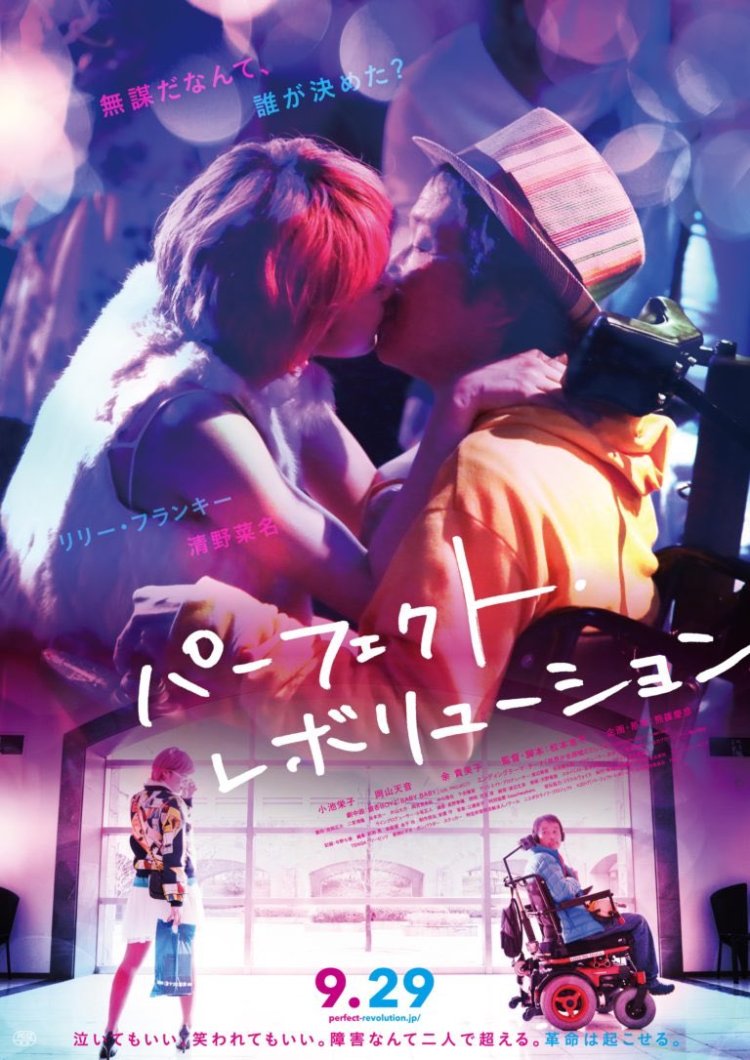
Perfect Revolution posterIf there is one group consistently underrepresented in cinema, it surely those living with disability. Even the few films which feature disabled protagonists often focus solely on the nature of their conditions, emphasising their suffering or medical treatment at the expense of telling the story of their lives. Junpei Matsumoto’s Perfect Revolution (パーフェクト・レボリューション) which draws inspiration from the real life experiences of Yoshihiko Kumashino – a Japanese man born with cerebral palsy who operates a not for profit organisation promoting awareness of sexual needs among the disabled community, makes a criticism of the aforementioned approach a central pillar of its narrative. Unlike many on-screen depictions of disabled people, Perfect Revolution attempts to reflect the normality of life with a disability whilst never shying away from some of the difficulties and the often hostile attitude from an undereducated society.

Kumashiro (Lily Franky), a man in his mid-40s, was born with cerebral palsy and has been using a wheelchair for most of his life. An activist for disabled rights, he’s written a book about his experiences and is keen to address the often taboo subject of sexuality among disabled people. Kumashiro has long since given up on the idea of romance or of forming a “normal” relationship leading to marriage and children but his life changes when a strange pink-haired woman barges into his book signing and demands to know why he’s always talking about sex but never about love. Kumashiro thinks about her question and answers fairly (if not quite honestly as he later reveals) that he doesn’t yet know what love is but is just one of many hoping to find out. This impresses the woman who approaches him afterwards and then refuses to leave him alone. Ryoko (Nana Seino), asking to be known as “Mitsu” (which means “honey” in Japanese – a nice paring with “Kuma” which means “bear”), suddenly declares she’s fallen in love with Kumashiro, whom she nicknames Kumapi.

The elephant in the room is that there is clearly something a little different about Mitsu whose brash, loud manner runs from childishly endearing to worryingly reckless. Mitsu is a sex worker at a “soapland” (a brothel disguised as a bathhouse in which the customer is “washed” by an employee) and sees nothing particularly wrong in her choice of occupation though recognises that other people look down on her because of it – something which she doesn’t quite understand and is constantly exasperated by. Perhaps offensively, she sees her own position as a woman (and a sex worker) as akin to being “disabled” in the kind of social stigma she faces but does not identify as being disabled in terms of her undefined mental health problems beyond accepting that she is “different” and has not been able to integrate into “regular” society. Nevertheless, she believes herself to be at one with Kumashiro in his struggle and is determined to foster the “perfect revolution” with him to bring about true happiness for everyone everywhere.

Thankfully Kumashiro is surrounded by supportive friends and family who are keen to help him manage on his own rather than trying to run his life for him but he does regularly encounter less sympathetic people from a drunken couple who decide to lay into him in a restaurant to a well meaning religious woman who runs after Kumashiro to tell him how “inspired” she feels just looking at him before trying to thrust money into his purse. Mitsu’s problems are less immediately obvious but her loud, volatile behaviour is also a problem for many in conformist Japan as is her straightforwardness and inability to understand the rules of her society. Mitsu has no one to look after her save a fortune teller (Kimiko Yo) who has become a surrogate mother figure, but it is a problem that no one has thought to talk to her about seeing a doctor even when her behaviour turns violent or veers towards self-harm.

Despite their struggles to be seen as distinct individuals, both Kumashiro and Mitsu are often reduced simply to their respective “differences”. Kumashiro does a lot of publicity for his book but is exasperated by well-meaning photographers who ask, tentatively, if they can photograph just his hands – literally reducing him to his disability. An “inspirational” TV documentary strand is also interested in interviewing Kumashiro and Mitsu, but only because of the “unusual” quality of their relationship. It quickly becomes apparent to Kumashiro that the documentarians aren’t interested in documenting his life so much as constructing a narrative around “damaged” outsiders that viewers can feel sorry for. Fearing that Kumashiro looks too cheerful, the producers ask him to remove his makeup and colourful clothing whilst explaining to Mitsu that they don’t want her to talk about sex work in a positive manner and would prefer it if she used a more acceptable euphemism rather than calling it what it is. Mitsu doesn’t realise she’s been had, but Kumashiro leaves the shoot feeling humiliated and annoyed.

Matsumoto does his best to present the issues sensitively, never patronising either Kumashiro or Mitsu but depicting them as real people with real faults just living their lives like everybody else. Neatly avoiding the classic Hollywood, happy ever after ending he emphases that there is still a long way to go but it is unfortunate that Mitsu’s situation is treated more lightly than it deserves and that her eventual desire to get treatment is undermined by the film’s liberated ending which is, nevertheless, inspirational as Kumashiro and Mitsu both commit themselves to the “perfect revolution” of a better, happier future both for themselves and for all mankind.


Screened at Raindance 2017.

Original trailer (no subtitles)