An Elephant Sitting Still (大象席地而坐, Hu Bo, 2018)

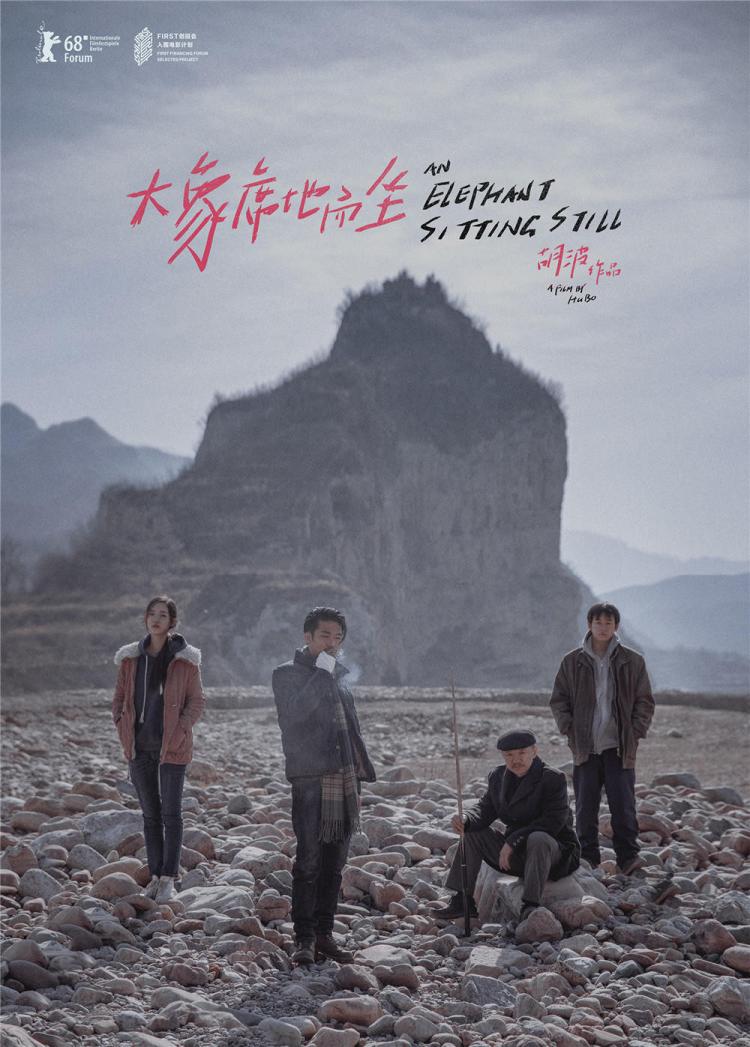
An elephant sitting still poster“It’s all about agony” a discredited adult figure intones midway into Hu Bo’s first (and sadly only) feature, An Elephant Sitting Still (大象席地而坐, Dàxiàng Xídì’érzuò). Latest in a long line of indie features to ask serious questions about the hypocrisies of the modern China, Elephant stops to wonder how one manages to live at all in world which has become so “disgusting” as to make life itself seem like a cosmic joke. In this “wasteland”, all that’s left of human connection appears to be a series of games of oneupmanship in which there must always be a loser and for which no one wants to take personal responsibility. Then again, they say there’s an elephant in a zoo in Manzhouli which has taken passive resistance to unnatural extremes but somehow survived all the world has thrown at it.

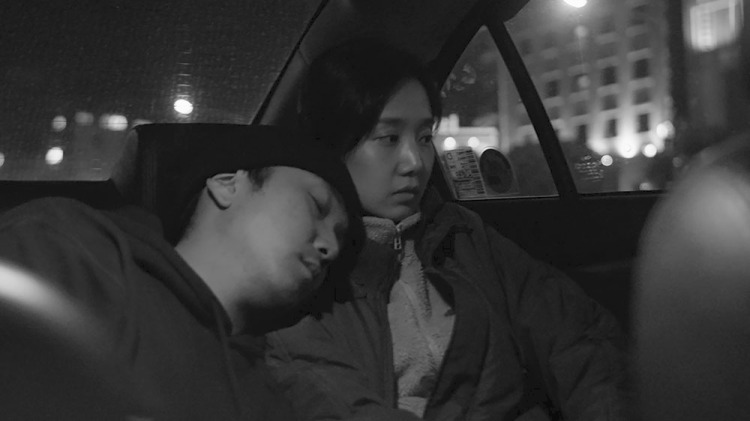
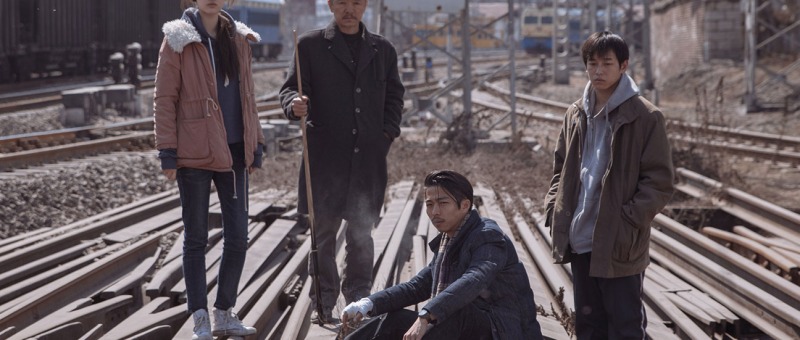
Four lives intertwine in the decaying industrial environment of a rundown town somewhere in Northern China. Petty gangster Yu Cheng’s (Zhang Yu) day gets off to a pretty bad start after he sleeps with his best friend’s wife only for him to return unexpectedly, spot Yu Cheng’s shoes in the hall, and then throw himself off the balcony in a fit of total despair. Meanwhile, teenager Wei Bu (Peng Yuchang) gets himself mixed up in his best friend’s altercation with school bully Yu Shuai (Yu Cheng’s little brother) over an (allegedly) stolen phone which ends in a scuffle and Yu Shuai tumbling down a set of stairs. Wei Bu decides to run and asks his female best friend Huang Ling (Wang Yuwen) to go with him, but she has troubles of her own in the form of a toxic relationship with her embittered mother and an ill-advised affair with the school’s married vice-principal. Lacking other options, Wei Bu turns to his genial next-door neighbour, Wang Jin (Liu Congxi), hoping to borrow some money but Wang is preoccupied with his declining family situation as his son and daughter-in-law attempt to force him out of his apartment and into a nursing home so they can move into the catchment area for a better school for Wang’s granddaughter.

Our four see themselves as walking dead, but are in some respects the last four standing. They wonder and they muse, asking why it is life has to be this way but unable to simply ignore the nagging threads of connection and human decency that those around them seem to have successfully eradicated. The older generation, having been betrayed by China’s rapid rise to economic prosperity, are cruel and embittered. They treat their children with contempt, smirking grimly in the knowledge that they will likely share the same fate. Yet they have managed to weather the storm, coming to an accommodation with the fact that life is disappointing and surviving even if in a form that makes survival just about as unpalatable as it’s possible to be.

For this survival, they have helped themselves to entitlement. This is a game of (occasionally literal) dog eat dog in which all that matters is winning no matter at what cost in order to avoid feeling like a nobody. Petty schoolboy thug Yu Shuai, learning a lesson from his disaffected brother, attempts to rule by fear and intimidation but finds his empire threatened by Wei Bu’s principled attempt to stand up for his friend. Wei Bu is a “loser” and his accidental “win” is a shock to the system that threatens to bring the whole thing crashing down but revolution was not in Wei Bu’s game plan and his resistance is short lived. Alone and friendless, he sees no alternative but flight.

Wei Bu’s friend, who turns out to have been unworthy of his loyalty, later achieves a rare moment of existential ecstasy in having frightened off two goons with a gun he pinched from his father. He is overawed to have inspired such fear and sure that most never feel anywhere near as alive as he feels at this moment. Wei Bu is unimpressed by his dark philosophy, but perhaps understands it as a grim encapsulation of the world in which he lives. Yu Cheng too tacitly accepts that his society values the strong, but it becomes apparent that his pretence of coldness is just that. He claims to hate everybody, and his brother most of all, but he walks back into a room on fire to save a man he doesn’t know and for all his attempts to abnegate the responsibility for his friend’s death is clearly affected both by his decision and his own role within it.

Responsibility is something nobody wants to take. Yu Cheng blames his friend’s death first on his own individual will, and then on his greedy wife for the unnecessary economic burden she placed on him, and finally on an unrequited love whose rejection he claims sent him into the arms of his best friend’s girl, but finally he cannot escape his own sense of guilt as embodied by the grieving mother his moral failings have produced. Huang Ling’s teacher expresses a similar life philosophy when she presses him as to why the school did not call the police over Yu Shuai’s accident. He tells her that if he’d called the police he’d be “involved” which not something that he wants to be. Unfortunately for him, his decision to pursue an “affair” with a vulnerable teenager is going to get him in “involved” in several sticky situations, most of which he blames Huang Ling for as the girl who has “ruined” him. Like the elephant of the title, Huang Ling’s lover sits and watches as the world spirals out of control, unwilling to stop it for fear of being dragged into its never-ending cycle of destruction and disappointment.

Intense individualism has fostered not only selfishness, but a refusal of accountability. Everything is always someone else’s fault just as someone else must always lose in each and very encounter in order to avoid the sensation of being a “loser” oneself. Alone among the older generation, Wang retains his youthful sense of human feeling, but eventually even his will is worn away and he considers giving in and entering the retirement home even after visiting it and realising it is little more than death’s waiting room. His advice to the young echoes that of Huang Ling’s lover, that there is no escape from sorrow and an attempt to evade it through starting again somewhere else will lead only to double failure. The best thing, he tells them, is to believe in a better place and then never go there so as not to have your illusions of a kinder world shattered. Yet there are flickers of possibility, Wei Bu wants to see the elephant anyway even if it changes nothing. Hu wants to ask us if it’s possible to go on living if you discover that there is nothing to live for and perhaps he found his own answer for that, but there is hope here, if faint and compromised, in the thought of distant elephants enduring all with stoic grace.


Currently on limited release in UK cinemas courtesy of New Wave Films.

International trailer (English subtitles)

The Lies She Loved (嘘を愛する女, Kazuhito Nakae, 2018)

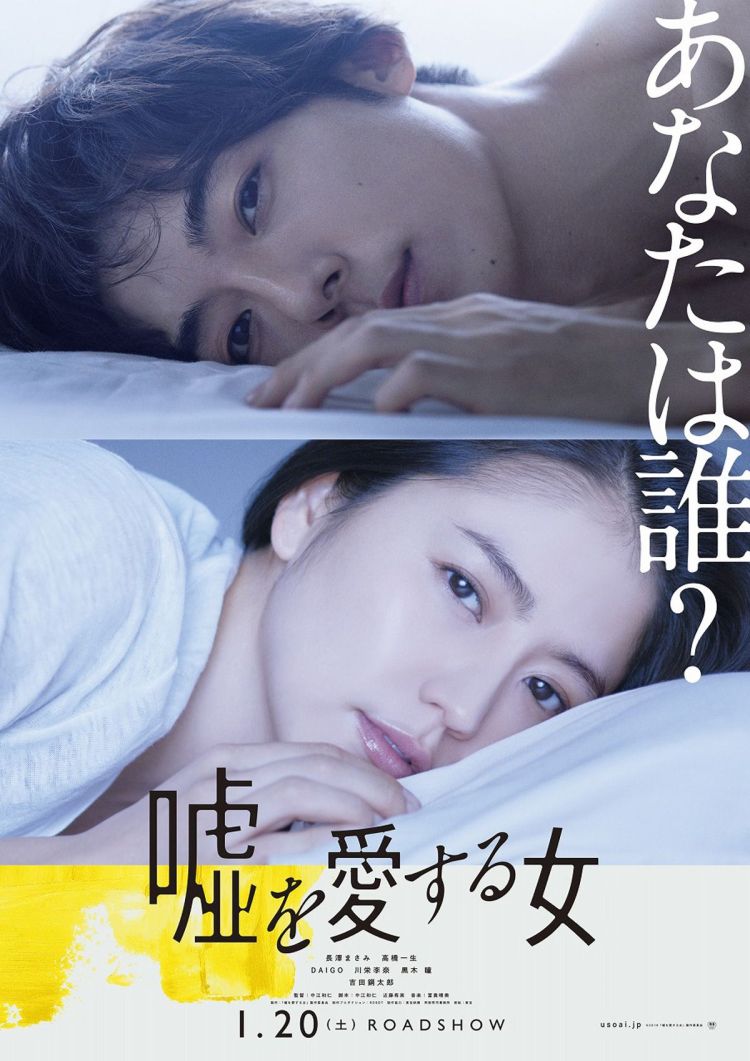
lies she loved posterHow well do you really know the people with whom you share your life? Or, perhaps, how honest have you really been with those closest you? Inspired by a notorious newspaper article, The Lies She Loved (嘘を愛する女, Uso wo Aisuru Onna) has a few hard questions to ask about the nature of modern relationships and the secrets which often lie at their hearts. Yet the message is perhaps that there are different kinds of truths and the literal may be among the least important of them. The salient message is that consideration for the feelings of others and a willingness to share the burden of being alive are the only real paths towards a fulfilling existence.

30-something Yukari (Masami Nagasawa) is a workaholic career woman currently at the top of her corporate game. Unmarried, she’s been living with impoverished medical researcher Kippei (Issey Takahashi) for the last five years and is happy enough with him (save the occasional one night stand) but also feels as if there’s something missing. She’s angry when he doesn’t show up to a pre-arranged dinner where he’s supposed to meet her mum, leaving her to deal with her mother’s disapproving scorn all alone, but chastened when it’s revealed he was found collapsed in a local park and is currently in the hospital after suffering a brain haemorrhage. If that weren’t enough chaos for the hyper organised Yukari, the police tell her Kippei’s ID is fake. He doesn’t work where he said he said worked and no one seems to have heard of him. Remembering a conversation about cheating spouses, Yukari turns to the detective uncle (Daigo) of one of her work friends for help but starts to wonder what sort of answers it is that she’s really looking for.

An intriguing mystery, The Lies She Loved begins in worrying fashion as if it wants to punish Yukari for her obsessive workaholic lifestyle and avoidance of the traditionally feminine roles of wife and mother. The couple aren’t married, but Kippei is for all intents and purposes a kept man and house husband. He doesn’t earn enough to contribute to the household economy, but makes up for it by handling the domestic tasks usually the domain of a “wife”, i.e. cooking and cleaning. Meanwhile, Yukari works insane hours and often stays out drinking with colleagues, claiming this valuable out of hours time as part of the job but sometimes spending it with other men. We see her “lie” to Kippei, telling him a large bouquet of snacks won from an amusement stand was a gift from a female friend when it came from a “date”, while he reproves her with coldness for her excessive drinking and the tendency it provokes in her for unsolicited cruelty.

Yet moving on we see that a woman’s career, or man’s lack of one, is not the issue at all. The issue is neglect, a taking for granted of other people’s feelings and their willingness to provide support and affection while getting nothing in return. Rather than going to work, Kippei had been spending time in a coffeeshop writing something that’s somewhere between novel and therapy about a happy family living on an idyllic island. We discover that he too once took something for granted, became wrapped up in his career, and overburdened someone else by allowing them to take on the entirety of their mutual responsibility with tragic consequences. Filled with remorse, he ran away from his crime and tried to forget.

The crime is not a woman working, but people in general working too much and knowing each other too little. Humiliated, Yukari wants answers about her immediate past, wanting to know if she was tricked by a conman in order to avoid facing the fact that she never really bothered to ask many questions about the man she invited into her home. Indeed, her decision to “invite” him in the first place is not altogether altruistic and cannot help giving off the scent of mild desperation as she tries to make the arrangement seem convenient while ensuring she retains the upper-hand in the power dynamics without giving too much away. What she really wants to know, without really wanting to admit it, is if her lover really loved her despite his “lies”, but to know that she’ll have to deal with her own longstanding intimacy issues and accept that a loving home is a balanced one in which both partners are equal and agree to share their burdens with openness and generosity. A progressive, nuanced look at modern romance The Lies She Loved is a surprisingly effective defence of love and a mild rebuke of the society which does its best to undermine it.


Original trailer (no subtitles)

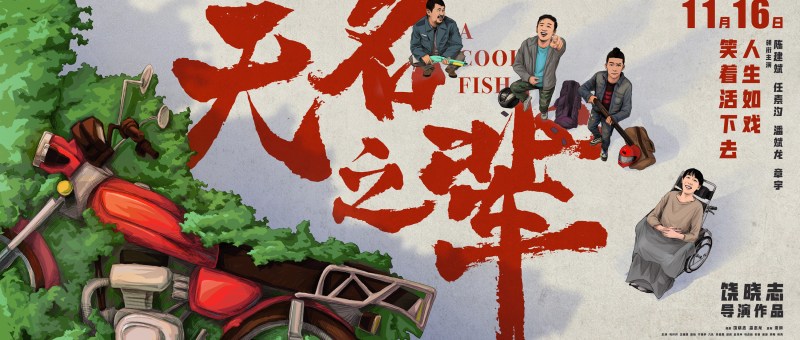
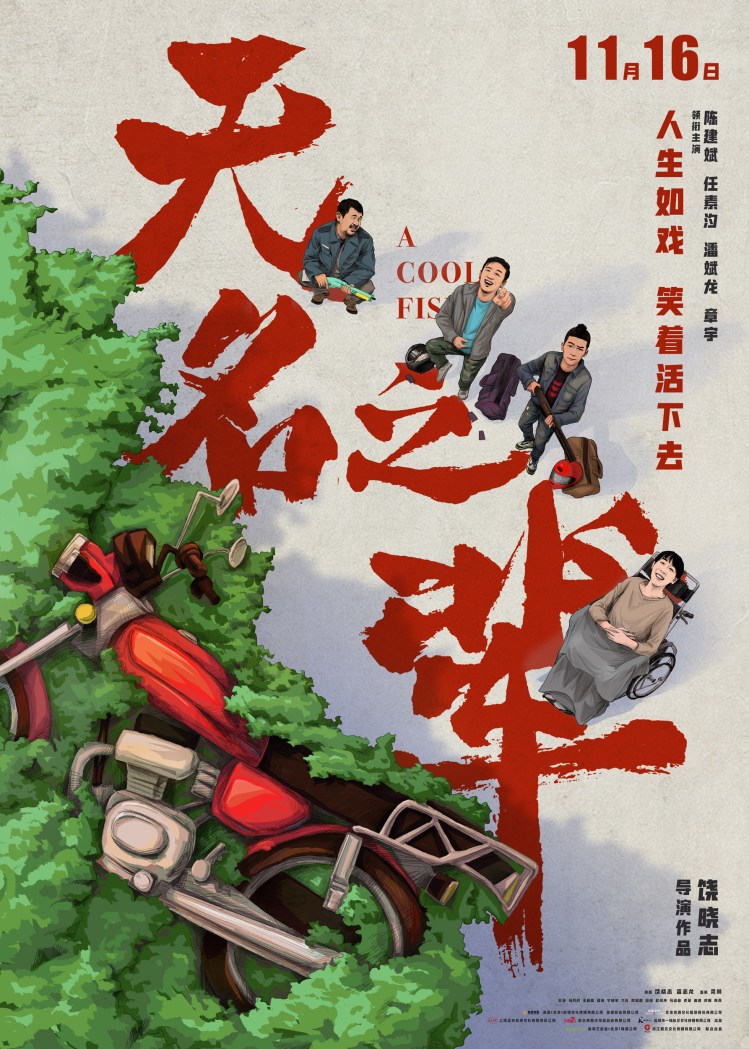
A Cool Fish (无名之辈, Rao Xiaozhi, 2018)

A Cool Fish posterThe genial loser is fast becoming a staple of contemporary Chinese cinema. Rao Xiaozhi’s second feature A Cool Fish (无名之辈, Wúmíng zhī Bèi) is the latest in a long line of comedies to make the “diaosi” world its home as a collection of disappointed and increasingly desperate failures become embroiled in a complex web of cosmological coincidence. China’s famously draconian censorship regulations ensure that the ending of this caper will be bittersweet at best, but even so a brief brush with violent crime does at least allow a bouncing back if only through hitting rock bottom and emerging with greater clarity.

Small town hicks “Bra” (Zhang Yu), short for “Cobra”, and Big Head (Pan Binlong) have talked themselves into a gangland future, planning a big city heist after getting their hands on a stolen gun and motorbike. Unfortunately, not everything goes to plan and they end up robbing a mobile phone shop next door to the bank rather than the bank itself because the security guard was too intimidating. Not only that, they manage to send their getaway bike into a tree while trying to escape by muddling the clutch with the accelerator meaning they have to escape on foot. Crawling in through an open window, they find themselves in the home of the spiky Jiaqi (Ren Suxi) who is paralysed from the neck down and completely unafraid to make use of her one remaining weapon – an extremely loud and imperious voice. Jiaqi is also the sister of widowed security guard Ma Xianyong (Chen Jianbin) who was once an auxiliary police officer and harbours a desire to get back on the force which he feels he could fulfil through investigating the robbery and retrieving the gun on his own initiative. Meanwhile, Xianyong’s boss, financially troubled property developer with a complicated family set up Gao Ming (Wang Yanhui), is on the run from gangsters to whom he has massive debts.

Like the cool fish of the title, Bra and Big Head are young men with impossible futures who find themselves cast out from mainstream society with no real way back in. No education, no connections, no job prospects or family – their futures look bleak. Bra sees himself as a gang boss in waiting even if Big Head is his only henchman, but the guys are no master criminals and despite their claims of working their way up in the crime world it’s clear they aren’t cut out for such cutthroat antics. Xianyong, by contrast, had opportunities but squandered them and then lost everything in a tragic turn of events for which he must bear some of the responsibility. Despised by his teenage daughter, humiliated by the gangsters chasing Gao Ming, and burdened by the guilt of having caused the accident that ruined his sister’s life, all Xianyong wants is to hit back and prove himself a someone, which means he’s coming for another pair of losers not so different from himself.

Rao Xiaozhi rolls the familial in with the political through rooting all of Xianyong’s various problems in his very male failures as a compromised father figure. Having lost his wife in a tragedy of his own making, Xianyong is resented by his daughter who has reverted to her mother’s maiden name out of shame while he engages in underhanded scams to bolster his fragile sense of self worth. Meanwhile, all Big Head dreams of is a small house in his hometown and to marry his childhood sweetheart, Xia (Ma Yinyin), who has come to the city in search of money. Big Head thinks she doesn’t want to marry him because he isn’t rich, but Xia’s reluctance turns out to be misplaced shame in having engaged in sex work and no longer seeing herself as good enough for the small town wholesomeness of a man like Big Head, never guessing he might go to such extreme lengths just to prove himself worthy of her.

Trapped by the crushing impossibility of life in a rapidly developing, relentlessly unfair, patriarchal, and conservative society each of our heroes takes desperate measures to enact their escape but quickly discovers that escape is a spiritual more than material matter and cannot be bought through transgression. This being China, crime cannot pay and so our guys cannot hope to emerge heroically from their less than heroic foray into gun toting criminality but even so you’d have to admit that their futures are brighter for having hit rock bottom and woken up with a better sense of self and a degree of forward motion. Rao’s ramshackle world of lovelorn little guys daring to dream of a (modestly) brighter future perfectly captures the bleak romanticism of the “diaosi” phenomenon and proves strangely difficult to resist save for its crushingly “necessary” finale.


Currently on limited release in UK Cinemas courtesy of China Lion.

International trailer (English subtitles)
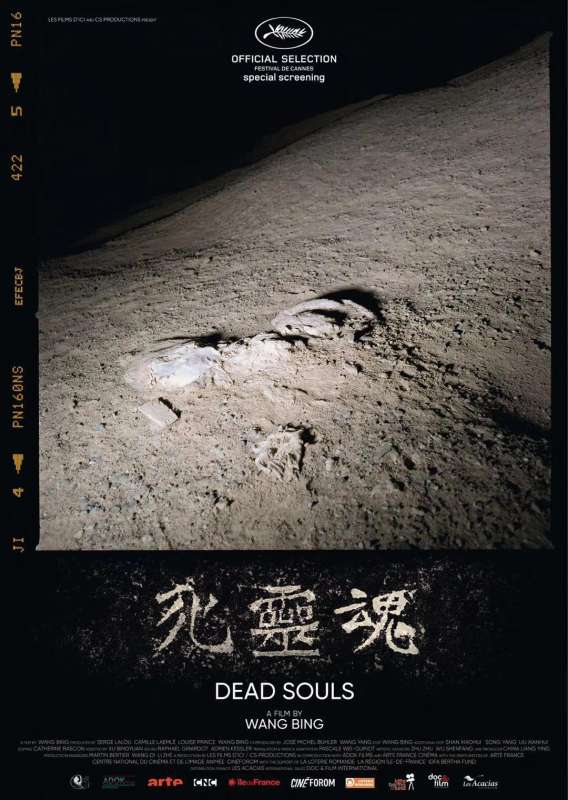
Dead Souls (死靈魂, Wang Bing, 2018)

Dead Souls posterFor his eight hour exploration of China’s painful past, Wang Bing borrows a title from Gogol’s famous 19th century Russian novel which aimed to poke fun at the various flaws in contemporary cultural norms. “Dead Souls” (死靈魂, Sǐ Línghún), in Gogol’s case, referred to serfs which had passed on but were still included in a landlord’s register of property and therefore liable for taxation (the novel’s protagonist, a corrupt former civil servant, is keen to “buy” these “virtual” serfs as part of a mysterious money making scam). Wang Bing’s aims are about as far from comic as it’s possible to be, but he too is intent on unmasking national hypocrisy in ensuring the testimonies of the hundreds of men and women who survived Mao’s “Anti-Rightest Movement” of the late 1950s are finally heard. The alleged rightists became “dead souls” in more ways than one – having lost their party affiliation they no longer quite existed in the intensely conformist post-revolutionary world where they found themselves betrayed and abandoned by an increasingly oppressive regime that eventually robbed them of their humanity.

In 1956, the Communist Party had announced the Hundred Flowers campaign in which ordinary people were encouraged to voice their innermost thoughts about the state of the revolution. After a short lived period of liberalism, the Hundred Flowers campaign was exposed as a ruse to root out so called reactionary elements. The Anti-Rightist Movement which began in 1957 rounded up those who had offered up constructive criticism of the party as well as capitalists, intellectuals, and just about anyone with a vaguely questionable history, and packed them off for “re-education” at various labour camps throughout China.

Mostly offered through lengthy direct to camera monologues, Wang presents a first hand account of the Jiabiangou Labor Camp from those who managed to survive (around 500 of 3200 internees) after famine and disease took hold. Many of the alleged “rightists”, most “rehabilitated” after the Cultural Revolution and subsequent economic reforms, affirm that they have no idea what it is they did “wrong” but are convinced that it was petty jealousies and personal resentments that landed them in hot water rather than a political dispute. Many found themselves at the mercy of an official they’d already reported for incompetence or corruption, disappeared for reasons of expediency or convenience. Others were told that their re-education was for the public good and they’d be back in a matter of months in their old job with their old salary, or else their family could come live with them on the utopian farm that would arise from their efforts in the camp.

Of course, the reality was very different and the harrowing stories recounted by the now elderly men with a mix of retrospective black humour and deeply held resentment speak of death on a mass scale, starvation, walking corpses, and rampant disease. With famine intensified by the failure of the Great Leap Forward, food supplies grew increasingly short while numbers of “rightists” in need of re-education only increased thanks to a kind of quota system. Those most likely to survive were the ones who made themselves the most useful – the physically strong, the tenders of horses, and the kitchen staff who could survive by pinching food when no one was looking. One strangely gleeful old man calmly recounts how he finagled his way into the kitchen and then set about pilfering the best of the supplies for himself with the help of the other cooks (seemingly without remorse), while another man recounts spotting a similar practice and taking the greedy to task by reminding them that the food they were scoffing came out of someone else’s mouth. Those who survived did so either because their families were able to smuggle in food for them, or else they were lucky.

Breaking away from the rigorous, sometimes oppressive interviews, Wang wanders the grounds of the former camps now levelled in an attempt to erase their existence but still painfully visible in the arid, scarred landscape. Bones litter surface as if squeezed out of the earth while human skulls rest eerily in the middle of barren land. A group of survivors attempts to identify remains through stones placed atop the bodies of those who died when those left behind still had the strength to bury them, but fail to read the faded names while their attempt to erect a monument to those who lost their lives to a malicious failure of government ends with only more destruction. What they were not permitted to do Wang accomplishes if intangibly in creating an indelible monument to human suffering through the first hand testimony of a persecuted generation finally able to break the long decades of silence and give voice to a truth still so painfully hidden.


Short clip from the beginning of the film (English subtitles)

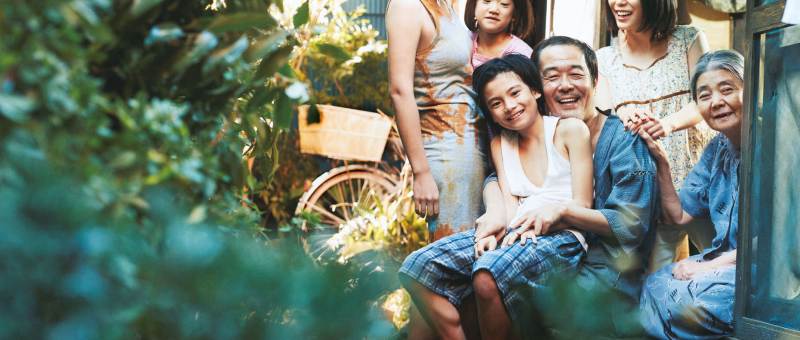
Shoplifters (万引き家族, Hirokazu Koreeda, 2018)

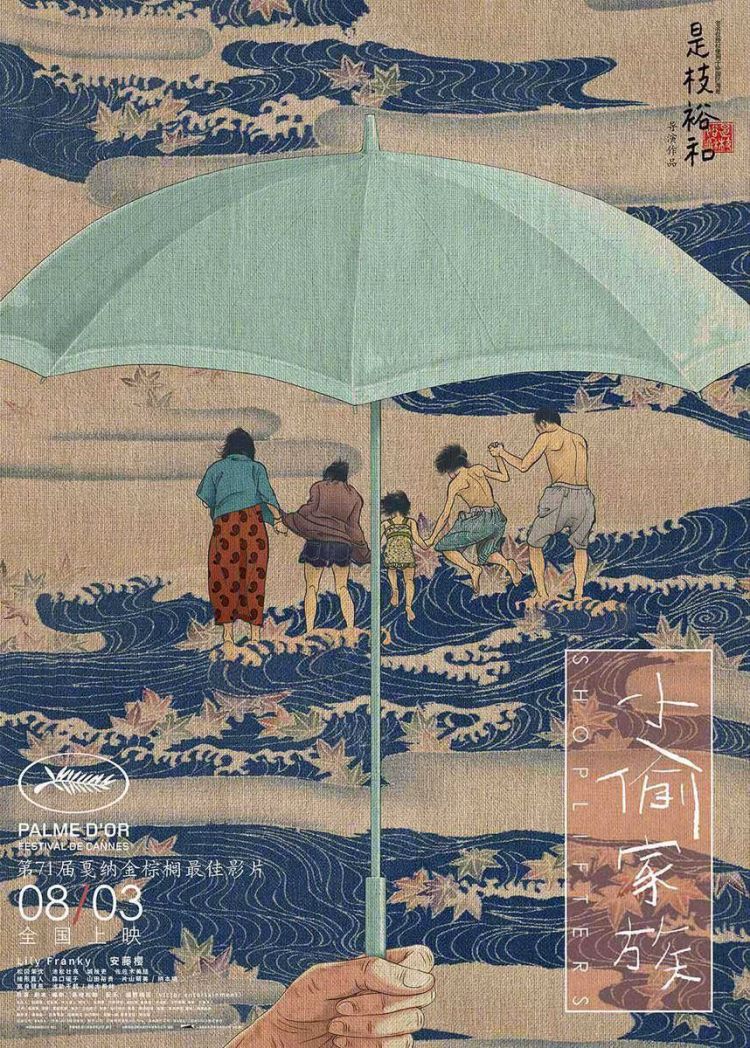
Shoplifters poster 2Tolstoy once said that all happy families are alike, but each unhappy family is unhappy in its own way. The family drama is the mainstay of Japanese cinema, though to be fair it rarely features families which are noticeably “unhappy” so much as struggling under the weight of social expectations. Nevertheless, since consumerism arrived in force, the concept of “the family” has come in for regular interrogation. That at the centre of Shoplifters (万引き家族, Manbiki Kazoku), Hirokazu Koreeda’s return to the genre with which he is most closely associated, are on one level among the happiest of families ever captured on film, but then again they are not quite like all the others.

The Shibatas live in a small Japanese-style house owned by “grandma” Hatsue (Kirin Kiki) whose pension (or, to be more precise, that of her late husband) makes up a significant portion of the family income. Patriarch Osamu (Lily Franky) has a casual job as a day labourer while his wife, Nobuyo (Sakura Ando), works in a laundry. Her “sister” Aki (Mayu Matsuoka) tells people she works as a kind of hostess but actually dresses up as a schoolgirl and performs sex services behind a two-way mirror in a sleazy club. Meanwhile, Osamu and Nobuyo’s “son”, Shota (Jyo Kairi), alternates his time between homeschooling himself and helping out with the family’s only other source of income – thievery. It’s after one partially successful foray to the local supermarket that Osamu and Shota come across a little girl, Yuri (Miyu Sasaki), stuck out on a balcony alone in the freezing cold and decide to take her home for something warm to eat.

Of course, this family itself is the very definition of makeshift. Osamu and Nobuyo may be a “real” couple, but no one else is actually related. The Family Game may have attempted to take the family apart and expose it as an artificial mechanism devoid of real feeling in which each is simply playing the role expected of them, but Shoplifters asks the opposite – if a found family can actually be more “real” that the real thing because it has been chosen, is wanted, and continues to function because of an organic bond between individuals which exists in the absence of blood.

In a sense, the family itself has been “shoplifted”. Later, under questioning, Nobuyo is accused of “throwing away” Hatsue but she corrects them – she didn’t and she wouldn’t. Someone else “threw away” Hatsue and she found her. Hatsue was abandoned by her husband who fathered a family with another woman, but seemingly not with her. Alone she longed for a family of her own and most of all to avoid the looming threat of a “lonely death”. Whatever else they might have gained from the “arrangement”, Osamu and Nobuyo are at least able to offer her the thing that would make her life complete as she prepares to meet its end. By the logic of the family drama, one family must be broken in order to forge another and it’s true enough to say that each member of the Shibata clan has been pilfered from somewhere else but in the end perhaps it’s better this way, free of the cold obligation of a blood or legal tie.

Then again, there are cracks in the foundation. Little Shota, growing fast into a young man, is increasingly conflicted about the way the family makes ends meet. Trapped in low paid, casual employment, Osamu and Nobuyo are working but poor, unable to support their family on their wages alone. Injured at work, Osamu is left without compensation because he’s only a day labourer and therefore not entitled to workplace protections while Nobuyo is eventually forced into a “workshare” arrangement and then to resign when her boss cruelly tells her and a friend that they can decide between themselves which of them gets to keep their job. They steal because they’re hungry, but also perhaps because they enjoy this small way of rebelling against the system. Osamu tells Shota that stealing from stores is OK because no one really “owns” anything while it’s still on the shelf, but Shota begins to doubt his logic. It’s not just “taking”, it’s taking “from” and Shota is increasingly worried about who it is their way of life may be harming. He worries that in taking in Yuri the family is corrupting her, indoctrinating her into their morally dubious universe.

Morally dubious it may be, but life with the Shibatas is warm and safe which is a lot more than can be said for Yuri’s life with her birth parents who don’t even bother to report her missing – social services eventually figure out she isn’t around two months later and come to the conclusion that the parents may have got rid of her in some unspecified way. Which sort of “corruption” is worse – an upbringing filled with abuse and neglect, or one filled with love and habitual criminality? Yet it’s an act of love that finally breaks the family apart and leaves them at the mercy of cold and official forces too obsessed with their own sense of narrative to bother listening to the “truth”. Shoplifters wants to ask if the “natural” laws of society still serve us when little girls fall through the cracks and our definition of “family” is so narrow and rigid that it denies us a way of saving them. Sometimes the found family is stronger than the inherited one, but society is primed to crush it all the same in its relentless and indifferent quest to preserve the social order.


Shoplifters opens in UK cinemas on 23rd November courtesy of Thunderbird Releasing.

International trailer (English subtitles)

Heart Blackened (침묵, Jung Ji-woo, 2017)

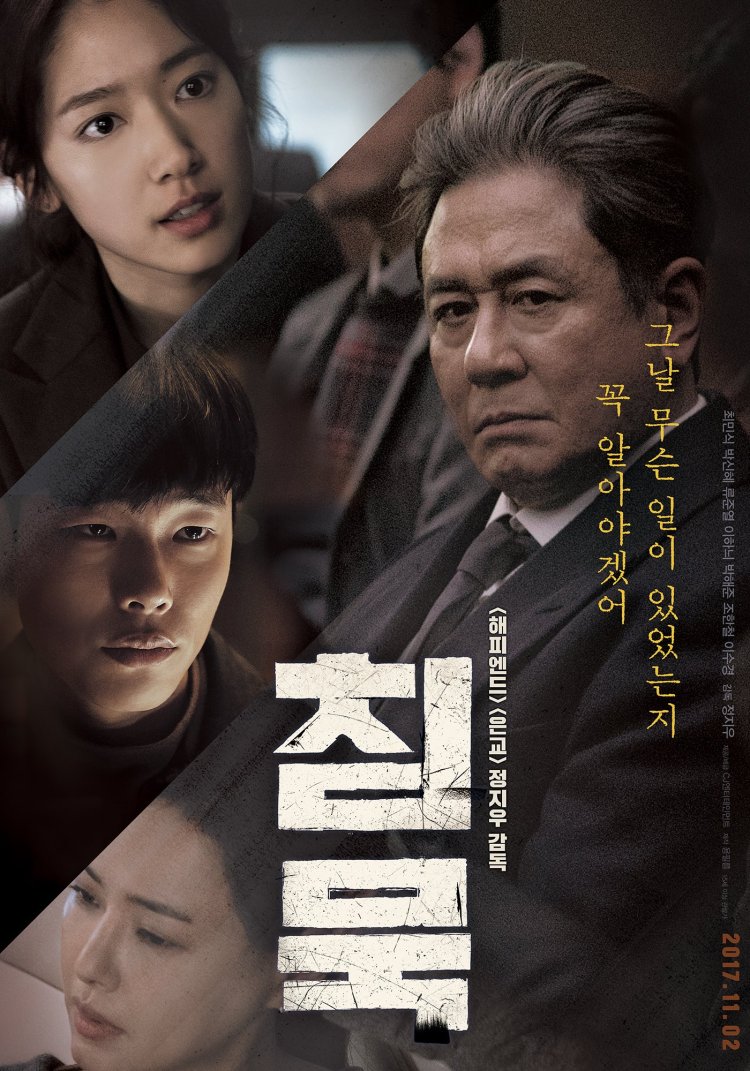
Heart Blackened posterMost of us like to kid ourselves that you can become rich and successful by working hard and playing by the rules, but it takes a certain kind of ruthlessness to climb the chaebol tree. Corrupt CEO Yim Tae-san (Choi Min-sik) is about to have his mettle tested in Jung Ji-woo’s Silent Witness remake Heart Blackened (침묵, Chimmuk). Wealth, money, power, networks of control and manipulation – Tae-san has all these, but a crucial failure to keep his house in order is about to bring it all crashing down. Unless, of course, he can find an acceptable way out. There are some difficult choices to be made but nothing is quite as it first seems in this world of interpersonal gamesmanship and high stakes machinations.

A widower, Tae-san is in a seemingly happy relationship with famous singer Yuna (Lee Honey). His dreams of familial bliss, however, hit rocky ground when his grown-up but still young daughter refuses to accept his new love. Despite Yuna’s attempts to win her over, Mira (Lee Soo-kyung) hates her potential step-mother with unusual intensity. Matters come to a head when some of Mira’s friends alert her to a sex tape going viral on the internet recorded some years previously and featuring Yuna with an old boyfriend. Mira demands a conference and Yuna dutifully comes, hoping for a rapprochement but getting a tirade of abuse. The next morning, Yuna is discovered close to death in the car park underneath her apartment building where a fire has been set presumably to destroy crucial evidence. Mira is arrested but can’t remember anything about the night in question. Tae-san hires an old friend of Mira’s, Choi Hee-jeong (Park Shin-hye), who has now become a defence attorney, in an attempt to get her some moral support from a compassionate lawyer.

Tae-san’s motivations remain opaque and inscrutable. He appears to think his daughter did it, so why does he hire a friendly but second rate, relatively inexperienced lawyer to defend her when he could use his vast wealth to hire the best of the best or even have the case thrown out altogether? As might be expected for someone in his position, Tae-san is a corrupt businessman with a shady past. He has a history with the prosecutor working on this case who has an interest in trying to get at him through his daughter but Tae-san tries buying him off anyway. To Tae-san money is everything. There is nothing which cannot be bought, nothing which cannot be done by a man with “means”, and no trap which cannot be sprung by a man in total control. So why is he letting his daughter go through all this when he could have found a way to pull her out of it?

As it turns out, there are things money can’t buy (but in a round about way, you might be able to make a cash sacrifice in order to prove how much you want them). As part of their investigations, Tae-san and Hee-jong rub up against creepy super fan Dong-myeong (Ryoo Joon-Yeol), otherwise known as “Cableguy”, who’s been stalking Yuna for years and has secret cameras installed all over her apartment building meaning he may have crucial footage of the incident. To Dong-myeong, however, money is “worthless” in comparison to love, family, and friendship (or so he says). Taking the stand, Tae-san amps up his fascistic chaebol survival of the fittest rhetoric in reiterating that “not all lives are equal” and that saying there’s nothing to be done is only the defeatist excuse of the perpetual failure. If he believes the things he says, then Tae-san is indeed a “vile man” as the prosecutor brands him, but then again Tae-san’s relationship to the “truth” is not altogether a faithful one.

Tae-san believes that “money fixes everything” and whatever else he may have done, it’s hard to argue with his final assessment. What Tae-san is experiencing may well be karma for his life of corporate machinations, but it’s not quite of the kind you might expect. Mira, the archetypal chaebol child – spoiled, entitled, selfish, and arrogant, has in a sense been ruined by her father’s failure to teach her there are things more important than money and it’s a lesson both of them will find hard to learn. A chaebol chastened, Tae-san is a man brought low by his own ideology but it’s hard not to feel sorry him as he finds himself back on the path to righteousness having lost everything even if the real villain is the world which blackened his heart to such an intense degree.


Heart Blackened was screened as part of the 2018 London Korean Film Festival.

International trailer (English subtitles)

Back from the Beat (내가 사는 세상, Choi Changhwan, 2018)

Back from the Beat still 2Artists have a complicated relationship to the earning of money. Some might feel that it’s only right to be “starving”, that if you’ve managed to support yourself through your art or even a regular side job, you must be doing something wrong. All of which ignores the fact that starving is very unpleasant and continually worrying. How can you make your best art when you’re hungry and frightened of losing the roof over your head? The hero of Choi Changhwan’s Back from the Beat (내가 사는 세상, Naega Saneun Sesang) has learned not to sweat the small stuff but is forced to realise that he may have been somewhat complicit in his own lack of success even if the realisation brings him little more than additional misery.

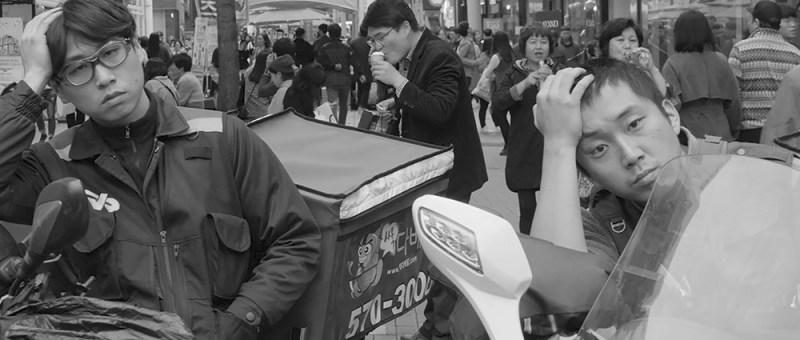
Minkyu (Kwak Minkyu) is a middle-aged man trying to make it as a DJ. He works as a delivery driver in the afternoons and as a barman in the evenings at a hipster music cafe where the owner occasionally lets him take the stage. Meanwhile, his girlfriend, See-eun (Kim See-eun), is an aspiring artist who currently works at an art school preparing high school students for exams.

The trouble begins when both Minkyu and See-eun begin to feel pressure from their respective bosses. Minkyu, a happy so lucky sort of guy, isn’t the type to pay much attention to his final salary so he’s confused when another driver tells him he thinks they’re being diddled because his records and the money he’s been getting don’t match. After a few calculations, Minkyu realises he’s out as much as $70 but isn’t quite sure what to do about it. He doesn’t want to think his boss is a bad guy and is sure it must be a mistake. He’d probably let it go to not rock the boat (much to his girlfriend’s consternation) but his friend wants to fight and Minkyu finds himself swept along with him. The boss says the difference is for “insurance” but when a driver gets injured he’s told there isn’t any – he’ll have to cover his own medical costs and is even liable for replacing the damaged equipment. Smelling a rat the guys visit a labour lawyer and ask their boss to sign a proper employment contract which turns out to be a big mistake. “Freelance” contractors aren’t employees, after all, and so the guys get sacked with no legal protections in place to help them.

Meanwhile, See-eun’s snooty boss Jiyoung (Yoo Jiyoung) has taken against Minkyu and repeatedly tells her to dump him. By any standards this is hugely inappropriate considering Jiyoung is speaking as a boss and not as a friend, poking her nose into See-eun’s private life which is none of her business. The school is continually shorthanded and lacking in students so Jiyoung gets See-eun to supplement artwork for exhibitions, often with short notice and for no additional pay, even sometimes rejecting the finished pieces and demanding they be redone. Matters come to a crunch when Jiyoung announces that she’s taking on new staff, but See-eun will be getting demoted with a significant salary cut because the new teacher has a degree from a university in Seoul which she feels is more “appropriate” for Se-eun’s current position.

Despite her criticism of Minkyu’s naivety, See-eun doesn’t fight back either. Or at least, she begins to fight back but an embarrassing incident eventually sends her the other way. See-eun also finds herself subject to the artist’s dilemma in that she’s continually pressured by the owner of Minkyu’s bar to draw their posters for which he generally “forgets” to pay her. Despite Minkyu’s loyalty towards him, Jihong (Park Jihong) is not well liked and seems to have a reputation for shady conduct and improper labour relations. See-eun wants Minkyu to get Jihong to sign a proper performance contract but he thinks it’s unnecessary because they’re “like brothers”.

Time again, the lines between friend, colleague, boss, and competitor are manipulated to get powerless dreaming youngsters like Minkyu and See-eun to play along in a system which constantly misuses them. In a land where any vague statements about improving working conditions can see you branded “commie” and dismissed, there is little hope out there for those just wanting to survive in order to facilitate their art or greater purpose. A melancholy portrait of the modern starving artist, Choi Changhwan’s feature debut finds little to be optimistic about in world of inescapable exploitations and impossible dreams.


Back from the Beat was screened as part of the 2018 London Korean Film Festival.

Love+Sling (레슬러, Kim Dae-woong, 2018)

Love+Sling poster“Free yourself!” cries the oblivious father at the centre of Kim Dae-woong’s wrestling themed family comedy, Love+Sling (레슬러, Lesseulleo). In truth, this is wrestling of the emotional rather than the physical kind as the closeness of a father and son comes under pressure not only from advancing maturity but the unexpected intervention of the girl next door. Vicarious dreams, generational resentments, unusual sensitivity, unaddressed trauma, and self-imposed limitations all come into play when age and youth lock horns, each hoping to come out on top but eventually being knocked back to a healthier place of personal equality born of mutual understanding.

Cheerful widower Gui-bo (Yoo Hae-jin) and his son Sung-woong (Kim Min-jae) have an extremely close relationship seeing as it’s just been the two of them since Gui-bo’s wife passed away from illness when Sung-woong was small. By way of support, they are also extremely friendly with their upstairs neighbours whom they think of as extended family. In his youth, Gui-bo was a champion wrestler with Olympic dreams which he gave up to become a family man but has now passed on to Sung-woong whom he is training to become a national athlete. Meanwhile, Sung-woong is nursing a small crush on girl next door Ga-young (Lee Sung-kyung) but his plans of confessing his love after winning the big contest are dashed when she makes a big confession of her own. She’s long been carrying a torch for Gui-bo and wants Sung-woong to help her win him over.

Ga-young’s awkward confession sets off a series of uncomfortable reactions in Sung-woong. First of all he’s understandably shocked, jealous, and resentful yet also forced to realise that Ga-young’s having a crush on him is not really his father’s fault. The extremely close relationship they’d always enjoyed becomes strained for reasons that Gui-bo is unable to understand, believing that his son is just at a difficult age and under a lot of pressure thanks to his training. Gui-bo still thinks of Ga-young as the little girl from next door and is in no way romantically interested in her though when he finally learns of her intentions, he tries to do his best not to hurt her feelings, letting her down gently in the knowledge that this kind of misplaced love is just a part of growing up that she will someday likely be very embarrassed about.

Nevertheless, Sung-woong does not enjoy thinking of his own father as a romantic rival and is forced is to reassess the rest of their relationship in the face of this disturbing fact. Sung-woong can’t remember if he wrestles because he likes it, or he only did it to make his dad happy. Gui-bo insists he only encouraged his son to wrestle because he enjoyed it, but there is an unavoidable implication that he’s forced his own failed dreams onto the shoulders of his son who risks disappointing him if he is unable to achieve them. Sung-woong can’t help but resent the unfair parental expectations he’s lived under his all life, not least because they leave him uncertain, never really knowing if he has a dream of his own or has been prevented from forming one in having lived such a blinkered existence.

The burden of parental expectation is not one that can be easily shaken off. Middle-aged father Gui-bo is still under constant pressure from his own mother to remarry despite his frequent protestations. In a painful conversation after an argument with Sung-woong, Gui-bo turns to his mother to muse on the difficulties of raising a child only for her turn his words back on him in another veiled criticism of his refusal to conform to her vision of a successful future. Lamenting that his mother never listens, Gui-bo attempts to talk to his son but makes exactly the same mistake and gets his own words thrown back at him, finally realising he is no better and is incapable of allowing Sung-woong a safe space to voice his concerns without launching into a mini lecture of self-centred and unsolicited life advice.

Sung-woong’s increasing resentment threatens to tank not only his relationship with his father but also Ga-young’s with her family and the easiness that had existed between the two houses. Father and son had been all too close, locked in a mutually dependent cycle of filial responsibilities that threatened to prevent either of them ever moving forward. Like a wrestler trapped on the mat, each man has to free himself by accepting his own individual identity while allowing others to do the same. Only by a literal grappling can each man find the strength to release the other so that they might both regain the freedom to become the most authentic versions of themselves. A gentle, empathetic take on family mores and the pains of growing up no matter what age you are, Love+Sling finds space for the changing nature of a paternal bond which does not so much break as bend under the weight of mutual recognition.


Love+Sling was screened as part of the 2018 London Korean Film Festival.

International trailer (English subtitles)

Hotel by the River (강변 호텔, Hong Sang-soo, 2018)

Hotel by the river posterTaking an extended sojourn in the melancholy world of European gothic, Hong Sang-soo takes Death to task in the Bergmanesque Hotel by the River (강변 호텔, Gangbyun Hotel). Shifting away from formal experimentation to something much more straightforward, even traditional, Hong maintains his love of dualities and unexpected symmetry as he places an elderly poet in the grip of his own mortality side by side with a young woman dealing with the emotional fallout of having been involved with a man whose heart had frozen. Beautiful but barren, the snowbound landscape points to an inner winter where hope of an invincible summer has long since passed, leaving only regret and futility in its place.

Our hero, Younghwan (Ki Joo-bong), is about to do “something foolish” once again. Feeling the icy fingers of Death on his shoulders, he’s invited his two estranged adult sons to visit him in a small hotel where he has been staying at the grace of the management. Meanwhile, he spends his days composing a last poem and gazing idly at the snow-covered vista below which is where he catches sight of a beautiful young woman with a visible wound on her hand. Like Younghwan, the young woman, Sanghee (Kim Min-hee), is here in retreat though hers is of a more immediate kind. Broken hearted over lost love, she’s invited a close friend, Yeonju (Song Seon-mi), to help her through, making a sad vacation of a trying time.

Feeling his mortality, Younghwan’s desire to see his sons is born more of a poetic sensibility and a need to put his affairs in order than it is of any great paternal affection. “Men are incapable of grasping love”, Yeonju intones from two tables over after she and Sanghee accidentally become the only other diners in a quiet eatery not far enough from the depressing hotel. Meanwhile, Younghwan is trying to excuse his decision to walk out on his family when his sons were small through love as a life philosophy, that real love must be pursued at all costs even if it fails. He claims he left the boys’ mother because it would be wrong to stay out of a sense of “guilt” alone, but his lack of remorse for the hurt his individualised actions have wrought makes his justifications hollow.

Hurt is where we find Sanghee whose internalised suffering is neatly externalised in her wounded hand. Literally “burned” in love, she is one woman among many misused by a weak willed and insensitive man much like Younghwan himself. Yet where Younghwan wallows, superficially rejects his responsibility, and frostily tries to reconnect with his sons, Sanghee heals herself with the warmth of friendship, hibernating her way towards wholeness as if waiting for the winter sun. Younghwan sees beauty in the inviolability of snow, but Sanghee sees life even here and she values it. If the magpies can make a nest even in the depths of winter, there must be hope for her too.

Younghwan has no hope, for he knows his days are over. An aesthete, he is captivated by the beauty of the two young women, repeatedly complimenting them on their attractiveness and eventually deciding to dedicate his final poem only to them after doubling back on his distant sons to return for more drinks with softer companionship. The poem is harsh and self lacerating, a confession of sorts but one made to a neutral audience and lamenting the oppressive forces of futility he subconsciously blames for an inability to pursue emotional authenticity.

Even Younghwan’s sons are mere echoes of himself – Byungsoo (Yu Jun-sang), the melancholy artist too afraid to pursue female companionship, and Kyungsoo (Kwon Hae-hyo), a dejected middle-aged salaryman too ashamed to tell his father that his marriage has failed. In a piece of parting advice, Younghwa expounds on the meaning behind Byungsoo’s name – “byung” as in “side by side”, intended not only as a literal hope that the brothers would always be close (something which does not seem to have come to pass), but also to echo Younghwa’s two minds life philosophy. One mind capable of conceiving of heaven, and the other to walk the ground. One mind will try to conquer the other but, Younghwan counsels, you mustn’t let it. His advocacy for balance in all things only further reinforces his failure to achieve it. Younghwan’s former wife describes him as an “absolute monster with no redeeming human features” which seems like a stretch given the broken, lonely old man before us but might well have been true in his youth full of a poet’s fire untempered by age’s regret.

The ironically named “Heimat” hotel is of course a temporary refuge, existing almost out of time with its old fashioned decor and atmosphere of faded grandeur. Younghwan is staying here for free on the invitation of a fan whose ardor eventually fades. A guest who’s outstayed his welcome, Younghwan is resolved to the coming end of his world, anticipating release if not redemption but lingering on until his day is done filled only with regret for life’s futility and its many disappointments. Hotel by the River finds Hong at his most poetic, but also at his most melancholy in a fatalistic reckoning which finds no escape from its eerie snowbound beauty.


Hotel by the River was screened as part of the 2018 London Korean Film Festival.

Festival trailer (English subtitles)

The Witness (목격자, Cho Kyu-jang, 2018)

The Witness poster 2The murder of a young woman outside of her New York apartment block in 1964 became a psychology text book standard thanks to the fact no one had raised the alarm or come to help her. Later investigations more or less debunked the so called “bystander effect”, at least in this instance, but it remains broadly true that those who find themselves witnessing a distressing incident fully expect that “someone” will be dealing with it, conveniently forgetting that they too are “someone”. The hero of Cho Kyu-jang’s The Witness (목격자, Mokgyeokja) is only one of many to temporarily distance himself from his community when he fears he has locked eyes with a killer and inadvertently made his family a target for retribution.

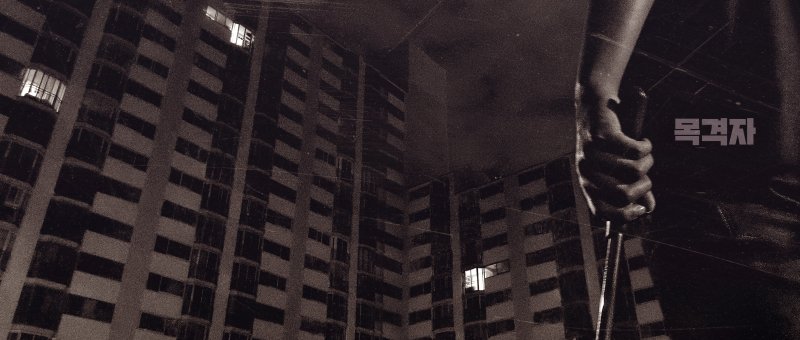
Sang-hoon (Lee Sung-min), a middle-class lawyer, is riding high after buying a new apartment (with a hefty mortgage) for his wife and daughter. Rolling home drunk after an evening drinking with colleagues, he opens yet another beer and gazes out over the balcony of his new apartment musing on how great his life is only to be confronted with a screaming woman being chased by a violent man in the courtyard. She falls and the man strikes her. Sang-hoon struggles for his phone but drops it in drunken shock. His wife emerges from the bedroom and alerts the killer to their presence by turning the lights on. Sang-hoon snaps them off and goes back to the balcony where he is convinced the killer has seen him. Paranoid, he forgets all about the poor woman bleeding on the concrete below and spends the night in his hallway clutching a baseball bat just in case.

He doesn’t know it yet, but Sang-hoon has indeed made himself a target for a marauding “random” killer. Afraid and ashamed, he decides to keep quiet. It would be easy enough to read Sang-hoon’s unwillingness to get “involved” in other people’s business as a hangover from an upbringing in an authoritarian regime in which keeping your head down and your nose clean might be essential tools for survival, but it’s also fair to say that his attitude is defined as much by notions of middle-class respectability as it is by cowardice and selfishness. An old busybody in the apartment block is constantly banging on about the house prices, getting the residents to sign a legal waver promising not to cooperate with the police or the media to avoid the name of the community becoming linked with violent crime. Sang-hoon says he wants to protect not only his wife and daughter, but their home too. His hopes and dreams are bound up with conventional homeownership. This is the way he intended to fulfil his male obligations to protect his family, but now it’s being threatened in a way he never expected and he finds himself tested.

Despite himself, Sang-hoon does feel he ought to help those in need. He bristles when his wife wants him to help out a friend whose child was injured in a car accident that the police didn’t bother to investigate properly, because he knows it’s a lost cause and she’s better to settle. He feels sorry for her, but not enough to rock the boat. Being a lawyer he perhaps knows what a risk it can be when the wrong people know where you live, but he’s at constant battle with himself knowing that the killer is still out there and will likely kill again. If he’d only called an ambulance instead of cowering by the front door, the poor woman might have survived – her death is on his hands as much as the killer’s because he chose to do nothing. The body count will only rise all while Sang-hoon tries to hedge his bets, calculating whether he’s better off keeping quiet and hoping the killer appreciates his complicity or surrendering himself to the police in the hope that they can protect him by taking the killer out of the picture.

Sang-hoon’s desire not to get involved has left him very involved indeed. He hoped it would all go away if he turned a blind eye and kept himself out of it, but like it or not he is a member of a community and he has a responsibility which cannot be abnegated. It turns out the best way to protect your family is protecting other people’s, maintaining a herd immunity to the threat of violent crime. There is, however, a reason they tell you to shout “fire” and not “help” – people are selfish and if they hear fire they know they are in danger too so it’s in their interest to come running, if it’s only you in danger they may not put themselves out. Sang-hoon’s brush with the embodiment of random threat does at least release him from the ingrained isolationism of the aspirant middle-classes in which any kind of fellow feeling is distinctly frowned upon, allowing him free rein to embrace his natural tendency towards altruism safe in the knowledge that his desire to help is not a weakness but a strength that will keep his family safe through the interconnectedness of a compassionate community.


The Witness was screened as part of the 2018 London Korean Film Festival.

International trailer (English subtitles)