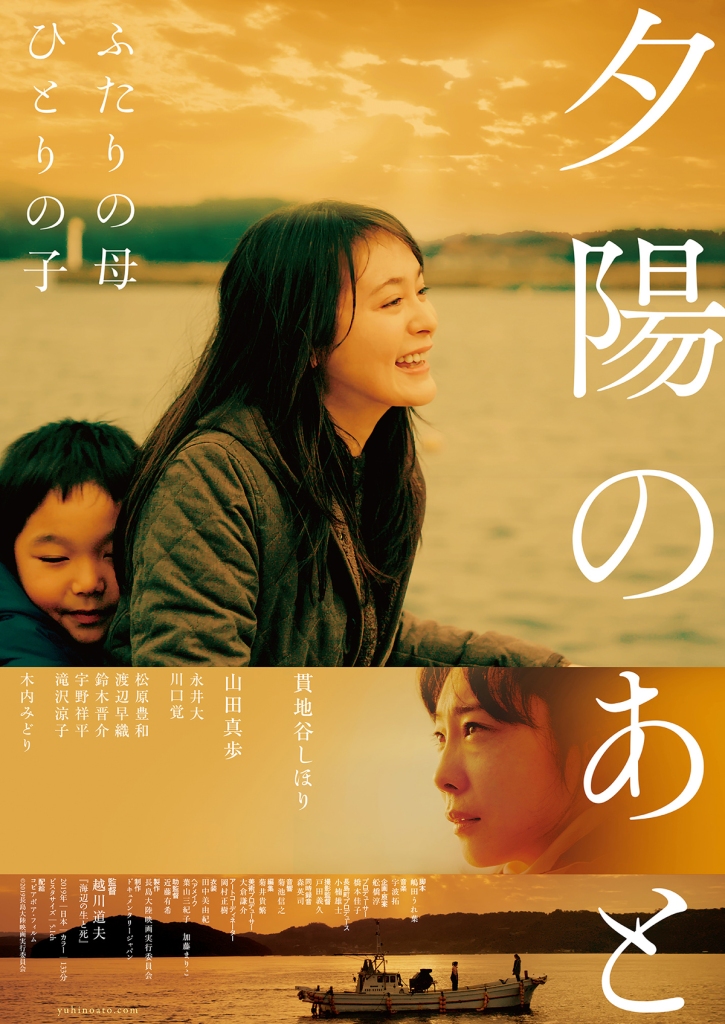
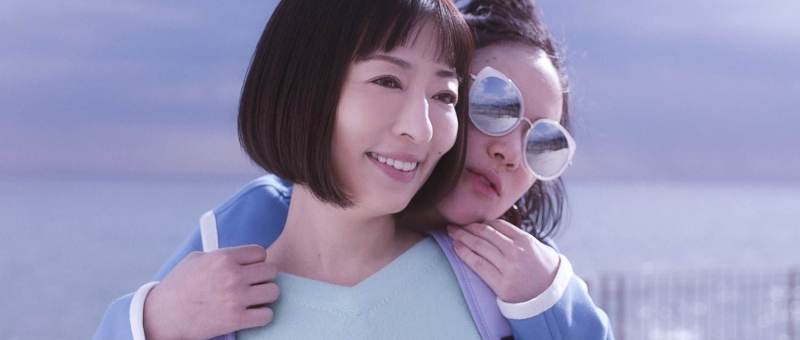
After the Sunset (夕陽のあと, Michio Koshikawa, 2019)

Two women find themselves caught up in an impossible situation in Michio Koshikawa’s sensitive maternal drama After the Sunset (夕陽のあと, Yuhi No Ato). Though both want the best for the child, they have to acknowledge that someone is going to end up desperately hurt while perhaps no one is at fault other than the insensitive and austere society which saw fit to punish a young woman already in the depths of despair rather than come to her aid. 

7-year-old Towa (Towa Matsubara) lives in a cheerful island village with his mother Satsuki (Maho Yamada), fisherman father Yuichi (Masaru Nagai), and compassionate grandma Mie (Midori Kiuchi). What he doesn’t know is that Satsuki and Yuichi are not his birth parents. Unable to have children of their own they decided to pursue adoption after years of unsuccessful fertility treatments and now that they have everything else sorted are hoping to finalise Towa’s legal status as a member of their family. What they don’t know is that Towa’s birth mother, Akane (Shihori Kanjiya), has been living on the island for the past year to be close to her son but is conflicted and at something of a loss as to what to do. Matters come to a head when they need the birth mother’s signature on the adoption forms to confirm her renunciation of parental rights and Akane’s true identity is exposed. 

The first and most obvious problem is that both women believe themselves to be the rightful mother. Satsuki has been raising Towa since he was a baby and her feelings for him are no different than if she had given birth to him herself. Akane meanwhile gave birth to Towa in difficult circumstances and was then separated from him. She has spent the past four years searching and wants nothing more than to be reunited with her son. Though she can see that he is very happy with with Satsuki and Yuichi and is grateful that he has found such a loving family in such a beautiful place, she cannot bear the thought of losing Towa while Satsuki cannot help but fear that this other woman who was able to do what she was not in giving birth has come to take her child away. 

It is of course an impossible situation with no good or right answers. Satsuki begins by resenting Akane, discovering that Towa was abandoned as an infant in an internet cafe and regarding her as having lost the right to call herself his mother but on investigating more begins to understand the kind of despair she must have been in to have taken such a drastic step. A victim of domestic violence left all alone with an infant child and no means of support, she considered suicide but rather than help her the authorities criminalised her actions and took her child away, dangling the false hope of a reunion in return for “rehabilitation” while Satsuki and Yuichi gave him a happy family home she knew nothing about. Towa has lived all his life on the island, he thinks Satsuki and Yuichi are his mother and father, how could you explain to him that he has to leave his second mother to return to the first that he never really knew?

Where one might expect there to be fear and anger, the two women eventually come to an understanding of one another as mothers who each want the best for the child even if that means they may end up hurt. As grandma puts it, the island is a welcoming place. It accepts all those who come, and does not pursue those who choose to leave but is always willing receive them when they return. Towa points out that that it takes a village, to him everyone on the island, including Akane, is his mother because they all raised him together though his father holds that the best mother of all is the sea. There is perhaps room for more than one if only in an ideological sense, no true mothers and no false only people who love their children and struggle against themselves to do what they know in their hearts is best. A gentle exploration of everyday life on a tranquil island, Michio Koshikawa’s sensitive drama finds people at their best in the extremities of emotional difficulty, finding their way through mutual compassion and understanding in an acknowledgement that there is no right answer only an acceptable best that leaves the door open for a future reconciliation.


After The Sunset is available to stream in Germany until June 14 as part of this year’s online Nippon Connection Film Festival.

Original trailer (No subtitles)

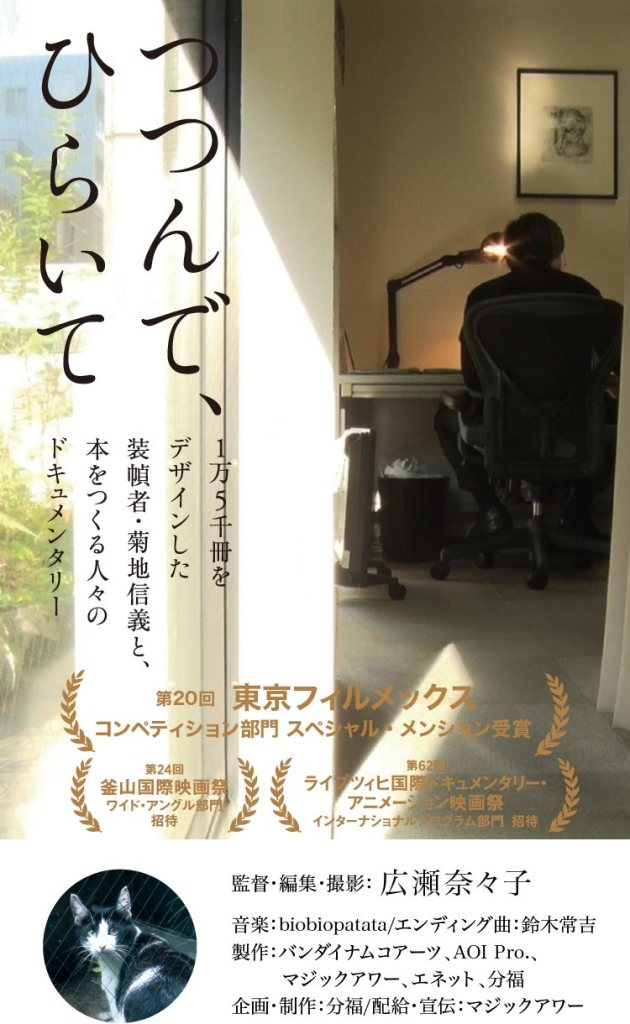
Book-Paper-Scissors (つつんで、ひらいて, Nanako Hirose, 2019)

Particularly at the present moment, it’s near impossible to ignore the fact that we live in an increasingly digital world. We value speed and convenience, and perhaps we’ve begun to lose a sense of aesthetic pleasure in the objects which we consume and then all too often discard. When we think of a book, then we think of the words and words do not necessarily have to be attached to any one thing to have meaning. But a book is also an object, it can have weight and import entirely separate from the words which it contains and, indeed, perhaps some of us are guilty buying them especially for their aesthetic qualities with little to no intention of ever opening the covers. 

The subject of Nanako Hirose’s documentary Book-Paper-Scissors (つつんで、ひらいて, Tsutsunde, Hiraite), Nobuyoshi Kikuchi, is now in his 70s and over the last 40 years been one of Japan’s premier book designers. You could say that his is a dying art, at least we’re always hearing that traditional bookshops are struggling and e-books are on the rise (though the trend seems to have reversed in the last few years), but Kikuchi finds himself still very much in demand working with some of Japan’s biggest publishing houses as well as smaller indie endeavours producing more esoteric affairs such as poetry, philosophy, and religion. 

An old soul, Kikuchi frequents the same Showa-era kissaten he’s patronised for most of his working life the advent of which coincided with its opening, joking that he treats it almost as an extention of his office. He favours pour over coffee even at home where he pays close attention to the quality of the cup to enahance the flavour while playing records on a vintage windup gramophone. Which is all to say, he values the totality of experience above that of the essence. For him, words are living things which exist outside of human beings and the book is their physical body. 

His approach is as much tactile as it is visual. He describes the feeling of the book in the hand, reminding us that this is an object intended to be held and read and that the design must contribute to the experience. In this case and others, the intention is sensual, Kikuchi wants the cover to mimic the texture of human skin. He selects his paper with the utmost care not only for its quality but its effect. When technology limits his first choice he finds another, but we are reminded once again that this is a dying medium in the need to conserve materials because this kind of paper is about to be discontinued by its manufacturer. 

Kikuchi offers the fact that he has no successor as one reason he has no intention of retiring, but there are those coming up behind him such as a young man, Mitobe, who was inspired by one of Kikuchi’s books to become a book designer himself. Kikuchi’s own editor on a collected edition of his writings for magazines suggests that his aestheticism is in itself a kind of reaction to the death of print, whereas Mitobe suggests his generation is also operating in opposition. Design should be simple he admits, but his generation favours the elaborate. To contradict himself, he pulls out a book which has no jacket at all, its design is fused to the endpapers, prompting Hirose to ask from behind the camera what the point of the jacket is at all. And as for that, what about the ubiquitous obi which is attached to every book. Isn’t the band there for the soulless purposes of advertising and marketing? Does it too serve an aesthetic purpose or will the reader simply dispose of it as part of the wrapping?  

Even after so much success and a decades-long career, Kikuchi claims he has no real sense of accomplishment. He thought of literature as a tool for nurturing the mind but after so many books is more aware than ever of a sense of emptiness. In any case, he prefers to think of himself not as a “creator”, but as someone who “prepares” because his is an art which necessitates interraction. His design is for others, not for himself. He has no desire to retire, but is preparing to simply fade away, feeling a responsibility to create a space for the next generation while insisting that his is a connected existence, that it’s all about the people rather than the art. Will books survive? Who can say, but they are more than just words on a page and have their own vitality thanks in no short order to Kikuchi and his expansive artistry.


Book-Paper-Scissors is available to stream in Europe until June 14 as part of this year’s online Nippon Connection Film Festival.

Original trailer (English subtitles)

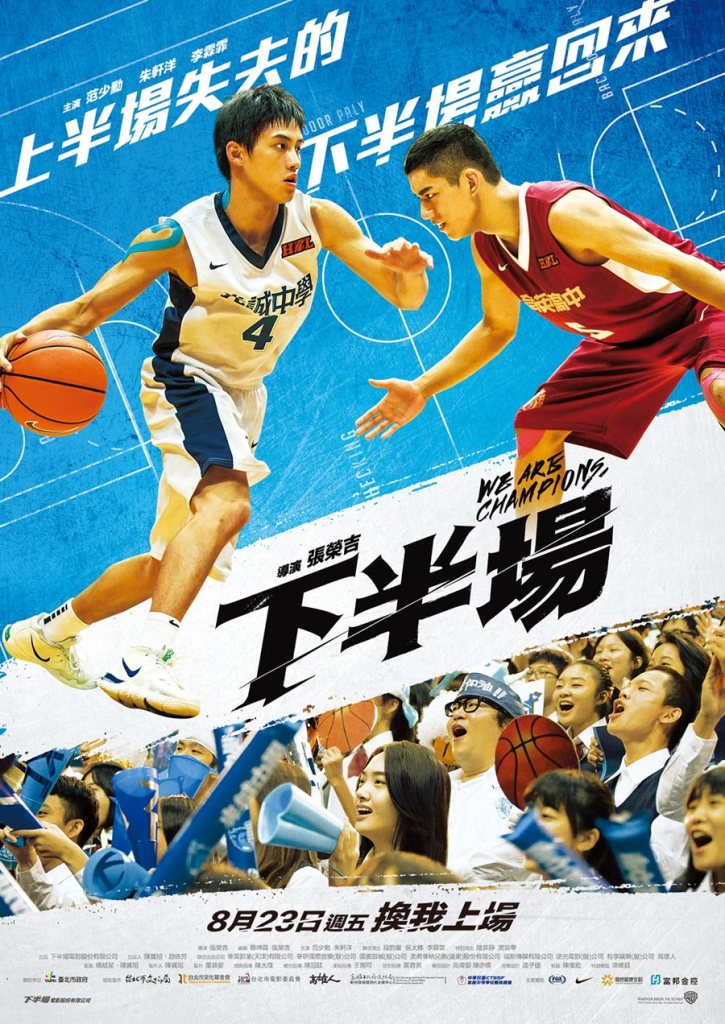
We Are Champions (下半場, Chang Jung-Chi, 2019)

What is the best way to “win”, team work and camaraderie or authoritarian austerity? Two brothers find themselves on different paths in Chang Jung-Chi’s high school basketball drama We Are Champions (下半場, Xiàbàn Cháng), but in true manly fashion eventually end up repairing their fracturing familial relationships through sporting competition as a healthier substitute for physical violence (though that too is not entirely absent). Who wins and who loses might not be as important as it first seems, but then again perhaps there is more than one way to “win”. 

Close in age, big brother Hsiu-yu (Fandy Fan Shao Hsun) and little brother Tung-hao (Berant Zhu Ting-Dian) live with an aunt and uncle in the backroom behind their seamstressing factory and spend most of their free time playing basketball out in the street with other youngsters. The boys’ mother passed away when they were small and times being what they are, their dad has had to travel to find work and is not able to check in on them very often. The reason the guys play basketball so much is that they hate living with their permanently angry uncle and want to move out, putting the money they make through street games and part time jobs into an escape fund. 

Things begin to change for them when they’re spotted by a basketball coach from a local high school who gives them a few tips and offers them a shot at joining the team. Tung-hao is keen, but Hsiu-yu has given up on his dreams of basketball glory because of a hearing injury that saw him mercilessly bullied on the middle school courts. Tung-hao ends up getting scouted by an elite school, Yuying, but the authoritarian coach flatly tells him that there’s no space for Hsiu-yu because he doesn’t allow disabled people on his team. Tung-hao is conflicted, but ends up joining after fighting with his uncle and storming out of the house. He’s sorry for his brother, but all he wants to do is play basketball so he’s taking his chance. Hsiu-yu is happy for him and wishes him well, eventually taking the sympathetic coach who spotted them at the outdoor court up on his offer to play for decidedly small but scrappy high school team Kuang Cheng. 

Kuang Cheng isn’t perfect, Hsiu-yu still gets bullied because of his hearing aid at least to begin with, but unlike Yuying they run on a principle of solidarity. The coach is a supportive, paternal presence that Hsiu-yu finds particularly useful in the continuing absence of his father and motivates his players through trying to give them the confidence to be all they can be. Over at Yuying, meanwhile, they all wear identical black uniforms, have buzz cuts, and spend all their time drilling with military discipline. The coach has no time for the personal lives of his players, abruptly kicking one guy off the team simply because he was late to practice. Yuying is, to put it bluntly, a bedrock of ruthless authoritarian elitism. They think they’re entitled to win because they’re the best, and they won’t hear any arguments to the contrary. 

These ideological differences continue to place a strain on the brothers’ relationship with Tung-hao remaining conflicted about his decision to leave his brother behind and doubling down on the manly militarism of his coach’s philosophy to make it seem worthwhile. Having not seen him in a long while, Hsiu-yu calls out to his brother across the basketball court but Tung-hao ignores him, eventually answering only after Hsiu-yu returns to let him know that he’s just had a call about a relative being seriously injured and taken to hospital. Tung-hao tells him he’s not interested in family drama because he’s here to practice with his new buddies before crossing the line back towards the other side. 

Despite all of that, however, good brother Hsiu-yu never gives up on family feeling and continues to support Tung-hao in his heart even while they’re rivals on the court. Tung-hao is increasingly conflicted by his coach’s determination to destroy his brother, even using his hearing problems against him, but is eventually healed by Hsiu-yu’s forgiveness even as he prepares to shatter all his dreams. Sometimes you can “win” by being the better man, or by accepting someone’s forgiveness, or just doing your best, and other times you can throw a ball through a hoop all on your own. Victories come in all shapes and sizes, but true champions are the ones who know how to lose with grace and win with magnanimity. 


Originally scheduled as the centrepiece of the suspended Season 10, We Are Champions streams for free in the US on June 12 as part of Asian Pop-Up Cinema’s Mini-Focus: Taiwan Cinema Online. Viewers in Italy will also be able to catch it streaming as part of this year’s online Udine Far East Film Festival.

Original trailer (English subtitles)

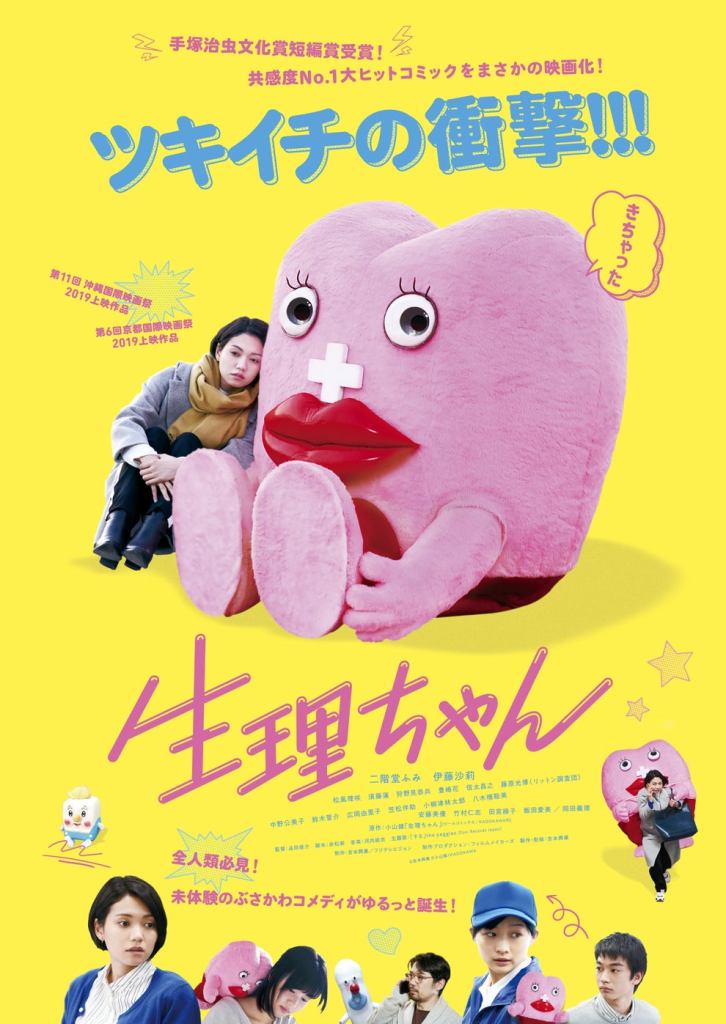
Little Miss Period (生理ちゃん, Shunsuke Shinada, 2019)

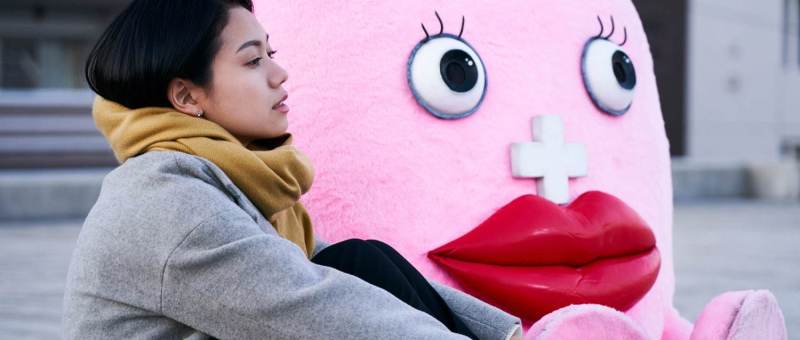
Perhaps surprisingly, Japanese cinema has never been afraid to tackle the sometimes taboo issue of menstruation but Little Miss Period (生理ちゃん, Seiri-chan) is certainly the first time it’s been turned into an accidental protagonist. Inspired by a popular web manga by Ken Koyama, who is male as is the director Shunsuke Shinada, the film revolves around the titular Little Miss P who arrives every month in the form of a giant pink fuzzy monster and generally causes havoc in women’s lives, but for all the trouble, pain, and inconvenience she causes Little Miss P also becomes a symbol of female solidarity and an accidental confidant whose presence can also be a comfort in regrettably patriarchal society. 

The first victim is Aoko (Fumi Nikaido), a young woman working in a busy publishing office who receives an inconvenient visit from Little Miss P while trying to sort out a problem with an uncommunicative writer which eventually leads to more trouble after the author begins bad mouthing them on social media and Aoko is given a public telling off by her sexist boss for failing to appreciate artistic temperament. Aoko’s boss is an unreconstructed chauvinist who makes deliberately inappropriate comments in the workplace and then jokes that he hopes he won’t be accused of harassment. He complains about Aoko looking tired and exclaims that these are the reasons he doesn’t like working with women, but running into a colleague in the ladies’ room, Aoko gets some practical though unhelpful advice coming from another woman to the effect that they can’t ever use Little Miss P as an “excuse” because it will just be seen as another reason to deny women the same rights and privileges as men. 

Aoko wishes that men could experience what it’s like to host Little Miss P if only once year and then perhaps they’d understand, though they also have problems of their own as manifested in the large white Mr. Sex Drive who appears out of nowhere to bother the boyfriend (Kyohei Kanomi) of Aoko’s younger sister Hikaru (Risaki Matsukaze). While Aoko laments the sexist atmosphere in the workplace that leaves her feeling as if she has to make a choice to be seen actively prioritising her career, being more present, more productive than the men just to be seen as equal, the office cleaner, Riho (Sairi Ito), resents her invisibility as a faceless service worker many regard as little more than a bot or real world NPC with no identity or interior life. She makes caustic comments about the vacuous lives of the office workers around her but has fully internalised this view of herself as worthless and undesireable. She resents Little Miss P in part because she doesn’t understand what the point of her visit is when it seems so unlikely that she would ever bear a child. 

Riho is so invested in her inferiority complex that she cannot comprehend that Aoko’s company want to hire her for writing gig after figuring out her secret blogger identity, believing it must be some kind of trick. In one sense, she might be right in that Aoko’s colleague Uchiyama (Ren Sudo) has an obvious crush on her, but still she finds it impossible to accept that she has a right to expect recognition as a human being and indeed as woman. Each of the women find themselves in dialogue with Little Miss P who often provides a quite literal shoulder to cry on as well a reassuring sense of “you got this” security. Aoko apologises to Little Miss P as she bids her goodbye for another month, admitting that it can’t be nice that in general no one is glad to see her (though there are of course cases in which they might be rather more than glad), but Little Miss P takes it all in her stride as part of the job and as much as she often causes trouble and inconvenience is also a warm and reassuring presence which unites women not so much in shared struggle but gentle camaraderie. 

It’s Little Miss P who helps Aoko bond with her prospective step-daughter Karin (Hana Toyoshima), while she perhaps remains ambivalent on the idea of marriage with its consequent loss of independence and the responsibility of suddenly becoming a mother for the first time to an adolescent girl. Female solidarity trumps family or romance, or at least so it seems as Aoko looks back on getting her own first visit from Little Miss P which threw her recently widowed single-father into an ambulance-calling panic but also resulted in a comforting dish of rice with red beans, traditionally eaten at moments of celebration. “Not everything about it is bad” Aoko tells a troubled Karin, “there’s nothing good about it. Not one thing” she replies, but Little Miss P has at least brought them together in female solidarity as they return to their respective, disappointingly patriarchal, worlds. 


Little Miss Period is available to stream online (Worldwide except Japan, Mainland China, Taiwan, Hong Kong, Macau, Thailand, Laos, Cambodia, & Myanmar) from 9th to 14th June as part of this year’s Nippon Connection Film Festival.

Original trailer (English subtitles)

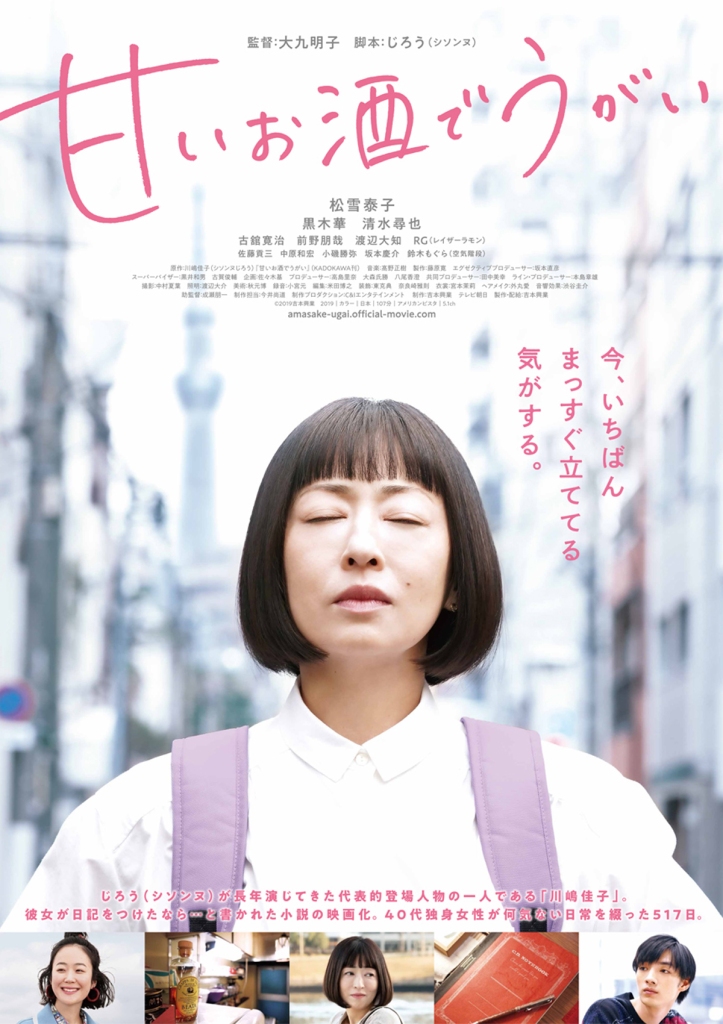
My Sweet Grappa Remedies (甘いお酒でうがい, Akiko Ohku, 2019)

In Tremble All You Want, Akiko Ohku showed us a painfully shy woman’s path towards seizing control of her romantic destiny while Marriage Hunting Beauty told us that there are no short cuts to love. My Sweet Grappa Remedies (甘いお酒でうがい, Amai Osake de Ugai) takes things one step further as a lonely middle-aged woman gradually finds the desire to make a change in her otherwise unchanging existence, coming to like herself as seen in the eyes of others and trusting in happiness however temporary it might turn out to be. 

40-something Yoshiko (Yasuko Matsuyuki) is an unmarried woman working at a publishing company. She tells us that she keeps a diary that she never expects any one to read, not even herself, and mostly spends her free time drinking alone at home or in elegant bars. From the sometimes lengthy gaps between entries, we can see that Yoshiko’s life is generally uneventful and essentially unchanging, that she has few friends, and though she gets by well enough on her own she often dwells on what might have been, disappointed that she was never able to become a mother. 

She is, however, a deeply caring person, sublimating her need for human attachment into anthropomorphising objects, gently patting her bicycle saddle as she parks it for the day and becoming alarmed that it has ended up “in prison” after being impounded. If she’d had children, she muses, she might never have let them leave the apartment. Yet when she discovers one of her favourite earrings is missing, she decides not to look for it because she accepts its decision, later welcoming it home when it makes an unexpected return. 

Overhearing the conversation of the women next to her at a bar, she wonders if their idle complaints that half the year is gone already are excessively negative but accepts that she too is living life in retrograde and needs to learn how to look forward with positivity, which might be why she starts making a series of small but active changes. She observes the world around her from a new angle in crossing a footbridge she has never crossed before, swaps her comfortable red loafers for grey high heels, and her futon for a bed. 

Some of these changes at least are down to an unexpected friendship with a young woman in her office, Wakabayashi (Haru Kuroki), who invites her out on paydays and brightens up the office atmosphere with her goofy antics. Yoshiko herself might be classically quirky, but she mainly keeps her quirks to herself, quietly getting on with her work, while Wakabayashi is the opposite, cheerfully outgoing yet perhaps just as lonely if in a less obvious way. It’s Wakabayashi who sets her on off another path by introducing her to a friend from university, Okamoto (Hiroya Shimizu), who has recently joined their company and to whom Yoshiko had already taken a liking in passing though he is more than 20 years her junior.  

Too shy to shout bingo, Yoshiko is a lifelong believer in love, observing a young couple at festival and hoping they enjoy a night of passion in the fullness of their youth. She still remembers old anniversaries with long gone exes and wonders if they still remember her, but resents the universe’s attempts to test her with texts from past lovers every time she becomes interested in another man. The fact that Okamoto is so much younger is never really an issue, though Yoshiko admits that she likes the fact he seems to favour older, lived in homes over sparkling new builds while she helps him look for a new apartment. 

Yoshiko celebrates the fact that colour seems to be returning to her black and white days, her desire to see the dark sea where she feels closest to death in order to reaffirm her connection to life seemingly receding. From her childhood, Yoshiko had wondered if the woman she sees in the mirror is the same one everyone else sees, but later realises that the vision of herself reflected is “somewhat nice”, catching sight of herself in Wakabayashi’s mirrored sunshades and noticing that she is in fact smiling. Reinvigorated by her younger friends, Yoshiko steps into an acceptance of herself, looking forward rather than back and willing to take on new challenges rather than merely dropping into a defensive position of protecting the irreplaceable. No longer dark and foreboding, the sea is now sunny and calm, a scene of peace and positivity with nary a cloud on the horizon.


My Sweet Grappa Remedies is available to stream online (worldwide excl. Japan, Mainland China, Taiwan, USA, & Italy) from 9th to 14th June as part of this year’s Nippon Connection Film Festival.

Original trailer (no subtitles)

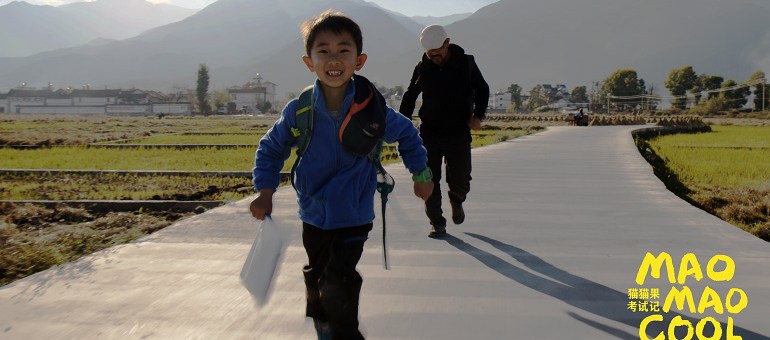
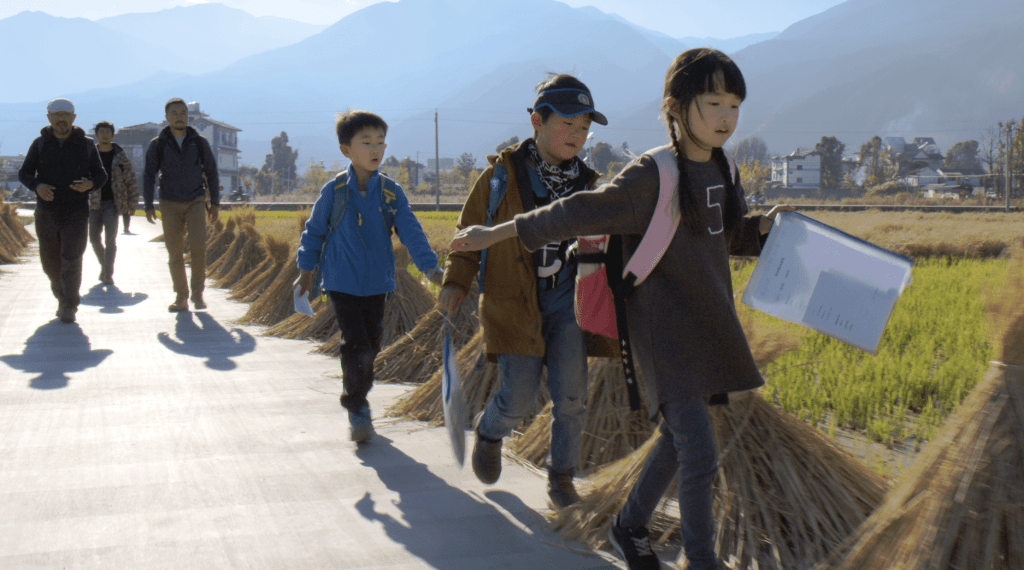
Mao Mao Cool (猫猫果考试记, Zhang Yang, 2019)

Having turned his attention to Dali in China’s Yunnan province, Zhang Yang’s third in a series of documentaries exploring the area Mao Mao Cool (猫猫果考试记, Māo Māo Guǒ Kǎoshì Jì) takes a micro view of the modern society through the trials and tribulations of one little boy, Qu Hongrui, as he tries to pass the eccentric “exam” to graduate from Mao Mao primary school which takes the form of a daylong scavenger hunt leading to an overnight camp at a picturesque river. Perhaps a look at changing educational methods in a system which is often criticised for an over reliance on rote learning and test scores, Zhang’s documentary is also a gentle exploration of the art of growing up as Hongrui finds himself at loss for a way forward when he discovers that he cannot simply insist on having his own way. 

When we first meet Hongrui, he’s on the first of his tasks which involves a trip to the local market where he is charged with shopping for the various vegetables on his list to be used later in the day. Though he is accompanied by an “observer” to make sure he’s never in any immediate danger or causing trouble to others, the purpose of the test is to force Hongrui to act independently, teaching him how to interact with shopkeepers, manage his money, and shop for himself. When he’s got everything on his list, he’s supposed to go to the next checkpoint and have his “passport” stamped so he can proceed to the next stage. 

That’s when his problems begin. The next stage is a rock climbing challenge in which the children are supposed to venture up a climbing wall and retrieve a flag with the letter they’ve been assigned. Hongrui, however, seems to be more afraid than most of the other kids and finds the wall a confusing challenge despite frequent instructions and words of support from below. Eventually he bursts into tears and begins screaming to be let down but eventually composes himself enough to be able to complete the task successfully. That’s something of a pattern which will be repeated. It seems that Hongrui isn’t very popular with his peers and is regarded as a crybaby, one girl eventually asking him “why do you like to cry so much?” after getting fed up with one of his angry episodes. 

The same thing happens again during the next challenge when he’s placed in a group with four girls and asked to blend the juices of the vegetables he collected to create new colours and make a group painting. Some of the kids want to make a blue colour and the others pink. After a quick look around the room shows them most of the other groups have gone with blue the girls lean towards pink, which upsets Hongrui to the extent that he runs back out to the examiner complaining “We’ve got a massive schism over colours”. Every time Hongrui encounters a problem, he tries to run to the grownups to sort it out, but the examiners like the observers aren’t permitted to get involved. These exercises are about socialisation and harmonious living. They’re supposed to teach the kids how to compromise and work out their differences peacefully so they can work as a team, but Hongrui still has fairly underdeveloped interpersonal skills and makes frequent mistakes when it comes to negotiating with his teammates. When he comes back from speaking with the examiner, the girls have already found a solution on their own, making a pretty purple colour that suits everyone equally. 

Hongrui’s rage and frustration lead him to make unwise decisions, telling the teacher he wants to leave the group because the girls wouldn’t listen to him even if it means he won’t get a badge for this task, only relenting when the examiner explains the entire group will fail if he leaves so his friends won’t get their lunch either. He runs into a similar problem when he’s supposed to put a puzzle together as a clue to the next checkpoint but discovers that he’s lost a piece and concludes that another girl who has far more pieces than she needs must have picked it up. The girl insists the piece was in her pack to begin with and is therefore “hers” so she won’t help him, which proves very challenging to Hongrui who feels he’s been unfairly treated. He tries to appeal to the examiners again but they aren’t allowed to help, his observer explaining that he needs to learn to negotiate with others on his own. Sadly, though it appears not to benefit her in any way to hold on the puzzle piece, the girl continues to refuse to surrender it, perhaps irritated by Hongrui’s “accusation” that she took it from him, and eventually leaves him stranded, unable to move on the next task. 

This however a primary school exam so happily Hongrui is able to continue on his journey though it might be debatable how much he’s actually learnt. Crying hot, rage-fuelled tears in the car apparently unashamed to be so emotional in front of another girl in the same position who is increasingly exasperated by his “childishness”, Hongrui is reminded that he needs to learn to control his emotions as he grows up, but does at least seem to calm down enough to cheerfully make his way towards the finish line. The kids are, by and large, alright as they learn how to live in the world and with each other, overcoming their problems together and having fun along the way.


Mao Mao Cool is represented by Fortissimo Films.

Love’s Twisting Path (多十郎殉愛記, Sadao Nakajima, 2019)

Sadao Nakajima joined Toei in 1959 and worked for the studio throughout its golden age, mostly associated with jidaigeki and gangster movies which were Toei’s stock in trade well into the 1970s and perhaps beyond. Now in his 80s, Nakajima’s last narrative feature was released over 20 years ago. A kind of last hurrah, Love’s Twisting Path (多十郎殉愛記, Tajuro Junai-ki) is a willing throwback to the glory days of chanbara, even bearing a dedication title card to genre giant Daisuke Ito, and doing its best to resurrect the classic Toei programmer magic. 

Appropriately enough, the action takes place at a moment of intense change. As the film opens, the men of Choshu who have left their clan to foster their own brand of revolution in opposing the shogunate in favour of the emperor and a desire to reject Western influence, are hiding out in a shack while bad mouthing soon-to-be-allies Satsuma and the man who seeks to unite them, Sakamoto Ryoma. They are soon discovered by Kyoto’s elite Shogunate police, the Mimawarigumi, and ambushed. Their leader, the famed Katsura Kogoro (Masatoshi Nagase), signals that times have indeed changed by pulling out a pistol and defending himself at distance. 

Meanwhile, Choshu fugitive in hiding Tajuro (Kengo Kora) is trying to make ends meet with his painting, designing patterns for ladies kimonos but seemingly with little success. He has the sunken cheeks, vacant eyes, and slight slowness of someone who drinks too much and hasn’t had a decent meal in a very long time. We learn that he left Choshu with the others on the pretext of revolution, but his real purpose was escape from a restrictive samurai existence and most pertinently from his miserable poverty. Having long since given up the idea of a being a samurai, he’s already sold his sword and is attempting to live under the radar, unaware that similarly troubled bar hostess Otoyo (Mikako Tabe) has fallen in love with him. Otoyo was adopted by the bar’s owner, Omitsu (Yuriko Mishima), a former geisha, who intended to sell her to a geisha house. She eloped with a man she loved instead, but it turned out that he was minded to sell her too so she came back and now runs the bar while taking care of the ageing Omitsu. 

The crisis occurs when men of Choshu arrive in search of Tajuro in the hope that he will rejoin their cause. He doesn’t want to, showing off his samurai skills (and neatly disguising the fact that he has no blade through advanced technique) but pointedly asking for a hefty payment from his former mentor Sanzaemon (Asahi Kurizuka) in belief that it would not be paid. Sanzaemon, however, comes through and leaves a message for Tajuro to meet him behind a nearby shrine. He however spends the entirety of his money getting blind drunk in Otoyo’s bar, during which time Sanzaemon is caught by the Mimawarigumi, breathing his last words to Tajuro’s younger half-brother Kazuma (Ryo Kimura) to the effect that he must reunite with Tajuro and fight for the good of the country. 

On the run and holed up with a patient priest and his beloved wife, Tajuro is asked why it is he’s decided to pick up his sword once again despite his reluctance. Asked if was for country or for money Tajuro shakes his head, leaving the priest to correctly guess that it was for love. Tajuro has fallen in love with Otoyo, the only person who either doesn’t believe he is a failed samurai and drunken fool, or doesn’t care. The world however is still too chaotic for romance, and so their pure love will have to wait. 

Tajuro’s fate is in many ways the direct result of his attempt reject his responsibility as a samurai, daring to live as a common man with all of the freedoms and burdens that entails. The force which constrains him in both worlds is poverty. Whatever else he is, he is too poor for love, unable to feed himself let alone a wife either as a low wage samurai or a ronin. The price he pays is in his desire to cross borders. The samurai world is not done with him yet and while the denizens of this small backwater worry about paying their rent paying little mind to what’s going on in the capital, political intrigue is not something that he can go on ignoring. After all, not picking a side is in a sense also picking a side. The Mimawarigumi pride themselves on not being as savage as the Shinsengumi (which largely consists of ronin, lower ranked samurai, and commoners whereas the Mimawarigumi are elite samurai and direct retainers to the Shogunate), but their job is still to bring in fugitive rebels like Tajuro and his bid for “freedom” may be doomed to failure in a world still constrained by the law of the samurai. 


Original trailer (no subtitles)

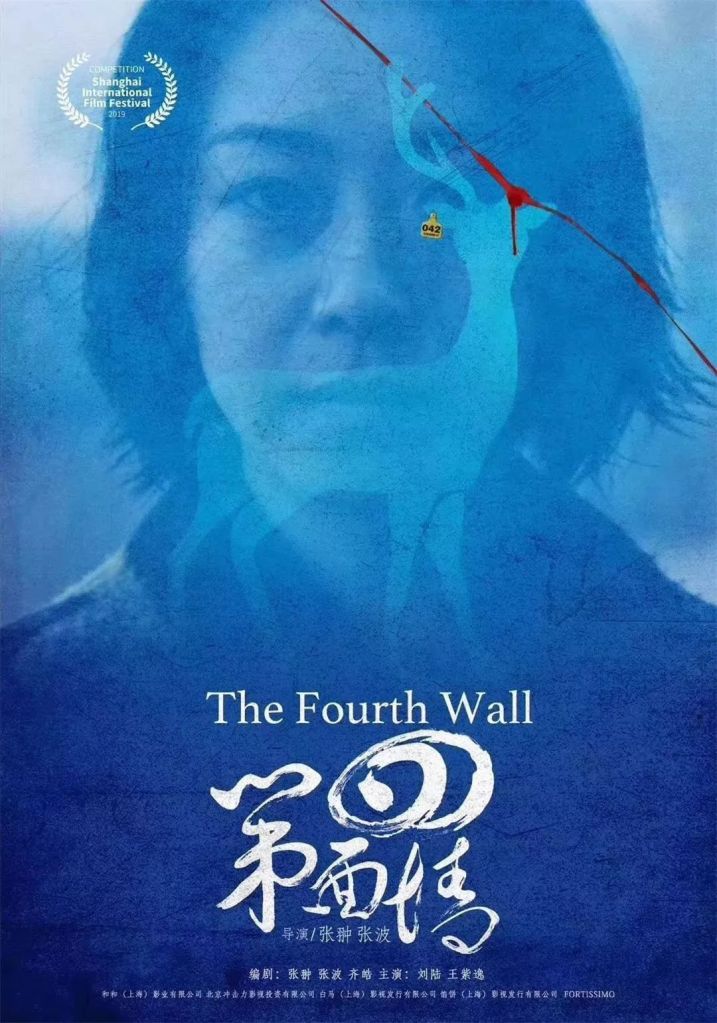
The Fourth Wall (第四面墙, Zhang Chong & Zhang Bo, 2019)

Have you ever imagined what your life might be like if something had gone another way? Most of us like to think of how our lives might have been better if only we’d acted differently, but what if our idealised reality turns out to be even worse? That’s partly how it is for the hero(es) of Zhang Chong and Zhang Bo’s The Fourth Wall (第四面墙, Dì Sìmiàn Qiáng) as they find themselves confounded by the intrusion of an alternate reality but ultimately forced to face the traumatic past in order to pierce a mental rather than metaphorical fourth wall and access a “truer” reality. 

In the first “reality”, Liu Lu (played by the actress of the same name) is an isolated 30-something working on a rural dear farm in a mountain village. Her crisis moment comes when she realises one of the deer has escaped, she assumes through a small hole in the fencing which she later covers over with branches in case any of the others get the same idea. Lu tells her boss about the missing dear, but despite the fact he’s never lost one before in his long decades as a deer farmer, he tells her not to worry about it, even giving her a New Year bonus and telling her to have some fun over the holiday. Lu, however, ignores his advice and prepares to spend the evening alone with dumplings and the Spring Gala, but is interrupted by Ma Hai (Wang Ziyi), a childhood friend, who pushes his way into her home and refuses to leave. We get the impression that Hai is a persistent, perhaps unwanted suitor, but as he leaves irritated that his attentions have been rebuffed he stops to tell Lu that he has “a goddamn weird disease”. 

Taking pity on him, she invites Hai back inside where he explains that something strange has been growing in his brain, not a tumour more like memories of different life. Images of another self have started to creep into his consciousness, and in this other reality there is also a Lu who works at a supermarket in the city where she dresses in elegant saris and dances enticingly to sell a mysterious vision of the “exotic East” while handing out pamphlets on behalf of a travel agency. This Hai is apparently a darker figure, reaching the end his road long before the promised Madagascan paradise of Lu’s sales patter. We learn that he’s apparently on the run from something connected to the teenage incident which binds the pair together and has left the first reality’s Lu with a prominent scar on her face. The other Lu meanwhile had some success making her acting dreams come true, but later married and had a child only to divorce and be left with nothing much of anything. She is just as sad and defeated as the Lu with the scar, only in a slightly different way. 

“The fourth wall”, as we’re used to hearing it, refers to the invisible barrier between the show and the spectator, but it’s also even in that sense a two-way mirror between conflicting realities. We tell ourselves that the world on the other side of the fourth wall isn’t real, though the reverse might as well be true. We resent the fourth wall being broken because these streams aren’t supposed to cross, we aren’t supposed to be here and they aren’t supposed to see us even as we see them. What Lu has created in her mind is another kind of fourth wall comprised of wilful delusion, conjuring up alternate realities for herself revolving around a moment of trauma in her youth which binds her to Hai whose consciousness is also fractured by the same event. 

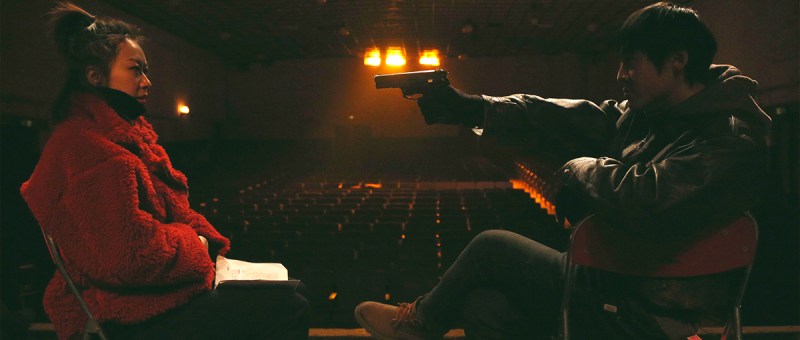
Hai, like the fugitive deer, is a memory that Lu has been trying to keep on one side of a wall but has apparently escaped as realities bleed uncomfortably one into the other. The other Hai and Lu sit on a literal theatre stage, also the site of Lu’s last stage performance in a play called “The Fourth Wall”, and debate themselves towards one kind of endgame while the first Hai and Lu desperately investigate and try to save themselves by interrupting their darker shadows. What Lu is being asked to do is end the suspension of her disbelief and acclimatise herself to a new “reality” shorn of her protective delusions. The first Hai berated her for holing herself up in the mountains when life is about “expectation and improvement”, “concentration and contentment”, but what she’s been doing is perhaps more like cocooning in creating a safe space in her mind which has now been punctured like that mysterious hole in the fence. To move forward, she will have to shatter an interior “fourth wall” to push into a more complete “reality” and towards a promised paradise, though who can really say if one “reality” is really more “real” than another.  


The Fourth Wall is represented by Fortissimo Films.

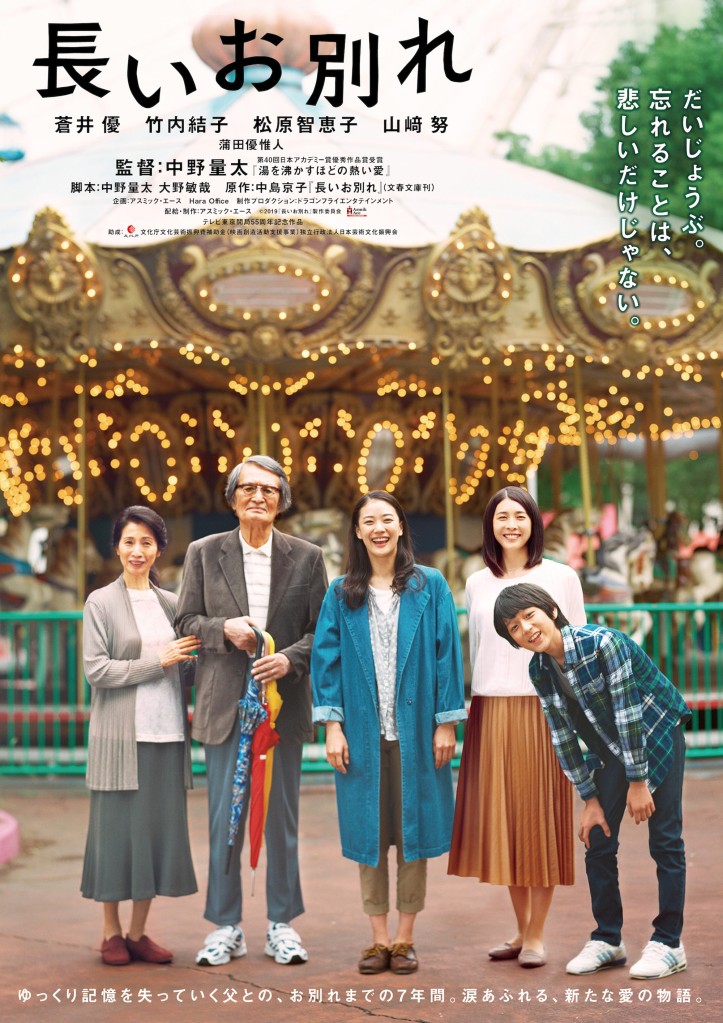
A Long Goodbye (長いお別れ, Ryota Nakano, 2019)

Contemporary Japanese cinema has gone lukewarm on the idea of family, presenting it more often as a toxic rather than supporting presence. Among the few remaining positive voices, Ryota Nakano’s previous films Capturing Dad and Her Love Boils Bathwater never made any attempt to pretend that families are always perfect or that the family as a concept is one which must always be defended, but ultimately found warmth and solace in the mutual act of pulling together as the sometimes wounded protagonists found strength rather than suffocation in unconditional love. 

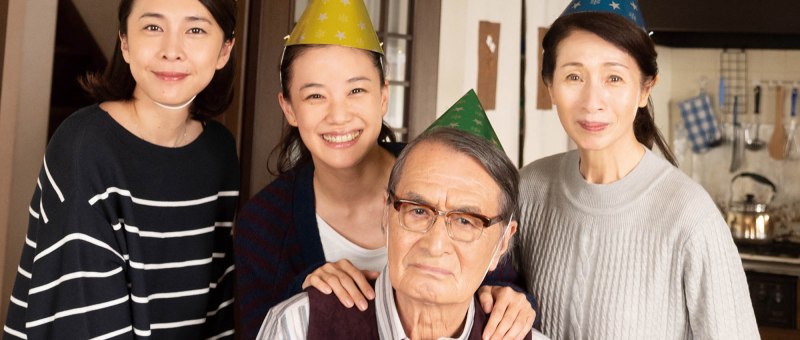
A Long Goodbye (長いお別れ, Nagai Owakare) finds something much the same as three women are forced to deal in different ways with their relationships with austere father Shohei (Tsutomu Yamazaki), once an authoritarian head master but now suffering from dementia and rapidly losing the ability to read. The first signs of decline are felt in 2007, prompting mum Yoko (Chieko Matsubara) to ring both of her increasingly distant, almost middle-aged daughters, and invite them to their father’s 70th birthday party, 

33-year-old Fumi (Yu Aoi) is in the middle of breaking up with a boyfriend who’s giving up on his dreams of being a novelist to take over the family potato farm. Fumi’s dream is owning her own restaurant, but somehow it seems a long way off. Older sister Mari (Yuko Takeuchi), meanwhile, is a housewife and mother living with her fish scientist husband Shin (Yukiya Kitamura) and son Takashi (Yuito Kamata) in California. Lonely in her marriage, Mari struggles with her English and finds it difficult to make friends with her husband’s colleagues who openly criticise her language skills from across the room while Shin makes no attempt to defend her. 

Meanwhile, Yoko carries the heaviest burden alone in trying to manage her husband’s decline even as he begins to wander off, forever asking to go “home” even when he is already there. The concept of “home” however may be difficult to define in a rapidly changing society. All the way across the sea, Mari frets about her parents and feels guilty that, as the older sister, she should be doing more and has unfairly left everything to Fumi just because she happens to be in closer proximity. She is then slightly perturbed to realise that Fumi hasn’t seen their parents since the previous New Year and is equally shocked at the noticeable change in her father who goes off on random tangents and suddenly loses his temper over trivial things. 

Mari flies back to Japan when crises occur but her husband is not as understanding as one might expect. His research concerns fish which adapt to their environment and it’s clear he’s begun to follow their example, falling wholesale for Western individualism. He criticises Mari’s anxiety for her parents’ health by reminding her that her “family” is her husband and son, bearing no responsibility for additional relatives. Shin now believes strongly in individual responsibility, that Shohei and Yoko need to look after themselves. As such he takes little interest in his family leaving all the childcare duties to Mari in somehow believing that children raise themselves. When the teenage Takashi (Rairu Sugita) goes off the rails and starts skipping school, Mari turns to the time old philosophy that he needs a good talking to from his father, but all Shin can come up with is that his son’s his own man and he’s sure he has his reasons. 

The young Takashi is acclimatising too, getting himself a red-haired Californian girlfriend who’s obsessed with J-pop and kanji, but later replaces him with another Asian guy when he goes back to Japan to spend time with Shohei while he’s still somewhat present. Meanwhile, Fumi works hard to realise her dream but encounters a series of disappointments both romantic and professional as she too reconsiders the idea of family and whether it’s truly possible to slide into one that has already fractured. Becoming responsible for her parents’ care shifts her into a maternal role she might not have expected, maturing in a slightly different direction while Mari remains trapped and lonely, neglected by her newly individualist husband who only cares about his research and shut out by her understandably angsty teenage son. 

Crises are, however, good for bringing people back together. Shohei it seems was a typical father of his times, distant and authoritarian, perhaps not always easy to be around. Fumi worries that she disappointed him, not becoming a teacher as he’d hoped while also failing to achieve her dreams of becoming a restaurateur, while Mari just wants what her parents had in a loving and supportive marriage surrounded by the warmth of  family. Shohei might not always have shown it, but there’s a lot unsaid in his constant desire to go “home” back to the time his kids were small. Home is where the heart is after all, even if you don’t quite remember the way. 


Original trailer (No subtitles)
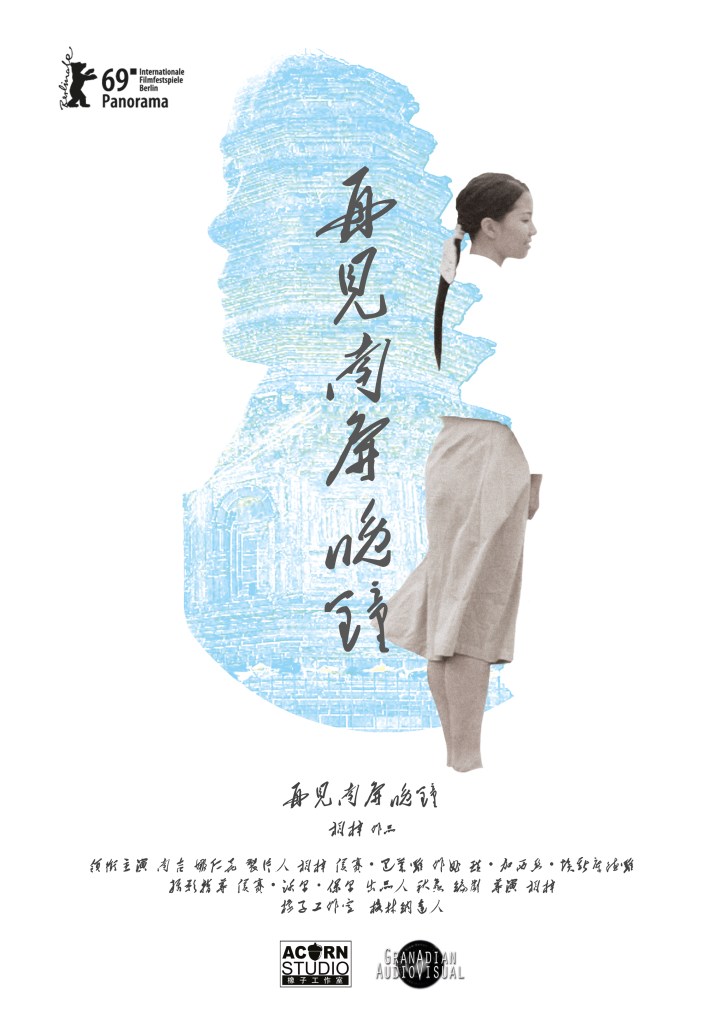
A Dog Barking at the Moon (再见 南屏晚钟, Xiang Zi, 2019)

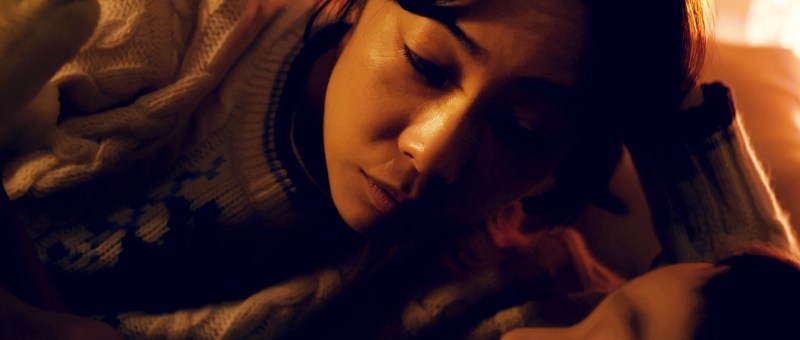
“How come she doesn’t cry?” a mother anxiously asks, still on the table following a caesarean section, “don’t worry, it’s a matter of time”, the doctor reassures her. Representations of LGBTQ+ life in contemporary Chinese cinema are few and far between, which might be one reason why the famed dragon seal does not appear before A Dog Barking at the Moon (再见 南屏晚钟, Zàijiàn Nán Bīng Wǎn Zhōng), a Spanish co-production and the autobiographical first feature from Xiang Zi. A melancholy contemplation of the various ways a repressive social system can echo through generations, Xiang’s film quietly suggests that one form of authoritarianism breeds another and that if conformity comes at the cost of happiness then it’s a price not worth paying. 

Heavily pregnant Xiaoyu (Nan Ji) has returned to China from the US with her Western husband (Thomas Fiquet) to have the baby under better medical conditions, but it appears that an extended stay with her parents may not exactly be a cause for celebration. Though her mother Jiumei (Na Renhua) originally seems cheerful and happy to see her daughter, it’s clear that there is frostiness between the two women and distance within the marriage. Gradually we discover that the iciness which pervades the Huang home is born of a sense of resentment and betrayal which stems back (partly, at least) to Jiumei’s discovery that her husband, Tao (Wu Renyuan), is a closeted homosexual after discovering him with his male lover. 

That does not, however, quite explain Jiumei’s ambivalent attitudes to her daughter. “I haven’t had a happy day since you were born” she’s fond of saying, regretting that she didn’t strangle her at birth after hearing from a fortune teller that Xiaoyu would be her “nemesis”. The allegorical quality of Jiumei’s story about going off the dog because he came to love her husband more is certainly not lost on Xiaoyu, awkwardly asked to translate for her husband, swinging between pity and resentment, as bound by social norms as her mother in feeling obliged to take care of a woman who does nothing other than reject her. 

Xiaoyu has long thought her parents should separate, but it never seems to happen. Her father tells her that he worries what will happen if they do. Jiumei says she wants to go to the US and live with Xiaoyu who can hardly refuse, but Tao knows that his wife is not an easy woman and the effect of her constant presence could prove detrimental to the state of his daughter’s marriage. Even so, Xiaoyu thinks it would be the best thing for all of them, if only to escape the never-ending hell of their cycle of bitterness. 

Jiumei, meanwhile, has found refuge elsewhere – in the arms of a shady Buddhist cult. Jiumei believes that her husband is “mentally ill”, blaming his mother for some sort of past trauma that’s made him the way he is. The cult preaches filial piety, family values, and loyalty to the state, and is always ready to “help” in return for “support”. Hoping to buy her way into a more respectable life, Jiumei donates vast amounts of money in the hope of meeting the mysterious Master Zhao who, it is claimed, can “amend” her husband’s sexuality and therefore fix all of the other problems in her life. 

“Gossip can bury you alive” we later hear Jiumei exclaim in a flashback, talking about about something else and perhaps explaining why she’s so desperate that her marriage of convenience be a superficial success. From the outside the Huangs are an ideal couple, wealthy and successful, and so their society tells them they shouldn’t complain. Having suppressed her own desires, complaining that Tao has been “impotent” for most of their marriage, Jiumei is angry and resentful of those who are unable or choose not to do the same. Meeting Tao’s lover, Xiaoyu laments that what Jiumei most wants is never to separate from her father until the end of time, but does not quite know the essential truth of it until an unexpected and all too brief moment of candour from her distant mother. Xiaoyu’s hand wants to reach out to her, but there is a barrier between them which it seems cannot be breached. 

Moving between Jiumei and Tao’s early courtship and the present day, moments of elliptical symmetry present themselves. Fengxi (Chen Zhengyuan), Tao’s younger lover, is it seems himself about to be married and become a father. Xiaoyu meets with him and explains that she is not in any way against their relationship, but pleads with him not to enter a marriage of convenience and ruin a young woman’s life, as her father did, solely for the sake of passing on the family name. He is quick to correct her that he would never consider it, his fiancée is a lesbian who wanted a child with her lover, he is merely helping them out while getting everyone’s parents off their backs.

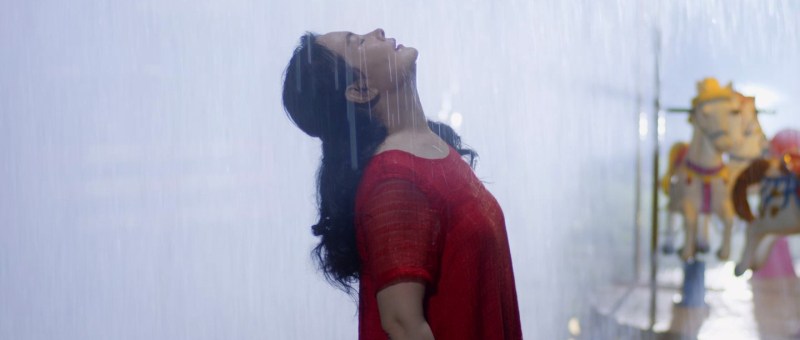
Fengxi refuses “to build happiness over someone else’s sorrow”. Meanwhile, a long time in the past, someone asked Jiumei what the point was in marrying and having children to live a life you don’t believe in, but she could only answer that marriage was a matter of finding someone who fit the role more than it was of love. Jiumei has been playing her role at the cost of her soul and it’s left her lonely and bitter. Internalised homophobia has ruined them all, forcing them to live lives of empty conformity with only the cold comfort of having fulfilled their duty to society. Jiumei resents Xiaoyu because she is the symbol of the price she paid to lead a conventional life, doubling down on her bet for normality, and passing on that same, misery inducing repression to her daughter. Xiaoyu seems to have escaped by going abroad, but even if her husband tries to convince her that her parents’ lives are not her responsibility, remains equally bound by a sense of obligation now given new weight by her impending motherhood. Xiang ends with a heartbreaking dream sequence in which all can dance together, joyfully embracing their true selves free of shame or anxiety, but as others retreat from the rain some choose to stay, sitting all alone in darkened rooms knowing it is they themselves who elected to turn out the light.


A Dog Barking at the Moon is available to stream via BFI Player until 4th April as part of this year’s BFI Flare.

Original trailer (English subtitles)