We Have Boots (我們有雨靴, Evans Chan, 2020)

“Fight pragmatically for the impossible” is the advice from Chan Kin-man, cofounder of Hong Kong’s Occupy Central Campaign, in Evans Chan’s follow-up to his 2016 documentary Raise the Umbrellas, We Have Boots (我們有雨靴). Part of a projected trilogy which began with To Liv(e) in1991 examining Hong Kong in the aftermath off Tiananmen Square and may never now, the director fears, be completed, the sprawling two-hour doc runs through six turbulent years of Hong Kong protest, dissecting the failures of the Umbrella Movement and implications of the passing of the National Security Law in the midst of a global pandemic in June 2020.

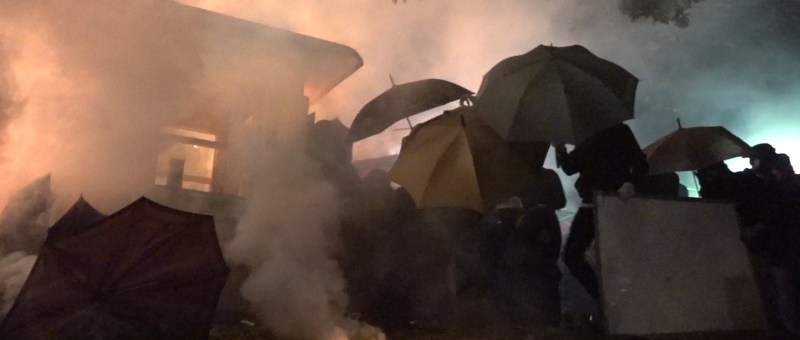
Evans Chan opens with a faintly ridiculous propaganda video which outlines what the film describes as “Chinese exceptionalism” in that China can feel fairly smug about itself as it did not rely on exploitation, colonial massacre, or slavery to become prosperous nor has it submitted itself to Western democracy. The narrator of the video appears to view the people of Hong Kong as brainwashed foster children turned against their homeland by the “fake news” of international propaganda seeking to portray it as a source only of authoritarian oppression and, in fact, growing up to become “time bombs” posing a threat to Mainland security. In an ironic cut, Chan then drops us directly into a traumatic raid on a subway station in which we witness extreme and random police brutality directed against ordinary citizens. 

Yet Chan is not sparing of the Movement either, directly documenting concerns among the protestors at the Umbrella Movement five years after the fact as they complain of over centralisation, that their “democratic” movement did not practice what it preached when the main platform acted like a command centre and refused to listen to other points of view including those advocating for violent action. Meanwhile the more militant arm of protest movement finds it increasingly difficult to escape criticisms of entrenched xenophobia in its openly anti-Mainland stance, describing Chinese migrants as “smugglers and looters” in reference to a trend accusing frequent visitors from the Mainland trafficking supposedly safer commodities such as baby milk which had been the subject of scandals owing to lax safety standards. The same group also objects to Mainland women dancing in the streets as an affront to local Hong Kong culture, adopting the Sanskrit “Cina” to refer to the country while viewing those coming from wider China as “colonisers” rather than migrants hellbent on undermining the traditional culture of the island. 

Nevertheless, Chan also makes plain the various levels of Kafka-esque obfuscation the opposition faces in its goal of gaining universal suffrage and true democracy for Hong Kong. Young councillors are abruptly disqualified after “misusing” their swearing-in speeches by flying flags which state Hong Kong is not China or otherwise badmouthing the Mainland or political process. Unable to find appropriate offences to discourage the ringleaders, they come up with nebulous charges such as “incitement to incite public nuisance” which are essentially meaningless not to mention counter-productive save that they prevent those who receive custodial sentences from standing for further political office. 

One young man appears only in full protest gear clad in black head to toe, presumably keen to maintain his anonymity as he details his role as a frontline protestor. We’re reminded that China essentially disappeared five booksellers from Causeway Bay for the crime of selling problematic books, only one of whom later resurfaced explaining he’d been held on the Mainland against his will. The leaders of the movement fully expect to pay with their freedom and, according to Chan Kin-man at least who turns down the opportunity of exile abroad, view participation in their trials as facet of their resistance. “Being young is a crime,” the anonymous protestor laments. His generation don’t expect to have money, they don’t expect to have children, in short they do not expect to have a future, all they have is resistance. While the international press holds up Hong Kong as a bastion against incremental authoritarianism in an age of democratic recession, China describes the Be Water protests as “riots” and continues to target prominent protest leaders driving some into exile. With a mix of stock footage, talking heads interviews, and experimental dramatisations, Chan spins a melancholy picture of a Hong Kong facing the crushing despair of the Security Law, but as the poem which inspired the film’s title reminds us, they have umbrellas, they have boots, they have each other and so the fight is not yet over. 


Trailer (English subtitles)
Come and Go (COME & GO カム・アンド・ゴー, Lim Kah-Wai, 2020)

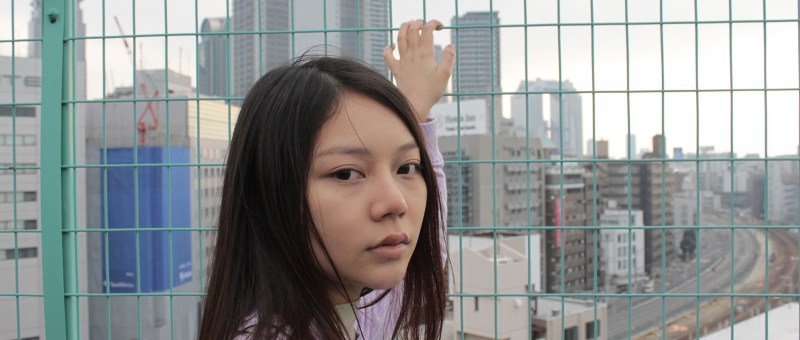
Japanese cinema has not always been willing to contend with contentious social issues such as immigration. More recently, however, indie filmmakers in particular have been keen to critique the nation’s attitudes towards those who’ve come to make their home there. Like Akio Fujimoto’s Along the Sea, Lim Kah Wai’s Come and Go (カム・アンド・ゴー) explores the lives of those who’ve come to Japan, in this case Osaka, in search of a better life but have mostly encountered exploitation and prejudice while marginalised Japanese residents apparently fare little better. 

Lim weaves his disparate tale around the discovery of a skeleton in a rundown part of town which is later found to belong to an elderly woman apparently reported missing six months previously. The comings and goings that we witness are an interconnected series of movements between a quartet of South Korean sex workers apparently trying their luck in Osaka because of an economic downturn at home, a tour group of wealthy Chinese tourists mainly interested in shopping, their guide, a Malaysian businessman in town for a presentation about tourism, a lost Japanese woman failing to make it as a hostess, an Okinawan porn producer literally pulling women off the street and embarrassing them into taking part in his videos, a Taiwanese sex tourist, a Vietnamese man on a “Technical Trainee” scheme but trapped in exploitative factory work, a student from Burma sexually harassed at the second of her part-time jobs, a Nepali refugee dreaming of opening a restaurant of his own, the Japanese teacher he is having an affair with, her husband the policeman, a middle-aged Japanese man embarking on a career as a rent-an-uncle, and a man being exploited while working in a car park who also seems to be mixed up with gangsters.   

Osaka it seems is a busy place. Mr Lee, the man travelling with the Korean sex workers, harps on about the “Osaka dream” as if the city held some special allure but pretty much everyone is struggling, either exploiting or exploited by others. Like the three women of Along the Sea, Nam came to Osaka on the technical trainee programme but is treated badly by his unsympathetic boss who refuses to give him permission to return to Vietnam temporarily to visit his mother who has been taken ill. Nam too attempts to run away, contacting a Vietnamese friend who runs a restaurant for advice where he’s told to convert his technical trainee visa to a student one by enrolling in a language school so he can “come and go” as he pleases. This is the same language school where Yoshiko, the policeman’s wife currently having an affair with Nepali Refugee Musoun, works. We can see that her classes are barely attended, and when she asks her boss about apparently fake names on the roster, she’s told to make her attendance figures look better on paper. It’s clear that not everything is on the level at the school, the headmaster explaining to Nam he needs to pay a hefty fee to enrol but that’s OK because they can help him find a part-time job in return for a hefty part of his salary. Later picked up by the police, Nam runs into another Vietnamese guy who also left his technical trainee programme but now regrets it, claiming he was cheated by false promises and one of his friends even took his own life as a result. 

Working at the same factory but as a part-timer, Burmese student Mimi finds something similar as she’s sexually harassed by the skeevy middle-aged boss at her second part-time job at a supermarket. While the men are forced to deal with labour exploitation and physical violence, the women are also subject to ingrained patriarchal values as evidenced by the preoccupation with sex and pornography among many of the male visitors such as sex tourist Xiao Kang who idly plays with sex toys in a store while lining up for an autograph from an AV actress, or the collection of sleazy Chinese businessmen demanding to be set up with authentic Japanese porn stars. The problem there is that porn producer Ryuji is deep in debt to yakuza loan sharks and has no women on his books, eventually brokering an unconvincing deal with Chinese tour guide Cheung and the South Korean pimp Lee to pass off the Korean sex workers as Japanese porn stars assuming that the Chinese won’t notice the difference because one woman’s as good as another. Meanwhile, conservative Malaysian family man William finds himself extremely uncomfortable when forced to conduct business in a hostess bar which his contact keeps insisting is how business gets done in Japan while unwilling to change his behaviour to accommodate his guest which is in itself ironic as William is there to advise them on boosting tourism from Malaysia through cultural awareness. 

While well-meaning protestors take to the streets to hold an anti-discrimination rally, Kenji fairly points out that they preach acceptance for the international community but ignore mixed-ethnicity citizens like himself, something fully borne out by their rather defensive and somewhat prejudiced conversation when he leaves to use the bathroom. The police conference regarding the skeleton ends with the policeman lamenting that the modern society has become selfish and indifferent to the feelings of others placing wealth and convenience above community which is how an old woman’s body went undiscovered so long and apparently became mixed up in a complicated real estate scam. Even the Japanese rent-an-uncle is forging time-limited, compensated relationships with strangers while his own son ironically tries to convince him to retire to Malaysia so he can get his hands on the house. These people are all connected even if they don’t know it, all victims of the same oppressive system as the city moves all around them increasingly indifferent to their existence.


Trailer (English subtitles)

The Grand Grandmaster (乜代宗師, Dayo Wong, 2020)

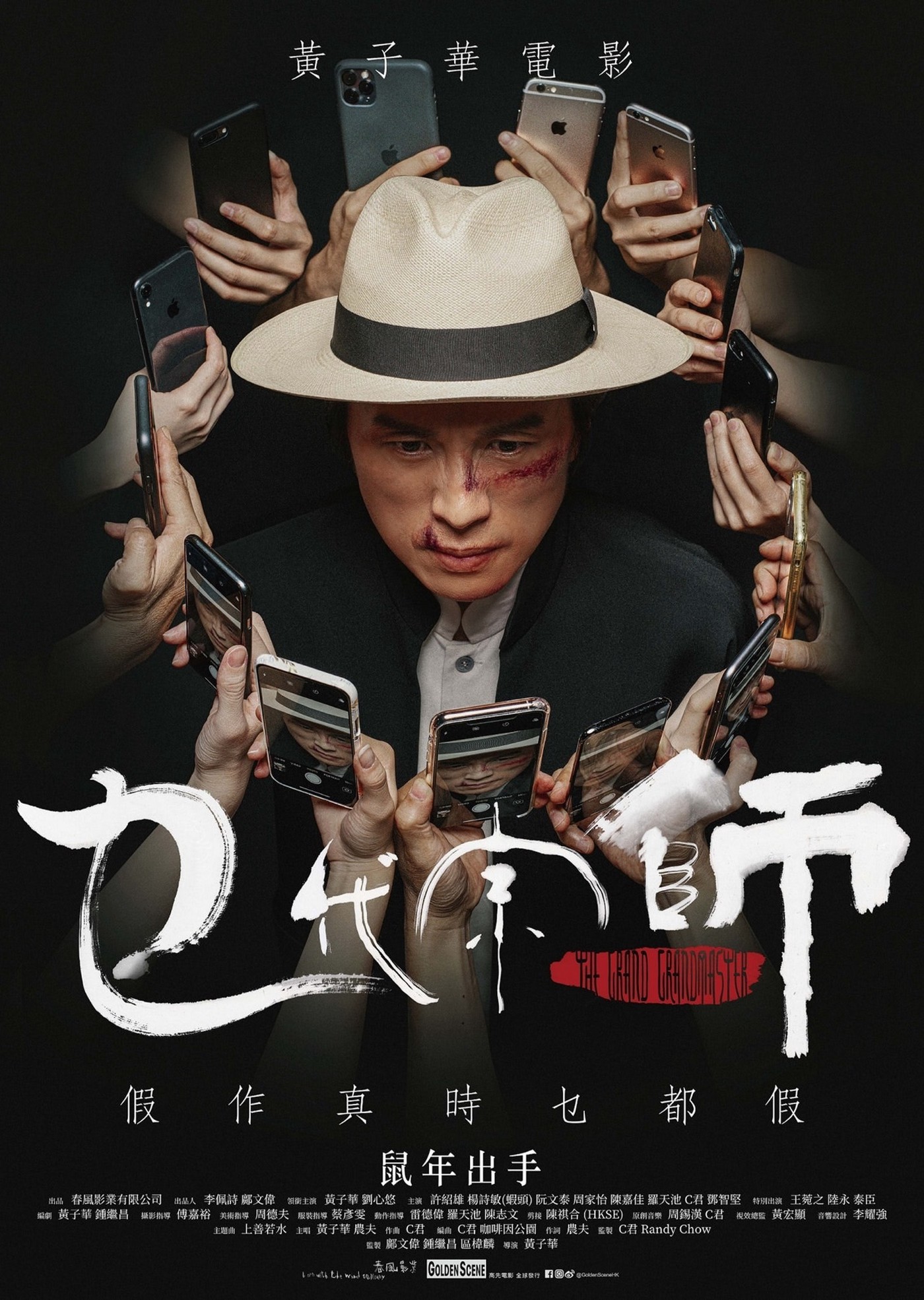
Are you actually “the grandmaster” or just a bit “grand”, the hero of The Grand Grandmaster (乜代宗師) is eventually forced to ask himself after being confronted with the various levels of his self-delusion. Legend has it that comedian Dayo Wong sold an apartment to finance his second directorial feature in order to produce a purely local film without having to submit himself to the strictures of the Mainland censors’ board or accept funding from the greater PRC, a move which endeared him to the young protestors then still out in the streets campaigning for democracy. The Grand Grandmaster was one of the few New Year films to make into cinemas before they shut down because of the pandemic but aside from Wong’s grand gesture is perhaps light on political content, save for a mild satire on the commercialisation of kung fu. 

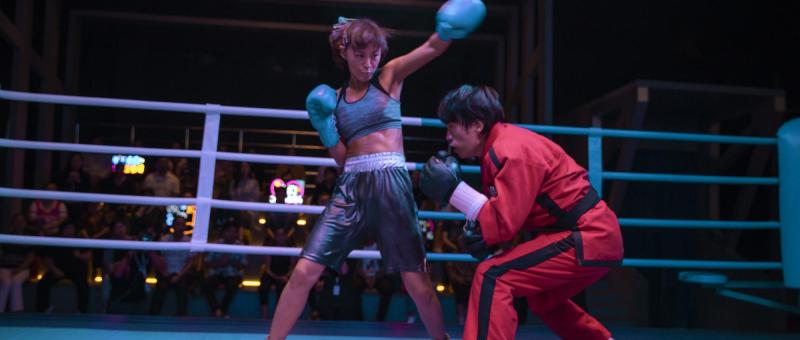
The Grand Grandmaster, Ma Fe-lung (Dayo Wong Chi-Wah), is the latest guardian of the Ma Ka Thunder Style martial art apparently carried by one of his ancestors to Hong Kong from the Mainland during the Song dynasty. Ma Ka Thunder has since become something of a brand with its own dedicated merchandising line and video ads playing on giant billboards featuring Fei-lung himself as the face of the organisation. His hopes for US expansion along with his general business plan are disrupted when he gets into a public altercation with an old man who tries to steal his taxi and then makes a scene claiming that Fei-lung hit him leading Chan Tsang (Annie Liu Xin-You), the “boxing goddess”, to emerge from the shadows and give Fei-lung a public beating. Filmed by everyone in the surrounding area, the event becomes a viral phenomenon that leaves Fei-lung humiliated but while his minions urge him towards a public rematch to regain his reputation, Fei-lung is consumed with despair on realising there is no way he could ever hope to defeat the feisty young woman. 

Wong has fun satirising the lore of kung fu as Fei-lung outlines the strange tenets of the Ma Ka Thunder Style which turns out to make more sense that it first seems only generations of practitioners have it seems forgotten something quite fundamental. Fei-lung and his associates have to ask themselves if the art of Ma Ka is really just “fake fighting”, something suggested to Fei-lung by his loyal assistant who makes a point of overdoing his defeat and admits he only stays with the school because living outside is hard and here he gets room and board. Urged to show his full strength, he effortlessly defeats his master but only by abandoning Thunder Style for a selection of moves from other martial arts. 

The remainder of the film sees Fei-lung trying to “dodge” Tsang, firstly by trying to bribe her to throw the fight for him and then by convincing her to get more “comfortable” with the idea of losing. Events take a rather strange turn when Tsang’s dad gets involved and starts training Fei-lung for real in an effort to get back at his daughter for quitting boxing after a single defeat apparently humiliating him in another nod to the film’s strangely sexist worldview. Tsang bizarrely falls for Fei-lung after witnessing the depths of his self-delusion in his complex relationship with his ex-wife, building to a crisis which accidentally makes a case for domestic violence in insisting that Tsang will only believe that Fei-lung really loves her if he defeats her in the ring. 

Nevertheless, the conclusion is an oddly egalitarian one in which there is no win, no lose, no draw. Fei-lung realises the various ways in which he’s been deluding himself and presumably emerges with a little more clarity, awakened to the true meaning of the “virtue like water” motto of Ma Ka Thunder Style which apparently lies in generosity of spirit, giving without expecting in return and like water trickling down. Which is to say, Fei-lung learns to stop dodging life’s blows, to give up on tricks and fakery, and to be a little more authentic, which is perhaps how he wins Tsang’s heart and respect. A committed performance from Liu helps to mitigate some otherwise flat comedy though the saga of the kung fu con man rediscovering his sense of social responsibility through a true appreciation of martial arts never quite hits home, while a strange mid-credits diversion perhaps proves one move too far.


Trailer (Traditional Chinese / English subtitles)

Wonderwall: The Movie (ワンダーウォール 劇場版, Yuki Maeda, 2020)

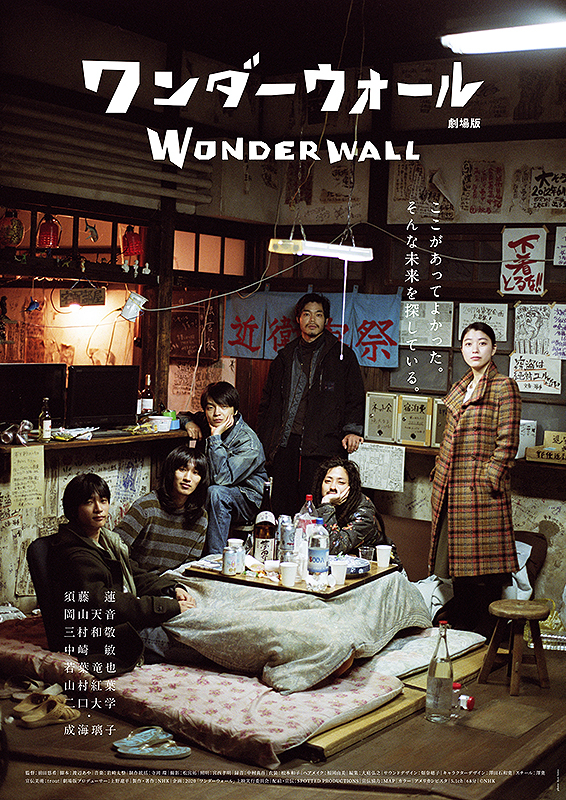
It’s funny, in a way, that young people are often the ones fighting to preserve the old while those in middle-age and beyond are largely keen to bulldoze the past for future gain. Yuki Maeda’s campus drama Wonderwall (ワンダーウォール 劇場版, Wonderwall: Gekijoban) sees a collection of students take a stand against the bureaucratic capitalism of their university in their attempt to save a much loved dorm but largely finding their efforts frustrated by an implacable hierarchy. 

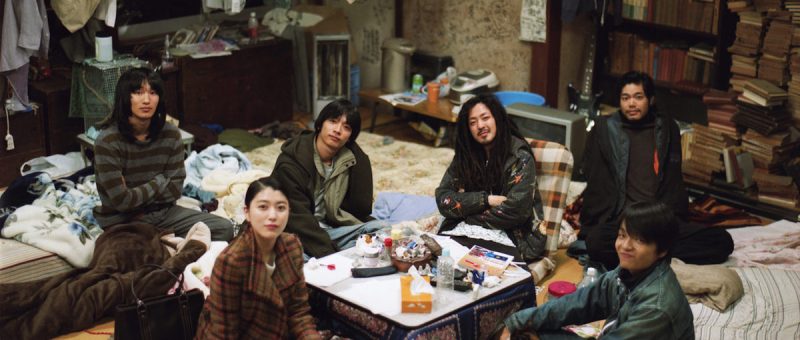
The Konoe Dorm at Kyoto University was built in 1913, which is to say the beginning of the Taisho era in which arts and culture flourished in a rapidly modernising and international nation. As one of the students tells us, Konoe is run not by the faculty but the students themselves and operates like a commune in which there is no hierarchy, all are equal and equally responsible. They have regular “meetings” about various domestic problems such as refuse collection which can go on for hours because all decisions must be unanimous while they also operate gender neutral bathrooms so that everyone really can be equal and free to be themselves. It’s impossible not to see the university’s attempts to destroy it as an attempt on the students’ autonomy and an attempt to impose order on their bohemian existence. 

At more than one point, a student remembers walking past the alley that leads to the dorm in the dark and seeing the light glowing from its doors as if beckoning them in. In this space, the students inherit what has been passed down to them while teaching each other and the next generation what they know including the negotiation skills they’ve been using to argue their case in their ongoing battle with the faculty. The film’s title refers to a plastic screen that was placed in the student affairs office separating the students from the staff so that they could no longer meet them on their own terms. The narrator likens the wall to the one that fell in Berlin in 1989 and laments that back then we knocked walls down but now we only throw them up. The students argue that the dorm is well built and of architectural interest while it would otherwise be possible to renovate and bring it up to current earthquake codes if only the university would agree. Tragically, a sympathetic teacher who is forced to agree with them is then compelled to reverse his decision and shockingly dies not long after presumably from the stress of the situation along with his own inner conflict regarding the treatment of the students. 

Mifune (Satoshi Nakazaki), the leader of the protests, eventually becomes disheartened. They managed to oust the old battleaxe from the front desk and assumed they could take a step forward to the next boss, but she was merely replaced and by a pretty young woman to boot leaving the guys feeling like they’ll never win. It transpires that the university wants the land the dorm sits on to build a high rise along with additional medical and engineering labs as these are the subjects that bring in funding which is otherwise thin on the ground from the current government. Yet as a visitor says, if prosperity made you happy there wouldn’t be so many young people who feel they have no option other than to take their own lives. If so many people are fighting for its survival, the dorm must have something essential for human happiness. Mifune comes to describe his feeling for the building as something like love in the warmth with which it inspires him.

Quite poignantly, Maeda ends on a series of title cards revealing that the university now refuses to speak to the student body at all and has in fact silenced them, even going so far as to sue 15 tenants who refused the order to move out. Another of the students wonders if the dorm was a victim of its own success, that their “utopian” thinking left them unable to unite for a common goal and perhaps it would have been better if they’d turned to the dark side and gone in all guns blazing in a show of violent defiance. The action shifts to a pair of musical set pieces in which the students and well-wishers play the “Wonderwall” song as a makeshift orchestra breathing life into the rapidly dilapidating building’s walls while continuing to fight for the survival not only of the Konoe Dorm but everything it represents in the freedom and community the students fear will soon disappear from the their lives. 


Original trailer (English subtitles)

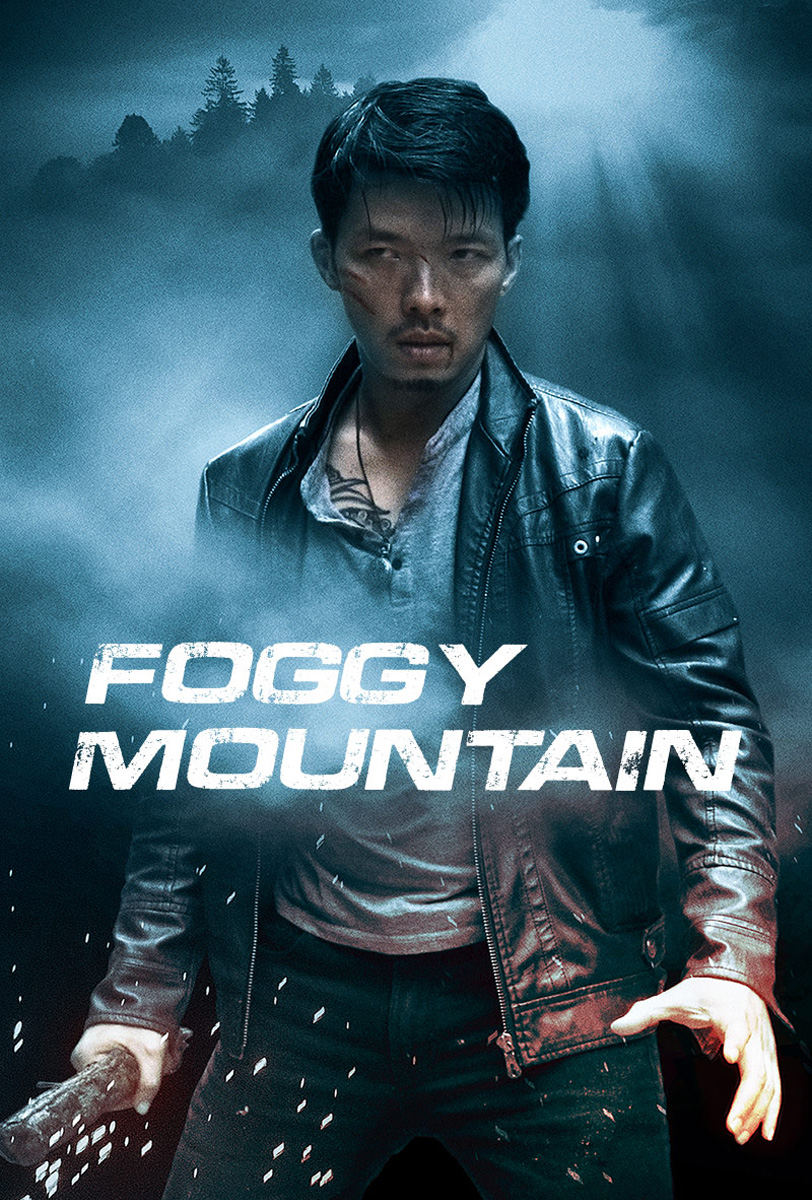
The Foggy Mountain (Đỉnh Mù Sương, Phan Anh & Ken Dinh, 2020)

A former prize fighter’s quest for revenge takes him deep into the mountains in Phan Anh and Ken Dinh’s martial arts adventure Foggy Mountain (Đỉnh Mù Sương). In essence, the fighter’s battle is against himself and his darkest interests as he must decide whether he’s going to pursue personal revenge or attempt to free the innocent citizens caught up in his quarry’s venal crime enterprise. In any case, Ba Rau (Kim Long Thach) represents a frightening and oppressive force that cannot be stopped unless someone chooses to take a stand.

That someone might not necessarily by Phi (Peter Pham) for he has reasons of his own to hate Ba Rau that are purely personal. Phi gave up his career as a prize fighter to spend more time with his wife, Lanh (Truc May), but was tempted back for one last bout that would supposedly carry a large payout and enable him to pay for treatment for Lanh’s eye condition. However, the match was a pretext set up by Ba Rau so that he could offer him a job. Phi definitively refuses it, telling Ba Rau he wants nothing to do with his dodgy dealings. Offended, Ba Rau has Phi beaten up and dumped in the middle of nowhere before heading to his house and killing Lanh.

An older man who lost his son in the ring during a bout with Phi warns him that hate is a poison and revenge is not an antidote so he’d best dig two graves before he goes, but Phi is adamant that he needs to avenge Lanh’s death by killing Ba Rau who is holed up on Foggy Mountain. Phi seems to have some friends there, but discovers that the village has been taken over as Ba Rau kidnapped the headman’s children and blackmailed him into letting them take root so he can facilitate his new people trafficking business. Matters come to a head for Phi when he finds some captive children but vacillates over rescuing them, firstly claiming that he has more important things to do before eventually coming back after his old friend Bang Tam asks him what happened to his martial arts spirit. Ironically, Phi had asked the same of the village headman wondering whether he can really call it “peace” after making a deal with the devil to appease Ba Rau to “protect” his villagers though the headman simply tells him he’d feel differently if he were older and is simply too young to understand the decisions he has made. 

For a time, the film turns into a forest chase movie as Phi and Bang Tam attempt to guide the children back towards the village while avoiding Ba Rau’s henchmen, making use of mountain traps and encountering natural dangers such as the fast flowing river one of the kids falls into spraining her ankle. Phan Anh and Ken Dinh largely eschew narrative in favour of moving from one fight set piece to another with the consequence that there’s very little to tie them together aside from Phi’s otherwise unstoppable obsession with tracking down Ba Rau and exacting his revenge on him. 

Then again, as it turns out Lanh probably didn’t want him to avenge her death anyway and may have willingly sacrificed herself in an attempt to protect him from Ba Rau and getting even more blood on his hands by killing him. To truly satisfy himself, Phi may have to remember that there is more than one kind of justice and putting a stop to Ba Rau’s ever expanding crime empire and heinous people trafficking enterprise might be a better way of getting revenge if only in teaching him a lesson that he’s not quite as untouchable as he thought he was. Even so, Phi’s self-obsessed quest for revenge rather than a desire to free those around him from Ba Rau’s influence makes him a fairly complicated hero though the film never really tries to explore the conflict in any depth while the hollowness of the narrative largely robs his quest of its power. Well choreographed action scenes otherwise help to overcome the lack of engagement and budgetary constraints even if the same cannot be said for those around them.


The Foggy Mountain is available on Digital in the US courtesy of Well Go USA

Trailer (English subtitles)

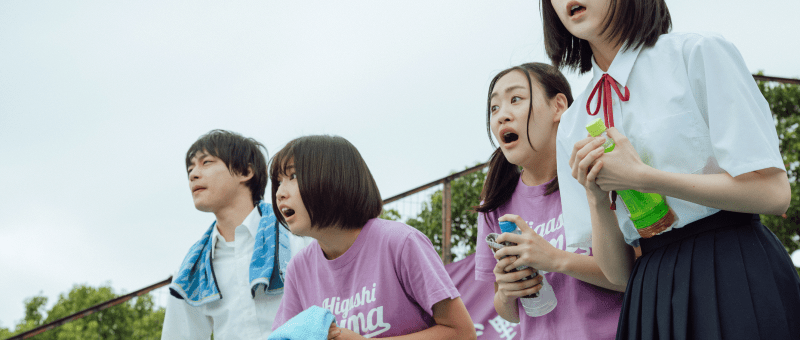
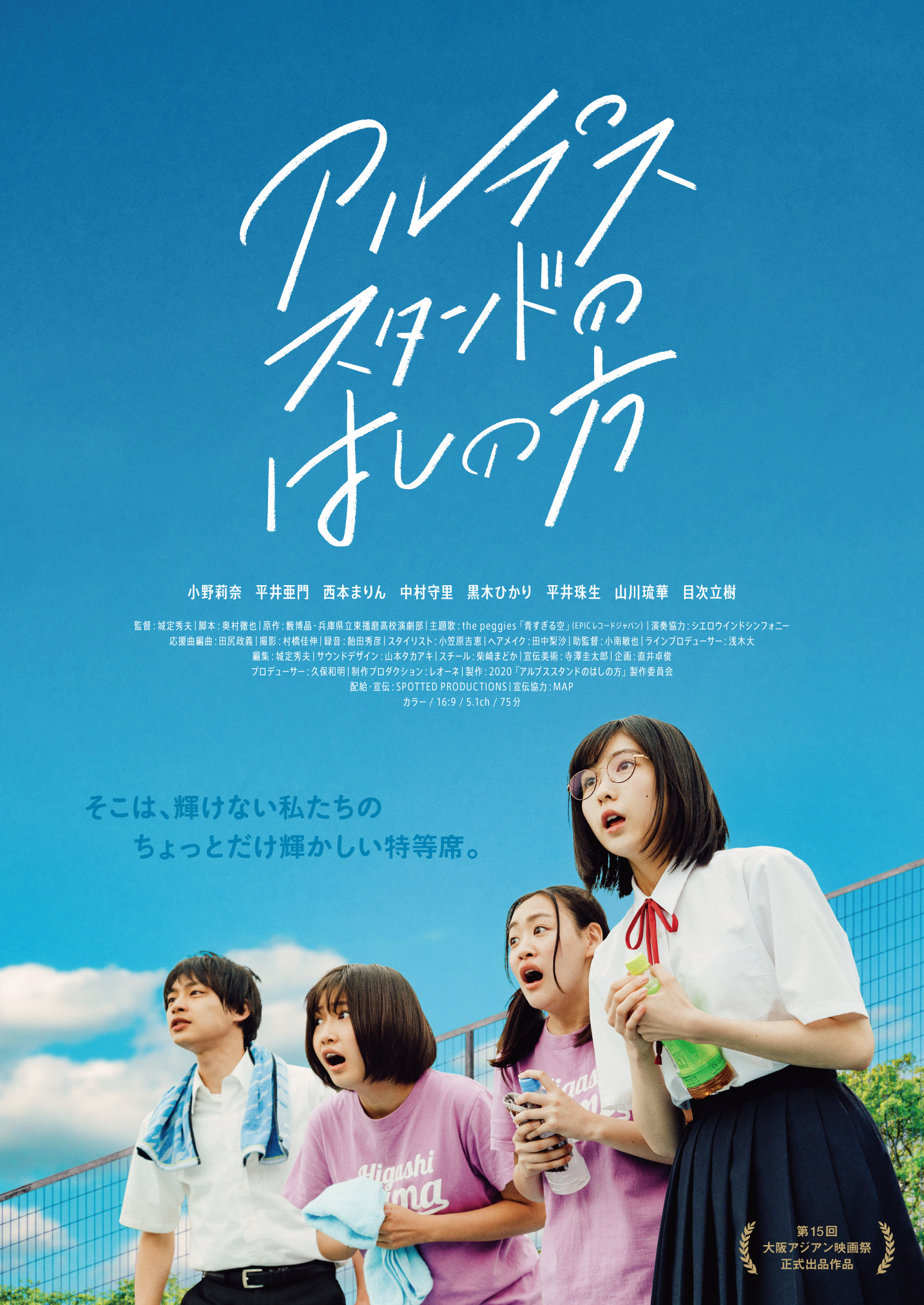
On the Edge of Their Seats (アルプススタンドのはしの方, Hideo Jojo, 2020)

It’s only natural to be a little anxious in the last year of high school but a collection of his school students are in danger of giving up before their lives have even started in Hideo Jojo’s zeitgeisty dramedy On the Edge of their Seats (アルプススタンドのはしの方, alps stand no hashi no kata). Adapted from a stage play written and performed by a high school drama club, the effortlessly witty dialogue has a lived-in quality while pregnant with its own anxieties as the teens each deal with their private disappointments while wondering if there’s any point in trying when all their efforts are doomed to failure. 

Best friends Asuha (Rina Ono) and Hikaru (Marin Nishimoto) for example are still dealing with the fallout from losing their place in a regional drama competition when one of them got sick and couldn’t perform. Fujino (Amon Hirai) quit the baseball team after realising he’d never be as good as the lead pitcher, and the shy Megumi (Shuri Nakamura) struggles with social interaction while unexpectedly having her thunder stolen by popular girl Tomoka (Hikari Kuroki) who not only beat her to first place in the last exams but is also dating her crush, Sonoda who is the star of the baseball team. 

None of them exactly wanted to come and watch their high school baseball team anyway which is why they’re way up in the bleachers. “Is the fabled last summer of high school meant to be so boring?” Asuha sighs, reflecting on the disappointing ordinariness of the end of her youth. It’s just one more thing she claims “can’t be helped” like the cancellation of the play or life’s myriad other disappointments. The ironic thing is that they’ve been bussed all the way into school in the middle of summer to watch their team lose, badly, to one that reached the national finals the year before. Perhaps you can’t blame them for their sense of futility. 

Yet it’s just this kind of defeatism that they end up facing, encouraged by their over-enthusiastic English teacher and the school band to shout their hearts out for their friends on the field. “Life is all about swinging and striking out” their teacher tells them, trying to reassure the teens that it’s worth taking the risk as they continue to meditate on disappointment and inertia. Fujino quit baseball because he thought it was pointless to continue when he’d always lose out to Sonoda, but his teammate Yano, who is objectively bad, stayed on and continued to train intensively despite his low prospects of ever being allowed on the field. He wonders who had the right idea, him or Yano, and whether it’s wiser to switch tracks when something doesn’t work for you or really it was just petulant resentment that led him to give up without putting up much of a fight. 

Though none of them were particularly invested in the game to begin with, when they talk about “baseball” they’re really talking about a lot of other things and gradually begin to rebel against the “can’t be helped” philosophy that led them to give in to disappointment. The shy and secretly lonely Megumi discovers that Tomoka doesn’t have it all that great either, eventually forging a spiritual bond in their shared desire to support Sonoda who after all is not having a great day on the mound. There’s something a little ironic in the choice of Sonoda’s favourite intro song, Train-Train by the Blue Hearts, which neatly reflects the teens’ internal anxiety along with the messages of living in the moment. 

What they learn is in essence that if you’ve done your best and it still doesn’t work out then that’s alright and there’s nothing to be afraid of so you might as well swing for the fences even if you miss. They remain “spectators” in one sense, but in becoming emotionally involved in the baseball game that we never see but only hear about the teens regain the courage and desire to take a more active part while gently bonding in their shared sense of solidarity and renewed hope for the future. Witty and warmhearted, Jojo’s innovatively lensed coming-of-age drama has a poignant quality of youthful nostalgia but also genuine heart in its gentle advocation for the art of perseverance. 


Original trailer (English subtitles)

Train-Train by the Blue Hearts

Love After Love (第一炉香, Ann Hui, 2020)

A naive young woman’s path from besotted teen to tortured yet masterful courtesan amid the colonial realities of pre-war Hong Kong is elegantly charted in Ann Hui’s stately adaptation of the novel by Eileen Chang, Love After Love (第一炉香, Dì yī lú xiāng). A slow-burn romantic tragedy, Hui’s floating drama at once reflects a sense of hopeless rootlessness and the ruinous intensity of a one-sided love but also the transgressive possibilities for freedom and independence in the rejection of traditional patriarchal social codes. 

Displaced from her native Shanghai by ongoing political tension, Weilong (Ma Sichun), the daughter of a once noble house, finds herself impoverished and left with the choice either of accompanying her family in returning to the Mainland where she will be set back a year in completing her studies or remaining behind alone in Hong Kong to graduate high school. Unable to support herself, she decides to turn to an estranged aunt she barely knows, throwing herself on her mercy and asking to be taken in even while knowing of the animosity which exists between her father and his sister. That would be because her aunt, Madame Liang (Faye Yu), turned down all the suitors her family found for her and chose instead to become the mistress of a wealthy man. He now having died, Madame Liang has inherited a sizeable fortune including a European-style mansion where she hosts society parties and enjoys a hedonistic lifestyle which has earned her a reputation as a seducer of young men. 

On her introduction to this world, one of the maids uncharitably describes Weilong’s entrance as like that of a new girl in a brothel and there is indeed something of that in her new role in the household, dangled like a bauble in front of Madame Liang’s collection of wealthy male associates, though Madame Liang apparently intends her only as decoration rather than gift. Tensions come to the fore as Weilong develops a fondness for a dashing young man, George (Edward Peng Yu-Yan), the mixed ethnicity son of coterie member Sir Cheng (Paul Chun), previously eyed by Madame Liang who understands much better than her naive niece that men like George are dangerous in their destabilising faithlessness. For Madame Liang, so perfectly in control, George may be manageable but as she later tells Weilong, unwisely goading her that her life of comfort is a failure because she will never find love, the only danger that exists to her is in unequal affection a prophecy that will in a sense come to pass in Weilong’s single-minded obsession to possess the heart of George. 

Weilong may describe Madame Liang’s lifestyle as ridiculous, yet as she points out her transgressive sexuality is also currency that permits the opulence and luxury in which she lives. Seduced by this world as much as by George, Weilong disapproves but admits that she is no longer the naive girl who arrived even if she also dislikes this new version of herself, considering a return to Shanghai and a possible reset to become someone else again presumably more in line with contemporary notions of social proprietary. She can’t deny that Madame Liang’s rejection of the patriarchal institution of marriage has granted her an unusual degree of independence otherwise unavailable in the contemporary society. She herself faces a choice in approaching the end of her high school days, either progressing to higher education, seeking work, or getting married naively insisting to Madame Liang that she will earn money in order to support George and his lavish lifestyle even as she advises her to enact a plot of romance as revenge. 

While Weilong’s discarded suitor benefits financially in becoming Madame Liang’s lover, she sponsoring his study abroad, Weilong again attempts to reverse traditional gender roles by trapping George as a kind of trophy husband. He had repeatedly told her he wasn’t the marrying kind, in part because of his insatiable sexual desire and perpetual loneliness in having lost his mother young, yet also because of his father’s perfectly acceptable yet socially destructive romantic history which includes several concubines and illegitimate children meaning there will be little in the way of inheritance. If he married, he’d need to marry well but Weilong’s family is impoverished and she has only her connection with Madame Liang to leverage. As she’d warned her it would be, the relationship between them will always be unhappy, Weilong winning a symbolic victory in coercing George towards marriage but unable to accept the limits of her control while he, paradoxically, is emotionally honest only with her but she can only see this as a slight as if he is so indifferent towards her that she is not worth lying to. 

As Weilong gradually morphs into her aunt, George’s sexually liberated sister Kitty lands on a different path later becoming a nun. The three women attempt to muster all of the advantages afforded to them under an oppressive patriarchal system but none perhaps find true happiness. It might be tempting to read a subversive comment on the nature of colonialism in the various frustrated love affairs and persistent sense of rootlessness, Hui’s drama is at heart a romantic tragedy in which two people become locked in a torturous relationship because they cannot understand each other. Their very idea of love is different. Doyle’s floating camera perfectly captures the fleeting opulence of this unreal society itself lingering on an abyss as the lovers continue to dance around each other looking perhaps for the love after love in immaterial comfort. 


Trailer (English subtitles)
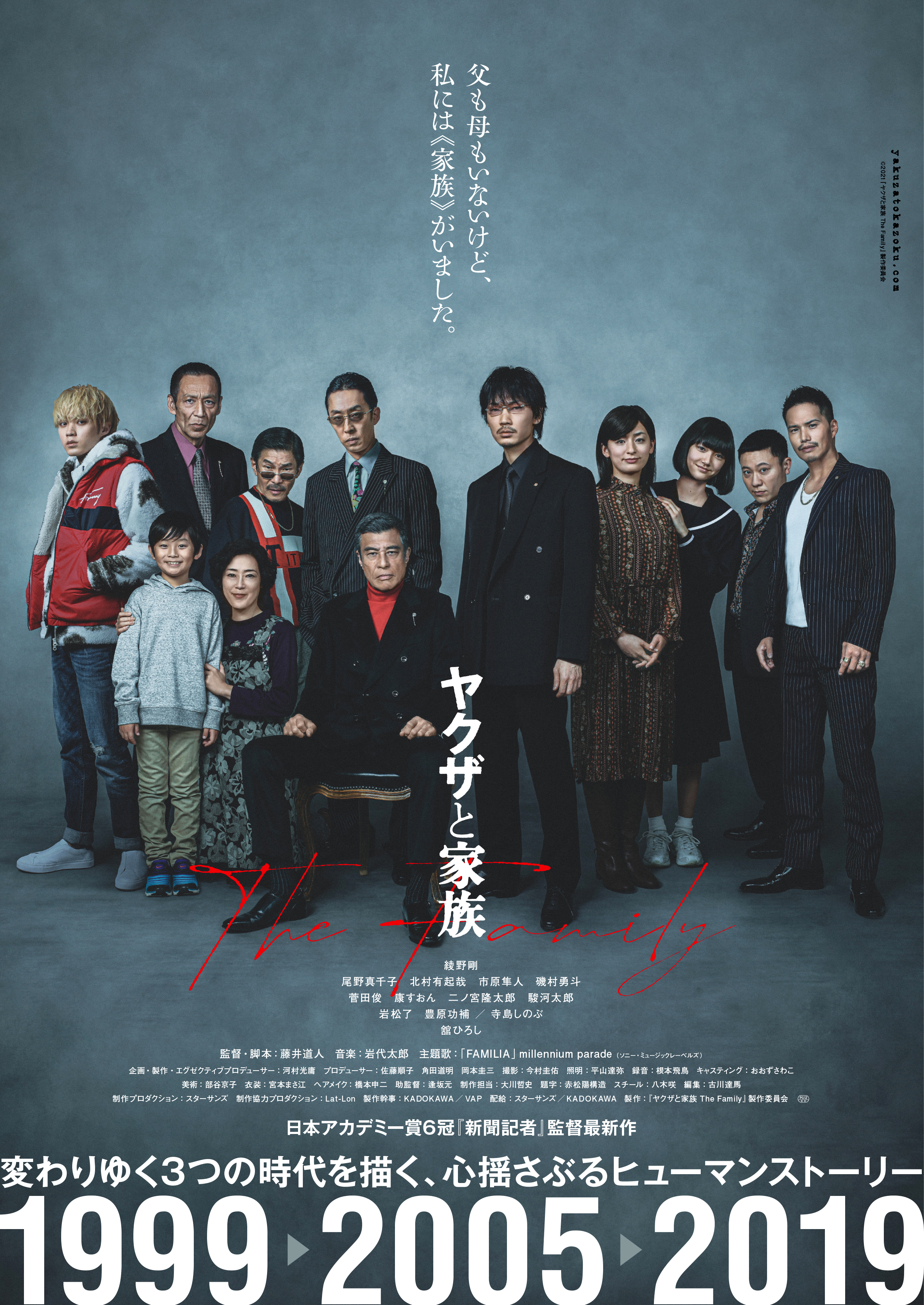
A Family (ヤクザと家族 The Family, Michihito Fujii, 2020)

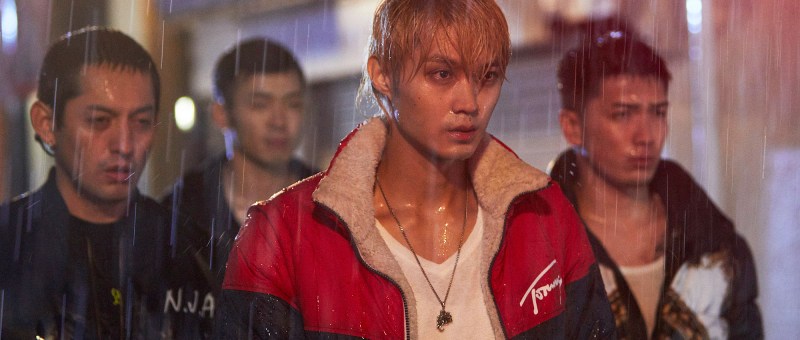
“No one can survive as a yakuza in this world” according to another orphaned son playing the long game of a crime adjacent existence in Michihito Fujii’s melancholy gangster drama, A Family (ヤクザと家族 The Family, Yakuza to Kazoku The Family). The yakuza, or at least yakuza in the movies, has long been a relic of the Showa era rendered increasingly irrelevant in a society no longer in need of its dubious claims of protection. In truth, it’s hard to mourn the passing of organised crime, but Fujii at least finds a kind of pathos and infinite sympathy for these men for whom the gangster brotherhood took the place of a family even if one with a self-destructive legacy. 

To begin with, petty street punk “Li’l Ken” (Go Ayano) wants nothing to do with the yakuza, seemingly the only guest at the funeral of the drug dealer father he resented other than a corrupt cop from the organised crime squad, Osako (Ryo Iwamatsu), who expresses regret that had he simply arrested him perhaps Ken’s father would be still be alive. Visiting another “familial” environment, a Korean barbecue run by the maternal Aiko (Shinobu Terajima) herself the widow of a gangster currently with a baby on her back, Ken gets himself noticed by local mobster Shibasaki (Hiroshi Tachi) by taking on some punks who stormed into the restaurant and attacked his guys. Explaining that his guys don’t associate with drugs, Shibasaki offers him a job which he refuses but having his card in his pocket literally saves his life when he’s pickup by rival gang leader Kato (Kosuke Toyohara) after having stolen and then destroyed some of their stash after stumbling across a drug deal. The course of Ken’s life is set, he joins the Shibasaki gang along with his two delinquent friends and accepts Shibasaki as his “oyabun” or “father”. 

In Shibasaki, Ken finds a father figure more palatable than the one he lost. As in many a yakuza movie, the Shibasaki clan is positioned as “good yakuza” of the old school kind who believe in things like duty and honour and are apparently pursuing the path towards becoming “true men”. The rival Kyoyo, by contrast, are “bad” new yakuza who no longer play by the old rules and make their money through destructive vices such as drugs. The expected turf war does exactly materialise though the uneasy truce between the rival gangs becomes increasingly strained as the economic situation of millennial Japan begins to shift, the local town council apparently set on demolishing the red light district as part of their plans for redeveloping the city. Kyoyo would rather take over its entirety, pushing Shibasaki to retreat in exchange for a small amount of monetary compensation while shady cop Osako tries to play the situation to his own advantage. 

Yet it’s also clear that the yakuza as an institution is on its way out. After a 14-year prison term, Ken emerges into a very different world in which organised crime has been hounded further into the margins thanks to effective, though the film would also argue inherently vindictive, legislation. No one can make any money anymore, and the slightest slip up can lead to arrest. The Shibasaki gang is now a handful of old men, most of the guys having moved on only moving on from the yakuza life is not easy as Ken’s old friend Hosono (Hayato Ichihara) explains. In order to rejoin regular society, a former yakuza must endure five years in the wilderness unable to open a bank account or get a regular job leaving them with few possibilities for basic survival that enable them to leave a life of crime. Now with a young daughter and job in waste disposal, Hosono is nervous and reticent, reluctant to be seen in public with Ken lest he be tarred with the criminal brush and lose access to the new life he’s managed to build for himself as a responsible husband and father. 

Urged by Shibasaki, Ken eventually leaves one family for another in reuniting with a woman he loved before prison who has since made a respectable life for herself as a low level civil servant but once his life of crime is exposed by a thoughtless colleague at his new job in deconstruction, he discovers that there is no place for a “reformed” yakuza in the contemporary society because in a sense there can be no such thing. Once gangster always a gangster, there is no path forward. Complaining that Osako has stolen his right to life, Ken is told only that the yakuza lost human rights long ago. 

“They’re my family. No reasons are needed” Ken replied when asked why he became a yakuza, but he continues to find himself torn between the various concepts of family and the inheritances of his two very different father figures. “Your time is over old man”, Aiko’s fatherless son Tsubasa (Hayato Isomura) tells an unrepentant Kato attempting to hang on to his territory in the face of a younger generation operating on an entirely different level, rejecting the codification of gangsterdom but seemingly embracing its romance. Tsubasa too is later sucked in by the hyper masculine revenge drama of the yakuza way, seeking vengeance for the death of his father and apparently prepared to ruin his life in order to gain it. It’s for this surrogate son, now a kind of father figure himself, that Ken will eventually make a sacrifice. A sad tale of dubious paternal legacies, frustrated fatherhood, life’s persistent unfairness, and a perhaps uncomfortable lament for a bygone Japan defined by giri/ninjo conflict ruled by manly men, the ironically titled A Family has only sympathy for those trapped by an inescapable spiral of manly violence but also reserves its respect for those who know their time has passed and elect to end the cycle in order to set their “sons” free. 


Original trailer (no subtitles)

ROLL (Daichi Murase, 2020)

“Change the world!” a stranger yells, perhaps ironically, from a passing pickup truck as the hero of Daichi Murase’s debut feature Roll, pelting hell for leather to rescue a trapped a soul. An unconventional coming-of-age tale, Murase’s experimental drama follows a young man from innocence to experience as he becomes determined to discover the secrets of an earlier age while discovering also that genies don’t go back inside their bottles and in fact may prefer to expire in the light of the sun rather than survive an eternity of vicarious darkness. 

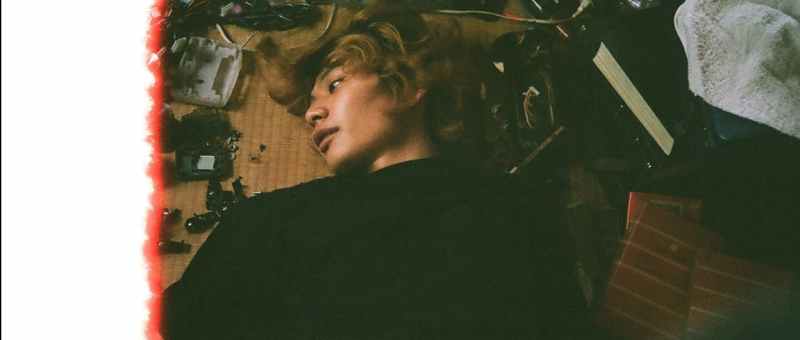
The hero, Yoshihiro is a strange and aloof young man as we gather from the first scenes which find him alone in his room while his dormmates engage in drunken socialising. Yoshihiro’s chief obsession seems to be with disassembling abandoned gadgets into their component parts, sleeping surrounded by neatly grouped collections of various nuts and bolts. His understanding boss at his part-time job as a removal man often allows him to keep bits of interesting junk that would otherwise be disposed of and it’s during one particular house clearance that he makes an unexpected discovery on being charged with investigating a possible haunting of an external annexe. Removing the chains which block the door and wandering inside, he’s confronted by a series of television screens featuring calming scenes of water and then by a frightening apparition. Looking a little like Oogie Boogie, a young woman in a white hazmat suit and black goggles eventually reveals herself and gifts him a strange device of a kind he has never seen before. 

The device, which turns out to be an 8mm camera as his bespectacled roommate reveals to him, sparks a sense of curiosity about the world he did not appear to have in his constant need for disassembly. Yet while his new friend takes him to a worryingly abusive filmset (the director slaps and then randomly licks the face of his leading man) for advice later suggesting they use it to make movies along the themes of “Mushroom, Explosion Festival!”, or “Psychopath Signal”, Yoshihiro is equally preoccupied with mysterious young woman who appears to be being kept captive by her father afraid to let her experience the light of the sun. As ignorant youngsters, the pair are unsure whether Nazuna’s father is earnest in his overprotectiveness and the outside world really is toxic to her, or merely selfish and possessive wishing to keep her locked up forever a secret to himself alone. 

Nazuna, as the young woman is called, of course turns out to be a metaphor for film something which is destroyed on exposure to the light. Strangely, Yoshihiro’s friend mistakenly tells him that the camera needs to be opened once a day to let the air in, apparently little knowing it will erase whatever is inside. A kind of fairytale of enlightenment, Yoshihiro becomes a kind of promethean rescuer literally busting Nazuna out of her jail in an attempt to free her just as he tries to steal the arcane knowledge of analogue technology from a generation apparently unwilling to teach him. She perhaps knows how dangerous her journey may be, but chooses to go anyway insisting that she doesn’t want to grow up which is perhaps to be overburdened with sophistication. Yet does her desire to see the ocean for real negate the idea of truth in celluloid, implying that some things can only be fully experienced by venturing out into the world for oneself, or make the case for it in Yoshihiro’s clumsy filming of her moment of rebellious defiance towards the curse of obsolescence? 

Making full use of the technology himself, Murase shifts from digital into 8mm and then into 16 for the pair’s final adventure as they transition through a tunnel into another world, emerging on the other side perhaps somehow changed. Yet even so, burdened by his ignorance, Yoshihiro fails to bring the message home with him discovering nothing but a blank screen in place of an essential truth. Less about films and medium than perpetual motion, Murase’s enigmatic fable rolls its way towards an inventible conclusion as its hero edges his way towards maturity having discovered an appetite for connection in place of deconstruction. 


Original trailer (no subtitles)

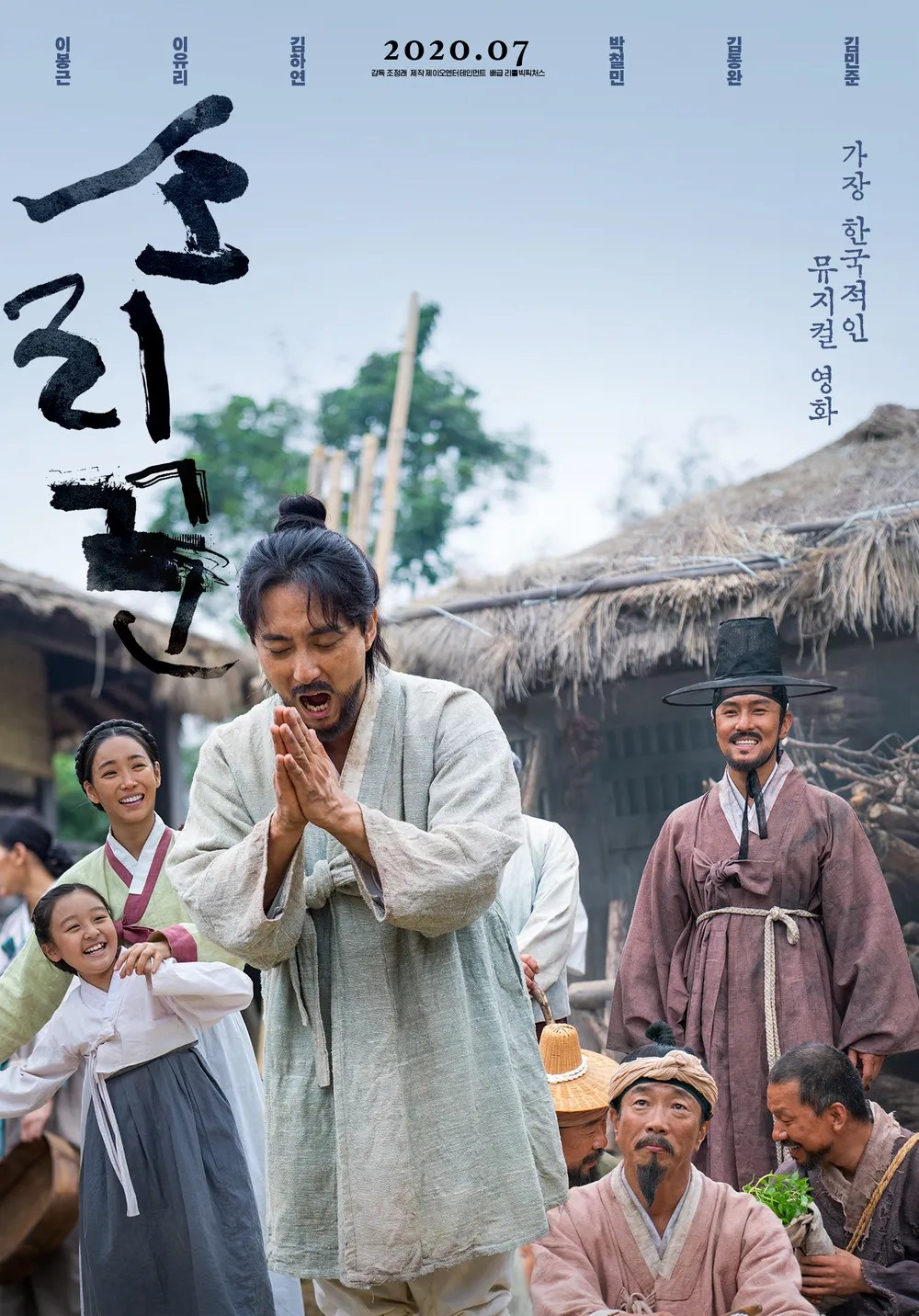
The Singer (소리꾼, Cho Jung-lae, 2020)

A Pansori singer shames the world into giving him his miracle in Cho Jung-lae’s musical fable, The Singer (소리꾼, Sorikkun). If there’s one thing you can bank on in old Joseon it’s that there is intrigue in the court, yet the rot seems to have penetrated even more deeply into the fabric of society as the hero discovers while looking for his kidnapped wife only later realising that the people who are supposed to protect you from violent criminals are in fact violent criminals themselves.  

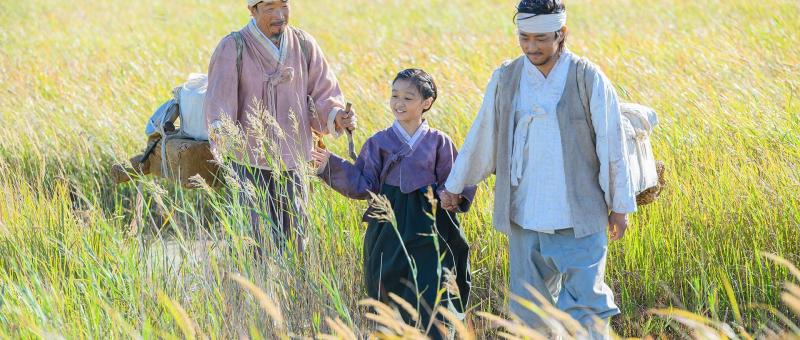
Set in 1734, the 10th year of King Yeongjo’s reign, the film opens with a cheerful scene as singer Hak-gyu (Lee Bong-geun) performs in the marketplace while his wife Gan-nan (Lee Yu-ri) and daughter Cheong (Kim Ha-yeon) watch from the sidelines. As the opening voiceover reveals, however, this is also a time of increasing chaos in which the accepted social order has broken down following successive incursions from China and Japan. The King has appointed a special courtier, Kim Tae-hyo, to investigate the so-called “Ja-mae gang” suspected of running a human trafficking ring while in collusion with corrupt lords. Of course, the king doesn’t know that Tae-hyo is one of the corrupt lords, but then there are so many of them to choose from. In any case, disaster strikes when Hak-gyu is late home after being accosted by a fan while returning some of the clothes Gan-nan had been mending to a nobleman and discovers his wife and child missing when he gets back. Gan-nan and Cheong have been kidnapped by the gang along with several others from the area. Cheong manages to escape thanks to her mother’s quick thinking but is badly injured and in a coma for some time eventually waking up to realise she has lost her sight. Hak-gyu along with his drummer friend Dae-bong (Park Chul-min) decides to take his daughter and search for his wife all over Korea if necessary. 

As the opening and closing titles remind us, Pansori gained popularity precisely because it told the stories of the common people and was often transgressively frank in its attacks on the class system, social inequality, and even the monarchy. Belonging to the lowest class of entertainers, Hak-gyu’s “lowborn” status is often used against him, the gang deliberately targeting those from the lower orders to enslave because they do not really think of them human, yet it is also in a sense his salvation in his innate ability to connect with ordinary people as he retells his life as fable gathering large crowds around him as he anxiously asks if anyone has seen his wife. He is joined in his travels by a “corrupt monk” he saves from drowning in a river, along with bumbling lower aristocrat supposedly bumming around too afraid to go home and tell his father he’s failed the civil service exam (again), providing an accidental microcosm of the current society. 

Yet what Hak-gyu didn’t know was that the gang is merely an extension of government oppression, corrupt lords flexing all of their muscles to fully exploit their subjects. Tae-hyo’s mentor reminds him that “politics is all about money” as the pair of them try to game the king pretending to hunt the gang that they are themselves running. A skilled seamstress, Gan-nan is firstly placed in the home of a local dignitary but later moved on to the mines for making too much trouble. She tells everyone she meets that she’s been kidnapped, but the nobles are all in on it and everyone else is too frightened to resist. Meanwhile, Tae-hyo and his fellow conspirators are also it seems in collaboration with the Japanese, buying up smuggled rifles to use in a potential insurrection. 

Drawing inspiration from his own life story, Hak-gyu re-imagines the gang as Chinese pirates and his daughter as a displaced princess determined to do whatever it takes to save her blind father, always leaving his audience wanting more with his cruelly positioned cliffhangers. He finds himself in an odd kind of trial by combat, given the opportunity to win back his life and his wife if only he make the heartless lords laugh or cry eventually saved only by his ability to move the hearts of others through the power of his sincerity. A Pansori fable in and of itself, Cho’s meta musical drama is fitting tribute to power of art to speak truth to power revealing its own truths in falsehoods and by it handing back the means to the people to demand justice and freedom.


Original trailer (English subtitles)