
Lovely Little Ai (愛ちゃん物語♡, Ohno Candice Mana, 2021)

A lonely teenage girl begins to reevaluate her ideas of freedom and family after bonding with a sophisticated older woman from her neighbourhood in Ohno Candice Mana’s cheerfully quirky coming-of-age tale Lovely Little Ai (愛ちゃん物語♡, Ai-chan Monogatari). Aptly named for this is indeed a story of love, Ohno’s gentle drama cycles through the destructive effects of toxic, unsupportive parenting while finally finding solace in the strength of human connections to create new and enduring bonds not tied by blood. 

16-year-old Ai (Akane Sakanoue) explains that she lives alone with her father, her mother having passed away shortly after she was born, though alone is perhaps the most accurate word seeing as workaholic salaryman Tetsuo (Kan Hotoda) is rarely at home. Nevertheless, his authoritarian parenting style borders on the abusive as he bans Ai from hanging out with friends, makes her ask permission before anything she does, and insists she send him a photo of the clock to prove she’s home by the 6pm curfew (why she doesn’t just send the same picture every day is anyone’s guess). Ai seems not to think too much of it, but is also beginning to yearn for more freedom while additionally anxious that she has no friends and no idea how to make them because of her father’s controlling personality. 

Everything changes when she accidentally bumps into another woman on the street, knocking her over and spilling her bespoke cosmetics all over the road. Sensing a connection and hoping to get some feminine advice, Ai asks the woman to stay for a while and eventually ends up becoming friends with her, often eating in her apartment and taking various shopping trips together. In a sense, Ai comes to think of Seiko (Hisao Kurozumi) as a maternal figure but their relationship is later strained when she incorrectly comes to believe that she really is her mother despite having known all along that Seiko is trans and therefore could not have given birth to her. 

Well, Ai mostly refers to Seiko as someone who wears women’s clothing but evidently has no problem accepting her, offended on her behalf when a boy from school, Ryo (Ryo Matsumura), who has a crush on her rudely runs away screaming on seeing them together in town though he later makes a point of apologising explaining that he was merely shocked and had an unusual reaction born of nervousness. Nevertheless, a melancholy flashback reveals Seiko’s difficult childhood with an authoritarian father not unlike Ai’s who disturbingly decapitated her Barbie and broke her colouring in pencils in two in an attempt to discourage her femininity. Watching over Ai she encourages her to embrace her freedom, explaining that life is dull if you can’t do the things you want to do and allowing her the space and confidence to make friends with the popular girls at school while figuring out who she is in defiance of her father’s control. 

Even so on finding evidence that suggests Seiko has been keeping something from her she begins to doubt her new maternal relationship, unfairly feeling betrayed while refusing to give Seiko the opportunity to explain. What she eventually learns is that she’s come to see Seiko as a mother even if they are not related by blood and that the connection she has with her is what is most important. Her decision validates her right to choose and redefine the meaning of family including the boundaries around her own, but also affirms Seiko’s right to play a maternal role despite the rather unkind words Tetsuo had used to describe her before himself getting a wake up call in what it means to be a responsible father. 

Cute and quirky with its pastel colour scheme, whimsical production design, and frequent flights into fancy, Lovely Little Ai is a heartfelt tale of family as active choice in which a young woman comes of age while repairing her fracturing relationships by embracing the love of a new maternal figure and pushing her wounded father into accepting his emotional responsibilities and relinquishing his need for control. A lovely little tale indeed, Ai’s sweet summer story is a breath of fresh air and a welcome advocation for the new family founded on love and mutual respect rather than blood or obligation. 


Lovely Little Ai streamed as part of Yubari International Fantastic Film Festival 2021.

Teaser trailer (no subtitles)
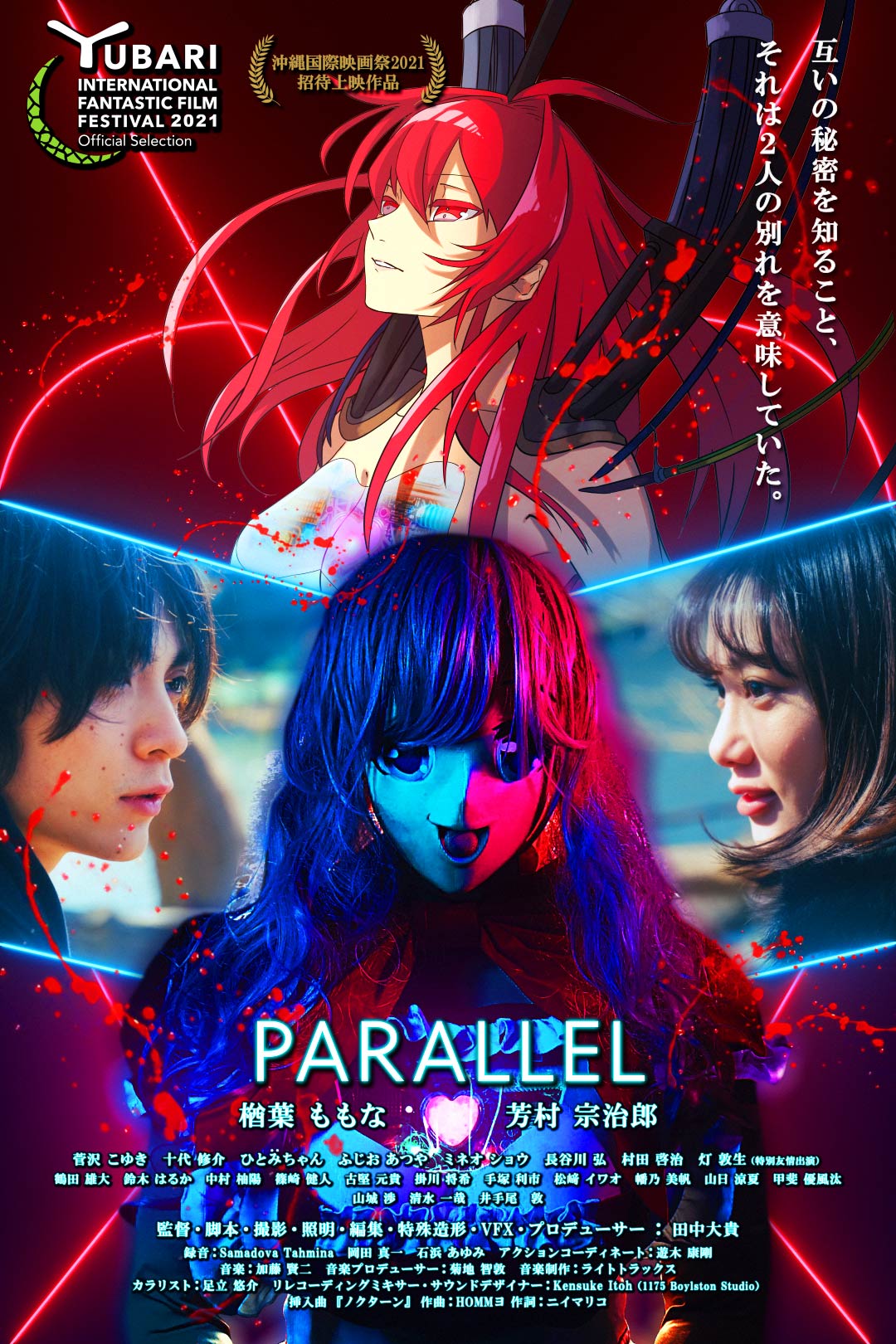
PARALLEL (Daiki Tanaka, 2021)

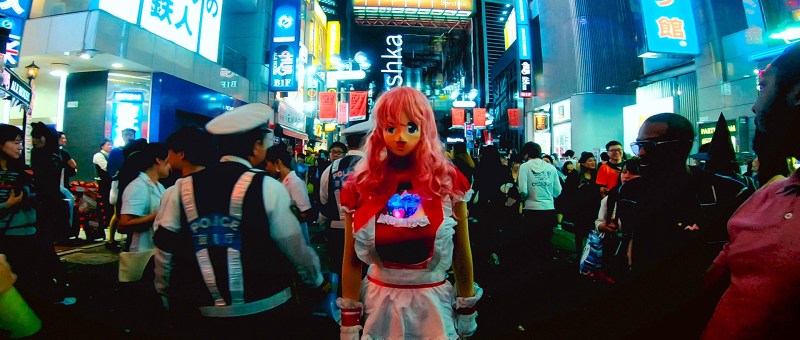
A wounded young woman in search of a protector and a nihilistic serial killer fight for the meaning of existence in Daiki Tanaka’s dark romantic drama, Parallel. Taking different paths out of a sense of “unworthiness” each look for ways out of this “rotten world” but find themselves mirroring the magical girl anime that inspires the killer’s desire for escape in discovering an uncomfortable sense of mutual salvation in the histories of their shared trauma. 

Panning over a scene of scattered cosmetics and tangled wigs, the camera first lights on the sight of a bearded man gently stroking coloured hair before putting on lipstick in the mirror. We then transition to a scene of violence as a young girl is brutally beaten by her parents who later lock her inside a cupboard only for the cross-dressing man to turn up and kill them with a knife. The man spots the lock on the door and rescues the girl, giving his name as Shinji and asking in a soft voice if the girl, Mai, thinks he is beautiful. Mai nods tearfully, evidently viewing the killer as her saviour. Flashing forward a decade or so, Mai is a 20-year-old woman still haunted by her childhood trauma and captivated by reports of the “Cosplay Killer” who dismembers his victims and places lights inside to make them glow. The Cosplay Killer uploads photos of Shinji along with videos of his kills though it seems that Shinji was killed by police at the scene of Mai’s parents’ murder so the current killer is thought to be a copycat. 

That turns out to be true and not. A very emo, nihilistic young man, Mikio is a manga artist working on a magical girl series in which humanoid robots developed as anthropomorphic weapons develop a sense of humanity after becoming “broken” through fighting an earlier iteration of themselves inspired by Shinji. Something similar happens to Mikio on encountering Mai. A sociopath with no sense of morality, he is confused by his innate connection with the wounded young woman apparently the only person he would not like to kill, which makes him think perhaps he should kill her. 

Meanwhile, he secretly plots with a collection of similarly disaffected young men fed up with being made to feel inferior by this “rotten” world full of “trash humans” who can’t recognise people from machines. The present source of their ire is TV pundit Okudera who is a frequent commenter on the Cosplay Killer later going on a long rant about how anime should be banned for corrupting the minds of the youth seeing as they never had this kind of thing in their day. Backstage meanwhile he makes a point of humiliating his assistant, forcing him to get down on his knees and apologise for being “worthless” insistent that he should be grateful Okudera is training him so thoroughly when the rest of the world is so cold. 

Mai too just wants to feel “worthy”, laughing about a rubbish date with her friend Kana in which a dating app hook up earnestly declared his love. Kana not unfairly thinks that might have been a little creepy but even though she doesn’t plan to see the man again Mai enjoyed the attention in the sense that in the moment she needed to feel desirable. That might be why she seems to be making a living through compensated dating, making the middle-aged man she hangs out with wear a wig to better resemble Shinji while he somewhat uncomfortably echoes the words of her abuser in making her say “I love you, Daddy” over a hug to end the session. He offers her more money for a pair of her used panties, but at present Mai thinks that’s a step too far. 

Equally drawn to Mikio, Mai finds herself bonding with the “creepy” young man the pair of them baring their literal scars and then symbolically giving each other new ones with the aid of a box cutter. Mikio is obsessed with the idea of transformation but originally rejects his attraction to Mai because would it tie him to this rotten world rather than the better anime one his killing sprees allow him to escape into, his mangaka mentor later asking him why he can’t use love to transform himself and find new meaning, a kind of Earthly magic, in human connection but all of this is perhaps forgetting that Mikio is a man who stalks, kills, and dismembers his prey later explaining that unlike Mai no one came to save him from the abuse he too suffered and this was the way he freed himself. His concept of revolution has an extremely dark edge reminiscent of that pursued by angry, embittered young men radicalised by their sense of inferiority and so the otherwise touching affirmation from Mai that he has shown her the magical moment everything can change because they can create their own meaning in life has an unavoidable air of discomfort. A mix of slasher horror and emo teen romance, Tanaka’s giallo-esque neon-lit journey through a world of trauma and abuse allows its “broken robot” to find both peace and purpose but equally to avoid responsibility for his heinous violence.


PARALLEL streamed as part of Yubari International Fantastic Film Festival 2021.

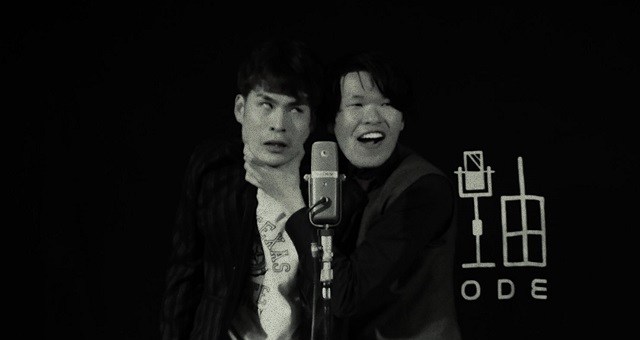
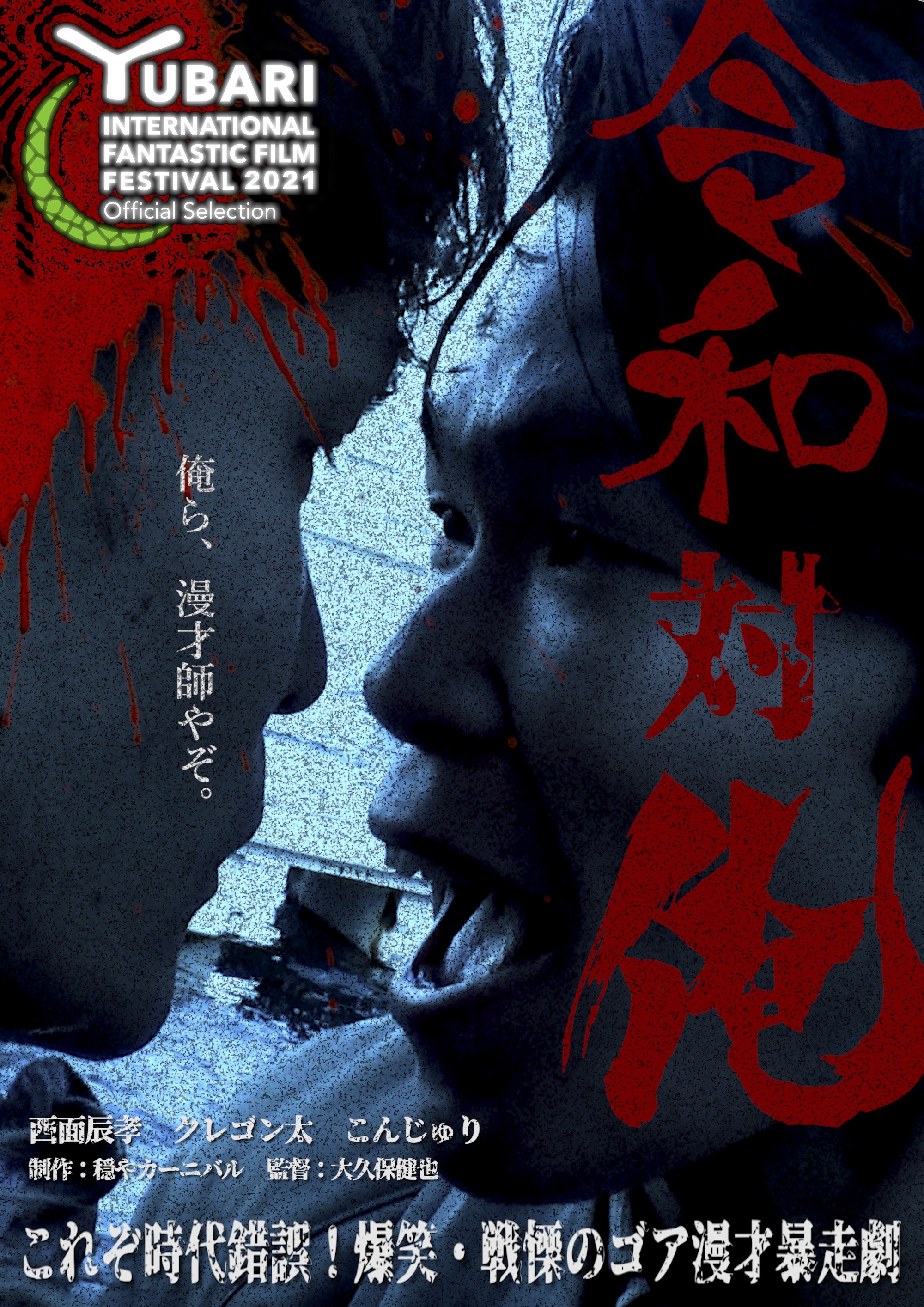
MANZAI Conflict (令和対俺, Kenya Okubo, 2021)

“There’s definitely nothing good about him at all” is the verdict on the Tsukaguchi, the irredeemable hero of Kenya Okubo’s eventually intense psychological drama MANZAI Conflict (令和対俺, Reiwa tai Ore). Not even his stage partner Kunimatsu is prepared to defend him as a person, but still refuses to end their partnership insisting that Tsukaguchi is funnier than he is though to everyone else evidence of Tsukaguchi’s funniness is thin on the ground. “Manzai” is a form of double act comedy particular to Japan often involving high speed, surreal narrative skits thrown back and for between the funny guy (boke) and straight man (tsukkomi). For these purposes, Tsukaguchi is the funny the guy in that he leads the narrative while Kunimatsu occasionally chimes in with a note of realism, but the problem is that Tsukagichi’s comedy, like the man himself, is stuck in the 1970s and his series of poor taste jokes simply aren’t very funny. 

Okubo signals his intentions early on. The film opens with a riff on the classic Toei logo, a studio closely identified with the yakuza genre and most particularly of the 1970s. Even the opening credits are presented in classic blood red calligraphy just like those of a retro gangster picture though this is not a gangster film even if Tsukaguchi broodily walks about in a trench coat and three-piece suit, smoking away and generally behaving like a street thug angry at a world he doesn’t understand. When he and Kunimatsu, at this point calling themselves the Ashtray Brothers, are banned from the rundown, tiny comedy club where they usually perform because of one of Tsukaguchi’s off-colour routines, Tsukaguchi tracks down another performer who criticised his act and brutally assaults him in the street eventually getting arrested. 

Tsukaguchi keeps harping on that he’s only one who truly understands manzai and everyone else is just a hack while the audience are simply too unsophisiticated to appreciate his art. We occasionally see brief flashbacks to the two men rehearsing which appear to show them laughing together happily suggesting that Tsukaguchi may have been conventionally funny at some point in the past when he wasn’t doing lewd routines about his grandmother’s sex life, but as a TV exec points out no one want a loose cannon like Tsukaguchi around which is why he’d like to hire Kunimatsu independently as a fill-in artist for his variety show. Loyal to the end, Kunimatsu resists and tries to bring Tsukaguchi with him, but the offer along with the failure of Tsukaguchi’s relationship with his live-in girlfriend whom he beats and attempts to rape, provokes a kind of crisis in the mind of the already troubled “comedian” born being forced to switch sides from funny guy to straight man now standing stage left rather than right. 

After the TV show, which might not even be “real”, Tsukaguchi’s mental state becomes ever more fluid drifting between fantasy and reality in confronting differing versions of himself playing straight man to his girlfriend’s funny guy before snapping back to take out his masculine frustrations on the calmer Kunimatsu who has renamed their duo the “New Cigarettes” and written a much more conventional routine better suited to a variety show audience which ironically also includes an onstage wedding. “If you stray from the path of manzai I’ll fucking kill you” he dramatically declares, an abusive partner onstage and off seemingly fragile in his masculinity and intent on dominance unable to accept either of his partners creative or romantic has the right to break with him even as his internalised self-loathing fuels his continually destructive behaviour. 

Yet Okubo in a sense refuses to condemn him. The film’s Japanese title translates as “Me vs Reiwa”, painting Tsukaguchi as a man who was simply born in the wrong time as if he’s a refugee from one of Toei’s grittier yakuza flicks where his intense misogyny and destructive male pride might have seemed even “normal” given the values of the time. Tsukaguchi literally defaces the modern society, beating it to a bloody pulp attempting to assert his own dominance while unable to escape his sense of impotence and futility. Shot in 4:3 and in a variegated muted colour scheme travelling from stark digital monochrome to a softened ‘70s grain, Okubo’s psychedelic psychodrama travels in a decidedly unexpected direction as its defiant anti-hero discovers that you can’t beat an era into submission. 


MANZAI Conflict streamed as part of Yubari International Fantastic Film Festival 2021.

Scherzo (スケルツォ, Takayoshi Shiokawa & Kanta Tomatsu, 2021)

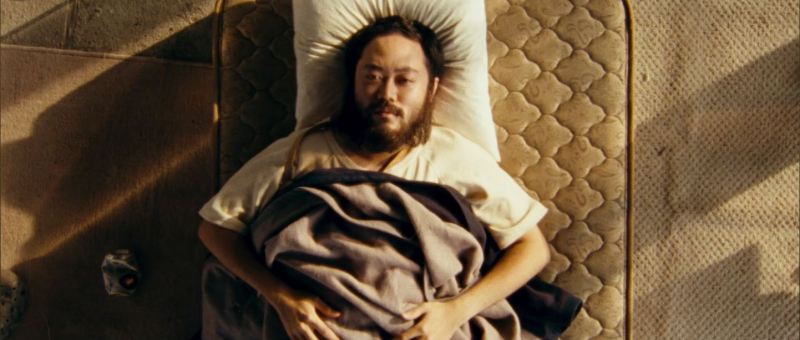
It may be one thing to live profoundly in the moment, but if you have no memory of yesterday and know you’ll have no memory of today tomorrow can you really say that you “exist”? The hero of Takayoshi Shiokawa & Kanta Tomatsu’s Scherzo (スケルツォ) believes that he’s born every day and dies every day, his mind wiped clean each time he sleeps but how can you learn to find meaning in a life so defiantly brief in which you have no past or future?

Then again, according to a random man in a laundrette people only start thinking about the value of life in order to avoid thinking about how bad their lives are currently when the real answer is to concentrate less on whether your current life has value and more on how to lead a better one. For “Koji” however, a name he chose for himself, the question may be moot. He wakes up every day on a stained mattress in a partially exposed rooftop flat with a sign above telling him to look at the wall where he’s explained to himself that his memory resets every day. A selection of polaroid photos feature the same young woman who also appears in a video tape playing on a nearby TV though Koji doesn’t know who she is. Taking the video camera with him he walks out into the town recording his every movement in lieu of his ability to remember and lives as if there’s no tomorrow because in a sense there isn’t. His first few days he hangs out in a hostess bar where he can’t pay the bill, robs a pizza man, and visits a sex worker for some existential chit chat abandoning the rules of morality in the knowledge that there can be no consequences because he dies by night and his existence is futile. 

All that begins to change, however, when he encounters a woman, Hinako, who looks like the one in his photos and appears to be suffering from the same condition as himself. Bonding with her slowly though neither of them can recall the other, Koji suddenly wants to find a way to remember certain that logically they are here today because of something that happened yesterday because of all the yesterdays that came before. 

Scherzo literally means “joke” in Italian, and you could indeed read Koji’s predicament as a bizarre cosmic prank otherwise unexplained in its absurdity. Yet it’s perhaps also a metaphor for the mutability of memory and elusiveness of love as much as in its usage in classical music a playful allusion to the self-contained brevity of his daily lives. He feels an innate connection to Hinako, as if he must have known her before but simply can’t remember. Even the most essential of emotions, love, can it seems be forgotten or gently fade away even if, as in the bar hostess’ melancholy ballad, something of it remains when everything else is gone. This is in one sense at least, a story of a couple who’d fallen out of love, or perhaps taken it for granted to extent that they’d almost forgotten it was there, rediscovering their feelings for each other and discovering in them a meaning for life. 

Meanwhile, Koji obsessively records all of his actions, filling 40 DV tapes of a sleepless road trip with Hinako, as if a physical recording could be more accurate than an organic memory. Memory is of course subjective and you can never know what it is you’ve forgotten whereas a tape maybe tampered with or faulty but supposedly contains objective truth though even that has a subjective quality simply by virtue of who recorded it and how. Nevertheless, if you can forget love, does memory really count for anything at all? Koji thinks he dies every day, but like Alice in Wonderland no one except for Koji is the same person they were yesterday or will be tomorrow. He can’t change or grow and has only the same version of himself to offer imperfect guidance. Nevertheless it’s love that in a sense restores his identity, gives him the will to remember, and makes it possible for him to live in the shadow of tomorrow rather than in an eternal present. Shot with a deadpan absurdism, Takayoshi Shiokawa & Kanta Tomatsu’s dryly humorous drama eventually concludes that it’s the memory of love, even if old or faded or failed, that gives life meaning allowing its anxious hero to move forward in finally regaining a sense of self if reflected in the eyes of another.


Scherzo streamed as part of Yubari International Fantastic Film Festival 2021.

The Basement (지하실, Choi Yang-hyun, 2021)

Two weeks doesn’t seem like a very long time. You might think you can stick anything out for two weeks if you know it will definitely be over in 14 days, but what if you don’t know when or if it’ll end and 14 days turns into 28 with no sign it might not turn into 42? In some ways that might seem like a familiar situation at the present moment, but it’s one that comes to define the lives of an affluent upper-middle class family in Choi Yang-hyun’s pandemic allegory The Basement (지하실, Jihasil). 

When the alert goes out that South Korea is under attack with a nuclear missile apparently on its way the Choi family dutifully obey the emergency text on their phone and take refuge in the basement intending to stay the advised two weeks until the radiation will have decreased to acceptable levels. Unfortunately, however, once down there they realise their preparations have not been thorough enough, the power is out and they’ve left the suitcase containing clothing and emergency supplies upstairs. With phone lines jammed, no radio reception, and no way of keeping in contact with the outside world they have no idea if the strike actually took place or if their friends and family members made it to safety. 

Placed under such strain, it’s understandable that small grievances and tensions in the family are quick to arise. Wife Hayeon seems particularly irritated by her practically minded husband Dongbaek, describing him as “immature” and complaining that he’s never really put his family first preferring to spend his weekends playing golf with the boys. Not helping matters, Dongbaek sadly reflects that he “probably” won’t be able to go on that work jolly golfing in Thailand the following week which whatever way you look at it is not a primary concern in the present moment. She also complains that he made such a fuss buying all this expensive camping equipment that he hardly ever used but at least it’s paying off now during their accidental holiday in the dank and depressing basement of their well-appointed detached home in the suburbs of an area described as “Korea’s Silicon Valley”. Dongbaek meanwhile reflects that he’s glad they sold their Gangnam flat for a spacious house (even if they’re trapped in one room of it) because even if they’d probably have made a bundle on the housing market if this hadn’t happened, they’d be gonners as inner-city apartment dwellers. 

Nevertheless, the first crisis occurs when the family begin hearing the sound of a neighbour frantically calling to them from outside apparently unable to reach her husband or son and looking for some kind of human support. Teenage daughter Jiseon wants to open the door, but her mother is conflicted and Dongbaek dead against it. The woman’s distress clues them in to the fact that something bad really has happened on the surface, but they’ve only so many resources and Dongbaek apparently doesn’t want to share while Jiseon can’t understand how he could be so heartless as to listen to someone screaming for help and not open his door. 

He meanwhile is more invested in finding practical solutions, trying to solve the bathroom problem they neglected to think of previously while setting up a water still to catch moisture from the wooden ceiling beams, repeatedly making reference to his time in the army and disaster preparedness training. Yet the problem they can’t solve is the anxiety, how will they ever know if it’s really safe to come out especially as the radio, once it’s working, gives contradictory messages either suggesting everything’s fine or that North Korea has occupied Seoul. Practically speaking, they can’t stay down here forever, there’s only so much food and some of them are already beginning to experience ill-effects from staying so long in the dark and damp. Sooner or later they’ll have to overcome their growing sense of anxiety for the unknown outside and brave the new reality. A claustrophobic chamber drama starring only three actors with occasional outside voices, Choi’s pandemic adjacent drama explores how one family attempt to come to terms with impending apocalypse while combatting boredom in equal measure to fear and despair but discovers that togetherness and endurance are perhaps the key skills for survival. 


The Basement streamed as part of Yubari International Fantastic Film Festival 2021.

International trailer (English subtitles)

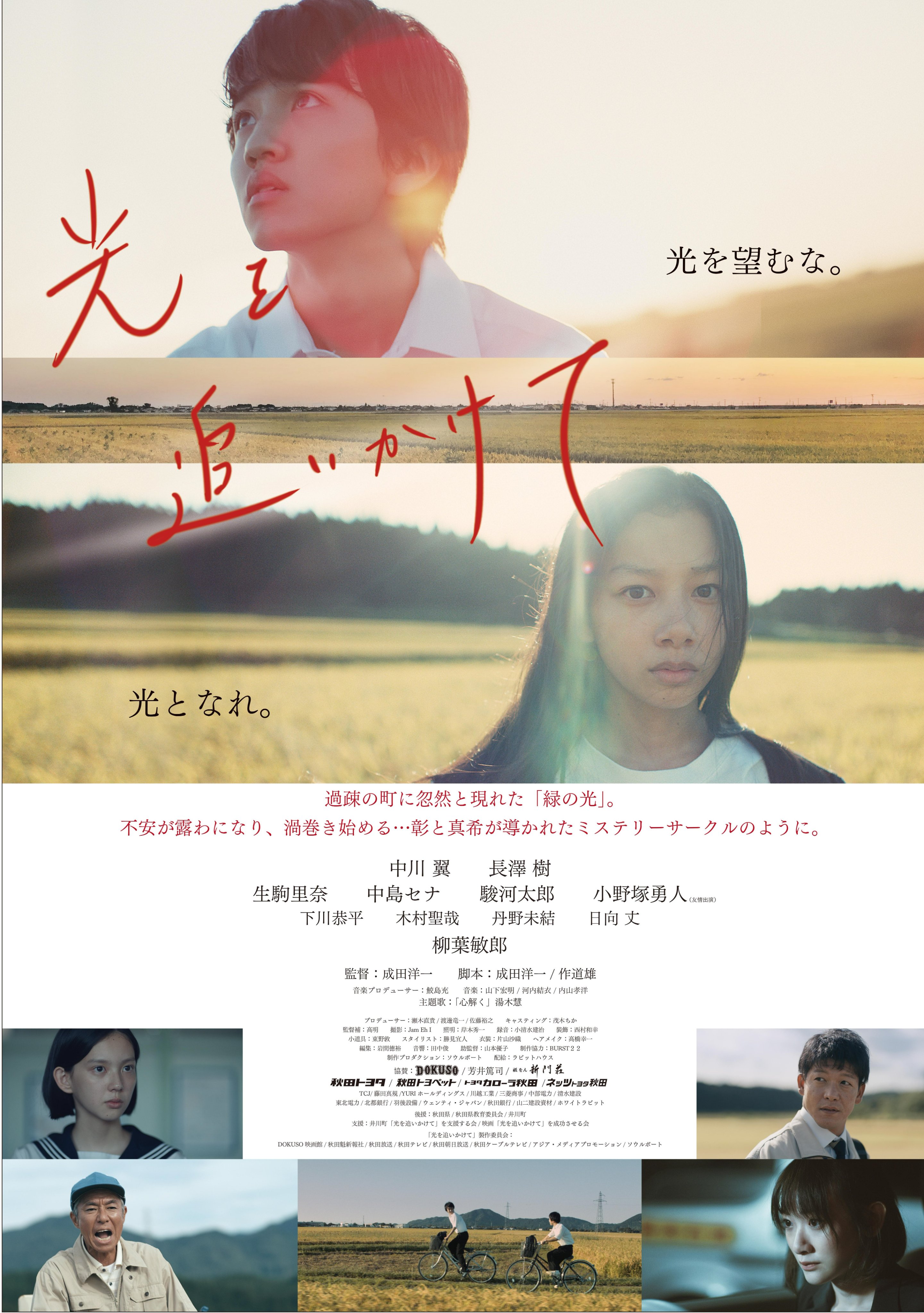
Follow the Light (光を追いかけて, Yoichi Narita, 2021) [Fantasia 2021]

“We all want to run, but still we’re holding on” insists the hero of Yoichi Narita’s rural coming-of-age tale, Follow the Light (光を追いかけて, Hikari wo Oikakete). Not perhaps as its title implies a religious treatise, Narita’s gentle drama nevertheless chases faith in the future while exploring the effects of rural depopulation, economic stagnation, and familial fragmentation on the lives of the young but eventually rediscovers a sense of security, not to mention wonder, in the natural world along with the importance of community in creating a feeling of emotional rootedness. 

Teenager Akira (Tsubasa Nakagawa) has just moved back to his dad’s hometown following the divorce of his parents, his mother presumably having left the family. As one might expect he is sullen and resentful, wishing a meteor storm would destroy his new home and drawing violent comic books to that effect. He ignores everyone at school and is uninterested in making friends, continuing to view himself as an outsider who is not destined to stay. This feeling is compounded by the fact that the school itself is about to close down due to the declining numbers of children in the local area as a result of rural depopulation. 

Akira’s interest is piqued, however, on witnessing a mysterious girl standing atop the roof of a farm house and surveying all below. Accidentally making friends with a bullied boy, Shota, Akira discovers the girl’s name is Maki (Itsuki Nagasawa) but is warned off her on the grounds that she is “crazy” and potentially violent. Akira ignores the warning, but is in any case guided towards the ostracised young woman by a mysterious light said to be caused by a UFO which leads him towards a crop circle in a rice paddy in the middle of which Maki is currently lying.

As Akira discovers, Maki has problems of her own in that her parents are in the middle of a debt crisis and about to lose the small petrol station they’ve been running as a family business. They are in fact just one of many casualties in the faltering local economy which is in a constant state of recession given that the young people all leave for the cities and there’s precious little money to be made in farming anymore. Akira’s father Ryota (Taro Suruga) went to Tokyo to be a musician, an ambition which obviously did not work out, and now he’s come back works for an organisation attempting to find solutions for the future of agriculture in an effort to bring prosperity back to the countryside. Akira’s teacher, Michiru (Rina Ikoma), by contrast who will soon be out of a job is disinterested in her work partly because she left to go to uni in Tokyo but was dragged back by parental pressure and remains intensely resentful trapped in a backwater provincial life quite clearly not of her choosing. 

It wasn’t of Akira’s choosing either and on top of dealing with the disruption of his parents’ separation he feels himself displaced as a city kid unused to the gentle rhythms of country life while struggling to understand the impenetrable local dialect. He originally does nothing on witnessing Shota’s bullying but later befriends him only for their friendship to be derailed by petty jealously in Shota’s resentment towards his growing interest in Maki. Maki, meanwhile, is also struggling with a sense of abandonment largely cared for by her down-to-earth farmer uncle in the wake of parental failure. Akira may originally feel the same way about his boomerang dad, returning home to live with grandma having failed in the city, but later perhaps comes to understand that return is not necessarily defeat while gradually warming to the joys of the country life with its wide-open vistas and kindhearted locals. 

Even so there’s a sense of desperation in these young lives as they watch their world dismantled in front of them as symbolised in the imminent closure of their school. Guided by lights they decide to look towards the future, positing a new sense of community open to anyone willing to be a part of it. As if echoing the sound of the Earth, Maki accepts her parental legacy in continuing to sing a traditional rural folksong once sung by her mother while Akira discovers a new sense of belonging in his father’s latent love for his old hometown. A hymn to a disappearing small-town Japan, Follow the Light is less lament than resurgent hope that something can be saved if only in change.


Follow the Light streamed as part of the 2021 Fantasia International Film Festival

Original trailer (English subtitles)

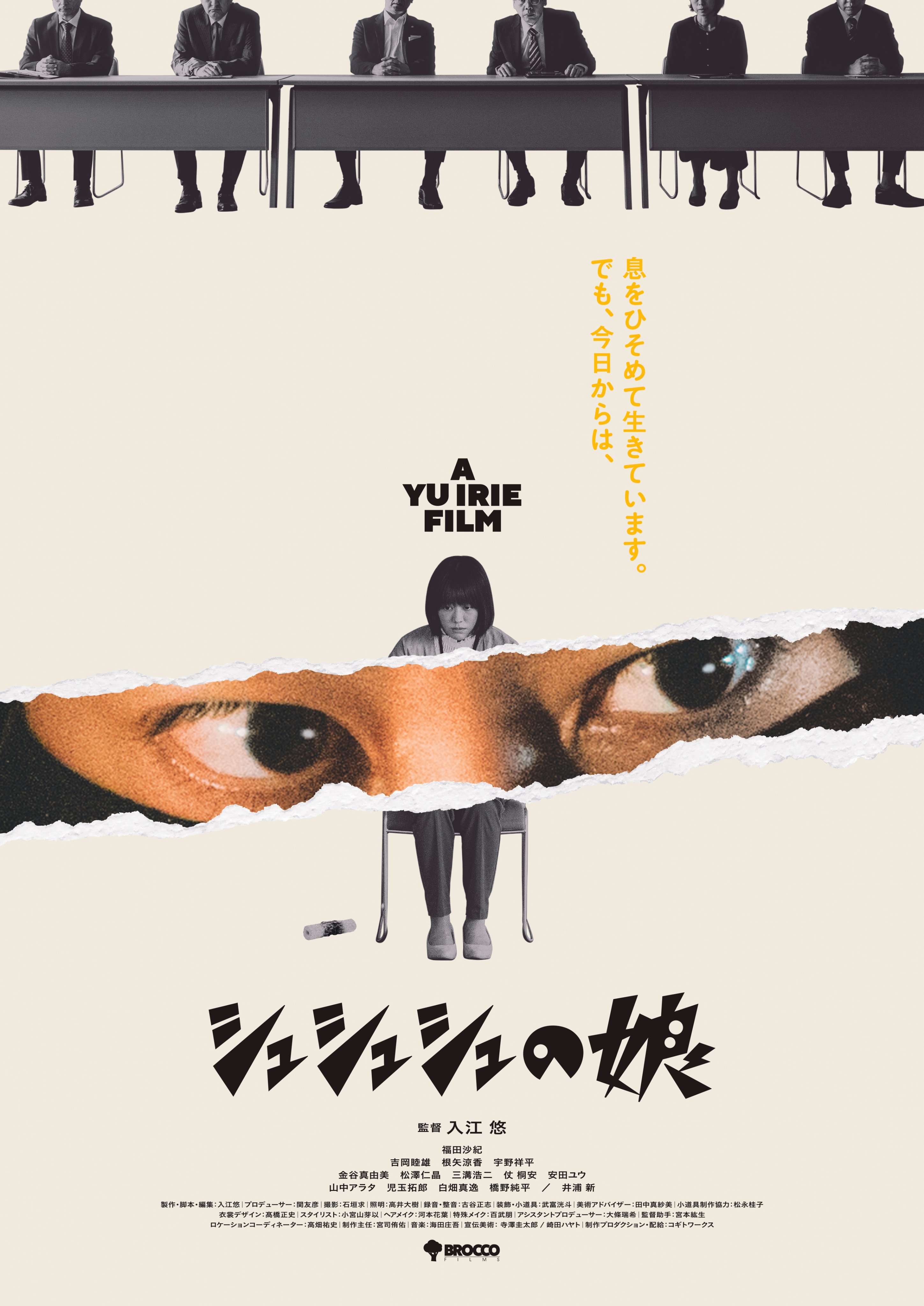
Ninja Girl (シュシュシュの娘, Yu Irie, 2021)

What can the ordinary person do when encountering injustice? Saying no is a start, but it might not be enough in the long run. According to the inspirational grandpa in Yu Irie’s Ninja Girl (シュシュシュの娘, Shushushu no Musume), if no one’s coming with you you’ll have to go on your own. Part coming-of-age drama, part political satire, Ninja Girl finds its reserved heroine coming into herself as she agrees to take on her grandfather’s unfinished mission and avenge the death of a family friend who took his own life in shame after being bullied into falsifying government documents in order to help a corrupt local council pass some overtly racist legislation. 

The reticent Miu (Saki Fukuda) takes care of her elderly grandfather (Shohei Uno) and has a steady job at the town hall, yet despite her ordinariness she is also a target for local shunning because of her grandfather’s intense resistance towards the “Immigrant Elimination Ordinance”. Miu isn’t in favour of it either, but is otherwise too shy to do much about it despite being harangued by her extremely unpleasant and intimidating supervisor Ms. Muteda (Mayumi Kanetani). On returning home one evening she overhears her grandfather talking to a family friend, Mano (Arata Iura), who appears depressed and talks of taking his own life after being strong-armed by Muteda among others to illegally alter and/or falsify official documentation in order to help them pass their odious bill. Mano then takes his own life in protest by jumping off the roof of the town hall, leaving Miu and her grandfather intent on avenging him by retrieving the evidence he’d preserved of governmental impropriety and exposing the mayor for what he is. Miu’s grandfather presents this as a “mission” he’s leaving to his granddaughter because he believes he’s not long left, revealing a long hidden family secret to the effect that Miu is actually descended from a long line of ninjas. 

Ms. Muteda tries to talk Miu round by insisting that the legislation is neither “discriminatory” nor “racist” which seems like a stretch when you’re using words like “eliminate”. After accepting her ninja legacy and using the book she’s found to make herself an authentic ninja outfit, Miu tries to do some digging all of which eventually takes her to a scrap yard mostly staffed by migrant workers whom Mano had been trying to help. Miu is originally turned away by the owner because of her association with local government but returns hoping to find the password for Mano’s thumb drive only to discover a weird gang of racist thugs dressed in lime green high visibility jackets beating up the scrap yard’s owner and spouting a lot of rubbish about how his workforce is taking jobs off Japanese people who apparently find themselves in need following the earthquake and coronavirus pandemic. 

For all of their talk about making Japan great again and keeping Japanese traditions in the hands of the Japanese, there’s a strange irony that their nemesis comes in the form of that most quintessentially culturally specific avenger, the ninja, and not only that a young female ninja rising up against oppression all on her own. Despite agreeing that she has no real skills, Miu’s grandfather thinks she’ll make a good a ninja because of her general invisibility while her childhood hobby of making blowpipes will also stand her in good stead. Accepting her “mission” gives Miu the kind of confidence otherwise lacking in her life to seize her own agency and stand up for what she believes in even when victory seems more or less impossible. Meanwhile, Muteda and her cohorts laugh loudly about how they’re only doing what the national government and other prefectures do in illegally altering their documents to make it look like they’re not doing anything wrong while they ride roughshod over the rights of ordinary people and pursue their xenophobic agenda. 

“Never again” Miu’s grandfather insists on recalling the pogroms which occurred after the 1923 Kanto earthquake leading to a massacre of Koreans, while finding himself branded a traitor to his nation. In another touch of irony, the cheerful children’s folksong Hana plays in the background as red balloons are launched to celebrate the Immigrant Elimination Ordinance in a nationalistic incongruity that seems to leave Miu more bemused than ever. Removing herself from this intensely corrupt social order and committing herself to ninja mastery while training alongside her her favourite collection of ‘80s pop hits, she determines to clean up town sending poison darts against the otherwise unopposed voices of disorder. Shot in a strangely comforting 4:3, Yu Irie’s quirky drama is drenched in the absurd but sends a very real message as its shy, reserved heroine steps into the shadows in order to resist societal corruption even while those all around her are content to stand by and watch as their freedoms are taken from them. 


Ninja Girl screened as part of this year’s New York Asian Film Festival.

Original trailer (no subtitles)

Sensei, Would You Sit Beside Me? (先生、私の隣に座っていただけませんか?, Takahiro Horie, 2021)

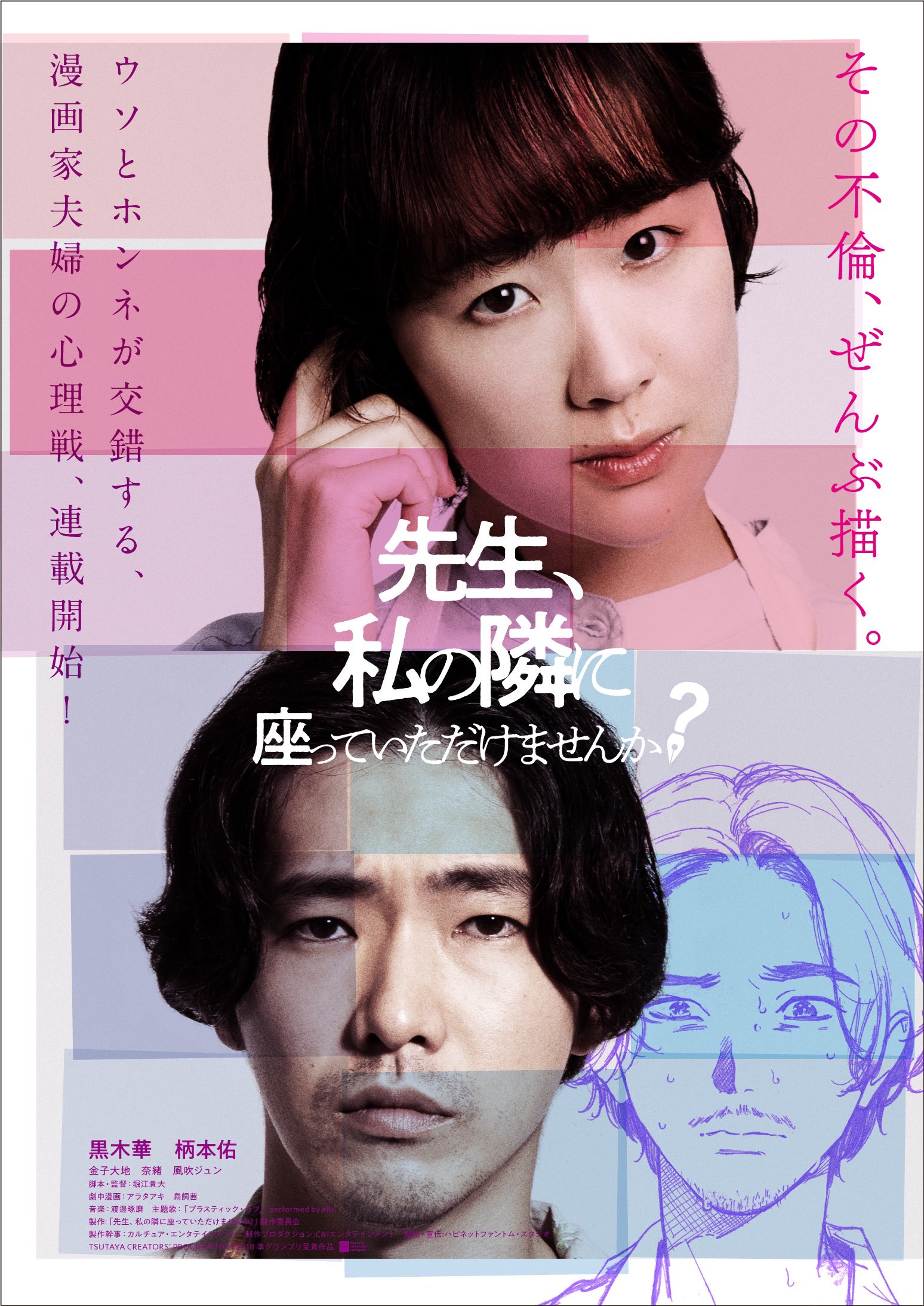
An under-confident mangaka tries to save her moribund marriage through a passive aggressive attempt at “realism”, but then is that really what she wants? What is she really up to? Takahiro Horie’s anti-rom-com Sensei, Would You Sit Beside me? (先生、私の隣に座っていただけませんか?, Sensei, Watashi no Tonari ni Suwatte Itadakemasenka?) is more complicated than it first seems, a tale of romantic revenge, of a woman’s determination to reclaim her independence, or perhaps even a slightly cynical not to mention sexist story of a betrayed wife’s attempts to rekindle her moody husband’s creative mojo in the hope of reigniting the spark in their marriage. What transpires is however a literary game of cat and mouse as a suddenly alarmed husband attempts to get ahead of the game through the transgressive act of reading his wife’s diary. 

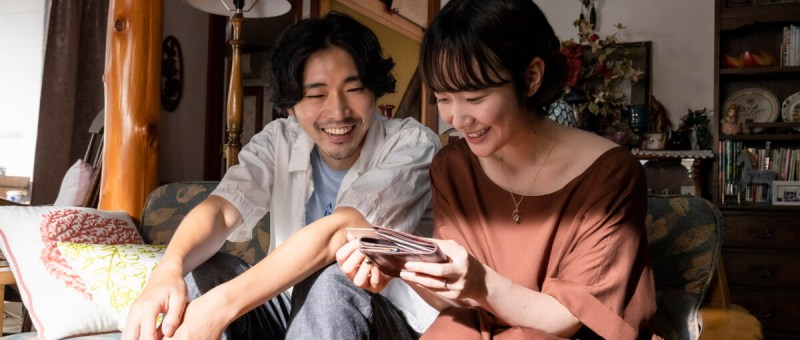
A successful manga artist, Sawako (Haru Kuroki) has just completed a long-running series assisted by her husband of five years, Toshio (Tasuku Emoto) who was once a bestselling mangaka himself but hasn’t worked on anything of his own since they got married. Toshio appears to be prickly on this subject, and is in something of a bad mood while Sawako’s editor Chika (Nao Honda) waits patiently for the completed pages. Seemingly suspecting something, Sawako asks Toshio to escort Chika back to the station with the intention of following them only she’s interrupted by a phone call from the police to the effect that her mother (Jun Fubuki), who lives out in the country, has been in an accident and broken her ankle. Sawako and Toshio decide to go and stay with her while she recovers, though a change of scene seems to do little to relieve the pressures on their marriage. 

Indeed, on their first night there Toshio remarks that it’s been a while since they’ve slept in the same room which might go some way to explaining the distance in their relationship. Aside from that, Toshio superficially seems much more cheerful perhaps putting on a best behaviour act for his mother-in-law who makes a point of telling her daughter how “great” her husband is and how she’s almost glad she broke her leg because it’s brought him to stay. Her gentle hints to Sawako to let her know if there’s something wrong elicit only a characteristic “hmm” while she otherwise makes only passive-aggressive comments which suggest she fears her marriage may be on the way out. Having long been resistant to the idea of learning to drive even though she grew up in the country, Sawako starts taking lessons at a nearby school cryptically explaining to Toshio that perhaps she’d better learn after all because she’ll be stuck when he leaves her. 

Sawako’s “driving phobia” as she first describes it appears to be a facet of her underlying lack of self-confidence. She simply doesn’t trust herself to take the wheel and cannot operate without the safety net of someone sitting next to her. Having not got on with the grumpy old man she was originally assigned, Sawako gains the courage to take her foot off the brake thanks to a handsome young instructor, Shintani (Daichi Kaneko), who makes her feel safe while slowly giving her the confidence to trust in herself. The implication is that Toshio has been unable to do something similar in part because he’s so wrapped up in his own inferiority complex over his creative decline complaining that nothing really moves him anymore. When Chika advises Sawako choose a more “realistic” subject for her next series, she passively aggressively decides to go all in with a clearly autobiographical tale of adultery that suggests she is well aware her husband and editor are having an affair behind her back while the heroine experiences a passionate reawakening thanks to her handsome, sensitive driving instructor. 

Of course, Toshio can’t resist reading her “diary” and obsessing over how much of it is “true”. Perhaps Sawako intended just this effect, driving her husband out of his mind with guilt and jealousy indulging in a little revenge whether in fantasy or reality. The irony is that there are at least three “senseis” floating around including Sawako herself with the eventual decision of who, if anyone, she wants to sit beside her the unanswered question of her “revenge” manga. Her real revenge, however, may lie in her determination to grab the wheel, reclaiming agency over her life along with a new independence born of her ability to drive and therefore decide its further direction while toying with Toshio’s inner insecurity in order to effect a plan which is far more insidious than it might first seem. Filled with twists and turns, Horie’s cynical love farce eventually cedes total control to its seemingly mousy heroine as she gains the confidence to go solo or hand-in-hand as it suits her towards a destination entirely of her own choosing. 


Sensei, Would You Sit Beside Me? screened as part of this year’s New York Asian Film Festival.

International trailer (English subtitles)

Last of the Wolves (孤狼の血 LEVEL2, Kazuya Shiraishi, 2021)

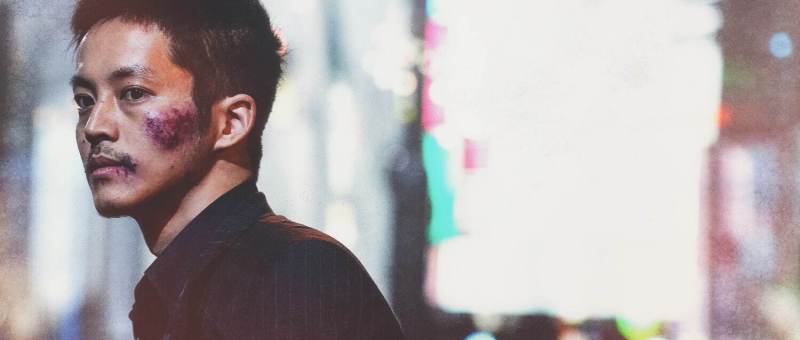
“The Showa era’s over. We don’t use guns now, business is our battlefield.” a recently released foot soldier is told, finding himself in a whole new world emerging from a not so distant past of turf wars and street scuffles into a late bubble wonderland of besuited corporatised gangsters. Set in 1988, Kazuya Shiraishi’s Blood of Wolves had been about the twilight of post-war gangsterdom forever associated with an era that was literally about to pass. Set three years later in the twilight of the bubble economy and an already established Heisei, Last of the Wolves (孤狼の血 LEVEL2, Koro no chi: Level 2) finds no longer rookie cop Hioka (Tori Matsuzaka) taking on the mantle of his late mentor Ogami, attempting to broker peace by getting uncomfortably close to yakuza. 

At the end of the previous film, Hioka had managed to engineer a truce between rival gangs Odani (with whom he is affiliated), and Irako through pushing top Odani guy Ichinose to take out boss Irako. Three years later, the peace has held and in any case Heisei yakuza no longer take violence to the streets. The release of crazed Irako foot soldier Uebayashi (Ryohei Suzuki), however, threatens to destabilise the local balance of power. Despite mournfully declaring that he doesn’t intend to wind up back in prison, Uebayashi’s first call on release is to the sister of one of his guards whom he rapes and kills in quite gruesome fashion. Hioka is put on the case and partnered with a genial veteran, Seshima (Yoshiko Miyazaki), weirdly excited about investigating a murder at this late stage of his career, but quickly realises that Uebayashi’s recklessness is primed to destroy everything he’s built. 

Having started out a straightlaced rookie, Hioka has fully incorporated the Ogami persona dressing in sharp suits and sunshades, driving a sports car, and hanging out with the Odani guys, while also using his girlfriend’s little brother Chinta (Nijiro Murakami) as a mole in rival gangs. As a cynical reporter points out, however, Ogami was essentially “undercover” in that he understood hobnobbing with yakuza was part of his job and something he did solely to keep civilians safe by preventing another street war. Hioka has started to lose his way, enjoying himself a little too much and already way out of his depth as the fragile peace he’d brokered by less than ethical means begins to crumble beneath his feet. 

Having been in prison, Uebayashi is unaware of the various ways in which the world has changed seeking to return to old school rules of gangsterdom, ironically lecturing his superiors on the absence of jingi (honour and humanity) in their new corporate existence. He’s a monster and a sadist, but his violence is also a result of the horrific abuse he suffered as a child which led to an equally heinous act of revenge while as a member of the ethnic Korean Zainichi community, like Chinta and his siblings, he continually faces discrimination and social oppression. His first act on release is of revenge against the guards who relentlessly tortured him in prison, the murdered woman’s brother confessing that they wrote him up as a model prisoner in the hope he’d be released early so they wouldn’t have to deal with him anymore.  

Yet what Hioka and Uebayashi have in common is that they’re both pawns in a game they were unaware was being played. As it turns out the police corruption Hioka discovered during the previous film did not go away, and in certain senses they liked things the way they were before. Hioka’s truce is very bad for business for a certain subset at least. They might be minded to let a dangerous killer go loose if it disrupts Hioka’s attempt to suppress the criminal underworld to manageable levels. Mimicking the classic jitsuroku, Shiraishi throws in occasional voiceover from an anonymous narrator along with freeze frame and montage while skewing still darker in the levels of depravity among these desperate men fighting over the scraps of a world already in terminal decline even as the bubble seems fit to burst. Shiraishi ends on a note of change with the institution of the organised crime laws which have contributed to the ongoing decline of the yakuza, a relic of the Showa era unfit and unwelcome in the modern society, but also discovers that for good or ill there may yet be wolves in Japan.


Last of the Wolves screened as part of this year’s New York Asian Film Festival.

Teaser trailer (English subtitles)

The Monkey King: Reborn (西游记之再世妖王, Wang Yun Fei, 2021)

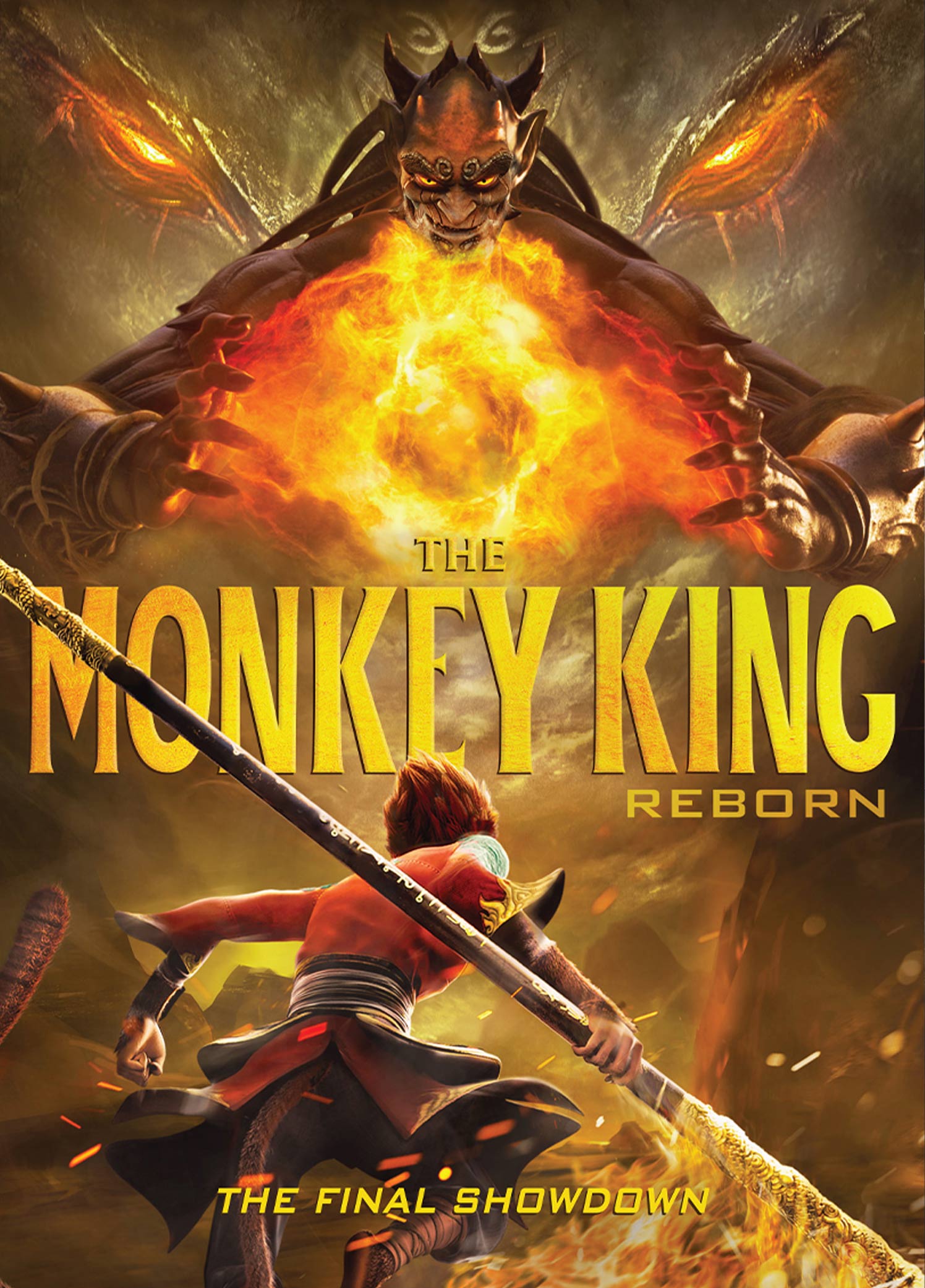
Sun Wukong comes to believe in his own soul while standing up to a cruel and oppressive reincarnated demon king intent on destroying the world in Wang Yun Fei’s anarchic family animation The Monkey King: Reborn (西游记之再世妖王, Xīyóujì zhī zài shì yāo Wáng). Reborn is in a sense also what Sun Wukong becomes in Wang’s defiantly egalitarian adventure which sees the regular crew from Journey to the West becoming temporary guardians to an adorable ball of anthropomorphised qi while The Great Sage Equal to Heaven contemplates what it is to be a “demon” and if he’s necessarily as “bad” or “evil” as some seem to believe him to be. 

As usual, Wukong (Bian Jiang) is travelling with the monk Tang Sanzang (Su Shangqing) and fellow demons Bajie (Zhang He) and Wujing (Lin Qiang) heading to India to retrieve Buddhist scriptures to bring back to China. On the way, they stop off at a temple where Wukong and his friends end up causing a ruckus by eating some of the temple’s treasured manfruit from a tree which only produces 30 every 1000 years. 1000 years doesn’t seem so long to Wukong so he thinks little of it but is later caught out by two snooty monks, grows indignant, and gets into a fight with an immortal eventually destroying the tree in temper only to realise that he’s accidentally released Yuandi (Zhang Lei), the ancestor of all the demons sealed within the tree thousands of years previously by a Buddhist monk who sacrificed all of his qi to do so. Threatened with being re-imprisoned himself and determined to rescue Tang who has been kidnapped, Wukong has no choice but to stop Yuandi before he reassumes his full strength in around three days time. 

Meanwhile, the trio is joined by a tiny manfruit-like ball of qi Wukong nicknames “Fruity” (Cai Haiting), originally reluctant to take him with them but advised that his qi is the best weapon against Yuandi. As the film opened, Wujing had been contemplating what it means to have a soul, Tang reassuring him that when he feels he has one it will be there. Following through on the egalitarian message, he later says something similar to Yuandi, certain that all sentient creatures are equal, but the moody Wukong remains sullen and resentful constantly insulted as an “evil” demon while internally convinced he can’t be anything else. Yet despite himself he takes on a paternal role while looking after Fruity who later explains to him that there are good demons and bad and that he has a kind soul. 

Yuandi by contrast merely rolls his eyes when most of his demon minions are cut down, lamenting that they had become weak and the weak do not deserve to live. In the process of searching for his own soul, it’s this cruel and oppressive worldview that Wukong and the others must finally resist, protecting Fruity while battling the darkness with the confidence of self knowledge as their best weapon. Meanwhile, it’s clear that the Buddhist world is not exactly free of corruption either, the two snooty monks instantly looking down on Tang ironically because of his unostentatious attire uncertain why they’re expected to share their treasure with someone so seemingly undeserving. Then again, when they’re sent off to petition the Jade Emperor quite the reverse is true as they’re kept waiting outside while heaven’s border guard painstakingly fills out paperwork in only the best calligraphy while insisting each petition should be treated impartially no matter who it comes from even though the monks had quite clearly expected to jump the queue. 

Selling a positive message of self-acceptance and universal equality The Monkey King: Reborn also boasts a series of thrilling and elegantly drawn action sequences as the trio face off against the forces of darkness, along with some zany humour and Wukong’s characteristically anarchic energy not to mention the unbelievably cute yet somehow profound Fruity who can’t bear all the senseless carnage and depletes himself to cure the innocent townspeople of their demonic corruption. In the end it’s not only Wukong who is reborn as he realises that nothing’s ever really gone forever, just altered in form, while it is possible to repair damage done with humility leveraging the power of self-acceptance against a dark and selfish desire for destruction. 


The Monkey King: Reborn is released in the US on DVD & blu-ray Dec. 7 courtesy of Well Go USA in an edition which includes both the original Mandarin-language voice track with English subtitles and an English dub.