Shiro – Hero of Heroes (諸葛四郎 – 英雄的英雄, Lin Yu-chun & Chuang Yung-hsin & Liu Yu-shu, 2022)

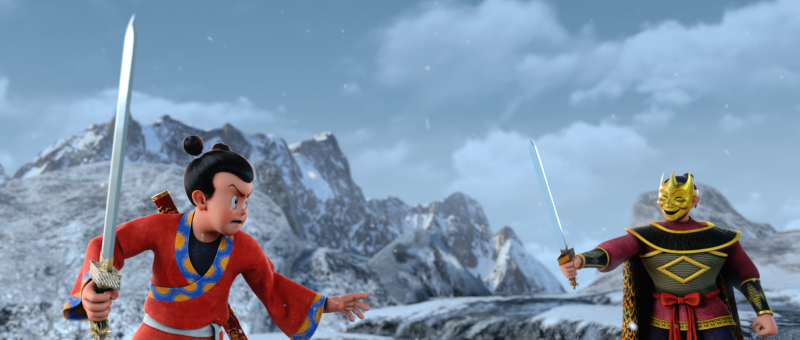
An earnest young man, grieving son, and feisty princess team up to stop the evil Demon Society from becoming all-powerful rulers of their land in an adaptation of classic Taiwanese comic book Shiro – Hero of Heroes (諸葛四郎 – 英雄的英雄, Zhūgě Sìláng – yīngxióng de yīngxióng). Created by Yeh Hong-Chia in the late 1950s, the series has become a nostalgic touchstone for generations of children and is about to reach new ones with a feature-length 3D CGI animation following Zhuge Shiro (Wang Chen-hua) on another exciting adventure to reunite the magical Dragon and Phoenix swords and stop their awesome power from falling into the wrong hands. 

Unfortunately the Dragon Sword has already been lost, much to the king’s regret. When Demon Society raid the palace during a festival and place a mask over the princess’ face, the king puts the land on lockdown and summons the nation’s locksmiths to try and free her only to realise there’s no way to unpick Demon Society’s diabolical locks without giving in to their demands to surrender the Phoenix Sword. Luckily hero of heroes Zhuge Shiro just happens to be in town on the invitation of his locksmith uncle and pledges to help the king salvage his fracturing relationship with his daughter who resents his hesitation to exchange the sword for her wellbeing and make sure Demon Society doesn’t get its hands on the swords’ unleashed power. 

Though this is in many ways a tale aimed at younger audiences, the incredibly witty script moving to the rhythms of traditional opera includes a series of meta jokes for grownups from a silly reference to a limited edition dart and workplace exploitation to subtle digs at societal authoritarianism along with a small cameo from a wandering cartoonist whose work is censored by the powers that be. Having faced Demon Society several times before, Zhuge Shiro is a pure hearted young man wise beyond his years with a strong sense of justice. His first act of goodness is standing up to an officious guard, General Shan, who won’t let a worried father with a sick child enter the town to find a doctor, while he soon earns the respect of the king through his compassion and emotional intelligence in trying to explain the king’s dilemma to the princess. He does however engage in a little sexism which the princess herself is quick to push back against, pointng out that she’s a skilled fighter herself and does not need protecting but will be joining him on this mission whether he likes it or not. 

Similarly, Zhuge Shiro gains another comrade in Zhen Ping (Chiang Tieh-Cheng) who is originally under the misapprehension that Zhuge Shiro is responsible for his father’s death only to later realise it was all the fault of Demon Society. To reunite the swords and save the kingdom, the trio find themselves battling through the villain’s booby trapped lair and discovering that the swords’ power lies in a different place than they first might have assumed, one Demon Society is largely unable to appreciate and therefore to benefit from even if they had managed to hold both swords in tandem. In other words, it’s brotherhood and justice which eventually enable the trio to prosper while the bumbling masked demons only make fools of themselves in their intense greed and villainy. 

Staying close to the aesthetic of the comic book, the film’s highly stylised designs closely match those of the original characters from back in the late 1950s if perhaps a little cuter and rounder in keeping with contemporary CGI animation while it moves to a comic beat inspired by traditional opera interspersed with a few song and dance numbers and exciting martial arts fight scenes as the trio face off against the minions of Demon Society while standing up for justice. Just as the king learns the real meaning of treasure, the trio discover a brotherly bond and a new mission to rid the land of the evils of Demon Society while accepting that even villains can change their ways and should be allowed a chance to redeem themselves, and those who may seem obviously villainous might be alright on the inside. In any case, Zhuge Shiro embarks on what could be the first of many adventures in charming style taking down the bad guys with good humour and righteousness fuelled by the power of friendship.


Shiro – Hero of Heroes screens in Chicago on Oct. 23 as part of the 15th season of Asian Pop-Up Cinema.

Original trailer (English subtitles)
Autobiography (Makbul Mubarak, 2022)

“It’s 2017. Forget about hierarchies. We are friends” a former general disingenuously reassures from the other side of the bars in Makbul Mubarak’s pointed exploration of the mediation of power in contemporary Indonesia, Autobiography. A young man with few prospects for the future is drawn towards authoritarianism by a charismatic father figure but is soon confronted by the realities of his quasi-fascist posturing only to discover that there may be no real escape from the violent world of toxic masculinity that he has unwittingly entered. 

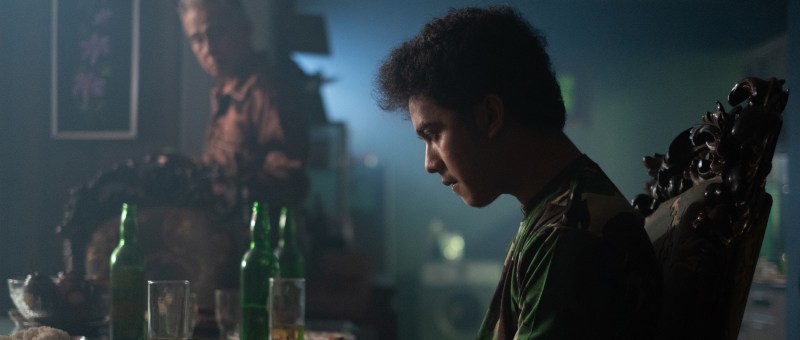
19-year-old Kib (Kevin Ardilova) lives alone in a vast mansion, the country home of a former general, Parna (Arswendy Bening Swara), who soon arrives unexpectedly with the intention of beginning his political career. Kib is quite obviously awestruck by the figure of the General, gazing at him like some long lost saviour drunk on the sense of power he exudes from every pore. On silently collecting the old man’s laundry, he stops to stare at a large portrait of him in uniform on the bedroom wall as if somehow thinking he too could one day be a fine general wielding such infinite power for himself. 

Such a thought might in a sense be transgressive. Kib is a servant in this house and as his father Amir, currently in prison for standing up to developers who were trying to steal his land, points out, their ancestors have always served the ancestors of Purna. Purna may tell him that no one cares about class anymore, but it obviously isn’t true or these two men wouldn’t be on opposite sides of the bars, or perhaps they would but their positions might be reversed. “Be careful who you trust” Amir tries to warn his son, but it’s already too late. Kib is ambitious. There’s something that bristles in him when Purna asks after his brother and wonders how well he can be doing as a migrant worker in Singapore with thinly concealed disdain in his voice. When Purna gives Kib an army shirt and says he looks just like him when he was young, a resemblance soon noticed by others, it flatters him to think he may be the General’s son rather than that of a mere servant turned convict. 

The more time he spends with Purna the more like him becomes, walking around with a swagger, exuding power and intimidation as if he really were a soldier not just a boy in a green shirt. Tragically he doesn’t even quite understand how this power mechanism works or what it’s implications are. When he accidentally bumps into a mosque while attempting a tight three point turn, local men surround the car demanding compensation. Purna gets out and puts on a show of authority. On realising what they’re dealing with the men instantly back down. Purna has a sheepish Kib apologise, and the men apologise to him, before explaining that sorry is a powerful word that can turn rage into blessing. What Kib fails to realise is that Purna is talking not about humility but intimidation, a mistake he learns to his cost in bringing a boy only a little younger than himself to Purna to “apologise” for disrespecting him expecting the General to pull the same trick again but shocked when events take a much darker turn than he’d anticipated. 

The boy he brought in, Argus, was the son of a woman whose coffee plantation would have to go if Purna got his hydroelectric plant approved. Purna sells the plant as a way of dealing with the problems caused by inefficient infrastructure but hides the corruption at its centre, forcing families off their land for the developers’ benefit through violence and intimidation. Argus is just as angry Kib, only he’s not falling for Purna’s sales patter. Kib watches the General shift the blame onto the developers, whom he backs and back him, while claiming to be a man of the people and giving a glib speech at the funeral of a boy he killed in nothing other than pettiness. 

Yet Purna is ageing and his grip on power may not be as firm as it once was while his seeming sentimentality in his attachment to Kib as a surrogate son is also a weakness. Kib may be deciding that being a migrant worker’s not as bad as becoming the heir of a man like Purna, but once you’re in it’s hard to get out as the ambivalent closing scene implies catching him dumbstruck once again only now like a general overseeing his troops and in one way or another a prisoner of his father’s house, a servant inheriting the mansion whether he wants it or not. In many ways a tale of seduction, Autobiography paints a fairly bleak picture of the contemporary society ruled by violent masculinity and fragile authority figures who quite literally visit their sins on their sons. 


Autobiography screens 15th/16th October as part of this year’s BFI London Film Festival.

Original trailer (English subtitles)
Hidden Letters (Violet Du Feng & Zhao Qing, 2022)

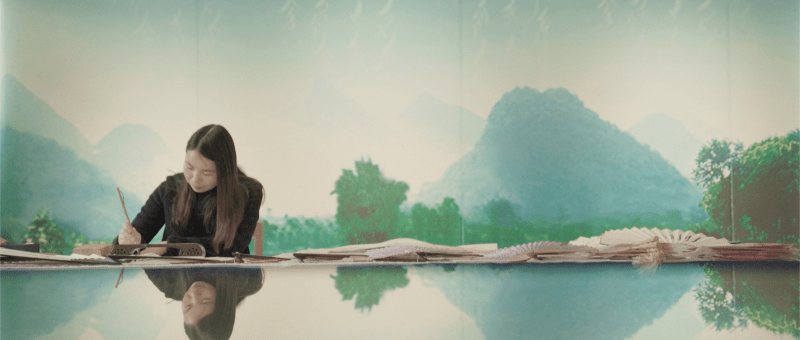
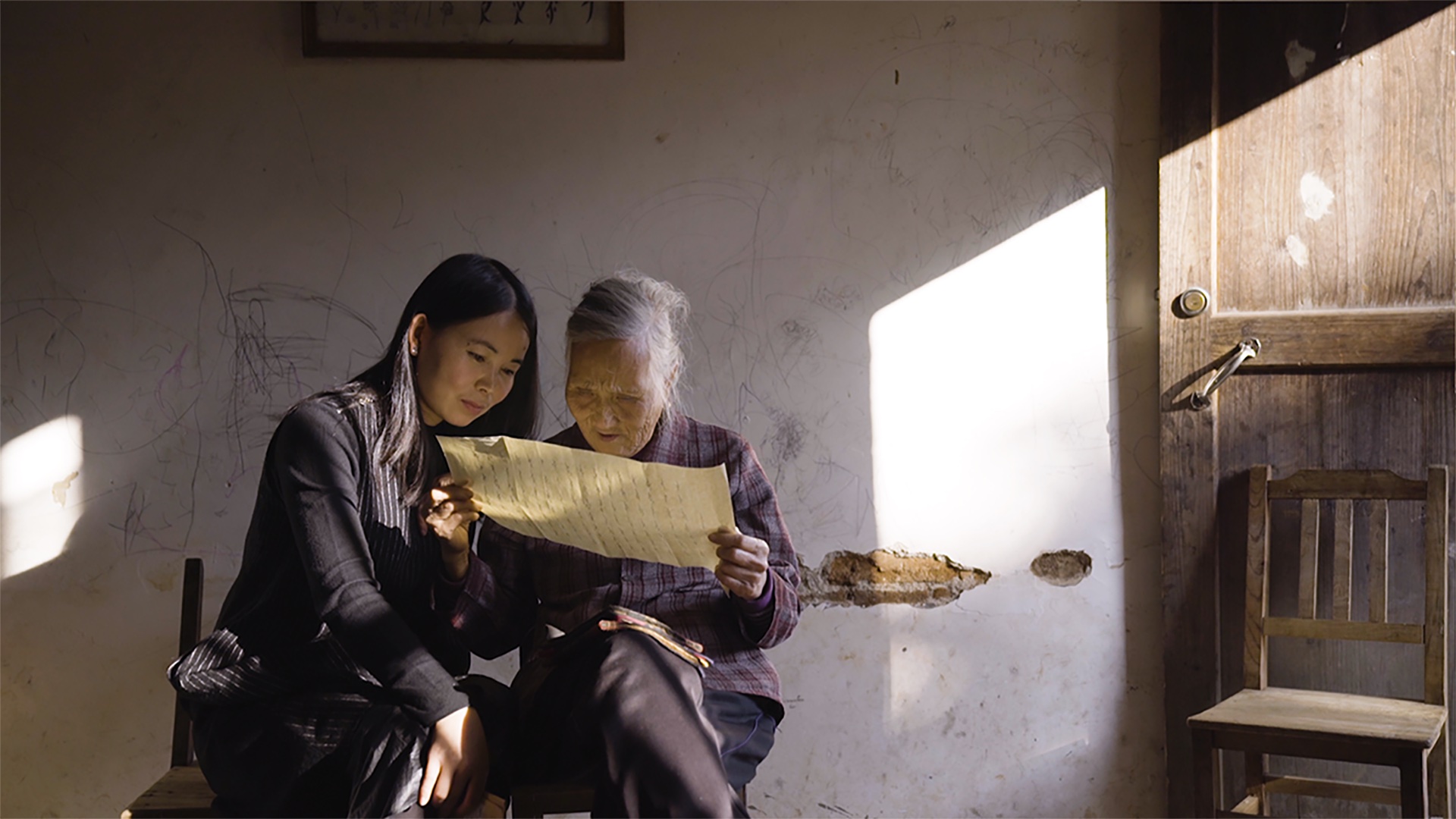
As the title cards that open Violet Du Feng and Zhao Qing’s Hidden Letters explain, women in feudal China had little freedom. Subjected to cruel practices such as foot binding, they were forbidden from learning to read or write and often confined to their husband’s home where they were expected to sacrifice themselves in service of his family. As someone later describes it, Nushu was secretive script created by women to communicate with each other in acknowledgment of their shared suffering with tiny messages concealed in fans or handkerchiefs, yet even as contemporary women try to preserve it its messages are co-opted by male patriarchal authorities in an increasingly capitalistic society. 

In fact, the documentary tells us little about the history of Nushu and its creation in part because its history is opaque in its nature as a tool of subversion. What we do learn is that Nushu was discovered only in 1983 and that little of it survives because women’s writings were often burned with them lest this only means of communication be exposed. One of the documentary’s two primary subjects, Hu Xin, runs a museum dedicated to Nushu in a small rural town and has formed a close relationship with one of its last living inheritors, He Yanxin, who talks with her openly of the miseries of her life as a woman and the lifeline Nushu once extended to help make them bearable. Nevertheless, she stresses that her Nushu was necessarily covert and unlike that of Xin whose Nushu is public and incorporates song and dance. 

It may in a sense be surprising that Xin, who has dedicated her life to the secret writings of women oppressed by patriarchy, still holds fairly conservative views. She married a man she met at the museum but he was violent and finally forced her into a late term abortion after learning their child would be a girl. Now a divorcee, she is too embarrassed to attend a neighbour’s wedding in her hometown and continues to feel as if she has “failed” as a woman in not becoming a wife or mother with a happy family home. Even He Yanxin ironically points out that the Nushu women would attend a mountain shrine to pray for sons, though in any case you can understand why they would not want to bring a daughter into this world of cruel subjugation. “We were only slaves to men” Yanxin explains, recounting that she was not even allowed to look her brothers-in-law in the eye as she carried them water and was often uncertain which of them she was addressing. 

We have to ask ourselves how much has really changed. Simu, the documentary’s second subject, is a woman with a more modern outlook yet drawn to the traditional. An opera singer by trade she lives a comfortable life in Shanghai and has found strength and inspiration in the existence of Nushu. As we meet her she is engaged to a man who first seems sympathetic, but expresses more conservative views on taking her home to meet his family. Getting her to drink a bitter tonic to encourage conception he then tells her that they shouldn’t have children right away because they need to buy a house so that his mother can stay with them when the baby’s born. She can continue with her opera career (it comes with several government perks related to housing and other subsidies), but he wants her to take another part-time job, dismisses Nushu as a “hobby”, and insists that she dedicate herself entirely to their family leaving her no time for anything for herself. As she looks askance at the camera for help, it’s plain that her situation is in reality little different from that of a feudal woman trapped in her husband’s home robbed both of identity and of fulfilment. 

Simu eventually breaks off the engagement with the support of her comparatively progressive parents and especially of her mother, a doctor who recounts her own childhood in which her father, a coal miner, would not allow her sister to be educated. They were “liberated” by the Great Leap Forward’s false promise of “equality” which saw fit to acknowledge them as equal only when their productivity was required to be so. In any case, she believes society has in a sense devolved and that contemporary women face harder battles in a culture which once again judges them solely on their ability to bear children.

Disturbingly, the legacy of Nushu has itself been co-opted to enforce the very values that it rebelled against. The director of Xin’s museum, a man, claims that Nushu represents the virtues of true womanhood, obedience, acceptance, and resilience, that he feels have been lost in this modern society of independent women. Meanwhile, while Xin makes Nushu banners at a tourism convention her male bosses huddle round putting Nushu slogans on promotional knickknacks such as retractable chopsticks in the shape of nunchucks. They claim that Nushu must be monetised if it is to survive while robbing it of its soul, overruling a woman’s objection that naff tie ups with KFC are not the answer to this particular problem. At the opening ceremony for the Beijing Nushu Cultural Exchange Center there are only men onstage to unveil the plaque for some reason to theme of The Magnificent Seven. 

Leaving the city to follow the guiding light of Nushu, Simu writes letters to her ancestors reassuring them that it’s better now than it was then. Women have agency over their marriages, foot binding has been banned, and they can live self-reliant lives of freedom and independence. Considering her experiences, Simu’s words might sound a little idealistic, not quite as it is but as she would like it to be. Yet as another woman puts it, perhaps the responsibility of the women of today is to live up to the legacy of Nushu and its spirit of rebellion in once and for all shaking free of oppressive feudalistic and patriarchal social codes. 


Hidden Letters screened as part of this year’s BFI London Film Festival and is available to stream in the UK via BFI Player 14th to 23rd October.

Original trailer (English subtitles)
Love Life (Koji Fukada, 2022)

Emotional distance and the contradictions of the modern family conspire against a grief-stricken newlywed couple in Koji Fukada’s moving social drama inspired by the 1991 Akiko Yano hit, Love Life. Interrogating love in all its forms along with its limitations, Fukada seems to asks if love is ever enough to overcome a sense of loneliness or if the space between people can really be bridged by communication alone while the couple find themselves pulled back towards the unfulfilled potential of failed romance in contemplating the possibilities of different if not necessary better futures. 

The fracture points in the recent marriage of Jiro (Kento Nagayama) and Taeko (Fumino Kimura) are thrown into relief during a double celebration as the couple host what is superficially a party for Taeko’s six-year-old son Keita (Tetsuta Shimada) winning an Othello competition but in reality a surprise do for father-in-law Makoto’s (Tomorowo Taguchi) 64th birthday. The elephant in the room is that Makoto does not approve of the marriage, making a rather unkind remark about second hand goods in irritation that his son has chosen to marry a woman who already had a son. Though Jiro’s mother Akie (Misuzu Kanno) is in general kind and keen to defend her new daughter-in-law even she tactlessly adds that she hopes the couple provide them with their “own” grandchild as soon as they can. The remark appears to cut to the quick of the already wounded Taeko, a look of dumbfounded confusion on her face in this sudden moment of accidental rejection. 

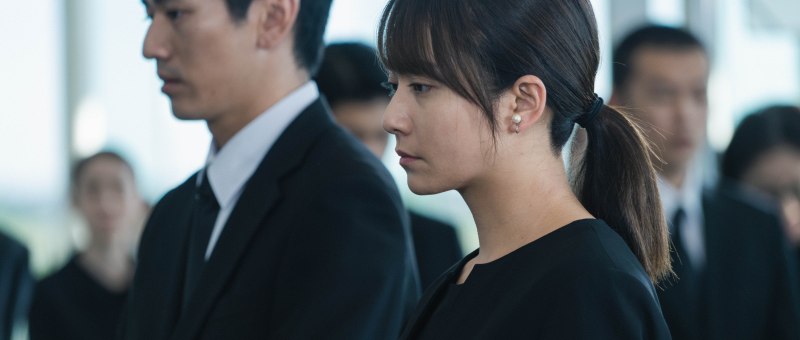
During the party, Keita is killed in a tragic domestic accident of the kind for which no one is to blame and could easily strike any family. Police questioning further emphasises the couple’s disconnection as a policewoman probes why Jiro had not legally adopted Keita as his son when they married only to discover that he did not want to do so until he’d received his father’s permission to add him to their family register. Though only married for a little under a year, Jiro had felt himself to be Keita’s father and loved him as a son yet is awkward in his grief, wanting to cry alongside his wife but feeling as if he had no right to do so. The feeling is compounded when Keita’s estranged father, Park Shinji (Atom Sunada), suddenly arrives at the funeral, soaking wet and in inappropriate clothes, to first breakdown over the coffin and then roundly strike his former wife across the face before being escorted away by security. 

In a mirrored scene, Taeko had asked her husband shortly before the party about another woman, Yamazaki (Hirona Yamazaki), sensing that there may have been something between them and feeling an anxiety in the precarity of their married life. Jiro is then left anxious by the resurfacing of Shinji yet trying to act against it, later advising Taeko that she should feel free to help him seeing as it seems he has fallen on hard times and has no one else to turn to as he is deaf and communicates in Korean sign language which few around him know. Taeko had previously used sign language to slip into a different world with her son when Jiro had asked why he never wants to play Othello with him only for Keita to reply in silence that it’s only because he’s not very good at it. There is a palpable pain on his face observing the closeness that exists between Taeko and Shinji as they communicate in a private language while, as Yamazaki later describes it, he is a man never quite able to look anyone in the eye. 

While he is drawn back to his unfinished business with Yamazaki, Taeko finds herself filling the void in her life by trying to rescue Shinji. Treating him almost as a child, she comes to believe that he cannot survive without her yet later realises that the intimacy she felt between them was only an illusion, Shinji had never really been emotionally honest with her and there are in fact plenty of other people with whom he can communicate if only he chose to do so. Just as she had been isolated at the party, marooned in the kitchen on her own, she is abandoned once again yet perhaps coming to a final acceptance of her son’s death along with a clearer understanding of her love and life even if it all it means is walking in parallel with no clear direction. A melancholy mediation on grief, Love Life suggests you don’t so much move on from the past as take it with you even as the pair of conflicted lovers determine to look to the future rather than the past as a path to salvation.


Love Life screens 8th/9th/14th October as part of this year’s BFI London Film Festival.

Original trailer (Japan subtitles only)

Small, Slow But Steady (ケイコ 目を澄ませて, Sho Miyake, 2022)

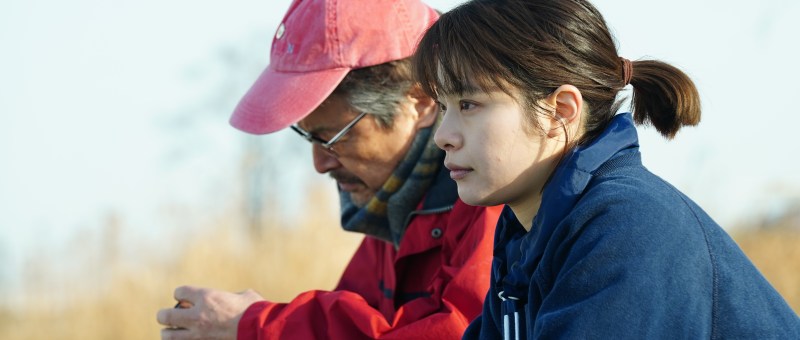
Part way through Sho Miyake’s empathetic character study Small, Slow But Steady (ケイコ 目を澄ませて, Keiko, Me wo Sumasete), an older man visits a doctor and is told that though he may think there is nothing really to worry about at the moment, a tiny drop of water falling steadily can soon make its mark in stone. It’s in one sense the small, slow, but steady stresses of everyday life that have eaten away at the soul of Keiko (Yukino Kishii), an aspiring boxer who is fast losing the will the fight. Yet it is also a small, slow, but steady process that allows her to begin moving again, climbing a new hill towards the next bout no longer so afraid of leaving the safety of the familiar. 

Deaf since birth, Keiko became a professional boxer two years previously and makes ends meet with a part-time job in housekeeping at an upscale hotel. Miyake often positions her as in a way free of the frenetic nature of the noisy city, unaffected by the shouts of rude passersby and unlike the men at her boxing gym never subjected to angry rants from her coaches. Yet it’s also at times as if she feels a kind of loneliness in the minor rejections of an indifferent society which often fails to cater to her difference. Few people are able to sign, even those at her gym haven’t learned, while others are sometimes impatient in her attempts to communicate. The restrictions of the coronavirus pandemic meanwhile only make things worse for her given that constant masking means she can no longer rely on lipreading nor can she hear the public health messages being blasted out in public spaces reminding citizens that there is a state of emergency in place and they should restrict their journeys to the barest of essentials. 

Then again, in the gym, she obviously cannot sign because the gloves her impede her ability to communicate. Nor can she hear the session bell or words of encouragement and advice from her coaches and the crowd. The chairman of the boxing club (Tomokazu Miura) admits in an interview that deafness is potentially fatal for a boxer, but that what Keiko may crave is a kind of internal peace in the surrender to the purely physical which allows her to empty her mind of everyday troubles. She may have taken up boxing as some say after being bullied as a child because of her disability, quite literally fighting back against a conformist society she refuses to beaten by, but has also found something reassuring in its slow and steady rhythms that allows her to reorient herself blow after blow. 

The chairman also says, however, that it’s not a matter of having a preternatural talent so much as a steady work ethic and above all a big a heart, describing her finally as simply “a really nice person”. “Why don’t you have your guard up properly?” another of her coaches asks her, while her brother having noticed there is obviously something bothering her tries to get her to talk, only for her to point out that “talking doesn’t doesn’t make a person any less alone”. With rumours the pandemic, along with the boss’ failing health, will finally take the boxing gym too, Keiko fears losing this final safe space but finds herself unable to stand up and fight for it. Though she had struggled to find a gym who would accommodate her disability, she is ambivalent when a new solution is found in an empathetic female coach (Makiko Watanabe) running a modern training facility who is learning sign language and keen to empower her in her own decision making rather than patronise or railroad her. Afraid of getting hurt, she takes a step back unwilling leave the security of the past for the possibility of the future. 

As Keiko reminds herself in her diary, self-control is the most important thing and the force she struggles with, suddenly losing her concentration in the middle of a match because the thoughtless referee keeps telling her to listen to him when he calls stop. In the end, it’s something quite trivial that sets her back on the path, a kind yet seemingly meaningless moment of acknowledgement from an unexpected source. Shot in a richly textured 16mm, Miyake captures Keiko’s isolated everyday with stunning clarity finding her alone amid the noisy city staring into space and looking for direction. Using intertitles to translate sign language his composition mimics that of a silent movie and lends an almost elegiac quality to the moribund boxing gym as it becomes an accidental victim of its times but ends on a note of quite resilience in the small, slow, but steady rhythms of gentle forward motion. 


Small, Slow But Steady screened as part of this year’s BFI London Film Festival.

Original trailer (no subtitles)

The Woman in the White Car (하얀 차를 탄 여자, Christine Ko, 2022)

A small-town policewoman unfairly held back by a traumatic past is embroiled in a complicated case of distorted realities in Christine Ko’s twisty, B-movie thriller, The Woman in the White Car (하얀 차를 탄 여자, Hayan Chaleul Tan Yeoja). Alluding to a novel which is mentioned in the film and both clue and red herring simultaneously, the title may actually be a minor spoiler but is also neatly allusive in its sense of mystery which at the same time proves mildly reductive even as we ask ourselves who such a woman may be. 

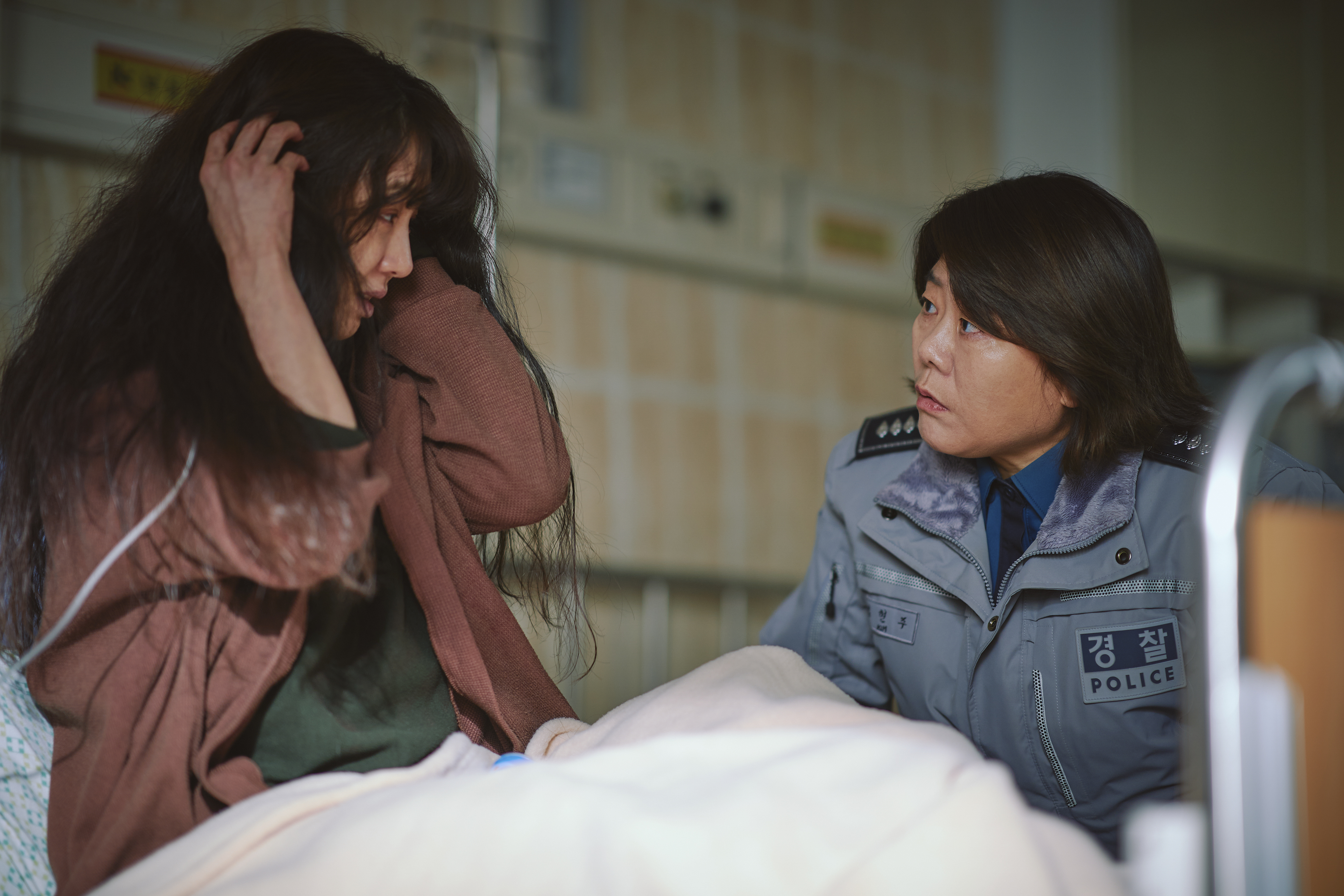
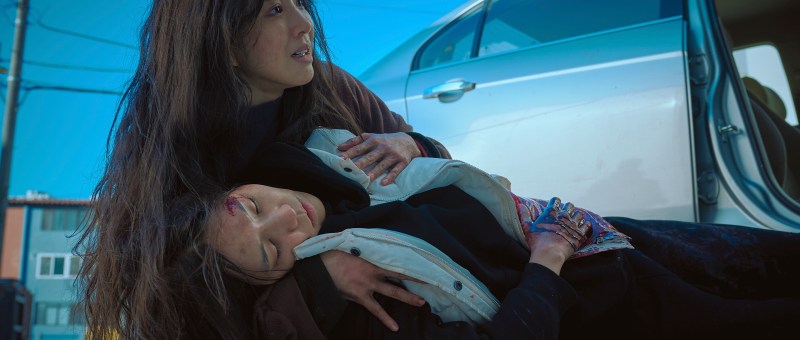
The film opens, however, with a silver car which has a large dent to its front bumper arriving at speed at a hospital where the driver, Do-kyung (Jung Ryeo-won), pulls another woman she calls sister out of the passenger seat while trying to get the attention of medical staff explaining that the woman has been stabbed by an abusive partner, Jung-man. All of that is obviously very distressing but when policewoman Hyun-ju (Lee Jung-eun) arrives on the scene she is immediately alerted to what seem to be inconsistencies in Do-kyung’s story some of which could possibly be chalked up to shock along with the revelation that Do-kyung has been diagnosed with schizophrenia and her recollections of events may be unreliable. 

Then again as Hyun-ju says, just because Do-kyung has schizophrenia it does not mean there is no truth in her testimony, just as it does not mean that anyone else with no such condition is necessarily telling the truth. Identifying with her on some level, Hyun-ju tries to tease out the hidden meaning behind Do-kyung’s words to unlock an objective reality but is also mindful of the possibility that Do-kyung may actually be completely lucid and playing them all for fools. The plot thickens when it is realised that the woman in the silver car is not Do-kyung’s sister Min-kyung as she had claimed, but an otherwise unidentified passenger whose origins they do not know further casting doubt on Do-kyung’s version of events along with the existence or not of prime suspect Jung-man. 

As she had received the call about the incident, Hyun-ju had been having a meal with her naive assistant Young-jae who had complained how boring their lives were as small-town police officers while Hyun-ju had even insisted on finishing her dinner before leaving for the hospital believing it couldn’t really be that urgent. On witnessing her talent for investigating, he asks her why she didn’t leave to pursue a more fulfilling career elsewhere only for her to explain that she stayed to look after a father we later learn to be abusive whose cutting criticism eroded her confidence in seeking a better life. All the women are in fact similarly constrained, but eventually fighting back against those who are preventing them from taking full control over their lives and in some cases creating a narrative that allows them to do so while claiming their freedom. 

Ko piles twist onto twist through a series of unreliable narrators each giving contradictory versions of events but each in their own small way hinting at greater truths which eventually present themselves to Hyun-ju leaving her with a dilemma in solving a mystery but wondering if it’s better to let it rest and each of the women, herself included, go free. Switching aspect ratios and colour grading to present different versions of reality through flashback and thought experiment, Ko places material clues in each of the stories to act as tiny anchors while setting the tale at a creepy mountain lodge in the middle of nowhere filled with gothic uncertainty and almost chilling loneliness. Accompanied by an overtly B-movie score, the film certainly indulges, with pleasure, in a series of genre cliches from mental illness to unreliable narrators, blood in the snow, and dangerous mountain curves but is finally anchored in a more certain reality unlocked by a detective’s unexpected empathy even if that same empathy leaves her vulnerable to a more literal kind of deceit. “I was just saving myself” one of the women admits, speaking for all taking their destiny into their own hands and reclaiming their freedom in the knowledge that only they can do so.


The Woman in the White Car screens 7th/8th October as part of this year’s BFI London Film Festival.

Original trailer (English subtitles)
It’s All My Fault (ぜんぶ、ボクのせい, Yusaku Matsumoto, 2022)

A young boy and a homeless drifter attempt to overcome the legacy of parental rejection in Yusaku Matsumoto’s sensitive coming-of-age drama, It’s all My Fault (ぜんぶ、ボクのせい, Zenbu, Boku no Sei). “It’s all my fault” is something many children think about circumstances which are well beyond their control, but it’s also something they’re encouraged to believe by an abusive or neglectful parent who tells them that they are to blame for the treatment they receive. Nevertheless, Yuta (Haruto Shiratori) comes to think that all the bad things happening in the world are in some way his fault, which might on one level be easier to believe than trying to accept that the world is sometimes a relentlessly unkind place. 

A sad and sullen boy, Yuta is viewed with some suspicion by the staff at the care home where lives due to his brooding nature and refusal to speak. The cause of his anger is that he was told by a previous caretaker that he’d be able to see his estranged mother, Rika (Marika Matsumoto), when he entered middle school and is resentful that he has still had no contact with her. The sad fact is, however, that Rika stopped taking their calls a long time ago and seemingly has no further intention of maintaining contact with her son. 

After the orphanage is rocked by a literal earthquake, Yuta sets off to find his mother but though she is moved to see him it quickly becomes clear that she is not really prepared to play a maternal role. When her drunken boyfriend returns home, she tells him that Yuta is a relative’s child she agreed to watch for a short time and appears otherwise conflicted, solicitously making sure he has enough to eat but more or less forgetting he’s even there whenever the boyfriend is around. Eventually she rings the care home to come and take him back, forever ruining Yuta’s faith in genuine human connection. 

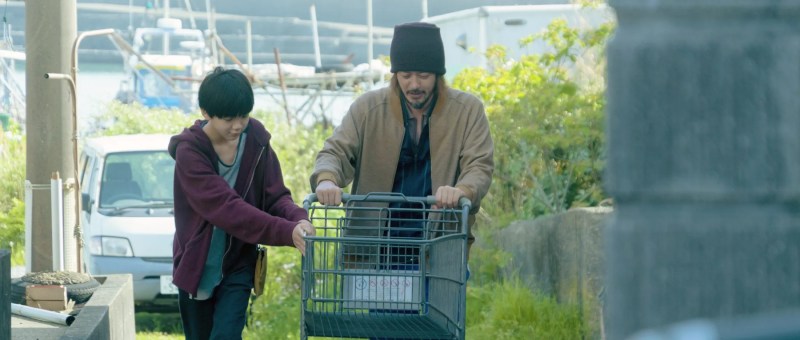
Managing to run away, Yuta is later taken in by eccentric drifter Sakamoto (Joe Odagiri) who strongly identifies with the boy in having grown up with an abusive mother whose legacy he has been unable to escape. Shiori (Ririka Kawashima), a teenage girl with issues of her own who also befriends Sakamoto, is envious of his untethered lifestyle viewing him as free and bound by no one. But in truth he too is trapped as symbolised by the broken van which prevents him from leaving to travel to Nagoya and confront his mother as he often says he intends to do. Sakamoto describes his trauma as a like a rock in the heart that tortures him as he continues to resent his mother for the abuse she dealt him while simultaneously suggesting that she has dementia and may not even remember that she has a son. Yuta by contrast insists that his mother is not a bad woman and continues to yearn for her, treasuring the friendship bracelet she made for him only for it to be broken by thuggish teens who get their kicks bullying those they perceive to be weaker than themselves.

Sakamoto becomes an awkward paternal figure, teaching Yuta how to survive in his way of life by hatching scams on wealthy passers by and fetching junk to sell to a local scrap merchant but is equally arrested, unable to come to terms with the traumatic past and therefore unable to move on. Shiori envies what she sees as his freedom in part because she has little of her own. Secretly blaming her authoritarian father for her mother’s death which she has come to doubt was really from an illness as she was told, Shiori has an internalised sense of shame and inadequacy knowing that she cannot be the person her father wants her to be and longs to escape him. Yuta continues to dream of a family, inviting Shiori to come with them to Nagoya when the truck is fixed, but is met only with despair as the world conspires against his happiness and encourages him to blame himself for his all his misfortune. Shot with an unsentimental if empathetic eye, Matsumoto’s hard-hitting drama examines the legacies of parental abuse, neglect, or absence persisting long into adulthood while his young hero struggles with himself in his conflicting emotions towards the woman who abandoned him with only an impossible future. 


It’s All My Fault screened as part of this year’s Camera Japan.

Original trailer (no subtitles)

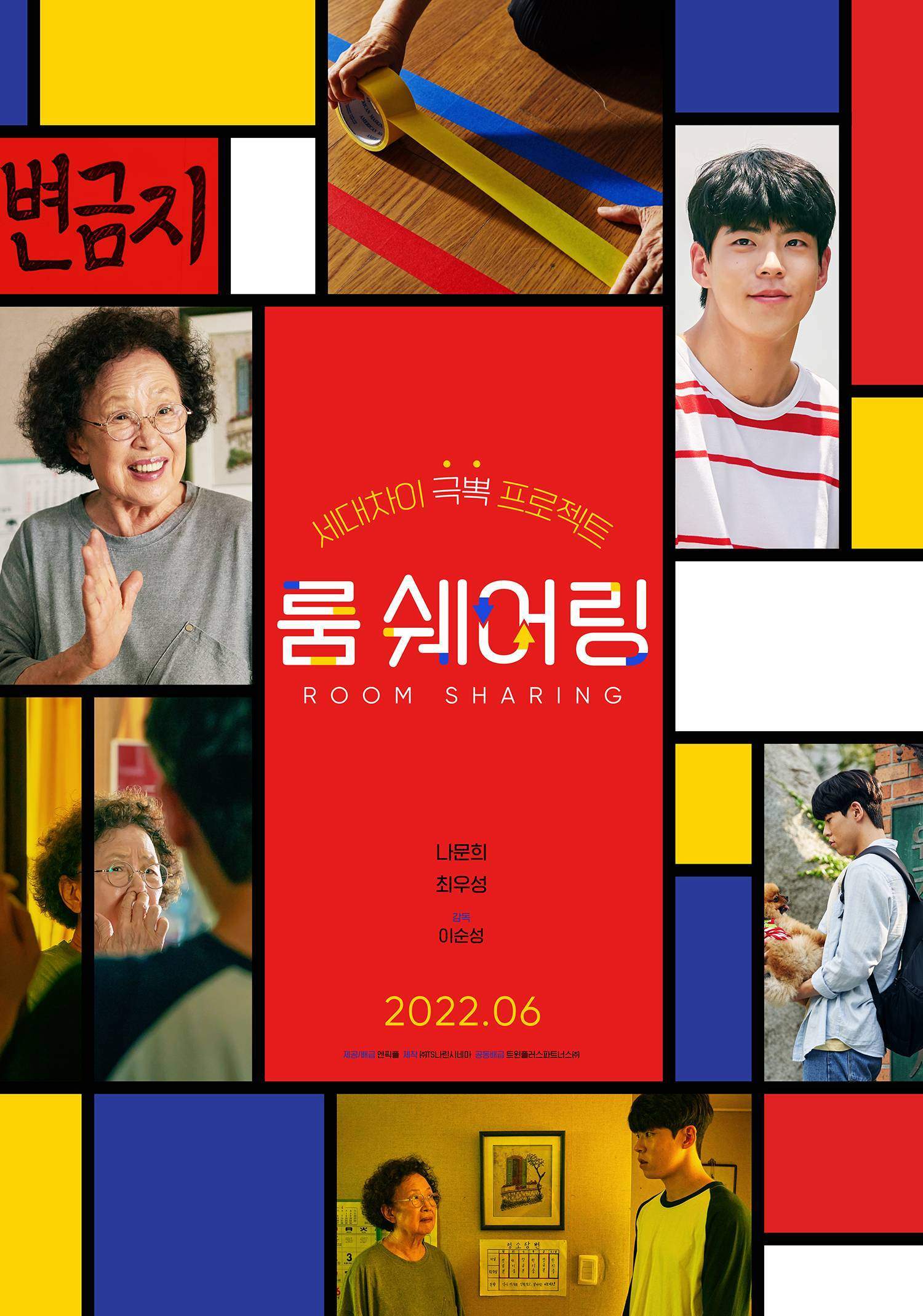
My Perfect Roommate (룸 쉐어링, Lee Soon-sung, 2022)

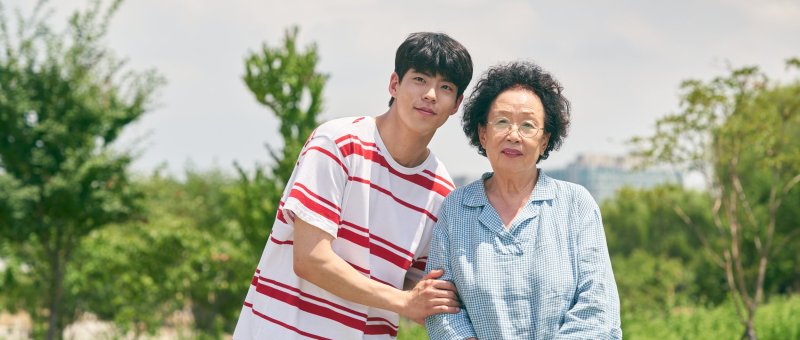
In recent years, an ingenious idea has seen older people living alone paired with youngsters struggling to find affordable housing in the hope of combating loneliness and isolation among the elderly to allow them to continue living independently in their own homes for longer. Some more cynically minded people might say it’s merely the government attempting to shift its own responsibilities onto the community, but it can’t be denied that it’s an interesting solution to the problems of an ageing society that, if it works out, can be enriching for both parties though as the grumpy granny and kindhearted student at the centre of Lee Soon-sung’s My Perfect Roommate (룸 쉐어링, Room Sharing) discover it’s always going to be a difficult adjustment. 

That’s in part because Gum Bun (Na Moon-hee) is an elderly lady very set in her ways who appears to be not entirely happy with the idea of having a young man come to live with her in the first place. Before Ji Woong (Choi Woo-sung), a student on a tight budget, arrives she patterns her home with duct tape to mark out which areas he’s allowed to go into and even goes so far as to forbid him from using her bathroom to do a number two because she just can’t bear the thought of sharing her toilet with a man after all these years living alone. For his part, Ji Woong doesn’t complain and does his best to abide by Gum Bun’s wishes even though at times the arrangement seems exploitative as she makes a point of ordering him to do her housework and even begins cooking him meals so she can charge him for them. 

Yet as Ji Woong’s boss at his part time job clearing houses after someone has died points out, loneliness can come at any age and both Gum Bun and Ji Woong are lonely each in a sense excluded from mainstream society because they do not have families of their own. Gum Bun never married and has only one friend (Choi Sun-ja), a neighbour of the same age who married and had children but feels disconnected from her son who rarely calls or visits. She has also elected to take part in the home sharing programme and enjoys spending time with the young student who lives with her as if he were really her grandson. But Gum Bun struggles to bond with Ji Woong in part because she has had disappointment in her life that has left her embittered and resentful while he is also reserved as he is afraid to disclose that he has no family because of a societal stigma towards orphans.

For these reasons there are trust issues on each side, but also an eventual common ground that allows the pair to generate a kind of familial bond and Gum Bun to open herself up to the world again no longer so afraid of abandonment. As Ji Woong had said about a little dog he agreed to look after for a few days much to Gum Bun’s consternation, if you give something love it will eventually come back to you. “We must help each other in this society” Ji Woong had earnestly said only for Gum Bun to counter that helping other people only leaves you miserable, but even she learns to remember her community spirit helping local children living in poverty while collecting prescriptions for other elderly people along with offering a little medical advice as a former nurse. 

Lee’s warmhearted drama directly tackles a series of societal problems from the ageing population to the difficulties young people face trying to get their start in life, but is also clear that prejudice often contributes to the crushing loneliness that can make life seem not worth living. Gum Bun is written off as a “grumpy granny”, excluded from mainstream society because she never married, while Ji Woong is constantly faced with a degree of suspicion solely because he has no family, embarrassed when friends asks what his father does or when a job application unnecessarily asks for his parents’ names. Ji Woong is over the age of majority, but he’s still pressed by a policeman to call his mum and dad while the guy he got into a fight with protecting Gum Bun calls him an “orphan punk” and gestures to the policeman that he is obviously in the wrong assuming the policeman will immediately agree with him. Both he and Gum Bun are in a sense orphans, left alone to fend for themselves in an often hostile society but eventually discovering an unexpected solidarity and sense of familial warmth that allow them to begin moving forward with their lives.


My Perfect Roommate screens in Chicago on Oct. 1 as part of the 15th season of Asian Pop-Up Cinema.

International trailer (English subtitles)
Moon Man (独行月球, Zhang Chiyu, 2022)

A diffident everyman battles loneliness and despair only to become a selfless sacrifice for a world that left him behind in the latest film from the Mahua FunAge gang, Moon Man (独行月球, Dúxíng Yuèqiú). Not quite the raucous comedy that Mahua FunAge has become known for with popular hits Never Say Die and Hello, Mrs. Money, Moon Man is a more contemplative affair adapted from a South Korean manhwa by Cho Seok and equal parts absurdist exploration of the human condition and cathartic post-pandemic dramedy that insists there is always a homecoming in one way or another. 

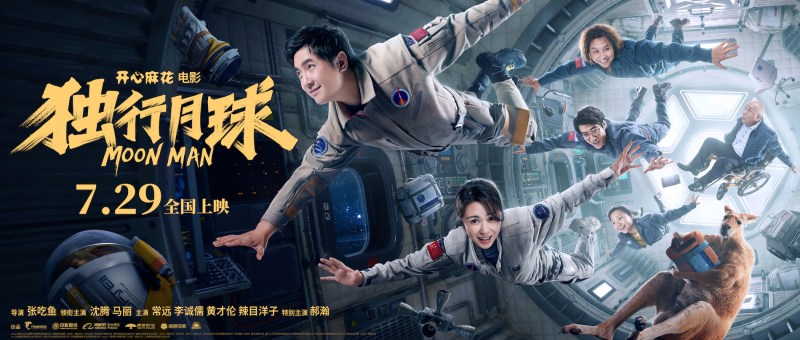
Yue Dugu (Shen Teng) is proud to refer to himself as a “middle man” in that he has deliberately cultivated the image of Mr. Average in an intense attempt never to stand out from the crowd. On applying for an engineering job on a space programme he’s told the position has been filled but there’s an opening in maintenance. Yue didn’t really want to take it but does, as we later learn, after falling in love at first sight with Xing (Ma Li), the commander of a mission set to save the Earth from a meteor strike some years in the future. Being the kind of guy he is, Yue never makes an attempt to get close to her but thinks his chance has finally come when the mission is concluded successfully though Xing doesn’t appear to even know he exists. He decides to write a long love letter while listening to romantic music and consequently misses all of the alarms alerting him to the fact that something has gone very wrong, the mission is being aborted, and they all need to evacuate as soon as possible. Left behind as the rockets take off he can only look on in horror as a meteor strikes the Earth leading him to believe he is the sole survivor of the human race. 

Of course, that turns out not quite to be the truth. What starts out as Robinson Crusoe quickly becomes The Truman Show as Xing, who has found safe refuge on a nearby space base, realises someone was left behind and plans to livestream their daily life to give hope to the survivors on Earth who are now living a dismal post-apocalyptic existence underground. Recruiting a former live-streaming king, they try to set Yue up as an idealised propaganda hero but, as they are unable to communicate with him, Yue still thinks he’s the last of his kind and his behaviour cannot really be called inspirational seeing as he spends most of his time trying to crack the code to enter Xing’s quarters and having dinner with a mannequin he’s pasted her face on. Meanwhile, he’s also discovered that he’s not quite as alone as he thought but is trapped with a very angry kangaroo left behind by a research team. 

Yue was a lonely man before, but begins to experience true despair while quite literally alone on the moon wondering what the point of his life is especially if, as he assumes, Xing is no longer in this world. He contemplates suicide and then, after hearing radio static and coming to believe there may be someone else out there comes into his own trying to plot his escape by thinking outside of the box and proving himself a talented scientist. Struck again by despair he realises that cure for loneliness is knowing there’s someone there to keep the light on for you to guide you home only to see the Earth light up with a message intended to read “you are not alone” but which accidentally reads “you are no one” reinforcing Yue’s everyman status as a middle of the road guy who shouldered the burden that was handed to him and set out to save the world all while locked outside of it. 

Yue’s accidental heroism begins to soften Xing’s austerity as she gradually falls for this “awkward” man, while he learns to step up to the plate to protect her and the rest of humanity all of which lends hope to those trapped in the bowels of the Earth and encourages them to begin rebuilding even if at great personal cost. Shifting into Armageddon territory, it’s a nobody who finally saves the world in a final act of selfless heroism. Over the past few years, many may have felt as if they were alone on the moon or found themselves trying to parse grief on a mass scale while mourning the world they knew which had been so abruptly taken from them. Yet as the final title card puts it, the universe is vast, “we will meet again” and there will always be a homecoming in one way or another. Boasting excellent production values including some adorable animated sequences, Moon Man is a strangely cathartic experience filled with zany humour but also genuine hope for brighter future on the other side of the darkness. 


Moon Man is in UK cinemas now.

Original trailer (Simplified Chinese subtitles only)

Bad City (バッド・シティ, Kensuke Sonomura, 2022)

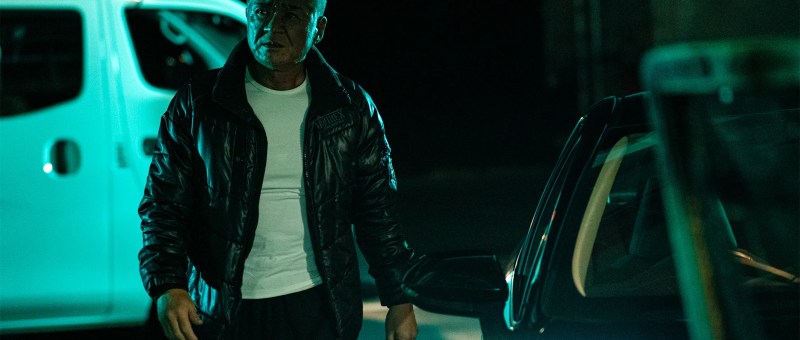
V-Cinema legend Hitoshi Ozawa returns in a tale of big city corruption helmed by Hydra’s Kensuke Sonomura. Scripted by Ozawa himself and apparently created in part as a celebration of his 60th birthday, Bad City (バッド・シティ) is a clear homage to the classic yakuza dramas of the early ’90s while boasting some of the best action choreography in recent Japanese cinema performed by the likes of Tak Sakaguchi along with Ozawa himself who performs all of his own stunts. 

According to dodgy CEO Gojo (Lily Franky) who has just inexplicably been acquitted of extortion and colluding with the yakuza, Kaiko City is riddled with crime and violence which is why he’s announcing his candidacy for mayor. Meanwhile, behind the scenes, a mysterious assassin (Tak Sakaguchi) is cutting swathes through the Sakurada gang who dominate the city’s western district which Gojo has earmarked for a redevelopment project he claims will improve the lives of citizens but is in reality just an excuse to build a massive casino complex intended to enrich himself and his company. The previous mayor had won a landslide victory thanks to his opposition to the redevelopment plan which enjoys little support from the local population but Gojo isn’t exactly interested in winning hearts and minds in the community. 

Really just another gangster himself, Gojo’s machinations are also destabilising the existing underworld equilibrium in seducing treacherous minions from other gangs including vicious Korean gangster Kim Seung-gi whose loyalty to ageing gang boss Madam Kim is clearly waning. Then again, an enemy’s enemy is a friend allowing unexpected alliances to emerge between previously warring factions especially given that the sudden offing of a high status gang boss is frowned upon in the gangster play book. 

With police and judicial collusion the only possible explanation for Gojo’s miraculous escape from justice, an earnest prosecutor sets up a secret task force under the command of Public Security agent Koizumi (Mitsu Dan) and led by veteran officer Torada (Hitoshi Ozawa) who is currently in prison awaiting trial on suspicion of offing Mrs Kim’s only son, Tae-gyun. Torada is an unreconstructed violent cop operating under the philosophy that if you beat up a good guy that’s violence but if he’s bad then it’s justice. He has perhaps learned to see the world as morally grey, not believing himself to be necessarily on the side of right so much as resisting the forces of darkness by doing whatever it takes to survive in this city which is indeed already quite corrupt. Partnered up with two veterans and a junior female officer from violent crimes who were assigned to investigate the Sakurada boss’ murder, the gang do their best to trap Gojo legally by uncovering incontrovertible evidence of his dodgy dealings they can use to nail him in court, or failing that the court of public opinion, that cannot be swept aside by his friends in high places. 

Sonomura opens as he means to go on with a series of bloody assassinations culminating the massacre of the Sakurada gang in a bathhouse, while building towards the final mass confrontation in which Ozawa and his team face off against hordes of foot soldiers trying to fight their way towards a confrontation with Kim Seung-gi. Dynamically choreographed, the action sequences are surprisingly bloody and heavy on knife action but crucially also displaying a high level of characterisation and dramatic sensibility as the earnest cops square off against amoral gangsters willing even to sacrifice their own. 

Though there might be something uncomfortable in setting up the major villain as a rogue Korean gangster, the film paints his defection in part as a reaction to Mrs Kim’s initial loathing of the Japanese while in the end allowing a kind of cross-cultural solidarity to emerge as the Sakurada gang become accidental allies and Mrs Kim receives a lost letter from her son that allows her to change her way of thinking while helping to take down the destabilising force of Gojo, restoring a kind of order at least to the streets of Bad City Kaiko. Ozawa may be an equally dangerous extra-judicial force, but at least for the moment he’s standing in the light where everyone can see him taking out the trash and leaving those like Gojo no quarter in an admittedly violent place.


Bad City screened as part of this year’s Camera Japan.

Original trailer (dialogue free)