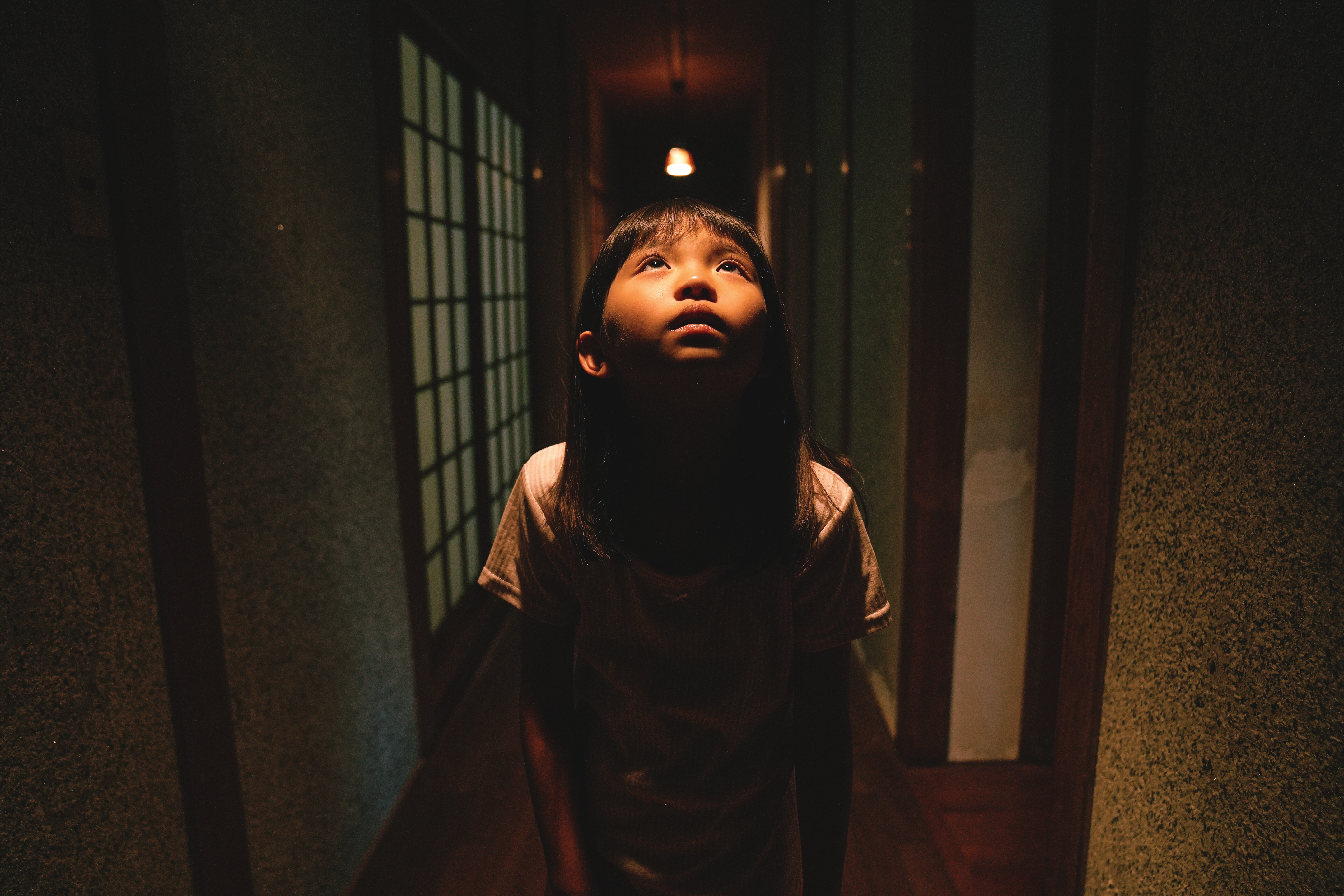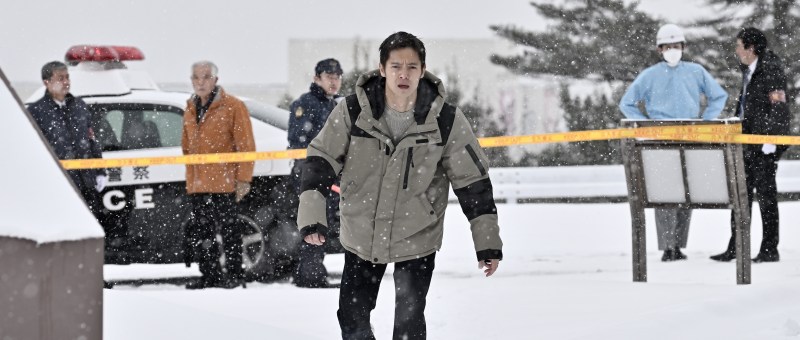
From the End of the World (世界の終わりから, Kazuaki Kiriya, 2023)

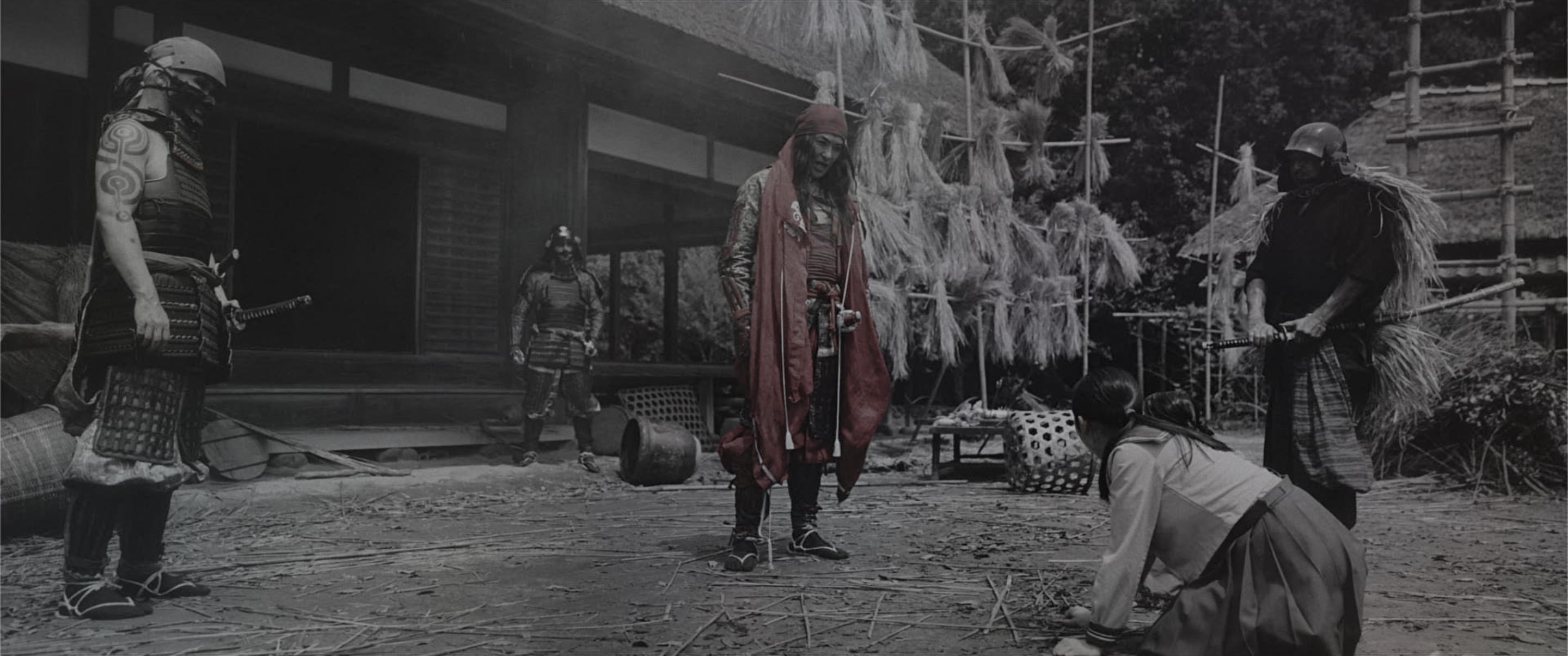
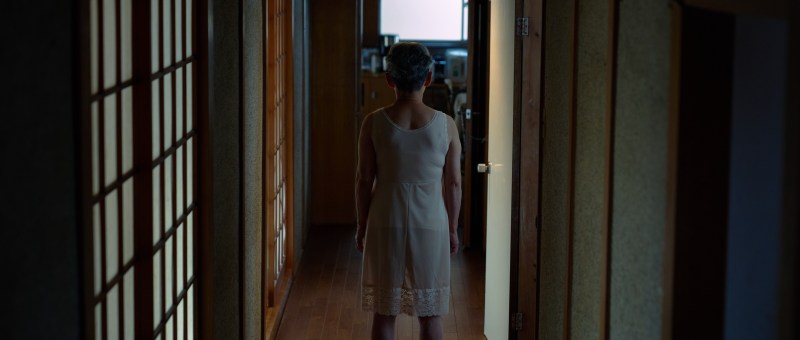
Charged with the responsibility of saving the world, a teenage girl wonders if she should in Kazuaki Kiriya’s pre-apocalyptic drama, From the End of the World (世界の終わりから, Sekai no Owari kara). After all, the suffering will continue. People will continue to be cruel and selfish. Maybe it’s better to let humanity fizzle out and least save the planet. But really whether any of this is “real” or not, what’s she’s looking for is an escape from her grief and loneliness and a world that is a little kinder and less self-destructive. 

Shortly after losing her grandmother, who had been raising her after her parents were killed in a car accident, Hana (Aoi Ito) begins having strange dreams where she’s cast back to what seems to be feudal Japan where she meets a young indigenous girl whose family have been wiped out by marauding samurai. The girl’s guardian, an older woman (Mari Natsuki), explains to her that her arrival in this place has been foretold by some kind of scripture painted on the ceiling of a cave and that her duty is to deliver a letter to a shrine. Not too long later, she’s accosted by some kind of mysterious authority which seems very interested in her dreams, eventually taking her to a strange base in another cave where she meets an old woman (also Mari Natsuki) who looks exactly like the one saw in her dream. The world will apparently end in two week’s time, though she alone has the ability to alter what has been written through the power of her dreams which allows her to change people’s thoughts and thereby rewrite their destiny. 

She does not do this deliberately, but reacts instinctively to the events she encounters which the old woman claims exist in the “Sea of Sentiment”, a great confluence of human thought on which the world is built. “Understanding things is overrated. Everything’s an illusion. What’s important is your feelings,” another mysterious presence (Kazuki Kitamura) tells her, a man who exists between dream and reality and would rather the world end because as long as it exists he cannot die. In some respects, he may represent Hana’s depression suggesting that to continue to live is only to prolong her suffering and that it’s better for everyone to simply give in and let fate take its course while she weighs up kindness and vengeance using her newfound powers for “selfish” reasons to end the torment she’s been suffering at the hands of a bullying classmate who’s long been blackmailing her in taking advantage of her precarious position as a financially disadvantaged orphan. 

The quest that the old woman sends her on is really into the depths of her own heart which is wounded not only by a medical issue she seems to have forgotten but a pair of childhood traumas buried behind a door she did not want to open. The real message that she’s supposed to deliver has its own paradoxical sense of poignancy, “from the end of the world to you in the future”, which signals her nihilism and despair but also a desire for some kind of continuation or rebirth in a better, kinder world less marked by suffering or selfishness. Then again, the way of achieving that world is still rooted in violence only of a more knowing kind that heads off one particular kind of disaster and allows Hana to save “herself” in all her incarnations, but perhaps doesn’t do very much to change the human “foolishness” to which the old woman ascribes humanity’s destruction.  

Logically, it doesn’t quite hang together and not all of it makes sense (understanding things is overrated), but it has its own kind of internal consistency even if at times somewhat incoherent as it well might be if it were all the dream of a lonely teenage girl who’s given up on the idea of a future for herself because her life has been too full of suffering and unfairness. It’s no coincide the date of the end of the world is set for the same day as her high school graduation ceremony. Her world really is ending if in a less literal way leaving her all alone and forced into a more concrete adulthood while her peers get to chase their dreams a little longer by moving on to higher education while she’ll have to look for work to support herself. She may feel that nothing she does makes any difference and that she is powerless to change her fate, but also realises that she is not as alone as she thought. Featuring top notch production values and some striking production design, Kiriya’s sci-fi action drama is quietly touching in its final resolution that despite everything Hana still wants to love the world even if it’s making it very difficult. 


From the End of the World screens in New York Aug. 5 as part of this year’s JAPAN CUTS.

Teaser trailer (no subtitles)

Night of the Assassin (살수, Kwak Jeong-deok, 2023)

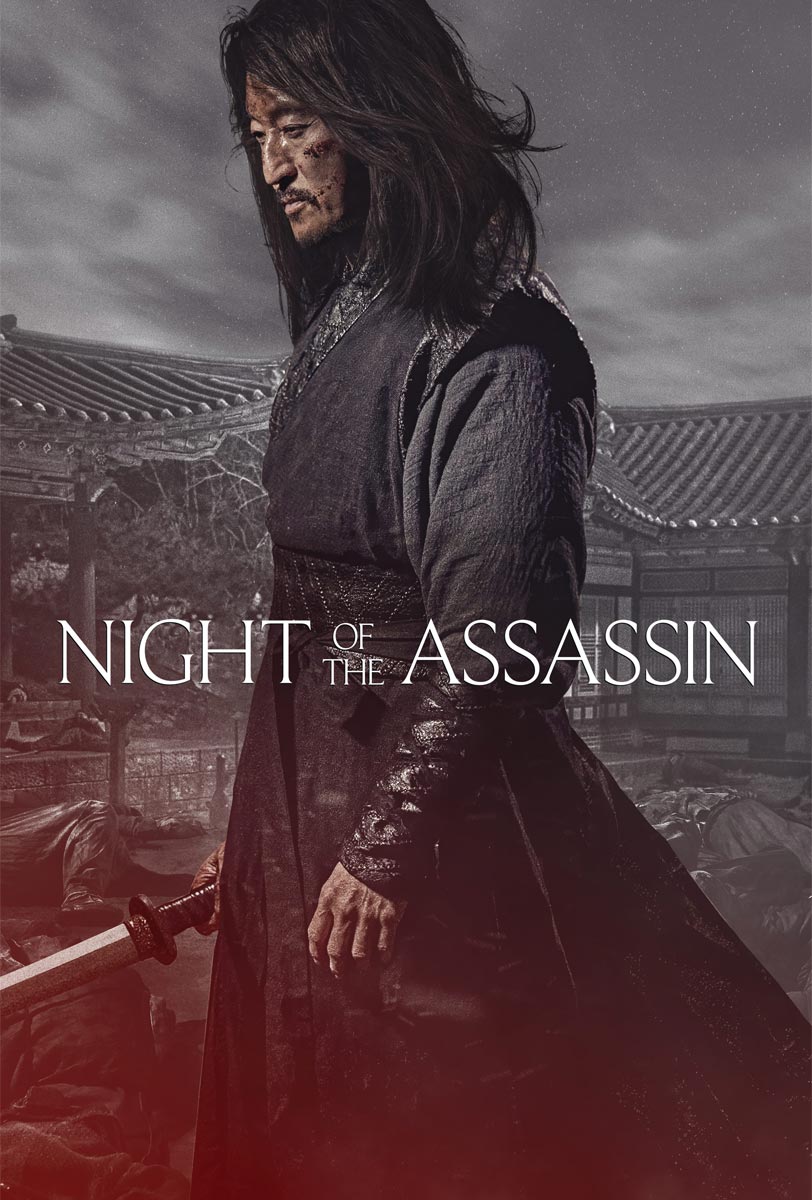
The vagaries of the times take a toll on the heart of a killer for hire in Kwak Jeong-deok’s low budget historical drama, Night of the Assassin (살수, Salsu). Set in feudal Korea, the film takes place in a world in which “human lives have no meaning” and corrupt authorities fight amongst themselves while exploiting the suffering people for their own gain. As someone later says there is no end to a person’s greed in this constantly uncertain society. 

Inan (Shin Hyun-joon) is regarded as the best assassin in Joseon seeing as his targets always end up dead, but it seems the moral duplicities of his life as a sword for hire have begun to weigh on him and resulted in a heart that is in effect broken. His doctor warns him that his body can no longer support martial arts (or sleeping with women) while the only thing that might help him is a mythical herb, Mahwangcho, he isn’t really sure actually exists. Weakened as he is, knives are quickly out for Inan though somehow he manages to escape living a quiet life searching for the herb and reflecting on the dark deeds of his life. 

A year later he fetches up in a village where he’s taken in by a widow, Seon-hong (Kim Min-kyung), after making a non-violent intervention on seeing her bullied by local guards. Soon he becomes a waiter at her roadside restaurant and becomes a surrogate father figure to her young son, Chil-bok, who ironically enough wants to become an assassin when he grows up having become obsessed with a martial arts serial while determined to get revenge for his father who was killed by bandits while searching for a herb. 

The bandits are the reason Inan can’t just go and look for the Mahwangcho himself seeing as they pretty much own the mountain and are not so secretly in league with the guards where corrupt official and former gang boss Ibang (Lee Moon-sik) has made a bundle getting the local peasants hooked on opium so he can press them into debt and then take their land. Only, Ibang has had enough of working with bandit chief Baek Ga and figures he may as well use Inan, after learning his true identity, to take him out and put a weaker willed subordinate “in charge” while running things from behind the scenes. 

Inan is fighting a battle on several fronts, the first being his health and his reluctance to fight because of it which is also a symbolic manifestation of his moral conflict with his life as a hired killer. As he tells Chil-bok, they weren’t all bad guys even if he rationalises to himself that every one dies some day so today is as good tomorrow. Ibang justifies himself that he’s appeasing the bandits by containing them in the mountain while simultaneously peddling opium to the local population to make it even more difficult for them to resist him. Then again, Inan doesn’t rise up to free the villagers nor even to take out the bandits to get access to the mountain but only in defence of Seon-hong and her son when Ibang uses them to manipulate him into killing Baek Ga.

The film is framed as a kind of fable much like that in the serial Chil-bok is reading only related by an old friend of Inan’s who’s retired from the underworld and is attempting to live a quiet life in the country though as he points out real life doesn’t always have a neat ending. As such, the film works in a minor hook for a sequel in the mysterious identity of whoever it is sending assassins after Iban and the reasons why they want him dead though there may be a kind of explanation in the flashback scenes to his life as a young assassin. Likewise, the film has a kind of episodic structure in which Iban battles with a coldhearted mercenary much like himself and a female assassin with red eyes who seems to have some kind of hypnotic superpower. Though obviously constrained by budgetary limitations, Kwak’s attention to costuming and architecture help lend a potent sense of place to the feudal-era setting while the visceral quality of the action scenes reinforces Inan’s existentialist questioning in a land in which human life has little value.


Night of the Assassin is available to stream now in the US via Hi-YAH! and will be released on DVD & blu-ray Aug. 8 courtesy of Well Go USA.

International trailer (English subtitles)

Devils (악마들, Kim Jae-hoon, 2023) [Fantasia 2023]

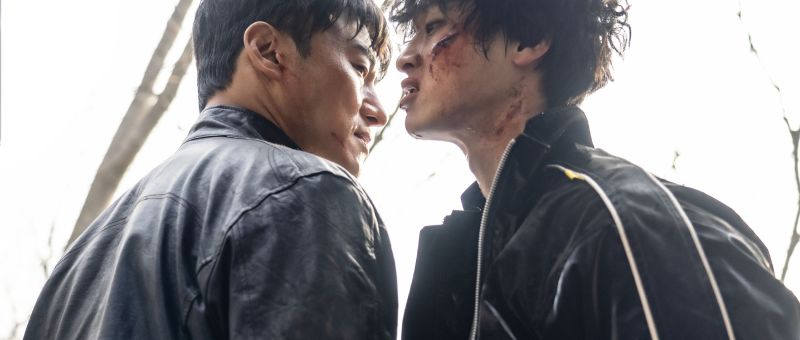
A detective consumed by thoughts of vengeance suddenly wakes up in the body of the serial killer he had been hunting, but how can we truly know who is who when each is so transgressively corrupt? The pluralisation in the title of Kim Jae-hoon’s bodyswap thriller Devils (악마들, Akmadeul) is no accident as the two men become in some senses interchangeable, their identities constantly shifting and largely dependent on those ascribed to them by others. “If you closed your eyes you’d swear he was Jae-hwan,” his confused partner admits though having witnessed him brutally torture a suspect/witness by hammering nails into his thighs. 

Jae-hwan’s (Jang Dong-Yoon) rage is partly born of guilt in that he failed to properly support his previous partner, who was also his brother-in-law, during a raid on a killer’s lair during which he got his throat slit by sadistic murderer Jin-hyuk (Oh Dae-Hwan) who has been brazenly posting snuff videos on the internet while continuing to evade the police. Two years later, Jae-hwan has been partnered with reletive rookie Min-sung and is determined not to make the same mistake when they get another shot at Jin-hyuk instructing him to stay behind and let Jae-hwan lead. But during the operation Jae-hwan goes rogue, chasing Jin-hyuk on his own and going missing after diving over a ridge in the woods. A month later a car carrying both men rams into a bollard outside police HQ only when he wakes up Jin-hyuk insists on speaking only with Min-sung and claims that he is in fact Jae-hwan.

Of course, Min-sung doesn’t really believe him despite being presented with information only Jae-hwan would know but is a little more convinced on visiting his former partner and observing him behaving strangely. The problem is, how can you tell the difference between a man using extreme violence for “justice”, which in this case is actually revenge, and one who uses it for pleasure? After teaming up with him, Min-sung is called to a station and assists Jin-hyuk/Jae-hwan drag an old man to a grimy trailer in the woods where he tortures him into giving up information on his fellow criminals by hammering nails into his legs while filming his “confession” as the kind of backup evidence which can’t be used it court but still might prove useful. You could say that it’s Jin-hyuk’s subconscious poking through, but Min-sung is fairly unfazed by this unorthodox investigative tactic and his conviction that Jin-hyuk is really Jae-hwan never wavers despite seeing him commit such a violent act so naturally.

Jae-hwan too hints at similarity between himself and Jin-hyuk when he complains that as a police officer he must “fight inside the fence known as law,” while the criminals are bound by no such constraints. He completely misses that this is what ought to separate them, to make their identities distinct, but now they are more or less the same in Jae-hwan’s willingness to turn vigilante, step outside the protection of the law, and do anything it takes to catch Jin-hyuk. “You’ve got my face, take advantage of it” Jae-hwan/Jin-hyuk sneers as he sends his opposite number to catch the men that have betrayed him, while each of them is to an extent adept at playing the role assigned to them at this and any given time. 

It goes without saying that the women who were murdered in the snuff videos have been more or less forgotten, Jae-hwan’s desire to catch Jin-hyuk is born of that to avenge himself as a policeman and gain vengeance for his brother-in-law’s death. In a pointed exchange, Jin-hyuk asks Jae-hwan how he knows that he is not merely toying with him, allowing Jae-hwan to think that he’s manipulating him but secretly in control, hinting at a kind of cat and mouse game between the two to claim the identity of the chaser and the chased. Yet whichever way you look at it, Jae-hwan has overplayed his hand, releasing a “hunting dog” he can’t control with disastrous consequences for himself and others. With a distinctly B-movie sensibility, Kim plays with identity and the malleability of memory to ask if we can really be sure of who we are at any given time while suggesting that’s something Jae-hwan should have been asking himself in his relentless pursuit of his spiritual mirror.


Devils screened as part of this year’s Fantasia International Film Festival.

International trailer (English subtitles)

Winny (Yusaku Matsumoto, 2023)

Can a creator be held legally responsible for what other people might decide to do with their creation? For some, that is the essential question of the trial at the centre of Yusaku Matsumoto’s legal drama Winny, but in speaking more to the present day than the early 2000s in which the real life events took place the film is more concerned with freedom of speech in a society in which established authorities may seek to resist the democratisation of information. 

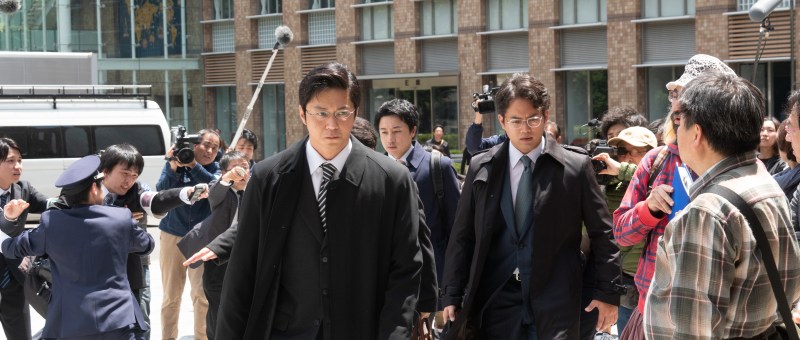
A talking head seen on television at one point suggests that peer-to-peer file sharing programme Winny disrupts the democratic copyright regime, but according to its creator Isamu Kaneko (Masahiro Higashide) the appeal of peer-to-peer is that it is by nature democratic in forging a network of machines on an equal footing. Nevertheless, in November 2003 two people were arrested for using Winny to share copyrighted material and Isamu’s home was searched by the Kyoto police who arrested him for aiding and abetting copyright infringement. He and his lawyers argue that to charge the developer is wrongheaded and irresponsible in that it will necessarily stifle technological advance if developers are worried about prosecution if their work is misused by others while his intention in any case had not been to undermine copyright laws but essentially for technological innovation in and of itself. 

Meanwhile, the film devotes much of its running time to a concurrent police corruption scandal in which a lone honest cop is trying to blow a whistle on a secret slush fund founded on fraudulently produced expense receipts. The implication is that the reason the police decided to go after Isamu is that they feared Winny’s potential to expose their own wrongdoing. A member of the police force had apparently used Winny and introduced a vulnerability to the police computer system that allowed confidential data to be leaked, and Winny is indeed later used to publicly disseminate evidence which proves the claims of the whistleblower, Semba (Hidetaka Yoshioka), are true. Semba had previously tried to take his concerns to the press privately but was ignored, the editor simply printed a police press release without investigation unwilling to rock the boat. But a programme like Winny exists outside of the establishment’s control which is why, the film suggests, the police in particular resent it. 

A younger officer Semba reproaches at his station gives the excuse that everybody does it and refusing to fill in the false receipts would make it difficult for him to operate in an atmosphere in which corruption has become normalised. Even the police use Winny, a prison guard confiding in Isamu that he’s used the programme to download uncensored pornography while prosecution lawyers conversely attempt to embarrass Isamu by leaking pictures of his porn collection to the press and bringing it up on the stand. “Everybody does it” is not a good defence at the best times aside from being a tacit admission of guilt but reinforces a sense that the police operates from a position of being above the law. A particularly smug officer thinks nothing of perjuring himself on the stand, spluttering and becoming defensive when Isamu’s lawyers expose him in a lie. 

Isamu is depicted as a rather naive man whose social awkwardness and childlike innocence leave him vulnerable to manipulation. He’s told to sign documents by the police so he signs them thinking it’s better to be cooperative, taking the advice he’s given when he questions a particular sentence that he can correct it later at face value while assuming that he’ll be able to straighten it all out in court by telling them the truth and that he signed the documents because the police told him to. Meanwhile, he’s almost totally isolated, prevented from talking to friends and family out of a concern that he may use them to conceal evidence. 

The film seems to suggest that the stress of his ordeal which lasted several years may have led to his early death at the age of 42 soon after his eventual acquittal. In any case he finds a kindred spirit in his intellectually curious lawyer (Takahiro Miura) who defends him mostly on the basis that the right to innovate must be protected and a developer can not be responsible for the actions of an end user any more than a man who makes knives can be held accountable for a stabbing. Matsumoto captures the sense of wonder Isamu seems to feel for the digital world and has a great deal of sympathy for him as an innocent caught up in a game he doesn’t quite understand while fiercely defending his right to express himself, along with all of our own, without fear no matter what the implications may be.


Winny screens in New York Aug. 2 as part of this year’s JAPAN CUTS.

Original trailer (no subtitles)

Phantom (유령, Lee Hae-young, 2023)

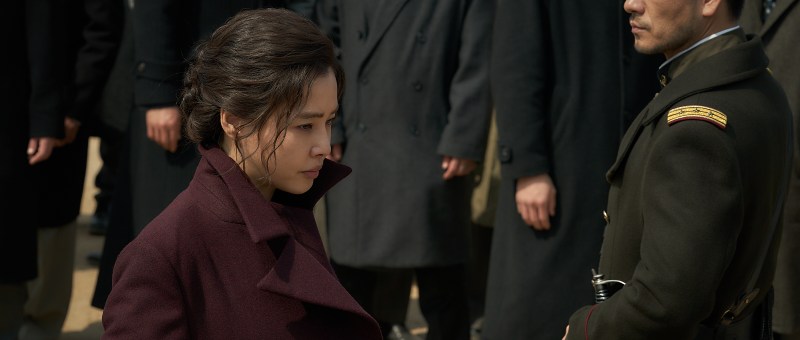
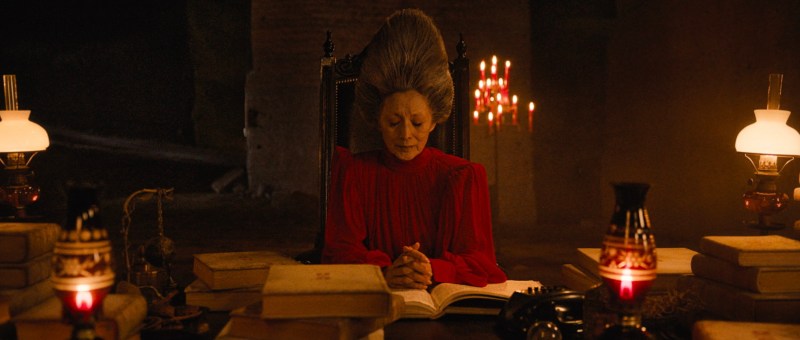
Neatly subverting the drawing room mystery, Lee Hae-young’s intense colonial-era spy thriller Phantom (유령, Yuryeong) positions female solidarity as the roots of resistance towards oppressive militarist rule. Inspired by Mai Jia’s novel Sound of the Wind which focused on Chinese resistance towards the Japanese puppet government in Nanking, the film does indeed begin with the suggestion that one of the people in this room is a spy but soon encourages us to wonder if they all may be or some other game may be being played by an infinitely corrupt authority in the midst of a constant series of betrayals and reversals.

Opening in Kyungsung (modern day Seoul) in 1933, the film both begins and ends with a radio broadcast in Japanese reporting on the actions of “terrorist” group known as the “Shadow Corps” which has been conducting “organised crime” through a network of spies known as “Phantom”. An assassination attempt has recently been made in Shanghai on the new Korean governor and all members of the organisation are reported as dead following shootout with the Japanese authorities, though that obviously turns out not to be the case and we are quickly introduced to operative Park Cha-kyung (Lee Hanee) who works in the intelligence division of the colonial government and utilises a local cinema permanently screening Shanghai Express to communicate with her handlers. New instructions are boldly announced in plain sight through coded messages on cinema posters including one for Tod Browning’s Dracula. 

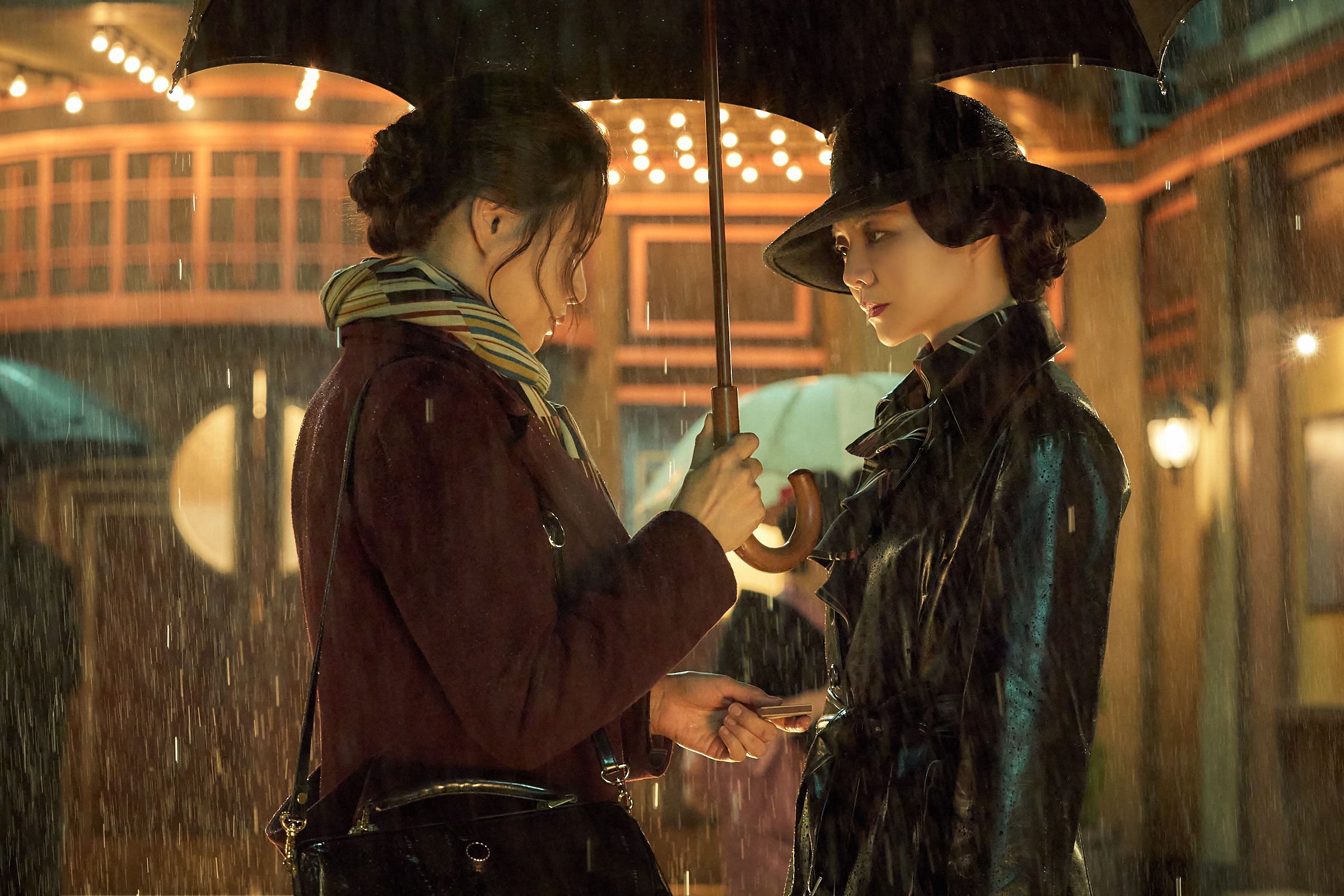
The group plan to assassinate the new governor when he visits a Japanese shrine in the city. A young woman dressed as a Shinto shrine maiden using a pistol concealed in a tray manages to wound but not kill him. She makes an escape but is shot by an unseen hand that could have come from either side. Following, Cha-kyung witnesses her death but can do nothing other than make a swift disappearance before the authorities arrive. Cha-kyung is often depicted as a shadow presence, disappearing phantom-like from the scene both there and not there as she tries to maintain her cover, but Lee also imbues her with an additional layer of repression in that the assassin, Nan-young (Esom), had been her lover. The two women meet briefly outside the cinema in an emotionally charged scene in which they can display no emotion as they must appear to be two strangers exchanging a match on the street though it’s clear that something much deeper is passing between them. 

The exchange of cigarettes itself becomes repeated motif standing in for deepening intimacy in an atmosphere of intense mistrust. The box of matches that Cha-kyung had given to Nan-young as a parting gift and means of buying a few seconds more, blows their operation in leading investigating officer Takahara (Park Hae-soo) to a bar opposite the cinema where he figures out their code. Seemingly unsure as to who is the “Phantom”, he rounds up five suspects and takes them to a clifftop hotel where he encourages them to identify themselves or else they will be interrogated the following day. Along with Cha-kyung whom we already know to be “a” if not “the” Phantom is a police officer against whom Takahara bears a grudge (Sol Kyung-gu), the governor’s flapper secretary Yuriko (Park So-dam), codebreaker Cheon (Seo Hyun-woo) who is very attached to his cat, and terrified mailroom boy Baek-ho (Kim Dong-hee). 

Lee keeps the tension high and us guessing as we try to figure out what’s really going on, who is on which side, and if there’s to this than it first seems. Cha-kyung too seems uncertain, unable to trust any of her fellow suspects who obviously cannot trust her either while trying to maintain her ice cool cover. With sumptuous production design evoking the smoky, moody elegance of the 1930s setting, Lee drops us some clues in focussing on footwear particularly Cha-kyung’s ultra-practical boots and Yuriko’s totally impractical high heels and fancy outfits which as it turns out may have their uses after all when the simmering tension finally boils over and all hell breaks loose at the combination luxury hotel and state torture facility. In any case, as we gradually come to realise, the real “Phantom” the title refers to may be Korea itself, the resistance fighters accused of clinging on to the ghost of a nation which no longer exists while themselves rendered invisible, forced to live underground until the liberation day arrives. 


Phantom screens July 30 as part of this year’s New York Asian Film Festival.

International trailer (English subtitles)
Images: ⓒ 2023 CJ ENM Co., Ltd., THE LAMP.ltd ALL RIGHTS RESERVED

Father of the Milky Way Railroad (銀河鉄道の父, Izuru Narushima, 2023)

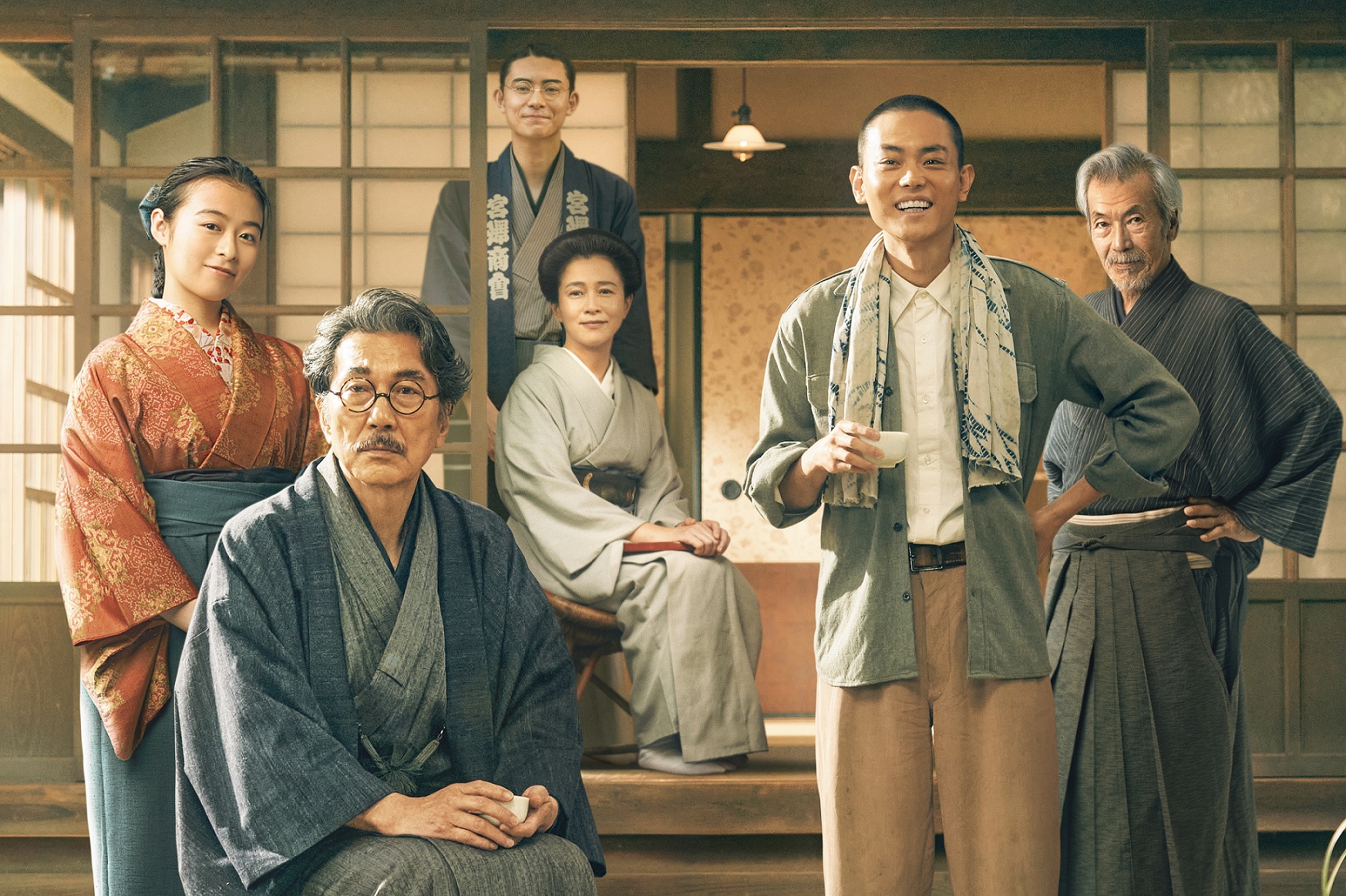
Generations of Japanese children have grown up with Kenji Miyazawa’s much loved classic Night on the Galactic Railroad but Miyazawa remained largely unknown in his lifetime and passed away from pneumonia at the young age of 37 in 1933 with the book that would make his name still unpublished. His story has been told before, most notably by Kazuki Omori in 1996’s Night Train to the Stars, but Izuru Narushima’s Father of the Milky Way Railroad (銀河鉄道の父, Ginga Tetsudo no Chichi), adapted from the Naoki Prize-winning novel by Yoshinobu Kadoi, takes a slightly different angle in exploring the life of his generally supportive father, Masajiro (Koji Yakusho).

As he’s fond of saying, Masajiro is a product of the modern era and a very modern father even in some ways by the standards of today. The film opens (and closes) with him on a train, this time hurrying home having received a telegram informing him that his first child has been born. So excited is he that he offends his own father by running past him on the way to see the baby without offering the proper greeting. Kisuke (Min Tanaka) is indeed more of a traditionalist raised with feudal values that are fast becoming out of date in the new society. As the head of the household, it’s he who gives the baby his name, Kenji, written with the characters for intelligence and healing which will indeed define his character if leaving him somewhat at odds with his society. 

Such a devoted father, Masajiro breaks with tradition and accepted gender roles in insisting on accompanying Kenji to hospital when he is taken ill despite his father’s admonition that caring for the sick is a role reserved for women. Kisuke also tells him his decision to have Kenji educated is wrongheaded, that literature and the arts only confuse a man and may prove more ruinous to him than drink or women. Annoyingly, Kisuke may have a point in that on his return from middle school Kenji (Masaki Suda) immediately rejects the family’s business as pawnbrokers having read too many Russian novels in which they are depicted as exploiters of the poor. He decries Masajiro’s justification that they support farmers who would otherwise be unable to access other forms of financial help such as bank loans and be forced to sell their daughters into sex work as mere sophistry. Masajiro may share some of his concerns, but remains in part wedded to some aspects of feudalism in insisting that as the oldest son Kenji has no choice other than to take over the family pawn shop.

Nevertheless, he also educates his daughter, Toshi (Nana Mori), who later begins working as a school teacher and is able to convince him to allow Kenji to further his studies only for Kenji to suddenly announce he wants to go to agricultural college to better understand their customers who are after all predominantly farmers. Having sent him away to be educated, Masajiro laments that Kenji knows “nothing of the world” after seeing him taken in by an obvious sob story from a duplicitous customer reflecting that his liberal education may have given him ideas that prevent him from living successfully in the society in which he lives. Kenji continues to resist the idea of taking over the pawnbroker’s while evidently unsuited to it before worrying his family further by becoming dangerously obsessed with radical new Buddhist sect Nichiren. 

It’s with this that Masajiro cannot really help him and begins to lose his patience as Kenji gives in nihilistic despair believing that nothing he does has any real meaning. His literary gifts are appreciated only in the wake of a tragedy that reconnects him with his childhood self while finally freeing Masajiro to embrace his son’s natural gifts as a writer rather than trying to force him to take over the family business. In truth, the film barely touches on the novel from which it takes its title if subtly hinting at it and bookending itself with the celestial train motif, but rather takes its lead from one of Miyazawa’s best known poems about his desire to become a better, more selfless, less self-defeating person that is perhaps inspired by his “modern” father’s “new” ideas of a society founded above all else on love. Perhaps it’s not so bad to know nothing of the world after all.  


Father of the Milky Way Railroad screens in New York July 29 as part of this year’s JAPAN CUTS.

Original trailer (no subtitles)

Best Wishes to All (みなに幸あれ, Yuta Shimotsu, 2023)

A young woman is confronted with an uncomfortable truth on return to her old hometown in Yuta Shimotsu’s eerie horror satire, Best Wishes to All (みなに幸あれ, Mina ni Sachi Are). Is there really a finite amount of happiness in the world or would there be plenty to go around if only we weren’t all so selfish? The unnamed heroine (Kotone Furukawa) claimed she wanted to become a nurse to “save people” but in the end starts to wonder if the only way to be happy in a cynical world is to meet it on its own terms. 

Even so, there’s something decidedly strange about her reunion with her grandparents. She notices them behaving oddly but isn’t sure whether to chalk it up to their age and not having seen them for a long time, only there’s something a little creepy in their overt “happiness” as they cryptically look up at the ceiling as if gazing at a higher power or suddenly start making pig noises before remarking that they should be happy as they eat their bacon that the animal has achieved its purpose in life. Meanwhile, for unclear reasons they forbid her from hanging out with a childhood friend who stayed in town to take over his father’s farm despite showing promise as an artist.

He too cryptically adds that he thinks there’s enough happiness in the world for everyone to have some without needing to hoard it, adding to the heroine’s unease as she tries to investigate the strange noises coming from behind a locked door in her grandparents’ home. Soon, she begins to discover what it is that makes them “happy” and is confused and appalled, unsure whether she should believe her eyes or has actually gone out of her mind in this already quite weird place. 

On leaving the city, she’d paused on a pedestrian crossing to help an old lady with her bags while a salaryman had knocked hers out of her hands by walking into her. She was the sort of person that thought it was important to help others or at least to be considerate, but is confronted with an uncomfortable truth in being asked if she can go on pretending that her happiness isn’t bought with the suffering of someone else somewhere in the world even if they aren’t exactly “visible” to her. She tries to revolt and reject the strange goings on at her grandparents’ but is told that it’s the way of the world, that it’s happening everywhere, and that really she knows but has chosen not to see because when it comes right down to it she’s as selfish as everyone else and isn’t willing to sacrifice her own happiness to “save” someone else from suffering.

Meanwhile, she realises that some families are being shunned in the village for resisting and these families largely are “unhappy”, though undoubtedly some of that at least must be down to their stigmatisation. She and her friend save a high school boy who was being bullied, but even he later relates to her that he’s decided to “live smart” by going along with the local practice even if it doesn’t seem right to him because it’s pointless to resist when everyone is doing it. Another rejectee also tells her that the village philosophy is a fallacy because even if someone “should” be miserable there’s no way to know how they really feel and if you’re only basing your idea of “happiness” on external validation then of course you’ll always be miserable. 

Confronted with a bizarre series of events, she begins to wonder if she’s going out of her mind and none of this is really happening even while pressured to submit herself to the ways of the village. In effect, she’s being asked to choose her level of comfort with complicity, acknowledging directly that her “happiness” is based on a quite literal exploitation, drained out of those less fortunate than herself. Her friend remained convinced that there is plenty of happiness to go around without needing to extract it from others, but the lessons she learns are more cynical, no longer stopping to help old ladies with their shopping and suspicious of those who do while proudly declaring herself “happy” with her new “reality”. Shimotsu excels in finding the eeriness of the every day in which an ordinary jar of miso or a workman’s tool box can seem to radiate evil while the grandparents’ ordinary house has an incredibly ominous atmosphere that raises a note of uncanniness in their “happy home” suggesting that their quasi-beatific state is more akin to curse than blessing. 


Best Wishes to All screens in New York July 27 as part of this year’s JAPAN CUTS.

Trailer (no subtitles)

Home Sweet Home (スイート・マイホーム, Takumi Saitoh, 2023)

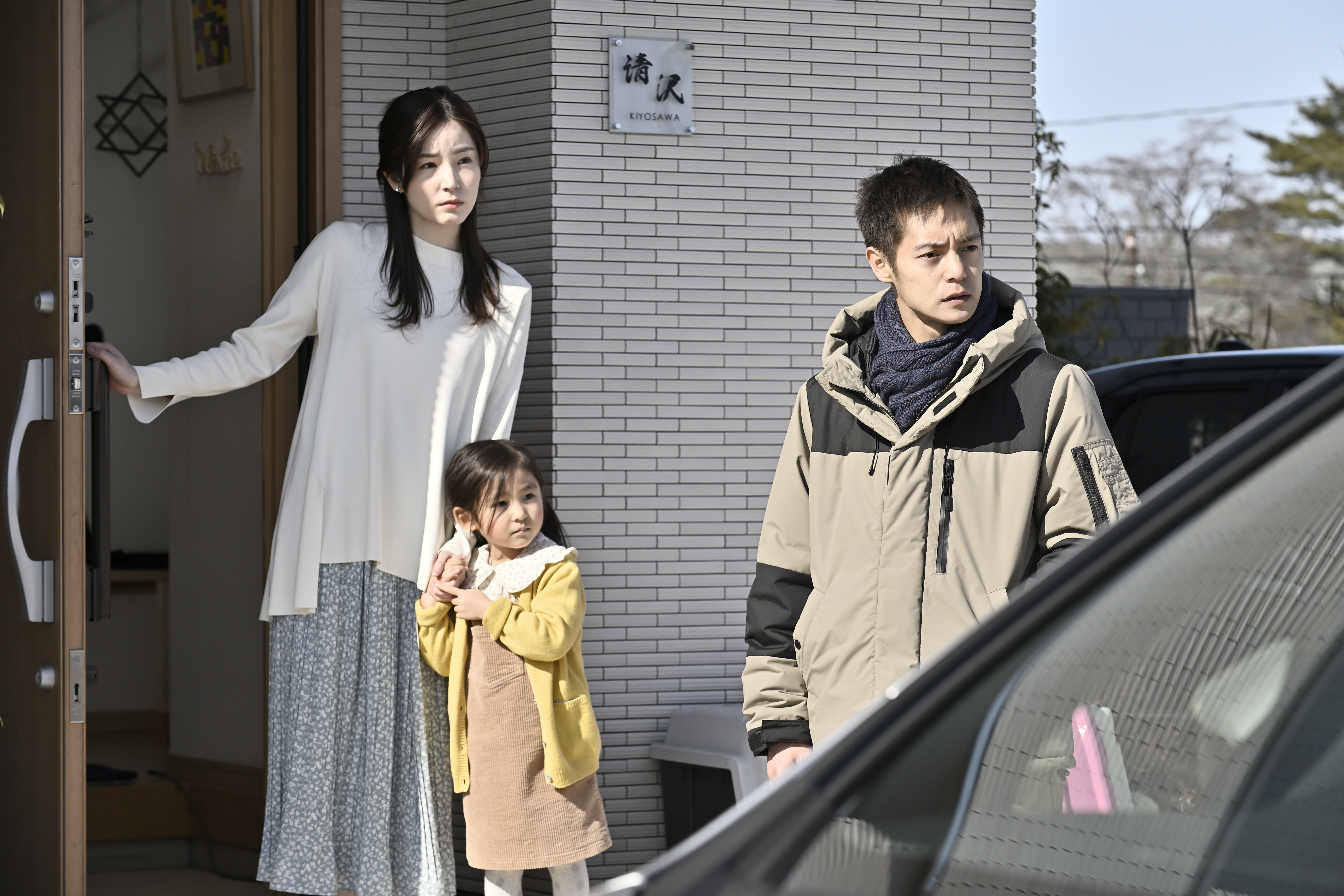
“The secret is in the basement” is not a phrase which inspires confidence when viewing a potential new living space, but as it turns out the cellar is the least of their worries in Takumi Saitoh’s eerie adaptation of Rinko Kamizu’s mystery horror novel, Home Sweet Home (スイート・マイホーム). The Kiyosawas are just looking for somewhere warm where they can enjoy life as a family in comfort and security, but if something sounds too good to be true then it usually is as they will discover to their cost. 

The saleswoman at Magic Homes describes the Kiyosawas as “the ideal family” for whom she is glad to build an “ideal” home. To many they may look “ideal” in that husband Ken (Masataka Kubota) has a steady job as a personal trainer while wife Hitomi (Misako Renbutsu) is a stay at home mum to four-year-old Sachi. But of course nothing’s quite as it seems and there are already cracks in the foundations of this happy family home as Ken has been having a years’ long affair with co-worker Yurie (Ririka). After finally deciding to take the plunge on the house, the affair comes to a natural end point as Yurie too decides to marry her longterm boyfriend with the aim of starting a family. But not long after the Kiyosawas have moved in to their new “magic home” complete with new addition Yuki, Yurie’s husband receives a video showing an unrecognisable Ken entering her apartment with the presumed motive of blackmail lending a note of anxiety to his moment of familial bliss. 

To begin with, the house itself takes on a eerie quality especially with the ominous rumble of the single AC unit in the pitch-black basement. The home does not seem to have been particularly well thought out for families with small children as the tiny doors leading to the hatch are at a toddler’s height and don’t appear to have any kind of safety locks in place. Everything else is run off the central smart system including a network of CCTV cameras sold to the family as a convenience that would allow them to keep an eye on the children wherever they might be in the house while getting on with other things, but also undoubtedly a privacy worry and no one likes to feel watched in their own home. Watched is exactly how they start to feel, Hitomi convinced someone’s been in the house while looking around realising how many vents and ducts there are ominously staring down at them in every room. 

Ken’s brother Satoru (Yosuke Kubozuka) is suffering with a mental illness that makes him paranoid, repeatedly insisting that there are people watching them and they need to protect the family because they are everywhere in the ceilings and the floors. Though it first seemed to us that the house was the problem, the family’s desire for conventional suburban living biting back at them, we wonder if the problem is Ken and his reckless endangerment of his family through his affair. When first viewing the house, the couple had been accosted by a creepy salesman, Amari (Yohei Matsukado), who makes barbed remarks about looking after the family that have Ken suspecting he’s got it in for them because they chose someone else to handle their sale or perhaps resents them for not being “ideal” enough to live in one of his “magic homes”. 

But then what is the “ideal” family, who gets to decide that? Why should the Kiyosawas have to fulfil a stereotypical ideal just to be judged worthy of homeownership? There might be something chilling in the uniformity of the house’s design, a utopian vision of suburban bliss founded on outdated patriarchal social norms of the nuclear family though in this case slightly adjusted for a new era, but then again the call is coming from within the house in more ways than one in Ken’s delayed response to traumatic childhood incident and concurrent anxiety around being able to protect his family in fulfilment in the social “ideal” for fatherhood. It’s the “ideal” that is the true enemy from the generic house design to the unfair expectations placed on the Kiyosawas to live up to a particular kind of suburban properness in order to qualify for the right to live there. Paranoid and eerie, Saito conjures a world of constant tensions in which we are all being “watched” if not to say judged and any bug in the system must be quickly removed so that the “ideal” may prevail.  


Home Sweet Home screens July 27 as part of this year’s New York Asian Film Festival.

Original trailer (no subtitles)

Images: ©2023 Rinko Kamizu, KODANSHA Ltd./ “Home Sweet Home” Film Partners

Mad Fate (命案, Soi Cheang, 2023)

“No one can stray from the path paved by fate.” a policewoman gasps while interrogating The Master (Gordon Lam Ka-Tung), a man whose mind was already strained even before he walked in on the murder of a woman he’d been trying to save only to end up losing to destiny. A noticeably lighter affair than his previous film Limbo, Mad Fate (命案) sees Soi Cheang (AKA Cheang Pou-soi) step into the Milky Way orbit directing a screenplay by Yau Nai-hoi produced by Johnnie To and very much bound up with the kinds of cosmic coincidences the studio is known for.

It’s Fate or maybe God that The Master is resisting, though what the difference between the two might be is never quite clear save for the implication that it’s God who is master of Fate which is otherwise without will. The Master insists that “Fate can be changed,” but he resolutely fails to do so. In the opening sequence, he’s in the middle of burying a woman, May, alive as part of a ritual to stave off a forthcoming “calamity” only he’s unable to complete it in part because of the woman’s understandable anxiety that it’s The Master who’s going to end up killing her, and in part because it starts raining which puts out the paper clothing that should have been burnt to change her fate. May runs off and climbs in a taxi home where she is accosted by a serial killer who has been targeting sex workers. The Master follows her but arrives just too late while the police later chase the killer but are unable to catch him. 

The Master sees his attempts frustrated but also does not consider that the rain itself was a manifestation of Fate or sign that in the end nothing can be changed. In an effort to atone for his inability to save May, The Master ends up taking under his wing a strange young man who also stumbled on the murder by coincidence while working as a delivery driver but is fascinated rather than repulsed by the bloody scene. Obsessed with knives and killing, Siu-tung (Lokman Yeung) is already known to the policeman investigating (Berg Ng Ting-Yip) because he arrested him for killing a cat in his teens. According to The Master’s reading of his fate, Siu-tung will eventually kill someone and end up in prison for 20 years. He doesn’t much like the sound of that so he ends up going along with The Master’s zany plans to make him a nicer person and save two lives in the process. 

Ironically most of The Master’s suggestions still involve Siu-tung being imprisoned in some way. To get him out of his “unlucky” flat, he rents him another place that very much feels like a prison cell and later does actually lock him up inside a shed fearing that he’s about to kill. As he explains, it can help to preemptively accept your fate so moving in somewhere that is “like” a prison can stop you going there for real, but it doesn’t do much to alleviate Siu-tung’s desire to kill and most particularly to kill the policeman who has been following him most of his life because he’s “sure” that he’s going to commit a serious crime. Repeatedly describing him as “vermin”, the policeman has no confidence that Siu-tung could “change” and thinks he’s already past redemption while The Master quite reasonably asks if it’s fair to persecute him in this way just because he happened to be born different.

The Master’s question provokes another about free will and responsibility and if anything is really anyone’s fault if it’s all down to Fate in which case the role of the policeman becomes almost moot. He is also resisting his own fate in his intense fear of mental illness which he worries he will inherit from his parents each of whom suffered from some kind of mental distress. This fear has caused him retreat from life and it seems may have contributed another’s suicide while his divination has an otherwise manic quality as he finds himself constantly trying to outwit Fate. The two men soon find themselves in a battle with the skies, remarking that God is striking back every time they make a move to try and change their destiny. 

Eventually The Master rationalises that a plant must wither before it fruits, allowing himself to slip into “madness” as means of rejecting his fate. His strategies become wilder and finally seem as if they might lead him to kill which would certainly be one way of altering Siu-tung’s destiny if ironically, while conversely something does indeed seem to change for Siu-tung who is understandably concerned by The Master’s increasingly erratic behaviour but has escaped his desire to kill. Then again, could this all not be Fate too, how would you know if you’d overcome it? As The Master comes to accept, the path maybe set but the way you walk it is up to you. Only by accepting his Fate can he free himself from it. There may be a more subversive reading to found in Cheang’s depiction of Hong Kong as a rain-soaked prison in which lives are largely defined by forces outside of their control, but he does at least suggest that his heroes have more power than they think even if it relies on a contradiction in the active choice to embrace one’s fate. 


Mad Fate screens July 22 as part of this year’s New York Asian Film Festival.

Original trailer (Traditional Chinese / English subtitles)

Images: © MakerVille Company Limited and Noble Castle Asia Limited

Everyphone Everywhere (全個世界都有電話, Amos Why, 2023)

Have we become too dependent on our phones, allowing them to divide rather than connect us? For those at the centre of Amos Why’s zeitgeisty comedy Everyphone Everywhere (全個世界都有電話), they do seem to have become a double-edged sword. Yet in the end, it’s a series of handsets that reconnect them with their youth if only to remind them of the disappointed hopes of a defeated middle-age given additional an weight by subtle hints of post-Handover despair. 

Asked why he’s decided to move to the UK, Raymond (Peter Chan Charm-Man) replies that everybody’s doing it even if he resented being sent away to study in Aberdeen, Scotland as a teenager in the wake of the Handover. The real reason is that he’s got himself involved in a lot of shady stuff and has just had his phone hacked so he fears blackmail or arrest. He’s organised a farewell dinner with old high school friends Chit (Endy Chow Kwok-Yin) and An (Rosa Maria Velasco), but nothing quite goes to plan in the curious ways the lives of three former friends remain entwined even if they’ve all been in some sense corrupted by the changes in their society. “All is well as long as we never change” reads a teenage message to a future self, but of course it’s a promise that can’t be kept even if in the end, “life must go on anyway.”

Still, the society itself is fairly corrupt given the prevalence of scams many of them connected to our phones. Raymond failed to get his hacked phone fixed and opted for a new number instead, but Ana in particular keeps getting weird calls from him she later realises must be an attempt to scam her out of money by someone posing as Raymond and explaining that he needs money desperately. But Ana is also the victim of another “scam” in the form of Chit’s new business strategy of getting a “monthly fee” from clients rather than be reliant on work for hire arrangements. Even the restaurant itself along with its “Japanese” chef seems to be fraudulent, while An remains preoccupied with her husband’s womanising and Raymond ironically with his series of bad decisions that culminate in tax fraud. Meanwhile Raymond’s daughter Yanki (Amy Tang Lai-Ying) is also indulging in a kind of scamming selling intimate pictures to nerdy guys via telegram and smartphone apps and ironically remarking that she doesn’t want to get scammed again when discussing ever increasing payment options with her hapless targets.

Yet as Chit discovers when he leaves his phone at home, everything seems inconvenient when you’re phoneless. In a running gag, he repeatedly tries to borrow someone’s landline but is refused leaving him wandering around the city looking for a “restaurant” in one of three very similarly named redeveloped blocks. His wife’s is the only number he remembers by heart, but she remains resentful of his meeting up with Ana, his first love, whom he previously described as a “gullible” auntie and is on some level “scamming” by convincing her to keep him on a monthly retainer. Raymond’s phone threatens to expose him, Ana uses hers to spy on her husband and stepson, and Chit’s in a sense incapacitates him, leaving him alone and disorientated in his own city no longer certain how to travel around it amid the rapidly changing landscape and seemingly identical redevelopment projects.

Life hasn’t turned out the way any of them thought it would, recalling their carefree days 25 years previously in pre-Handover Hong Kong. Banners advertise a “New Era”, but the trio are trapped in the past with which they are eventually reconnected thanks to the retro handsets that unlike the technology of today still work and contain a series of time capsule messages to their future selves. History in a sense repeats itself as Raymond prepares to leave, but each is able to come to terms with their unfinished business and begin making concrete decisions about their futures. Suddenly “can we meet on Saturday?” takes on a new sense of poignancy when everyone seems to be leaving but then again, perhaps our phones really do connect us even if they sometimes connect us to scammers or people we don’t really want to talk to. Subtly hinting a sense of disappointment which runs a little deeper than middle-age malaise, Why looks back to the carefree days of 1997 allying the broken dreams of youth with the “New Era” of today but nevertheless grants his heroes a sense of new sense of possibility even the face of their despair. 


Everyphone Everywhere screens July 20 as part of this year’s New York Asian Film Festival.

Original trailer (Traditional Chinese / English subtitles)

Images: © 2023 Dot 2 Dot Creation Limited. All Rights Reserved.