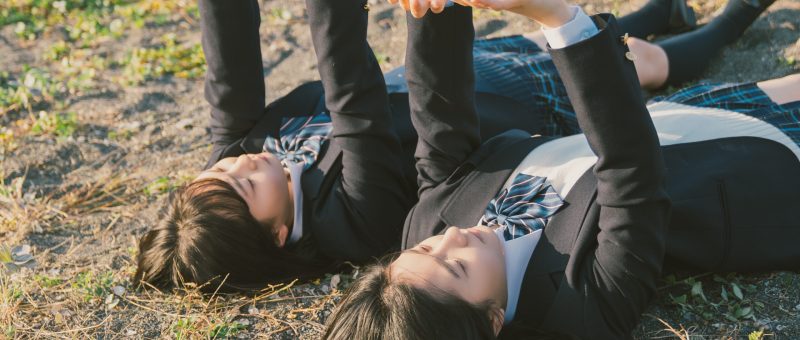
The World of You (麻希のいる世界, Akihiko Shiota, 2021)

A girl with a chronic illness becomes fixated on a traumatised classmate in Akihiko Shiota’s meditation on the self-destructive effects of obsessive love, The World of You (麻希のいる世界, Maki no iru Sekai) . It is not, however, the heroine that primarily experiences them, as her own romantic obsession is in one sense a purer love, but in another is a way of making her mark on the world before her short life comes to an end. 

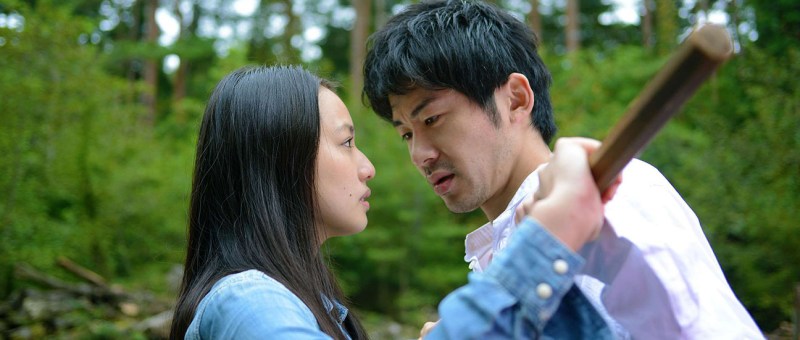
Yuki (Yuzumi Shintani) spots Maki (Marin Hidaka) leaving a local shack and locking the door behind her preceded by a shady-looking young man. She later recounts that she once stayed in this same shack for three days after running away from home following her parents’ divorce which she thinks her illness may partly have been responsible for her. The shack represents different things for each of them, but is also a space of their otherness and isolation from which neither of the girls is able to escape. It’s clear that Yuki’s growing obsession with Maki who is ostracised at school and resented by all is romantic, yet Maki appears to reject her attentions and reminds her she’s the type of girl who sleeps with guys.

Yuki sighs and she says knows as if she’s already resigned herself to the impossibility of her romantic desires being fulfilled, but Yuki continues to behave flirtatiously and otherwise uses the desire she knows Yuki feels for her as a means to manipulate her. Even so, on some level, she too has genuine feelings for Yuki and repeatedly tries to push her away in fear that she will only cause her trouble and pain. She tells her that her father is a convicted paedophile, which is why she is shunned by the local community. Though people are sympathetic at first, they often come to reject and resent her which is why she alternately responds to and then refuses Yuki’s insistence on connection. Though she never says so, her behaviour hints her father may have abused her too or at least that was she sexualised at an early age now and has a self-destructive attitude to sex in which she engages in potentially dangerous relationships with older men and uses her desirability to manipulate her male classmates.

Among them is Yusuke (Airu Kubozuka), who has a one-sided crush on Yuki that she continually rejects but he seemingly cannot take no for an answer. The situation between them is further complicated in that Yusuke’s father is also Yuki’s doctor. After her parents’ divorce, Yusuke’s father entered an affair with Yuki’s mother and eventually left his wife for her, breaking up their family. It’s already a messy situation, though Yusuke’s obsessive love is seemingly more possessive, whereas Yuki’s has taken on a passive quality. She does not really expect that Maki will ever return her feelings and seems to be aware that she uses them to manipulate her, but makes it her remaining life’s purpose to ensure that Maki’s musical talent is appreciated by the wider world. 

In some senses it’s a classic tale of an incredibly toxic love triangle in which Maki plays off both Yusuke and Yuki though may not actually care for either them as all romantic desires are effectively processed through her. Each of the teens is unfairly made to pay for the sins of their parents and effectively left without proper guidance or more positive examples of healthy romantic relationships. Though they all lose something, Yuki’s loss of her voice is especially ironic given that she’d barely talked to begin with but had bared her soul to Yuki who is then in fact reborn, possibly as the “even more wonderful Maki” that Yuki hoped she be though she no longer remembers her. Nevertheless is there is something that seems more hopeful in Yuki’s insistence that they will meet again when pitted against Yusuke’s repeated claims that he knows Yuki will come to love him eventually, especially considering the destructive actions they ultimately lead him to. Yuki’s love, meanwhile, is only self-destructive or in its way life giving in allowing her to sacrifice herself for the world that has Maki in it but that she may never see.


Trailer (no subtitles)
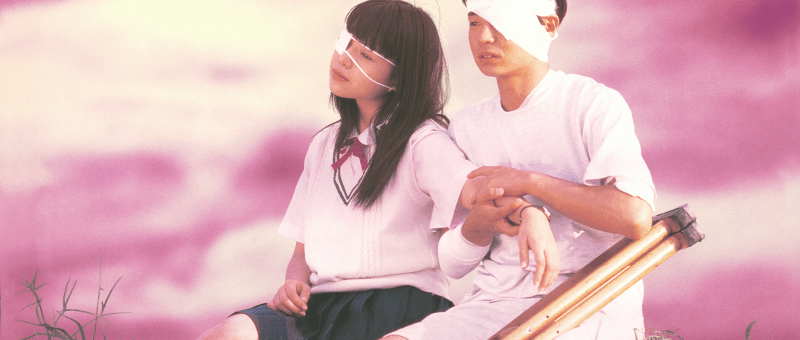
Moonlight Whispers (月光の囁き, Akihiko Shiota, 1999)

Well established in Japanese cinema, the teenage romance comes with its own series of genre tropes, the barriers standing between the young lovers usually leaning towards the constraints of a conformist society, class differences, or familial disapproval if not introducing a note of inevitable tragedy in serious illness or physical threat. What the youngsters typically do not do or are actively at times prevented from doing is to begin to accept themselves for all they know that to do so may in a sense result in their exile from mainstream society. Yet this is exactly the conclusion with which Akihito Shiota’s debut feature Moonlight Whispers (月光の囁き, Gekko no Sasayaki), adapted from the manga by Masahiko Kikuni, eventually presents us as the teens come to embrace their unconventional relationship while accepting that others may never truly understand. 

Beginning in conventionality, Shiota opens with the sweet and innocent friendship between kendo enthusiasts Takuya (Kenji Mizuhashi) and Satsuki (Tsugumi). Many seem to think they are a couple, but Takuya is quick to correct his friend telling him that they are merely “sparring partners” even going so far as to hand over a love letter, which he knows to be exactly the same as the letter his friend writes to all the other girls, on his behalf. As expected, Satsuki finds his behaviour insensitive, suspecting that Takuya himself has a crush on her but finally confessing her own feelings while he wheedles that he never said anything because of his sense of inadequacy explaining that just to be near her was always enough for him. Following this brief moment of connection, the couple embark on a “normal” teen romance, Satsuki taking the initiative with Takuya in bed with a cold to consummate their relationship. It does not go particularly well, in part because Takuya has a secret. He’s been secretly stalking Satsuki for ages, likes to break into her locker to smell her gym kit, and has a collection of keepsakes he’s stolen from her in addition to a series of illicit photographs and a tape of her using his family bathroom. The tape proves the last straw for Satsuki who then storms out calling him a freak and starts dating her handsome kendo club senior Uematsu (Kota Kusano) instead. 

What Satsuki hasn’t figured out is that Takuya quite likes it when she’s mean to him, which is why he continues stalking her even after she starts dating the very “normal” Uematsu. Unexpectedly, she begins to discover that she quite likes, if not quite the process of hurting him, then watching him suffer which is why she makes him sit silently in a tiny cupboard while she has “normal” sex with Uematsu on a sofa directly opposite. The relationship between them is one of push and pull, Takuya initially embarrassed and ashamed of his masochistic desires explaining that “god made me wrong” while ironically driving Satsuki towards an awareness of her sadism. On the other hand, the relationship had always been unconventional in its reversal of gender roles, Satsuki quite literally leading while Takuya trails behind. She is the first to openly state her feelings and the first to initiate sex, while Takuya is somewhat feminised in his deference and timidity.

Nevertheless, Satsuki struggles to accept her capacity for sadism refusing to tell Uematsu why she broke up with Takuya but explaining that she wants a “normal” relationship in with someone with whom she would be able to discuss anything and everything honestly the irony being that she might have had that with Takuya but cannot with Uematsu because she is filled with internalised shame about the “perverted” pleasure she gains on witnessing Takuya wilfully degrade himself on her behalf. They are already in an accidental sado-masochistic relationship though they of course do not quite have the words to describe how they feel or what it is that exists between them. Their love inevitably heads to quite a dark place but even so leads to a kind of rebirth in which each fully accepts themselves for who they are along with their designated role within the relationship even if also knowing that others may not be quite so understanding. 

For all of its provocative qualities, there is an underlying sweetness in Shiota’s unconventional romance even as he carefully inverts accepted genre norms the conventional indie background score perhaps ironically undercutting any sense that the relationship is actually as “perverse” as the teens sometimes feel it is even as they each struggle with their respective feelings and desires. Nevertheless he ends on a note of anxious ambivalence as the physically and emotionally wounded lovers remove themselves from mainstream society in order to embrace their authentic selves.


Original trailer (English subtitles)

Harmful Insect (害虫, Akihiko Shiota, 2001)

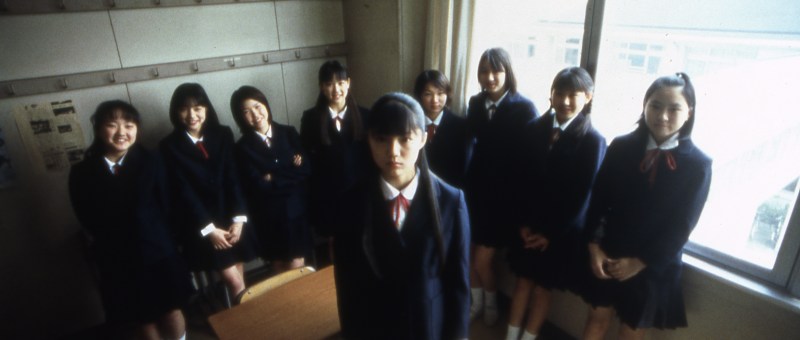
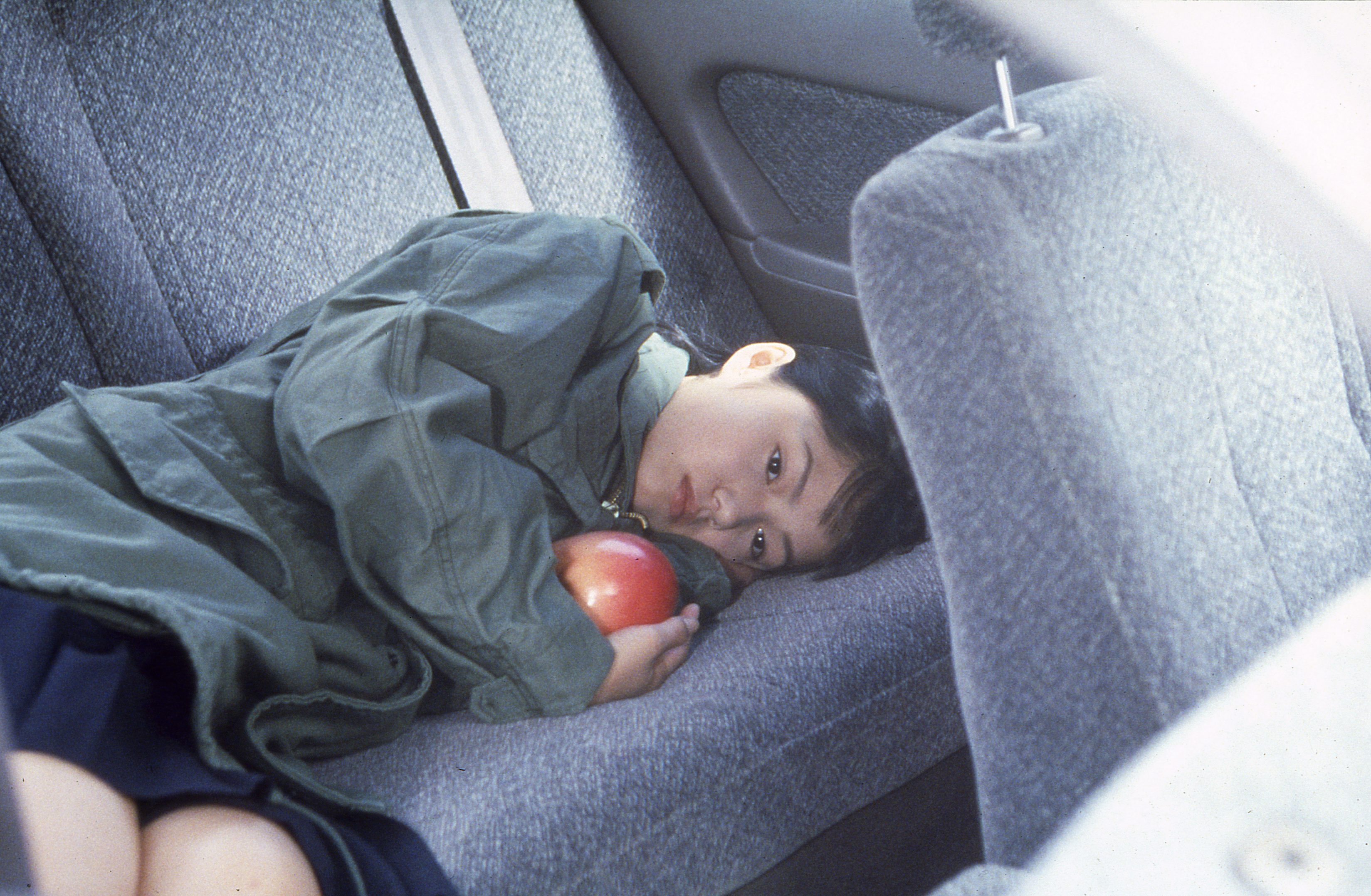
“We’re only in seventh grade, why does Sachi have to suffer so much?” a well-meaning friend eventually asks as she comforts the heroine of Akihiko Shiota’s Harmful Insect (害虫, Gaichu), even as her mother turns away from her too fragile herself to be of much use. Sachiko (Aoi Miyazaki) does indeed suffer, continually victimised by the world in which she lives and having that victimisation used against her, rejected by her peers and almost blamed for the misfortunes which befall her as if she were the one at fault simply for existing. 

Shortly after the opening scene in which 13-year-old Sachiko’s mother (Ryo) attempts to take her own life, we see the girls at school gossiping about her while she’s still in earshot not entirely sympathetic as they remark on the fact her father left the family while implying that her mother is some kind of broken-hearted love fool driven to suicide over the loss of a man. Sachiko quickly becomes the woman of rumour, but in a motif which will be repeated the teens talk but never listen swapping stories between themselves and embellishing them as they go. It’s uncertain how much truth there is in the legend of Sachiko but it’s clear that they disapprove of her, adopting a puritanical moralising mindset in which they simply shun her for being something other. Only Natsuko (Yu Aoi) tries to stop them, reaching out to Sachiko even as Sachiko rejects her but is ultimately able to offer little help when even Sachiko’s mother is ill-equipped to protect her. 

The truth is that Sachiko is never safe anywhere. Everywhere she goes, she becomes a target for predatory men of all ages. A schoolboy on a bike harasses her by asking childish questions about her period, while sleazy salarymen repeatedly proposition her for sex, and even her mother’s new boyfriend in a doubly destructive act of betrayal cannot be trusted. She says little and keeps to herself, her silence and her isolation a kind of defiance and defence mechanism. After dropping out of school, she starts hanging around with a drop out 20-something (Tetsu Sawaki) and his homeless friend (Koji Ishikawa) who seems to have learning difficulties, discovering that they support themselves through staging accidents for compensation money. She considers doing the same thing, not for the money but craving the thrill of a near death experience only to find herself unable to go through with it. 

Meanwhile, she continues a letter-based correspondence with her former teacher with whom she is rumoured to have had an affair. Mr. Ogata (Seiichi Tanabe) later resigned for obvious reasons and now has a low-grade job at a nuclear plant. He answers her letters when he can, mostly offering paternalistic platitudes but like her absent parents is unable to provide her with the guidance she is seeking. What she seems to be looking for is the kind of parental input that would allow her to feel protected, safe, but no one is really there for her. She resents her mother’s emotional dependency and tendency to involve herself with unsuitable men, but worries she’s becoming the same striking out for an early independence but discovering only danger and futility. 

She asks herself if vice is the essence of human existence, then is goodness only the quality of not being entirely bad? Her view of the world already coloured with nihilistic despair. The men who misuse her feel they have no real need to justify their actions, but simultaneously blame her for tempting them though she does nothing other than exist remaining silent in order to avoid attracting attention. Then again even she doesn’t quite understand, asking her teacher why it is he can’t forgive himself simultaneously accepting that what happened between them, whatever that was, was wrong enough to warrant forgiveness but unable to grasp why he cannot let go of his guilt, continuing with this half-hearted correspondence unable to grant her the care that she is seeking. Wandering between flashbacks and brief vignettes of her life, Shiota captures Sachiko’s sense of total aloneness as even her sole source of sanctuary is taken from her leading to an explosive act of partially self-destructive violence that sends her forever on the run. The choice she makes at the film’s conclusion, be it in submission or defiance, is hers alone but in its own way a tragedy dragging her deeper into dangerous despair with escape an ever distant possibility.


Harmful Insect streams in the US until Dec. 23 as part of Japan Society New York’s Flash Forward series.

Original trailer (no subtitles)

Images: ©2002 NIKKATSU / TBS / SONY PCL

Farewell Song (さよならくちびる, Akihiko Shiota, 2019)

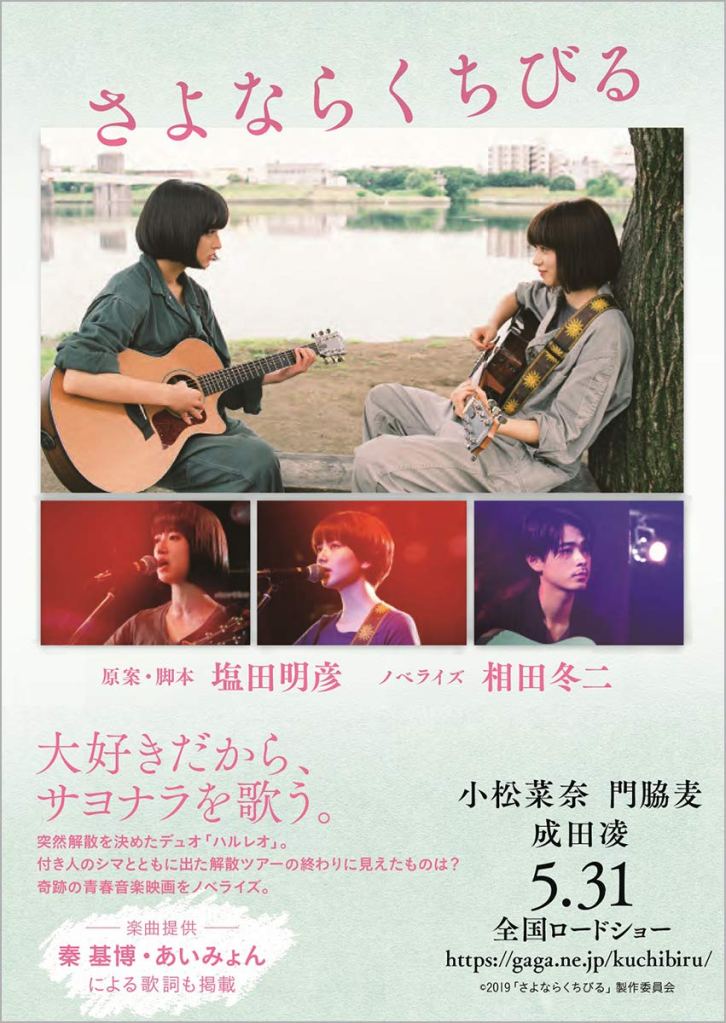
Repressed desire and toxic resentment conspire against a trio of melancholy musicians in Akihiko Shiota’s delicate indie drama, Farewell Song (さよならくちびる, Sayonara Kuchibiru). As the title implies, this is a tale of learning to let go, but then again perhaps not. As an over earnest interviewer suggests there are many ways to interpret the title song, but it also carries with it an unmistakable hint of defeatism as the singer songwriter heroine finds herself perpetually preparing to say goodbye, no longer believing in a positive future and unwittingly sabotaging its existence in an intense desire for protective distance. 

As the film opens in the summer of 2018, folk duo Haruleo is about to set off on a “farewell tour” though it’s not been advertised as such. The atmosphere is extremely awkward and emotionally volatile. Something has obviously gone very wrong in the previously close relationship between bandmates Haru (Mugi Kadowaki) and Leo (Nana Komatsu), while roadie Shima (Ryo Narita) seems to be doing his best to stay out of it and keep the peace if only until after they’ve played their final show in Hakodate way up in Hokkaido. 

That might be difficult however because Leo’s self-destructive streak is out in full force, wandering off with a rough-looking man from the petrol station where they stopped to use the facilities. “Aren’t you going to stop her?” Haru asks of Shima, entirely mistaken in the nature of their relationship, “What would be the point?” he replies, open mouthed in exasperation. Sure enough Leo turns up late to the gig and sporting a nasty bruise on her face after another encounter with a dark and violent man. “I don’t want to watch you fall apart”, Haru had told her on a previous occasion in an awkward attempt at comfort that finally backfired, Leo firing back that hearing that from her only made her feel even worse. Haru echoes those words herself when Shima tries something similar with her, only charged with a somewhat inappropriate fervour driven by misplaced desire. 

Desire is indeed circulating, but in an emotionally difficult and seemingly irresolvable love triangle between three people with extremely low self esteem. Struggling to accept love, they act on self-destructive impulse and only wound where they mean to console. Haru strikes up a conversation with Leo because she says that her “eyes wanted to sing”, seemingly captivated and taking the young woman in but still somehow maintaining a distance. Leo, who seems to have no family and is incapable of looking after herself, quickly bonds with Haru but is frustrated by her resistance to connection. When Haru interviews Shima for a position as their roadie, she’s quick to tell him that romance is prohibited, but later claims that she always expected he and Leo to run off together while silently pining for her in a mistaken belief that her love is hopeless. 

Filled with internalised shame, Haru takes Shima home as a beard to show off to her mother at her father’s memorial service, unable to disclose her sexuality and trying not to look hurt when her mother whips out a postcard from her first love who has since married abroad and had a child. Shima, strangely perhaps the most emotionally astute, is drawn to Haru even after learning that she is gay and realising that all of her songs are really about her unrealisable longing for Leo, who claims to be in love with him though it’s not exactly clear if that, like her tendency to disappear with dangerous men, isn’t a misdirected way of connecting with Haru.

Shima may have failed once and resolved to do better in avoiding making the same old mistakes, but is still an awkward third wheel in this increasingly difficult relationship despite his attempts to mitigate the effects of his presence while perhaps biased towards preserving Haru’s happiness in trying to “save” Leo. Learning that a close friend and former bandmate has passed away forces him, and perhaps the girls too, to reflect on what’s lost if you let important relationships fall by the wayside out of pettiness or pride. Shima’s friend apparently told his young son never to become a musician because it will rob you of the things that are most important. Still, Shima, echoing the words of Haruleo’s signature song, affirms that he regrets nothing. If it all ends in tears, Haru’s lyrics imply that she’s happy to live with the thorn in her side as a reminder of past love. The jury’s out on whether the Farewell Song leads to a new beginning or merely more of the same, perpetually trapped in an inescapable cycle of emotional frustration, but Haruleo seems resigned to weathering the storm whatever it is that might emerge on the other side. 


Original trailer (English subtitles)

Farewell Song music video

Wet Woman in the Wind (風に濡れた女, Akihiko Shiota, 2016)

wet woman in the wind poster largeBack in the early ‘70s, Nikkatsu reacted to the gradual box office decline of Japanese cinema by taking things one step further than their already edgy youth output in rebranding themselves as a purveyor of softcore pornography known as Roman Porno. Unlike the familiar “pink film”, Roman Porno was made with the assets of a major studio behind it including better actors, production values, and distribution power but it still obeyed strict genre rules calling for speedy turnarounds, minimal running times and the requisite amount of nudity (to the permitted parameters) at set intervals. 45 years later Roman Porno is back in a series of films directed by some of today’s most interesting directors who attempt to recreate the genre anew for modern audiences whilst paying homage to the originals.

Akihiko Shiota’s Wet Woman in the Wind (風に濡れた女, Kaze ni Nureta Onna) starts as it means to go on with hapless protagonist Kosuke (Tasuku Nagaoka) sitting by a river looking sad just as a strange young woman suddenly rides her bicycle directly into the nearby lake before climbing out and stripping off her T-shirt (which, amusingly enough reads “you need tissues for your issues”), revealing her bare breasts to a complete stranger. Kosuke is baffled and confused. He tries to leave but the woman follows him, asking if she can stay with him tonight because she has nowhere else to go. Kosuke is resolved, he’s given up girls and wants nothing whatsoever to do with weird women from ponds but Shiori (Yuki Mamiya) is not one to take no for an answer.

It’s never made clear but something unpleasant has obviously happened to Kosuke that has made him retreat from the city with his tail between his legs (so to speak). A respected playwright, Kosuke seems to have had something of an existential crisis and has decided to condemn himself to a life of self-imposed isolation because “you have to be alone if you really want to think deeply about things”. His isolation is, however, only up to a point. Kosuke’s semi-primitive lifestyle sees him living in a shack in the woods but he has electric lighting provided by generator batteries and grinds his own coffee beans by hand after buying them from a local cafe owned by a man Kosuke went to university with but claims not to have known at the time. The cafe owner’s wife has recently left and he blames Kosuke for reawakening a desire in her that had apparently lain dormant with her husband.

In a shocking coincidence, Shiori has also taken a job at the cafe and has set about seducing the recently lonely owner who has now become fixated and jealous, once again afraid Kosuke in particular is going to steal away his new plaything just like he stole his wife. This is a fallacy on several levels, not least that Shiori is not a woman to be constrained by any man but a true free spirit who gives her love freely to whomever that she chooses.

Spirit might be the best way to describe Shiori who arrives and departs with the wind, a force of nature with the sole intent of freeing her targets of the burden of repressed desires. A radio broadcast later reveals that a tiger has been on the run from the nearby zoo and if this were a fable, you could almost believe the tiger to be Shiori, sinking her teeth into soft centre of human weakness and leaving right after she tears its throat out.

Free spirit as she is, Shiori does find herself in moments of danger as the the threat of sexual violence rears its ugly head. Kosuke likes to think of himself as an enlightened kind of man, an intellectual, but he’s also a self-involved womaniser not above attempting to force himself on a woman he feels to be his for the taking or, half in jest, threatening to rape a former lover. Yet for Shiori much of this is sport – she sees through Kosuke and neatly undercuts all of his self delusions and neuroses, but she’s also merely toying with him.

Finding himself literally kicked out of bed and rendered redundant when Shiori finds more pleasure in getting together with his former lover Kyoko, Kosuke wanders outside in confusion and seduces, with a degree of tenderness, Kyoko’s shy, bespectacled assistant, Yuko. When the morning comes, however, he feels he made a mistake. Yuko has become attached to him, sharing a traumatic childhood story only for Kosuke to brush it aside and encourage her to go out into the world to explore the rich pleasures on offer now that he has “awakened” her. Kosuke remains as self-centred as ever, but Yuko at least does perhaps find something in his words of “wisdom”.

As in all good sex comedy, the men are pathetic slaves to desires they find themselves unable to express, whether out of fear or cultural ideals of masculinity, while the women remain in control and must guide the men either towards a healthier outlook or their own destruction. Both Kosuke and the cafe owner conspire in their own downfall in misguided battles for possession or conquest. Having already suffered defeat, Kosuke has retreated from the field dejected and humiliated, but in his all out impassioned attempt to re-enter the world of carnality he literally brings his entire universe crashing down around his ears. Forced to realise his own ridiculousness, Kosuke is left alone with little else to do than survey the scale of the destruction his various delusions have wrought. A fun loving pastiche, Wet Woman in the Wind is an oddly whimsical tale, witty yet insightful even its seeming lightness.


Currently available to stream via Mubi.

Original trailer (English subtitles) NSFW!