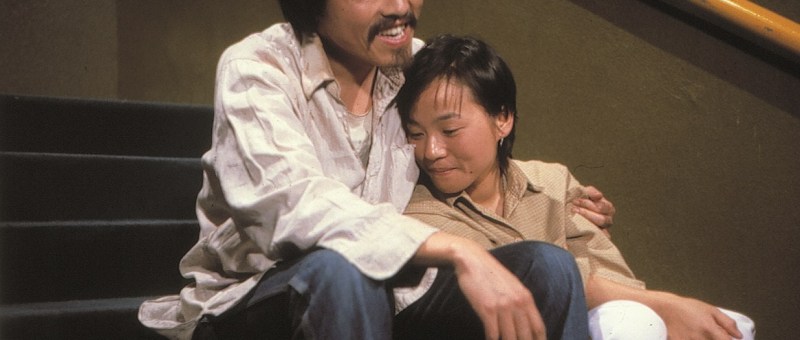
“I want to make a film that reflects our time. If not, no one will ever know we existed,” frustrated filmmaker Cheung explains but finds himself hamstrung by the fact that he is not quite of this place by virtue of the fact that he is a Mandarin-speaking Mainlander who’s been living in the United States for several years. The old university friend who’s offered him this opportunity says as much, suggesting that in the end he doesn’t really understand Hong Kong while simultaneously failing to get a grip on his protagonist, a Hong Kong student in California.
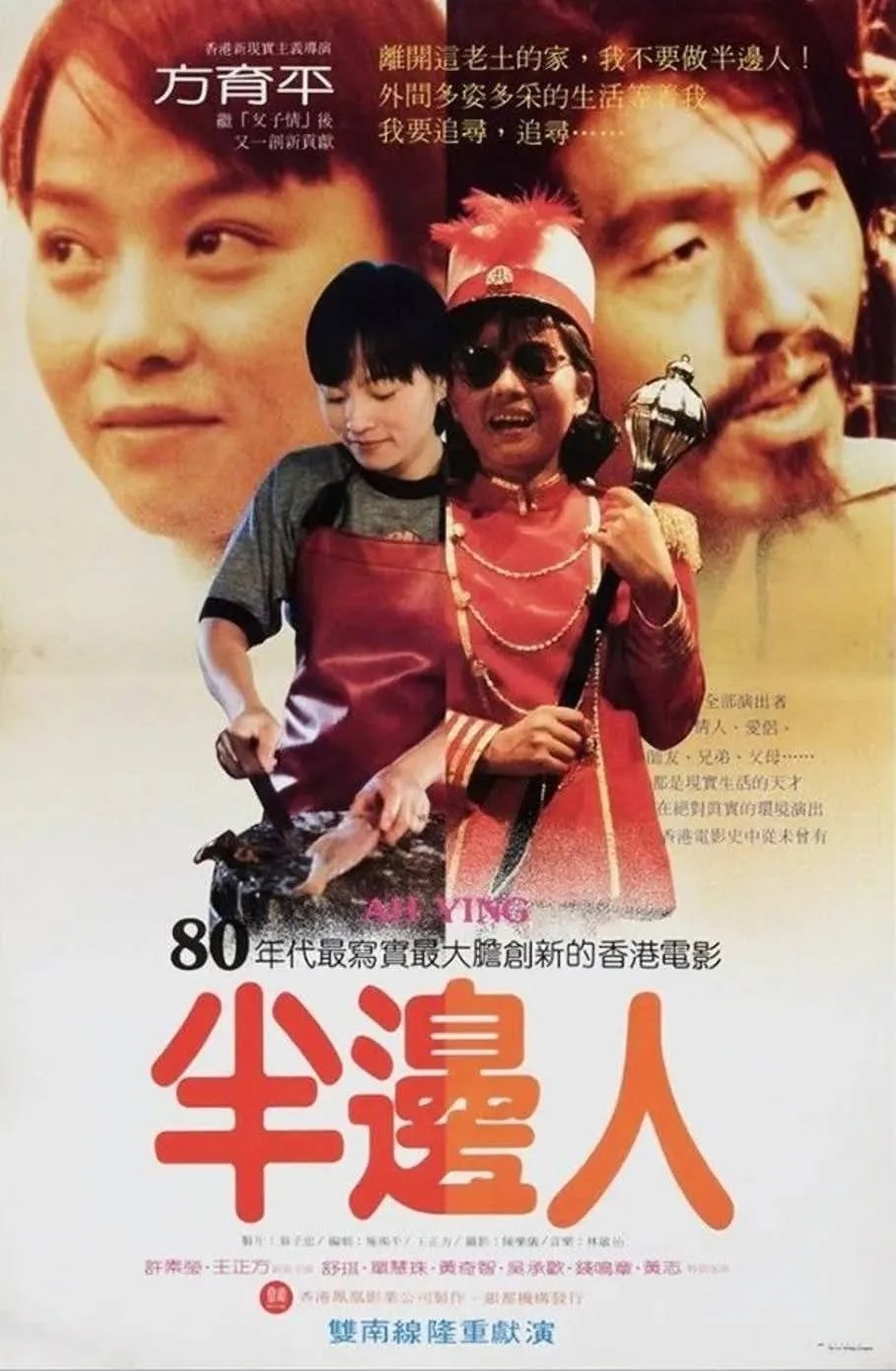
It may be this sense of dislocation that Allen Fong’s Ah Ying is hinting at. Fong himself studied at UN Berkley before returning to Hong Kong and based the character of Cheung on a friend of his who died suddenly in the middle of working on a project. But the film is really about its title character, a young woman who longs to transcend the world she was born into and find a more independent destiny while held back by her needy mother and drunken father who run a fishmongers at the market where Ah Ying is expected to help out. We her clumsily gutting fish, ripping off half the meat while stripping the skin and inelegantly tearing out its viscera, only to leave abruptly in response to a slightly rude customer and the fact she can’t get through to her increasingly distant boyfriend, Hung, on the telephone.
Later we see Ying try to scrub the fish smell off her hands after running off to her part-time job at the Hong Kong Film Centre in which she does menial work in return for free acting classes taught by Cheung. She tells him that she doesn’t really know why she’s there, but she wants to try it out and maybe it will lead to a career. Cheung is a little insensitive in mentioning a girl he knew who wanted to be an actress in California, but she spends 11th months of the year working in a cocktail bar. Nevertheless, acting quite literally gives Ying the opportunity to be someone else and helps her to imagine a different future outside of her family’s lack of aspiration for her.
Ying’s family are comparatively lucky in that they have two adjacent apartments, but Ying and her four siblings all live in one with her parents too, while her taxi-driver brother and his wife live next-door though Ying likes to hang out there and listen to records. Western music is another means of escape as she demonstrates by singing an a cappella version of Time in Bottle as part of Cheung’s acting class, though he hasn’t heard of any of the musicians she mentions like Brian Eno or David Bowie further marking him as out of touch with “our times”. They do, however, bond over Simon & Garfunkel’s version of Scarborough Fair with Cheung noting that it sounds just like Chinese opera.
In order to further research his screenplay, Cheung talks Ying into arranging an interview with her by then ex-boyfriend Hung who breaks up with her for being too nice to him which he finds clingy and unpleasant even when she tells him she’s fine with him continuing to sleep with other girls. Though she continues to look back on her relationship with Hung, Ying has already signalled her desire to move on by getting rid of her perm as if marking a new transition into adulthood. Her mother is not, however, particularly happy about it as Ying is currently the only one of her several children prepared to help out at the fish stand. Ying’s mother clings to her like life raft as a means of sustaining herself in what is in many ways a dissatisfying of existence filled with constant toil to provide for her ungrateful family who look down on her occupation while her husband sleeps in a chair all day after drinking too much and barely helps at all.
Ying’s mother tells Cheung that she’ll be lost without her when she marries, but otherwise suggests she’d prefer her not to because she’d be left to cope with everything on her own. Cheung asks Ying why she doesn’t move out and she replies that it’s it the rent, her father only pays her pocket money for helping on the stand and she doesn’t earn anything at the film centre, though it’s unlikely a young woman on her own would be able to afford to rent in Hong Kong anyway. Cheung becomes a kind of lifeline to her, a mentor figure guiding her towards another kind of life but equally lost himself and a stranger in the contemporary city. Though she may develop feelings for him, his interest in her remains paternal and like the characters they play on stage any union between them will have to wait until the next life. Nevertheless, through her connection with him, she may have begun to discover her true self and become at last a whole person even if seemingly tethered to the fish stand. In the busy streets and cramped apartments, Fong may have succeeded in recording his times after all but also an unexpected sense of optimism and possibility in discovering new paths even if they ultimately lead to a parting.

 Windows on Worlds