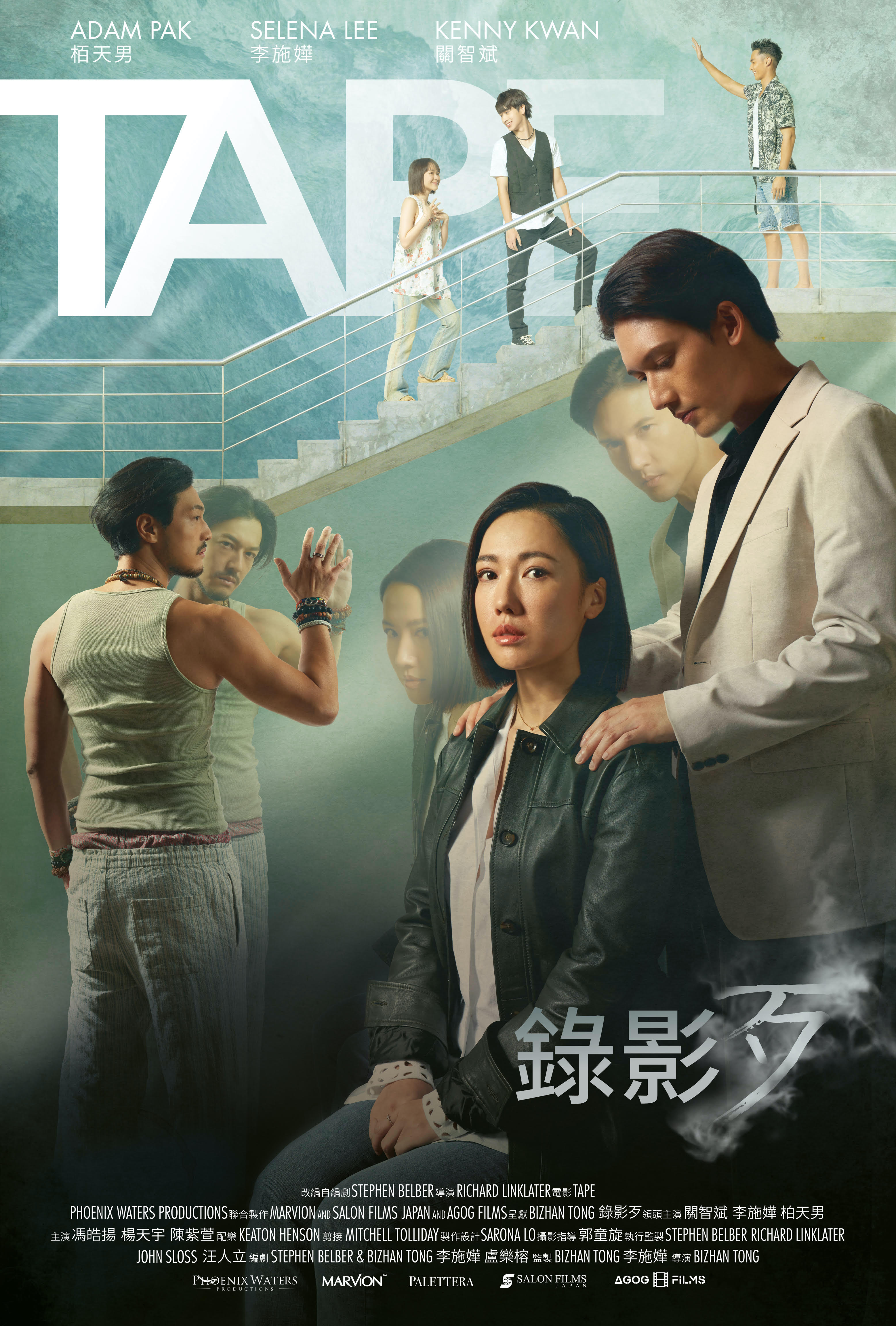
Tape (錄影歹, Bizhan M. Tong, 2024)

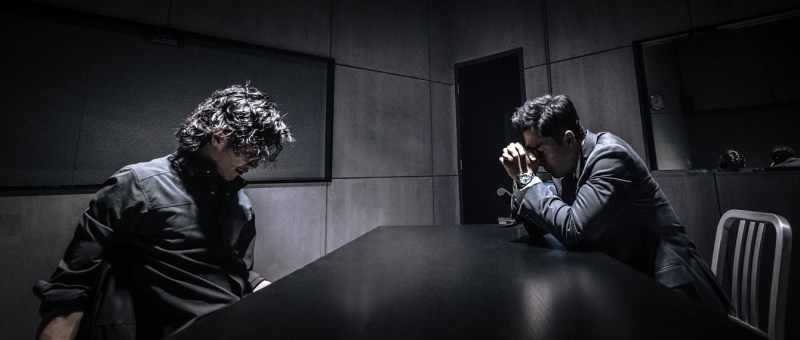
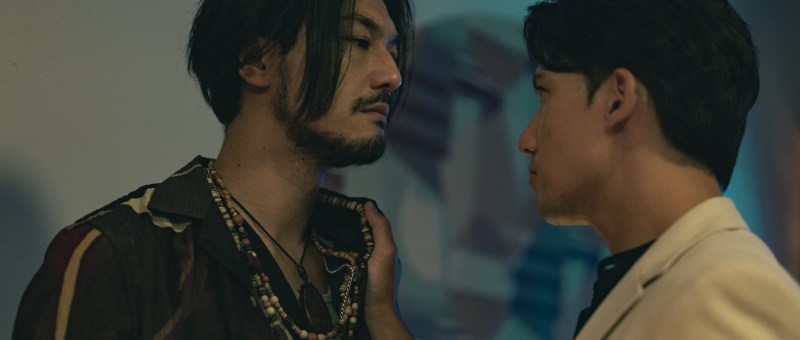
Up-and-coming filmmaker Jon (Kenny Kwan) says he wants to make real films that address social issues within Hong Kong, but his old high school buddy, Wing (Adam Pak), calls him pretentious, while the two continue to lay into each other about their respective life choices, But as it turns out, that isn’t why they’re here. Wing has laid a trap for Jon and is hoping he can force him into telling him once and for all what really happened on the night of their high school graduation 15 years previously so he can capture it on the various cameras he has hidden around the apartment.

Of course, what we have here is an ironic comment on the notion of consent as Jon has no idea he is being filmed and would not have said what he said if he did. Still, the question remains what the impact of the tape, Jon’s own words condemning him, has on his later actions. Would he ever really have reckoned with himself if his confession remained private, or would he have gone on forgetting it, justifying himself, claiming that it wasn’t “rape” just “a bit rough” and everyone does things they’re not proud when they’re young and drunk?

On the other hand, what are Wing’s intentions? Does he really have the right to force the issue or is he merely poking his finger into someone else’s wound and potentially hurting them in the process. Admittedly an unreliable narrator, Wing tells us that his girlfriend Winky broke up with him because of his “violent tendencies,” yet it’s Jon, the respectable filmmaker in expensive shoes, who starts throwing punches and tries to strangle Wing while demanding that he give him the video in which he admits that what he did to Wing’s girlfriend Amy (Selena Lee) amounts to rape. Wing suggests that he’s sick of the hypocrisy and outraged on Amy’s behalf, but his actions are motivated more by jealousy and resentment that Jon slept with his former girlfriend than concern for her. He convinces himself that it must have been rape because otherwise he can’t understand why Amy would have slept with Jon when she refused to sleep with him the entire time they were dating. 

To that extent, Amy becomes a kind of wager between the men. Wing invites her over to engineer a confrontation that is intended more as a provocation of Jon than it is a defence of his former girlfriend. Amy, however, immediately tries to turn the tables by rejecting the characterisation of events put forward by each of the men. Now a prosecutor who unlike Jon and Wing has remained in Hong Kong, Amy forensically questions Jon’s testimony and forces him to admit that he believes what happened between them was rape only for her to refuse his apology because she doesn’t agree. She refuses to be his victim, while he continues to dominate her by disregarding what she says and insisting that she’s in denial and “not in the right place” to hear his apology. 

Later Amy says that back then Jon had his hand over her mouth, and it’s true enough that the men each attempt to prevent her speaking and are unwilling to accept what she has to say. As she tells them, an apology is about the person who issues it’s desire for permission to let themselves off the hook. To her it’s meaningless, while it’s almost certain that Jon would never have even given it if it weren’t for the tape which could ruin his career and his marriage. “You want the last word, but it’s not yours to have,” she pointedly tells him while he struggles to accept the lack of control he has over this situation and indeed over Amy. She tells him that she was in love with him at the time which gave him power over her which he misused when he had no real feelings for her and may have just been trying to get back at Wing, just as Wing’s weaponising of whatever happened that day is about his relationship with Jon rather than her pain or trauma. Though he tries to weasel his way out of it and is confused by the realisation, Wing is also bent on asserting patriarchal control over Amy in feeling entitled to her virginity and annoyed that Jon “took” it, even as Amy points out that in any case they were no longer dating at the time and it’s really none of his business who she sleeps with because it’s entirely her own decision. 

But then again, she asks him if he’d marry a “rape victim”, and he doesn’t have an answer for her hinting at the societal stigmas in play along with her own desire not to see herself as one. Jon doesn’t want to see himself as a rapist either, continuing to insist that he’s a good person and, in any case, not the same as he was 15 years ago but now much more aware of women’s rights and position in society. Wing may just not want to see himself as a loser, aware that he’s living a life that looks unsuccessful as a lifeguard in Thailand making ends meet by peddling drugs to teenagers and trying to reclaim his masculinity by proving that Jon cheated him by assaulting Amy. Yet in updating Richard Linklater’s 2001 original, Tong really makes this about two tapes, the one from 15 years previously and the one Wing shoots in the present day which is immediately synced to the cloud. In revisiting the past, we gain a new perspective as the young Amy is given the opportunity to speak and unwittingly remarks on how she thinks of the past as something that can never really be destroyed but must dragged along in a box behind you that you occasionally peek into. Nevertheless, she may have succeeded in blowing it wide open in reclaiming her agency from the continually self-involved Jon and Wing.


Tape screened as part of this year’s Raindance Film Festival.

Trailer
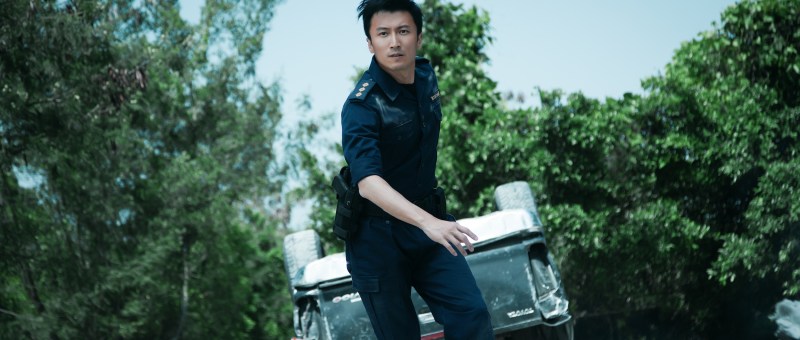
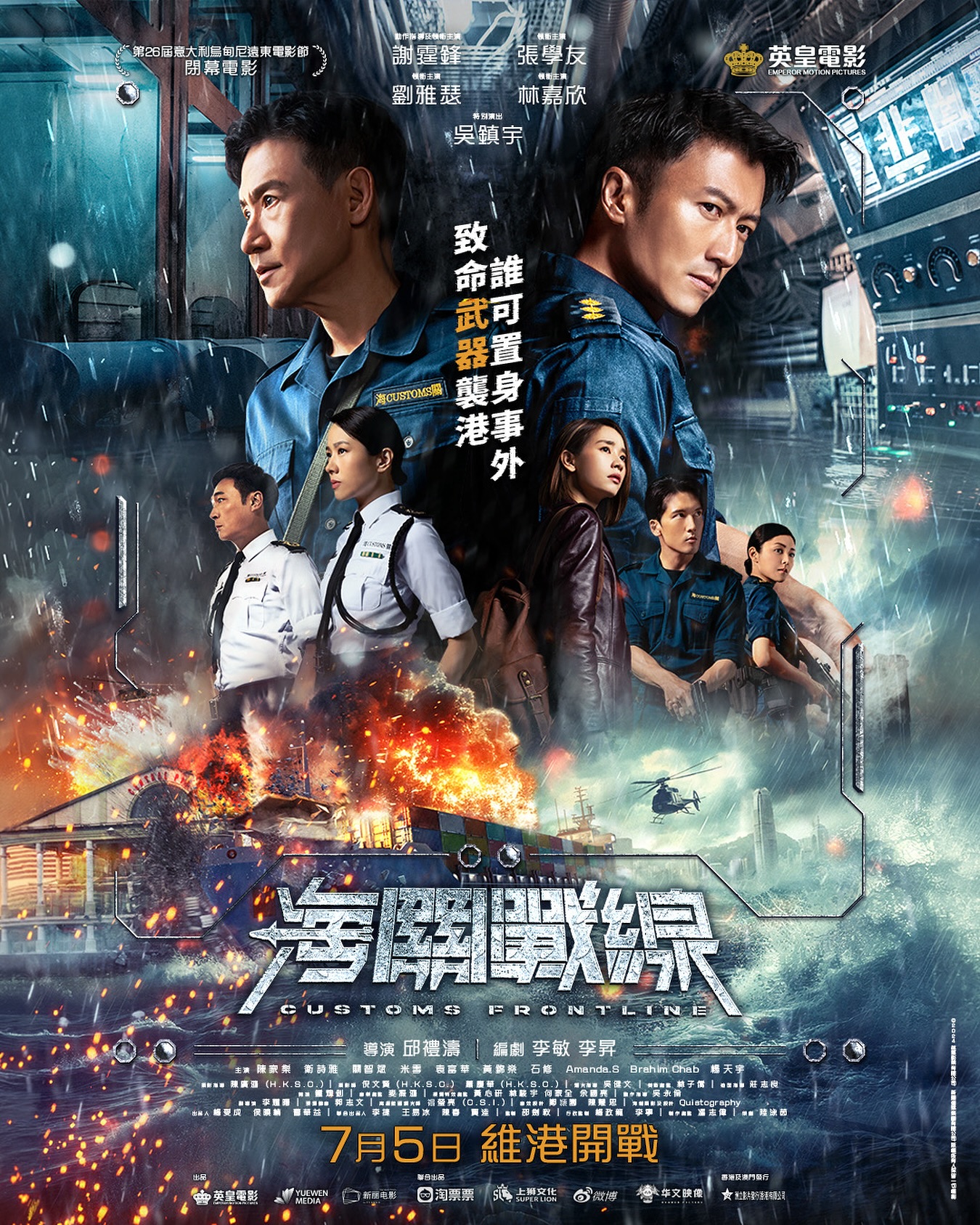
Customs Frontline (海關戰線, Herman Yau, 2024)

Who knew life as a customs official could be so dangerous? Those at the centre of Herman Yau’s high octane drama certainly do put themselves on the front line, facing constant threats of violence as they attempt to protect Hong Kong from nefarious goods and shady businessmen. The crisis in this case is, however, more international in nature as a Hong Kong corporation appears to be supplying an African warlord with seriously high tech equipment in exchange for diamonds. 

A mild political point is made that the world largely ignores conflicts in Africa, the warlord explaining that he needs all these weapons to defend himself because no one else is going to and those that do come to him largely do so for reasons of exploitation, including Dr Raw who acts as their supplier. The customs guys get dragged into it when a boat sails into their waters illegally and thereafter become determined to recover the MacGuffin of a high tech navigation device apparently stolen from the Thai army who would quite like it back. The gang are aided in their quest by a couple of Thai Interpol officers including Ying (Cya Liu) who helpfully speaks fluent Mandarin. 

Meanwhile, Customs is divided by internal polices as two divisions vie for control over the project while plotting their ascension to the soon to be vacated post of deputy commissioner. Veteran officer Cheung (Jacky Cheung) is raked over the coals by brash supervisor Kwok (Francis Ng) and, unbenkownst to him in a romantic relationship with his rival, Athena (Karena Lam). His parter Lai (Nicholas Tse) is meanwhile nursing a degree of heartbreak having broken up with team member Katie (Michelle Yim) a year previously only to hear that she is now engaged to marry someone else. 

Perhaps surprisingly, these interpersonal dynamics largely fall by the wayside and are never dealt with again. However, the film does get into some depth with Cheung’s mental illness which it suggests is largely due to the stress of the job and has turned him into two quite different people. Somewhat insensitively, the film further stigmatises metal illness in its implications regarding Cheung’s career and emotional wellbeing with constant shots of his medication and the suggestion that he is not really up to the job. 

For the most part, however, the Customs division end up in a series of firefights and car chases eventually trying to protect the son of an industrialist (Carlos Chan) who died in suspicious circumstances after trying to sever ties with smugglers. They’re strafed in an African compound, and engage in daredevil stunts trying to outrun the bad guys with combat skills that seem incongruous with their role as customs officials. The earnest Lai runs around punching bad guys in the name of justice to heal his broken heart while otherwise failing to bond with plucky Interpol agent Ying who still ends up as a damsel in distress despite her obvious skills though her chief manoeuvre is a honeytrap, using poisoned lipstick to knock out the chief arms dealer.

The film may hint at a dissatisfaction with inequality and consumeristm along with a healthy mistrust for large, family-owned corporations but otherwise fails to follow through. Cheng dreams of a place in the sun, a house by the sea for Athena where they could leave the stressful world of customs and intelligence behind but also seems resentful of her ambition asking her if she’d choose a quiet life with him over a shot at becoming deputy commissioner and annoyed when she replies that she hopes she can do both, achieving her career goals and then enjoying the rest of her life in a peaceful retirement at Cheung’s side. It may be this sense of hopelessness that drives him, realising he can’t attain what he really wants in the elusive career success denied him because of his reluctance to play the game along with the lack of financial power it affords him leaving him unable to buy that house by the sea or give Athena what he thinks she wants (but probably doesn’t, at least in the way he wants to give it to her). Though falling flat in terms of its interpersonal drama, the action scenes are at least exciting and well-designed even if the whole is somewhat hollow in its continual lack of bite.


Customs Frontline screens in New York July 17 as part of this year’s New York Asian Film Festival.

Original trailer (Traditional Chinese / English subtitles)

Sunshine of My Life (一路瞳行, Judy Chu, 2022)

A young woman comes to a better understanding of her family and her relationship with it after a series of crises some more serious than others in Judy Chu’s semi-autobiographical drama, Sunshine of My Life (一路瞳行). More a coming-of-age tale than an exploration of the difficulties faced by those with disabilities in the recent past, Chu’s heartfelt film nevertheless stresses familial solidarity as the heroine comes to realise that her misplaced resentment is mostly teenage angst and that at the end of the day her parents just want her to be happy.

Yan (Karena Ng) was born to two parents who are each blind. A perfectly ordinary though dangerous accident that could easily happen to a sighted mother leaves a toddler Yan scalded and unkind relatives questioning the couple’s decision to have a child at all implying it is somehow irresponsible and that they are incapable of caring for her. Nevertheless, Yan’s mother Hung (Kara Wai) resolves to do everything she can to keep her daughter safe beginning with attaching bells to her so she has a better idea of where she is and what she’s doing at all times. This early incident does in one sense colour Hung’s parenting style, constantly questioning herself as to whether she’s a good mother and preoccupied with the judgement of others all of which later feeds into her teenage daughter’s resentment as the older Yan grows tired of feeling responsible for her parents’ care. 

As a child, Yan had helped her parents by reading out menus and describing the world she sees around her but as a high school student she resents having to rush home after school rather than hanging out with her friends and also seems to be ashamed of her parents’ disability never telling anyone about her family and instead claiming that her mother is ill in hospital. She tells her art teacher that she just wants to get out of Hong Kong and doesn’t care where she goes so long as it’s far away while later telling her no good rich kid boyfriend that she’s searching for “freedom”. On one level she feels intense guilt for leaving her parents behind as if she were abandoning them, worried that they really can’t manage without her, but also fears for her own future and feels trapped as if she’s being asked to sacrifice her own hopes and dreams to stay by her parents’ side forever.  

Yan is indeed a teenage girl and has a slightly self-centred way of looking at things, never quite stopping to appreciate how difficult her parents lives can be in a conservative society that is often unwilling to accommodate difference. When her classmates all mock and jeer at a poster advertising a star gazing event for the blind all she can do is smile politely, and at one point she even walks straight past Hung waiting for her outside the school gates perhaps on one level simply embarrassed to have her mother meet her as any teenage girl might be but also anxious to hide her existence from her boyfriend. After being arrested by the police for illegal street selling, Yan’s father Keung (Hugo Ng) gets a job as a masseuse but is later exploited by his employer who tries to force him to sign a new contract accepting a 20% pay cut while increasing the manager’s commission. Keung refuses and is fired but vows to fight for the other workers to end discrimination against the blind and ensure they enjoy the same labour rights as sighted workers. 

Faced with a series of crises from a brush with criminality to her boyfriend’s sudden absence and her father’s failing health, Yan is forced to reconsider her relationship with her parents. On witnessing Hung stand up for herself and take her father’s corner Yan realises that she might have underestimated her mother’s capability and what she took for dependency was more a general sense of warmth in receiving care that made her life easier. Tinged with ’90s nostalgia from the ubiquitous cassette tapes Hung uses to record precious moments to pagers and pinups, Chu’s warmhearted drama finds a mother and daughter coming to a better understanding of each other as they both learn to embrace independence and freedom if in a slightly different way than originally anticipated.


Sunshine of My Life screened as part of this year’s Five Flavours Film Festival and is available to stream in Poland until 4th December.

Original trailer (Traditional Chinese / English subtitles)

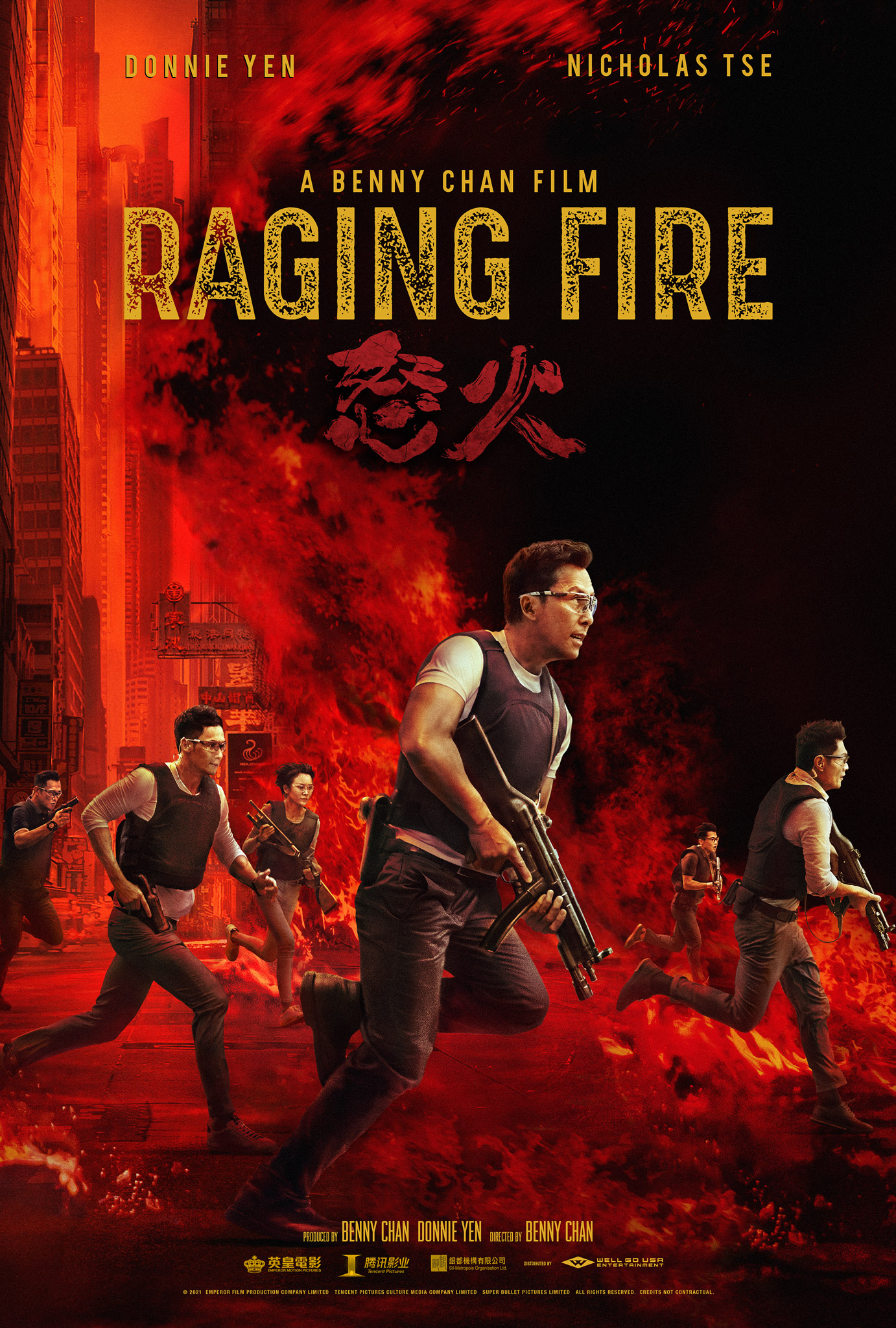
Raging Fire (怒火, Benny Chan, 2021)

“If you had chased Coke that day, would our destinies have been reversed?” a cop turned villain asks of his righteous colleague, but his friend has no answer for him. The final film from director Benny Chan who sadly passed away last year after being diagnosed with cancer while filming, Raging Fire (怒火) pits a disgruntled police officer wronged by the system against an incorruptible detective but suggests that the real villain is an increasingly corrupt society in which the rich and powerful have a direct line to justice. 

As the film opens, noble officer Cheung (Donnie Yen) is racing towards some kind of altercation in a shipyard but later wakes up next to his much younger and very pregnant wife (Qin Lan). After a years long operation, his team is about to take out a petty criminal involved with a previous investigation which resulted in fellow officers getting sent to prison for excessive use of force. After refusing to to help a wealthy businessman make his son’s drunken car accident go away, Cheung is taken off the case while the raid turns out to have been a trap leaving eight of his friends dead and many more injured. Through his investigations, Cheung begins to realise that his former colleague Ngo (Nicholas Tse), recently released from prison, may be responsible for the deaths of his friends in pursuing a vigilante revenge against the police force he feels betrayed him. 

“This society doesn’t reward good men” Ngo later insists, though his total and relatively sudden transformation from earnest cop to bloodthirsty psychopathic killer seems something of a stretch. Cheung aside, the Hong Kong police force is depicted as infinitely corrupt and working at the behest of the rich and powerful to further agendas not always in the interests of justice. The case which caused so much trouble related to the kidnapping of a prominent financier and the secretary he was canoodling with at the time, the financier’s wife having obeyed the kidnappers’ instructions not to call the police by ringing a government contact instead which is why the operation is covert. Ngo and his team were told to do whatever it took to extract information from a suspect who later wound up dead but were hung out to dry by the superior officer who ordered it. Not unreasonably they see themselves as victims of a corrupt system but care little who might get in the way of their vicious bid for revenge. 

For his part, Chueng is also a thorn in the side of his colleagues because of his refusal to play along with the base level corruption all around him. Dragged to the meeting with the businessman by nervous colleague Beau (Patrick Tam), Cheung sips tea rather than the wine everyone else is drinking and eventually storms out making a point of paying for his exorbitantly priced beverage while refusing to be complicit with systemic corruption. So upright is he that he asks a passing driver if he has insurance before borrowing his car to chase down Ngo and when he himself is accused of breaking protocol the entire squad shows up to petition the disciplinary panel on his behalf. Ngo asks him if the situation would have been reversed had it been Cheung who had questioned the suspect that night, but of course it wouldn’t because Cheung would never have beaten a suspect to death in the first place. 

Chan places this debate front and centre by setting the final showdown in a church currently undergoing renovation, Ngo seemingly judged for his moral transgressions while Cheung meditates on the man he used to be in a bromance montage that laments the tragedy of Ngo’s fall from grace. The battle of wits between the two men, Ngo of course uniquely positioned to game the system he rails against, ends only in futility while the system which created him remains unchanged. Chan shoots with characteristic visual flare sending his compromised cops through a golden hellscape of the contemporary city veering between beautifully choreographed, high octane action sequences including a lengthy car chase through a highly populated area, and procedural thrills tinged with ambivalent social commentary in which justice itself has become commodified while police officers exceed their authority and bow to the rich and powerful. A throwback to classic Hong Kong action, Chan’s final film is a fitting finale for the career of a director taken far too soon. 


Raging Fire screened as part of this year’s New York Asian Film Festival and will be released in US cinemas on Aug, 13 courtesy of Well Go USA.

International trailer (English subtitles)