Review of Arrow’s Nikkatsu Diamond Guys Volume 1 first published on UK Anime Network.
“Diamond Guys” is the name given to the top line of A-list stars at Japan’s oldest film studio Nikkatsu during their period of relaunching themselves as a major production house during the 1950s. At this time, Japanese studios, like their Hollywood counterparts, worked largely on a star system where they held a number of actors and actresses under contract and slotted them into their productions as and where they saw fit. Of the three stars in these pictures, Yujiro Ishihara perhaps burned brightest as a James Dean style apathetic hero and icon of the “sun tribe” era. Hideaki Nitani ultimately carved a niche for himself as a second lead rather than in starring roles and is a little more on the soulful side than the other guys. Akira Kobayashi who’s still fairly young here is probably the most familiar to overseas audiences later starring in a number of gangster pictures including Arrow’s previous releases Retaliation and the Battles Against Honour and Humanity series.
The first film included in the set, Voice Without a Shadow, is a notable inclusion as it’s a little seen, early effort from the notorious master of the surreal, Seijun Suzuki. In a significantly restrained mood here, Suzuki adapts a Seicho Matsumoto short story with noirish overtones as a telephone switchboard operator accidentally connects a wrong number and unwittingly hears the voice of a murderer at a crime scene. Hideaki Nitani plays a conflicted reporter who’s fallen in love with the switchboard operator who is, alas, already engaged. Three years later she hears the voice again in a gangster her husband unwisely becomes involved with only to have him killed and her husband become the prime suspect.
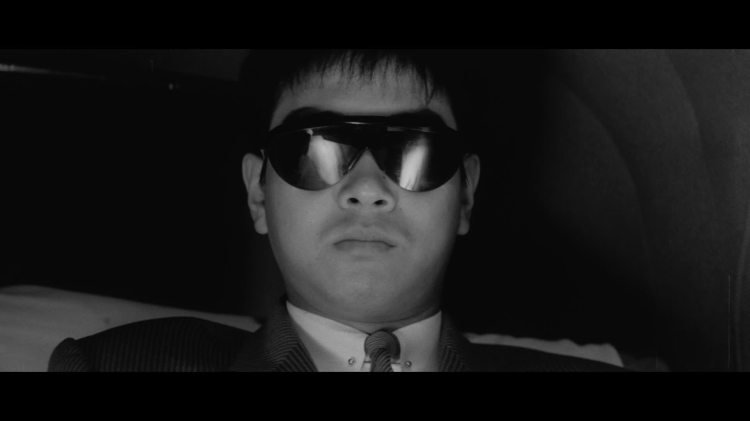
Film number two, Red Pier, comes from Toshio Masuda and stars pinup of the day Yujiro Ishihara in a characteristically cheeky, nihilistic gangster role. Dressed in a bright white suit and sunglasses, “Jiro the Lefty” is a petty yakuza street kid who found a home in a gang but dreams of a better life somewhere else. After witnessing the strange death of a potential target who gets crushed by a crane at the docks, Jiro ends up meeting the man’s sister and, of course, falls for her. Unfortunately, just about everyone now has it in for Jiro and his happily ever after seems very far off indeed.
The Rambling Guitarist, by contrast, is the only film in the collection to be filmed in colour but makes fantastic use of its super bright, psychedelic look. Starring Akira Kobayashi as a drifter with a guitar, the film starts out like a western but ends as a yakuza pic with a little youth drama thrown in for good measure. It’s fighting, music, and gunplay with Jo Shishido lending grinning support as a late addition hitman.
In some senses each of these films was built around its star – men want to be them, women want to be with them, you get the picture. The Rambling Guitarist is sort of the odd one out here as it’s of a slightly different strand than the other two with a lighter emphasis on crime and a shift from noir to western in terms of its overseas influences. Both Voice Without a Shadow and Red Pier lean much more towards film noir with Red Pier leaning a little more towards Europe than America. That said, The Rambling Guitarist is perhaps the weakest film on offer simply because of its up to the moment youth orientation which leaves it feeling a little more dated than the other two which can rely on their more classical style to find a modern appeal.
Each of these little seen gems would have been worthy of a solo buy in any case but finding them all offered in this fantastic new package from Arrow is a real treat. Each offered in stunning HD re-masters on blu-ray, even if they show their age in a couple of places the transfers are particularly fine and are likely to be the best these films will ever look. The Nikkatsu films from this era offered crowd pleasing thrills and good looking actors, but they were often also made by interesting directors who injected a little of their own individual, often youthful, flair to lift them well above the generic genre movies also on offer. That isn’t to say that each of their pictures was a smash hit, but the three on offer as part of this set are certainly each worthy of consideration even if for quite different reasons and if the included trailers for Vol. 2 are anything to go by we have even more undiscovered gems to look forward to in the future!
Nikkatsu Diamond Guys Volume 1 is out now on dual format DVD/blu-ray in the UK and USA courtesy of Arrow.
Loosely inspired by Julian Duvivier’s 1937 gangster movie Pépé le Moko, Toshio Masuda’s Red Pier (赤い波止場, Akai Hatoba) was designed as a vehicle for Nikkatsu’s rising star of the time, Yujiro Ishihara – later to become the icon of the Sun Tribe generation. On paper it sounds like a fairly conventional plot – young turk of a gangster comes to town to off a guy, sees said guy killed in an “accident”, and shrugs it off as one of life’s little ironies only to accidentally become acquainted with and fall head over heals for the dead guy’s sister. So far, so film noir yet Masuda adds enough of his own characteristic touches to keep things interesting.
“Jiro the Lefty” (Yujiro Ishihara) is a sharp looking petty yakuza type in a bright white suit and sunglasses. Another of Japan’s post-war abandoned street kids, he found a home in a gang and has never known anything one could call a “normal” way of life. Other than his obvious talent with a gun, he has a cheerful and ironic personality that has him even almost respected by the police and is generally well liked in the area.
Early on Jiro rescues a little boy from almost being hit by a car and later when playing the harmonica for him gets hit by a thunderbolt of love when catching sight of the boy’s aunt, Keiko (Mie Kitahara). This causes him several problems at once: to begin with, she’s the sister of the guy he saw get hit by a crane and she doesn’t seem to know her brother was a gangster, two – Keiko is obviously of a much higher social class and a little out of his reach even if he managed to go straight, three – he can’t go straight, he doesn’t know how to do anything else, four – Mami, his current nightclub dancer “girlfriend” who’s invested a little more in the relationship than he has. Actually this is only the start of a long list of problems Jiro has to deal with, he just doesn’t know about them yet.
The story is set around the docks of Kobe where the living is hard and life is cheap. The local policeman is a fairly laid-back, ironic chap who’s made an odd sort of friendship with Jiro wherein he doesn’t really want to see anything too bad happen to him. He can see this thing with Keiko is not a very good idea and is constantly lurking in the shadows trying to control the situation as much as he can. Jiro, doesn’t know it yet but his own guys are out to get him too and after one of his sworn brothers ends up paying the price for Jiro’s rising profile in the yakuza world, he finds himself on the run from pretty much everyone.
This sounds like quite a complicated set up but Masuda manages to martial everything into a coherent order and even adds a hearty dose of realistic emotion too. As far as the aesthetic goes, Masuda takes his cues from American film noir with harsh lighting and canted angles all employed to show us the crookedness of this underground world but he also makes sure to add occasional touches of artistic flair such as the light bouncing off Jiro’s sunglasses during a night time cab ride or the sheer shock on Ishihara’s face as he first sees Keiko framed against the bright sunshine of Kobe’s harbour.
The too noble for his own good gangster who wants to go straight but knows he has a crooked heart – it’s an old story, but a good one. Red Pier pushes a lot of these ideas to the max but handles them well and adds a traditional “crime doesn’t pay” ending which is both endlessly sad and completely appropriate at the same time. You can’t help feel for Jiro and his small scale existential crisis in which the reluctant gangster wants to jump ship for more peaceful climes but can’t for both personal and societal reasons. Red Pier may not be the best Masuda/Ishihara collaboration but it is certainly an excellent example of everything its genre has to offer.
Red Pier is the Second film included in Arrow’s Nikkatsu Diamond Guys Vol. 1 collection.
Make friends with this Oni mask – you will be seeing a lot of him throughout the film.
Seijun Suzuki might be best remembered for his surrealist pop art masterpieces from the late sixties or his even less comprehensible art films which followed his return to directing after settling his dispute with Nikkatsu, but everyone’s got to start somewhere and it comes as something of a relief to know that Suzuki was perfectly capable of making a straightforward movie if he wanted to. Voice Without a Shadow (影なき声, Kagenaki Koe) is exactly what it sounds like – a fifties style, US inspired noir however, Suzuki adds his usual flourishes and manages to wrong foot us pretty much the whole way through so that we never end up where we thought it was that we were going.
To begin with, our story is fairly straightforward. Reporter Ishikawa (Hideaki Nitani) provides our film noir style voice over as switchboard operator Asako (Yoko Minamida) accidentally dials a wrong number only have it picked up by a strange man who tells her she’s rung a crematorium then laughs hysterically. It turns out that the number was actually for a pawn shop which was in the process of being knocked over and the owner killed – Asako heard the perpetrator’s voice and thanks to her switchboard experience isn’t going to forget it. Ishikawa grows closer to Asako as the case becomes a media sensation but backs off after learning she’s already engaged.
Three years later Asako hears the voice again – a friend of her husband’s who keeps co-opting their living room for mahjong games that go on for days and cost everyone but him a lot of money. Before long Hamazaki (Jo Shishido) is found dead and Asako’s husband is the prime suspect but did he really do it? And if he didn’t, does Ishikawa really want to find out who did?
As you can see it’s a story that wouldn’t be out of place in any B movie noir from the fifties and the telephone set up is even a little reminiscent of Sorry, Wrong Number (though that film has a very different conclusion indeed). Based on a short story by Seicho Matsumoto, Voice, Voice Without a Shadow is full of the classic play of light and shadow that characterises the best film noir and the mood is ably supported by a suitably jazzy score from Hikaru Hayashi. If there’s a criticism to be made in this area, it’s that Nitani’s Ishikawa is a little too nice and pure hearted in comparison to the broken hearted heroes from the detective serials. He seems content to try and help Asako whilst uncovering the truth even if it ends up costing him in the end.
Although Asako herself is technically the leading character she quickly gets relegated to a more conventional woman in peril role. She is the one who recognises Hamazaki’s voice and the only clue linking him to the pawn shop murder three years ago but, while he’s alive anyway, Hamazaki is more interested in having fun terrorising everyone rather than trying to rub her out. In fact, the sudden demise of Hamazaki, played by an extremely young Jo Shishido, is one of the most surprising things about the film in which you’d expect him to remain the central antagonist right up until the grand finale.
Voice Without a Shadow is then a fairly conventional, noir inflected B movie which wears its Hollywood influences on its sleeve. However, there are glimpses of Suzuki’s individual style leaking through such as in his occasional and surprising use of double exposure, innovative composition and other modernist techniques which all help to lift the rather workmanlike script onto another level. In someways, it’s all a little too nice – even Hamazaki’s nasty lowlife activities are neatly skirted around almost like a film noir that’s been through a car wash though its strange pleasantness also has a nicely refreshing quality.
A minor film from the master of the surreal then, but an interesting one none the less. The mystery element proves satisfying even if it could do with a little more dirt under its fingernails and the committed performances also do their bit to enhance the mood. A prime example of its genre, Voice Without a Shadow is a notably restrained entry in Suzuki’s back catalogue but its classical style mixed with an offbeat, absurdist undercurrent make it one worth seeking out.
Voice Without a Shadow is the first film included in Arrow’s Nikkatsu Diamond Guys Vol. 1 collection.
General review of Arrow’s Kiju Yoshida: Love + Anarchism box set up at UK Anime Network.
Kiju (also known as Yoshishige) Yoshida is one of the primary names in Japan’s 1960s art movie boom though he’s comparatively unknown and, in fact, little seen outside of Japan. Though some of this is down to Yoshida’s fierce self ownership of his own back catalogue, this new HD blu-ray box set from Arrow Films is the first time any of his films will be readily available with English subtitles. Titled Love + Anarchy, the box set includes both the original director’s cut of Yoshida’s magnum opus Eros + Massacre as well as the shortened theatrical cut of the film, his examination of ’60s radical leftist politics in Heroic Purgatory and his look at a failed ‘30s rightist insurrection in Coup d’Etat.
Eros + Massacre is the film Yoshida has become best known for and the one with which he is most closely associated. The film tells two parallel stories beginning with the 1960s students Eiko and Wada who are running an extra curricular research project into the lives of a group of Taisho era anarchists including feminist Ito Noe and poet Osugi Sakae who was an early exponent of free love which is something that particularly interests Eiko. The Taisho era scenes are less a historical examination than they are the results of the research project conducted by Eiko and Wada and so are a sum of their refracted perceptions. The film is full of surrealistic touches like the Taisho characters suddenly turning up in modern day Tokyo or unexpected scenes of expressionism breaking in without warning. A fantastic example of ‘60s avant-garde cinema, Eros + Massacre is a film which should have been more widely seen and now hopefully will be.
The first question – why two versions? The answer is not the one you’re thinking of. Though the film is undoubtedly long at over 3.5hrs, Yoshida largely financed the film himself and intended to release it in his original version. However, though Ito and Osugi were assassinated along side Osugi’s six year old nephew in the chaos following the Great Kanto Earthquake in 1923, another of Osugi’s mistresses, Kamichika Ichiko, was still very much alive (though obviously an old woman) and a serving politician. She got wind of the film and after seeing it threatened to sue over her portrayal. Yoshida voluntarily recut the film to minimise her scenes, renamed her character and exhibited the shortened version to great acclaim. Though the director’s cut is truest to Yoshida’s vision, even in the shortened version his artistry shines through.
The second film in Yoshida’s “political trilogy” is the even more avant-garde Heroic Purgatory. Far less accessible than the other two films in the set, Heroic Purgatory spans three distinct time periods from the recent past to the present and the near future and focuses on the current Japanese leftist movement with particular reference to its opposition towards the renewals of the Japanese and American mutual defence treaty. However, what all of this really amounts to is paean to love and marriage. Full of strange and beautiful photography Heroic Purgatory is the iconic avant-garde film. Which is to say it’s undoubtedly difficult, inscrutable and perhaps more experienced than understood.
By contrast Coup d’Etat is the most straightforward of the films presented. Marking the only time in his career where Yoshida was not involved in the screenplay, the film moves across the political divide and examines the final days of right wing intellectual Ikki Kita. Ironically enough, the thrust of the film concerns an attempted political coup by a group of young army officers who disapproved of the government’s treatment of its people and particularly of its failure to properly provide for the poor. Their revolution was in the name of the emperor, they merely wanted to eject the sitting government. Despite his repeated protestations and lack of direct involvement in the planning of the coup, Kita still paid the price as his stature and the influence of his writings were simply too strong making him a dangerous individual and a pretty fitting scapegoat. The last film Yoshida would make with ATG (and in fact the only one which was entirely produced with them), Coup d’Etat retains his characteristically complex imagery even if it ejects his surreal storytelling style. It also loses his wife, Mariko Okada, but gains the towering presence of star character actor Rentaro Mikuni.
Available for the first time with English subtitles and in HD this new box set from Arrow Films is a long overdue opportunity to finally witness the challenging yet hugely important work of this hitherto neglected filmmaker. Yoshida’s work is not easy to digest (it will also help to have a little knowledge of 20th century Japanese history or to make careful use of the excellent essays included with the box set) but is always beautiful. The unseen genius of the ‘60s avant-garde art scene, Yoshida is an uncompromising figure which may be why it’s taken so long for work to reach us, but now that it has, it’s an opportunity that should not be ignored.
Having taken avant-garde story telling to its zenith in Heroic Purgatory, Yoshida returns to the realm of politics with a far more accessible effort in Coup d’Etat (AKA Martial Law, 戒厳令 Kaigenrei). Inbetween the two films, Yoshida had made another more mainstream offering, Confessions Among Actresses, which had been moderately successful with both audiences and critics but with Coup d’Etat he came back to the artistic fare he’d been pursuing since leaving Shochiku. Unlike the other two films in Arrow’s Love + Anarchy boxset, Coup ‘Etat deals with a right wing rebellion rather than the communists and anarchists which are more familiar to the post-war world.
The film begins with a nervous young man brutally stabbing an elderly businessman in the street before taking his own life. On claiming his remains, the man’s sister finds a letter addressed to Ikki Kita – a well known right wing intellectual in favour of the institution of martial law. Kita, or more particularly his work, becomes a figurehead for a putative revolution organised by young army officers who have become disillusioned with the elected government, its plans for increasing Westernisation and treatment of the poor. They seek to overthrow parliament and put the Emperor back in charge for a kind of paternalistic socialist state. Kita remains on the fringes of this movement, coming into contact with a young soldier who wants to join the revolution and advising him but repeatedly making it clear that he is not involved with the coup itself. Nevertheless, even if not directly involved, Kita will still pay the price for his radical ideas.
Less an examination of the historical events of the time or the coup itself, Coup d’Etat is a psychological portrait of Kita’s last days. Marking the only time Yoshida was not involved in the screenplay (this time leaving things entirely to playwright Minoru Betsuyaku) the film follows a much more linear structure rather than playing with time in the same way as Eros + Massacre or Heroic Purgatory. Kita had written a hugely influential book which advocated moving to a system of martial law under the paternalistic care of the emperor alongside nationalisation of industries, minimisation of private property and a better welfare state. However, Kita is a public intellectual not an activist. He takes no personal part in the armed struggle (though he is aware of each of the actions and close to the people who facilitated them), yet still he pays the price. Whether this is an indictment of his lack of physical commitment to the ideals that he spoke of, or an indictment of a system which seeks to shoot the messenger is up for debate but in any case Kita is “betrayed” by the very same emperor that he worshipped as a god.
Having said that, it’s Emperor Meiji who hangs on Kita’s wall. What Kita and the officer class wanted was a “Showa Restoration” in line with the “Meiji Restoration” but almost the reverse as they returned to a form of paternalistic government where personal freedoms were restricted but everyone was well cared for. We actually don’t learn a lot about Kita during the film (a strange thing to say about a “biopic” which is often how the film is described) but it seems that he had a strict childhood in which he was prohibited from feeling fear – each time a boy was a afraid, he was supposed to cut himself as a punishment. Yet Kita is afraid and this tension between intellectual thought and irrepressible emotion is one that restricts his physical actions to the point that he remains a solitary figure entrapped by his own ideology. That he is then betrayed by the very figures that he sought to exult is the very highest form of tragedy and it’s difficult not to believe that the real coup d’etat is being perpetrated against Kita himself.
Perhaps because of its relative narrative simplicity, Coup d’Etat is a visual masterpiece taking Yoshida’s especial gifts for composition to new heights of beauty. Once again shot in black and white 4:3 Academy ratio, the film is an unsettling maze of shadows and light coupled with uncomfortable angles and a musical score that’s almost like a science fiction film. Yoshida’s prognosis is indeed bleak – the young soldier for example who’s unable to carry out his part of the mission and eventually falsely confesses to having been a spy simply because he felt insignificant and wanted to be a part of something is symptomatic of the self-centred ineffectuality of the younger generation. Once again, youth has been evaluated and found wanting though age doesn’t fare much better in the end. The filming of Coup d’Etat was delayed for sometime as Yoshida underwent an operation to remove a tumour from his stomach. His ultimate satisfaction with the film and the feeling of having come to the end of a cycle coupled with the need to recuperate more fully kept Yoshida away from the director’s chair until 1986 though he’d never return to it with the same intensity as in his political trilogy.
Available now on blu-ray in the UK as part of Arrow Films’ Kiju Yoshida: Love + Anarchism box set.
The second film contained within Arrow’s Kiju Yoshida boxset is perhaps his least accessible. Ostensibly, Heroic Purgatory (煉獄エロイカ, Rengoku Eroika) is an examination of leftist politics in the years surrounding the renewal of the hugely controversial mutual security pact between Japan and America. However, it quickly disregards any kind of narrative sense as time periods blur so finely as to leave us with no objective “now” to belong to and characters switch identities with no warning or discernible reason. Yoshida is not really after objective truth here – there is no truth in cinema, film lies repeatedly until it finally exposes the truth.
What there is of a plot begins with the scientist Rikiya Shoda who, it seems, may have been a part of a left wing activist group in the ‘50s who were intent on assassinating an ambassador but may or may not have had a mole in their midst. Now, in the contemporary ‘60s era his quiet life is disturbed when his wife, Nanako returns home with a distressed teenage girl who begins insisting Rikiya and Nanako are her parents. Sometime later another man arrives claiming to be Ayu’s father – he’s even installed a spy cam on her because this is apparently something she does quite often. The “father” eventually leaves without Ayu but then we jump back to the ‘50s where Rikiya and the “father” seem to be part of the same left wing cell but for some reason did not recognise each other in the modern part of the film. There are repeated interrogations regarding a spy, confessions, reversals, executions and betrayals but where does it get us in the end?
There’s no making sense of Heroic Purgatory, that’s not really what it’s about. It’s the very essence of avant-garde, gently eschewing literal narrative in favour of a deeper meaning. At the end what we’re left with is a scientist who professes love to be the highest calling and a wife who answers the question “what do you do when your husband’s working?” with “Think about my husband”. This isn’t some kind of anti-feminist statement in so much as a defence of a thirty year marriage which has, apparently, survived all this chaos. What has clearly perished is the left wing student movement which has ultimately failed to instigate any real kind of social change. The film wraps itself around the dates at which Japan’s defence treaty with America was or would be renewed – something to which the leftwing movement was completely opposed to and failed to prevent. Not only did they not succeed in breaking the American security pact in the ‘50s but interest in the protests themselves slowly dwindled. The film ends with a sign reading “Dead End” which you can only read as being in reference to the eventual demise of armed leftwing rebellion in Japan.
Though Heroic Purgatory is in no way Yoshida’s most easily digestible effort, it may be one of the most beautiful. Shot in 4:3 academy ratio and in glorious black and white with Yoshida’s preference for over exposure, every scene of Heroic Purgatory drips with elegance in its exquisite framing. Yoshida pushes focus to the bottom of the frame, rarely having anything other than empty space above the halfway line. Further adding to the sense of pressured claustrophobia and confusion, Yoshida’s gift for strange compositions is the perfect match for his dreamlike, incoherent, floating tale. Pushed to the edges of the frame, the actors are literally left with nowhere to run in Yoshida’s largely industrial wasteland of a stage set.
The film begins with what looks like a suicide, but turns out not to be. Accompanied by violent, stinging music, we’re trained to expect something terrible to have happened though once again Yoshida has fooled us with clever camera trickery. The music throughout is more like something from a horror film, low level thrumming strings and brief breaks of choral singing set us on edge and make us even more uncomfortable than we already were.
Heroic Purgatory is a poem of beautiful incomprehensibility. Strange and elliptical, the film is visual experience which demands emotional over intellectual engagement. Beautiful, fascinating and ultimately inscrutable Heroic Purgatory is a film that haunts with its refusal to explain itself and is likely to reverberate in the mind long after the final credits have rolled.
Available on blu-ray and DVD as part of Arrow Films’ Kiju Yoshida: Love + Anarchism box set.
Original unsubbed Japanese trailer (slightly NSFW – contains nudity)
One of the foremost avant-garde filmmakers of the New Wave era (though he detested this term which, in fairness, is a retrospective and often arbitrary label), Kiju (Yoshishige) Yoshida has remained largely unseen in the West. Some of this is his own fault – fiercely independent, Yoshida nevertheless found himself working with ATG after leaving Shochiku but the relationship was an unusual one and often far from easy. All but the latest film in Arrow’s Kiju Yoshida boxset, Coup d’Etat, were completed more or less independently and only distributed though ATG and as such not truly “ATG” films. Though it bears many of the hallmarks of a late ‘60s ATG movie, Eros + Massacre (エロス+虐殺, Erosu Purasu Gyakusatsu) is one such effort and the one which helped to make Yoshida’s name even if it was only seen in an abridged version.
Structurally complex, Eros + Massacre mixes the world of the Taisho anarchists, Osugi Sakae and Ito Noe, with the contemporary Tokyo of the sixties through the prism of two modern students who are running a research project into the events surrounding their ultimate assassination during the panic after the great Kanto Earthquake of 1923. Eiko is a sexually liberated modern woman who engages in casual prostitution and her boyfriend, Wada, is a sexually impotent young man with a traumatic past and habit of playing with fire. The vision we see of the Taisho era is filtered through the perceptions of Eiko and Wada and, in fact, we start to see them as living with us in a real sense as Ito wanders around modern Tokyo, observing the fruits of her struggle and in one notable episode being interviewed by Eiko.
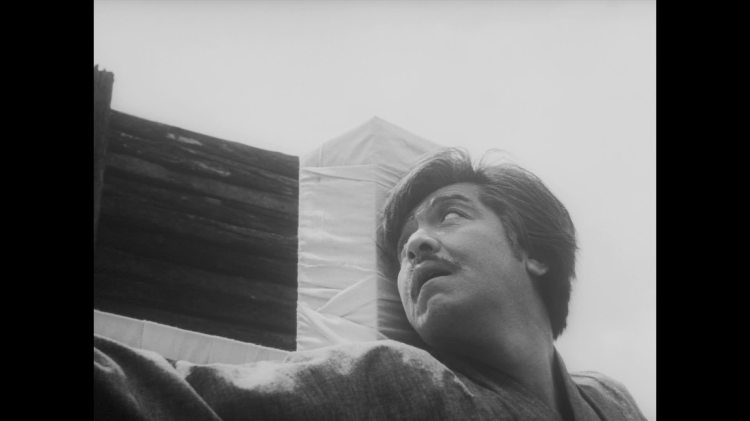
The film exists in two distinct versions – this is less to do with any kind of censorship, either commercial or political, than a legal or possibly moral issue. The fact is, the other of Osugi’s mistresses, Kamichika Ichiko, was still alive at the time the film was completed and had also become a serving politician. Unhappy with her portrayal in the film and unwilling to have a potentially embarrassing event from her previous life dragged back into the spotlight, she threatened to sue and Yoshida voluntarily decided to recut the film to remove many of her scenes as well as renaming the character to distance her from her real life counterpart. The shorter version of the film is the one which helped make Yoshida’s reputation and though nothing in the shorter version is not in the longer one, this version feels a little less “avant-garde” in tone than the intended full cut of the film.
Yoshida often gives way to surreal incidents such as the clash between the Taisho era followers of Osugi and a group of young rugby players tussling over the white wrapped remains of Osugi, the expressionist scene in which the mistress, Itsuko, clutches at a knife hovering in mid air causing the screen to fill with blood raining down from above or the repeated stabbings of Osugi each re-imagined in differing scenarios. His framing is always beautifully idiosyncratic as he makes use of the edges of the frames, disembodying his actors or dividing them with walls and windows. There is no sense of conventional narrative as timelines blur into each other becoming evermore indistinct and the dialogue is often elliptical or poetic rather than offering naturalistic content. Nevertheless, the shorter version retains fewer of these flourishes than are present in the original cut of the film.
Eiko is interested in Osugi because of his free love philosophy rather than any other political aim. Other than their interest in sexual politics, Eiko and Wada do not appear to be particularly politically active in any other way. Osugi’s ideas of total freedom do not even go down very well with his comrades who don’t approve of the way he treats his various women and his disingenuous denial that there is any discord between his band of concubines seems wilfully naive. Osugi’s treatment of the three women in his life – his wife, Yasuko, mistress Itsuko (who is financially supporting both Osugi and his wife despite Osugi’s advocacy of free love insisting on financial independence of all parties), and now his latest lover Noe, is extremely self-centred and unfair. As the first to live in this unorthodox fashion, it’s unsurprising that the arrangement comes in for criticism from all quarters. Yoshida posits that it was Osugi’s free love lifestyle that eventually lead to his shock execution during the chaos following the Great Kanto earthquake as his modern ideals threatened the very idea of the traditional family and ultimately the state itself.
By contrast, Eiko’s modern sexuality appears merely an attempt to ward of her sense of ennui. Where for Osugi sex was a political action (or so he would have it), for Eiko it’s a means of trying and failing to add some kind of meaning to her life. Eiko and Wada are not committed to any kind of rebellious action – they’re simply bored. They literally play with fire without understanding its consequences. Yoshida’s other central tenet is that youth is not beautiful – it is destructive. By implication, Eiko and Wada’s selfish pursuit of personal freedom and the modern commodification of desire is nothing more than willful self destruction.
Yoshida has stated that his primary idea for the film is how to bring about a revolution and to ask the question of what it is that needs to change. Osugi is shown up as a hypocrite whose ideals are imperfect and self centred, though his eventual murder is dictated by his refusal to conform. The fact that he envisioned a different future, wished to live in a different way, was sufficient enough to necessitate his death. The modern couple misuse their own freedom and are willing to watch the world burn just to feel the heat. They are incapable of effecting real social change because their focus is always inwards rather than a dedication to the betterment of all mankind. Confounding, intriguing and beautifully shot Eros + Massacre is far from easy to digest but is an essential entry in the history of Japanese avant-garde cinema.
Available now in the UK as part of Arrow Films’ Kiju Yoshida: Love + Anarchism box set.
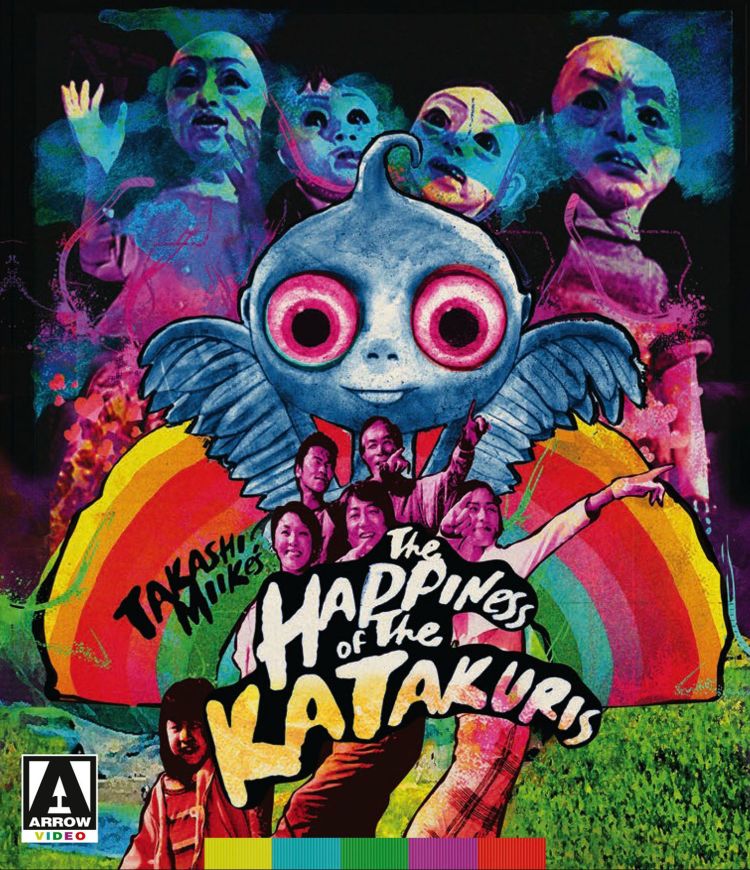
This new cover art from Arrow is actually really great, isn’t it?
Arrow Films are really spoiling us lately when it comes to amazing Japanese cinema – they’ve given us some cool ’60s classics and forgotten gems like Lady Snowblood, The Stray Cat Rock movies, Branded to Kill, Massacre Gun and Retaliation but now they’ve zapped back to the more recent past and brought us one of Takashi Miike’s zaniest and best loved efforts, The Happiness of the Katakuris. You don’t need me to tell you what this crazy, zombie and murderous inn keeper themed musical psychedelic masterpiece is about but you can read my review of the film and Arrow’s new HD effort over at UK Anime Network. (Spoiler, it’s pretty great).
Ah, Takashi Miike – that unpredictable Japanese auteur who’s equally at home with bloody yakuza dramas, gore soaked satire and strange fever dream experiments. There’s no denying his out put is decidedly patchy, which given his prolific career isn’t particularly surprising, but there’s really nothing he won’t at least try. Such is the joy of a Takashi Miike movie. The Happiness of the Katakuri’s wasn’t the first time he made use of musical sequences in his films and it wasn’t the last, but it is one of the craziest. Inspired by the 1998 Korean film The Quiet Family (debut movie of Kim Jee-woon) The Happiness of the Katakuris is, essentially, a family drama which incorporates shady goings on at a guest house, singing zombies, volcanoes and weird stop motion creatures appearing in people’s soup only to fly off with their uvulas (dangly bit between your tonsils).
The film begins with a young girl finding a weird looking creature in her soup which then rips out her uvula and flies off with it before before being snatched by a crow which is then hit with a log by an old man with surprisingly good log throwing game. The old guy is the grandpa of a family which runs a small hotel in the middle of nowhere. Family patriarch Masao used to be a shoe salesman but after losing his job was convinced to buy a hotel after a tip off that a road was supposed to be built nearby which would likely mean lots of customers. Predictably, the road has not materialised and the fledgling inn isn’t exactly packing them in. Besides grandpa, Masao is helped out by his long suffering wife, grown up daughter with a little daughter of her own and a grown up yet seemingly feckless son.
At last, a guest arrives but unfortunately dies soon afterwards. Bearing in mind the declining state of their new business, Masao makes the decision to quickly bury the body in the woods rather than report the death and suffer the negative publicity. Just when things were looking up, another two guests arrive and then promptly die too (in somewhat embarrassing circumstances). As if that weren’t enough, love sick daughter Shizue has fallen in love…again! With “Richard” the secret Japanese love child of the British royal family who’s also some kind of sailor which is why it’s difficult to get in touch with him. All told through the child’s eye view of the youngest member of the family, Shizue’s daughter Yurie, this was one crazy summer in the life of this strange family.
It would be wrong to call The Happiness of the Katakuris a musical, there’s no real musical through line so much as a collection of musical sequences inserted at points of high tension. The musical numbers themselves often act as parodies of other genres with their traditional ballads, karaoke video style sequences and the bonkers Sound of Music-esque field frolicking. Then there’s the singing corpses – who knew zombies were so jolly?
It all undeniably gets a bit grim as the family have to contend with burying the bodies of their unfortunate customers all the while waiting for someone to finally build this long promised road so their business can take off. Each of them is chasing a different kind of “happiness” the father in looking for success in business which will lead to financial security for the family, the daughter in looking for love (in all the wrong places) but it takes the totally bizarre death filled adventure of demons, corpses and escaped murderers to make them realise that they had what they needed to be happy all along – each other. The Katakuris may not be a model family, but everything runs better when they work as a team and they are very happy together no matter what strange adventures befall them. Despite all the trappings of weirdness, The Happiness of the Katakuris maybe Miike’s most subversively conservative film as it ultimately fulfils the role of that most Japanese of genres, the family drama, in which the traditional family is reformed and everything in the world is right again.
Available for the first time in HD, Arrow’s new set is nothing short of a wonder. Shot near the beginning of the digital age before the cameras where anywhere near as good as they are now, you wouldn’t assume The Happiness of the Katakuris would look this good and even if it does show its age here and there the presentation is pretty much top notch and the best it’s ever going to look. The set also comes with a host of special features, some ported over from the original release but also adds a Takashi Miike commentary with critic, Miike champion and sometime actor Toshitoki Shiota in Japanese with English subtitles but also, in an appropriately strange and surreal option, a dubbed version with actors “playing” Miike and Shiota speaking their lines in English too. You also get an entirely new commentary from Japanese film scholar and Miike expert Tom Mes of the recently deceased Midnight Eye plus a short video essay about Miike’s career and a couple of new Miike interviews too.
Almost 15 years on, The Happiness of the Katakuris remains as endearingly bizarre as it did on its first release and is truly worthy of its status as a beloved cult movie that continues to be the go-to weird Japan choice for the genre savvy cinephile. Back and better than ever, this new set from Arrow breathes new life into the film and is a great excuse for another stay at the White Lover’s Inn.
Here’s a trailer for the film:
If Takashi Miike x musical madness is your thing you also need to see Ai to Makoto (AKA For Love’s Sake) – available in the UK from Third Window Films.
Also a mini reminder for Miike fans that Over Your Dead Body is going to be at Frightfest and is apparently going to receive a UK release from Yume Pictures (the same people who released A Tale of Samurai Cooking: A True Love Story, now available on UK DVD). Miike madness is back! In more ways than one.
Arrow double whammy up at UK Anime Network as I review both of Arrow’s recent Yasuharu Hasebe releases – Massacre Gun and Retaliation!
Tatsuya Fuji tests his gun out in Massacre Gun (and looks cool in the process)
Arrow have been turning up some hidden gems and neglected classics as they trawl through the world of the populist cinema from the Japanese golden age of the 1960s and 70s – they’ve already brought us the iconic Lady Snow Blood, the lesser known Blind Woman’s Curse, the anarchic Stray Cat Rock series and now, following on from their release of Seijun Suzuki’s famously crazy Branded to Kill they’ve turned their attention back to Nikkatsu Noir with Massacre Gun. The first of two releases from director Yasuhiro Hasebe who also directed three films in the Stray Cat Rock series (Retaliation will follow next month), Massacre Gun has everything any genre fan could wish for – depressed hit men, warring gangs, jazz bars, boxing clubs, stylish monochrome photography and the melancholic ennui that permeates all the best noir movies. Perhaps not quite as impressive as the greatest hits of Nikkatsu Noir such as the afore mentioned Branded to Kill or Nikkatsu’s other offerings like A Colt is My Passport, Massacre Gun is nevertheless another impressive entry in the studio’s short lived action output.
As the film begins, thoroughly dejected Kuroda has just been asked to carry out a hit on a woman who is in love with him – feelings which he may have have reciprocated but, but like any good lackey, Kuroda chose his boss over his heart and sent the love sick girl into a lake with a bullet in her chest. When Kuroda’s two younger brothers find out they do not approve and hot headed youngest brother Saburo who trains at a yakuza run gym hoping to become a a pro-boxer, decides to have a word with Kuroda’s boss, Akazawa. As might be expected things don’t go Saburo’s way and he’s brutally beaten to the extent his hands are all but crushed leaving him unlikely to box again. At this point, Kuroda wants out of the game – but for a yakuza hit man there is no out. His only option is to take down Akazawa’s empire and build one of his own.
Like most of Nikkatsu’s late ‘60s action output which would later retroactively become known as Nikkatsu Noir, Massacre Gun is heavily indebted to the American B-movie and particularly to the film noir. Its settings are those of “low culture”, Western bars and cafes where people drink expensive whiskey and wear sharp suits and sunglasses. In fact, the Kuroda brothers’ side business involves running a jazz bar with a half Japanese-half African American jazz singer playing piano in the corner and a pair of Western dancers doing some sort of scantily clad, artistic ballroom dancing routine in the middle. Most importantly it’s full of the classic Film Noir feeling of spiritual emptiness and existential ennui with the very depressed contract killer Kuroda at its centre.
A very male affair (perhaps the key missing element from a Film Noir is a femme fatale), the bulk of the film is the opposition between Kuroda on the one side and his former boss on the other. Other than the closeness with his two younger brothers and to a lesser extent the other workers at the club, Kuroda’s other most notable relationship is with his old friend Shirasaka who coincidentally married another woman Kuroda may have had feelings for. Though the two have enjoyed a close friendship up until now, Kuroda’s decision to leave Akazawa’s employ has meant Shirasaka has had to make a choice and he’s chosen Akazawa. The two are are now mortal enemies on opposing sides of a war – a fact which causes them both pain but which, nevertheless, cannot be otherwise.
Hasebe is best known for his striking use of colour which makes Massacre Gun a notable entry in his filmography as it’s the only one he made in black and white. Other than the perverse habit of sticking colours into the names of his leading characters and locations (the “Kuro” in Kuroda means “black”, the “Shira” in Shirasaka means “white” and the “Aka” in “Akazawa” means red making this one very complicated game of checkers), Hasebe still manages to make an oddly “colourful” film even in monochrome. Taking a cue from Suzuki, Hasebe has come up with a fair few arty and unusual compositions of his own though not quite to Suzuki’s absurd extremities and neatly retained the classic Nikkatsu Noir aesthetic in his superbly crisp black and white colour palate.
Coming as a late addition to the genre, Massacre Gun also takes a fairly unusual approach to violence with a far more explicit representation than would be expected from this period. Simply put – lots of people die in this film, many of them in quite exciting ways. Blood is everywhere and there are so many bullets fired you start to wonder if some one in the yakuza equivalent of the administration department isn’t having some kind of heart attack behind the scenes. Massacre Gun might not be the best entry in the Nikkatsu Noir series, but it is perhaps one of the most typical. Edgy and arty, exquisitely framed and perfectly photographed it brings out the effortless cool that came to symbolise Nikkatsu’s late ‘60s output. Aside from all that – it’s just fun as most of these films are. Another welcome release from Arrow who continue to root out these lesser known genre movies, Massacre Gun is a must see for fans of classic ‘60s action movies.
Jo Shishido smokes a cigarette in Retaliation (and looks cool in the process)
Arrow are back with another neglected classic of Japanese action cinema produced by Nikkatsu – Retaliation, a slightly later film from Yasuharu Hasebe director of Massacre Gun and three out of five of the Stray Cat Rock series. Unlike Massacre Gun (but like every other film Hasebe ever made), Retaliation is shot in colour and features Hasebe’s trademark use of it. Retaliation is very typical of its genre in someways and very not in others. It stands on something of a borderline seemingly symptomatic of Nikkatsu’s eventual slide into a producer of soft core pornography as their Roman Porno line of sex and violence based movies took over as their main production style. Not as strong as some of the other entries from around this time, Retaliation nevertheless marks itself out as an interesting addition to the genre.
Not one of the most exciting plots in yakuza movie history, Retaliation’s main mcguffin centres around trying to persuade some farming families to sell their ancestral land to developers who want to build a factory there. Having just been released from prison after taking the fall for gang murder, Jiro is offered the chance to head up his own group, however his patch is between two rivals and his best bet is to play the two off against each other as they both vie for this disputed farmland. One group is super old school and the other is the more modern type of thug who’ll do pretty much anything to get what they want – including abducting one of the farmer’s daughters and molesting her in the back of a car as a way to threaten her father. Jiro is given his own mini team to help out on his mission including an out of work actor and card shark, and another top yakuza guy who just happens to be the brother of the man he went to prison for killing and who has already vowed to killed Jiro in revenge. Jiro sometimes dreams of going straight and leading a different kind of life but gang loyalty still means something to him and those outside of the life aren’t always so understanding. Retaliation is the only way to stay alive in this new, empty yakuza world.
Retaliation starred three of Nikkatsu’s famed “Diamond Line” stars – Akira Kobayashi is the film’s lead leaving Jo Shishido playing second fiddle (his star had fallen a little at Nikkatsu and they didn’t see him as an actor who could carry a colour film as the leading man), and Hideki Nitani coming in third. Tatsuya Fuji and Meiko Kaji round out the almost famous section of the cast and each would soon find fame (or notoriety) in the new landscape of ‘70s Japanese cinema. There’s undoubtedly an air of everybody just doing what they do – it is after all what they’ve been employed for but at the same time no one’s really pushing themselves to do anything very notable. That said, you do have five of the biggest (or soon to be biggest) names of the time in one movie which gives it a feeling of a prestige project. However, in another move that anticipates the direction in which Nikkatsu was headed, the sex and violence quotient has been significantly upped.
Nikkatsu action films could already be shockingly violent for the time period, but Retaliation unfortunately adds a layer of sexualised violence against women which is undoubtedly being offered up as something for the viewer to enjoy. The early scene in which Meiko Kaji’s farmgirl is molested by a gang of thugs before being dumped at her parents’ house is unsettling on one level, but is shot with such a voyeuristic camera style that it’s difficult to not feel complicit in this fairly horrific act. There’s even another such sequence later in the film when one yakuza is forced to give up a girl he’s with so all his yakuza mates can have a go first which is again shot with a lingering camera often cutting back to the salivating gangsters. Of their time in one sense, these sadly salacious scenes of sexual violence against women filmed with an encouraging eye give the film an unwelcome sleazy quality from which it is hard to bounce back.
The other notable theme of the film is that it positions itself between the glamorous, modern samurai, gangster movies of the past and the grittier tales of modern thugs that were about to become the mainstream narrative. Jiro has been away for a long time, the yakuza world has moved on and his old clan would have died out if weren’t for another gang’s generosity. Jiro is the last of the honourable men who place loyalty above personal gain and seek to protect women and the put upon rather than exploiting them. Unfortunately, modern yakuza think differently and it’s no small irony that it’s a group of farmers they’re falling over themselves to ruin given that farmers are the very people old school yakuza, as the receivers of samurai values, would be expected to protect. Jiro and some of his cohorts still believe in these “old fashioned” ideas and are thought brave and noble. The other gangs who rape and torture women whilst forcing farmers off the land they’ve worked for centuries are not.
Again, it’s a fairly manly affair with women becoming little more than props to be used and abused throughout the film but the relationship between the two central guys Jiro and Hino takes on an oddly homoerotic context even ending with Shishido’s character getting rid of his girlfriend because he apparently falls in love too easily before telling Jiro that this is the first time it’s been with a guy. Considering their relationship began with Hino determined to kill Jiro, to end it with a quasi declaration of love (even half in jest) is a pretty steep character arc but one of the better things about the film.
Retaliation isn’t a perfect film, and it might not have the most exciting basis for its plot machinations but it certainly has its moments. Entertaining enough, the film is marred by its unpleasant treatment of women and takes a few dramatic missteps towards the end. The action is good however, as are the performances and production values. Perhaps not an essential Nikkatsu action movie but nevertheless a very interesting one from several different perspectives, Retaliation deserves a view from the genre’s committed fans.
Both available now in the UK on DVD & blu-ray from Arrow Films!
Review of the new high definition Stray Cat Rock box set up at uk-anime.net
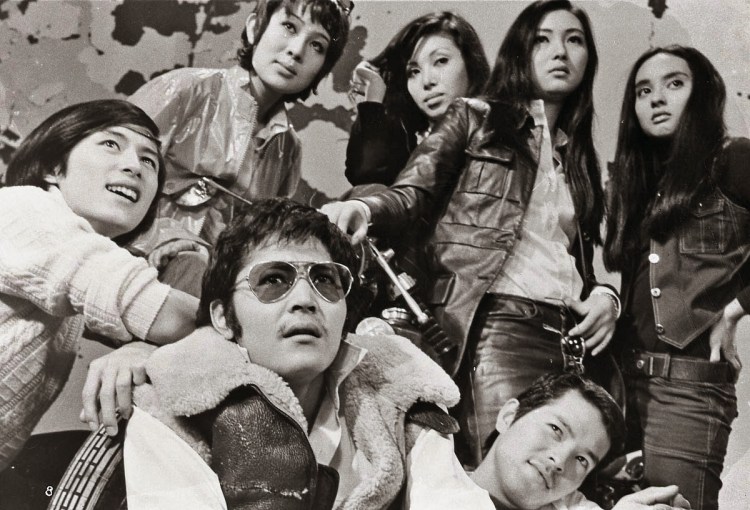
The late ‘60s/early ‘70s was a fascinating time in terms of Japanese popular culture and cinema was certainly no exception. With studios becoming desperately worried by the rising popularity of television and a troubled political situation, they knew they’d have to find someway to bring back that all important youth audience. Ultimately, they resorted to the time old solutions of sex and violence to try and lure the increasingly disinterested viewers back to the cinemas. In the end, Nikkatsu would end up becoming a purveyor of soft core pornography as its Roman Porno line all but dominated its production. The films from this era represent a kind of bridge between the youth orientated “Sun Tribe” films of the ‘50s and the full on exploitation films of the ‘70s. There’s no denying that in many ways they are very much of their time, which is generally a good thing, but the Stray Cat Rock films are an essential snap shot of a moment of counter culture shift.
This new blu-ray box set from Arrow films includes all five films in the Stray Cat Rock Series: Delinquent Girl Boss, Wild Jumbo, Sex Hunter, Machine Animal and Beat ’71. Perhaps “series” is a misleading way to describe the films as they’re really more of a “cycle”. There is no plot through line, each film stands independently with its own distinct story which appears to have no obvious connection with any of the other films in the series save sharing a certain sensibility (though even this shifts slightly as the films go on). The same actors reappear in several of the films, notably Meiko Kaji who is most closely associated with the franchise and Tatsuya Fuji who appears in every film, but even the actors who appear frequently are playing different (though often oddly similar) characters. What links the films together is their focus on what some might see as ‘low’ youth culture – bars, clubs, motorcycle gangs, drugs, drink and sex! What’s being sold, essentially, is a subversion of femininity – strong women who do not require the assistance of men but even take on male roles themselves such as forming or running violent street gangs.
The first film the series, Stray Cat Rock: Delinquent Girl Boss was intended as a vehicle for leading lady Akiko Wada and as a rival to Toei’s Delinquent Boss series. However, it was Meiko Kaji who became the breakout star of the film and a number of sequels featuring her were quickly put into production. The first film tells a fairly typical story of gangland warfare, albeit that it’s girl gangs, but the second, Wild Jumbo, takes a detour by telling a somewhat tragic tale of a group of students who plan to rob a mysterious cult – with tragic consequences! The third in the cycle, Sex Hunter, is the best known, perhaps because of its more complicated plot and engagement with racial politics. Apeing a western, a mixed race young man comes to town looking for his long lost sister and wanders straight into the gang war between Kaji’s female gang the “Alleycats” and the male “Eagles” lead by Fuji who has a prejudice against people of mixed race as his younger sister was gang raped by a mixed race gang. After this instalment the heavy sex and violence themes begin to fizzle out slightly and the fourth film, Machine Animal, is the most political of the Stray Cat Rock films as it follows a group of guys trying to dodge the draft for the Vietnam war planning to fund their onward journey to Sweden by selling LSD. The fifth and final film, Beat ’71 takes this even further and replaces the ‘gang’ motif entirely with a story set around a hippy commune.
Always fairly liberal in tone (even if the characters meet a ‘bad’ end, the series feels more aspirational than morally critical), the Stray Cat Rock films present a world of hedonistic, counter cultural youth. They’re full of the popular music of the time with long ‘live’ music sessions set inside the clubs, sometimes even prominently featuring popular bands and the theme song for Machine Animal “Gamble on Tomorrow” is even sung by Kaji herself. The earlier films are also filled with psychedelic imagery and interesting directorial touches like unusual split screens, blue screen cut outs, brightly coloured title cards, dissolves and freeze frames. However, Machine Animal marks quite a big change from the three previous films as the gang themes start to take more of a back seat to the politics and by Beat ’71, the tone of which is much more whimsical, they are pretty much absent. Films one, three, and four were directed by Yasuharu Hasebe while two and five where direct by Toshiya Fujita (Lady Snowblood) and there are some pretty clear directorial differences with Hasebe’s films being slightly more avant-garde and adventurous in terms of shooting style while Fujita’s are a little more classical. However, there might be something in the statement made by Hasebe in the interview included on this disc that by the end the pop culture tone had shifted from violence to beauty – the more salacious content, and in particular the sexualised violence, reaches its peak in Sex Hunter and decreases as the films go on.
All five films were made extremely quickly and released between 1970 and 1971 – that’s five films made and released in under two years! Though the creative team may have envisioned them as low budget, fairly disposable cash grabs designed to give a much needed boost to a declining industry, the Stray Cat Rock films have gone on to have cult appeal which still has its devotees all these years later. Hugely enjoyable in their own right, the films are an interesting window into a relatively small period time which nevertheless saw fairly massive changes taking place. Though they anticipate the trend of salacious exploitation that was to come, they stop short of some its excesses but were also to prove hugely influential in the history of ‘70s Japanese cinema.
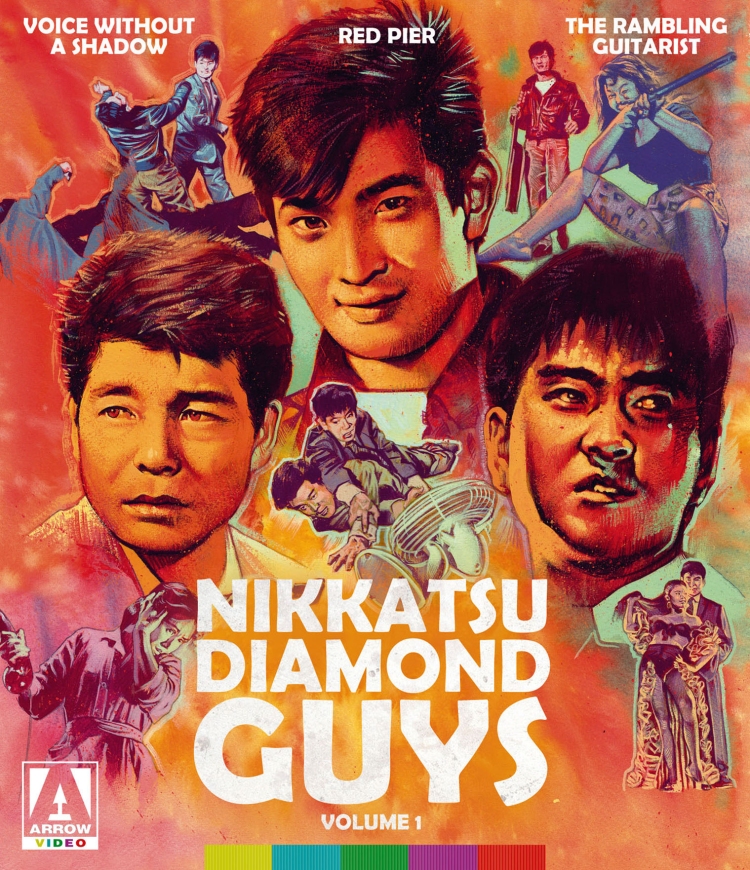 Review of Arrow’s Nikkatsu Diamond Guys Volume 1 first published on UK Anime Network.
 Loosely inspired by Julian Duvivier’s 1937 gangster movie Pépé le Moko, Toshio Masuda’s Red Pier (赤い波止場, Akai Hatoba) was designed as a vehicle for Nikkatsu’s rising star of the time, Yujiro Ishihara – later to become the icon of the Sun Tribe generation. On paper it sounds like a fairly conventional plot – young turk of a gangster comes to town to off a guy, sees said guy killed in an “accident”, and shrugs it off as one of life’s little ironies only to accidentally become acquainted with and fall head over heals for the dead guy’s sister. So far, so film noir yet Masuda adds enough of his own characteristic touches to keep things interesting.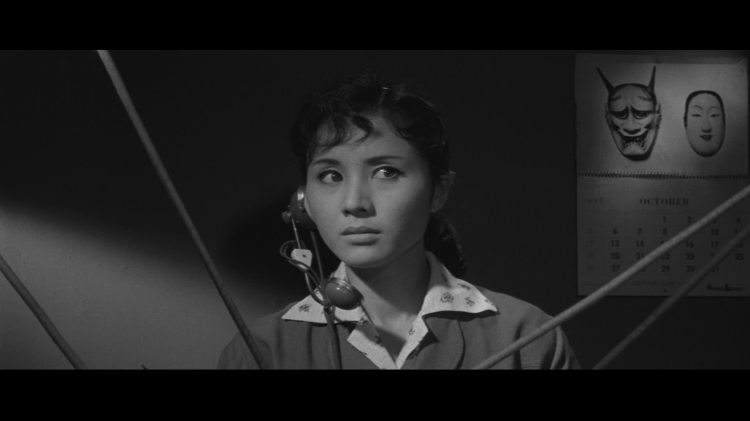

 Having taken avant-garde story telling to its zenith in
 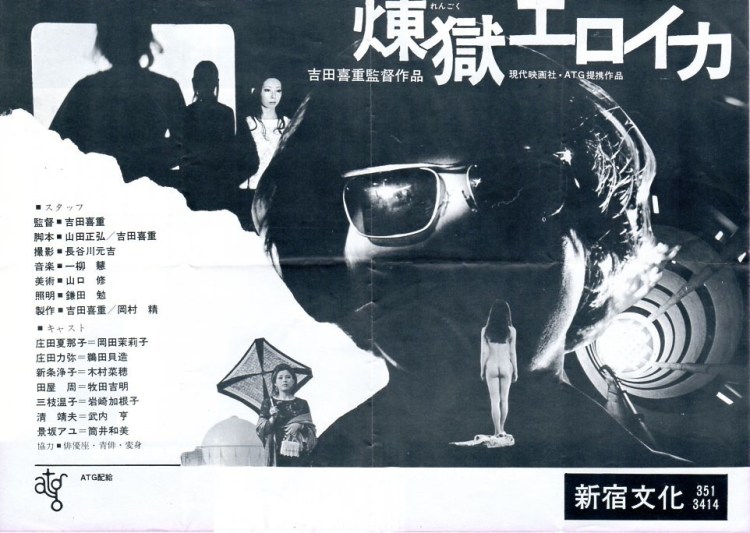 The second film contained within Arrow’s Kiju Yoshida boxset is perhaps his least accessible. Ostensibly, Heroic Purgatory (煉獄エロイカ, Rengoku Eroika) is an examination of leftist politics in the years surrounding the renewal of the hugely controversial mutual security pact between Japan and America. However, it quickly disregards any kind of narrative sense as time periods blur so finely as to leave us with no objective “now” to belong to and characters switch identities with no warning or discernible reason. Yoshida is not really after objective truth here – there is no truth in cinema, film lies repeatedly until it finally exposes the truth.
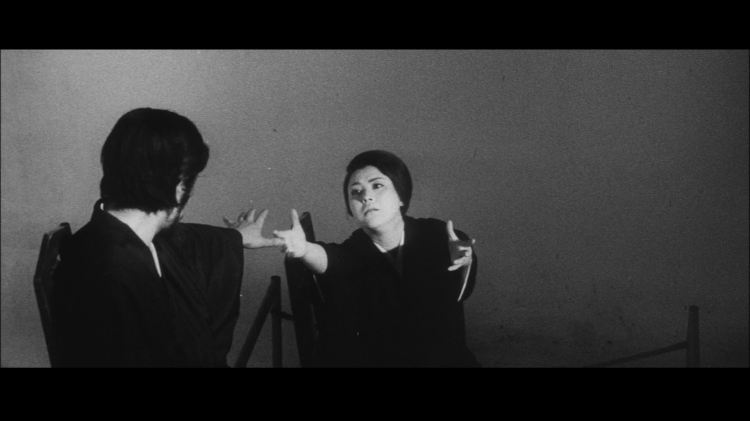 One of the foremost avant-garde filmmakers of the New Wave era (though he detested this term which, in fairness, is a retrospective and often arbitrary label), Kiju (Yoshishige) Yoshida has remained largely unseen in the West. Some of this is his own fault – fiercely independent, Yoshida nevertheless found himself working with ATG after leaving Shochiku but the relationship was an unusual one and often far from easy. All but the latest film in Arrow’s Kiju Yoshida boxset,

 Windows on Worlds