
Pavane For An Infant (搖籃凡世, Chong Keat Aun, 2024)

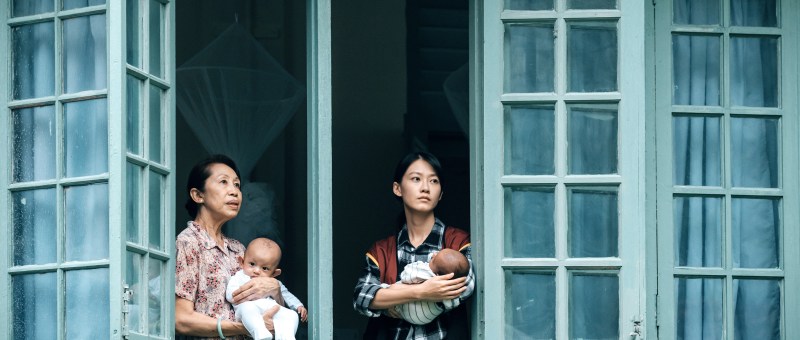
While manning the night shift at a baby hatch, social worker Lai Sum (Fish Liew) reads a newspaper article which wonders if progressive gender politics is responsible for a rise in abortions and the abandonment of babies. It’s a sentiment that comes off as a bit rich, given that most of the reasons given on the form that accompanies a child is that it is a result of rape, often of a very young girl by her close relative or another authority figure such as a teacher or a boss. Yet nothing is really being done to change male behaviour in a fiercely patriarchal society which regards childbirth and motherhood as a woman’s duty. 

Lai Sam visits a Taoist priest and pretends to have had an abortion as a means of exposing him. When women like her come and ask for his help, struggling to come to terms with their decision and haunted by nightmares, he drugs and sexually abuses them while recording it all on tape. It’s almost as if he thinks that women like these are fair game, even before accusing Lai Sam of corrupting her maternal destiny and insisting that she’s sure to become a young widow and lonely old woman. Not even everyone at the facility has sympathy with the women who use it, the woman in charge explaining that there is a strict 30-second time limit for changing your mind and that once a woman has placed a child in the hatch it is no longer hers. Despite the pleas of one of her employees, she refuses to look for a woman who ran off after screaming and pleading with them to open the door because she wanted the baby back. Even if she got it, the woman explains, she wouldn’t be able to raise it anyway.

The reason that Lai Sam herself gave up a child six years previously was that her boyfriend refused to take responsibility and then disappeared. She couldn’t afford to raise a child on her own and felt she had no other choice than to put him up for adoption. All these years later, she is still haunted by her decision and continues to look for her son. Siew Man (Natalie Hsu En-yi), a young woman she tries to help, is also haunted by having had an abortion which has left her with suicidal thoughts and nightmares of a baby crying. She too had a difficult home life after her birth father died and her mother remarried. The pair of them run into a birth ritual being conducted by the indigenous community, the leader explaining to them that in their society the birth of a girl is a happy occasion because women inherit property rights, contrasting with a lullaby which laments that a son will care for you when you’re old, but a daughter belongs to someone else once married.

In other ways, the use of the baby hatch signals the division in Malaysian society as those who place their children there are expected to fill in a form stating its race and religion so that it can ideally be raised by the same ethnicity. Lai Sam did not fill in the form, so her son was placed into a Malay family who are raising him Muslim though she is Chinese and are paranoid about the child being taken back. Another baby is given up not only because the father ran out on them, but because the child has ambiguous genitalia. Though the baby hatch only exists because this isn’t a practice that will ever be stopped and at least this way the children are kept safe, the centre faces a huge amount of hostility from religious communities who brand it “Satan’s Ally” and the “Cradle of Sin”, even while each of the women who has made a difficult decision to give up their child sobs bitterly and stares into the hatch until the very last second as they close the door. Lai Sam recalls a teacher who used to tell them to stand under the Bodhi tree if they’d done something wrong. She hasn’t, but she feels like standing under it anyway, which is, the film seems to say, what it is to be a woman living in Malaysia.


Pavane For An Infant screens in Chicago 5th April as part of the 20th edition of Asian Pop-Up Cinema.

Trailer
Halo (후광, Roh Young-wan, 2025)

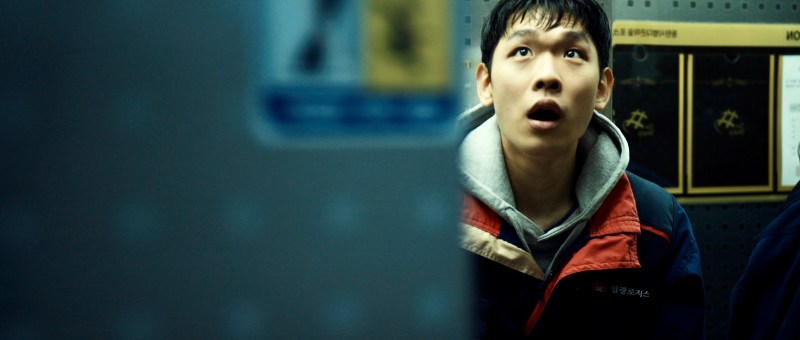
An astrologer delivery driver Min-joon (Choi Gang-hyun) meets tells him that he’s unlikely to achieve his dreams of becoming a film director in Korea. He was born under an unlucky star, destined to be a self-sacrificing figure overshadowed by his toxic family. However, the astrologer points out, the stars look different depending on where you stand, and according to him the best place for Min-joon is the UK, as unlikely as that might seem.

The astrologer doesn’t seem to hold out much hope that he’ll make it, though. He feels sorry for people like Min-joon who have an over-developed sense of responsibility for those around them and are incapable of putting themselves first. They may very well be toxic and dragging him down, but as Min-joon says, they’re still his family. When we first meet them, his parents are having a physical altercation in the police station while his older brother, Min-ha, who has learning difficulties, screams in terror and confusion. It seems that Min-joon’s father has taken to drink and either can’t or doesn’t work. He criticises the state of the nation that reduces people to living like this, but as his wife points out rather than worrying about the country perhaps he could fix the light in the bathroom that’s been broken for months. He asks why he should when it’s not their place anyway, which might explain a few things about the state of the nation.

In any case, Min-joon is surrounded by radio broadcasts about North Korean missiles and various other disasters that lend an additional sense of doom to his monotonous life. Min-joon is honest and hard-working, diligently delivering parcels all day long and taking good care of his van, only to be treated with contempt and a constant stream of problems from his family. He dreams of becoming a film director, but is always frustrated, first by being unable to afford a colour print of his script and pitch for a producer he met through a connection. He shows up in a neat suit ready to discuss his idea, but she immediately shoots him down by saying that no one makes this kind of film any more and he has zero chance of directing anything. She advises working on the set to gain more experience, but those kinds of jobs don’t usually pay very well and Min-joon probably couldn’t afford to take it even if he weren’t hurt and demoralised by the humiliating experience of being so casually dismissed.

That might be why he takes the astrologer’s advice to heart and starts working overtime to save money to move to the UK while sleeping in his van and washing in a local public toilet. He makes the convenience store guy put his buy one get one free sandwiches in separate bags as if ashamed to have him know he’s going to eat them both himself and that that’s his only meal. Even so, his mother asks him to lend them money to buy his brother, the oldest son, a wife from North Korea so he can live a settled family life, seemingly thinking little of Min-joon’s right to do the same. Meanwhile, Min-ha has suspiciously also come into quite a lot of money, and is later arrested for getting involved with a gang running telephone scams. Min-joon thinks Min-ha probably didn’t know or at least fully understand what he was getting into and was exploited by the gang because of his disability but the police won’t listen to him and a lawyer seems to suggest there’s nothing he can do, bearing out the inherent injustice of the contemporary society.

There really is no way out for him. He’s insulted by residents of the snooty apartment blocks he delivers to who don’t like him using their lift, his van gets robbed, and he ends up bumping it too, requiring even more money to repair and now he can’t even sell it to help his brother pay the compensation money for victims of the scam so he can stay out of prison. He repeatedly visits the apartment of a hoarder with a piles of boxes outside her door that she never opens. It’s like he too is trapped in the room surrounded by cardboard with only his family for company. His desperation mounts with frightening intensity until reaching its unavoidable conclusion as he seeks the only kind of escape available to him.


Halo screens in Chicago March 28th as part of the 20th edition of Asian Pop-Up Cinema.

Trailer (English subtitles)
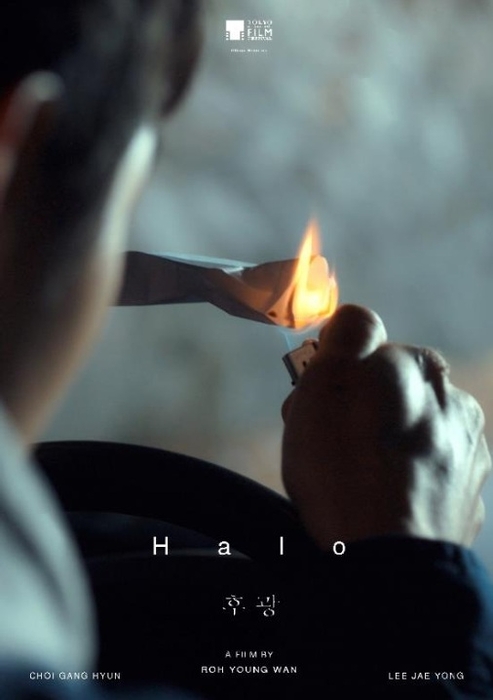
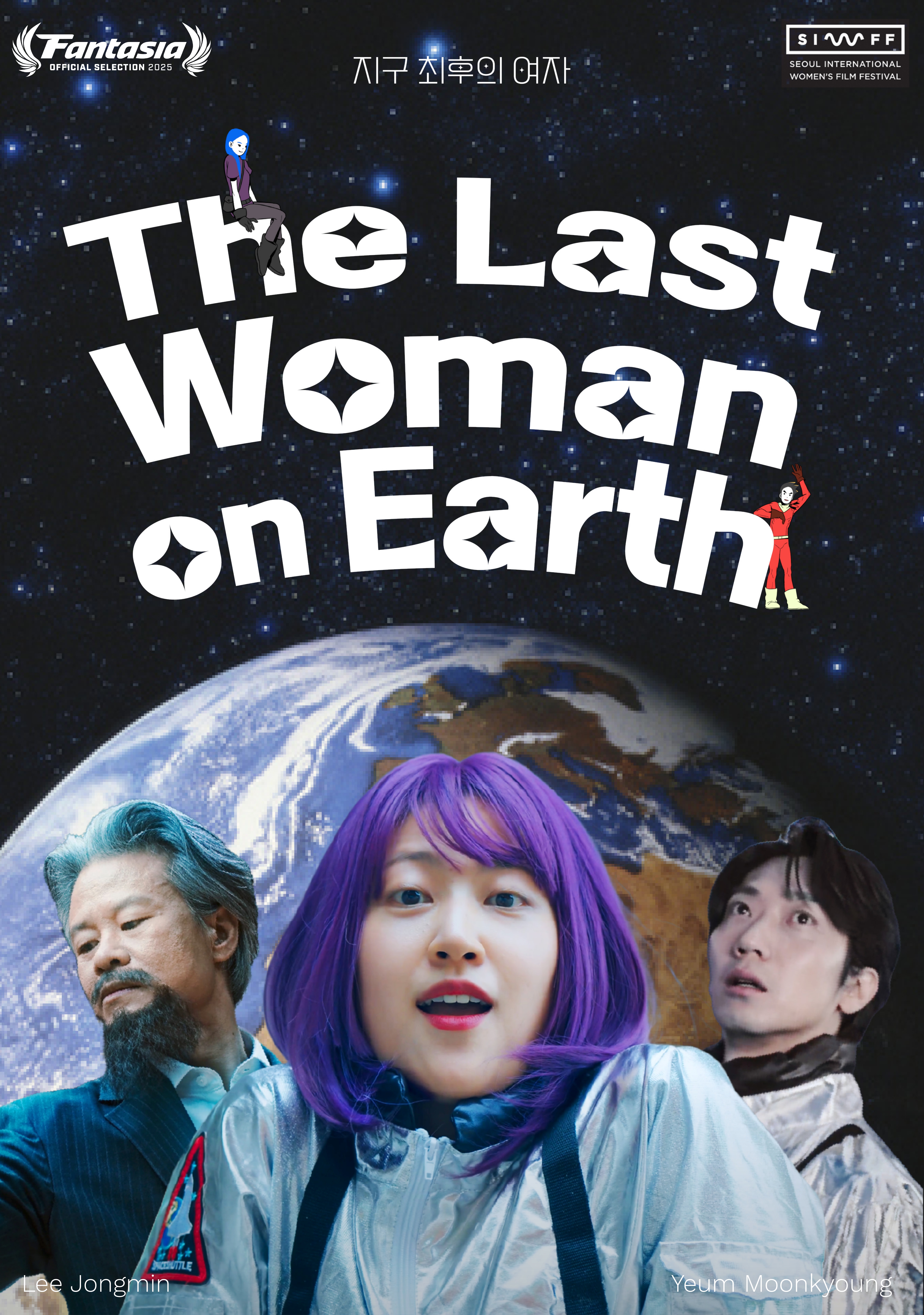
The Last Woman on Earth (지구 최후의 여자, Yeum Moon-kyoung & Lee Jong-min, 2024)

Wronged by an internationally famous film director, a pair of aspiring filmmakers set their sights on cinematic revenge in Yeum Moon-kyoung and Lee Jong-min’s meta comedy, Last Woman on Earth (지구 최후의 여자, Jigu Choehuui Yeoja). Even so, they find themselves mired in a world of sexism and artistic jealousy ruled over by powerful elites content to feed on their aspiration, chew them up and spit them out only to, on the one hand, insist that exploiting them made them sad, and then on the other barely remember them at all and claim they did nothing wrong.

Hana and Cheol each have painful histories with a Hong Sang-soo like festival darling that have frustrated both their lives and artistic careers. They meet in a film class where they workshop their movies that are also attempts to overcome their trauma. Hana’s is a high-concept sci-fi drama shot like a silent film and peppered with intertitles in which the only woman left on earth after a virus wiped out all the others is imprisoned by men who harvest her eggs and attempt to clone her. Cheol’s is Hollywood gangster noir set in Chicago in 1989 in which he kills an annoying old man who was holding him back. Cheol annoys Hana by pointing out the theme of her film was “misandry”, as if there were something wrong with that, while she points out his film is obviously about his resentment towards a father figure. Even so, Cheol thinks the reason no one likes his script its that it’s too manly, and he could use some female input to help him score points on the grant application, which is how they end up working together.

Their various traumas highlight the problems in the mainstream film industry, even if Cheol’s problem is, in another meta touch, with indie filmmakers who make indie films to show to indie people at indie festivals. After being talked into a nude scene a more famous actress had refused to do, Hana became the talk of the town while her scenes from the movie ended up porn sites. She became a sex symbol, but was shamed out of show business. The only jobs she got offered were erotic movies and all she could do in the end was abandon her old identity. As she reveals in a lengthy musical number, she still wants to make films even though it’s painful and no one wants to seem to letter.

Like her, Cheol sought the approval of a master but feels betrayed by him. Tak stole his screenplay and used it to win awards in Europe without crediting him. Even since then, he’s been determined to become the Ant-Tak by doing what he couldn’t, making a hit popcorn movie that’s nothing more that an good time at the movies. But even Cheol can’t completely abandon the patriarchal mindset, first gender-flipping his revenge drama, then changing gears to make Hana the hero only to suddenly appear as a male character to swoop in and save her from the evil professor, Tak. 

Throughout the runtime, there’s the sense that the world is coming to an end, and of course it is because the world of this film lasts only until the closing credits. Still, they want to make the film anyway, even if there’s no tomorrow and no one will see it, because it’s what they have to do. They start out by making a documentary about Tak, hoping to destroy the Korean film industry by exposing what he’s really like. But Tak doesn’t really take them seriously. He points out he’s not Park Chan-wook or Bong Joon Ho, so no one’s going to watch their film anyway. Though he claims to feel bad about what happened to Hana after he used her for his film, he also says that it’s not his fault because that’s just how things were and everybody did it. Like Cheol, he’s now trying to make a “feminist” film to atone, laying bare the cynicism of these kinds of gestures intended only to whitewash the image of a tainted artist. But films after all “next world” and the way out. You can make one on your own, and it doesn’t really matter if no one sees it. Killing her past trauma, Hana transfers fully into the world of cinema, staying with Cheol to watch the world end as the camera continues rolling on waiting for the next world to enter the frame.


The Last Woman on Earth screens in Chicago March 27th as part of the 20th edition of Asian Pop-Up Cinema.

Trailer (English subtitles)
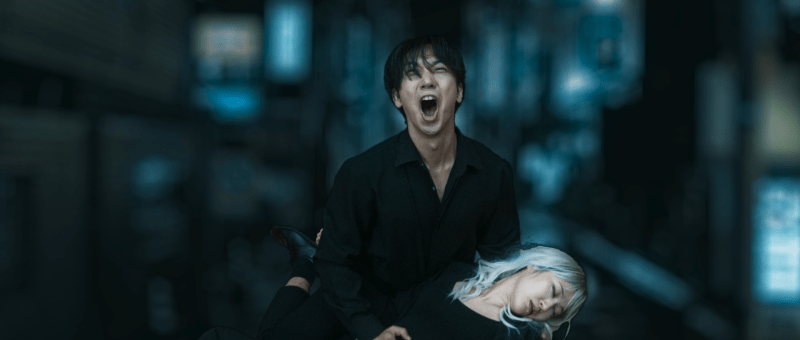
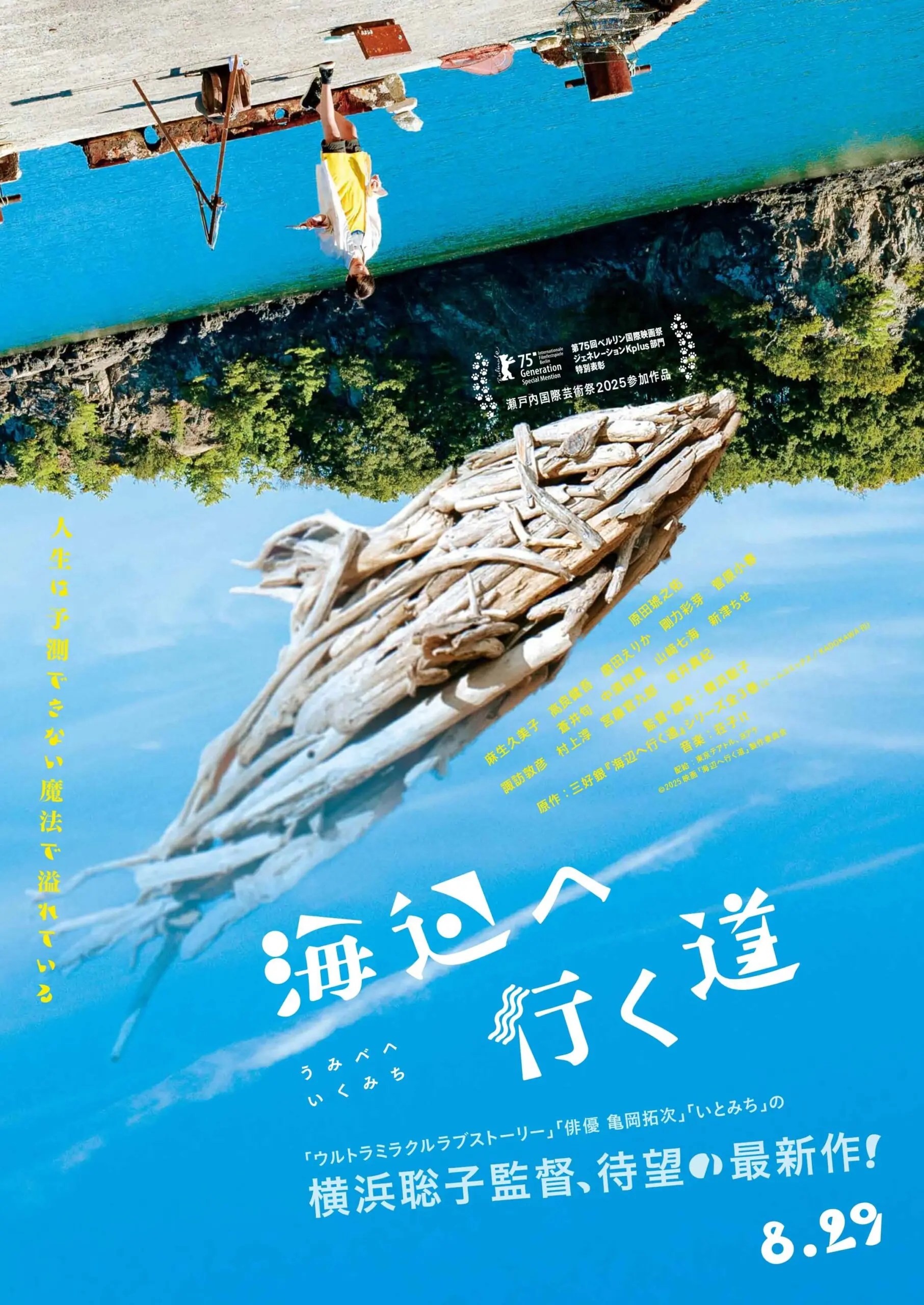
Seaside Serendipity (海辺へ行く道, Satoko Yokohama, 2025)

As we follow the road that leads down to the beach in the presence of a black cat, there’s a sign at the beginning of Satoko Yokohama’s Seaside Serendipity (海辺へ行く道, Umibe e Iku Michi) that lets us know that this town welcomes artists. Adapted from the manga by Gin Miyoshi, the film is another in the idyllic summer adventure genre with its tranquil, almost magical setting that even one of its temporary residents describes as somehow different from other places, but also contemplates the nature of art and its ability to influence the environment. 

This is certainly a very creative place where strange things happen and people mostly seem to do their own thing. Then again, Risako (Ayame Goriki) rents out apartments to artists looking for quiet retreats to practise their art in a peaceful environment but mainly ends up with those arriving for other reasons whose “art” is more like subterfuge. A young couple arrive running a bizarre scam selling fake knives that won’t even cut tofu after a couple of days. A stone sculptor she ends up dating is on the run from a loan shark, who just happens to be an old friend who said her job was in “sales” rather than admit she works as a debt collector chasing failed artists who always have an excuse as to why they can’t pay or haven’t yet produced anything.

A mysterious man gives Megu (Koharu Sugawara) a canary-shaped whistle that’s supposed to chirp in the presence of a true artist and make an unpleasant noise in the case of a false one. But as the kids eventually put it, all artists are self-proclaimed. The only requirement for calling oneself and artist is that you make something you consider to be “art” even if others disagree. Art can take many forms, as in the weird structure Ryoichi (Toma Nakasu) constructs made out of all the spoons he’s bent in his life. Sosuke (Kōnosuke Harada), meanwhile, attracts the attention of another mysterious man calling himself “A” who commissions him to make a model of a mermaid from a painted scroll. Sosuke dutifully makes it with a few additions such as the ability to remove the mermaid’s left breast and extract her heart. A interprets this as an expression that one cannot hide anything in art, whether things about themselves the artist wanted to conceal or things that they simply did not know. 

But Sosuke’s friend Teruo (Shun Aoi) also lets him in on the idea of mimesis, that they aren’t trying to reproduce something exactly as it appears but understand its true essence and recreate that. Teruo uses the art of mimesis to create a realistic mask modelled after the late husband of an elderly woman who says that it was foretold to her in a dream that he would come to her on her birthday. Though it might be a questionable gesture, he did it out of a desire for her dream to be true and to bring comfort to a lonely person whose family were unable to communicate with her, perhaps because they did not have the ability to lipread as Teruo apparently does. Nevertheless, they accuse him of stealing her money, insulting the purpose of his art. 

The art club’s art is also misused in a way when Ritsuko bizarrely asks them to create a hole she can say her boyfriend used to escape, like in a cartoon. This appears to be the sort of place where one can get away with such a ridiculous conceit. Trying to tell the truth, meanwhile, backfires for an aspiring journalist who uncovers suspect goings-on at the local nursing home where a nurse forces elderly people to sing songs out in the summer heat and prevents them from eating lunch as a means of staving off dementia. When her teacher leaks the video she recorded to social media, she’s annoyed to have missed the scoop and also that the teacher didn’t investigate properly opting for mob justice instead. The young woman worries the nurse may kill herself because of what she uncovered which is perhaps only a version of the truth. Meanwhile, everyone else is hot on the trail of mysterious animals appearing in the town that are somehow repelled by Teruo’s mystery art project. Even so, everything continues as normal in this strange little town as Sosuke pursues his artistic dreams painting tranquil visions of peaceful destruction from the deserted jetty, seemingly paying it no mind.


Seaside Serendipity screens in Chicago March 22nd as part of the 20th edition of Asian Pop-Up Cinema.

Trailer (English subtitles)