Baby Assassins: Nice Days (ベイビーわるきゅーれ ナイスデイズ, Yugo Sakamoto, 2024) [Fantasia 2024]

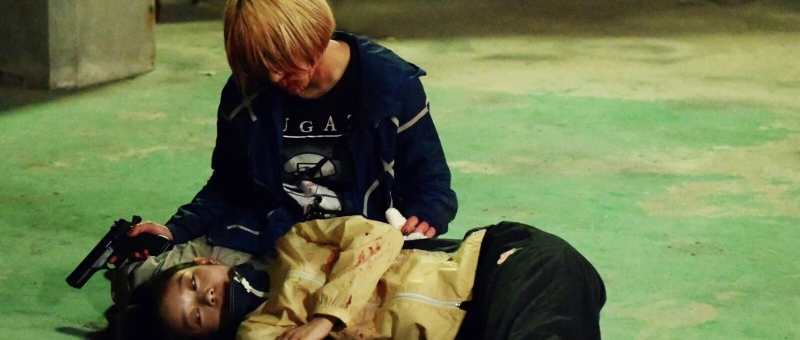
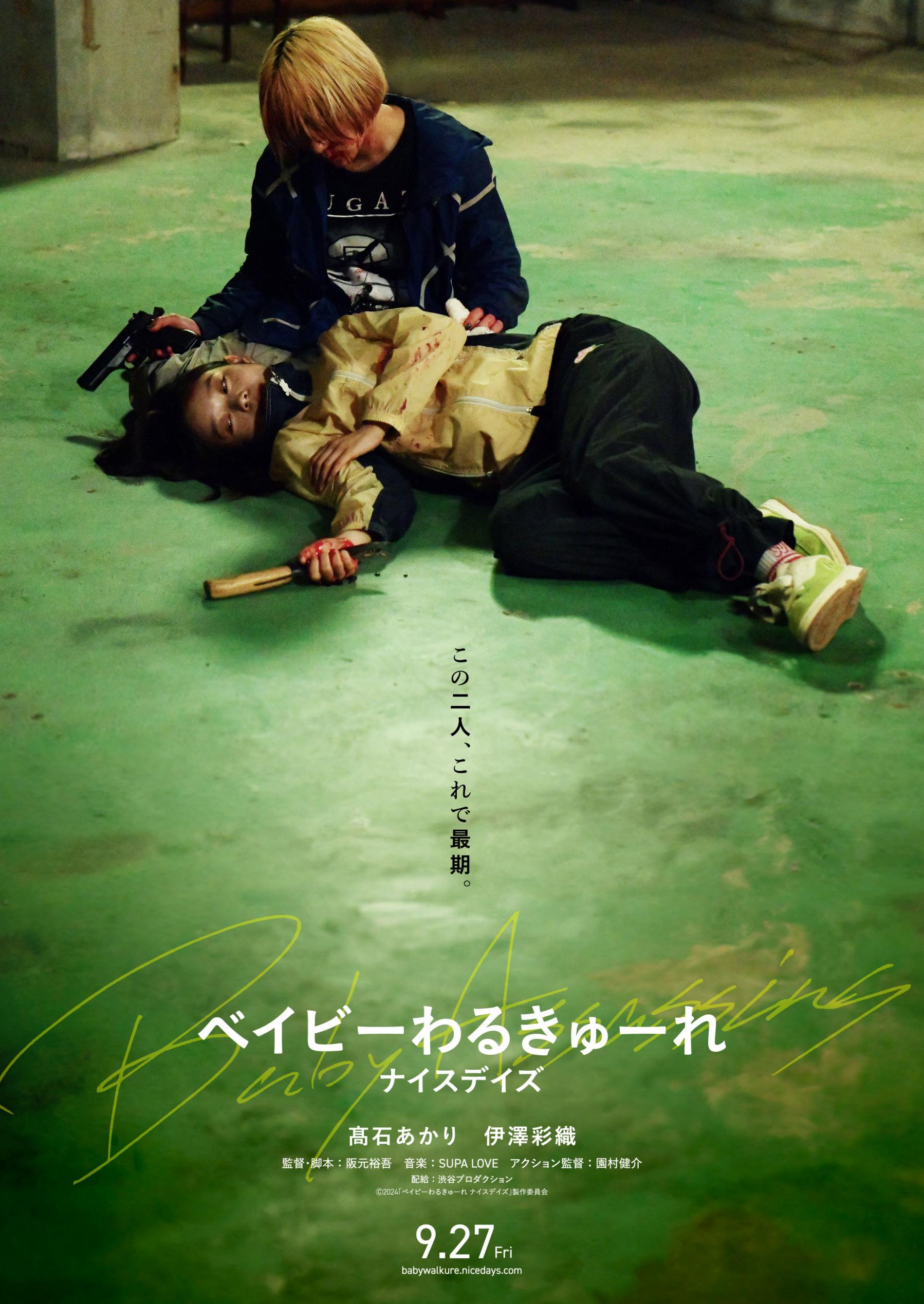
After beginning to conquer the demands of adulthood, Mahiro (Saori Izawa) and Chisato (Akari Takaishi) are taking a well-deserved break, or more like a working holiday to be precise, but soon find themselves with another unexpected mission to clean up a messy situation on behalf of the Guild. Baby Assassins: Nice Days (ベイビーわるきゅーれ ナイスデイズ, Baby Valkyrie​: Nice Days), the third in series of deadpan slacker action movies from Yugo Sakamoto, adjusts the balance of the previous two films shifting more towards action than the girls’ aimless lives while setting them against an opponent who is anything but aimless.

In fact with the girls find their way to the home of Kaede Fuyumura (Sosuke Ikematsu), is plastered in ironic motivational slogans that seem to be a kind of parody of salaryman’s kaizen obsession. Fuyumura likes to rank things and wants to make sure he’s at the top, but also wants out of the game because he’s bored with it and also fed up with difficult clients frustrated when one takes ages to decide whether or not he should kill the target resulting unnecessary stress for them and an unsatisfying kill for Fuyumura. That’s largely why he’s agreed to this one last job of killing 150 people who took part in cancelling a university student online. The problem is that Fuyumura is a freelancer which presents a problem for the Guild which has decided he must die for violating their rules and bringing the profession into disrepute. Thus Mahiro and Chisato find themselves in an awkward position when they turn up to kill their latest target and realise they’ve been double booked to take out Fuyumura ’s kill.

The admin mixup, though it isn’t one really, rams home the series’ persistent absurdity that this weird world of assassins isn’t so different from contemporary corporate culture while the girls are still subject to the same problems as any other 20-something. This time around, we’re introduced to another prominent agency which is run out of a farmer’s agricultural co-op and hides weapons inside boxes of vegetables, while Mahiro and Chisato get a pair of supervisors with the de facto team leader Iruka (Atsuko Maeda) going off on lengthy rants about why it’s impossible to work with Gen Z while the girls struggle with her uptight dismissiveness. Yet even when there’s tension or discord, the fact remains that the Chisato and Mahiro are also part of a team and have a vast network of support to rely on including their cleanup squad while Fuyumura is a lone wolf who’s driven himself half out of his mind with his quest to be the best, a message is brought home to him when he approaches the farmer’s union to ask for “a replacement” after getting one of their guys killed only to be told off and reminded the farmers work as one big family rather than a series of disposable minions. 

There is something a little poignant about Fuyumura’s wondering when his birthday is as if this small forgotten detail represented his missing humanity. The only time he feels like a human being is doing something mundane like cleaning his microwave and brushing his teeth. As she had the brothers in the previous film, Mahiro finds a kind connection with Fuyumura as they each discover a worthy match but knowing only one of them can survive. In an introspective movement, Mahiro asks Chisato if they can still hang out together on the other side if the worst happens, but she shuts the question down perhaps more in an attempt to shift Mahiro’s mindset but also berating herself for forgetting her birthday and making hurried plans to coverup her crime against friendship.

For all the absurdity about hitman union rules and rights of employment in an illegal profession, the films has a genuine affection for the relationship between the two girls as well as that between the wider team who are always around to have their back while they also take care to protect each other. Perhaps having to field a work crisis during their “holiday” is their final test of adulthood, and one they largely pass in enforcing their boundaries and defiantly having a good time anyway even if they did have to cancel their reservation at local barbecue restaurant to stakeout the home of a crazed killer. Once again featuring a series of well choreographed and innovative action sequences, the series’ third instalment seems to come into its own expanding the world of the Baby Assassins but setting them free inside it evidently a lot more at home with the concept of adulting.


Original trailer (no subtitles)
Baby Assassins (ベイビーわるきゅーれ, Yugo Sakamoto, 2021)

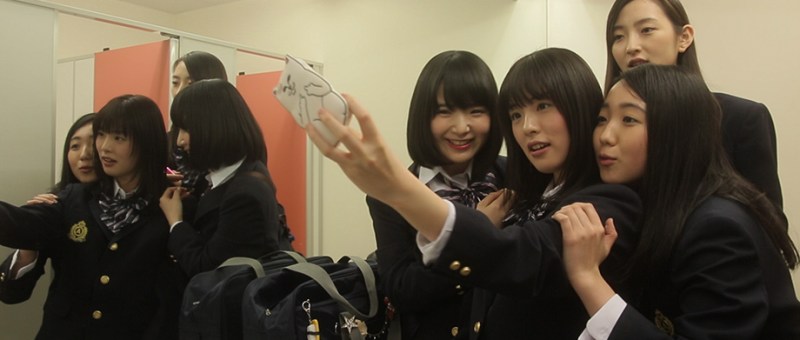
“Drugs and pimping are outdated. We’re in the age of “moe”” according to a surprisingly progressive gang boss who takes his son to task for his sexism and insists that even the yakuza has a duty to create a comfortable working environment for women. Yugo Sakamoto’s anarchic deadpan action comedy Baby Assassins (ベイビーわるきゅーれ, Baby Valkyrie) is at heart a slice of life slacker drama about two young women reluctantly trying to make their way towards adulthood only the two young women are also elite assassins recently graduated from high school having been raised as coldblooded killers. 

For whatever reason it’s decided that the shy and socially awkward Mahiro (Saori Izawa) and the manic extrovert Chisato (Akari Takaishi) should become roommates occupying a furnished apartment paid for by their handler while they cover their other expenses through part-time jobs that will help them figure out how to live as “members of society”. The problems they face are perhaps those faced by many in the contemporary era just trying to make it through an unfulfilling side gig without killing anyone only for them the stakes are higher as Chisato discovers on braining a customer and strangling a moody coworker without realising she’s not just fantasising. Mahiro meanwhile finds herself entering a daydream in which she offs the combini manger interviewing her after his boring rant about kids today who think they can earn a living playing video games only to realise the store is staffed by yakuza-esque minions determined to avenge their boss. 

Already very efficient in their killing game, the girls never need to worry about cleaning up after themselves even if Chisato does get a lengthy lecture from the long suffering Mr. Tasaka who as it turns out has a lot of unsolicited advice about how she’s doing her job wrong or at least in ways which are inconvenient to him. Nevertheless while trying to live their normal lives they wind up sucked into gangland intrigue having accidentally offed a major supplier and thereafter engaged in a vendetta with equally crazed yakuza daughter Himari (Mone Akitani) who in a recurring motif proves much more in tune with contemporary gangsterdom than her “sexist” bother Kazuaki (Satoshi Uekiya). 

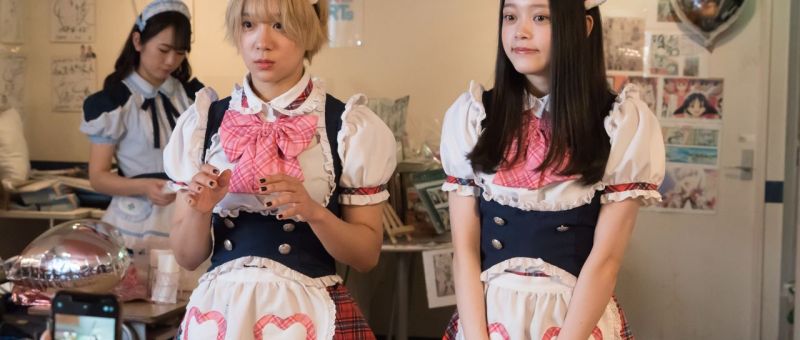
Gangsterdom has indeed changed, the boss declaring that they need to find a more “female-centric” business which is what brings them to a maid cafe as they declare themselves mystified by “moe”, rapidly becoming extremely irritated by the sickly sweet aesthetic of the cafe which requires them to order food through a series of annoyingly cutesy codewords while young women in ridiculous outfits call them “master” and satisfy their every whim. In some ways the Baby Assassins are a subversion of the kawaii ideal while also to some extent embodying its essential traits in their mix of infinite competence and adorable cluelessness, Chisato forever forgetting what’s she’s done with her weapons while Mahiro constantly mutters to herself under her breath. 

For them, killing is just another job which they mostly enjoy but can also be annoying, just like each other’s company. A mismatched pair, their dynamic strangely recalls Saint Young Men only they’re highly trained assassins trying to perfect a cover identity rather than peaced-out deities engaged in an ethnological study of life on Earth. They have a brief falling out over the same thing most roommates fight about, one feeling the other is not pulling their weight, Chisato irritated by Mahiro’s inability to find a job and Mahiro frustrated that Chisato devotes too much time to her side gig and not enough to their main job as killers for hire. Meanwhile, they’re suddenly plunged into a very adult world of bills and taxes and insurance, their handler promising to handle some of that for them because ironically enough they’re much more afraid of the taxman than they’ve ever been of the police. 

Surreal and filled with deadpan humour not to mention expertly choreographed fight sequences by Hydra’s Kensuke Sonomura, Baby Assassins is a perfectly pitched coming-of-age tale in which two young women attempt to find a place for themselves while contending with a still patriarchal society, eventually discovering a complementary sense of solidarity in their opposing natures as they come together to clean up their own mess while defiantly striking out for their futures as “members of society” whatever that may mean. 


Baby Assassins screened as part of this year’s Glasgow Film Festival.

Original trailer (English subtitles)

The Hungry Lion (飢えたライオン, Takaomi Ogata, 2017)

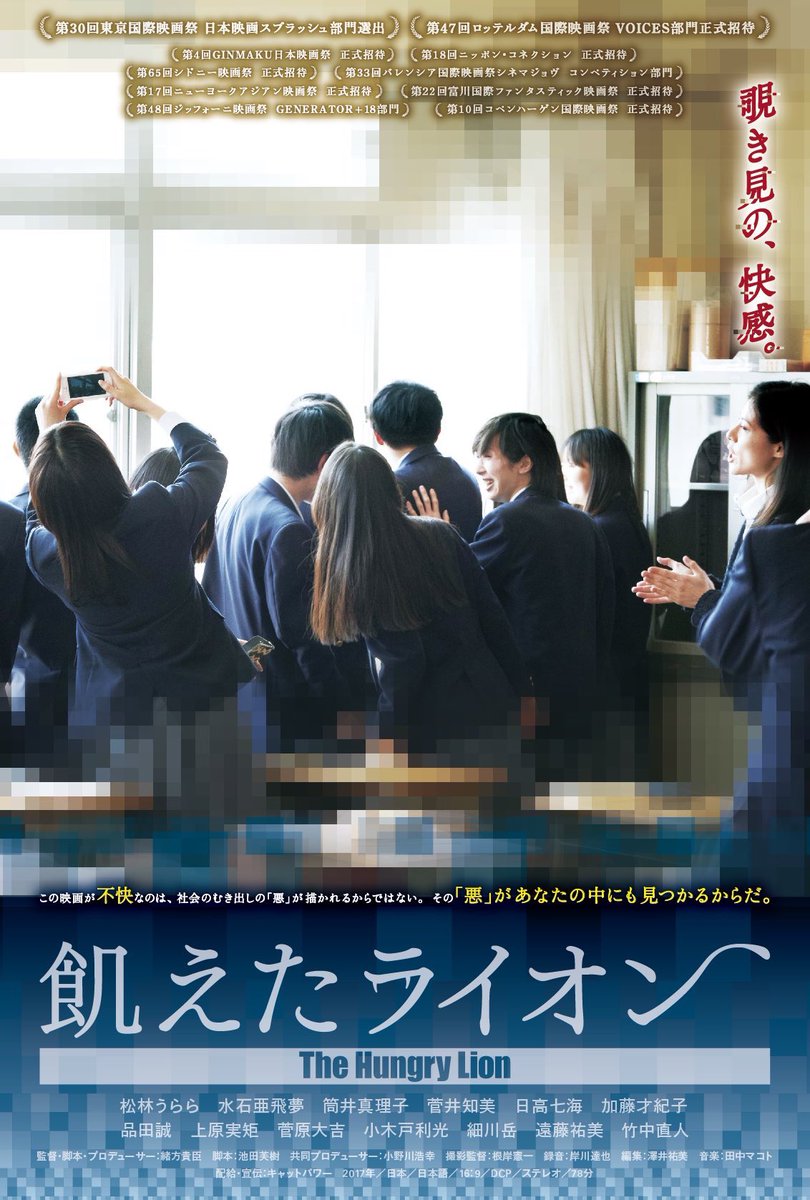
Hungry lion posterRumour has a strange power. A baseless lie, no matter how innocuous, can quickly derail a life but the power of lie with a tiny grain of, if not truth exactly but circumstantial evidence, can prove ruinous when there are vested interests at play which make belief an attractive prospect. The heroine of Takaomi Ogata’s The Hungry Lion (飢えたライオン, Ueta Lion) finds herself at the centre of such a storm through no fault of her own, becoming a victim not only of her country’s restrictive social codes, tendency towards victim blaming, and reluctance to deal openly with “unpleasant” topics, but also more directly of the latent jealousy lurking in her closest friends which finds a convenient home in someone else’s scandal. Nobody will come to her rescue, her “disgrace” has exiled her from the group and she finds herself abandoned as a lonely a sacrifice to the hungry lion that feeds on social shame.

High school teacher Mr. Hosono is not exactly popular with his students. He is strict with the boys but less so with the girls, as he proves greeting one tardy student who blames a train accident for his late arrival by berating him about his regulation busting necklace while allowing a female student, Hitomi (Urara Matsubayashi), who arrives a couple of minutes later to take her seat unharrassed. Midway through the register, Mr. Hosono is called away and eventually arrested in connection with the viral video all the kids were looking at before he arrived which appears to show him in a compromising position with a student. For one reason or another, a rumour spreads that Hitomi is the girl in the video. She isn’t, but few believe her strenuous denials and her life becomes one of constant strife not only because of the bullying itself, or the injustice of being falsely accused and then disbelieved by those closest to her, but by the way she is made to feel embarrassed and shamed for causing trouble to others even though she herself has done nothing wrong.

A “relationship” between a teacher and a student is never appropriate, and Mr. Hosono has at least been removed from his position at the school, but no one seems very interested in identifying the girl in the video in order to help her, only to spread ruin and rumour. Hitomi is not the girl in the video, but even if she had been there is no support on offer to her as a person who has been abused by someone in a position of power she should have been able to trust, nor are there any measures in place to ensure her academic life will not be unduly damaged by becoming involved in such a traumatic incident. Aware of the rumours, the school accepts Hitomi’s assertion that she is not the girl but still suspends her to avoid “awkwardness” and protect their own reputation. Likewise, her own mother and sister are far from supportive, berating her for bringing shame on the family and creating problems for them in making the family a target rather than standing by her in her ordeal whether she had been the girl or not.

The rumour itself seems to spring from persistent shaming and stigmatisation of atypical families. Hitomi is 18 and she has a boyfriend who is a little older. He has some shady friends and likes to push buttons as he does by causing mild embarrassment to Hitomi by taking her into the curtained off “adult” section of the local video store in an attempt to shock her. Nevertheless the pair eventually make their way to a love hotel (where they are not age checked) and he films her in a compromising position. Girls talk and Hitomi’s friends all know about her relationship which is also plastered all over her social media on which she is something of a star. Some of her friends are jealous but also harbour a degree of disapproval and the mere fact that she is already sexually active ties her to the girl in the video and casts her in an “impure” light in the cute and innocent world of high school girls. Similarly, her boyfriend’s estimation of her drops after she consents to sleep with him while his leering friends make lewd comments and regard her as an “easy” girl who has lost the right to refuse their advances.

Ostracised for essentially becoming a “fallen woman”, Hitomi is left entirely alone with no one to turn to for support. Later, authorities are keen to stress that it’s important to speak out if you’re suffering because adults will always help children but like everything else they are just empty words. The school give out a pamphlet on the importance of prudence when using social media, but refuse to accept their responsibility in failing to protect their students. The news meanwhile becomes obsessed with tearing apart Hitomi’s family, laying the blame at their feet, insisting that Hitomi’s downfall is in someway a result of her parents’ divorce even blaming her mother for having the audacity to find a “boyfriend” before her children were fully grown. The image we had of Hitomi is suddenly reversed. No longer is she a “slutty schoolgirl” involved in an illicit relationship with her teacher, but a neglected child damaged beyond repair by “liberal modern society”.

Reputation is what matters, but reputation is easily manipulated and rewritten, muddy even when objective truth is revealed. Ogata shoots in brief vignettes, each severed from the next by a stark black screen which forces us to examine the objectivity of each scene as distinct from the others, assembling our own versions of “objective” truth which are in fact guided by Ogata’s carefully crafted editing. Fake news has an agenda, truth does not, but it’s often much easier to believe the lie especially if the lie benefits us much more than the truth or enables us to feel superior to someone we secretly think needs taking down a peg or two. Society is a hungry lion which feeds on shame, externalised and internalised, as those who find themselves on the wrong sides of a series of social taboos become unwilling sacrifices to its unkind, unforgiving, and unrelenting hunger for suffering.


Screening at New York Asian Film Festival 2018 on 30th June, 2.45pm.

Original trailer (English subtitles)

Fullmetal Alchemist (鋼の錬金術師, Fumihiko Sori, 2017)

Fullmetal Alchemist posterEvery so often a film comes along which makes you question everything you thought you knew. Fullmetal Alchemist (鋼の錬金術師, Hagane no Renkinjutsushi) is just such as film but less for the philosophical questions fans of the source manga may have been expecting, than for the frankly incomprehensible fact that it exists at all. Produced not by a major studio but by Square Enix – best known as a video game studio but also the publisher of manga magazine Monthly Shonen Gangan in which the series was originally serialised, and effects studio Oxybot Inc., Fullmetal Alchemist is not the big budget extravaganza a franchise of this size might be expected to generate but a cut price blockbuster attempting to pack a much loved, long running saga into just over two hours.

For the uninitiated, the movie begins with the little Elric Brothers – Ed and Al, who live in the countryside with their doting mother while their father is away. When their mother is struck down by a sudden illness and dies, the boys raid their dad’s Alchemy library for clues as to how to bring her back. There is, however, a taboo surrounding human transmutation and when the brothers cast their spell they pay a heavy price – Al loses his entire body though Ed manages to save his soul and bind it to a suit of armour by sacrificing his own right arm.

Many years later, Ed (Ryosuke Yamada) and Al (Atomu Mizuishi) are still looking for the mythical “Philosopher’s Stone” which they believe will allow them to cast another spell and get their fleshy bodies fully restored. This takes them to a small town where they encounter a dodgy priest and their old commander, Captain Roy Mustang (Dean Fujioka), who wants to bring them back into the State Alchemist fold. The priest’s stone turns out to be a fake though his connections to the film’s shady antagonists are all too real, and the brothers are soon faced with another dilemma in their quest to restore all they’ve lost.

Sori shifts away from the frozen Northern European atmosphere of the manga for something sunnier and less austere, shooting in Italy’s Volterra with its narrow medieval streets and iconic Tuscan red roofs. He is, however, working on a budget and it shows as his cast are costumed at cosplay level with awkward blond wigs attempting to recreate the manga’s European aesthetics. Al, rendered entirely (and expensively) in CGI, is deliberately kept off screen while the quality of the effects often leaves much to be desired.

Al’s frequent absence is a major problem seeing as the series’ major theme is brotherhood and Ed’s tremendous sense of guilt over his brother’s condition coupled with his recklessness in his need to put things right is only explained in a piece of bald exposition following a fight between the pair after Al’s mind has been corrupted by a mad scientist who implied that he may not really be “real” after all. While Al’s false memory paranoia may be among the more interesting issues the film attempts to raise, it’s quickly pushed into the background, eclipsed by the ongoing conspiracy narrative which places the Elric Brothers in a difficult position regarding their need to get their body parts back. 

A symptom of the attempt to condense such a much loved and well known manga into a two hour movie, there is rather a lot of plot going on and numerous side characters on hand to enact it. Though fans of the original manga may be pleased to see their favourite characters have made it into the movie, they maybe less pleased about how one note they often are or the various ways their personalities have needed to shift in order to fit into the new narrative arcs the film employs. Aside from the young and pretty cast, Fullmetal Alchemist also finds room for a host of veteran talent from the ubiquitous Jun Kunimura in a small role to Yo Oizumi turning villainous and Fumiyo Kohinata at his most Machiavellian.

Extremely silly, poorly put together and burdened with some very unfortunate wigs, the Fullmetal Alchemist live action adaptation is as much of a misfire as it’s possible to be but viewers hoping for a continuation to the tale would do well to stay tuned for a post-credits sting strongly hinting at a part two.


Streaming worldwide on Netflix.

Original trailer (English subtitles)