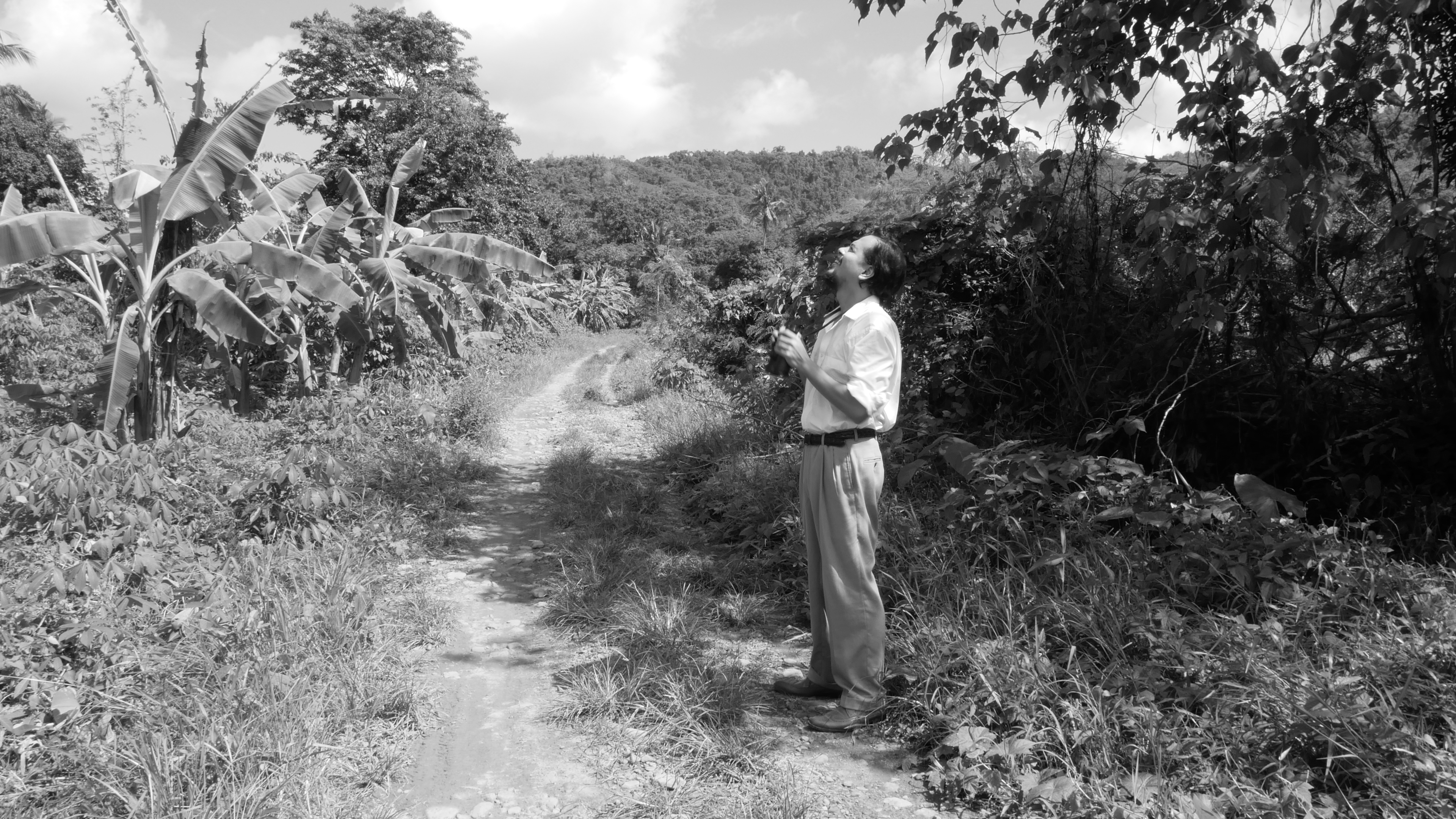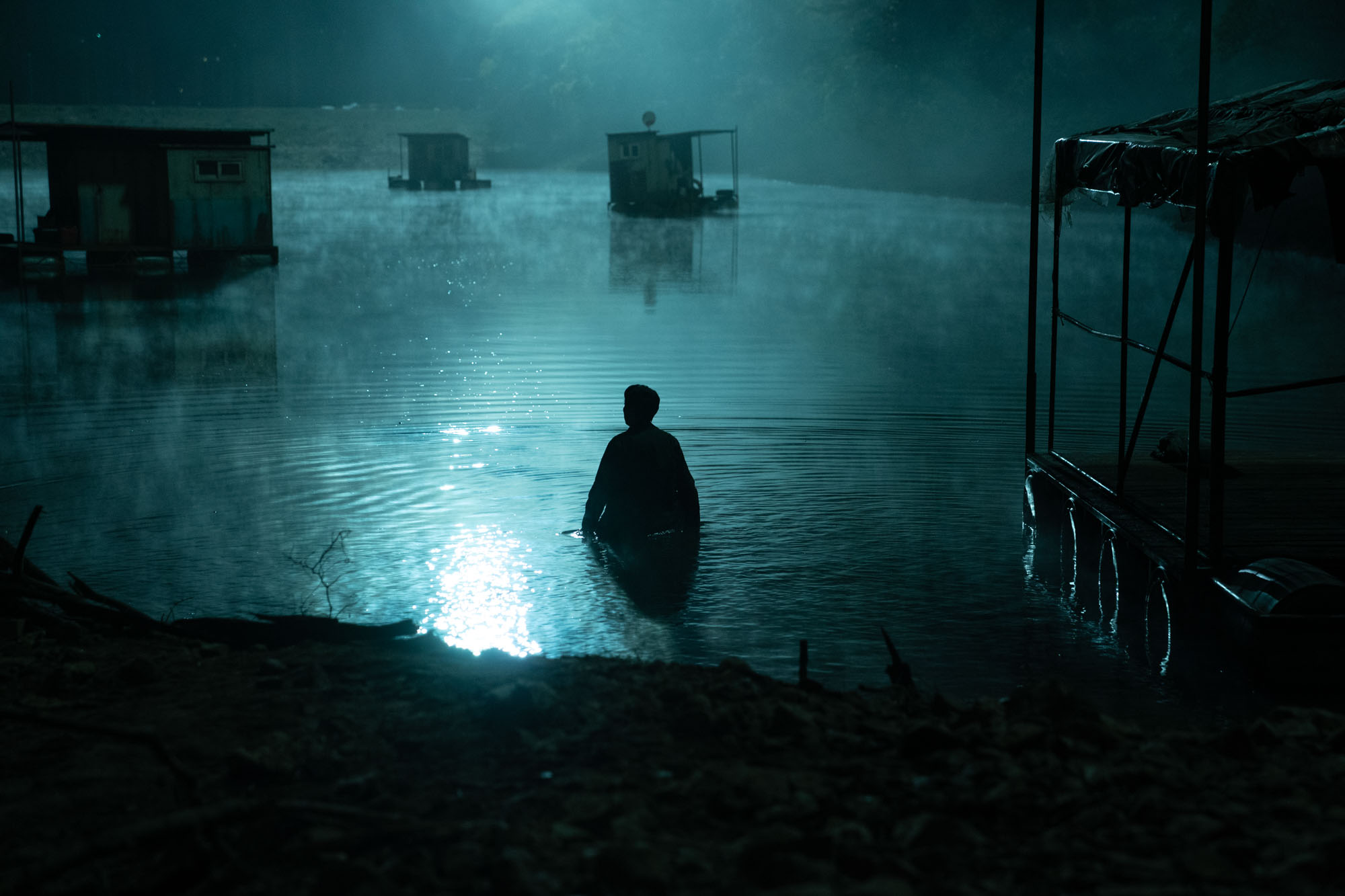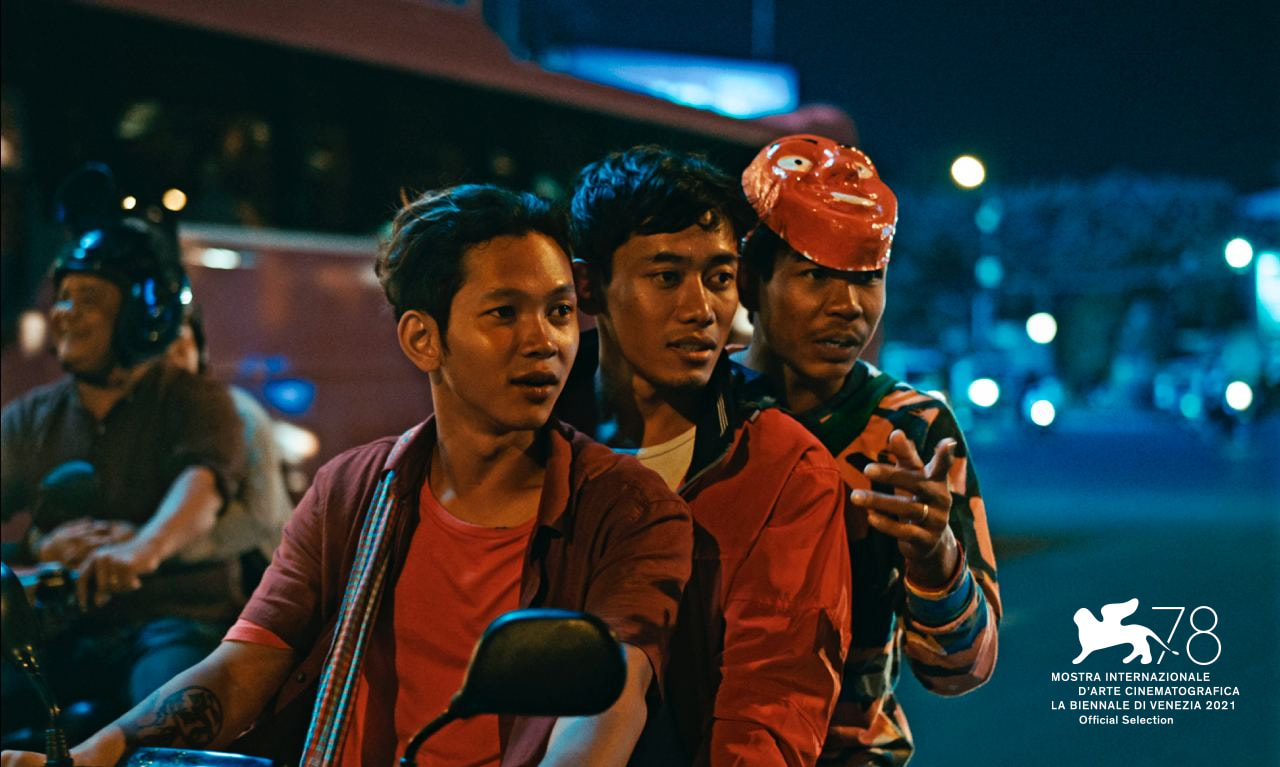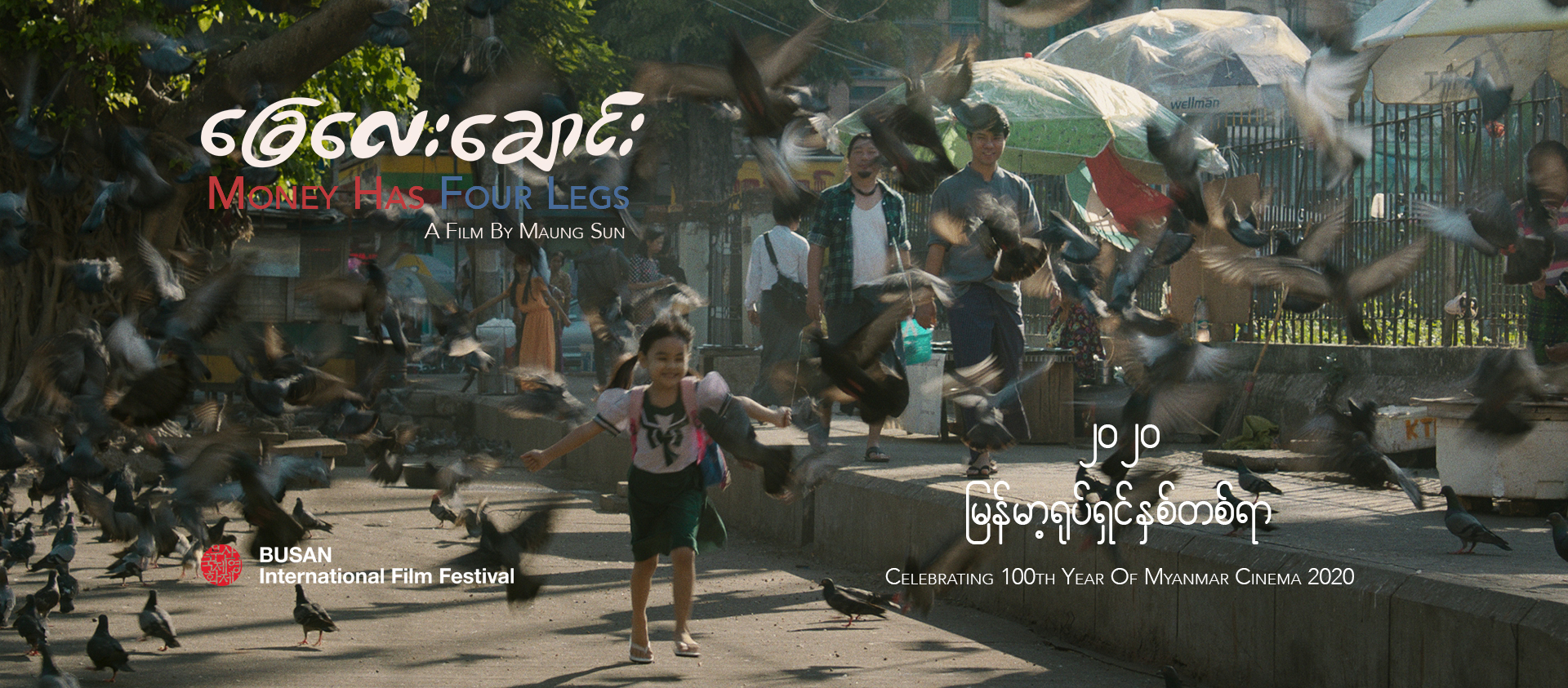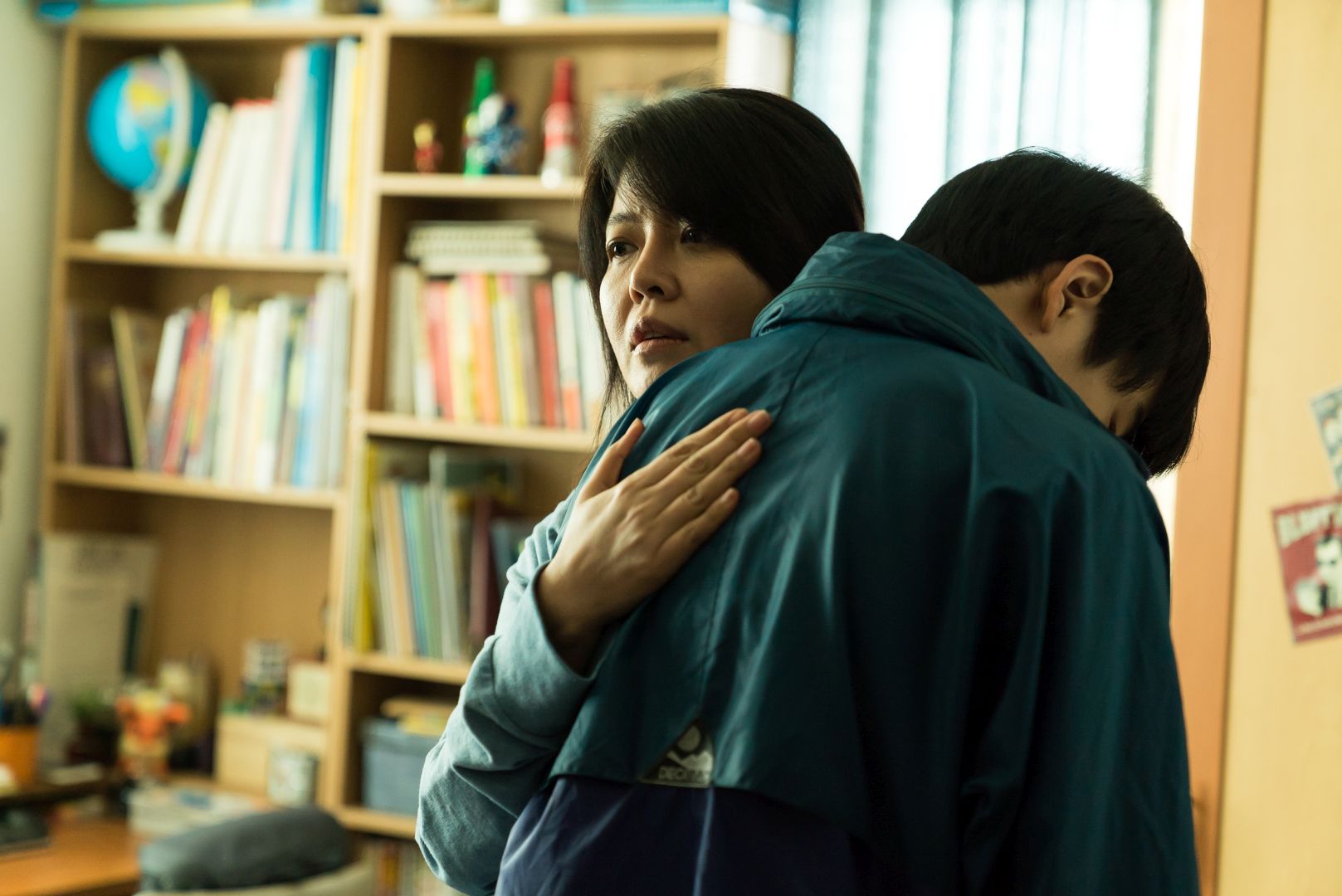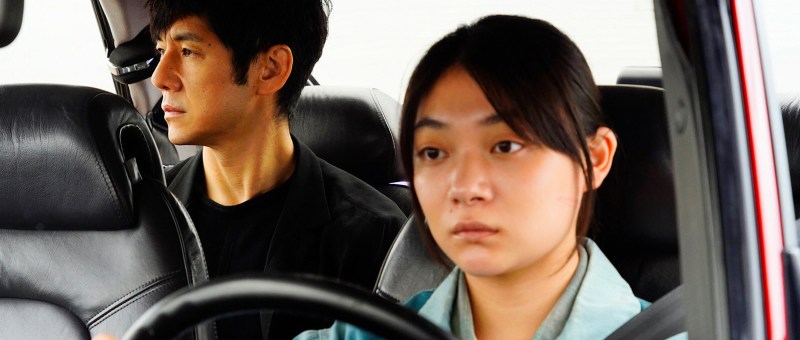

Drive My Car (ドライブ・マイ・カー, Ryusuke Hamaguchi, 2021)

“What can we do? we must live our lives” comes a constant refrain echoing the closing words of Chekhov’s Uncle Vanya offered by the self-sacrificing Sonya resolving to find joy in suffering if only in the promise of a better world to come. Freely adapted from a short story by Haruki Murakami, Ryusuke Hamaguchi’s profoundly moving Drive My Car (ドライブ・マイ・カー) is study in grief, loss, and how you learn to live after the world has ended but also of how we pull each through, finding new ways to communicate when words alone can’t help us. 

Words are, however, where we begin with a woman half in shadow an accidental Scheherazade spinning a bizarre tale of a high school girl’s first love. Oto (Reika Kirishima) claims the story is not about her, but as we’ll later discover in some ways it is if perhaps not literally. A long-married couple, this is part of their marital routine, screenwriter Oto telling stories to her theatre director husband Yusuke (Hidetoshi Nishijima) she asks him to remember and repeat back to her in the morning. Only one day, having accidentally stumbled in on his wife and her lover only to leave quietly saying nothing, Yusuke claims not to remember. She tells him she wants to talk, but he is afraid of what she’ll say and delays coming home, finding her collapsed in the hallway on his return having passed away from a cerebral haemorrhage. The story remains incomplete, a perpetual cliffhanger never to be resolved. 

Two years later Yusuke is a haunted man still listening to the cassette tape Oto left for him of her reading all of the other lines of Chekhov’s Uncle Vanya save for those of the title character which he was to play himself. This time he’s been selected as an artist in residence at at a theatre in Hiroshima where he’ll once again stage Vanya in his signature multilingual performance style. He’s specifically asked for accommodation an hour’s drive away with the intention of maintaining his usual routine of listening to the tape on his way to rehearsal but, following previous incidents, the theatre has a policy of hiring their own drivers in this case a young woman, Misaki (Toko Miura), who eventually wins him over through her capability and care while, ironically, mimicking the very qualities he demands of his actors in her wounded stoicism. 

The car in a sense represents an inviolable space of intimacy, a space that Yusuke had been reluctant to allow anyone to enter, even Oto remarking on his discomfort with her in the driver’s seat as she took him to a doctor’s appointment where he learned he was losing the sight in his left eye, clarifying with the doctor that for the time being at least he’d be OK to drive himself. Misaki assumes he doesn’t want her to drive his car because she’s a young woman, but thereafter is careful to maintain distance respecting his space for her sake as much as his own mindful of her role as a “driver” until he begins to invite her in if originally more out of politeness or consideration than a desire for company. 

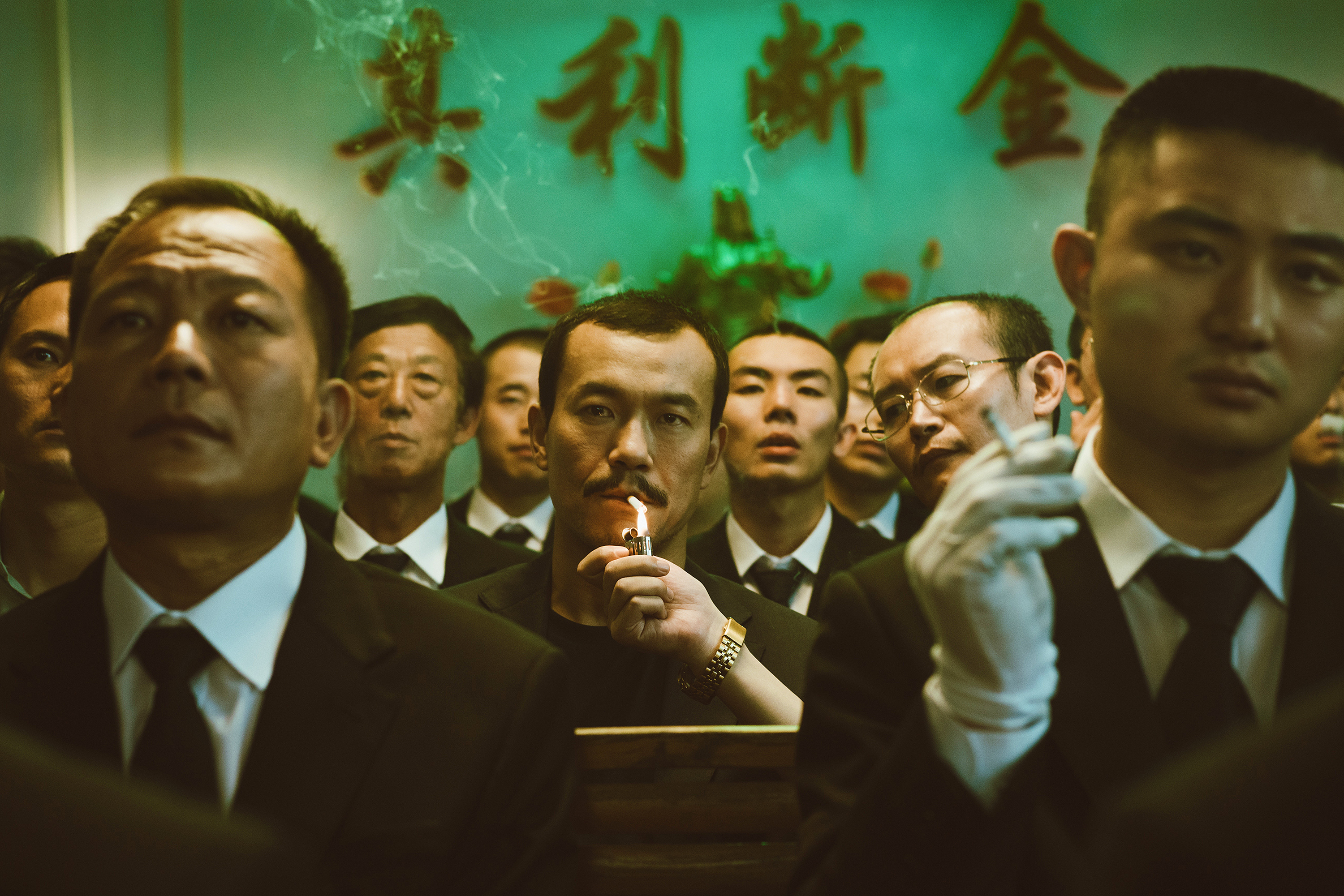
Misaki has her own story, a story she too is originally reluctant to share but in its way echoes his as someone trapped in grief and guilt ironically unable to move forward but driven by the quality of Oto’s voice and the ritualistic call and response implied by its lacunas. Too afraid of its implications to take the role himself, Yusuke casts Oto’s lover, Takatsuki (Masaki Okada) a young TV actor with impulse control issues whose career has apparently been ruined by scandal, as Vanya a man approaching 50 whose illusions are painfully shattered, forcing him to realise that he’s wasted his life on a futile ideal. The three of them, each eventually entering the confessional space of the car, share more than they might assume but it’s Takatsuki who holds the key revealing another piece of the puzzle with unexpected profundity that in its own way lays bare a truth Yusuke had been unwilling to see about his relationship with his wife, the shared grief that both bound and divided them, and the poetic import of her death. 

Rather than Vanya, the film’s prologue saw Yusuke perform in a multilingual production of Beckett’s Waiting for Godot, the author’s well-known phrase “I must go on, I can’t go on, I’ll go on” perhaps equally apt even as Yusuke moves slowly away from the role of Vanya before finally assuming that of Sonya in echoing her words while comforting the filial figure of Misaki even as she explains to him that as in Vanya the fault was not in his convictions but in himself that he couldn’t accept the contradictions of his wife and in that sense had not understood her or himself well enough to know he should have braved the hurt of confrontation. Yet as Takatsuki had said, you can’t ever really know another person, there’s always a part of them forever out of reach all you can do is try to make peace with your own darkness. 

For Yusuke communication occurs indirectly, through allegory or half-truth, and through the unspoken or unintelligible. His multilingual approach in which lines are read coldly at half-speed is intended to draw out the feeling that lies beneath them, the final most profound moment delivered in silence as a former dancer breaking free of her bodily inertia delivers Sonia’s closing monologue with all of its melancholy serenity in Korean sign language her arms draped angelically over Vanya’s shoulders in a gesture of the utmost comfort. Touching in its ambiguities, Hamaguchi’s quietly devastating emotional drama for all of its eerie uncanniness finally places its faith in simple human empathy as its haunted souls learn to live with loss finding in each other the strength to go on living.


Drive My Car screened as part of this year’s BFI London Film Festival.

International trailer (English subtitles)
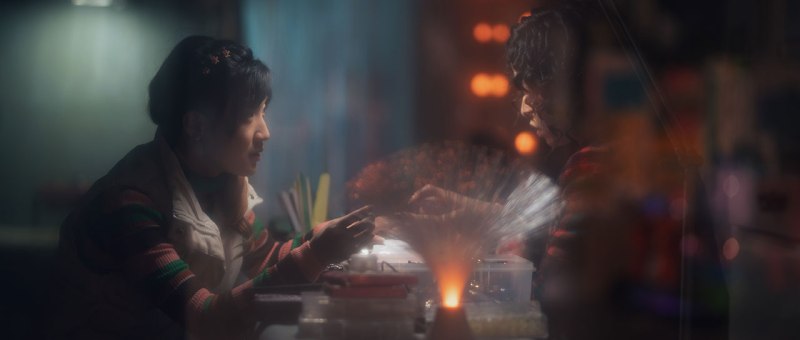
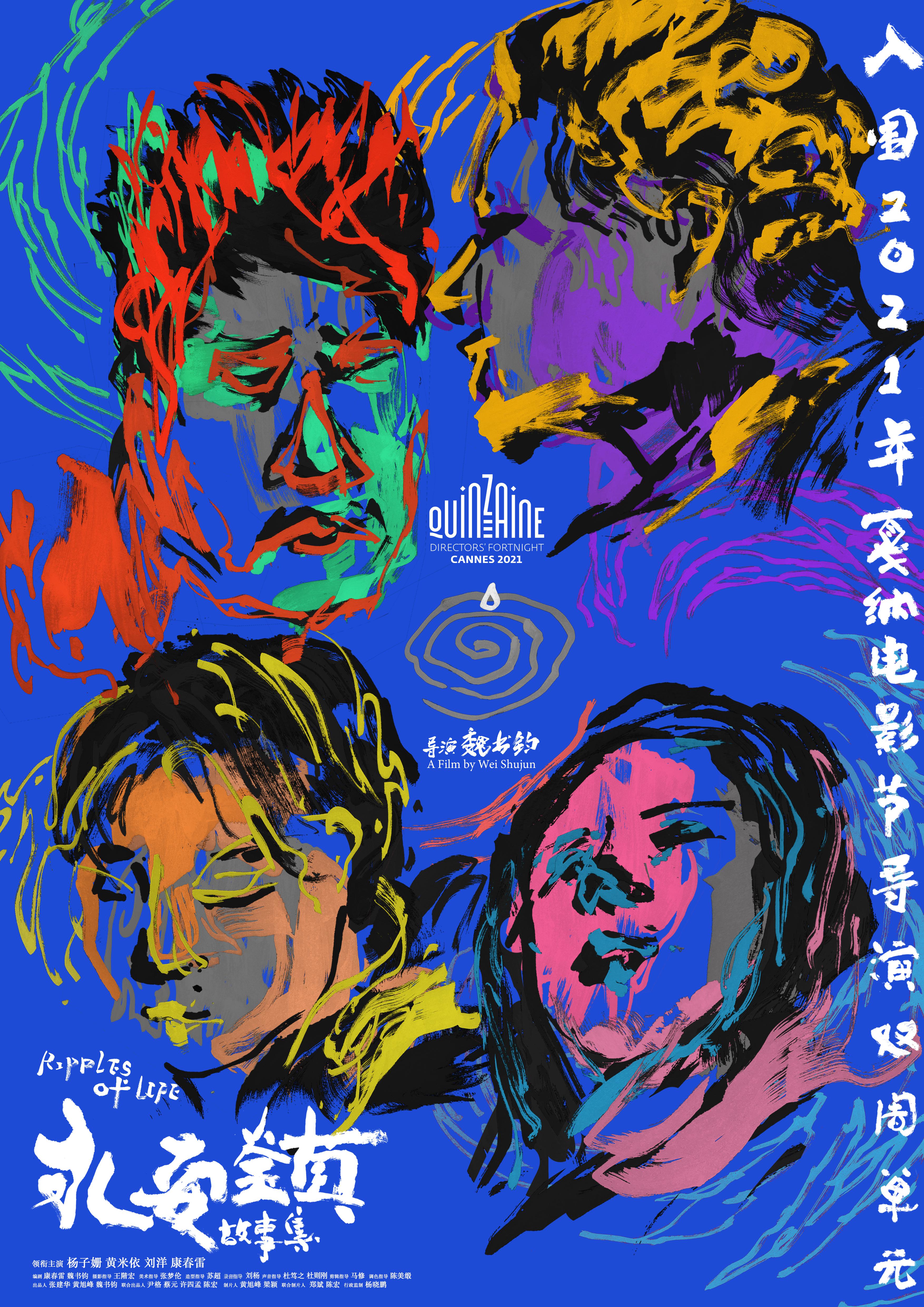
Ripples of Life (永安镇故事集, Wei Shujun, 2021)

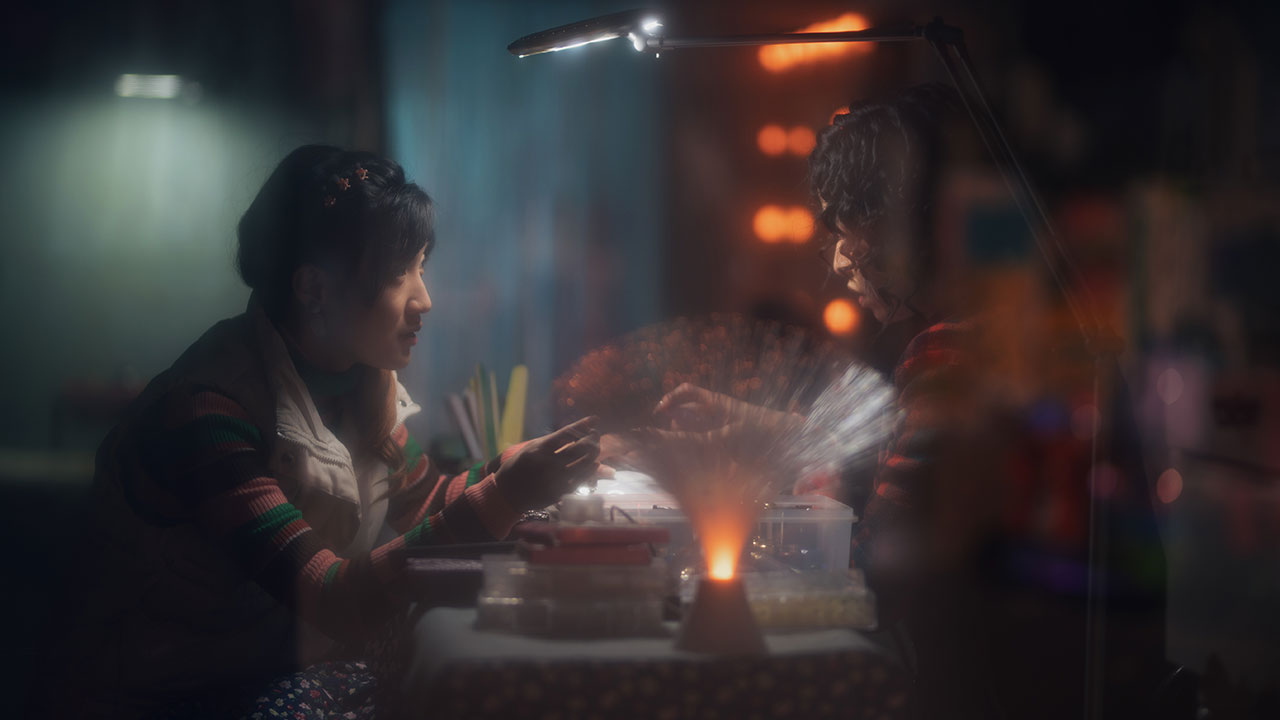
“I had to let it happen, I had to change” the rather incongruous voice of Madonna insists, finding a note of defiance on reaching the climactic “so I chose freedom” as the movie version of Don’t Cry for Me Argentina erupts over the closing minutes of Wei Shujun’s Ripples of Life (永安镇故事集, Yǒng’ān Zhèn Gùshi Jí). Like much of the film, the use of the song is ironic but still somehow poignant its repurposing perfectly expressing the interior lives of each our “characters” who are all in some way or another looking for escape or at least a way out of personal dissatisfaction while trying to film a movie about the inertia of life in a small town in rural China where nothing ever happens. 

Divided into three segments, Wei’s film is as much about the positioning of rural China as it is about “cinema”. A Beijing film crew descend on this provincial small town with their own preconceived notions of rural life, determined not to “romanticise” country living but nevertheless bending it to their will looking only for signifiers that align with their mental image of the hinterlands of their nation. Only latterly do they realise that for true authenticity the film should be in Hunanese, but none of them speak it which is a significant stumbling block in their efforts to overcome ongoing creative differences over the script. 

Wei is, in part, satirising the recent trend in Chinese indie cinema for gritty stories of rural poverty usually filmed with depressing naturalism determined to stress the harshness of life outside of the cities amid the nation’s ever increasing wealth divide. The first chapter in part does this too, later shifting away from early Jia Zhangke towards the neon yearning of Wong Kar-wai but always undercut with a sense of meta irony not least in its choice of heroine. The infinitely cornered Gu (Huang Miyi) longs for “a different life”, trapped in an unsatisfying marriage to a gruff man she accuses of working night shifts to get away from their toddler daughter whom she is forced to take to work with her while he constantly undermines all her parenting decisions based on articles sent by his mother. A woman at the market coos over the baby and asks when the next one’s due, Gu crestfallen realising she’s trapped in this small-town existence where nothing ever happens. But then the film crew begin to notice her, telling her she has a “real cinema face” and likening her to Kim Min-hee of whom she has never heard. Their admiration is again ironic, considering they were looking for the authentic face of rural China but taken with this cinematic vision, yet it’s also callous and cruel. They give her false hope, allowing her to dream as she puts on makeup and models costumes only to be forgotten once again when the “real” actress arrives, cast back into a life of quiet desperation. 

Perhaps this too is another unfair stereotype assuming that everyone from a small town longs for escape, but Gu’s story does indeed mimic the earlier parts of the screenplay for the film within the film which the director sees as a tale of a small-town woman’s awakening to independence and agency while the screenwriter Chunlei (Kang Chunlei) opts for an old-fashioned take on consumerist corruption. Shifting away from Gu towards formerly successful actress Chen Chen (Yang Zishan), the second arc pulls towards Chunlei as Chen Chen searches for escape from a rut in her career apparently having left her commercial agent to do more earnest work but doing not much of anything for the previous year. In another meta touch, she is from this rural backwater and like her character in the film chose to leave but now admits that sometimes she misses life in the country. As someone else puts it, city folk all want a return to simple rural life but can’t accept the reality of it which is why the plan to rejuvenate the area largely relies on tourism including the building of a waxwork museum of which Chen Chen is expected to be a notable inclusion as a local girl made good. 

Chen Chen’s image has once again been commodified, stripping her of power or agency over her name and face but on returning to Yong’an she is forced to realise that she is no longer of there, this place where nothing ever happens has already changed while she exists on a slightly different plane. Realising the maid covering her room is a childhood friend she cheerfully tries to reconnect but the woman is awkward and evasive, embarrassed perhaps to acknowledge that she is a mere hotel employee while Chen Chen has achieved her dreams of stardom. Attempts to reconnect with two other male friends similarly backfire, the first a typical provincial bureaucrat who uses her for official business without her consent while a meal with the other’s family proves even less joyful as she endures countless barbed comments from his snippy wife who eventually tries something similar in asking her to find a job for her son on the film. As she’s leaving he asks her the same question the screenwriter obsessed over, suggesting that she left for mercenary reasons only for her to answer that she didn’t want to live like his wife, or indeed like Gu, but wanted “a different life”. 

This battle between image and authenticity lies at the heart of the conflict between the director, a hipsterish festival darling with a sideline in hip hop, and the schlubby screenwriter himself perhaps trapped in the previous generation of Chinese filmmaking but also in his way more idealistic believing in cinema as an art form which can move the world rather than mere entertainment created for commercial gain. He accuses the director of hypocrisy, exploiting the arthouse aesthetic for critical credibility and with it a vision of rural China, while the director criticises him for his old-fashioned mentality in seeking melodrama over message. Shot in cooling blues their heated arguments are noticeably dispassionate, Wei even descending into some ironic iconography which sees the pair talking through their issues with a wise man film critic on a boat on a misty river. The ironic conclusion brings the whole affair full circle as the words of Madonna as Eva Peron come to speak for each of the protagonists, Gu now angrier, impatient as she shifts dishes while her husband idles nearby, and Chen Chen forced to pose next to a wax figure of herself during a launch ceremony for this film in which the script has yet to be “finalised”. “But nothing impressed me at all” the song continues, “I never expected it to” hinting at the contradictions of the modern China in the internalised defeatism of small-town dreams and the cynical filmmakers who exploit them. 


Ripples of Life screens on Oct 11 & 12 as part of this year’s BFI London Film Festival

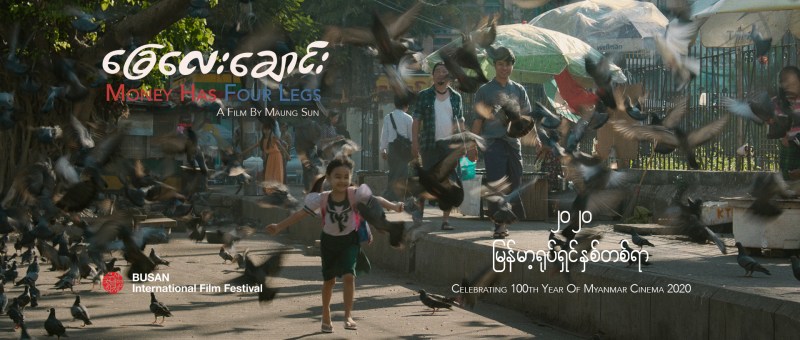
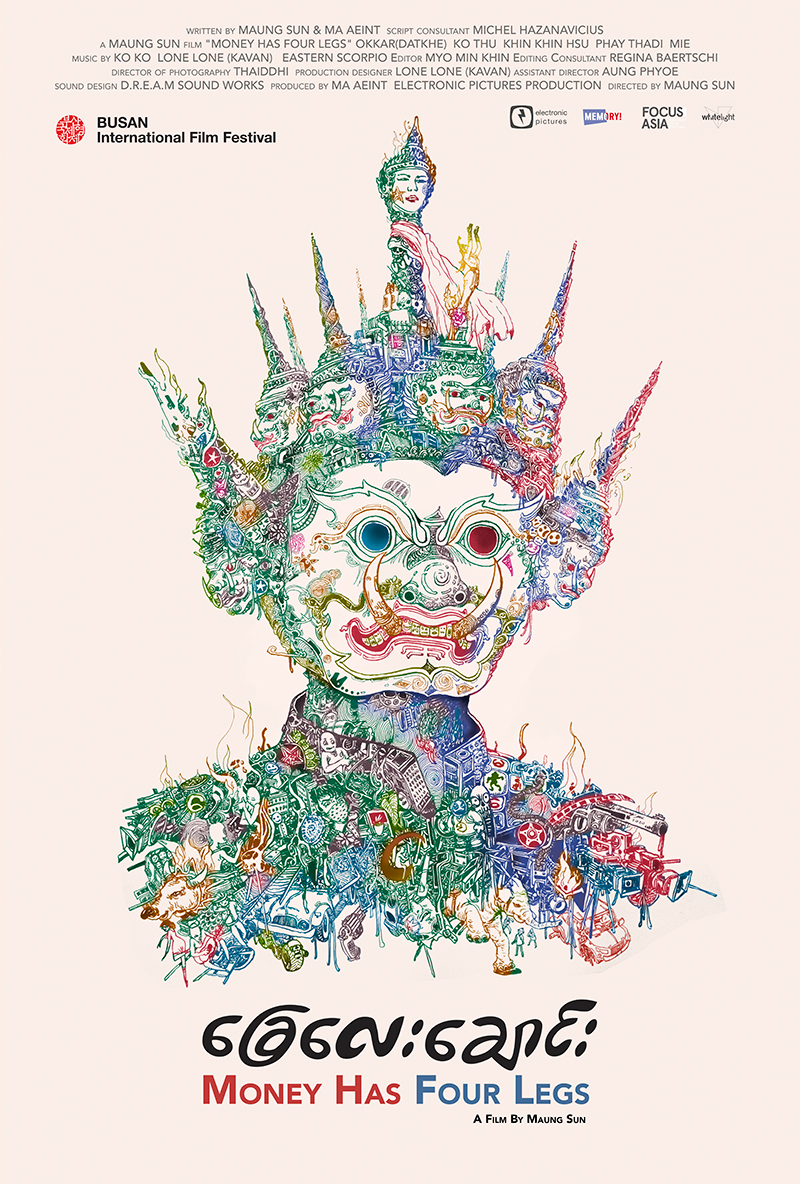
Money Has Four Legs (ခြေလေးချောင်း, Maung Sun, 2020)

In an opening conversation with the local censor, ambitious director Wai Bhone (Okkar) is cautioned that his film has too much smoking in it which might set a bad example for the young, same goes for drinking. Also, there’s too much swearing, perhaps he could opt for a less offensive substitute such as “futhermucker” for instance, it’s important to show how polite Burmese people are after all. Best to cut the sex scene too. As for the ending, well, that’s non-starter better insert some stuff about how wonderful the police are and make sure the hero either turns himself in or is killed because crime can’t pay when it comes to the movies! As the “conversation” ends, the censor picks up a hefty copy of the 1996 Motion Picture Law and uses it to swat a fly which is rather like what’s just happened to poor Wai Bhone who was just trying to add a little contemporary swagger to the umpteenth remake of a popular gangster movie from 1940. 

To one degree or another, director Maung Sun will break almost all of these rules in meta satire Money Has Four Legs (ခြေလေးချောင်), Wai Bhone receiving a dirty look from an earnest nurse when visiting a friend in the hospital, a cigarette seen briefly in his hand as captured from behind. Set in a Myanmar on the verge of a coup, Sun’s film takes place in a world in a state of collapse in which power cuts are commonplace, banks are going bankrupt, and hypocrisy rules yet all Wai Bhone really wants to do is make art even if everyone keeps telling him it’s pointless. More than political strife Wai Bhone finds himself trapped by the legacy of his filmmaker father whose award, topped with a valuable gold star, sits on top of his bookcase. A neighbour even at one point stops Wai Bhone in the street to tell him he’s not a patch on his dad while warning him not to “destroy the original stories” because “we must safeguard the dignity of our film industry”. 

Even Wai Bhone’s producer Tin Htut tells him that he only gave him the job out of loyalty to his father, but if anyone’s in danger of damaging the dignity of the Burmese film industry it isn’t Wai Bhone. Having shot a series of cheap straight to video flicks, this is Wai Bhone’s first shot at a commercial feature but as he explains to his brother-in-law it’s another remake of popular 40s gangster tale Bo Aung Din, “every remake made money so the producers are fond of it”. Meanwhile, his leading actress complains the lines are “too long” to remember so she’s written them on her hand to read out robotically, the lead actor hardly ever comes to set because he’s also starring in another much better movie, and no one has time to get a permit for shooting so sometimes you might need to hop a wall or two “for art”. If all that weren’t enough, Wai Bhone foolishly casts his brother-in-law Zaw Myint as an extra despite knowing of his tendency for random and unnecessary violence, something which comes back to bite him when he ignores the cinematographer’s advice that his sudden decision to switch to close quarters handheld for a combat scene is likely dangerous. Zaw Myint breaks the hideously expensive camera landing him with yet another debt and the prospect of being out of a job. 

The film’s title is itself an ironic joke which links back to Wai Bhone’s daughter watching a bootleg copy of the animated Animal Farm he ironically picked up for a pittance at the market. Humans have two legs (good), but money has four (bad). No matter how fast you run after it you’ll never catch up, and if it’s chasing you there’ll be no escape. Money is in a sense at the route of all Wai Bhone’s troubles in that it places a strain on his relationship with his wife Seazir (Khin Khin Hsu) who had a steady job at the bank until it went bust in the midst of a money laundering scandal, while his rent is so overdue that his landlady’s already started showing the apartment to prospective new tenants. Wai Bhone wants to make “art” but he can’t do that given the repressive censorship regime of contemporary Myanmar. Meanwhile he still uses money as a marker of success, judging himself for his inability to make it as they find themselves raiding their daughter’s savings account while struggling to pay for the cram school classes she wanted to enrol in because all her friends are going. 

For all of these reasons, he finds himself stepping into the world of film in embodying the figure of Bo Aung Di complete with bandana and fake pistols as he lets Zaw Myint talk him into a “bank heist” mopping up some of that leftover cash his wife mentioned before someone else gets there first only for the bank manager to end up making off with some of it himself while a baying mob hammer at the doors wanting to know what they’re supposed to do now their savings have been sucked into a black hole of impropriety. Wai Bhone only starts to gain a foothold by blackmailing his producer over his affair with the talentless actress, Tin Htut keen to stress that he’s only giving him his job back because he thinks the way he makes films is “artistic” despite having scolded him earlier that films are only successful when they make money so you have to give the audience what they want advising him to cut the action and add more “love scenes” which the censor of course told him to include only as “symbolism”. Wai Bhone really can’t win but despite his foray into crime retains his good heart, temporarily pausing his heist to take an injured dog to the vet, and in the ironic conclusion literally committing a radical act of wealth redistribution as a Buddhist song on the radio sings of wretches getting rich while Wai Bhone if accidentally shares his merits with everyone. 


Money Has Four Legs screened as part of this year’s BFI London Film Festival

Original trailer English subtitles

Bo Aung Din is also available to stream via YouTube though in poor quality and without subtitles

BFI London Film Festival Confirms Complete Programme for 2021

The BFI London Film Festival returns (mostly) to cinemas for 2021 with some titles also streaming online via BFI Player and/or playing select regional venues. This year’s East Asia selection includes two films by Ryusuke Hamaguchi, a world premiere of a new Lav Diaz, and a hotly anticipated Korea/Thailand horror co-production.

Drive My Car (ドライブ・マイ・カー, Ryusuke Hamaguchi, 2021)

Curzon Soho: Saturday 09 October 2021 17:05

BFI Southbank, NFT1: Thursday 14 October 2021 20:00

Also screening: Chapter Cardiff, Edinburgh Filmhouse, Glasgow Film Theatre, HOME Manchester, Showroom Cinema Sheffield, Tyneside Cinema Newcastle, Queen’s Film Theatre Belfast, and Watershed Bristol.

A stage actor and director (Hidetoshi Nishijima) attempting to come to terms with the death of his unfaithful wife casts her lover in his upcoming multi-lingual production of Uncle Vanya while developing a relationship with the reticent young woman driving his car in Hamaguchi’s adaptation of the Haruki Murakami short story.

Wheel of Fortune and Fantasy (偶然と想像, Ryusuke Hamaguchi, 2021)

ODEON Luxe West End: Sunday 10 October 2021 17:20

BFI Southbank, NFT2: Monday 11 October 2021 17:50

Streaming: Sunday 10 October 2021 18:30 to Monday 11th October 18:30

A triptych of romantic tales from Ryusuke Hamaguchi in which a young woman realises her friend is unwittingly dating her ex, a student attempts to seduce a professor, and two women connect through an instance of mistaken identity.

Belle (竜とそばかすの姫, Mamoru Hosoda, 2021)

BFI Southbank, NFT1: Thursday 07 October 2021 17:50

BFI Southbank, NFT1: Sunday 10 October 2021 14:15

Curzon Mayfair, Screen 1: Sunday 17 October 2021 12:00

Mamoru Hosoda reinterprets Beauty and the Beast as a grieving young woman becomes an in-app idol star but is also threatened by the presence of a mysterious dragon.

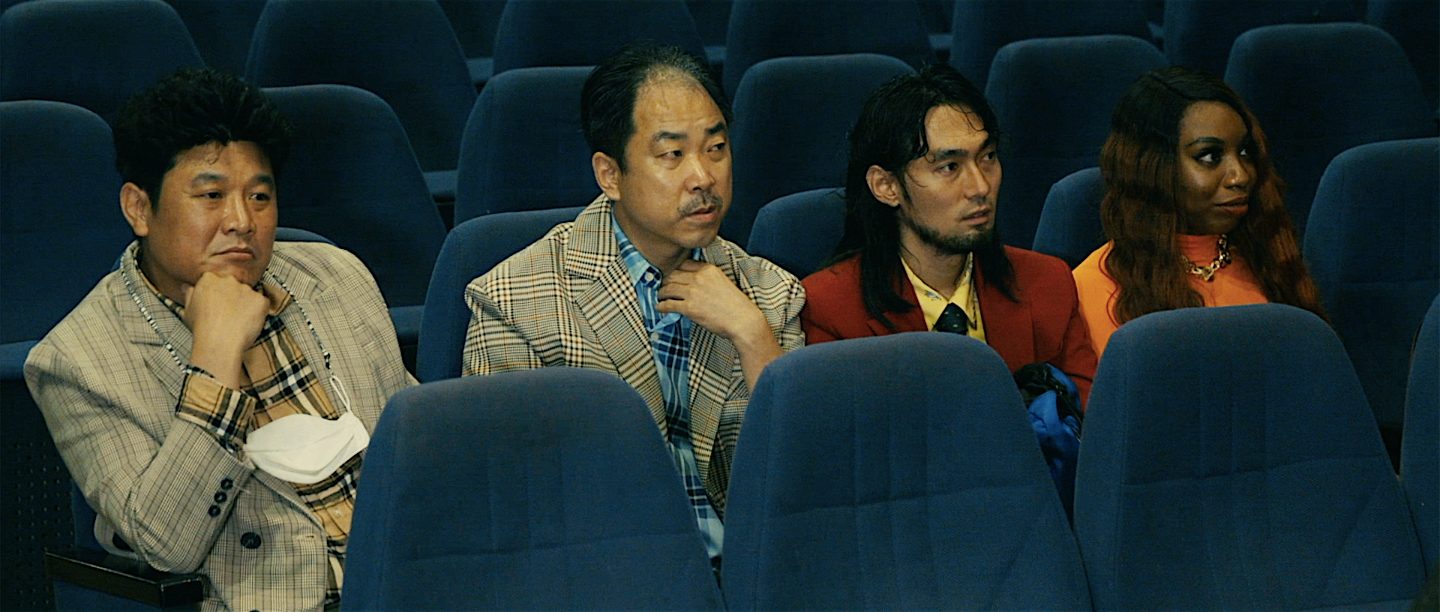
Humidity Alert (습도 다소 높음, Ko Bong-soo, 2021)

ICA, Screen 1: Wednesday 06 October 2021 21:00

BFI Southbank, NFT3: Thursday 07 October 2021 12:30

Indie comedy from Ko Bong-soo set in a cinema at the height of summer 2020 where the premiere of a new film is set to take place while the cinema’s sole employee attempts to deal with spotty air con, COVID protocol, and industry divas.

Historya Ni Ha (Lav Diaz, 2021)

ICA, Screen 1: Tuesday 12 October 2021 18:30

In Lav Diaz’ contemplation of the transformative power of art, ventriloquist Hernando returns home to get married only for the engagement to fall apart. Heartbroken he makes the decision to communicate only through his puppet and accompanies a sex worker and a teenage boy on a treasure hunt to a remote island.

Hellbound (지옥, Yeon Sang-ho, 2021)

BFI Southbank, NFT2: Friday 15 October 2021 20:20

Prince Charles Cinema, Downstairs Screen: Sunday 17 October 2021 12:45

First three episodes of the TV drama coming to Netflix later this year in which people start receiving text messages telling them they’re going to hell and at a specific date and time. You’d think it was spam, but then the demon does indeed arrive at the appointed hour to drag the afflicted to the afterlife. While the police investigate, a shady cult milks the atmosphere of anxiety in Train to Busan director Yeon Sang-ho’s adaptation of his own webtoon.

The Medium (ร่างทรง, Banjong Pisanthanakun, 2021)

Prince Charles Cinema, Downstairs Screen: Wednesday 06 October 2021 20:55

ODEON Luxe West End: Friday 08 October 2021 20:40

Korea/Thailand co-production scripted and produced by The Wailing’s Na Hong-jin and directed by Banjong Pisanthanakun in which a documentary team meet shamaness Nim who acts as a conduit for goddess Ba Yan. Having accepted the role after her sister refused it, Nim is unsurprised when her niece begins exhibiting symptoms of shamanistic awakening, but soon fears something darker may be at hand.

White Building (ប៊ូឌីញ ស, Kavich Neang, 2021)

Kavich Neang makes his fiction debut with a film focussing on the same subject as his earlier documentary Last Night I Saw You Smiling in which the residents of Phnom Penh’s iconic White Building prepare for its demolition.

Money Has Four Legs ( ြေလေးချောင်း, Maung Sun, 2021)

ICA, Screen 1: Wednesday 06 October 2021 18:15

BFI Southbank, NFT2: Thursday 07 October 2021 15:40

Contending with money issues, an unreliable crew, and increasing government censorship, an aspiring director turns to crime in order to complete his film in Maung Sun’s timely black comedy.

Ripples of Life (永安镇故事集, Wei Shujun, 2021)

ICA, Screen 1: Monday 11 October 2021 20:45

BFI Southbank, NFT2: Tuesday 12 October 2021 12:20

A local waitress, leading lady returning to her hometown, and the director and screenwriter each from Beijing attempt to shoot a film in small-town rural China in Wei Shujun’s followup to Striding into the Wind.

Vengeance Is Mine, All Others Pay Cash (Seperti Dendam, Rindu Harus Dibayar Tuntas, Edwin, 2021)

An impotent hitman living for nothing but violence falls for a female bodyguard after she effortlessly defeats him in Edwin’s genre hopping adventure romance.

Memoria (Apichatpong Weerasethakul, 2021)

Southbank Centre, Royal Festival Hall: Saturday 16 October 2021 17:30

Also screening: Chapter Cardiff, Edinburgh Filmhouse, Glasgow Film Theatre, HOME Manchester, Showroom Cinema Sheffield, Tyneside Cinema Newcastle, Queen’s Film Theatre Belfast, and Watershed Bristol.

Shooting outside Thailand for the first time, the latest from Apichatpong Weerasethakul stars Tilda Swinton as a woman visiting her sister in Colombia and becoming captivated by the local soundscape.

Wood and Water (Jonas Bak, 2021)

BFI Southbank, NFT3: Wednesday 13 October 2021 20:45

ICA, Screen 1: Thursday 14 October 2021 21:00

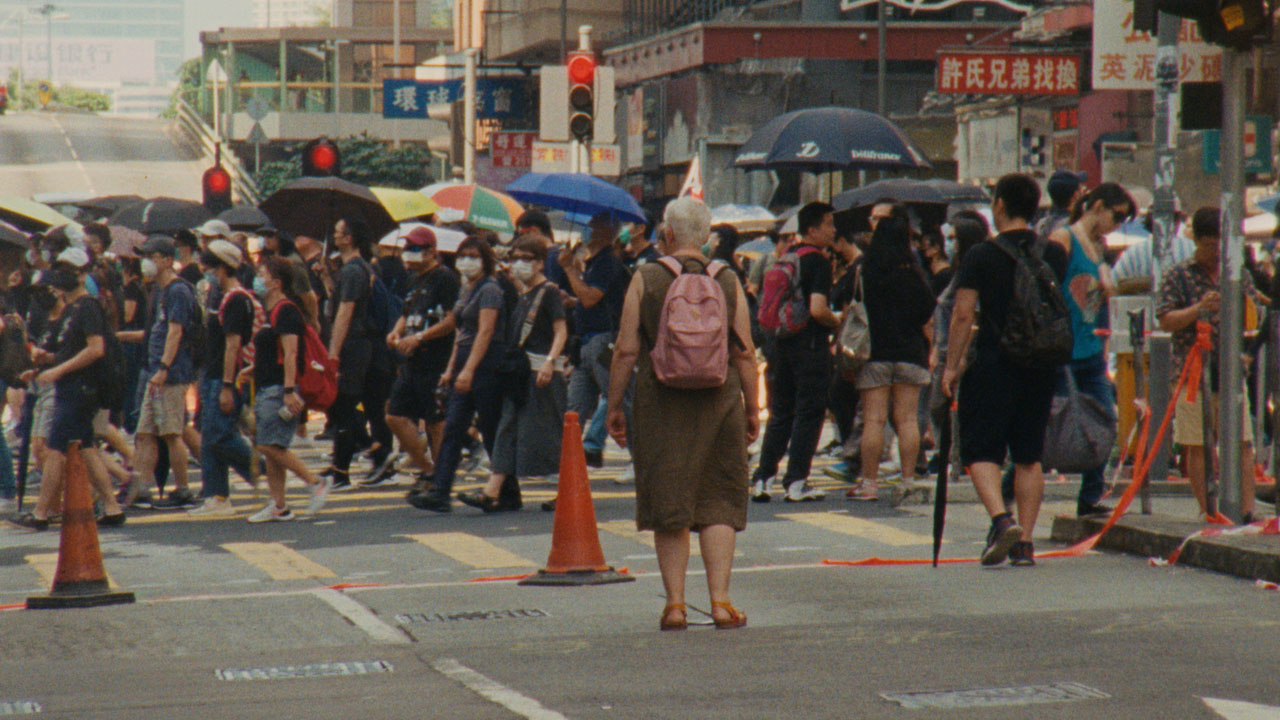
Travelogue in which a German woman travels to visit her son living in Hong Kong and wanders through the city in the midst of the pro-democracy protests.

The BFI London Film Festival takes place at various venues across the city from 6th – 17th October 2021, with some titles also streaming online or screening at various partner cinemas throughout the UK. Full details for all the films as well as screening times and ticketing information are available via the official website. Priority booking opens for Patrons on 10th September, for Champions on 13th September, and Members 14th September, with general ticket sales available from 20th September. You can also keep up to date with all the latest news via the festival’s Facebook page, Twitter account, Instagram, and YouTube channels.

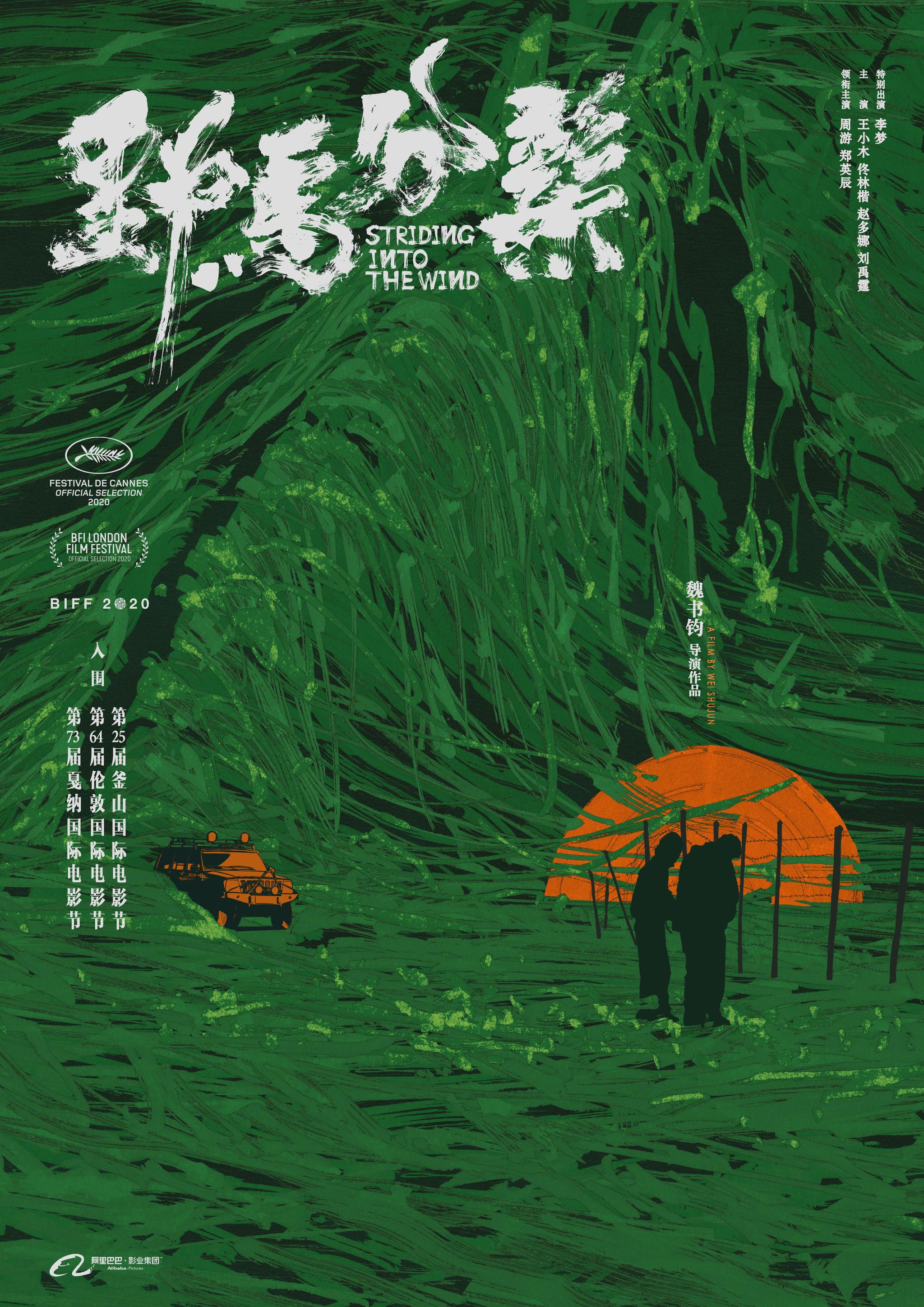
Striding into the Wind (野马分鬃, Wei Shujun, 2020)

“You’ll have a fabulous life too” dejected student Kun is advised, if only he’ll buy a secondhand ’97 Jeep Cherokee sitting forlornly on the lot of an irritated car salesman. If it’s so great why has no one else bought it, he not unfairly asks only for the salesman to reply that it’s because they’re morons who don’t know a good deal when they see one. The directorial debut from Wei Shujun whose graduation short On the Border won the Special Jury Distinction award at the 2018 Cannes Film Festival, Striding into the Wind (野马分鬃, Yěmǎ Fēn Zōng) is in many ways a tale of millennial malaise as the post-90s generation contemplate the relative elusiveness of the Chinese Dream in a society which seems to them much more authoritarian and restrictive than many would imagine.  

A 20-something film student, Kun (Zhou You) is not so much rebellious as founding his resistance in slacker passivity yet it’s his failure either to fully reject the rules of his society or accept his complicity that prevents him moving forward. As the film opens we watch him go rogue during a driving test, literally veering off course in his quest for independence as symbolised in his repeated failure to acquire a licence. So little does he care for the rules of his society that he goes looking for a car anyway, prepared to settle for the cheapest available which is what leads him to the Jeep Cherokee, wilfully mis-sold a vision of the Mongolian Dream by the overconfident salesman. Showing him videos of the wide open grasslands re-invisioned as a new frontier complete with wild horses running free over the horizon, the salesman of course neglects to mention that a vehicle of this age is not going to be particularly reliable, nor cheap to maintain especially if you can’t manage your own mechanics, and will soon be rendered unroadworthy under new emissions guidelines. Kun is being sold a pup. His quest for independence is primed to stall on the highway. It literally cannot take him where he wants to go. 

Meanwhile, he finds himself struggling under the weight of a young man’s ego squeezed on both sides by those who feel he’s not working hard enough at his studies and those who feel his quest to become an indie filmmaker is frivolous and irresponsible. Kun and his friend Tong (Tong Lin Kai) when they go to class at all more or less ignore their professor, at one point firing back at him that he teaches because he cannot do having never actually worked on professional film set. Kun’s attitude is to an extent vindicated in that he does actually seem to have more experience and be ahead of the man who is supposed to be teaching him, but on the other hand if he’d only bit his tongue and played by the rules he’d simply have passed the class and graduated rather than getting himself an instant fail for non-attendance with a side of pissing off the professor. Tong is mystified that, in essence, they’ve paid a lot of money and wasted four years to learn how to press a couple of buttons, but they’re also reminded by the not so subtle father of Kun’s girlfriend Zhi that these days you’re nothing without a PhD. Nervous and chastened, Kun lies that he might become a teacher like his mother as his parents intended, only for Zhi’s father to railroad him into applying for a steady civil service job right there and then, filling the form himself on his own laptop leaving Kun feeling even more emasculated at the hands of the older generation. 

For her part, Zhi is already getting bored with Kun’s irresponsibility. Forced to degrade herself with a part-time job as eye candy at various corporate events, she’s seemingly ready to head into a respectable middle class life while Kun is still dreaming of the grasslands and overly attached to his uncool car. She complains that he’s always saying he’s going somewhere but never actually goes, irritated when he rejects her offer to take him somewhere on her dime. Eventually she advises him to scrap the Jeep, a confrontation that threatens their relationship but Kun is still too attached to an illusionary dream of freedom to consider it. When he eventually gets to Inner Mongolia while working on a friend’s film shoot, he discovers that the “spirit of the grasslands” is largely absent. The banquet they’re invited to an awkward spectacle for tourists, the local culture repurposed and repackaged as a vision of an exoticised otherness that is the flip side of Kun’s equally inauthentic desire for a Chinese wild west. The grasslands appeal because their vast emptiness expresses infinite freedom, but paradoxically precisely because there is nothing there. 

Constantly frustrated by male authority figures from his father who is literally a cop to his resentful professor, quietly sneering girlfriend’s father, and the entire police force, not to mention his unseen mother apparently a well known professor synonymous with educational success, Kun finds himself constrained, longing to run free like the wild horses of the Mongolian plains but unable to shake off the yoke of social responsibility. Forced to give up the Jeep because of his own foolishness in misguidedly trying to evade authority, he becomes a passenger listening to the radio as a man he thought ridiculous and deluded is accorded unexpected success. Kun’s filmmaker friends emulate Wong Kar-wai, Hou Hsiao-Hsien, and Hong Sang-soo, looking beyond the Mainland for a sense of artistic cool but equally seeming to have few truly “independent” ideas of their own. The Chinese indie scene, Wei seems to say, flounders like Kun trapped by his own sense of inertia unable to free himself from an oppressive society, striding into the wind but ill-equipped to counter its resistance. 


Striding into the Wind streams in the UK 16th October, available to start between 6.30 – 7pm as part of this year’s BFI London Film Festival.

Clip (English subtitles)

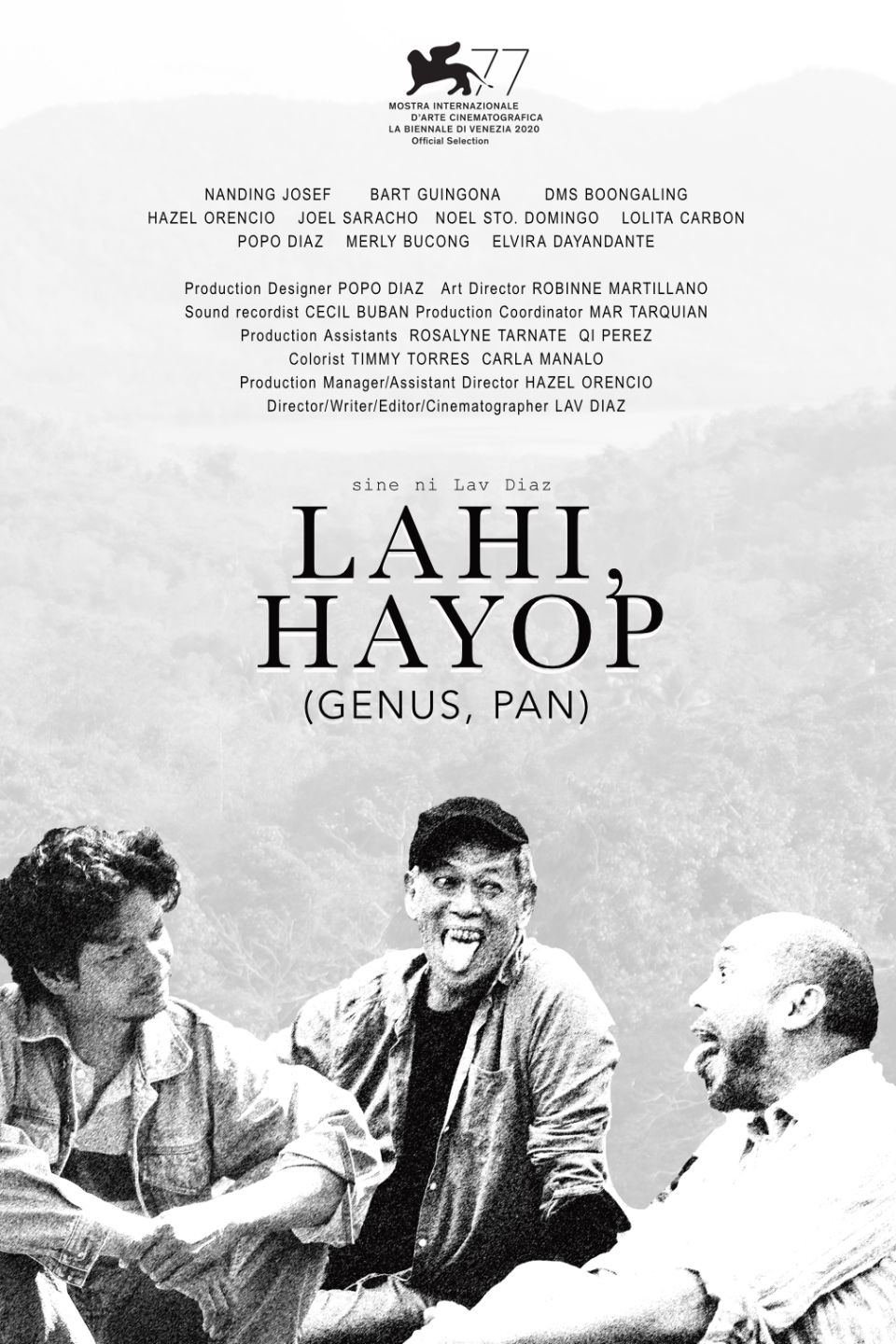
Genus Pan (Lahi, Hayop, Lav Diaz, 2020)

“Use your mind not your emotions” the hotheaded youngster of Lav Diaz’ Genus Pan (Lahi, Hayop) is repeatedly told, perhaps ironically by an earnest man of faith. Diaz’ shortest work in quite some time at a comparatively trim 156 minutes, Genus Pan is also among his most accessible in its seeming directness but carries with it hidden depths in its questioning of the “unevolved” human psyche, no better than an ape unable to overcome its baser instincts or cure the curse of human selfishness in which the only way to escape oppression is by becoming an oppressor. 

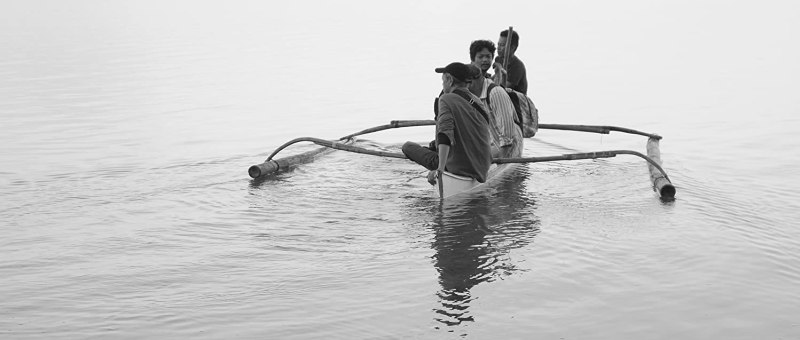
This is what Andres (Don Melvin Boongaling) fears has happened to his sometime friend, Baldo (Nanding Josef). As the film opens, the men are collecting their pay but as is customary the money is depleted before it even enters their hands with so many charges and deductions symptomatic of a world of normalised exploitation. Baldo found jobs at the goldmine for the young Andres and his old friend Paulo (Bart Guingona) but expects a cut of their pay as a brokerage fee, money Andres is loathe to give him both on principle and because he needs it to pay for medical treatment for his ailing sister. Baldo, however, is unsympathetic accusing the young man of ingratitude and disrespect. The three men are to travel back to their home village together on a boat Baldo has paid for, instructing the boatman to drop them at the far end of the island in order to avoid having to pay any more “fees” to the various authorities they may otherwise encounter in town, after which they will journey on foot through the forest. 

The forest itself is a primal place in which man is most aware he is also an animal. This fact is perhaps brought home to the men thanks to a broadcast received on Paulo’s radio in which a psychologist expounds on the idea that the human brain is largely underdeveloped, the marking of a developed mind a predisposition towards altruism. There is not so much difference, he argues, in the mind of an average human with that of an ape, “Genus Pan”, ruled by its basest instincts of selfishness and violence. Left alone in the forest and forced into mutual dependency, the differences between the three men each in their own way archetypes begin to strain their relationship. Paulo, a deeply religious man who spends most of his time reading the bible, is the peace maker but is also hiding a dark secret which perhaps informs his unexpectedly cynical advice to the earnest Andres who declares himself sick of his world of constant corruption, unwilling to be “a witness to this kind of dirt all my life”. Andres resents Baldo not only for the practical impact of his attempts to extort him, but that he has given in to the world’s venality and become another oppressor just like everyone else. Paulo advises him to use his head not his heart which would doubtless tell him that resistance is futile, but even in his nobility Andres cannot escape his rage at this infinitely feudal world in which a powerful few carry untold authority. He alone raises concerns about conditions at the goldmine where being buried alive is not an uncommon occurrence, not to mention the other mysterious deaths and disappearances, and longs for answers as to the murder of his brother he suspects for refusing to pay bribes to the local authorities, along with the spurious imprisonment of a local woman, the rape of a pair of sisters, and abuses against an indigenous mountain community.  

At the forest’s edge, Paulo reveals to him what it might have cost to escape his oppression as a member of a circus ruled by a cruel and sadistic tyrant, lamenting that in truth they were never able to escape Hugaw Island the ironic name of which apparently means “dirt”, given to it under the Japanese occupation in which it housed a comfort women station where women kidnapped from surrounding islands were forced into sexual slavery. The action shifting to another three men, the oppressors the Captain (Popo Diaz), Sergeant (Noel Sto. Domingo), and the least “developed” mind of all the calculating thug Inggo (Joel Saracho), further history of the island is revealed in its past as a smuggling hub unfairly defamed by foreign powers who spread rumours of its dangers to keep the curious away. Inggo longs to get his hands on the “jar of truth”, a burden later entrusted to Baldo’s daughter Mariposa (Hazel Orencio) who can move only very slowly yet is often carrying tremendous weight. 

Shooting in his familiar style, monochromatic static camera and long takes, Diaz’ shocking shift to handheld to dramatise false testimony as Inggo conspires against Andres to quell his rebellion hints at the irrational instability of “truth” and its potential for misuse at the hands of men like Inggo. A lone holdout against post-colonial feudal oppression, Andres’ refusal to capitulate cannot stand. As Paulo had warned him, he is a threat to the social order. The “smart” ones play along, and then like Baldo they join in while the Inggos of the world continue to prosper in their smug and heartless cruelty. “The island people are mute” a bereaved mother laments, “fear has taken over”. Ending on a note of intense anxiety, Genus Pan suggests that the civility we believe separates man from beast is at best paper thin while resistance is met only with futility when those in power are free to act with absolute impunity. 


Genus Pan streams in the UK 11th October, 5.30pm to 14th October, 5.30pm as part of this year’s BFI London Film Festival.

Original trailer (English subtitles)
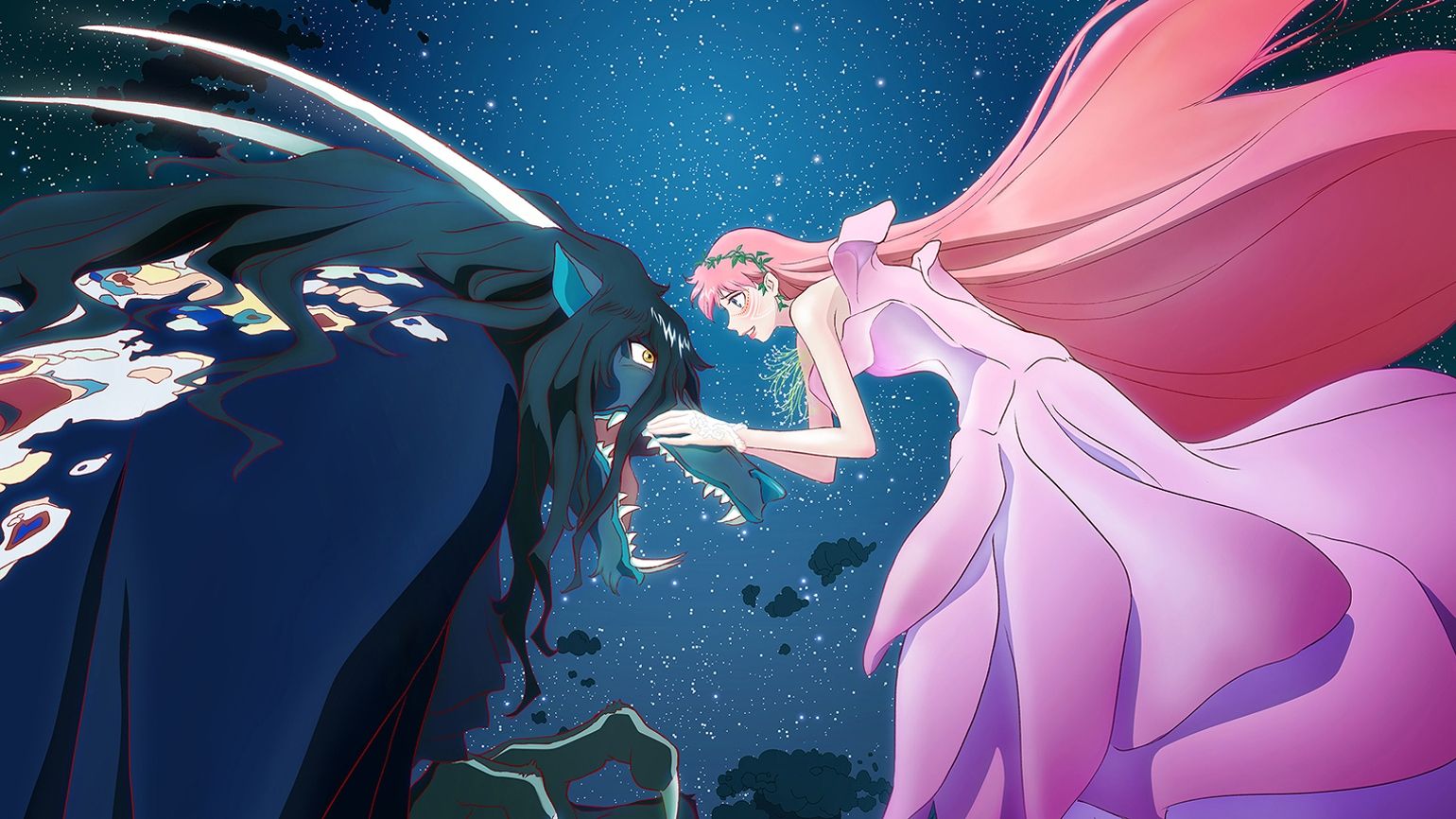
Days (日子, Tsai Ming-liang, 2020)

It’s not so much time that makes you feel old as the weight of all the days. Returning with his first narrative feature since 2013’s Stray Dogs, Tsai Ming-liang’s Days (日子, Rìzi) spins a tale of twinned loneliness in which two men, one young one older, one rich the other poor, embody two kinds of sadness as they live out their days of detachment as living ghosts in world which seems to have no place for them. 

Tsai opens with the face of his muse, Lee Kang-sheng billed only in the credits as Kang a wealthy man living in a spacious home surrounded by the beauty of nature. The lengthy, unbroken scene finds him staring impassively out of a window while a storm rages outside, the sound of rain falling while the reflection of trees blown by the wind is eerily reflected behind him. We can see that Kang is a man in great pain, his eyes filled with a melancholy desperation. He stretches and rubs his neck, his physical discomfort perhaps a manifestation of the emotional suffering which he tries to heal by fire, enduring painful moxibustion in search of relief.

Meanwhile, in Bangokok, Laotian migrant Non (Anong Houngheuangsy) is quietly tending fires of his own, firstly those of ritual offering and secondly of sustenance as he stokes the embers to cook the old fashioned way in his tiny, spartan apartment. While Kang is a resolutely passive presence, Non fills his lonely days with industry, constantly at work as we witness him laboriously prepare his dinner with documentary realism. Non is at home with solitude in the private space, but forever alone outside of it. He stands to one side at the market where he works as customers mingle around him, always out of place and unseen like a ghost hovering in the corner of the frame. 

Parallel lines who meet, the two men eventually share a poignant, nominally transactional encounter in a nebulous third space of a neutral hotel room to which Kang has called Non for a sensual massage, presumably how he makes ends meet in Bangkok. Once again the young man does all the work while Kang lies impassive, Non oiling his fingers as he runs his hands over the older man’s body easing his pain through physical contact before he retreats off screen and we hear fabric falling, his Calvin Kleins hitting the floor as the two men briefly connect through an intense act of lovemaking, later proceeding to the shower where Non, still in the role of caregiver, tenderly washes the dejected Kang. Before he leaves, Kang idly hands the younger man the gift of a music box, a spontaneous decision that sparks a moment of melancholy emotional release. They struggle to say goodbye. Non leaves and Kang chases after him, Tsai lingering in the empty space of the hotel room while the two men head for dinner before returning to their respective days in someways changed and others not. 

His pain perhaps temporarily eased, Kang is not quite so passive as before, doing something or other with a fish and going for late night walks, but still finds himself lying awake while the sounds of outside wash over him, his eyes wide with fear and sadness. Non, meanwhile, returns to his routine but even more of a ghost than before, sadly cradling the music box as if in memory of his momentary connection its sound drowned out by the noise of anonymous modernity while the world goes on all around him, an invisible figure ignored by passersby walking alone into the night. 

A opening title card warns us that this is a film intentionally unsubtitled, much like life left to our own shallow grasp of meaning in thought or action, but what little dialogue there is hardly requires interpretation we feel it all the same. Tsai conjures an almost Antonionian sense of emptiness in place, a lengthy still shot of a “haunted” building peeling at the facade suddenly brought to life by the brief shadow of a cat in a window, while abruptly shifting to handheld to follow Kang, somehow alone and clutching his neck in pain in the chaotic streets. Both men exist at angles to the world, as if in some kind of secondary plane, meeting only for an instant and then returning to their solitary existences with only the brief memory of connection perhaps more painful than its absence. Tsai charts competing reactions to existential loneliness, the listless ennui of the wealthy Kang and the ceaseless industry of migrant worker Non, but finds them both equally displaced, searching for connection in an increasingly disconnected world. 


Days streams in the UK until 11th October, 6.30pm as part of this year’s BFI London Film Festival.

Original trailer (dialogue free)

A Day-Off of Kasumi Arimura Ep. 1 (有村架純の撮休 第1話, Hirokazu Koreeda, 2020)

As has sadly become all too clear recently, the Japanese entertainment industry can be a brutal place rife with exploitation in which performers are often expected to push themselves well beyond the limit or risk offending their agencies and thereby disrupting their careers. That is perhaps why a “day off” for a headline actress seems like a concept incongruous enough to spawn an eight-part, late night TV drama aired on premium channel WOWWOW. Often around half an hour in length (though this one is a little longer), drama series running after midnight have the freedom to embrace darker themes and can sometimes be risqué, but more often than not cater to those looking for easy comfort watching often revolving around food and/or local culture such as in the phenomenally popular Midnight Diner which was later picked up by Netflix, or the much loved Solitary Gourmet.  

The chief draw for international viewers, however, is that the first and third episodes of A Day Off of Kasumi Arimura (有村架純の撮休 第1話, Arimura Kasumi no Satsukyu) are directed by Hirokazu Koreeda, with Rikiya Imaizumi (Their Distance; Little Nights, Little Love) and Santa Yamagishi also doing double duty, while Satoko Yokohama (Bare Essence of Life, The Actor) and Megumi Tsuno (Ten Years Japan “Data”) fill the remaining slots. Each of the eight self-contained stories features lead actress Kasumi Arimura (Sekigahara, Narratage, Flying Colors) playing a fictionalised version of herself enjoying a surprise “day off” when, for one reason or another, shooting is cancelled at short notice. In the first episode under review here penned by Sakura Higa, Kasumi is currently filming a TV drama playing a top prosecutor but is given the day off after a member of the creative team calls in sick with flu. As a producer points out, flu isn’t the sort of thing that would have held up filming in the old days but what can you do?

Accordingly, Kasumi decides to take a bullet train to her hometown in southern Japan to visit her mother, Yumiko (Jun Fubuki). Having not returned for New Year, Kasumi is perhaps slightly put out to realise that her mother seems to lead a very active life and though she is obviously happy to see her it’s clear that she doesn’t just sit around wishing her daughter would call. On their way home from the station, Yumiko takes Kasumi by the supermarket to pick up supplies for a home cooked dinner where she shows her off to the cashier with whom she seems to be on extremely friendly terms. Kasumi smells romance in air, and even if a little surprised is not unsupportive but unwittingly puts her foot in it by bringing up the fact that Mr. Onishi (Akio Kaneda) is divorced and has a son from his previous marriage. 

It’s not Mr. Onishi that Kasumi ends up worrying about, however, so much as a mysterious young man, Makoto (Shinnosuke Mitsushima), who calls in to see her mother. While Yumiko has her signing autographs for all her friends and posters of her hit movies Flying Colors and Cafe Funiculi Funicula standing in the living room, Kasumi can’t help but feel put out having come all this way only to see her mum much more interested in this random man even if she seems to have come more out of duty than of love, disappointing Yumiko by declaring she won’t be staying overnight but heading back to Tokyo to go over her lines. Out of jealousy and a slight awkwardness, she worries as to what Makoto’s true motives are, especially after hearing her mother hint that she’s been giving him money, though it’s perhaps also true enough that she is simply grateful to have someone close by to help out with small but irritating tasks like changing the chain on a bicycle or getting rid of unneeded appliances. What Kasumi realises, however, is that her mother is harbouring a sense of guilt that relates to their perhaps atypical family history, something which she herself is forced to process through her surprise journey home which finds another echo in her relationship with her sickly, or not as it turns out, colleague. 

More or less a three hander, the episode is like much of Koreeda’s work replete with the detail of everyday life and the slight awkwardness of familial reunion. On stepping into her childhood home, Kasumi is chided by her mother for behaving like a guest, signalling that she no longer views herself as someone who belongs there or has the right to simply walk in. Kasumi never gets round to talking to her mother about whatever it was she might have wanted to talk about, but through their encounter with Makoto the two women begin to repair their relationship, meditating on the things which have changed while they were apart and those which haven’t. A beautifully gentle tale of familial reconnection, Kasumi Arimura’s first day off is another slice heartwarming drama from the empathetic director in which an actress takes the day to play herself and learns to make peace with the past by accepting the present.


A Day-Off of Kasumi Arimura Ep. 1 streams in the UK 10th October 1pm to 1pm 13th October as part of this year’s BFI London Film Festival.

Series trailer (no subtitles)

BFI London Film Festival Confirms Complete Programme for 2020

The BFI London Film Festival returns for 2020 a little different than you remember it, but even within the concentrated programme there are a few East Asian gems to be found. This year’s edition will be a mix of online and physical events taking place at cinemas around the country and in your living room via BFI Player.

Days (日子)

Tsai Ming-liang’s latest stars Lee Kang-Sheng as a wealthy man who ventures into the city to seek treatment for neck pain and encounters a young masseur whose life is no less lonely if much less grand.

Screenings:

  • BFI Southbank, NFT 2: 8th October, 17.30
  • BFI Southbank, NFT 3: 8th October, 17.40
  • ICA: 9th October, 19.40

Online:

  • BFI Player: available 8th October, 18.30 – 11th October, 18.30

Striding Into the Wind (野马分鬃)

Semi-autobiographical road movie from Wei Shujun in which a young film student in his final year spends his time driving around China in a Jeep Cherokee.

Online:

  • BFI Player: available 16th October 18:30 – 19.00

Genus Pan (Lahi, Hayop)

The latest from Philippine filmmaker Lav Diaz runs a trim 156 minutes but once again engages with the complex history of the nation through the story of three miners traversing the unforgiving wilderness of a mythical island as they journey towards their home village.

Online:

  • BFI Player: available 11th October, 17.30 – 14th October, 17.30

A Day-Off for Kasumi Arimura (有村架純の撮休)

The first episode of the 2020 WOWWOW TV series directed by Hirokazu Koreeda starring actress Kasumi Arimura (Sekigahara, Narratage, Flying Colors) as a fictionalised version of herself enjoying a day off between filming. Only the first episode is available here but the eight-part series of self-contained stories also includes episodes directed by Rikiya Imaizumi (Their Distance, Little Nights, Little Love), Santa Yamagishi, Satoko Yokohama (Bare Essence of Life, The Actor), and Megumi Tsuno (Ten Years Japan “Data“). Koreeda also directed the third episode, with Rikiya Imaizumi also doubling up directing episodes two and six, and Santa Yamagishi four and eight. A followup series starring actor Ryoma Takeuchi and directed by Ryuichi Hiroki, Eiji Uchida, and Hana Matsumoto, airs in Japan in November.

Online:

  • BFI Player: available 10th October 13.00 – 13th October, 13.00

So how does it work? East Asian titles aside, a number of the bigger films will be screened in cinemas around the country including London’s BFI Southbank, ICA, Curzon Soho, Curzon Mayfair, Cine Lumiere, Barbican and Prince Charles Cinema, as well as HOME, in Manchester; Watershed, in Bristol; Glasgow Film Theatre; Broadway, in Nottingham; Showroom, in Sheffield; Queen’s Film Theatre, in Belfast; and Chapter, in Cardiff. All of the East Asian titles will however be available via BFI Player within a specific window during which you will need to press play. You will then have three hours to finish watching and you can only watch once. All titles are geolocked to the UK, and you can access BFI Player via PC or Mac, iOS or Android devices (unfortunately LFF titles are not available via the Samsung TV app and are not compatible with AirPlay or Chromecast). Prices for cinema tickets vary with venue (for BFI Southbank, tickets are priced at £14 with a £2 discount for members), while BFI Player virtual premieres are priced at £12, £10 for members. Tickets can be booked online or via telephone from 14th September for Patrons, 15th September for Champions, 16th September for Members, and 21st September for the general public.

The BFI London Film Festival runs 7th to 18th October, 2020. The complete programme can be found on the official website along with full details for all the films as well as ticketing links. You can also keep up to date with all the latest news via the festival’s Facebook page, Twitter account, Instagram, and YouTube channels.

BFI London Film Festival Confirms Complete Programme for 2018

1272508_burning_924331The BFI London Film Festival returns for 2018 with a packed programme of the best in recent international cinema. As usual there are a fair few East Asian films on offer including the long awaited return from Lee Chang-dong, the latest from Jia Zhang-ke, and Bi Gan’s 3D followup to Kaili Blues.

Cambodia

the prey poster low res

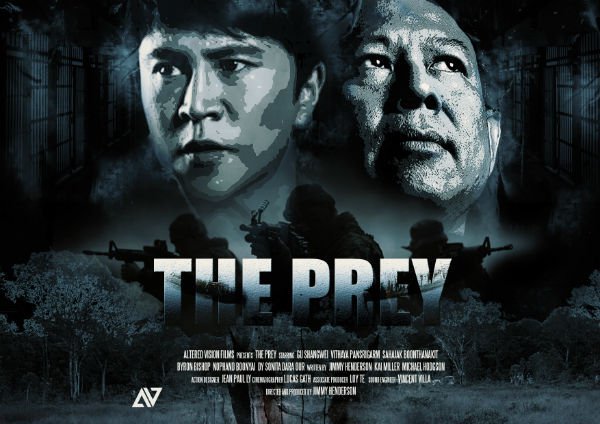
  • The Prey – Jimmy Henderson’s Jailbreak followup follows an undercover cop arrested during an operation who subsequently gets drawn into a corrupt prison warden’s sideline of sending prisoners out as targets for hunters while the Chinese military plan a rescue mission.

China

ashes08020203-r-c

  • Ash is Purest White – in the latest from Jia Zhang-ke, Zhao Tao plays a gangster’s moll who goes to prison on his behalf only to find that her loyalty has not been valued.
  • Dead Pigs – Cathy Yan satirises the modern Chinese economy through the tales of a collection of people caught up in the machinations of a shady real estate conglomerate.
  • Long Day’s Journey into Night – a man returns to his home village after many years for his father’s funeral and to look for lost love in Bi Gan’s Kaili Blues followup.
  • Shadow – Zhang Yimou returns to the world of period epics with a tale of proxy war as a great general (Deng Chao) makes use of a double to combat palace intrigue.
  • Suburban Birds – an engineer finds a diary of a boy with the same name giving way to a tale of adventure when one of the boy’s friends goes missing in Qiu Sheng’s debut feature.

Hong Kong

Family Tour still 1

  • A Family Tour – A Chinese director living in exile in Hong Kong travels to Taipei to present a controversial film banned in the Mainland, but also to see her mother who is travelling around the island on an old persons’ package tour. Not wanting to attract attention, she follows the coach around pretending to be a local.

Indonesia

May the devil take you still 1

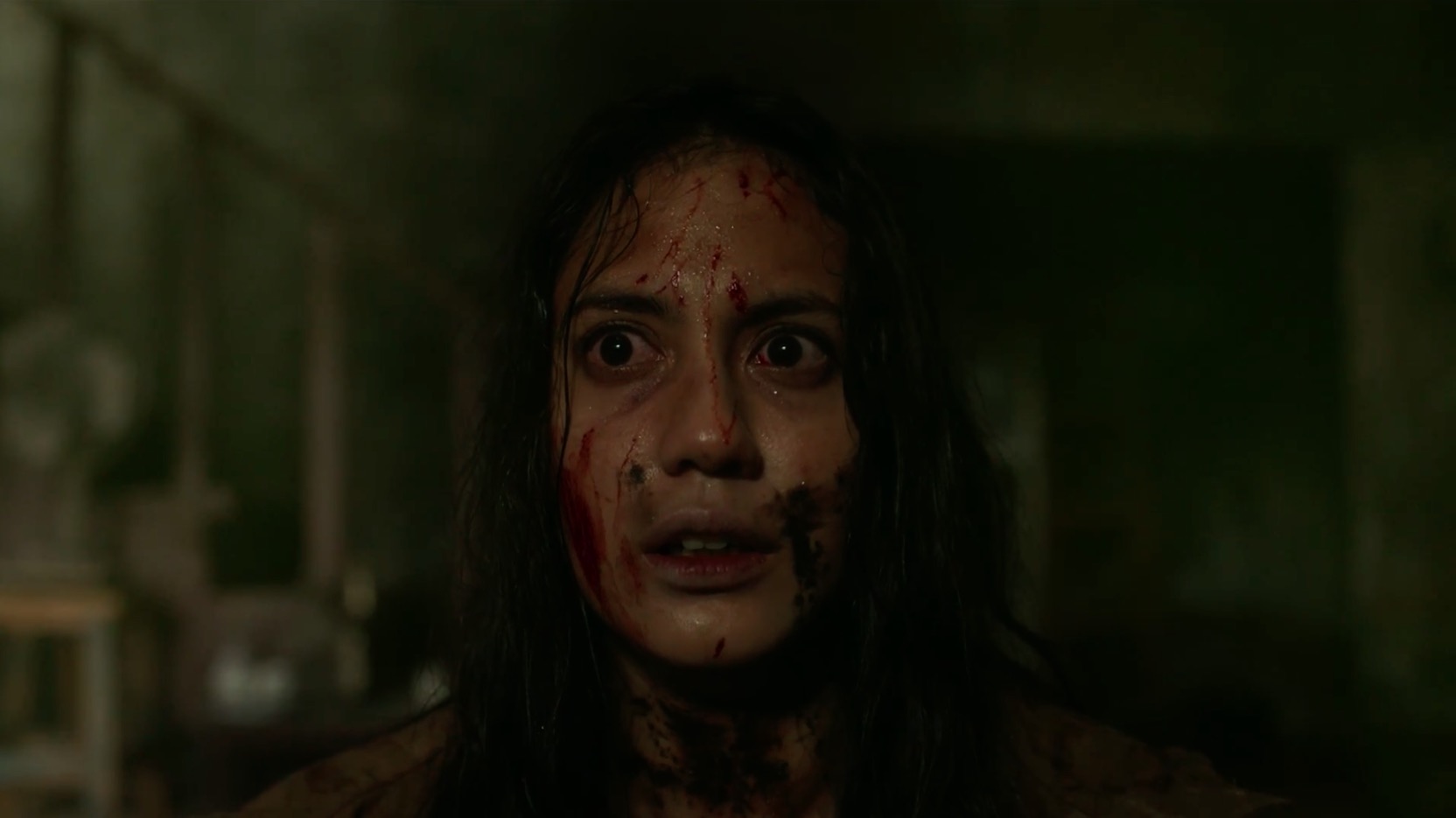
  • May the Devil Take You – a young woman pays a long overdue visit to her estranged father who is dying. With doctors unable to identify a cause for his condition, the supernatural begins to raise its head.

Japan

Aasako 1 & II

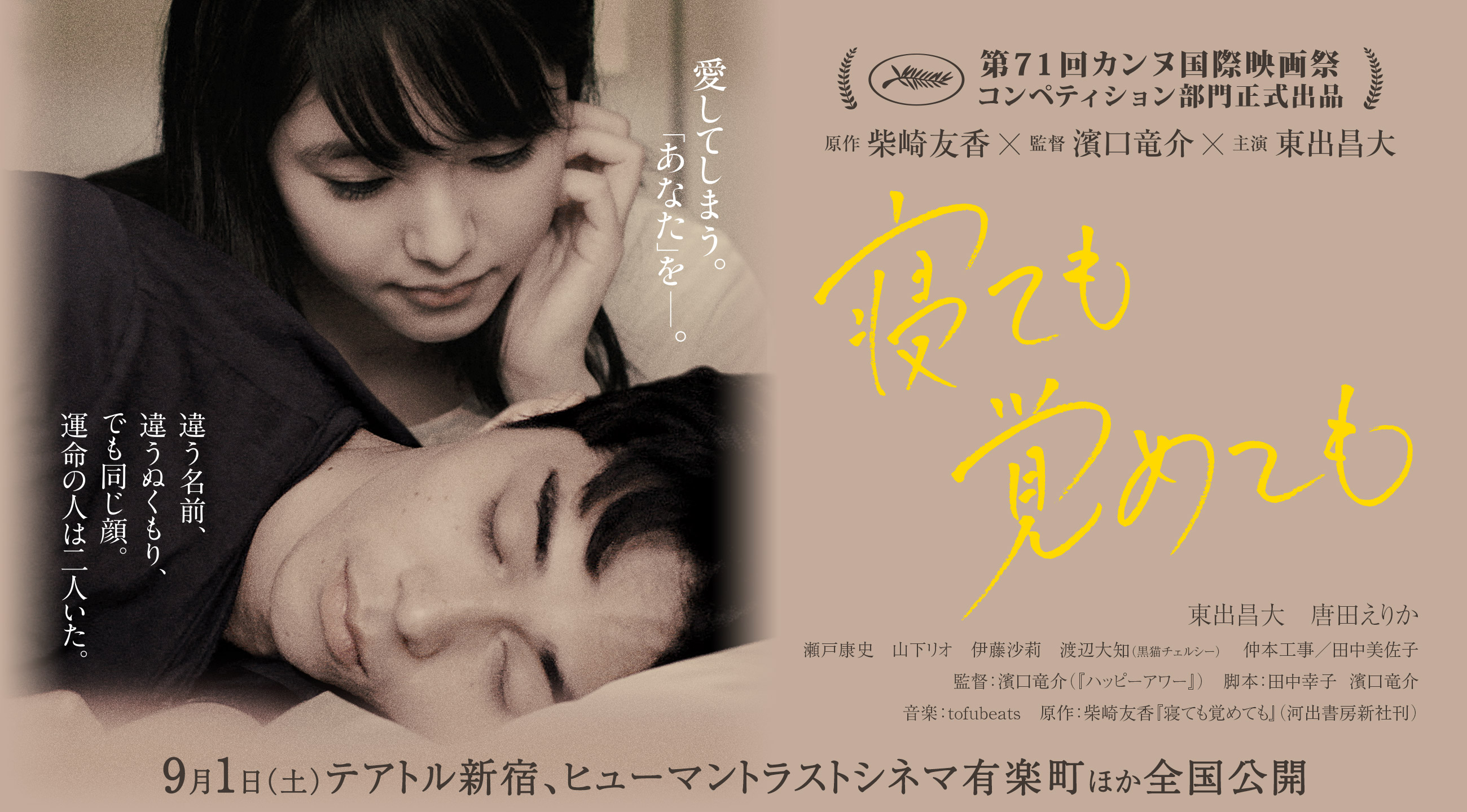
  • Asako I & II – Ryusuke Hamaguchi adapts Tomoka Shibasaki’s novel in which a young woman spots a man who looks exactly like her long absent lover in cafe, only he has a completely different personality.
  • Mirai – a little boy learns to cope with the arrival of his baby sister in the latest from Mamoru Hosoda.
  • Of Love & Law – Hikaru Toda reunites with Love Hotel’s Kazu and Fumi and explores their lives and work at an Osakan law firm specialising in minority issues. Review.

Korea

Last Child still 1

  • Believer – Lee Hae-young offers a Korean take on Johnnie To’s Drug War.
  • Burning – the long awaited return by Korean auteur Lee Chang-dong, Burning adapts a short story by Haruki Murakami and revolves around three people – a novelist, another man, and a fashion model, as they become embroiled in a strange incident.
  • Last Child – moving drama in which a bereaved family takes in the boy their son died saving only to discover all is not as it seems. Review.
  • Little Forest – gentle tale in which a wounded young woman retreats to her country home to figure things out. Review.
  • The Spy Gone North – Yoon Jong-bin’s thriller follows a South Korean spy on an infiltration mission in the North.

The festival will also be previewing the first two episodes of Park Chan-wook’s BBC TV series, The Little Drummer Girl.

Events

  • Lee Chang-dong screentalk – director Lee Chang-dong will be taking part in a screentalk at the BFI on 20th October, 12pm

The BFI London Film Festival takes place at various venues across the city from 10th – 21st October 2018. Full details for all the films as well as screening times and ticketing information are available via the official website. Priority booking opens for Patrons on 4th September, for Champions on 5th September, and Members 6th September, with general ticket sales available from 13th September. You can also keep up to date with all the latest news via the festival’s Facebook page, Twitter account, Instagram, and YouTube channels.