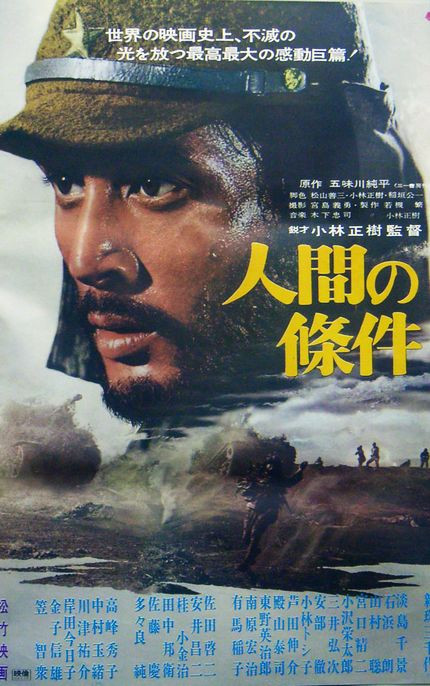
The Human Condition (人間の條件, Masaki Kobayashi, 1959-61)

human-condition

Review of Masaki Kobayashi’s magnum opus The Human Condition (人間の條件, Ningen no Joken) first published by UK Anime Network


If Masaki Kobayashi had an overriding concern throughout his career, it was the place of the conflicted soul within an immoral society. Nowhere is this better articulated than in his masterwork – the nine and a half hour epic, The Human Condition. Adapted from a novel by Junpei Gomikawa, Kobayashi’s film also mirrors his own wartime experiences which saw him conscripted into the army and sent to Manchuria where he was accounted a good soldier, but chose to mark his resistance to the war effort by repeatedly refusing all promotions above the rank of Private. Kaji, by contrast, essentially sells his soul to the devil in return for a military exemption so that he can marry his girlfriend free of the guilt that comes with dragging her into his uncertain future. At this point Kaji can still kid himself into thinking he can change the system from within but to do so means compromising himself even further.

The first of three acts, No Greater Love, takes place in Manchuria during the Japanese expansion where Kaji is working for a Japanese steel company. Fully aware that the company is using forced and exploitative labour, Kaji has been tasked with increasing productivity and has written a comprehensive report indicating that introducing better working conditions would positively affect efficiency as there would be less absenteeism and fewer sickness related gaps in the line. His boss is impressed and presents him with an offer of promotion managing a mine in the North. Kaji is conflicted but ultimately decides to accept as the post comes with a certificate of military exemption so he can finally marry his girlfriend, Michiko. However, his progressive ideals largely fall on deaf ears.

Road to Eternity finds him in the army where his left leaning ideas are even less appreciated than they were at the mine. Asked to train recruits, Kaji once again enacts a progressive approach which takes physical reinforcement out of the process and focusses on building bonds between men but his final battle comes too early leaving his team dangerously exposed. Kaji is briefly reunited with Michiko who has made a perilous journey to visit him but neither of the pair knows when or if they will see each other again.

The concluding part, A Soldier’s Prayer, finds a defeated Kaji wandering the arid land of Northern Manchuria on a desperate quest south with only the thought of getting back home to Michiko keeping him going. Eventually he is taken prisoner by Soviet forces but far from the people’s paradise he’d come to believe in, the Russians are just as unforgiving as his own Japanese. In the army he was a “filthy red” but now he’s a “fascist samurai”.

As much as Kaji is “good” man filled with humanistic ideals, he is also an incredibly flawed central presence. Already compromised by working for the steel company in Manchuria in the first place fully knowing the way the company behaves in China, his decision to take the mining job is an act of self interest in which he trades a little more of his integrity for military exemption and a marriage license. Needless to say, the head honchos at the mine who’ve been at the coal face all along do not take kindly to this baby faced suit from head office suddenly showing up and telling them they’ve been doing everything wrong. Far from listening to their experiences and arguing his point, Kaji attempts to simply overrule the mining staff taking little account of the already in place complex inter-office politics. This creates a series of radiating factions, most of whom side with Kaji’s rival and have come to view the cruel treatment of workers as a sort of office perk.

The complicity only deepens as Kaji becomes ever more a part of the machine. Kaji feels distraught after he loses his temper and strikes a subordinate, but before long he’s physically whipping a crowd of starving men in an attempt to stop them killing themselves through overeating. His biggest crisis comes when a number of Chinese prisoners are caught trying to escape and Kaji is unable to help them after specifically guaranteeing nobody would be killed. Forced to watch the botched execution of a brave man who refused to capitulate even at the end, Kaji is forced to acknowledge his own role in the deaths of these men, his complicity in the ongoing system of abuse, and his complete powerlessness to effect any kind of change in attitudes among the imperialist diehards all around him.

Kobayashi pulls no punches when it comes to examining the recent past. The steel company is built entirely on the exploitation of local workers who are progressively stripped of their humanity, whipped and beaten, starved and humiliated. The situation is only made worse when Kaji is forced to accept a number of “special labourers” from the military police. Tagged as prisoners of war, these men are not soldiers but displaced locals from Northern villages razed by Japanese troops. The train they arrive on is worse than a cattle truck and some of the men are already dead of heat, thirst, and starvation. The others pour out, zombie-like, searching desperately for food and water. Kaji is further compromised when the head of the mine has a plan of his own to subdue the men which involves procuring a number of comfort women which Kaji eventually does even if the entire process makes him sick. This is where the system has brought him – effectively to the level of a people trafficker, pimping vulnerable women to enslaved men.

Kaji comes to believe in a better life across the border where people are treated like human beings but anyone who’s read ahead in the textbooks will know this doesn’t work out for him either. Equally scathing about the left as of the right, The Human Condition has very little good to say about people, especially when people begin to act as a group. Even Kaji himself who has so many high ideals is brought low precisely because of his self-centred didacticism which makes it impossible for him to take other people’s views into account. With his faith well and truly smashed, Kaji has only the vague image of Michiko to cling to. Even so, he trudges on alone through the snowy landscape, deluded by hope, still dreaming of home. Trudging on endlessly, driven only by blind faith, perhaps that’s the best definition of the human condition that can be offered. A brutal exercise in soul searching, The Human Condition is not always even certain that it finds one but still retains the desire to believe in something better, however little in evidence it may be.


Trailers for each of the three parts (English subtitles)
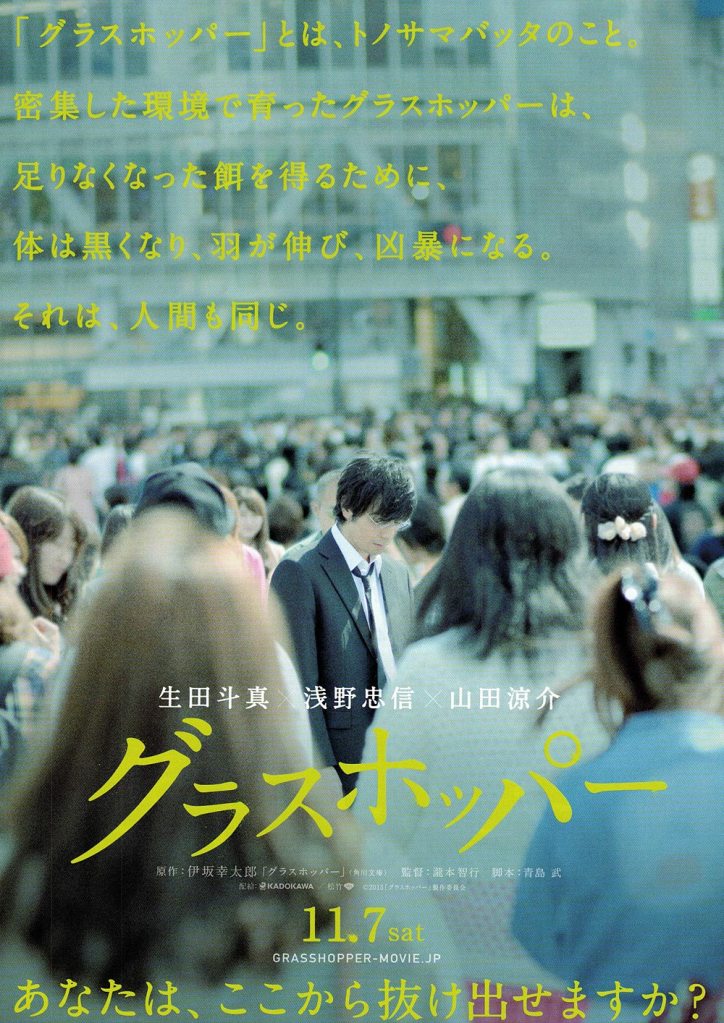
 

Grasshopper (グラスホッパー, Tomoyuki Takimoto, 2015)

grasshopperThe best revenge is living well, but the three damaged individuals at the centre of Tomoyuki Takimoto’s Grasshopper (グラスホッパー) might need some space before they can figure that out. Reuniting with Brain Man star Toma Ikuta, Takimoto moves away from the more overtly sci-fi elements but maintains a level of everyday strangeness that adds weight to this standard B-movie affair. A revenge thriller in which revenge itself is shown to be a fallacy, Grasshopper manages to mix its grimy grind house violence aesthetic with an oddly hopeful view of human nature.

One tragedy connects three very different people. Halloween, Shibuya – a crazed man at the wheel of a 4×4 receives a phone call instructing him to “crush all those bugs”, because he’s “the saviour”. The man obeys and plows into the holiday revellers crushing them like insects under his wheels. One victim, Yuriko (Haru), who died pushing a child out of harm’s way happened to be the fiancée of middle school science teacher, Suzuki (Toma Ikuta). Revisiting the spot where she fell, Suzuki unexpectedly receives a letter informing him that the events which occurred at Halloween were not as straightforward as the media asserts and he should set about investigating the father and son working at “Fraulein”. His mind burning with thoughts of vengeance, Suzuki abandons his old life and launches himself headlong into the criminal underworld in search of answers.

Meanwhile, the evil kingpins at the centre of things have sent their ace hitman with a difference, Kujira (Tadanobu Asano), to silence a troublesome reporter. Kujira’s unusual assassination method involves a kind of hypnosis in which he forces his victims to acknowledge their darkest sins and eventually commit suicide. Though this sounds like the ideal plan for evading detection, the gangsters are nervous that Kujira has learned to much through his near death conversations with his targets and send a duo of slightly less competent killers on his trail. This leads us to our third strand – sociopathic blade wielding killer, Semi (Ryosuke Yamada), and his stray cat rescuing handler, Iwanishi (Jun Murakami).

Suzuki finds himself out of his depth in the murky, crime ridden underworld. Talking to yet another hitman he crosses paths with, Suzuki is offered the grasshopper analogy which lies at the centre of the film. Pusher (Hidetaka Yoshioka) tells him that unlike regular migratory locusts which are generally green, there is a mutant breed which undergoes a “swarm phase” in which their wings grown darker and longer, becoming ever more destructive in the quest to feed themselves in a crowded environment. People, Pusher claims, are no different. The film is filled with these mutant insects, crushing their fellow humans like roaches under boots, yet there’s something to be said for the migratory guys who keep moving and oppose the mutant breed through stealth and cunning.

Each of the three men is looking for a kind of revenge even if it’s ultimately self inflicted. Unusual hitman Kujira has hit the assassin’s version of angel wings in that he can see the faces of all the men and women he has killed, quite literally haunting his every move and offering a running commentary on his life. Setting out for vengeance against the men who’ve ordered his death, Kujira knows he’s nearing the end of his path yet before he gets there he will have to face off against Semi with whom he has no particular quarrel despite having just given Semi a reason to seek vengeance against him. Semi’s quest for revenge is pointed at Kujira but their mutual need for satisfaction will destroy each of them whilst also bringing them together as equals.

Everything prior to the fateful Halloween is bathed in golden light where warm colours predominate in Suzuki’s fond memories of his fiancée, but everything after is dark, reds and blacks tinged with insect green as grasshoppers swarm like harbingers of a great evil. Revenge itself is constantly frustrated and ultimately swept away from each party by shadowy forces secretly working against the darkness. Nothing is quite as it seems, no one is quite telling the truth. Yet as deep as the original conspiracy goes, the counter conspiracy consistently exceeds it.

Filled with impressive action sequences from Semi’s well choreographed balletic knife displays to large scale crowd scenes and good old fashioned fist fights, Grasshopper owns its down and dirty origins but reinvigorates them with a degree of modern sophistication. Yuriko, a soup chef, insists that the true secret ingredient in her cooking is genuine emotion – that this is what’s left behind when everything else is gone. Suzuki could choose to dive inside his cocoon of unresolved vengeance for the rest of his life but that would not have been what Yuriko wanted for him. In this anti-revenge drama, vengeance is the fallacy that detracts from the truth – that the ultimate form of revenge is learning to live with the past rather than wasting time settling scores.


Original trailer (no subtitles)

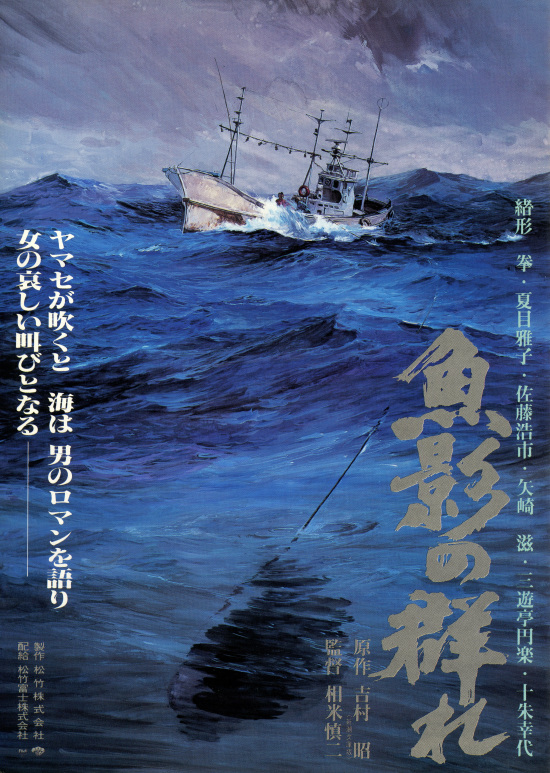
The Catch (魚影の群れ, Shinji Somai, 1983)

the-catch

Some men become their work, the quest for success consumes them to the extent that there is barely anything left other than the chase. The Catch (魚影の群れ, Gyoei no Mure), Shinji Somai’s 1983 opus of fishermen at home on the waves and at sea on land is a complex examination of masculinity but also of fatherhood in a rapidly declining world filled with arcane ritual and ancient thought.

Fusajiro (Ken Ogata) is a middle aged man who looks old for his years. Man and boy he’s spent his life at sea, hunting down the elusive tuna fish which can be sold for vast amounts of money in the rare event that one is actually caught. This “first summer” as the title card refers to it, marks a change in his life as the daughter he’s been raising alone since his wife left him many years ago, Tokiko (Masako Natsume), has found a man she wants to marry. Her boyfriend, Shunichi (Koichi Sato), owns a coffee shop in town and Fusajiro has his doubts about a city boy marrying into a fisherman’s family. However, Shunichi isn’t just interested in Tokiko, he wants to set sail too. Though originally reluctant, Fusajiro eventually agrees to take Shunichi as a kind of apprentice but is dismayed when he gets seasick and seems to have no hint of a fisherman’s instinct.

Fusajiro is a legend among his peers – a big man of the sea, a true sailor and top hunter. He’s the one people turn to whenever anything goes wrong on the waves. However, he’s also a gruff man who speaks little and seems to prefer his own company.  In the rare event that he is speaking, it’s generally about tuna. When Shunichi first meets Fusajiro he remarks that he knew it must be him because he “smells of the sea”.

A later scene sees Fusajiro catch sight of a woman caught in the rain who immediately starts running away from him. Chasing her  just like one of his ever elusive tuna he eventually pins the woman down and takes her back to his boat to complete his conquest. The woman turns out to be his ex-wife, who left him precisely because of this violent behaviour. After momentarily considering returning to him, she realises that he hasn’t changed and accuses him of being unable to distinguish people from fish – he hooks them, reels them in, and if they don’t come willingly he hits them until they do so he can keep them with him. This overriding obsession with domination also costs Fusajiro his daughter when Shunichi is gravely injured on the boat and Fusajiro delays returning to port until he’s secured the tuna he was chasing at the time. Shunichi’s blood and the fish’s mingle together on the deck, one indistinguishable from the other, both victims of Fusajiro’s need to reign supreme over man and fish alike.

Fusajiro tried to warn Tokiko not to marry a fisherman, it would only make her miserable. Shunichi is warned that a fisherman’s life is a difficult one and the seas in this area less forgiving than most, but his mind is made up. Finally acquiring his own boat after selling his cafe, Shunichi, just like Fusajiro, starts to fall under the fisherman’s curse – endlessly chasing, living only for the catch. Unlike Fusajiro, however, Shunichi has little instinct for life at sea and fails to bring home his prey. Little by little, the mounting failures eat away at his self esteem as he feels belittled and humiliated in front of the other sailors culminating in an attempt to reinforce his manhood by raping his own wife. These men are little better than animals, consumed by conquest, permanently chasing at sea and on land. To be defeated, is to be destroyed.

Somai never shies away from the grimness and brutality of the work at hand. Ogata catches and spears these magnificent fish for real and the unfortunate creatures are then carved up right on the dockside before our very eyes. As we’re constantly reminded, physical strength is what matters for a fisherman and Fusajiro is a strong man, duelling with the tuna fish and straining to hold the line with all his might. Yet he’s getting old, his body is failing and like an aged toreador in the ring, his victory is no longer assured. The Japanese title of the film which translates as crowds of shadows of solitary fish expresses his nature more clearly, his fate and the tuna’s are the same – a lonely battle to the death. Unable to forge real human connections on land Fusajiro and his ilk are doomed to live out their days alone upon the sea wreaking only misery for those left behind on the shore.


Original trailer (No subtitles, graphic scenes of animal cruelty)

A Double Life (二重生活 , Yoshiyuki Kishi, 2016)

double-lifeA Double Life (二重生活, Nijyuu Seikatsu ), the debut feature from director Yoshiyuki Kishi adapted from Mariko Koike’s novel, could easily be subtitled “a defence of stalking with indifference”. As a philosophical experiment in itself, it recasts us as the voyeur, watching her watching him, following our oblivious heroine as she becomes increasingly obsessed with the act of observance. Taking into account the constant watchfulness of modern society, A Double Life has some serious questions to ask not only of the nature of existence but of the increasing connectedness and its counterpart of isolation, the disconnect between the image and reality, and how much  the hidden facets of people’s lives define their essential personality.

Tama (Mugi Kadowaki) is an MA philosophy student working on a thesis regarding the nature of existence in contemporary Japan. Discussing her work with her supervisor, Shinohara (Lily Franky), Tama reveals that she was drawn to her subject because she is unable to understand why she herself is alive. Her proposal was largely based on the tried and tested method of a survey but Shinohara is hoping for something more original. Catching sight of a Sophie Calle book on his desk, he suggests that Tama’s project might benefit from examining the life of one subject in depth and so he tasks her with following a random person and observing their daily activities in order to figure out what makes them tick.

Tama is conflicted, but when she catches sight of her neighbour at a book shop she makes an impulsive decision to follow him which will later develop into an all consuming obsession. Ishizaka (Hiroki Hasegawa) is a successful editor at a high profile publishing house with a pretty wife, cute daughter and lovely home just over the way from the apartment Tama lives in with her illustrator and game designer boyfriend, Takuya (Masaki Suda). However, while following Ishizaka to a local coffee shop Tama catches him illicitly meeting another woman. Not quite believing what she sees, Tama’s obsession with her target continues to grow until the fateful day that her cover is finally blown.

Tama, and her supervisor, both regard the exercise as essentially harmless because all Tama is supposed to do is observe. The nature of her experiment means that she must remain unseen so that the subject does not change his or her behaviour but Tama quickly becomes a passive observer to an unpleasant domestic episode when Ishizaka’s wife discovers the affair. Tama is, always, a passive presence. As she says herself, she carries a deep-seated sense of emptiness that prevents her from fully connecting with other people. Her stalking activities, however, reawaken a sense of connectedness that she had been unable to find in her everyday life.

While Tama is watching Ishizaka, she herself is also being watched. Firstly, of course, by us, but also by the busybody landlady whose obsession with the proper way to dispose of rubbish has led to her installing spy cameras to capture the offending tenants on film. Of course, the cameras capture a lot of other stuff too which, when used alongside other forms of evidence, paint a slightly different picture. The old lady is a classic curtain twitcher, albeit one with access to more sophisticated equipment, and looms big brother-like over her tiny domain, the possessor and disseminator of all information. Tama’s rules mean she must not be seen, but someone is always watching, collecting information to be repurposed and repackaged at the convenience of the collector.

Cameras capture images but humans conjure pictures. From the outside, the Ishizakas are the perfect model family – a successful husband, warm and friendly housewife who is quick to get involved in community events, and a lovely, well behaved little daughter. As we find out Ishizaka is not the committed family man which he first seems. After treating all of the women in his life extremely badly, Ishizaka adds Tama to his list after the affair is exposed and his life ruined. Tama was only ever a passive observer whose presence had no effect on the narrative, yet Ishizaka blames his predicament on her rather than address the fact the situation is entirely his own fault. He does, however, have a point when he accuses Tama of exploiting his secrets for her own gain.

Tama’s observations are limited to the public realm and so she’s left with a lot of unknown data making her conclusions less than reliable. The gap between her perception and the reality becomes even more apparent once she begins observing the life of her supervisor, Shinohara. In an elliptical fashion, the film begins with Shinohara’s presumed suicide attempt and for much of the first half we seem him struggle with the grief of his mother’s terminal illness. This again turns out to be not quite as it seems, undermining Tama’s whole research proposal as her conclusions on Shinohara’s reason for living were based on a deliberately constructed scenario.

Ironically enough, Tama’s attempts to connect eventually ruin her own relationship as she finds herself living “a double life” as a vicarious voyeur. Abandoning her sense of self and living through her subjects, Tama begins to connect with the world around her but it’s more overlapping than a true union of souls in which she becomes a passive receptacle for someone else’s drama. Hers is the life of a double, shadowy and incomplete. Take away a man’s life lie and you take away his happiness, so Ibsen told us. Tama would seem to come a similar conclusion, that the essence of life may lie in these petty secrets and projected images. An intriguing philosophical text in itself, A Double Life is an intense look at modern society and all of its various artifices which marks Kishi out as a promising new cinematic voice.


Reviewed at Raindance 2016

Original trailer (English subtitles)

The Golden Demon (金色夜叉, Hiroshi Shimizu, 1937)

vlcsnap-2016-09-22-02h33m21s455Perhaps best known for his work with children, Hiroshi Shimizu changes tack for his 1937 adaptation of the oft filmed Ozaki Koyo short story The Golden Demon (金色夜叉, Konjiki Yasha) which is notable for featuring none at all – of the literal kind at least. A story of love and money, The Golden Demon has many questions to ask not least among them who is the most selfish when it comes to a frustrated romance.
Poor relation Kanichi (Daijiro Natsukawa) is a university student living with friends of his deceased father. He and the daughter of the family which took him in, Miya (Hiroko Kawasaki), have grown up together and formed an emotional attachment they each believed would naturally lead to marriage. However, Miya has received a proposal from a wealthy gentlemen which her cash strapped father is strongly advising her to accept. Though she loves Kanichi deeply, Miya is torn – both by a feeling of duty to marry well and keep her parents in comfort, and by a fear of leaving her middle-class lifestyle for a life of uncertain poverty with the still studying Kanichi.

When she ultimately agrees to the arranged marriage, Kanichi becomes angry and accuses Miya of placing monetary concerns over true feeling. Disappearing from Miya’s life entirely, Kanichi determines to destroy himself in a vicious quest for revenge. Abandoning his idealistic, progressive concerns, Kanichi becomes a heartless money lender with a plan to one day amass a great fortune only to throw it in the face of his former love. When Miya’s husband, Tomiyama (Toshiaki Konoe), appears at his door apparently fallen on hard times, Kanichi’s plan looks set for success.

In true Shimizu fashion, he remains non-judgemental of his characters save for that of the elderly money lender who, when questioned by his son, offers a series of flimsy justifications for his line of work which his son brands dirty and disgraceful. The money lender points out that he’s only operating a business – he never attempts to hide his terms so customers know they will pay a heavy price for the loans, and thereafter the decision is their own. When his son points out how selfish a point of view that is and that all he’s doing is exploiting the desperation of vulnerable people, he’s told that he reads to many books and should learn to live in the “real world”. If Shimizu wants to criticise anything at all (even obliquely, this is 1937), it’s this “real world” thinking which legitimises the selfishness of those who seek to profit from the misfortune of others.

The same money lender has a somewhat strained relationship with his equally cynical wife. After she complains about his complaint about how much makeup she’s putting on “to go to a temple”, he tells her that his jealously proves he loves her. She’s a precious object that he’s afraid of losing to another man. To him all is about possession. Kanichi, who once thought himself so different is more or less the same as he refuses to think about why exactly Miya has made the decision she has, or even allow her the right to make that decision. Obviously broken hearted, he decides to abandon emotion all together as “you can’t trust the human heart.” He even attempts to enact the final terms of the usurious loans on the contracts of some of his university friends who, just as he was with Miya, are unable to understand how he could be so cruel to those he was once so close to. Even Tomiyama, who had hitherto looked after Miya as a husband should finally exclaims “I can’t love you without money” as if in a tacit acceptance of the fact that he essentially bought her, obtaining her duty and service but not, perhaps, her heart.

In contrast some of Shimizu’s other work he focusses much more on Kanichi’s moral meandering than on Miya’s suffering but she herself pays a heavy price throughout. In sacrificing her love for Kanichi and a chance at a self directed future in agreeing to the arranged marriage, Miya ultimately chose to familial duty over romantic feeling. Having grown up in comfort, a degree of fear may have also influenced her decision but the choice has broken her own heart just as much as Kanichi’s. Guilt and a regret threaten to frustrate her new married life even though she does her best to become the ideal wife. Miya searches for Kanichi to obtain his forgiveness but Kanichi is nowhere to be found.

The eventual reunion is one of chilling coldness and repressed emotions which causes only more pain for everyone involved. Neatly avoiding melodrama, Shimizu opts for a more realistic solution in which everyone realises the error of their ways. Kanichi perseveres in his desire for vengeance yet leaves feeling like “the stupidest man in the world”, pausing only to offer a few words of parting encouragement to Miya if stopping short of forgiveness (or an apology which she is most likely owed if only for the previous ten minutes of cruelty). The past remains the past and must be accepted as such, yet there is at least a glimmer of hope for Kanichi whose abortive plan of revenge may have reawakened within him the very thing he’d been trying to bury even if the future for Miya seems nowhere near as certain.


Belladonna of Sadness (哀しみのベラドンナ, Eiichi Yamamoto, 1973)

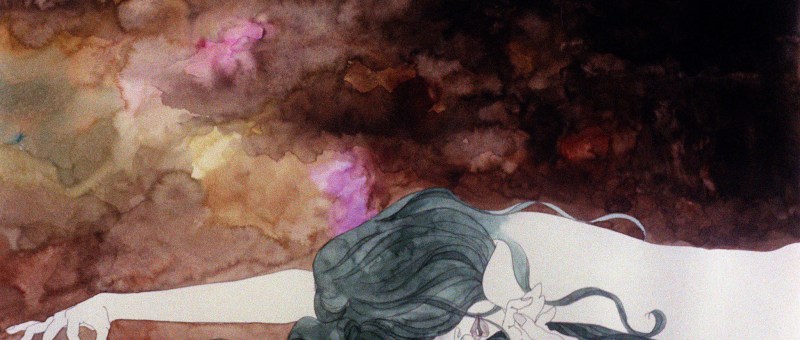
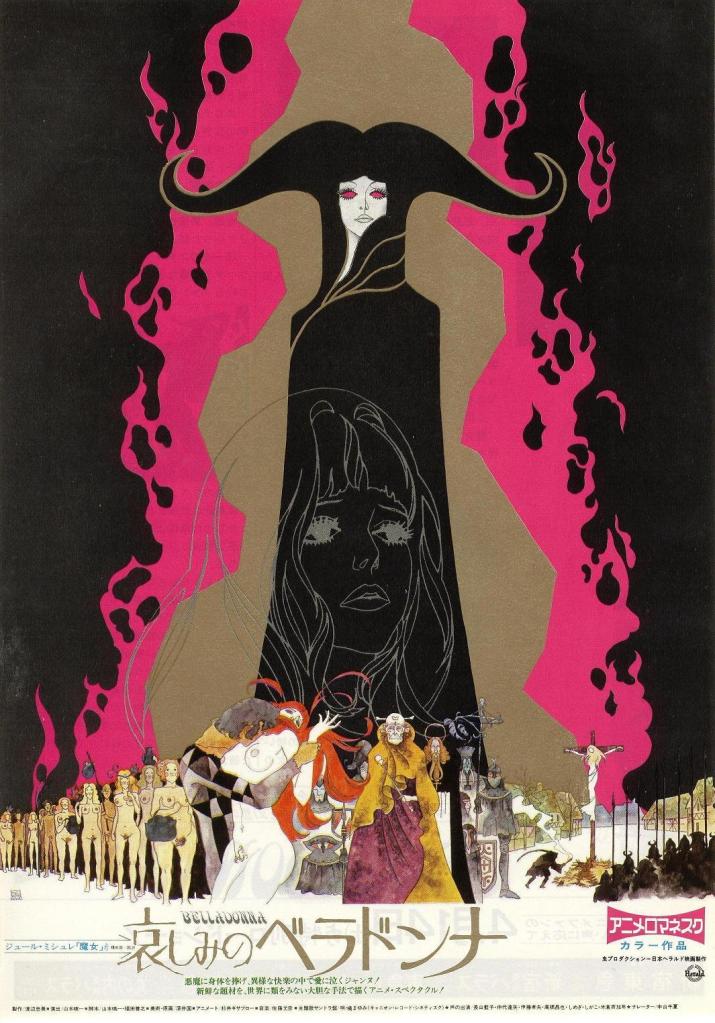
belladonnaLoosely based on Jules Michelet’s La Sorcière (Satanism and Witchcraft) which reframed the idea of the witch as a revolutionary opposition to the oppression of the feudalistic system and the intense religiosity of the Catholic church, Belladonna of Sadness (哀しみのベラドンナ, Kanashimi no Belladonna) was, shall we say, under appreciated at the time of its original release even being credited with the eventual bankruptcy of its production studio. Begun as the third in the Animerama trilogy of adult orientated animations produced by legendary manga artist Osamu Tezuka’s Mushi Productions, Belladonna of Sadness is the only one of the three with which Tezuka was not directly involved owing to having left the company to return to manga. Consequently the animation sheds his characteristic character designs for something more akin to Art Nouveau elegance mixed with countercultural psychedelia and pink film compositions. Feminist rape revenge fairytale or an exploitative exploration of the “demonic” nature of female sexuality and empowerment, Belladonna of Sadness is not an easily forgettable experience.
Beginning in true fairytale fashion with a gentle voiceover, the tale introduces us to Jean (Katsutaka Ito) and Jeanne (Aiko Nagayama), two ordinary medieval French peasants blissfully in love. Being the good, honest, Christian kids they are, they want to get married but as we’re told, this is the beginning of the story, not its end. Following tradition to the letter the pair turn up at the castle with their families to inform the Baron of their union and pay the marriage tax but the Baron takes a fancy to Jeanne and whacks up the price to a level Jean could never pay even if the entire village sold everything they had to help him, so that the Baron may exercise his droit du seigneur by claiming Jeanne’s maidenhead. After kicking everyone else out the Baron brutally rapes Jeanne before letting all of his cronies have a go too.

Finally crawling home bruised, broken, and violated Jeanne seeks comfort from her gentle husband Jean but despite his fine words, he is unable to accept what has happened and eventually retreats from her. At this point the weirdness begins as Jeanne’s intense inner rage and sadness summons forth a tiny demon friend who looks just like an overly friendly penis and also grows in size a little bit when you stroke him in just the right way. This starts Jeanne on her ultimate path towards becoming a master sorceress and eventual mistress of the devil himself. Jeanne’s fortunes rise in line with her sexual empowerment but an empowered female is not always popular with the ruling elite.

Jeanne’s empowerment and the subsequent threat it poses to the accepted political fabric is the main thrust of the narrative but it’s also important to remember that the process began with a brutal act of rape. Jeanne continues to be raped by her ever growing demon friend until achieving a kind of oneness with the Devil himself but the unwanted acts of Jeanne’s “demon”, who describes himself simply as a part of Jeanne, are mitigated because she is depicted as enjoying them (only guilt makes her say otherwise) and, after all, they form part of her sexual education. Jeanne’s power stems from the intense resentment she feels at her continued lack of agency, eventually buying her power and status enough to threaten the Baron and all he stands for.

Even if Jeanne’s power comes from the darkest of places, everything she uses it for is morally good (at least from a “modern” standpoint). When the Baron returns from a war to find Jeanne ruling the roost, he attempts to canvass some of his subjects hoping to hear tales of her cruelty or ineptitude but finds only praise. Jeanne heals the sick, helps a couple with too many children find a solution to maintain their married harmony without the risk of bearing any more, and even helps an elderly woman make contact with the depths of hell (wasn’t exactly what she had in mind, but she was thrilled to bits anyway).

The worst thing Jeanne’s power provokes is the large scale and extremely strange orgy which takes place in her hair, sees her copulating with the entire village, and even transforms genitals into bizarre creatures. This purely pleasurable exercise, even if against the prevailing moral code, has no real world consequences such as a failed harvest or ruined city brought about by the villager’s abandonment of duty for physical pleasure.

However filled with “goodness” her actions are, Jeanne herself is branded a witch and the only reason she is not burned at the stake immediately is that the Baron and his advisors fear that if Jeanne is burned whilst still bound to the devil, the demonic elements inside her will be set free and could “pollute” the other women in the village with a nasty desire to be taken seriously as people. This fear is later borne out as each of the village women emerges with Jeanne’s impassive face before time jumps on a few hundred years to the French Revolution and its vanguard of valiant women seeking social justice as evidenced by Eugène Delacroix’s 1830 painting Victory Leading the People which forms the final image of the film.

Belladonna of Sadness seems conflicted over whether this kind of empowerment is a good thing or not. Jeanne’s journey begins with violence which gives birth to rage and an eventual “succumbing” to the dark arts which facilitates her revenge. Everything about Jeanne becomes satanic and her sexuality is the weapon which she wields against male subjugation. The empowered Jeanne is independently monstrous, rather than just monstrous to the Baron and the true forces of evil, thanks to her involvement with illicit supernatural entities. Her independent spirit does indeed pollinate as the Baron feared it might, but whether these women are to be read as having been “freed” or as vengeful harpies robbing men of their rightful place whilst intent on upending the social order, might be a matter for debate.

Yamamoto opts for a mix of styles making great use of still paintings and more primitive animation to enhance the effect. Combined with the very contemporary sounding folk music, the later ventures into the realm of psychedelia lend the film a new age fable quality to present a broadly feminist rape revenge fairytale. However, this particular story offers no happy ending for its heroine even if it does retroactively add one in the form of the ongoing social change her various transgressions engender. Wildly experimental, often extremely beautiful, and necessarily explicit, Belladonna of Sadness is, as its name suggests, a melancholy tale but one just as passionately free as its tragic heroine.


Cinelicious Pics restoration trailer (English subtitles, NSFW)

Revivre (화장, Im Kwon-taek, 2015)

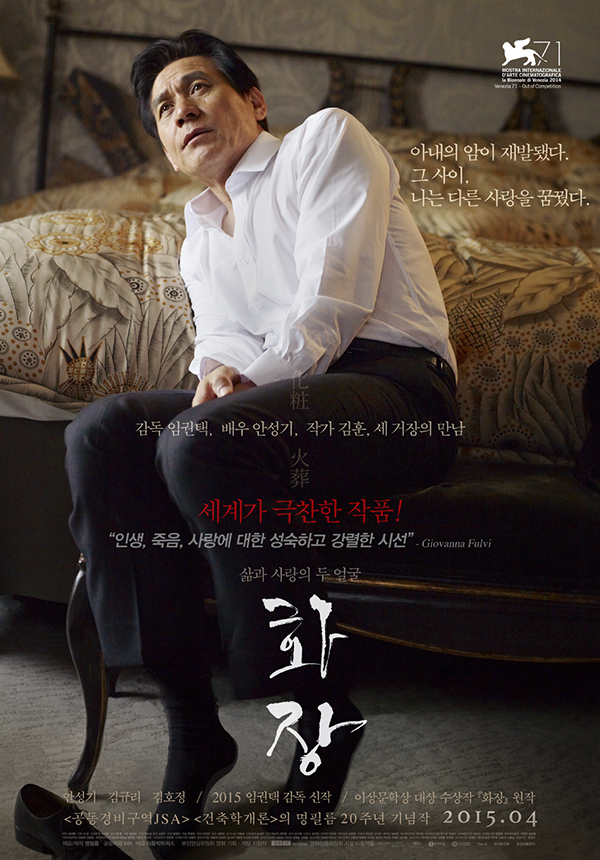
revivreThe 102nd film from veteran Korean film director Im Kwon-taek may appear close to the bone in its depictions death, suffering, and the long look back on a life filled with the quiet kind of love but Revivre (화장, Hwajang) is anything but afraid to ask the questions most would not want to hear as the light dwindles. The inner journey is just too hazy, as one man puts it, unknowingly commenting on the human condition, yet Im does manage bring us nicely into focus, if only for a moment.
Oh (Ahn Sung-ki), a successful salaryman working in marketing for a cosmetics company, finds himself slightly adrift as the brain tumour his wife, Jin-kyung (Kim Ho-Jung), had previously suffered from resurfaces. The treatment this time is apparently not as successful leading to prolonged hospitals stays as Jin-kyung’s condition deteriorates and she begins to require a greater level of medical care. While all of this is going on, Oh is still very much dedicated to his work but has also begun to indulge in an old man’s folly, fantasising about the pretty new girl at the office.

Much of Revivre is concerned with Oh’s inner life, the things he does not say (which are many because Oh is a quiet sort of man). Ahn Sung-ki captures this quality well in playing Oh with a kind of blankness that could be the numbing sensation of grief or an extension of his ordinarily reserved nature. This makes his impromptu verbal attack on the figure of his fixation, Choo Eun-joo (Kim Gyu-ri), all the more unexpected though his remorse over having acted in such an out of character way may actually help to generate a kind of relationship between the pair albeit more of a paternal than romantic one.

Oh’s continuing fixation on Eun-joo, the woman who becomes the accidental focus of his world even though his wife lying dies in a hospital, is intended to be a fantasy and nothing more. An early dream sequence sees Oh participating in an elaborate traditional funeral taking place in a desert in which all of the mourners are dressed in black, except, of course, for Eun-joo – the only fixed point of reference, clothed in vibrant purple and smiling back at him in contrast to the solemn faces of the other guests, each staring at the floor. In the real world time slows down for him as Eun-joo dances youthfully in a nightclub and as he leaves the party early, her’s is the lone still face, haunting him as he looks back at the other revellers still enjoying themselves heartily even outside the club.

Indeed, “looking back” with all of its various advantages and disadvantages becomes another central theme as Oh becomes a kind of Orpheus descending into his own personal hell in the hope of dragging back his departed Eurydice – an idea neatly recreated in one of the film’s few outright fantasy sequences in which Oh dreams himself into an avant-garde dance show. Like Orpheus, Oh cannot help but look back though he risks losing all in the process. What Eun-joo represents for him is perhaps not the woman herself but an image of his own youth and a desire to live again as he once lived before. The present and the past begin to overlap for him, Eun-joo becomes the future he cannot touch as well as the returning spectre of a past he cannot return to.

Oh’s daughter asks him at one point if he ever really loved her mother. His reaction to losing his wife is, it has to be said, restrained, practical. Yet this question is answered with an immediate cut to Oh helping his wife to the bathroom, performing the most intimate of tasks with unwavering devotion. As his wife fades, Oh’s fantasies become a shield against the growing fears of his own mortality as his body also begins to fail him. The melancholy sense of loss and loneliness coupled with the inevitability of the passage of time pervade as each of Oh’s points of reference slips away from him at exactly the same time.

Im opts for a non-linear approach beginning with Jin-kyung’s passing and thereafter moving freely, reflecting Oh’s fleeting memories and interior confusion as he deals with such a traumatic, life altering event. Neatly framing Oh’s dilemma within his work in which he faces a choice of sticking with the current marketing strategy or striking out in a bold new direction, Im plays with the eternal theme of transient beauty in a society which prizes bodily perfection above all else. The film’s Korean title plays on a pun involving a homonym which means both “cremation” and “makeup” perhaps harking back to the central theme that you dig a grave for yourself if you attach the wrong sort of importance to the impermanent, but is in a sense ironic as one represents a final acceptance and the other an attempt to hold off the inevitable. Poetic and intensely moving, Revivre is another characteristically multilayered effort from Im, still at his full strength even in this late career effort.


International trailer (English subtitles/captions)

Flying Colors (ビリギャル, Nobuhiro Doi, 2015)

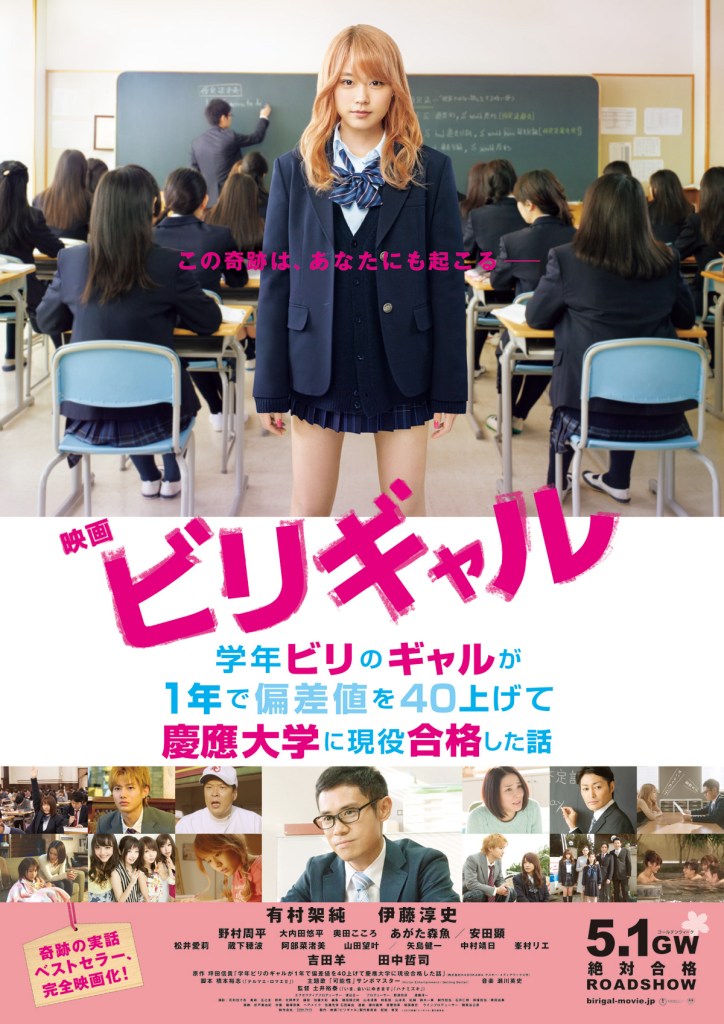
flying-colorsBelow average student buckles down and makes it into a top university? You’ve heard this story before and Nobuhiro Doi’s Flying Colors (ビリギャル, Biri Gyaru) doesn’t offer a new spin on the idea or additional angles on educational policy but it does have heart. Heart, it argues is what you need to get ahead (if you’ll forgive the multilevel punning) as the highest barriers to academic success are the ones which are self imposed. Arguing for a more inclusive, tailor made approach to education which doesn’t instil false hope but does help young people develop self confidence alongside standardised skills, Flying Colors is the story of one popular girl’s journey from anti-intellectual teenage snobbery to the very top of the academic tree whilst healing her divided family in the process.
Little Sayaka Kudo (Kasumi Arimura) got off to a bad start in her academic life, bullied and friendless at primary school. After the teachers refuse to help, Sayaka’s doting mother, Akari (Yo Yoshida), manages to get her into a more exclusive middle school which is affiliated with both a high school and a university which means that Sayaka’s academic destiny is fairly secure. However, though she does manage to make friends at her new school, she falls in with the “popular” crowd and begins dying her hair, rolling her skirt up, and wearing an inadvisable amount of makeup. Knowing that their entrance to high school and university is assured, the girls slack off completely and are at the very bottom of the class.

However, it all comes crashing down when Sayaka is caught smoking and threatened with expulsion. Bravely refusing to give up her friends and have them suffer the same fate, Sayaka is the only one who gets suspended but still risks missing graduation and losing her secured place at university. One of the few people to really believe in her, her mother Akari, arranges for Sayaka to attend an unconventional cram school where the well meaning teacher, Tsubota (Atsushi Ito), encourages her to have a goal, and it’s a lofty one – Keio University, one of the most prestigious institutions of higher education in Japan.

Despite her dismal academic prognosis, Sayaka is not lacking in ability, just the will and belief to see it through. After being so unhappy in primary school, Sayaka values her friendships and status as one of the popular girls and maintaining that side of her life is much more important than getting good grades. Written off by her teachers, no one is prepared to give her the permission to succeed and so she assumes she’s as dim as everyone says she is.

The situation isn’t helped by her home life in which her embittered father (Tetsushi Tanaka) ignores his two daughters in favour of devoting all his attention to his son, Ryuta (Yuhei Ouchida), whom he wants to become a professional baseball player. Vicariously thrusting his own dream on his unsuspecting son, Sayaka’s father is unprepared for the moment Ryuta realises he’s been denied the right to choose for himself and rebels against him as all young men are apt to do. In fact, many of the cram school students are there because of a grudge against an unfeeling father who has had quite an adverse affect on his child’s sense of self worth.

Tsubota is the first person other than her mother to show faith in Sayaka’s abilities and is able to convince her that she might be able to achieve something if she started to apply herself. Speaking to her in terms she can understand, Tsubota hunts down different kinds of study materials to help her along the way gradually raising her scores as she builds belief in her ability to reach her goal. Tsubota is the only teacher at the school and is able to take the time to get to know each of his pupils individually so he can tailor the course to bring out the potential in each of his charges. While the kids are studying to pass exams, Tsubota is studying pop culture so that he can talk to them on their own level and find out the best ways to keep them motivated.

As much as it’s the story of a persistent underdog finally discovering a well of self belief that will sustain them on a difficult path, Flying Colors is also an indictment on the modern educational system which only caters for the group rather than the individual and is so concentrated around rote learning and standardised tests that it fails to teach young people the critical thinking skills they need to succeed in life. Flying Colors probably is not going to influence public educational policy but it does offer an amiable and inspirational story that might give hope to those struggling under its often unreasonable demands.


Original trailer (English subtitles)

The Mamiya Brothers (間宮兄弟, Yoshimitsu Morita, 2006)

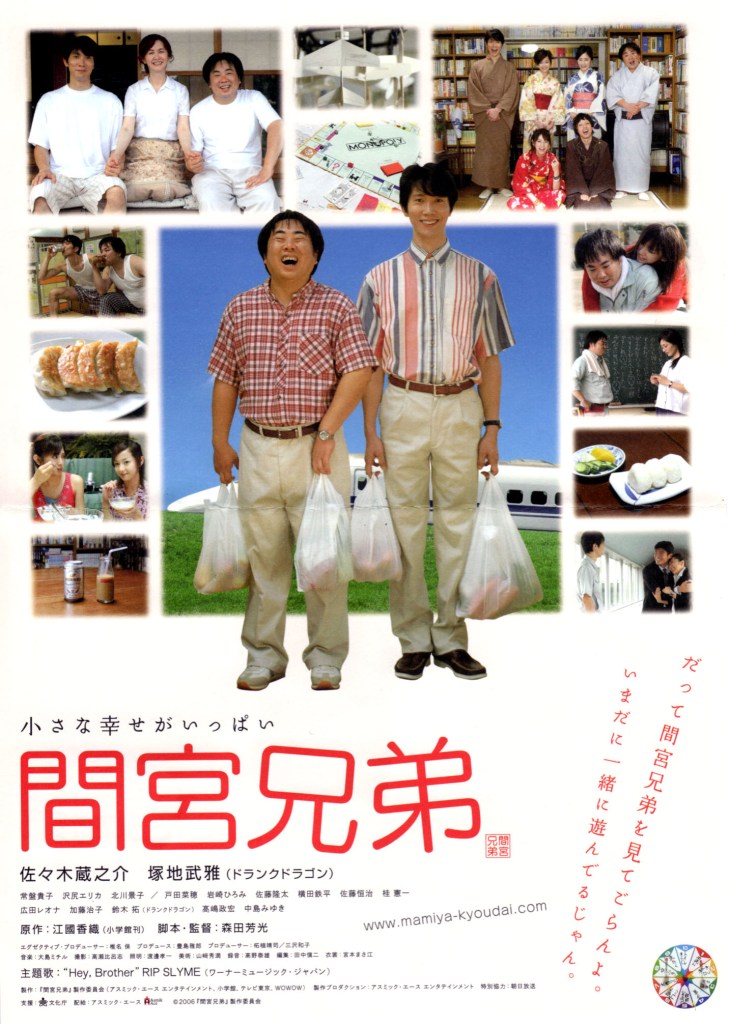
mamiya-brothersEver the populist, Yoshitmitsu Morita returns to the world of quirky comedy during the genre’s heyday in the first decade of the 21st century. Adapting a novel by Kaori Ekuni, The Mamiya Brothers (間宮兄弟, Mamiya Kyodai) centres on the unchanging world of its arrested central duo who, whilst leading perfectly successful, independent adult lives outside the home, seem incapable of leaving their boyhood bond behind in order to create new families of their own.
Older bother Akinobu (Kuranosuke Sasaki) and younger brother Tetsunobu (Muga Tsukaji) live together in a small apartment in Tokyo where they enjoy hanging out keeping track of baseball games and watching movies rented from the local store where Akinobu has a crush on the cashier, Naomi (Erika Sawajiri). They are perfectly happy but sometimes frustrated that they don’t have girlfriends so they decide to host a curry party and invite Naomi over in the hopes that she might develop an affection for Akinobu. So that she won’t feel weird about going to the house of two middle-aged guys she doesn’t really know, Tetsunobu invites a reserved teacher, Yoriko (Takako Tokiwa), from the primary school he works at as a caretaker though he “never dates coworkers” and is only really asking her as a backup for Akinobu.

Against expectation the both ladies agree to attend the curry party which actually goes pretty well though neither man is fully capable of following up on the opportunities presented to him. Outside events provide a distraction as Akinobu is swept into his adulterous boss’ divorce crisis and Tetsunobu becomes fixated on a damsel in distress who has no desire to be rescued by him. As much as the boys might want to form independent relationships for female companionship, their brotherly bond is more akin to a marriage in itself leaving both of them unwilling to abandon the status quo for a new kind of happiness.

These kinds of closely interdependent sibling relationships are more often seen between sisters, often as one or both of them has rejected offers of marriage for fear of leaving the other on the shelf. Elderly spinsters and their histories of unhappy romance are almost a genre in themselves though they often present the peaceful co-existence of the two women as a double failure and ongoing tragedy rather than a perfectly legitimate choice each may have made to reject the normal social path and rely solely on each other. The Mamiya Brothers neatly subverts this stereotype, presenting the relationship of the two men as a broadly happy one though perhaps tinged with sadness as it becomes clear that the intense bond they share is holding each of them back in a kind of never ending childhood.

Indeed, though they live alone together and have steady jobs, whilst in each other’s company the brothers regress back to childhood by spending their spare time riding bikes around the neighbourhood and playing on the beach. They are each keenly aware of how they must appear to members of the opposite sex and are always mindful not to appear “creepy”. Accordingly, they’re careful about which DVDs they check out so that Naomi doesn’t get a bad impression of them, and they’re sure to make it clear that both girls can bring other people to their parties so they won’t think there’s anything untoward going on. Throwing quick fire questions back for and constantly making references to private jokes the boys are effectively a manzai duo performing for an audience of two, perpetually suffocating inside their self made bubble.

Though they might not find love, the boys do at least make some new friends. Naomi’s sister, Yumi (Keiko Kitagawa), is exactly the kind of girl they’d usually steer clear of lest she begins to make fun of their old fashioned ways yet she actually becomes an ally and even a friend after spending time hanging out in the brothers’ odd little world. Yumi and Naomi are, in many ways, almost as closely connected as Akinobu and Tetsunobu though they both currently have boyfriends even if they find them equally disappointing.

The teacher, Yoriko, also finds herself unlucky in love as she pursues a relationship with a colleague who doesn’t seem particularly invested in her and is lackadaisical about even the smallest forms of commitment. Tetsunobu seems to have discounted her as a romantic partner under his “no coworkers” rule and is either unaware or deliberately ignoring her growing feelings for him. It may be that he invited Yoriko as a love interest for his brother precisely because he was interested himself and wanted to eliminate the problem, but he may come to regret outwardly rejecting this chance of mutual affection turning into something more solid.

When push comes to shove it might just be that the Mamiya Brothers are happiest in their own company and have no desire to move on and leave their arrested development behind. Though tinged with a degree of lingering sadness as it appears the boys do have a desire to form bonds outside of their mutually dependent bubble, they are after all quite happy and mostly fulfilled in their life together. Cute and quirky, if at times melancholic, The Mamiya Brothers is a strange tale of modern romance in a world where no one really grows up anymore. The brothers are clearly not afraid of broadening their horizons, but might prefer to continue doing so together rather than finding their own, independent, paths.


Original trailer (no subtitles)

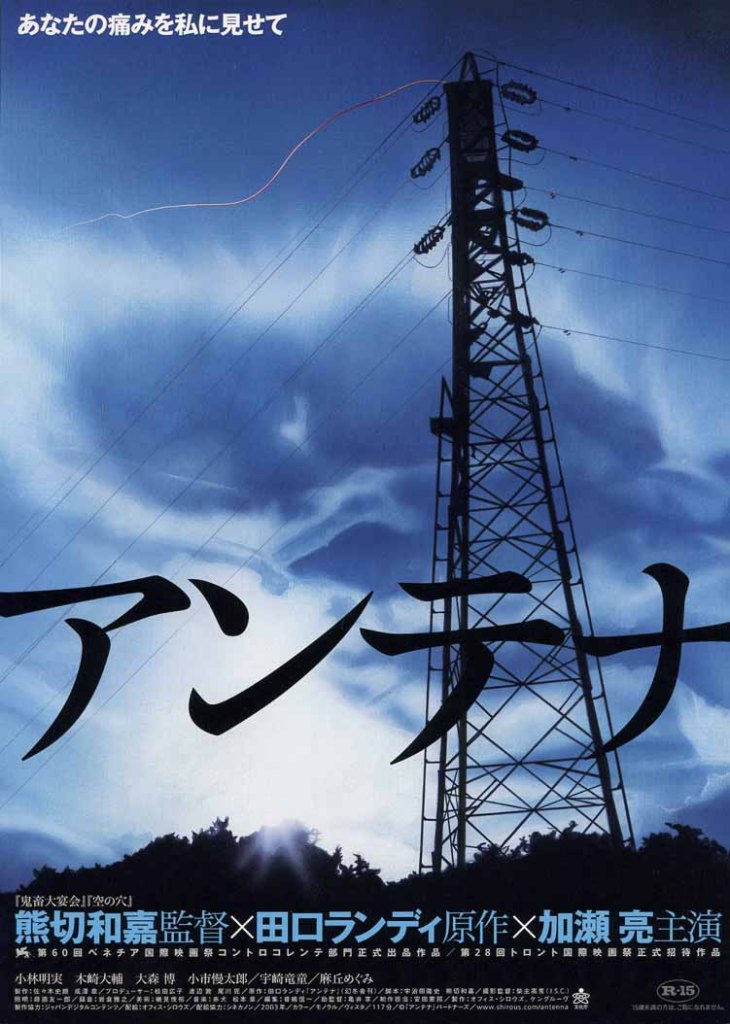
Antenna (アンテナ, Kazuyoshi Kumakiri, 2004)

AntennaScarring, both literal and mental, is at the heart of Kazuyoshi Kumakiri’s third feature, Antenna (アンテナ). Though it’s ironic that indentation should be the focus of a film whose title refers to a sensitive protuberance, Kumakiri’s adaptation of a novel by Randy Taguchi is indeed about feeling a way through. Anchored by a standout performance from Ryo Kase, Antenna is a surreal portrait of grief and repressed guilt as a family tragedy threatens to consume all of those left behind.

Philosophy student Yuichiro (Ryo Kase) is currently working on a project which aims to reevaluate how pain is felt through attempting to identify with the pain of others. To do this he plans to investigate the S&M scene but before he can get started, a painful episode from his past is reawakened by current events. Yuichiro’s younger sister, Marie, has been missing since failing to return home from school one day when she was only eight years old. When news reports appear that another girl around the same age has been held captive in a nearby apartment complex since around the time Marie went missing hopes are sparked only to be dashed. Still no closer to discovering what happened to his younger sister, Yuichiro carries the guilt of having been unable to protect her as well as the inability to remember exactly what happened on that fateful day.

Matters come to a head when Yuichiro’s younger brother (their mother was pregnant with him at the time of the disappearance) turns up on his doorstep. Yuya (Daisuke Kizaki) repeatedly claims that Marie is about to return as he can feel her through his “antenna” (“like the horns of a snail”) and has a full scale fit aboard the train back. Things being what they are, the doctors advise Yuichiro to spend sometime at home as his distracted mother is no shape to cope with Yuya’s increasingly odd behaviour. A dutiful son, Yuichiro does what he can for what’s left of his family but his childhood home is far from a good environment for him.

Soon after Marie’s disappearance, both Yuichiro’s father and his uncle Shige who’d lived with them both died, leaving only Yuichiro’s mother and baby brother behind them. Unable to come to terms with Marie’s disappearance, Yuichiro’s mother has found religion, hosting Buddhist prayer sessions at the house and bringing in Feng Shui experts to try and heal the lingering sense of tragedy still present in the house. She has also become convinced that her second son, Yuya, is in fact the returned spirit of her daughter, raising him as a girl and dressing him in Marie’s clothes. This may explain some of Yuya’s conflicting behaviour and repeated insistence that his sister is “returning” in so much as something of her personality has become the ghost in his machine.

Once back in the house, Yuichiro’s mental state becomes ever more precarious as his memories of his sister’s disappearance begin to flicker to the surface. Overcome with repressed guilt, Yuichiro once again begins self harming by slashing his chest with a box cutter. Easing the mental pain with the physical, Yuirichiro finally begins to address some of his long buried trauma through repeated meetings with the dominatrix he was interviewing for his project. Undergoing a kind of S&M lead sex therapy, Yuichiro is slowly guided back through his memories to events he was too young to understand at the time and only now is fully able to comprehend.

Throughout his flashbacks Yuichiro is always sidelined, perched behind barriers or shut away by closed doors as the adults argue and loudly discuss things they claim are not suitable for children to hear. Crucial moments find him peaking through keyholes and seeing something he knew was not quite right but without knowing why. These incomplete and incomprehensible memories are the ones which haunt him, unresolvable but still trailing the guilt behind them of having seen yet done nothing.

Told in a slight non-linear fashion through frequent flashbacks, the film adopts a dreamlike tone and surreal imagery to make sense of the more extreme elements. The final sequence itself is either a hallucination or a dream that takes on a magical realist quality as the past is finally allowed to drift away from its lodging place, freeing up a space for light to return to the otherwise darkened house.

An intense exploration of buried trauma and childhood guilt, Antenna is a dark tale but does offer a glimmer of hope after all its hellish meandering. Kumakikri keeps things straightforward but his considered compositions have a strange kind of beauty despite the ugliness of the narrative. Embracing a number a taboo subjects coupled with strong emotion and explicit content, Antenna is not an easy watch but rewarding for those who can brave its extremes.


Original trailer (no subtitles)