The Cursed Land (แดนสาป, Panu Aree & Kong Rithdee, 2024)

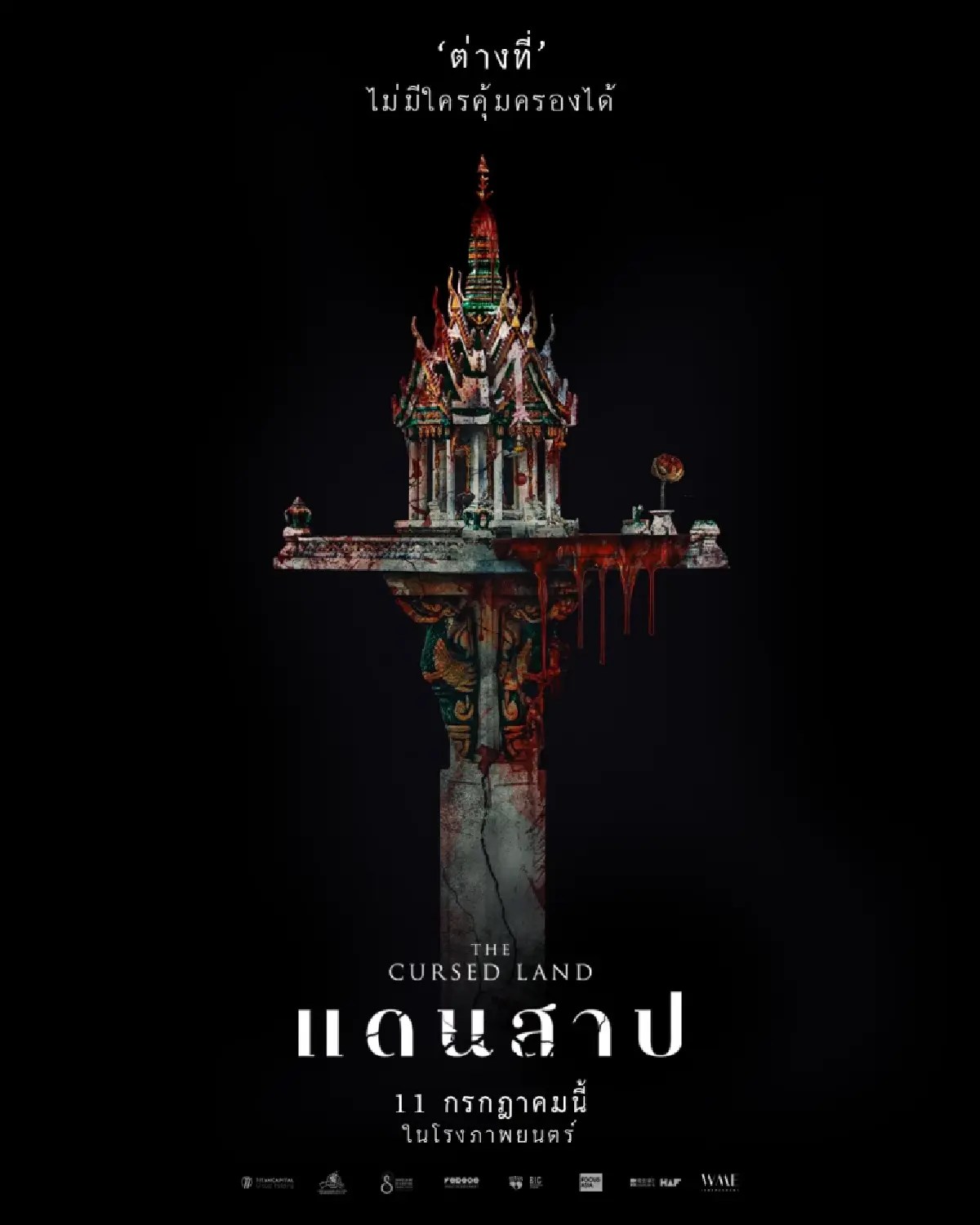
The architecture professor teaching a young woman in Panu Aree and Kong Rithdee’s The Cursed Land (แดนสาป) says that a house is like a machine with a person inside, but what’s inside the house at the film’s centre is not quite human at all but a supernatural creature who like the house itself seems straddle a divide both cultural and spiritual while standing itself at the nexus of the many layered historical curses which have given it its dark legacy.

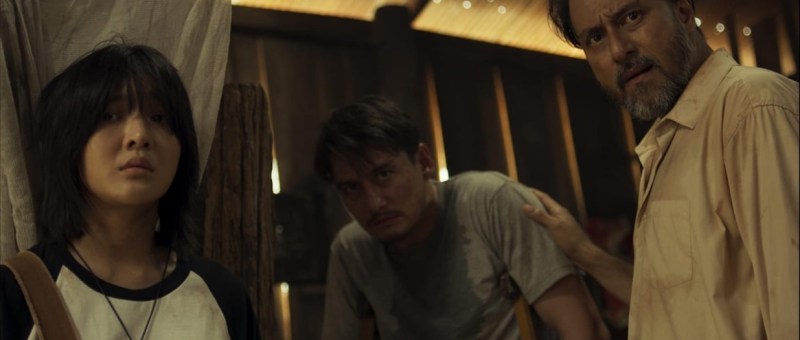
It’s in part a rejection of this difference and lack of respect for culture that creates a series of problems for Mit (Ananda Everingham), a middle-aged engineer moving into this rural backwater on the outskirts of Bangkok. Despite receiving a very serious warning to get rid of anything that’s in the house, he tears off a series of talismans thereby releasing some very dark energy and destabilising his new environment. Mit is also suspicious of those around him and does not really make much of an attempt to make friends with the local community who are largely Muslim. Though he may not think so, it is Mit who is the intruder here, an outsider walking into a traditional environment and finding himself isolated despite the ostensible friendliness of some of the locals to whom Mit takes offence after being told not to leave his dog outside because some of the Muslim community dislike them. 

But then again, Mit also seems to be a compromised figure apparently still suffering from shock and confusion some time after a car accident that killed his wife. He complains that his medication has been misplaced due to the move while seemingly increasingly paranoid and unreasonable. We also get hints that Mit’s previous life may not have been plain sailing either and part of his stress is down to a need to prove himself in his new job. He is in his way haunted by the car accident and struggling to overcome his guilt and regret. A shamaness later describes him as “weak-minded” and therefore a prime target for an evil spirit. 

This also seems to be implicitly reflected of an internal absence of the spiritual as Mit has renounced Buddhism and seems suspicious of Islam. His daughter May (Jennis Oprasert) eventually calls in a Brahmin to exorcise the house, installing Buddhist shrines and other talismans as if overwriting the those of the local muslim community though this only causes more problems. Later, May consults a Buddhist priest but is told that he can’t help because the problem is on a different system though she’s also told something similar by other members of the community. Running underneath the conflict between Buddhist and Muslim culture is echo of a much older spirituality in the references to “black magic” and shamans. 

What May learns is that this land has been cursed and counter cursed many times over, though they do perhaps manage to exorcise one particularly problematic spirit in literally digging up the past to learn the history of the house and that of the entities who seem to inhabit it but there are many other curses yet to be undone on this patch of scorched land that exists in a nexus between cultures, part of both and neither. What emerges is a kind of co-existence and a crossing of the streams as they must in the end marshal all of the spiritual powers to counter the  danger presented by this extremely disgruntled spirit. 

Panu Aree and Kong Rithdee conjure an atmosphere of intense eeriness rooted in a classic haunted house movie aided by the gothic environment of the Western-style home itself standing alone and isolated, not really part of a community yet not totally independent. What emerges is a kind of integration, the house as a machine with people inside it creating a home through diverse community and entrenched support systems that allow even the “weak-minded” Wit to shakes off some of his demons and begin to move forward with his life. Perhaps the key really is not to throw anything away, because everything belongs in the house and the house belongs to everything. Attempts at exclusion only invite fear and acrimony that cannot but eat away the foundations of a home built on cursed land.


The Cursed Land screened as part of this year’s New York Asian Film Festival.

Original trailer (English subtitles)
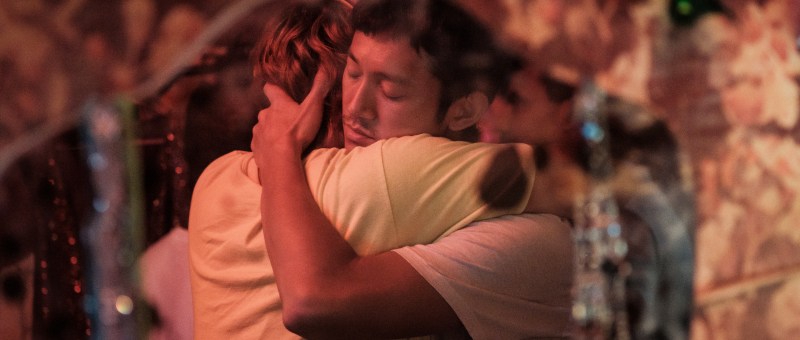
Abang Adik (富都青年, Jin Ong, 2023)

Displaced brothers find themselves trapped on the margins of a prosperous city in Jin Ong’s gritty drama, Abang Adik (富都青年). Essentially a story of brotherhood, Ong explores the fates of those largely cast out from mainstream society who must as one character later says be forever watchful, keeping a place to hide and to which escape while denied the most ordinary of things such as home and family for no reasons other than bureaucracy and prejudice. 

Both Abang (Chris Wu Kang-ren) and Adi (Jack Tan) were born in Malaysia but are technically undocumented and finding it difficult to replace their identification without things like birth certificates or access to other family members to help replace them. While Abang, who is deaf, is earnest and determined to do everything properly, Adi is sick of waiting for things to work out in his favour and has begun working as a middleman for traffickers to earn enough money to pay for a fake ID while supplementing his income with sex work. The pair are aided by social worker who tries to do her best to help get their documentation in order but finds herself with an uphill battle against implacable bureaucracy and governmental indifference. 

Ong spends most time with the brothers but makes clear the oppressive quality of the world inhabited by those trapped on the margins such as the undocumented migrants who become victims of a police raid following a tip from a broker taking kickbacks. As Adi later remarks they ask for workers to come and then they want them to go, irritated to see a policeman carrying a watch he appears to have just accepted as a bribe. With no other family members around them, the brothers have been cared for by a neighbour, transgender sex worker Money, who is like them locked out of mainstream society just for being who she is while Abang finds himself further disadvantaged by his disability and the difficulties involved in finding employment. 

Abang falls in love with a refugee from Myanmar but her family will soon be moved on to another country, while Ali develops feelings for one of his clients though she soon tells him she’s planning to move to another area to get married and enjoy a more stable if perhaps less financially comfortable life outside of the city. He offers to marry her instead, but really has nothing to give her other than his body. When a tragic accident sends the brothers on the run, they realise they have no one to rely on but each other and no real place to go. In a poignant monologue in the film’s closing scenes, Abang complains to a well-meaning monk that he is incapable of understanding his life or how difficult it has been for him to simply go on existing. He wishes that he could speak, that he had a family, that he had a safe space to call home and was not forever looking over his shoulder in case he had to leave in a hurry but instead all he gets is cosmic irony sacrificing himself to save Adi in the belief that he still has a chance at a better life if only he can swallow his pride, meet his father, and get an ID card. 

In the end they are both displaced, forcibly separated and pushed in opposing directions. Abang revisits their childhood, making paper aeroplanes as he once had with Adi and saying a final farewell with their ritualistic practice of cracking hardboiled heads on each other’s heads finding for a moment an identity as brothers reflected in each other. Ong shoots their marginalised existence in vibrant colour but also captures a sense of the city as oppressive and unwelcoming, as if it were actively ejecting them with its ubiquitous police patrols and constant danger while authority figures are largely corrupt and uncaring save the earnest social worker who ironically pays a heavy price just for wanting to help those who need it most. Melancholy if not exactly bleak, the film positions the brotherhood between the two men as a course of salvation allowing them to overcome a sense of despair in a society that seems all but closed to them.


Abang Adik screened as part of this year’s New York Asian Film Festival

Original trailer (Traditional Chinese / English subtitles)

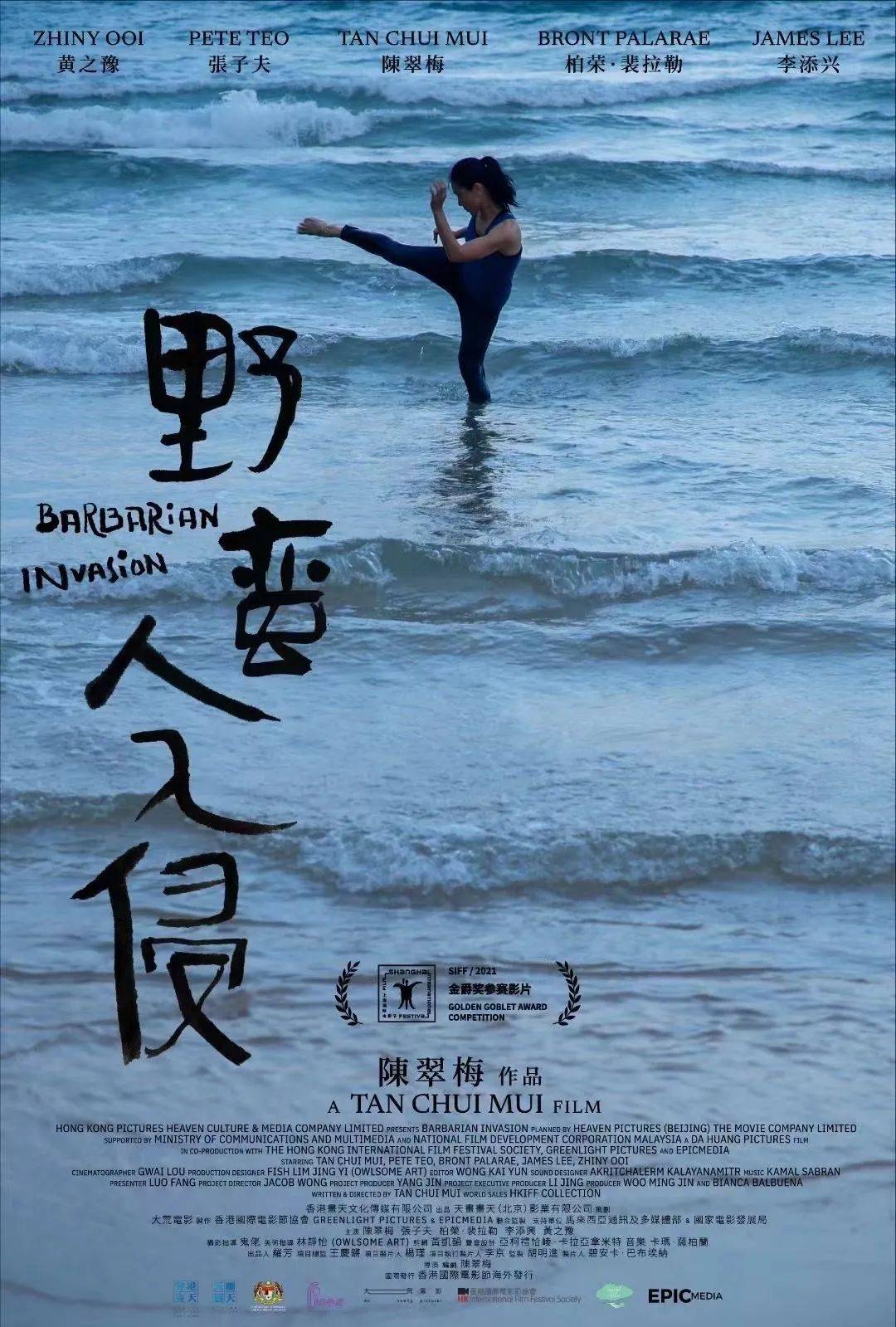
Barbarian Invasion (野蛮人入侵, Tan Chui Mui, 2021)

“Who are you?” the lead actress asks herself, at one point in several languages, as she tries to reclaim her identity from the library of roles which she must play key among them mother to six-year-old son and recent divorcee plagued by scandal. Tan Chui Mui’s meta drama Barbarian Invasion (野蛮人入侵), in which she also stars, is in part a search for the self along with the desire to assert ownership over a physicality that is otherwise uncomfortably shared but also an exploration of local indie filmmaking and the unique challenges faced by a female filmmaker in the South East Asian industry. 

Moon Lee (named for the Hong Kong star and played by Tan Chui Mui herself) was formerly a successful actress who married a high profile actor but has now divorced and is raising her six-year-old son Yu Zhou alone. Responding to a request from an old friend, she’s agreed to travel to the coast to revive her film career and has brought Yu Zhou with her as his father is filming in Japan and her mother has just had a knee operation. What Moon hadn’t realised is that she’ll be starring in a low budget action movie inspired by The Bourne Identity and that the director, Roger (Pete Teo), wants her to look convincing as a top assassin. Moon isn’t really convinced but begins to see it as an opportunity for personal growth training with the mysterious Master Loh (James Lee) who, like the wise old monk sitting outside, is fond of cryptic aphorisms.

Nevertheless, Moon’s attention is constantly diverted by Yu Zhou’s restlessness. He darts in to defend her while she’s trying to practice martial arts and runs away when left with a baby sitter, making friends with the daughter of a local cafe owner. She tells the assistant Cathy that when she was pregnant people would come up and touch her belly as if her body no longer belonged to her but had become public property. Moon resented being told that her baby was her greatest work, as if all of her other achievements paled in comparison to her motherhood and she herself had become nothing more than a conduit for her child’s existence. A mere 3D printer for the next generation, as she puts it. Yet what’s she’s doing is in effect an attempt to reintegrate body and soul. As the wise old monk tells her the body is not the prison of the mind but the mind a prison of the body. She achieves mastery over herself through embracing unconscious action. “What is “myself?” she asks Loh and finds the answer in the her that automatically raises its fist to her head in self-protection. 

But that doesn’t perhaps help her differentiate Moon Lee the woman from Moon Lee the actress and the various roles she’s played on and off screen. It seems there was a degree of scandal in her recent divorce that’s prompted her into a reconsideration of herself, while she is left feeling betrayed when Roger explains that the producers want to cast her ex Julliard (Bront Palarae) as her love interest and may even pick him over her if she refuses because he is still a big box office draw. Roger then gets a major offer of investment, but it’s from a Chinese actress who wants Moon’s part. Chinese producers want a Chinese star he tries to explain to an increasingly exasperated Moon who wonders what all this is for if she is so easily replaceable. 

In any case, an event which seems to transgress the borders between the real and the fictive throws her into the role of her amnesiac heroine who has only muscle memory along with the ability to speak several languages chiefly those spoken by roles she previously played such as a Burmese refugee and Vietnamese bride. Still, as her character begins to recover her identity she too comes into herself, brings some ironic closure to her relationship with her ex, and embarks on a somewhat mystic journey into the self all while ironically riffing on classic kung fu movie themes injected with a little contemporary pop culture. To the challenger the sword was everything, to Musashi everything was the sword Roger explains of a tale in which the elderly Miyamoto Musashi defeated a young rival through turning the world around him into a weapon, adding that to him while film was once everything everything is now film. And so it is for Moon in her ongoing psychodrama rediscovering herself among many others as she fights her way towards bodily autonomy and the reclamation of her authentic identity.


Barbarian Invasion screened as part of this year’s Five Flavours Film Festival and is available to stream in Poland until 4th December.

Original trailer (Simplified Chinese / English subtitles)

Hail, Driver! (Prebet Sapu, Muzzamer Rahman, 2021)

“Big city, small people, tough life” a jaded sex worker commiserates, slowly bonding with an illegal taxi driver trying to find a way to live in contemporary Kuala Lumpur. The ironically titled Hail, Driver! (Prebet Sapu) casts its cosmically unlucky hero adrift, literally roaming the city and coming in a sense to a new understanding of it thanks to his impromptu conversations with fares many of whom are only slightly more lucky than he is. Yet while his radio constantly updates him on the upcoming elections, he struggles to believe that real change is possible or that he will ever find a way out of his itinerant poverty. 

Aman (Amerul Affendi) was once a writer, but times have changed and no one buys magazines anymore. He’s been living with his sister in the city, but his brother-in-law makes no secret of his unhappiness with the situation, arguing with his wife about Aman’s inability to contribute economically to the household. Hoping to make some extra cash, he decides to make use of his sole inheritance from his late father, a rundown but reliable and recently serviced vehicle, to become a driver with ride hailing app Toompang. The only problem is that Aman has no official driver’s licence and is unable to get one because of his colour blindness, while the car is technically not of a sufficient standard to be used as a taxi. Paying a middle man for fake documents, he begins working but is quickly made homeless when his brother-in-law changes the locks while he’s out one day and announces he’s bringing his own brother to live with him instead forcing Aman to make the car his home, using public conveniences to wash and occasionally sleeping in 24-hr establishments such as laundromats. 

Aman’s plight is an encapsulation of the problems of the modern city, the radio explaining that house prices are a major point of interest in the upcoming elections. He searches for affordable accommodation but finds nothing suitable while quizzing his various fares about their living conditions, whether they rent or own their homes and how much they pay. One woman with a young son explains that of course she rents, there’s no way she could buy on her low salary while starting a business of her own is, she claims somewhat crassly, a no go because of the “flock of immigrants” in the city. Another of Aman’s fares reveals he came from Bangladesh some years ago, works in a hotel, and shares a reasonably priced apartment with his brother. Meanwhile Aman ferries sleazy politicians and their much younger mistresses to just such establishments. 

It’s his innate kindness, however, which eventually allows him to move forward after accidentally bonding with Chinese-Malaysian sex worker Bella (Lim Mei Fen) who came to the capital from Penang in search of a better future. She offers to let him use her spare room in return for his services getting to and from her clients, but even as they begin to develop a kind of mutual solidarity Bella confesses that she’s never felt a sense of belonging in the capital while her abandonment issues, her mother apparently living in the US after leaving her behind at five years old, have left her feeling spiritually homeless. “Not all dreams can be achieved” she advises Aman, each of them united in a sense of defeat as they reflect that nothing ever changes hearing the news that the party in power has again won the elections despite the ongoing problems in the city. 

Filmed in a crisp black and white, reflecting both Aman’s colour blindness and sense of hopelessness, Hail, Driver! paints an unflattering portrait of life on the margins of a burgeoning metropolis but eventually finds a degree of possibility in the unexpected, perhaps in its way transgressive, connection between the Malay taxi driver and Chinese sex worker who eventually find a sense of belonging, of home, in each other even as they bond over shattered dreams and urban disappointment. A striking debut feature Muzzamer Rahman’s empathetic drama captures the elusive city in all its unobtainable beauty, apartment blocks literally towering oppressively over the kindhearted Aman, but finally suggests that freedom may lie only outside of its repressive borders. 


Hail Driver! streamed as part of this year’s hybrid edition Udine Far East Film Festival.

Original trailer (English subtitles)

Gundala (Joko Anwar, 2019)

“If we see injustice before our eyes and do nothing then we’re no longer humans” the idealistic father of a future superhero instructs his young son, trying to impart a sense of humanitarianism as a basic moral good. It’s a lesson the boy will find himself unlearning and resuming later, his innocence well and truly destroyed by an often cruel and cynical society only to be reawakened to the idea that it doesn’t need to stay that way. Among the most recognisable names of Indonesian cinema, Joko Anwar turns his hand to the creation of a local comic book cinematic universe, adapting the 1969 comic Gundala by Harya “Hasmi” Suraminata for the present day filtering contemporary Jakarta through classic Gotham. 

Operating as an origin story for the titular hero, Gundala opens with the young hero Sancaka (Muzakki Ramdhan) unable to prevent his father’s (Rio Dewanto) death due to his fear of electrical storms when he is first set up by a duplicitous factory boss and then assassinated while leading a protest for fair pay and conditions. Soon after, Sancaka loses his mother (Marissa Anita) too after she is forced to go to the city for work and never returns. Ending up a ragged street kid, he’s saved from an attack by a rival gang by an older boy (Faris Fadjar Munggaran) who teaches him how to protect himself physically and mentally by convincing him that the only way to survive on the street is keep his head down and walk on by even if it looks like others are in trouble. 20 years later the adult Sancaka (Abimana Aryasatya) is an aloof young man working as a security guard at a print house where his sympathetic mentor Agung (Pritt Timothy) begins to remind him of his father in his conviction that “living is no use if you stop caring and only think about yourself”, while he also finds himself defending the woman next-door, Wulan (Tara Basro), and her young brother Teddy (Bimasena Prisai Susilo), from hired thugs sent to intimidate them because of their involvement in a protest against the forced redevelopment of a local marketplace.  

Events seem echo around him. The major villain Pengkor (Bront Palarae) is also an orphan but on the opposing side as the son of a cruel plantation owner murdered by his not altogether ideologically pure workers whose desire for fair pay and conditions he had resolutely ignored. According to cynical politician Ridwan (Lukman Sardi), Pengkor became a union organiser of his own, leading an uprising at the abusive orphanage he was placed into by a cruel uncle hoping he’d die and free up the inheritance, thereafter becoming a kind of godfather to the fatherless with a thousands strong army of eternally grateful orphans he saved acting as sleeper agents for a coming revolution. 

Pengkor’s nefarious plan involves fostering a conspiracy surrounding contaminated rice said to make the unborn children of the women who eat it turn out “immoral”, a generation of psychopaths unable to tell right from wrong. Fairly unscientific, it has to be said, but playing directly into the central questions of the nature of “morality” in a “immoral” society. Can it really be “moral” for bosses to exploit their workers and get away with it, for politicians to cosy up to gangsters and remain complicit with corruption, and for a man like Pengkor to be the only hope for orphaned street kids otherwise abandoned and ignored by a wilfully indifferent society? Pengkor decries that hope is the opiate of the masses, but that’s exactly what Gundala eventually becomes for them in his “electric” ability to resist, eventually rediscovering his humanity as he designates himself as the embodiment of “the people” pushing back against the forces of oppression and seeming at least to win if only momentarily.  

Young Sancaka’s fear of lightning is, in essence, a fear of his power and his social responsibility something he is quite literally shocked into accepting. In a world of quite striking social inequality, he finds himself the lone defender of the oppressed whose very existence spurs others, including previously cynical politician Ridwan, into rediscovering their own humanity in the resurgent hope of a better future. As someone puts it, peace never lasts long but you keep fighting for it because every moment is precious. Not so much a battle of good versus evil as a battle for the meaning of good, Anwar’s Gundala recalibrates the anxieties of the late ‘60s for the modern era and creates an everyman hero not only to resist them but to foster a spirit of resistance and humanity in the face of heartless cynicism. 


Gundala streams in Poland until 6th December as part of the 14th Five Flavours Film Festival.

Original trailer (English subtitles)

Dukun (Dain Iskandar Said, 2018)

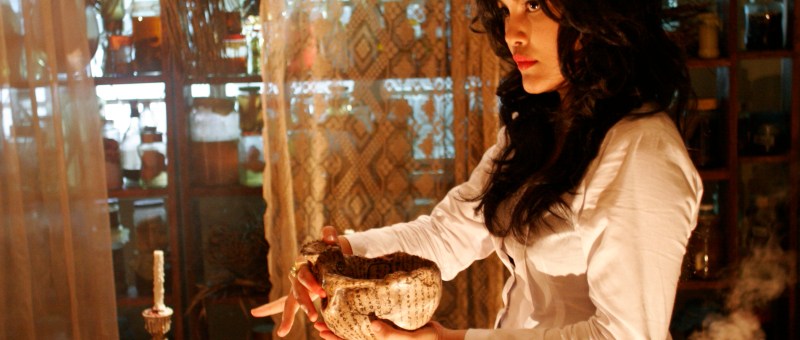
Dukun posterInspired by a notorious real life crime, Dain Iskandar Said’s Dukun proved too controversial Malaysia’s censors and is only now reaching cinema screens after languishing on a studio shelf for the last twelve years. It arrives, however, alongside a number of similarly themed East Asian horror films which pit ancient “superstitions” against “respectable” religions and, unlike many, broadly comes down on the side of Islam which perhaps makes the fact that it was banned a little surprising. Then again, as a lawyer points out midway through the unconventional femme fatale’s murder trial, there are many who believe in “black magic” and perhaps faith is not enough to hold off the overwhelming supernatural dread of incomprehensible otherworldly forces.

Said opens with the conclusion as Diana (Umie Aida), the “gifted” shamaness and glamorous nightclub singer, dolls up in a beautiful ballgown to be sure of making an impression at her own hanging. Dialling back a little, the dismembered body of a businessman is discovered with evidence that suggests a ritualised killing. Meanwhile, veteran lawyer Karim (Faizal Hussein) is desperately searching for his 17-year-old daughter Nadia (Elyana) who ran away from home after an argument. Fearing Nadia has gotten herself mixed up with drugs, Karim hopes to get an old police contact to help him keep tabs on new arrests but in return he finds himself agreeing to defend a difficult client who has already rejected all 23 public defenders put in front of her. Diana argues that the businessman died as a result of a ritual intended to make him invincible because he didn’t listen to her instructions and the spells didn’t work – his death, therefore, is not her “fault” but the unfortunate consequence of improper respect for shamanistic practices.

Dukun’s banning is apparently not so much down to a direct confrontation of Islam and shamanism, but the sensitivity surrounding the real life case which inspired it. In 1993, former pop-singer Mona Fandey, who had rebranded herself as a top shaman catering to the rich and famous, was arrested for the murder of a politician whose dismembered body was eventually discovered in her storehouse. As the investigation progressed, more bodies were discovered as was a lengthly paper trail detailing a shopping spree which even included a face lift. Unsurprisingly given all the grizzly details and celebrity connections, the trial was a media sensation which Fandey milked for all it was worth.

Though the narrative and facts of the case have obviously been fictionalised, the comparisons are obvious – the accused shamanesss is even called “Diana” which was the title of one of Fandey’s unsuccessful albums. Actress Umie Aida perfectly mimics Fandey’s deluded fame hungry creepiness but also adds the oddly alluring quality of a film noir femme fatale as she shifts between elegant nightclub singer and all powerful practitioner of black magic. Diana plays to the gallery, attempts to charm the court, and acts as if her trial is just another show conducted in front of her adoring fans while preparing herself for the grand “finale” which, unbeknownst to the legal system, may all be a part of her greatest work of ritual magic.

Meanwhile, Karim attempts to defend her with a keen application of the law, pitting “irrational” ritual against state sponsored logic which itself is perhaps largely under the sway of conventionally religious thinking. Karim’s wife disappeared ten years previously, leaving him to raise his daughter alone only to have her disappear too. Diana seems oddly familiar with Karim’s difficult family circumstances and offers to “help” him in return for delivering makeup and a mysterious object from her apartment. Karim is desperate enough to accept, but in accepting may have already betrayed himself even if he’s careful to also consult his local Imam as to the best course of action.

As in the all best supernatural noir, darkness is coming for Karim. Engulfed in an inescapable spiral of dread and despair, Karim finds himself sinking ever deeper in his quest to rescue his daughter little knowing that they are all involved in an ancient conspiracy over which they have little or no control. You can’t play around with the supernatural, Diana counsels, but the supernatural may very well play around with you.


Dukun screens as part of the New York Asian Film Festival 2018 on 13th July 6.15pm

Official trailer (English subtitles for dialogue, contains disturbing imagery)

Satan’s Slaves (Pengabdi Setan, Joko Anwar, 2017)

Satan's Slaves posterBad things happen in houses where they don’t pray. So says a kindly Imam in Joko Anwar’s chilling horror remake Satan’s Slaves (Pengabdi Setan). Taking inspiration from a 1982 classic, Anwar updates the tale of supernatural dread and familial breakdown for the new century while maintaining the early ‘80s setting and pushing back still further into the superstitious, gothic past. The family, threatened by financial, social, and spiritual pressures is stretched to breaking point by supernatural unease. Advised that the cure for their ills is religion, they begin to conform but, unlike the original, godliness cannot save them from a greater evil and if the family chooses to save itself, it will be through acts of selfless love rather than brutal adherence to a set of outdated social codes.

As the film begins, eldest daughter Rini (Tara Basro) – a 22-year-old former college student, has given up her studies and become the defacto maternal figure to her small family while her mother, Mawarni (Ayu Laksmi ), remains bedridden after a long illness. Mawarni was once a famous singer and the family’s breadwinner, but having been out of the spotlight so long her music has begun to go out of fashion. Royalties have dried up and there is little prospect of any further income. Lacking the funds to pay for ongoing hospital care, the family have brought Mawarni home to care for her themselves though the father (Bront Palarae), worrying about feeding his children, secretly urges his wife to be on her way to a better place, as a disturbed Rini hears him say from outside the door. Soon enough, Mawarni is gone, but not forgotten. Strange noises fill the old mansion as Mawarni’s bell continues to tinkle in the night, her records play without warning, and radios reset themselves to play her song. When dad leaves the siblings – 16-year-old Tony (Endy Arfian), 10-year-old Bondi (Nasar Annus), and 7-year-old Ian (M. Adhiyat) who is deaf and mute, in Rini’s care to head into the city in search of money, the kids are left to deal with the legacy of his moral cowardice all alone.

Adopting the trappings of the classic European gothic chiller, Satan’s Slaves sets itself in an old fashioned villa located in a forest some distance outside of the city. If the house were not creepy enough on its own, it is also conveniently located next to the local graveyard where Mawarni has now been laid to rest (in theory, at least). Moving in “next door”, a kindly Imam and his spiritually open minded son Hendra (Dimas Aditya) promise to provide pastoral care to the bereaved children but find themselves engulfed by the house’s increasing power to isolate and terrorise.

Tipped off by Hendra, Rini discovers a dark and disturbing secret regarding her mother’s former life and her own origins. Devolving into a vast conspiracy involving satanic fertility cults and their apparently omnipresent spy networks, Satan’s Slaves revels in its oppressive atmosphere of supernatural dread and human impotence as the children find themselves surrounded on all sides by faceless, umbrella wielding zombies lying in wait to tear their home apart.

Rini is told, by an old friend (Egy Fedly) of their grandmother’s (Elly D. Luthan), that the fertility cult requires child sacrifice but that the cult cannot take the child unless the family gives it up. She is being asked, quite literally, to put her life (and those of her siblings) on the line in order to save “the family”, yet “the family” or more particularly hers already has its problematic elements. Rini’s grandmother, recently deceased in mysterious circumstances, was not originally accepting of her daughter-in-law because of a class difference and also because of her occupation as an “entertainer” which was not considered respectable at the time. She only warmed to Mawarni once the children were born which was already some years into the marriage as Mawarni, finding it difficult to conceive, became desperate for a child and for her mother-in-law’s acceptance.

Rather than the lack of spiritual rigour which the Imam blames for the increasing demonic presence, it is these social taboos which seem to have opened the door to evil. The kids try the religious solution, but unsurprisingly it doesn’t help them. Literally haunted by their late mother who feels herself “abandoned” by her family, her loving husband hastening her death now that she is no longer economically useful and has become an unbearable burden, the only way to defeat this curse is to reverse it through unconditional familial love and solidarity even given what Rini now knows about her history. Oppressive in atmosphere yet filled with an eerie beauty as shadowy figures slowly colonise the misty Indonesian forest, Satan’s Slaves challenges the idea of “the family” in the face of strict patriarchal social codes and finds that in order to survive it must salvage itself through acts of defiance and self identification.


Screened at the 20th Udine Far East Film Festival.

Original trailer (English subtitles)