Detective Chinatown 1900 (唐探1900, Chen Sicheng & Dai Mo, 2025)

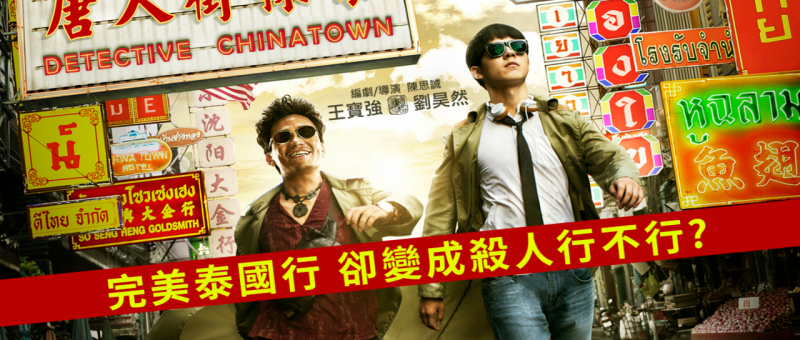
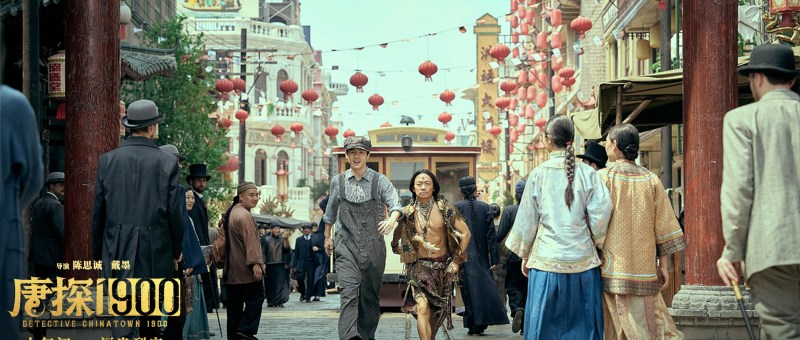
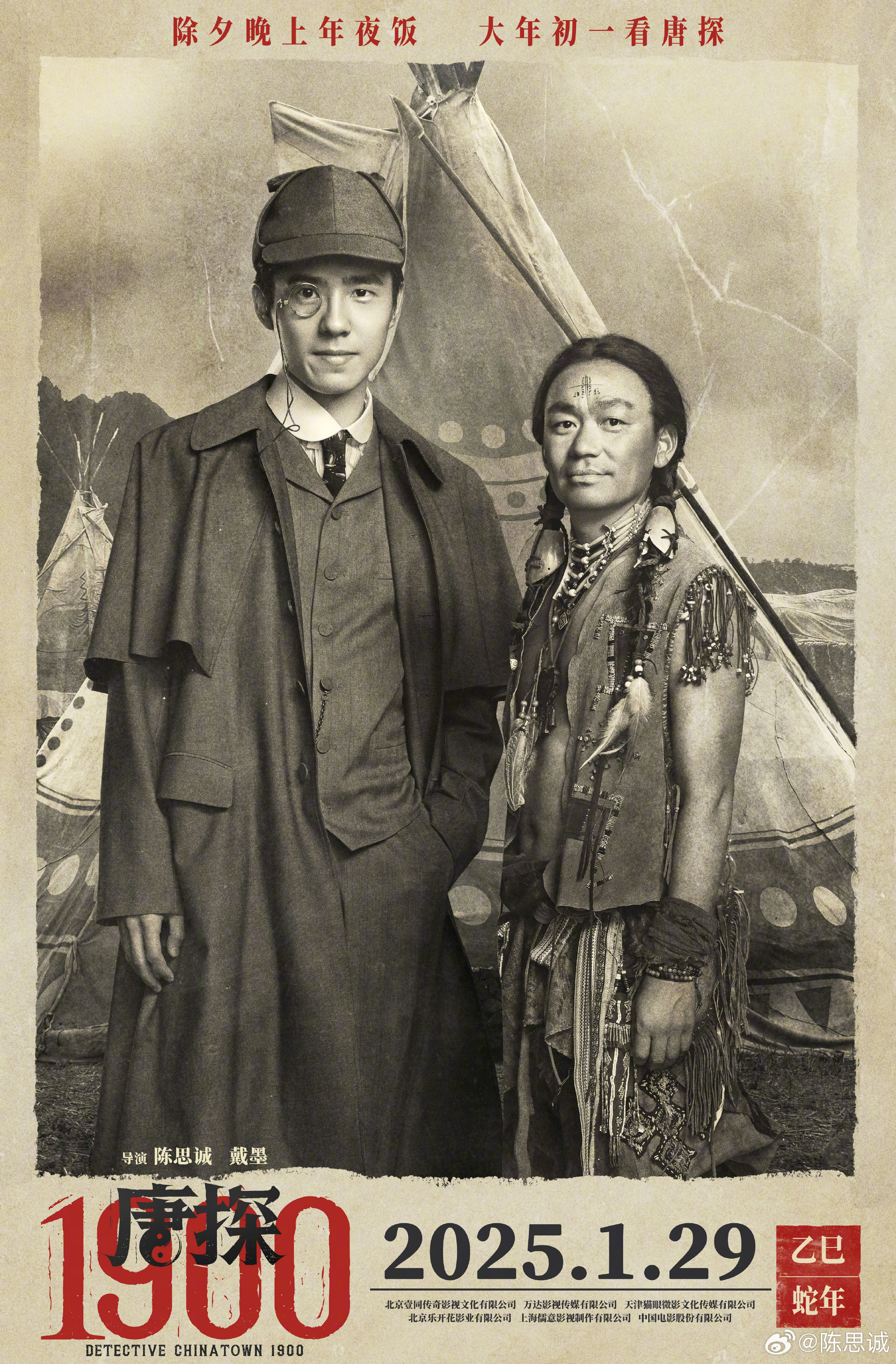
The Detective Chinatown team head back to turn of the contrary San Francisco in the latest instalment of the mega hit franchise, Detective Chinatown 1900 (唐探1900, Tángtàn 1900). Like many recent mainstream films, its main thrust is that Chinese citizens are only really safe in China, but also implies that diaspora communities exist outside the majority population and therefore can only rely on each other. Nevertheless, there’s something quite uncanny in the film’s ironic prescience as racist politicians wax on about how here rules are made by the people rather than an emperor and plaster “make America strong again” banners on their buses. 

The crime here though is the murder of a young white woman, Alice (Anastasia Shestakova), the daughter of Senator Grant (John Cusack) who is attempting to push the renewal of the Chinese Exclusion Act through government and destroy all the Chinatowns in the United States. An older Native American man was also found dead alongside her. Some have attributed the crime to Jack the Ripper as Alice was mutilated before she died and some of her organs were taken. The son of local gangster Bai (Chow Yun-Fat), Zhenbang (Zhang Xincheng), is quickly arrested for the crime while his father hires Qin Fu (Liu Hairan) to exonerate him believing Qin Fu to be Sherlock Holmes. 

What Qin Fu, an expert in Chinese medicine recently working as an interpreter for the famous consulting detective, finds himself mixed up in is also a slow moving revolution as it turns out Zhenbang is involved with the plot to overthrow the Qing dynasty (which would finally fall in 1912). As the film opens, corrupt courtiers to sell off large golden Buddha statues to American “allies” who are later seen saying that they plan to fleece China and then renege on their promises to protect it. Meanwhile, the Dowager Empress has sent emissaries to San Francisco to take out the revolutionaries in hiding there including Sun Yat-sen.

Of course, in this case, the Qing are the bad guys that were eventually overthrown by brave Communist revolutionaries that paved the way for China of today which is alluded to in the closing scenes when Zhenbang’s exiled friend Shiliang (Bai Ke) says that China will one day become the most powerful country in the world implying that no-one will look down on the Chinese people again. But on the other hand, they are still all Chinese and so the emissary tells Qin Fu to “Save China” as he lays dying having met his own end shortly after hearing that the British have invaded Peking signalling the death blow for the Qing dynasty. 

Nevertheless, there is a degree of irony in the fact that the secondary antagonist is an Irish gang who have signs reading “no dogs, no Chinese,” mimicking those they themselves famously face. The Irish gang is in league with Grant and content to do his dirty work, while Bai is supported by another prominent man who speaks Mandarin and pretends to be a friend to the Chinese but in reality is against the Exclusion Act on the grounds he wants to go on being able to exploit cheap Chinese labour. In this iteration, Ah Gui (Wang Baoqiang) is “Ghost,” a man whose parents were killed building the American railroad and was subsequently taken in and raised by a Native American community. In Bai’s final confrontation with the authorities, he takes them to task for their hypocrisy reminding them how important the Chinese have been in building the society in which they alone are privileged while “equality” does not appear to extend to them.

Through reinforcing these messages of prejudice and exploitation, the film once again encourages Chinese people living abroad to return home. Though set in 1900, the scenes of protest can’t help but echo those we’ve seen in the wake of the Covid-19 pandemic when racist hatred towards Asian communities has become much more open and pronounced. Qin Fu and Ghost do at least succeed in solving the mystery through scientific principles while ironically assisted by an earnest American policeman who says he thinks it’s important to uphold the law even as we can see the head of the golden Buddha sitting behind the victorious politician’s banquet table and realise that in reality taking out Grant has made little difference for the Exclusion Act will still be renewed (it was repealed only in 1943). They may have saved Chinatown, but Bai must sacrifice his American wealth and return to China much the way he left it having reflected on his life in light of the revolutionary course charted by his more earnest son. As Ghost and Qin Fu remark, if things were better there no one would want to come here though they themselves apparently elect to stay, solving more crimes and making sure that their descendants know they were here and where they were from.


International trailer (Simplified Chinese / English subtitles)
Decoded (解密, Chen Sicheng, 2024)

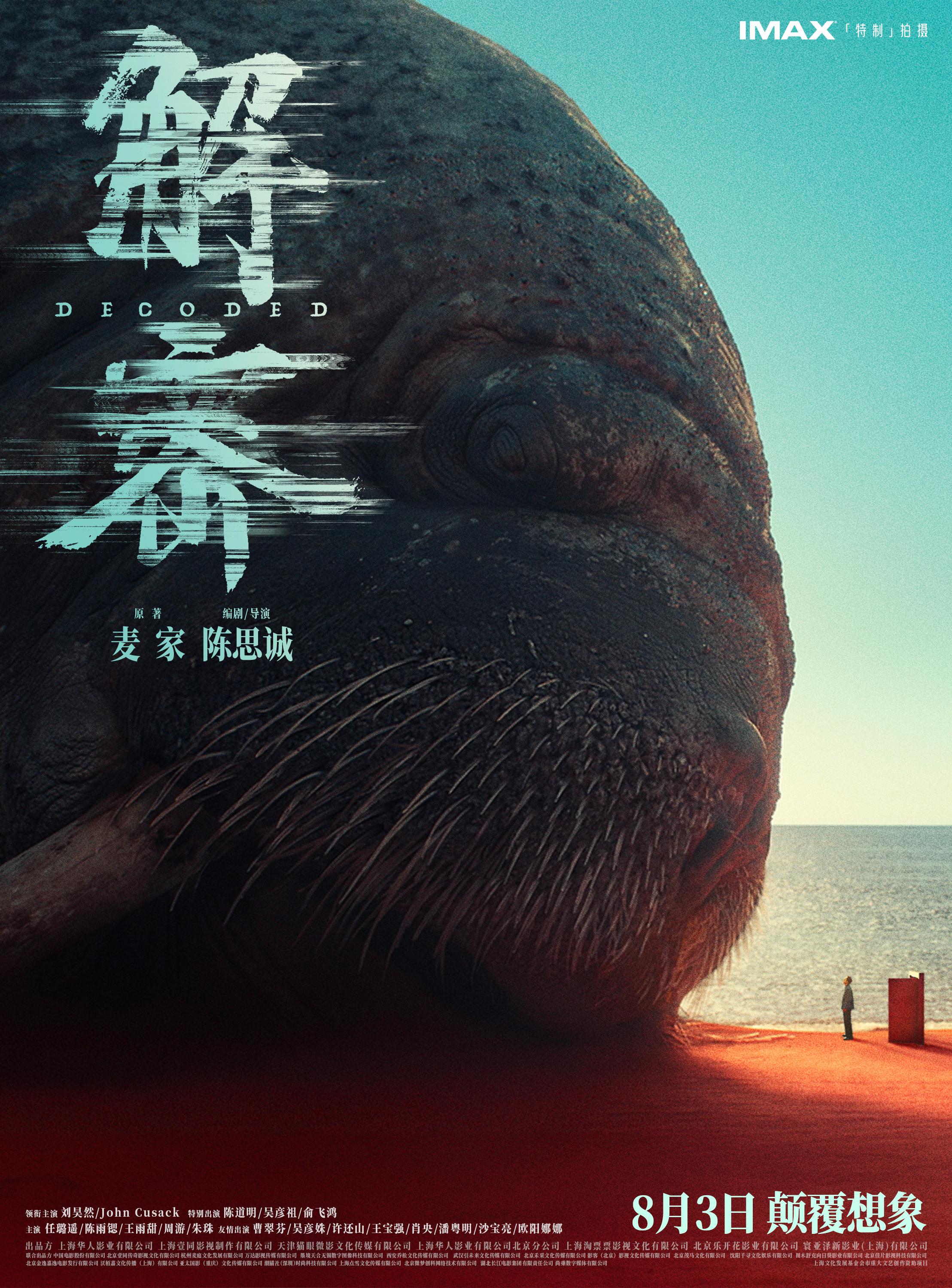
International geopolitics is reduced to a battle wits between two men, each in their way lonely exiles and perpetual outsiders in Chen Sicheng’s adaptation of the novel by Mai Jia, Decoded (解密, jiěmì). Originally an actor (and here making a meta self-cameo), Chen is best known as a director for the smash hit Detective Chinatown franchise which boasts both well-plotted mysteries and zany, lowbrow comedy. Decoded is a slightly different kettle of fish, displaying its own kind of whimsicality but also darker and stranger in its concentric enigmas.

The narrative’s timeline seems to be slightly hazy, but loosely follows an prodigious orphan born to a prominent family though his father, the black sheep, had already died before his mother too died in childbirth. A rather complicated set of circumstances led to Rong Jinzhen (Liu Haoran) being raised by an Austrian dream interpreter who for unexplained reasons kept him locked up in a small hut isolated from the world while teaching him all about dreams with the consequence that by the time the old man dies, 12-year-old Jinzhen is a strange boy with few social skills but a once-in-a-generation grasp of mathematics.

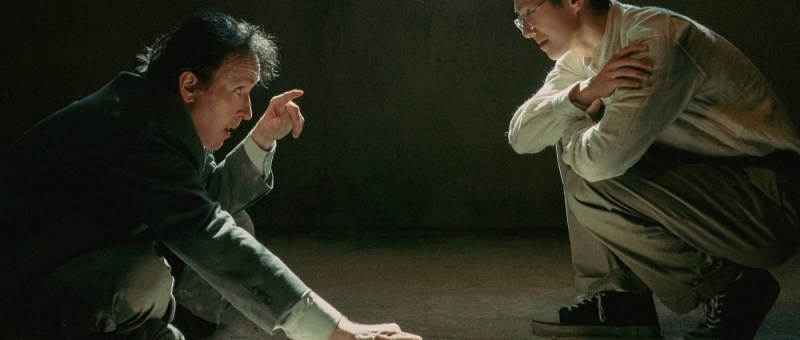
It’s this genius that sees him saved by distant relative Xiaolili (Daniel Wu) who was originally going to send him to an orphanage but decides adopt him instead. Jinzhen then gains early entry to university where he’s tutored by Liseiwicz, an exiled Polish professor who fled his homeland to escape persecution by the Nazis as a Jew. The film seemingly doesn’t mean to, but undermines this backstory through the casting of John Cusack who plays the part as all American and is not convincing as Polish man who ended up in China because he had nowhere else to go and is unable to return to his homeland thereby lessening the intended impact of his speeches about nationhood and patriotism which counter those Jinzheng has already been given by Xiaolili in addition to making him seem suspicious possibly long before she should. 

Nevertheless, this may also add to his sense of untrustworthiness and perhaps duplicitous treatment of Jinzheng which edges towards the exploitative in hoping to make use of his genius for his research into the evolution of computing. In the early days of the Chinese civil war, Liseiwicz is approached by agents from the PLA who want him to decode a telegram that may save thousands of lives. Liseiwicz claims he doesn’t want to get into politics though superficially supportive of the Communist cause only to later be exposed as a collaborator with the KMT on his return to the US where he designs encryption codes to be used between Chiang Kai-shek’s nationalists in Taiwan and the US troops backing him in the hope he’ll retake China and end Communism in Asia. 

Of course, Jinzheng gets picked up by the CCP to work in their secret spy division in which he becomes a virtual prisoner forbidden from leaving the compound while expected to spend all of his time breaking codes such as those designed by Liseiwicz. In truth, it becomes a kind of game between the two but one that the guileless Jinzheng little understands. It takes it him an unreasonably long time to understand that Liseiwicz is just messing with his mind, sending him misinformation as a distraction intended to drive him mad culminating in dispatching a copy of the The Beatles’ I Am the Walrus in order both to disrupt his political consciousness with decadent Western pop music and drive him out of his mind as he struggles to understand how this nonsense verse about egg men and marine animals is supposed to relate to the code.

Then again, there is something a little subversive in the celebration of Jinzheng’s ability to think about the box, instantly understanding that the correct answer to the entrance test is not to waste his time taking it because it’s obvious they’ve already cracked the code concerned. The use of dream interpretation taught to him by his adoptive Austrian father maybe simply be an ability to work things out on a deeper level of consciousness, but it’s also left him with a fragile mental state already unable to discern dream from reality. The strain of constant codebreaking further pushes him towards madness while he perhaps loses sight of his original mission, only later coming to realise that Xiaolili’s vision of nationhood was the correct one after all.

Though Chen appears to have been influenced by Christopher Nolan in his use of oneiric imagery, he crafts a number of beautifully designed, whimsical dream sequences some which later become hellish or strange but reflect an innate innocence in Jinzheng while disclosing to him something of the real world which he had not understood. It’s ironic in a sense that he’s forever trying to decode the world around him, such as in taking instructions from his adopted sister/cousin Biyu (Chen Yusi) on how to know if girls are interested which he nevertheless slightly misunderstands. The film goes to some surprisingly dark places such as in a brief sequence which Biyu and her mother seemingly if potentially anachronistically fall victim to the Cultural Revolution while Jinzheng is the victim of several assassination attempts by KMT agents well into the ‘60s. Even so his story emerges as tragedy more than triumph, a fine mind broken by the society around him and used as an unwitting tool in the nation’s path to perfecting an atomic bomb having seemingly decoded everything but his place within the world.


International trailer (English subtitles)

Detective Chinatown 3 (唐人街探案3, Chen Sicheng, 2021)

Cerebral sleuth Qin Feng (Liu Haoran) and his larger than life uncle Tang Ren (Wang Baoqiang) are back on the case in the third instalment in the Detective Chinatown franchise (唐人街探案3, Tángrénjiē tàn àn 3) picking up as promised in Tokyo as the duo take on another locked room mystery on the invitation of dandyish local investigator Hiroshi Noda (Satoshi Tsumabuki). This time around, the mystery is only tangentially connected to a Chinatown though the solution in itself does indeed lead back towards the Mainland and the complicated relations between China and Japan, while Qin in particular finds himself confronting the idea that oligarchy is in fact the “perfect crime”. 

Hired by a yakuza boss, Watanabe (Tomokazu Miura), accused of offing a Thai rival, Su Chaiwit, following a dispute over development rights in the local Chinatown, Qin and Tang Ren quickly find themselves hamstrung by their own discovery of evidence which further implicates their client and brings them to the attention of top cop Tanaka (Tadanobu Asano) who wastes no time telling them to mind their own business. Meanwhile they are also being pursued by muscly Thai detective Jaa (Tony Jaa) working for the other side. In a new high tech motif, the guys are each handed a simultaneous translation earbud which allows the Japanese and Chinese guys to converse with each other in their own languages though Hiroshi often chooses to speak directly in Mandarin instead while the Thai contingent exclusively use English. Unlike previous instalments the duo do not venture into the local Chinese community and Chinatown itself is merely territory contested by Japanese yakuza and South East Asian gangsters. 

Even so Qin and Tang Ren find themselves at a nexus of cross-cultural conflict caught between the cops, yakuza, and Thai gangsters each looking not so much for the truth but some kind of advantage for their side all of which culminates in a hilarious series of mixups at a morgue. Once again, Tang Ren falls in love with a local woman, in this case Su Chaiwit’s secretary Anna Kobayashi (Masami Nagasawa) who is certain Watanabe is guilty and later apparently kidnapped by a crazed serial killer (Shota Sometani) just by coincidence. Of course, all this cycles back towards the franchise’s growing mythology, Qin pursued and manipulated by the mysterious entity known only as “Q” which, as we learn, is as obsessed with the idea of the perfect crime as Qin largely in that they think they’ve perfected it in the stranglehold placed over civilisation by a shady elite. 

In this, the film may be taking aim at hidden oligarchy and the immorality of growing social inequality, but in its Japanese setting Chen is also freer to take potshots at contemporary Chinese society such as in Tang Ren’s confusion that they can’t simply bribe the police to get Qin out of jail when he is wrongfully arrested. “Justice and equality require sacrifices” Qin explains after solving a grim riddle only to be asked some difficult questions about the nature of justice and his own role within it by a manipulative villain, but in a classically censor-friendly move ends the movie with a brief monologue declaring that “justice always prevails and light overcomes darkness”, he and his team recommitting themselves to fighting “vices”, and presumably the shady elitism fostered by Q, wherever they arise. 

Like Detective Chinatown 2’s New York setting, the vision of Japan on display is deliberately stereotypical from an Akihabara cosplay carnival to tasks involving masked kendo fighters and a sumo wrestler, not to mention bumbling comedy yakuza forever threatening to cut off their fingers, the Shibuya Scramble set piece, or a playful homage to Phoenix Wright: Ace Attorney. Meanwhile, Chen continues his taste for huge ensemble action such as the complex slapstick routine that opens the film and now traditional end credits sequence featuring the cast dancing to theme tune “Welcome to Tokyo” dressed in the classic green detective mac worn by Qin. Truth be told, the solution to the central mystery is heavily signposted and slightly unsatisfying though Chen’s visualisations of Qin’s deductions are expertly rendered even as the hero’s growing confidence as a crimefighter unbalances his relationship with the increasingly silly if goodhearted Tang Ren. Boasting a host of A-list Japanese acting talent, the film also makes space for an unexpected cameo from one of the most recognisable faces in Sinophone cinema before teasing a further instalment to take place in London, home to the greatest consulting detective of them all. 


Detective Chinatown 3 is available to stream in the UK via iTunes, Google Play, Amazon Prime, Microsoft, Sky, and Virgin Media courtesy of Cine Asia.

Original trailer (English / Simplified Chinese subtitles)

Forever Young (栀子花开, He Jiong, 2015)

“As long as you don’t give up, it’s never too late to follow your dream” according to a sympathetic teacher perhaps incongruously advising a conflicted student who might in one sense be facing an ending but also has his whole life in front of him. Apparently inspired by a song from 2004, Gardenia in Blossom, Forever Young (栀子花开, Zhīzihuā Kāi) ironically concerns itself with the lives of a collection of youngsters facing their first roadblock as they approach the end of university while their dreams seem further away than ever. 

Popular girl Yanxi (Zhang Huiwen) has her heart set on joining the Paris Opera Ballet along with her three roommates with whom she dances the Dance of the Four Swans. Yanxi’s boyfriend Xunuo (Li Yifeng), meanwhile, dreams of making it as a rockstar with his three bandmates. The combined group of friends, cheerful and excited about celebrating Yanxi’s upcoming 21st birthday, are upbeat about the future and looking forward to their graduation concert “Dream Night” at which they hope to catch the eye of influential people. When tragedy strikes however and it seems the girls will not be able to perform, Xunuo makes a surprising decision, roping his bandmates in to take their place and dance the Dance of the Four Swans in their stead. 

Mirrors of each other, Yanxi and Xunuo can each be blinkered and self-centred. Yanxi takes it for granted that the group all want the same thing and are determined to go to Paris with her but apparently hasn’t noticed that her friends have their own problems and at least one may not be able to afford to go abroad because she’s already subsidising her brother’s education. Stubborn and unsympathetic, Yanxi later comes to regret having been so unforgiving as she faces the prospect of continuing alone only to encounter yet another setback. Xunuo meanwhile does something similar in convincing his bandmates to join him in the Four Swans project at the expense of their own dream in taking time away from their band practice while forcing them to don tutus and possibly make fools of themselves in front of all their friends. 

Asked why she chose ballet, Yanxi replies that standing on tiptoes allowed her to see further, but now she worries she’s been suffering with a particular kind of myopia in having seen nothing at all while still clinging on to a vain hope for her Paris dream. The idealised relationship between the pair is marred only by Xunuo’s petulant decision not to get on the bus with everyone else after their night out when Yanxi reminded him she was bound overseas, and her later despondency as they’re temporarily forced apart by Xunuo’s secret plan even while his strange rivalry with a former friend with whom he wrote a plaintive love song takes on an overtly homoerotic quality.  

Nevertheless, there’s something of an incongruity in such young people being constantly reminded that as long as you don’t give up there’s always time to achieve your dreams though it’s true enough that they’re each at a crisis point, about to lose the student safety net and faced with the choice of whether to keep trying to make it or go for the “safe” option of heading into the workforce. Xunuo declares that he just wants “all the sadness and troubles to go away”, only for his teacher to point out that if you’ve nothing to overcome then you’ll never grow. The presence of tragedy never seems to touch them as deeply as one would think, though at least through Xunuo’s vicarious dancing dream the guys are able to renew their friendships, acknowledging their own strengths and weaknesses as they work together in memory of absent friends and perhaps their own fading youth. 

A strangely cheerful campus drama despite its darkness and the foreboding of the title, Forever Young allows its heroes to be just that as they promise themselves that as long as they refuse to give up it’s never too late for their dreams to come true while also subtly hinting at a new ideal of masculinity in the infinitely sensitive Xunuo who is selfless and kind and just wants everyone to be happy. An overly idealised conclusion perhaps as the youngsters bid goodbye to their adolescent lives for the stormy seas of adulthood, but also a reassuring one as they emerge from their respective traumas and hardships with renewed hope for the future.


Forever Young streams in the US Feb. 12 to 18 as part of Asian Pop-Up Cinema’s “Happy Lunar New Year!”

Original trailer (English subtitles)

Spring Fever (春風沉醉的夜晚, Lou Ye, 2009)

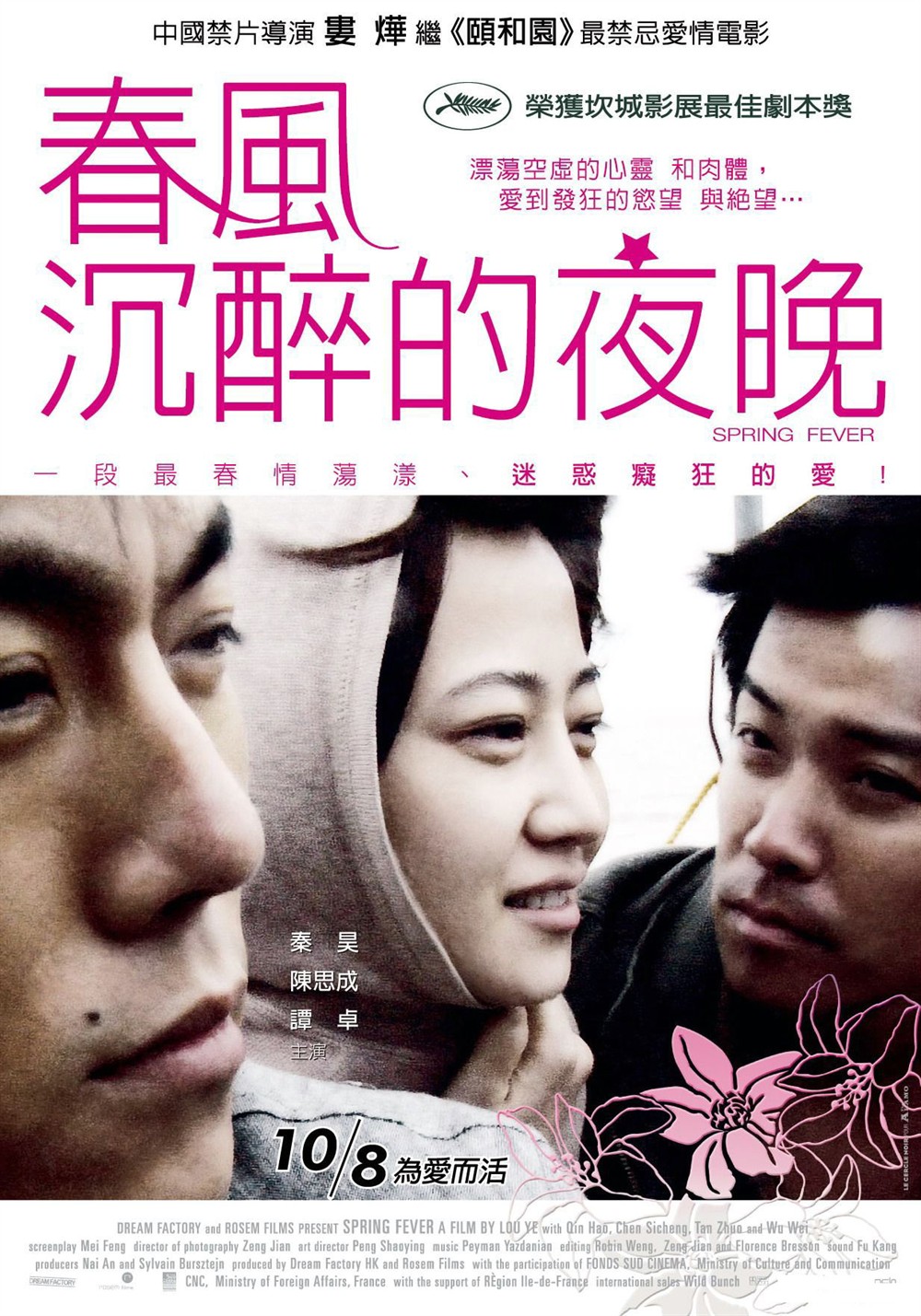
Spring fever posterLou Ye has never especially cared for the views of China’s famously draconian censorship board. 2006’s Summer Palace earned him a five year ban for its scenes of full frontal nudity and references to Tiananmen Square Massacre (or, as later claimed, for “failing to meet appropriate standards for sound and picture quality”). 2009’s Spring Fever (春風沉醉的夜晚, Chūnfēng Chénzuì de Yèwǎn) was therefore shot on the fly in Nanjing in direct contravention of the director’s loss of official status – something he later got around by listing the film as a Hong Kong/France co-production so it could be entered in the Cannes Film Festival in a move which can’t have done him any favours with SARFT. Once you’ve been banned, you might as well go all in and there can be few better ways of reminding China’s “conservative” censors that you didn’t ask for their opinion than opening with a lengthy and extremely matter of fact love scene between two men.

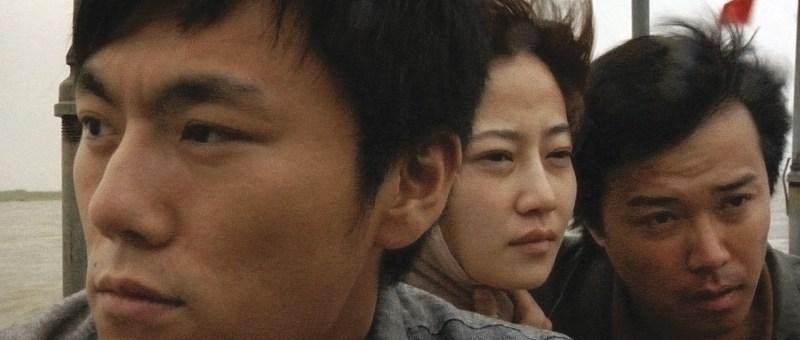
Lou opens with floating spring flowers giving way to two men in a car whose hands delicately brush as they approach their destination – a remote cottage in which they intend to have a secret tryst. The tryst, however, will not be so secret as they assume. Private investigator Luo Haitao (Chen Sicheng) has been tailing the men on the behest of a suspicious wife, Lin Xue (Jiang Jiaqi), who suspects her husband, Wang Ping (Wu Wei), is hiding a secret but never guessed it was another man, Jiang Cheng (Qin Hao). Luo dutifully reports his findings to Lin, but urges her not to look too closely at the photographs. Finally he points out her husband’s lover at his workplace, a travel agents with a conveniently large glass frontage. Wang Ping, in a motif that will be repeated, wants to introduce his wife to his lover, perhaps hoping to ease the blow or smooth a path towards maintaining both relationships simultaneously. Seeing as Lin Xue has already seen Jiang and knows perfectly well who he is, the plan goes wrong and provokes a confrontation which eventually sends Lin Xue storming into Jiang’s workplace to out him in front of his colleagues, at which point Jiang decides he’s had enough and breaks up with Wang. Wang, however, can’t seem to get over him.

Meanwhile, Luo has continued following Jiang even though the investigation is over. Through extended trips to drag bars and underground music venues, Luo eventually becomes involved with “the other man” but he too has a girlfriend, Li Jing (Tan Zhuo), who works in a factory and seems to have something going on with her shady, Cantonese-speaking boss.

Abandoning the overt political contexts of his previous films, Lou circles around two concentric love triangles each of which has Jiang Cheng in the centre. Though it’s unclear whether Jiang Cheng is living as an “openly” gay man – the reaction at his workplace to Lin Xue’s outburst would suggest not though it doesn’t seem to cause him any problems with his employment, he is the only one of the three men to exclusively embrace his homosexuality. He does not have a girlfriend, is well known as an artist at a local drag bar, and makes no real effort to hide who he is even if not making a particular point of it. Both Wang and Luo seem to struggle with the nature of their feelings for and relationship with Jiang, neither one quite able to give up on the idea of “conventional” life. Wang, apparently infatuated with Jiang and unable to live without him, still seems to want to remain within his marriage despite his wife’s increasingly possessive behaviour, dreaming of an arrangement where he could perhaps have the best of both worlds. Luo is less conflicted. He pursues Jiang while his relationship with Li Jing flounders, but feels himself responsible for her wellbeing and unable to abandon her entirely in the knowledge that she is in a fragile state.

Quickly fed up with all these girlfriend problems, Jiang never asks either man to make a choice even if he eventually feels there is no way either relationship can continue. As Jiang’s story, the women perhaps get short shrift with Lin Xue’s villainy eventually turning violent as she becomes the embodiment of a repressive society intolerant of homosexual relationships, berating Jiang for corrupting her husband, humiliating her, and ruining her marriage all in front of his gawping colleagues in an act intended to destroy his life completely. Li Jing, meanwhile, has a much more sympathetic reaction to discovering the true nature of the relationship between the two men, allowing the three to continue as a trio until she eventually decides she is probably a third wheel and needs to get on with her own life. Nevertheless, the three options available to our heroes appear to be suicide, violence, and melancholy. Jiang, remembering the painful poetry of Yu Dafu read to him by the now long absent Wang, laments that he has perhaps “missed the love” that was his “destiny” like a flower blooming in the wrong season.

Despite being among Lou’s most straightforward narratives, Spring Fever lacks the cohesion of the fractured Purple Butterfly and allows its minor political contexts to melt into a background of generalised melancholia as if in echo of a generation’s apathy and confusion, caught on the cusp of change but unable to decide on a direction. Jiang’s sadness endures as a romanticised notion of impossible loves, but floats away on a spring breeze, devoid of hope or purpose.


Available to stream on Mubi UK until 24th September 2018.

US trailer (English subtitles)

Detective Chinatown 2 (唐人街探案2, Chen Sicheng, 2018)

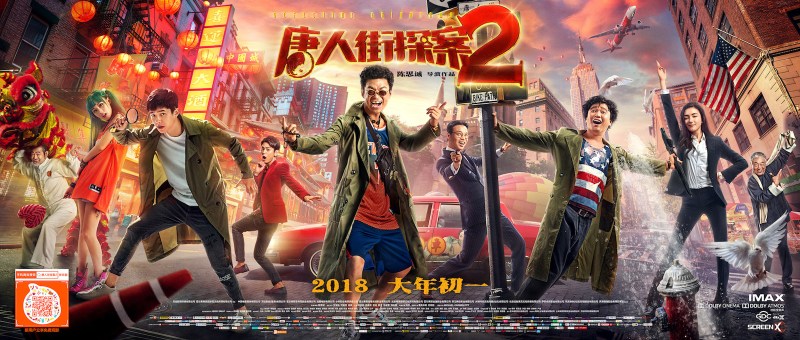
Detective Chinatown 2 posterBox office smash Detective Chinatown successfully pulled off the difficult feat of merging amusing buddy cop comedy with a holiday setting and intriguing cerebral mystery. Given the success of the first film it’s no surprise that the boys are back in town, or, as teased in the finale, in New York where another strange crime awaits their particular talents. Firmly a Chinese production taking place in an American city (though one using American crews), Detective Chinatown 2 (唐人街探案2, Tángrénj Tàn Àn 2) tries its best to maintain its unique character while shifting into American crime thriller territory, even if hampered by a stereotypical view of its target culture and some decidedly ropey English language dialogue.

Qin (Liu Haoran), now apparently a student at the police academy, has been tricked into coming to New York for Uncle Tang Ren’s (Wang Baoqiang) wedding to his love interest from the first film, Ah Xiang (Tong Liya). When he arrives, however, Qin quickly figures out that he’s in a room with some of the world’s best detectives – Ah Xiang left Tang Ren for someone with more money and so Tang Ren wants Qin to help him solve a mysterious New York murder for the reward promised by one of the victims’ grandfathers, a Chinatown gangster named Uncle Seven (Kenneth Tsang). Qin likes a good mystery so sticks around though the situation becomes decidedly more complicated after he finds and discounts the main suspect, Song Yi (Xiao Yang), leaving the trio on the run from the authorities, other detectives vying for the reward, and Uncle Seven’s guys some of whom have their own ulterior motives.

The most satisfying element of Detective Chinatown lay in the genuinely intricate nature of its locked room mystery and elegance of its resolution. Detective Chinatown 2 shifts away from the classical style of a European drawing room mystery for something altogether flashier and more American in keeping with its setting. It is, however, guilty of more than the faults of its genre in heavily signposting its solution from the midway point leaving any serious thriller fan twiddling their thumbs waiting for the penny to drop with ace detective Qin. Though a secondary twist offered after the killer has been unmasked helps to undercut the disappointment of such an anticlimax, it is not quite enough to compensate for the crushing obviousness of the central mystery.

Likewise, where Detective Chinatown existed firmly within a small Chinese enclave of Bangkok where everyone knew everyone, the move into the metropolis of Manhattan robs the film of its small-town charm. Despite the “Chinatown” tag, Chinatown itself is not a big player and as both of our guys are now full outsiders in another culture, we’re treated to a much less nuanced take on local stereotypes with several running gags likely to raise audience hackles with their tone-deaf approach to visualising the multicultural city. All of that aside, shooting in Central Manhattan with American crews also means much less creative freedom leaving the set pieces perhaps less impressive in terms of scale and ingenuity while the cinematography occasionally feels much more like standard American television than a big budget Chinese comedy.

Nevertheless the odd pairing of loudmouth Tang Ren and the comparatively subdued Qin, whose powers find even more impressive means of visualisation as he literally lifts buildings off a map and moves them round, remains the key selling point even though each half of the pair is also subjected to a bizarre round of sexual harassment from a biker boss with a tiny Chinaman fetish to a kung fu master with possible Alzheimer’s respectively. Though Chen generally relies on slapstick, the gags have a decidedly topical flavour – a police chief with terrible hair who makes off colour jokes and wants to build a wall to keep out all the annoying Chinese guys he can’t be bothered to deal with, for example, or the repeated references to immigration and the various dangers faced by those who’ve come from somewhere else and are trying to make a life for themselves. Yet the guys also keep running into people who unexpectedly speak Mandarin – perhaps a sign of the equally unexpected elevated status of Chinese visitors and their all important economic power. Detective Chinatown 2 is a mild disappointment after the duo’s impressive debut, but nevertheless does enough to spark interest in the teased Tokyo-set third instalment.


Currently on limited UK cinema release courtesy of Cine Asia. Screening details for UK, Germany, Australia, and New Zealand available via official website.

Original trailer (English subtitles)

Detective Chinatown (唐人街探案, Chen Sicheng, 2015)

detective chinatown posterCrime exists everywhere, but so do detectives. When one young man fails his police exams because of an unfortunate impediment, he seeks refuge abroad only to find himself on a busman’s holiday when the relative he’s been sent to stay with turns out to be not quite so much of a big shot as he claimed and then gets himself named prime suspect in a murder. Detective Chinatown (唐人街探案, Tángrénj Tàn Àn) is one among many diaspora movies which find themselves shifting between a Chinese community existing to one side of mainland culture, and a mainland mentality. This time the setting is Bangkok but second time director Chen Sicheng is careful not to surrender to stereotype whilst also taking a subtle dig at men like uncle Tang Ren who can unironically refer to Thailand as a paradise while indulging in many of the aspects which might leave other residents with much more ambivalent emotions.

Qin (Liu Haoran), a young man with a fierce love of detective fiction, has his dreams shattered when his interview to get into the police academy is derailed by his stammer and an unwise tendency towards reckless honesty. His doting grandma who raised him suggests Qin take a holiday to take his mind off things by going to stay with his uncle who is, apparently, a hot shot detective in Bangkok – Qin might even get some valuable experience whilst thinking about a plan B. Sadly, uncle Tang Ren (Wang Baoqiang) has been sending big fish stories back home for years and though he claims to be the best PI in Chinatown, he’s really a petty marketplace fixer with a bad mahjong habit and a side hustle in “finding” lost dogs. When Tang Ren accepts an errand to transport a statue from a workshop, he accidentally finds himself the prime suspect in the murder of the sculptor who is himself the prime suspect in a heist of some now very missing gold. Qin, tainted by association, vows to use his awesome detective skills to find the real killer (and the gold) to clear his uncle’s name whilst generally serving justice and protecting the innocent.

Despite the fact his secret is clearly about to be exposed, Tang Ran greets his long lost relative with immense enthusiasm (which is, as it turns out, how he does everything). Wang Baoqiang commits absolutely to Tang Ren’s cynical good humour attacking his larger than life personality with gusto though one has to wonder why Qin’s poor unsuspecting grandma thought Tang Ren would be a good guardian for her teenage grandson, especially as his first act is to take him to a strip club and spike what might actually be the first real drink of his life. Qin, quiet (that stammer) and introspective, is not a good fit for the loud and brassy world of insincerity his uncle inhabits, but forced into some very challenging situations, the two men eventually manage to combine their respective strengths into a (hilariously) efficient crime fighting team.

Meanwhile, Qin and Tang Ren are also contending with some serious political shenanigans in the local police department. Two Chinese cops are currently vying for a promotion and the job has been promised to whichever of them manages to identify the murderer and locate the missing gold. Luckily or unluckily, cop 1 – Kuntai (Xiao Yang), is a good friend of Tang Ren’s and doesn’t want to believe he is secretly some kind of criminal genius (but could well believe he killed a guy by mistake). Cop 2 (Chen He) is a hard-nosed (!) type who, for some reason, dresses like a cowboy and has a crush on Tang Ren’s landlady (Tong Liya) with whom Tang Ren is also in love. What this all amounts to is that everyone is stuck running circles around each other, trapped inside the wheel of farce, while the gold and the killer remain ever elusive.

Qin, finally beginning to overcome his stammer, puts some of his hard won detective nouse to the test and eventually figures out what’s going on but, by that point, he’s also warmed to his uncle enough to let him do the big drawing room speech. Filled with slapstick and absurd humour as it is, Detective Chinatown is also a finely constructed mystery with an internally consistent solution that offers both poignancy and a degree of unexpected darkness when the final revelations roll around. It is, however, the odd couple partnership between the sullen Qin (secretly embittered) and larger than life Tang Ren (secretly melancholy) that gives the film its winning charm, ensuring there will surely be more overseas adventures for these Chinatown detectives in years in to come…


Currently available to stream in the UK & US via Amazon Prime Video.

Original trailer (English subtitles)