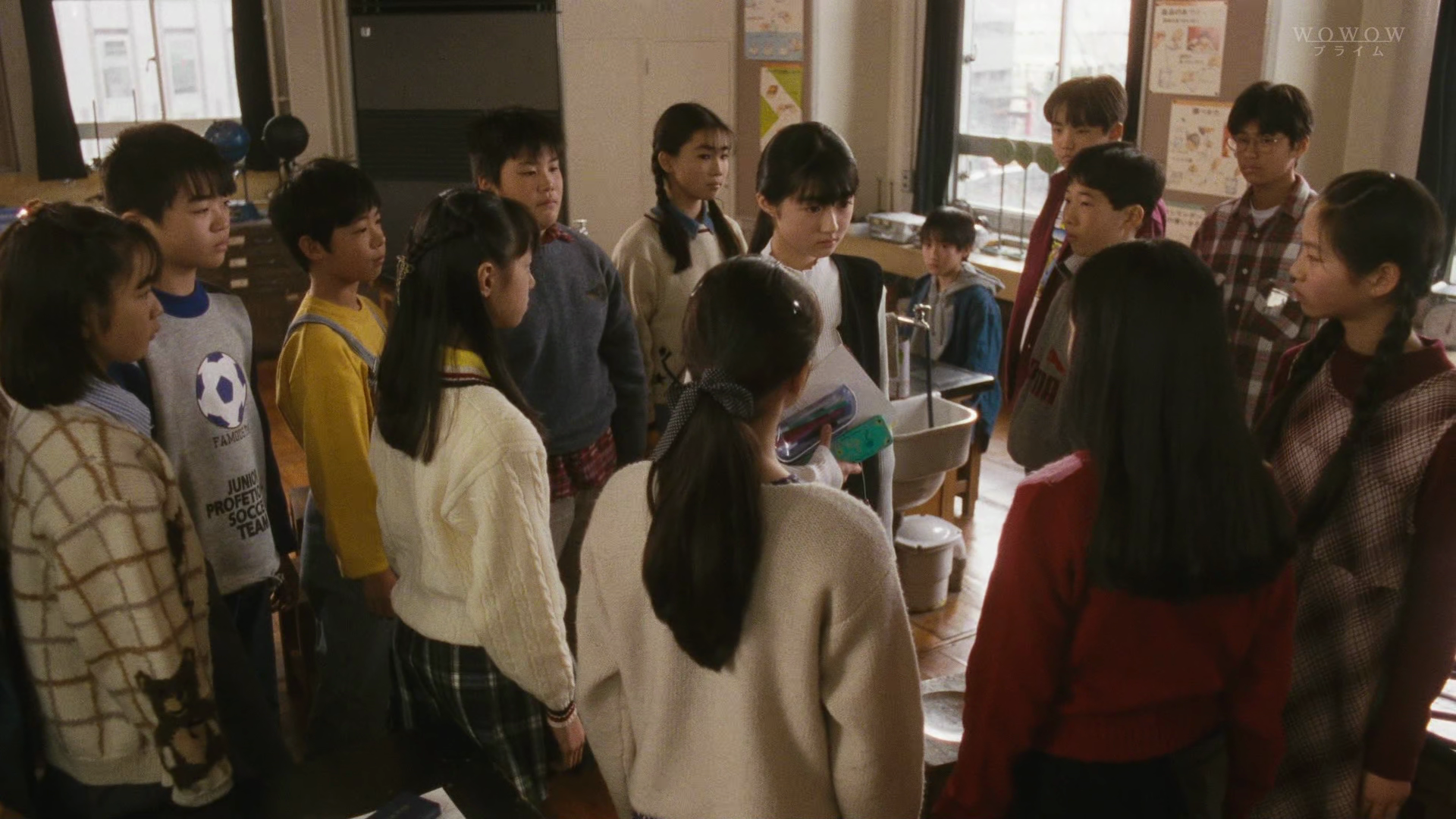
Phantom of the Toilet (トイレの花子さん, Joji Matsuoka, 1995)

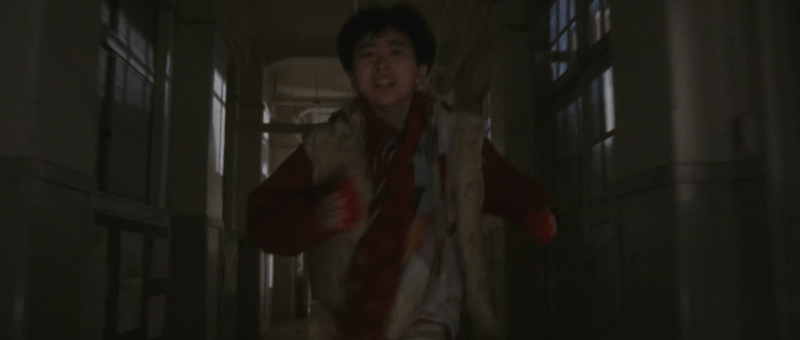
A transfer student quickly becomes the magnet for the anxieties of her classmates amid an ongoing spate of serial murders of primary school children in Joji Matsuoka’s kids adventure movie Phantom in the Toilet (トイレの花子さん, Toiret no Hanako-san). Loosely inspired by the classic urban legend about the ghost of a little girl who haunts school toilets, the film is less a horror movie than a tale of bullying, mass hysteria, and the ways in which childish emotions can spiral out of control.

Natsumi’s (Ai Maeda) no stranger to that herself. A tomboy, she’s largely excluded from the group of popular girls at her school and exists in a rather liminal space. Her older brother Takuya (Takayuki Inoue) is in the year above, but predictably doesn’t like being bothered by his little sister at school and is for some reason embarrassed by the fact his widowed father is a milkman. Nevertheless, he’s incredibly earnest and righteous and volunteers for various things at the school like the student council. Natsumi’s problems begin when the popular girls insist on doing a Ouija board to find out the identity of a serial killer who’s already killed two children their age from different schools. Natsumi doesn’t realise that it’s a trick the other girls are playing on her, but the Ouija board says the killer is Hanako, the toilet ghost, and Natsumi is the next victim.

Meanwhile, a new girl joins their school in Takuya’s class and is immediately resented by the popular girls because she’s pretty and clever, so obviously they turn against her. Chief among the complaints against Saeko (Yuka Kono) is that she used the cubicle at the end of the girls’ toilets which supposedly belongs to Hanako, because obviously she doesn’t yet know this bit of school lore. After a series of odd things happen, including the murder of the school’s pet goat, everyone comes to the conclusion that Saeko must be possessed by Hanako and is planning to murder them all. Even Natsumi has her doubts, but eventually decides to defend Saeko while Takuya, who seems to have a crush on her, eventually gives in to peer pressure despite his promises to protect her and vision of himself as someone who does the right thing.

To that extent, it isn’t really Hanako that haunts the children so much as the idea of her is misused as a means of social control. A silly rumour soon gives way to mass hysteria as the popular girls bring more of the children over to their side to gang up on Saeko while the teachers are largely absent or oblivious. While in another film the kids might band together to look for the killer of the other children and thereby protect themselves and each other, instead they become ever more paranoid and the outsider figure of Saeko becomes the focus of all their negative emotions from the jealousy of the other girls to the uncertainness of Takuya who doesn’t know what to do with his confusing feelings for Saeko. In a touching moment, he replies via writing on the blackboard rather than speaking when Saeko uses it to communicate with him after losing her voice, but later ends up shouting at her to go away and leave him alone. “Silence means you agree,” one his classmates points out when Takuya attempts to abstain from an otherwise unanimous vote to subject Saeko to a kind of test akin to a ducking stool to prove whether or not she really is Hanako. Only Natsumi remains on her side.

Meanwhile, the real child killer hovers in the background like an abstract threat before finally invading the school like a refugee from a slasher movie. Swinging his scythe around, his crazed moaning may prove too prove frightening for younger audiences while not even Natsumi’s father and their teacher can stop him from murderous wandering. In the end, the “real” Hanako surfaces but as a more benevolent figure who calls the kids back to the school and creates a more positive sense of mob mentality as they all shine their torches on the killer as if confronting him with what he is and what he’s done. The curse itself is lifted as the other kids rally round to save Saeko and finally accept her as one of them. A charming exploration of a 90s childhood from Grandpa playing Nintendo shogi to the looming anxieties of stranger danger, the ultimate message is one of solidarity and friendship as Hanako helps the kids let go of their petty disagreements to confront the real monster and save each other.


Trailer (no subtitles)
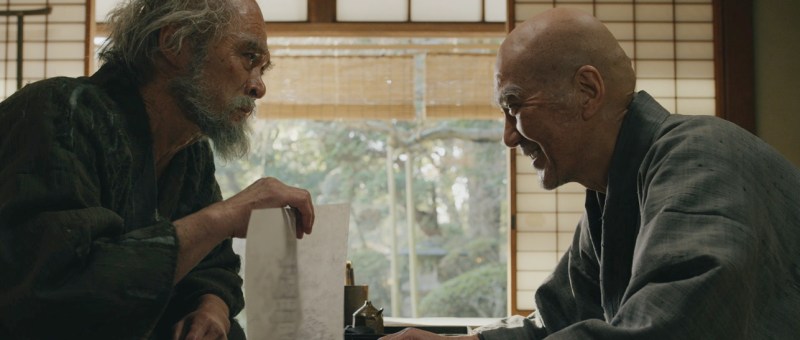
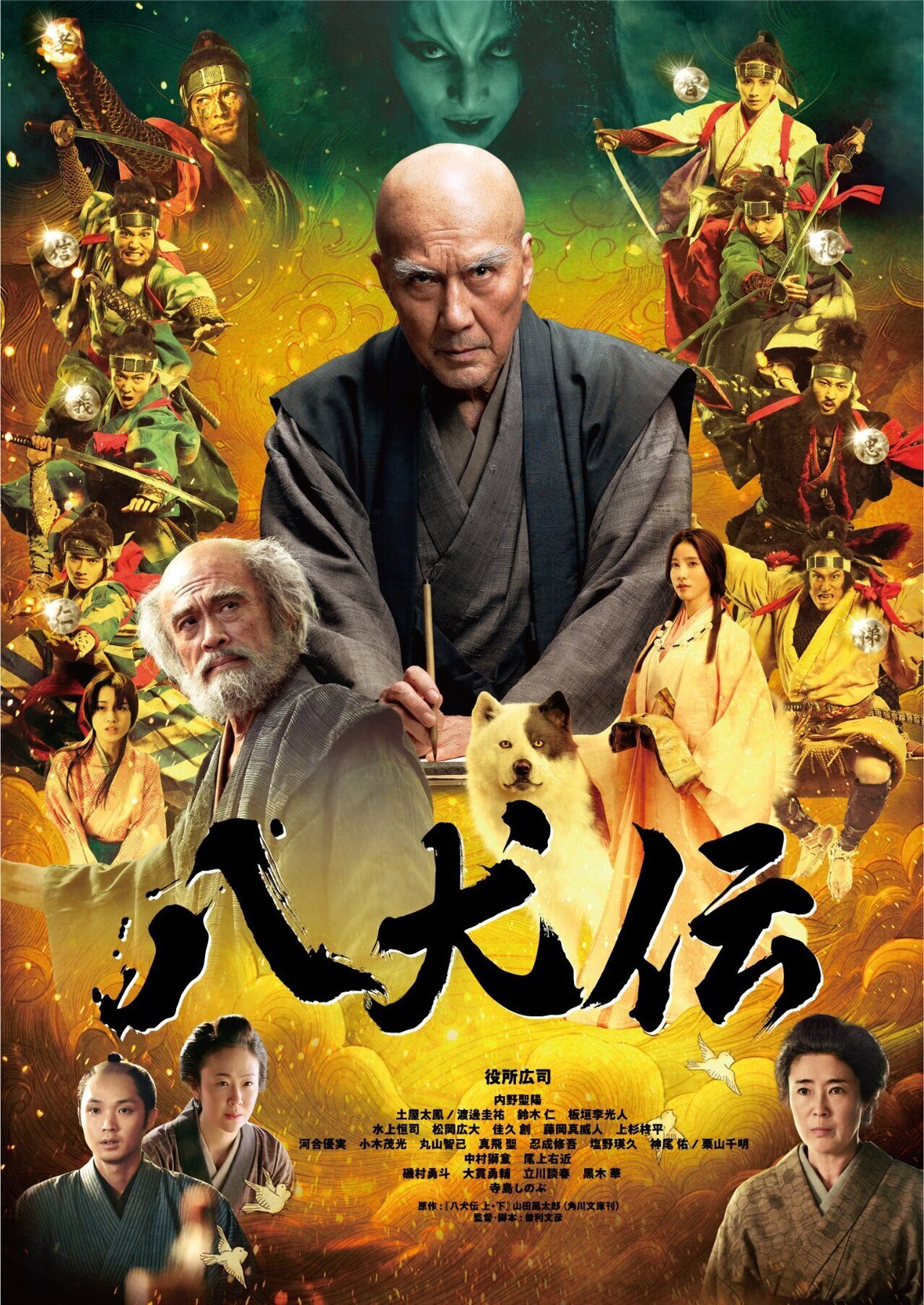
Hakkenden (八犬伝, Fumihiko Sori, 2024)

Kyokutei Bakin thinks he’s a hack who writes inconsequential pulp that will be forgotten faster than yesterday’s headlines. He’d never believe that people hundreds of years later would still be talking about his work. Yet he may have a point in his conviction that people crave simple stories where good triumphs over evil specifically because the real world is not really like that and a lot of the time the bad guys end up winning. But does that mean then that all his stories are “lies” and he’s irresponsible for depicting the world not the way that it is but the way he wants it to be? 

Fumihiko Sori’s Hakkenden (八犬伝) is on one level an adaptation of the famous tale probably most familiar to international audiences as The Legend of the Eight Samurai, and also a story of its writing and the private doubts and fears of its author. In dramatising the tale, Sori plays fantasy to the max and revels in Bakin’s outlandishness. An unusually picky Hokusai (Seiyo Uchino), Bakin’s best and he claims only friend and unwilling collaborator, points out that his use of guns is anachronistic because they didn’t come to Japan until 60 or 70 years after the story takes place but Bakin doesn’t care. He says people don’t notice things like that and all they really care about is that good triumphs in the end, so he’ll throw in whatever he feels like to make a better story. In any case, the tale revolves around magical orbs, evil witches, dog gods and good fairies, so if you’re worrying about there being guns before there should be, this isn’t the story for you. 

Hokusai is also shocked that Bakin has never been to the place where the story is set, but as he tells him it all happened long ago and far away so going there now would be pointless. Even so, Hokusai needs to see what he draws which is why he spends half his life on the road costing him relationships with his family. Whatever else anyone might say about him, and he admits himself to being a “difficult” person, Bakin is very close to his family even if his wife yells at him all the time for being rude to influential people and not making any money when he could have just taken over her family’s clog-making business rather than carry on with this writing malarkey. His biggest ambition is that his son become a doctor to a feudal lord and thereby restore their samurai status which on one level points to a kind of conservatism that doesn’t matter to Hokusai and singles Bakin out as a tragic figure because the age of the samurai is nearing its end anyway. 

In his fantasy, however, he hints at and undoes, up to a point, injustices inflicted on women in the romance between Shino (Keisuke Watanabe) and Hamaji (Yuumi Kawai) who is almost forced into a marriage with a wealthy man because of her adoptive parents’ greed but is finally revealed to be a displaced princess and returned to her father who is thereby redeemed for having accidentally killing his other daughter in a mistaken attempt to control her after accidentally promising her in marriage to a dog god without really thinking about what he was saying. A neat parallel is drawn in a brief mention of Hokusai’s artist daughter Oi and Bakin’s daughter-in-law Omichi (Haru Kuroki) who did not receive an education and is almost illiterate but finally helps him to complete the story by transcribing it in Chinese characters he teaches her as they go after he loses his sight.

As his literary success increases, Bakin’s own fortunes both improve and decline. He becomes wealthier and moves to nicer houses in samurai neighbourhoods, but his son Shizugoro’s (Hayato Isomura) health declines and he never opens his own clinic like he planned while remaining committed to the idea that his father is actually a great, unappreciated artist. In a way, completing the story gives Bakin a way to say the world could be kind and just even if it has not always been so to him. He needs to maintain the belief in a better world in order to go living even if he feels it to be inauthentic while his life itself is a kind of fiction. On a trip to the theatre, he ends up seeing Yotsuya Kaidan and is at once hugely impressed and incredibly angry. The world that Nanboku sees is the opposite of his own. People are selfish and greedy. The bad are rewarded and the innocent are punished. Yet perhaps this is the “reality” of the way the world really is, where as his work is a wishful fantasy. All he’s doing is running away from the truth. But then, as his son’s friend tells him, if a man devotes himself to the ideal of justice and believes in it all his life, then it becomes a reality and ceases to be fiction. There is something quite poignant about the dog soldiers coming to take Bakin to the better world he dreamed of where bad things happen but good always triumphs in the end, which has now indeed become a reality if only for him.


Hakkenden screens 13th June as part of this year’s Toronto Japanese Film Festival.

Original trailer (no subtitles)

Chiwawa (チワワちゃん, Ken Ninomiya, 2019) [Fantasia 2019]

Chiwawa posterFollowing indie drama The Limit of Sleeping Beauty, Ken Ninomiya takes a further step towards the mainstream with Chiwawa (チワワちゃん, Chiwawa-chan), inspired by Kyoko Okazaki’s 1996 manga. Updated for the Instagram generation, Ninomiya’s adaptation leans heavily on his trademark clubland style and sheds the sense of nihilism which defined mid-90s pop culture in favour of a world weary exploration of identity in the internet age in which connections are wilfully fleeting and personas easily interchangeable. The party is, however, about to come to an end for the latest generation of bright young things seeking hedonistic release but finding only emptiness in the superficial pleasures of meaningless excess.

The titular “Chiwawa” (Shiori Yoshida) is found dead, floating in pieces in Tokyo Bay. The notice of her demise is, in fact, the first time many of her friends discover her real name, Yoshiko Chiwaki, apparently 20 years old and according to the news a nursing student. She was for a time a big star on Instagram and a popular internet model whose face could be seen all over the city on mile high billboards, but before that she was just a girl looking for fun and friends in the Tokyo club scene which is how she met our heroine, Miki (Mugi Kadowaki). Like Miki herself, Chiwawa was added to the small group of clubland friends as the current squeeze of playboy student Yoshida (Ryo Narita), introducing herself with her enigmatic nickname supposedly a reference to her petite stature. Branding herself as an ultra cute airhead, she quickly worked her way into the disparate group of Bohemians but eventually outgrew them and moved on to more dubious pleasures including an ill-fated love affair with a famous photographer (Tadanobu Asano).

The only one of her friends seemingly preoccupied about what happened to Chiwawa, Miki begins an investigation but her research is less geared towards finding out who killed her – something the police don’t seem to be very invested in, but discovering who she “really” was. Mimicking the structure of Okazaki’s episodic manga, Miki begins interviewing her friends to build up a kaleidoscopic composite of the woman she thought she knew while perhaps discovering something about herself as she reconsiders her own life trajectory and the coming end of her youthful days in the clubland scene while pondering where it is she’s supposed to go next.

Like much of Okazaki’s work, the manga’s mid-90’s setting is soaked post-bubble malaise as her dejected youngsters escape from the sense of crushing disappointment in the wake of the abrupt end of the heady ‘80s heyday of Japan as leading global economy, but for Miki and her friends twenty years later perhaps things aren’t all that different as they fight the onset of adulthood and the relative lack of freedom and possibility they will encounter when their student lives end and the workaday world finally arrives. Aspiring filmmaker Nagai (Nijiro Murakami) captures everything with his video camera while working as a photographer’s assistant by day, allowing Miki and her friends to use the studio at night for their Instagram side gigs which is how Chiwawa winds up in the fashion biz.

Some starving artists, others merely nervous hedonists, the gang have no money but when Chiwawa runs off with the gigantic bribe a group of slimy businessmen were boasting about carrying, the gang manage to blow it in just three days of upscale partying. Miki alone, and perhaps more in hindsight, feels the emptiness of all this senseless excess but it’s Chiwawa herself who seems to fear the party’s end most of all. When you start to think it’ll go on like this forever, that’s when you know it’s about to end she laments, apparently missing her old gang like crazy but knowing you can’t put something back together after it falls apart.

Miki fails to solve the mystery of Chiwawa, perhaps sorry that she didn’t try harder to know her while she was alive but also knowing that’s partly because “Chiwawa” might not have wanted to be known for all that she was chasing love and acceptance in all the wrong places. In the end, she retreats into a past that no one quite remembers, another melancholy ghost of Tokyo’s neon-tinged nightlife. Youth moves on, clubs close down, the world keeps turning. That may be the saddest thing of all, Chiwawa remains unknown, unloved, and finally unremembered. A melancholy exploration of fractured identities, the ethereality of youth, and the impossibility of true connection, Chiwawa is another zeitgeisty piece from Ninomiya which takes the manga’s post-bubble anxiety and reboots for an age of alienation in which the end of the party is always lingering painfully on the horizon.


Chiwawa was screened as part of the 2019 Fantasia International Film Festival

Original trailer (English subtitles)

Images: (C)2019 CHIWAWA Chang PRODUCTION COMMIIEE(TOEI VIDEO, VAP, KADOKAWA, GEEK PIKTURES, TOEI ADVERTISING)

Blade of the Immortal (無限の住人, Takashi Miike, 2017)

blade of the immortal posterGenerally speaking, revenge tends not to go very well in Japanese cinema. It has the tendency to backfire. When you’re immortal, however, perhaps revenge is risk worth taking – then again, it’s not your life your weighing. Takashi Miike is no stranger to the jidaigeki world, though in adapting Hiroaki Samura’s manga Blade of the Immortal (無限の住人, Mugen no Junin) he harks back to the angry, arty samurai films of the late 1960s from Gosha’s Sword of the Beast with which the manga features some minor narrative similarities, to Kobayashi’s melancholy consideration of corrupted honour, and the frantic intensity of Okamoto’s Sword of Doom.

The film opens in black and white as a disgraced samurai, Manji (Takuya Kimura), tries to protect his younger sister, Machi (Hana Sugisaki), who has gone mad through grief only to see her murdered by a bounty hunter. Manji enters a state of furious, mindless killing which leaves the bounty hunter’s vast crowd of henchmen lying dead and Manji mortally wounded. Consumed by guilt and having lost the sister who was his sole reason for living, Manji longs for death but a mysterious old woman who calls herself Yaobikuni (Yoko Yamamoto) has other ideas and curses Manji to a life of eternal suffering by means of sacred bloodworms which give him the power of infinite, near instant healing.

Fifty years later, the land is at peace under the Tokugawa Shogunate but peaceful times are dull for warriors. The Itto-ryu school of swordsmanship has a mission – to take over all of the nation’s martial arts facilities and restore power to the sword. They have no honour or ideology save that of kill or be killed and are content to use any and all weapons which come to hand. A young girl, Rin (Yoko Yamamoto), is a daughter of one of these schools and has her eyes set on becoming a top swordswoman herself but when the Itto-ryu show up at her door, Rin’s father’s training proves worthless as he’s cut down with one blow while the gang kidnap Rin’s mother. The Itto-ryu’s sole concession to morality is in letting Rin alone, seeing as it’s “vulgar” to toy with children.

Rin vows revenge on the Itto-ryu’s leader, Anotsu (Sota Fukushi), at which point she runs into Yaobikuni who recommends she track down Manji and hire him as a bodyguard. Fifty years of immortality have turned Manji into an isolated, embittered wastrel with rusty swordskills but Rin’s uncanny resemblance to Machi eventually begins to move his heart. Despite generating a master/pupil, big brother/little sister relationship, Manji fails to teach Rin very much of consequence that might assist her in her plan to avenge her family, leaving her a vulnerable young woman beset by enemies and random thugs, and eventually caught up in a government conspiracy. The irony of Manji’s life is that he’s just not very good at the art of protection and all of his attempts to do something good usually provoke an even bigger crisis, in this case leaving his new little sister open to exactly the same fate as the one he failed to save for much the same reasons. Apparently, Manji has learned little during his extended lifetime except how to brood and glare resentfully at the world.

It turns out being immortal is kind of a drag. Manji wants to die because he can’t cope with the burden of his guilt, but another similarly cursed man he meets has lived much longer and lost far more, becoming tired of the business of of living. Manji’s existence has lost all meaning, but as he puts it to another world weary warrior who shares his brotherly grief, he’s not the only hero of a sad story. Rin’s need for vengeance gives him a purpose again – not just in the literal revenge, but in being the protector (though one could argue this is less positive than it sounds and might explain why he fails to teach Rin anything very useful, even if it doesn’t explain why she also forgets all her father’s teachings).

Rin remains conflicted over her mission of revenge, confessing to a similarly conflicted assassin that she agrees killing is wrong but that right and wrong no longer matter when it comes to people you love. A dangerous and dubious assertion, but it does bear out the more positive message that love, or at least learning to live for others, can be a transformative force for good as Manji allows himself to resume his role as the big brother despite his past failings. Violent and visceral, if also humorous, Blade of the Immortal is, oddly enough, a story of love but also of cyclical paths of violence and revenge, and of the general muddiness of assigning the moral high ground to those engaged in a quest for retribution.


Blade of the Immortal was screened as part of the BFI London Film Festival 2017 and will be released in UK cinemas courtesy of Arrow Entertainment on 8th December.

International trailer (English subtitles/captions)

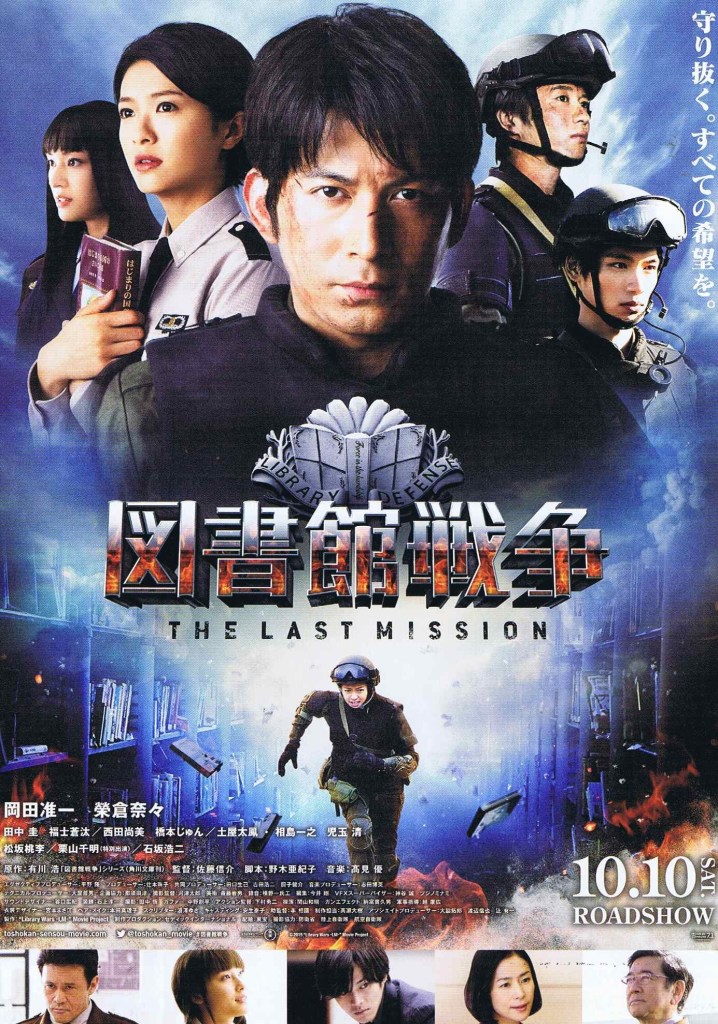
Library Wars: The Last Mission (図書館戦争-THE LAST MISSION-, Shinsuke Sato, 2015)

library-wars-last-missionWhen Library Wars, the original live action adaptation of Hiro Arikawa’s light novel series, hit cinema screens back in 2013 it did so with a degree of commercial, rather than critical, success. Though critics were quick to point out the great gaping plot holes in the franchise’s world building and a slight imbalance in its split romantic comedy/sci-fi political thriller genre mix, the film was in many ways a finely crafted mainstream blockbuster supported by committed performances from its cast and impressive cinematography from its creative team. Library Wars: The Last Mission (図書館戦争-THE LAST MISSION-, Toshokan Senso -The Last Mission-) is the sequel that those who enjoyed the first film have been waiting for given the very obvious plot developments left unresolved at the previous instalment’s conclusion.

18 months later, Kasahara (Nana Eikura) is a fully fledged member of the Library Defence Force, but still hasn’t found the courage to confess her love to her long term crush and embittered commanding officer, Dojo (Junichi Okada). As in the first film, The Media Betterment Force maintains a strict censorship system intended to prevent “harmful” literature reaching “vulnerable” people through burning all suspect books before they can cause any damage. Luckily, the libraries system is there to rescue books before they meet such an unfortunate fate and operates the LDF to defend the right to read, by force if necessary.

Kasahara is an idealist, fully committed to the defence of literature. It is, therefore, a surprise when she is accused of being an accomplice to a spate of book burning within the library in which books criticising the libraries system are destroyed. Needless to say, Kasahara has been framed as part of a villainous plan orchestrated by fellow LDF officer Tezuka’s (Sota Fukushi) rogue older brother, Satoshi (Tori Matsuzaka). There is a conspiracy at foot, but it’s not quite the one everyone had assumed it to be.

In comparison with the first film, The Last Mission is much more action orientated with military matters taking up the vast majority of the run time. A large scale battle in which the LDF is tasked with guarding an extremely important book containing their own charter (i.e. a symbol of everything they stand for) but quickly discovers the Media Betterment Force is not going to pass up this opportunity to humiliate their rival, forms the action packed centrepiece of the film.

The theme this time round leans less towards combating censorship in itself, but stops to ask whether it’s worth continuing to fight even if you feel little progress is being made. The traitorous officer who helps to frame Kasahara does so because he’s disillusioned with the LDF and its constant water treading. The LDF is doing what it can, but it’s fighting to protect books – not change the system. This is a weakness Satoshi Tezuka is often able to exploit as the constant warfare and tit for tat exchanges have begun to wear heavy on many LDF officers who are half way to giving up and switching sides. Even a zealot like Kasahara is thrown into a moment of existential despair when prodded by Satoshi’s convincing arguments about her own obsolescence.

Satoshi rails against a world filled with evil words, but as the head of the LDF points out in quoting Heinrich Heine, the society that burns books will one day burn men. The LDF may not be able to break the system, but in providing access to information it can spread enlightenment and create a thirst for knowledge among the young which will one day produce the kind of social change that will lead to a better, fairer world.

As in Library Wars all of these ideas are background rather than the focus of the film which is, in essence, the ongoing non-romance between Kasahara and Dojo. Remaining firmly within the innocent shojo realm, the romantic resolution may seem overly subtle to some given the extended build up over both films but is ultimately satisfying in its cuteness. Library Wars: The Last Mission masks its absurd premise with a degree of silliness, always entirely self aware, but gets away with it through sincerity and good humour. Shinsuke Sato once again proves himself among the best directors of mainstream blockbusters in Japan improving on some of the faults of the first film whilst bringing the franchise to a suitably just conclusion.


Original trailer (No subtitles)

https://youtu.be/8Bqgn4icG5M

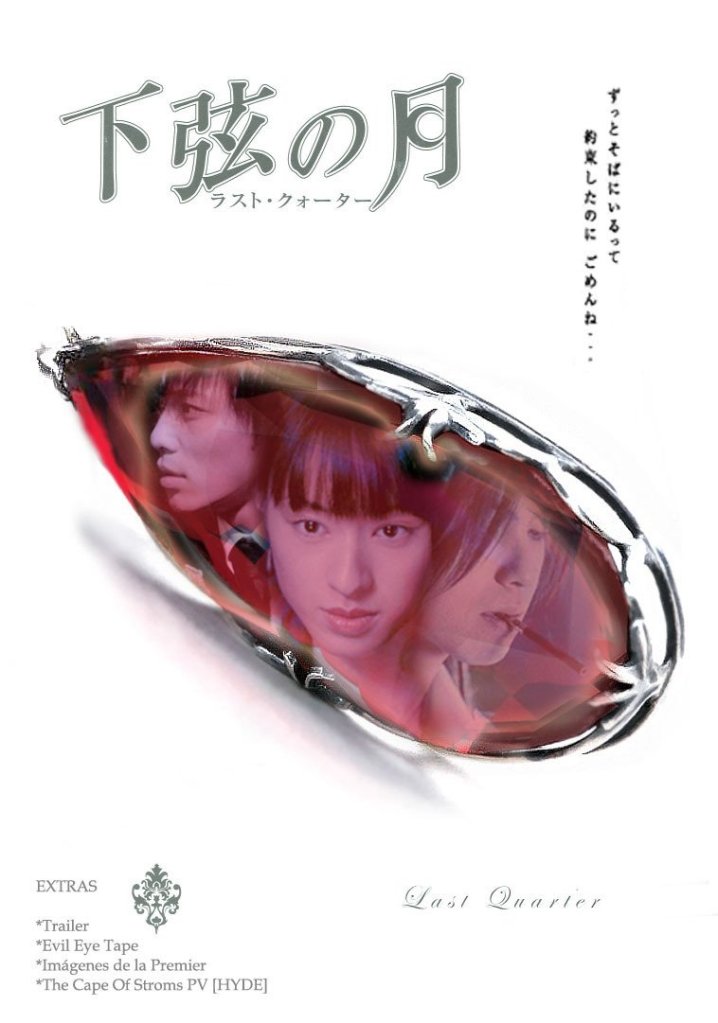
Last Quarter (下弦の月 ラスト・クォーター, Ken Nikai, 2004)

Last Quarter posterTo begin on a cynical note, Last Quarter (下弦の月 ラスト・クォーター, Kagen no tsuki Last Quarter) is a film with a wide variety of marketing hooks. The first being that it’s an adaptation of a much loved short manga series by the well respected mangaka Ai Yazawa (Paradise Kiss) so it has its shoujo pedigree firmly in place. Secondly, pop star HYDE of L’Arc-en-Ciel is central to the production as he both stars in the movie as the ghostly love interest/deathly spirit and repeatedly sings his own songs throughout the film including over the end credits. Thirdly, it also stars actress Chiaki Kuriyama well known to overseas audiences thanks to Kill Bill and Battle Royale. You’d think with all these high quality ingredients first time director Ken Nikai would be able to cook up quite a feast though he does somewhat over egg the pudding.

After a brief dream sequence, the action kicks off at the 19th birthday party of British rock obsessed Mizuki (Chiaki Kuriyama) which takes place in a Mod inspired bar. Unfortunately, her best friend gets very drunk indeed and takes this opportunity to show Mizuki a photo of herself and Mizuki’s boyfriend in a compromising position. Mizuki throws a shoe at the no good philanderer and walks out on her own party ending up at a mysterious Western style mansion occupied by a sad man playing a guitar. She hits it off with “Adam” and decides to jack in her unhappy family life with her father and step-mother to leave for England with him. Sadly, she gets hit by a car on her way home only to wake up trapped inside the house and having lost all memory of who she formerly was. Soon enough, another girl, Hotaru (Tomoka Kurokawa), turns up and, assuming she’s a ghost, decides to help her “cross over” , but it’s all a little more complicated than Hotaru and her team had bargained for.

Last Quarter takes on an oddly imbalanced feel as it veers into star vehicle territory putting HYDE and his title song centerstage at the expense of Mizuki who ought to be the protagonist of the story. Understandably, as she’s fallen under the curse of the house, Mizuki is a mostly passive force throughout the film, entirely reliant on the efforts of the gang of three who are trying to help her by figuring out what’s really going on. The mystery element itself is quite an intriguing one but is often frustrated by the importance placed on the supernatural romance. Stretching plausibility to the limit, the events in question span 30 years and two continents to spin a yarn of pure love enduring beyond the grave. Pure love and grudge movies aren’t usually allowed to mix and they don’t quite here although Last Quarter certainly has elements of both.

Last Quarter’s biggest failing is in its production values which are generally on the low side. Nikai aims for an urban gothic aesthetic and achieves something close to sense of European decadence but opts to avoid the darkness inherent in the genre for a fairytale atmosphere. The effects are very highly stylised and old fashioned but Last Quarter doesn’t even attempt to make that work in its favour so much as offering it at face value.

In essence, Last Quarter often feels like an overblown music video for its rock star actor even if he actually has a relatively small role. Director Nikai has often worked with the band before and (apparently) there is a degree of recurring symbolism here that long time fans will instantly pick up on but will leave the casual viewer a little confused. Very firmly aimed at a younger teen female audience, Last Quarter will play best to fans of non-threatening supernatural romance but even then they’d be best advised to avoid thinking any of this through and simply enjoy the ghostly shenanigans for the ridiculous rag tag narrative they are. An interesting mix of ‘60s mod rocker cool with its parkas and vespas, and full on gothic with byronic heroes sitting in decaying mansions in the middle of creepy forests singing about their broken hearts, Last Quarter is incoherent to say the least but fans of its rockstar leading man will likely find their perseverance rewarded.


Last Quarter is available with English subtitles on R1 DVD in the US courtesy of Geneon.

Unsubtitled trailer:

Library Wars (図書館戦争, Shinsuke Sato, 2013)

library-wars-2013-dojo-and-kasahara


Based on a series of light novels by Hiro Arikawa, Library Wars is another adaptation of a popular multimedia franchise from the director of the live action Gantz movies. Like Gantz, it’s another bug budget, tentpole style block buster with a subtle (though not insubstantial) desire to inject a bit of social commentary into what can be an entirely trivial genre. The manipulative forces at play here, however, are far less mysterious and unfortunately much more plausible than the mysterious black orbs of Gantz as they come in the form of crypto fascist censorship enthusiasts known as The Media Betterment Force. Having achieved the kind of success Mary Whitehouse could only dream of, The Media Betterment Force managed to pass the Media Betterment Act in the alternate Japan of 1989 which required all books containing ‘objectionable’ material to be destroyed. All is not lost though as the last bastion of intellectual freedom, the library, takes up arms and defends its right to disseminate whatsoever information anyone might desire with a government mandated assurance that library property can be safeguarded – with military force if necessary. Thirty years later in the near future of 2019, a young girl joins the LDF (Library Defence Force) full of idealistic zeal for protecting literature and a not so altruistic mission of finding the LDF officer who once saved her favourite book for her during in a MBF raid on a bookshop. Politics, romance, action! It’s all here for your edification and enjoyment.

If this all sounds a bit silly, well it is – but only in the best possible way. This is not a film about the evils of censorship, or how intellectual discourse and freedom of information are essential parts of any fully functioning society, though those themes are there if only in passing, so much as a big glossy blockbuster with just about every genre you can think of vying for the spotlight. The creeping totalitarianism is more backdrop than anything else but perhaps the absurdity of anyone picking up arms to defend access to information speaks to our unwillingness to prevent a gradual slide into a world of book burning and (not really) well meaning nannyism. First and foremost, Library Wars is science fiction action film modelled on the familiar boot camp genre following an underdog rookie recruit’s path to frontline glory. Yes we have training montages galore complete with the strained friendships and ‘you’re off the team!’ moments that appear in every film of this kind but the absurd premise and the film’s successful adoption of a warm comic tone help smooth over over any genre clichés and thankfully the film also manages to impress with several large scale battle scenes.

The romantic comedy element is arguably the least successful as it lacks the traditional climax many fans of the genre maybe hoping for (though one suspects a sequel may well put that right). That said the central relationship definitely falls into the ‘cute’ category and cleverly avoids the melodramatic nature of most blockbuster romances. Yes, the audience knows right away who the much sought after prince is but that only makes it more fun even if the post-idealistic bitterness of the man in question is another genre cliché. Supporting characters are also nicely fleshed out and each enjoys a decent amount of time in the spotlight creating a nice ensemble feel which is often rare in a blockbuster. As in Gantz the acting style remains fairly grounded rather the bigger, TV inflected performances which have been creeping into mainstream cinema and the strong performances from a fairly high profile cast help to lift Library Wars above some of its cinematic brethren.

Viewers expecting another Fahrenheit 451 or 1984 will obviously be disappointed in Library Wars’ fairly superficial examination of its themes but those hoping for a rip roaring, if slightly ridiculous, adventure are in line for a treat. Though the subject matter is itself absurd, such care has gone into the world building that it all makes a curious kind of sense assuming you’re willing to let yourself go with it. Most importantly, it’s remarkably self assured in terms of its tone – it knows exactly what it is and isn’t afraid to embrace its own nature. With much more heart than your average blockbuster, Library Wars is a warm and funny action comedy that also manages to be genuinely romantic. Now if they can only hurry up with Library Wars 2 so we can all enjoy the romantic resolution we’ve been waiting for!