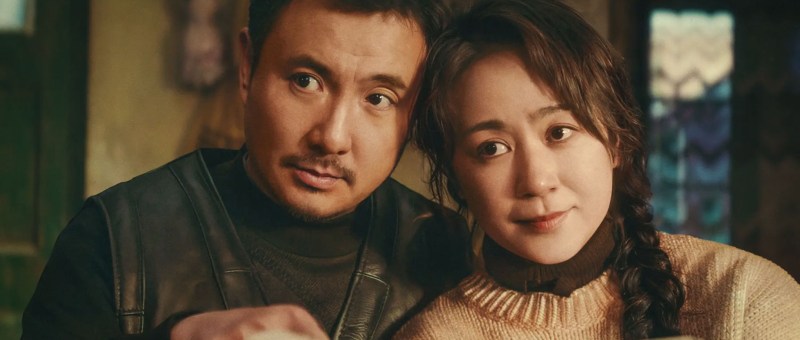
High Forces (危机航线, Oxide Pang Chun, 2024)

It’s always a worrying sign when the guy in front of you at check-in has brought a parachute. Shot back in 2021 and finally hitting screens three years later, Oxide Pang’s airborne hijack thriller High Forces (危机航线, wēijī hángxiàn), pits veteran star Andy Lau against a gang of crooks who’ve taken his plane hostage in order to convince the CEO of the airline to reveal the password to his accounts so his wife can send them a large amount of money.

Perhaps surprisingly given recent Chinese cinema’s attitudes to wealth, the film remains uncritical of the existence of a luxury airliner with a top deck hotel complete with duty free. The CEO in fact later becomes a hero, fighting alongside Lau’s Haojun in order to save the lives of the passengers, while it’s revealed that it’s his wife’s family who founded the airline he took over that may have been conducting some very shady business dealings. Nevertheless, it’s the economy class passengers the amoral Mike (Qu Chuxiao) starts bumping off before planning to vacate the plane via parachute along with the pilots leaving it to plunge to the ground.

Yet, the hijacking is also Haojun’s chance for redemption seeing as his estranged wife (Liu Tao) and daughter are coincidentally on the same plane while travelling to seek medical treatment for daughter Xiaojun’s (Zhang Zifeng) eyes. Haojun was driving recklessly and got into an accident after which Xiaojun lost her sight and gained a deep-seated resentment towards her father. This reckless streak is attributed to anger issues stemming from untreated bipolar disorder which Hao now believes he now has under control. Mike is also taking the same medication and the two men are presented as reflections of each other. Haojun’s flashes of rage are expressed through the colour red flooding the screen, while Mike’s greed and envy seem to be reflected in green. Whether this is a helpful framing of bipolar disorder or not is up for debate, but the implication is that through defeating Mike Haojun can overcome himself, triumph over his anger issues, and regain his rightful place as a husband and a father.

Ironically he first tries to do this by using a toy walkie-talkie dropped by a little boy whose father seems to have a lot of issues of his own to communicate with Xiaojun who is trapped in first class with the kidnappers. Using his special forces and security skills, Haojun crawls all over the plane trying to pick the kidnappers off one by one until being left with the core group led by Mike. A slightly bum note is struck when one of the stewardess’ suddenly overcomes her aversion to a sleazy colleague who was harassing her after he takes a bullet on her behalf, but she too rises to the occasion helping Haojun fight back against the kidnappers as do several of the passengers who set on the last of Mike’s men making sure he can’t leave the plane. 

Of course, the film ends with the usual set of title cards explaining that all the wrongdoers were caught and punished while Haojun was rewarded for his heroic actions in saving the lives of the passengers and crew. Nevertheless, in the grand tradition of overblown action dramas it also has its share of silliness such as the obvious set up of one of the stewardesses showing off her new skydiving certification. This particular airline should also probably have another look at its hiring procedures and employee vetting. The real enemy is perhaps corporate corruption and shadiness in business though these leads are never really followed in much more than a cursory fashion with the action remaining mainly on the plane even as Mike seems content to simply shoot people just to make a point. Like The Captain, the film’s conclusion is basically a celebration of the nation’s emergency services who all come together to help the plane land safely through a rather improbable solution to its myriad problems. Nevertheless, for much of its runtime it’s a very effective, if occasionally absurd, action drama in which a lone vigilante takes on a plane full of crooks with sometimes surprising violence while trying to fight his way back to his family and restore his image of himself as father if only in his daughter’s eyes.


Original trailer (Simplified Chinese / English subtitles)

The Mob (龙虎制霸, Zhao Cong, 2023)

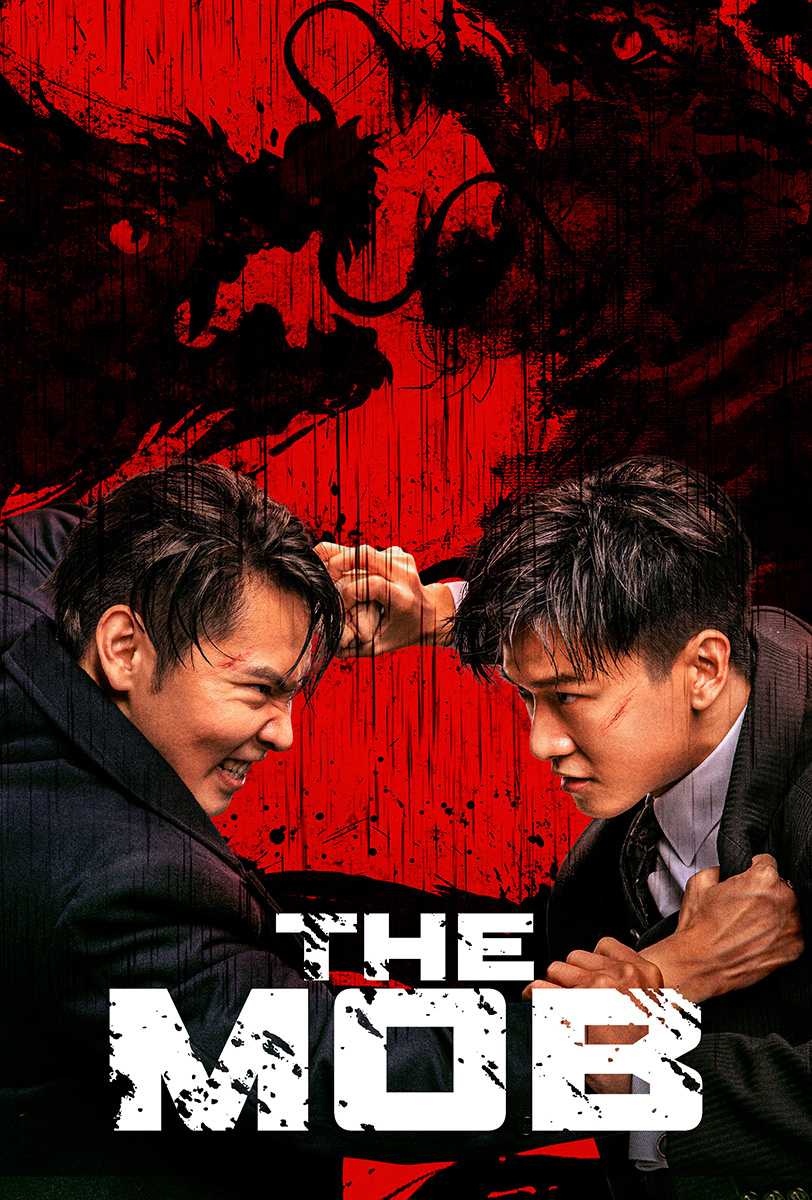
The feckless son of the head of the Chamber of Commerce discovers he needs to grow up fast when a rival gang starts selling opium in the Shanghai of 1928 in Zhao Cong’s well appointed action streamer, The Mob (龙虎制霸, lónghǔ zhì bà). There can be few settings as enticing as pre-war Shanghai and Zhao certainly makes the most of his budget with beautifully designed sets along with a number of stylish action sequences and a narrative that’s a little more interesting that your average streamer.

The interesting thing is that the bad guys are the ones who want to work with foreigners, particularly the British, to flood Shanghai with opium which is obviously very bad for everyone and will cause a series of social problems the good gangs and the authorities don’t really want to deal with not least because it will disrupt their other business and increase foreign influence in the city. Evil gangster Zhao Longde doesn’t care about that though and is already making trouble that is only exacerbated by the return of his illegitimate son Yuyang from studying abroad. Yuyang has a serious chip on his shoulder about his relationship with his father and is jealous of Longde’s adopted son, Hai, who is just much better at this whole gangster thing and all thing’s considered the son Longde probably wants as opposed to Yuyang who can’t be trusted with anything.

Across town, Fang is also a feckless son but one on the side of the good guys in that his father is the current head of the Chamber of Commerce and dead against anyone trading opium in Shanghai. If they do, they’ll be kicked out and unable to do business in the city. Though the name sounds legitimate, it’s really just a forum to maintain equilibrium between the various gangs who control the local ports though the balance has already been destabilised with tension between Zhao Lin who runs swanky nightclub New World and Longde who apparently caused his brother to lose the use of his hand. Fang is drawn into the conflict when he comes to the defence of Hai when he’s attacked and outnumbered at New World.

They’re obviously on opposing sides, but the two men discover a respect for each other as fighters and men of honour. Hai is a loyal son to Longde and respected Yuyang out of loyalty to him but privately does not approve of some of the gang’s actions such as flouting the rules of the Chamber of Commerce, bumping off their rivals, and planning to take control of the local opium trade. Fang, meanwhile, is just really directionless and an overindulged little brother who spends all his time reading comic books and gambling on frog racing much to the disappointment of his father. But with all hell breaking loose in Shanghai, he has no choice but to step up to the plate and play his part as a member of the Tongmingtang to restore order and keep drugs out of Shanghai.

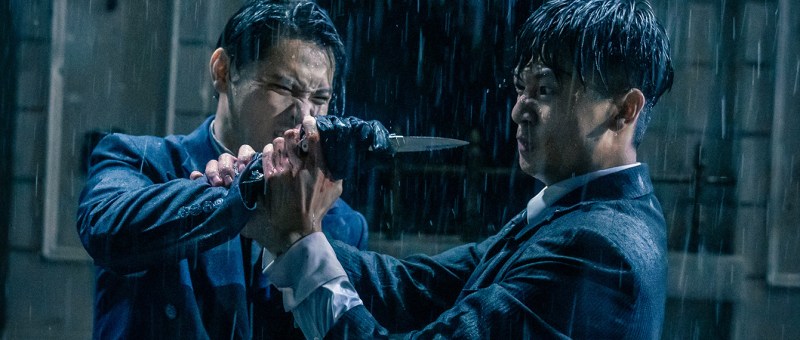
Interestingly enough, though perhaps just because it’s a streaming movie set firmly within the pre-Communist past, the film does not end with one of the familiar title cards explaining that justice was done and the wrongdoers punished but in fact justifies Fang’s violence as righteous and adds that he later joined the resistance movement against the Japanese (which sounds like a hook for another interesting film). In any case, Zhao includes plenty of twists and turns, betrayals and counter betrayals, while reserving the most interesting arc for the conflicted Hai who eventually shakes himself free of the sense of obligation he has to a gang that offends his sense of morality realising that like Fang he owes nothing to anyone and is free to make an individualistic choice as regards which side to be on. Fang’s sister Jiayue meanwhile is somewhat underused but is otherwise quite an imposing presence and certainly makes an impact with a hardline stance against the priggish Yuyang. Echoing the era of Heroic Bloodshed, Zhao lends the action an epic quality through his artfully designed set pieces including the rain soaked finale and an impressively staged assassination sequence intercut with scenes of a grieving family at a funeral.


The Mob is available now in the US on Digital courtesy of Well Go USA.

US trailer

Decoded (解密, Chen Sicheng, 2024)

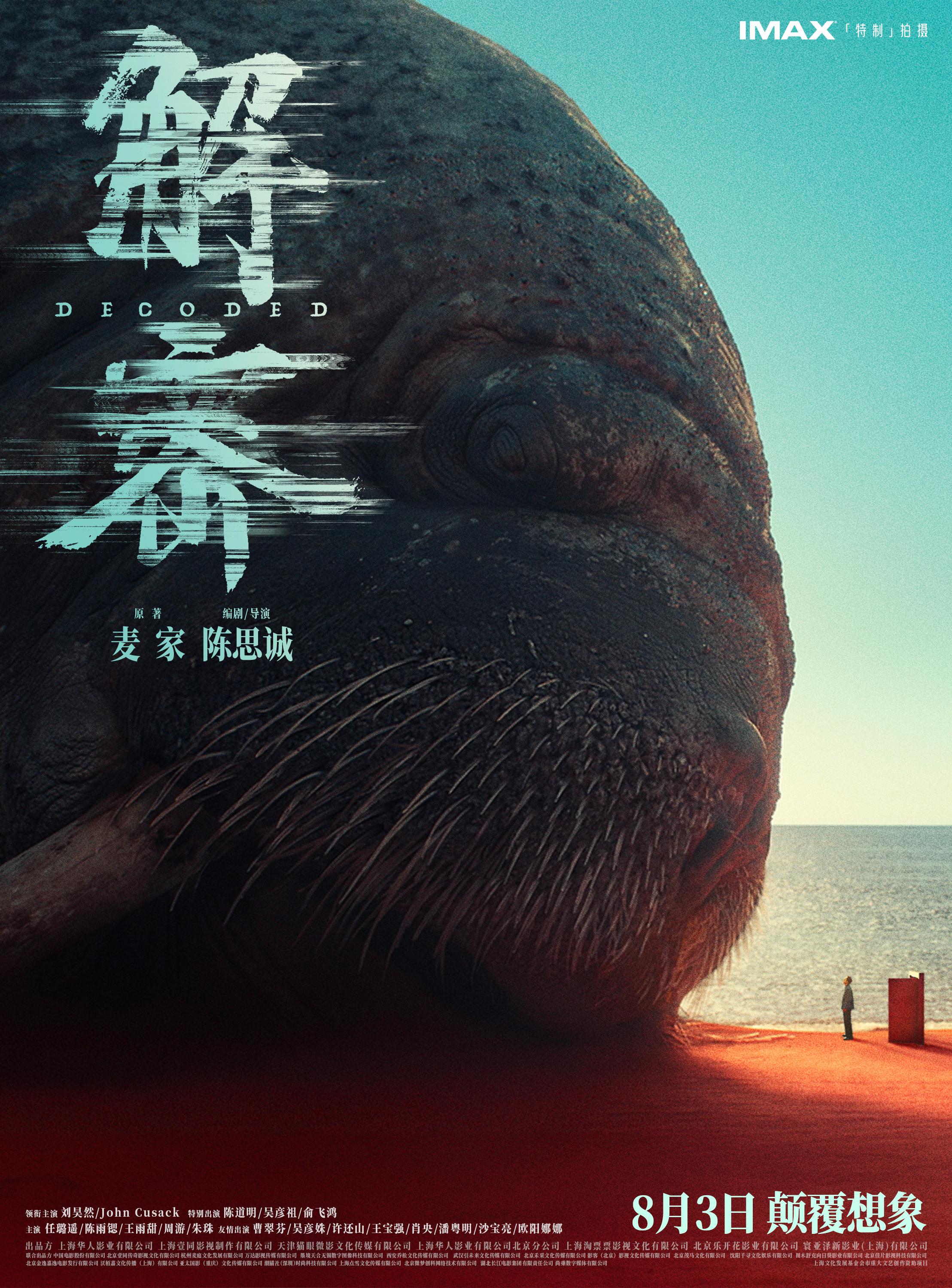
International geopolitics is reduced to a battle wits between two men, each in their way lonely exiles and perpetual outsiders in Chen Sicheng’s adaptation of the novel by Mai Jia, Decoded (解密, jiěmì). Originally an actor (and here making a meta self-cameo), Chen is best known as a director for the smash hit Detective Chinatown franchise which boasts both well-plotted mysteries and zany, lowbrow comedy. Decoded is a slightly different kettle of fish, displaying its own kind of whimsicality but also darker and stranger in its concentric enigmas.

The narrative’s timeline seems to be slightly hazy, but loosely follows an prodigious orphan born to a prominent family though his father, the black sheep, had already died before his mother too died in childbirth. A rather complicated set of circumstances led to Rong Jinzhen (Liu Haoran) being raised by an Austrian dream interpreter who for unexplained reasons kept him locked up in a small hut isolated from the world while teaching him all about dreams with the consequence that by the time the old man dies, 12-year-old Jinzhen is a strange boy with few social skills but a once-in-a-generation grasp of mathematics.

It’s this genius that sees him saved by distant relative Xiaolili (Daniel Wu) who was originally going to send him to an orphanage but decides adopt him instead. Jinzhen then gains early entry to university where he’s tutored by Liseiwicz, an exiled Polish professor who fled his homeland to escape persecution by the Nazis as a Jew. The film seemingly doesn’t mean to, but undermines this backstory through the casting of John Cusack who plays the part as all American and is not convincing as Polish man who ended up in China because he had nowhere else to go and is unable to return to his homeland thereby lessening the intended impact of his speeches about nationhood and patriotism which counter those Jinzheng has already been given by Xiaolili in addition to making him seem suspicious possibly long before she should. 

Nevertheless, this may also add to his sense of untrustworthiness and perhaps duplicitous treatment of Jinzheng which edges towards the exploitative in hoping to make use of his genius for his research into the evolution of computing. In the early days of the Chinese civil war, Liseiwicz is approached by agents from the PLA who want him to decode a telegram that may save thousands of lives. Liseiwicz claims he doesn’t want to get into politics though superficially supportive of the Communist cause only to later be exposed as a collaborator with the KMT on his return to the US where he designs encryption codes to be used between Chiang Kai-shek’s nationalists in Taiwan and the US troops backing him in the hope he’ll retake China and end Communism in Asia. 

Of course, Jinzheng gets picked up by the CCP to work in their secret spy division in which he becomes a virtual prisoner forbidden from leaving the compound while expected to spend all of his time breaking codes such as those designed by Liseiwicz. In truth, it becomes a kind of game between the two but one that the guileless Jinzheng little understands. It takes it him an unreasonably long time to understand that Liseiwicz is just messing with his mind, sending him misinformation as a distraction intended to drive him mad culminating in dispatching a copy of the The Beatles’ I Am the Walrus in order both to disrupt his political consciousness with decadent Western pop music and drive him out of his mind as he struggles to understand how this nonsense verse about egg men and marine animals is supposed to relate to the code.

Then again, there is something a little subversive in the celebration of Jinzheng’s ability to think about the box, instantly understanding that the correct answer to the entrance test is not to waste his time taking it because it’s obvious they’ve already cracked the code concerned. The use of dream interpretation taught to him by his adoptive Austrian father maybe simply be an ability to work things out on a deeper level of consciousness, but it’s also left him with a fragile mental state already unable to discern dream from reality. The strain of constant codebreaking further pushes him towards madness while he perhaps loses sight of his original mission, only later coming to realise that Xiaolili’s vision of nationhood was the correct one after all.

Though Chen appears to have been influenced by Christopher Nolan in his use of oneiric imagery, he crafts a number of beautifully designed, whimsical dream sequences some which later become hellish or strange but reflect an innate innocence in Jinzheng while disclosing to him something of the real world which he had not understood. It’s ironic in a sense that he’s forever trying to decode the world around him, such as in taking instructions from his adopted sister/cousin Biyu (Chen Yusi) on how to know if girls are interested which he nevertheless slightly misunderstands. The film goes to some surprisingly dark places such as in a brief sequence which Biyu and her mother seemingly if potentially anachronistically fall victim to the Cultural Revolution while Jinzheng is the victim of several assassination attempts by KMT agents well into the ‘60s. Even so his story emerges as tragedy more than triumph, a fine mind broken by the society around him and used as an unwitting tool in the nation’s path to perfecting an atomic bomb having seemingly decoded everything but his place within the world.


International trailer (English subtitles)

Mistress Dispeller (以爱之名, Elizabeth Lo, 2024)

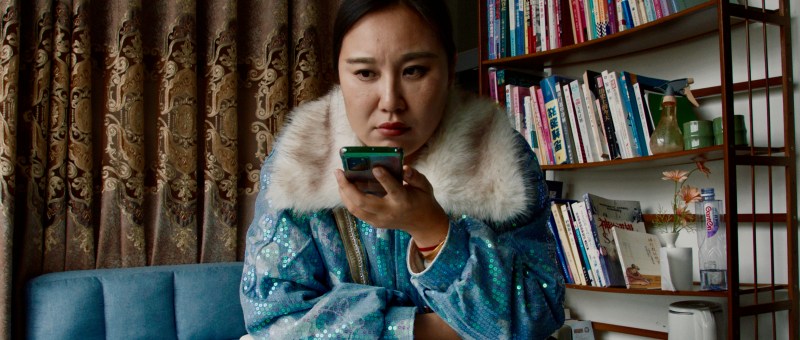
Can a relationship ever recover from infidelity? Elizabeth Lo’s mainly observational documentary follows one of China’s many “mistress dispellers”, which is to say an intermediary who attempts to halt affairs and repair families. While it’s tempting to view their existence as morally censorious, Teacher Wang’s approach at least leans towards empathy and as she says is geared towards encouraging the unfaithful partners to want to return to their spouse of their own volition rather than punishing them for what others may consider immoral behaviour or forcing them to do the “right” thing by staying in a marriage that may not be working.

In fact, she has a lot of empathy for the mistress at one point suggesting that she is most likely the person suffering the most in this situation because she is trapped in an incomplete, unfulfilling relationship which has no real possibility of coming to fruition. The conclusion she comes to about Mr Li’s mistress Feifei is that she is most likely just lonely while she herself later reflects that she gravitates towards relationships with unavailable men because of low self-esteem, feeling as if she does not really deserve a full relationship or all of someone’s love. 

The documentary in part links this sense of inadequacy to China’s contemporary marriage mores in which it is very much a buyer’s market and women are considered to have passed marriageable age in their mid-20s. 30-something Feifei feels she has little chance of striking a striking a connection with an eligible bachelor and is relegated to the realms of mistresses while brief flashes to dating agencies and parks where people place ads for potential matches suggest that divorcees and widowers with children maybe the only realistic options for a woman in her position. A lady answering the phone in a matchmaking agency remarks that she’s glad her client is based in Beijing because she’s simply too tall to find a willing match in the local area.

That aside, it might be difficult to see what Feifei sees in Mr Li, a typical middle-aged gentleman she describes as kind and affable. It doesn’t seem that money is a factor in their relationship, nor is she a kind of status symbol for Li who says that being with her is like being in the sun while it’s clear he’s become bored with the mundanity of domestic life. Though materially comfortable, the long married couple appear to have grown apart despite Mrs Li’s conviction that their relationship had previously been close and harmonious to the extent that they were the envy of their friends.

Of course, from her position there is a sense of humiliation and betrayal along with anxiety surrounding her living circumstances and husband’s future plans. She enlists Wang on her younger brother’s recommendation and submits herself to her process which involves introducing her as a “friend” and engineering a series of scenes which allow Teacher Wang to probe Mr Li to figure out his feelings surrounding his affair. In some ways, the process of the documentary is similar. Lo states that Mr Li and Feifei were brought on board believing they were taking part in a documentary about modern love but repeatedly reconfirmed their consent as the film evolved. 

Feifei herself begins to wonder if something’s afoot, feeling as if Teacher Wang, whom she believes to be Mr Li’s cousin, is somehow guiding them but also grateful that she seems to be helping her. We can sense the potential influence of the documentary in Teacher Wang’s anxiety on bringing the wife and the mistress together, explaining that people don’t generally agree to this and it’s not part of her usual process. Nevertheless, it rejects the potential sensationalism of the situation for a more rational discussion from each of the women’s perspectives bringing a sense of closure to both. This is the only real time we become aware of the film crew behind the camera which otherwise sits statically with incredible access to the discussions between all parties lending their honesty an uncanny quality. Even so, with the situation resolved in the best possible way, it seems that no one is really happy even as the Lis attempt to rebuild their relationship and Feifei attempts to move on. Lo hints at the pressures of the contemporary society from outdated patriarchal social codes, a lack of respect for women in general, lingering legacies of the One Child Policy, and the looming authoritarianism of the state, but finally comes down to three lonely people desperately seeking fulfilment but united only in their aloneness.


Mistress Dispeller had its world premiere at this year’s Venice Film Festival.

Original trailer (English subtitles)
A Long Shot (老枪, Gao Peng, 2023)

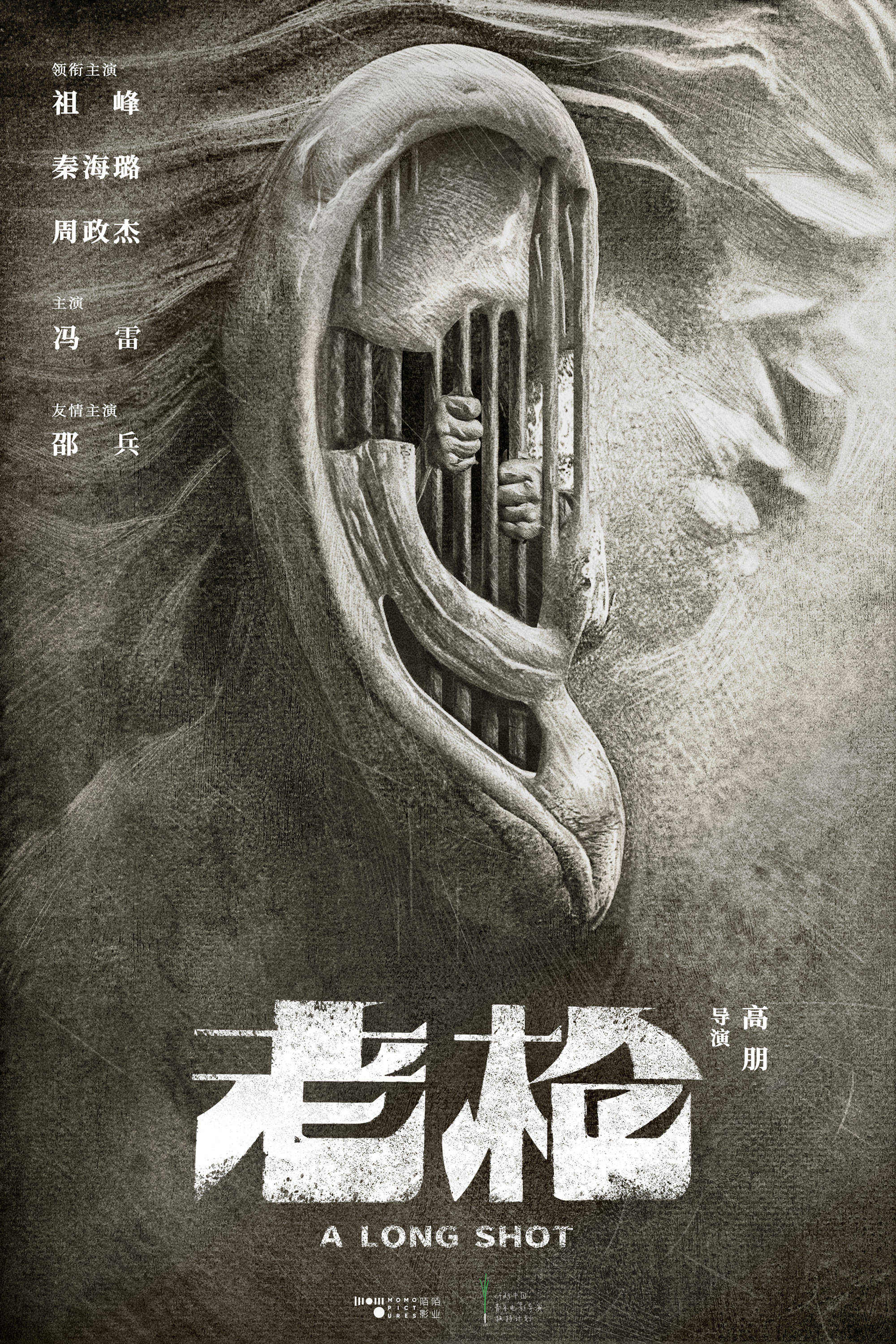
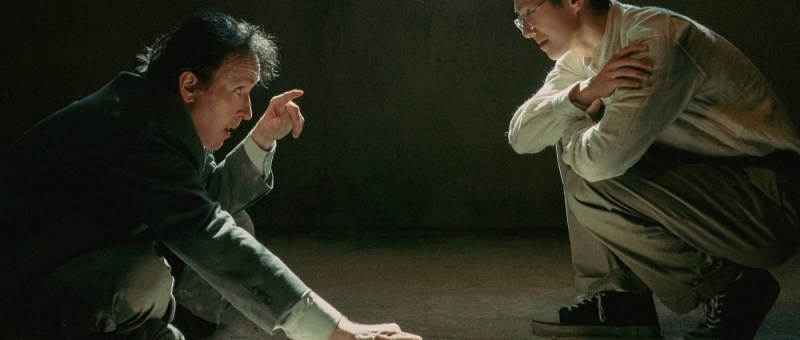
The hero of Gao Peng’s A Long Shot (老枪, lǎo qiāng) is forever reminding himself to “regain your focus”, yet in other ways it’s something that he’s making an active choice not to do and that others wish he wouldn’t. Set amid the chaos of China’s mid-90s economic reforms, the film suggests that Xue Bing has little other option than to tune himself out and avoid being a direct part of the corruption all around him as he has little power to stop it.

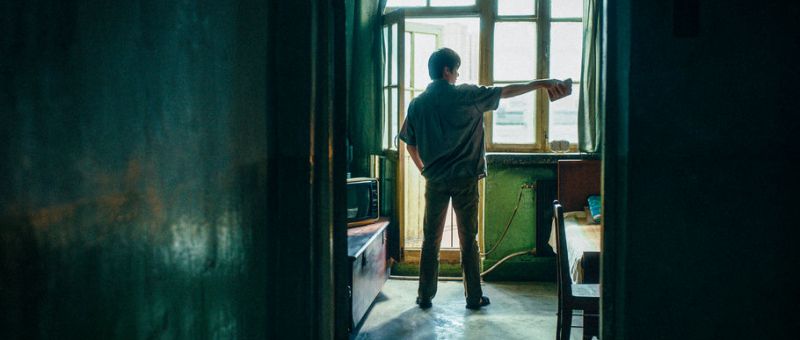
In a prologue set five years before the main action, Xue Bing (Zu Feng) had been a sharpshooter on the national team but is told that he has experienced hearing loss which may affect his balance and is subsequently let go. The hearing loss is perhaps symbolic of the fact that Xue Bing does not listen to the lies and double talk around him and maintains an integrity that is nothing but irritating to his morally compromised colleagues. On the other hand, he later tells Xiao Jun (Zhou Zhengjie), a teenage boy to whom he’s become a kind of father figure, that staring at a bull’s eye all your life isn’t good for your eyes hinting at his problematic hyper focus in which he’s just trying to keep his head down and do the best job he can under the circumstances.

But the circumstances are grim for everyone. Now with shaggy hair and a look of disappointment in his eye, Xue Bing works as a security guard at a moribund ferroalloy factory where the workers haven’t been paid in years as the nation goes through a number of complex economic reforms that are changing the face of the nation and giving rise to a new class of wealthy elites who’ve gained their riches through immoral and exploitative means. With people not being paid, thefts are a common occurrence but the security guards have turned to taking bribes, tacitly turning a blind to equipment going missing if the thieves are willing and able to pay a small fee. Xue Bing doesn’t like to go along with this and avoids joining in, but is powerless against the other guards including his boss Chief Tian (Shao Bing). 

The film frames the factory as a microcosm of the wider society which has become a vicious circle of corruption. But on the other hand, the workers guards, and even in the management see themselves as taking what was rightfully theirs but has been unfairly denied them. The workers steal from their employer because their wages weren’t paid, the guards aren’t getting paid either so they extort the workers and rip off the company, while the management know the factory’s effectively bust so they’re asset stripping while they still can. Chief Tian runs into one of the thieves who’s since started a “trading company” having taken some cues from a Russian working at an equally moribund shipyard where he’s no longer monitored by the authorities and has been selling off warships as scrap hinting at the disintegration of post-war communism and the resulting capitalist free for all that followed. 

Xiao Jun, the son of a woman Xue Bing thinks he’s in a relationship with but the reality is somewhat ambiguous, is caught amid this crossfire as a young man coming of age in complicated times. He resents the corruption he sees around him and bonds with Xue Bing thinking he’s a straight shooter only to be disappointed by his defeated complicity which he also sees as a kind of unmanliness. Xiao Jun’s mother, Jin (Qin Hailu), had been trying to run her own business but later gets a job in a nightclub that seems to be sex work adjacent thanks to her relationship with another corrupt businessman, Mr Zhao. She remarks to Xue Bing that there are so many ways to earn a living these days she doesn’t understand why anyone would go back to the factory, laying bare the wholesale change in the society. Xiao Jun has taken up with a gang of seeming delinquents who frequently loot the factory complex, but even they are only taking what they think is theirs as one of the boy’s fathers was killed in a workplace accident and the family was only given a certificate of commendation rather than financial compensation for the father’s lost wages without which they are unable to support themselves. 

The guards have been told they’ll finally get paid after the company’s 40th anniversary celebrations, with corrupt manager Sun telling Tian he’ll need his help to keep the others in line when he presses him and is finally told they’ll only get two months’ worth of the back pay they’re owed. Xue Bing is told Sun was selling off the lathe machines in order to pay the workers, and it seems like he believes them naively falling for their greater good narrative while Xiao Jun seems on a collision with adult hypocrisy refusing to sign a false confession to get the managers off the hook. Gao lends Xue Bing’s world a greying hopelessness in which the only two choices are to close his eyes and ears or go down fighting, closing with a lengthy shootout in which firecrackers mingle with gunshots masking the sound of rebellion from a continually unheard underclass.


 A Long Shot screened as part of this year’s New York Asian Film Festival.

Successor (抓娃娃, Yan Fei & Peng Damo, 2024)

Embodying the contradictions of the modern China, Successor (抓娃娃, zhuā wáwa), the latest from the FunAge team sees a billionaire father recreate a utopian vision of crushing poverty amid the socialist values of China pre the 90s reforms but only so that his son can develop a desire to become a capitalist fat cat. For all that, however, it’s also a reaction against micromanaging parents, life under oppressive state control, and a high pressure, conformist society obsessed with very narrowly defined visions of success that are increasingly at odds with what a younger generation might want.

The surprising thing is how easily the young boy, Jiye, is able to straddle these two worlds while only gradually beginning to realise that it’s odd his neighbours keep asking him complex maths questions and he’s always running into foreigners who conveniently want to know the way to the local post office. Ostensibly, the Ma family live in an old-fashioned courtyard that according to the sign over the front entrance was constructed in 1958. As the film opens, Jiye’s teacher has brought a wealthy man to their home, in fact the father of one of Jiye’s classmates, who offers to sponsor his education while each of them look mystified around the flat which seems to exist in a kind of time warp. Jiye’s father, Chenggang (Shen Teng), sends them the packing explaining that they live exactly as they want to and don’t need anyone’s help. 

Yet Jiye is fascinated by his friend’s iPad and aware of the world outside works even as his parents try live like it’s the 1960s, sitting round reading good socialist literature which is also recommend to Jiye by the man who owns the bookshop downstairs and is actually one of Changgang’s many hidden “teachers”. But unbeknownst to him, there’s a lift behind his parents’ closet door that leads to a huge control centre where his every move is being monitored. Chenggang is actually a fantastically wealthy businessman who wants Jiye to develop good character so that he can take over his business after getting into a prestigious university.

In a very high tech and invasive way, it’s a reflection of the confused ideology being forced on Jiye by unseen external forces. Once he’s a little older and able to see that his world is definitely not normal, he begins to feel as if some mysterious force is indeed controlling his life but attributes it to vague notions of fate or cosmos rather than wider authoritarianism or parental manipulation. Chenggang is convinced this is the proper way to educate his son, to give him both old-fashioned socialist values and a heathy desire to overcome his poverty and live in a fancy mansion. He feels this way in part due to his dissatisfaction with a grown-up son from a previous relationship who failed his exams and was sent to America in disgrace. Somewhat uncomfortably, one of the reasons Chenggang is so disappointed in Dajun (Zhang Zidong) who continues to crave his approval is that he’s gay and in a committed relationship with an American man who probably should have given more thought to his Chinese name. 

In order to keep up the pretence, Chenggang never tells Jiye that he has a half-brother though he does allow him to see his maternal grandparents on occasion though they, evidently very wealthy themselves, do not approve of Chenngang’s parenting and resent being unable to spoil their grandson in the way they’d like. Chenngang may have a point here, though his chief objection being that the little Jiye was already quite chubby from being relentlessly pampered lands in the realms of fat shaming rather than a serious questioning of indulgent parenting in the wake of the One Child Policy.. He didn’t want him to grow up to be selfish and entitled or to have a distorted sense of the value of money but also seems to have a conviction that the boy will just laugh and say thank you when he finds out his entire life has been a lie and his parents made him suffer needlessly when they were in reality vastly wealthy. 

But what Jiye emerges with is, perhaps surprisingly, a more wholesome sense of rebellion, stepping out from the cosseted false reality his parents had given him and prepared to chart his own course. In an undercutting of the apparent homophobia which surrounds Dajun, the film also refreshingly, and perhaps subversively given the usual treatment of LGBTQ+ themes in mainstream Chinese cinema, suggests that he has done the same and was right to do so validating his relationship with Peter while a kind of solidarity emerges between the brothers in the shared defiance of the path their parents had set down for them. Often hilarious in its surreal humour and penetrating in its satire, the film echoes a sense of dissatisfaction amid contemporary youth no longer so hung up on outdated ideology and craving more individual freedom in a society in which lives can ultimately feel oppressively micromanaged by shady, unseen forces.


International trailer (Simplified Chinese / English subtitles)

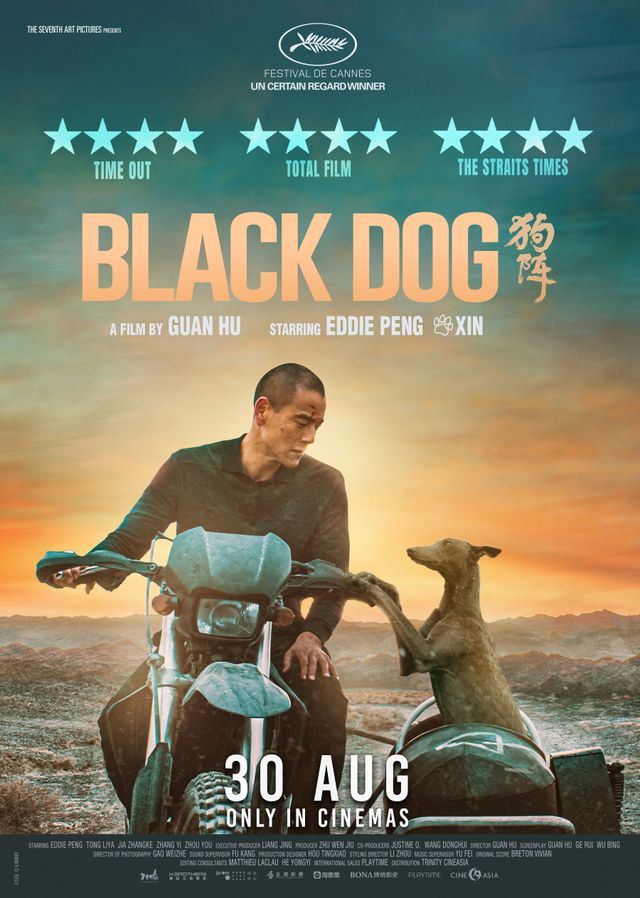
Black Dog (狗阵, Guan Hu, 2024)

When a dusty sign pops up in Guan Hu’s Black Dog (狗阵, gǒu zhèn) advertising the upcoming 2008 Beijing Olympics, you’d be forgiven for thinking it’s a relic of a long forgotten past. On the edge of the Gobi desert, Chixa has a post-apocalyptic aesthetic, a kind of reverse frontier town for a society in retreat. It takes on an almost purgatorial quality for prodigal son Lang (Edward Peng Yu-Yan) who returns after spending nearly a decade in prison for an incident that seems like may not have been entirely his fault but for which he continues to face enmity and a petty vendetta from a local gangster/snake farmer Butcher Hu.

Lang himself is aligned with the stray dogs who have begun to reclaim the town which has long since been abandoned by industry. The moribund zoo where his father has taken to living is testament to the prosperity the area may once have had though now it’s a ghost town of China’s industrialising past strewn with the disused factories of Socialist era dealt a deathblow by the economic reforms of the ‘90s. Yet we’re also told that the reason the stray dogs must be expelled is so the town can be redeveloped and new factories take the place of the old which does not seem to hold the kind of promise for the townspeople one might expect. 

Constant references to the Olympics and its slogan “Live the Dream” only emphasise the irony. Geographically distant from Beijing, Chixa exists in an entirely different space from the Chinese capital and appears as if it were about to collapse in on itself. Half the town is plastered with demolition signs and in the end it’s the people who are displaced as much the dogs. Guan often rests on ominous visions of the strays standing on a small hilltop and then recalls the image in the film’s closing scenes as the dogs are replaced by townspeople watching a once in a generation total eclipse on the eve of the opening of the games.

With nothing much else to do, Lang, a former rockstar and motorcycle stuntman in the town’s more prosperous days which themselves even seem to echo the 1950s more than the late ‘90s, joins the campaign to beat the canines into retreat at the behest of local gangster Yao (played by director Jia Zhangke) but begins to identify and sympathise with them especially once it becomes obvious that the new regulations are exploiting dog owners by forcing them to pay to have their animals registered. Those who can’t or won’t have their pets confiscated, Lang silently rescuing one girl’s little’s pet pooch while her grandmother tries to argue with the dog catchers before they take them all to what is effectively a concentration camp for dogs. The film’s Chinese title is in fact “Dog Camp,” and it becomes clear that it’s Lang who’s stuck there, trapped by his past and the dismal realities of the socioeconomic conditions of late 2000s China.

Hoping to earn a little extra cash he decides to try catching a wanted fugitive, the Black Dog of the title who is mistakenly believed to have rabies only to end up bonding and identifying with it. At several points, Lang echoes the movements of the dog such as placing his head on the chest of his dying father as the crowd below his hospital room prepare to welcome the opening the Olympics via a large screen in the town square. His relationship with the dog begins to restore his sense of compassion and humanity while a tentative connection with a young woman equally trapped by her transient existence and toxic relationship with a fellow circus performer opens his eyes to new possibilities of a life of freedom on the open road no longer bound by the constraints of a society in flux. Elegantly lensed grainy photography and the occasional use of synth scores lend the film an elegiac, retro quality that recalls the cinema of the fifth generation while casting a subversive eye over the compromises of the modern China itself trapped by its past and trading on former glory from which stray dogs like Lang can find escape only by running from the pack. 


Black Dog is in UK cinemas from 30th August courtesy of CineAsia.

UK trailer (English subtitles)
A Place Called Silence (默杀, Sam Quah Boon Lip, 2024)

Can the hammer of truth break the rock of silence? At the end of Sam Quah’s remake of his own 2022 film by the same name, A Place Called Silence (默杀, mò shā), you might ask if you really want to or if some secrets are best kept that way. Then again, Quah’s persistent focus on leaky roofs suggests the truth will out and that the slow drip of quietly collecting water will eventually erode even the strongest stone.

Though remade for the Mainland market, the film takes place in the fictional city of Doma which like many recent similarly themed films is ostensibly not located China but another area of South East Asia, the police uniforms and complex mix of languages and cultures strongly echoing those of the original Malaysian setting. This also extends to the increasingly Christianising imagery which leads back to a cult-like local charity that pedals a good book full of aphorisms landing somewhere between Confucius and Proverbs and are at best a superficial salve for the deeply rooted problems in what turns out to be a judgemental and classist society. 

At least, the reason no one challenges the increasingly extreme behaviour of school bully and queen bee Angie is because she’s the headmaster’s daughter. Angie has been relentlessly tormenting Tong largely because she has a disability and had until recently been taught in the special needs class. According to her mother, Han, Tong has been mute since birth and it’s in an attempt to get her a better education that she’s given up her job in accounting and taken a position as a cleaner at the school. Her mother’s profession is also another reason for Angie to bully Tong, though she also accuses Han of having seduced her father which does not appear to be true though his later admission to an “abuse of power” that gives Han leverage over him puts a different spin on the situation and does not cast him in a very good light. 

Neither does the state of disrepair at the school which has a persistently leaky roof that is at least according to handyman Zaifu structurally unsound and may cave in any minute. Some of the blame is placed on a recent tsunami which caused mass loss of life, and the school seems to be proud of itself for having taken in pupils from another institution that was swept away though they don’t appear to have been welcomed by everyone. When a pupil ends up dying because of Angie’s bullying, the headmaster delays calling for help in part it seems to evade a scandal while planning to simply bribe anyone who tries to look into the matter. 

In short, it’s not difficult to see why someone may feel they’d have to take the law into their hands to break the persistent silence that protects the wealthy and the powerful from the consequences of their actions. Though, truth be told, not everyone is very interested in the disappearance of the girls, Han is driven to distraction when she suspects that Tong has been abducted by a serial killer with a very particular motive who also seems to be aware of some secrets she herself had been keeping. Then again there are a lot of wilful silences, like that of Mrs Xu who later snaps that the whole building knew Han had suffered domestic violence yet apparently did nothing help her other than maintaining superficial politeness by avoiding bringing it up. 

Silence seems to be the only refuge for the bullied whether in school or the wider world for there’s little good in speaking up anyway. Tong tries to help a bullied friend, but her mother stops her, wary of their own need for silence and that Tong will simply become the next target which of course she does. Terrible things are done in the name of protection, but sometimes silence is necessary too and a means of atonement if not a weapon against life’s unfairness. An ambiguous mid-credits sequence somewhat muddies the waters in its implications though perhaps a concession to the censors demanding that crimes must be answered, but Quah otherwise depicts a hellish society of violence and powerlessness in which the only choices are silent complicity or murderous revenge.


A Place Called Silence is in UK cinemas now courtesy of CineAsia.

UK trailer (Simplified Chinese / English subtitles)

The Umbrella Fairy (伞少女, Shen Jie, 2024) [Fantasia 2024]

Should you be bound by the past or try to forge your own destiny? It might be an odd question seeing as the central thesis of Shen Jie’s gorgeously detailed animation The Umbrella Fairy (伞少女, sǎn shàonǚ) is that every object has a soul which has developed over its lifetime and often bound to whoever originally owned it. Though what these fairies, perhaps subversively, learn is that they have will of their and should not be bound by the desires of their former masters but are free to decide their destinies for themselves.

In typical folktale fashion, a block of black jade is split in two and used to create an umbrella, which implies protection, and sword which is itself somewhat cursed wreaking death and destruction where it is found. In our world, it seems that peace has prevailed but the princess has had to abdicate her kingdom meaning that she no longer feels fit to carry her most treasured possession, The Imperial Umbrella, and places it in a repository for relics along with the Sword. There a heartbroken Qingdai tries to get used to her new life among the similarly discarded fairies while fulfilling her former mistress’ orders that she should try to look after her sister Wanggui, spirit of the Black Sword. But Wanggui is hurt and vengeful. She resents the death of her former owner and vows revenge, threatening to plunge the nation back into chaos. 

Of course, the point of the sword and the umbrella is balance and the idea is they should work in work in harmony with neither in the ascendent. The vision of the outside world we get when Qingdai ventures off in search of the escaped Wanggui is of a wounded nation still trying to repair itself in much the same way as craftsmen Mo Yang attempts to repair the objects in the archive not so much restoring them to their former glory as adapting them for a new life. Yet we can see that objects are also a way for the living to mediate their sense of loss while embracing something that is permanent but not perhaps unchanging. Thus Qingdai and Mo Yang find themselves repairing a damaged flute the sound of which only brought pain to the Governor for it belonged to a musician who, again a little subversively, seems like he may have been more than a friend and gave his life in service of the Governor at the end of the war. Once repaired the flute has a different yet familiar sound and is passed on to a new owner to make with it what they will while accepting its legacy. 

In many ways it’s about taking the past with you, but also learning to let it go. The fairies think that they’re powerless. They can’t touch any solid objects and humans, even the ones they care so much about, cannot see them. But they do in fact have power and there are things they can do to shift the world, Qingdai’s unusual strength not withstanding. Under the guidance of Mo Yang, who becomes not quite a love interest but a kindred spirit, she begins to realise that she does have agency and is free to make her own decisions rathe than remain slavishly devoted to the desires of her former mistress. Wanggui perhaps learns something similar, rediscovering and redefining her purpose to determine to fight for something rather than flailing around in hurt and anger sowing the seeds of chaos wherever she goes. 

The again, the mystery villain is a cursed mirror who has centuries of pain in ironically being forever unseen for when people look into it they only wish to see themselves. Yet as Wanggui later says, there is something powerful in Qingdai’s surrounding herself with love while protecting all with her umbrella even if some in the outside world would be content to strip it for parts. Beautifully animated, the character design and aesthetic leans closer to Japanese anime than many recent Chinese animations which otherwise rooted themselves in cultural traditions such as ink painting and established mythology but otherwise spins a tale of learning to find oneself again in the wake of loss as a free spirit free from petty tyrannies and wider oppressions forever on your own journey fixing things as you go. 


The Umbrella Fairy screened as part of this year’s Fantasia International Film Festival.

Original trailer (no subtitles)

The Escaping Man (绑架毛乎乎, Wang Yichun, 2023)

“Life isn’t much better on the outside,” according to Sia (Zeng Meihuizi), the heroine of Wang Yichun’s deliciously ironic dramedy, The Escaping Man (绑架毛乎乎). Escaping men is in part what she’s tried but otherwise failed to do while constrained by the socio-economic conditions and entrenched patriarchy of the modern China. All of the men in the film are, as many call them, “idiots”, but all things considered it might not necessarily be such a bad thing to be even if their guilelessness makes them vulnerable to the world around them albeit in much different ways to Sia.

At least its this boundless cheerfulness and inability to see the world’s darkness that caused Fluffy (Eric Zhang) to be rejected by his status-obsessed mother (Yan Ni) who seems to have got rich by becoming what in charitable terms might be called a motivational life coach though others might describe her as a cult leader. She’s determined to get Fluffy into an elite primary school so he can “win at the starting line,” a buzzword in the contemporary society which basically means engineering privilege for your child so they can elbow other kids out of the way before the race even starts. The irony is rammed home by the fact that Sia, who works as the family’s live-in nanny/housekeeper also has a daughter named “Fluffy” who is one of China’s left behind children living with her seemingly bedridden grandmother in the provinces while Sia is in the city earning money to support the family having apparently divorced her daughter’s father. 

20 years previously, Sia’s mother had accused her lover of rape and had him sent to prison where he’s remained ever since having apparently gone along with the legal process in the mistaken belief Sia would eventually clear up this misunderstanding. She later later says the police wouldn’t let her and that she was never actually interviewed, but also continues to insist that they live in a “law-based society,” and nothing can be done without evidence. On his release, Shengli (Jiang Wu) comes straight to find his former lover in order to confirm that he did not in fact rape her and their relationship was consensual which she agrees it was. This determination is symbolic of his romanticism in continuing to believe in his dream of love despite all he’s been through, convincing himself he can start again with Sia while she continues to manipulate him with the almost certainly false promise of a happy joint future.

But then you can’t really blame her. A little way into the film, Sia is dressed in a white outfit very similar to the one worn by her boss when she goes to see Fluffy in a school play in which, at his own request, he played a tree. Sia is every bit as a accomplished and she has a warm and loving relationship with Fluffy which seems to elude his haughty mother. Later in the film she reveals that she came third in the national university exams but was prevented from going because she was born in a small rural province rather than the big city like her employer Mrs Mao. The fates of the two women are easily interchangeable depending on the circumstances of their birth while Mrs Mao continues to wield her privilege to ensure Fluffy can win at the starting line despite her resentment towards him for his lack of academic acumen or the things that denote conventional success in the modern China. Though he is cheerful and kind, she sees these qualities as actively harmful to his future success rather than embracing the little ray of sunshine he actively is.

Then again, Fluffy’s guilelessness also leaves him vulnerable which is why he cheerfully walks off with Shengli when he agrees to Sia’s kidnap plot and even rejoices in the grave-like pit they’ve dug to keep him in rechristening it as his underground fortress. He’s so nice that he doesn’t even realise the other kids are bullying him for being “stupid” and thinks they’re his friends, just happy to be included in the game. In this way, he and Shengli are alike, a pair of hapless fools living in a world that’s nowhere near as good as they think it is. The irony is that though Shengli perhaps begins to wake up to the realities of his relationship with Sia, his last wish for Fluffy is that he get into the fancy primary school and win at the starting line so he won’t end up like him. Suddenly it seems ironic that Shengli was a breakdancer because in the end he cannot break free of the prison that is the modern China. Filled with a darkly comic humour, the film is a fierce critique of the inequalities of the contemporary society and gentle advocation for the right to just be nice in world in which kindness has become a character flaw.


The Escaping Man screens July 26 as part of this year’s New York Asian Film Festival.