
It’s My Time (魔方小姐, Bai Xue, 2026)

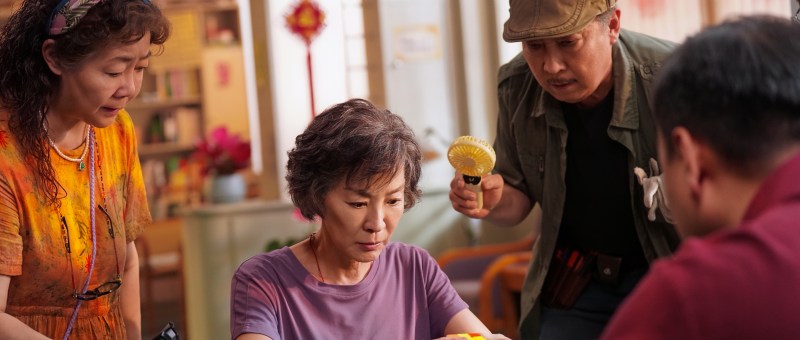
A no-nonsense grandma gets a new lease on life after discovering the joys of cubing in Bai Xue’s warmhearted dramedy, It’s My Time (魔方小姐, mófāng xiǎojie). Inspired by a true story and much less gritty than Bai’s debut The Crossing, the film is partly a rebuke against those who try to write off the older generation and a reminder that it’s never too late to try new things or make a change in your life.

For Yanzhong (Michelle Yeoh), however, cubing is also a kind of grudge match in which she tries to overcome her sense of humiliation in having become the victim of a scam which cost her her home. The stress caused her to have a stroke, so she’s currently living in a nursing home with her childhood best friend Shuzhen (Sa Rina). She does not, however, take very well to the kind of infantilisation that the well-meaning staff subject her to. Ironically, the roles have been reversed and every time she causes trouble, the manager calls her mild-mannered son, Dawei (Bai Ke). For unexplained reasons, Yanzhong seems to speak Cantonese with her son when they’re alone while they speak Mandarin with everyone else, perhaps bearing out their close bond and Yanzhong’s isolation from most of the residents who disapprove of her rabble-rousing antics, encouraging her to remember her age and suggesting that she’s just making things hard for her son whose boss is forever yelling at him on the phone. 

When down on his luck former “magic cube” champion Youwei (Liu Haoran) arrives to teach a class on “cubing” which he claims helps prevent dementia, Yanzhong discovers a hidden talent that gives her something new to live for. For Youwei, meanwhile, it seems as if his reduced circumstances are partly down to the death of his mother for which he blames himself. His father had a gambling problem and then abandoned the family, leaving Youwei to pay off all his debts which is one reason why he’s constantly hassled by a loan shark who seems to consider himself family. All of which perhaps leads him to look to Yanzhong as a kind of mother figure, especially as she tries to take care of him by getting him a place to stay at the nursing home after noticing that he’s technically homeless while promising to pay off the money he owes and buy him a house if they succeed in becoming cubing superstars. 

Even so, Youwei is the teacher here if one trying to convince her that slow and steady wins the race while others such an unscrupulous media boss push her to make the most of her viral success as the cubing grandma by aiming too high too fast. He writes off people like her as members of the “slowest and most useless group”, while Yanzhong is constantly trying to be seen as a human being who still has a life to live rather than just waiting around to die. She does, however, have a sharp tongue which as her friend points out hurts herself as well as others as she often lashes out defensively and ends up pushing people away. After achieving cubing stardom, she starts trying to “help out” her son’s family by telling him to quit his job and work at the cube factory, while his wife should close her nail salon and open a magic cube training school, and she’ll send her granddaughter to a private school. Of course, they’re pretty happy with the life they have and irritated by Yanzhong’s attempts to railroad them into her vision of familial bliss. They support her cubing career, but only because they want her to be healthy and happy.

The irony being that Yanzhong stuck it out at the home because she thought she’d be a burden to her son and his family if she went to live with them, just as her best friend Shuzhen really wants to live with her daughter in the US but is too afraid to ask her. The film’s English-language title is then a reference to Yanzhong rediscovering that it’s her time to shine, and also the hyper focus that cubing requires that presents Yanzhong with a stream of images from her past all of which remind her what’s really important in life. Even when facing setbacks and hardships, she never gives up, and her friends and family never give up on her despite the odd harsh word or misunderstanding. A gentle tale of intergenerational friendship and the energising power of sports, Bai’s warmhearted comedy insists that it’s never too late start something new and just like a magic cube, there are infinite possibilities in life’s twists and turns.


It’s My Time is in UK cinemas from 16th October courtesy of Central City Media.

Trailer (English subtitles)
Successor (抓娃娃, Yan Fei & Peng Damo, 2024)

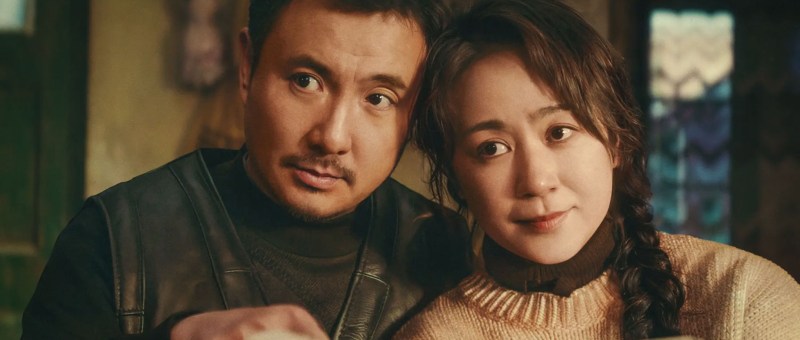
Embodying the contradictions of the modern China, Successor (抓娃娃, zhuā wáwa), the latest from the FunAge team sees a billionaire father recreate a utopian vision of crushing poverty amid the socialist values of China pre the 90s reforms but only so that his son can develop a desire to become a capitalist fat cat. For all that, however, it’s also a reaction against micromanaging parents, life under oppressive state control, and a high pressure, conformist society obsessed with very narrowly defined visions of success that are increasingly at odds with what a younger generation might want.

The surprising thing is how easily the young boy, Jiye, is able to straddle these two worlds while only gradually beginning to realise that it’s odd his neighbours keep asking him complex maths questions and he’s always running into foreigners who conveniently want to know the way to the local post office. Ostensibly, the Ma family live in an old-fashioned courtyard that according to the sign over the front entrance was constructed in 1958. As the film opens, Jiye’s teacher has brought a wealthy man to their home, in fact the father of one of Jiye’s classmates, who offers to sponsor his education while each of them look mystified around the flat which seems to exist in a kind of time warp. Jiye’s father, Chenggang (Shen Teng), sends them the packing explaining that they live exactly as they want to and don’t need anyone’s help. 

Yet Jiye is fascinated by his friend’s iPad and aware of the world outside works even as his parents try live like it’s the 1960s, sitting round reading good socialist literature which is also recommend to Jiye by the man who owns the bookshop downstairs and is actually one of Changgang’s many hidden “teachers”. But unbeknownst to him, there’s a lift behind his parents’ closet door that leads to a huge control centre where his every move is being monitored. Chenggang is actually a fantastically wealthy businessman who wants Jiye to develop good character so that he can take over his business after getting into a prestigious university.

In a very high tech and invasive way, it’s a reflection of the confused ideology being forced on Jiye by unseen external forces. Once he’s a little older and able to see that his world is definitely not normal, he begins to feel as if some mysterious force is indeed controlling his life but attributes it to vague notions of fate or cosmos rather than wider authoritarianism or parental manipulation. Chenggang is convinced this is the proper way to educate his son, to give him both old-fashioned socialist values and a heathy desire to overcome his poverty and live in a fancy mansion. He feels this way in part due to his dissatisfaction with a grown-up son from a previous relationship who failed his exams and was sent to America in disgrace. Somewhat uncomfortably, one of the reasons Chenggang is so disappointed in Dajun (Zhang Zidong) who continues to crave his approval is that he’s gay and in a committed relationship with an American man who probably should have given more thought to his Chinese name. 

In order to keep up the pretence, Chenggang never tells Jiye that he has a half-brother though he does allow him to see his maternal grandparents on occasion though they, evidently very wealthy themselves, do not approve of Chenngang’s parenting and resent being unable to spoil their grandson in the way they’d like. Chenngang may have a point here, though his chief objection being that the little Jiye was already quite chubby from being relentlessly pampered lands in the realms of fat shaming rather than a serious questioning of indulgent parenting in the wake of the One Child Policy.. He didn’t want him to grow up to be selfish and entitled or to have a distorted sense of the value of money but also seems to have a conviction that the boy will just laugh and say thank you when he finds out his entire life has been a lie and his parents made him suffer needlessly when they were in reality vastly wealthy. 

But what Jiye emerges with is, perhaps surprisingly, a more wholesome sense of rebellion, stepping out from the cosseted false reality his parents had given him and prepared to chart his own course. In an undercutting of the apparent homophobia which surrounds Dajun, the film also refreshingly, and perhaps subversively given the usual treatment of LGBTQ+ themes in mainstream Chinese cinema, suggests that he has done the same and was right to do so validating his relationship with Peter while a kind of solidarity emerges between the brothers in the shared defiance of the path their parents had set down for them. Often hilarious in its surreal humour and penetrating in its satire, the film echoes a sense of dissatisfaction amid contemporary youth no longer so hung up on outdated ideology and craving more individual freedom in a society in which lives can ultimately feel oppressively micromanaged by shady, unseen forces.


International trailer (Simplified Chinese / English subtitles)