A Light Never Goes Out (燈火闌珊, Anastasia Tsang, 2022)

A mother and a daughter take very different paths in trying to come to terms with grief in Anastasia Tsang’s poignant drama, A Light Never Goes Out (燈火闌珊). A tale of loss in more ways than one, the film is also a deeply felt lament for the old Hong Kong which finds itself slowly erased as symbolised by the movement to remove the “dangerous” neon signage which was once such a part of the city’s identity. 

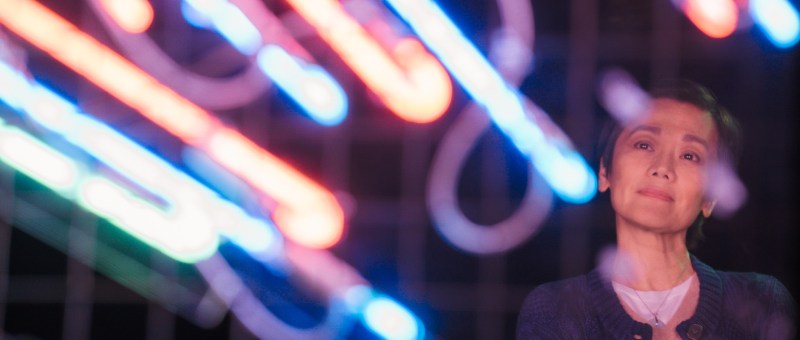
Heung’s (Sylvia Chang Ai-Chia) late husband Bill (Simon Yam Tat-Wah) had been a master craftsman of just such signs though as far as Heung knew had retired a decade previously as the industry continued to decline. Where once the city was full of neon, modern businesses prefer cheaper LED signage. Now that Bill is gone, Heung struggles to find direction in her life. She continues cooking for three even though they’re only two and sadly reflects on how dark and sad the streets now feel as she witnesses the signs that Bill spent so much of his life crafting unceremoniously dismantled. While all she wants to do is hang on to the past, her daughter Prism (Cecilia Choi Si-Wan) takes the opposite path insensitively getting rid of her father’s things without her mother’s knowledge while secretly planning to move to Australia with her fiancé Roy. 

In some ways the two women represent a set of opposing views with the mother standing in for those who decide to stay and fight for the soul of Hong Kong, and the daughter those who decide their future lies abroad in her case in Australia where she believes there is “more creative freedom”. When Heung tells some construction workers that “your new laws are illegal”, it sounds as if she’s talking about more than just building ordinances while exasperated by the idea that something which seemed very ordinary just a short time ago is deemed against the law because of a sudden and arbitrary introduction of additional legislation. 

It might be assumed that the neon lights fade because young people do not care for them, but Heung’s greatest allies are the young apprentice, Leo (Henick Chou), she belatedly discovers Bill had taken on before he died and a young woman who fiercely protects the neon sign that hangs above her bar. It’s she who also points out that Bill supported her during the SARS crisis when her family’s business was suffering, bearing out his humanity in helping those in need while suggesting that it is spirit of the neon lights that has kept Hong Kong going during its darkest days. Bill had been a bit of a dreamer, fond of encouraging those around him to wish upon a star while insisting that nothing’s predetermined and if you wan’t something you can make it happen all of which sounds like a subtly subversive advocation for the fight for Hong Kong. 

As he later says, his signs may have been torn down but they can be built again while Heung and her daughter eventually find a way to reconcile in their grief and she gains a surrogate son in the earnest Leo who encountered rejection all his life until discovering a calling in the art of neon signage. Leo’s commitment suggests that something of the neon lights can be preserved and brought into a new era while there is a genuine poignancy in the significance of the sign reading “myriad lights” which eventually guides each of the heroes towards their resolution in attempting to fulfil Bill’s dying wish of recreating a sign which had long since disappeared but held a memory for another couple that another one long departed had held for he and Heung. 

Tsang often cuts back to stock footage of a neon-lit Hong Kong in the 60s and 70s before contrasting it with the comparatively empty streets of today which appear almost soulless in their slick modernity. It is in a sense nostalgia, a yearning for another Hong Kong which is fast disappearing or perhaps being deliberately erased as symbolised in the final, post-credits shot of the famous floating restaurant with its vibrant exterior and giant green “Jumbo” sign which capsized in June 2022 after being towed out of Hong Kong for storage in Cambodia. A poignant tale of grief and healing, Tsang’s moving drama nevertheless suggests a flame still burns in the flickering lights of the old Hong Kong which continue to illuminate the night sky in defiance of those who might seek to extinguish them. 


A Light Never Goes Out opens in UK cinemas on 12th May courtesy of CineAsia.

UK trailer (Traditional Chinese / English subtitles)
Over My Dead Body (死屍死時四十四, Ho Cheuk-Tin, 2023)

As the opening voiceover of Ho Cheuk-Tin’s darkly comic farce Over My Dead Body (死屍死時四十四) points out, the world is already quite an absurd place. A lot of us know that it’s absurd, but somehow we just roll with it without really asking why. If you stop to think about it, it really is absurd to spend every waking minute scrabbling for money to pay a mortgage on a flat you barely occupy because you’re always at work, but at least it’s less absurd than living with the constant uncertainly of arbitrary rent rises and sudden eviction. 

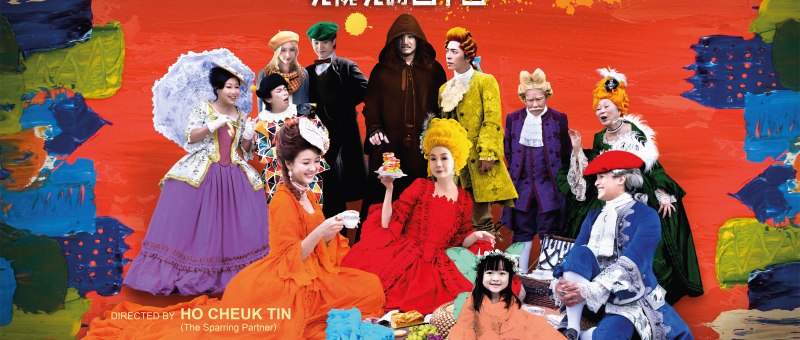
At least that’s the way it’s always seemed to the residents of 14A Seaside Heights, a swanky apartment block with all the mod cons and a touch of European sophistication. Technically the flat is owned by Ms. So (Teresa Mo Sun-Kwan), though home to daughter and son-in-law Yana (Jennifer Yu Heung-Ying) and Ming (Wong Yau-Nam) plus their small daughter Yoyo and Yana’s paranoid brother Kingston (Alan Yeung Wai-Leun) who is in the process of launching a “brand” selling a special “stealth suit” that can make you invisible to surveillance cameras. The obvious fact is, the flat is far too small for all these people and Ming and Yana want to move out not least so they stop having to sneak around like teenagers to get a little personal time. 

They have each, however, suffered amid the precarities of the post-pandemic economy with Yana losing her job as an air hostess when the airline she worked for went bust, while Ming’s removals business has taken a serious hit and is unlikely to recover as Mrs So points out with so many people leaving Hong Kong due to the ongoing political uncertainty. The young couple propose mortgaging Mrs. So’s flat for the downpayment on their own which they’d be paying a second mortgage on, which is why it’s incredibly bad news when they discover the naked corpse of a random man propped up against their door. 

The film plays with a minor pun in which the word for male corpse sounds like that for “Blue Ribbon”, a name for pro-government supporters during in the protests, the implication being you wouldn’t want one of those turning up on your doorstep either. In any case, any idea of calling the police or an ambulance is quickly abandoned on realising the flat would become known as a “murder house” and dramatically drop in value. The only thing to do is drag the unfortunate man to a neighbour’s door instead and let them deal with it. This goes about as well as could be expected with the whole floor eventually involved in the plan to move the body until they eventually hit on the idea of dumping it on a rundown social housing estate where people often go to commit suicide because no one’s going to notice one more corpse and no one owns those flats anyway so it doesn’t really matter if they ruin their property value. 

It is an incredibly dark and cynical sense of humour, but in its own cheerfully absurd in all the farcical shenanigans trying to remove the body from the building with no one really stopping to ask how it got there in the first place beyond connecting it with the mad streaker the security guard has been desperately trying to catch. Ho’s previous film, stylish true crime drama The Sparring Partner, had similarly had an absurdist vein of dark comedy running underneath it but Over My Dead Body does eventually rediscover a sense of hope if only in irony as it leans in to a New Year comedy-style celebration of family and community as the neighbours find themselves having to work together to protect their property investments. Even the materialistic Mrs So is forced to reflect that actually she’s lucky to be able to feel tired and frustrated, giving her blessing to her daughter and son-in-law to move out, while they in turn reflect that maybe it’s not that bad if they have to stay a little longer. It might seem like an overly saccharine conclusion for a biting satire about the rabid capitalism of a status obsessed, consumerist society but then again as an equally cynical ironic twist reveals maybe the residents are the ones who haven’t quite woken up despite their newfound solidarity. 


Over My Dead Body opens in UK cinemas on April 21 courtesy of CineAsia.

UK trailer (Traditional Chinese / English subtitles)

Ride On (龙马精神, Larry Yang, 2023)

“Jumping down is easy, stepping down is hard” an ageing stuntman reflects in Larry Yang’s meta Jackie Chan vehicle Ride On (龙马精神, lóngmǎjīngshén). The Chinese title, like the English, may hint at late career resurgence but the film at times feels more like a swan song for Chan himself as it lovingly looks back at some of his greatest action hits while gently suggesting that his era may have passed in this new age of CGI and greater awareness of health and safety regulations. 

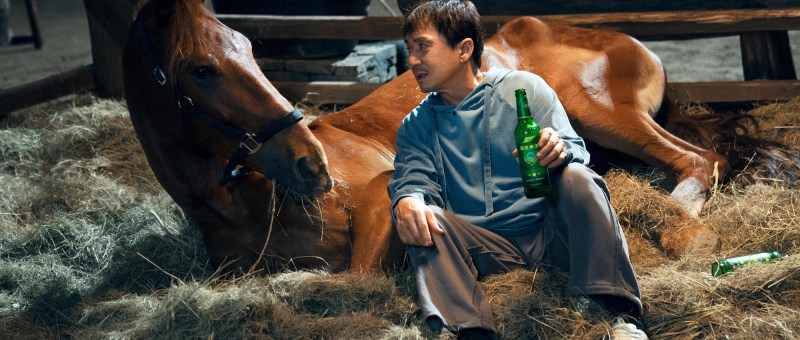
That does certainly seem to be the case for his stand-in, Luo, who has fallen on hard times following serious injury and financial ruin. These days he mainly works as an extra and supplements his income posing for photographs with his beloved horse Red Hare whom he saved from being euthanised at birth and has raised since he was a foal. When the twin forces of vicious loansharks and a weird, wealthy businessman who collects horses come calling for Red Hare it’s like they want to take the last dregs of Luo’s legacy away from him all of which forces Luo to reconnect with his estranged daughter Bao (Liu Haocun), a law student engaged to a rookie lawyer. 

The familial themes play into those of celebrating the brotherhood of stuntmen (and one woman) as one large family who must necessarily take care of each other given that their line of work is incredibly high risk. Yet it’s also true that Luo’s reconciliation with Bao seems to come too easily given her original animosity towards him for being unable to play the role of father to her seeing as her parents separated when she was an infant and she’s met him only a handful of times in her life. Nevertheless, she’s quickly won over by Red Hare even if perhaps identifying a little with him as Luo refers to the horse as his “son” only to belatedly realise that he may have been mistreating him by forcing him to perform dangerous stunts pretty much against his will despite his obvious affection for him. 

Likewise, Bao comes to a new appreciation of her father after watching videos of his old stunts many of which show him incurring serious injuries. The clips are all famous scenes from Chan’s movies such as the shopping mall jump from Police Story or the bus and umbrella stunt which are posited as the glory days of action cinema, yet from a modern perspective we might ask ourselves if all this risk is worth it for simple entertainment even if as Luo later suggests it’s the risk that makes the action entertaining. After getting back on the horse, literally, Luo is offered a series of new stunt jobs one of which requires him to perform a dangerous jump on a badly designed set, while on another he’s told he doesn’t need to perform the dangerous part because they’ll fill in the rest with CGI. Luo is outraged and insists on performing the stunt in camera only to think better of it when considering that he’s making a decision on Red Hare’s behalf that he might not have the right to make. 

The film laments the passing of the age of daredevil stuntmen, but there is a minor irony in the fact that Ride On makes fair use of CGI itself as it fully admits in the closing outtakes which feature several stagehands dressed in green to be erased later. It’s also less a celebration of stunt people than it is of Chan himself and his legendary career as an action star which may be nearing its end which would be fair enough seeing as Chan is now 69 years and clearly making (occasional) use of stunt doubles. Nevertheless, there’s an undeniable sweetness in the relationship between Bao and her fiancé Mickey (Guo Qilin) as they commit themselves to saving Red Hare and forge new familial bonds with the rough and ready Luo that echo the themes of familial reconciliation even if letting Luo off the hook a little too easily for his absence from his daughter’s life. “Stepping down” might be hard, but it doesn’t necessarily mean walking away completely only entering a new phase of compassion and solidarity and not least for a wily horse in search of a loving home.


Ride On is in UK cinemas now courtesy of CineAsia.

UK trailer (English subtitles)

Ode to the Spring (没有一个春天不会来临, Zhou Nan, Zhang Chi, Dong Yue, Tian Yusheng, Rao Xiaozhi, 2022)

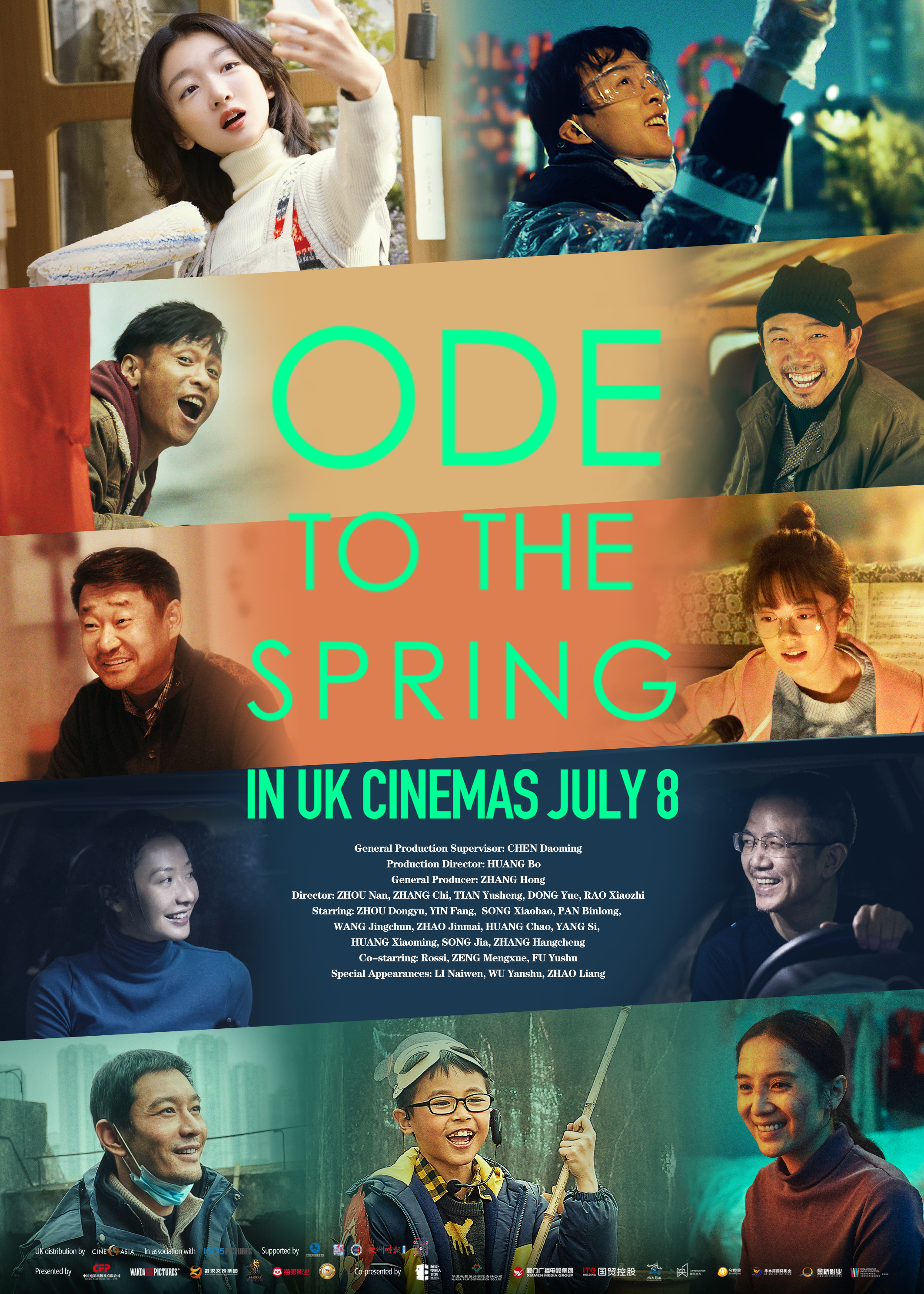
There isn’t any denying that the last two years have been extremely difficult for everyone all around the world. Multi-strand “main melody” drama in praise of frontline workers Ode to the Spring (没有一个春天不会来临, méiyǒu yī gè chūntiān bùhuì láilín) may in itself be slightly optimistic in that its perspective is clearly one assuming that the worst is over and the pandemic is largely a thing of the past. Ironically the film’s release, previously scheduled for April, had to be delayed until the early summer because of rising cases in Mainland China. Nevertheless, its messages of hope and the importance of community have lost none of their power while the film’s willingness to admit that some things could have been handled better, even without expressly stating by who, is surprisingly subversive. 

Structured as a multi-strand drama rather than a traditional omnibus movie, the film follows five groups of people mainly in Wuhan at the beginning the outbreak. The first story revolves around a young man, Nanfeng (Yin Fang), whose relationship with local florist Xiaoyu (Zhou Dongyu) had become strained by his decision to move to Shanghai to earn more money for their future. As the New Year Spring Festival approaches, he returns to Wuhan in an attempt to patch things up oblivious of the new disease engulfing the city. Xiaoyu and her mother, who had not approved of him, have each been hospitalised but were separated in the chaos and are now in different hospitals with no way to stay in touch. In a mild rebuke to modern day consumerism, the message that Nanfeng is forced to learn is that he should have been thinking how best to support his community rather than leaving to make more money in Shanghai. Running all around town looking for Xiaoyu’s mother, he eventually wins her approval but is simultaneously warned that he is too impulsive and should think more about what it is others actually want rather than giving them what he thinks they should have. 

Meanwhile a pair of migrant workers struggle to make a living but are given a load of face masks and told to sell them in Wuhan. They too are little aware of how bad things have already become. The older of the drivers is rebuked by his wife because he hasn’t come home in several months and his daughter is beginning to forget him. Though they become increasingly afraid of infection, the truckers maintain their compassion helping an elderly lady and her granddaughter, whose parents are already in a quarantine centre, get to a hospital and then deciding that perhaps they shouldn’t be trying to profit from the pandemic no matter their own desperate circumstances. 

Then again, the film is surprisingly frank about the supply problems in the hospitals which have already run out of high grade medical masks while medics are close to burn out. A doctor is forced to sleep in his car because he’s technically on call. His wife, a nurse, chooses to join him rather than stay in the hotel room they’ve been provided while their son is cared for by his grandparents. He calls a man to tell him his father has passed away and ask for additional documentation to release the body, but the grieving son is himself in a quarantine centre as are all the other family members who have so far survived. The inability to save a fellow doctor who was shortly to become a father almost breaks him, while his wife wonders what’s to become of their son if they should both fall ill. Despite having scolded the boy on the phone about not doing his homework, the doctor has recorded a poignant voice message for his son just in case letting him know that he bought him the toy he wanted for his birthday and has been paying attention even if it didn’t seem like it at the time. 

The themes of parental separation echo through each of the stories, Xiaoyu is separated from her mother, the trucker cannot return to his family because of the lockdowns and his precarious financial position, and the doctor is staying away from his son to treat the sick. In the final strand, a naughty little boy obsessed with legendary child warrior Nezha is separated from his doctor mother (Song Jia) who is despatched to Wuhan to help with the relief effort while his father (Huang Xiaoming), unused to taking care of him, is preoccupied because he unwisely invested in buying a bus he cannot now use because no one is allowed to go anywhere. The boy dreams of visiting a local Buddha statue and getting him to “awaken” from his “quarantine” to show the virus who’s boss only for the Buddha to let him take on Nezha’s form to stamp on those nasty viruses so his mum can come home.

Similarly, the head of a local neighbourhood committee struggles to deal with complaints about a young woman playing piano at all hours while left home alone because her mother is a doctor staying at the hospital. Mr. Wang (Wang Jingchun) becomes something of a local hero, selflessly caring for the residents of a series of apartment blocks ensuring they get food deliveries and dealing with disputes. When he comes down with a fever and has to isolate, the whole block turns out their lights in support waving the torchlight on their phones like tiny stars shining in the distance. It’s here that the film’s real message lies in praising the value of community, not just the doctors and frontline health workers but the civil servants who kept everything running and the ordinary people who did their best to follow the rules and stay at home, while also hinting at some of the failures in the response from the random veg that keeps turning up at the depo to lack of PPE and the total disregard for the migrants stuck far from home in the midst of an economic collapse. Shot by five directors, the strands each have idiosyncratic flare from the chaotic handheld of the hospital scenes to the gentle romance of Nanfeng’s quest and the cheerful adventures of the would-be-Nezha but are otherwise of one voice in the film’s consistent messaging of mutual solidarity and praise for frontline workers. 


Ode to the Spring opens in UK cinemas on 8th July courtesy of CineAsia.

International trailer (English subtitles)

A or B (幕后玩家, Ren Pengyuan, 2018)

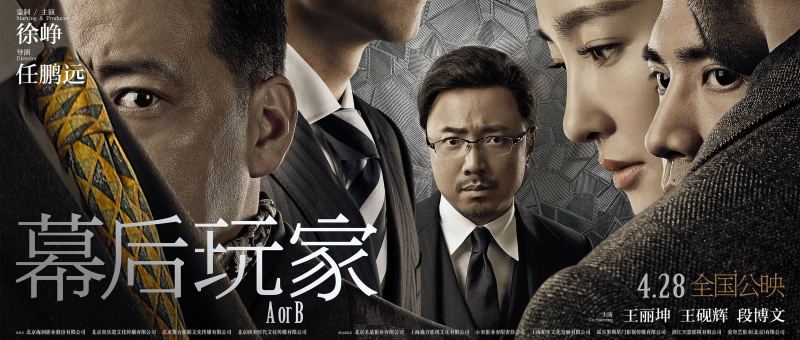
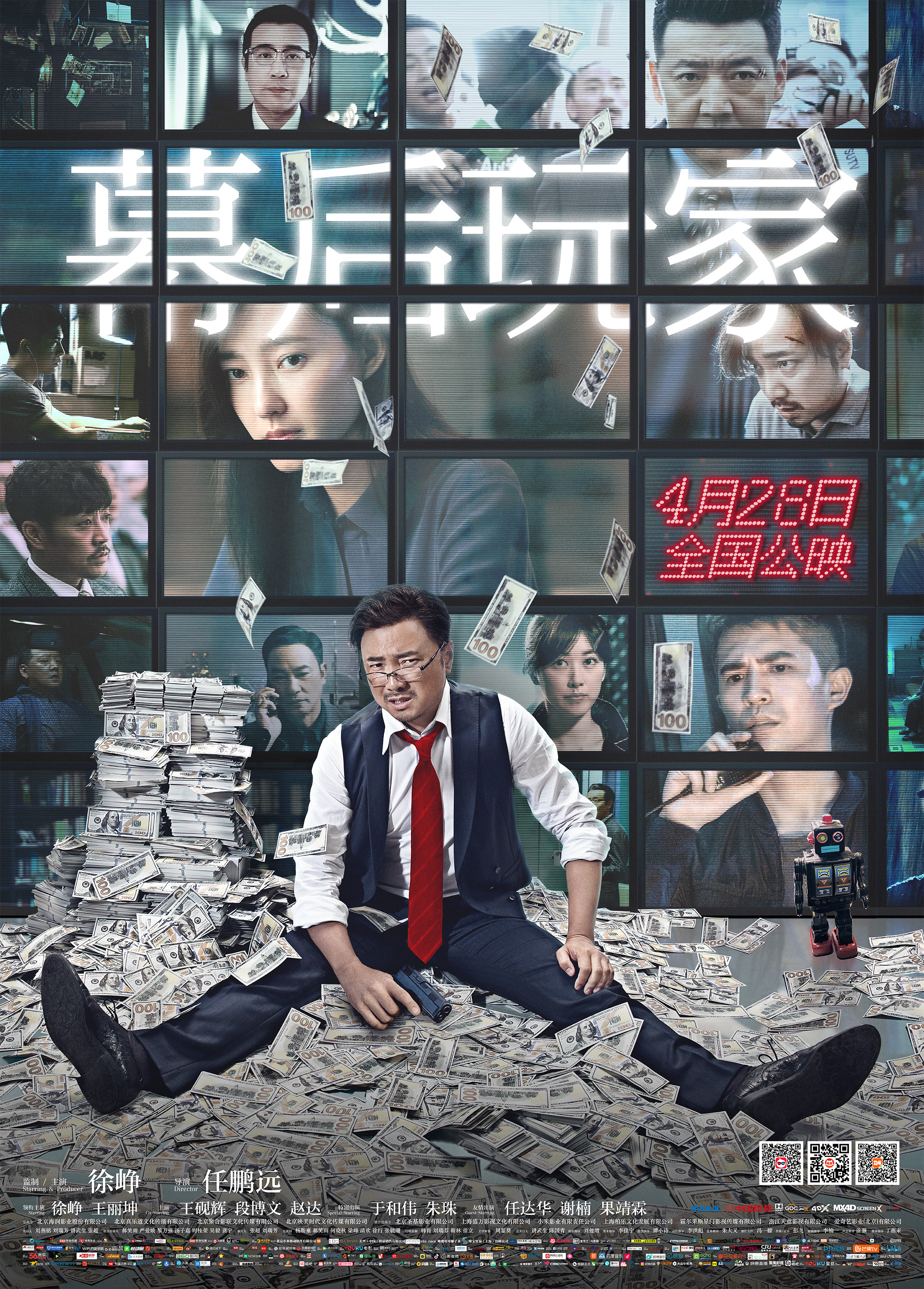
A or B poster 2It’s difficult not to read every film that comes out of the Mainland as a comment on modern China but there does seem to be a persistent need to address the rapid changes engulfing the increasingly prosperous society through the medium of cinema. A or B (幕后玩家, Mùhòu Wánjiā) is the latest in a long line of thrillers to ask if the pursuit of economic success has resulted in the decline of traditional morality. Life is, according to a mysterious voice on the other end of a walkie talkie, a series of choices – A or B, you or me. When someone says they have no choice, what they usually mean is that they have chosen me over you and expect the decision to be understood because if the situation were reversed, you would have done the same.
Corrupt financial billionaire Zhong Xiaonian (Xu Zheng) has been content to justify himself with this excuse. Having ousted his predecessor through blackmail and manipulation, he rose to be the head of a vast corporate empire while Zeng (Simon Yam), his former boss, committed suicide, a ruined and humiliated figure reduced to abject despair by Zhong’s campaign of malicious finagling. Despite his vast wealth, Zhong’s appetite for success remains unsatisfied while his wife Simeng (Wang Likun), disgusted by his ongoing descent into avaricious amorality, threatens to leave rather than watch him destroy himself.

With a number of schemes in operation, Zhong returns home drunk one evening to find his wife gone, collapsing into a restless drunken stupor. When he wakes up he discovers that he is now trapped inside his mansion – the windows have been boarded up and all the doors locked. Finding a walkie talkie in a box, Zhong is messaged by a mysterious voice who tells him that every morning at 9.30 (just as the financial news begins) he will be given a binary choice. Zhong must choose A or B or his kidnapper will set both in motion.

A or B is a complex kidnap thriller, but it’s also the story of a marriage and a metaphor for the compromises of modernity. Zhong, once an ambitious youngster from a humble background, claims he set himself on the road to ruin in pursuit of a “good life” on behalf of his wife. His wife, however, has a wildly different view of a “good life” to that of her husband. Simeng sacrificed her journalistic ambitious of becoming a war photographer to shift into technology in order to better understand Zhong only to be forced to give that up too when her discoveries of his duplicities began to alarm her. What Simeng wanted was less the huge mansion and expensive jewellery than a stable life of ordinary comfort with a loving and attentive husband who strived to understand her in the way she tried to understand him – something Zhong has completely failed to realise in his male drive to get ahead. Simeng threatens to leave, not because Zhong’s increasing moral depravity has killed her love for him, but that through leaving (and taking a number of his shares with her) she may be able to wake him up and put a stop to his headlong descent into amoral criminality.

Zhong has indeed fallen quite far as his first few A or B choices make clear. It doesn’t take him long to decide to throw a lifelong friend under the bus rather than further damage his business enterprise, only latterly making a frantic appeal to his captor to find out what happened to him. Confronted by the very real and often tragic consequences of his “choices” Zhong is forced into a reconsideration of the last decade of his life. Rather than ruminate, his first instinct is for action and so he sets about trying to escape his makeshift cage little knowing that his captor may have factored his ingenuity in to their original plan. He cannot however escape his final responsibility for becoming the man he is and faces the ultimate binary choice – to continue as he is and slide further down the road to ruin, or turn himself in to the police admitting his wrongdoing and pledging to start again on a more comfortable moral footing.

The identity of the kidnapper and their motives may be fairly easy to guess, but director Ren Pengyuan keeps the tension high as Zhong – played by comedy star Xu Zheng flexing his dramatic muscles, battles himself while trying to bridge the gap between the man he’d like to be and the one he has become. Fiercely critical of the empty materialism that has begun to define modern success, A or B insists that there is a choice to be made when it comes to deciding what gets sacrificed in the quest for prosperity. Zhong at least seems to have rediscovered what is important, reaffirming his commitment to an honest, if simpler, life warmed by the humble pleasure of wanton soup delivered by loving hands.


A or B opens in selected UK cinemas on 4th May courtesy of Cine Asia – check out the official website to find out where it’s playing near you.

Original trailer (English subtitles)

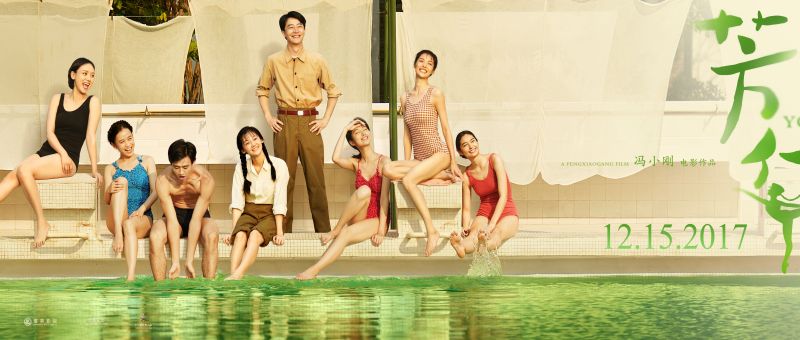
Youth (芳华, Feng Xiaogang, 2017)

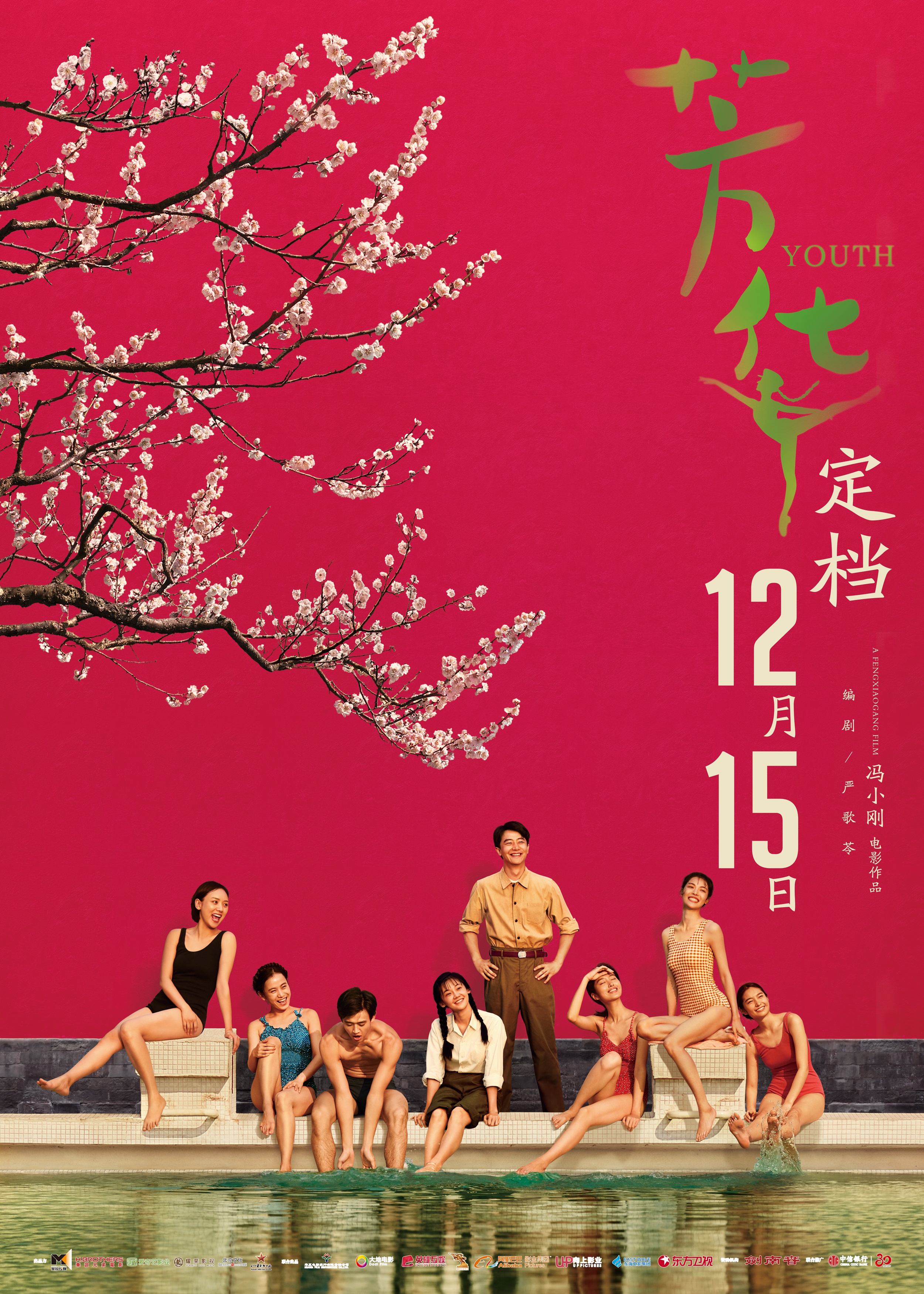
youth posterOn the surface of things, one might be forgiven for thinking that Feng Xiaogang, “China’s Spielberg” – the director of such fluffy hits as If You Are the One and the prestige picture The Banquet, might not be the one to look to for nuanced takes on the state of his nation but, as he proved with the irony filled I am Not Madame Bovary, there has always been a persistent resistance in his superficially crowd-pleasing filmography. The exact nature and extent of that resistance is however harder to assess. Youth (芳华, Fāng huá), Feng’s latest historically probing epic, made headlines when its mainland release was blocked at short notice immediately before its international premiere at the Toronto International Film Festival and in some respects it’s easy to see why it may have raised an eyebrow or two at the censor’s board. A literal story of “youth” and the various ways that the concept becomes romanticised even when one’s own coming of age took place in otherwise difficult times, Feng’s film is also the story of modern China, baptised in the fire of the Cultural Revolution only to finally succumb to the consumerist one 15 years later.

Narrated by bystander Suizi (Zhong Chuxi), later a successful author apparently looking back on her own “youth” with a writerly eye, the tale begins in the early 1970s with two pillars of the arts division of the People’s Liberation Army. Suizi informs us the the protagonists of this story are Lui Feng (Huang Xuan) – a model soldier, and Xiaoping (Miao Miao) – a poor girl mercilessly tormented by everyone throughout her entire life. Xiaoping’s birth father has long been languishing in a re-education camp but as she’s taken her step-father’s name, Liu Feng assures her that he’s kept her bad class background off her record and will make sure no one else knows about it.

Performing propaganda ballets, the arts division is at its zenith at the height of the Cultural Revolution. The troop as a whole enjoys extreme privilege – they are well fed and cared for, evade the dangerous front line work many other members of the armed forces are subject to, and receive the respect due to them as the embodiment of a revolutionary ideal. They are, however, still guilty of the various hypocrisies coded into the system. Though many of the dancers have family members with “bad class backgrounds”, undergoing re-education or otherwise better not mentioned, the top guys and girls are the ones with parents high up in the party who use their untouchable status to paper over cracks in their own development with inherited superiority.

Lui Feng is perhaps an aberration. Nicknamed “Lei Feng” – a mythical figure created for propaganda purposes to embody the “ideal” revolutionary soldier in his selfless dedication to his comrades and communist virtues, Lui Feng is indeed a model party member whose goodness and kindness know no bounds. Unlike Lei Feng, however, he is a real man of flesh and blood not some far off and untouchable god. Having sanctified him in this way, the collective has effectively raised Lui Feng up to an unfair and unattainable ideal and is then “betrayed” on realising that Lui Feng is a man with a man’s hopes and desires. Lui Feng’s transgression is inappropriate to be sure but also somehow innocent in its naivety and his counter betrayal by the system to which he has dedicated his life all the more difficult to bear because of the unfair deification his better qualities have earned him.

Xiaoping meanwhile, who expected only betrayal, betrays the system through passive resistance in resentment of the way it has treated her friend. “Abandoned” by the collective which is the arts troop, Xiaoping exiles herself from a society she thinks has little need of her yet she then continues to serve it fully as a frontline nurse. The “youthful” idealism of Lui Feng and Xiaoping is tested as they find themselves caught up in a far off war while their former comrades dance around with wooden swords on a painted stage. Wounded in body and mind, the pair continue onwards even as their nation conspires to leave them behind.

Shifting into the ‘90s and then the 21st century, Feng’s messages become muddier and harder to grasp. In one sense what is celebrated is “youth” itself which, in this case, happened to take place against the backdrop of terrible events (albeit it ones from which many of the protagonists save Lui Feng and Xiaoping were largely shielded) enabling the growth of a generational family destroyed by a change in the political wind. It is however hard not to infer that everything was better during the turbulent ‘70s in which the delusion of innocence, if not its actual existence, was easier to bear than the soulless march into the future of Coca-Cola signs, Transformers toys and fathers who never come home because they’re too busy making money. Feng’s heroes are the ones who exiled themselves from the reality of China as a modern economic superpower, holding fast to their innate senses of honour and justice, yet in this Feng does to them exactly what he criticises his society for doing – he makes them martyrs, mythologises them as embodiments of revolutionary ideals, a pair of real life Lei Fengs all over again. In telling a story of how the revolution betrays and is betrayed, Feng makes the heroes emerge damaged but unbroken, chaste children trapped by the “innocence” of the pre-capitalist age, but whether their survival is victory or defeat remains unclear. 


Youth is currently screening at selected cinemas across the UK courtesy of CineAsia.

UK release trailer (English subtitles)

The Good News or the Bad News? Stoker, the Grandmasters and Show Box Media

I’m an efficient sort of person generally (not that you could tell from this blog), so I like to start with good news – after all good news doesn’t usually require any further action than being pleased, does it?

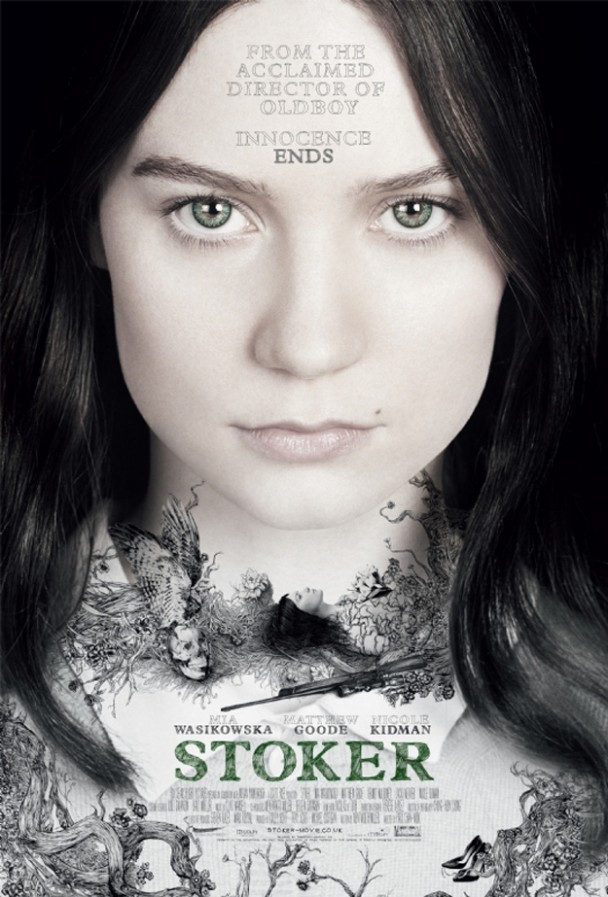
With that in mind, it seems there’s a new UK specific poster for Park Chan-wook’s upcoming English language movie Stoker

Stoker UK poster


We’ve still got the pencil work from the earlier poster, which I loved, plus a strangely creepy headshot of Wasikowka. What is that reflected in her eyes? someone standing in front of window/doorway/unexplained bright lights? I’m really looking forward to seeing this film – I’d be looking forward to the new Park Chan-wook anyway but this seems very promising to me especially as it’s inspired by one of my favourite Hitchcock movies – Shadow of a Doubt.

If you’ve never seen Shadow of a Doubt I’d really recommend you check it out; it seems to fall into the lesser known Hitchcocks for some reason – well the middle group, it’s much better known than something like MR& Mrs Smith but it’s not quite up there with Vertigo and Psycho when people think of his films. Joseph Cotten is really fantastic in it and it’s kind of an early look and the evils lurking in suburbia. Here’s a trailer for those still unconvinced


Now, I warned you, there are some clouds on the horizon. I leave the bad news until last so that I can figure out what to do about it right away but all I can do now is feel sad, it’s a zero sum game this time round. As I speculated here Wong Kar-wai’s The Grandmasters is indeed delayed once more and will now move its opening date to 8th January from 18th December. Oh well, it wouldn’t be a Wong Kar-wai movie without several thousand delays – we all just have to prove how worthy we are by being willing to wait, yes?

and your final bit of bad news? It appears Showbox media, who own CineAsia – primary distributor for Asian action cinema in the UK, have gone into administration. The warning signs were there, they seemed to have stopped communicating and updating their websites and had yet to announce any future release plans for the next few months/next year; they’d also apparently dispensed with Bey Logan whose commentaries on CineAsia’s releases had been a big selling point for UK fans. This has happened before and a solution was found, so maybe it’s not quite over yet but it certainly doesn’t look good. From the above report it seems their strategy of throwing everything they had at the supermarket buyers, licensing films which were likely to appeal to that market at those prices, was not as sustainable as some people had believed. Here’s a trailer for one of my favourite CineAsia releases – Detective Dee and the Mystery of the Phantom Flame. Whatever happens let’s just hope films such as this can still find their way over to the UK market!