The Tales of Kurashiki (蔵のある街, Emiko Hiramatsu, 2025)

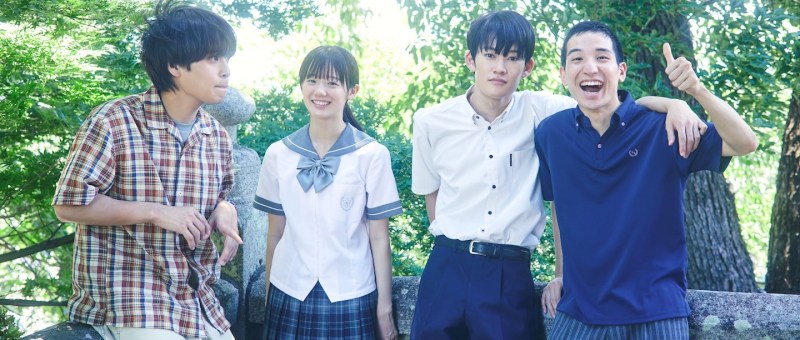
Beniko’s high school art project involves recreating a picture her mother left behind that immortalised a memory of a happy family moment during the rare sight of fireworks. But Beniko can’t seem to make progress with her artwork and she’s thinking of giving up art altogether along with her ambition of attending an art school because for her painting is intrinsically linked with her familial trauma and fears for the future. It is also, however, the force that keeps her family together though not perhaps in the way she intended.

The attempt to recreate her mother’s drawing is that to reclaim her family as it was though as she later realises attempting to recreate the past exactly is a futile effort. Resentful towards her mother for leaving and perhaps also towards her father for his emotional abandonment and the absurd jealousy that left her mother with no choice but to leave, she reinvents herself as a caretaker as a way of rooting herself in the domestic space by taking care of her autistic older brother Kyosuke, affectionately known around the neighbourhood as Kyon-kun. Looking after Kyon-kun is one reason she gives for not going to art school, but as her friend points out much to Beniko’s shame, perhaps that’s not really fair to him either if she’s exploiting his need as an excuse for her cowardice while denying him the right to his own life too. He is after all a little more capable than she might give him credit for, travelling to the correct station on his own and waiting for her patiently at the other end when she misses her regular train. 

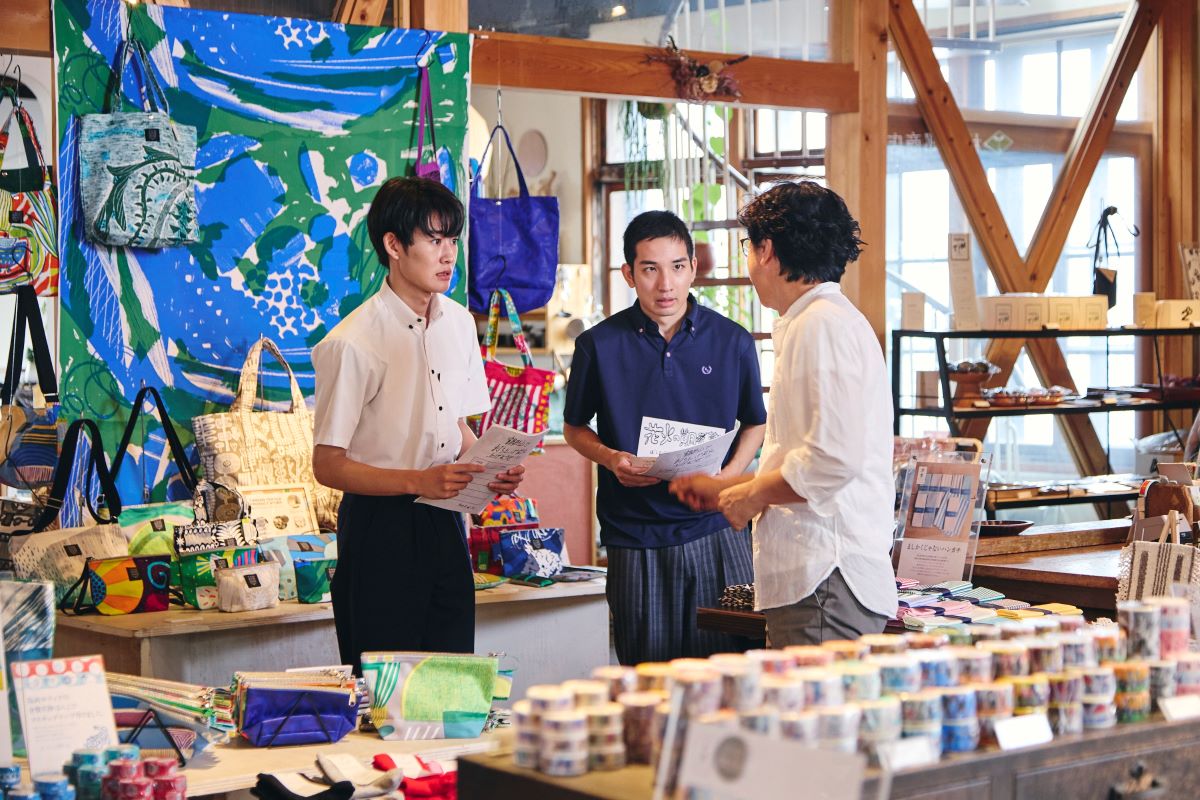
Beniko’s childhood friend Aoi later realises that he did something similar. When Kyon-kun wandered off while Beniko was distracted and climbed a tree at the shrine to watch imaginary fireworks, Aoi and his friend Kiichi, who is the son of the shrine owner, promised to set off some real fireworks for him without really thinking it through or having much intention to actually do it. But as Beniko points out, Kyon-kun never forgets a promise so now he’s asking every day when the fireworks are and is continually disappointed. Chastened by Beniko, Aoi’s half-hearted attempt to keep his promise backfires and he realises that he too thought that it didn’t really matter because it was Kyon-kun and he wouldn’t know the difference. 

Aoi’s desire to make good on his word is partly a sense of guilt and shame in his realisation of the way he’d thought of Kyon-kun, partly due to his feelings for Beniko, and partly adolescent insecurity in the acceptance that his unnecessarily harsh father has a point when he says he never follows anything through. Kiichi too is experiencing similar anxieties as his father threatens to leave the shrine to his more studious younger brother and is exasperated by his goodhearted goofiness. The trio are all really looking for new paths towards adulthood by trying to make peace with their younger selves and gain the confidence to follow their dreams even if it takes them away from the picturesque settings of provincial Kurashiki.

Beniko’s mother was fond of saying that there was a deity of waiting in the town, and there is a white-clad figure perhaps visible only to Kyon-kun who follows the youngsters around and looks on cheerfully as if embodying the sense of fun and warmth that lingers in the city. Kurashiki does indeed look like a nice place to live with its continual sunniness and traditional architecture though as someone points out that’s largely because the bombers flew past here and hit somewhere else instead. Fireworks are as apparent disruptor but eventual healer Kojo says a way of bringing people together, a source of joy happiness even amid difficult times just as they were during the pandemic. There’s something quite wholesome and comforting about the way the whole community comes together to make Kyon-kun’s dream come true, overcoming the obvious objections of the powers that be that it’s not a good idea to have a fireworks festival in a town that’s almost entirely constructed in wood to create a small marvel of human kindness and solidarity. It’s this that finally allows Beniko to remake her family, giving it her own light and colour while keeping a place for her mother having come to an acceptance of why she couldn’t stay and a conviction that she will one day return when she too has begun to heal her heart.


The Tales of Kurashiki screened as part of this year’s Osaka Asian Film Festival.

Trailer (no subtitles)

Woman in Witness Protection (マルタイの女, Juzo Itami, 1997)

woman in witness protection posterJuzo Itami’s fearless taste for sending up the contradictions and hypocrisies of his home nation knew no bounds, eventually bringing him into conflict with the very forces he assumed so secure it was safe to mock – his 1992 film Minbo led to brutal attack by a gang of yakuza unhappy with how his film portrayed the world of organised crime. Woman in Witness Protection (マルタイの女, Marutai no Onna), continuing the “Woman” theme from previous hits A Taxing Woman and the more recent Supermarket Woman, would be Itami’s final feature as he died in mysterious circumstances not long after its completion and like Minbo it touched an open nerve. In 1997, crazy cult violence was perhaps no laughing matter nor as ridiculous as it might have seemed a few years earlier, yet Itami makes the actions of brainwashed conspirators the primary motivator of a self-centred actress’ gradual progress towards accepting the very thing his previous films might have satirised – her civic duty as a Japanese woman.

Itami breaks the film into a series of vignettes bookended by title cards beginning with the first which introduces us to our leading lady – Biwako Isono (Nobuko Miyamoto). Biwako is currently in rehearsals for an avant-garde play about giving birth (“a woman’s moment of glory”) during which she reduces her assistant to tears prompting her resignation, decrying Biwako’s self-centred bitchiness as she goes. Chastened, Biwako spends the evening doing vocal exercises outside her apartment which is how she comes to witness the botched murder of a lawyer by a crazed cultist (Kazuya Takahashi) during which she is almost murdered herself and only survives because the killer’s gun jams. As the only witness Biwako suddenly becomes important to the police which works well with her general need for attention but less so with her loathing for hassle. Seeing as Biwako is a famous actress, her involvement also precipitates increased press interest for the murder and accidentally threatens the ongoing police investigation not least because Biwako likes to play up for the camera and isn’t quite sure how best to deal with her divided responsibilities. With the killer still at large, the police decide to give Biwako protection in the form of two detectives – Chikamatsu (Yuji Murata), a cultured man who’s a big fan of Biwako’s stage career, and Tachibana (Masahiko Nishimura), a rather stiff gentleman who never watches films and rarely indulges in entertainment.

Bringing up cult violence in 1997 just two years after Japan’s only real terrorist incident perpetrated by a crazed cult, might be thought taboo but taboo was not something that Itami had ever run away from. Crazed cults had also popped up during A Taxing Woman’s Return though back then they mostly represented the hypocrisy of the new yakuza as a front for organised crime that thought nothing of bleeding vulnerable people dry while feeding them a lot of semi-religious claptrap to make them feel a part of something bigger while the bubble economy continued its puffed up attempts to make them feel inadequate. This time around our cultists are less well drawn but clearly a collection of unlucky people duped into believing the strange philosophies of the “Sheep of Truth” which teach that the world can only be saved by its followers dividing the world into white sheep and black sheep. Like the policeman and later Biwako, the killer believes he is only doing “that which must be done” in the best interests of the world. He is unaware of the cult’s shadiness and shocked when their lawyer threatens his family in an effort to convince him not to talk once the police have managed to break his programming, ironically through exactly the same methods – manipulating his feelings towards his wife and son.

The cult is however merely background to Biwako’s ongoing character drama. Despite experiencing emotional trauma from witnessing a murder and then being threatened herself, Biwako enjoys being the centre of the attention with the police as well as the warm glow she feels in being able to help them with their enquiries, but balks at the additional hassle of having to be involved in the trial (even if she would be given quite a sizeable platform as a witness in a high profile court case). She resents having the two policemen follow her around – especially as she has quite a busy schedule which includes an affair with her married manager. Nevertheless she gradually allows them into her life with Tachibana even making his stage debut as spear carrier in a production of Anthony and Cleopatra. Tachibana’s steadfast defence of her person even at the risk of his own life begins to teach Biwako a few things about civic responsibility and the importance of duty, even if her final moment of realisation is another of her staged set pieces in which she conjures a poignant monologue from the accidentally profound mutterings of Tachibana, a little of Cleopatra, and the earlier line from the maternity play repurposed as she affirms that testifying against the cultists will be her “moment of glory”.

Rather than end on Biwako’s sudden moment of enlightenment, Itami cuts to an ironic epilogue in which a police detective watching the movie we have just seen complains about its authenticity while emphasising that no one in protective custody has ever been attacked. A little tongue in cheek humour from Itami that is followed by the more usual disclaimer before the credits resume, but perhaps anticipating another dose of controversy from both law enforcement and cult devotees. Lighter in tone and noticeably less surreal than some of Itami’s earlier work, Woman in Witness Protection is the story of a vacuous actress learning the purpose of her stage as her particular brand of artifice meets that of the less innocently self-centred cultists head on and eventually becomes the best weapon against it.


Original trailer (no subtitles)