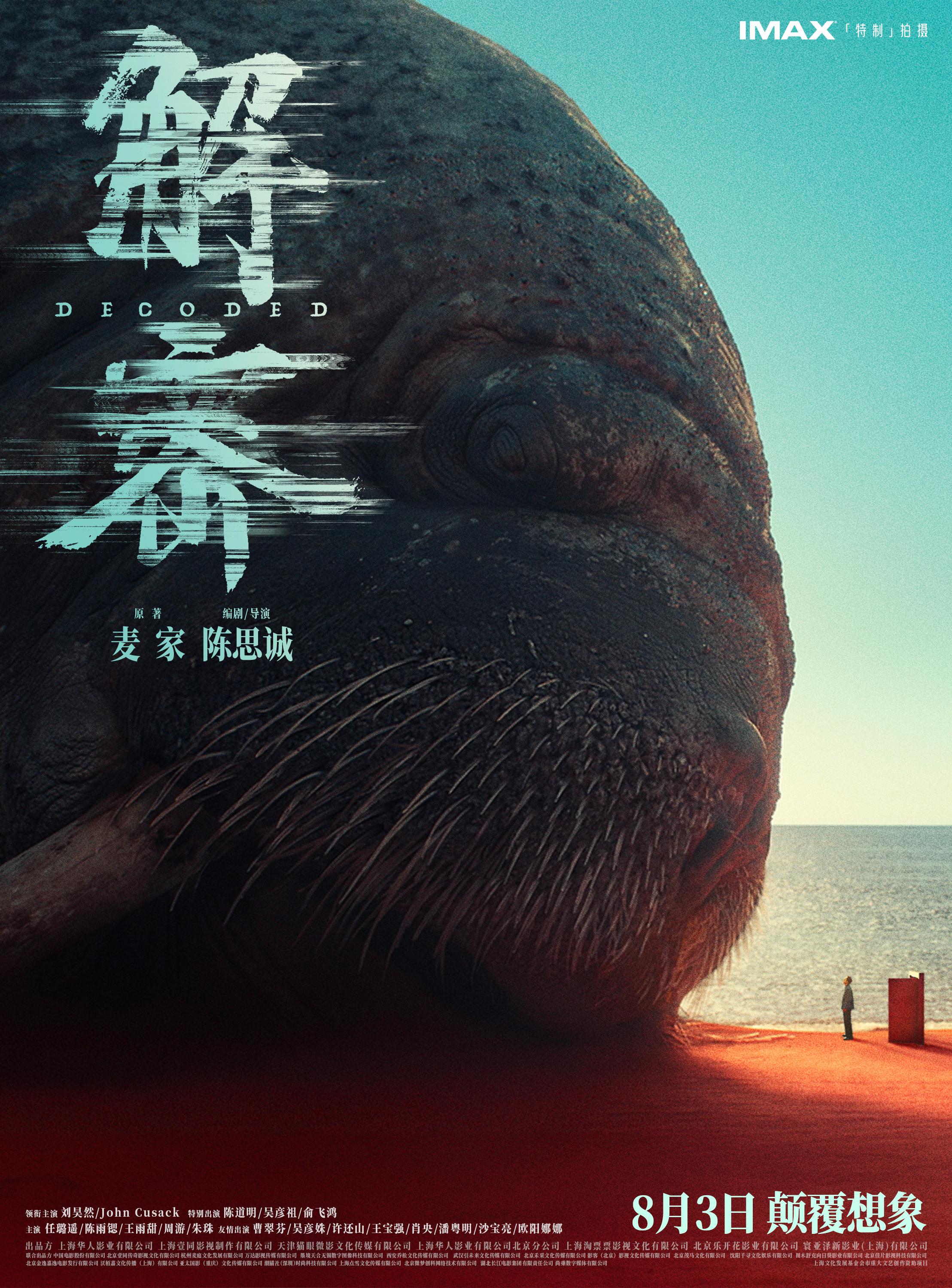
International geopolitics is reduced to a battle wits between two men, each in their way lonely exiles and perpetual outsiders in Chen Sicheng’s adaptation of the novel by Mai Jia, Decoded (解密, jiěmì). Originally an actor (and here making a meta self-cameo), Chen is best known as a director for the smash hit Detective Chinatown franchise which boasts both well-plotted mysteries and zany, lowbrow comedy. Decoded is a slightly different kettle of fish, displaying its own kind of whimsicality but also darker and stranger in its concentric enigmas.
The narrative’s timeline seems to be slightly hazy, but loosely follows an prodigious orphan born to a prominent family though his father, the black sheep, had already died before his mother too died in childbirth. A rather complicated set of circumstances led to Rong Jinzhen (Liu Haoran) being raised by an Austrian dream interpreter who for unexplained reasons kept him locked up in a small hut isolated from the world while teaching him all about dreams with the consequence that by the time the old man dies, 12-year-old Jinzhen is a strange boy with few social skills but a once-in-a-generation grasp of mathematics.
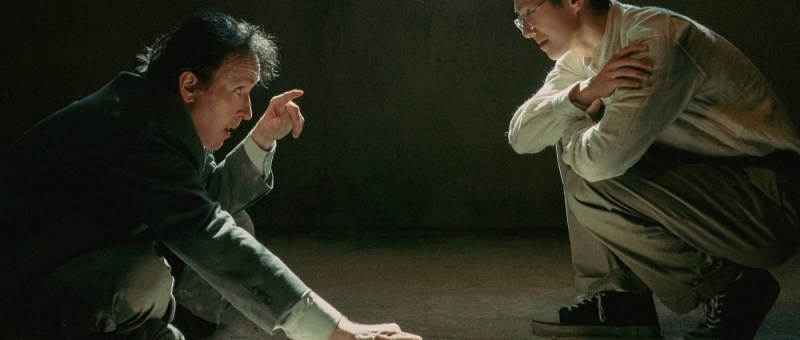
It’s this genius that sees him saved by distant relative Xiaolili (Daniel Wu) who was originally going to send him to an orphanage but decides adopt him instead. Jinzhen then gains early entry to university where he’s tutored by Liseiwicz, an exiled Polish professor who fled his homeland to escape persecution by the Nazis as a Jew. The film seemingly doesn’t mean to, but undermines this backstory through the casting of John Cusack who plays the part as all American and is not convincing as Polish man who ended up in China because he had nowhere else to go and is unable to return to his homeland thereby lessening the intended impact of his speeches about nationhood and patriotism which counter those Jinzheng has already been given by Xiaolili in addition to making him seem suspicious possibly long before she should.
Nevertheless, this may also add to his sense of untrustworthiness and perhaps duplicitous treatment of Jinzheng which edges towards the exploitative in hoping to make use of his genius for his research into the evolution of computing. In the early days of the Chinese civil war, Liseiwicz is approached by agents from the PLA who want him to decode a telegram that may save thousands of lives. Liseiwicz claims he doesn’t want to get into politics though superficially supportive of the Communist cause only to later be exposed as a collaborator with the KMT on his return to the US where he designs encryption codes to be used between Chiang Kai-shek’s nationalists in Taiwan and the US troops backing him in the hope he’ll retake China and end Communism in Asia.
Of course, Jinzheng gets picked up by the CCP to work in their secret spy division in which he becomes a virtual prisoner forbidden from leaving the compound while expected to spend all of his time breaking codes such as those designed by Liseiwicz. In truth, it becomes a kind of game between the two but one that the guileless Jinzheng little understands. It takes it him an unreasonably long time to understand that Liseiwicz is just messing with his mind, sending him misinformation as a distraction intended to drive him mad culminating in dispatching a copy of the The Beatles’ I Am the Walrus in order both to disrupt his political consciousness with decadent Western pop music and drive him out of his mind as he struggles to understand how this nonsense verse about egg men and marine animals is supposed to relate to the code.
Then again, there is something a little subversive in the celebration of Jinzheng’s ability to think about the box, instantly understanding that the correct answer to the entrance test is not to waste his time taking it because it’s obvious they’ve already cracked the code concerned. The use of dream interpretation taught to him by his adoptive Austrian father maybe simply be an ability to work things out on a deeper level of consciousness, but it’s also left him with a fragile mental state already unable to discern dream from reality. The strain of constant codebreaking further pushes him towards madness while he perhaps loses sight of his original mission, only later coming to realise that Xiaolili’s vision of nationhood was the correct one after all.
Though Chen appears to have been influenced by Christopher Nolan in his use of oneiric imagery, he crafts a number of beautifully designed, whimsical dream sequences some which later become hellish or strange but reflect an innate innocence in Jinzheng while disclosing to him something of the real world which he had not understood. It’s ironic in a sense that he’s forever trying to decode the world around him, such as in taking instructions from his adopted sister/cousin Biyu (Chen Yusi) on how to know if girls are interested which he nevertheless slightly misunderstands. The film goes to some surprisingly dark places such as in a brief sequence which Biyu and her mother seemingly if potentially anachronistically fall victim to the Cultural Revolution while Jinzheng is the victim of several assassination attempts by KMT agents well into the ‘60s. Even so his story emerges as tragedy more than triumph, a fine mind broken by the society around him and used as an unwitting tool in the nation’s path to perfecting an atomic bomb having seemingly decoded everything but his place within the world.
International trailer (English subtitles)

 Windows on Worlds