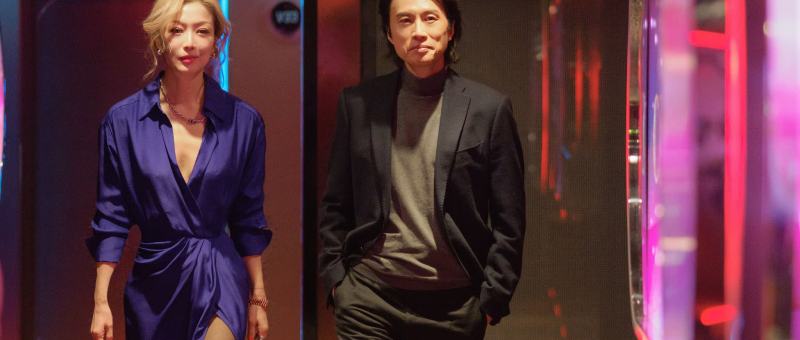
The Grand Grandmaster (乜代宗師, Dayo Wong, 2020)

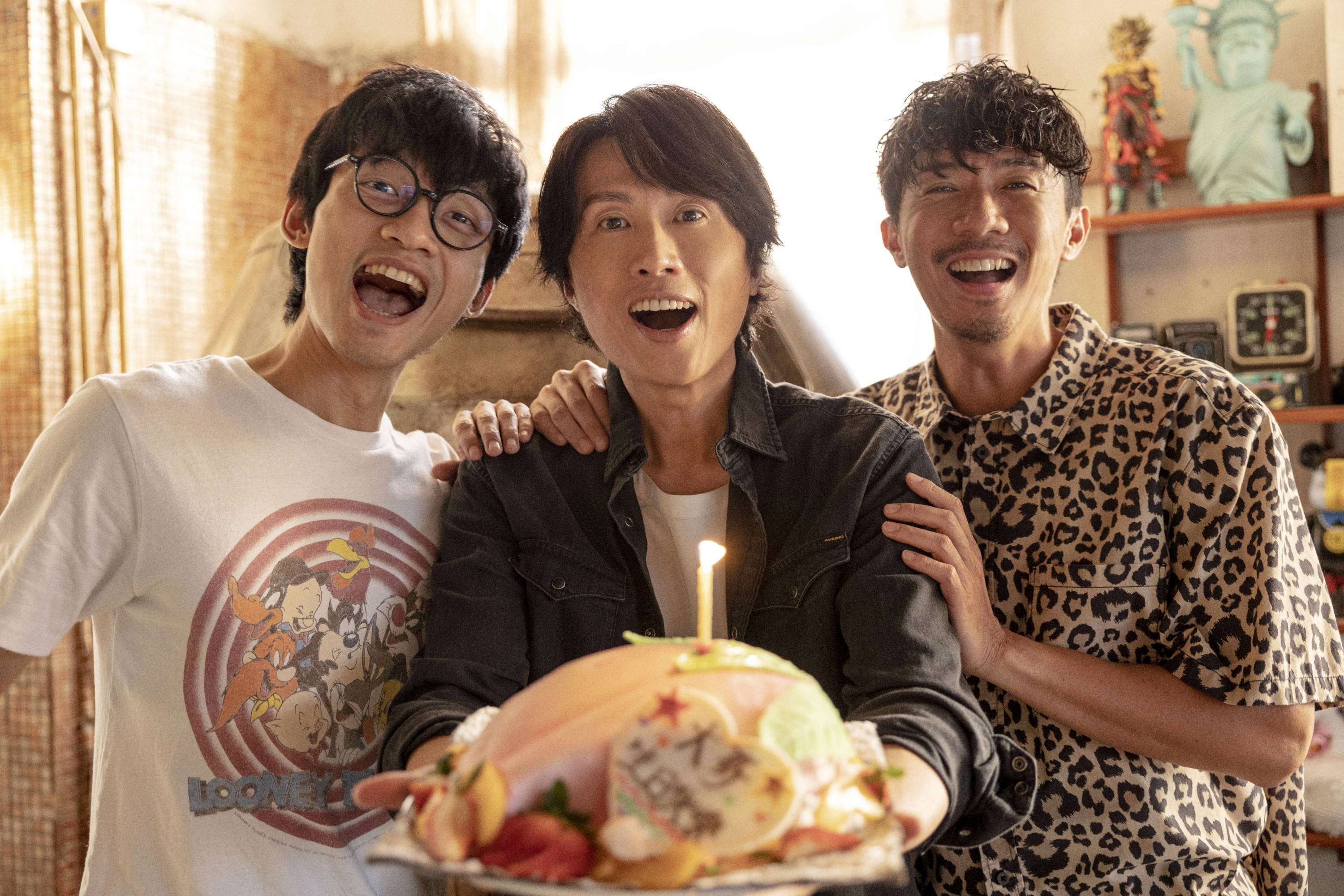
Are you actually “the grandmaster” or just a bit “grand”, the hero of The Grand Grandmaster (乜代宗師) is eventually forced to ask himself after being confronted with the various levels of his self-delusion. Legend has it that comedian Dayo Wong sold an apartment to finance his second directorial feature in order to produce a purely local film without having to submit himself to the strictures of the Mainland censors’ board or accept funding from the greater PRC, a move which endeared him to the young protestors then still out in the streets campaigning for democracy. The Grand Grandmaster was one of the few New Year films to make into cinemas before they shut down because of the pandemic but aside from Wong’s grand gesture is perhaps light on political content, save for a mild satire on the commercialisation of kung fu. 

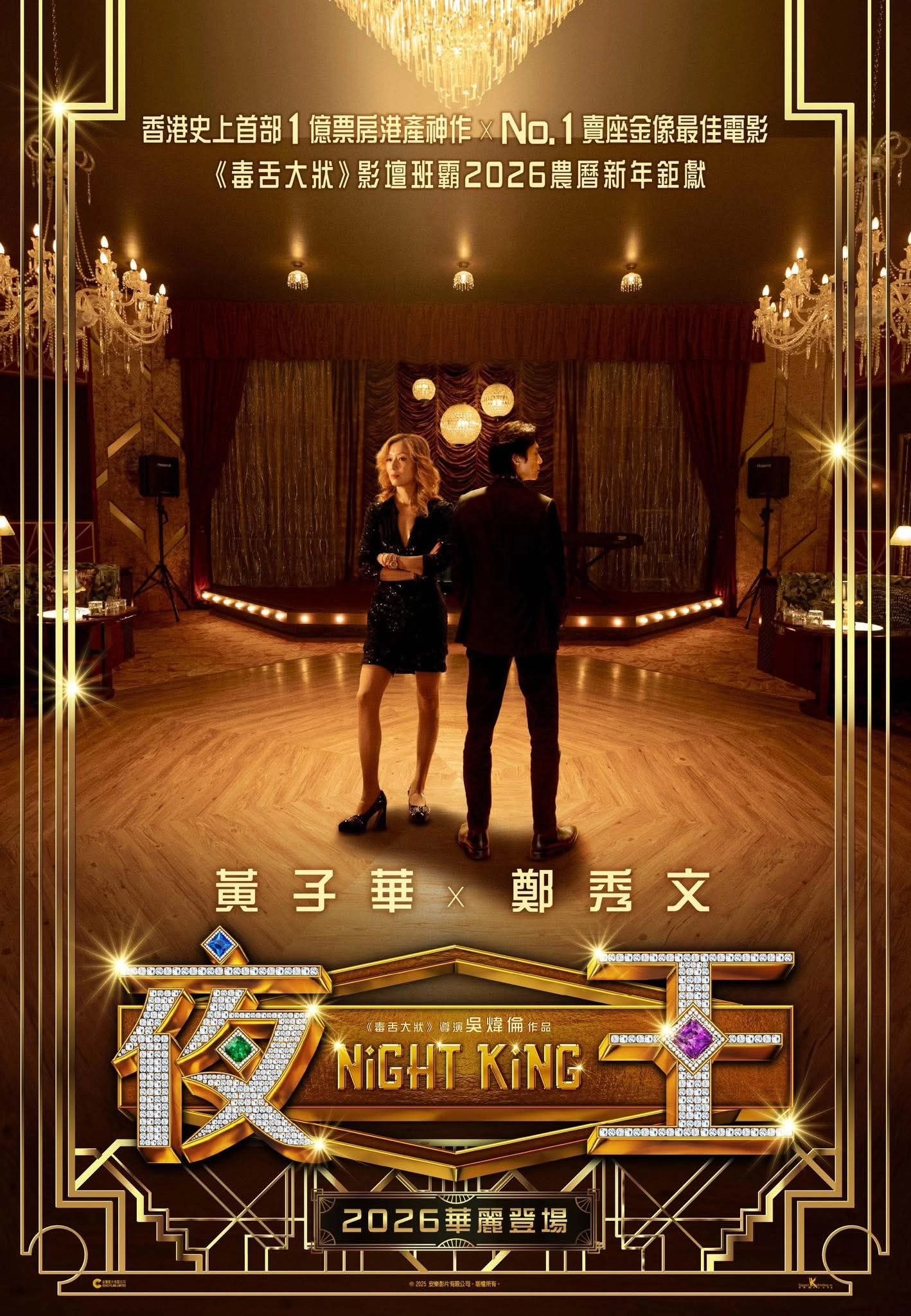
The Grand Grandmaster, Ma Fe-lung (Dayo Wong Chi-Wah), is the latest guardian of the Ma Ka Thunder Style martial art apparently carried by one of his ancestors to Hong Kong from the Mainland during the Song dynasty. Ma Ka Thunder has since become something of a brand with its own dedicated merchandising line and video ads playing on giant billboards featuring Fei-lung himself as the face of the organisation. His hopes for US expansion along with his general business plan are disrupted when he gets into a public altercation with an old man who tries to steal his taxi and then makes a scene claiming that Fei-lung hit him leading Chan Tsang (Annie Liu Xin-You), the “boxing goddess”, to emerge from the shadows and give Fei-lung a public beating. Filmed by everyone in the surrounding area, the event becomes a viral phenomenon that leaves Fei-lung humiliated but while his minions urge him towards a public rematch to regain his reputation, Fei-lung is consumed with despair on realising there is no way he could ever hope to defeat the feisty young woman. 

Wong has fun satirising the lore of kung fu as Fei-lung outlines the strange tenets of the Ma Ka Thunder Style which turns out to make more sense that it first seems only generations of practitioners have it seems forgotten something quite fundamental. Fei-lung and his associates have to ask themselves if the art of Ma Ka is really just “fake fighting”, something suggested to Fei-lung by his loyal assistant who makes a point of overdoing his defeat and admits he only stays with the school because living outside is hard and here he gets room and board. Urged to show his full strength, he effortlessly defeats his master but only by abandoning Thunder Style for a selection of moves from other martial arts. 

The remainder of the film sees Fei-lung trying to “dodge” Tsang, firstly by trying to bribe her to throw the fight for him and then by convincing her to get more “comfortable” with the idea of losing. Events take a rather strange turn when Tsang’s dad gets involved and starts training Fei-lung for real in an effort to get back at his daughter for quitting boxing after a single defeat apparently humiliating him in another nod to the film’s strangely sexist worldview. Tsang bizarrely falls for Fei-lung after witnessing the depths of his self-delusion in his complex relationship with his ex-wife, building to a crisis which accidentally makes a case for domestic violence in insisting that Tsang will only believe that Fei-lung really loves her if he defeats her in the ring. 

Nevertheless, the conclusion is an oddly egalitarian one in which there is no win, no lose, no draw. Fei-lung realises the various ways in which he’s been deluding himself and presumably emerges with a little more clarity, awakened to the true meaning of the “virtue like water” motto of Ma Ka Thunder Style which apparently lies in generosity of spirit, giving without expecting in return and like water trickling down. Which is to say, Fei-lung learns to stop dodging life’s blows, to give up on tricks and fakery, and to be a little more authentic, which is perhaps how he wins Tsang’s heart and respect. A committed performance from Liu helps to mitigate some otherwise flat comedy though the saga of the kung fu con man rediscovering his sense of social responsibility through a true appreciation of martial arts never quite hits home, while a strange mid-credits diversion perhaps proves one move too far.


Trailer (Traditional Chinese / English subtitles)
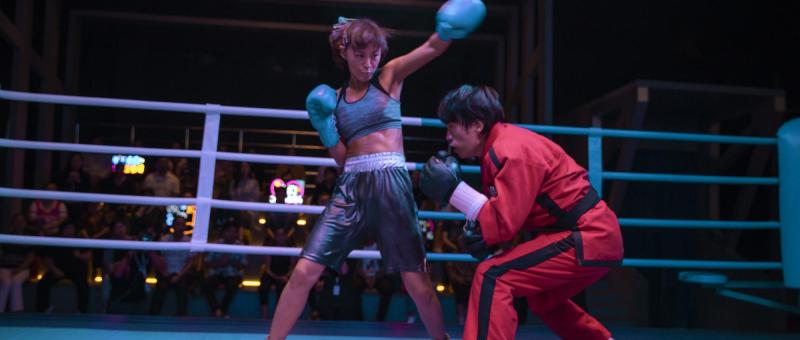
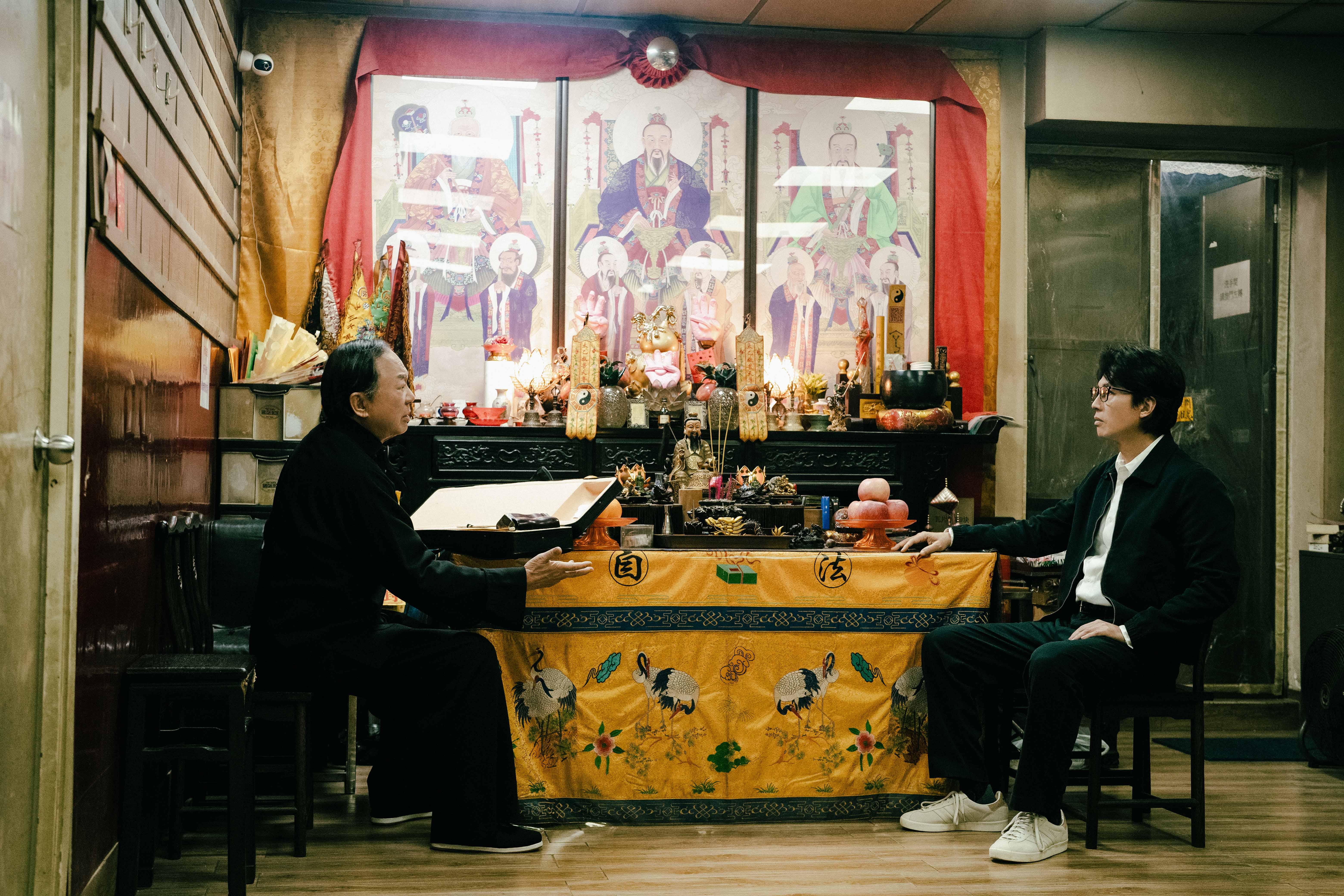
The Last Dance (破·地獄, Anselm Chan, 2024)

When serving the living doesn’t pay, why not make money from the dead? That’s the advice that’s given to former wedding-planner Dominic (Dayo Wong) in Anselm Chan’s touching spiritual drama The Last Dance (破·地獄), but after pivoting towards organising death rituals it’s the living he continues to serve. In many ways, Dominic stands at the borders of life and death, but he’s also an onlooker in a wider debate about tradition and modernity, what we inherit and what we choose to pass on, along with the departing soul of an older Hong Kong as the young flee abroad leaving those who stay behind to carry what may seem to them a burden too heavy to bear alone.

The irony is that though Dominic had been a wedding planner until the economic effects of the coronavirus pandemic killed his business, he is not in fact himself married and according to his long-term girlfriend Jade (Catherine Chau) did not see the point in a marriage certificate. One might infer that if he thought weddings were essentially meaningless exercises in vanity then he might feel the same way about funerals and his initial behaviour after taking over the funeral parlour run by Jade’s ageing Uncle Ming (Paul Chun) might confirm that suspicion. Not only does he start selling tacky trinkets as some kind of funeral favours, but makes a huge faux pas with an ostentatious stunt at his first funeral that causes upset and offence to the family. At the very least, it would have been useful to confirm how the deceased passed away before trawling their instagram account in an attempt to reconstruct their personality.

It’s this kind of insensitivity that irritates intensely grumpy Taoist priest “Hello” Man (Michael Hui) who brands Dominic an “amateur” believing that he’s only obsessed with money and intent on exploiting the grief of bereaved families. But on the other hand, Man is only really interested in the sanctity of ritual and doesn’t get involved with the living nor is he very sensitive to the emotional needs of those in the process of sending off a loved one. His entire life has been in service of the ancestors to the point that it’s soured his relationships with his two children. He has no faith in his son Ben (Chu Pak Hong) to inherit his position as a Taoist priest, while Ben resents being forced to inherit a burden he has no desire to carry. Daughter Yuet (Michelle Wai), perhaps ironically a paramedic, would have happily have carried it, but has endured years of being told that “women are filthy” and is prevented from inheriting these traditions because there is a taboo against women undertaking the role of a Taoist priest. The continual sense of rejection has left her with huge resentment towards her father and resulting low self-esteem that sees her engage in a no strings relationship with a married doctor.

Ultimately the film suggests that these traditions themselves are too large to bear, at least in their entirety, and do nothing more than crush and oppress the young. In part, they embody the spirit of an older Hong Kong which is itself in danger of fading away as seen in Dominic’s innovative new bespoke funeral planning services which to traditionalists might seem like they play fast and loose with ancient ritual, but the resolution that each Dominic and Man come to is that funerals are for those who remain behind and while Man liberates the souls of the dead Dominic does the same for the living in taking a more compassionate approach to dealing with those grieving a loss. Not only does his acceptance of the strange requests of a heartbroken mother (Rosa Maria Velasco) branded a “nutcase” and rejected by the local area bring her a degree of comfort, but his decision to allow what seems to be the same sex partner (Rachel Leung) barred from a funeral service the right to say goodbye albeit in secret demonstrates the necessity of doing right by both the living and dead.

As Man later says, in some ways he’s shown him how to do funerals and awakened him to the ways his oppressiveness in his adherence to tradition has prevented him from being a better father. His decision to wear a western suit for his own funeral might indicate a desire not to take this rigidity into the next world while hoping to liberate his children from the burden of tradition and show them that they were each loved and accepted even if it did not always seem that way. Which is not to say that the tradition should not be saved or that this is itself a funeral for the soul of an older Hong Kong, but only that if you let some of it, such as its inherent sexism, go it will be easier to carry when everyone carries it together. “Living can be hell,” Dominic admits and the funeral is a liberation both for the living and the dead. A touching yet surprisingly lighthearted meditation on life and death, what it comes down to really is that death is coming to us all but there’s no point spending your life worrying about it when you should just try to enjoy the dance until the music stops.


The Last Dance is in UK cinemas from 15th November courtesy of CineAsia.

UK trailer (Traditional Chinese / English subtitles)
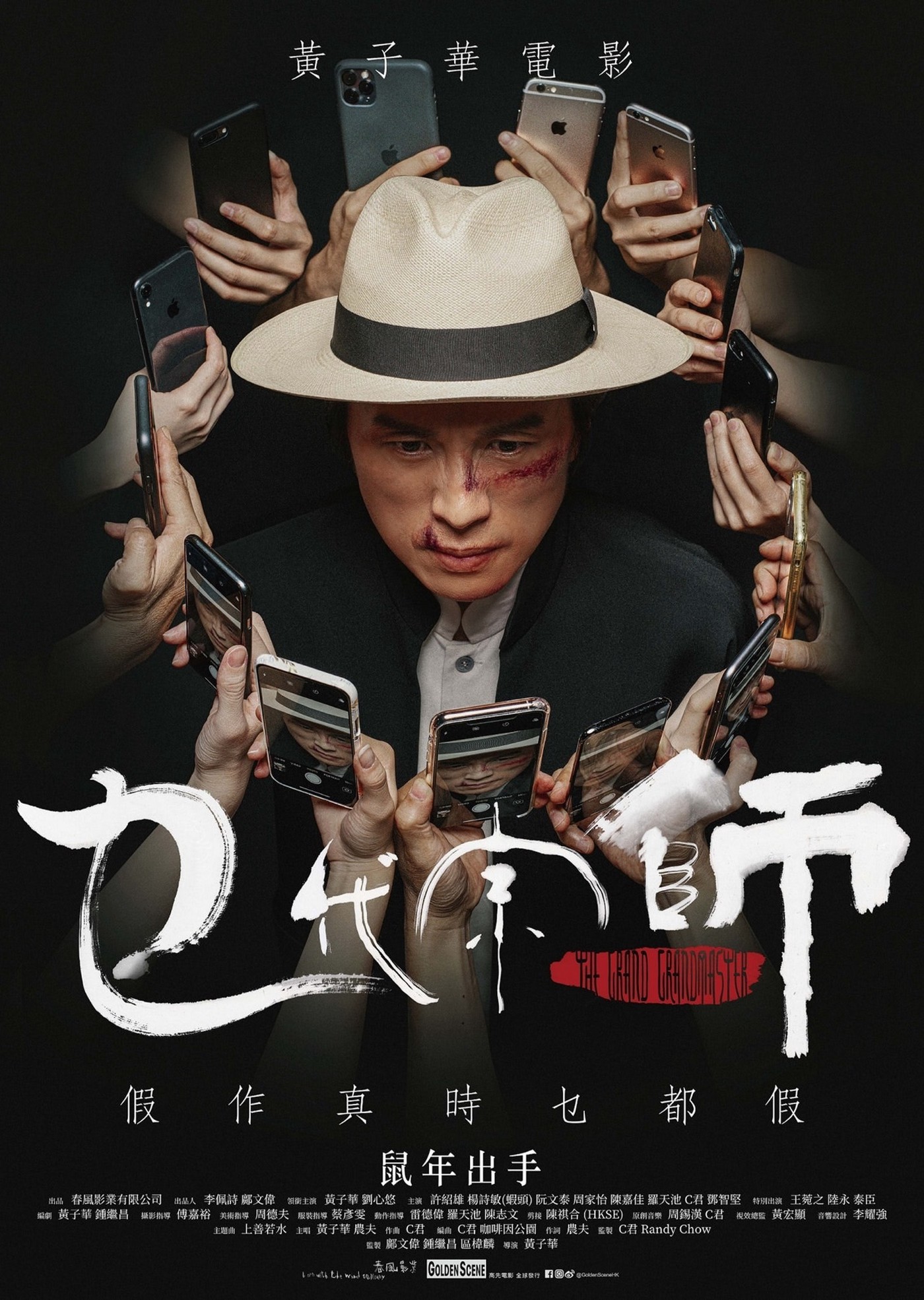
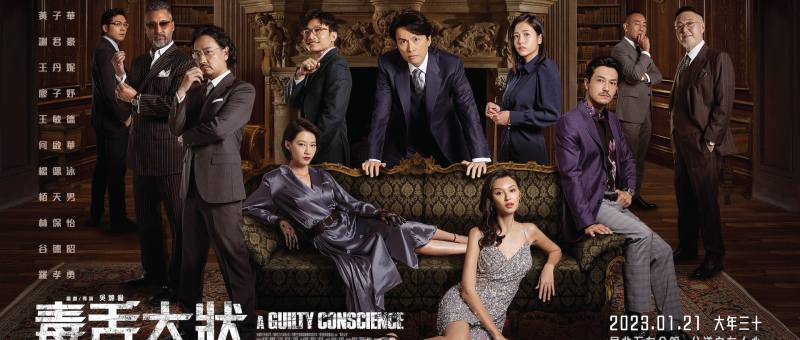
A Guilty Conscience (毒舌大狀, Jack Ng Wai-Lun, 2023)

“Something is wrong” a defence lawyer eventually asserts, witnessing a blatant attempt at perverting the course of justice right in front of her but otherwise unsure what to do about it when her opponents are so sure that they really are above the law. The directorial debut from screenwriter Jack Ng Wai-lun, A Guilty Conscience (毒舌大狀) is the latest in a series of films to put the judicial system on trial in pointing out that we are not in fact all equal before the law and the systems that are intended to protect us can often by subverted. 

Subverting the legal system was in a sense what the hero, fast-talking lawyer Adrian Lam (Dayo Wong Chi-Wah), had been trying to do. After years on the bench, his career as a magistrate is going nowhere and he doesn’t really bother to show up anymore which is why he’s abruptly demoted to a committee dealing with potentially obscene material. Cutting his losses, he decides to join the private sector working for a sleazy firm representing the rich and powerful. His first case is supposed to be a walk in the park, defending a woman, Jolene Tsang (Louise Wong Dan-Ni), accused of murdering her daughter. As usual, Lam assumes the case will be easy to win and doesn’t really bother putting the work in, especially once he finds out the mother was the mistress of a powerful man, Desmond Chung (Adam Pak Tin-Nam), and assumes sorting out the murder charge will help him get in with the elite. Only Lam badly miscalculates and owing to his own hubris sees his heartbroken client sentenced to 17 years in prison for a crime she almost certainly did not commit. 

It’s a huge wake up call for Lam who is suddenly snapped out of his cynicism and burdened by the guilty conscience of the title knowing that it’s his sloppiness that sent a bereaved young mother to serve out the rest of her youth in jail. Opening a small office of his own in a rundown part of town he resolves to serve a better kind of justice, but also determines to do what he can for Jolene in an effort to correct his mistake. He gets a chance when someone involved with the case dies and leaves a note explaining that they lied during the original trial, but as the wealthy Chung family is involved he finds himself frustrated at every turn. No one is brave enough to go against them, while their sleazy legal advisor Tung (Michael Wong Man-Tak) continues to manipulate the system to his own advantage. 

Lam may have to play a little dirty, appealing directly to the jury and wilfully breaking court procedure to make sure they hear evidence which is otherwise inadmissible, but does so in the interest of “truth” which according to Tung has no place in a court of law. Tung may well be correct, objective truth is largely irrelevant when rhetoric and legal argument hold sway. What’s morally wrong might not actually be against the law, while doing what’s right might also get you into trouble. That’s where the jury comes in, Lam answers, as a kind of check and balance using common sense to temper cold legality and decide what might best serve a kind of moral justice rather than simply answer if an offence has been committed under the law. 

But Tung calls the jury “laymen”, implying they are too stupid to understand legal complexities and are in fact a spanner in the works of justice. He objects to the introduction of “feelings” and preaches “fairness” while manipulating the system to his own advantage. Lam catches him out by needling at his elitism, pointing out that he may think he’s an elite now that he hobnobs with the rich and powerful but in their eyes he’ll never really be their equal in a world still ruled by old money. In a case Lam presided over in which a young man was accused of stealing a pair of ready meals from a convenience store where he’d previously been employed, he asks the defendant if he thought poverty was an excuse to do whatever he wanted, irritated by his attempt to manipulate his feelings by emotionally blackmailing him in claiming the meals were for his elderly parents and only taken because his boss had not paid his wages. Nevertheless, Lam had acted in the interests of “fairness” spotting that he was being asked to repay the full price in compensation when the meals he stole were actually heavily discounted and adjusting the amount accordingly. In effect Lam does something similar in defending Jolene, asking the rich if they think their power and status puts them above the law. The Chungs at least clearly think they do, doing their best to intimidate and frustrate the course of justice. 

“Everything is wrong” Lam adds during his closing speech, decrying the influence of wealth and power not only in the judicial system but in society at large. Tung thought he could manipulate the prosecutor (Tse Kwan-Ho) in knowing him to be a stickler for letter of the law, but even he knows that sometimes you might have to break the rules to do the right thing and to apply the law incorrectly would not be in the best interests of justice. With strong comedic undertones and warmhearted charm, Ng’s farcical courtroom drama discovers that the real culprits are privilege, elitism, corruption, and ambition but that justice can be served if only we apply a little common sense. 


A Guilty Conscience is in UK cinemas now courtesy of Magnum Films Global.

Original trailer (Cantonese with Traditional Chinese / English subtitles)
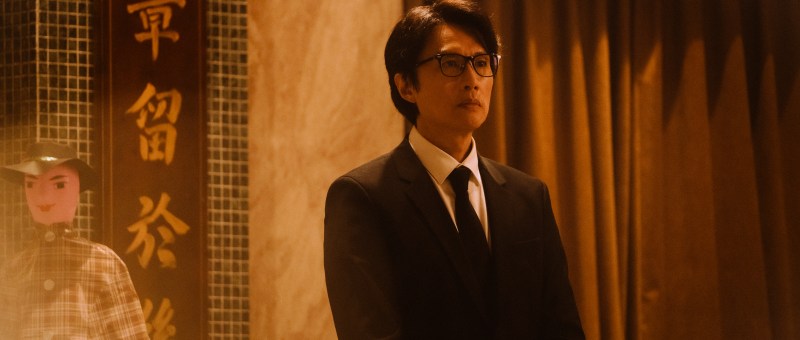
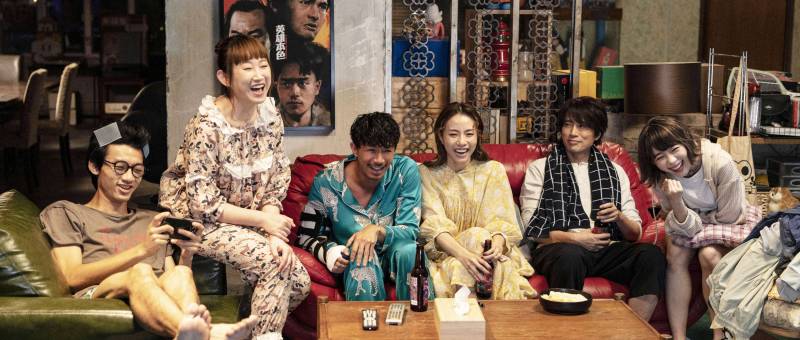
Table for Six (飯戲攻心, Sunny Chan, 2022)

“Wherever family is, that’s where home is” the dejected hero of Sunny Chan’s ensemble comedy Table For Six (飯戲攻心) is eventually told after struggling to keep his small family together by refusing to sell the apartment their parents left them in an old barbecue pork kitchen. Like his previous film Men on the Dragon, Chan’s tightly woven farce is a kind of delayed coming-of-age tale in which the hero realises that his familial bonds aren’t necessarily tied to a place and won’t disappear even if he has to leave it, but also the gentle celebration of food and family that has come to define the Chinese New Year movie (even if this one was delayed to the Mid-Autumn Festival for obvious reasons). 

Steve (Dayo Wong Chi-Wah) is the oldest of three brothers and a de facto father figure in the absence of their parents who have each passed away. Under the justification of obeying their late mother’s dying wish, Steve insists each of the brothers come home for dinner every night and now rarely leaves the apartment as if fiercely guarding an interior world he’s afraid he’ll one day lose. Working as a photographer from home, he ends up meeting popular Taiwanese influencer Miaow (Malaysian actress Lin Min Chen) who turns out to be one of his biggest fans and a now grown up woman who once sent him fanmail as a teenager. Miaow makes obvious romantic overtures but Steve tells her he’s not interested because he still hasn’t got over his ex Monica (Stephy Tang Lai-Yan) who broke up with him three years previously. This is also a problem because unbeknownst to him middle brother Bernard (Louis Cheung Kai-Chung) has been secretly dating Monica for the last six months. 

Much of the tension in the apartment stems from trying to integrate the competing desires of the brothers with their relationships as a family. Bernard and youngest brother Lung (Peter Chan Charm-Man) both want to sell the apartment for different reasons while only Steve insists on hanging on to it determined for them all to continue living together as impractical as that may be given that they are all approaching middle age. Lung quit his regular job some time ago to become a professional esports player which has further strained his relationship with longterm girlfriend Josephine (Ivana Wong Yuen-Chi) who is fed up with waiting for him to formalise their union while finding her own hopes and desires stifled by his obsession with esports success. To keep the peace Steve suggests an unusual solution in which he’ll employ Josephine as a cook which is certainly awkward on several levels given the resulting power dynamics but on the other hand not all that different from the status quo in practical terms as much as it annoys Lung who is secretly insecure in his lack of financial standing which is why he’s been putting off marriage. 

Essentially what Steve learns is that keeping the family together isn’t as literal a thing as he’d assumed it to be. If he wants to preserve it he might have to let it go and learn to move on from the past rather than stubbornly trapping himself in the inertia of his parents’ old apartment. Miaow turns out not be quite as vacuous as her online persona suggests, a neat subversion of Teorema as an unexpected guest who immediately sees and understands the unfulfilled needs of each of the family members and helps to guide them towards moments of realisation. Steve struggles to come to terms with the end of his relationship with Monica which turns out to have been caused by a minor misunderstanding while on the other hand processing complex feelings towards his brother trying to be magnanimous in the best interests of the future but on the other hand wondering if he and Monica might still have a future after all. 

Of course that does rather leave out Monica’s feelings though she too seems conflicted even if having made a choice to move on in deciding to date Bernard in the first place. Her pet peeve is that she hates it when people “disrespect” old things and can’t bear to see otherwise obsolete objects thrown away all of which suggests she might have made a mistake in moving on all while filling the apartment with relics of a disappearing Hong Kong such as old street signs and a pair of golden phoenix dragons which seem gloriously out of place in the otherwise industrial environment of the former barbecue pork kitchen. There might then be something of an additional message in Steve’s final realisation that home is where the family is in an era when so many have felt displaced and been forced to leave the place they love because it has changed beyond all recognition while he makes the decision to break out of his self-imposed inertia by moving on from the past to explore new possibilities outside of the apartment. Anarchic yet warmhearted and always forgiving of its sometimes flawed, often confused protagonists Chan’s cheerful family dramedy discovers that home is not so much a place as the people who live in it and that family is still family even if it’s far apart.


Table for Six is in UK cinemas now courtesy of Haven Productions.

Original trailer (Traditional Chinese / English subtitles)