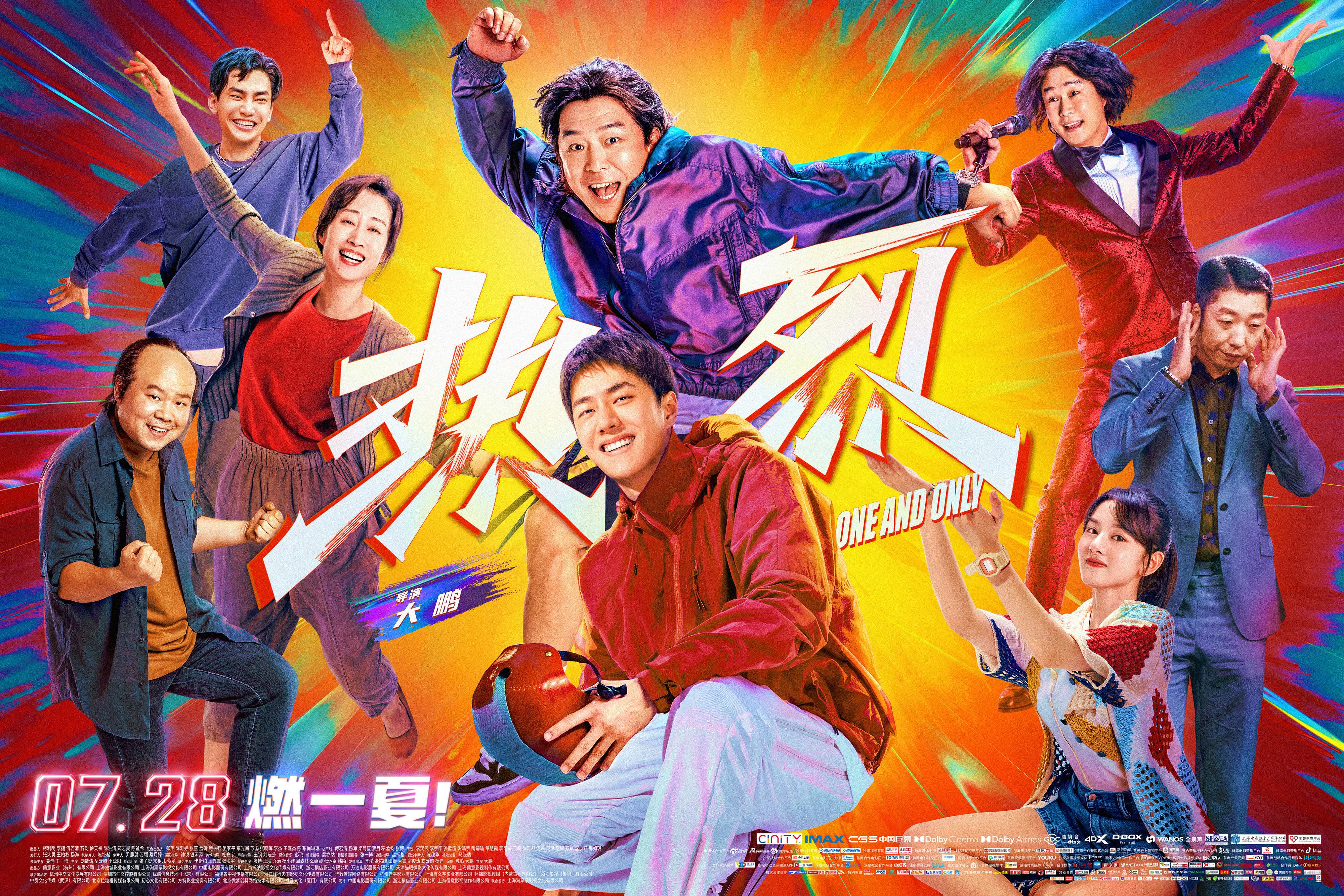
One and Only (热烈, Dong Chengpeng, 2023)

An aspiring street dancer from an impoverished background just can’t seem to catch a break no matter how hard he works in Dong Chengpeng’s inspiring dramedy One and Only (热烈, rèliè). A mild rebuke against a rising fuerdai generation of obnoxious narcissists who don’t think twice about using their money to game the system, the film not only emphasises the virtues of hard work and perseverance but the importance of camaraderie and fellow feeling over an individualistic drive to succeed. 

The conflict is encapsulated in the opening sequence in which hotshot dancer Kevin starts a fight with one of his own team members in the middle of dance competition over a move that didn’t go as planned. The problem is that Kevin is an obnoxious rich kid whose US-based father has been bankrolling the team. He plans to sack most of the other dancers and replace them with foreign ringers, only manager Ding (Huang Bo), who dared to suggest the problem was he doesn’t practice enough with his teammates, isn’t so sure. In an effort to appease him, he hires a ringer of his own in Shou (Wang Yibo), an aspiring dancer who auditioned for the team but didn’t get through, booking him to stand in for Kevin during rehearsals with the caveat that he won’t actually get to perform in any of their concerts or competitions. 

Kevin is not untalented, but his path has been easy wheareas Shou is doing a series of part-time jobs in addition to helping out in his mother’s restaurant while burdened by debts as a result of his late father’s illness. Yet he never gave up on his street dancing dream, working with his uncle doing a series of humiliating gigs at shopping malls and birthday parties never complaining but grateful for the opportunity to dance. The offer from Ding is the answer to all his prayers, but also a cruel joke in that he’s only there to sub in for rich kid Kevin until such time as he feels like showing up again. 

Ding is aware of the choice he faces even as he forms a paternal relationship with Shou whose father was also a breakdancer. To redeem himself and achieve his dreams of national championship glory, Ding thinks he has to choose Kevin and his unlimited resources but is also drawn to Shou’s raw passion and pure-hearted love of dance if also mindful of the “realities” of contemporary China where money and connections are everything and boys like Shou don’t really stand a chance because socialist work ethics are now hopelessly outdated. Ding may be outdated too, even his old friends who got temporarily rich during an entrepreneurial boom have seen their dreams implode in middle age and are currently supplementing their incomes as substitute drivers for partying youngsters. 

Tellingly, after Kevin has them kicked out of the gym he paid for, the team start training in an abandoned factory theatre from the pre-reform days where Shou’s parents used to perform, quite literally resetting their value systems after jettisoning Kevin to focus on team work and unity. Then again in a mild paradox, Ding realises that he shouldn’t lead the team by dominating It but support from within which results in a kind of democracy as he holds a secret ballot to decide whether they should stick with Kevin and a certain, easy victory, or reinstate Shou and take their chances the old-fashioned way. 

Of course, the team choose hard work and perseverance, never giving up even when it seems impossible, leaving the obnoxious Kevin to his self-centred narcissism. Kevin only really wanted backing dancers which is why he couldn’t gel with the team, whereas when challenged one on one Shou does each of his teammates signature moves proving that he’s mastered a series of diverse dance styles along with his own high impact headspring move. Heartfelt and earnest, the film shines a light on a number of issues from middle-aged disappointment and the moral compromises involved in chasing a dream but in the end reinforces the message that there are no shortcuts to success which can never be bought with money but only through sweat and tears along with teamwork and the determination to master one’s craft.


Original trailer (Simplified Chinese / English subtitles)
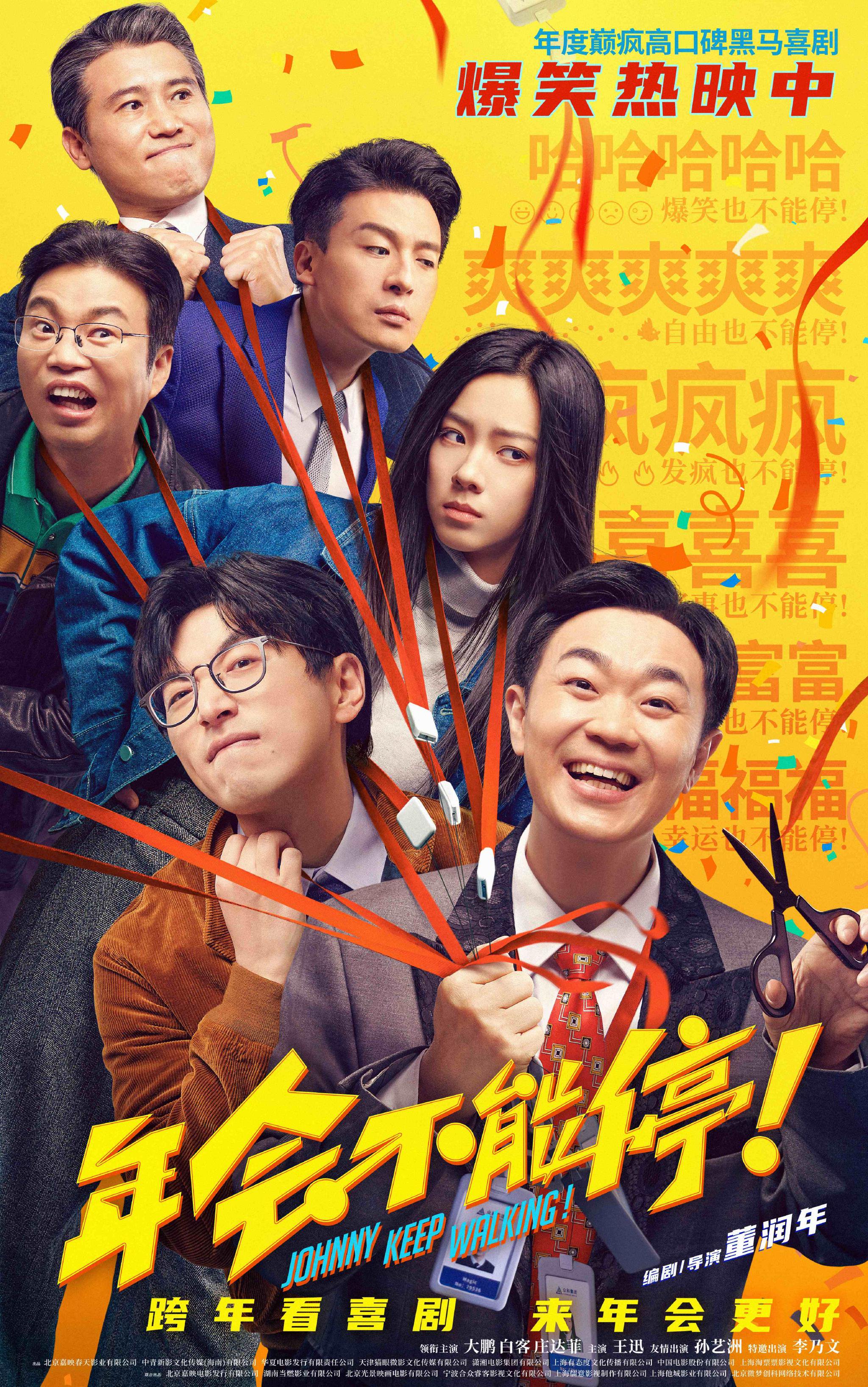
Johnny Keep Walking! (年会不能停!, Dong Runnian, 2024)

A satirical morality tale, Dong Runnian’s incredibly witty comedy Johnny Keep Walking! (niánhuì bùnéng tíng) sees a bumpkinish middle-aged factory worker still filled with an idealism that seems outdated even in the late 90s transferred into a lion’s den of corporate greed and dubious morality while ultimately expressing the younger generation’s increasing dissatisfaction with the inherent unfairness of corporate life in modern China. Ironically turning Tom Chang’s 1988 hit My Future is Not A Dream into a rallying cry from disillusioned youth, the film nevertheless places its faith in the moral generosity of a fat cat factory owner who struck gold in the nation’s 90s reforms but has largely forgotten those who helped him get there.

Key among them would be Jianlin (Da Peng) whom we first see trying to fix the disco ball at the factory’s 1998 gala and being asked to sing a song instead. 20 years pass with Jianlin still living the life of a model factory worker stuck on the same old salary while applying to perform in the company’s annual gala has become his only joy in life. Meanwhile, the factory owner has gone on to head an increasingly powerful multi-national company leaving Jianlin and those like him far behind deprived of the successes that the modern China has to offer. 

This is in part a paean for those left behind by the economic reforms of the 1990s which saw the end of the old factory system with mass unemployment and displacement amid frequent plant closures. Jianlin’s is still open, but devoid of the sense of comaradie that mark the opening scenes. His scheming floor manager, Zhangzi is trying to engineer a transfer to head office so that his son could attend a better school in the city and has been helping a series of corporate lackeys defraud the company, in addition to paying a direct bribe, in return for a job offer. A drunken mix up by office party boy Peter (Sun Yizhou) results in Jianlin being hired instead in a shock move that proves inexplicable to all. 

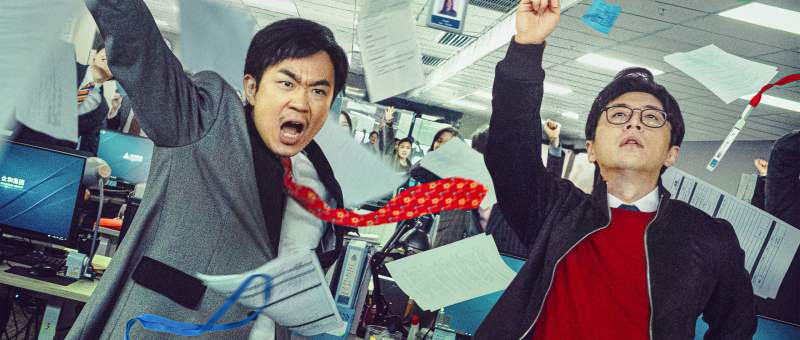
Jianlin is such an innocent that he thinks the reason he’s been given a huge promotion is because he was employee of the year for 12 years straight and the company probably want to send a message to the youngsters that hard work really will be rewarded. Of course, the opposite is true. HR manager Magic (Bai-Ke) quickly spots the mistake but is prevented from fixing it because it would get them all into trouble, and while it’s obvious to most people that Jianlin has no idea what he’s doing they choose to say nothing because they assume he must be a nepotism hire and they want to stay in the boss’ good books. Everyone at the company uses an English name with Jianlin rechristened “Johnny” though he understands no English and struggles with Chinese business jargon having no idea what people mean when they go on about “aligning the details”. Charged with firing someone under the company’s radical new “optimisation” programme, he takes the word at face value and gives them a promotion and a raise instead.

In fact, much of the film is him muddling along like typical middle-manager promoted beyond his abilities. He’s advised that good management is all about setting employees against each other so they forget about resenting you while basically delegating all your tasks to your subordinates who will be only too happy to help in order to curry favour. Slowly corrupted, Jianlin beings to play along, taking all the perks of corporate success while signing documents he couldn’t understand even if he actually read them.

Nevertheless, he develops a kind of team spirit with Magic, a man stuck in a mid-career rut because of his lack of skill at office politics, and Penny temp whose perpetually kept on the hook rather than being given full employee status so that the company can exploit her more. Penny also suffers sexual harassment at the hands of the party happy Peter with Jianlin getting her out of a sticky situation by telling her to finish a report and drinking with Peter himself. Together, and with the assistance of the workers at the factory and others about to be unceremoniously fired as part of the cost cutting enterprise, they attempt to expose corporate corruption and stage a protest against unfair working practices but the only saviour they have to turn to is the company president strongly suggesting a return to the old factory days which, it is implied, were much more wholesome and innocent. In any case, justice eventually wins out with the good rewarded and the bad getting their just desserts though it doesn’t do too much to tackle the inherent and quite ironic rottenness of the system in which the worker has been reduced to a mere tool to be used and discarded by a faceless and uncaring corporate entity. 


International trailer (English subtitles)

My Future is not a Dream (Tom Chang)

I am Not Madame Bovary (我不是潘金莲, Feng Xiaogang, 2017)

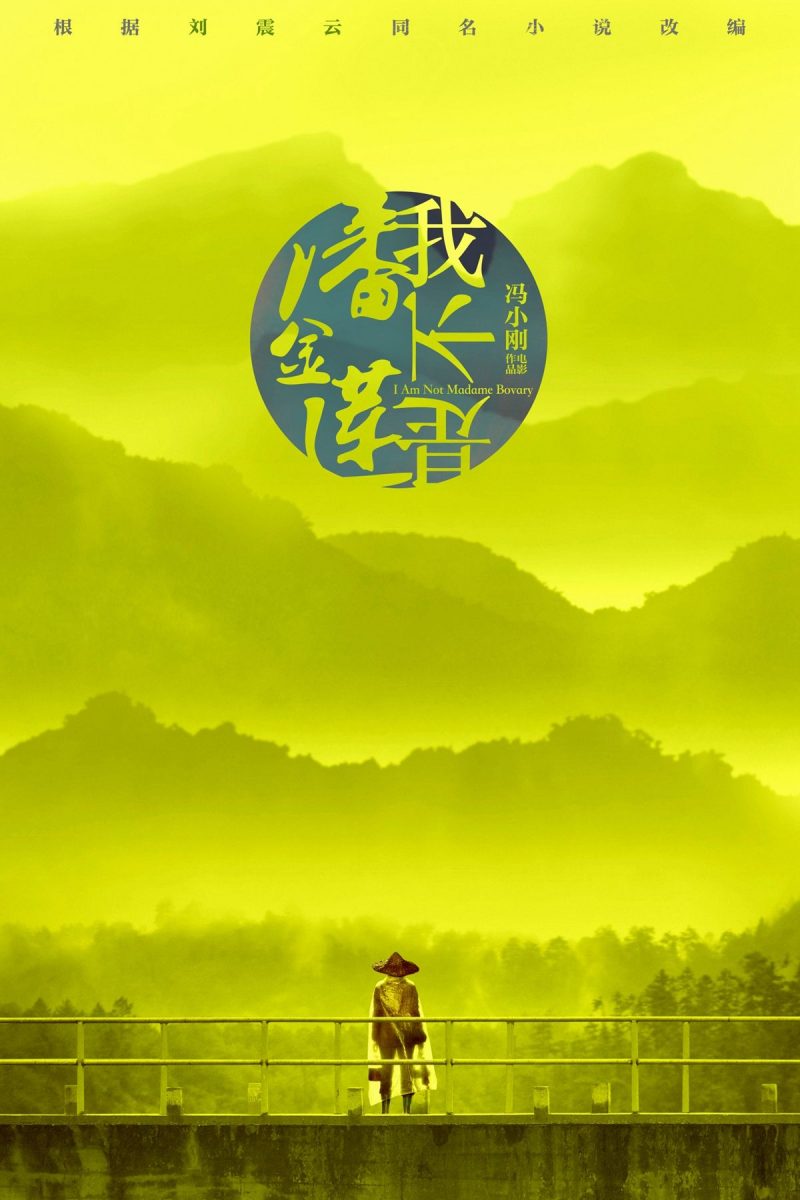
I-Am-Not-Madame-Bovary-posterFeng Xiaogang, often likened to the “Chinese Spielberg”, has spent much of his career creating giant box office hits and crowd pleasing pop culture phenomenons from World Without Thieves to Cell Phone and You Are the One. Looking at his later career which includes such “patriotic” fare as Aftershock, Assembly, and Back to 1942 it would be easy to think that he’s in the pocket of the censors board. Nevertheless, there’s a thin strain of resistance ever-present in his work which is fully brought out in the biting satire, I am not Madame Bovary (我不是潘金莲, Wǒ Búshì Pān Jīnlián).

Truth be told, the adopted Western title is mostly unhelpful as the film’s heroine, Liu Xuelian (Fan Bingbing), is no romantic girl chasing a lovelorn dream to escape from the stultifying boredom of provincial bourgeois society, but a wronged peasant woman intent on reclaiming her dignity from a world expressly set up to keep people like her in their place. Feng begins the movie with a brief narrative voice over to set the scene in which he shows us a traditional Chinese painting depicting the famous “Pan Jinlian” whose name has become synonymous with romantic betrayal. More Thérèse Raquin than Madame Bovary, Pan Jinlian conspired with her lover to kill her husband rather than becoming consumed by an eternal stream of romantic betrayals.

Xuelian has, however, been betrayed. She and her husband faked a divorce so that he could get a fancy apartment the government gives to separated people where they could live together after remarrying sometime later. Only, Xuelian’s husband tricked her – the divorce was real and he married someone else instead. Not only that, he’s publicly damaged her reputation by branding her a “Pan Jinlian” and suggesting she’s a fallen woman who was not a virgin when they married. Understandably upset, Xuelian wants the law to answer for her by cancelling her husband’s duplicitous divorce and clearing her name of any wrongdoing.

Xuelian’s case is thrown out of the local courts, but she doesn’t stop there, she musters all of her resources and takes her complaint all the way to Beijing. Rightfully angry, her rage carries her far beyond the realms a peasant woman of limited education would expect to roam always in search of someone who will listen to her grievances. When no one will, Xuelian resorts to extreme yet peaceful measures, making a spectacle of herself by holding up large signs and stopping petty officials in their fancy government cars. Eventually Liu Xuelian becomes an embarrassment to her governmental protectors, a symbol of wrongs they have no time to right. These men in suits aren’t interested in her suffering, but she makes them look bad and puts a stain on their impressive political careers. Thus they need to solve the Liu Xuelian problem one way or another – something which involves more personal manipulation than well-meaning compromise.

Bureaucratic corruption is an ongoing theme in Chinese cinema, albeit a subtle one when the censors get their way, but the ongoing frustration of needing, on the one hand, to work within a system which actively embraces its corruption, and on the other that of necessarily being seen to disapprove of it can prove a challenging task. Xuelian’s struggles may lean towards pettiness and her original attempt to subvert the law for personal gain is never something which thought worthy of remark, but her personal outrage at being treated so unfairly and then so easily ignored is likely to strike a chord with many finding themselves in a similar situation with local institutions who consistently place their own gain above their duty to protect the good men and women of China.

A low-key feminist tale, Xuelian’s quest also highlights the plight of the lone woman in Chinese society. Tricked by unscrupulous men, she’s left to fend for herself with the full expectation that she will fail and be forced to throw herself on male mercy. Xuelian does not fail. What she wants is recognition of her right to a dignified life. The purpose of getting her divorce cancelled is not getting her husband back but for the right to divorce him properly and refute his allegations of adultery once and for all. Xuelian wants her good name back, and then she wants to make a life for herself freed from all of this finagling. She’s done the unthinkable – a petty peasant woman has rattled Beijing and threatened the state entire. Making oneself ridiculous has become a powerful political weapon. All of this self-assertion and refusal to backdown with one’s tail between one’s legs might just be catching.

Adding to his slightly absurdist air, Feng frames the tale through the old-fashioned device of an iris. Intended to recall the traditional scroll paintings which opened the film, the iris also implies a kind of stagnation in Xuelian’s surroundings. Her movements are impeded, her world is small, and she’s always caught within a literal circle of gossip and awkward, embarrassing scenes. Moving into the city, Feng switches to a square instead – this world is ordered and straightened but it’s still one of enforced rigidity, offering more physical movement but demanding adherence to its strict political rules. Only approaching the end does something more like widescreen with its expansive vistas appear, suggesting either that a degree of freedom has been found or the need to comply with the forces at be rejected but Xuelian’s “satisfaction” or lack of it is perhaps not worth the ten years of strife spent as a petty thorn in the government’s side. Perhaps this is Feng’s most subversive piece of advice, that true freedom is found only in refusing to play their game. They can call you Pan Jinlian all they please, but you don’t need to answer them.


I am not Madame Bovary was screened as part of the 19th Udine Far East Film Festival.

Original trailer (English subtitles)