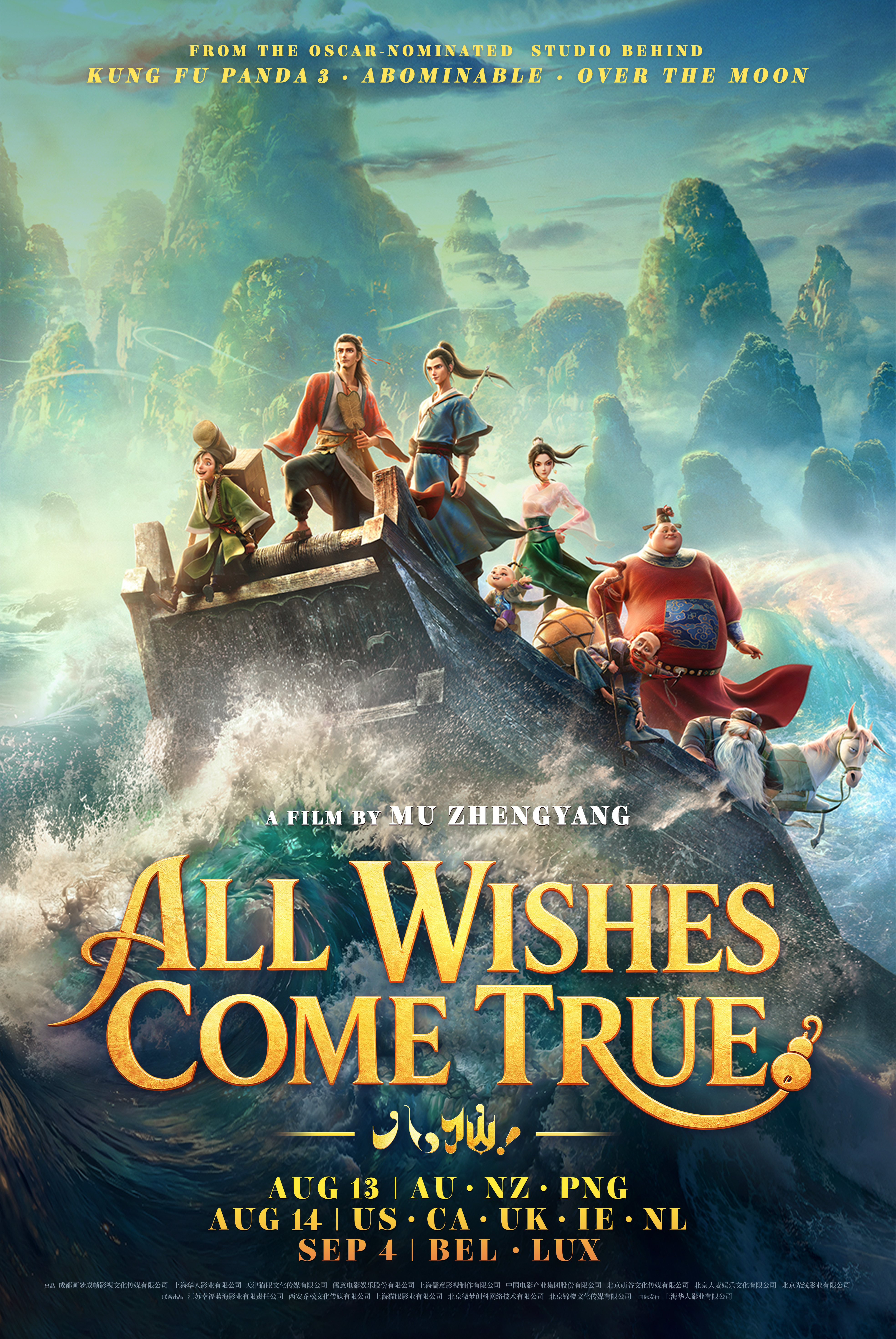
All Wishes Come True! (八仙!, Mu Zhengyang, 2026)

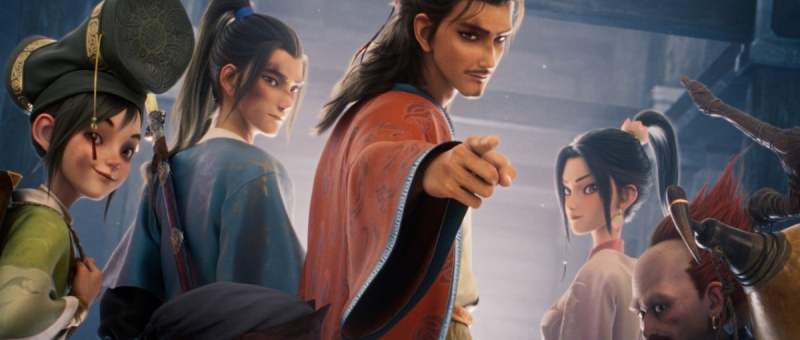
Long ago, a lantern defended humanity from the darkness. But now the lantern has gone missing, and the world is plagued by storms and turmoil. Those who can have fled to the glamorous city of Penglai where the mortal and immortal co-exist and destruction cannot follow. Mu Zhengyang’s animated epic All Wishes Come True! (八仙!, Bāxiān!) draws inspiration from the classic folktale Eight Immortals Crossing the Sea, dramatising it as an Oceans Eleven-esque caper in which a series of scrappy heroes must learn to put aside their greed for the greater good.

The very existence of Penglai is in itself a symptom of the problem. As some point out, the residents aren’t all that interested in finding the lantern because everything is fine in the city. The guardian gods who govern it, Fu Lu Shou, who represent luck, prosperity, and longevity, have become corrupt and are sitting on vast riches embezzled from citizens. Apparent hero Lü Dongbin believes that the lantern is hidden in their vault, but needs help to break in and retrieve it. He recruits local pickpocket Zhongli Quan, whom he believes reshaped the lantern to disguise it, on the promise of allowing him to take as much of the gold as he wants.

It turns out that Zhongli Quan was thrown out of the immortals academy for using an artefact to improve the lives of ordinary people suffering in a famine after prolonged drought. His master reprimands him that the vase is intended to help the elite, not a few peasants. He ironically curses Zhongli Quan that he will always be a thief and a liar, preventing him from living an honest life and forcing him into that of an outlaw. This has, in a way, made him cynical and greedy. The quest to retrieve the lantern presents an opportunity to break the curse and redeem himself, though Zhongli Quan always has half an eye on the gold. Lü Dongbin isn’t completely untainted either with the implication that he is the guardian who sold the lantern in a fit of pique having been passed over for promotion and is now trying to make it right by taking the lantern back. 

As such, the film presents an anti-capitalist, anti-consumerist message along with an ant-corruption sentiment as this team of ordinary mortals attempts to go against the gods by outsmarting Fu Lu Shou to reclaim the lantern and lift and the curse on the wider society. Zhongli Quan’s cynicism is an extension of that which has infected ordinary people who have been encouraged to believe that greed is good. As he and Lü Dongbin forge an uneasy alliance, there is a constant push and pull between them as Lü Dongbin does his best to bring Zhongli Quan back from the dark side by retrieving the lantern. 

The gang ironically attract some attention as apparent “thief catchers” signalling the ways in which people are not always who they claim to be. Nevertheless, they find themselves having to live up to the expectations of being a “hero”, gradually swapping their cynicism for a genuine desire to help those around them. This act of deciding to do the right thing in defiance of the authorities is both quietly subversive and a counter to the greed and selfishness which taken hold across the world along with the elitism that defines life in Penglai. 

At the same time, it’s clear that the gang can only succeed by working together and utilising each of their unique skills in harmony. In the end, they prosper precisely by calling in an unexpected ally who helps them pull off another heist on the villain through misdirection and subterfuge. Like many similar recent animated takes on classic folklore, the film humorously layers the modern world onto the fantasy setting through the swirling cloud highways that surround the city and opening taxi chase along with the magic wristbands that secure entry to Penglai’s VIP area. That the gang are later made immortals precisely so that the authorities can take credit for their actions is another ironic touch, suggesting that they can not really transcend the forces that constrain them. Nevertheless, what remains is the poignant tale of brotherhood and redemption in the relationship between Lü Dongbin and Zhongli Quan that quietly makes plain that in the end we save each other and kindness will always be repaid.


Trailer (Simplified Chinese and English subtitles)
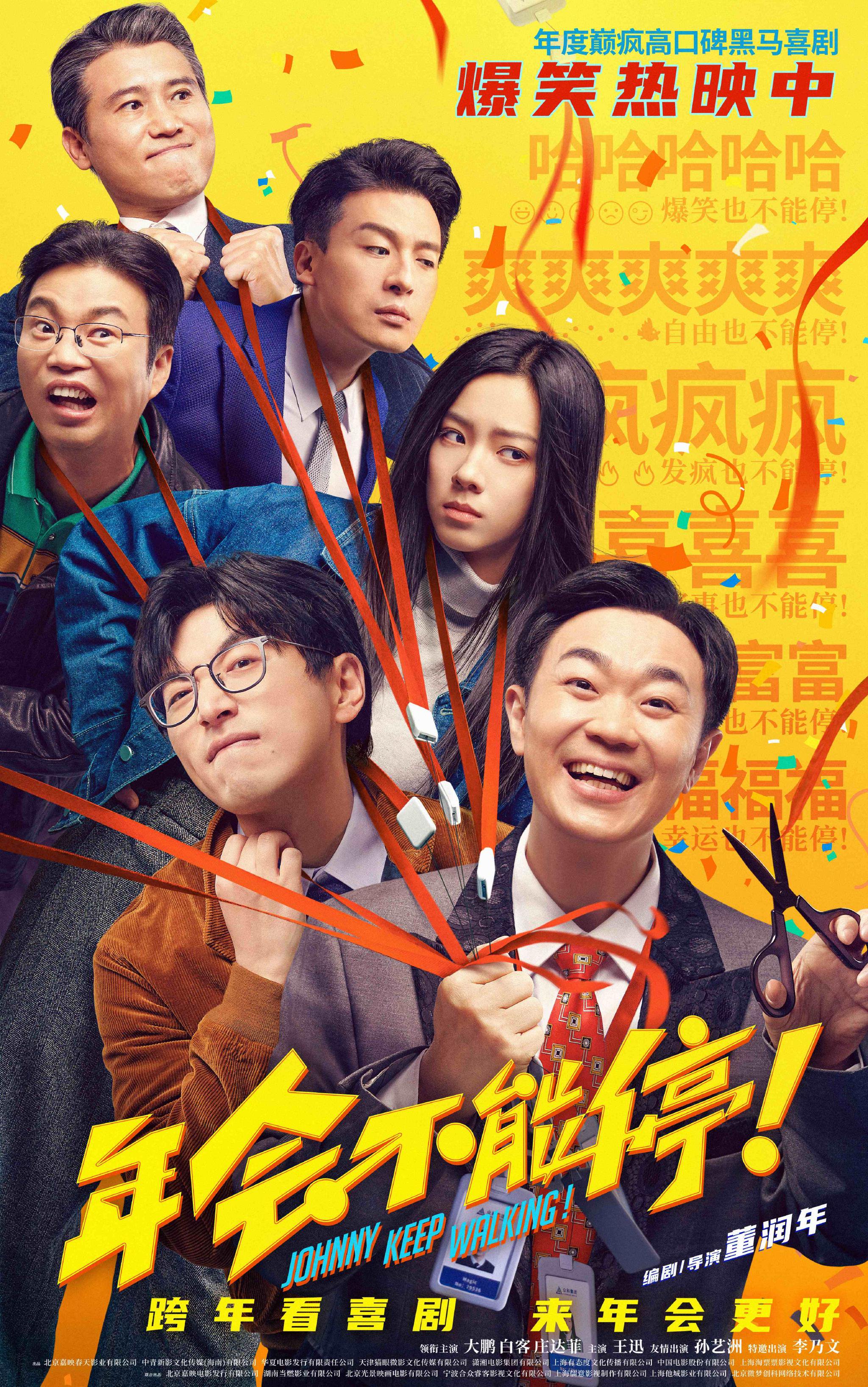
Johnny Keep Walking! (年会不能停!, Dong Runnian, 2024)

A satirical morality tale, Dong Runnian’s incredibly witty comedy Johnny Keep Walking! (niánhuì bùnéng tíng) sees a bumpkinish middle-aged factory worker still filled with an idealism that seems outdated even in the late 90s transferred into a lion’s den of corporate greed and dubious morality while ultimately expressing the younger generation’s increasing dissatisfaction with the inherent unfairness of corporate life in modern China. Ironically turning Tom Chang’s 1988 hit My Future is Not A Dream into a rallying cry from disillusioned youth, the film nevertheless places its faith in the moral generosity of a fat cat factory owner who struck gold in the nation’s 90s reforms but has largely forgotten those who helped him get there.

Key among them would be Jianlin (Da Peng) whom we first see trying to fix the disco ball at the factory’s 1998 gala and being asked to sing a song instead. 20 years pass with Jianlin still living the life of a model factory worker stuck on the same old salary while applying to perform in the company’s annual gala has become his only joy in life. Meanwhile, the factory owner has gone on to head an increasingly powerful multi-national company leaving Jianlin and those like him far behind deprived of the successes that the modern China has to offer. 

This is in part a paean for those left behind by the economic reforms of the 1990s which saw the end of the old factory system with mass unemployment and displacement amid frequent plant closures. Jianlin’s is still open, but devoid of the sense of comaradie that mark the opening scenes. His scheming floor manager, Zhangzi is trying to engineer a transfer to head office so that his son could attend a better school in the city and has been helping a series of corporate lackeys defraud the company, in addition to paying a direct bribe, in return for a job offer. A drunken mix up by office party boy Peter (Sun Yizhou) results in Jianlin being hired instead in a shock move that proves inexplicable to all. 

Jianlin is such an innocent that he thinks the reason he’s been given a huge promotion is because he was employee of the year for 12 years straight and the company probably want to send a message to the youngsters that hard work really will be rewarded. Of course, the opposite is true. HR manager Magic (Bai-Ke) quickly spots the mistake but is prevented from fixing it because it would get them all into trouble, and while it’s obvious to most people that Jianlin has no idea what he’s doing they choose to say nothing because they assume he must be a nepotism hire and they want to stay in the boss’ good books. Everyone at the company uses an English name with Jianlin rechristened “Johnny” though he understands no English and struggles with Chinese business jargon having no idea what people mean when they go on about “aligning the details”. Charged with firing someone under the company’s radical new “optimisation” programme, he takes the word at face value and gives them a promotion and a raise instead.

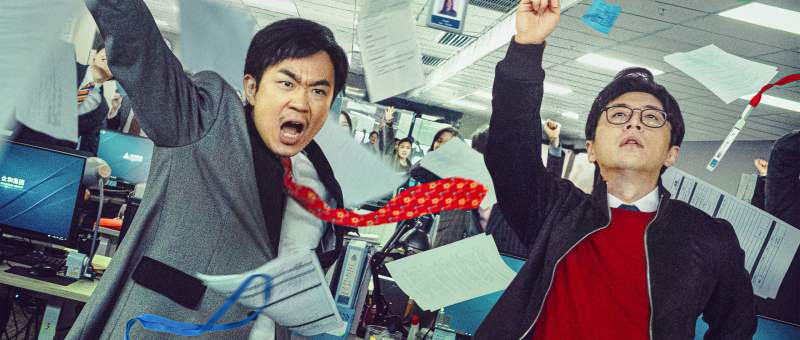
In fact, much of the film is him muddling along like typical middle-manager promoted beyond his abilities. He’s advised that good management is all about setting employees against each other so they forget about resenting you while basically delegating all your tasks to your subordinates who will be only too happy to help in order to curry favour. Slowly corrupted, Jianlin beings to play along, taking all the perks of corporate success while signing documents he couldn’t understand even if he actually read them.

Nevertheless, he develops a kind of team spirit with Magic, a man stuck in a mid-career rut because of his lack of skill at office politics, and Penny temp whose perpetually kept on the hook rather than being given full employee status so that the company can exploit her more. Penny also suffers sexual harassment at the hands of the party happy Peter with Jianlin getting her out of a sticky situation by telling her to finish a report and drinking with Peter himself. Together, and with the assistance of the workers at the factory and others about to be unceremoniously fired as part of the cost cutting enterprise, they attempt to expose corporate corruption and stage a protest against unfair working practices but the only saviour they have to turn to is the company president strongly suggesting a return to the old factory days which, it is implied, were much more wholesome and innocent. In any case, justice eventually wins out with the good rewarded and the bad getting their just desserts though it doesn’t do too much to tackle the inherent and quite ironic rottenness of the system in which the worker has been reduced to a mere tool to be used and discarded by a faceless and uncaring corporate entity. 


International trailer (English subtitles)

My Future is not a Dream (Tom Chang)