Sabakan (サバカン SABAKAN, Tomoki Kanazawa, 2022)

A melancholy middle-aged writer looks back to a climactic summer of his youth and the ghost of fractured friendship in Tomoki Kanazawa’s heartwarming nostalgia fest, Sabakan (サバカン SABAKAN). A classic summer adventure movie, the film finds a sense of warmth in childhood memory but also reflects on all that at the time it was impossible to understand along with a sadness in the inevitable end of summer as two boys chase the spectre of dolphins in an otherwise tranquil seaside town.

In the present day, Takaaki (Tsuyoshi Kusanagi) is a struggling author and divorced father already behind on his child support. When he mentions working on another novel, his agent laughs at him that books like that don’t sell while trying to convince him to take a job ghostwriting for an Instagram influencer going viral for her dieting tips. Perhaps because the agent had described his writing as “quick and easy to read”, essentially anonymous and empty, he begins meditating on his childhood self repeatedly praised for his writing by a teacher who is perhaps a little easily moved. 

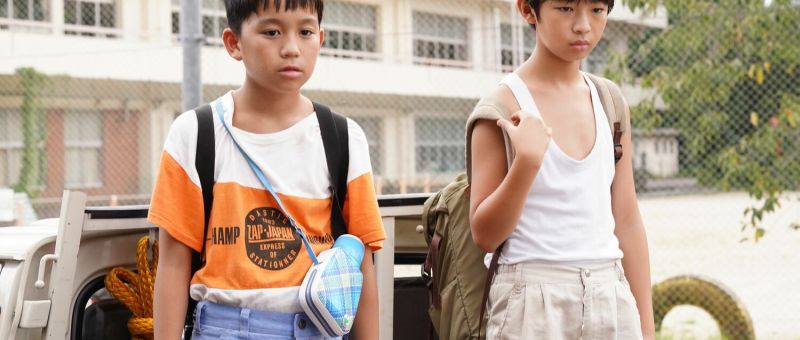
The summer of 1986 was the beginning of the Bubble era and Takaaki’s memories are indeed filled with a series of cultural touchstones such as the idol Yuki Saito whose poster the young Takaaki sometimes kisses after dancing around singing her hits. All of which is one reason why the poverty of his classmate Kenji (Konosuke Harada) has made him even more of an outcast bullied by the other kids who follow him home and make fun of the rundown house with tarp covering the roof that he lives in with his mother (Shihori Kanjiya) and several siblings. His fisherman father died some years ago and his mother works in the local supermarket doing her best to support five kinds on a part-timer’s salary. Kenji takes a liking to Takaaki because he’s the only kid who didn’t join with the others when they laughed at him, more or less blackmailing him into a summer adventure looking for dolphins in a cove over the mountain. 

Even the younger Takaaki reflects there probably weren’t any dolphins in the first place, Kenji just wanted to go on adventure with him and didn’t otherwise know how to ask. A careless word from his otherwise warm and supportive mother provokes a minor rift in the boys’ relationship that despite himself the younger Takaaki didn’t quite understand causing him to pull away from Kenji in an unwarranted sense of rejection unable to recognise that he is simply awkward and has low self-esteem which caused him to question the reality of their friendship. In any case though they are later separated by unexpected tragedy, their connection becomes a touchstone for each of them reminding them that they are not alone even if no longer together. 

Kanazawa captures an impish sense of fun the boys’ adventure as they find themselves in a tricky situation with a trio of thuggish delinquents and meet an equally melancholy teenage girl at the shore who stares mournfully at a washed up can of Korean soda and explains sadly as she looks out over the sea that she herself has not been there yet. The Yuki Saito poster comes down, signalling the arrival of a coming of age and the putting away of childish things as Takaaki moves into a more concrete adulthood while still floundering in adolescent confusion and the inability to fully understand his new friendship or its growing importance in his life. 

The adult him understands only too well, meditating on his memories and triggered by nostalgia on seeing a can of mackerel and remembering the carefree summer of his youth. The rediscovery of a childhood bond begins to open him up both artistically and in his relationship with the wife and daughter from whom he is separated. Told with humour and warmth, the film is filled with a sense of childhood wonder and the comfort of the everyday largely undimmed by the entrance of tragedy and the essential sadness of summer’s end. Even so it allows its melancholy hero to find a kind of salvation not only in childhood memories of dolphins and canned mackerel but in the enduring quality of a friendship that itself may have become distant.


Sabakan screened as part of this year’s Camera Japan.

Original trailer (no subtitles)

Birds Without Names (彼女がその名を知らない鳥たち, Kazuya Shiraishi, 2017)

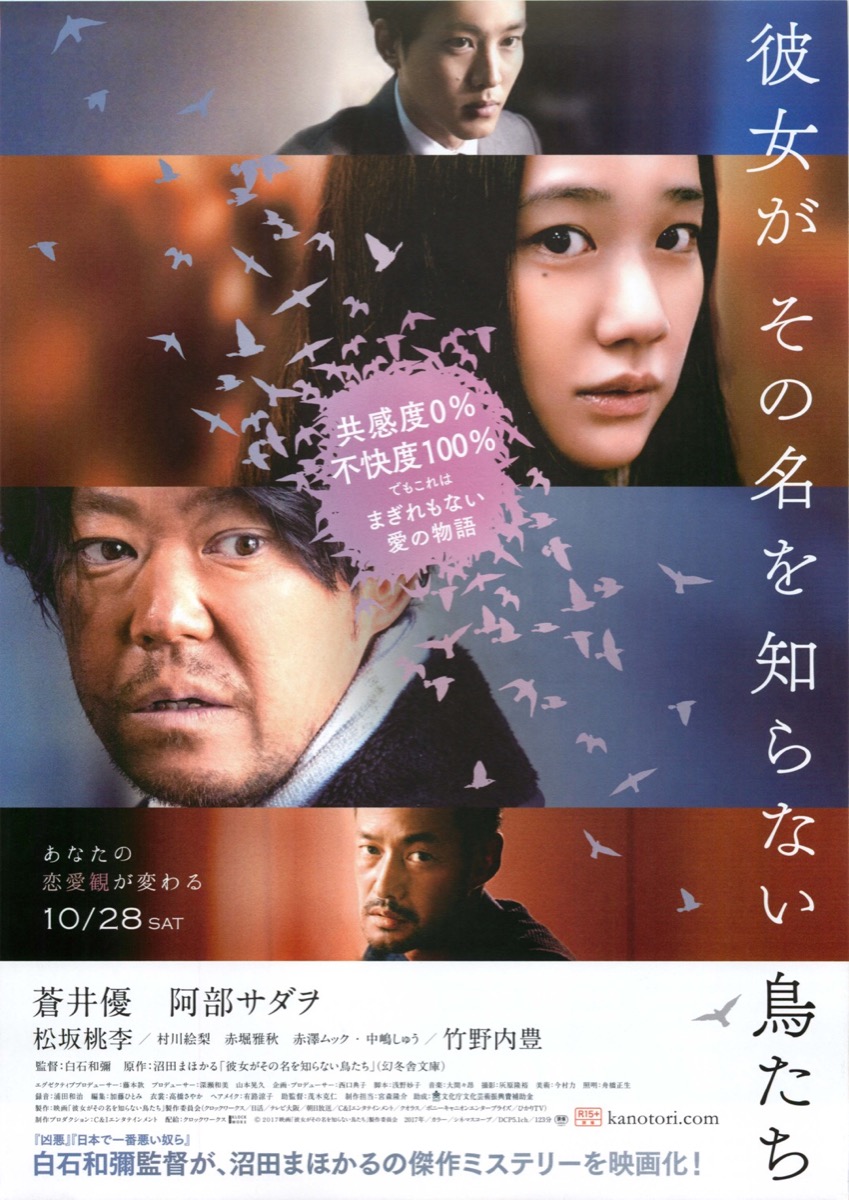
Birds Without Names poster“Human beings are lonely by nature”, a statement offered by someone who could well think he’s lying but accidentally tells the truth in Kazuya Shiraishi’s Birds Without Names (彼女がその名を知らない鳥たち, Kanojo ga Sono Na wo Shiranai Toritachi). Loneliness, of an existential more than physical kind, eats away at the souls of those unable to connect with what it is they truly want until they eventually destroy themselves through explosive acts of irrepressible rage or, perhaps, of love. The bad look good and the good look bad but appearances can be deceptive, as can memory, and when it comes to the truths of emotional connection the sands are always shifting.

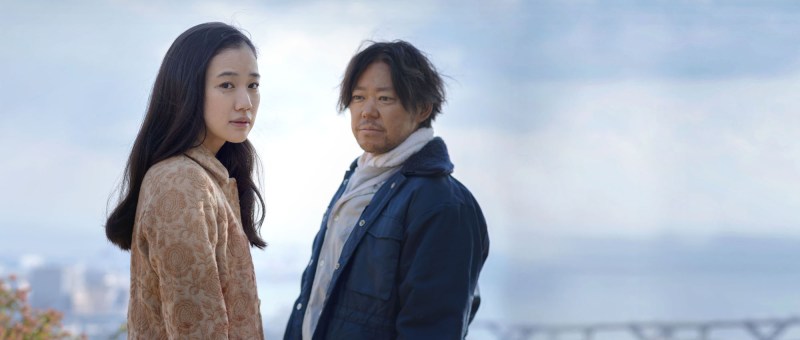
Towako (Yu Aoi), an unmarried woman in her 30s, does not work and spends most of her time angrily ringing up customer service departments to complain about things in the hope of getting some kind of compensation. She lives with an older man, Jinji (Sadao Abe) – a construction worker, who is completely devoted to her and provides both financial and emotional support despite Towako’s obvious contempt for him. Referring to him as a “slug”, Towako consistently rejects Jinji’s amorous advances and resents his, in her view, overly controlling behaviour in which he rings her several times a day and keeps general tabs on her whereabouts.

Depressed and on edge, Towako’s life takes a turn when she gets into a dispute with an upscale jewellery store over a watch repair and ends up beginning an affair with the handsome salesman who visits her apartment with a selection of possible replacements. Around the same time, Towako rings an ex-boyfriend’s number in a moment of weakness only to reconsider and hangup right away. The next day a policeman arrives and informs her that they’ve been monitoring her ex’s phone because his wife reported him missing five years ago and he’s not been seen since.

Towako views Jinji’s behaviour as possessive and his continuing devotion pathetic in his eagerness to debase himself for her benefit. Her sister Misuzu (Mukku Akazawa), however, thinks Jinji is good for her and berates Towako for her ill treatment of him. Despite the fact that Towako’s relationship with her ex, Kurosaki (Yutaka Takenouchi), ended eight years previously, Misuzu is paranoid Towako is still seeing him on the sly and will eventually try to get back together with him. Misuzu does not want this to happen because Kurosaki beat Towako so badly she landed in hospital, but despite this and worse, Towako cannot let the spectre of Kurosaki and the happiness promised in their earliest days go. She continues to pine for him, looking for other Kurosakis in the form of other handsome faces selling false promises and empty words.

Mizushima (Mukku Akazawa), the watch salesman, is just Towako’s type – something which Jinji seems to know when he violently pushes a Mizushima look-alike off a busy commuter train just because he saw the way Towako looked at him. Daring to kiss her when she abruptly starts crying while looking at his replacement watches, Mizushima spins her a line about an unhappy marriage and his craving for solitude which he sates through solo travel – most recently to a remote spot in the desert and cave they call an underground womb. Mizushima describes himself as a lonely soul and claims to have found a kindred spirit in Towako whose loneliness it was that first sparked his interest. Like all the men in the picture, Mizushima is not all he seems and there is reason to disbelieve much of what he says but he may well be correct in his assessment of Towako’s need for impossible connections with emotionally unavailable men who only ever cause her pain.

It just so happens that Kurosaki’s apparent disappearance happened around the time Towako began dating Jinji. Seeing as his behaviour is often controlling, paranoid and, as seen in the train incident, occasionally violent, Towako begins to suspect he may be involved in the mysterious absence of her one true love. Then again, Towako may well need protecting from herself and perhaps, as Misuzu seems to think, Jinji is just looking out for her. The deeper Jinji’s devotion descends, the more Towako’s contempt for him grows but the suspicion that he may be capable of something far darker provokes a series of strange and unexpected reactions in the already unsteady Towako.

A dark romance more than noirish mystery,  Birds Without Names takes place in a gloomy Osaka soaked in disappointment and post-industrial grime where the region’s distinctive accent loses its sometimes soft, comedic edge for a relentless bite in which words reject the connection they ultimately seek. Rejection, humiliation, degradation, and a hopeless sense of incurable loneliness push already strained minds towards an abyss but there’s a strange kind of purity in the intensity of selfless love which, uncomfortably enough, offers salvation in a final act of destruction.


 Screened as part of the Japan Foundation Touring Film Programme 2018.

Also screening at:

  • Firstsite (Colchester) 9 February 2018
  • HOME (Manchester) 12 February 2018
  • Watershed (Bristol) – 13 February 2018
  • Exeter Phoenix – 27 February 2018
  • Depot (Lewes) – 6 March 2018
  • Filmhouse (Edinburgh) – 8 March 2018

International trailer (English subtitles)

Tsubaki Sanjuro (椿三十郎, Yoshimitsu Morita, 2007)

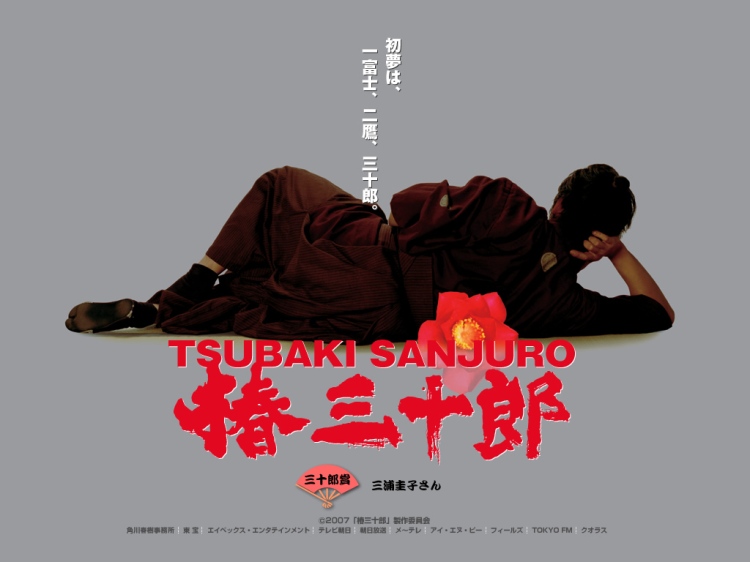
Tsubaki Sanjiro horizontalGenerally speaking, where a film has been inspired by already existing source material, it’s unfair to refer to it as a “remake” even if there has been an iconic previous adaptation. That said, in the case of Tsubaki Sanjuro (椿三十郎), “remake” is very much at the heart of the idea as the film uses the exact same script as the massively influential 1962 version directed by Akira Kurosawa which also starred his muse Toshiro Mifune. Director Yoshimitsu Morita is less interested in returning to the story’s novelistic roots than he is in engaging with Kurosawa’s cinematic legacy.

Sanjuro is a more populist offering from Kurosawa in any case and adheres to a fairly simple plot which picks up with the hero of the previous year’s Yojimbo, still a wandering ronin living on his wits and his sword. In actuality the script was altered a little to connect the two films even though the original novel has nothing to do with Yojimbo. Anyway, the story is set in a small town in which the hotheaded young men have got a bee in their bonnets about corruption at the higher levels and have taken it upon themselves to do something about it. Unfortunately they have no idea what they’re getting themselves into and are about to make things even worse. Sanjuro duly arrives, overhears their idiocy and gives them some advice before heroically saving all their lives through cleverness. Later, when one of the young men’s relatives is kidnapped, Sanjuro decides to stay and help them sort this giant mess out before they do themselves a mischief.

Obviously, Morita uses the same script so Tsubaki Sanjuro has exactly the same plot as the 1962 film. This does lend it a slightly uncanny quality as its use of language and the structure of the script itself are much more of their own time – a fact brought out by the very theatrical performances of the only two female faces in the film who speak in very pointed and deliberate manners. That said, what Morita attempts to do is bring out even more of the ironic, dark comedy that underpins Kurosawa’s film but is very much played as background. Morita isn’t playing it as farce or as parody, but brings the same wry, almost mocking eye to the proceedings as he brings to to his contemporary satirical comedies.

Bayside Shakedown star Yuji Oda is cast in the role of Sanjuro but really of course he’s expected to play Mifune. He doesn’t have Mifune’s sheer presence and force of personality – who does? but he does a good job of adopting his wiseguy, casual grifter with a sentimental heart persona. We don’t know who Sanjuro is – he gives what is fairly obvious to be a fake name and seems to be a masterless swordsman content to travel in rags and live on the “kindess” of strangers, but you get the feeling he’s already got it all figured out and always knows the best way to handle any situation no matter how desperate it might seem.

If what Morita is trying to do is make a modern Kurosawa movie, he somewhat succeeds. Though he throws in the odd homage to the Kurosawa corpus, mostly he opts for a contemporary approach though one with an old fashioned kind of stateliness – no handheld camera here, wide and tracking shots rule the day. The score too remains in the classical jidaigeki realm with obvious call outs to Sanjuro’s own western leaning themes.

Morita himself can be something of a chameleon in the director’s chair, his style isn’t so personally defined but tailored to the project itself which can make him seem a little dull where he isn’t trying to add a layer of experimentation which is the thing which really interests him. Tsubaki Sanjuro’s experimentation is closer to mirroring – he’s not doing a Gus Van Sant Psycho style experiment, but he’s refracting Kurosawa for a modern audience raised on TV drama and idol stars. It works, to be sure, but perhaps it worked better for Kurosawa (unfair as that is to say).

Ultimately, Tsubaki Sanjuro is something of a curate’s egg. As it is intended to, the film has its generic sides in its fairly ordinary modern samurai movie aesthetic, though it never overplays these and cleverly adds in a more modern approach with a perfectly matched subtlety. Its cast of young men skew younger than in the original film making their naivety even more believable and lending weight to Oda’s performance which captures both his character’s gruff aloofness and his instant born leader abilities. Enjoyable enough in its own right, Tsubaki Sanjuro can’t reach the heights of the film which inspired it, but then perhaps it is not intended to, but simply to entertain with a familiar tale retold as broad comedy rather than mild satire.


Available with English subtitles on region free DVD in the US from Bonzai Media Corp. RSP

Unsubtitled trailer: