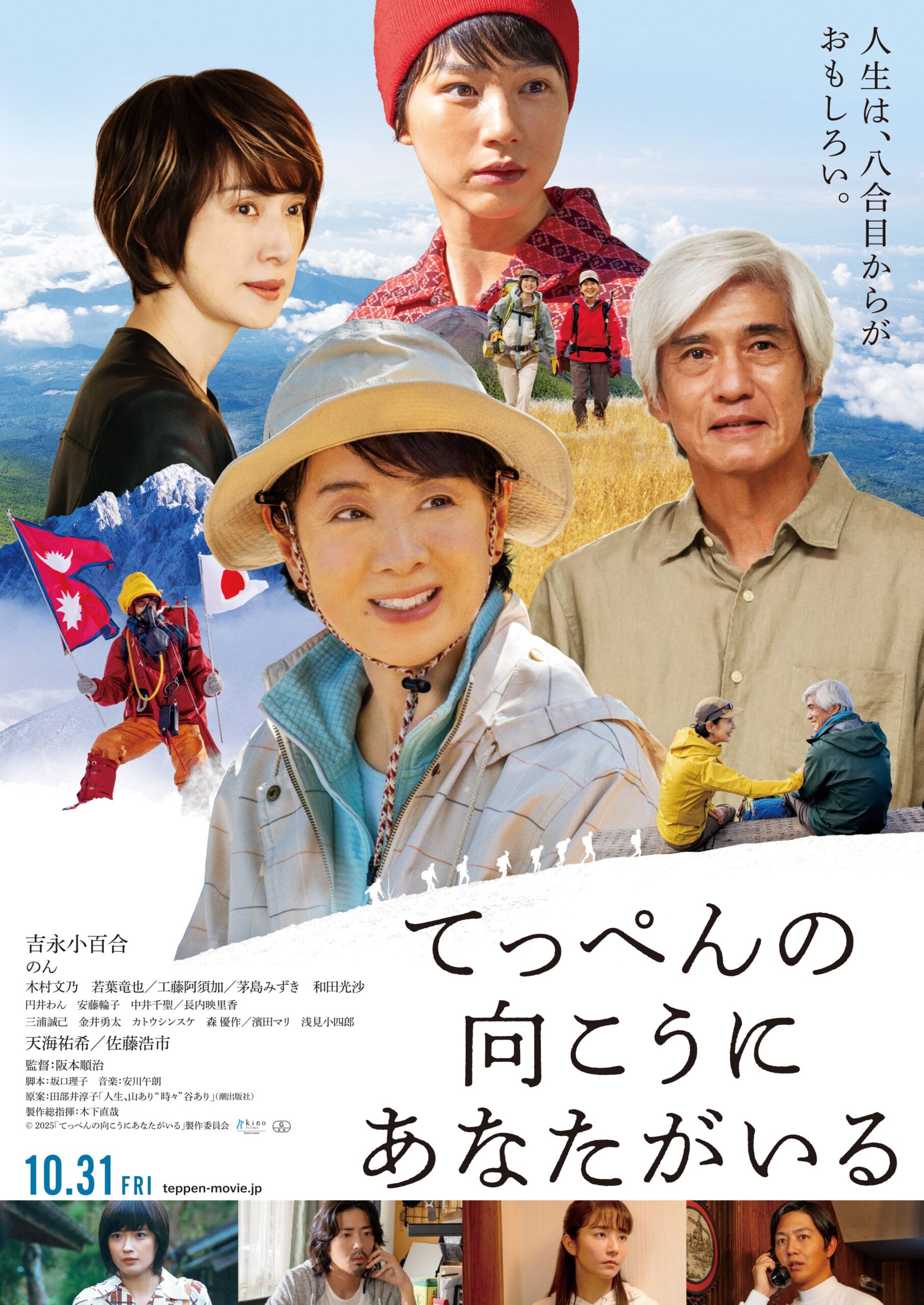
Climbing for Life (てっぺんの向こうにあなたがいる, Junji Sakamoto, 2025)

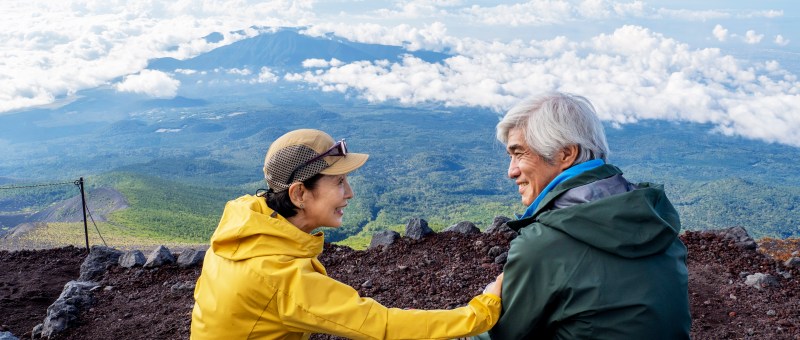
A world-famous, record-breaking mountain climber faces the final ascent in Junji Sakamoto’s fictionalised biopic of Junko Tabei, the first Japanese woman to reach the summit of Everest. Here named Tabe, the highest mountain Junko (Sayuri Yoshinaga / Non) has to climb seems to be the patriarchal nature of Japanese society in the 1970s. The film does, however, mistakenly imply that sexism is an issue that has now been solved in the film’s contemporary setting of 2010-16 in which women hold positions of authority and are free to fulfil themselves outside the home on an equal footing with men.

Of course, this is not really the reality even if, in some ways, the situation may be much better than during the high prosperity era during which Junko was a trailblazer in more ways than one. When she decides to mount an all-female expedition team to conquer Everest, she’s mainly met with derision and scorn. While she and female reporter Etsuko (Yuki Amami / Mizuki Kayashima) do the rounds of various companies looking for sponsorship, the elderly male CEOs are incredibly confused and accuse them of being traitors to their sex. They questions whether it’s safe for women to do something like this without any men around (though in the interests of clarity, all the Sherpas appear to me male), and also what wonder what their husbands are supposed to do for the six months they’ll be away shirking their domestic responsibilities. Even when they encounter a man who is closer to their own generation and sounds supportive, stating that the era of gender equality has arrived, it turns out to be all talk. He does not take their proposal seriously and even asks which part of it he should read as if it wasn’t really important. In the end, his “support” doesn’t transfer into any investment.

In the present day, Etsuko remarks that there were a lot of useless men around back then, as if men are universally different now. She herself has become a senior reporter and is in a position of authority over younger male reporters in the newsroom. Likewise, Junko’s main physician in the later stages of her treatment following a cancer diagnosis is also female and makes a point of listening to her patient’s wishes and concerns. It does not appear that Etsuko ever married or had children, but no one of is critical of them for “abandoning” their domestic responsibilities to pursue a career in the way they were of Junko when she left her daughter behind to climb Everest. To that extent the film paints a rosier picture of the contemporary society than might actually be the case given the still persistent levels of sexism and gender bias that still present barriers to woman’s ability to find fulfilment whether within the domestic environment or outside of it.

Nevertheless, Junko’s husband Masaaki (Kôichi Sato) is depicted as a shining example of confident masculinity in his support for his wife’s endeavours. A sister-in-law looks after daughter Noriko during the day with Masaaki on parental duties outside of his shifts as a mechanic. Even so, Junko’s success is seen to have a negative effect on her children who do feel a degree of resentment towards her. Noriko has largely taken it in her stride, but also feels a sense of regret that Junko is not just her mother but someone she has to share with the world. When this spurs her on to deepen their relationship in adulthood, younger son Shintaro (Ryuya Wakaba) who was born after Everest is hugely resentful and struggles to emerge from his mother’s shadow or the pressure of being the child of a famous person. He doesn’t like it that people have expectations of him because of who his mother is and feels as if he is held to a different standard because of it, causing him to become rebellious at school. The situation becomes so bad that he eventually moves in with relatives and transfers to the relatively more anonymous Fukushima where his teacher gives him some harsh lessons in humility, reminding him that he is not “Junko’s Tabe’s son”, but that Junko Tabe just happens to be his mother.

Shintaro’s views also seem to be more patriarchal than those of his father whom he verbally attacks insisting that he must also be resentful of Junko and that if it were not for losing his big toes to frostbite it would have been him conquering Everest, not her. While Shintaro appears to feel emasculated by his mother and looks down on his father for what he sees as weakness, Shintaro is able to put his personal frustrations aside and devote himself wholeheartedly to supporting Junko. It’s not until Junko’s illness becomes serious that Shintaro is able to reconcile with her and find a more stable path in life through helping with her programme to bring high school students displaced by the 2011 earthquake to climb Mount Fuji.

Mountains take on an almost sacred presence for Junko with Mount Fuji in particular becoming a constant motif. The film depicts her final battle with cancer as being yet another mountain to climb, though knowing your limitations is also part of the art of climbing and so when she comes to the realisation that she can no longer reach the summit, she decides to plan her descent. The poignant closing moments have her looking at a photo of the women’s team and insisting they will all go together, expressing a degree of sadness that the group fell apart after Everest with some resentful that Junko had progressed to the summit alone rather than postpone to regroup to call off the ascent to try again another time. All of the press attention fell on her alone forgetting the efforts of those who’d stayed at base camp and without whom Junko’s success would not have been possible. Female solidarity is also vulnerable to these kinds of pressures, the film implies, though Junko’s friendship with Etsuko endures right to the end. Though the conclusion is bittersweet, the closing moments at least focus more on a life well lived amid the majesty of the mountains rather than dwelling on its inevitable tragedy.


Climbing for Life screens as part of this year’s Toronto Japanese Film Festival.

Trailer (English subtitles)

461 Days of Bento: A Promise Between Father and Son (461個のおべんとう, Atsushi Kaneshige, 2020)

“This is a story about my lunch every day. Nothing more, nothing less” the hero of Atsushi Kaneshige’s slice of comfort cinema, 461 Days of Bento: A Promise Between Father and Son (461個のおべんとう, 461ko no Obento), claims though it is of course something more than that. Based on an essay by musician Toshimi Watanabe who himself starred in Dad’s Lunch Box, Kaneshige’s gentle drama is another in the recent series inspired by the “papaben” phenomenon of fathers suddenly taking an interest in domestic matters by preparing tasty, nutritious and elegantly prepared packed lunches for their school-aged children. 

Obviously inspired by Watanabe’s real life, 461 Bento opens with cheerful home video footage of the early years of hero Kouki (Shunsuke Michieda) before shifting darker as the relationship between his parents begins to sour eventually ending in divorce. Kouki is given a choice whether to live with mum or dad, remaining behind in the family home with musician Kazuki (Yoshihiko Inohara) while his mum Shuko (Emi Kurara) moves out taking the tree they planted together with her. With the stress of the divorce, young Kouki ends up failing his high school entrance exams and is set back a year, eventually getting in the following spring. Hoping to encourage him, Kazuki offers to make a bento lunch every day for the next three years on the condition that Kouki pledges to not to skip school. 

In true papaben tradition, Kazuki ends up getting far too into the art of bento filling the kitchen with new gadgets while sometimes coming into conflict with his bandmates through investing all of his creative energies in innovative lunch recipes. Yet Kouki isn’t quite convinced by his father’s newfound passion, assuming it’s merely a new hobby he’ll soon get tired of rather than something he’s actively doing out of love for his son. Consequently, he’s originally a little embarrassed when his classmates appear unduly impressed by the quality of his dad’s work though it later helps him make a few friends which had otherwise been a little difficult seeing as he is a year older than everyone else. 

Being a year older continually weighs on Kouki’s mind, adding to the already onerous pressures of high school life his sense of anxiety intensifying as graduation nears. He complains he feels creepy hanging out with younger kids, and insists he can’t afford to fail and risk being held back again even older than everyone else at the beginning of college. Meanwhile he’s lowkey resentful towards his father blaming him for the end of his parents’ marriage while also seemingly ambivalent towards his mother for giving him the choice of where to live unfairly blaming her for leaving him even though it was his own choice to stay with his father. He rebels passive aggressively against his parents’ gentle support as they refuse to pressure him insisting he be free to do and be what he wants, while floundering in confusion over the next steps in his life. 

Kazuki is fond of telling him that everything will work out in the end, life’s not a race after all, only for Kouki to fire back that everything always works out for him because he just does whatever he wants and forces everyone else to go along with it which is why his mum left. Harsh words, but not without truth as new girlfriend Maka (Junko Abe) expresses something similar confessing that being with Kazuki makes her feel lonely and as he lives so defiantly in the moment it’s difficult to believe in the future of their relationship. Kouki cruelly tells Shuko he can choose a father for himself suggesting he might move in with his mother and her new boyfriend, but contrary to expectation Kazuki is serious about fatherhood giving his son the space for his adolescent angst while trying to be quietly supportive through his bento endeavours. 

The papaben phenomenon may be in itself a little sexist in exoticising a perfectly ordinary task just because it’s being done by a man thereby ironically reinforcing the idea that children’s lunches are a woman’s responsibility, but it does undoubtedly broker a reconciliation between father and son as the young Kouki begins to come to an understanding of his father’s love for him, overcoming the trauma of his parents’ divorce and gaining the courage to step forward into an independent future. A heartwarming coming-of-age tale, 461 Bento is about more than a boy’s lunch but also of the quiet power of unconditional love as mediated through the most ordinary act of care.


461 Days of Bento: A Promise Between Father and Son screened as part of this year’s Camera Japan

Original trailer (no subtitles)

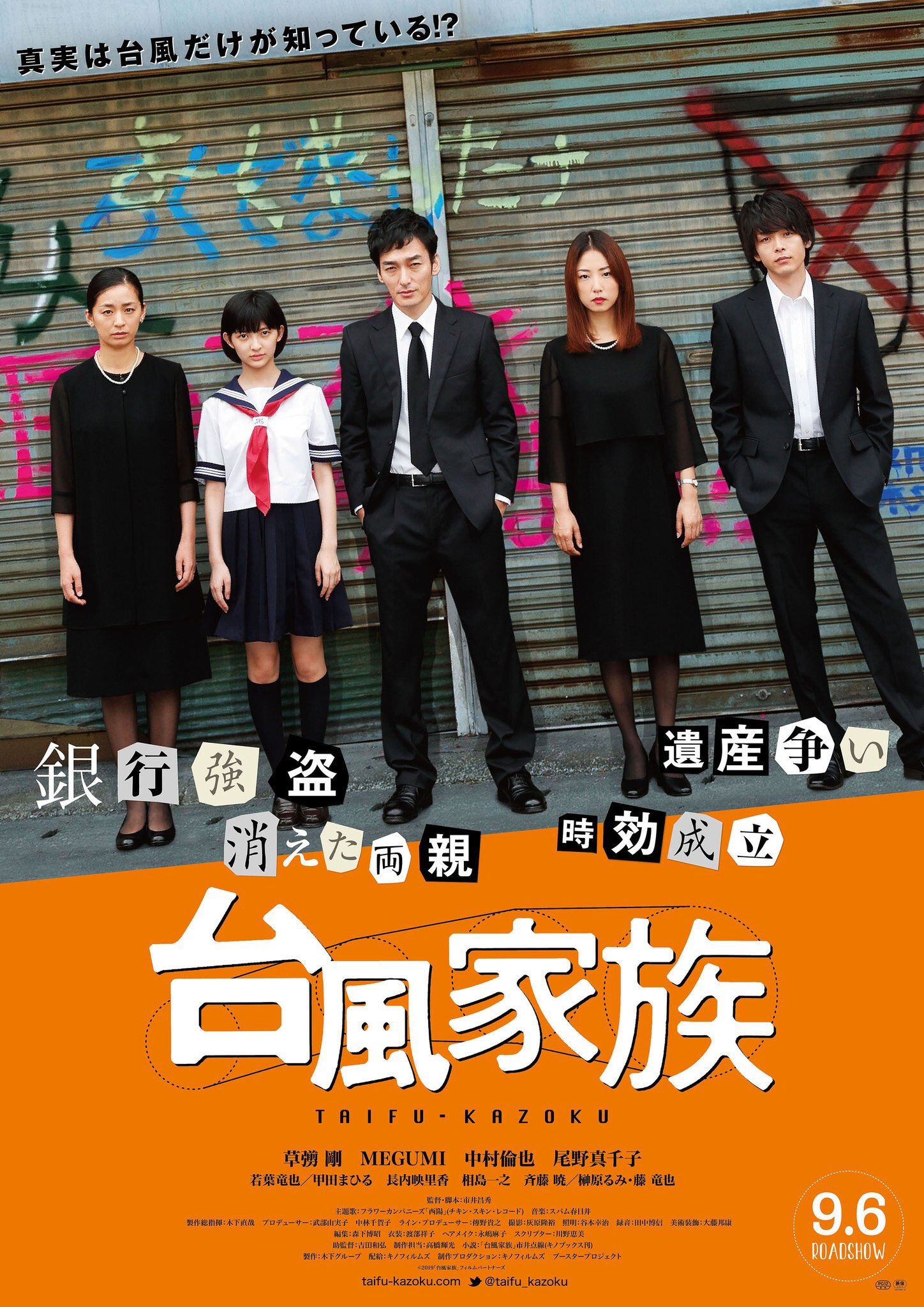
The Stormy Family (台風家族, Masahide Ichii, 2019)

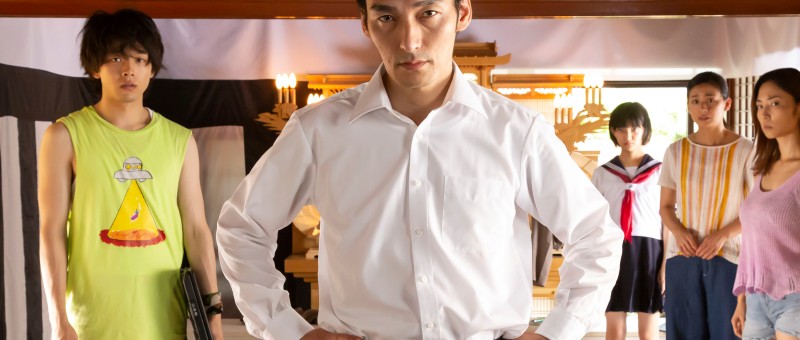
A disparate group of now middle-aged children orphaned by the storm of their parents’ abandonment struggle to find solidarity on reuniting to put the past to rest, but eventually come to an understanding in letting go in Masahide Ichii’s darkly comic tale of familial resentments, The Stormy Family (台風家族, Taifu Kazoku, AKA Typhoon Family). Battling not just a sense of betrayal, but intense resentment in being left to deal with the fallout of a corrupted parental legacy the kids squabble over their “inheritance” but later perhaps regain a sense of mutual connection in reclaiming their shared history. 

10 years previously, Ittetsu (Tatsuya Fuji) and his wife Mitsuko (Rumi Sakakibara) robbed a local bank and then apparently made a run for it in the family hearse. With the statute of limitations now expired, the children decide to hold a funeral having had their parents declared dead so they can divide the estate and presumably draw a line under their shared trauma. The problem is, partly, that they’re hurt believing that their parents committed a crime and then simply abandoned them, but they have each also had to deal with the stigma of being the children of the elderly bandits who robbed a bank with a hearse. Oldest son Kotetsu (Tsuyoshi Kusanagi) lost his job, daughter Rena’s (Megumi) marriage broke down, and while middle son Kyo (Hirofumi Arai) does not particularly mention how the crisis affected him, youngest brother Chihiro (Tomoya Nakamura) who was a teenager at the time remains resentful that as he only had a part-time job anyway no one from the media was very much interested in hassling him. 

Rather than finding siblings’ solidarity in their shared trauma, the crisis only seems to have driven them further apart. If perhaps slightly ashamed, they freely admit that they’ve only come to sort out the inheritance but even this leads to another argument as Kotetsu tries to use his oldest son privileges to claim he’s entitled to an unequal share because the others all went to uni on the parents’ dime, complaining that he needs the money more because he’s been unable to hold down a steady job and has to pay for his teenage daughter Yuzuki’s (Mahiru Coda) education, hoping to send her to music conservatoire in Vienna. As expected, that doesn’t go down very well with everyone else, while even Yuzuki expresses disdain and exasperation for her father’s amoral venality, telling him to get back on his feet with honest work rather than trying to cheat his siblings out of their birthright. In this, however, the family largely agree he might not be so different from patriarch Ittetsu who despite his motto of “don’t bother others” often penny pinched to an extreme degree and even seemed inappropriately happy to receive new business considering he ran a funeral parlour. 

On closer investigation of their parents’ home, what the kids learn is that there were things they didn’t understand perhaps because Ittetsu didn’t want to “bother” them with an explanation, though as someone else points out family aren’t “others” and probably it should be alright to bother them. Having argued with his father when he left to pursue his dream of being an actor, Kotetsu eventually sacrificed his desires recommitting himself to making his daughter’s dreams come true instead but like Ittetsu struggles to find a way to support her emotionally. Ittetsu may have been a difficult, perhaps less than honest, man but in learning the truth the family begin to realise that his actions came from a deep place of love even if it was a love he was unable to show on the surface. 

In an extremely ironic twist, the funeral and a climactic storm eventually allow the siblings to let their parents go, forgiving them for the fallout from their crime but also for their abandonment and all the petty resentments of their childhood. The world may be a pretty dishonest place, filled with greedy monks, telephone fraudsters, schemers and thieves, and perhaps you can’t even really trust your family but a father’s love is apparently the one true thing though it might not always be easy to understand. A darkly comic take on dysfunctional family bonds and the radiating legacy of crime, The Stormy Family gradually creeps towards its macabre but surprisingly moving finale allowing the family to rediscover itself in letting go only to set them at odds once again with the corrupting influence of greed. 


The Stormy Family streamed as part of this year’s Nippon Connection.

Original trailer (no subtitles)

Images: ©2019 “The Stormy Family” FILM PARTNERS