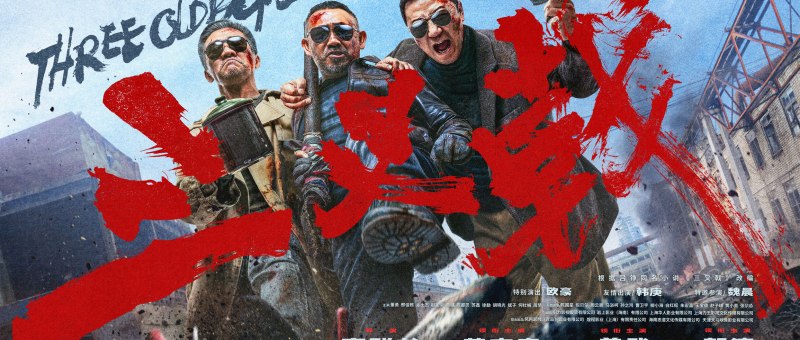
Three Old Boys (三叉戟, Gao Qunshu, 2024)

In a surprising development of Chinese propaganda cinema, the once untouchable subject of police corruption has become a prominent feature albeit often in tales of righteous cops who stand up for real justice against the few bad apples who’ve allowed themselves to be corrupted by contemporary capitalism. Then again, its subject matter might explain why TV police procedural veteran Gao Qunshu’s Three Old Boys (三叉戟, sānchājǐ) has been languishing on the shelf since at least 2020 if it were not also for the inevitable effects of the pandemic. 

In any case, Gao’s film has a distinctly retro vibe with use of classic Chinese pop and very ‘70s soundtrack while its maverick cop heroes all dress in the fashions of 40 years previously. All born in the late 1960s, they are products of an even more authoritarian era and began their careers in the late 1980s. Like any other old cop movie, they bemoan the restrictions of the contemporary society and suggest modern notions of appropriate police behaviour prevent them from doing their jobs which has its degree of awkwardness on the one hand implying the modern police force is now not so hardline but also that it should be because that’s what gets the job done. 

As they contemplate retirement, the trio are offered positions as part of a new squad set up to tackle economic crimes and specifically international money laundering, the chief problem with being that the criminals had the effrontery to move the money out of China which is stealing from honest, hardworking, Chinese citizens aside from having already ripped them off with fraudulent investment schemes and good old-fashioned blackmail operations. Of course, as it turns out, the case has a connection to something that happened 20 years earlier and police officer Cui’s (Huang Zhizhong) desire for revenge on the gangster king pin, Huang Youfa (Jin Shijie), who caused the death of his younger brother murdered by gangster Donzgi who was then shot dead by fellow officer Big G (Jiang Wu). 

The convoluted narrative is heralded by a homeless man who takes the police chief hostage and mutters something about a sword of justice that sounds like something right out of a wuxia serial before being updated to the present day. The sword does actually make a reappearance and is wielded by Big G against a young whippersnapper out for revenge and to take care of what he sees as corruption in the earlier generation. When the trio are first put on the case, they are given a young rookie to help them because he’ll be able to do the tech stuff which the old guys probably can’t because their idea of policing was largely rooted in their fists and a capacity for intimidation. But this doesn’t really work with the youth of today who are for some reason fond of reminding them they aren’t their fathers so they don’t have to do what they say. This is particularly true of young thug Blondie who is caught between Ghost, the old gangster king, and Qing an upstart who is actually working for Huang but in pursuit of his own particular goals. 

Huang has his claws well and truly embedded in the modern society and has it seems manoeuvred favourable people into the police force ensuring that Cui and his team are neutered before they get the chance to do anything. Then again, Big G seems to have a very co-dependent relationship with Ghost who tells Blondie off for getting into a fight with him because cops are off limits. Nevertheless, the point is to dismantle Huang’s networks of influence to restore the integrity of the police force so they can enforce the law which exists for the protection of the people. It’s all rather confusing, but generally lightened by the intense action sequences designed by Yoo Sang-Seob which are also suitably retro but make good use of sword play along with a motorcycle chase. Perhaps ironically inspired by Hollywood hero cop dramas, the film ends with a regime change and a new photo being taken of the guys in their more modern uniforms receiving a commendation with the clear indication that something has been put to rest and the rebellion suggested by Qing’s attempt to steal power from the old quelled while the old boys seemingly decide that justice requires they put off their retirement just a little longer.


International trailer (English subtitles)
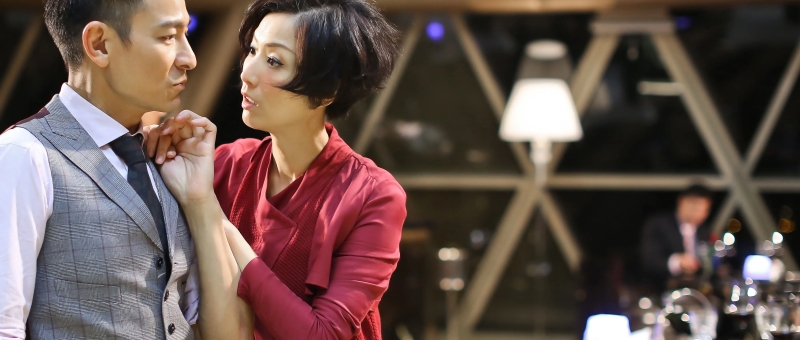
Blind Detective (盲探, Johnnie To, 2013)

Ever get that feeling someone is looking at you, but actually they were looking at someone else? The mismatched cops at the centre of Jonnie To’s black comedy love farce Blind Detective (盲探) seem to encounter this phenomenon more often than most as To and screenwriter Wong Ka-Fai delight in waltzing the audience towards an unexpected conclusion filled with ironic symmetries and persistent doubling as the detectives role-play their way towards truths literal and emotional. 

Former policeman Johnston (Andrew Lau Tak-wah) lost his sight after ignoring an eye problem in order to solve his case and has been working as a kind of private detective ever since, looking into cold cases with reward money attached. His old buddies, however, have a habit of exploiting him as they do while trying to stop a series of sulphuric acid attacks unfairly denying him his payout by following him and then technically arresting the criminal “first” so his work doesn’t count. That is however how he first meets agile yet clueless heiress/struggling investigator Ho (Sammi Cheng Sau-man) who lives in a palatial flat left to her by her parents. Regarding him as the god of solving crime, Ho asks Johnston to help her solve a mystery which has plagued her since childhood in the disappearance of Minnie (Lang Yueting), an “unsociable” young girl with no friends who confessed to her that she was worried about becoming the kind of person who could kill for love as her mother and grandmother had done. Little Ho was frightened and stopped hanging out with Minnie even though she stood outside her apartment block just staring up at her in loneliness. Adult Ho feels guilty and ashamed, hoping she can make amends by finding out what happened to her friend. 

Like the earlier Mad Detective, Johnston has a special gift and unconventional investigational style which involves a lot of method acting and physical role-play even going to far as to force Ho into getting the same tattoo as one of the victims in a case he’s pursuing. His sightlessness at times allows him to see what others do not, but even his gaze is occasionally misdirected. Ironically enough he’d put off asking out his crush until after he finished his case only to then go blind, while she in turn had put off seeking out hers until after her competition only to lose sight of him, Johnston never realising that when he thought she was looking at him she was actually looking at someone else. The same thing happens with Ho and Minnie, Ho unaware of all the facts never realising there might have been another reason for Minnie’s behaviour. Frequently they look for one thing and find something else, accidentally uncovering a prolific cross-dressing cannibal caveman serial killer living alone in the woods surrounded by skeletons which turns out to have little relationship to their original case save for its tangential link in the killer’s preference for brokenhearted women. 

Everything is disguised as something else, the killer of the first case setting up the crime scene to look like his victims killed each other with no one else present while two brokenhearted souls stowaway in wardrobes hoping to reunite with lovers who have rejected them, the second later changing their appearance in order to get a second chance. Love does indeed make you do strange things, the sulphuric acid thrower apparently taking some kind of indirect revenge for his wife’s infidelity as he reveals through a manic phone call first berating and then forgiving her while randomly buying a big bottle helpfully marked “sulphuric acid” from a local supermarket. Yet in this screwball comedy throwback it takes a little while for the oblivious Johnston to realise that he’s fallen for his infatuated new partner who can’t quite be sure he hasn’t fallen for her bank balance instead. 

Despite the persistent darkness of serial killings and crimes of passions, Blind Detective is at heart a romantic comedy filled with absurdist, slapstick humour in which the heroes literally tango their way to emotional authenticity, a dance which in part at least requires each partner to look away from the other. To’s delightfully arch comical mystery romance is a tale of misdirected glances and buried truths but eventually allows its equally burdened detectives to step away from their personal baggage and embrace a happier future. 


Original trailer (English subtitles)

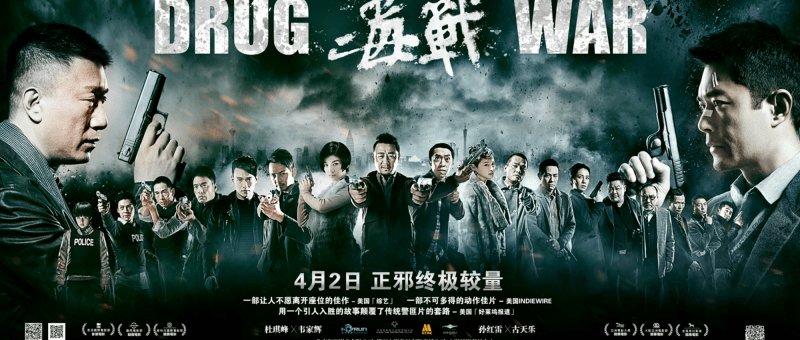
Drug War (毒戰, Johnnie To, 2012)

Drug War posterIn the world of the Hong Kong action flick, the bad guys are often the good guys, and the “good guys” not so good after all. Even crooks have their code and there are rules which cannot be broken ensuring the heroes, even when they’re forced into morally dubious acts, emerge with a degree of nobility in having made a free choice to preserve their honour over their life. In Mainland China, however, things are a little different. The bad guys have to be thoroughly bad and the good guys squeaky clean. You won’t find any dodgy cops or dashing villains in a thriller from the PRC where crime can never, ever, pay. And then, enter Johnnie To who manages to exactly what the censors board asks of him while at the same painting law and chaos as two sides of the same coin, each deluded and obsessed, engaged in an internecine war in which the idea of public safety has been all but forgotten.

The film begins with the conclusion of an undercover operation run by Captain Zhang (Sun Honglei) in which he successfully disrupts a large scale smuggling operation. Meanwhile, meth cook Timmy Choi (Louis Koo) attempts to escape after an explosion kills his wife and her brothers but drives directly into a restaurant and is picked up by the police. Timmy soon wakes up and tries to escape but is eventually recaptured – from inside the chiller cabinet in the morgue in a particularly grim slice of poetic irony. Seeing as drug manufacture carries the death penalty in the PRC, Timmy turns on the charm. He’ll talk, say anything he needs to say, to save his own life. Including giving up his buddies.

Timmy is, however, a cypher. His true intentions are never quite clear – is he really just an opportunist doing whatever it takes to survive, or does he still think he can escape and is engaged in a series of clever schemes designed outsmart the ice cool Zhang? Zhang takes the bait. Eyeing a bigger prize, he lets Timmy take him into the heart of a finely tuned operation even playing the part of loudmouth gangster Haha in a studied performance which reinforces the blankness of his officialdom. Zhang is certain he is in control. He is the law, he is the state, he is the good.

Could he have misread Timmy? Zhang doesn’t think so. Timmy remains calm, watchful. Eventually he leads Zhang to a bigger drug factory staffed by a pair of mute brothers who have immense respect for their boss. Suddenly Timmy’s impassive facade begins to crack as he tells his guys about his wife’s passing but it’s impossible to know if his momentary distress is genuine, a result of mounting adrenaline, or simply part of his plan – he does, after all, need to get the brothers to give themselves away. Unbeknownst to Timmy, however, the brothers are pretty smart and might even be playing their own game.

To pits Hong Konger Timmy against Captain Zhang of the PRC in a game of cat and mouse fuelled by conflicting loyalties and mutual doubts. Whatever he’s up to, Timmy is a no good weasel who is either selling out his guys or merely pretending to so that he can save them (or maybe just save himself and what’s left of his business). Zhang, meanwhile, is a singleminded “justice” machine who absolutely will not stop, ever, until all the drug dealers in China have been eradicated. Yet isn’t all of this destruction a little bit much? Zhang doesn’t really care about the drugs because drug abuse wrecks people’s lives, maybe he doesn’t really care about the law but only about order and control, and what men like Timmy represent is a dangerous anarchy which exists in direct opposition to his conception of the way the world ought to work.

There is a degree of subversive implication in the seemingly overwhelming power of the PRC coupled with its uncompromising rigidity which paradoxically makes it appear weak rather than strong, desperate to maintain an image of control if not the control itself. The final fight takes place in front of a school with a couple of completely non-fazed and very cute little children trapped inside a school bus – Timmy does at least try to keep them calm even while using them as part of his plan, but Zhang and his guys seem to care little for the direction of the stray bullets they are spraying in order to win the internecine battle with the drug dealers and stop Timmy in his tracks once and for all. A pared down, non-stop action juggernaut, Drug War (毒戰, Dú Zhàn) is another beautifully constructed, infinitely wry action farce from To which takes its rather grim sense of humour all the way to the tragically ironic conclusion.


International trailer (English subtitles)
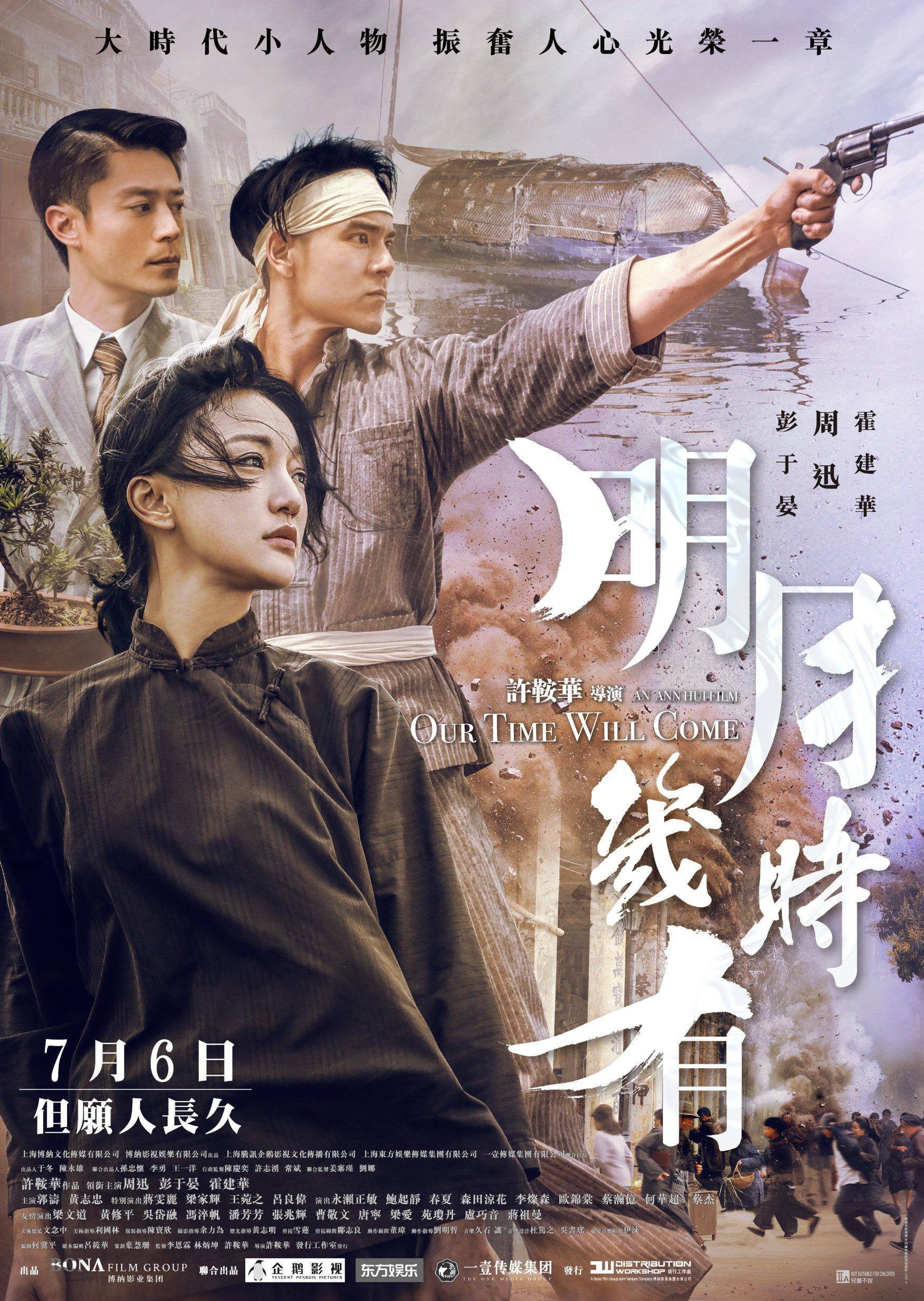
Our Time Will Come (明月幾時有, Ann Hui, 2017)

our time will come posterFor Ann Hui, the personal has always been political, but in the war torn Hong Kong of the mid-1940s, it has never been more true. Our Time Will Come (明月幾時有, Míng Yuè Jǐ Shí Yǒu) was pulled from its opening slot at the Shanghai film festival though it was permitted a screening at a later date. At first glance it might be hard to see what might be objectionable in the story of the resistance movement against the Japanese, but given that this year marks the 20th anniversary of Hong Kong’s handover from British colonial rule to mainland China, there is an obvious subtext. Yet, at heart, Hui’s film is one of resilience and longing in which “see you after the victory” becomes a kind of talisman, both prayer and pleasantry, as the weary warriors prepare for a better future they themselves do not expect to see.

In 1942, school teacher “Miss Fong” Lan (Zhou Xun) lives with her mother (Deanie Ip), a landlady who rents out her upstairs room to none other than Lan’s favourite poet, Mao Dun (Guo Tao). Lan also has a boyfriend, Gam-wing (Wallace Huo), who proposes marriage to her and then announces his intention to leave town. Not really interested in marrying someone who is already leaving her, Lan ends things on a slightly sour note but her refusal is more than just practicality – she wants something more out of life than being an absent man’s wife. Mrs. Fong is an expert in finding out things she isn’t supposed to know (a true landlady skill) and so has figured out that her lodgers are looking to move on. Mao Dun is supposed to make contact with notorious rebel Blackie Lau (Eddie Peng) who will guarantee passage out of Hong Kong for himself and his wife. Unfortunately, he is a little late and a Japanese spy turns up just at the wrong time. Luckily, Lau arrives and solves the problem but a sudden curfew means he can’t complete his mission – which is where Lan comes in. Lau entrusts the group of intellectuals to Lan, instructing her to guide them to a typhoon shelter where another contact will meet them.

This first brush with the business of rebellion provides the kind of excitement Lan has been looking for. Impressed with her handling of the mission, Lau returns and offers Lan a permanent place in his movement as part of a new urban cohort. Her life will be dangerous and difficult, but Lan does not need to think about it for very long. Her mother, ever vigilant, frets and worries, reminding her that this kind of work is “best left to men” but Lan is undeterred. Ironically enough, Lan has never felt more free than when resisting Japanese oppression with its nightly crawls accompanied by noisy drumming looking for the area’s vulnerable young girls. Mrs. Fong blows out the candles and moves away from the windows, but Lan can’t help leaning out for a closer look.

Hui keeps the acts of oppression largely off screen – the late night crawls are heard through the Fongs’ windows with Mrs. Fong’s worried but resigned reaction very much in focus. The schools have been closed and rationing is in full force, but most people are just trying to keep their heads down and survive. The local Japanese commander, Yamaguchi (Masatoshi Nagase), is a figure of conflicted nobility who quotes Japanese poetry and has a rather world weary attitude to his difficult position but when he discovers he’s been betrayed by someone he regarded as a friend, the pain is personal, not political.

Yamaguchi tries and fails to generate an easy camaraderie with his colleague, but the atmosphere among the rebels is noticeably warm. Lan becomes a gifted soldier and strategist but she never loses her humanity – embracing wounded comrades and caring for the children who often carry their messages. When Lan discovers that someone close to her has been captured and is being held by the Japanese she enlists the help of Lau who is willing to do everything he can for her, but coming to the conclusion the mission is impossible Lan’s pain is palpable as she wrestles with the correct strategic decision of leaving her friends behind rather than compromise the entire operation. What exists between Lan and Lau is not exactly a “romance”, the times don’t quite permit it, but a deferred connection between two people with deep respect for each other and a knowledge that their mission is long and their lives short.

Hui bookends the film with a black and white framing sequence in which she also features interviewing survivors of the resistance movement including an elderly version of the young boy, Ben, who is still driving a taxi to get by even at his advanced age. Ben is a symbol of hidden everyday heroes from the pharmacists who treated wounded soldiers, and the old ladies who cooked and provided shelter, to the resistance fighters who risked their lives in more overt ways, who then went back to living ordinary lives “after the victory”. The film’s final images seem to imply that Hong Kong’s time has come, that perhaps the eras of being passed, mute, from one master to another may be nearing an end but the time is not yet at hand, all that remains is to resist.


Screened at the BFI London Film Festival 2017.

International trailer (English subtitles/captions)

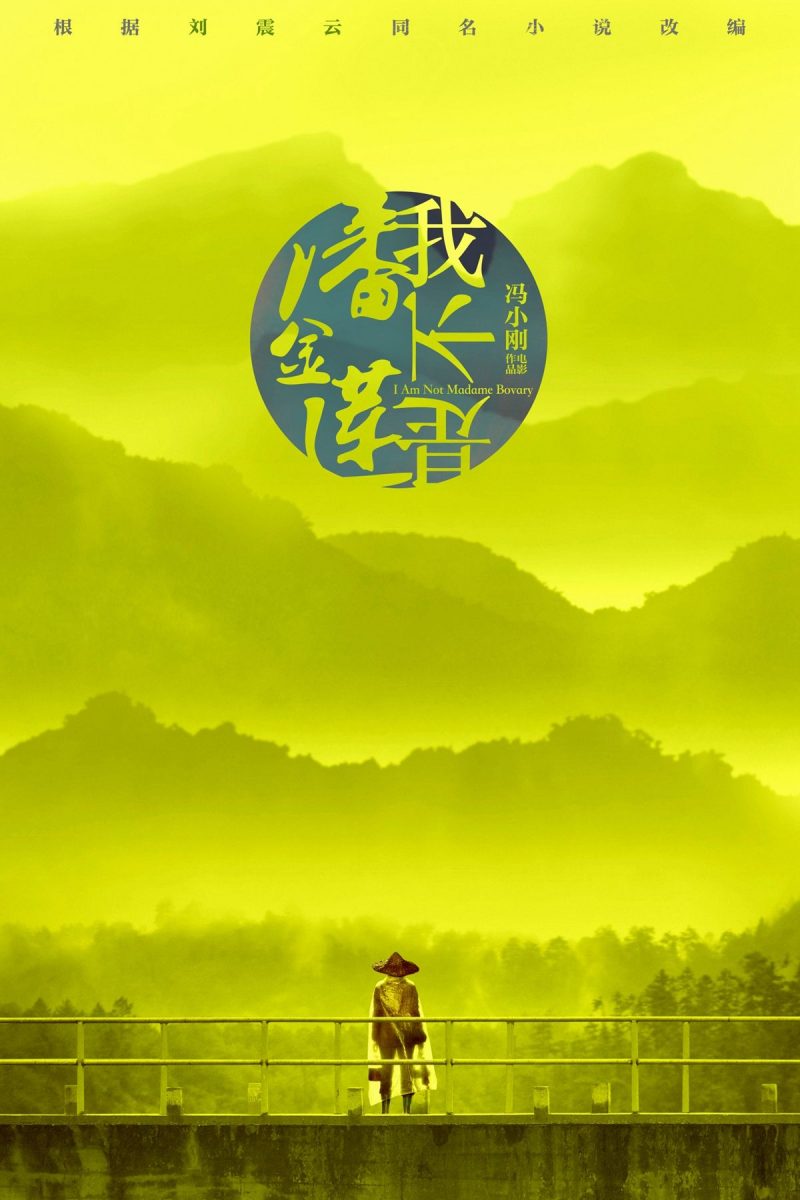
I am Not Madame Bovary (我不是潘金莲, Feng Xiaogang, 2017)

I-Am-Not-Madame-Bovary-posterFeng Xiaogang, often likened to the “Chinese Spielberg”, has spent much of his career creating giant box office hits and crowd pleasing pop culture phenomenons from World Without Thieves to Cell Phone and You Are the One. Looking at his later career which includes such “patriotic” fare as Aftershock, Assembly, and Back to 1942 it would be easy to think that he’s in the pocket of the censors board. Nevertheless, there’s a thin strain of resistance ever-present in his work which is fully brought out in the biting satire, I am not Madame Bovary (我不是潘金莲, Wǒ Búshì Pān Jīnlián).

Truth be told, the adopted Western title is mostly unhelpful as the film’s heroine, Liu Xuelian (Fan Bingbing), is no romantic girl chasing a lovelorn dream to escape from the stultifying boredom of provincial bourgeois society, but a wronged peasant woman intent on reclaiming her dignity from a world expressly set up to keep people like her in their place. Feng begins the movie with a brief narrative voice over to set the scene in which he shows us a traditional Chinese painting depicting the famous “Pan Jinlian” whose name has become synonymous with romantic betrayal. More Thérèse Raquin than Madame Bovary, Pan Jinlian conspired with her lover to kill her husband rather than becoming consumed by an eternal stream of romantic betrayals.

Xuelian has, however, been betrayed. She and her husband faked a divorce so that he could get a fancy apartment the government gives to separated people where they could live together after remarrying sometime later. Only, Xuelian’s husband tricked her – the divorce was real and he married someone else instead. Not only that, he’s publicly damaged her reputation by branding her a “Pan Jinlian” and suggesting she’s a fallen woman who was not a virgin when they married. Understandably upset, Xuelian wants the law to answer for her by cancelling her husband’s duplicitous divorce and clearing her name of any wrongdoing.

Xuelian’s case is thrown out of the local courts, but she doesn’t stop there, she musters all of her resources and takes her complaint all the way to Beijing. Rightfully angry, her rage carries her far beyond the realms a peasant woman of limited education would expect to roam always in search of someone who will listen to her grievances. When no one will, Xuelian resorts to extreme yet peaceful measures, making a spectacle of herself by holding up large signs and stopping petty officials in their fancy government cars. Eventually Liu Xuelian becomes an embarrassment to her governmental protectors, a symbol of wrongs they have no time to right. These men in suits aren’t interested in her suffering, but she makes them look bad and puts a stain on their impressive political careers. Thus they need to solve the Liu Xuelian problem one way or another – something which involves more personal manipulation than well-meaning compromise.

Bureaucratic corruption is an ongoing theme in Chinese cinema, albeit a subtle one when the censors get their way, but the ongoing frustration of needing, on the one hand, to work within a system which actively embraces its corruption, and on the other that of necessarily being seen to disapprove of it can prove a challenging task. Xuelian’s struggles may lean towards pettiness and her original attempt to subvert the law for personal gain is never something which thought worthy of remark, but her personal outrage at being treated so unfairly and then so easily ignored is likely to strike a chord with many finding themselves in a similar situation with local institutions who consistently place their own gain above their duty to protect the good men and women of China.

A low-key feminist tale, Xuelian’s quest also highlights the plight of the lone woman in Chinese society. Tricked by unscrupulous men, she’s left to fend for herself with the full expectation that she will fail and be forced to throw herself on male mercy. Xuelian does not fail. What she wants is recognition of her right to a dignified life. The purpose of getting her divorce cancelled is not getting her husband back but for the right to divorce him properly and refute his allegations of adultery once and for all. Xuelian wants her good name back, and then she wants to make a life for herself freed from all of this finagling. She’s done the unthinkable – a petty peasant woman has rattled Beijing and threatened the state entire. Making oneself ridiculous has become a powerful political weapon. All of this self-assertion and refusal to backdown with one’s tail between one’s legs might just be catching.

Adding to his slightly absurdist air, Feng frames the tale through the old-fashioned device of an iris. Intended to recall the traditional scroll paintings which opened the film, the iris also implies a kind of stagnation in Xuelian’s surroundings. Her movements are impeded, her world is small, and she’s always caught within a literal circle of gossip and awkward, embarrassing scenes. Moving into the city, Feng switches to a square instead – this world is ordered and straightened but it’s still one of enforced rigidity, offering more physical movement but demanding adherence to its strict political rules. Only approaching the end does something more like widescreen with its expansive vistas appear, suggesting either that a degree of freedom has been found or the need to comply with the forces at be rejected but Xuelian’s “satisfaction” or lack of it is perhaps not worth the ten years of strife spent as a petty thorn in the government’s side. Perhaps this is Feng’s most subversive piece of advice, that true freedom is found only in refusing to play their game. They can call you Pan Jinlian all they please, but you don’t need to answer them.


I am not Madame Bovary was screened as part of the 19th Udine Far East Film Festival.

Original trailer (English subtitles)