Love Massacre (愛殺, Patrick Tam Kar-Ming, 1981)

Is Love Massacre a massacre of love, a massacre for love, or is it love itself that inevitably leads to death? Patrick Tam’s second film draws inspiration from European and Hollywood cinema along with the French New Wave including the films of Godard, most obviously in its screen composition and bold use of reds and blues echoing Pierrot le Fou, while also leaning into Antonin Artaud’s Theatre of Cruelty in focusing on a sensory experience rather than expository dialogue.

Shot mainly in the US on account of star Brigitte Lin’s schedule, the film takes place in an uncanny space of another Hong Kong peopled by overseas students in San Francisco. Ivy (Brigitte Lin) has become good friends with Joy (Tina Lau), an emotionally fragile young woman uncertain in her relationship with boyfriend Louie (Charlie Chin) who plans to move to New York. Feeling abandoned, she attempts to take her own life by slashing her wrists, but survives. Not knowing what to do, Ivy calls Joy’s brother Chu Chung (Chang Kuo-chu) for further support, but he insists that his sister is fine and resists their efforts to get Joy to see a doctor. Meanwhile, he and Ivy begin a passionate affair.

Up to this point, Lin had mostly starred in romantic melodramas and Tam plays with this cinematic baggage in beginning the film in the same vein only to later change direction as it descends into madness and violence. Chu Chung appears to be living with a mental health condition of his own which informs his reluctance to get help for Joy. Joy, meanwhile, appears to be worried both about the latent attraction between Louie and Ivy, and Ivy’s relationship with her brother. Joy tells Louie that she doesn’t like Ivy dating Chu Chung, leading Ivy to wonder if Joy may have had an incestuous obsession with her brother, though it may equally have been because she knew of his paranoia and violence and feared for her safety. 

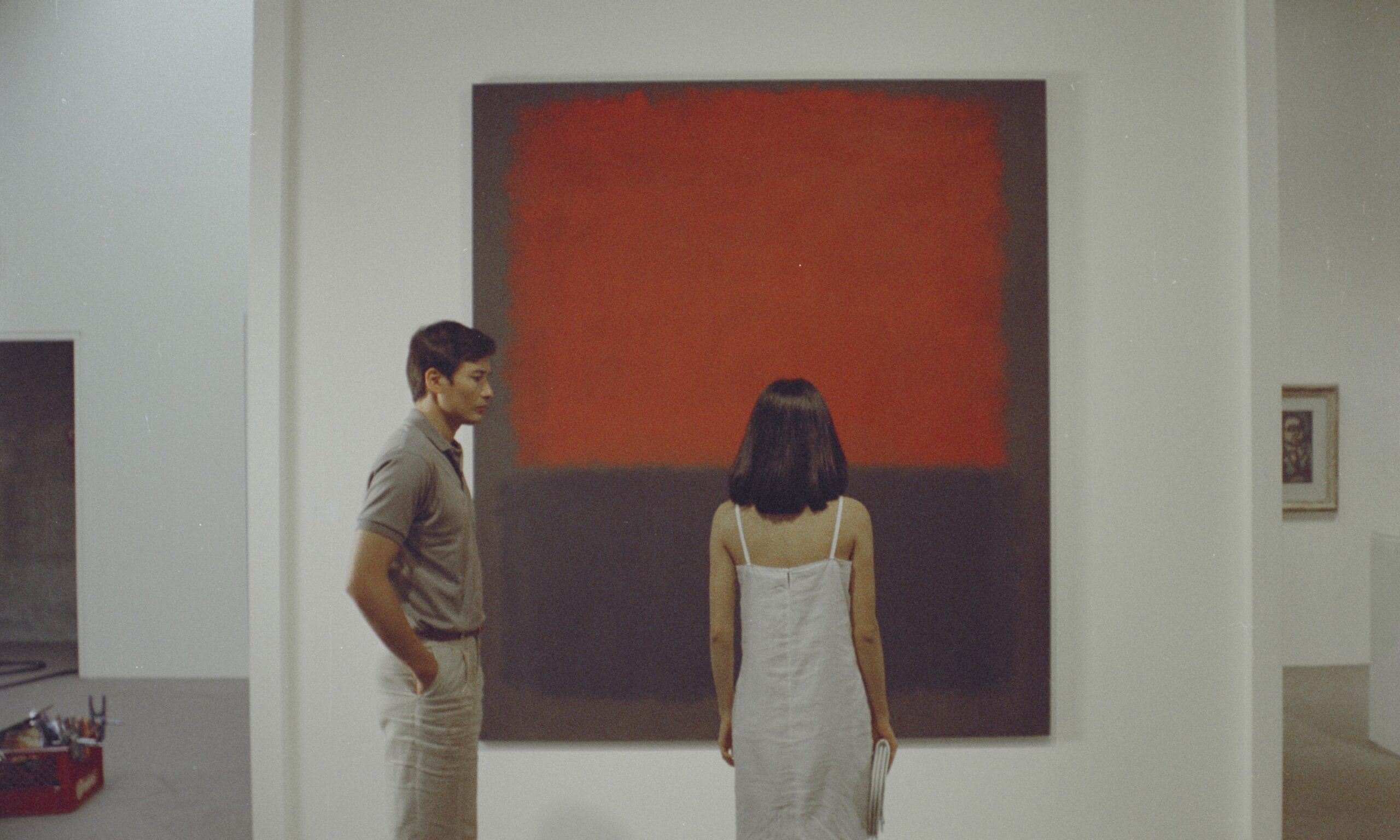
At any rate, Chu Chung did not disclose to Ivy that he was already married to a woman in Hong Kong (Deanie Ip) whom he appears to resent because she tries to constrain him by medicating his mental health condition. He ends up killing her to free himself so that he can pursue his relationship with Ivy, but soon becomes dangerously obsessed with the implication that his madness is caused by an excess of primal emotion that he is unable to control as symbolised by the violent intensity of the Mark Rothko paintings seen frequently throughout the film. 

Ivy had felt herself conflicted on coming to know of Chu Chung’s marriage accidentally and feeling both deceived and abandoned by him. She lived in a kind of fantasy of idealised romance that has now been compromised by her uncertainty after reading about a man with the same name in the paper who has apparently killed his wife in Hong Kong and gone on the run. When Chu Chung returns, his behaviour is strange and obsessive. He insists on marrying Ivy while claiming to have dealt with his wife, later confessing in detail about how he disposed of the body and ominously adding that he’ll have to think of a better way to do it next time because it was altogether too much bother. 

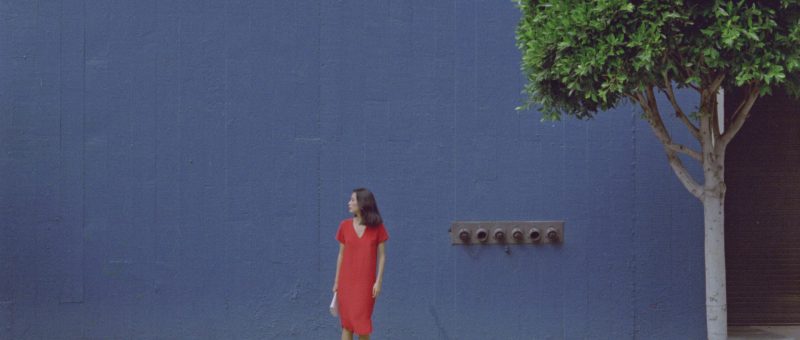
Yet despite the intensity of Chu Chung’s romantic obsession, Tam depicts his violence with extreme detachment. Chu Chung’s killing is matter of fact and motivated by resentment in that he mistakenly believes they are deliberately preventing him from being with Ivy, who has ironically sought out Louie after running away from Chu Chung in fear. In the earlier stages of their affair, Ivy had often been seen in a vivid red dress given to her by Chu Chung which symbolised her passionate emotion, but on Chu Chung’s return she is mainly seen in white which is a colour more closely associated with death. Chu Chung is also dressed entirely in white, which, on the one hand, is designed for maximum impact as his clothes become stained with blood, but also marks him out as a figure who represents destruction.

To that extent, he comes to embody the violent intensity of romantic obsession suggesting that love itself is a kind of madness that can only result in death just as it does for Joy when her love for Louie is not met with the same degree of passion. In confronting Chu Chung, Ivy is also directly confronting the emotions she was otherwise afraid to face and perhaps conquering them in being forced to make a choice how best to “help” Chu Chung while his obsession threatens to consume her. Using Hitchcockian music cues and conjuring a sense of dread in a city that seems isolated and empty, almost an imaginary backdrop with its de Chirico-inspired murals, Tam subverts genre tropes to spin a tale of love and madness. In the end, the “love killing” of the Chinese title might not be the ones perpetrated by Chu Chung but the final decision taken by Ivy motivated either by mercy or a desire for liberation.


Trailer (English subtitles)

Our Time Will Come (明月幾時有, Ann Hui, 2017)

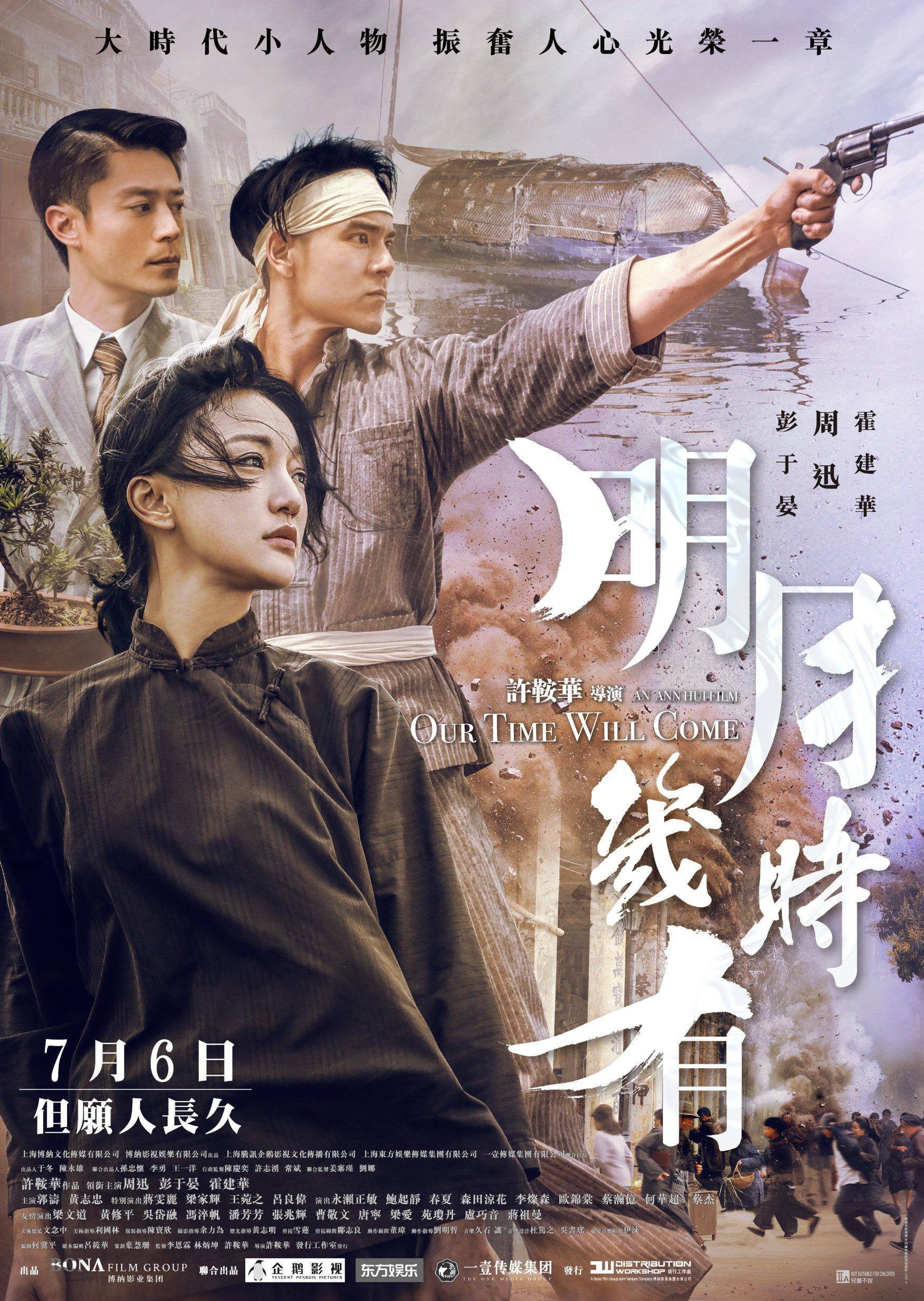
our time will come posterFor Ann Hui, the personal has always been political, but in the war torn Hong Kong of the mid-1940s, it has never been more true. Our Time Will Come (明月幾時有, Míng Yuè Jǐ Shí Yǒu) was pulled from its opening slot at the Shanghai film festival though it was permitted a screening at a later date. At first glance it might be hard to see what might be objectionable in the story of the resistance movement against the Japanese, but given that this year marks the 20th anniversary of Hong Kong’s handover from British colonial rule to mainland China, there is an obvious subtext. Yet, at heart, Hui’s film is one of resilience and longing in which “see you after the victory” becomes a kind of talisman, both prayer and pleasantry, as the weary warriors prepare for a better future they themselves do not expect to see.

In 1942, school teacher “Miss Fong” Lan (Zhou Xun) lives with her mother (Deanie Ip), a landlady who rents out her upstairs room to none other than Lan’s favourite poet, Mao Dun (Guo Tao). Lan also has a boyfriend, Gam-wing (Wallace Huo), who proposes marriage to her and then announces his intention to leave town. Not really interested in marrying someone who is already leaving her, Lan ends things on a slightly sour note but her refusal is more than just practicality – she wants something more out of life than being an absent man’s wife. Mrs. Fong is an expert in finding out things she isn’t supposed to know (a true landlady skill) and so has figured out that her lodgers are looking to move on. Mao Dun is supposed to make contact with notorious rebel Blackie Lau (Eddie Peng) who will guarantee passage out of Hong Kong for himself and his wife. Unfortunately, he is a little late and a Japanese spy turns up just at the wrong time. Luckily, Lau arrives and solves the problem but a sudden curfew means he can’t complete his mission – which is where Lan comes in. Lau entrusts the group of intellectuals to Lan, instructing her to guide them to a typhoon shelter where another contact will meet them.

This first brush with the business of rebellion provides the kind of excitement Lan has been looking for. Impressed with her handling of the mission, Lau returns and offers Lan a permanent place in his movement as part of a new urban cohort. Her life will be dangerous and difficult, but Lan does not need to think about it for very long. Her mother, ever vigilant, frets and worries, reminding her that this kind of work is “best left to men” but Lan is undeterred. Ironically enough, Lan has never felt more free than when resisting Japanese oppression with its nightly crawls accompanied by noisy drumming looking for the area’s vulnerable young girls. Mrs. Fong blows out the candles and moves away from the windows, but Lan can’t help leaning out for a closer look.

Hui keeps the acts of oppression largely off screen – the late night crawls are heard through the Fongs’ windows with Mrs. Fong’s worried but resigned reaction very much in focus. The schools have been closed and rationing is in full force, but most people are just trying to keep their heads down and survive. The local Japanese commander, Yamaguchi (Masatoshi Nagase), is a figure of conflicted nobility who quotes Japanese poetry and has a rather world weary attitude to his difficult position but when he discovers he’s been betrayed by someone he regarded as a friend, the pain is personal, not political.

Yamaguchi tries and fails to generate an easy camaraderie with his colleague, but the atmosphere among the rebels is noticeably warm. Lan becomes a gifted soldier and strategist but she never loses her humanity – embracing wounded comrades and caring for the children who often carry their messages. When Lan discovers that someone close to her has been captured and is being held by the Japanese she enlists the help of Lau who is willing to do everything he can for her, but coming to the conclusion the mission is impossible Lan’s pain is palpable as she wrestles with the correct strategic decision of leaving her friends behind rather than compromise the entire operation. What exists between Lan and Lau is not exactly a “romance”, the times don’t quite permit it, but a deferred connection between two people with deep respect for each other and a knowledge that their mission is long and their lives short.

Hui bookends the film with a black and white framing sequence in which she also features interviewing survivors of the resistance movement including an elderly version of the young boy, Ben, who is still driving a taxi to get by even at his advanced age. Ben is a symbol of hidden everyday heroes from the pharmacists who treated wounded soldiers, and the old ladies who cooked and provided shelter, to the resistance fighters who risked their lives in more overt ways, who then went back to living ordinary lives “after the victory”. The film’s final images seem to imply that Hong Kong’s time has come, that perhaps the eras of being passed, mute, from one master to another may be nearing an end but the time is not yet at hand, all that remains is to resist.


Screened at the BFI London Film Festival 2017.

International trailer (English subtitles/captions)