Face (顔, Junji Sakamoto, 2000)

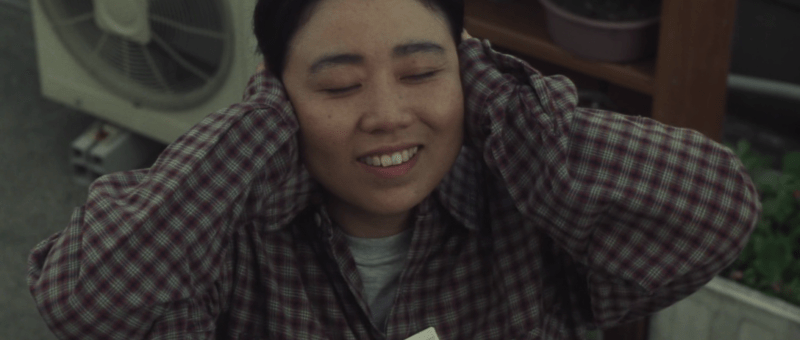
In some ways an innocent’s voyage through the nihilistic landscape of mid-90s Japan, Junji Sakamoto’s Face (顔, Kao) is also a character study of a woman who developed a fear of being seen, in large part because of social prejudice. In a heartbreaking moment, Masako (Naomi Fujiyama) reveals that her father, who left when she was 10, told her that she didn’t have to learn to swim or ride a bike if she didn’t want to. But Masako did want to learn, she just felt she couldn’t because people found her clumsiness “embarrassing”. It’s not completely clear whether Masako’s father said that because he felt bad seeing Masako being picked on by the other kids, or if he too felt ashamed that his daughter was evidently a little different from the other children.

It’s this sense of rejection and loathing that’s manifested in Masako’s bar hostess sister, Yukari (Riho Makise) who is exploitative of her, pressuring her to mend clothing belonging to one of her customers, and becoming physically abusive by tripping her when she refuses. Yukari lies that their mother agrees Masako should be institutionalised, provoking her into a rare trip out of her house running out into the snow in only her slippers and taking a round-trip on a train until Yukari’s gone. The two women are almost polar opposites, and in some ways Yukari’s cruelty may be motived by seeing in Masako’s face the elements of herself that she most fears and dislikes.

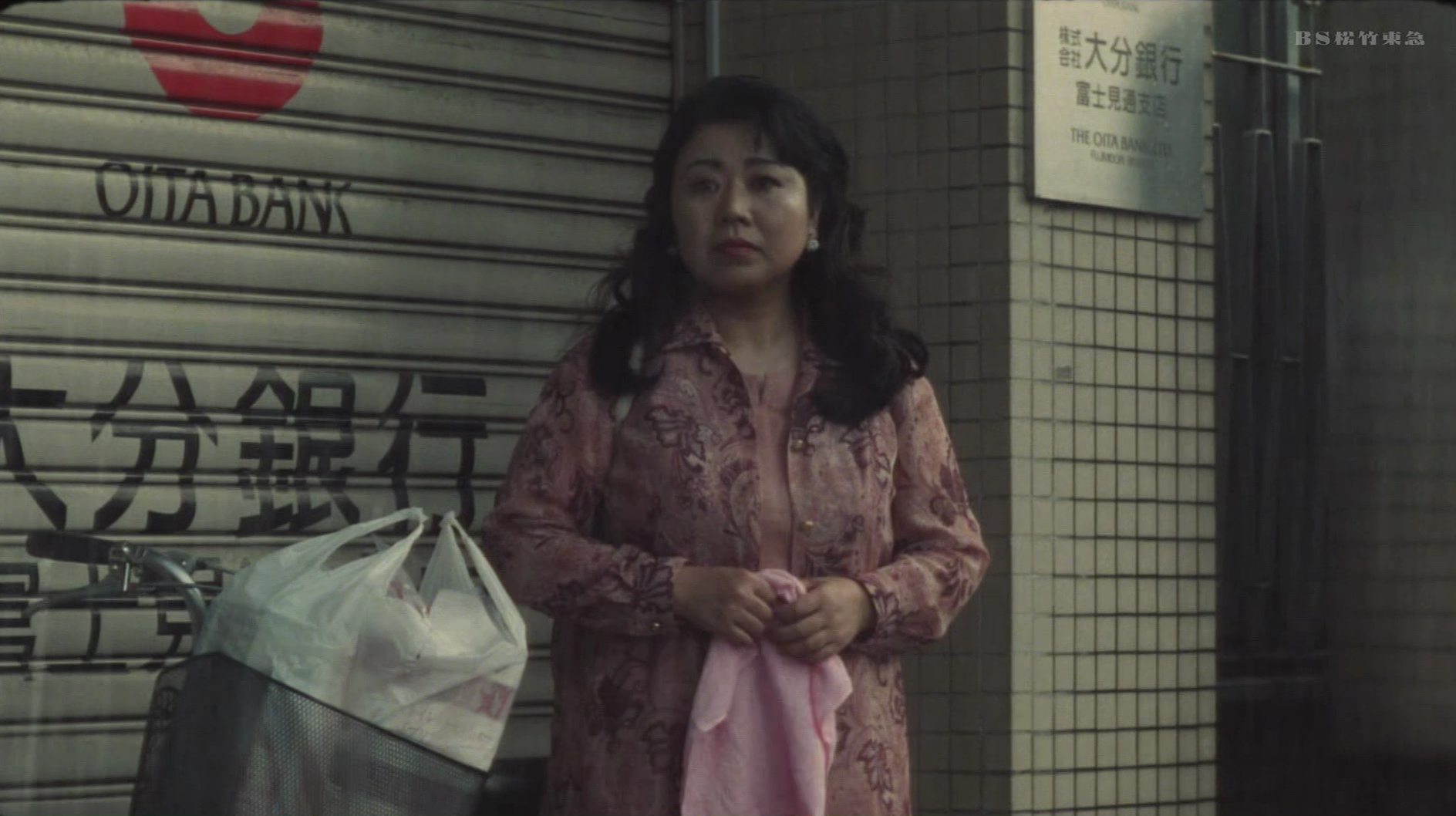
Nevertheless, when their mother dies and Yukari implies she plans to turn the family dry cleaner’s into a cafe evicting Masako in the process, Masako ends up snapping and strangling Yukari with her unfinished knitting. In killing Yukari she has, in a sense, freed herself from the oppressiveness of her hate and the inferiority complex it produced in her. Forced on the run on the eve of the Kobe earthquake, she believes the disaster to be her fault, but also takes advantage of the chaos to disappear into a crowd of other displaced persons making their way towards Osaka. It’s there she ends up getting a job at a love hotel under the name of new wave actress “Mariko Kaga,” but every time she starts to settle into a new life and blossoms when surrounded by more supportive presences, her new family quickly crumbles and she’s forced back on the run.

In an ironic twist, many of the ruined men she comes across, some of whom sexually assault her, take on the role of the father she never had. The manager at the love hotel (Ittoku Kishibe) tries to teach her how to ride a bike, though he is privately drowning in gambling debts and about to lose everything. Later she’s sold by a man trying to escape his life as a yakuza to a regular at a bar where she’s been working who bizarrely also begins to teach her to swim. The man who assaulted her originally had lost work because of the earthquake and tried to exorcise his sense of powerlessness by forcing himself on Masako. Her decision to hand him some of the funeral condolence money she stole before leaving is her way of reasserting power over the situation, paying him for this life lesson and shifting the stigma back onto him rather than accept it herself. 

Hiroyuki (Etsushi Toyokawa), the former yakuza, may have sold her as a kind of revenge seeing as he seems to resent her for her difference, but also identifies with her seeing them both as “losers”, which is a label Masako no longer really agrees with. But unlike her, Hiroyuki can no longer escape his fate and the yakuza is not often an occupation you can just give up even if it were not for vague hints at trouble in the city that’s forced him back to pleasant onsen town Beppu on the southern island Kyushu. Even the man that Masako takes a liking to simply because he’s kind to her (Koichi Sato) has recently been made redundant. His wife has left him with their young son and he’s resorted to blackmailing his former employer to get what he’s owed. This breach of the employer-employee contract exemplifies the sense of betrayal among people of this generation who were promised jobs for life under the post-war salaryman model but have been chewed up and spit out by the post-Bubble economy.

Masako, however, is flourishing during her life on the run. Her family had treated her as if she had some kind of learning difficulties and had forced her into a kind of arrested development in which she feared the outside world and had poorly developed social skills. The scars of her trauma are literally manifested on her face after she falls off her bicycle, but it’s true enough that through her various experiences she is able to take on different personas only for her actual face to give her away in the end. Just as after she’d run away, Masako encountered a strange and possibly over-friendly woman in a cafe who is later revealed to be a fugitive, like her on the run for murder, modelled in the real life murderer Kazuko Fukuda who evaded the police for over 14 years through having repeated plastic surgery. Masako never alters her face, in fact it’s ironically her true face that becomes further exposed as she comes into herself thanks to those she meets, but is able to become various other people hinting at all the lives she was denied as Masako the despised sister hunched over a sewing machine. Though contemporary Japan may seem to be a bleak and hopeless place, denying Masako the romantic fulfilment and happy life she longed for, it’s she alone who wants to live, desperately swimming out to sea having been pushed all the way out of Japan but forever in search of new horizons.

The Blood of Wolves (孤狼の血, Kazuya Shiraishi, 2018)

korou_honpos_0220_fin.aiJapanese cinema, like American cinema, is one of the few in which the hero cop is a recognisable trope. Though they may be bumbling, inefficient, obsessed with bureaucracy, or perhaps just lazy, police in Japanese cinema are rarely corrupt or actively engaged in criminality. Even within the realms of the “jitsuroku” gangster movie, the police maintain a fringe presence, permitting the existence of the underground crime world in order to contain it. “Jitsuroku” is, in a fashion, where we find ourselves with Kazuya Shiraishi’s throwback underworld police story, The Blood of Wolves (孤狼の血, Koro no Chi). Set in 1988, the end of the Showa Era which had seen the rebirth of post-war Japan and the ascendency of yakuza thuggery, The Blood of Wolves is based on a novel by Yuko Yuzuki rather than a “true account” of life on the frontlines of gangsterdom, but otherwise draws inspiration from the Battles Without Honour series in updating the story of nihilistic yakuza violence to the bubble era.

In 1988, a young accountant “goes missing” sending his sister to ask the police for help in locating him. The case gets passed to sleazy detective Ogami (Koji Yakusho) and his new rookie partner, Hioka (Tori Matsuzaka). Ogami leers disturbingly at the dame who just walked into his office before dismissing the newbie and extracting a sexual favour from the distressed relative of the missing man. Unfortunately, the accountant turns up dead and the bank he worked for turns out to be a yakuza front caught up in a burgeoning gang war between the Odani with whom Ogami has long standing connections and the gang from the next town over who are looking to increase their territory.

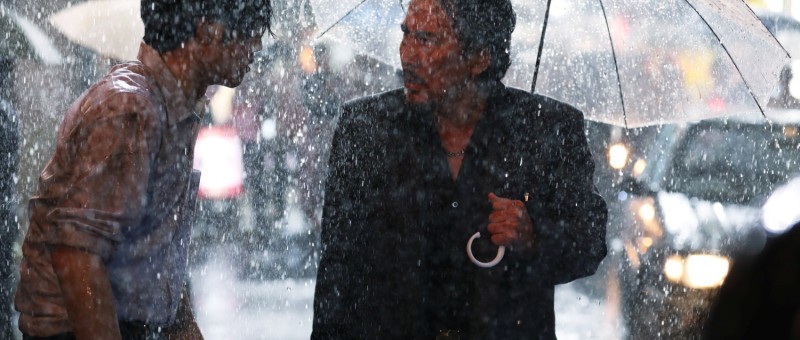
Ogami, a chain smoking, hard drinking, womanising detective of the old school, has one foot in the yakuza world and the other on the side of law enforcement. Hioka, a recent graduate from the local but also elite Hiroshima University (something of a rarity in his current occupation), is not quite sure what to make of his new boss and his decidedly “unorthodox” methods, becoming increasingly concerned about the way the police force operates in a town defined by organised crime. Deciding that Ogami has gone too far, he eventually makes the decision to go to IA with a list of complaints but there’s still so much he doesn’t know about Hiroshima and it is possible he may have picked the wrong side.

What he discovers is that the police force is so intrinsically rotten as to have become little more than a yakuza gang itself, only one with the legal right to carry guns and a more impressive uniform. Ogami, for all his faults, apparently has his heart in the right place. His “friendships” with gangsters are more means to an end than they are spiritual corruption, gaining leverage that will help him keep a lid on gang war – after all, no one wants a return to the turbulent days of the 1970s when the streets ran red with the blood of unlucky foot soldiers and that of the civilians who got in their way. Meanwhile Hioka, starting out as the straight-laced rookie, is himself “corrupted” by the corruption he uncovers, developing a complex mix of disgust and admiration for Ogami’s practiced methods of manipulation which, apparently, place public safety above all else.

Ogami, as he tells the conflicted Hioka, knows he walks a tightrope every day, neatly straddling the line between cop and yakuza, and the only way to stay alive is to keep on walking knowing one slip may lead to his doom. He may say cops can do whatever they like in pursuit of “justice” (and he does), but Ogami has his lines that cannot be crossed, unlike others in his organisation who care only for themselves and have long since given up any pretence of working for the public good.

Shiraishi channels classic Fukasaku from the noticeably retro Toei logo at the film’s opening to the voice over narration, garish red on screen text, and frequent use of freeze frames familiar from the Battles Without Honour series and associated “jitsuroku” gangster fare that followed in its wake. Moving the action up to 1988, the gangster world is once again in flux as it tries to corporatise itself to get in on the profits of bubble era prosperity which largely has no need for the thuggish gangster antics of the chaotic post-war years in which the yakuza could paint itself as a defender of the poor and oppressed no matter how ridiculous it might have been in reality. Ogami is a dying breed, a relic of the Showa era meeting its natural end, but perhaps you need to be a wolf to catch a wolf and guardian spirits can come in unexpected forms.


Screened at the 20th Udine Far East Film Festival.

Original trailer (English subtitles)

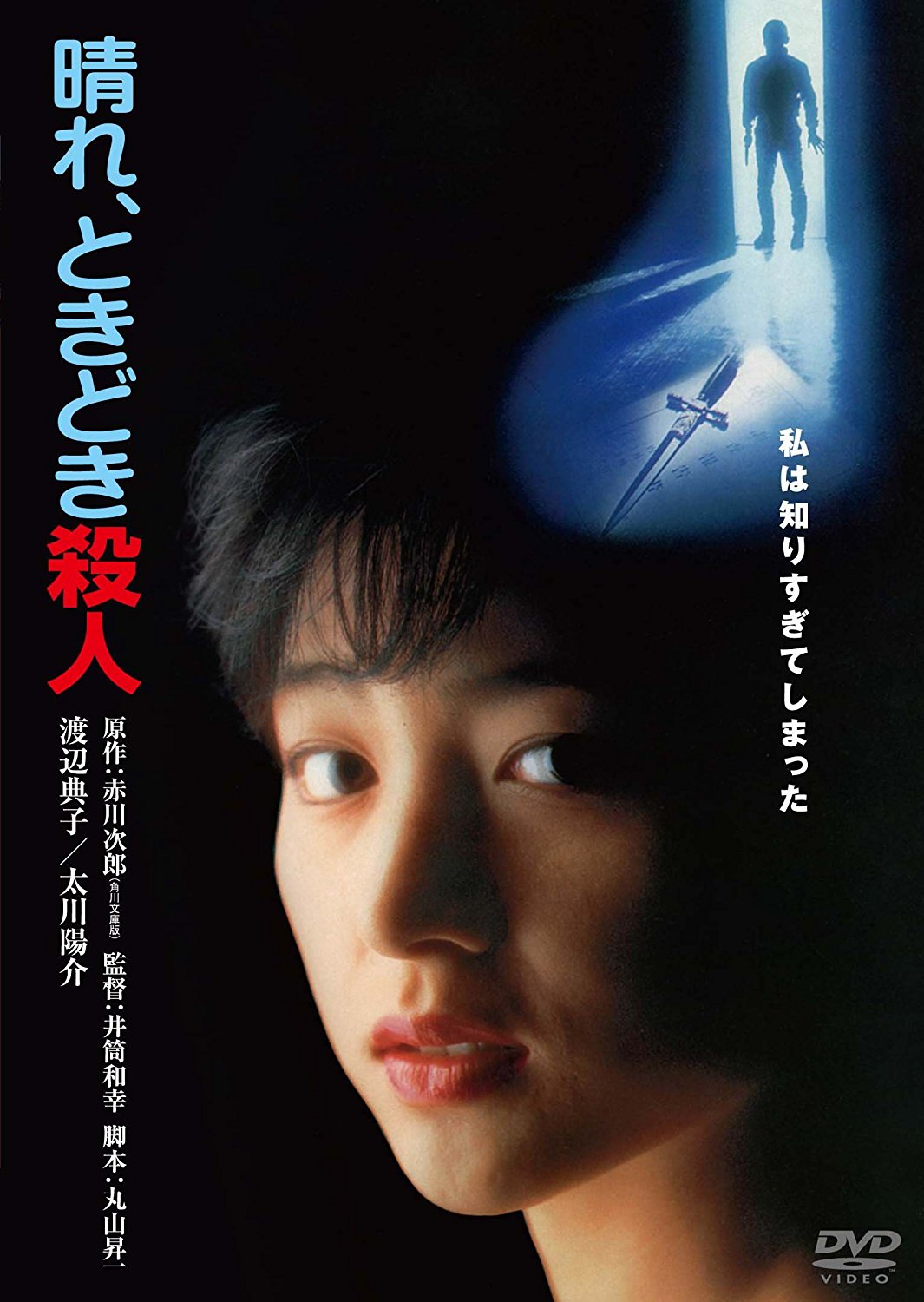
Fine, with Occasional Murders (晴れ、ときどき殺人, Kazuyuki Izutsu, 1984)

fine with occasional murders posterIn Japan’s ailing late ‘70s cinema market, studios were taking extreme decisions to get the public away from their TV sets and back into movie houses, yet one enterprising would-be media mogul had another idea. Haruki Kadokawa, a man with a publishing house and cinematic ambitions hit on a then innovative marketing strategy which amounted to a perfect storm for his own particular capabilities. Amassing a small stable of idols, he resurrected the studio system to produce a steady stream of youth movies adapting novels he also published and featuring title songs which his idols sang and he released on his record label. Hitting their heyday in the early to mid-1980s, Kadokawa’s idol films are a perfect time capsule of their pre-bubble setting in which, unlike the “seishun eiga” of twenty years before, upperclass young girls solved crimes and defied authority all whilst remaining prim, elegant and innocent. Fine, with Occasional Murders (晴れ、ときどき殺人, Hare, Tokidoki Satsujin) is a prime example of this gentle yet somehow dangerous world as its heroine returns home from studying abroad only to become embroiled in a conspiracy lodged firmly within her own home.

As the film opens, a middle-aged man and woman pay a nighttime visit to the site of a new factory, reminiscing about their youth and the small soap business they started thirty years ago which is now a full scale plastics film. The woman catches sight of someone leaving and stops to wish him goodnight only to suddenly wonder why he’s there in the first place. The reason becomes apparent when she steps forward a little and discovers the body of a young woman lying against her fence post. As if that weren’t worrying enough, factory owner Mrs. Kitazato (Mitsuyo Asaka) then starts getting threatening letters telling her she must go to the police and confirm that an innocent man is the killer or her daughter, Kanako (Noriko Watanabe), studying overseas, will be in danger. Mrs. Kitazato frets and worries but goes along with the killer’s demands to save her daughter only to be confronted with the dead body of the patsy as it lands right at her feet after being thrown from a police station window.

Suffering from a heart condition, Mrs. Kitazato remains unwell until Kanako comes home but then lasts only long enough to impart two important secrets – one being that the man Kanako assumed was her father may not have been, and secondly the whole story with the threatening letters and her belief that they were sent by someone in the family from whom she received a New Year card written in the same handwriting.

As usual Kanako is left to deal with all of this on her own, though slightly less usually remains within her own family home for the vast majority of the picture. Paid a visit by the police, Kanako comes into contact with their prime suspect in the first murder, Kamimura (Yosuke Tagawa) – a young man who had been a high school friend of the victim and had given her a place to stay while she was trying to escape her career as a hotel hooker. Kamimura becomes Kanako’s innocent love interest as she hides him in the secret room her mother had built behind a dresser in the dining room. Together the pair try to investigate the strange goings on in the Kitazato household whilst also exploring their very different backgrounds. 

Like many of Kadokawa’s idol movies (often adapted from the novels of Jiro Akagawa) the setting is both dark and hopefully innocent as Kanako is burdened with the knowledge that someone close to her is a murderer but faces her situation with cheerful resilience and determination. Whilst pursuing her spiky relationship with Kamimura, she’s also being haunted by the spectre of an arranged marriage to the dreadful son of a business associate, Masahiko (Akihiro Shimizu), who attempts to rape her with her mother’s body still still lying on the bed in the same room, and is also having an affair with their maid, Mari (Mariko Miike). Masahiko is also revealed as a prime suspect in the murders when another body is discovered in the living room with Masahiko standing red handed over it. The murder scenes (and there are more than you’d expect), are nasty, bloody and violent. Despite the innocence of Kanako’s wide open world, misogynistic killers lurk round every corner as do corrupt businessmen, untrustworthy servants, and enemies masquerading as friends.

As darks as it gets, the tone is always one of irony filled with bumbling policemen who form an odd double act in their humorous black and forth, running jokes about hard contact lenses and improbably large sandwiches, and the general whimsy of a young man’s dream of building a real flying bicycle. Despite being one of Kadokawa’s new “Sannin Musume” (alongside Hiroko Yakusushimaru and Tomoyo Harada), Noriko Watanabe played fewer leading roles than her two compatriots. Fine with Occasional Murders (released in the same year as Someday, Someone Will Be Killed), is her first big idol movie lead for which she also sings the theme song which has an almost identical title. She is, however, the archetypal Kadokawa heroine – steadfast, strong, confident, kind, and noble, calmly solving the mystery behind her own mother’s death mere days after losing her, figuring out that poor boys are probably OK, and that awful CEOs and their sons will always be awful. Valuable lessons indeed for increasingly wealthy 1980s teens. 


TV Commercial

And the song itself which has the same title as the movie only the last two characters are read differently – Hare, Tokidoki Kirumi