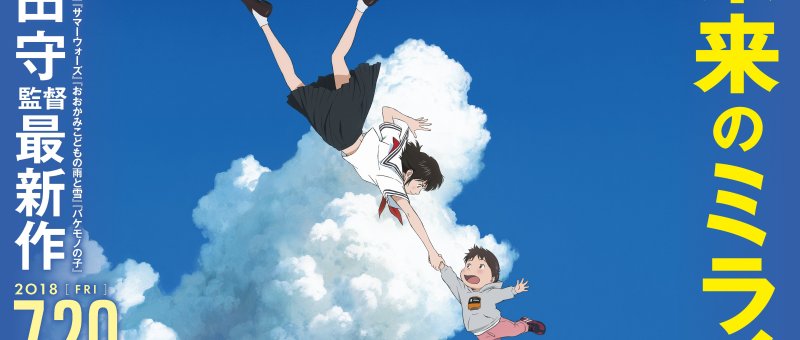
 In Mamoru Hosoda’s Wolf Children, a young woman experiences heartbreak when the love of her life is cruelly cut down, leaving her alone with two small children whose particular needs send her off in search of a new way of living. Hosoda’s filmography is filled with family drama, of how difficult and painful the relationships between parents and children can be. Wolf Children was the story of a mother’s tragedy in that she has to set her children free in order to see them grow. The Boy and the Beast was a young man’s struggle to make peace with his father. Mirai (未来のミライ, Mirai no Mirai) presents an altogether less “complicated” vision of family life, steeped in authentic detail and gentle warmth.
The hero of the tale is Kun (Moka Kamishiraishi) – a train obsessed four year old suddenly presented with a new baby sister later named “Mirai” (Haru Kuroki). Having been an only child used to receiving all of his parents’ attention, Kun is intensely resentful of the various ways his life has changed. Feeling pushed out, he begins to throw tantrums, become argumentative, even threaten to run away from home. Meanwhile the family dog, Yukko, looks on with thinly veiled contempt as Kun gets a little of his own medicine in no longer being the centre of attention.
Taking refuge in the front garden which is a major feature of the family home designed by his architect father, Kun begins to receive a series of visitations – firstly from an anthropomorphised Yukko and then by the teenage incarnation of his little sister on an urgent mission to the past to ensure her absent minded father packs the Hina Matsuri dolls away on time lest she end up an old maid, prevented from marrying her one true love because of ancient superstition (and her father’s forgetfulness). After interacting with the older Mirai, Kun travels off on further flights of fancy to observe his mother at his age and even his late great grandfather – a dashing, motorcycle riding hero who walked with a limp thanks to a lucky wartime escape.
Snatched from vague comments overheard from his parents and grandmother, Kun’s adventures teach him new and valuable ideas about the world. He learns that it’s alright not to understand everything right away because that’s what life is for. As someone later puts it, there’s a first time for everything and once you’ve learned one thing you’re halfway way to knowing everything else. Meeting his mother as a youngster shows him that she was once a messy toddler too and that all things come in time.
Kun still doesn’t quite understand, but comes to a new appreciation of his home and his family as a part of something far larger of which he is merely a mid-point on an ever expanding scale. Mirai shows him his “family tree” as manifested literally in the one in the family garden. Somewhat oddly for a girl from the future, Mirai likens it to a card index like the ones at the library (perhaps one of her old fashioned preoccupations like the Hina Matsuri superstitions) filled with personal stories in which no one is ever really forgotten. Having gotten himself into quite a fix and wound up at a very futuristic looking Tokyo train station, it’s family which eventually sets Kun on his way back home, having remembered who he is in relation to others.
Yet Kun’s family is also intensely modern and going through changes of its own. Kun’s mother will be going back to work soon after Mirai’s birth – something still somewhat unusual in traditional Japan while in an even more seismic leap towards equality Kun’s father, who will be working from home, has committed to sharing responsibility for the domestic realm in looking after the children during the day as well as taking care of the cooking and the cleaning while Kun’s mum works. Kun’s mother might bristle at her husband’s eagerness to accept praise for only doing his fair share while struggling with ordinary day to day tasks, but the couple have soon found a happy equilibrium in embracing the joys and anxieties of building a family. Another beautifully profound tale from Hosoda, Mirai is a lovingly rendered exploration of what it is to live a life among lives with all the rewards and responsibilities that entails.
Screened as part of the 2018 BFI London Film Festival.
International trailer (English subtitles)
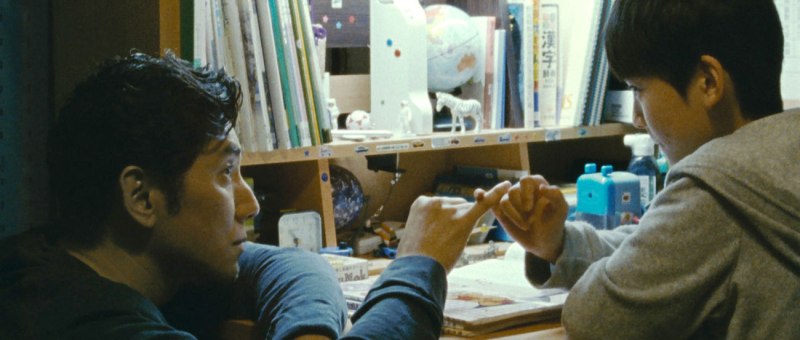
 Self disgust is self obsession as the old adage goes. It certainly seems to ring true for the “hero” of Miwa Nishikawa’s latest feature, The Long Excuse (永い言い訳, Nagai Iiwake) , in which she adapts her own Naoki Prize nominated novel. In part inspired by the devastating earthquake which struck Japan in March 2011, The Long Excuse is a tale of grief deferred but also one of redemption and self recognition as this same refusal to grieve forces a self-centred novelist to remember that other people also exist in the world and have their own lives, emotions, and broken futures to dwell on.
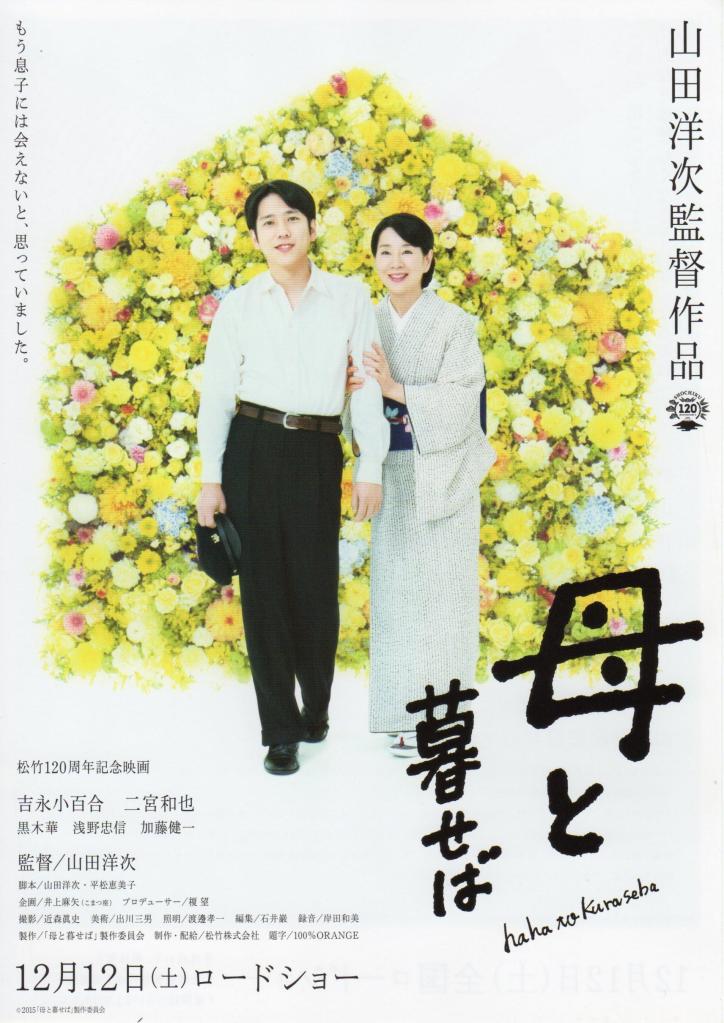 After such a long and successful career, Yoji Yamada has perhaps earned the right to a little retrospection. Offering a smattering of cinematic throwbacks in homages to both Yasujiro Ozu and Kon Ichikawa, Yamada then turned his attention to the years of militarism and warfare in the tales of a struggling mother,
 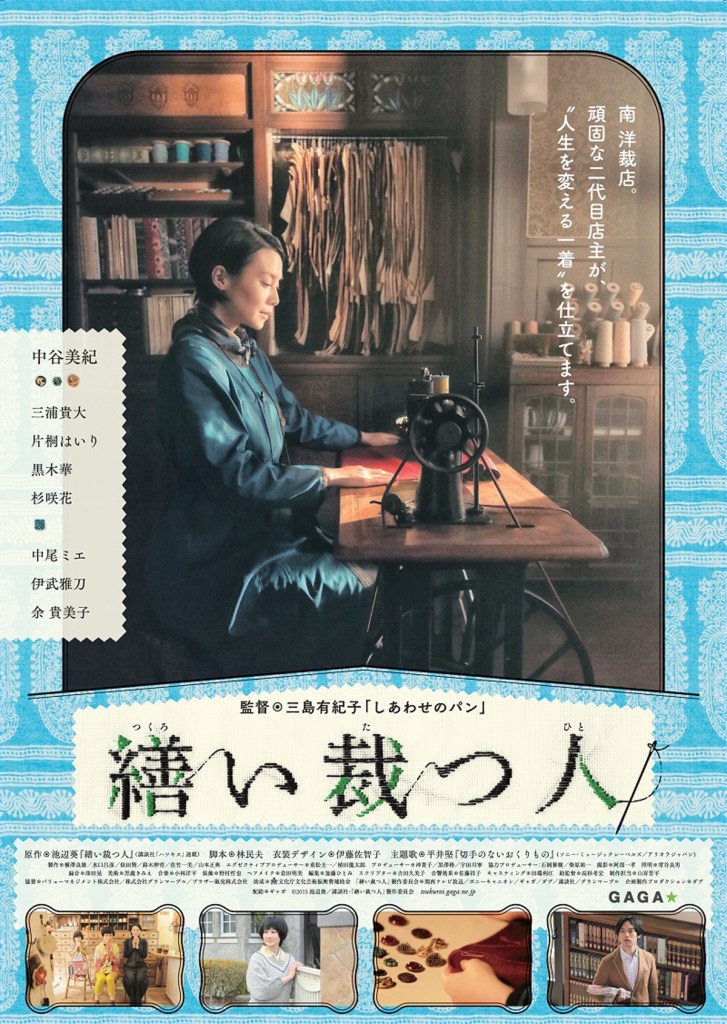 Tradition vs modernity is not so much of theme in Japanese cinema as an ever present trope. The characters at the centre of Yukiko Mishima’s adaptation of Aoi Ikebe’s manga, A Stitch of Life (繕い裁つ人, Tsukuroi Tatsu Hito), might as well be frozen in amber, so determined are they to continuing living in the same old way despite whatever personal need for change they may be feeling. The arrival of an unexpected visitor from what might as well be the future begins to loosen some of the perfectly executed stitches which have kept the heroine’s heart constrained all this time but this is less a romance than a gentle blossoming as love of craftsmanship comes to the fore and an artist begins to realise that moving forward does not necessarily entail a betrayal of the past.
 If there is a frequent criticism directed at the always bankable director Yoji Yamada, it’s that his approach is one which continues to value the past over the future. Recent years have seen him looking back, literally, in terms of both themes and style with remakes of films by two Japanese masters – Ozu in his Tokyo Story homage Tokyo Family, and Kon Ichikawa in Her Brother. While he chose to update both of those pieces for the modern day, 2008’s
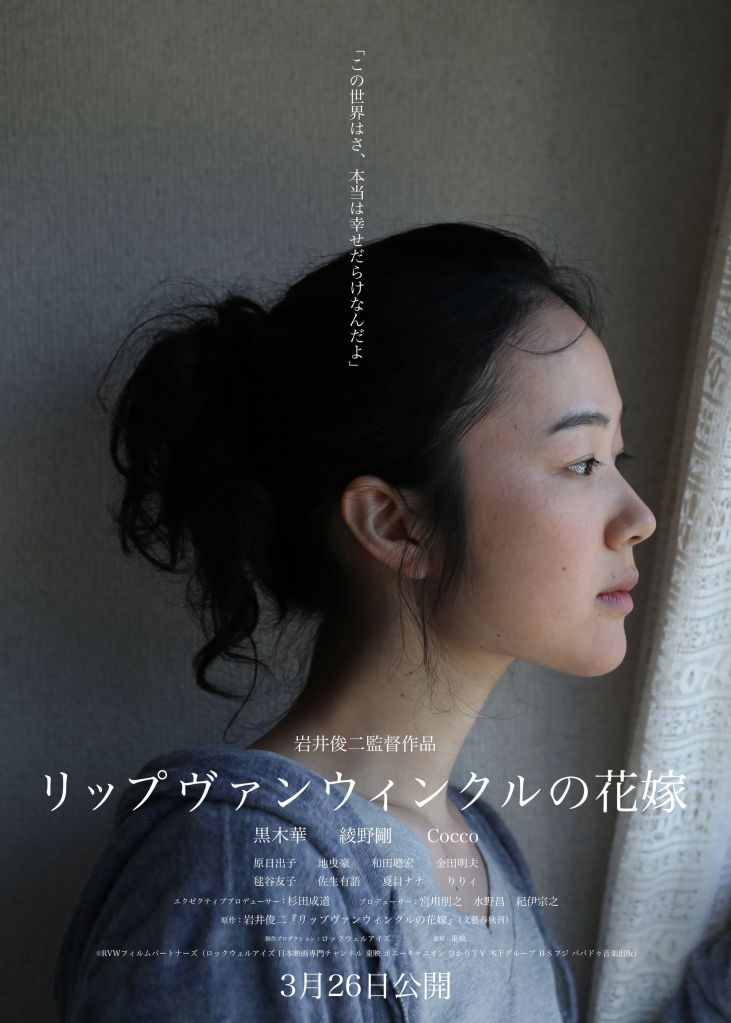 “Being naked in front of people is embarrassing” says the drunken mother of a recently deceased major character in a bizarre yet pivotal scene towards the end of Shunji Iwai’s aptly titled A Bride for Rip Van Winkle (リップヴァンウィンクルの花嫁, Rip Van Winkle no Hanayome) in which the director himself wakes up from an extended cinematic slumber to discover that much is changed. This sequence, in a sense, makes plain one of the film’s essential themes – truth, and the appearance of truth, as mediated by human connection. The film’s timid heroine, Nanami (Haru Kuroki), bares all of herself online, recording each ugly thought and despairing notion before an audience of anonymous strangers, yet can barely look even those she knows well in the eye. Though Namami’s fear and insecurity are painfully obvious to all, not least to herself, she’s not alone in her fear of emotional nakedness as she discovers throughout her strange odyssey in which nothing is quite as it seems.
 Windows on Worlds