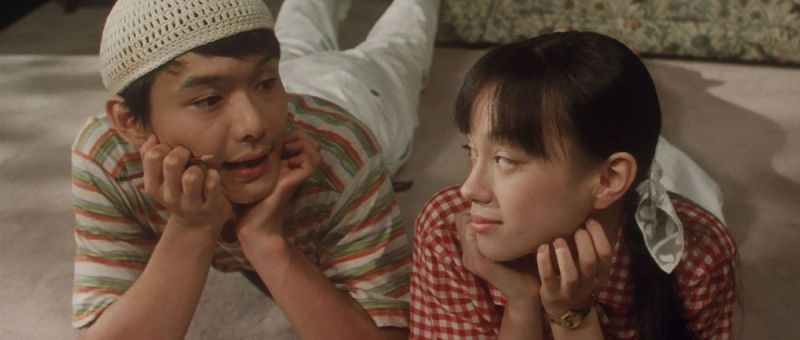

“One person is not a tool for another” the heroine of Juzo Itami’s 1995 melodrama A Quiet Life (静かな生活, Shizukana Seikatsu) eventually writes in her diary quoting her novelist father but also reflecting on herself and her life in which some have indeed attempted to use others for their own ends. Outside of international mega hit Tampopo, Itami is best known for a series of anarchic comedies each starring his wife Nobuko Miyamoto as forthright woman tackling the ills of contemporary Japan from tax evasion and increasingly amoral capitalism to the yakuza and shady cults. Based on a novel by his brother-in-law Kenzaburo Oe, A Quiet Life is therefore something of an outlier yet once again addresses a number of social issues from treatment of disability in the contemporary society to the relationships between parents and children and the dangers of a rapidly modernising society.
Middle daughter Ma (Hinako Saeki) lives in a large Western-style in the country with her father, internationally renowned author K (Tsutomu Yamazaki), mother and two brothers the oldest of which, Eeyore, has some learning difficulties but is largely independent. Nevertheless, when K, who is experiencing a moment of crisis that leads him to consider suicide when he is unable to fix a problem with the drains and has to resort to a plumber, is offered a job at a university in Australia Ma is left in charge at home and therefore responsible for her brother. Though the family fully accepts Eeyore, it’s clear the world around them is not always so kind. As they approach a centre for the disabled on a walk, others around them openly express disgust, suggesting they are a “bad influence” and wanting to leave the area entirely.
Meanwhile as the film opens two children are locked together in a game of magnets, a collection of adults attempting to pull them apart by force. The shot is later repeated as Eeyore holds his sister in the rain following a traumatic and unexpected incident and demonstrating the close and affectionate bond between the siblings. Yet there is an uncomfortable suggestion from some that Ma is being asked to sacrifice her life to look after her brother who after all is unlikely to marry and will require additional care as long he lives, while she is perhaps slightly overprotective and wilfully self-sacrificing. “Don’t expect another human to sacrifice their life for you” goes another of her father’s lines, “to expect such a thing is the worst kind of depravity”, the family otherwise committed to the insistence that Eeyore has his own life and interiority which must neither be sacrificed, nor sacrificed for, for to do so would be to deny his personhood. Eeyore is not a tool for Ma’s charity nor is she a tool for the family’s duty towards him.
Nevertheless even she is not immune to negative stereotyping becoming increasingly concerned that her now adult brother may pose a threat to the local community in his lack of understanding and inability to control his impulses. When a child molester is on the loose in the village, she is terrified Eeyore may be involved having read a newspaper report about a similar crime committed by someone with learning difficulties uncomfortably echoing the prejudice of the walkers by the disabled centre not to mention to middle-aged women who openly gossip about it in front of their house. Meanwhile, her own naivety becomes a threat when she allows a smarmy young man, Arai, to give her brother swimming lessons later learning that he has a grudge against her father who he feels “used” him to facilitate his art having bought and drawn inspiration from his experiences of being accused of a crime but leaving readers with the impression that he was a sex offender.
Arai may indeed be trying to use her for revenge and at any rate is not all he seems even if the implication of her father’s story is that he wanted to sacrifice himself to save the young man. While K works through his artistic block offscreen aided by his wife (whom he soon forgets once he’s well), Ma has a series of epiphanies of her own over an eventful summer you couldn’t really call “quiet” even if there’s a strange tranquility in its anarchy. Going to some dark and unexpected places, Itami’s gentle dramedy veers away from the zany comedies of his earlier career but discovers a kind of serenity in the quiet of life of the siblings getting on with business of living in the sometimes hostile Japanese countryside.
Original trailer (no subtitles)
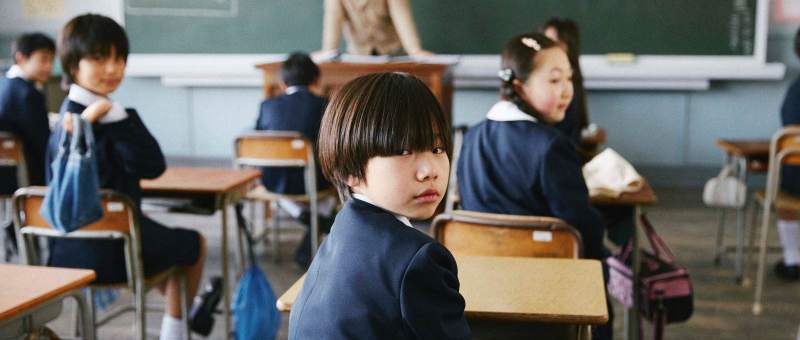
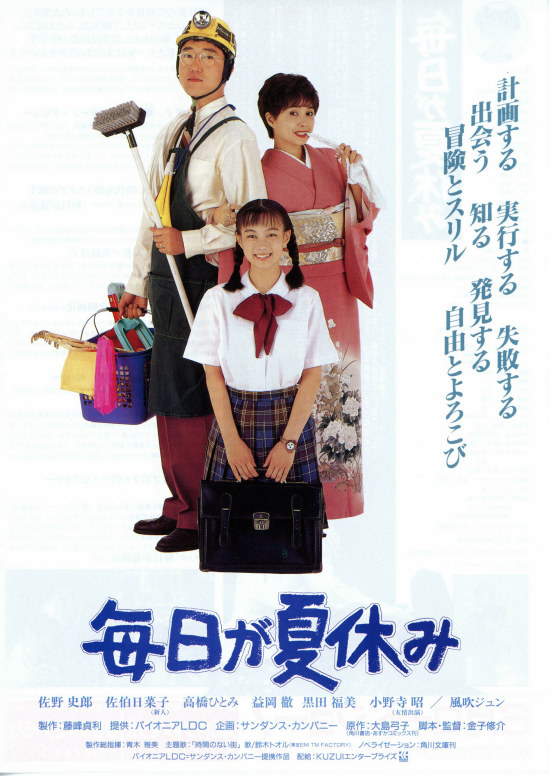 Summer Holiday Everyday – It’s certainly an upbeat way to describe unemployment but then everything is improbably upbeat and cheerful in the always sunny world of Shusuke Kaneko’s adaptation of Yumiko Oshima’s shoujo manga. Published in the mid-bubble era of 1988, Oshima’s world is one in which anything is possible but by the time of the live action movie release in 1994 perhaps this was not so much the case. Nevertheless, Kaneko’s film retains the happy-go-lucky tone and offers note of celebration for the unconventional as a path to success and individual happiness.
 Windows on Worlds