The King of Minami: Ginjiro Manda (難波金融伝 ミナミの帝王1 トイチの萬田銀次郎, Sadaaki Haginiwa, 1992)

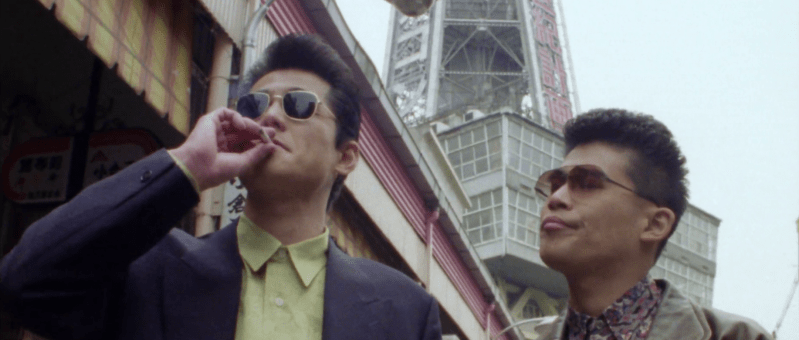
“The one holding the money calls the shots,” according to a particularly sticky debtor in Sadaaki Haginiwa’s The King of Minami, though that turns out not quite to be the case. After all, though the money may be in his possession, technically it belongs to Ginjiro (Riki Takeuchi) and when they don’t return it to him, he begins to feel offended. Reflective of a kind of post-bubble malaise, the film has a rather cynical take on money and finance, but at the same time a weird kind of wholesomeness.

Ginjiro may be the King of Minami, but he sees himself as a saviour of the poor. Questioned by new underling Ryuichi, he brushes off concerns that people can be driven to suicide over debt by claiming that the loans he offers may save their lives. But though Ginjiro may claim to be somehow better than his yakuza counterparts in refusing to resort to violence, he’s ruthless in other ways and certain that debts must be repaid. Once he’s cheated by an old man, Tokugawa, who refuses to pay the interest on his loan, Ginjiro knows theres’s no point pressing him and decides to go after his daughter instead. She, however, has already maxed out all her card trying to save her dad’s business. 

For his righteousness, explaining that he’ll never end up with sometime love interest Asako because a loan shark has no room for relationships, Ginjiro’s world is essentially misogynistic. Sent after a runaway bar hostess, Ginjiro tells Ryuichi that women always have ways of making money with a note of envy in his voice as if he resented this essential unfairness on behalf of impoverished men. Of course, this way of making money is open to them too, though they wouldn’t consider it and no one would put it forward as an option or view their body as a commodity that should be traded away when one has debts. He says something similar to Tokunaga’s schoolteacher daughter Machiko too, agreeing that night work is the way to make a lot of money relatively quickly. Machiko has, however, already been forced into sexual slavery by Narita, a rival yakuza loanshark, who extorts sexual favours in lieu of money. 

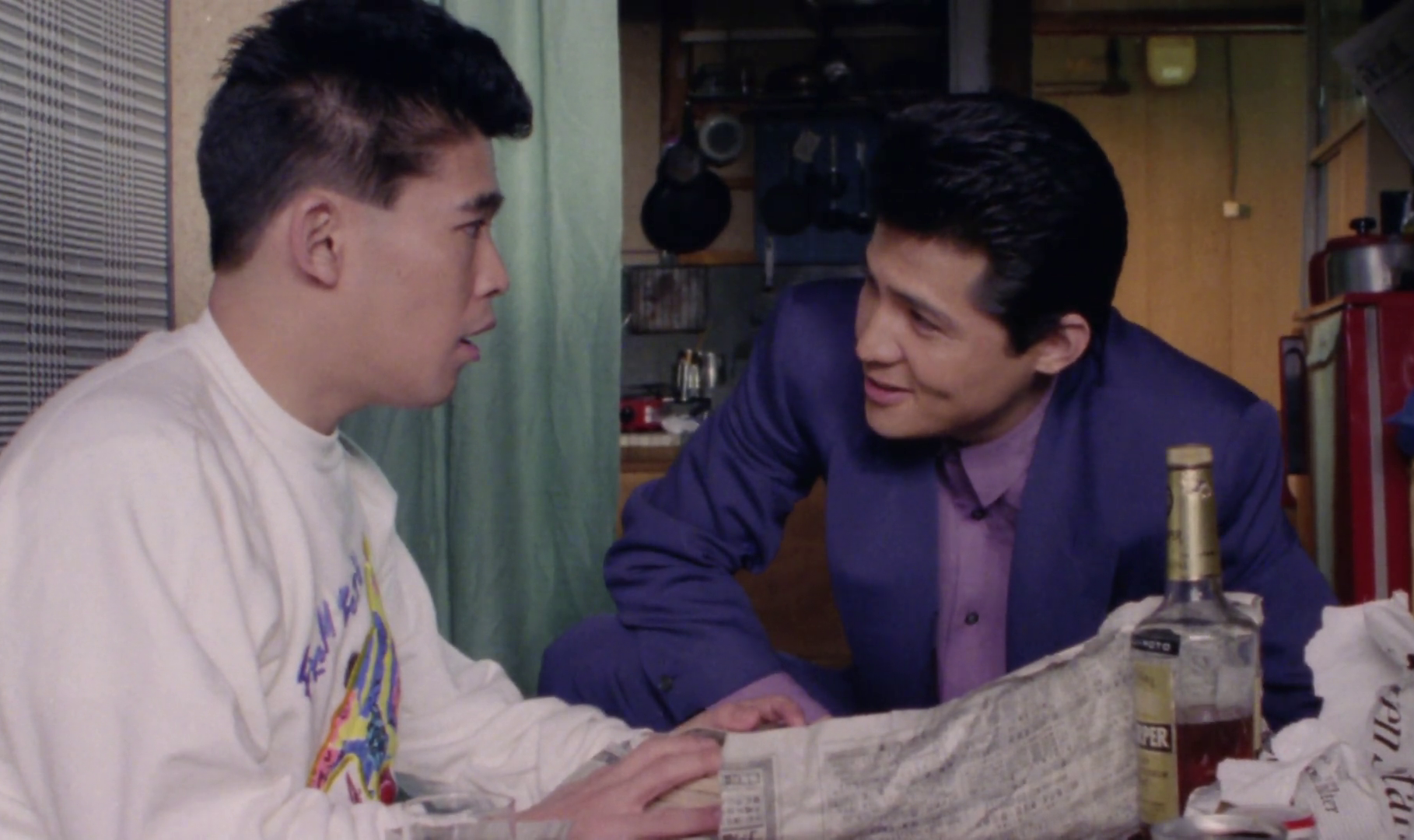
Young Ryuichi is quite touched by her story and even falls in love with her a little bot despite Ginjiro’s warnings that a loanshark can’t afford to let his emotions overcome his reason. Even if he remains willing to make Machiko pay for her father’s transgressions, Ginjiro is equally angry with Tokunaga for rejecting this essential law that money should always find its way to its point of origin. Taking him to task for his immoral vices such as a gambling addiction that’s ruined his business, finances, and relationships, Ginjiro tells him that he ought to pay his debts himself rather than push them on his daughter. He seems to have contempt for people who do this to themselves through what he sees as their own poor choices, but less so for those like Machiko who end up needing his services through no fault of their own or an ironic sense of indebtedness to someone else.

In any case, he stands a kind of counter to those like Narita who only want to exploit people’s weaknesses and use violence to get their way. The two of them end up in a financial sparring match as Narita sets Girjio up with a deliberately bad debt, while he, in turn, masterminds a counter scam under the tutelage of his “financial teacher” who knows all sorts of underhanded ways to make money like selling land that doesn’t belong to you. One could say that he’s teaching Ryuichi all the wrong lessons, but then his behaviour is more roguish than dangerous and he’s obviously more morally righteous than the sneering Narita who seems to feed off human pain so it’s satisfying to see him win and humiliate the predatory yakuza. Ginjiro agrees that it’s a sad world in which people die over money, but, at the same time, has a healthy disregard for it. He tells Ryuichi that he should think of money in the same as a greengrocer thinks of vegetables and that he needs to lose his reverence for it if he’s to make it as a loanshark. That might, after all, be how he became the king of Minami, laughing at the ridiculousness of a world in which those with money call the shots while simultaneously holding all the cards himself.
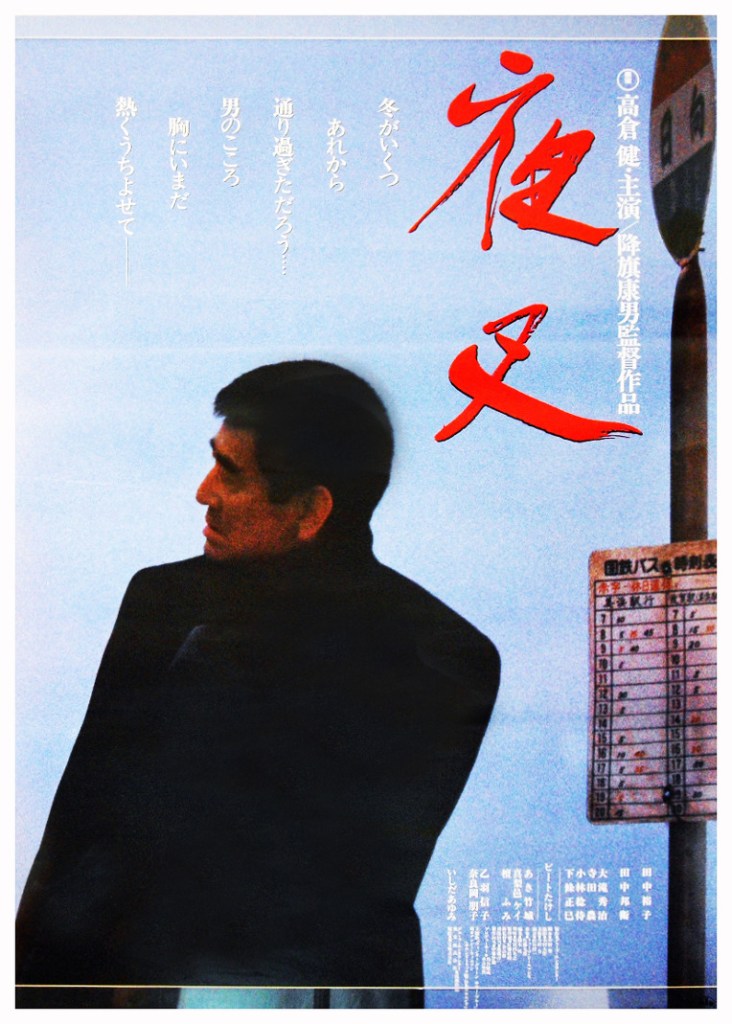
Yasha (夜叉, Yasuo Furuhata, 1985)

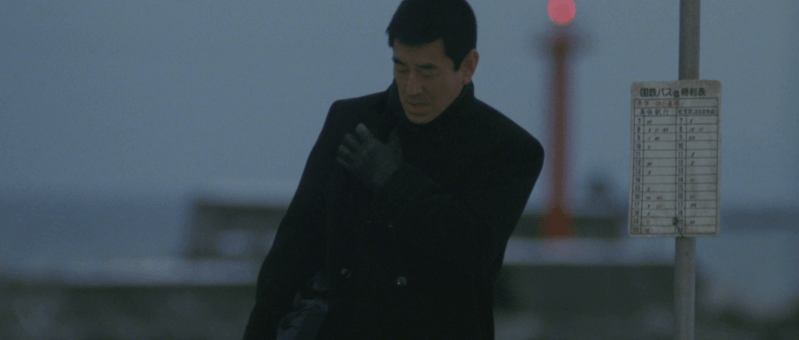
In melancholy gangster movies, the hero often dreams of leaving the city for an idealised rural paradise to start again as a righteous man redeeming himself through hard work with a good woman by his side. Usually, they don’t make it, their goodness is nothing but a weakness in the harsh post-war environment, but even if they did could they really lay their violent souls to rest and live as the rest of us do? Once again played by a manfully stoic Ken Takakura, the hero of Yasuo Furuhata’s Yasha (夜叉, AKA Demon) tries to find out, but discovers that sooner or later the past will always catch up with you. 

15 years ago, fisherman Shuji (Ken Takakura) was the notorious Osaka yakuza known as “Yasha”. A war orphan given refuge by a gangster brotherhood, two things happened to change his way of life, the first being innocent country girl Fuyuko (Ayumi Ishida) whom he met by chance and rescued on the dangerous streets of the city. The second is the death of his younger sister who had become addicted to heroin. Fiercely resistant to the traffic of drugs, Shuji quit the clan, married Fuyuko, and retreated to her fishing village home to take over her late father’s fishing business. Well respected in the community as a steady hand, he now has three children and a settled happy life though one tinged with anxiety in the need to keep his back covered lest anyone find out about his violent past. 

The violent past is brought home to him when a young woman, Keiko (Yuko Tanaka), arrives in kimono with her young son in tow to take over the local bar. Keiko is a bar hostess from Osaka hoping to make a new start far away from the city, not so much for herself it seems as her no-good boyfriend Yajima (Takeshi Kitano) who is a drug-addled thug and openly hostile to her little boy. It’s Yajima who threatens to disrupt the gentle rhythms of the town, firstly getting the fishermen hooked on all night games of mahjong which damage their daytime productivity, and then selling them heroin to keep them propped up. Unused to such urban vices as hard drugs and serious gambling, the fishermen are lambs to the slaughter, handing over their hard earned savings to the thuggish Yajima to keep their heads above the water. 

Shuji wants to keep the town clean, but he can’t exactly admit just how familiar he is with things like drink and drugs which are, as his friend Keita (Kunie Tanaka) points out, not things “normal” people should know about. After realising an old friend is the middle-man, Shuji has a quiet word with Yajima as one thug to another but it only makes the situation worse. He tries talking to Keiko instead, but her decision to get rid of the drugs has disastrous consequences for all when Yajima goes on a crazed, knife-wielding rampage through the town which only Shuji can end. During the fight Yajima slashes Shuji’s fisherman’s jumper right through to the expose the demon beneath, leaving his colourful tattoos on show for all to see. 

You’d think that Yajima’s rampage would have taught the town a lesson, shown them that they were in over their heads and Yajima was not the sort of person it was good to be associated with, but their animosity overwhelmingly turns to the demon Shuji whom they unfairly begin to blame for their many misfortunes. The fishwives begin to avoid Fuyuko, telling their kids not to hang out with her kids and suggesting that it must have been Shuji who got the guys playing mahjong. Shuji meanwhile doubts himself, drawn to Keiko as to Osaka and the sleeping demon within. Yasha reawakens and he wonders if he has the right to live here after all. 

Fuyuko’s mother tells her that it’s a good wife’s job to quell the demon, but she struggles to maintain hold on Shuji while Yasha is pulled towards the city. He makes a manly choice, attempting to redeem Yajima in redeeming himself by returning to his point of origin. The widow of his old boss warns him off, reminds him that he’s a fisherman now, and that should he move against her she will have to act in accordance with the rules of the underworld, but privately mutters to herself that he hasn’t changed at all, “stupid man”. In the end, Yasha’s manly gesture ends in futility. He cannot escape himself but neither can he solve his problems through violence as he might have before, not least because the code is no longer secure motivating those he thought he could trust towards betrayal. He still has a choice, leave with Keiko to be Yasha once again accepting the futilities of a violent life (and its inevitable end), or stay to be a peaceful fisherman with the “good wife” Fuyuko. One man cannot possess two souls, but the given the chance the demon can be subdued if there is the will to subdue it and the belief that the man himself is good enough for the world in which he wants to live.


Original trailer (no subtitles)

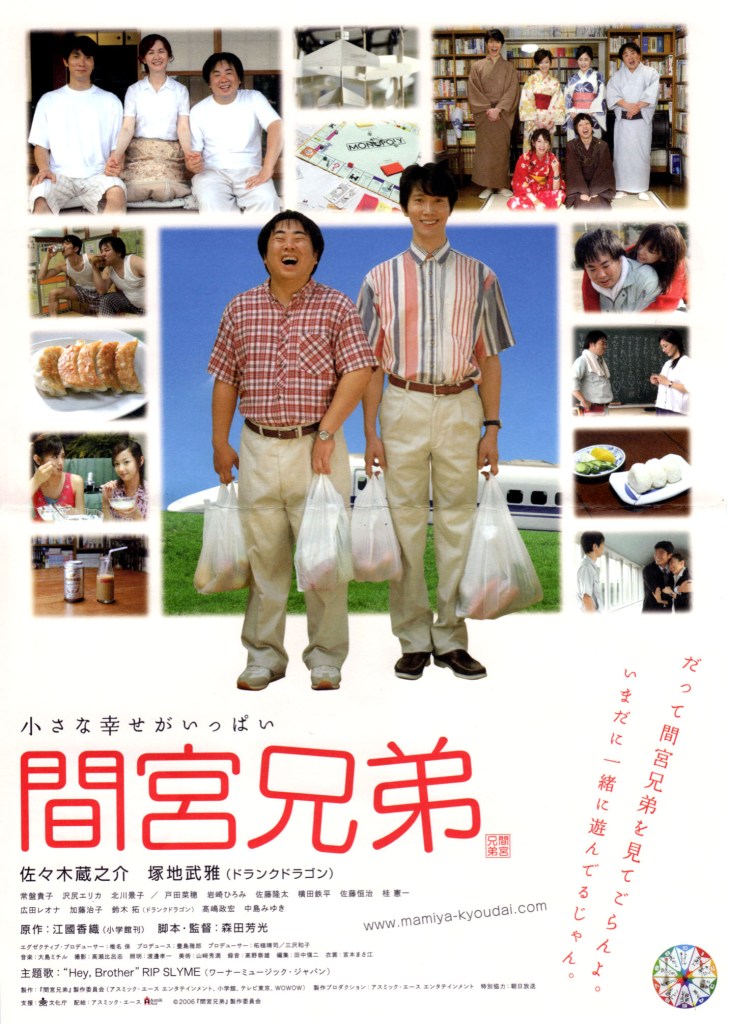
The Mamiya Brothers (間宮兄弟, Yoshimitsu Morita, 2006)

mamiya-brothersEver the populist, Yoshitmitsu Morita returns to the world of quirky comedy during the genre’s heyday in the first decade of the 21st century. Adapting a novel by Kaori Ekuni, The Mamiya Brothers (間宮兄弟, Mamiya Kyodai) centres on the unchanging world of its arrested central duo who, whilst leading perfectly successful, independent adult lives outside the home, seem incapable of leaving their boyhood bond behind in order to create new families of their own.

Older bother Akinobu (Kuranosuke Sasaki) and younger brother Tetsunobu (Muga Tsukaji) live together in a small apartment in Tokyo where they enjoy hanging out keeping track of baseball games and watching movies rented from the local store where Akinobu has a crush on the cashier, Naomi (Erika Sawajiri). They are perfectly happy but sometimes frustrated that they don’t have girlfriends so they decide to host a curry party and invite Naomi over in the hopes that she might develop an affection for Akinobu. So that she won’t feel weird about going to the house of two middle-aged guys she doesn’t really know, Tetsunobu invites a reserved teacher, Yoriko (Takako Tokiwa), from the primary school he works at as a caretaker though he “never dates coworkers” and is only really asking her as a backup for Akinobu.

Against expectation the both ladies agree to attend the curry party which actually goes pretty well though neither man is fully capable of following up on the opportunities presented to him. Outside events provide a distraction as Akinobu is swept into his adulterous boss’ divorce crisis and Tetsunobu becomes fixated on a damsel in distress who has no desire to be rescued by him. As much as the boys might want to form independent relationships for female companionship, their brotherly bond is more akin to a marriage in itself leaving both of them unwilling to abandon the status quo for a new kind of happiness.

These kinds of closely interdependent sibling relationships are more often seen between sisters, often as one or both of them has rejected offers of marriage for fear of leaving the other on the shelf. Elderly spinsters and their histories of unhappy romance are almost a genre in themselves though they often present the peaceful co-existence of the two women as a double failure and ongoing tragedy rather than a perfectly legitimate choice each may have made to reject the normal social path and rely solely on each other. The Mamiya Brothers neatly subverts this stereotype, presenting the relationship of the two men as a broadly happy one though perhaps tinged with sadness as it becomes clear that the intense bond they share is holding each of them back in a kind of never ending childhood.

Indeed, though they live alone together and have steady jobs, whilst in each other’s company the brothers regress back to childhood by spending their spare time riding bikes around the neighbourhood and playing on the beach. They are each keenly aware of how they must appear to members of the opposite sex and are always mindful not to appear “creepy”. Accordingly, they’re careful about which DVDs they check out so that Naomi doesn’t get a bad impression of them, and they’re sure to make it clear that both girls can bring other people to their parties so they won’t think there’s anything untoward going on. Throwing quick fire questions back for and constantly making references to private jokes the boys are effectively a manzai duo performing for an audience of two, perpetually suffocating inside their self made bubble.

Though they might not find love, the boys do at least make some new friends. Naomi’s sister, Yumi (Keiko Kitagawa), is exactly the kind of girl they’d usually steer clear of lest she begins to make fun of their old fashioned ways yet she actually becomes an ally and even a friend after spending time hanging out in the brothers’ odd little world. Yumi and Naomi are, in many ways, almost as closely connected as Akinobu and Tetsunobu though they both currently have boyfriends even if they find them equally disappointing.

The teacher, Yoriko, also finds herself unlucky in love as she pursues a relationship with a colleague who doesn’t seem particularly invested in her and is lackadaisical about even the smallest forms of commitment. Tetsunobu seems to have discounted her as a romantic partner under his “no coworkers” rule and is either unaware or deliberately ignoring her growing feelings for him. It may be that he invited Yoriko as a love interest for his brother precisely because he was interested himself and wanted to eliminate the problem, but he may come to regret outwardly rejecting this chance of mutual affection turning into something more solid.

When push comes to shove it might just be that the Mamiya Brothers are happiest in their own company and have no desire to move on and leave their arrested development behind. Though tinged with a degree of lingering sadness as it appears the boys do have a desire to form bonds outside of their mutually dependent bubble, they are after all quite happy and mostly fulfilled in their life together. Cute and quirky, if at times melancholic, The Mamiya Brothers is a strange tale of modern romance in a world where no one really grows up anymore. The brothers are clearly not afraid of broadening their horizons, but might prefer to continue doing so together rather than finding their own, independent, paths.


Original trailer (no subtitles)