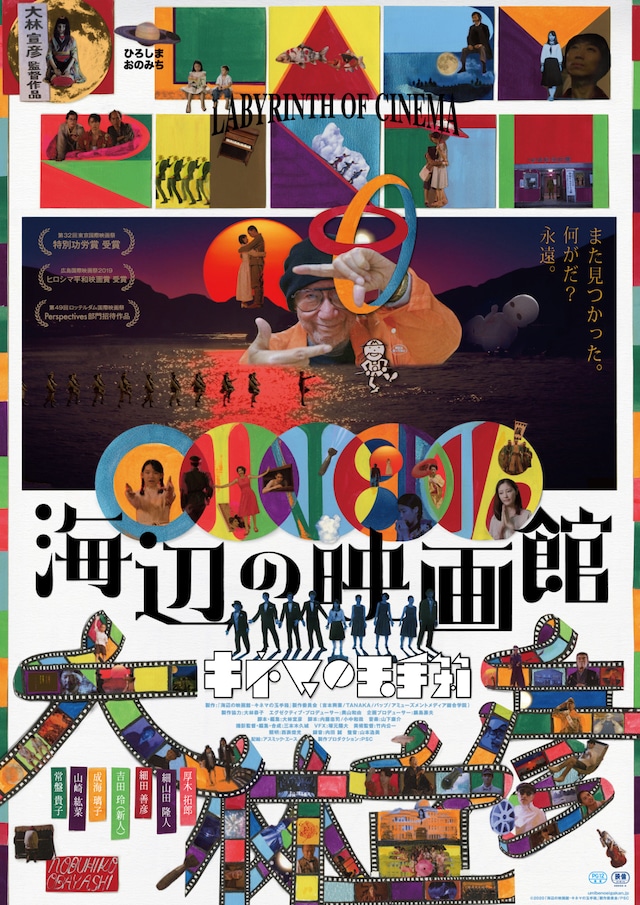
Labyrinth of Cinema (海辺の映画館-キネマの玉手箱, Nobuhiko Obayashi, 2019)

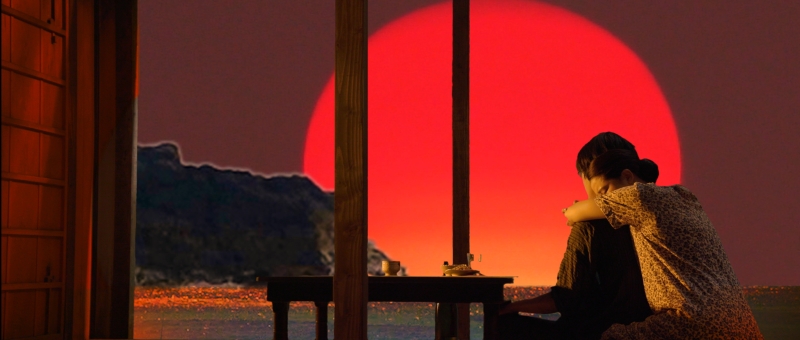
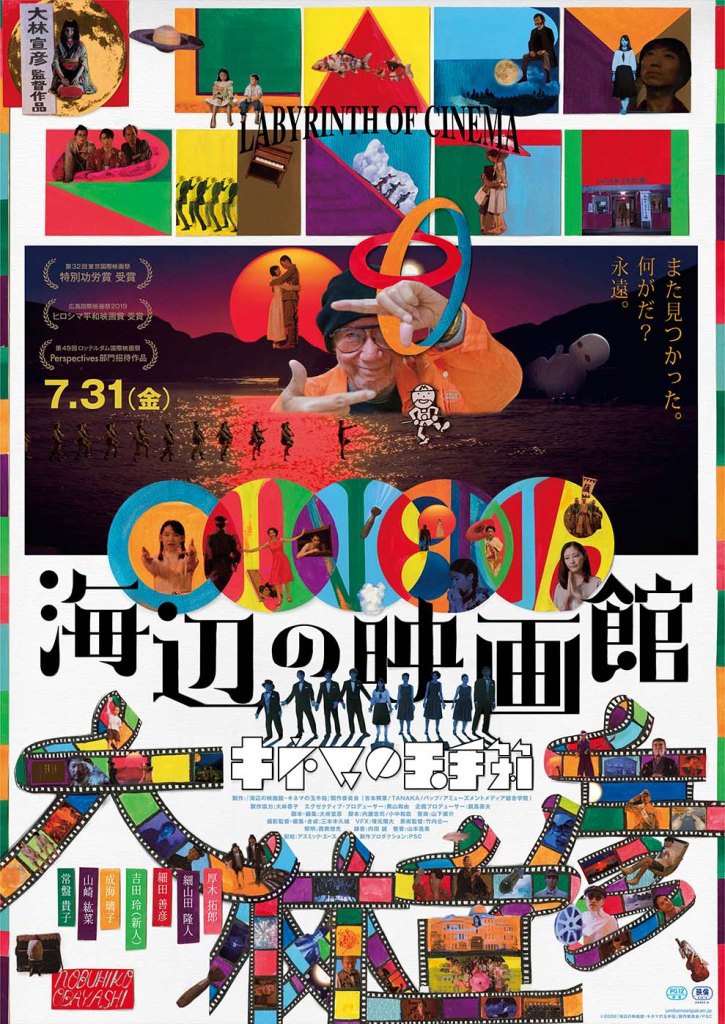
“A movie can change the future, if not the past” according to the newly reawakened youngsters at the centre of Nobuhiko Obayashi’s final feature, Labyrinth of Cinema (海辺の映画館-キネマの玉手箱, Umibe no Eigakan – Kinema no Tamatebako). Continuing the themes present in Hanagatami, Labyrinth of Cinema takes us on a dark and twisting journey through the history of warfare in Japan as mediated by the movies with the poet Chuya Nakahara as our absent prophet reminding us that “dark clouds gather behind humanity” but that we need not feel as powerless as Nakahara once did for there are things to which our hands can turn. 

As the intergalactic narrator, Fanta G (Yukihiro Takahashi), explains the “present” of this film is our own but we find ourselves once again in Obayashi’s hometown of Onomichi where the local cinema is about to play its final show, a programme dedicated to the war films of Japan. Torrential rain has ensured a good audience, including three variously interested young men – cinephile Mario Baba (Takuro Atsuki), monk’s son Shigure (Yoshihiko Hosoda) who fancies himself a Showa-era yakuza, and “film history maniac” Hosuke (Takahito Hosoyamada). Noriko (Rei Yoshida), a teenage girl in sailor suit who only appears in blue-tinted monochrome, opens the show with a ‘40s folksong but soon disappears into the screen, followed by the three men who become the guardians and protectors of her image as they attempt to safeguard her existence through various scenes of historical carnage.

Noriko, the embodiment of a more innocent Japan, insists that “all you need is movies” and that she wants them to teach her of the things she does not know, most pressingly the nature of war. She enters the movies to find out who she is as we too peek into the soul of the nation, spinning back to the years of peace under the Tokugawa shogunate later juxtaposed with those of wartime nationalism in which “overseas” had become synonymous with adventure and opportunity, if perhaps darkly so in enabling the advance of Japanese imperialism. 

The three heroes find themselves literally immersed in cinema, pulled in by the great empathy machine to experience for themselves that which they could only previously imagine. Yet like the narrator of Nakahara’s poem they find themselves powerless, defined by their status as “members of the audience” even as their identities begin to blur with those of the various protagonists with whom they are being asked to identify. They attempt to protect the image of Noriko wherever they find her, even as a young Chinese woman orphaned by Japanese atrocity, but largely fail, unable to alter the course of history as mere spectators bound by the narrative rules of cinema. 

Yet sitting in front of the cinema screen convinces them that “movies demand I do something with my life”. Fanta G explains away the Meiji-era mentality with the claim that “people in power always punish freedom with death”, concluding that one man cannot change the system in the various assassinations of the revolutionaries trying to determine the future course of a nation, but insists on the right of all to be free to live their present and their future. The men learn that though they are powerless in the face of history, they have the power to craft their own happy ending but only if they abandon their identities as “members of the audience” in the knowledge that “if we just watch nothing will change”. 

With a deliberately theatrical artifice, trademark colour play, and surrealist imagery Obayashi wanders through 100 years of Japanese cinema with jidaigeki silents giving way to Masahiro Makino musicals and they in turn to the Hollywood-influenced song and dance of the immediate post-war era which was itself in the eyes of Fanta G an attempt to avert ones eyes from the horrors of the recent past but also a “lie” which carried its own kind of truth. The image of “Noriko” remains burned into the cinema screen, the movies the sole repository of the soul of Japan, though perhaps a Japan which no longer knows itself. “As long as I remember you, you’ll live” another bystander claims, “that’s why I have to be here”, waiting in a movie theatre existing outside of time and home to the labyrinths of cinema in which are to be found the vaults of human empathy. “To young people who want a future where no one knows wars, we dedicate this movie with blessing and envy”, run the closing lines, “in order to achieve world peace there are many things our hands can turn to” if only we rediscover the will to turn them. 


Labyrinth of Cinema is available to stream in the US until July 30 as part of this year’s Japan Cuts.

Original trailer (English subtitles)
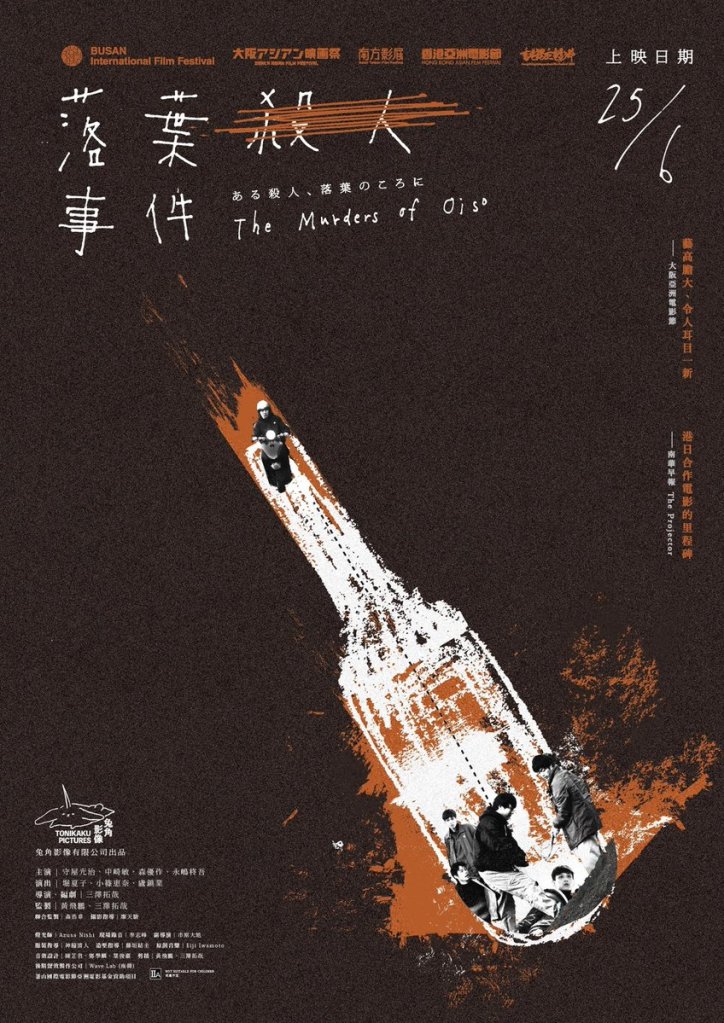
The Murders of Oiso (ある殺人、落葉のころに, Takuya Misawa, 2019)

(C) Wong Fei Pang & Takuya Misawa

The dark heart of wholesome small-town Japan is fully illuminated in Takuya Misawa’s second feature, The Murders of Oiso (ある殺人、落葉のころに, Aru Satsujin, Rakuyo no Koro ni). Then again, depending on your point of view, there might not be any “murders” in this murder story only a series of admittedly strange deaths, but even if you choose to exclude the idea that these unfortunate victims were done in by their society, there would be several possible explanations and a variety of suspects on offer. Employing a bold non-linear structure across several levels of thematic complexity, Misawa plays with the unreliability not only of memory but of narrative in leaving us to contemplate the subjective truths of our own perception as we search for connection to make sense of the fragmentary evidence presented to us. 

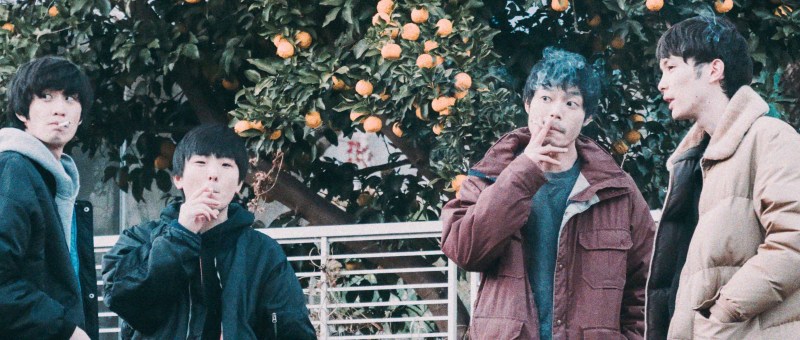
As far as certainties go, Misawa sets his tale in the small coastal town of Oiso, its faded grandeur perfectly matching the defeated hopes of our four protagonists: former high school buddies Kazuya (Yusaku Mori), Tomoki (Haya Nakazaki), Eita (Shugo Nagashima), and Shun (Koji Moriya). Now in their early 20s, the boys are all working construction jobs at the company owned by Kazuya’s family thanks in part to his uncle, Hiroki, who was their basketball coach at school. When Hiroki is found dead in a freak gardening accident, their lives are turned upside down not only in the sudden loss of their primary figure of authority but in a series of unexpected reversals which directly threaten their way of life. 

Even before that, however, we get the impression that these “friends” don’t actually like each other very much and are only together out of a combination of fear, habit, and lack of other options. Kazuya, the thuggish leader, never misses an opportunity to remind the guys they have (and keep) their jobs only because of his largesse while quietly resentful of Eita’s relationship with his girlfriend Saki (Ena Koshino) who is, in actuality, the narrator of this complicated tale of small-town pettiness. Like Kazuya, Tomoki (a classic underling) fears the fracturing of the group, alarmed by news from Shun that he’s thinking of quitting his job and moving away, and goes to great lengths to protect it. 

Hiroki’s death, however, presents a series of problems besides its suspicious quality in that he had apparently remarried in secret, keeping the existence of his much younger wife Chisato (Natsuko Hori) even from his closest family which of course includes Kazuya something which causes him a degree of embarrassment on top of his anxiety. As the only son, Kazuya is perhaps overburdened by filial responsibilities in needing to take over the family firm whether he wants to or not. His thuggishness is in essence a rebellion against his lack of agency, but he’s also unaware that his father seems to be in debt and mixed up with loanshark gangsters who frequently need stuff dumped on the sly. If they were hoping that Hiroki’s death would result in a windfall, the existence of a wife is a major inconvenience as is her quite reasonable eying up of the funerary donations and hope that the inheritance will come through as quickly as possible. 

According to the narrator, the town is much more scandalised by Chisato’s existence than they are by Hiroki’s death. Small-town life is still fiercely patriarchal and socially conservative. Immature, Kazuya has outlawed women in the “workplace” (a den where the boys hang out playing cards, smoking, and drinking) and resents Eita’s girlfriend for weakening his ties to the group. With Hiroki, the authority figure, gone, an emboldened Kazuya makes a pass at his friend’s girlfriend which she manages to dodge while Eita does nothing more than watch from outside. He confronts Kazuya on realising that Saki is upset enough to mention the police, but Kazuya brushes it off, claiming that she was drunk and is mistaken before instructing Eita to fix his girlfriend’s “funny” dress sense. Tomoki chimes in too, laughing that he doesn’t see why Saki is outraged because it’s not as if Kazuya succeeded in raping her and in his view it’s disproportionate to be so upset about “touching”. He also points out that Saki’s attitude is a threat to their group and to Eita’s employment prospects (eventually going so far as threatening Saki at her place of work), leaving him with a clear choice and, it seems, he chooses Kazuya making no attempt whatsoever to defend his future wife or dare to criticise his friend’s bad behaviour. 

Kazuya may be resentful at his lack of agency, but the other guys seems to have internalised a sense of futility and hitched their carts to his wagon no matter how much they hate him or themselves. Only Shun seems to be conflicted, turning away while Kazuya mugs an old high school friend in a local subway tunnel, later joking about his weakness for handing over the money right away. Misawa adds to the sense of Lynchian dread through noirish composition, all empty streets and canted angles, along with a moody jazz score to find the menace lurking round every corner in this strangely violent town apparently ruled by corruption and nepotism while breaking off into Ozu-esque pillow shots of vacant hallways and urban decay alternating with nature at the turn of autumn. Frequent shots of the director himself apparently writing the female narration we are hearing further add to the sense of unreality as we meditate on the single phase “I remember” while hearing the narrator mislead and contradict herself. Were there murders in Oiso, or is this all a dream from the mind of a frustrated young man realising he’s hit a dead end and teenage friendship can’t last forever? That’s one mystery (among many others) you’ll have to solve for yourself. 


The Murders of Oiso is available to stream in the US until July 30 as part of this year’s Japan Cuts.

Original trailer (English / Traditional Chinese subtitles)

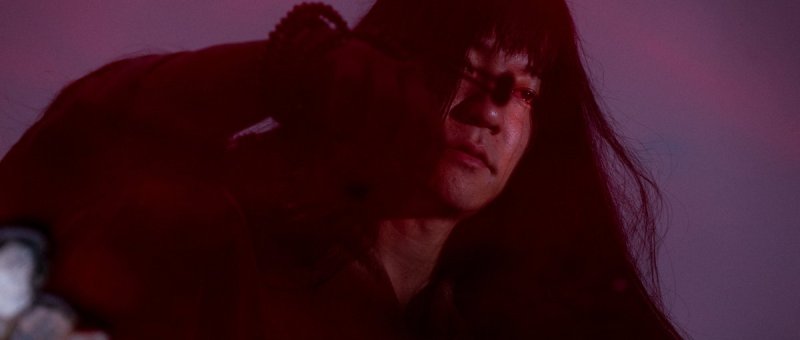
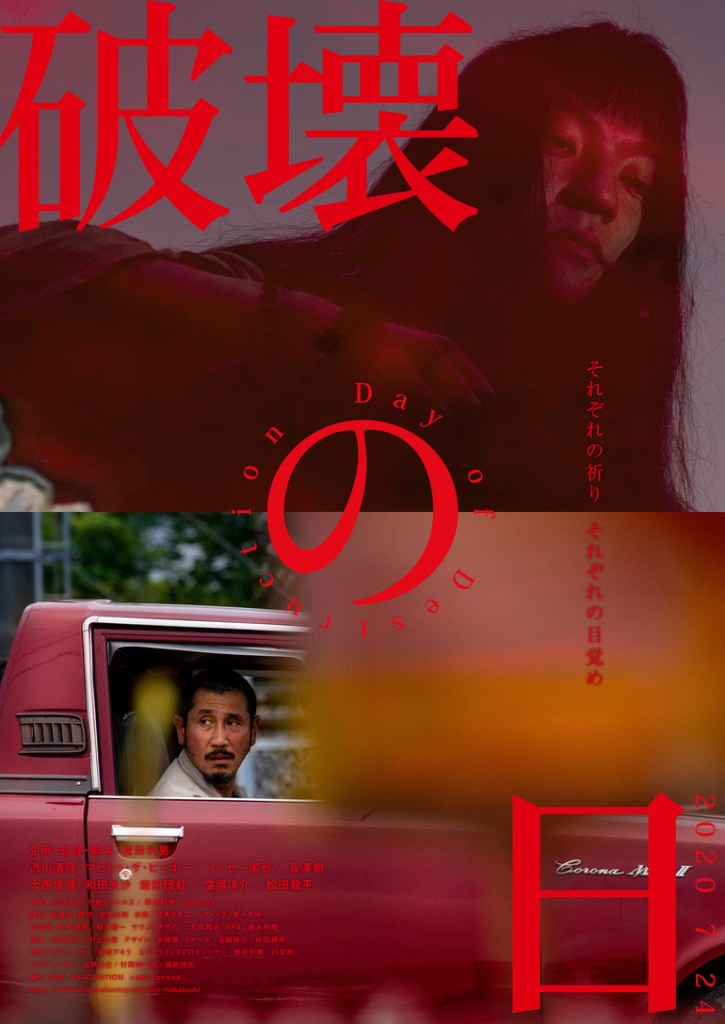
The Day of Destruction (破壊の日, Toshiaki Toyoda, 2020)

“I want to create a movie that exorcises Tokyo of its possession by the spectre of capitalism.” so goes the introduction* given by director Toshiaki Toyoda to the crowdfunding project for his latest mid-length movie, The Day of Destruction (破壊の日, Hakai no Hi). Set to open on July 24, the day which should have marked the opening of the 2020 Olympic Games had it not been for their postponement, The Day of Destruction returns Toyoda to the disillusioned rage of his early career in a painful wail of protest against an infinitely self-interested society in which there is “a price tag on our lives fluttering in the wind”. 

Toyoda opens in black and white with snow falling like ash across the gate of a shuttered mine. City slicker Shinno (Ryuhei Matsuda) has come to see the monster, and he’s brought an envelope of cash for just that purpose, handing it to former miner Teppei (Kiyohiko Shibukawa) now unemployed thanks to the “rumours” of what might be lurking in the darkness. Shinno presses on alone and discovers a pulsating, gelatinous mass at the end of his path but merely laughs, muttering “one hell of a monstrosity has been born, huh?” as he turns around and walks away seemingly unimpressed.  

Shifting into colour and the present day, Toyoda pans past the Diamond Princess cruise ship, controversially quarantined for two weeks in Yokohama Harbour, before taking us straight into the city of Tokyo and the Olympic stadium which he then implodes with the “Genriki” spiritual power later explained onscreen, ending on the face of a mummified monk. Back in the country, at the Mt. Resurrection-Wolf shrine mountain ascetic Kenichi (Mahi To The People) is attempting to mummify himself as a sacrificial offering to stop the “plague” which has been spreading since the monster’s discovery but his efforts are disrupted by an earthquake which sends him into existential torment from inside his coffin while collapsing the mine in which the monster had taken root. 

On his way to rescue Kenichi, Teppei, apparently a former monk himself now working as a mechanic, encounters a crazed salary man ranting that the monster has infected us all. He’s not the only troubled soul Teppei encounters, later passing a woman in the middle of her shopping screaming that we’re all in hell and it’s the monster’s fault, but as head monk and herbalist Jiro (Issei Ogata) points out, nothing can destroy the evil spirit haunting the town because you cannot kill what is intangible. You can’t end the plague by killing the monster, only by curing it because the monster is a part of nature too. Humans possessed by demons are cured by humans who might also in fact be demons themselves. There is only imperfection and co-existence. All you can do is show the way. 

The irony is that Kenichi, eaten up by rage and resentment over the death of his younger sister Natsuko (Itsuki Nagasawa) from the epidemic, thought he could change the world through prayer fiercely believing in the prophesied return of the Maitreya but if there is a Maitreya here it is Natsuko who appears to each of our heroes and eventually reveals the only real cure to her brother in instructing him to heal himself. Only by changing himself can he change the world. With the power of his Genriki, he knocked the demon of apathy out of Teppei but now he must point the finger within towards his own darkness, the rage and impotence that has in its own way made him selfish and left him blind to the true nature of sickness blighting his society. 

That sickness is embodied in the stadium that looms in the background of the hospital rooftop where Kenichi meets his sister, explaining that he sees no point in competition and that the Olympics are nothing more than a “greed-filled field day”. The crazed salaryman bangs on the palace doors begging to be let in, berating the “politicians, landowners, bankers, and monks” for locking themselves away in safety, refusing their responsibility to those like him. Kenichi says he’s going to change the world through prayer, but Natsuko, child of summer, tells him nothing will change, not her or her illness. You can’t change the world by withdrawing from it, mummifying yourself is not the answer in fact it’s the essence of the problem and somewhat symptomatic of Kenichi’s egotistical saviour complex. You have to start with yourself, but in the end we save each other or nothing ever changes. 

As topical as it’s possible to be, The Day of Destruction was shot in only eight days from June 22 to 30 with editing and postproduction on the incredibly rich sonic experience lasting until July 20 with the DCP arriving at cinemas the day before the release date of July 24 which is of course the “Day of Destruction” that should have marked the opening of the 2020 Olympic Games. It makes direct reference to the official wording of the government advice urging “self restraint” in light of the pandemic and situates itself in the “broken days of summer” of a lost year. Yet for all the fatalism and despair it also reminds us that “Everyone on Earth is a central player, we’re all in the same boat called Generation”, calling out for change but pointing an accusatory finger directly at the camera to remind us where the responsibility lies.


The Day of Destruction streamed for one day only as as part of this year’s Japan Cuts.

Original trailer (English subtitles)

*translation by Ben Dimagmaliw of Indievisual

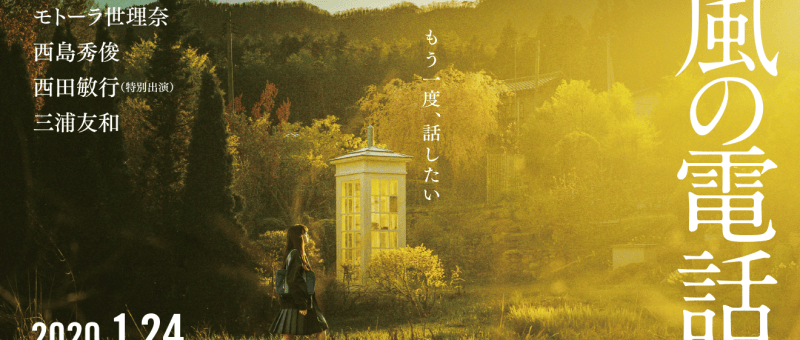
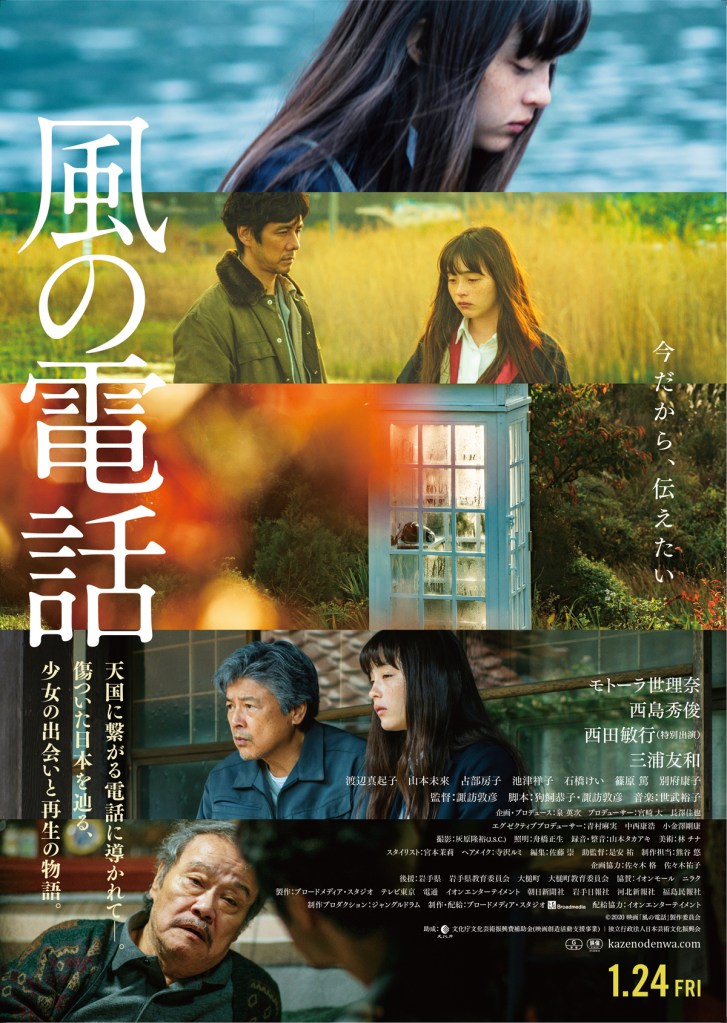
Voices in the Wind (風の電話, Nobuhiro Suwa, 2020)

Shortly before the devastating earthquake and tsunami struck the coast of Japan in March 2011, a resident of Otsuchi constructed the “wind telephone” as a way of “communicating” with a relative who had recently passed away. As his words would obviously not reach him in the usual way, he hoped they might be carried on the wind though like a letter never intended to be sent, the sentiment is perhaps more important than the delivery. In the years since the disaster, over 30,000 people have picked up the receiver, hoping to reconnect in some way with those they’ve lost. Widely reported in the international media, the story of the Wind Telephone brought director Nobuhiro Suwa back to Japan for the first time in 18 years after a career mostly spent in Europe as a young woman attempts to come to terms with the past in order to find the strength to continue living in the wake of such devastating grief. 

Nine years old when the tsunami struck, 17-year-old Haru (Serena Motola) lost everything in a single moment. Her family home was destroyed, her parents and younger brother swept out to sea their bodies never found. Since then she’s been living in Kure, Hiroshima, with her aunt Hiroko (Makiko Watanabe) who suggests making a visit to Otsuchi to attend an event celebrating the town’s rejuvenation but Haru is understandably reluctant. When Hiroko is taken ill suddenly, however, she finds herself making the trip alone, reeling in her sense of abandonment and in search of some kind of answer to her sorrow. 

Throughout the course of her journey she encounters many other griefstricken souls, not all of them in a direct sense at least affected by the earthquake but carrying a heavy burden all the same. A concerned old man who spots Haru lying vacantly in a quarry and takes her home reveals that he did so in part because she had an absent look that reminded him of his sister who took her own life over a decade previously. “Stay alive” he pleads with her as he drops her off at the local station after a good meal and an oddly cathartic conversation with his elderly mother who spoke of her memories of the atom bomb and a relative who went to the city in search of his wife’s family but returned only with a funeral urn which, to her consternation, contained no bones only a button from a student’s jacket. 70 years later she still feels ashamed for her six-year-old curiosity to know what human bones looked like. 

This sense of what remains and what is swept away becomes central to Haru’s ongoing journey. It isn’t just the people who are gone, but the spaces they inhabited and memories contained within them. An elderly gentleman (Toshiyuki Nishida) finds himself reduced to tears while watching an old comedy he must have seen countless times before, overcome with grief on seeing the paddies and fields as they once were while a local folk tune plays in the background. The man who travels with Haru for much of the trip, Morio (Hidetoshi Nishijima), declares himself homeless but does in fact have a home only one he can’t bear to visit, while Haru’s no longer exists at all, reduced to foundations still partially submerged yet overgrown as nature begins to reclaim its territory. 

Meanwhile, she discovers other kinds of grief and displacement in meeting the family of a Kurdish refugee who went to Fukushima to help after the earthquake but is now indefinitely detained by immigration officials while they decide on his case. The man’s daughter, perhaps slightly younger than Haru, explains to her that she’s acted as an interpreter in hospitals for other Kurdish women who are often isolated and speak little Japanese. She’s decided that she’d like to become a nurse to go on helping people, but Haru can find little of her positive forward motion, stuck as she is in the past with no real concept of the future.

But then, there are also signs of life. The first people who pick Haru up hitchhiking are a cheerful heavily pregnant woman and her more serious brother. The woman confesses that she’s having the baby on her own, and that many did not approve of her decision thinking her too old at 43 to become a mother. “Isn’t it amazing how we can just make another person?” she exclaims, “It’s like there’s a whole little universe inside you”. In the midst of all this grief, there is life too, not to mention warmth and kindness such as that found in each of those who help Haru on her way until she finally reaches the telephone. 

Using mostly improvised dialogue, Suwa’s European arthouse aesthetic has an elegiac quality as Haru edges her way towards an accommodation with her grief, resolving to live on even in the wake of tragedy. “Because I’m alive I remember all of you” she adds, acknowledging her place with the grand sweep of history. “It’s OK”, Morio tells her, “you’ll be OK” speaking for himself as much as anyone else, looking towards a possible future if in memory of the irretrievable past.


Voices in the Wind (風の電話, Kaze no Denwa) is available to stream in the US until July 30 as part of this year’s Japan Cuts.

Original trailer (English subtitles)
What Can You Do About It? (だってしょうがないじゃない, Yoshifumi Tsubota, 2019)

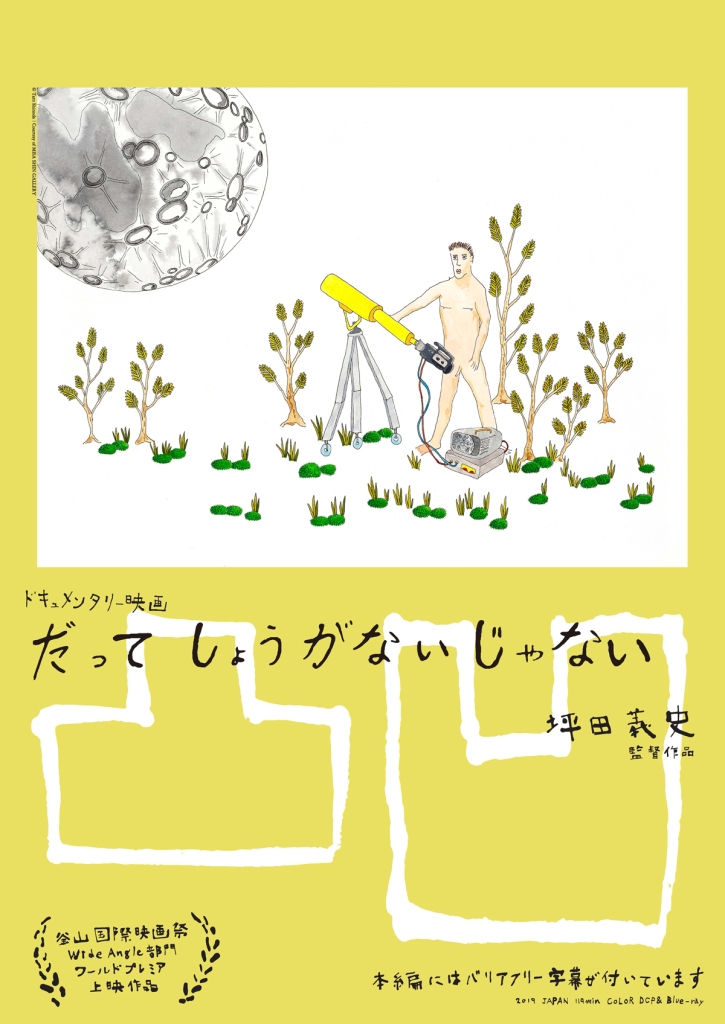
“Datte, shoganai janai?” The subject of Yoshifumi Tsubota’s empathetic documentary asks, stoically accepting disappointment with a resigned, well What Can You Do About It? (だってしょうがないじゃない). Recently diagnosed with ADHD, 41-year-old Tsubota documents his friendship with a relative diagnosed with a Pervasive Developmental Disorder, in his case autism with mild learning difficulties, as he tries to come to terms with the many changes in his life from the death of his mother some years previously to the impending prospect of having to leave his childhood home and enter a residential facility. 

Born in 1957, Makoto had lived alone with his mother for over 40 years before she passed away. Leaving education after middle school, he drifted around in various jobs before joining the SDF with which he served until returning home on his father’s death and is now in his early 60s. Yoshifumi’s aunt, Machiko, has become his legal guardian, helping him get the PDD diagnosis and sorting him out with a pension while managing his money and just generally watching over him. Other than Machiko, whom he refers to as a sister, Makoto is also visited by a series of helpers who assist him with day to day matters such as cleaning and grocery shopping he otherwise finds difficult. 

As his grocery helper points out, sometimes it can take a while for Makoto to fully understand why something is not working out the way he expected. In the case of shopping, he forgets about his budget and puts everything he wants into the basket only for the helper to remind him that he needs to put something back because he’s run out of money. He also gets himself into trouble with Machiko after asking Yoshifumi to go shopping with him and splurging on new trainers just because he liked them, lying that Yoshifumi had bought them for him and remorseful about potentially getting Yoshifumi into trouble. The biggest problem, however, is with a seemingly pernickety neighbour who has been making complaints about Makoto’s sometimes eccentric behaviour, especially his strange habit of going out late at night and throwing plastic carrier bags in the air just because he enjoys seeing them dance in the wind. He knows he needs to change, but finds it impossible to stop. 

Makoto’s compulsions worry Machiko who recalls a previous occasion on which he almost started a fire idly playing with matches. She is also alarmed on discovering a pornographic magazine he’d hidden in his figurine cabinet, paranoid that he might harm someone, unable to control himself or understand what might be considered inappropriate. Machiko’s rather prurient reaction appears to cause Makoto a great deal of anxiety despite Yoshifumi’s reassurance that most men have similar magazines and looking at them, so long as that’s all it is, is perfectly healthy whatever Machiko might say to the contrary. 

Meanwhile, he’s acutely worried about the prospect of being forced out of his family home and realising that if something happens to Machiko there will be no one left to look after him. After his mother’s death, Makoto had announced a sudden intention to marry a beautiful woman, but, as it turns out, only to get himself another mother. Two older women who come to chat with him as part of a community outreach programme try to talk him out of it, persuading him that wives and mothers are different, something which apparently took a little time for him to fully understand. When a cherry tree in the garden has to be cut down, he finds it very distressing as if he no longer recognises his home as his own with only two trees when there had always been three.

Yoshifumi too is looking for acceptance and understanding, explaining to Makoto and the visiting ladies that his wife is struggling to accept his ADHD diagnosis while telling us in voiceover that he’s been hiding his medication in his office and taking it in secret because she doesn’t approve. His quest to understand Makoto is also one to understand himself while trying to capture the way he sees the world. As Makoto says, however, Yoshifumi’s wife can never fully understand because she does not experience things the way they do. Nevertheless, the two men though a generation apart generate a genuine friendship, going to theme parks, baseball games, summer festivals, and eventually karaoke as they bond over their shared sense of difference. Lending a whimsical touch with frequent transitions into surrealist animation, Tsubota’s warm and empathetic approach explores not only his cousin’s usual life but also the problems of ageing and of disability in contemporary society along with a persistent stigma towards the acknowledgement of development disorders but finds solace in community support as friends and relatives rally round to help Makoto live his life to the fullest for as long as he can. 


What Can You Do About It? is available to stream in the US until July 30 as part of this year’s Japan Cuts.

Original trailer (English subtitles)
Special Actors (スペシャル アクターズ, Shinichiro Ueda, 2019)

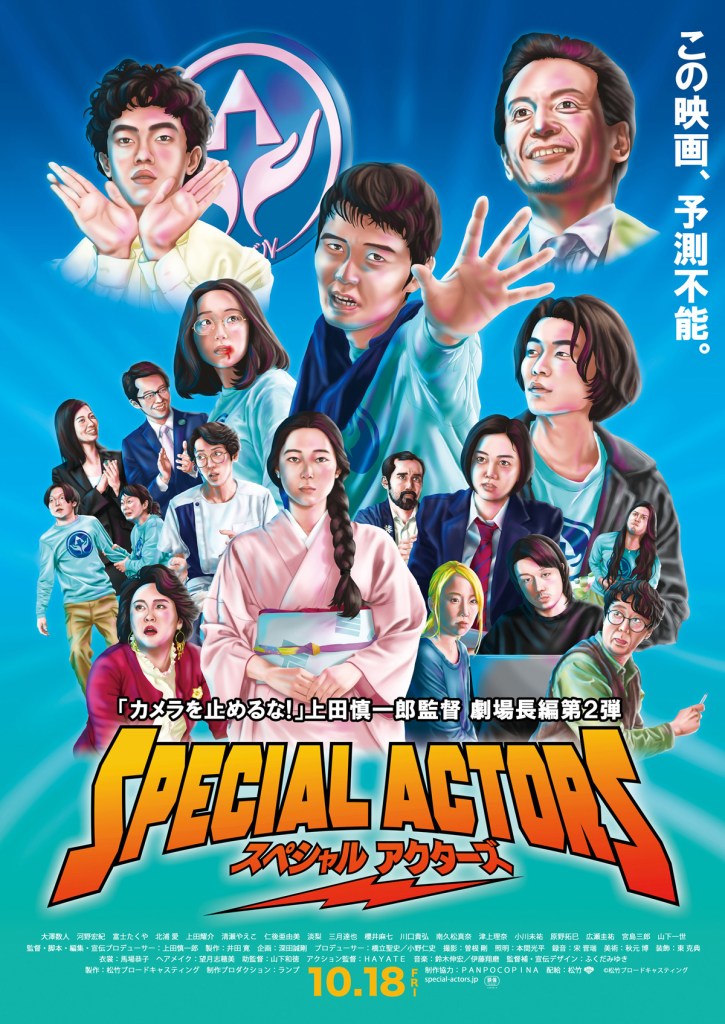
When your made on a shoestring indie debut becomes an accidental international phenomenon, no one could really blame you for succumbing to imposter syndrome. Shinichiro Ueda’s One Cut of the Dead, a meta comedy with high concept conceit, delighted fans around the world but rather than slide into summer tentpole territory Ueda remains true to his roots with follow up feature Special Actors (スペシャル アクターズ) once again developed through actors’ workshops and owing a significant debt to contemporary stage comedy.

Our dejected hero, Kazuto (Kazuto Osawa), is an anxious young man burdened with PTSD from childhood trauma that causes him to faint when he becomes overly stressed or is confronted by an overbearing, if not actually violent, male authority figure. He dreams of becoming a hero who can protect people like Rescue Man, the star of an American tokusatsu-style show he’s obsessively watched dubbed into Japanese since childhood, and is determined to become an actor only his habit of fainting mid-audition constantly frustrates his ambitions. Already behind on his rent and about to be fired from his part-time job as a security guard on the grounds that he didn’t disclose his “illness” when he applied, Kazuto is reunited with his estranged younger brother Hiroki (Hiroki Kono), also an actor, who offers to introduce him to his agency, “Special Actors”. In addition to the usual TV and advertising work, Special Actors speciality is renting out talent for “real” as in providing professional mourners, bulking out theatre audiences with laughing stooges, and engineering long queues outside previously empty restaurants. 

Kazuto isn’t quite convinced, not only because it seems like anxiety central, but because it’s more than a little bit shady. The lead “scenario” writer was once a conman, and you can’t get away from the fact this is all quite manipulative and essentially unethical. Forced to take the job because of his financial predicament, he finds himself involved in various plots to change problematic behaviour at the request of well-meaning relatives such as a mother desperate to rescue her daughter from frittering all her money away at host bars. But are the Special Actors really any different than a host at a host bar who is after all only playing a role, as the young woman must know even if she has for some reason been taken in by it? Perhaps they’d be better to find out what is fuelling her obsession rather than coming up with some hokum involving a fake shaman to convince her that her behaviour is dangerous on a cosmic level. 

The moral ambiguity only deepens when the team take on their biggest challenge yet, taking down a shady cult at the request of an orphaned teenage girl whose sister seems primed to give away the family inn. Abruptly shifting into the realms of the espionage thriller reimagined as theatre, Ueda concocts an elaborate heist as the Special Actors infiltrate with the intention to expose. The central irony is of course that in practical terms there isn’t so much difference between them. They are both “lying”, manipulating vulnerable people and doing it for financial gain. “Acting is a big lie” the irate director had screamed in Kazuto’s face, “you have to mean it”. Is the shady cult merely “theatre” taken to an extreme, and if so who if anyone should be held responsible?

Ueda isn’t so much interested in these themes as the ironic potential of their latent comedy, stitching together a series of theatre skit set pieces working towards the epic finale in which the hero, Kazuto, learns to put on his cape and save the day by overcoming his internal “villain” in the shape of his abusive father. Like the cult, the Special Actors are also promising salvation or at least liberation from behaviours which others find problematic regardless of the target’s own wishes or desires even if in the case of some it may be for their own good, a more elaborate form of role play than that enacted in a therapy session. We are indeed all “acting” to one extent or another and you can never be sure that anyone is who they say they are because life itself is theatre. Shot with a perhaps thematically appropriate TV drama aesthetic, Kazuto’s zero to hero journey is pure wish fulfilment fantasy, but even if never reaching the perfectly constructed heights of One Cut of the Dead is undeniably entertaining. 


Special Actors is available to stream in the US until July 30 as part of this year’s Japan Cuts. Tune in for the live Q&A (available worldwide) after the movie on July 17 (also available afterwards on demand)!

Original trailer (English subtitles)
Shell and Joint (Isamu Hirabayashi, 2019)

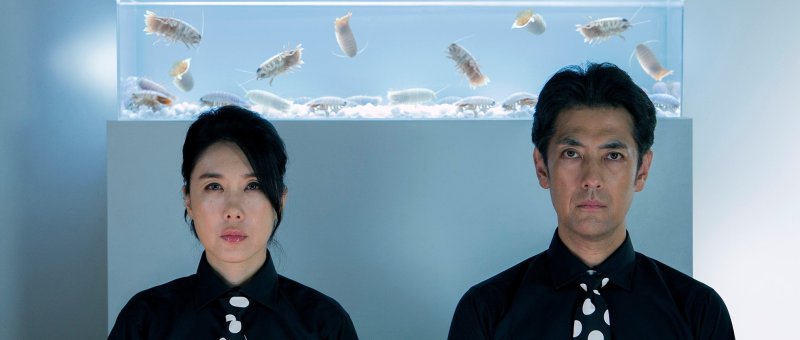
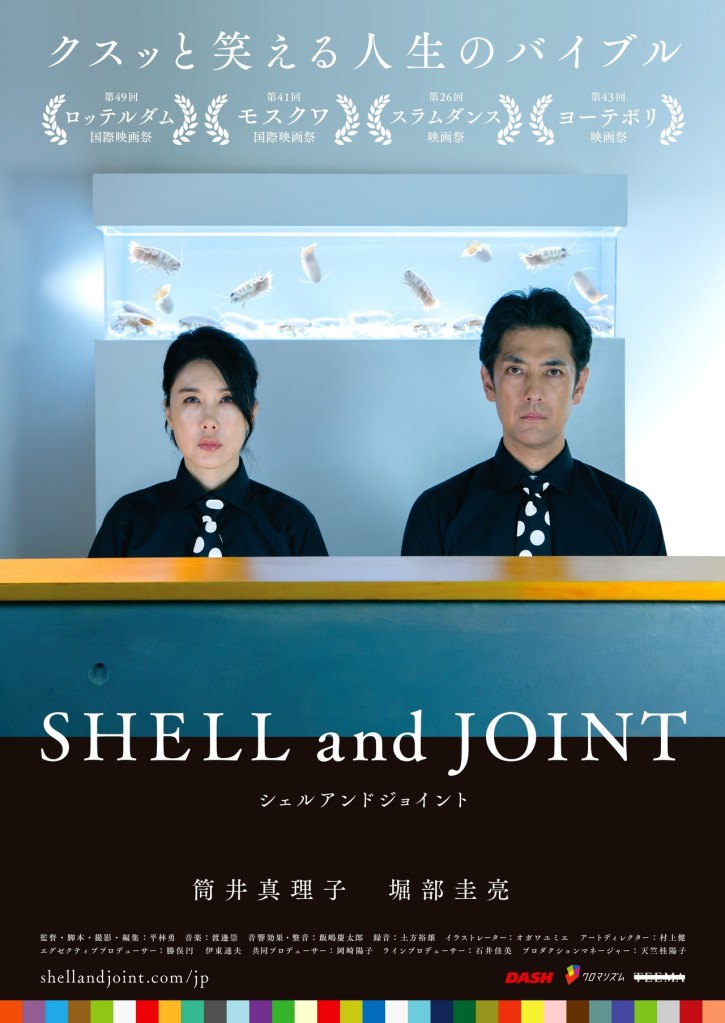
A capsule hotel is a contradictory space, a hub for compartmentalised pods which are nevertheless joined to form one greater whole. The people who frequent them are usually looking for confined private spaces as if cocooning themselves before emerging as something new, or at least renewed, yet the hotel at the centre of Isamu Hirabayashi’s Shell and Joint is slightly different, a noticeably upscale take on convenience with its stylishly modernist design and well appointed spaces from showering facilities to saunas. It is also, it seems, at the nexus of life and death as its bored receptionists, childhood friends, debate what it is to live and what it is to die. 

Sakamoto (Mariko Tsutsui), the female receptionist, has considered suicide many times but continues to survive. She attributes her death urge not to existential despair but to brain-altering bacteria and is certain that a vaccine will eventually be found for suicidal impulses. While her deskmate Nitobe (Keisuke Horibe) is struck by the miracle of existence, Sakamoto thinks his tendency to adopt a cosmic perspective is a just a way of dealing with his fear of death in rejecting its immediacy. Her suicide attempts are not a way of affirming her existence and she has no desire to become something just to prove she exists, nor does she see the point in needing to achieve. Just as in her bacterial theory, she rejects her own agency and represents a kind of continuous passivity that is, ironically, the quality Nitobe had admired in the accidentally acquired beauty of the pseudoscorpion. 

This essential divide is mirrored in the various conversations between women which recur throughout the film and mostly revolve around their exasperation with the often selfish immediacy of the male sex drive. The creepy “mad scientist” starts inappropriate conversations about sperm counts and his colleague’s impending marriage, offering to loan him some of his apparently prime stock to vicariously father a child with the man’s “cute” fiancée who, in a later conversation with another female researcher, expresses her ambivalence towards the marriage, like Sakamoto passively going with the flow, because men are like caterpillars permanently stuck in the malting phase. Her colleague agrees and offers her “men are idiots” theory which is immediately proved by the male scientists failing to move a box through a doorway. 

A middle-aged woman, meanwhile, recounts the process of breaking up with her five boyfriends who span the acceptable age range from vital, inexperienced teenager to passionate old age through the solipsistic, insecure self-obsessed middle-aged man but her greatest thrill lies in the negation of the physical, remarking that “ultimately eroticism is all mental” while suggesting the ephiphany has made her life worth living. On the other hand, a young man is terrorised in a sauna by a strange guy claiming that he is actually a cicada and simultaneously confiding in him about the strength of his erection along with the obsession it provokes to find a suitable hole in which to insert it. 

“What’s the deal with leaving offspring?” another of the women asks, seemingly over the idea of reproduction. The constant obsession with crustacea culminates in a butoh dance sequence in which lobsters spill their eggs down the stairs of an empty building (much to the consternation of an OL sitting below and, eventually, the security team) while other strange guests tell stories of women who underwent immaculate conception only to be drawn to the water where hundreds of tiny crab-like creatures made a temporary exit. The urge to reproduce, however, necessarily returns us to death and the idea of composition. The melancholy story of a Finnish woman drawn to the hotel because of its similarity to a beehive meditates on the sorrow of those left behind while a fly and a mite mourn their cockroach friend by wondering what happens to his dream now that he has died only to realise that because he told them about it, it now lives on with them. Nitobe wonders what the corruption of the body in death means for the soul and for human dignity, while the images Hirabayashi leaves us with are of a corpse slowly suppurating until only a scattered skeleton remains. Such is life, he seems to say. Life is itself surreal, something which Hirabayashi captures in his absurdist skits of the variously living as they pass through the strange hotel and then, presumably, make their exits towards who knows what in the great cycle of existence.


Shell and Joint streamed as part of this year’s online Nippon Connection Film Festival. Viewers in the US will also be able to catch it streaming as part of this year’s Japan Cuts!

International trailer (dialogue free)

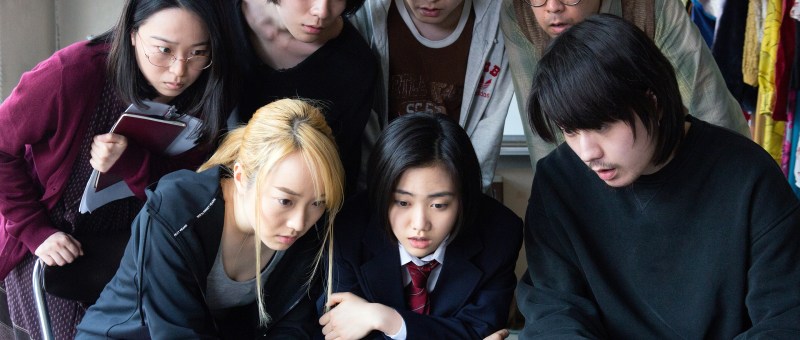
Prison Circle (プリズン・サークル, Kaori Sakagami, 2019)

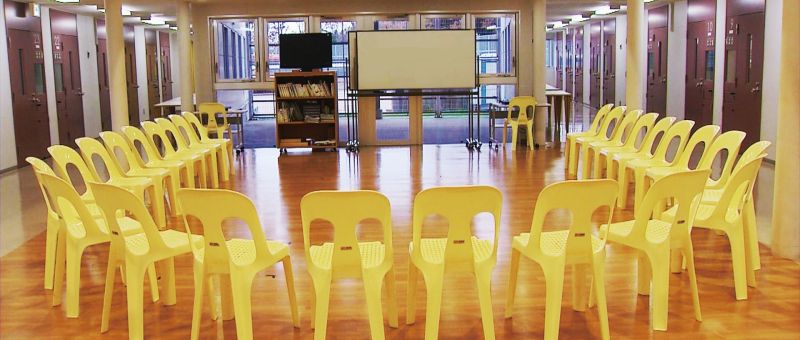
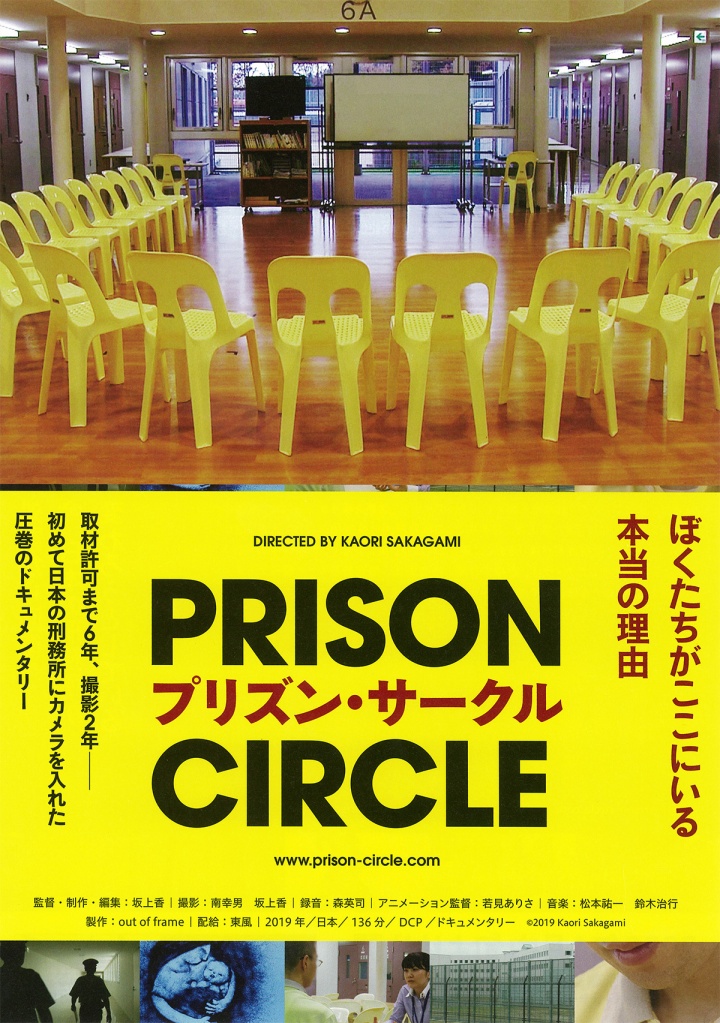
“A scar may recover but trauma never goes away” according to one of the inmates in Kaori Sakagami’s heartfelt documentary Prison Circle (プリズン・サークル). Neatly encapsulating the doc’s themes, the title refers both to the circle of chairs which represents the open group therapy sessions at the centre of the experimental rehabilitation programme on which the film is focussed, and the cycle of violence to which it alludes. Long interested in justice issues, Sakagami follows her two previous documentaries dealing with the US penal system with that of Japan, but concerns herself less with life in prison than the wider social issues which led to these men being convicted of crimes along with their future possibilities for reintegration into mainstream society. 

Sakagami apparently spent six years trying to acquire permission to shoot inside a Japanese prison before coming to an agreement with Shimane Asahi Rehabilitation Program Center which nevertheless has its limitations in that the faces of all the inmates are understandably blurred, she is always accompanied by two guards, and is not permitted to interact with prisoners or anyone working in the prison outside of a few direct interview sessions. Apparently inspired by Sakagami’s US documentary Lifers: Reaching for Life Beyond the Walls, the Shimane programme is the first and only of its kind in Japan shifting the focus away from punishment towards rehabilitation supporting around 40 men through a therapeutic treatment centre (TC) which attempts to help the prisoners understand the reasons for their crimes, empathise with their victims, and eventually return to mainstream society. According to the closing text the programme has been successful in reducing the rate of recidivism among its graduates in comparison with those released from a regular prison. 

In order to qualify, inmates must have the will to change, have no underlying mental health conditions, and be serving at least six months. The prisoners are also described as low risk though many of those we meet have been convicted of violent crimes including those which involved a death. Operating as a small bubble within a larger facility, the TC shares many of the rules and regulations with the wider population in that inmates are expected to raise their hand to ask permission of the guards any time they want to do something, but unlike other blocks are permitted to walk around unsupervised and sleep in “rooms” rather than “cells”. Prisoners engaging in the programme are also partially exempted from mandatory labour requirements while required to participate in the group sessions that are at the core of the TC. 

Following four men over two years, Sakagami finds a fatalistic similarity among their stories despite the differences in their offences, painting their crimes as a cry for help and direct result of childhood trauma. Each of the men who are now in their 20s comes from a difficult family background and experienced abuse, neglect, and bullying which is, the film seems to suggest, the root cause of their lawbreaking. The first of the men, Taku, was abandoned by his abusive father into a children’s home and thereafter left without support as a young man leaving care with nothing to fall back on. Encouraged to be open, he relates his embarrassment in revealing that even as a grown man he often longs to be hugged he feels because his parents never held him when he was a child. The other prisoner reveals he feels something similar, and other of the men admit they fell into crime in part because they wanted to stay connected to something even if it was delinquent kids in place of a family that had already failed them. The last of the men, Ken, also explains that he ended up getting into debt in part because he was buying expensive presents for his mother and girlfriend because he feared they’d abandon him and he didn’t know how else to keep them. 

Yet the prisoners also admit to feeling little remorse, seeing themselves as victims rather than perpetrators and struggling to draw the lines between their trauma and the crimes they have committed along with the hurt they’ve caused to those around them. Through therapy and role play sessions, the prisoners learn to empathise with each other as well as themselves as they begin to process their trauma in an essentially safe space. Sakagami shifts into gentle, storybook-style sand animation in order to dramatise their often horrific childhood memories linking back directly to a fairy tale written by one of the men about a boy who cried wolf because of a mysterious curse which forced him to lie, insisting that he was fine even in his loneliness as he pushed away those who had not rejected him. The boy in the fairy tale is eventually given the power to free himself after being approached by a benevolent god who gives him permission to speak his truth, emerging from his darkness into the light. Though limited by the conditions of filming and over reliant on onscreen text, Sakagami’s compassion for these men and faith in the project is never is doubt as the closing dedication “For everyone who wishes to stop the cycle of violence” makes plain. 


Prison Circle streamed as part of this year’s online Nippon Connection Film Festival. Viewers in the US will also be able to catch it streaming as part of this year’s Japan Cuts!

International trailer (English subtitles)
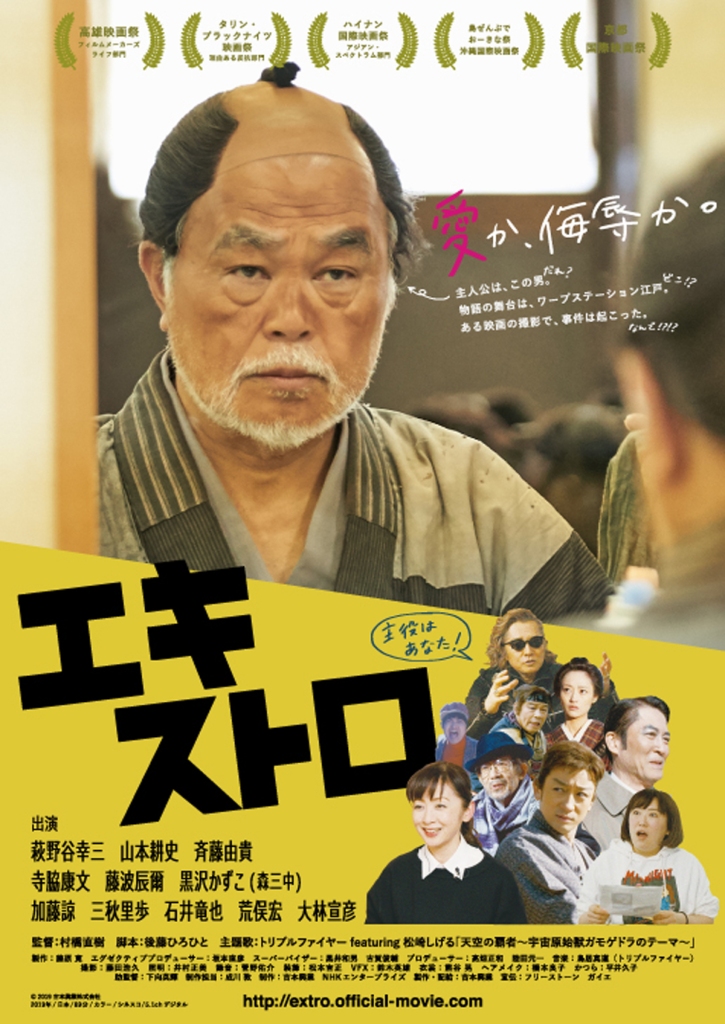
Extro (エキストロ, Naoki Murahashi, 2019)

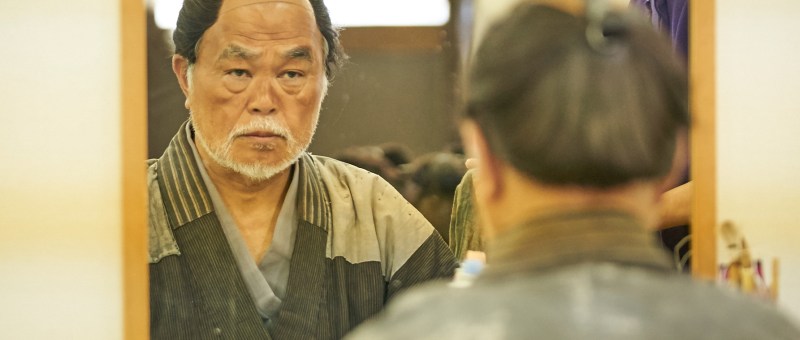
Extras are the unsung heroes of the movies. Getting up in the middle of the night, prepared to spend hours in makeup, and enduring not only the discomfort but also the boredom of standing around all day waiting for something to happen. Naoki Murahashi’s affectionate mockmentary Extro (エキストロ) is dedicated to those whose names do not appear in the credits and are, according to the characteristically warm onscreen interview from the late Nobuhiko Obayashi, the very force that brings life to the otherwise artificial world of the film set. 

The set in this case being “Warp Station Edo”, an artificial replica of a historically accurate samurai-era town used for the production of jidaigeki TV serials. Murahashi’s first subject is a retired dental technician, Haginoya (Kozo Haginoya), fulfilling a lifelong dream as a background performer, but as we quickly see the life of an extra is not an especially glamorous one. Having got up at the crack of dawn to be there at the time listed on his call sheet, he’s nearly sent away because he doesn’t want to shave his beard and back in old Edo facial hair was prohibited for civilised people. The only solution is to switch his role from townsman to farmer, which causes a costuming delay and gets the AD into trouble. Haginoya then goes on to cause yet more problems by bigging up his part before being taken ill, complaining that his intestines hurt right in the middle of a take. Unsurprisingly, he sits the rest of the day out. 

Meanwhile, the other extras are mostly forced to stand around in the cold waiting for the cameras to start rolling. The agency which provides the background actors laments that extra work is only suitable for flexible people with a lot of free time, i.e. pensioners like Haginoya, but that it also requires physical stamina which they often lack. It also transpires most of the agency’s employees are working on a volunteer basis and earning their money through a separate main job, which really begs the question why they bother especially when the agency itself becomes liable for the extras’ mistakes such as those repeatedly made by one “problem child” including making sneaky peace signs, smiling at the camera, and posting strange on-set photos to social media. 

Not quite content with satirising the production environment and its tendencies towards exploitative employment practices, Murahashi adds a second surreal plot strand introducing two bumbling policemen who are seconded to go undercover as extras after a suspected drug dealer is spotted on camera, somewhat incomprehensibly stepping out of hiding and into living rooms across the country. Predictably, the policemen aren’t very good at the acting business and quickly forget all about the case while becoming overly invested in their cover identities, even attending an acting workshop in an effort to blend in with the background stars. 

While the hero of the jidaigeki TV drama earnestly insists that the extras are what give the fake town “life” and it is in a sense he who is being allowed to perform in their world, not everyone is so forgiving. A pro-wrestler brought in to star in a low budget movie titled Dragon Samurai gets so fed up with the antics of the two policeman that he eventually quits, presumably costing another production company somewhere a lot more money, while a repeated gag sees most of the projects go unreleased because someone involved with the production had too much to drink and engaged in acts of public indecency. One such project is the amazingly titled “Prehistoric Space Monster Gamogedorah”, apparently inspired by a local legend about a giant evil duck.

From the self-obsessed stars who turn up when the money’s right to the embattled agency staff and the stressed out ADs, Murahashi doesn’t quite so much sing the praises of the extras as satirise the low level production industry, but does eventually cycle back to the unironic intro from Obayashi who affirms that the extras, or “extros” as he likes to call them short for “extraneous maestros”, are a part of what gives film its beauty and power. As if to prove that sometimes dreams really do come true, even Haginoya gets his moment in the spotlight mimicking his screen hero Steve McQueen as an Edo-era fireman but disrupting the filming once again by laughing maniacally in joy as he rings his bell while Gamogedorah looms ominously on the horizon.


Extro was streamed as part of this year’s online Nippon Connection Film Festival. Viewers in the US will also be able to catch it streaming as part of this year’s Japan Cuts!

Original trailer (no subtitles)
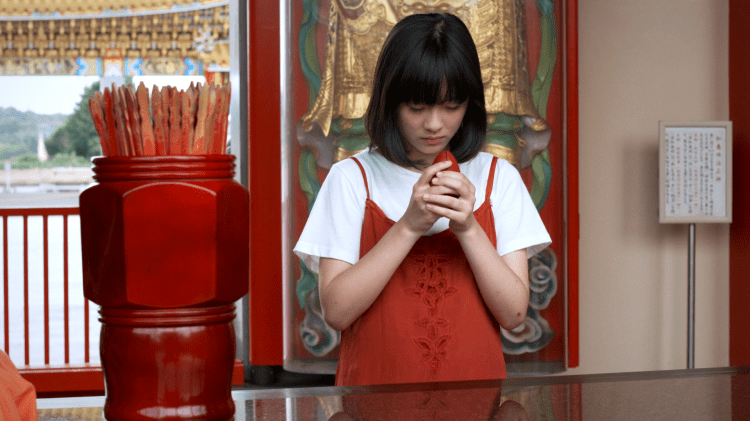
Japan Cuts Announces Lineup for Online 2020 Edition

The latest festival to head online due to the ongoing coronavirus pandemic, Japan Cuts has unveiled another characteristically packed programme of recent Japanese cinema hits (plus a few retro classics) available to stream within the US July 17 – 30.
Feature Slate

  • Extro – mockumentary in which a 64-year-old dental technician tries to fulfil a life long dream as a jidaigeki extra
  • Fukushima 50 – real life drama starring Koichi Sato and Ken Watanabe inspired by the workers who stayed behind to mitigate the Fukushima Daiichi nuclear disaster.
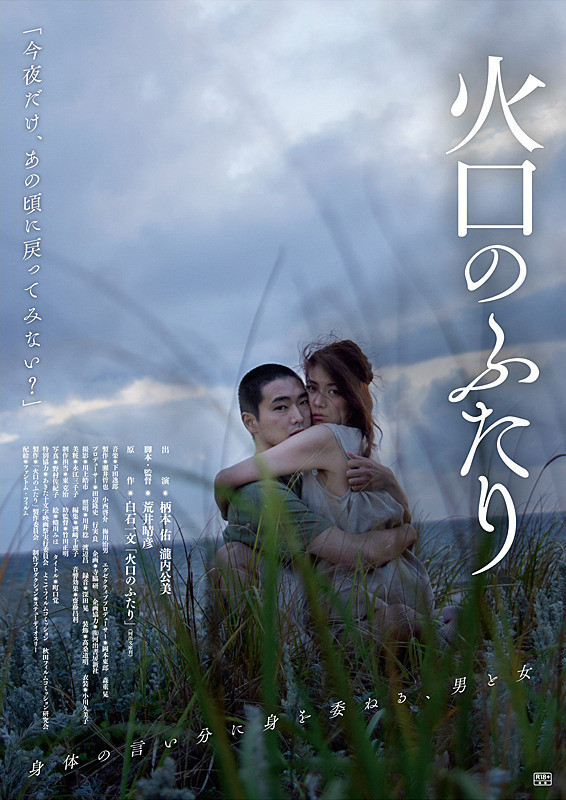
  • It Feels So Good – Steamy drama from Haruhiko Arai starring Tasuku Emoto as a young man retreating to his hometown where he reconnects with an old flame (Kumi Takiuchi) in the days before her wedding to another man.
  • Labyrinth of Cinema – final film from Nobuhiko Obayashi in which three youngsters find themselves lost in the movies.
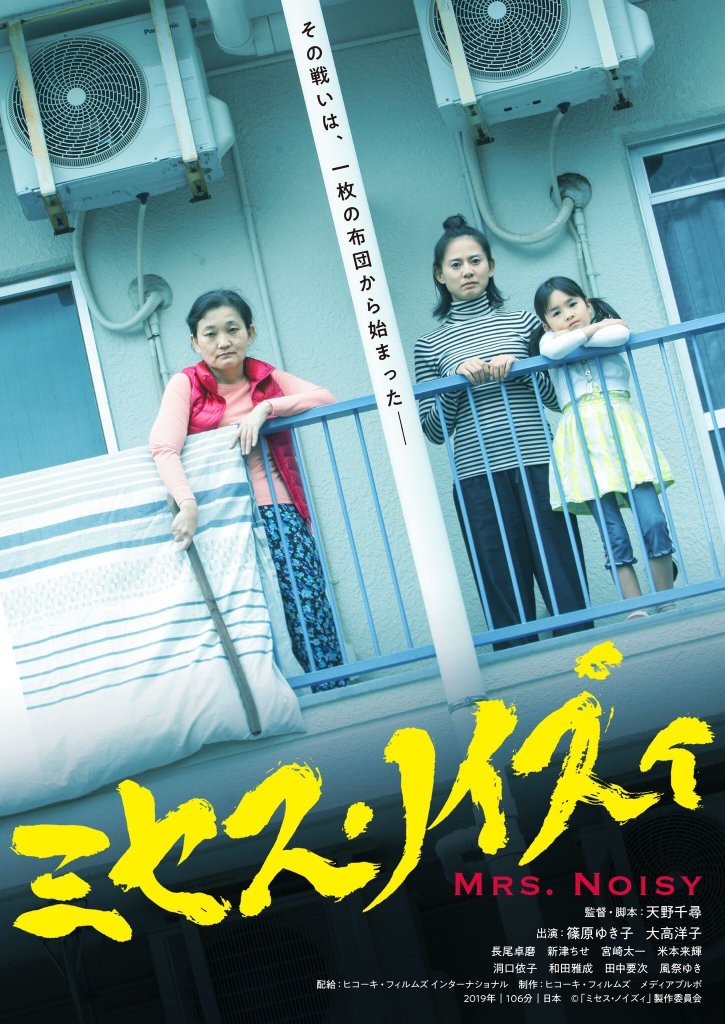
  • Mrs. Noisy – a blocked writer blames all her problems on the noisy woman next-door in Chihiro Amano’s quiet plea for a little more understanding. Review.
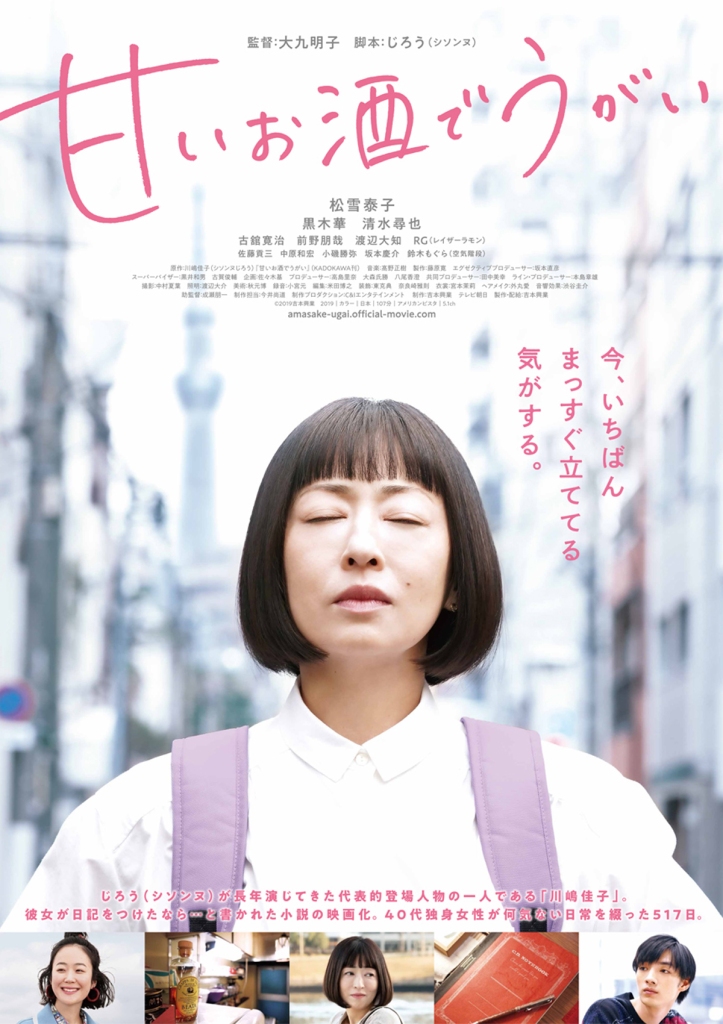
  • My Sweet Grappa Remedies – latest from Akiko Ohku in which a lonely middle-aged woman finds love and friendship with the help of an outgoing colleague. Review.
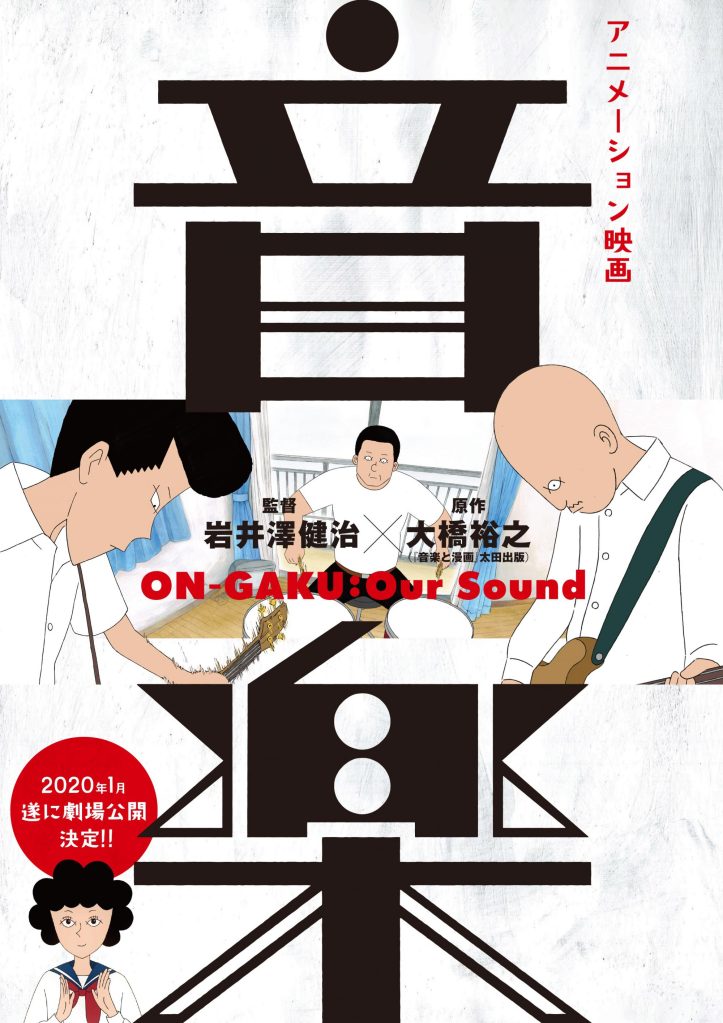
  • On-Gaku: Our Sound – award-winning animation in which a trio of bored high school students decide to start a band.
  • Special Actors – meta-narrative from One Cut of the Dead‘s Shinichiro Ueda in which a shy aspiring actor joins an unusual agency where he’s asked to play a part in other people’s “real life”.
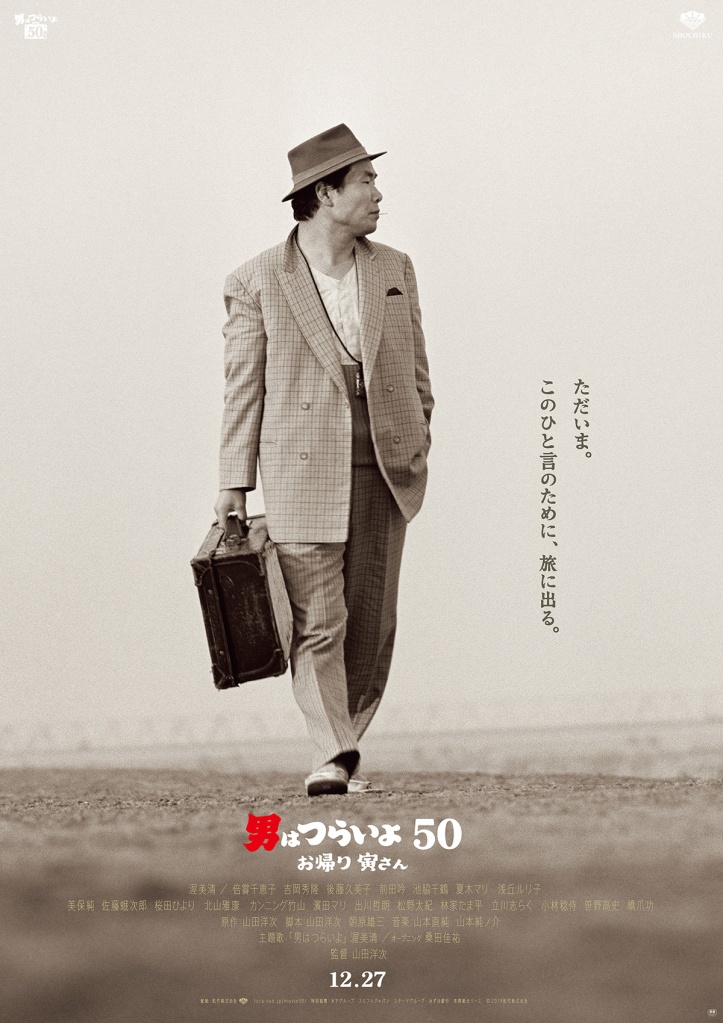
  • Tora-san, Wish You Were Here (Tora-san #50) – loving tribute to the classic Tora-san series
  • Voices in the Wind – a young woman travels back to her hometown in search of the famous “wind telephone” which has become a beacon of hope for those bereaved by the 2011 earthquake and tsunami.

Next Generation

  • Beyond the Night – a brooding outsider connects with a young woman trapped in an abusive marriage.
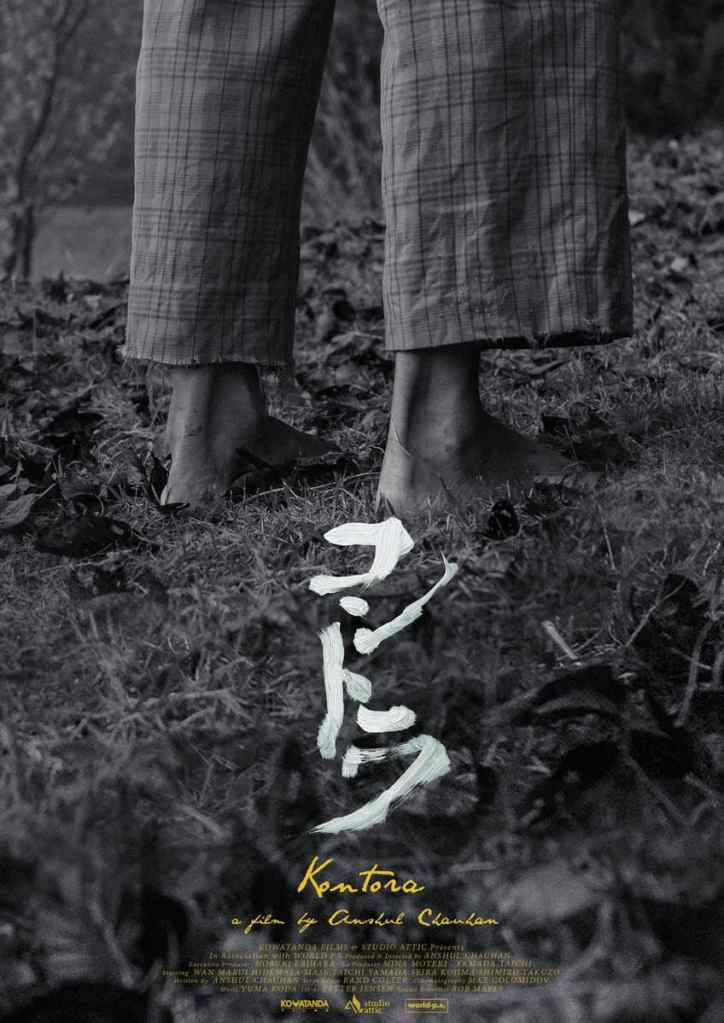
  • Kontora – a young woman uses her grandfather’s wartime diary to look for buried treasure in Ansul Chauhan’s Bad Poetry Tokyo followup. Review.
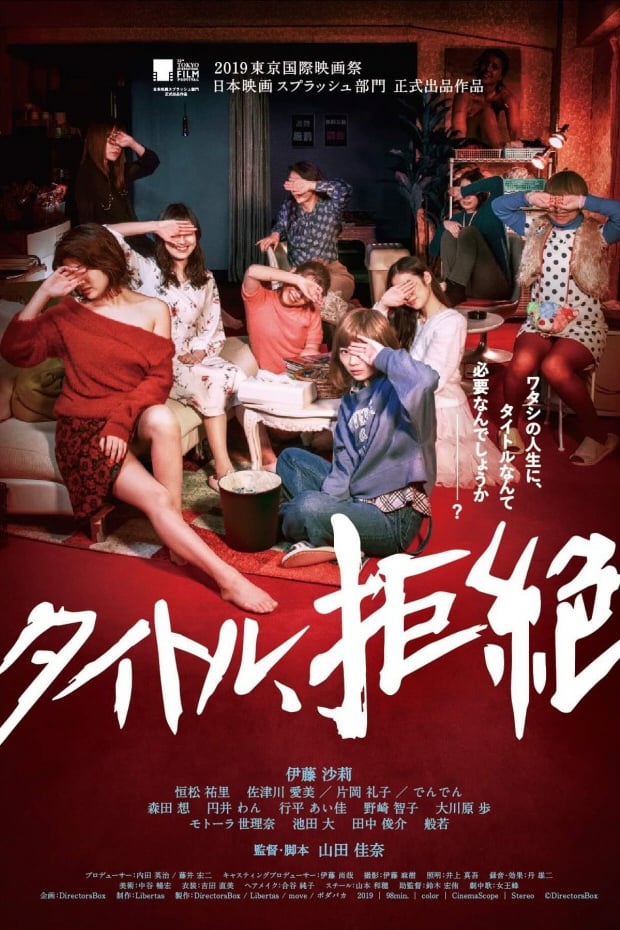
  • Life: Untitled – Kana Yamada adapts her own stage play set in the office of a Tokyo escort service.
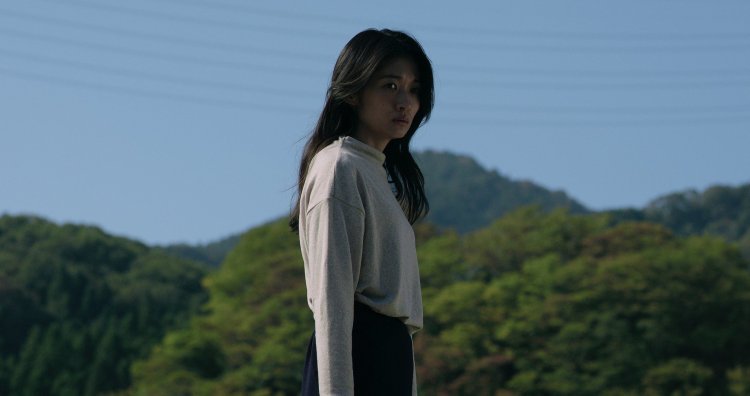
  • The Murders of Oiso – the everyday lives of four construction workers in a small town are thrown into disarray by the murder of their former teacher.
  • My Identity – a Taiwanese-Japanese teenager flees Tokyo with a harassed office worker.
  • Roar – parallel stories of violence in which a young man becomes involved with a vagrant paid to beat people up, while a radio host tries to fend off the aggressive attention of her boss.
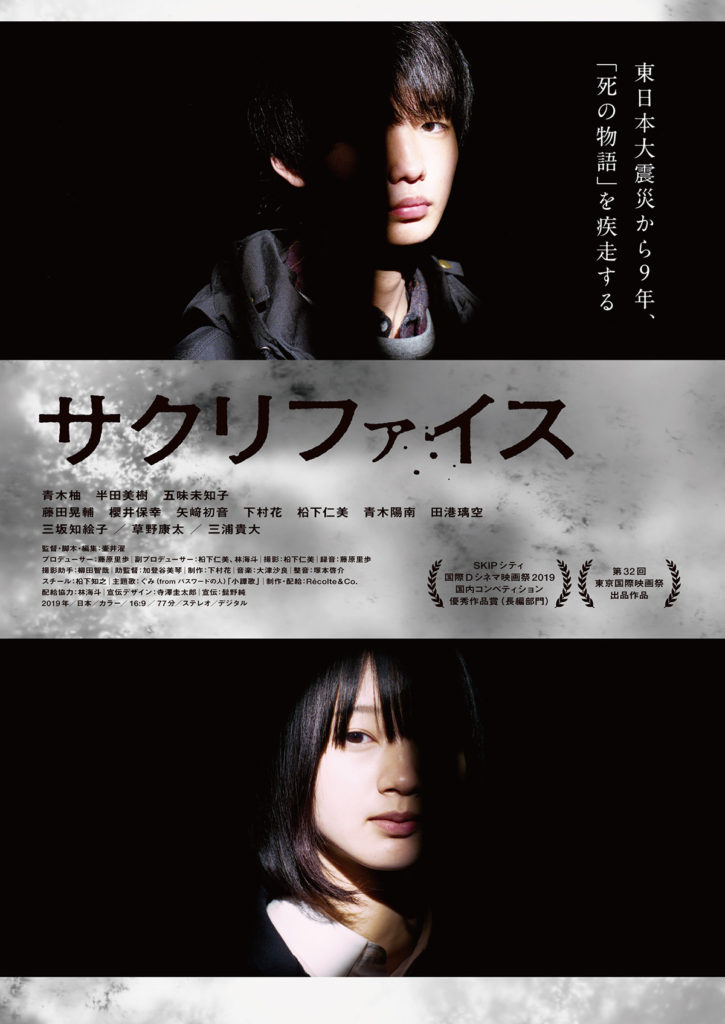
  • Sacrifice – a former cult member who predicted the 2011 earthquake continues to have mysterious visions, while her classmate begins to suspect that another student is responsible for a murder.

Classics

Documentary Focus

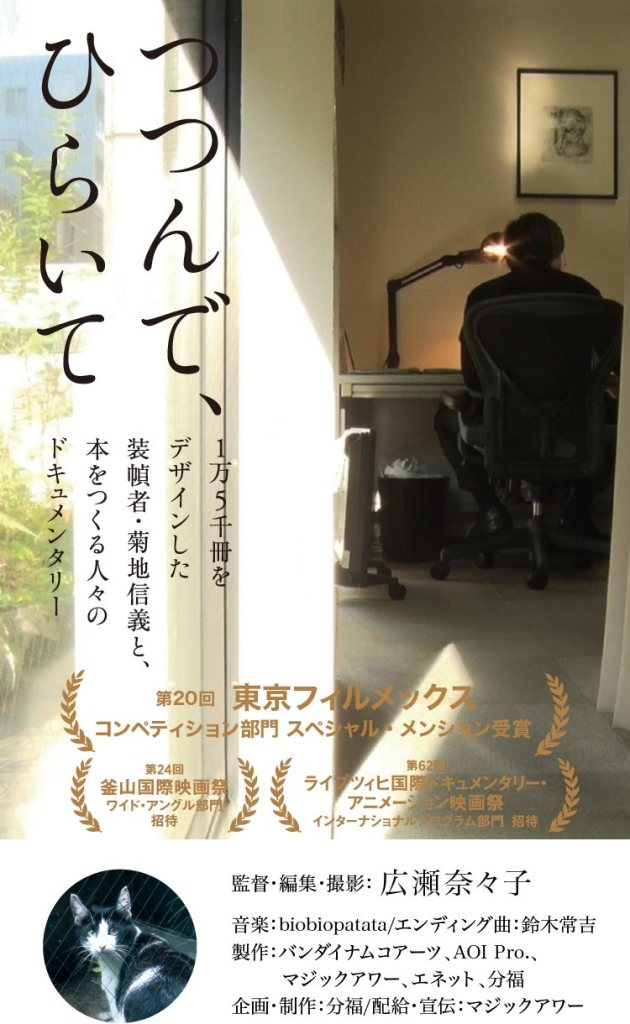
  • Book-Paper-Scissors – Nanako Hirose explores the life of book designer Nobuyoshi Kikuchi. Review.
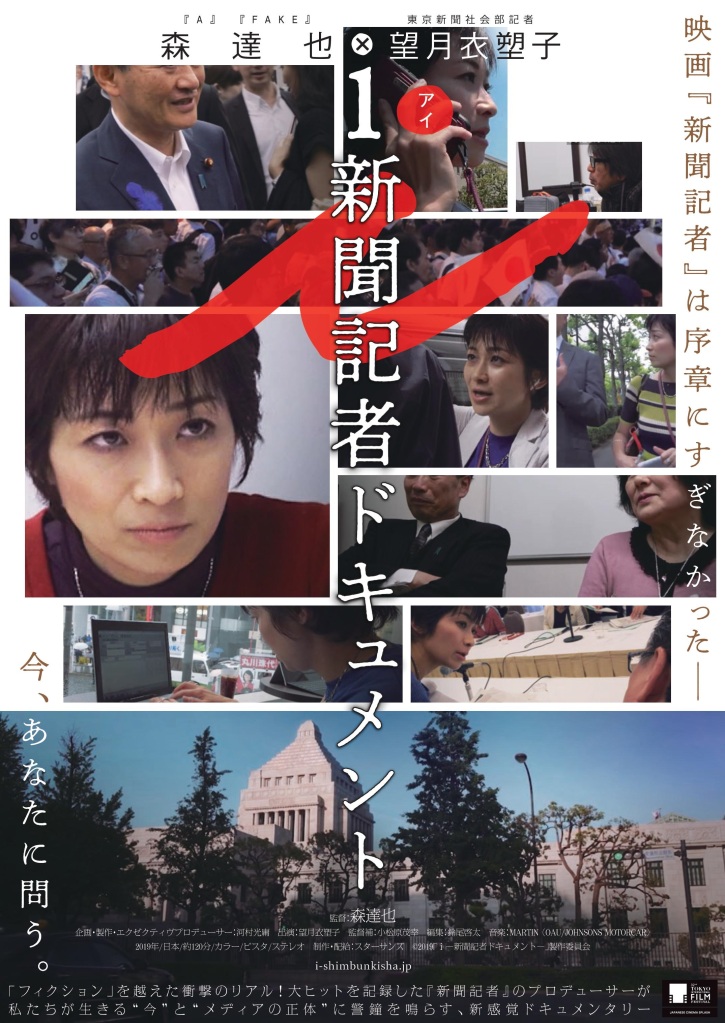
  • i -Documentary of the Journalist- – documentary following outspoken journalist Isoko Mochizuki. Review.
  • Prison Circle – documentary exploring therapy programs for prison inmates hoping to reintegrate into mainstream society
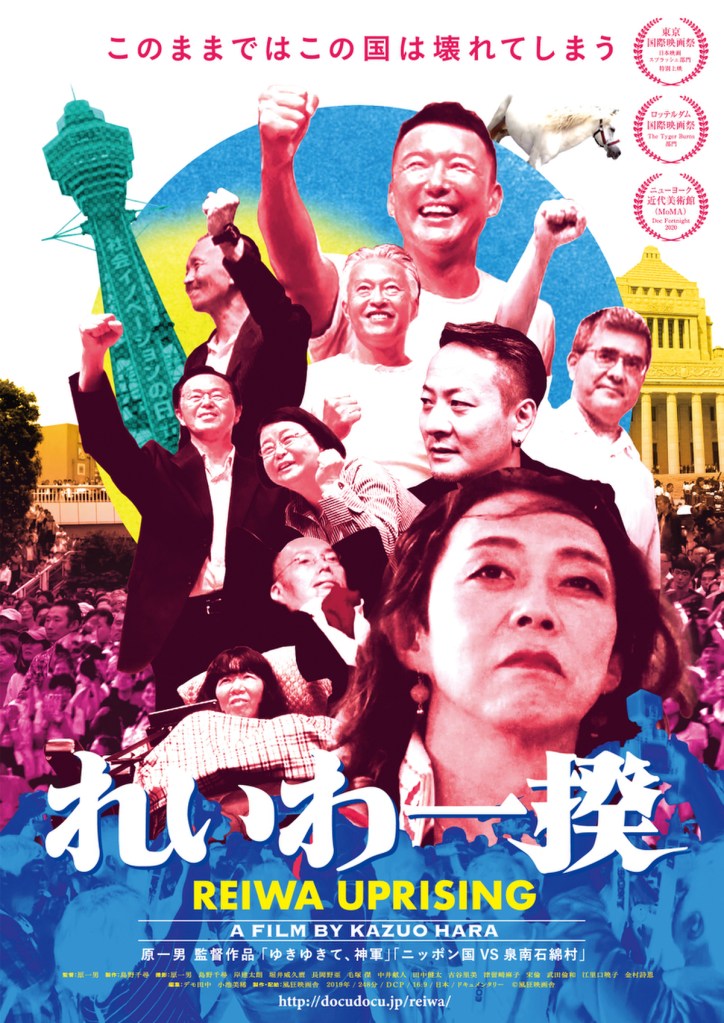
  • Reiwa Uprising – the latest documentary from Kazuo Hara follows newly formed left-leaning political party Reiwa Shinsengumi.
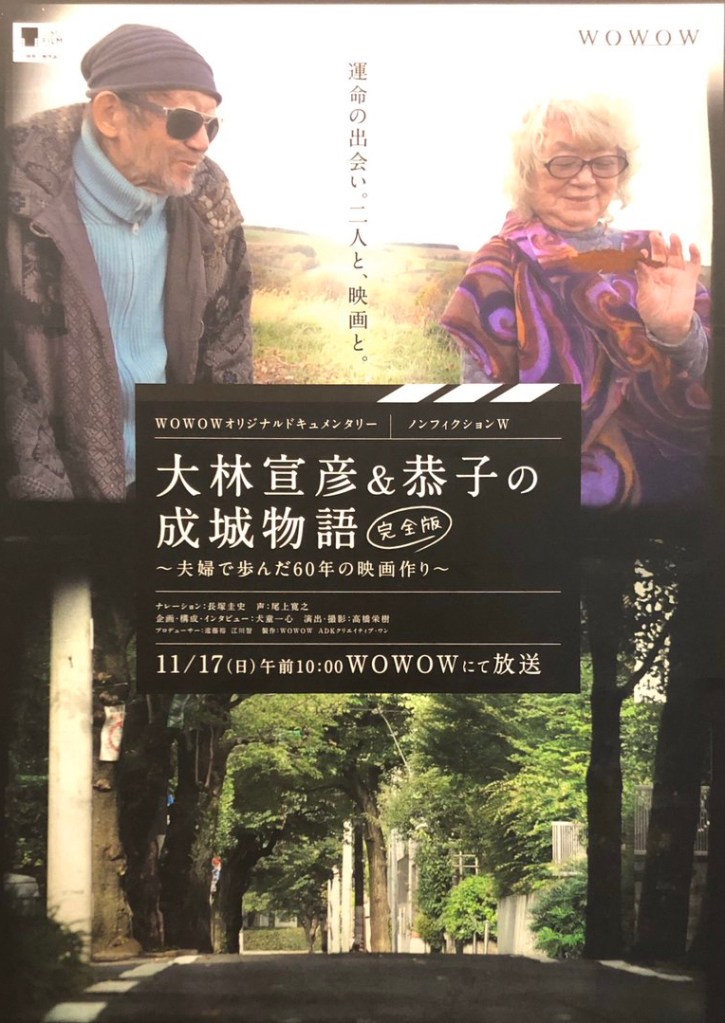
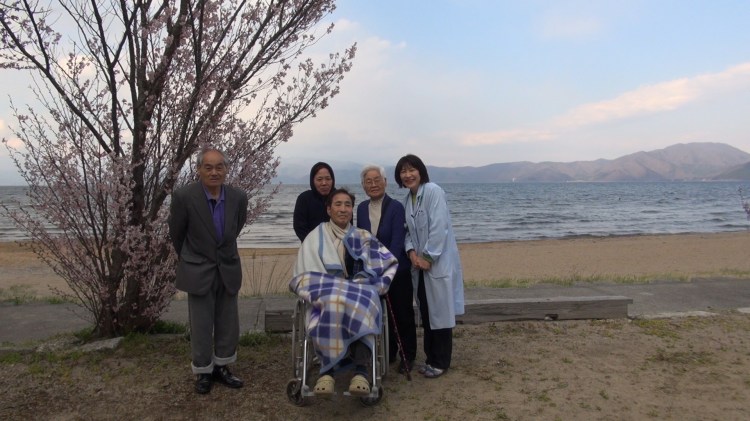
  • Seijo Story – 60 Years of Making Films – documentary exploring the 60-year professional relationship between Nobuhiko Obayashi and his wife/producer Kyoko Hanyu who met as students at Seijo University in 1959.
  • Sending Off – documentary by Ian Thomas Ash following a doctor who cares for terminally ill patients across rural Japan.
  • What Can You Do About It – a filmmaker with ADHD documents his friendship with a relative who has Pervasive Developmental Disorder.

Experimental Spotlight

There will also be a number of complementary events on offer including a series of panel discussions on such topics as the career of the late Nobuhiko Obayashi, cinema during the pandemic, and documentary, plus a live Q&A with Shinichiro Ueda, CUT ABOVE Awards: Koichi Sato & Ken Watanabe, and the Closing Night Live Q&A with the Obayashi Prize Recipient.

Limited numbers of “tickets” are available for each film and can been pre-booked from July 10 to be viewed July 17 to 30. After you start playing a film you will have 30 hours to finish watching. Features stream for $7 and shorts for $1.50 – $3.00. You can also pick up an all access pass for $99 or a selection of bundles for each strand. Full details for all the films as well ticketing links (when available) can be found on the official Japan Cuts platform, and you can also keep up with all the festival news as well as the year round programme via Japan Society New York’s website, or by following them on Twitter and Facebook.