Welcome Back (Naoto Kawashima, 2024)

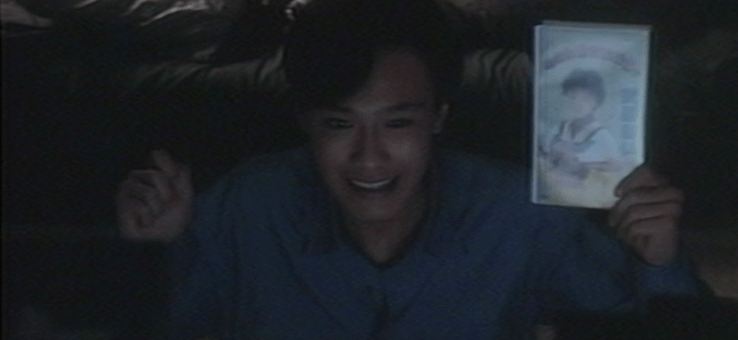
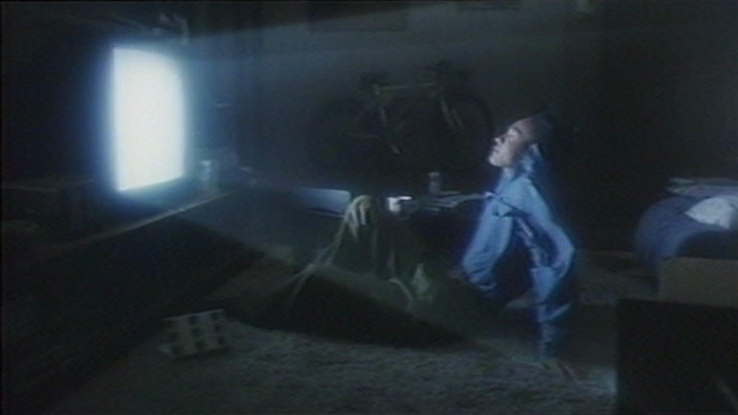
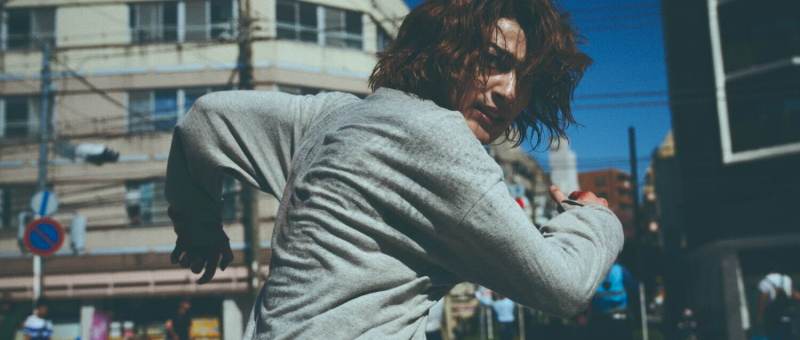
“Once you play the heel, you can’t go back,” according to up-and-coming boxer Teru’s (Kaito Yoshimura) coach, but it turns out to be truer than for most for the aspiring champion for whom getting up off the mat proves an act of impossibility. While he plays the hero for younger brother figure Ben (Yugo Mikawa) and talks a big game before stepping into the ring, in reality Teru is riddled with insecurity and using bluster to overcome the fear that he can’t live up to the image Ben has of him.

The terrible thing is, he might be right and Ben, a young man with learning difficulties who later gives his age as 10 though clearly in his 20s, may be beginning to see through him. “I lost because I looked at you,” he later says of a failed attempt to fight off their chief rival, but it might as well go for his life which he’s spent in Teru’s footsteps ever since his mother abandoned him with Teru’s family when they were just children on the same housing estate.

As such, Teru does genuinely care for Ben, but has also been hiding behind him in allowing him to become something like a mascot or cheerleader, someone over whom he feels superior but also looks up to him as the sort of person he wants to be but perhaps isn’t. In any case, his boxing career has been going well and he’s on track to become the Japanese champion, but at the same time he’s proud and arrogant. He thinks he knows better than his coach, and likes to make a big entrance trash talking his opponents in a larger-than-life manner that might be more suited to pro-wrestling than the comparatively more earnest world of boxing and earns him a degree of suspicion as a result. His opponent Kitazawa (Yoshinori Miyata) is his opposite number in that, as Teru points out, he’s deathly serious and certain in his abilities which is why he’s able to KO Teru mere seconds into their title match. No longer “undefeated”, Teru simply gives up and retires from boxing only to spiral downward while working as a supermarket mascot, eg. Ben’s old job from which he also gets him fired by messing it up for both of them because of his pride and temper.

But for Ben, the certain truth of his life has been that “Teru never loses”. Now that Teru lost, something’s very wrong with the universe and he has to put it right, which is why he decides to fight Kitazawa himself even if he has to walk to Osaka from Tokyo to do it because they’ve got no money for transport. What neither Teru nor Aoyama (Yuya Endo), a boxer Teru once defeated in another title fight but ends up helping him and Ben on their quest, is that after obsessively watching Teru all this time, Ben is actually quite a talented, if untrained, fighter. They were hoping they could get him to give up on his plan by finding someone weaker than Kitazawa to defeat him so he’d know he had no chance, but he basically fights his way all across Japan to prove that Teru really is the hero he always thought him to be. 

This turns out to be inconvenient for Teru because inside he feels himself to be a loser and since his single defeat has been running away from the fight. As he later begrudgingly realises, none of this would be happening if he’d knuckled down done the training so he’d be able to beat Kitazawa in the first place rather than being consumed by his pride and arrogance. He should be the one fighting Kitazawa, not Ben who is putting himself in danger because the world doesn’t make sense to him any more. Kitazawa, meanwhile, has his number and seems to look down on him for his lack of fighting spirit, correctly surmising he will walk away from the chance to fight him for real when he opts for a last resort of trying to bribe him to fake a sparring match so that Ben will see him win and be able to go on with his life. 

But nothing quite goes to plan, and it seems like Ben might be starting to see that Teru might actually be using him to bolster his own sense of low self-esteem which obviously means that he does and always has looked down on Ben. Having come to a realisation that he needed to play the role of the hero that Ben needed him to be, perhaps what he sees is that Ben has outgrown him and that despite his constant insistence that “Ben is a child” is capable of doing what he couldn’t in fighting back even when the odds seem impossible. Teru is defeated by life, but fighting back in his case might look like something a little less glamorous that starts with eating some humble pie and calling in a favour to get a shot at a regular job he’ll have to take a little more seriously. In one way or another, their accidental road trip clarifies the dynamics of their “brotherly” relationship, but at the same time leads them to a point of division in which moving forward might necessarily mean they’re going in different directions.


Welcome Back screened as part of this year’s Camera Japan.

Trailer (no subtitles)

Army on the Tree (木の上の軍隊, Kazuhiro Taira, 2025)

Based on an unfinished play by Hisashi Inoue, Kazuhiro Taira’s Army on the Tree (木の上の軍隊, Ki no Ue no Guntai) confronts the absurdity of war by marooning its heroes in a banyan tree far above the conflict but also increasing unwilling to come down and face an uncertain reality. Instead, they remain in a kind of limbo, trapped somewhere between life and death in continuing to fight their war in their own way while unbeknownst to them, the wider world moves on.

In any case, this “army of two” is comprised of very different men with a complicated and ever-shifting dynamic. Lieutenant Yamashita (Shinichi Tsutsumi) is a loyal militarist from Miyazaki on the mainland, while private Agena (Yuki Yamada) is a local who has never left the Okinawan island where his family were once farmers, until the Japanese army requisitioned their land. The truth is that Japan is a coloniser here, too, and there’s an awkwardness involved in the way they see the islanders as both Japanese and not. While discussing the building of a new air base Yamashita describes as the envy of the Orient, one of the other officers suggests they will simply use “the locals” in suicide attacks as if their lives are completely disposable and not of equal value to those of the mainland soldiers, while simultaneously suggesting they belong entirely to the empire for the commanding officers to use as they see fit. They’ve been training the civilian villagers in local defence using spears to attack straw models labelled “Churchill” and “Eisenhower”, but when one older man jokes about smearing his with excrement so the enemy might have a better chance of dying of infection, Yamashita beats him about the head for what seems like an eternity.

It’s Yamashita who seems to cling fiercely to militarist ideology and his loyalty to the emperor, even if there’s an obvious conflict in the fact that he’s “run away” to hide in this tree with Agena while the rest of his men are dead. This also gives him an additional psychological reason to want to stay up there so that he won’t have to face his guilt and shame in the defeat and having survived it along with having allowed all of his men but one to die. Trapped there together, the two men have no reason to believe that anything has changed and think the battle is still ongoing with American soldiers patrolling the forest. They attempt to survive foraging for food and water, drinking from a trough into which a dead body has fallen while Yamashita at first firmly rejects the idea of eating tinned food left behind by the Americans, describing it as “enemy food” and the eating of it as an act of treachery. Agena is not so foolish and finally gets Yamashita to eat some and avoid starvation by tipping some of it into an old Japanese army ration tin.

But as much as Yamashita is in charge by virtue of military hierarchy, he’s also a stranger here while Agena is intimately familiar with the terrain. He has a much better idea of knowing how to survive in the forest and which plants and insects are okay to eat. The truth is that the army had confiscated all this land to turn it into an “unsinkable aircraft carrier” which the local recruits had to build with their own hands. Once the situation deteriorates, they’re ordered to blow the whole thing up to prevent the Americans taking it over rendering their labour entirely pointless especially as their only goal is to slow the Americans down. They have no real prospect of stopping them or of surviving the assault. Meanwhile, as Agena points out, neither he nor the island will ever be the same again. His mother had lost her mind after their land was taken and his father failed to return from the war, while most of his friends are dead and the places he played as a child have taken on new meanings or perhaps no longer exist. The world before the war is lost to him, and he can’t ever go home again, unlike Yamashita who still has somewhere, and presumably also someone, to go back to.

Yamashita is not altogether appreciative of this fact as much as he comes to see Agena as a stand in for the son from whom he’d become estranged because of his hardline authoritarianism. Nevertheless, the bond that’s arisen between them does begin to reawaken his humanity and dissolve the rigidity of his ideology so that he is gradually able to accept the reality that Japan has lost the war, their battle is over, and it’s time to come down from the tree. Taira largely avoids judgement or falling into the trap of glorifying these men’s actions as soldiers who refused to give in, focussing instead on the absurdity of their position along with the literal and psychological dimensions of their purgatorial existence as they attempt to process how to move forward into an unknown world while still tormented by the old.


Army on the Tree screened as part of this year’s Camera Japan.

Trailer (no subtitles)

Procurer of Hell (地獄の饗宴, Kihachi Okamoto, 1961)

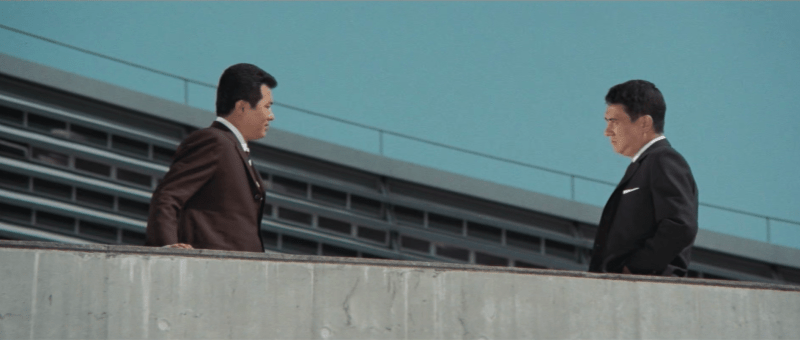
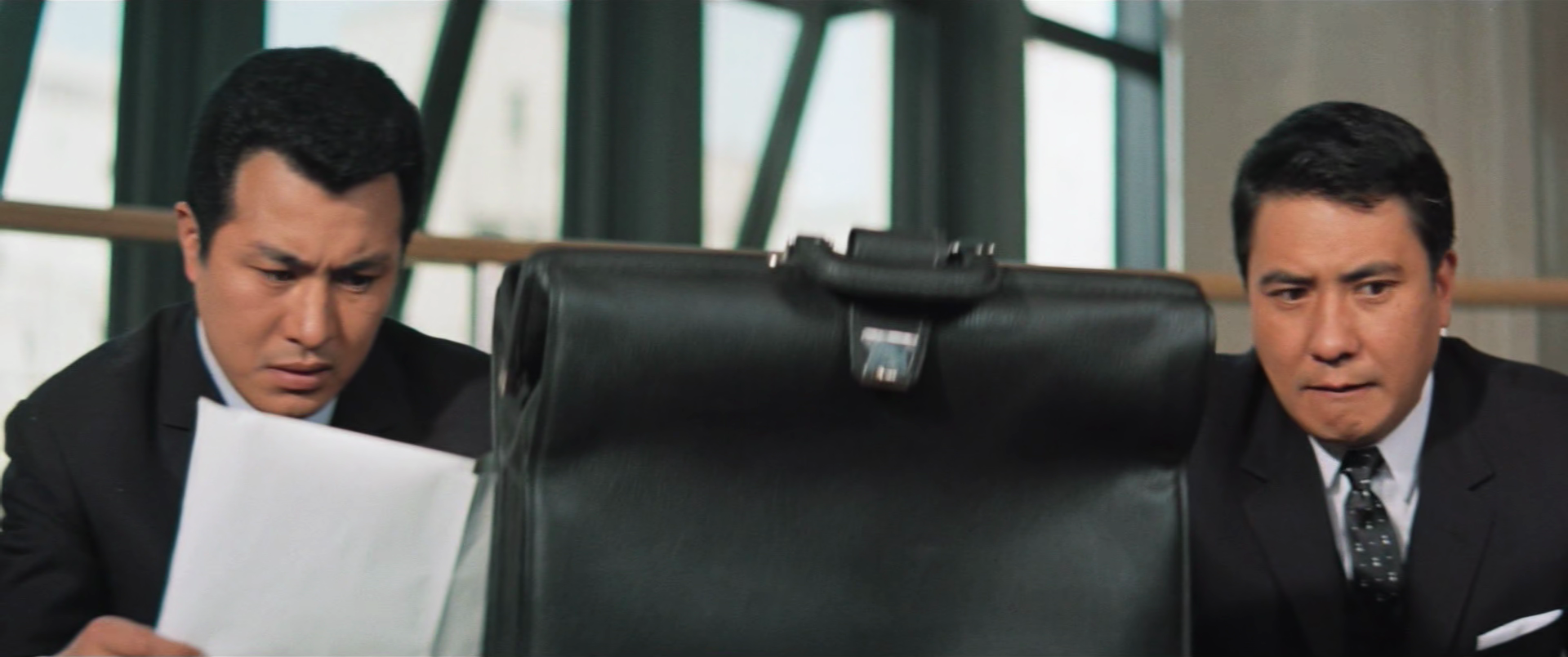
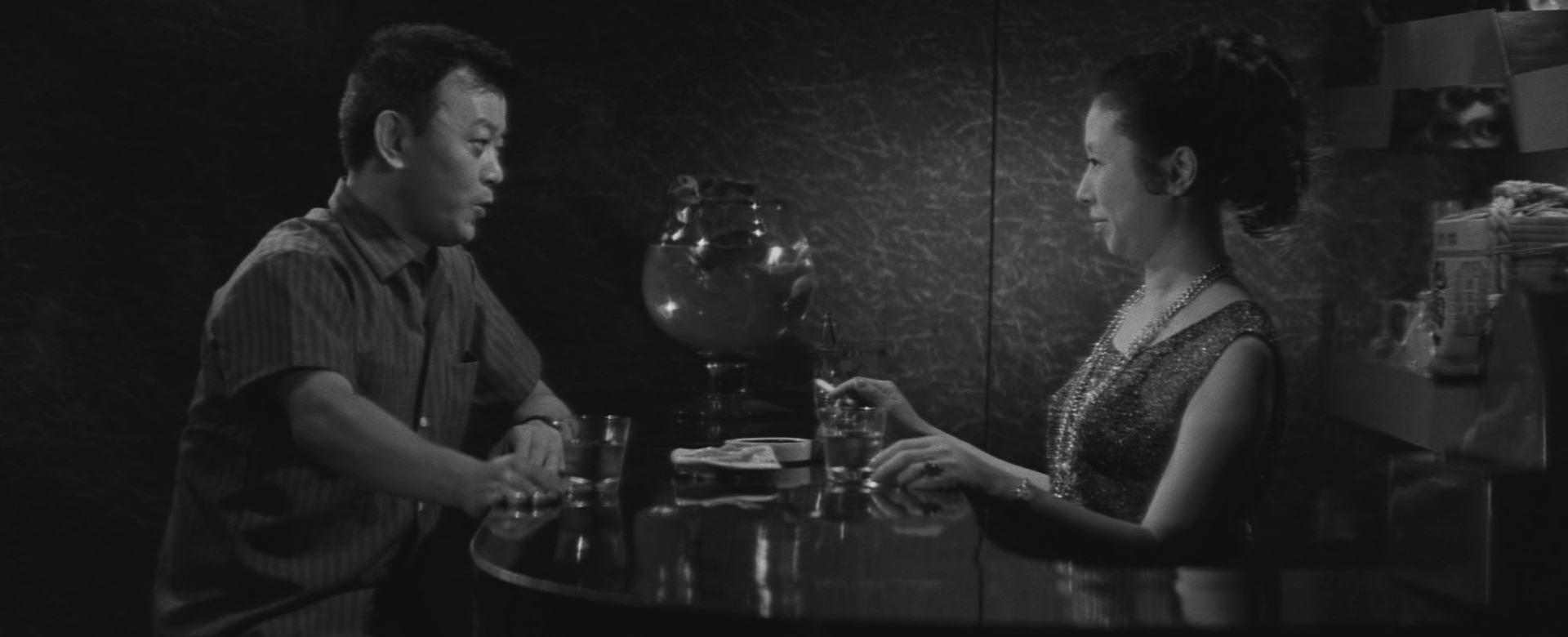
By 1961, the Japanese economy had largely recovered and the nation was emerging into an era of rising prosperity, but there were also those who were left behind or could progress into the new Japan. Shot with Okamaoto’s trademark irony, Procurer of Hell (地獄の饗宴, Jigoku no Kyoen) is a darkly comic tale of one such man who could have quit while he was ahead and started a new life if only he hadn’t been so greedy or perhaps so hung up on revenge. 

In a sign of the newly international society, Tobe (Tatsuya Mihashi) runs a shady business that claims to provide “English lessons” with blonde women are that are in reality appointments with sex workers. He also peddles pornographic images and dabbles in blackmail. When he finds a roll of film at the station, he gets it developed and discovers it contains photographs of his sergeant during the war, Itami (Jun Tazaki), who raped the Chinese woman he wanted to marry back in Manchuria. Tobe was unable to help her after getting his hand impaled on a tree branch from which he could not free himself. The scar he still bears on his hand is a mark of his corruption and a reminder of the moment which seems to have soured him on humanity and turned him into a cynical and amoral man. He decides to use the photographs to torment and blackmail Itami to get the money to help a widowed single mother he’s interested in secure a better future for herself by taking over a coffee shop from the owner who plans to retire.

As such, he does it for “good” reasons and Kazuko (Junko Ikeuchi) and her son Saburo represent for him a better future in the new Japan in which he would own a photo studio and live a law-abiding life. Saeko (Reiko Dan), Itami’s secretary with whom he was also having an extra-marital affair, is in other ways his opposite number and the representative of the dark side to which Tobe is drawn. Like him, she tries to play the situation to her advantage by playing the innocent before finally throwing her lot in with Tobe and suggesting he help her double-cross Itami so they can run off with the money he embezzled from his company before faking his own death in a convenient train crash. That Tobe extracts sexual favours from Saeko in return for giving her the photos and negatives interferes with the supposed nobility of his quest and apparently pure-hearted love for Kazuko and her little boy, while Saeko gradually shifts from exploited victim to calculating conspirator manipulating Tobe just as he believes himself to be manipulating her.

In any case, it remains true that he could have just settled for the money he needed for the cafe and walked away from this overly complicated situation involving Itami’s legal wife and associates who have actually embezzled the money and want the pictures back because they need Itami to be dead for their plan to work, but he doesn’t. He becomes fixated on getting his fair share of the ill-gotten gains much more than helping Kazuko or getting his revenge against Itami, which wasn’t really much of a revenge anyway considering what Itami had actually done during the war. But on the other hand, Itami seems to have become a rather powerless figure having married into his wife’s family to work in their business while she plots to have him confined to a psychiatric hospital to keep him out of her way. Saeko too is manipulating him. She has no real feelings for Itami and only wants the money, masterminding this whole scheme to get her hands on it with no intention of fleeing abroad with him. Similarly, she plays the victim with Tobe, telling him that Itami paid for her brother’s school fees and that she wants the photos back to avoid her brother or Mrs Itami finding out it about it and feeling hurt.

But while they’re fixating on the 150 million yen embezzled from the business, there are crowds of angry people turning up at the building society Itami runs complaining that their savings have disappeared and wanting to know if they’re going to get the houses they’ve been promised. Tobe walks through the May Day protests calling for better working conditions and higher wages, pointing to the ways this society is still veering off course in deliberately leaving some-people behind by rooting the new economic prosperity in exploitation. Tobe’s assistant wants to join the protest, but Tobe tells him they don’t really belong with the workers because of their nature of their business. The blackmail scam is his revenge not only on Itami but on everything that’s happened to him since the war and this ridiculous post-war society that he nevertheless hopes to join through these immoral means. The song of the canary he buys for Saburo begins to haunt him as a symbol of the wholesome life he might lead, but that life cannot really be won that way. He and Saeko are really two of a kind, she apparently brought low by her unexpectedly genuine feelings for him as even the police, picking him up for something else, leave them bleeding in the street surrounded only by emptiness and futility mere feet from the hospital in their own relentless pursuit of the “real” criminals.


Detective Conan: One-Eyed Flashback (名探偵コナン 隻眼の残像(フラッシュバック), Katsuya Shigehara, 2025)

Detective Conan (Minami Takayama) returns for the 28th instalment in the long-running animated film series, Detective Conan: One-Eyed Flashback, (名探偵コナン 隻眼の残像(フラッシュバック), Meitantei Conan: Sekigan no Flashback) as he finds himself embroiled in another mystery revolving around Inspector Yamato’s (Yuji Takada) near fatal collision with an avalanche, a potential terrorist attack on a radio observatory, and the murder of one of Kogoro Mori’s (Rikiya Koyama) old friends. Meanwhile, justice is under fire as the government are working on reforming the plea deal system which leaves some feeling short-changed by justice and that the criminals are getting off too lightly while victims of crime continue to suffer.

Indeed, there’s a kind of symmetry between Conan’s guardian Kogoro, who took him in after he was shrunk to the size of a child by the evil Black Organisation, and bereaved father Funakubo who blames himself for what happened to his daughter Maki because he sent her back to his gun shop where she got caught up in a robbery. Before she left, she said she had something to tell him, but he never got to hear what it was, just as Kogoro never heard what his former colleague from his police days, Croco, wanted to tell him when he set up a clandestine meeting in a local park but was killed by a mysterious assassin before he could say anything. 

Once again, Conan is on the case, though Kogoro more or less sidelines him and insultingly repeatedly reminds Conan that this is not a game. Nevertheless, Inspector Yamato specifically asks for his help, while Conan begins to suspect something bigger is motion when he’s unsubtly bugged by someone he assumes is probably an undercover Public Security officer. All roads lead back to Amuro (Takeshi Kusao), who handles the situation from the cafe in Tokyo where he works to maintain his cover identity. 

Nevertheless, it all links back to the gun shop robbery and its lingering effects on the victims. Not only was one of the thieves not caught, but the other got off on a plea bargain which has left Mr Funakubo on a constant quest for justice in which he is forever hassling the Nagano Police for updates on his case. Meanwhile, there’s interpersonal drama in play in the relationship between police officers Yamato and Yui (Ami Koshimizu) who are also wrestling with unspoken feelings and the fallout from Yamato’s presumed death in the avalanche in which he lost his memory and wasn’t found until a few months later. The wound to his eye is symbolic of his inability to recall the whole of what happened before he was overcome by the snow. He must have seen the face of the man he was chasing at the time, but he can’t remember it. 

Though the mystery itself may not be as complicated as others in the series, involving few clues or difficult puzzles to be solved and relying instead on Conan’s keen intuition and people skills, it leans heavily into a sense of conspiracy and paints Public Security in an unflattering light as they attempt to bug Conan and then in a post-credits scene, are seen to offer another “plea deal” to a suspect in return for keeping Public Security out of their testimony while blackmailing them that, should they choose to speak out, all their secrets will also be revealed to the public and those close to them will suffer. In any case, Conan gets a few more opportunities to use his all-powerful skateboard amid the film’s increasingly elaborate action sequences as he squares off against the crazed villain hellbent on vengeance and an ironic defence of the law.

Where Public Security come in for scrutiny, the police are depicted as universally good, reminding the suspect that it’s the police’s job the enforce the law without fear or favour while protecting ordinary people both physically and emotionally. As messages go, it might be a little authoritarian, but it’s also true that the police take Conan seriously in ways others may not. While they’re all busy with the crime(s), Conan’s friends are also all in Nagano along with Ran (Wakana Yamazaki) enjoying what’s supposed to be a stargazing holiday before being dragged into the case and providing important backup for Conan. As the tagline says, the truth won’t stay buried forever and Conan does his best to play off Public Security and the police in order to solve the case, avenge Kogoro’s friend, and also protect justice in Japan as the courts debate the plea bargain issue and its effect on criminals and victims alike as they try to rebuild their lives in the wake of crime.


Detective Conan: One-Eyed Flashback is in UK cinemas from 26th September courtesy of CineAsia.

Trailer (Japanese / Traditional Chinese subtitles)

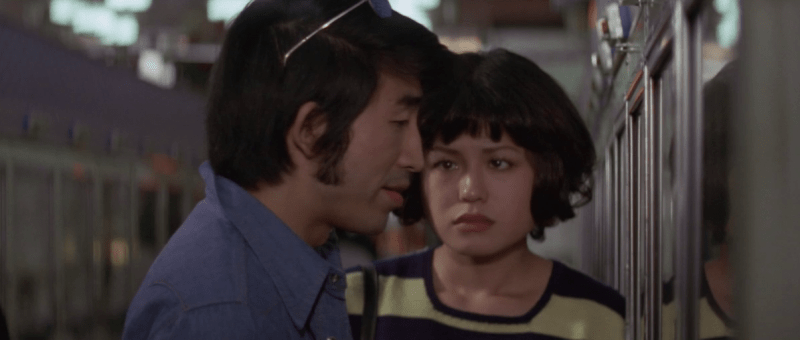
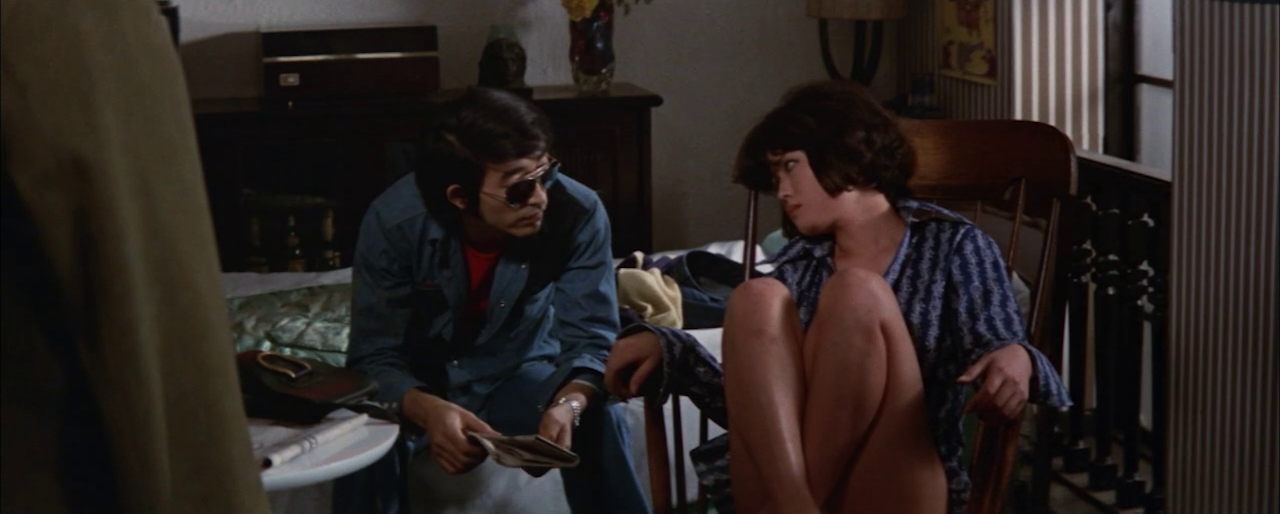
That Guy and I (あいつと私, Ko Nakahira, 1961)

Likely intended as a slightly silly student rom-com, Ko Nakahira’s That Guy and I (あいつと私, Aitsu to Watashi) captures a sense of the changing gender roles and sexual mores of the early 1960s, if through a very male and at times even middle-aged lens. Adapted from a serialised novel by Yojiro Ishizaka and set amid the ANPO protests of 1960, the film is narrated by its heroine, a very ordinary young woman from a typical, moderately wealthy middle-class family, as she struggles with her attraction to a fabulously wealthy young man who pretends to be a boor but is actually a nice guy and unexpected feminist.

One of a new generation of women attending university with a prospect of independence, Keiko’s (Izumi Ashikawa) horizons seem to be broadening. She’s not exactly conservative and openly jokes about sex and dating with her friends, but is quite settled with her life, not particularly wanting anything more than she already has. Her psychology tutor highlights the problem of social inequality in their school that she had already raised in her opening voiceover in remarking that the rich kids all have cars and can drive themselves to school, while others are having to work to support themselves while they study. When he asks how much pocket money they all get, some are outraged and keen to stress they don’t get any help at all, but Keiko reveals that her parents actually give her a healthy allowance. It’s just that she has no real urge to spend it, so it’s been mounting up quietly in a desk drawer in her childhood bedroom while she still lives at home close to the university.

Saburo (Yujiro Ishihara), by contrast, boasts that he gets more than some people’s monthly wage as an allowance from his mother and blows it on drink, gambling, strip clubs and sex workers. It’s this last point that scandalises the female students who are all shocked and disapproving, even going so far as to ask the teacher to throw Saburo out because they don’t feel comfortable sharing a space with a man like that. The teacher also says he’s disappointed and wishes Saburo hadn’t added the last bit, only for Saburo to call him a hypocrite because sex work was legal in his day and he simply doesn’t believe that he’s never paid for sex. Most of the other boys join in on Saburo’s side, insisting that no man sees any problem with visiting sex workers which they regard as a natural right because the male sex drive is driven by “uncontrollable forces”.

But then there’s something unexpected that occurs among the female students in that some of them are obviously attracted by this very rough form of masculinity. “I’d rather have a wild beast than a meek sheep,” one intones, but nevertheless goes to join the group of girls confronting Saburo at the pool in the hope of gaining an apology for the offence he caused them. They’ve since found out that he probably made it up anyway, which is ironic because he claimed he’d only spoken the truth when they asked him to leave, but that’s somehow even worse because it means he said it deliberately to upset them. The upshot of it all is that Saburo ends up in the pool and is then forced to borrow some of the girls’ clothes while his dry off, signalling his awkward positioning between traditional masculinity and femininity in that he’s otherwise surprisingly sympathetic of women and makes sure to look out for them but in a way that encourages their independence and is never patronising. 

That might, in one way, be because of his unusual upbringing which is far more modern and bohemian than Keiko’s and in the beginning, at least, quite confusing for her. Saburo’s mother Motoko (Yukiko Todoroki) is a famous entrepreneur with a beauty shop empire. She writes her name in Western order and uses katakana for her first name which makes look foreign and therefore exciting and sophisticated even though it obviously isn’t. It was Saburo’s mild-mannered father who gave up his career in insurance to raise him, while his mother apparently blows off steam through numerous affairs. His father occasionally gets upset about this and the pair go through a charade of him leaving her while she professes her love for him, which seems to have a sexual dimension in itself. Perhaps this has given Saburo an alternative view of romantic relationships, though we also later discover that he was subject to what we’d now see as a form of sexual abuse as a teenager when his mother got a young but still adult woman, Michiko (Misako Watanabe), to essentially give him practical lessons in sex and satisfy his teenage urges, only he thought it was an organic romantic relationship and feels more than anything else emotionally betrayed. 

But then again, the film has a very of its time and defiantly male view of rape which is dealt with in a fairly flippant manner. Keiko rings her mother to tell her she’s realised that the reason she didn’t like the idea of her being at the ANPO protests was because she feared she’d be raped, which is at any rate an odd conversation to be having. Her mother asks her what her virginity has to do with ANPO, which is a fair question, but also implies that it’s not so much the physical and psychological harm of sexual assault that bothers her mother but the shame of premarital sex. One of the girls who goes to the protest, Ayako (Shigako Shimegi), is actually raped by the two boys she went with who deliberately plied her with alcohol and took her to a hotel knowing that she trusted them, but her roommate, who had a crush on one of the boys, immediately turns against her. Sadako (Kazuko Yoshiyuki), the most political of the students, calls her a slut who parades herself in front of men and says Ayako must have led them on. Only Keiko takes her side, walking her to the bath and waiting outside for her while admitting that she has conflicted thoughts about Saburo. She throws things at him to shoo him away, feeling that his presence as a man is inappropriate and not wanting him to see Ayako in this moment of vulnerability, but also she admits to herself because she’d be jealous and doesn’t want him to see a naked woman that isn’t her.

Something similar happens when she finds out about Saburo’s past and is jealous and resentful of Michiko, irrationally angry with Saburo, and on another level protective of him knowing that happened when he was a teenager was wrong. After she runs out into the rain and the pair argue about it, Saburo forces a kiss on her which, again, Keiko seems like in a show of robust manliness. Saburo is though also protective and sympathetic towards Ayako, insisting that that the way for her to move past her rape is to ensure she becomes financially independent and successful so that she can see it as just something unpleasant that happened to her rather than something that ruined her life or makes her unworthy of another man’s love. He even helps her to do that by getting her a job at his mother’s company. 

Saburo’s mother Motoko, meanwhile, gives Keiko some frank advice in disclosing the secrets of her life and Saburo’s birth. Even when Saburo suddenly announces their engagement without actually asking her, Keiko does not merely swoon but reflects that she’s got to have a proper think before actually agreeing which she is still free to do or not. Nevertheless, the film seems to have hit on a contradiction in redefining masculinity as both tough and soft. Keiko is despite herself attracted to Saburo’s forcefulness, but also his chivalrous nature and awkward kindness, his fair-mindedness and care, and recognition of women as actual human beings with interior lives and a right to independence. Nakahira may be a little less surreal than usual, but leans heavily into absurdity, on the one hand acknowledging the somewhat superficial quality of these privileged students’ lives in having them confront a band of angry rural workers and half-heartedly take part in the ANPO demonstrations without much thought to what they’re for or what they mean, but, in the end, characterises them as merely ordinary, slightly lost amid the rapid changes of the post-war society but otherwise cheerful and looking ahead to a bright future stretching out in front of them.


Trailer (no subtitles)

Dear Stranger (ディア・ストレンジャー, Tetsuya Mariko, 2025)

The Japanese film industry is generally regarded as fairly insular and focused solely on the domestic market with half an eye on other Asian territories where its stars are already popular. It has, however, made some attempts to enter Hollywood particularly in the 1970s with films such as Kinji Fukasaku’s Virus which for various reasons was largely unsuccessful in either market and suffered artistically from its attempts to bend itself to an international audience. 

Tetsuya Mariko’s Dear Stranger (ディア・ストレンジャー) is the first in Toei’s contemporary attempt to court an audience outside of Japan as part of its Toei New Wave 2033 initiative, but it seems to be suffering from some of the same problems. The biggest is that 90% of the film is in English but the delivery is often stilted and inauthentic from both the international and native-speaking cast. That may in one way be ironic, as one of the major themes is the impossibility of communication. Emotional clarity is only really revealed during the puppetry sequences when no dialogue is involved. Set in New York, the film shifts between Mandarin, Japanese, Spanish, English and sign language, but simultaneously suggests the problem is less an external language barrier than an internal one that prevents people from saying what they really mean or encourages them to keep the truth of themselves hidden.

It’s living in this liminal third space that disrupts the marriage between Taiwanese-American Jane / Yi-zhen (Gwei Lun-mei) and her Japanese husband Kenji (Hidetoshi Nishijima) as she points out that they speak to each other in a language is not their own. At moments of high tension, they argue in Mandarin and Japanese, though as we largely discover there are more issues in play, beginning with the fact that their marriage may at least partially have begun as one of convenience. Kenji is not the biological father of their young son Kai. Jane finds herself asking who they are as a couple without him and if she ever really loved Kenji at all. Kenji suggests he married her because he loved her and accepted the child as his own for the same reason, but throughout the film is in an incredibly angry and hostile mood. He appears at times sexist, criticising Jane for not keeping the house tidy while he is “under a lot of pressure” at work and resents “the chaos” of their life. Jane’s mother doesn’t approve of her working either and calls her a bad mother for doing so even while expecting her to mind their convenience while she tries to find a carer to look after her father who is living with advanced dementia and can’t be left alone.

Part of that is likely that they need someone who speaks Mandarin, hinting at the sense of isolation and orphanhood that comes with migration in lacking extended familial support that in this case does not seem to be met by community. Jane too feels isolated and trapped by her role as a mother. She expresses herself only through her puppetry, which is also something denied her by Kenji and her mother. Kenji, meanwhile, feels undervalued at the university where his supervisor seems dismissive of him and his work which he regards as unoriginal. He may have decided to marry Jane in part in search of family having lost of his own in Japan with his mother never having been found after the Kobe earthquake when when he was a teenager, but simultaneously struggles to integrate himself within their family. His loss of Kai who disappears while he was supposed to be taking care of him is then symbolic in reflecting his own frustrated paternity and fear that the biological father will return to take all this away from him.

In many ways, it’s Kenji’s own psyche that’s in ruins informing his academic practice which focuses on abandoned and disused buildings and the effect they have on the surrounding environment. He’s asking himself how to create a new world from the ashes of the old, but doesn’t appear to have done so successfully in his own life and is increasingly unsure if he wants to. Perhaps because of its awkwardness, the film takes on an increasingly surreal quality as Kenji is heckled by irrationally angry guests at his book presentation and basically accused of facilitating urban crime in his praise of disused spaces and then descends into some kind of fugue state chasing the larger-than-life puppet version of Kai from Jane’s play which is also an embodiment of her own frustrated yearning for freedom. 

“In the wreckage we find truth,” Kenji answers one of the questioners at his presentation and it may in a sense be true for him but in another perhaps not. It becomes unclear what exactly he experiences as “real” and what not, what a product of his own mythologising and what actually happened, while Jane slips quietly into the background and her sudden acceptance of Kenji whom she previously regarded as “unreliable” and appeared to resent, seems somewhat hollow given that he continues to treat her coldly and is extremely hostile with all around him from the police, who are actually trying to help find his son, to the well-meaning kindergarten teachers, and his employers. In the end, it’s really Kenji who is stranger to himself much more than a stranger in a strange land trying to forge a new identity in a place of psychological ruin.


Dear Stranger was screened as part of this year’s Busan International Film Festival

Trailer (English subtitles)

Bayside Shakedown the Final: The New Hope (踊る大捜査線: THE FINAL 新たなる希望, Katsuyuki Motohiro, 2012)

Is it really the end? Billed as the “final” instalment in the Bayside Shakedown series which began with a TV drama in 1997, Bayside Shakedown the Final: The New Hope (踊る大捜査線: THE FINAL 新たなる希望, Odoru Daisousasen the Final: Aratanaru Kibou) once again finds the gang contending with annoying red tape but also with a police force which is intrinsically corrupt and self-serving while questioning if they should remain in an occupation in which they are treated with such disdain. Continuing the familiar pattern from throughout the series, the gang find themselves coming up against a serial killer who may be a crazed vigilante only to discover that the whole thing may have been an extreme inside job designed with the intention of drawing attention to inadequacies in the justice system. 

The problem is that the body they’ve found appears to have been shot with a gun which was removed from the police evidence locker and is linked to a kidnapping case six years previously which just happens to have been handled by Mashita (Yusuke Santamaria) when he was a hostage negotiator. Mashita had ordered an end to the negotiations because of pressure from above to play by the rules with the consequence that the child later died while the prime suspect in the case was recently acquitted of the crime at trial (a staggeringly rare occurrence in Japan). When Mashita’s young son is kidnapped, all eyes are on a rogue policeman, Kuze (Shingo Katori), but it is obvious he is not acting alone. 

Toragai (Shun Oguri), the authoritarian detective from the previous film, has continued along a dark path which only intensifies when his paper on police reforms is rejected out of hand. He too thinks the police force needs structural reform but leans hard into the idea that too many people are getting away with crime rather than concentrating on removing the barriers which prevent police from doing their jobs as Muroi (Toshiro Yanagiba) and Aoshima (Yuji Oda) would probably suggest. Muroi’s lasting dream is of building a police force which trusts policemen to do the right thing and he frequently tells his subordinates that they should feel free to exercise their own judgment. 

Meanwhile, the local cops continue to suffer under the command of the elitist officers from HQ who not only look down on them but assign menial tasks, as does Mashita in finding himself short staffed while most are busy providing security for a local energy summit. While Aoshima had experienced a health crisis that turned out to be a false alarm in the previous film, so this time Sumire (Eri Fukatsu) finds herself struggling with ongoing effects from her shooting in Bayside Shakedown 2 eventually deciding that it might be better to leave the police force entirely while lamenting her unfinished business with Aoshima which remains unresolved even in this “final” instalment while he somewhat unsympathetically can only ask her not to leave rather than express his true feelings. 

Ironically enough, by the time of the final showdown neither of them are actually in possession of a police badge, Aoshima scapegoated by Toragai who still holds a grudge against him while inconvenienced by interference in his scheme to frame a local petty thief for the killings, presenting him with an invitation to resign following serious misconduct accusing him of beating up suspects and planting evidence. One again, the police chiefs sit around a large circular table issuing orders from afar but are mainly concerned how to bury the “scandal” of having a police officer steal a gun from evidence and then use it to commit a murder. In a bizarre twist of fate, it later turns out that the whole thing may be an elaborate, not to mention entirely amoral, plan to expose police shortcomings with a side dose of revenge against Mashita for contributing to the child’s death by insisting on following protocol while receiving heat from above. 

As such the apparently “final” instalment skews a little darker than the series norm while as the subtitle implies offering a new ray of hope in the reversal of Muroi’s fortunes allowing him to embark on the police reforms which have been his and Aoshima’s goal throughout the series. Meanwhile, the film pays tribute to its previous instalments with frequent words of wisdom from the late Waku read from his notebook by his nephew and the ironic return of the previous chiefs reinstated as volunteer mentors as part of a reinforcement programme while familiar faces such as the Captain Kirk cosplayer also make their customary appearances. What’s clear is that there will never really be a “final” outing for Aoshima who reaffirms himself as the last line of defence protecting the local population as he once again runs toward sunset and the next case waiting just behind. 


Trailer (no subtitles)

Bayside Shakedown 3: Set the Guys Loose (踊る大捜査線 THE MOVIE 3 ヤツらを解放せよ!, Katsuyuki Motohiro, 2010)

It’s all change at Wangan police station in the third instalment in the Bayside Shakedown series, Let the Guys Loose (踊る大捜査線 THE MOVIE 3 ヤツらを解放せよ!Doru Daisousasen the Movie 3: Yatsura wo Kaihou seyo!). Seven years on from the previous film, many things have changed. Aoshima (Yuji Oda) is now in charge of his team and the precinct is set to move to new purpose-built premises boasting the latest high-tech security systems which will aid them in combating potential terrorism and safeguarding local dignitaries. Even so, the gang will have to deal with some unfinished business from the past before they can fully move on as the circular tale takes us right back to the original film’s villain. 

Following the familiar formula, Motohiro opens with a gag sequence in which Aoshima prepares to give a briefing only it’s not about a case it’s about the logistics of moving offices of which he is in charge and characteristically vowing to do the best job possible. Hindering his progress, however, are two bizarre crimes, the first a bank robbery investigated by his colleague/long-term love interest Sumire (Eri Fukatsu) in which no money is stolen, and a bus hijacking he investigates himself in which the hijackers simply left the scene again without stealing anything. Ironically enough a theft does take place during the move involving three pistols which happen to belong to Aoshima, Sumire, and a new recruit from China, Wang (Kenichi Takito). Soon enough a body turns up on a boat along with Aoshima’s gun sending the gang on the chase for the mysterious thieves. 

The thing we’re constantly told about the new building is how secure it’s going to be, which makes the theft even more ironic, but the truth is that in true franchise style pretty much anyone and everyone is walking in and out carrying moving boxes so nothing is ever really “secure” even in the police station, harking back to the minor villain in the first film who was able to sneak in because he was wearing a fake cosplay police uniform and no one noticed him. Inevitably, this invisible vulnerability eventually comes back to haunt them when the criminals are simply able to steal the manual for the security system and replace it with one of their own to render it unusable to the police later trapped inside the building. Meanwhile approaches to public safety become a matter for debate when it arises that the criminals’ demand is that all of the villains we’ve seen Aoshima arrest so far including psychopathic serial killer Manami (Kyoko Koizumi) who still has a sizeable following online should be released. Counter-intuitively, the police bigwigs are in favour of acquiescing with only Muroi (Toshiro Yanagiba), who has now been promoted to sit at the table himself, objecting on the grounds that it simply isn’t safe to release such dangerous criminals back into society. 

Rather than simply bureaucracy and funding concerns, Bayside Shakedown’s third instalment is more directly critical of the interplay between politics and justice as it becomes clear that the majority of police chiefs care more about public opinion than the law while also mindful of the upcoming general election. Meanwhile the same problem arises with the local police being sidelined by the elites from HQ, a smooth liaison officer Torikai (Shun Oguri) arriving to solve any disputes insisting that the locals be fully respected and allowed to turn their jobs only to turn dark and authoritarian after suffering a catastrophic injury on the job. Once again, Aoshima is forced to consider if his work has real value not only because of the way he’s treated by the cops from HQ but subjected to a healthcare crisis which leads him and many others to assume he’s not long to live. It’s later discovered that he’s been misdiagnosed during his annual checkup, but his boss unethically decides to keep that from him noticing he’s become depressed and lost his mojo, hoping that he’ll be easier to manager but quite the reverse turns out to be true. Again mimicking their previous heart-to-hearts throughout the series, Aoshima perks up after some encouraging words from Sumire in addition to some words of wisdom from the late Waku presented by his rookie nephew and decides to live as if there’s no tomorrow going flat out for justice while caring nothing for his safety. 

Even more than ten years on from the TV series and first big-screen outing, the romance between Aoshima and Sumire still hasn’t quite blossomed despite their respective brushes with death. Many things seem set to change for the Wangan police, the new building acting as a kind of reset while Muroi prepares to move into a more political role and a new, somewhat surprising, local police chief is selected to lead them into a new future just as dedicated to compassionate local policing defined by fairness and justice as they have ever been. 

Trailer (no subtitles)

Negotiator (交渉人 真下正義, Katsuyuki Motohiro, 2005)

Beginning as a popular television drama, Bayside Shakedown developed into hugely successful franchise. Released two years after the second theatrical feature, 2005’s Negotiator (交渉人 真下正義, Koshonin: Mashita Masayoshi) is a self-contained spin-off revolving around Japan’s first specialist negotiator Mashita, whose name actually appears in the title. In Bayside Shakedown 2, he’d returned to the Wangan police department having left to pursue specialist training in the city. Though some of his former colleagues make cameo appearances and Motohiro maintains the lighthearted tone the series is known for, Negotiator essentially reverses the position of previous instalments, adopting the outsider’s perspective as Mashita finds himself implanted in the control room of the metropolitan mass transit system. 

For some reason in Japanese cinema, terrorist threats seem to arrive on Christmas Eve with alarming frequency, significantly upping the stakes for Mashita personally as he was planning to propose to fellow police officer Yukino (Miki Mizuno) after a romantic date the details of which he seems to be rather sketchy on. In any case, the crisis at hand is a rogue and unexpected train on the Tokyo subway. It quickly becomes apparent that someone has hijacked a remote-driven experimental “Spider” train designed to automatically switch gauges so that it can travel between differing lines on the complicated transit map. The hijacker will apparently only speak to Mashita, impressed or irritated by his accidental celebrity status following the Rainbow Bridge incident in Bayside Shakedown 2. One of the problems of that crisis had been the police discovering they do not actually have the power to unilaterally close a bridge because it requires the consent and co-operation of numerous other transportation officials (though actually in the end they just do it anyway). 

Something similar happens to Mashita when he fetches up in the control room to help. The official in charge, Kataoka (Jun Kunimura), directly tells him that they don’t require his assistance. He will just be in the way and should sit quietly in the corner while they get on with solving the crisis. In this scenario, Mashita is the outsider akin to the HQ guys descending on the Wangan police station and taking over, though as a trained negotiator he is more aware of the implications of his actions and temporarily agrees to take a back seat while his team set up shop in a meeting room only to be further embarrassed when it becomes apparent that the hijacker is intent on playing a game with him personally while thousands of ordinary passengers, not to mention railway and law enforcement officials, are placed in danger. 

Unlike previous instalments in the franchise, Negotiator is prepared to leave several questions unanswered such as the hijacker’s identity, purpose, and intentions focussing instead on the approach of the police and railways in response to the crisis. As in Bayside Shakedown 2, a solution is only possible once both sides have learned to trust each other letting go of any sense of division so that they can work together in total harmony. Meanwhile, there is also a minor criticism of institutional insularity as it becomes clear that part of Kataoka’s reluctance to cooperate is out of a sense of duty to the rail service in that he feels himself duty bound to withhold “secret” information that would help Mashita solve the case, that being the existence of tunnels and sidetracks not listed on the map because they are intended for use by the government and the military only in the event of an emergency fearing that revealing them would, ironically, present a security risk. Meanwhile, on the other side, Mashita and his team find their investigations hampered by the fact most of the data they need from HQ is stored on outdated media such as floppy disks, Jazz and Zip drives they do not immediately have the capability to open. 

Meanwhile, Mashita is engaged in a game of cat and mouse with a train obsessive who baits him with movie trivia and inevitably threatens his romance by targeting the oblivious Yukino who thinks she’s been stood up again and has no idea she’s actually in the middle of a terrorist incident. Like the previous films in the franchise, however, the central thesis is that in the end you just have to ignore all of the annoying bureaucracy and learn to work together for a common goal which is in essence what a negotiator is for, Mashita smoothing over conflict and differences of opinion with sympathetic politeness while unafraid to put on a show for the hijacker in order to get what he wants. A seasonal thriller, Negotiator is in an odd way about peace and harmony to all men and saving Christmas from the forces of disorder. 


Trailer (no subtitles)

Bayside Shakedown 2 (踊る大捜査線 THE MOVIE 2 レインボーブリッジを封鎖せよ!, Katsuyuki Motohiro, 2003)

A big screen outing for a popular TV drama, Bayside Shakedown proved a runaway box office hit on its release in 1998. Five years later the team at Wangan Police Station are back and much seems to have changed even as the sequel cleverly mirrors the first instalment, but where the earlier film had satirically taken aim at chronic underfunding and excessive bureaucracy, Bayside Shakedown 2 (踊る大捜査線 THE MOVIE 2 レインボーブリッジを封鎖せよ!, Odoru Daisosasen the movie 2: Rainbow Bridge wo Fuusa seyo!) ultimately ends a defence of authority in the face of criminal anarchy. 

Five years on, the team are faced with yet another difficult serial killer case in which top CEOs are being bumped off and artfully posed in public places next to a rotten apple, once again necessitating the arrival of the guys from HQ. This time, however, Muroi (Toshiro Yanagiba), a friend of earnest detective Aoshima (Yûji Oda), has been pushed to the sidelines in favour of the big wigs’ latest favourite, Okita (Miki Maya), who has a much more authoritarian view of policing than many at Wangan are comfortable with. Meanwhile, Sumire (Eri Fukatsu) and Aoshima are busy with their own cases, a pickpocketing family and a “vampire” who bites high school girls’ hair and then runs off respectively, but all the office is a twitter over a love letter penned by their boss and accidentally emailed to everyone in the station because of a computer virus. 

Former Wangan guy Mashita (Yusuke Santamaria), who had transferred to the city, returns having trained as a negotiator but for some reason mostly doing profiling and eventually figuring out that their killers are likely disenfranchised salarymen made redundant by their companies amid the backdrop of a stagnant economy. With no hope for the future, they’ve turned against society and started an anarchist revolution as a collective without leaders. “No bosses, no workers. No ordering, no obeying. No firing, no being fired,” they explain of their principle of equality, adding, “when there’s a leader the individual means nothing”. On one level the film sympathises with them in recognising the pressures they’re facing and unfairness of the economic reality, while simultaneously condemning the idea of a horizontal society. “If the leader is good then the group is strong,” Aoshima explains to them though of course they don’t agree. 

Then again, he says this immediately Muroi has resumed command in the knowledge that he is a “good” leader precisely because he trusts those under him and gives them the freedom to exercise their own judgement in contrast to Okita whose authoritarian micromanaging is soon exposed as a cover for under confidence. A police officer is seriously injured during an operation because she hesitates to make a decision, while both Sumire and Aoshima are forced to let their suspects escape when Okita orders them to stay at their post trying to protect a woman she has effectively decided to use as bait. “Organisations don’t need emotion,” she insists, later irritated by the officers’ reluctance to follow her command when she simply instructs them to “replace” the critically injured officer as if their life were completely disposable. 

Just in the first film, Sumire and Aoshima are forced to question the value of local policing in the face of Okita’s elitism as she tells them that their individual cases can wait because the murder takes priority, describing them as “just local stuff”. “Punch ups and pickpockets, what a waste of police time,” she adds leaving each of them feeling as if their work has no meaning and is not useful to or valued by the community. Aoshima only gets his mojo back after remembering an act of kindness done to him by someone he’d helped in the past, realising that even small things have a positive effect on the society and are always worth doing. That said, he’s not especially sympathetic towards the teenage “vampire” victim largely because he only bit her hair but later gets on the case after more girls turn up with bite marks on their necks. 

In the end it is indeed the local which is good, Okita’s failure allowing Muroi to make good on his promise and allow the local police to do their jobs rather than being relegated to boring legwork such as traffic stops and trawling surveillance footage. Despite having rejected the leaderless anarchy of the villain’s horizontal society, Muroi’s first instruction is to “forget rank, forget class” and have everyone work together encouraging the local cops to help them identify the kinds of places only a local would know which might not be on the map and may be a good hideout for the assassins. There might be something uncomfortable in Aoshima’s insistence on the necessity of a leader in the implicit defence of the hierarchal society, but then Muroi is a good leader who can indeed be trusted wield his power well largely because he trusts those below him, while a weak leader like Okita who holds tight to power because they don’t have the confidence to wield it freely is worse than no leader at all. Once again ending on a note of ironic police accountability, Bayside Shakedown 2 takes aim at the inequalities of the modern society but ultimately makes the case for the value of compassionate local policing in which all crimes at least are treated equally.  


Original trailer (no subtitles)