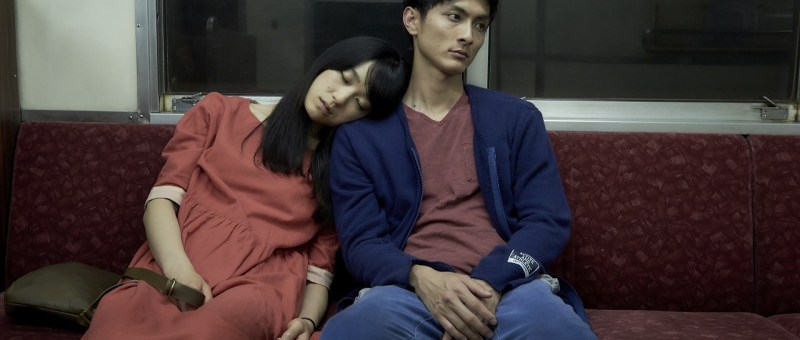

Sketches of Kaitan City (海炭市叙景, Kazuyoshi Kumakiri, 2010)

sketches of kaitan cityYasushi Sato, a Hakodate native, has provided the source material for some of the best films of recent times including Mipo O’s The Light Shines Only There and Nobuhiro Yamashita’s Over the Fence but it has to be said that his world view is anything but positive. Kazuyoshi Kumakiri takes on Sketches of Kaitan City (海炭市叙景, Kaitanshi Jokei) inspired by a collection of short stories left unfinished on Sato’s death by suicide in 1990. Despite the late bubble era setting of the stories (now updated to the present day), his Kaitan (eerily close to the real life Hakodate) is a place of decline and hopelessness, populated by the disillusioned and despairing.

The first story concerns a brother and sister whose lives have been defined by the local shipbuilding industry. Since their father was killed in a dockside fire, older brother Futa (Pistol Takehara) has been taking care of his little sister Honami (Mitsuki Tanimura) and now works at the docks himself. Times being what they are, the company is planning to close three docks with mass layoffs inevitable. The workers strike but are unable to win more than minor concessions leaving Futa unable to continue providing for himself or his sister.

Similar tales of societal indifference follow as an old lady living alone with her beloved cat is hounded by a developer (Takashi Yamanaka) desperate to buy her home. Across town the owner of the planetarium (Kaoru Kobayashi) is living a life of quiet desperation, suspecting that his bar hostess wife (Kaho Minami) is having an affair. Meanwhile a gas canister salesman (Ryo Kase) is trying to branch out but having little success, and a tram driver dwells on his relationship with his estranged son.

Economic and social concerns become intertwined as increasing financial instability chips away at the foundations of otherwise sound family bonds. Futa’s situation is one of true desperation now that he’s lost the only job he’s ever had and is ill equipped to get a new one even if there were anything going in this town which revolves entirely around its port.

Yet other familial bonds are far from sound to begin with. The gas canister salesman, going against his father’s wishes in trying to diversify with a series of water purifiers he believes will be a guaranteed earner because of the need to replace filters, takes out his various frustrations through astonishing acts of violence against his wife who then passes on the legacy of abuse to his son, Akira (You Koyama). Resentful towards his father and embarrassed by his lack of success with the water filters, the gas canister salesman threatens to explode but unexpectedly finding himself on the receiving end of violence, he is forced into a reconsideration of his way of life – saving one family member, but perhaps betraying another.

The gas canister salesman is not the only one to have a difficult relationship with his child. The planetarium owner cannot seem to connect with his own sullen offspring and is treated like an exile within his own home while the tram driver no longer speaks to his son who is apparently still angry and embarrassed that his mother worked in a hostess bar.

Yet for all of this real world disillusionment, despair takes on a poetic quality as the planetarium owner spends his days literally staring at the stars – even if they are fake. The gas canister salesman’s son, Akira, becomes a frequent visitor, excited by the idea of the telescope and dreaming of a better, far away world only to have his hopes literally dashed by his parents, themselves already teetering on the brink of an abyss. Futa’s lifelong love has been with shipping – the company officials are keen to sell the line that it’s all about the boats and an early scene of jubilation following the launch of a recently completed vessel would seem to bear that out, but when it comes down to it the values are far less pure than a simple love of craftsmanship. Kaitan City is a place where dreams go to die and hope is a double edged sword.

There are, however, small shoots of positivity. The old lady welcomes her cat back into her arms, discovering that it is pregnant and stroking it gently, reassuring it that everything will be OK and she will take care of the new cat family. Signs of life appear, even if drowned out by the noise of ancient engines and the sound of the future marching quickly in the opposite direction. Bleak yet beautifully photographed, Sketches of Kaitan City perfectly captures the post-industrial malaise and growing despair of those excluded from economic prosperity, left with nothing other than false promises and misplaced hope to guide the way towards some kind of survival.


Original trailer (no subtitles)

Policeman And Me (PとJK, Ryuichi Hiroki, 2017)

policeman 2The world of shojo manga is a particular one. Aimed squarely at younger teenage girls, the genre focuses heavily on idealised, aspirational romance as the usually female protagonist finds innocent love with a charming if sometimes shy or diffident suitor. Then again, sometimes that all feels a little dull meaning there is always space to send the drama into strange or uncomfortable areas. Policeman and Me (PとJK, P to JK), adapted from the shojo manga by Maki Miyoshi is just one of these slightly problematic romances in which a high school girl ends up married to a 26 year old policeman who somehow thinks having an official certificate will make all of this seem less ill-advised than it perhaps is.
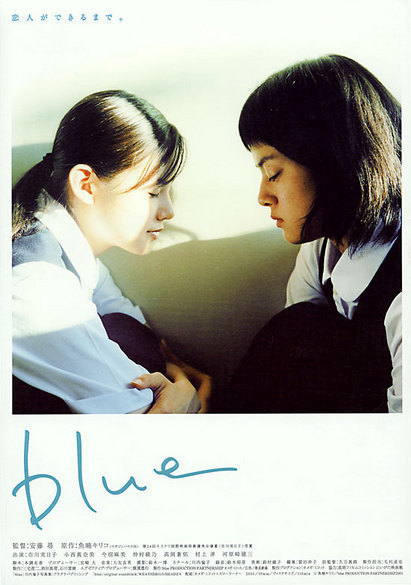
Kako (Tao Tsuchiya) is only 16 and, truth be told, a little innocent, even naive when it comes to love though she desperately wants to get herself a proper boyfriend. Dragged by a friend to singles mixer where she’s abruptly told that’s she’s 22 for the next few hours, Kako is bashful and dutifully refrains from underage drinking or inappropriate behaviour. Against the odds she hits it off with handsome policeman, Kota (Kazuya Kamenashi), who still thinks she’s 22 and that her reticence is a sign both of shyness and of maturity. Inadvertently blurting out her real age, Kako blows things with Kota who, as policeman, has no interest in dating a 16 year old. However, leaving Kako to walk home alone after the last train has left through a dodgy area of town is not a good idea and she’s soon beset by a gang of moody boys! Luckily, Kota’s policeman instincts have kicked in and he turns up to save the day with some delinquent moves of his own.

Despite the age difference, Kota and Kako have a genuine connection but Kota is anxious not to do anything dishonourable or untoward. Thus, facing the prospect of breaking up with his teenage sweetheart, he abruptly proposes marriage! After all, when the government rubber stamps something it must be OK and no-one can be accused of doing anything morally wrong, right? The surprising thing is, Kota puts on a fancy suit and goes to break the news to Kako’s parents only to have them give up almost without a fight. Her father may be angry to begin with but he’s soon won over and left with nothing other to say than please look after my girl (and try not to get her pregnant until she’s finished her education).

Kako is then placed in the incongruous position of being both a regular high school girl and a married housewife. Kota is stationed at the local police box with two other officers – one an older guy and the other a young woman who both support him in his new life as a married man. The couple live in an improbably large house inherited from Kota’s late parents but their relationship remains chaste and innocent. Perhaps realising that this unusual union will not be welcomed by all Kako has not told anyone at school about her marriage whilst she goes about trying to rescue the sensitive delinquent, Okami (Mahiro Takasugi), who accidentally put her in the hospital before she was valiantly rescued by Kota.

Okami and Kota lock horns over several things from Kako to the rule of law but they have more in common than it might first seem. Kota, once a violent teen himself, is nursing a huge debt to his policeman father killed in the line of duty. Taking on his father’s mission, Kota has dedicated himself to serving and protecting even if he once rebelled against that very thing as the kind of teenage punk Okami currently aspires to be. Okami has his own share of troubles at home which explain most of his behaviour as well as his aversion to law enforcement but Kako sees straight through his tough facade for the damaged boy inside. Kota too comes to find him more of a kindred spirit in need of rescue than a danger to society who needs locking up and also views him as an ally in being another of Kako’s admirers.

Ryuichi Hiroki thrives on this sort of uncomfortable drama, bringing a touch of moral queasiness to an otherwise cute story of innocent romance. Kota and Kako never particularly deal with the elephant in the room aside from Kako’s worries that Kota sees her a little girl who needs protecting rather than a wife who wants to stand alongside him as an equal. Then again Kako is quite happy in a subservient role, playing directly into her romantic fantasies. Hiroki directs all of this in true shojo style, keeping it all very chaste and innocent, overcoming all obstacles related to the inappropriateness in the central relationship and reaffirming the fact that true love is real, occurs in unexpected places, and is waiting for every romantic young girl who dreams of a tall guy in a dashing uniform. Unrealistic? Perhaps, but that’s shojo.


Policeman and Me was screened at the 19th Udine Far East Film Festival.

30s trailer (no subtitles)

Blue (ブルー, Hiroshi Ando, 2003)

blue03Growing up is hard to do. So it is for the teenage protagonists of Hiroshi Ando’s debut mainstream feature, Blue (ブルー), adapted from the manga by Kiriko Nananan. Like Nananan’s original comic, the cinematic adaptation of Blue is refreshingly angst free in its examination of first love and the burgeoning sexuality of two lonely high school girls. Shot with a chilly stillness which echoes the emptiness of this small town existence, Blue is no nostalgic retreat into cosy teenage dreams but a cold hard look at the messiness and pain of adolescent love.
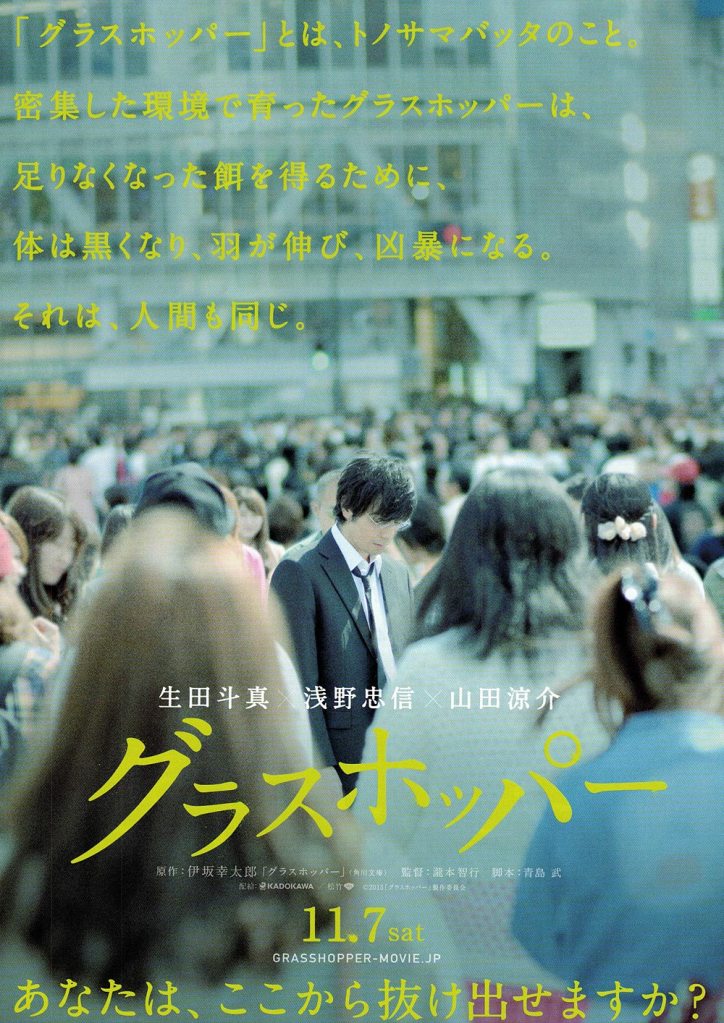
Kayako’s (Mikako Ichikawa) life changes one day as she sees a fellow pupil at her all girls school being carried into an ambulance and spirited away. Curious yet unknowing, Kayako continues with her day to day existence until she happens to catch sight of another girl from her school, Masami (Manami Konishi), on the local bus. The two become friends after Masami expresses sympathy for Kayako when their teacher humiliates her in class. Masami is repeating the year after completing a long term suspension and has been ostracised by the other girls though no one quite seems to know exactly what happened. Before long Kayako’s feelings for her new acquaintance have transcended friendship but confused and jealous of Masami’s other friends, Kayako is at a loss. Eventually revealing her true feelings she discovers they aren’t unrequited after all, but Masami’s past contains its share of troubles which threaten to place a barrier between the two girls and destroy their growing romance.

Kayako is quiet and a bit of a dreamer. She eats lunch everyday with the same three girls on the rooftop but seems to feel isolated and listless in her small town existence. Masami, by contrast, is chattier and more outgoing but much of the persona she presents to the world is a way of coping with the circumstances which led to her leaving school. Kayako is drawn to Masami because of her outward sophistication – smoking, drinking, listening to foreign music, and reading books about impressionist artists. Later it transpires that at least some of these tastes were acquired from an older man with whom Masami had had an inappropriate relationship and are both a symptom of her desire to import personality traits from others because her own identity is so ill defined, and of wanting to seem much more mature than she really is.

Whilst Kayako is introverted yet solid and growing to be confident in who she really is, Masami, by contrast, appears only half formed but making up for her lack of self esteem with bravado and cheerfulness. It is this lack of certainty which eventually threatens to drive a wedge between the pair as Masami is unable to accept the kind of intimacy that Kayako wants to offer her. Repeating that she is “nothing”, has no future, and is an entirely passive presence simply floating along on the breeze, Masami is unable to make the kind of active choice which Kayako has already made, and may never be in a position to make it entirely of her own volition. Masami is always looking to run away, talking of moving to somewhere like Tokyo with a city’s anonymity, but when it comes down to it she lacks the courage to act.

Ando shoots at a stately pace mostly using static shots and distance takes though his slow pans across empty corridors help to bring out the utter loneliness and emptiness of the girls’ lives. Similarly a mild POV effect takes over panning around school windows as Masami looks for Kayako hoping to make a mends but finds her hurt, conflicted, and unwilling to engage. The two leads each give fantastically nuanced performances despite the plainness of the script and share an intense chemistry lending weight to the emotional resonance of the film. Ando creates a melancholy atmosphere of longing punctuated by fleeting glances and accidental touches, allowing the space and time for the physical performances to come to fruition. A subtly affecting tale of a difficult, yet mutually rewarding, teenage romance Blue has its share of early feature jitters, but makes up for them with an unusual dose of realism perfectly anchored by the strong performances of its leading ladies.


Grasshopper (グラスホッパー, Tomoyuki Takimoto, 2015)

grasshopperThe best revenge is living well, but the three damaged individuals at the centre of Tomoyuki Takimoto’s Grasshopper (グラスホッパー) might need some space before they can figure that out. Reuniting with Brain Man star Toma Ikuta, Takimoto moves away from the more overtly sci-fi elements but maintains a level of everyday strangeness that adds weight to this standard B-movie affair. A revenge thriller in which revenge itself is shown to be a fallacy, Grasshopper manages to mix its grimy grind house violence aesthetic with an oddly hopeful view of human nature.
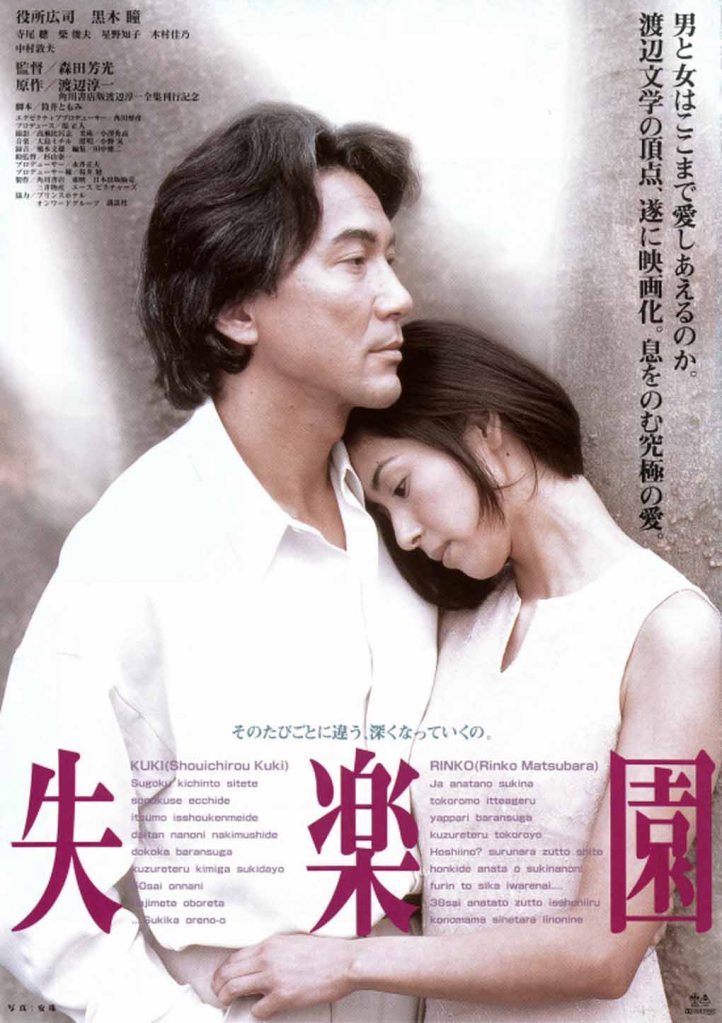
One tragedy connects three very different people. Halloween, Shibuya – a crazed man at the wheel of a 4×4 receives a phone call instructing him to “crush all those bugs”, because he’s “the saviour”. The man obeys and plows into the holiday revellers crushing them like insects under his wheels. One victim, Yuriko (Haru), who died pushing a child out of harm’s way happened to be the fiancée of middle school science teacher, Suzuki (Toma Ikuta). Revisiting the spot where she fell, Suzuki unexpectedly receives a letter informing him that the events which occurred at Halloween were not as straightforward as the media asserts and he should set about investigating the father and son working at “Fraulein”. His mind burning with thoughts of vengeance, Suzuki abandons his old life and launches himself headlong into the criminal underworld in search of answers.

Meanwhile, the evil kingpins at the centre of things have sent their ace hitman with a difference, Kujira (Tadanobu Asano), to silence a troublesome reporter. Kujira’s unusual assassination method involves a kind of hypnosis in which he forces his victims to acknowledge their darkest sins and eventually commit suicide. Though this sounds like the ideal plan for evading detection, the gangsters are nervous that Kujira has learned to much through his near death conversations with his targets and send a duo of slightly less competent killers on his trail. This leads us to our third strand – sociopathic blade wielding killer, Semi (Ryosuke Yamada), and his stray cat rescuing handler, Iwanishi (Jun Murakami).

Suzuki finds himself out of his depth in the murky, crime ridden underworld. Talking to yet another hitman he crosses paths with, Suzuki is offered the grasshopper analogy which lies at the centre of the film. Pusher (Hidetaka Yoshioka) tells him that unlike regular migratory locusts which are generally green, there is a mutant breed which undergoes a “swarm phase” in which their wings grown darker and longer, becoming ever more destructive in the quest to feed themselves in a crowded environment. People, Pusher claims, are no different. The film is filled with these mutant insects, crushing their fellow humans like roaches under boots, yet there’s something to be said for the migratory guys who keep moving and oppose the mutant breed through stealth and cunning.

Each of the three men is looking for a kind of revenge even if it’s ultimately self inflicted. Unusual hitman Kujira has hit the assassin’s version of angel wings in that he can see the faces of all the men and women he has killed, quite literally haunting his every move and offering a running commentary on his life. Setting out for vengeance against the men who’ve ordered his death, Kujira knows he’s nearing the end of his path yet before he gets there he will have to face off against Semi with whom he has no particular quarrel despite having just given Semi a reason to seek vengeance against him. Semi’s quest for revenge is pointed at Kujira but their mutual need for satisfaction will destroy each of them whilst also bringing them together as equals.

Everything prior to the fateful Halloween is bathed in golden light where warm colours predominate in Suzuki’s fond memories of his fiancée, but everything after is dark, reds and blacks tinged with insect green as grasshoppers swarm like harbingers of a great evil. Revenge itself is constantly frustrated and ultimately swept away from each party by shadowy forces secretly working against the darkness. Nothing is quite as it seems, no one is quite telling the truth. Yet as deep as the original conspiracy goes, the counter conspiracy consistently exceeds it.

Filled with impressive action sequences from Semi’s well choreographed balletic knife displays to large scale crowd scenes and good old fashioned fist fights, Grasshopper owns its down and dirty origins but reinvigorates them with a degree of modern sophistication. Yuriko, a soup chef, insists that the true secret ingredient in her cooking is genuine emotion – that this is what’s left behind when everything else is gone. Suzuki could choose to dive inside his cocoon of unresolved vengeance for the rest of his life but that would not have been what Yuriko wanted for him. In this anti-revenge drama, vengeance is the fallacy that detracts from the truth – that the ultimate form of revenge is learning to live with the past rather than wasting time settling scores.


Original trailer (no subtitles)

Lost Paradise (失楽園, Yoshimitsu Morita, 1997)

lost paradiseYoshitmitsu Morita tackled many different genres during his extremely varied career taking in everything from absurd social satire to teen idol vehicles and high art films. 1997’s Lost Paradise (失楽園, Shitsurakuen) again finds him in the art house realm as he prepares a tastefully erotic exploration of middle aged amour fou. Based on the bestselling novel by Junichi Watanabe, Lost Paradise also became a breakout box office hit as audiences were drawn by the tragic tale of doomed late love frustrated by societal expectations.
We meet Kuki (Koji Yakusho) and Rinko (Hitomi Kuroki) about to bid each other goodbye for the day, playfully in love though perhaps self conscious. It’s not until later that we realise they are both already married – just not to each other. Kuki, 50 years old, has reached an impasse in his life. Effectively demoted and sidelined at work, his homelife is not exactly unhappy but has long since lost his interest. His daughter is grown up and married herself, his wife has a career of her own, his mortgage is already paid off. There is really nothing left for him to do. That is until he meets calligraphy teacher Rinko and falls passionately in love for the first time in his life.

Rinko, 38, entered into an arranged marriage at 25 though the kindest way of describing it would be “unfulfilling”. Haruhiko (Toshio Shiba), her husband, is a doctor by profession and cuts a cold and distant figure. Prone to violent outbursts and pettiness, he treats Rinko more as a house keeper than a wife ordering her to buy his favourite kind of cheese (even urging her to travel to a different shop if the first one doesn’t have it) but then not even looking up when she brings it into his study for him. Lasciviously poking a spoon into the soupy mess, he pauses only briefly after savouring his first taste to give Rinko her next set of orders with no word of thanks or even acknowledgement of her success in obtaining this oddly specific cheese related request.

Finally in each other Rinko and Kuki find completeness long after they’d stopped seeking it. Rinko is unhappy in an arranged marriage which offers scant comfort, though Kuki’s problems are more akin to a mid life crisis as he finds himself an unnecessary presence at home whilst also realising that he’s already passed the high point of his career. Though there are no real barriers to Rinko and Kuki simply leaving their spouses and starting again together, it’s never quite that simple as the social stigma of an extra-marital affair continues to undermine their new found romance.

As in many of Morita’s films, the overall tone is one of pessimism as Rinko and Kuki face opposition from all sides whilst falling ever deeper into a whirlwind of self destructive passion. Rinko confides in a recently divorced friend who has guessed her secret and urges her to try and be happy, but Kuki keeps matters to himself whilst listening to the romantic problems of his workmates many of whom state that they too would like to fall madly in love, just once. When one of Kuki’s most valued colleagues falls ill, he laments having lived his life in the straightforward way expected by society. He’s done everything right – spent all his time working hard, built a career which was about to go south anyway. If all that happens is that you get old and die what was it all for – perhaps you’re better off just doing as you please, social expectations be damned.

Eventually the pair get an apartment and indulge in some part-time domesticity though an ill thought out blackmail plot soon changes things for both of them. Haruhiko refuses to divorce Rinko but Kuki’s wife is more sympathetic and open to the idea of sorting things out as quickly as possible. Though he suffers in other ways, Kuki finds it easier to accept the idea of moving on than Rinko who also faces opposition from her own mother who brands her as immoral and someone to be pitied for having given in to weakness and allowed her baser instincts to take over. Soon the couple find themselves thinking about a way to be together for eternity even if it lies in another world than this one.

Likened to the famous case of Sada Abe (also the inspiration for Oshima’s In the Realm of the Senses), Rinko and Kuki are consumed by their own passion and ultimately unable to continue living outside it. Morita opts for an artful aesthetic and keeps his eroticism on the classy side rather than descending into exploitation or salaciousness. Making use of frequent handheld camera and odd angles to bring out the giddy, unbalanced mindset of the central couple Morita also experiments with colour often cutting to black and white or sepia mid-scene. The tragedy of this love story is that it occurs at a societally inconvenient time – there is nothing wrong in Rinko and Kuki’s romance save that it started after they were already married to other people. This may not seem such a great problem but in a society which demands conformity and adherence to its rules, those who break them must be prepared to pay a heavy price. Perhaps the last words ought to belong to Kuki’s poetic friend who points out that life if short and rarely rewards those who play by the rules, it may be better to burn out brightly rather than flicker away for an eternity.


Original trailer (no subs)

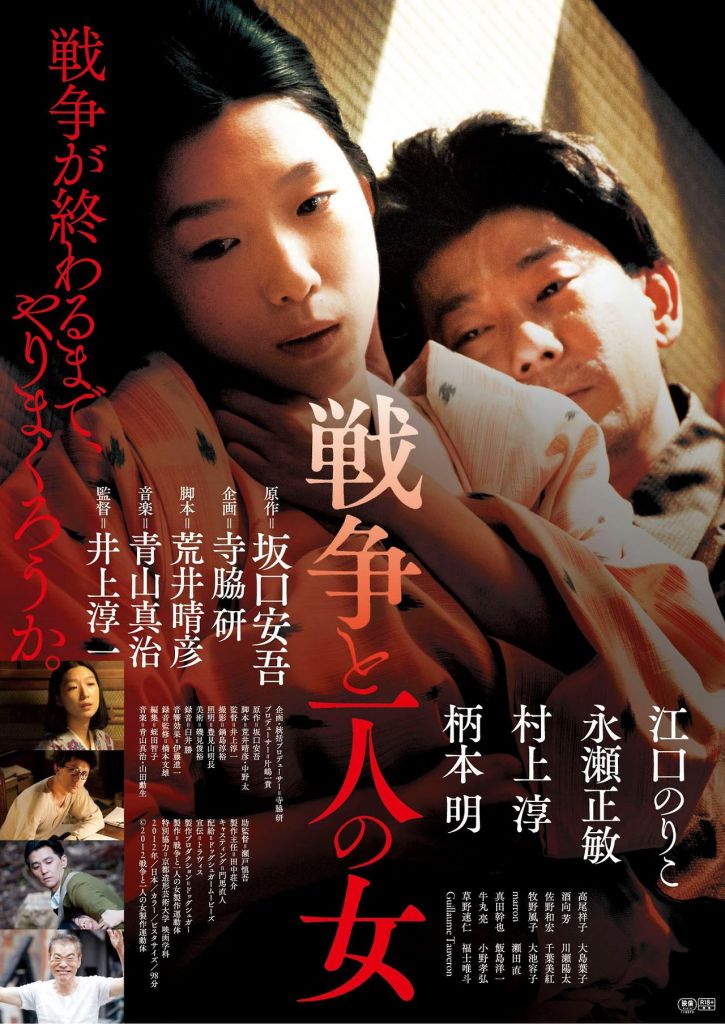
A Woman and a War (戦争と一人の女, Junichi Inoue, 2013)

a-woman-and-warJunichi Inoue is better known as a screenwriter and frequent collaborator of avant-garde/pink film provocateur Koji Wakamatsu. A Woman and a War (戦争と一人の女, Senso to Hitori no Onna) marks his first time in the director’s chair and finds him working with someone else’s script but staying firmly within the pink genre. Adapted from a contemporary novel by Ango Sakaguchi published in 1946, A Woman and a War is an intense look at domestic female suffering during a time generalised chaos.

The unnamed “Woman” (Noriko Eguchi) is a former prostitute, sold to a brothel by her father as a child, now working as a bar hostess. Times being what they are, she decides there’s no future in bar work and wants to get married. Accordingly, she finds herself moving in with a moody novelist who frequents the bar, Nomura (Masatoshi Nagase). The woman becomes Nomura’s “wife”, but the relationship is strained as she finds it difficult to derive pleasure from sex and he is of a nihilistic mindset, convinced that Japan is about to lose the war. Nomura promises to live with her until the war’s end, at which time he assumes the country will cease to exist taking him with it.

Running parallel to this is the story of recently demobbed soldier and drinker at Woman’s bar, Ohira (Jun Murakami). Having lost an arm in the war, Ohira has been “lucky”, in a sense, and been sent home early. However, he has a wife and young son he’s been away from so long that they’re virtual strangers from each other. Ohira is not the man who went away to fight, he’s embittered and angry. Unable to enjoy normal relations with his wife, he finds himself aroused after failing to rescue a woman being gang raped by thugs which he then watches after being tied up while the men finish their business. After this, he despatches his family to the comparative safety of his wife’s parents and embarks on a career of violence, rape and murder.

Despite nominally being the story of the Woman, A Woman and a War has an unbalanced tripartite structure split between the three central characters. Of the three, Nomura’s story is the least explored but then is also the most clichéd in its familiar over sensitive novelist takes hack jobs and abuses all available substances to block out his crushing depression trope. Though the story ought to belong to Woman, she is often eclipsed by Ohira’s extreme descent into violent misogyny though in actuality these two strands dovetail into each other as Woman’s story is also one of continued exploitation.

This stems back well before the war as she was, in a sense, betrayed by her father when he sold her supposedly in desperation but apparently drank the money he got for her rather than using it to feed the rest of the family. Having spent so long in the brothel her body has become nothing more than a tool to her – something to be well maintained and then traded as a commodity. After her relationship with Nomura ends, Woman finds herself once again working as a prostitute – first at a facility set up for the American military, and then as a streetwalker targeting foreign servicemen. Eventually her path crosses with that of Ohira which results in the uncomfortable realisation that she too can only reach climax through violence.

Ohira is so deeply scarred by his wartime experiences that he has a compulsion to reenact them through random acts of sexual violence on unsuspecting women. The events he recounts from Manchuria are truly horrifying but he has an uncomfortable point when he repeats that the difference between what he did in the war and what he’s doing now is that between a medal and a death sentence. The people he killed in China weren’t soldiers or those who threatened his life, they were innocent civilians no different from the women he lured into the forests of Japan, so how was it right then and wrong now? The other uncomfortable fact is that Ohira is both perpetrator and victim of the wider war, a symbol of its cannibalistic whirlwind of destruction, the effects of which continue in perpetuity.

Coming as he does from the pink film world, Inoue adopts a detached frankness when it comes to sex. However, in keeping with the film’s themes there is an abundance of sexualised violence against women which, though every bit as unpleasant as it’s intended to be, does at times feel gratuitous. It’s also an unfortunate fact that there is a lot of gratuitous female nudity in the film but absolutely no male – at one point Woman bares her genitals to the open air and urges Nomura to do the same but the camera cuts to a rear shot as though embarrassed. In an interview with Diva Review Inoue admits he regrets the way this was handled and states it’s largely down to having bigger name actors in the two central roles, but in addition to deviating from the otherwise naturalistic intentions of the film, it also presents him with a set of thematic problems which undercut his central intentions.

However, A Woman and a War is one of the few (recent) films to seriously look at the traumatic afterlife of the war both on those who served and those who stayed at home using sexuality as a curiously reflective prism. A Woman and a War is a super low budget film and, in truth, looks it, though does make an attempt to do the best it can with what it has. The performances of the three leads are also each strong though something of the film’s tone never quite coalesces beyond the persistent unpleasantness into something more deeply probing. Troubling, concerning, and disturbing, A Woman and a War is a much needed look at this murky and often avoided area but one that finds it impossible to escape its own exploitative nature.


Original trailer (English subtitles):

Border Line (Lee Sang-il, 2002)

border lineThroughout his career Lee Sang-il has shown himself adept at creating ensemble character dramas but nowhere is this as much in evidence as in his well crafted debut, Border Line. Focussing on the unlikely overlapping stories of a number of people who each find themselves crossing a threshold of a more spiritual nature, Border Line traces back each of the fractures in contemporary society to the broken cord of the parental bond.
We begin with teenage technical school student Matsuda (Sawaki Tetsu) who’s been in trouble for refusing to wear the required overalls. Later he runs away after his father is murdered only to be knocked down by drunken taxi driver Kurosawa (Murakami Jun) who ends up driving him half way to Hokkaido which is where he said he was from. Meanwhile, housewife Aikawa (Aso Yumi) has just started a new job at the combini but her son keeps skipping school and she soon realises it’s down to aggressive bullying. If that wasn’t enough, her husband has gone incommunicado after abruptly revealing via telephone that he lost his job a month ago and hasn’t found another one. Taking a step down to the underworld, we also meet low life gangster Miyaji (Mitsuishi Ken) who’s having a very bad as his partner ran off with the takings from a pachinko parlour to pay for expensive medical treatment for his daughter.

These are the lives of ordinary modern day people each facing extreme stress from all angles be they financial, societal, or existential. Matsuda is a young man and it’s only natural that he rebels a little to try and figure out who he is but it seems there may have been more going on in his life than just not wanting to wear a uniform. His mother left when he was a child and we don’t find out much about his relationship with his father but he spends the rest of the film looking for parental figures to essentially give him the permission to become an adult. The first of these is the taxi driver, Kurosawa, who, for various reasons isn’t able to help him (and only really decides he wanted to when it was too late). Finally, after a series of coincidences, he runs into Miyaji who is still grieving over having lost contact with his daughter after running out on his suicidal wife. Miyaji is not a great role model in many ways but still has some wisdom to impart to the younger man which may save his life in ways both literal and figural.

Miyaji and Aikawa are both coming from the other direction but struggling with their parental responsibilities. Aikawa has taken the job at the combini to help pay their mortgage – the house is very important to her as she was always ashamed of the modest home she grew up in with her parents. Like Miyaji, her husband seems to have more or less abandoned his family in his shame over losing his job, leaving Aikawa to bear all the responsibility for herself and her son. Eventually the pressure becomes so intense that Aikawa’s typical Japanese housewife persona starts to crumble resulting firstly in fantasies of violence before a crime filled rampage and kidnapping plot threaten to destroy what’s left of her life.

Back with the kids, another coincidence turns up Miyaji’s estranged high school aged daughter now also orphaned following the death of her mother leaving her with no other option than visiting hotel rooms with dodgy businessmen. Shunned at school and alone at home, hers is a lonely life marred by the failure of her parents. Both she and Matsuda, whom she eventually meets through another set of random coincidences, have had their futures ruined by poor parenting but, ironically, it maybe Miyaji who is able to help them even in his continued absence.

For a debut film, Border Line is a remarkably assured affair. Elegantly shot with decent production values, it handles its complicated set up with ease affording each of its distressed protagonists a degree of sympathy and understanding without the necessity of moral judgement. However, Lee does seem to want to lay the ills of modern society at the feet of the crumbling family unit only to present his younger protagonists with the idea of salvation as self actualisation. Decidedly low key, Lee’s debut film has a less commercial, deeper sensitivity than his subsequent efforts but still offers the compassionate sense of humanity which continues to inform his filmmaking.


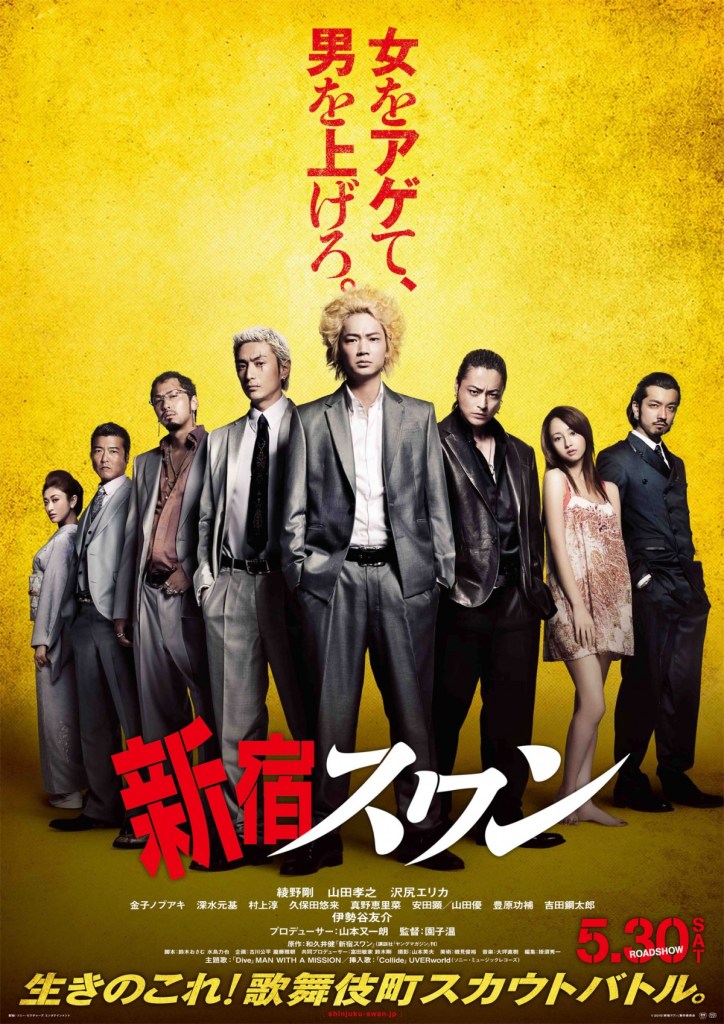
Shinjuku Swan (新宿スワン, Sion Sono, 2015)

Shinjuku SwanEnfant terrible of the Japanese film industry Sion Sono has always been prolific but recent times have seen him pushing the limits of the possible and giving even Takashi Miike a run for his money in the release stakes. Indeed, Takashi Miike is a handy reference point for Sono’s take on Shinjuku Swan (新宿スワン) – an adaptation of a manga which has previously been brought to the small screen and is also scripted by an independent screenwriter rather than self penned in keeping with the majority of Sono’s directing credits. Oddly, the film shares several cast members with Miike’s Crows Zero movies and even lifts a key aesthetic directly from them. In fact, there are times when Shinjuku Swan feels like an unofficial spin-off to the Crows Zero world with its macho high school era tussling relocated to the seedy underbelly of Kabukicho. Unfortunately, this is somewhat  symptomatic of Sono’s failure, or lack of will, to add anything particularly original to this, it has to be said, unpleasant tale.
Our “hero” is down on his luck loser Tatsuhiko (Go Ayano) who’s come to Shinjuku to make it big. He’s here because it’s the sort of place you can make it happen with no plan and no resources. “Luckily” for him, he runs into low-level gangster Mako (Yusuke Iseya) who spots some kind of potential in him and recruits him as a “scout” for his organisation, Burst. Now dressed in a fancy suit, Tatsuhiko’s new job is stopping pretty girls in the street and trying to talk them into working in the sex industry….

Tatsuhiko is not the brightest and doesn’t quite understand what the implications of his work are. When he finally gets it, he feels conflicted but Mako convinces him that’s it’s OK really with a set of flimsy moral justifications. Before long, Tatsuhiko comes into conflict with a lieutenant, Hideyoshi (Takayuki Yamada), from the rival gang in town, Harlem, and a yakuza style territorial dispute begins to unfold destabilising the entire area.

Sono has often been criticised for latent misogyny and an exploitative approach to his material and Shinjuku Swan is yet more evidence for those who find his output “problematic”. Though based on a manga and scripted by a third party, Shinjuku Swan has an extremely ill-defined take on the sex industry and the people involved with it. After figuring out what happens to the girls he takes to Mako, Tatsuhiko has second thoughts but Mako tells him that the girls are happy and are in this line of work because they enjoy it (leaving out all the stuff about debts, drugs, and violence). So Tatsuhiko vows to make even more girls live happy lives inside the “massage parlours” of Kabukicho.

Noble heart or not, Tatsuhiko is a pimp. Not even that, he’s a middle man pimp. He’s earning his money from the suffering of the women that’s he conned, coerced, and finally exploited. Leaving aside the idea that, yes, some of these women may be perfectly happy with the arrangement, at least one of Tatsuhiko’s recruits displays evidence of previous self harm and is unable to cope with the demands of her new way of life. Another woman, Ageha (Erika Sawajiri), who becomes Tatsuhiko’s primary damsel in distress, escapes into a children’s fairytale picture book in which a prince with crazy hair just like Tatsuhiko’s comes to rescue the heroine from her life of slavery and takes her to a place of love and safety. Tatsuhiko “rescues” her by taking her to a “nicer” brothel…

Tatsuhiko may have convinced himself that he’s somehow a force for good, “helping” these women into employment and providing “protection” for them unlike the other guys from rival gangs who use drugs and violence to keep their girls in line, but his continued belief in his own goodness becomes increasingly hard to swallow as he learns more about how this industry really works. It’s difficult to believe in a “hero” who is so deluded about his own place in the grand scheme of things – he’s not stupid enough to be this oblivious, but not clever enough to be continually unseeing all of the darkness that surrounds the way he makes his living.

All of this is merely background to the central yakuza gang war which later ensues. Tatsuhiko ends up as a pawn in the tussle for territory between Burst and Harlem as double crosses become triple crosses and no one is to be trusted. Predictably, Tatsuhiko and Hideyoshi turn out to have a long standing connection though this revelation never achieves the dramatic weight it’s looking for and the gang war itself is, at best, underwhelming. Notable scenes including a classic battle in the rain could have been spliced in from Crows Zero and no one would have noticed. The main dramatic thread remains Tatsuhiko’s journey as he travels from clueless loser to, admittedly still clueless, assured petty gangster and smooth talking lady killer.

If there’s an overall feeling which imbues Shinjuku Swan, it’s lack of commitment. Though often beautifully photographed and featuring some interestingly composed sequences (including a few Carax-esque musical set pieces) the final effect is one of workman-like competence. Not bad by any means, but this feels like the work of a director for hire and lacks the sense of the personal that a would-be-auteur would usually seek to provide. Moral ambiguity can often be a film’s strong point, inviting comment and debate rather than pushing a pre-defined agenda but Shinjuku Swan takes too many incompatible approaches to the already unpalatable series of questions that it stops short of asking. Distinctly uneven, Shinjuku Swan ends on a note of anti-climax and though a perfectly serviceable, mainstream, commercial effort proves something of a disappointment from a director who has often managed to bring out a sense of mischievous irony in similarly themed work to date.


Unsubtitled trailer:

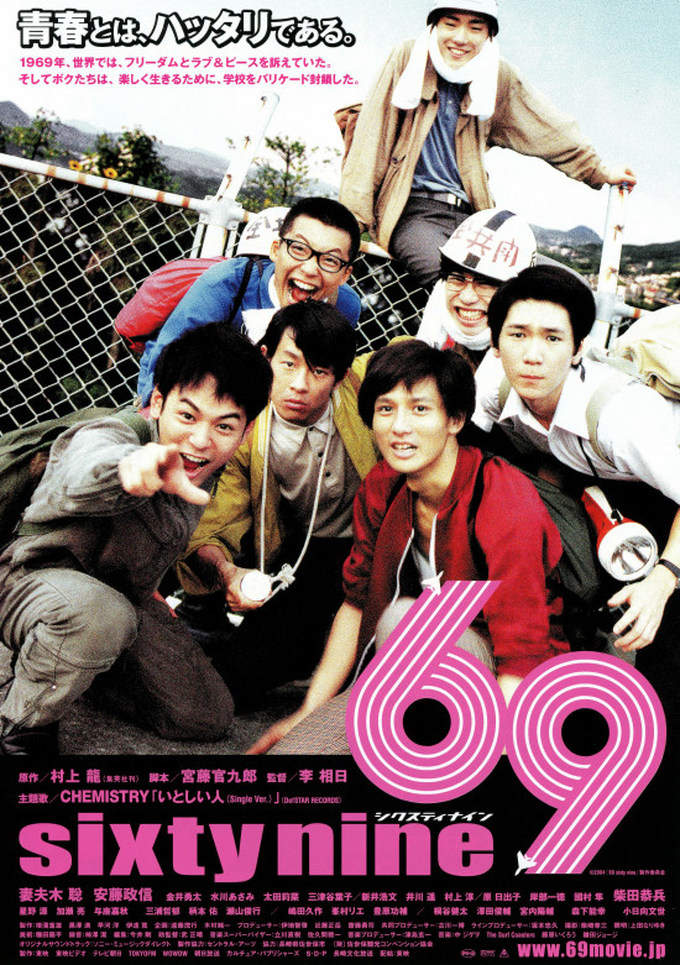
69 (Lee Sang-il, 2004)

69Ryu Murakami is often thought of as the foremost proponent of Japanese extreme literature with his bloody psychological thriller/horrifying love story Audition adapted into a movie by Takashi Miike which itself became the cornerstone of a certain kind of cinema. However, Murakami’s output is almost as diverse as Miike’s as can be seen in his 1987 semi-autobiographical novel 69. A comic coming of age tale set in small town Japan in 1969, 69 is a forgiving, if occasionally self mocking, look back at what it was to grow up on the periphery of massive social change.

The swinging sixties may have been in full swing in other parts of the world with free love, rock and roll and revolution the buzz words of the day but if you’re 17 years old and you live in a tiny town maybe these are all just examples of exciting things that don’t have an awful lot to do with you. If there’s one thing 69 really wants you know it’s that teenage boys are always teenage boys regardless of the era and so we follow the adventures of a typical 17 year old, Ken (Satoshi Tsumabuki), whose chief interest in life is, you guessed it, girls.

Ken has amassed a little posse around himself that he likes to amuse by making up improbable fantasies about taking off to Kyoto and sleeping with super models (oddly they almost believe him). He talks a big about Godard and Rimbaud, posturing as an intellectual, but all he’s trying to do is seem “cool”. He likes rock music (but maybe only because it’s “cool” to like rock music) and becomes obsessed with the idea of starting his own Woodstock in their tiny town but mostly only because girls get wild on drugs and take their tops off at festivals! When the object of his affection states she likes rebellious guys like the student protestors in Tokyo, Ken gets the idea of barricading the school and painting incomprehensible, vaguely leftist jargon all over the walls as a way of getting her attention (and a degree of kudos for himself).

69 is a teen coming of age comedy in the classic mould but it would almost be a mistake to read it as a period piece. Neither director Lee Sang-il nor any of the creative team are children of the ‘60s so they don’t have any of the nostalgic longing for an innocent period of youth such as perhaps Murakami had when writing the novel (Murakami himself was born in 1952). The “hero”, Ken, is a posturing buffoon in the way that many teenage boys are, but the fact that he’s so openly cynical and honest about his motivations makes him a little more likeable. Ken’s “political action” is merely a means of youthful rebellion intended to boost his own profile and provide some diversion at this relatively uninteresting period of his life before the serious business of getting into university begins and then the arduous yet dell path towards a successful adulthood.

His more intellectual, bookish and handsome buddy Adama (Masanobu Ando) does undergo something of a political awakening after the boys are suspended from school and he holes up at home reading all kinds of serious literature but even this seems like it might be more a kind of stir crazy madness than a general desire to enact the revolution at a tiny high school in the middle of nowhere. Ken’s artist father seems oddly proud of his son’s actions, as if they were part of a larger performance art project rather than the idiotic, lust driven antics of a teenage boy but even if the kids pay lip service to opposing the war in Vietnam which they see on the news every night, it’s clear they don’t really care as much as about opposing a war as they do about being seen to have the “cool” opinion of the day.

Lee takes the period out of the equation a little giving it much less weight than in Murakami’s source novel which is very much about growing up in the wake of a countercultural movement that is actually happening far away from you (and consequently seems much more interesting and sophisticated). Were it not for the absence of mobile phones and a slightly more innocent atmosphere these could easily have been the teenagers of 2003 when the film was made. This isn’t to criticise 69 for a lack of aesthetic but to point out that whereas Murakami’s novel was necessarily backward looking, Lee’s film has half an eye on the future.

Indeed, there’s far less music than one would expect in the soundtrack which includes a few late ‘60s rock songs but none of the folk/protest music that the characters talk about. At one point Ken talks about Simon & Garfunkel with his crush Matsui (Rina Ohta) who reveals her love for the song At the Zoo so Ken claims to have all of the folk duo’s records and agrees to lend them to her though his immediately asking to borrow money from his parents to buy a record suggests he was just pretending to be into a band his girl likes. Here the music is just something which exists to be cool or uncool rather than an active barrier between youth and age or a talisman of a school of thought.

Lee’s emphasis is firmly with the young guys and their late adolescence growth period, even if it seems as if there’s been little progress by the end of the film. There’s no real focus on their conflict with the older generation and the movie doesn’t even try to envisage the similar transformation among the girls outside of the way the boys see them which is necessarily immature. That said, the film is trying to cast a winking, wry look back at youth in all its eager to please insincerity. It’s all so knowingly silly, posturing to enact a revolution even though there’s really no need for one in this perfectly pleasant if slightly dull backwater town. They’ll look back on all this and laugh one day that they could have cared so much about about being cool because they didn’t know who they were, and we can look back with them, and laugh at ourselves too.


Ryu Murakami’s original novel is currently available in the UK from Pushkin Press translated by Ralph McCarthy and was previously published in the US in the same translation by Kodansha USA (but seems to be out of print).

Unsubtitled trailer:

and just because I love it, Simon & Garfunkel At the Zoo

Chokolietta (チョコリエッタ, Kazama Shiori, 2014)

ChokoliettaWhen examining the influences of classic European cinema on Japanese filmmaking, you rarely end up with Fellini. Nevertheless, Fellini looms large over the indie comedy Choklietta (チョコリエッタ) and the director, Shiori Kazama, even leaves a post-credits dedication to Italy’s master of the surreal as a thank you for inspiring the fifteen year old her to make movies. Full of knowing nods to the world of classic cinema, Chokolietta is a charming, if over long, coming of age drama which becomes a meditation on both personal and national notions of loss.

The story begins in the summer of 2010 when five year old Chiyoko (Aoi Morikawa) is involved in a car accident that results in the death of her mother. Flash forward ten years and Chiyoko is a slightly strange high school girl and a member of the film club. Her parents, as far as she knows, were both big fans of Federico Fellini – in fact the family dog is named “Giulietta” after Fellini’s muse and later wife Giuletta Masina. As a child, Chiyoko also received the strange nickname of “Chokolietta” from her mother which also seems to be inspired by the star. Sadly, their Giulietta has also recently passed away removing Chiyoko’s final link to her late mother and once again forcing her to address the lingering feelings of grief and confusion which have continued to plague her all these years.

At this point Chiyoko goes looking for the DVD of La Strada they watched in film club last year which leads her to the now graduated Masamura Masaoka (Masaki Suda). Masaoka is an equally strange boy with possible sociopathic tendencies though he does own a large collection of classic DVDs and the pair settle down to return to the world of Fellini. Eventually Masaoka convinces “Chokolietta” to star in a movie for him and the two take off on a crazy road trip recreating La Strada where Masaoka stands in for the strong man Zampanò and Chiyoko plays the fragile Gelsomina.

Thankfully, the partnership between Chiyoko and Masaoka is not quite as doom laden and filled with cruelty as that between Gelsomina and Zampanò. Though Masaoka often talks of the desire to kill and Chiyoko the desire to die, both appear superficial and are never presented as actual choices either will seriously act on. Masaoka is cast in the role of the strong man but he more closely resembles The Fool as he gently guides Chiyoko onto a path of self realisation that will help her finally learn to reach a tentative acceptance with the past and begin to move forward rather than futilely trying to remain static. Of course, he’s also forcing himself into a realisation that he doesn’t have to play the role he’s been cast in either and so it doesn’t follow that one has to behave in the way people have come to expect simply because they expect it.

Technically speaking the bulk of the story takes place in a putative future – around 2020, or ten years or so after the death of Chiyoko’s mother in 2010. 2010 is also a significant date as it’s the summer before the earthquake and tsunami struck the Japan the following March causing much devastation and loss of life as well as the resultant nuclear meltdown which has continued to become a cultural as well as physical scar. The journey the pair make takes them on a fairly desolate route past no entry signs into ghostly abandoned shopping arcades still strewn with the remnants of a former, bustling city life but now peopled only by a trio of silent, stick bearing men. This is a land of ghosts, both literal and figural but like most things, the only way out is through.

Taking a cue from Fellini, Chiyoko has frequent visions of her her deceased mother and fantastical sequences such as boarding a whale bus like the whale in Casanova or suddenly seeing Gelsomina and an entourage of dwarfs trailing past her. Her world is a fantastical one in which her daydreams have equal, or perhaps greater, weight to the reality. Her now empty indoor dog house comes to take on a symbolic dimension that represents an entirety of her past her life as if she herself, or the dog she claimed to want to become, had been hiding inside it all along. The film returns to La Strada in its final sequence only to subvert that film’s famous ending as where Zampanò’s animalistic, foetal howling spoke of an ultimate desolation and the discovery of a truth it may be better not to acknowledge, here there is a least hope for a brighter future with the past remaining where it belongs.

However, Chokolietta runs to a mammoth 159 minutes and proves far too meandering to justify its lengthy running time. Truth be told, the pace is refreshingly brisk yet the central road trip doesn’t start until 90 minutes in and there are another 30 minutes after it ends. It’s cutesy and fun but runs out of steam long before the credits roll and ultimately lacks the necessary focus to make the desired impact. That said there are some pretty nice moments and a cineliterate tone that remains endearing rather than irritating all of which add up to make Chokolietta an uneven, if broadly enjoyable, experience though one which never quite reaches its potential.


Unsubtitled trailer:

Bonus – here’s an unsubtitled trailer for La Strada (which is possibly the most heartbreaking film ever made).

Also the other two Fellini movies mentioned in the film:

Casanova

and Amacord (original US release trailer)