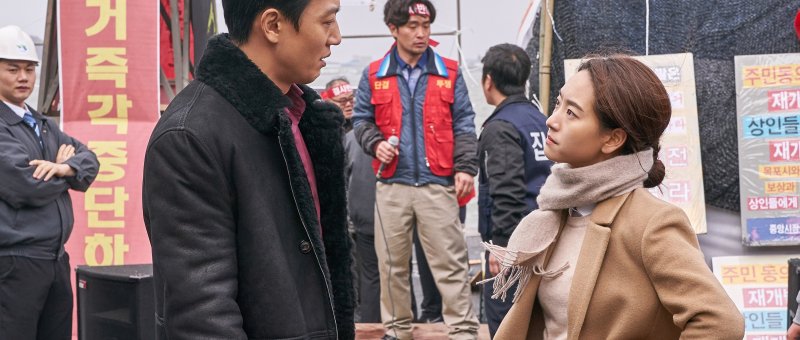
 Back in the good old days, gangsters used to make a case for themselves that they were standing up for the little guy and protecting those who couldn’t protect themselves. Of course that wasn’t quite the truth, but one can’t deny how closely small town thuggery and political office can resemble one another. Following his breakout hit The Outlaws, Kang Yoon-sung returns with web comic adaptation Long Live the King (롱 리브 더 킹: 목포 영웅, Long Live the King: Mokpo Yeongwoong), another unconventional comedy in which a surprisingly loveable rogue rediscovers his national pride and finds a more positive direction in which to channel his desire to be helpful.
Se-chool (Kim Rae-won) is a notorious thug with a traumatic past currently working with a local gang hired to clear a small protest of stall owners trying to cling on to a traditional market space in working class Mokpo where a developer wants to build a theme park and upscale skyscraper. A feisty young lawyer, So-hyun (Won Jin-a), is working with the protesters on their case and has no problem telling the gangsters where to get off. Impressed, Se-chool is smitten and starts to wonder if he’s on the wrong side but his attempts to get So-hyun’s attention – being strangely nice to the protestors, buying everyone lunch etc, spectacularly backfire. Only when he hears about another man, Hwang-bo (Choi Moo-sung), who used to be a gangster but has now reformed and become a social justice campaigner running a small not-for-profit cafe serving meals to the vulnerable, does he begin to see an opening, vowing to give up the gangster life and commit himself to serving the people of Mokpo.
The irony is that everyone seems to think that Se-chool has a hidden agenda, but his only agenda is the obvious one in that he wants to win So-hyun’s heart even if that means he has to shape up and learn to become a decent person rather than a heartless gangster thug. Known as the king of the nightlife, Se-chool is regarded as a slightly eccentric, good time guy, so his sudden desire to go “legit” is met with bemusement rather than surprise, but old habits are hard to shake and it takes a while for him to realise that trying to help people with his fists is not the best way to go about it. Punching out some punks making trouble in a cafe gets him an earful from the proprietress who explains that she owes a lot of money to the guys’ gang so Se-chool’s chivalry has probably caused her a series of potentially serious problems she assumes he won’t be on hand to help her out with. Nevertheless, he retains his desire to wade in and do his bit, becoming a surprise local hero when he puts himself in danger to ensure the unconscious driver of a crashed bus gets out safely while the other passengers make their escape.
Meanwhile, local politics is starting to heat up. Venal politician Choi Man-su (Choi Gwi-hwa) is up for re-election and running on a platform of making Mokpo great again. It comes as no surprise that Man-su is deep into the corrupt theme park project and outsourcing general thuggery to Se-chool’s arch-enemy which eventually includes taking out potential rivals like Hwang-bo whose approval ratings are soaring while voters are becoming tired of Man-su’s big money tactics and insincere messaging. Soon enough, Se-chool is persuaded to enter the race seeing as his “local hero” persona puts him in good stead to oppose Man-su’s establishment credentials. But, in order to get elected and convince So-hyun he’s really changed, he’ll have to finally face his traumatic gangster past while learning to be open and honest with his feelings.
Kang goes in hard for the business of politics, taking pot-shots not only at corrupt establishment figures in so tight with organised crime that they’re little more than jumped up gangsters, but also at ambitious party hoppers, and misguided mobsters who think they’re onto the big ticket by hooking up with “legitimate” power. Poor Se-chool, meanwhile, actually thought he was doing “proper business” in his persona as a besuited gangster of the new, corporatised school little thinking about the little guy as he unwittingly went about his ultra-capitalist agenda. Heading for broad comedy, Long Live the King misses an opportunity for serious satire but has undeniable heart as the misused hero learns to accept himself in being accepted by others, falling in love not only with a feisty activist lawyer but with community spirit and progressive politics as he vows to fight for a better future for the people of Mokpo while opposing the inherent corruption in the system embodied by men like Man-su who feel themselves entitled to exploit solely by virtue of their own superiority.
Long Live the King was screened as part of the 2019 London East Asia Film Festival.
International trailer (English subtitles)

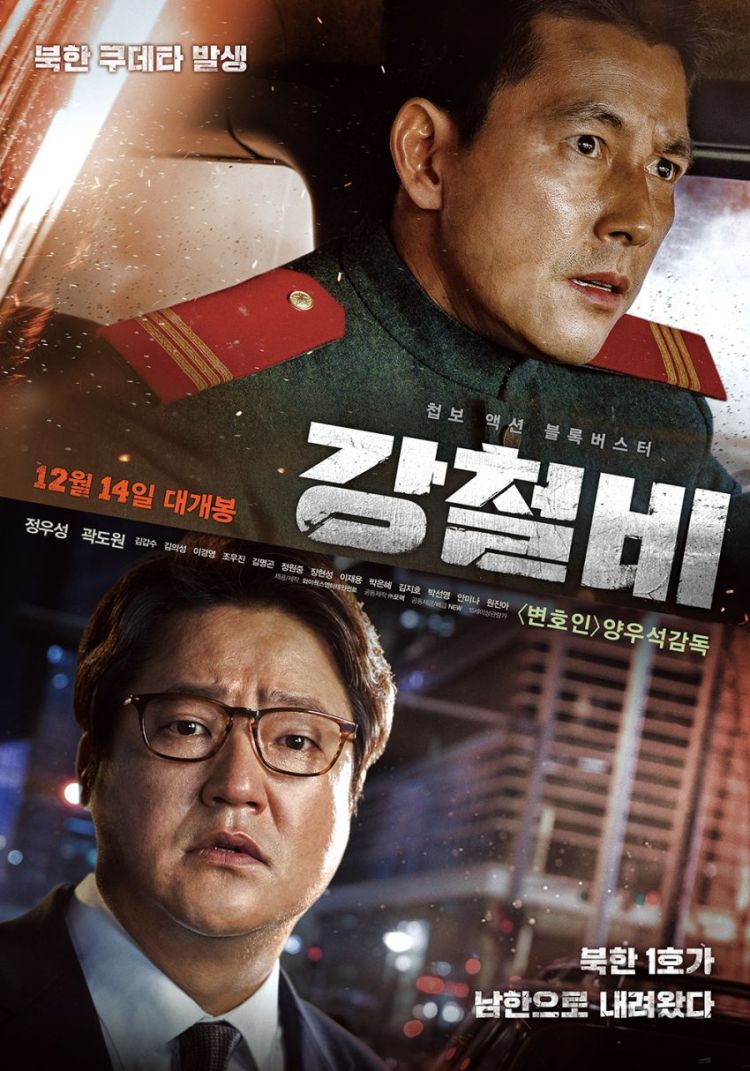
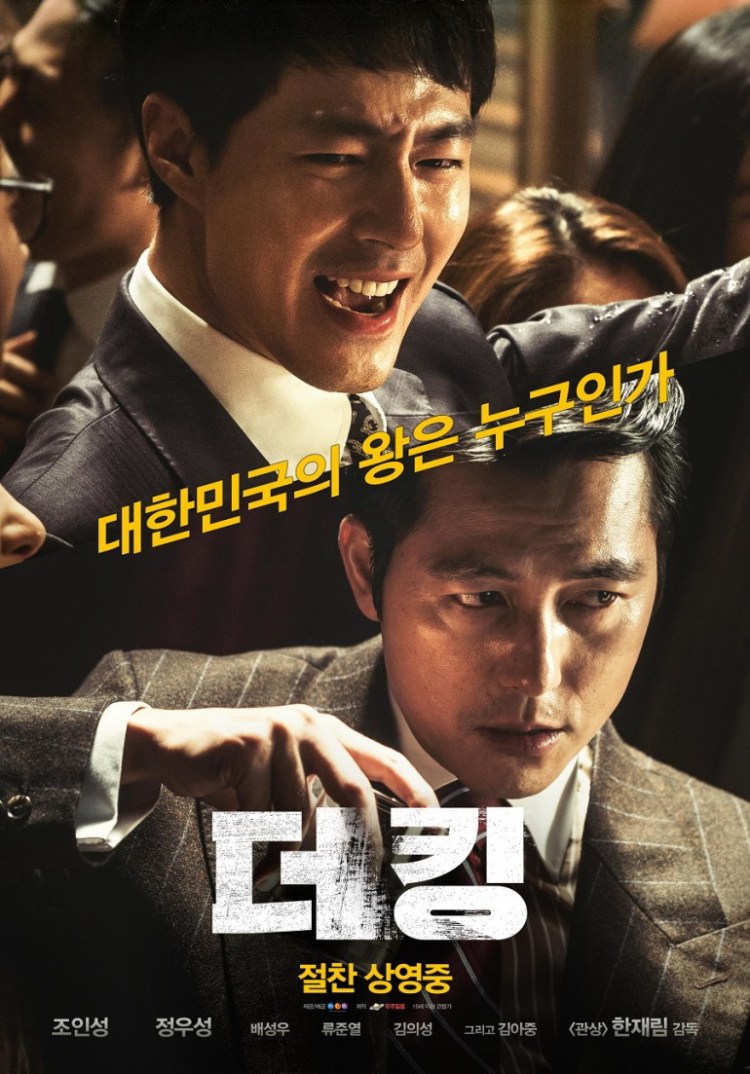 Absolute power corrupts absolutely, but such power is often a matter more of faith than actuality. Coming at an interesting point in time, Han Jae-rim’s The King (더 킹) charts twenty years of Korean history, stopping just short of its present in which a president was deposed by peaceful, democratic means following accusations of corruption. The legal system, as depicted in Korean cinema, is rarely fair or just but The King seems to hint at a broader root cause which transcends personal greed or ambition in an essential brotherhood of dishonour between men, bound by shared treacheries but forever divided by looming betrayal.
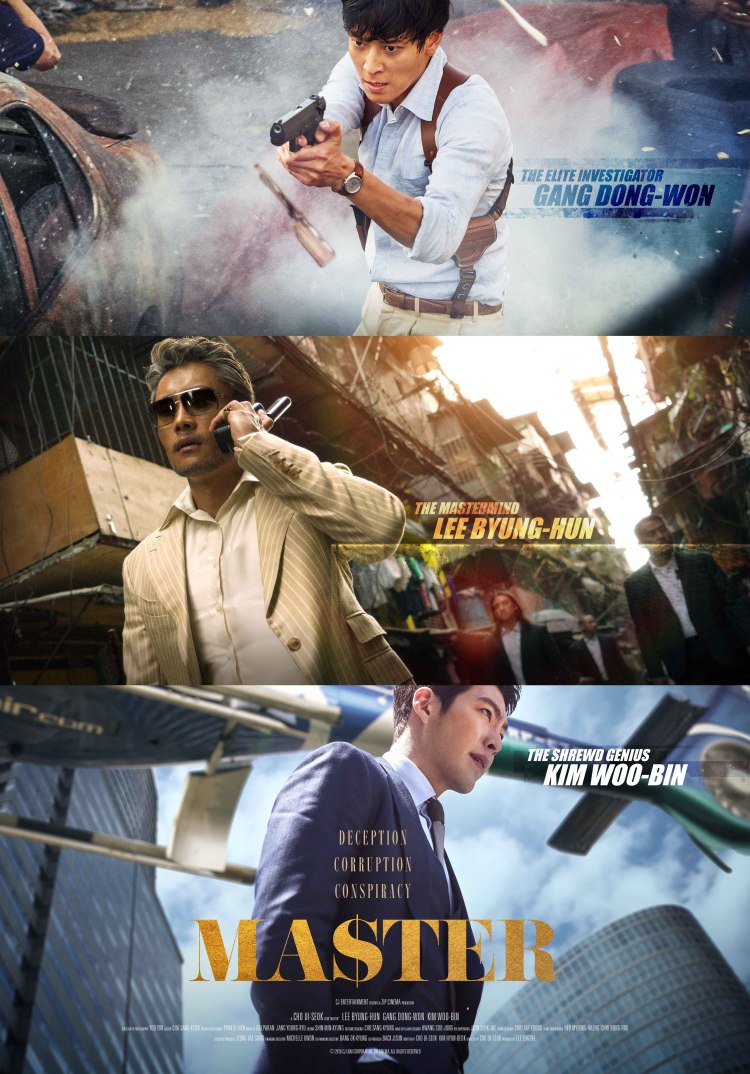 Corruption has become a major theme in Korean cinema. Perhaps understandably given current events, but you’ll have to look hard to find anyone occupying a high level corporate, political, or judicial position who can be counted worthy of public trust in any Korean film from the democratic era. Cho Ui-seok’s Master (마스터) goes further than most in building its case higher and harder as its sleazy, heartless, conman of an antagonist casts himself onto the world stage as some kind of international megastar promising riches to the poor all the while planning to deprive them of what little they have. The forces which oppose him, cerebral cops from the financial fraud devision, may be committed to exposing his criminality but they aren’t above playing his game to do it.
 There are three kinds of actors – those who wait for roles, those who choose roles, and those who make roles for themselves. Ageing actress Go Ju-yeon (Kim Hye-soo) claims to be the third type, but at any rate she’s currently between gigs and facing professional scandals and personal crises from each and every direction. An unusual family drama, Familyhood (굿바이 싱글, Gotbai Singkeul, AKA Goodbye Single) is the coming of age story of a middle aged woman finally forced into adulthood through an unlikely friendship with a pregnant teenage girl.
 Windows on Worlds