Firing The Lighter Gun (ピストルライター の撃ち方, Kohei Sanada, 2022)

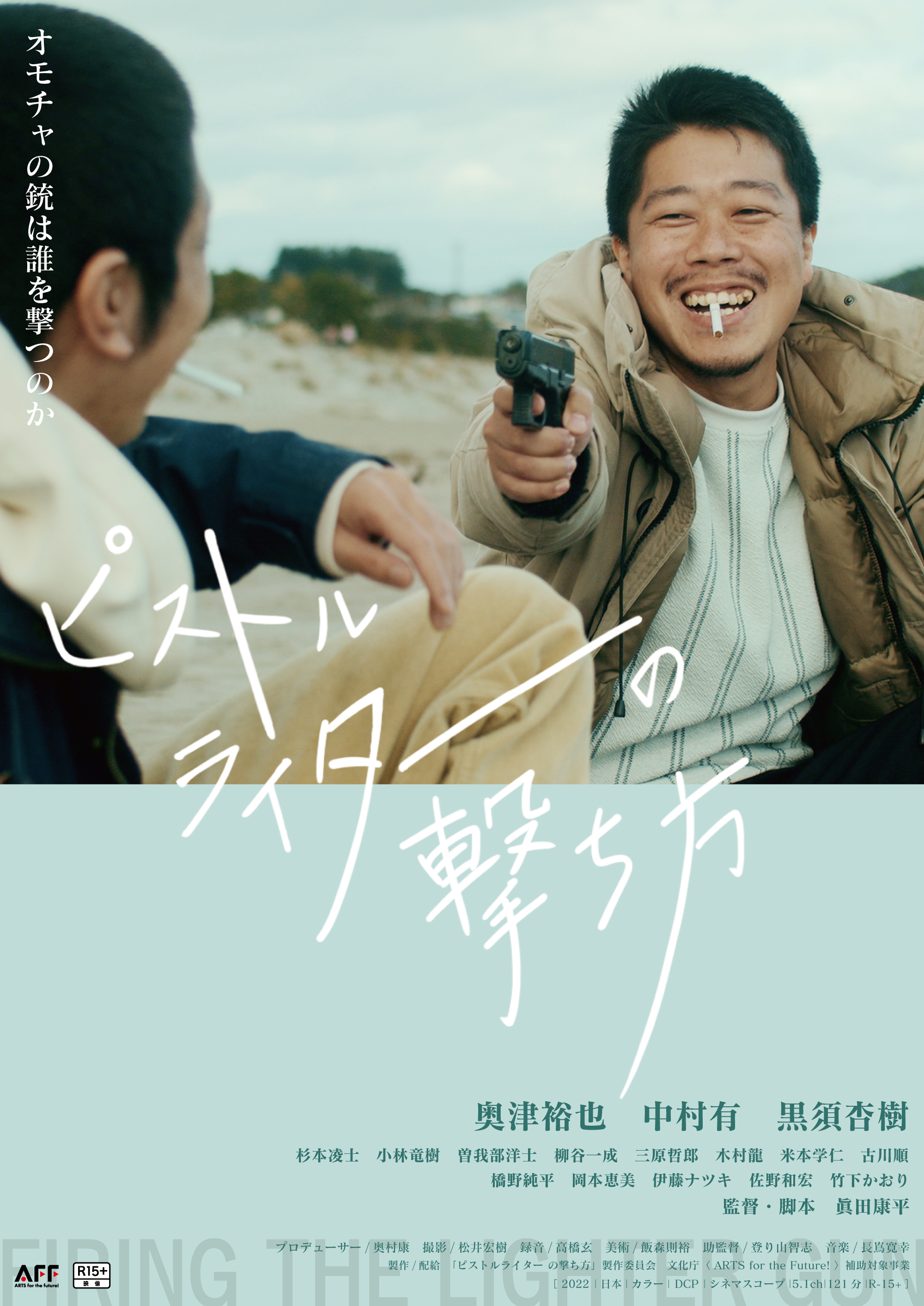
“Whatever got you here, it can’t be any good” a resident of a flophouse reflects on their moribund circumstances suckered to into debt bondage by exploitative yakuza who force them to risk their lives doing clean up in a nuclear exclusion zone. Kohei Sanada’s bleak indie drama Firing the Lighter Gun (ピストルライター の撃ち方, Pistol Lighter no Uchikata) takes place after second nuclear disaster has left even more of the land unsurvivable. The heroes have been quite literally displaced, left without a place to return to or call a home, but are also emotionally alienated unable to envisage an escape for themselves from this otherwise hopeless existence.

Having recently been released from prison, Ryo (Yu Nakamura) remarks that the area has changed since he’s been away but his friend Tatsuya (Yuya Okutsu) counters that he doesn’t really think so. In any case, Tatsuya lives with a huge inferiority complex most evident on his attendance at a school reunion he didn’t want to go to where he sits sullen and dejected among those who’ve moved up in the world not least his ex, Shoko (Emi Okamura), who left him for a guy with a steady government job but still drops by to care for his ageing mother who suffers from dementia and the legacy of domestic abuse. Tatsuya is not a yakuza but his work is yakuza adjacent in that he drives a van full of equally hopeless men recruited for a dodgy operation offering cleanup services in the nuclear exclusion zone. 

Though the jobs are supposed to pay well with a bonus for the hazardous nature of the work, most of it is being skimmed by the yakuza bosses who deduct vast amounts from the men’s pay-packets for “expenses” such as the right to sleep in a communal flophouse where they charge them exorbitant amounts for snacks and drinks which they have to buy because they aren’t allowed to go out. Nor are they allowed to quit the job, trying to run incurs a 50,000 yen fine on top of any debts they’re supposed to be working off. An unexpected addition to Tatsuya’s van one day is Mari (Anju Kurosu), a sex worker, who’s been forced to work for the gang to pay off a debt incurred by an ex who’s since run off. 

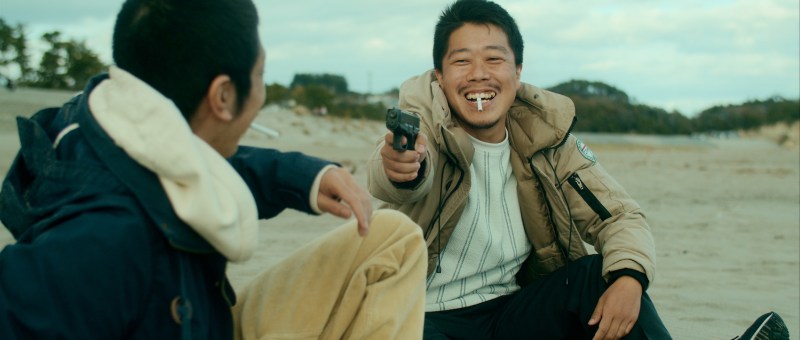
As she later says, it’s a waste of time dreaming about a home, life is easier when you no longer expect one. But despite themselves a gentle bond soon arises among the trio of dispossessed youngsters who each feel trapped by their circumstances but are uncertain if they still have the strength to contemplate escape. Tatsuya’s sense of impotence is embodied by the cigarette lighter he carries around which is shaped like a pistol and realistic enough to cause a yakuza bodyguard a moment of concern but of course of no real use to him. As Ryo puts it, Tatsuya’s problem is that he still cares about those around him and is not heartless enough to treat the flophouse men like the “disposable tools” others regard them to be. He is constantly belittled by grinning boss Takiguchi (Ryoji Sugimoto) who blames him for everything that goes wrong and calls him useless and ineffectual, while the flophouse boss also regards him as soft for refusing to beat one of the men who had tried to escape. 

Ryo meanwhile swings in the opposite direction, giving in to a sense of hopelessness that sees him shift towards yakuza violence but perhaps eventually allows him to bounce back and take a chance on escape even if it maybe short-lived or spent in constant hiding. Tatsuya may feel trapped by responsibility to his mother, but is otherwise psychologically unable to move forward staking all his hopes on the rumour of a new power plant hoping it will ignite the town in the way the construction of the last one did despite knowing its attendant risks. Unlike Ryo, he says there’s no point in running, despite himself still yearning for a home. The flophouse men are no different, the few who escape are soon drawn back to other similar kinds of work because there is no other hope for them. Still, once the final shots have been fired there is a kind of clearing of the air and the light of a new dawn even if few seem to be able to see it. 


Firing The Lighter Gun screened as part of this year’s Camera Japan.

Original trailer (no subtitles)
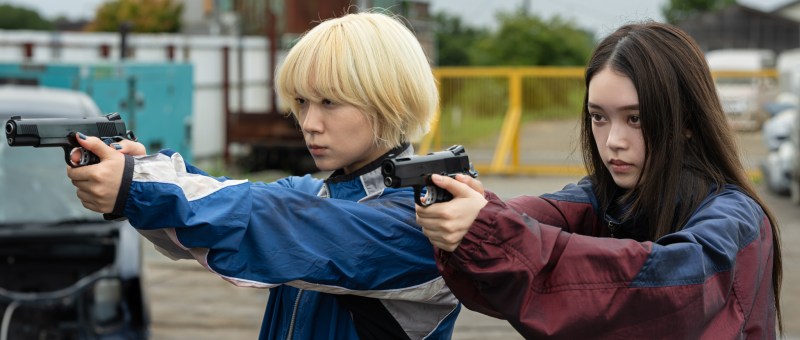
Baby Assassins 2 Babies (ベイビーわるきゅーれ2ベイビー, Yugo Sakamoto, 2023)

Chisato (Akari Takaishi) and Mahiro (Saori Izawa) continue to struggle with everyday life in Yugo Sakamoto’s sequel to the hugely popular slacker comedy action fest, Baby Assassins, Baby Assassins 2 Babies (ベイビーわるきゅーれ2ベイビー, Baby Valkyrie 2 Baby). A deadpan satire on institutional bureaucracy in the underground hitman society, the film sees the girls targeted by a pair of rivals that in any other film may be the heroes of the story only this time around they’re hapless challengers whose attempt game the system only results in more chaos and misery. 

Beginning to get their act together, the girls are still it seems completely hopeless at managing their money and are suddenly faced not only with a hugely expensive bill for a gym membership they took out five years previously and forgot to cancel, but also reminded that they were upgraded from the “Jolly” insurance scheme to the “Merry” insurance scheme when they graduated high school so their payment information has expired and needs updating. It’s this extreme set of circumstances that lead to them being in a bank at the moment it is robbed by a pair of fugitive thieves. The terms of their assassins contract forbid them from using their skills outside of the job, but they can’t afford to wait any longer and decide to tackle the robbers so they can send their transfer through before the deadline but end up getting suspended for their pains. While suspended they’re forbidden from killing anyone and get no salary so they’re back where they started looking for part-time jobs to help make ends meet. 

Their predicament is mirrored by antagonists Yuri (Joey Iwanaga) and Makoto (Tatsuomi Hamada) who as the film opens end up killing completely the wrong gangsters because of a logistical mixup. The problem is that Yuri and Makoto are subcontractors not yet admitted to the Assassins Guild which means they don’t get access to the best jobs and have no workplace protections. Essentially what they want is to join the union, but they aren’t qualified so their boss, Akagi (Junpei Hashino), comes up with the neat idea of knocking off Chisato and Mahiro to free up their spots in the Guild. 

Sakamoto has great fun satirising Assassin’s Guild bureaucracy as the girls are constantly forced to reference their contract through Mr Susano (Tsubasa Tobinaga) and his little blue book to figure out what is and isn’t allowed in their lives as top hit women. Meanwhile, they’re once again forced to try and live “normally” and find they aren’t very good it at it while having to take quite literally odd jobs as shopping arcade mascots managed by a weird old man (Tetsu Watanabe) obsessed with Masaki Suda and the film We Made a Beautiful Bouquet which becomes something of a running gag. Both Chisato and Mahiro and Yuki and Makoto reflect on the strange cafe hierarchy of being offered a selection of tiered menu sets at escalating prices all the way from basic chicken to barbecued meats as reflective of a wealth-based social system while the boys continue to vacillate over asking out the pretty waitress. 

It’s kill or be killed but the girls know on some level that the guys are just like them and even quite good hitmen for “amateurs” so it’s a shame they have to die for having attacked and nearly killed one of their friends. After sorting out who’s won through a high octane series of shootouts and one on one fights, the four sit down on the ground and share snacks while waiting for the inevitable like they’d just been having a violent picnic while hanging out in a disused warehouse. Even the losers seem to accept their fates, acknowledging that they’ve lost in a fair fight and making no further attempt to resist. 

In any case, adulting is hard even when you’re not a top assassin struggling with when it’s appropriate to put your training to use. As the girls point out, it’s hard to get by on part time work when it would take a hundred days dressed in a humiliating panda outfit to earn what they’d get for one kill while freelancing is strictly forbidden along with strike action and taking one’s grievances to Twitter. Turns out the assassin life is more complicated that you’d think and just as filled with annoying bureaucracy as any salaryman job. Thankfully the friendship between Chisato and Mahiro has only grown stronger as they face off against the twin threats of red tape and adulting in their lives as “contract” killers.


Baby Assassins 2 Babies screens in Frankfurt 10/11th June as part of this year’s Nippon Connection.

Original trailer (English subtitles)

Images: ©2023 “BABY ASSASSINS 2” Film Partners

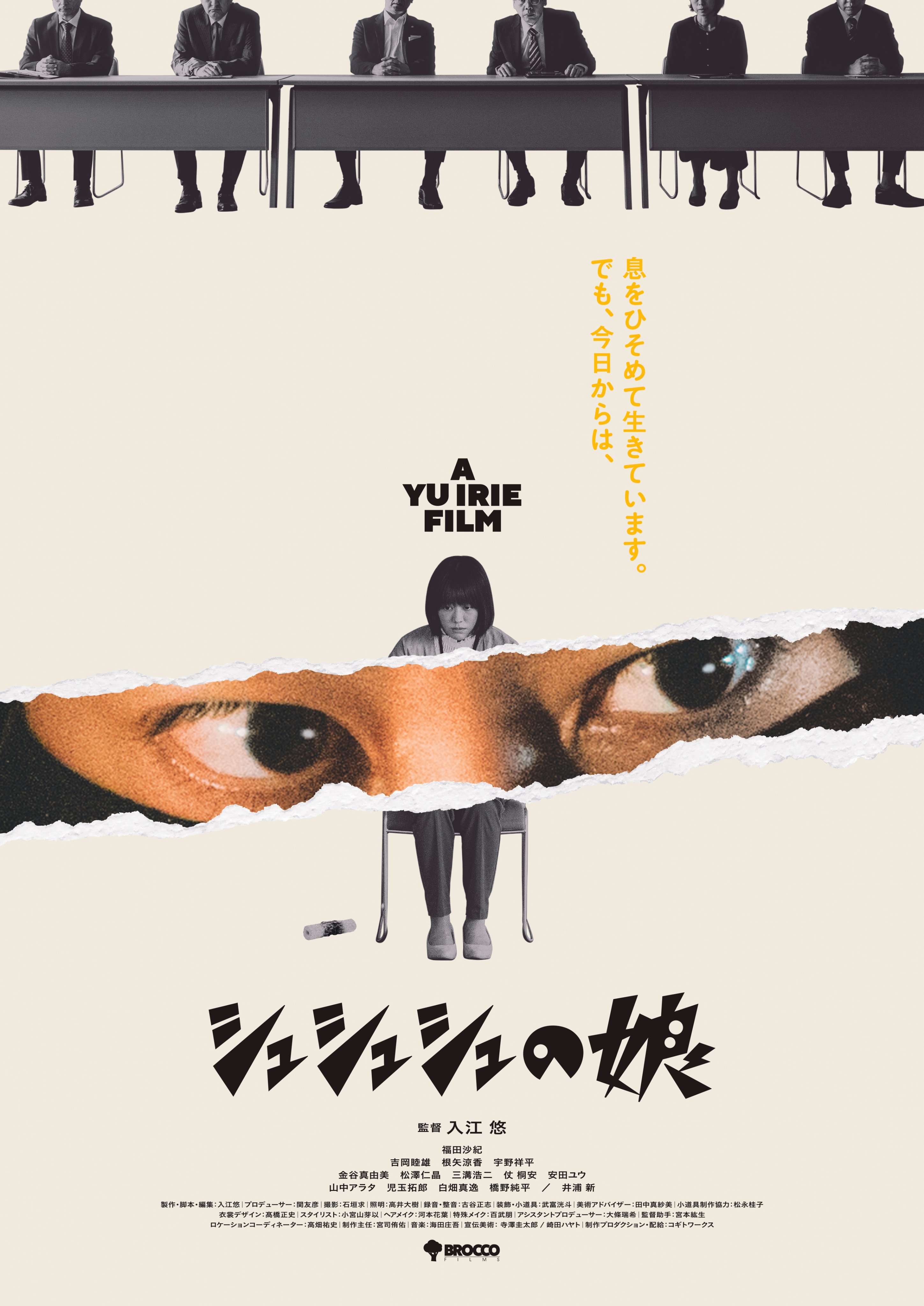
Ninja Girl (シュシュシュの娘, Yu Irie, 2021)

What can the ordinary person do when encountering injustice? Saying no is a start, but it might not be enough in the long run. According to the inspirational grandpa in Yu Irie’s Ninja Girl (シュシュシュの娘, Shushushu no Musume), if no one’s coming with you you’ll have to go on your own. Part coming-of-age drama, part political satire, Ninja Girl finds its reserved heroine coming into herself as she agrees to take on her grandfather’s unfinished mission and avenge the death of a family friend who took his own life in shame after being bullied into falsifying government documents in order to help a corrupt local council pass some overtly racist legislation. 

The reticent Miu (Saki Fukuda) takes care of her elderly grandfather (Shohei Uno) and has a steady job at the town hall, yet despite her ordinariness she is also a target for local shunning because of her grandfather’s intense resistance towards the “Immigrant Elimination Ordinance”. Miu isn’t in favour of it either, but is otherwise too shy to do much about it despite being harangued by her extremely unpleasant and intimidating supervisor Ms. Muteda (Mayumi Kanetani). On returning home one evening she overhears her grandfather talking to a family friend, Mano (Arata Iura), who appears depressed and talks of taking his own life after being strong-armed by Muteda among others to illegally alter and/or falsify official documentation in order to help them pass their odious bill. Mano then takes his own life in protest by jumping off the roof of the town hall, leaving Miu and her grandfather intent on avenging him by retrieving the evidence he’d preserved of governmental impropriety and exposing the mayor for what he is. Miu’s grandfather presents this as a “mission” he’s leaving to his granddaughter because he believes he’s not long left, revealing a long hidden family secret to the effect that Miu is actually descended from a long line of ninjas. 

Ms. Muteda tries to talk Miu round by insisting that the legislation is neither “discriminatory” nor “racist” which seems like a stretch when you’re using words like “eliminate”. After accepting her ninja legacy and using the book she’s found to make herself an authentic ninja outfit, Miu tries to do some digging all of which eventually takes her to a scrap yard mostly staffed by migrant workers whom Mano had been trying to help. Miu is originally turned away by the owner because of her association with local government but returns hoping to find the password for Mano’s thumb drive only to discover a weird gang of racist thugs dressed in lime green high visibility jackets beating up the scrap yard’s owner and spouting a lot of rubbish about how his workforce is taking jobs off Japanese people who apparently find themselves in need following the earthquake and coronavirus pandemic. 

For all of their talk about making Japan great again and keeping Japanese traditions in the hands of the Japanese, there’s a strange irony that their nemesis comes in the form of that most quintessentially culturally specific avenger, the ninja, and not only that a young female ninja rising up against oppression all on her own. Despite agreeing that she has no real skills, Miu’s grandfather thinks she’ll make a good a ninja because of her general invisibility while her childhood hobby of making blowpipes will also stand her in good stead. Accepting her “mission” gives Miu the kind of confidence otherwise lacking in her life to seize her own agency and stand up for what she believes in even when victory seems more or less impossible. Meanwhile, Muteda and her cohorts laugh loudly about how they’re only doing what the national government and other prefectures do in illegally altering their documents to make it look like they’re not doing anything wrong while they ride roughshod over the rights of ordinary people and pursue their xenophobic agenda. 

“Never again” Miu’s grandfather insists on recalling the pogroms which occurred after the 1923 Kanto earthquake leading to a massacre of Koreans, while finding himself branded a traitor to his nation. In another touch of irony, the cheerful children’s folksong Hana plays in the background as red balloons are launched to celebrate the Immigrant Elimination Ordinance in a nationalistic incongruity that seems to leave Miu more bemused than ever. Removing herself from this intensely corrupt social order and committing herself to ninja mastery while training alongside her her favourite collection of ‘80s pop hits, she determines to clean up town sending poison darts against the otherwise unopposed voices of disorder. Shot in a strangely comforting 4:3, Yu Irie’s quirky drama is drenched in the absurd but sends a very real message as its shy, reserved heroine steps into the shadows in order to resist societal corruption even while those all around her are content to stand by and watch as their freedoms are taken from them. 


Ninja Girl screened as part of this year’s New York Asian Film Festival.

Original trailer (no subtitles)
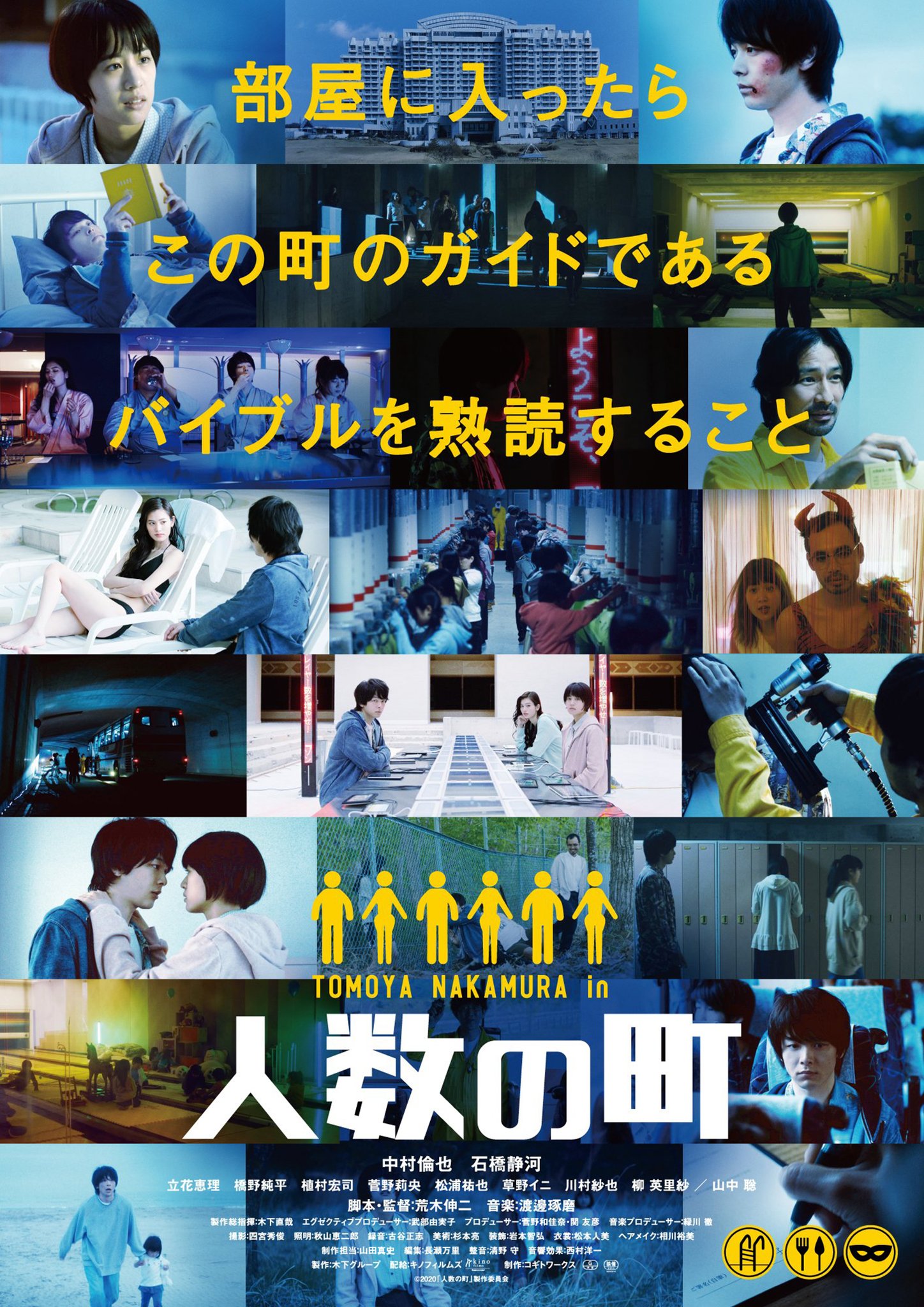
The Town of Headcounts (人数の町, Shinji Araki, 2020)

“You’re free now, so the world is more beautiful” the hero of Shinji Araki’s dystopian thriller The Town of Headcounts (人数の町, Ninzu no Machi) is unironically told by a mysterious saviour even as a watchtower lingers on the horizon behind him. Modern Japan, it seems to say, is no paradise but is it worth trading your identity and existence for the guaranteed satisfaction of your basic needs? Freedom, happiness, and love may be nebulous concepts which mean different things to different people, but in the end leading a satisfactory life might just come down to what it is you decide you can live without. 

The nameless protagonist later credited as Aoyama (Tomoya Nakamura) describes himself as an “average joe” who has “a weak will” and doesn’t “belong anywhere in society”. While being beaten up by a loanshark, he’s unexpectedly rescued by the miraculous appearance of the mysterious “Paul” (So Yamanaka), a middle-aged man dressed in an orange jump suit who tells him there’s a place he can go where’d he fit right in. After a lengthy bus ride, he finds himself a new resident of “The Town” where those like him who for one reason or another felt themselves rejected by mainstream society can live in ease and comfort, only as he later discovers he is unable to leave. Should he walk too far beyond the fence, the microchip in his head activates a sonic wave of painful and disabling distortion. 

Somewhere between a utopian cult commune and a penal colony occupying a disused conference centre, The Town is a free love society which insists that equality is possible and that freedom and peace are more than mere dreams. Family creates inequality, so The Town’s Bible says, so residents must live alone. Pregnancy is prohibited, while children brought into the compound are separated from their parents and raised in a communal nursery. All basic needs, food, warmth, shelter and even sex, are otherwise guaranteed though the residents are expected to “work” to earn them, performing often pointless tasks parasitically underpinning modern capitalism such as writing meaningless product reviews in return for treats, or performing as stooges to create hype around new store openings. Aoyama’s sense of morality is however shaken when he’s asked to commit electoral fraud by repeatedly voting for a chosen candidate with stolen ballots, later recruited as a crisis actor in a fake terrorist incident intended to further influence an election in the wake of a corruption scandal. 

In The Town, he’s told his existence is meaningful and given a place to belong. Yet he has to surrender his name, known as “Dudes” residents must greet each other ritualistically only by the word “fellow” followed by some kind of compliment. All his needs may be met, but he’s forbidden to fall in love, can never marry or have a family, and it does seem troubling that there are no elderly people around even if some suggest there are other “Towns” just for them. Some might say, The Town is way is a way for mainstream society to get rid of all the people it doesn’t want or feels have no value. Araki throws up frequent title cards featuring various statistics such as the numbers of homeless people, bankruptcies, unemployment etc along with brief flashbacks to whatever it was that brought residents to The Town from being thrown thrown out of a manga cafe after attempting to live there to being almost choked to death by debt-collecting yakuza suggesting there’s little “freedom” in the rigid contemporary society and most particularly for those unable or unwilling to live by its rules.  

In The Town rules are few, and you’re well looked after, but you can’t leave and though it seems like an individualist paradise where you’re free to satisfy each of your physical desires you have no further control over your existence. As one resident puts it, “life here is kind of weightless”, perhaps a relief for some but a crushing existential crisis for others. Aoyama realises that in The Town he rarely feels angry, but perhaps he feels nothing much of anything else, either. Just as he’s starting to adjust, his feelings of unease are strengthened by the arrival of a young woman who apparently had no previous societal issues but has come to The Town in search of her younger sister whom she failed to help despite knowing she was trapped in an abusive relationship. Unlike Aoyama, Beniko (Shizuka Ishibashi) claims not to have felt much of anything in the regular world, unsure even what love is and unimpressed by the beautiful vistas of freedom that are supposed to define The Town, but doesn’t want to stay and be rendered a mindless drone exploited by mysterious forces for whatever purpose they may choose.

What Aoyama realises he craves is the love and companionship of a conventional family life. “We want to support each other and work hard. Love each other and live together” he explains to a non-plussed Paul who seems to pity him, his simple desire at once at odds with the values of The Town and perhaps equally unobtainable in contemporary Japan. In the end, the only “freedom” he may find lies in complicity with one system or another, becoming an oppressor as one of the oppressed. The question is what sort of life is most satisfying, freedom from the anxiety of hunger and cold, or the freedom to love and live fully in manner of your choosing. The modern society may not grant you either, and both perhaps have their costs. A bleak dystopian thriller, Araki’s steely drama features innovative production design and slick direction mimicking the hero’s sense of disaffection with detachment and a total lack of resistance to the otherwise bewildering world of The Town but saves its real sense of confusion for the state of the modern society and the fate of those who survive on its margins. 


The Town of Headcounts streams in the US March 15 – 19 as part of the 12th season of Asian Pop-Up Cinema.

Original trailer (English subtitles)

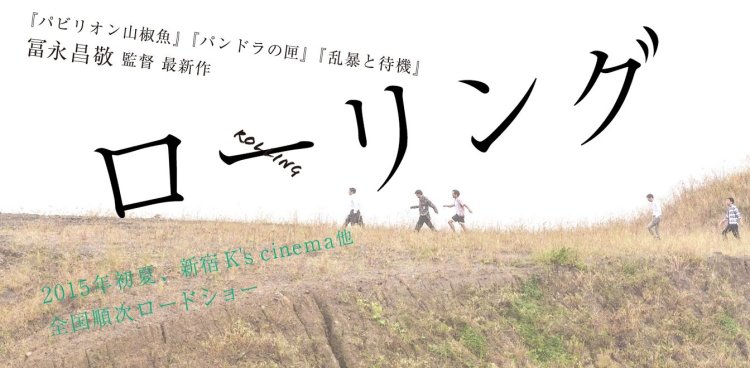
Rolling (ローリング, Masanori Tominaga, 2015)

384f90_4054bb8ba5554cc186f2bce4c6beb853“Weird teacher” is almost becoming a genre now. Even so, the teacher at the center of Masanori Tominaga’s Rolling may give them all a run for their money (well, for about five yards before having somekind of bizarre accident, anyway). Gondo is a feckless middle aged man who was fired from his teaching position ten years previously after having been caught secretly filming the girls’ changing rooms. Now he’s back in his old stalking ground after having pulled off an improbable white knight routine by rescuing the young and pretty Mihara from a bad boyfriend in Tokyo. However, his former students have not forgotten him or his pervy ways! It’s not long before the entire town of twenty somethings are on Gondo’s case hoping for a little vengeance for their teenage betrayal.

However, Gondo’s fortunes improve slightly when it’s discovered that some of his secret recordings feature some rather salacious goings on starring a former classmate whose TV career is just about to kick off. Smelling money in the air, Gondo is suddenly everyone’s best friend again. Gondo is…still Gondo though so as you may expect this state of affairs will not last. He’s even lost Mihara to a former student of his, one he even quite likes too…

Despite his failings and protestations to the contrary, what Gondo ultimately remains is a teacher. Yes he’s made some mistakes (understatement of the century), and he’s actually quite unpleasant in a lot of ways but somehow he still wants to protect this ragtag bag of not quite young people that he previously harmed. Coming to the realisation that his actions not only resulted in revulsion and violation of trust but also had a disruptive effect on the educational progress of his students simply resulting from his abrupt dismissal, Gondo does at least want to make amends (in his own way).

However, Gondo’s just the kind of guy things never work out for. “All my students are idiots” he proclaims at one point and he’s not altogether wrong. Attempting to hatch a blackmail plot with a very strange group of a idol managers-cum-gangsters and an ex-policeman, the gang get themselves into a whole world of trouble which is only exacerbated when the almost famous subject of the video comes forward and makes a very surprising request of her old flame and Gondo’s kindly love rival Kanichi.

Darkly comic, Rolling has the air of a film noir B movie with its ever present voice over and thriller trappings including secret video taping, a blackmail plot and trio of business-like gangsters. It is though, also firmly grounded in the now despite its often surreal humour. Also branded an “erotic comedy” Rolling is fairly high on sexual content adding to its generally sleazy feeling. It may well go down as a cult hit simply for the phrase “I’m going to make a milkshake out of your filthy boob juice” which gives you some indication as to the tone.

Far from perfect but oddly touching if sometimes baffling too, Rolling is another strange and surreal adventure from Tominaga. Its slightly vulgar tone may put off some but by and large it gets away with it through sheer cheekiness and absurd humour. Gondo is a dreadful person almost all of the time, selfish and needy yet he also seems to have this yearning for redemption which makes him seem not so bad really, as does the fact that most of his former students have not turned out all that well – even the “hero” Kanichi has his problems. For those that can accept its oddly surreal tone and decidedly old fashioned gender politics, Rolling is a rewarding and delightfully absurd film that does also manage to pack in a decent (if subtle) amount of social commentary.


Reviewed at Raindance 2015.

Review of Masanori Tominaga’s Rolling (ローリング) – first published by UK Anime Network.