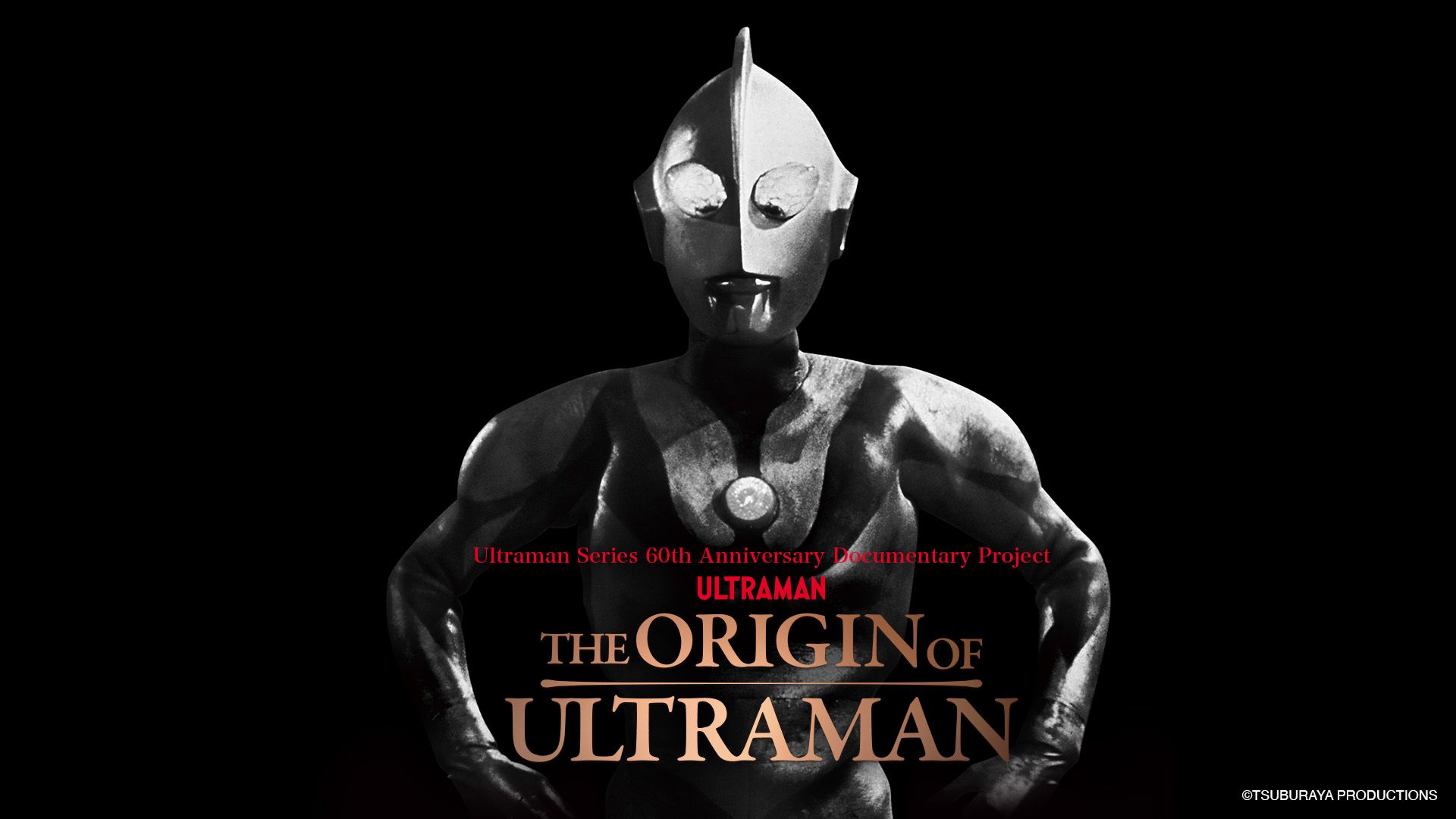
Ultraman is one of Japan’s most recognisable cultural phenomena. Loved by generations of children, the landmark special effects-heavy drama has proved incredibly influential. Despite its title, Yu Nakamura and Kazuki Yoshida’s documentary The Origin of Ultraman isn’t actually as much interested in the franchise’s history as it is in its reception, focusing on the recollections of filmmakers and creatives from Japan and beyond discussing what Ultraman meant to them.
In fact, the film is largely structured around a discussion between directors Hirokazu Koreeda and Guillermo Del Toro who find unexpected commonality in the reception of Ultraman in Japan and Mexico respectively. Nevertheless, one of the drawbacks of this approach is that it unwittingly adopts a US-centric sensibility in contrasting the lack of cultural impact the series has had in America with that in other areas of the world, while later somewhat contradicting itself in featuring discussions with the American directors of the Netflix-produced US animation Ultraman: Rising.
Though the insights provided by Del Toro in particular are often interesting, the film is at its best when focusing on those who actually worked on the series and were involved with its original run in the mid-1960s. One of the reasons for the franchise’s success seems to have been the determination of everyone involved to create something that felt real and authentic. No one was interested in writing the show off as disposable entertainment for children, but rather precisely because it was aimed largely at a younger audience, the creative team were universally focused on providing high-quality entertainment.
Nevertheless, despite Eiji Tsuburaya’s admiration for the stop motion techniques he so admired in the Hollywood movie King Kong, the decision to use humans in suits was born of the realities of television production in Japan. Incredibly tights budgets and production schedules simply would not allow for a complex and time-consuming process such as stop motion. Instead, they used Tsubuyara’s iconic talent with miniatures to provide a sense of reality.
The film suggests that this sense of conviction in their work stems from the fact that, Eiji Tsuburaya aside, most of the creatives behind the creation of Ultraman were born in 1930s and had spent their childhoods against the backdrop of the war. They were interested in sending a more idealistic vision to the next generation of children that was about goodness and harmony. Nevertheless, despite their experiences and anti-war stance, they still had an admiration for the machinery of warfare and were attracted to the “coolness” of guns, tanks, and aeroplanes.
This contradiction is apparent in the Buddhist underpinnings of Ultraman’s design and the world that surrounds him. Ultraman then takes on a kind of divine presence representing “cosmos” in a constant battle with the “chaos” of the kaiju to maintain peace and balance in the universe. This duality is also reflected in his merging with the human Hayata and willingness to give up his own life to save him, eventually along with all mankind. Ultraman does not actually like fighting the kaiju and rarely kills them, while kaiju are not necessarily evil so much as just being what they are.
Del Toro suggests these themes as a reason why the show found an audience in Catholic Mexico it evidently didn’t in the predominantly Protestant United States. Monsters in American movies, he says, tend to be unnaturally oversized animals, in contrast to kaiju which often have more complex personalities and humanlike thought patterns. Which is to say they too have a quality of divinity or innocence. On discovering a kaiju graveyard, the decide to hold a Buddhist funeral for the fallen kaiju out of respect for their lives.
In other ways, however, the show was also a counter to the optimism represented by EXPO ’70 reflecting a degree of anxiety about scientific progress and the responsibilities that come with it. These dualities and contradictions seem to have struck a chord with post-war children who were drawn to the sense of safety and certainty Ultraman provided. Hideko Anno describes his encounter with the series as a kind of “curse”, realising that most of his work has just been in one way or another a reflection of Ultraman and that he is creatively unable to escape its influence. This may perhaps go someway to explaining the origin of Ultraman’s appeal as a force of unambiguous good in world that can, in other ways, seem random and chaotic.
The Origin of Ultraman screened as part of this year’s Fantasia International Film Festival.
Trailer (English subtitles)