 Female sexuality often takes centre stage in the work of Kaneto Shindo but in the Iron Crown (鉄輪, Kanawa) it does so quite literally as he refracts a modern tale of marital infidelity through the mirror of ancient Noh theatre. Taking his queue from the Noh play of the same name, Shindo intercuts the story of a contemporary middle aged woman who finds herself betrayed and then abandoned by her selfish husband with the supernaturally tinged tale of a woman going mad in the Heian era.
The film begins in a theatrical sequence in which Shindo’s wife and muse Nobuko Otowa appears in traditional dress and declares that she going to pray at a shrine to request vengeance on the lying, cheating husband who’s ruined her life. As part of this, she asks to be turned into a vengeful demon so that she may properly enact her revenge. However, after a while Shindo interrupts the action to return to the contemporary era and a man and woman in bed who keep being disturbed nuisance phone calls which turn out to be from the man’s wife (also played by Otowa) standing in a phone box outside.
The husband and his mistress – a much younger, sexually liberated woman, are given no respite from the unsettling phone calls. Haunted by the unseen figure of the betrayed wife, the couple eventually attempt to move around to avoid her ending up in a strange, otherworldly hotel. They become convinced that the wife has followed them and is telephoning from within the hotel itself despite having been told that they are in fact the hotel’s only guests. In the final sequence of the Noh play, the wife, who is now a demon, finds herself unable to enact her revenge in the way that she would like but vows to await another chance though her demonic powers eventually desert her, leaving her as an invisible ghost with only her voice remaining.
Shindo operates on three interconnected layers each radiating from the original Noh play. First of all there’s the central contemporary story of the adulterous husband, his mistress and the betrayed wife which is intercut with scenes from the Noh play but this is divided too – into a “realistic” depiction as in the wife fleeing through the forest and of outwardly “theatrical” scenes in which the entire stage apparatus is visible with enclosed walls and the musicians seated to the side of the stage area.
In one sense, it’s true that the position of the Heian era wife in this instance in a much harder one to bear than that of her modern counterpart who faces less of the stigma of the divorced woman and probably does have much more possibility of rebuilding her life even if she has made large sacrifices and wasted her youth on an unworthy man. However, just in the Noh play the hurt and resentment born by the unnamed modern woman is enough to develop into a supernatural force in its own right which pursues the new couple not only through the direct means of her phone calls but even begins to haunt them causing a degree of hysterical paranoia in the quite cowardly husband who even starts to see the “ghost” of his wife standing accusingly before him.
The real and the dreamlike theatre of vengeance blur into each other becoming evermore indistinct. By the time the adulterous couple have arrived at the hotel they’ve already entered another realm. Though the real world pokes through occasionally, the hotel itself takes on an ethereal quality with its staff each wearing the white makeup of the Noh theatre and spouting strange, oddly straightforward dialogue. Yet the couple themselves don’t seem to be able to detect the oddness around them or even be able to tell it apart from that which is recognisably part of their world, so caught up are they in the guilt and torment brought about by the unseen presence of the abandoned wife.
Shindo adopts a complicated, experimental structure to explore what is at heart a simple idea – the timeless quality of a woman’s jealousy. Hell hath no fury like a woman scorned and even if not physically present, the spectre of the former wife becomes a disruptive force in the husband’s intentions of leaving her behind to pursue other opportunities with a younger woman. Fascinating yet elusive, The Iron Crown is perhaps best considered with a firm knowledge of the original Noh play in hand, yet its haunting imagery and experimental take on form make it an intriguing entry into Shindo’s diverse filmography.
Unsubtitled trailer:
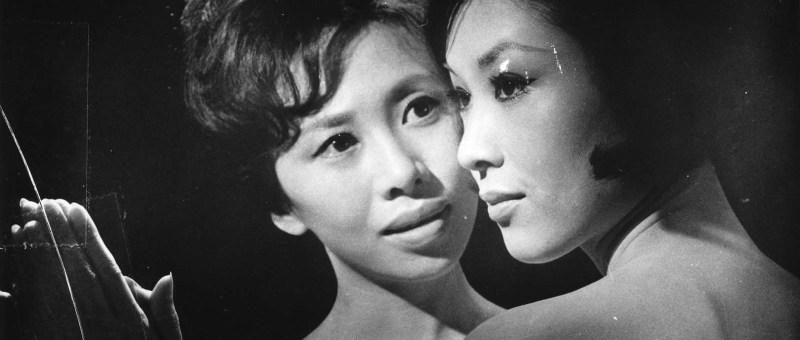
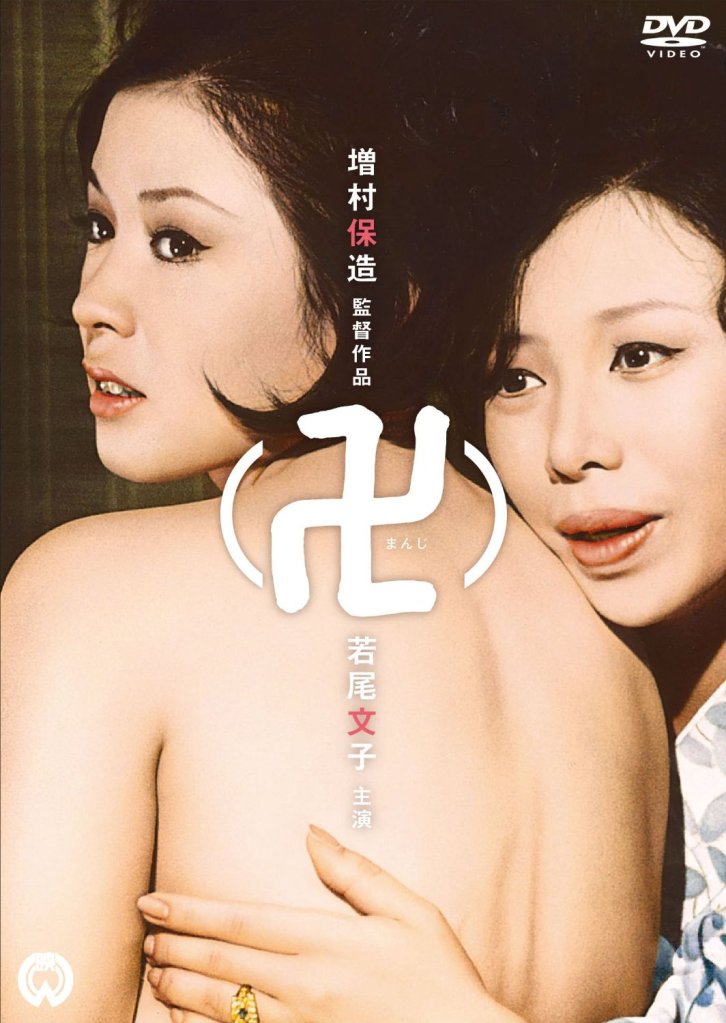 For arguably his most famous film, 1964’s Manji (卍), Masumura returns to the themes of destructive sexual obsession which recur throughout his career but this time from the slightly more unusual angle of a same sex “romance”. However, this is less a tale of lesbian true love frustrated by social mores than it is a critique of all romantic entanglements which are shown to be intensely selfish and easily manipulated. Based on Tanizaki’s 1930s novel Quicksand, Manji is the tale of four would be lovers who each vie to be sun in this complicated, desire filled galaxy.
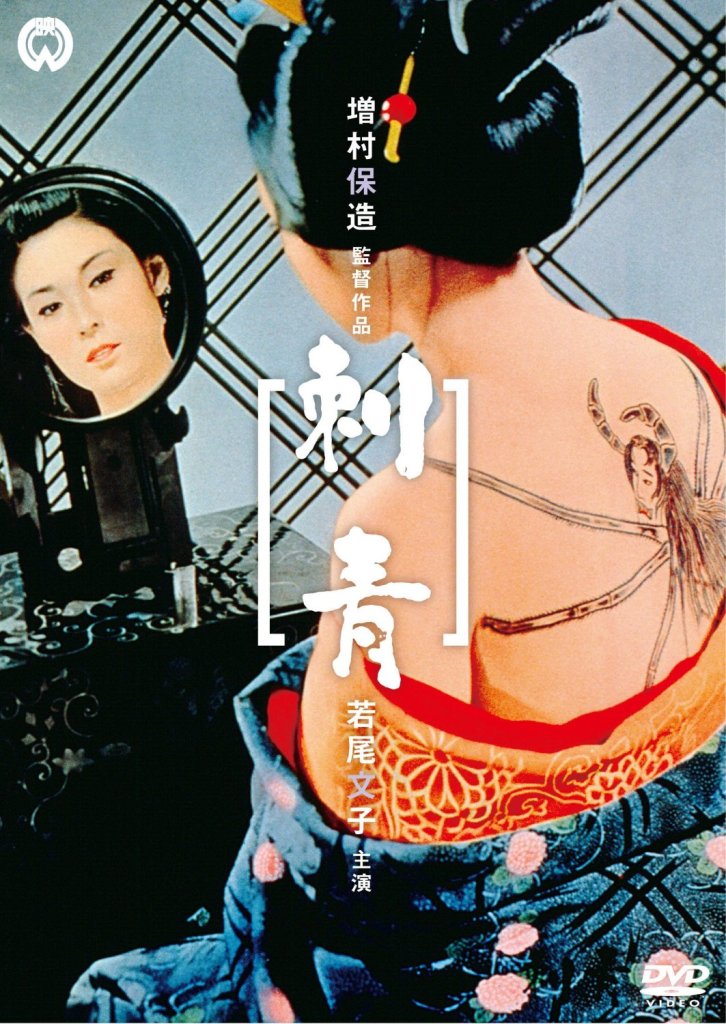 Irezumi (刺青) is one of three films completed by the always prolific Yasuzo Masumura in 1966 alone and, though it stars frequent collaborator Ayako Wakao, couldn’t be more different than the actresses’ other performance for the director that year, the wartime drama
  Windows on Worlds