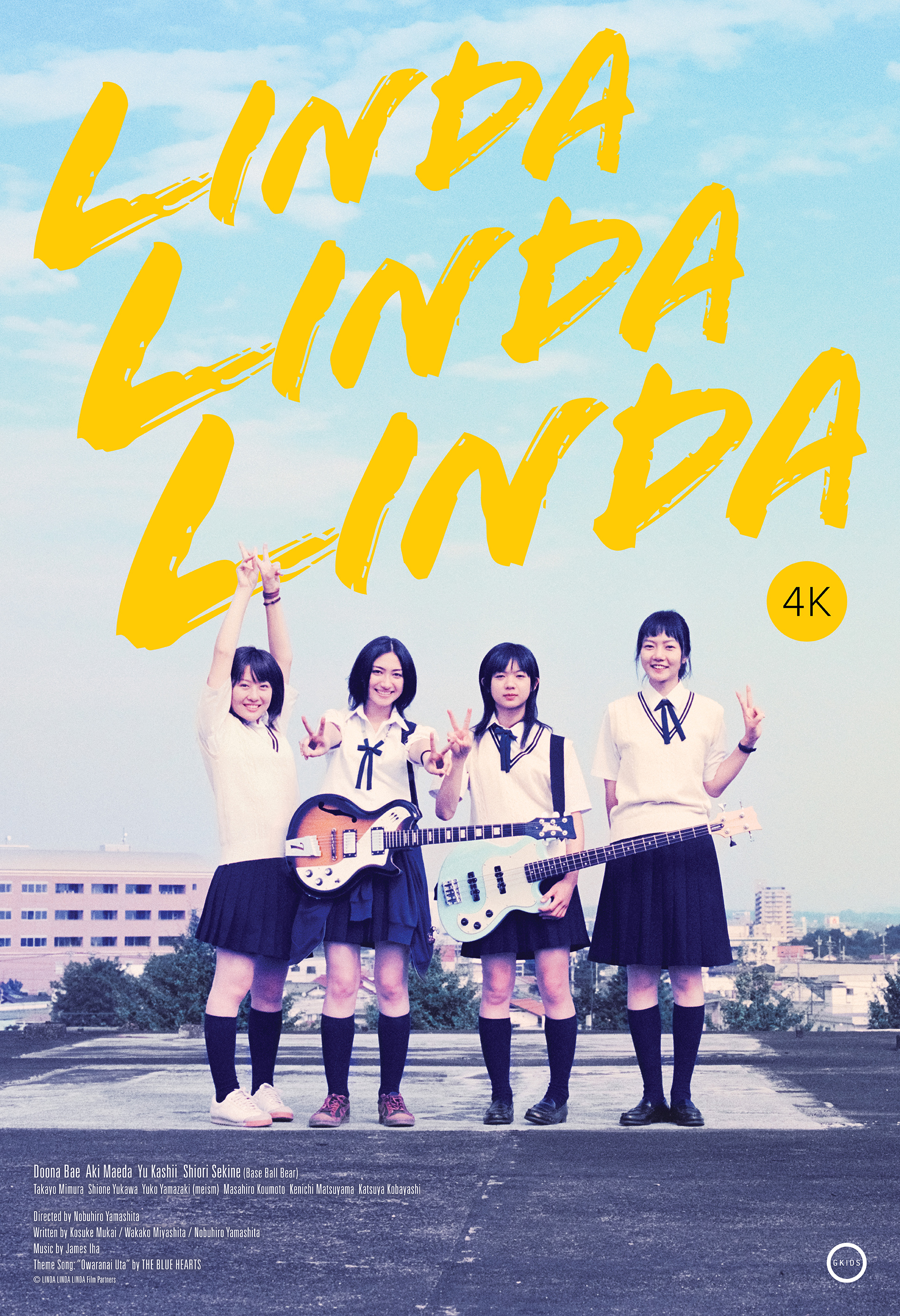
Linda Linda Linda (リンダ リンダ リンダ, Nobuhiro Yamashita, 2005)

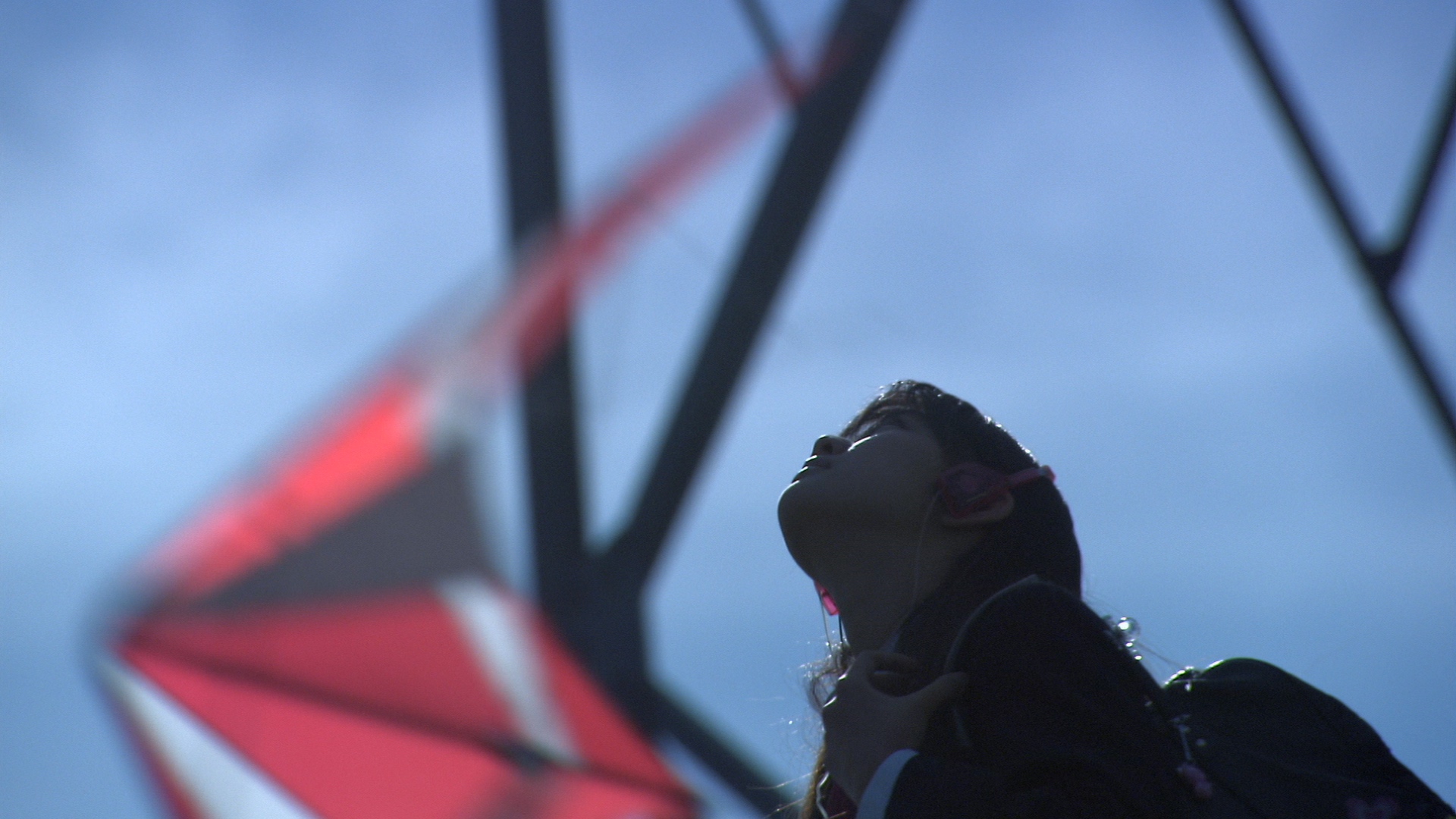
“We’ve only got a little more time to be the real us,” according to a young woman making a promo video for the upcoming school festival, but who really is the “real us”? Now celebrating its 20th anniversary, Nobuhiro Yamashita’s wistful high school dramedy Linda, Linda, Linda (リンダ リンダ リンダ) is in many ways about the process of coming into being along with the anxieties of what comes next. “We won’t end here,” the girl later adds, “We won’t let our high school days become a memory,” yet they already are in a kind of contemporaneous nostalgia and elegy for idealised youth.

Or at least, there’s already a kind of reaching back taking place as the tracks the girls pick for a replacement act are by The Blue Hearts, a 1980s punk band that has become a kind of cultural touchstone echoing a sense of youthful alienation and rebellion. “Linda Linda” is the kind of song everyone knows, and even if for some reason they don’t or don’t even speak Japanese, can at least join in with the riotous chorus. It’s this sense of universality that eventually gives it its power as torrential rain brings the entire school inside just in time to see the girls’ belated act and find themselves captivated by its infectious energy and an identification with their own sense of insecure anxiety.

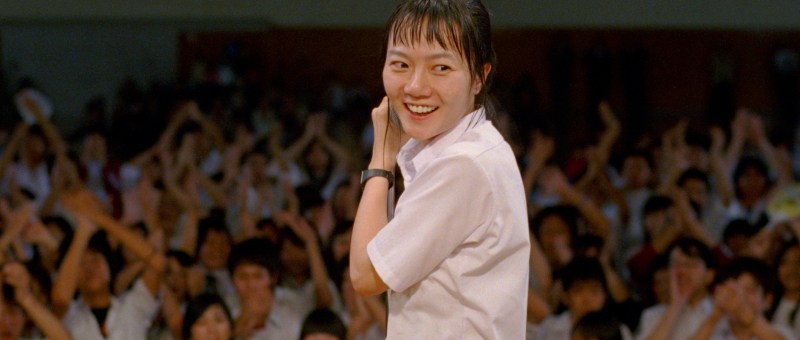
It’s also the serendipitous rain that allows lonely songstress Takako an opportunity to perform having previously declined to do because it’s no fun playing on your own and all her former bandmates graduated the previous year. Moe, the girl who broke her fingers playing basketball in PE leaving the original band members unable to take the to the stage, also gets an opportunity to sing having otherwise been denied a moment of closure in being prevented from taking part in her final school festival. While Moe feels intensely guilty about rendering all their time spent rehearsing somewhat pointless, it’s really the drama between founding members Kei and Rinko that leads to the band’s demise in Rinko’s conviction that it’s “meaningless” to continue while the others decide to go ahead anyway asking Korean exchange student Son (Bae Doona) to be their vocalist because she just happened to come down the stairs at the right moment and said yes because she didn’t really understand what they were saying.

Prior to her involvement with the band, Son had been a rather isolated figure trapped in the “Japan-Korea Culture Exchange Exhibit” which seems to have been more her teacher’s idea than her own and in any case gets no actual visitors. Her Japanese is a bit limited and most of her interactions are with a little girl who lends her manga to help her learn quickly, but becoming part of the band allows her to find her voice both literally and figuratively in taking the lead as the vocalist. A boy who claims to have fallen in love with her (Kenichi Matsuyama) goes to the trouble of learning a long speech in Korean to convey his feelings, yet a bemused Son replies to him in Japanese that she’s pretty indifferent to his existence before switching to Korean to explain that she’s leaving because she’d rather be hanging out with her friends with an expression that implies she’s only just realised that’s what they are. By contrast, she has a bilingual conversation with guitarist Kei (Yu Kashii) in which they seem to understand each other perfectly and each express how glad they are that they got to be in the band together. 

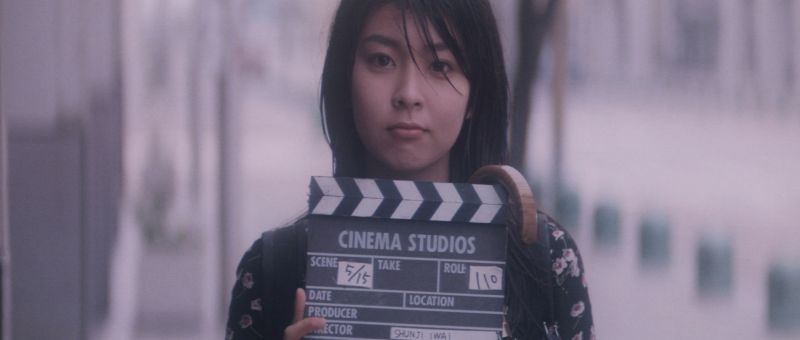
Similarly, it’s the concert itself that seems to heal rifts with a simple “Are you alright?” from Rinko (Takayo Mimura) to Kei whose friendship might, as someone says, essentially be too close for them to really get along. Drummer Kyoko (Aki Maeda) decides to declare her feelings for a longstanding crush before the concert. In the end she doesn’t manage it, but it doesn’t quite matter somehow because their performance is itself a kind of coming into being in which “the real us” comes into focus if also in a moment that itself becomes romanticised or idealised as an encapsulation of youth. Yamashita travels through the school festival as if it were a passage from one state of being to another, from the noodle stalls and crepe stands to haunted houses and the boy creating his own moment through encapsulating them on film, before ending with an unending song “so we can laugh tomorrow,” and the “real us” lives on.


Linda Linda Linda opens in US cinemas 5th September courtesy of GKIDS.

Trailer (English subtitles)
All About Lily Chou-Chou (リリイ・シュシュのすべて, Shunji Iwai, 2001)

“For us the natural world is a playground. But for the things that live in it, it might be hell on earth.” a middle-aged stranger explains to a confused teenage boy elaborating on a metaphor about a strangler tree that wraps itself around its brethren and suffocates them to death. The contemporary society is indeed a hell on earth to the alienated turn of the century teens in Shunji Iwai’s plaintive youth drama All About Lily Chou-Chou (リリイ・シュシュのすべて, Lily Chou-Chou no Subete) who have found solace in “The Ether”, “a place of eternal peace” as discovered in the music of a zeitgeisty pop singer inspired by the ethereality of Mandopop star Faye Wong. 

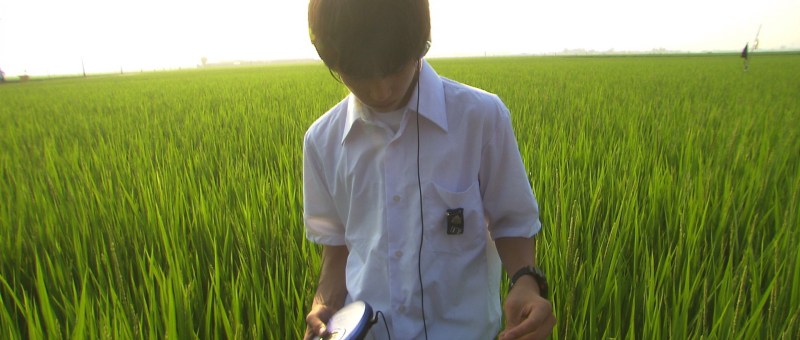
Filled with millennial anxiety, The Ether as mediated through message board chat is the only place the teens can be their authentic selves. “For me only the Ether is proof that I’m alive” one messenger types using an otherwise anonymous online handle unconnected with their real life identity. Iwai often cuts to the teens standing alone listening to music on their Discmans while surrounded by verdant green and wide open space with a bluer than blue sky above, but also at times finding that same space barren and discoloured, drained of life in, as Yuichi (Hayato Ichihara) puts it, an age of grey much like a field in winter. For Yuichi the world ended on the first day of school in September 1999 when his torment began at the hands of a previously bullied boy who decided to turn the tables after, of all things, getting hit in the head by a flying fish in Okinawa and almost drowning.  

Purchased with money stolen from some other bullies who had just stolen it from a well-off middle-aged man they were harassing in a carpark, the trip to Okinawa captured in grainy ‘90s holiday video style later subverted by the same use of contemporary technology to film a gang rape of a fellow student, is the event that finally reduces Yuichi’s world to ashes. Like the other teens he is also carrying a sense of alienation as his mother prepares to remarry while carrying his soon-to-be stepfather’s child which also dictates that Yuichi will have to change his surname lending a further degree of instability to his already shaky sense of identity. For Hoshino (Shugo Oshinari), his sometime friend, the instability seems to run a little deeper. “Nobody understands me” he tells Yuichi with broody intensity, irritated by the image others have of him as a top swat chosen to give a speech at the school’s opening ceremony and widely believed to have placed first in the exams. In truth he only placed seventh and is most annoyed that whoever really did come top probably thinks he pathetically lied about it for clout. 

We can see that Hoshino’s family appears to be wealthy, at least much more than Yuichi’s, though as we also discover they once owned a factory which has since gone bust amid the economic malaise of the ‘90s leading to the disintegration of his family unit. Like Yuichi he feels himself adrift, evidently bullied in middle school for being studious and introverted while rejected by the girls in his class who again attack him because of his model student image. Hoshino seems to have a crush on a girl who is herself bullied, Kuno (Ayumi Ito), apparently resented by the popular set for being popular with boys. “It’s amazing how women can ostracise someone like that” band leader Sasaki (Takahito Hosoyamada) reflects, one of the few willing to call her treatment what it is but finding no support from their indifferent teacher Miss Osanai (Mayuko Yoshioka), while entirely oblivious to the fact that the boys are just the same in Hoshino’s eventual reign of terror as a nihilistic bully drunk on his own illusionary power. 

Shiori (Yu Aoi), blackmailed into having sex with middle-aged men for money, questions why she and Yuichi essentially allow themselves to be manipulated by Hoshino and are unable to stand up to him even when they know they are being asked to do things that they find morally repugnant such as Yuichi’s complicity when tasked with setting Kuno up for gang rape by Hoshino’s minions with a view to videoing it for blackmail purposes. Whether or not he did in fact have a romantic crush on her, Hoshino’s orchestration of the rape signals his total transformation, forever killing the last vestiges of his humanity and innocence but for Yuichi, who can only stand by and cry, it signals the failure of his resistance that if he went along with this there is no line beyond which he will not go if Hoshino asks it. Yuichi asks Shiori why she didn’t agree to date the kindhearted Sasaki who would have been able to shield her from Hoshino but she knows it’s too late for that while suggesting Yuichi is in a sense protecting her though his inability to do so only further erodes his wounded sense of masculinity. 

Only online can the teens find the elusive Ether they dream of, ironically connected via a message board that Yuichi runs under the name Philia where the only rule is that you have to love Lily yet unknown to each other thanks to the alienating effect of their online handles. Someone has a point when they suggest all this talk of polluting the Ether sounds a bit like a cult, but does at least give the teens their safe space where they can share their pain free of judgement and find solidarity in adolescent angst. In any case all of this shame, repression, and loneliness is later channeled into nihilistic violence and cruelty provoked by millennial despair. The only way Yuichi can free himself is by killing the part of himself that hurts in an effort to quell the “noise” in his head. Broken by title cards accompanied by the reverberating sound of typing in emptiness, Iwai’s characteristic soft focus lends a trace of nostalgic melancholy to this often harrowing tale but also neatly encapsulates turn of the century teenage angst with the infinite sympathies of age. 


All About Lily Chou-Chou screens at Japan Society New York on Dec. 10 as part of Love Letters: Four Films by Shunji Iwai

Original trailer (English subtitles)

April Story (四月物語, Shunji Iwai, 1998)

Shunji Iwai’s wistfully nostalgic coming-of-age drama April Story (四月物語, Shigatsu Monogatari) opens with a POV shot as its heroine awkwardly waits for her train to depart while her family, assembled on the platform, look back at her anxiously before the train door closes and the carriage begins to move. The girl says nothing but places a hand on the glass, freezing amid the snows of Hokkaido, as if bidding a silent goodbye now all alone as she makes her way towards her new life in the capital. 

Shot with the breezy soft focus associated with Iwai’s early work, the film positions its heroine’s growth alongside the blossoming of the cherry trees which in contrast to many other nations in Japan mark the beginning and end of a school year. Shy and somewhat reserved, Uzuki (Takako Matsu) does her best to seem grown up, managing the removals men while insisting on helping but mostly just getting in the way of their work until they finally tell her that, like many students, she’s brought far too much stuff and there’s no way it’s all going to fit in her modest two-room flat. She makes sure to introduce herself politely to her new neighbours bearing gifts, but is met with a wary indifference from the woman across the hall perhaps more accustomed to city living and less likely to be instantly trusting of a stranger. 

At the university some of her fellow students treat her like a country bumpkin asking stupid questions like whether it’s cold in Hokkaido and making fun of her snazzy jumper which is a little too heavy for Tokyo at the start of spring. In the cafeteria she takes it off and hangs it around her waist, embarrassed by her early fashion faux pas. One of the other girls, Saeko (Rumi), attempts to befriend her but as it turns out Uzuki has other things on her mind except for study and in fact Saeko may have an ulterior motive too that neatly reflects her own in looking for fresh recruits for the fly fishing club. 

In any case it’s as if the world gradually opens itself up to her, Uzuki riding the wide streets of the city on her bicycle through parks and under cherry trees before making her way to a particular bookshop. She discovers the dangers of city life while stopping in to watch a classic samurai movie, a beautifully realised historical fantasy homage to golden age cinema and old-fashioned serials in which Oda Nobunaga (Yosuke Eguchi) has managed to escape death at Honnoji Temple and is out for ironic revenge. A late arriving salaryman (Ken Mitsuishi) sits himself down a few seats away from her and surreptitiously tries to edge closer until she’s forced to flee the cinema leaving some of her belongings behind. Even so it doesn’t seem to dampen her enthusiasm for life nor for her unofficial mission and the the reason that’s brought her to Tokyo in the first place. 

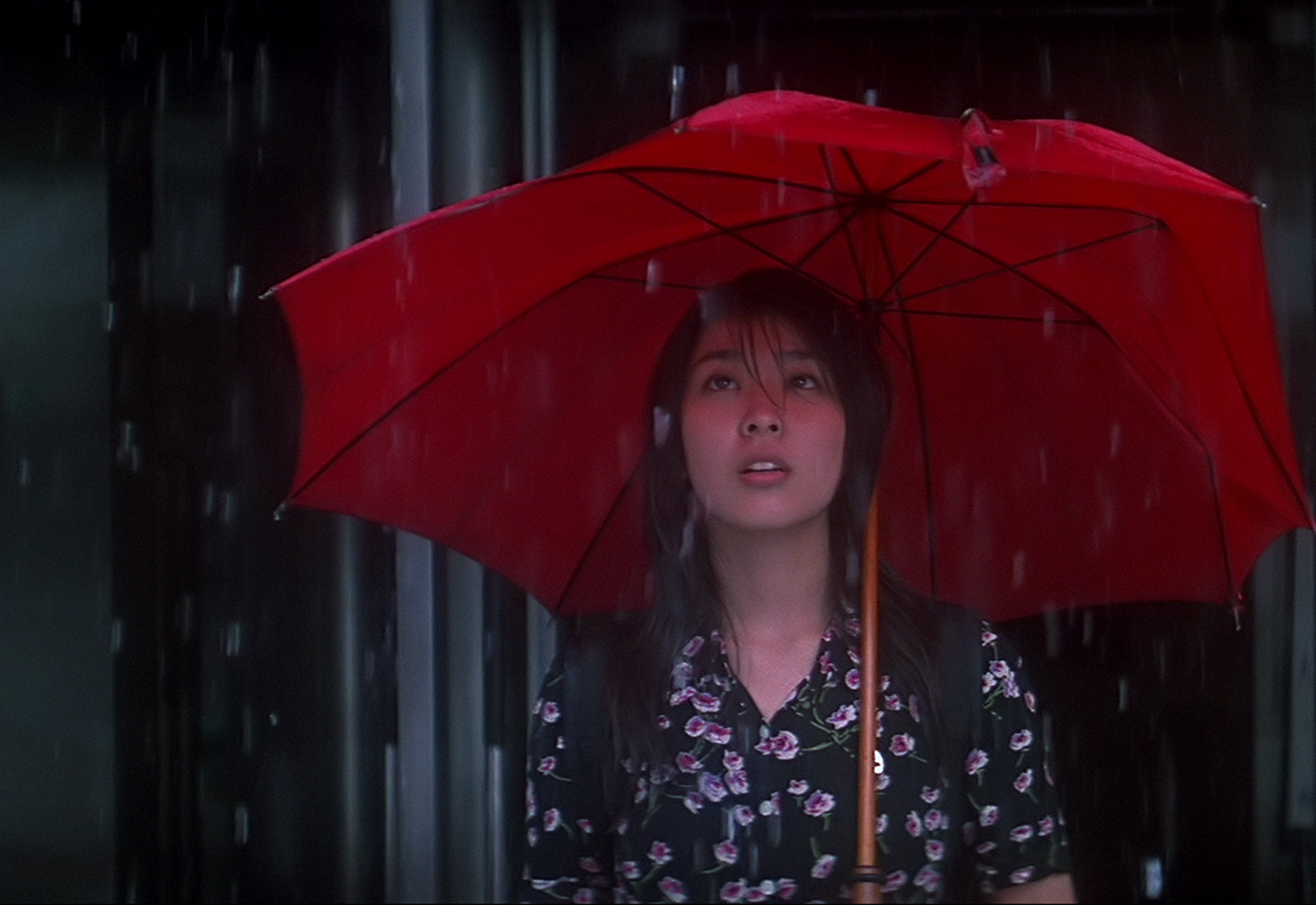
Iwai focusses on the domesticity of her newly independent existence, building a cosy nest in her tiny flat and attempting to cook for herself but finding her invitation to her neighbour for dinner politely rebuffed while uncertain if the fly fishing club is really for her given that the guy who runs it is condescending and incredibly full of himself. But then as she tells her mother on the phone she just wanted to try something new and there is something comfortable in the gentle rhythms of casting the fly especially as no one seems to do any actual fishing only practice in the park. She makes friends with the equally awkward Saeko and even finds her neighbour gradually opening up to the idea of friendship. Her world continues to expand until she’s finally ready to reconnect with the unrequited high school crush she followed to the city if admittedly in another slightly awkward meet cute involving a series of umbrellas, torrential rain, and a very patient gallery director. 

A self-declared “nice film”,  Iwai’s heartwarming drama is an innocent tale of first love and romantic obsession that is nothing other than sweetness and light. “A miracle of love” is how Uzuki chooses to describe her arrival in Tokyo and subsequent reunion with her romantic destiny, but it’s in the pursuit of love that she finally begins to come into herself and embrace the possibilities of life blossoming under the cherry trees of an unseasonably warm Tokyo.


April Story screens at Japan Society New York on Dec. 10 and will be available to stream online in the US from Dec. 9 – 23 as part of Love Letters: Four Films by Shunji Iwai

Original trailer (English subtitles)

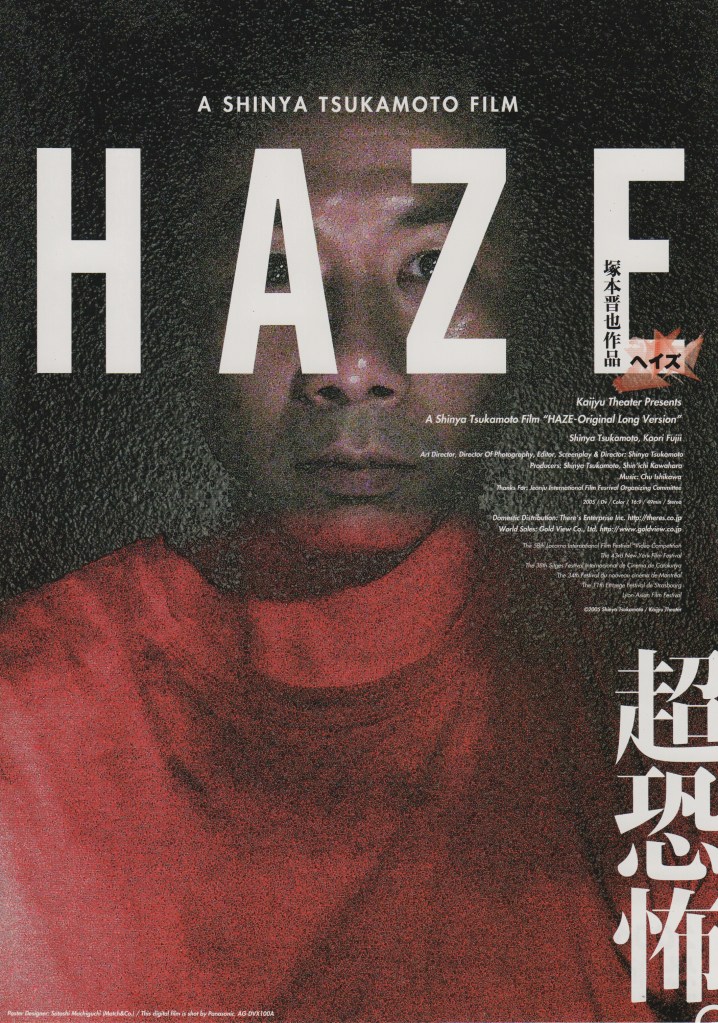
Haze (ヘイズ, Shinya Tsukamoto, 2005)

“Nothing spectacular is waiting for us even if we get out of here anyway” according to the imprisoned hero at the centre of Shinya Tsukamoto’s Haze (ヘイズ). Tsukamoto began his career with a series of tales of urban anxiety, a fear of increasing mechanisation which rendered a man mere slave to his physicality. Created as part of Jeonju International Film Festival’s digital project and later expanded to its current length, Haze skews in a slightly different direction, repurposing the director’s trademark body horror as a kind of depression metaphor as the unnamed hero, played by Tsukamoto himself, attempts to climb out of a pit of despair while experiencing momentary echoes of the traumatic event which has trapped him there. 

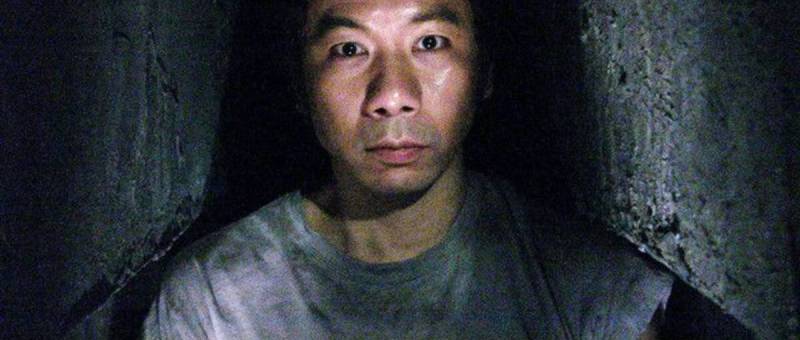
As the film opens, a man (Shinya Tsukamoto) wakes up in a confined space with no knowledge of how he got there or memories of his previous life. He convinces himself this must be a dream but believes if it were he would’t feel pain, which he later does not least from the gaping and unexplained wound near his hip. Left with no other choice, he crawls forward in search of an exit, gripping on literally by the skin of his teeth as he climbs through barbwire, beaten on the head by a strange contraption attacking him from what looks like an arrowslit in a castle. He glimpses other figures writhing in pain through a gap in the wall, some of whom are then torn apart while he later comes across great machines of human butchery and finds himself wading through severed limbs until he finally encounters another survivor, a woman (Kaori Fujii), who is minded to escape the way she believes she came in while the man is already beginning to give up on the idea of survival. 

The man meditates on what might have brought him here, as if it makes a difference or would help him to escape. He wonders if a war has broken out and he’s been taken prisoner, has been abducted by a weird cult, or is a plaything of a “rich pervert” enacting his own version of The Most Dangerous Game. He is perhaps crawling through hell, only one that may be of his making as a kind of metaphor for life’s battering as he pushes forward blindly, lacerating himself in pursuit of freedom while strangely indifferent to the suffering of others who appear not to have been so lucky. 

The woman is unable to provide any more explanation, lamenting that this may be their finally resting place but insisting that she is getting out. The man isn’t so sure, listening to her plan with scepticism, but once again wondering how he got here. Asked who is behind this the woman can only reply that it seems to be “a really big and dark thing, neither a human being nor a beast. You find yourself in total darkness being dismembered and floating in the water”. “If you see nothing ahead you eventually end up here” the man replies. After drifting off, the woman tells the man that she had a sensation of waking up alone somewhere dark and feeling lonely, “like falling into a place like this”. 

Later she remembers that she wanted to go somewhere, but was imprisoned here before she could run away. The man harps back on his theories again, wondering if it was a rich pervert after all, though this seems like a lot of bother to go to for sadistic kicks. He doesn’t stop to wonder what it was the woman wanted to escape, life itself or an intolerable situation and what the motives might be of the person who tried to stop her leaving. In fact, his own “sweet memory” is a bright and cheerful one of watching fireworks which he remembers liking a lot, though fireworks are perhaps also tiny sparks of life which blink out far too soon. Questioned about the motives of the hypothetical rich pervert, the woman suggests he might have done something like this to make her “go back” to wherever it was that she was desperate to leave. In any case, even if it’s back “there”, she is determined to escape and, perhaps paradoxically, gives the man the courage to follow though it’s he who eventually vows to “save” her. 

The path towards escape is itself a kind of rebirth, pushing through blood and viscera towards the light, the hazy dawn of the title. Something has perhaps been overcome if only in the brief moments of unconsciousness between life and death and perhaps because of that single “sweet memory”, unreliable and hazy as it might eventually prove.


Haze is available on blu-ray as part of Third Window Films’ Tsukamoto box set which also includes his latest film Killing and a new restoration of Adventures of Electric Rod Boy all of which are accompanied by audio commentaries by Tom Mes.